
Topic: Vehicle lights and horn · Nº 271 / 839
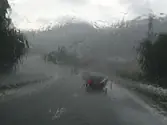
Circulando con lluvia muy intensa, ¿qué luces antiniebla utilizaremos?
When driving in very heavy rain, which fog lights should we use?
- ALas delanteras obligatoriamente, las posteriores de forma opcional.The front ones compulsorily, the rear ones optionally.
- BLas delanteras opcionalmente y las posteriores obligatoriamente.The front ones optionally and the rear ones compulsorily.
- CLas delanteras y las posteriores obligatoriamente.Both the front and the rear ones compulsorily.
Show answer
Correct answer
- BLas delanteras opcionalmente y las posteriores obligatoriamente.The front ones optionally and the rear ones compulsorily.
Vehicles do not have to be fitted with a front fog light, so using it is optional. This is not the case for the rear fog light, so in VERY heavy rain it must be on. FRONT FOG LIGHT: - Fitting and using it is NOT compulsory. - It is white or selective yellow. - It may be used, if you choose, in fog, heavy rain, snowfall, clouds of smoke or dust, or in similar conditions. - It may also be used on narrow roads with many bends, that is, roads with a carriageway 6.5 m wide or less that are marked with 'dangerous bends' signs. REAR FOG LIGHT: - Fitting and using it is compulsory. - It is red. - It must be used in THICK fog, VERY heavy rain, HEAVY snowfall or DENSE clouds of smoke or dust. During the day, the front fog light may be on with just the position lights, but it can also be used together with dipped headlights or main beam. At night, it must be used at least with dipped headlights. During the day, the rear fog light must be used at least together with the front fog light or dipped headlights. At night, at least with dipped headlights.
Independent app: not affiliated with or endorsed by the DGT (Spain's Directorate-General for Traffic) or the Ministry of the Interior. The official exam is booked with the DGT and taken at its test centres. The questions here are practice material; the DGT's official question bank is not public.