
DGT test · 839 questions
Vehicle lights and horn
Side, dipped, main-beam, fog and hazard lights, and the horn: when each one is compulsory and when it is forbidden.
20 random questions
Loading questions…
Questions in this topic, with answers
839 questions, 50 per page, with the correct answer and the explanation. Page 1 of 17.
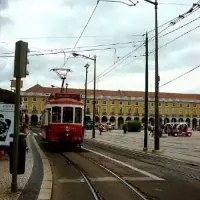
¿Cuantas luces de posición delantera puede llevar un tranvía?
How many front position lights can a tram have?
- A1 ó 21 or 2.
- B3 ó 43 or 4.
- C2 ó 32 or 3.
ExplanationTrams may have one or two front position lights, but never more than 2. If it has only one front position light and one rear position light, they must be on the vehicle's longitudinal centre line. If it has two front and two rear position lights, they must be identical and symmetrical about the vehicle's longitudinal centre line.
¿Para que sirven las luces de posición en general?
In general, what are position lights for?
- APara ver al resto de vehículos únicamente de nocheTo see other vehicles, only at night.
- BPara ver al resto de vehículosTo see other vehicles.
- CPara ser vistosTo be seen.
ExplanationPosition lights are part of the vehicle lighting used so that other road users can see us. They help other vehicles know our position on the road, so that they can respect the space our vehicle takes up.
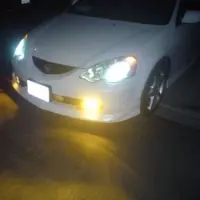
¿Es la luz antiniebla delantera obligatoria para los vehículos de motor?
Is the front fog light compulsory for motor vehicles?
- AÚnicamente para los camionesOnly for lorries.
- BNoNo.
- CSí.Yes.
ExplanationFront fog lights are two white lights that are always optional and not compulsory for motor vehicles. This is not the case for rear fog lights, which are compulsory.
Circulando por una vía fuera de poblado a una velocidad inferior a 40km/h, ¿qué alumbrado debemos utilizar?
When driving on a road outside a built-up area at a speed below 40 km/h, which lights must we use?
- AEl de carretera.Main beam.
- BEl de cruce en todo caso.Dipped headlights in all cases.
- CAl menos el de cruce.At least dipped headlights.
ExplanationAt night, outside built-up areas and on roads without enough lighting, main beam is only compulsory above 40 km/h (Article 100 of the General Traffic Regulations). At 40 km/h or less, dipped headlights are enough, although main beam may be used if it does not dazzle anyone; that is why at least dipped headlights are required.
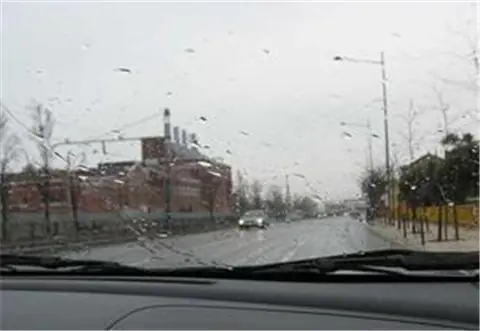
Circulando con lluvia muy intensa, ¿se pueden utilizar las luces antiniebla delanteras y traseras?
When driving in very heavy rain, may you use the front and rear fog lights?
- ANo, las luces antiniebla solo se pueden encender en caso de niebla.No, fog lights may only be switched on in fog.
- BSe puede utilizar la luz antiniebla delantera, pero no la trasera.You may use the front fog light, but not the rear one.
- CSí, y además es obligatorio utilizar la luz antiniebla trasera.Yes, and the rear fog light must also be used.
ExplanationUnder Article 106 of the General Traffic Regulations, in heavy rain you may use the front fog light, and the rear one must be switched on when conditions are especially unfavourable, such as in very heavy rain. Fog lights are not only for fog.
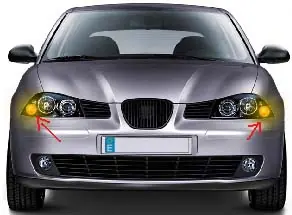
¿Deben usarse las luces de emergencia si un vehículo queda inmovilizado, por avería, en el arcén de una autopista?
Must the hazard warning lights be used if a vehicle is immobilised by a breakdown on the hard shoulder of a motorway (autopista)?
- ANo.No.
- BSí, pero solo si es de noche o hay poca visibilidad.Yes, but only at night or in poor visibility.
- CSí, y colocar el dispositivo de preseñalización de peligro.Yes, and the hazard warning device must also be put in place.
ExplanationWhen a vehicle is immobilised by a breakdown or accident, you must switch on the hazard warning lights and also use the approved hazard warning device, which since 2026 has been the V-16 flashing warning beacon (Article 130.4 of the General Traffic Regulations).
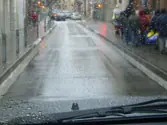
En caso de una lluvia no intensa, ¿podemos usar el alumbrado antiniebla trasero?
In rain that is not heavy, can we use the rear fog light?
- ANo.No.
- BSí.Yes.
- CSí, de forma opcional.Yes, optionally.
ExplanationWe only use the rear fog light, and then it is compulsory, when the weather or environmental conditions are especially unfavourable, such as heavy rain, thick fog, heavy snowfall or dense clouds of dust or smoke.
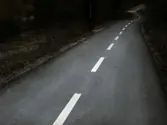
Si circula con su turismo durante la noche por una vía interurbana insuficientemente iluminada y a menos de 40 km/h, ¿qué alumbrado deberá llevar encendido?
If you are driving your car at night on a poorly lit road outside a built-up area at less than 40 km/h, which lights must you have on?
- AEl de largo alcance.Main beam.
- BEl de corto alcance.Dipped headlights.
- COpcionalmente el de largo o corto alcance.Optionally, main beam or dipped headlights.
ExplanationVehicles fitted with main beam must use it when driving at more than 40 km/h: - between sunset and sunrise, on poorly lit roads outside built-up areas; - at any time of day, in tunnels, underpasses and stretches of road covered by the 'Tunnel' sign that are poorly lit. However, dipped headlights must be used by: - vehicles that do not have main beam; - vehicles driving with main beam that could dazzle other road users. When driving at no more than 40 km/h, you can use dipped headlights or main beam. It is prohibited to use main beam when the vehicle is stopped, parked or in a built-up area. In this case, as you are not driving at more than 40 km/h, main beam is optional, not compulsory.
¿En qué condiciones debe llevarse encendida la luz antiniebla trasera?
Under what conditions must the rear fog light be on?
- ACuando las condiciones meteorológicas o ambientales sean especialmente desfavorables.When weather or environmental conditions are especially unfavourable.
- BEn caso de lluvia intensa, nevadas o nubes de polvo o humo.In heavy rain, snowfall or clouds of dust or smoke.
- CCuando las condiciones meteorológicas o ambientales reduzcan la visibilidad.When weather or environmental conditions reduce visibility.
ExplanationUnder Article 106.2 of the RGC, the rear fog light is only used in especially unfavourable conditions, such as thick fog, very heavy rain, heavy snowfall or dense clouds of dust or smoke. If visibility is only reduced, dipped headlights, main beam or the front fog lights are enough.

¿Dónde está prohibido circular con la luz larga encendida?
Where is it prohibited to drive with main beam on?
- AEn todos los túneles.In all tunnels.
- BEn autopistas y autovías sin iluminación.On unlit motorways (autopistas) and dual carriageways (autovías).
- CDonde hay peligro de deslumbrar y en vías urbanas.Where there is a risk of dazzling and on urban roads.
ExplanationMain beam is used outside built-up areas on roads that are not lit well enough, including motorways (autopistas) and poorly lit tunnels (Article 100.1 of the General Traffic Regulations, RGC). In built-up areas you use dipped headlights even if the road is poorly lit (Article 101.1), and you must switch to dipped headlights whenever you might dazzle someone (Article 102.1).
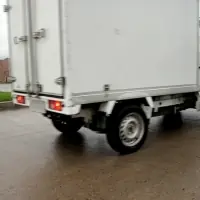
¿De qué color debe ser la luz de frenado?
What colour must the brake light be?
- AAmarillaYellow.
- BRojaRed.
- CBlancaWhite.
ExplanationThe brake lights on a motor car are two red lights, whose brightness, without being dazzling, is considerably greater than that of the position lights.
Si conduce una motocicleta y hay niebla ligera, ¿qué luces debe usar?
If you are riding a motorcycle and there is light fog, which lights must you use?
- ALuces de posición y de cruce; si tiene antiniebla delantero, puede encenderlo también.Sidelights and dipped headlights; if it has a front fog light, you may switch that on too.
- BLuces de posición, de cruce y antiniebla delantero y trasero, si están instalados.Sidelights, dipped headlights and front and rear fog lights, if fitted.
- CSolo las luces de posición.Only the sidelights.
ExplanationA motorcycle always has its dipped headlight on, as well as its sidelights, and in fog it may also use the front fog light, which is optional (Article 106.2 of the RGC). The rear fog light is only switched on in thick fog or other particularly bad conditions, not in light fog.
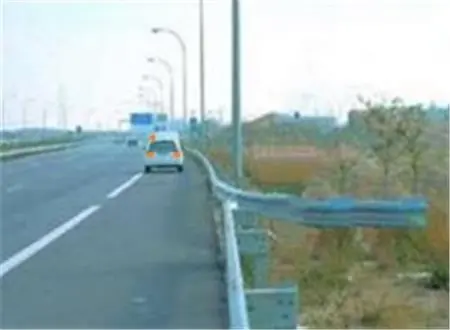
El vehículo blanco está inmovilizado, ¿Debe señalizarlo?
The white vehicle has broken down. Must it be signalled?
- ASí, con la luz de emergencia y el dispositivo de preseñalización de peligro.Yes, with the hazard warning lights and the hazard warning device.
- BNo, porque está en el arcén.No, because it is on the hard shoulder.
- CSí, con la luz de posición.Yes, with the position lights.
ExplanationAccording to Article 130 of the General Traffic Regulations, a broken-down (immobilised) vehicle, including one on the hard shoulder, must be signalled with the hazard warning lights and the regulation hazard warning device, both by day and by night, and with the position lights when appropriate. Since 1 January 2026, this device is the V-16 flashing warning beacon, placed on the highest part of the vehicle.
¿Se puede usar durante el día, por una vía interurbana, con lluvia intensa o niebla densa el alumbrado de largo alcance?
During the day, on a road outside a built-up area, can main beam be used in heavy rain or dense fog?
- ANo, porque es de día.No, because it is daytime.
- BSí, sustituyéndolo por el de corto alcance para no deslumbrar.Yes, switching to dipped headlights so as not to dazzle.
- CNo, con lluvia intensa está prohibido.No, it is prohibited in heavy rain.
ExplanationIn weather or environmental conditions that greatly reduce visibility, main beam may be used outside built-up areas, switching to dipped headlights so as not to dazzle other road users. However, using it in these conditions is not recommended.
En una travesía, ¿está permitido circular con las luces largas encendidas?
In a travesía (stretch of road through a town), are you allowed to drive with main beam on?
- ANo.No.
- BSí, en travesías poco iluminadas.Yes, in poorly lit travesías.
- CSólo si se circula a una velocidad superior a 40 km/h.Only if you are driving faster than 40 km/h.
ExplanationA travesía is a stretch of road that runs through a built-up area, and in built-up areas you must use dipped headlights even if the road is not well enough lit (Article 101.1 of the General Traffic Regulations). Speed does not change this rule.
Si estaciona un turismo en línea en el arcén de una travesía insuficientemente iluminada, ¿qué luces debe dejar encendidas?
If you park a car parallel to the kerb on the hard shoulder of a poorly lit travesía (stretch of road through a town), which lights must you leave on?
- ALas de posición y las cortas.The position lights and dipped headlights.
- BLas dos de posición del lado correspondiente a la calzada o las de estacionamiento.The two position lights on the carriageway side, or the parking lights.
- CLas de estacionamiento y las de emergencia.The parking lights and the hazard warning lights.
ExplanationWhen a vehicle is parked on a poorly lit travesía, the parking lights must always be switched on or, if the vehicle does not have them, the position lights. Hazard warning lights are only used in an emergency. A travesía is the stretch of road that runs through a built-up area, so it is important for vehicles to be easy to see if the road is not well lit.
Si circula poco antes del amanecer y la visibilidad es clara, ¿qué alumbrado debe llevar encendido?
If you are driving shortly before sunrise and visibility is clear, which lights must you have on?
- ANo se requiere ninguna luzNo lights are required.
- BSolo las luces de posiciónOnly the position lights.
- CLuces de posición y de crucePosition lights and dipped headlights.
ExplanationPosition lights and dipped headlights are compulsory between sunset and sunrise, whatever the visibility. Even if you can see the road clearly because it is getting light, you must switch on your lights to be seen by other road users. Driving with only the position lights is prohibited, because they show the presence and width of the vehicle but are not suitable for lighting the road while moving.
¿Está permitido hacer sonar la bocina para avisar a otro conductor de que un semáforo ha cambiado de rojo a verde?
Are you allowed to sound the horn to tell another driver that a traffic light has changed from red to green?
- ANo, nunca.No, never.
- BSí, pero solamente en vías interurbanas.Yes, but only on roads outside built-up areas.
- CSí, en vías urbanas.Yes, in built-up areas.
ExplanationThe horn may only be used to avoid an accident or to warn others that we are driving our vehicle on an emergency call. Outside built-up areas, it may also be used to warn the vehicle in front that we want to overtake it.
En caso de poca niebla, ¿podremos utilizar el alumbrado antiniebla posterior?
In light fog, may we use the rear fog light?
- ANo.No.
- BSí.Yes.
- CSí, pero solo de noche.Yes, but only at night.
ExplanationThe rear fog light should only be switched on when conditions are particularly unfavourable, such as thick fog, very heavy rain, heavy snowfall or dense clouds of dust or smoke. In light fog it would dazzle and disturb those behind (Article 106.2 of the General Traffic Regulations).
Con lluvia muy intensa, ¿utilizaremos el alumbrado antiniebla posterior?
In very heavy rain, should we use the rear fog light?
- ASí, pero sólo fuera de poblado.Yes, but only outside built-up areas.
- BSí.Yes.
- CNo.No.
ExplanationIn very heavy rain, we must use the rear fog light, both inside and outside built-up areas.
¿Para qué sirven los indicadores de dirección?
What are direction indicators for?
- APara señalizar la maniobra de noche solamente.To signal a manoeuvre, only at night.
- BPara ser visto durante la noche.To be seen at night.
- CPara señalizar la maniobra tanto de día como de noche.To signal a manoeuvre, both by day and at night.
ExplanationDirection indicators are the lights used to signal manoeuvres, for example moving sideways. These lights must be used both by day and at night.
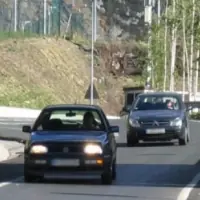
¿Se pueden utilizar las luces de corto alcance en vías urbanas suficientemente iluminadas?
Can dipped headlights be used on well-lit roads in built-up areas?
- ASolo en aquellas que haya un solo carril en cada direcciónOnly on those with a single lane in each direction.
- BSí.Yes.
- CNo, ya que la iluminación es suficienteNo, because the lighting is sufficient.
ExplanationEvery motor vehicle must have its dipped headlights on, as well as its position lights, between sunset and sunrise on well-lit roads, both inside and outside built-up areas.

Circulando con niebla espesa, enciende el alumbrado de corto alcance y las luces antiniebla. ¿Es correcto?
Driving in thick fog, you switch on the dipped headlights and the fog lights. Is this correct?
- ANo, porque debe encender las luces de largo alcance.No, because you must switch on main beam.
- BNo, porque las luces antiniebla delanteras deben utilizarse sin las de corto alcance.No, because front fog lights must be used without dipped headlights.
- CSí.Yes.
ExplanationFRONT FOG LIGHT: - Fitting and using it is NOT compulsory. - It is white or selective yellow. - It may be used, if you choose, in fog, heavy rain, snowfall, clouds of smoke or dust, or in similar conditions. - It may also be used on narrow roads with many bends, that is, roads with a carriageway 6.5 m wide or less that are marked with 'dangerous bends' signs. REAR FOG LIGHT: - Fitting and using it is compulsory. - It is red. - It must be used in THICK fog, VERY heavy rain, HEAVY snowfall or DENSE clouds of smoke or dust. During the day, the front fog light may be on with just the position lights, but it can also be used together with dipped headlights or main beam. At night, it must be used at least with dipped headlights. During the day, the rear fog light must be used at least together with the front fog light or dipped headlights. At night, at least with dipped headlights.
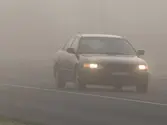
Con niebla densa, ¿qué luces antiniebla está obligado a utilizar un turismo?
In dense fog, which fog lights must a car use?
- ALa luz antiniebla trasera solamente.Only the rear fog light.
- BLa luz antiniebla trasera y la delantera si la tiene instalada.The rear fog light, and the front one if fitted.
- CLa luz antiniebla delantera y la luz de largo alcance.The front fog light and main beam.
ExplanationFRONT FOG LIGHT: - Fitting and using it is NOT compulsory. - It is white or selective yellow. - It may be used, if you choose, in fog, heavy rain, snowfall, clouds of smoke or dust, or in similar conditions. - It may also be used on narrow roads with many bends, that is, roads with a carriageway 6.5 m wide or less that are marked with 'dangerous bends' signs. REAR FOG LIGHT: - Fitting and using it is compulsory. - It is red. - It must be used in THICK or DENSE fog, VERY heavy rain, HEAVY snowfall or DENSE clouds of smoke or dust. During the day, the front fog light may be on with just the position lights, but it can also be used together with dipped headlights or main beam. At night, it must be used at least with dipped headlights. During the day, the rear fog light must be used at least together with the front fog light or dipped headlights. At night, at least with dipped headlights. You are never required to use the front fog light; at the front, you can drive with dipped headlights or main beam.
¿Puede una motocicleta llevar señal de emergencia?
Can a motorcycle have hazard warning lights?
- ASí.Yes.
- BNo.No.
- CSí, solo si tiene más de 125 cm³.Yes, only if its engine is over 125 cm³.
ExplanationUnder Article 17 of the General Vehicle Regulations, any motorcycle may have, as an optional device, indicators with a hazard warning function, whatever its engine size. The hazard warning lights make all the indicators flash amber at the same time.
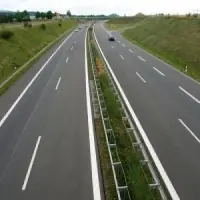
¿Están obligadas las motocicletas a llevar encendida la luz de cruce durante el día en todo tipo de vías?
Are motorcycles required to have the dipped headlight on during the day on all types of road?
- ANo, únicamente en vías urbanasNo, only on roads in built-up areas.
- BNo, únicamente en vías interurbanasNo, only on roads outside built-up areas.
- CSí.Yes.
ExplanationMotorcycles must be ridden with the position light and dipped headlight on, both by day and at night, and motorcycle manufacturers usually do not allow these lights to be switched off, for safety reasons.
¿Cuándo debe usar el alumbrado de corto alcance (cruce) durante el día?
When must you use dipped headlights during the day?
- AEn túneles, pasos inferiores y condiciones adversasIn tunnels, underpasses and bad conditions
- BSolo al atardecerOnly at dusk
- CEn autovía siempreAlways on a dual carriageway (autovía)
ExplanationDipped headlights are compulsory during the day in tunnels, underpasses and bad conditions.
¿Qué vehículos tendrán que llevar señales acústicas?
Which vehicles must be fitted with an audible warning device (horn)?
- ASolo los vehículos de motor.Only motor vehicles.
- BLos vehículos de motor, ciclomotores, ciclos y bicicletas.Motor vehicles, mopeds, cycles and bicycles.
- CLos vehículos que puedan desarrollar en llano una velocidad superior a 60 km/h.Vehicles that can reach more than 60 km/h on level ground.
ExplanationCycles, bicycles, mopeds and all motor vehicles, except pedestrian-controlled two-wheel tractors, must be fitted with an audible warning device.
¿Qué alumbrado usaremos al circular por un túnel insuficientemente iluminado fuera de poblado?
Which lights should we use when driving through a poorly lit tunnel outside a built-up area?
- AEl alumbrado de corto alcance.Dipped headlights.
- BEl alumbrado de largo alcance.Main beam.
- CEl alumbrado de posición con el alumbrado de cruce.Position lights with dipped headlights.
ExplanationOn poorly lit roads outside built-up areas we use main beam. When there is a risk of dazzling other road users, we use dipped headlights.
¿Quién está obligado a utilizar la luz de gálibo?
Who is required to use end-outline marker lights?
- ALos automóviles que superen los 2,10 m de anchura.Motor vehicles more than 2.10 m wide.
- BLos automóviles que superen los 2m de anchura.Motor vehicles more than 2 m wide.
- CLos automóviles que superen los 12 m de longitud.Motor vehicles more than 12 m long.
ExplanationEnd-outline marker lights show the size of wide vehicles. Vehicles more than 2.10 metres wide must have them on between sunset and sunrise or in poor visibility.
De día, circula conduciendo su turismo y observa que comienza a nevar de forma ligera, por lo que usted enciende, además de la luz de posición, la luz de cruce de su vehículo. ¿Cree usted que circula con el alumbrado reglamentario?
You are driving your car during the day and see that it is starting to snow lightly, so you switch on the dipped headlights as well as the position lights. Are you driving with the correct lights?
- ANo, porque debo encender obligatoriamente la luz delantera de niebla.No, because I must switch on the front fog light.
- BSí, aunque también podré encender la luz delantera de niebla.Yes, although I may also switch on the front fog light.
- CNo, porque debo encender obligatoriamente la luz de largo alcance o carretera.No, because I must switch on main beam.
ExplanationThis is correct because, by switching on the position lights and the dipped headlights, you are complying with the lighting rules. You may also switch on the front fog light if you think visibility is very poor, but it is not compulsory.
¿Qué luces llevará encendida una motocicleta durante el día?
Which lights must a motorcycle have on during the day?
- ALuces de cruce o corto alcance.Dipped headlight.
- BLuces de posición y cruce.Position light and dipped headlight.
- CNinguna si las condiciones de visibilidad son correctas.None, if visibility is good.
ExplanationMotorcycles must have at least the position light and the dipped headlight on, both by day and at night.

¿Se pueden utilizar las señales acústicas para adelantar?
Can the horn be used when overtaking?
- ASi, tanto dentro como fuera de poblado.Yes, both inside and outside built-up areas.
- BNo, en ningún caso.No, never.
- CSí, fuera de poblado.Yes, outside built-up areas.
ExplanationWe can use the horn both inside and outside built-up areas to avoid accidents or hitting someone, when on an emergency call, and on narrow roads with many bends. Outside built-up areas we can use it to warn that we are going to overtake.
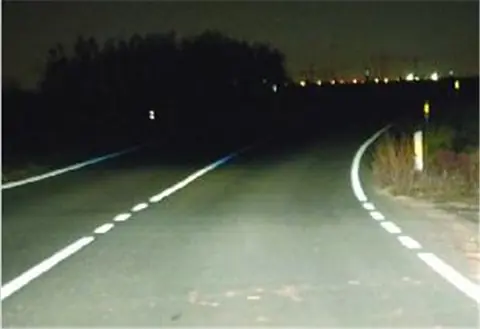
Es obligatorio utilizar las luces de carretera al circular a más de 40 kilómetros por hora por una vía...
Main beam must be used when driving at more than 40 kilometres per hour on a road that is...
- Ainsuficientemente iluminada fuera de poblado.insufficiently lit, outside built-up areas.
- Binsuficientemente iluminada, dentro o fuera de poblado.insufficiently lit, inside or outside built-up areas.
- Csuficientemente iluminada fuera de pobladosufficiently lit, outside built-up areas.
ExplanationUnder Article 100 of the General Traffic Regulations (RGC), main beam is compulsory at night, outside built-up areas, on insufficiently lit roads and at more than 40 km/h. A road is insufficiently lit if you cannot read a number plate at 10 m or make out a dark-coloured vehicle at 50 m.
¿Está permitido circular en poblado con la luz de largo alcance?
Are you allowed to drive in a built-up area with main beam on?
- ANo.No.
- BSí, siempre que no se deslumbre a ningún usuario.Yes, as long as you do not dazzle anyone.
- CSí, cuando la vía esté insuficientemente iluminada.Yes, when the road is poorly lit.
ExplanationOn all roads in built-up areas, both streets and travesías (stretches of road through a town), it is prohibited to drive with main beam. These lights are very powerful and often dazzle other road users. As built-up areas have many pedestrians as well as vehicles, these lights may not be used. They may not be used either when the vehicle is stopped or parked.
¿Cuántas luces de corto alcance, o cruce, pueden tener las motocicletas?
How many dipped headlights may motorcycles have?
- AUna o dos.One or two.
- BSólo una.Only one.
- CNinguna.None.
ExplanationUnder Article 16 of the General Vehicle Regulations, a dipped headlight is compulsory on every motorcycle, and the technical rules allow it to have one or two. Motorcycles must also keep it switched on during the day.
Si nos encontramos circulando de día con niebla espesa, ¿qué luces debemos llevar como mínimo?
If we are driving during the day in thick fog, which lights must we have on as a minimum?
- ALas de corto o largo alcance.Dipped headlights or main beam.
- BLas antiniebla traseras y corto alcance.Rear fog lights and dipped headlights.
- CLas antiniebla traseras y delanteras más el alumbrado de corto alcance.Rear and front fog lights plus dipped headlights.
ExplanationFRONT FOG LIGHT: - Fitting and using it is NOT compulsory. - It is white or selective yellow. - It may be used, if you choose, in fog, heavy rain, snowfall, clouds of smoke or dust, or in similar conditions. - It may also be used on narrow roads with many bends, that is, roads with a carriageway 6.5 m wide or less that are marked with 'dangerous bends' signs. REAR FOG LIGHT: - Fitting and using it is compulsory. - It is red. - It must be used in THICK fog, VERY heavy rain, HEAVY snowfall or DENSE clouds of smoke or dust. In this question, as the fog is thick, we must have the rear fog light and dipped headlights on. As fitting the front fog light is optional, using it is optional too.
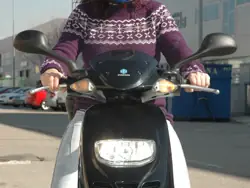
Si su ciclomotor tiene instalada la luz de carretera, ¿Por qué vías debe utilizarla?
If your moped is fitted with main beam, on which roads must you use it?
- ASólo por vías interurbanas insuficientemente iluminadas.Only on poorly lit roads outside built-up areas.
- BPor vías interurbanas, suficientemente o insuficientemente iluminadas.On roads outside built-up areas, whether well lit or poorly lit.
- CPor cualquier vía que esté mal iluminada.On any road that is badly lit.
ExplanationMain beam is only used outside built-up areas, on poorly lit roads and when it cannot dazzle anyone. On well-lit roads outside built-up areas and on any road in a built-up area, dipped headlights are used.
¿Qué alumbrado utilizaremos al circular de noche por una vía urbana insuficientemente iluminada?
Which lights should we use when driving at night on a poorly lit road in a built-up area?
- AEl alumbrado de posición.Position lights.
- BEl alumbrado de corto alcance.Dipped headlights.
- CEl alumbrado de largo alcance.Main beam.
ExplanationTo drive at night on a road in a built-up area, whatever its level of lighting, you must use dipped headlights. Main beam is prohibited in built-up areas. Even if the road is poorly lit, dipped headlights must be used to avoid dazzling other road users. When driving, the position lights must always be used together with some other lights; you cannot drive with only the position lights.
Al circular por un túnel de vía interurbana, que se encuentra suficientemente iluminado, y no hay ningún vehículo en sus proximidades al que se pueda deslumbrar, ¿qué luces se utilizarán?
When driving through a tunnel on a road outside built-up areas that is sufficiently lit, and there is no vehicle nearby that you could dazzle, which lights must you use?
- APosición aisladamente, porque está suficientemente iluminado.Sidelights only, because the tunnel is sufficiently lit.
- BPosición, y alumbrado de corto alcance o cruce.Sidelights and dipped headlights.
- CPosición, y alumbrado de corto o largo alcance según se juzgue oportuno.Sidelights and dipped headlights or main beam, as you see fit.
ExplanationUnder Article 101 of the General Traffic Regulations (RGC), in sufficiently lit tunnels you must always have your sidelights and dipped headlights on, whether or not there are other vehicles. Main beam is only used in tunnels that are not sufficiently lit.
Un turismo circula por una travesía insuficientemente iluminada, ¿qué alumbrado debe llevar?
A car is driving on a poorly lit travesía (stretch of road through a town). Which lights must it have on?
- ASólo el alumbrado de posición.Only the position lights.
- BEl alumbrado de posición y el de cruce.The position lights and dipped headlights.
- CSólo el alumbrado de carretera.Only main beam.
ExplanationDipped headlights must be used together with the position lights between sunset and sunrise on roads in built-up areas, travesías and well-lit roads outside built-up areas, and on poorly lit roads in built-up areas and travesías. Main beam is prohibited in built-up areas.
En una vía urbana insuficientemente iluminada, ¿qué luces debe utilizar?
On a poorly lit road in a built-up area, which lights must you use?
- ASolo posición.Only position lights.
- BPosición y luces de corto alcance.Position lights and dipped headlights.
- CSolo luces largas.Only main beam.
ExplanationOn a poorly lit road in a built-up area, the driver must use the position lights together with dipped headlights. This makes the vehicle visible to other road users and at the same time lights the carriageway properly without dazzling other drivers. Switching on only the position lights is not enough, because they do not light the road, and using only main beam is not appropriate either, because it could dazzle other vehicles on the road.
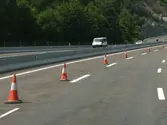
Al circular, durante el día, por el carril contiguo a uno habilitado en sentido contrario al habitual, ¿debe llevar encendida alguna luz?
When driving during the day in the lane next to one that has been opened to traffic in the opposite direction to normal, must you have any lights on?
- ASí, la de corto alcance, al menos.Yes, at least dipped headlights.
- BSí, la de posición.Yes, the position lights.
- CNo.No.
ExplanationDuring the day, dipped headlights must be on for motorcycles on any road, inside or outside built-up areas, and for all vehicles driving in: - a reversible lane; - a temporary additional lane, and also vehicles driving on the hard shoulder; - a lane opened for traffic in the opposite direction to normal, whether the lane is reserved only for them or opened to traffic in that direction as an exception; - a lane with the normal direction of traffic next to a lane opened for traffic in the opposite direction to normal.
Si Ud. es deslumbrado por las luces de largo alcance de otro vehículo, ¿qué debe hacer para evitar al alcance de vehículos o peatones que circulen en el mismo sentido?
If you are dazzled by another vehicle's main beam, what should you do to avoid running into vehicles or pedestrians travelling in the same direction?
- AApartarse lo más posible a la derecha de la vía, saliéndose de la calzada.Move as far as possible to the right of the road, leaving the carriageway.
- BReducir la velocidad lo necesario, incluso hasta la detención total.Reduce speed as much as necessary, even coming to a complete stop.
- CHacer señales con el alumbrado de carretera al vehículo que está deslumbrando.Flash your main beam at the vehicle that is dazzling you.
ExplanationReducing speed as much as necessary, even coming to a complete stop, is correct because it gives you time to adapt to the situation and avoid an accident. By slowing down, you can control your vehicle better and pay more attention to what is happening around you, which is essential when you are dazzled by another car's lights.
Un vehículo de motor que circula de noche por una travesía suficientemente iluminada...
A motor vehicle driving at night on a well-lit travesía (stretch of road through a town)...
- Aúnicamente debe utilizar el alumbrado de posición.only has to use the position lights.
- Bno es necesario que utilice ningún alumbrado.does not need to use any lights.
- Cdebe utilizar el alumbrado de corto alcance y el de posición.must use dipped headlights and position lights.
ExplanationEvery motor vehicle and moped driving between sunset and sunrise on well-lit roads, inside or outside built-up areas, or at any time of day in well-lit tunnels and other stretches of road covered by the 'Tunnel' sign, must have dipped headlights on as well as the position lights. When driving, we must always have the position lights on together with some other lights (dipped, main beam or fog lights).
¿Qué indica la luz amarilla, visible desde todas las direcciones, que lleva el tractor agrícola en su techo?
What does the yellow light on the roof of an agricultural tractor, visible from all directions, indicate?
- AQue está en la carretera o cerca de ella.That it is on the road or near it.
- BQue no puede circular a más de 30 km/h.That it cannot travel faster than 30 km/h.
- CQue circula en servicio de urgencia.That it is on an emergency call.
ExplanationThe yellow V-2 light, visible from all directions, shows the position on or near the road of a vehicle that is working, stopped or travelling at no more than 40 km/h, such as a tractor (Annex XI of the General Vehicle Regulations). It does not indicate an emergency call.
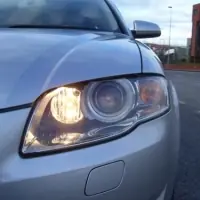
Es necesario encender el alumbrado de posición...
You must switch on the position lights...
- ASi estaciona en la calzada de una travesía suficientemente iluminada.if you park on the carriageway of a well-lit travesía (stretch of road through a town).
- BSiempre que deba utilizar cualquier otro alumbrado en circulación.whenever you must use any other lights while driving.
- CSiempre que esté estacionado en el arcén de una vía urbana suficientemente iluminada.whenever you are parked on the hard shoulder of a well-lit road in a built-up area.
ExplanationThe position lights must be switched on whenever any other lights are used while driving: dipped headlights or main beam are always used in addition to the position lights. However, when parking on a well-lit road in a built-up area, you do not have to leave any lights on.
¿Cuándo es obligatorio utilizar el alumbrado de corto alcance durante el día?
When is it compulsory to use dipped headlights during the day?
- Aal circular por un carril reversible.When driving in a reversible lane.
- Bcuando llueve.When it is raining.
- Cal circular por un carril para VAO.When driving in an HOV lane (VAO).
ExplanationDuring the day, dipped headlights must be on for motorcycles on any road, inside or outside built-up areas, and for all vehicles driving in: - a reversible lane; - a temporary additional lane, and also vehicles driving on the hard shoulder; - a lane opened for traffic in the opposite direction to normal, whether the lane is reserved only for them or opened to traffic in that direction as an exception; - a lane with the normal direction of traffic next to a lane opened for traffic in the opposite direction to normal.
Si por la lluvia intensa en una vía interurbana no se distingue un vehículo negro a 50 metros, ¿se puede circular con las luces largas encendidas?
If, because of heavy rain on a road outside a built-up area, you cannot make out a black vehicle at 50 metres, can you drive with main beam on?
- ANo, está prohibido.No, it is prohibited.
- BSí, porque la vía no está suficientemente iluminada.Yes, because the road is not sufficiently lit.
- CSolo se puede encender el alumbrado de cruce y la luz antiniebla delantera.You may only switch on dipped headlights and the front fog light.
ExplanationIn poor visibility, such as heavy rain, the General Traffic Regulations require lights to be used. According to Article 106, when visibility is greatly reduced, the appropriate lights must be used. Main beam can be used to improve visibility on poorly lit roads outside built-up areas, when you cannot make out a black vehicle at 50 metres.
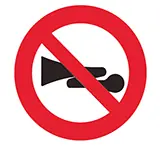
¿Cuándo está permitido utilizar las señales acústicas?
When is it allowed to use the horn?
- ACuando circulo por vías urbanas solamente.Only when I am driving on roads in built-up areas.
- BCuando circulo por cualquier vía en cualquier circunstancia.When I am driving on any road, in any circumstances.
- CCuando quiero adelantar fuera de poblado.When I want to overtake outside a built-up area.
ExplanationAccording to Article 110 of the General Traffic Regulations, the horn may only be used to avoid a possible accident, to warn of the intention to overtake outside built-up areas, or on an emergency call. Using it without reason is prohibited, and in built-up areas it is not used for overtaking.
All topics
- Definitions
- Documents and penalty points
- The driver's condition
- Duties of drivers and pedestrians
- Vehicle safety devices
- Vehicle controls and equipment
- Traffic signs, markings and signals
- The road and its lanes
- Speed and distances
- Manoeuvres
- Right of way
- Carrying passengers and loads
- Driving safely in difficult conditions
- Vehicle mechanics and maintenance
- Road accidents and first aid
- Defensive and eco-driving
Independent app: not affiliated with or endorsed by the DGT (Spain's Directorate-General for Traffic) or the Ministry of the Interior. The official exam is booked with the DGT and taken at its test centres. The questions here are practice material; the DGT's official question bank is not public.
Basado en datos de la Agencia Estatal Boletín Oficial del Estado (https://www.boe.es). Textos consolidados de carácter meramente informativo. La AEBOE no patrocina ni respalda este sitio.
Parte de las preguntas procede de los tests de la revista «Tráfico y Seguridad Vial» de la DGT, reproducidos con indicación de la fuente.