
DGT test · 839 questions
Vehicle lights and horn · Page 6 of 17
Side, dipped, main-beam, fog and hazard lights, and the horn: when each one is compulsory and when it is forbidden.
Questions in this topic, with answers
839 questions, 50 per page, with the correct answer and the explanation. Page 6 of 17.
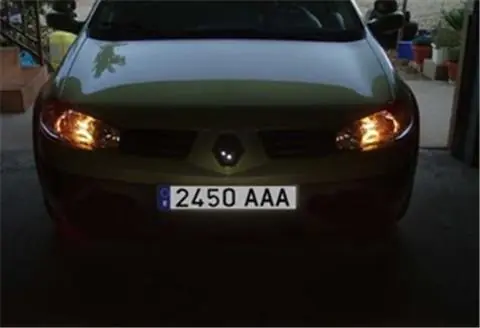
Es obligatorio encender el alumbrado de posición...
It is compulsory to switch on the position lights...
- Asiempre que esté estacionado en el arcén de una vía urbana suficientemente iluminada.whenever you are parked on the hard shoulder of a well-lit road in a built-up area.
- Bal estacionar en la calzada de una travesía suficientemente iluminada.when parking on the carriageway of a well-lit travesía (stretch of road through a town).
- Csiempre que deba utilizar cualquier otro alumbrado en circulación.whenever you must use any other lights while driving.
ExplanationThe position lights must come on automatically when the vehicle has dipped headlights, main beam or fog lights on. When driving, they must always be used together with one of these. We must switch them on between sunset and sunrise, or in weather or environmental conditions that reduce visibility: * when stopped on the carriageway or hard shoulder of any road, including tunnels, underpasses or enclosed places; * also when parked: - on a hard shoulder that cannot be driven on, on a road outside a built-up area; - on the carriageway or hard shoulder of a poorly lit travesía; - on the carriageway or hard shoulder of a road in a built-up area, when the lighting does not let other road users see the vehicle from a sufficient distance.
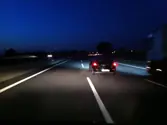
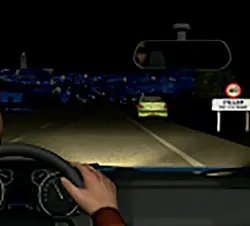
Circulando por esta vía fuera de poblado insuficientemente iluminada, en las circunstancias de la imagen, ¿qué alumbrado utilizaremos?
When driving on this poorly lit road outside a built-up area, in the conditions shown in the picture, which lights should we use?
- AAlumbrado de posición solamente.Only position lights.
- BAlumbrado de corto alcance.Dipped headlights.
- CAlumbrado de largo alcance o carretera.Main beam.
ExplanationWhen driving on a poorly lit road outside a built-up area, we must use main beam, switching to dipped headlights when we expect we could dazzle other road users, as in the picture.
El alumbrado de cruce también es obligatorio:
Dipped headlights are also compulsory:
- AAl circular bajo lluvia intensa, niebla o nieveWhen driving in heavy rain, fog or snow.
- BSolo entre la puesta y salida del solOnly between sunset and sunrise.
- CSolo de nocheOnly at night.
ExplanationAs well as between sunset and sunrise and in tunnels, dipped headlights are compulsory in heavy rain, fog, snow, dust or smoke that reduce visibility.
¿Qué luces debemos usar al circular de noche por una calle urbana bien iluminada?
Which lights should we use when driving at night along a well-lit urban street?
- ALuces de posición y luces cortas.Sidelights and dipped headlights.
- BNinguna.None.
- CLuces cortas o largas indistintamente.Dipped headlights or main beam, either one.
ExplanationAt night, on a sufficiently lit urban road, you must have your sidelights and dipped headlights on (Articles 99.1 and 101.1 of the General Traffic Regulations). Main beam is intended for interurban roads that are not well enough lit, not for a well-lit street.
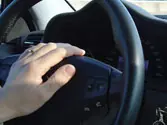
¿En una vía dentro de poblado podrán efectuarse señales acústicas?
On a road in a built-up area, can the horn be used?
- ANo, en ningún caso.No, never.
- BSí para evitar un posible accidente.Yes, to avoid a possible accident.
- CSí, para evitar un posible accidente o indicar el propósito de adelantar.Yes, to avoid a possible accident or to show the intention to overtake.
ExplanationIn a built-up area it is not allowed to use the horn to show the intention to overtake, but it is allowed to avoid a possible accident.
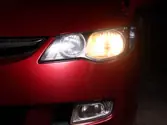
Circulando durante la noche por una vía urbana insuficientemente iluminada, ¿qué alumbrado se deberá utilizar?
When driving at night on a poorly lit road in a built-up area, which lights must be used?
- AAlumbrado de posición.Position lights.
- BAlumbrado de corto alcance.Dipped headlights.
- CAlumbrado de largo alcance.Main beam.
ExplanationIn a built-up area, if the road is poorly lit, at night you must have dipped headlights on as well as the position lights (Article 101 of the General Traffic Regulations). Main beam is only used outside built-up areas, and position lights alone are not enough.
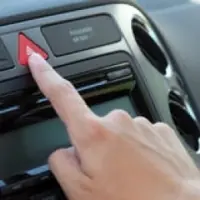
¿Que luz se debe accionar para advertir la inmovilización de un vehículo en autopista?
Which light must be switched on to warn that a vehicle is immobilised on a motorway (autopista)?
- ALuz indicadora de direcciónDirection indicator.
- BLuz de emergenciaHazard warning lights.
- CLuz de gáliboEnd-outline marker light.
ExplanationWhen we want to warn other road users that a vehicle is immobilised on a motorway (autopista), we must use the hazard warning lights, so that the vehicle is visible and others can see that it has stopped several metres before reaching it.
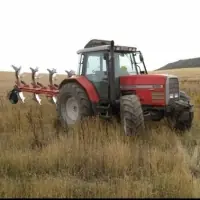
¿Cuantas luces de corto alcance debe llevar un vehículo especial autopropulsado agrícola?
How many dipped headlights must a self-propelled agricultural special vehicle have?
- ADos traserasTwo at the rear.
- BDos delanterasTwo at the front.
- CDos luces, una delante y otra detrásTwo lights, one at the front and one at the rear.
ExplanationSelf-propelled agricultural special vehicles must have two front dipped headlights, whose light must be white, placed at the outer edges of the front of the vehicle.
Hay mucha niebla. ¿Con qué alumbrado es correcto que circule el turismo?
There is a lot of fog. With which lights is it correct for the car to be driven?
- AÚnicamente las luces de posición.Only the position lights.
- BLas luces antiniebla junto con las luces cortas.The fog lights together with dipped headlights.
- CLas luces antiniebla junto con la luz de emergencia.The fog lights together with the hazard warning lights.
ExplanationWhen driving in a lot of fog, we must switch on dipped headlights, the rear fog lights and, if our vehicle has them, the front fog lights too.
¿Puede dejar las luces largas encendidas al detenerse?
Can you leave main beam on when you stop?
- ANo, está prohibido.No, it is prohibited.
- BSí, en vías interurbanas.Yes, on roads outside built-up areas.
- CSí, cuando la vía está insuficientemente iluminada.Yes, when the road is poorly lit.
ExplanationUnder the General Traffic Regulations, it is prohibited to keep main beam on when the vehicle is stopped or parked. This is set out specifically in the rules on the use of vehicle lights, to avoid dazzle and ensure road safety. So the correct answer is that you may NOT keep main beam on when you stop.
Está anocheciendo y no hay niebla. ¿Es correcto encender las luces antiniebla delanteras?
It is getting dark and there is no fog. Is it correct to switch on the front fog lights?
- ANo.No.
- BSí.Yes.
- CSí, junto con las luces de posición.Yes, together with the sidelights.
ExplanationFront fog lights may only be switched on in fog, heavy rain, snowfall, or clouds of smoke or dust, and on narrow roads with many signposted bends. At dusk without these conditions they must not be used: you should switch on the sidelights and dipped headlights.
¿Cuál de las siguientes luces de un vehículo puede producir deslumbramiento, aunque estén bien regladas?
Which of the following vehicle lights can cause dazzle even when properly adjusted?
- ALas luces de cruce y las de carretera.Dipped headlights and main beam.
- BLas luces de largo alcance o carretera.Main beam.
- CLas luces de corto alcance o cruce.Dipped headlights.
ExplanationMain beam lights are very powerful and designed to light a long distance. Even when properly adjusted, they can dazzle other drivers, especially if used when they should not be, such as when there is oncoming traffic.
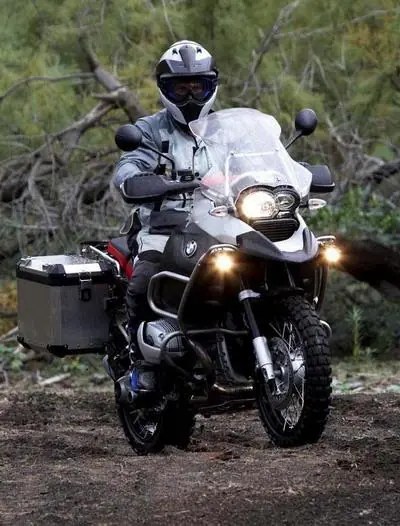
En las motocicletas, ¿está permitido instalar luces antiniebla delantera?
Is it allowed to fit front fog lights on motorcycles?
- ASí, en todas las motocicletas, con o sin sidecar.Yes, on all motorcycles, with or without a sidecar.
- BSí, pero sólo en las motocicletas con sidecar.Yes, but only on motorcycles with a sidecar.
- CNo, las motocicletas no pueden llevar luces antiniebla.No, motorcycles may not have fog lights.
ExplanationArticle 17 of the General Vehicle Regulations includes the front fog light among the optional devices for all motorcycles, both with and without a sidecar. They may have one fitted, although it is not compulsory.
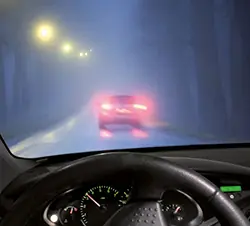
La luz antiniebla trasera se utilizará siempre que...
The rear fog light will be used whenever...
- Ase circule a velocidad anormalmente reducida.you are driving at an unusually low speed.
- Bse circule por carreteras de alta montaña.you are driving on high mountain roads.
- Clas condiciones meteorológicas sean especialmente desfavorables.the weather conditions are especially unfavourable.
ExplanationThe rear fog light is very bright and dazzles drivers behind, so it must only be used when conditions are especially unfavourable: thick fog, very heavy rain or heavy snowfall.
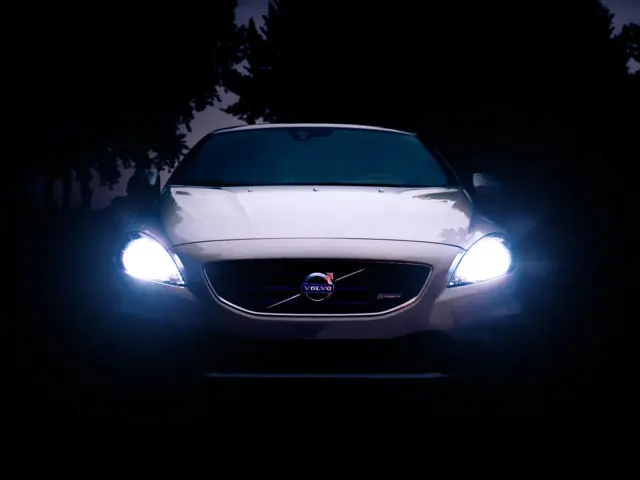
Vas a más de 40 kilómetros por hora por una vía. ¿Cuándo es obligatorio usar luces de carretera?
You are travelling at more than 40 kilometres per hour on a road. When is it compulsory to use main beam?
- ACuando la vía no está bien iluminada, dentro o fuera de un poblado.When the road is not well lit, inside or outside a built-up area.
- BCuando la vía está bien iluminada fuera de un poblado.When the road is well lit, outside a built-up area.
- CCuando la vía no está bien iluminada fuera de un poblado.When the road is not well lit, outside a built-up area.
ExplanationAccording to Article 100 of the General Traffic Regulations, main beam is compulsory between sunset and sunrise when driving at more than 40 km/h outside built-up areas on poorly lit roads, unless dipped headlights must be used so as not to dazzle.
En una vía interurbana insuficientemente iluminada es obligatorio utilizar el alumbrado de corto alcance…
On a poorly lit road outside a built-up area, it is compulsory to use dipped headlights...
- ACuando no se disponga de alumbrado de largo alcance o carretera.when you do not have main beam.
- BSiempre.always.
- CSólo cuando exista posibilidad de producir deslumbramiento a otros usuarios.only when there is a chance of dazzling other road users.
ExplanationOn a poorly lit road outside a built-up area at night, main beam is normal. Dipped headlights are compulsory when you do not have main beam, when driving at 40 km/h or less without using it, or when you could dazzle others; dazzle is not the only case.
El ciclomotor de 2 ruedas, ¿debe llevar obligatoriamente luces indicadoras de dirección?
Must a two-wheeled moped have indicators?
- ASí, obligatoriamente.Yes, they are compulsory.
- BSolo si circula por vías interurbanas.Only if it travels on roads outside built-up areas.
- CNo.No.
ExplanationA two-wheeled moped does not have to have indicators.
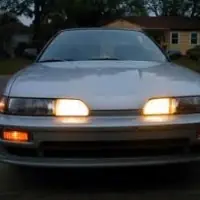
¿Con que luz debe funcionar simultáneamente la luz de corto alcance en todo caso?
Which light must dipped headlights always work together with?
- ACon la de posiciónThe position lights.
- BCon la antiniebla traseraThe rear fog light.
- CCon la de largo alcanceMain beam.
ExplanationDipped headlights must always work together with the position lights and the rear number plate light.
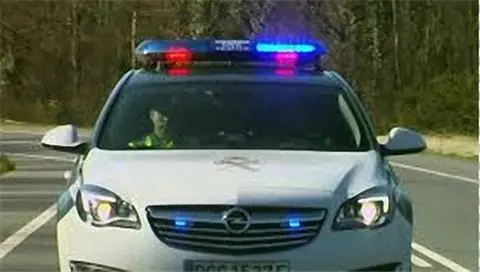
Si un vehículo de la policía se sitúa detrás de usted y enciende un dispositivo con una luz roja destellante hacia delante, ¿qué debe hacer?
If a police vehicle comes up behind you and switches on a device with a red light flashing forwards, what must you do?
- ADetenerse en cuanto pueda y salir del vehículo inmediatamente.Stop as soon as you can and get out of the vehicle immediately.
- BDetenerse en el lado derecho de la calzada delante del vehículo policial.Stop on the right-hand side of the carriageway in front of the police vehicle.
- CReducir la velocidad y apartarse a la derecha, para facilitar el adelantamiento.Slow down and move over to the right to make it easier to overtake.
ExplanationA red light flashing forwards from a police vehicle behind you tells the driver to stop on the right-hand side, in front of the police vehicle, in a place without risk, and to follow the officer's instructions (Annex I of the General Traffic Regulations). Getting out of the vehicle without being told to is not correct.
¿Es obligatoria la luz de marcha atrás en las motocicletas de tres ruedas?
Is a reversing light compulsory on three-wheeled motorcycles?
- ASí, siempre.Yes, always.
- BNo, nunca.No, never.
- CNo, pero se puede instalar.No, but one may be fitted.
ExplanationThe correct answer is 'No, but one may be fitted', because the reversing light is compulsory for all motor cars except motorcycles, three-wheeled vehicles and quadricycles that are not light quadricycles. However, three-wheeled motorcycles may have one fitted as an option.
Circulando con lluvia muy intensa, ¿qué luces antiniebla utilizaremos?
When driving in very heavy rain, which fog lights should we use?
- ALas delanteras obligatoriamente, las posteriores de forma opcional.The front ones compulsorily, the rear ones optionally.
- BLas delanteras opcionalmente y las posteriores obligatoriamente.The front ones optionally and the rear ones compulsorily.
- CLas delanteras y las posteriores obligatoriamente.Both the front and the rear ones compulsorily.
ExplanationVehicles do not have to be fitted with a front fog light, so using it is optional. This is not the case for the rear fog light, so in VERY heavy rain it must be on. FRONT FOG LIGHT: - Fitting and using it is NOT compulsory. - It is white or selective yellow. - It may be used, if you choose, in fog, heavy rain, snowfall, clouds of smoke or dust, or in similar conditions. - It may also be used on narrow roads with many bends, that is, roads with a carriageway 6.5 m wide or less that are marked with 'dangerous bends' signs. REAR FOG LIGHT: - Fitting and using it is compulsory. - It is red. - It must be used in THICK fog, VERY heavy rain, HEAVY snowfall or DENSE clouds of smoke or dust. During the day, the front fog light may be on with just the position lights, but it can also be used together with dipped headlights or main beam. At night, it must be used at least with dipped headlights. During the day, the rear fog light must be used at least together with the front fog light or dipped headlights. At night, at least with dipped headlights.
Si está lloviendo ligeramente durante la noche, ¿podremos usar el alumbrado antiniebla delantero?
If it is raining lightly at night, can we use the front fog light?
- ASí, siempre que lo usemos conjuntamente con el alumbrado de posición.Yes, as long as we use it together with the position lights.
- BSí ,siempre que lo usemos conjuntamente con el alumbrado de corto alcance.Yes, as long as we use it together with dipped headlights.
- CNo.No.
ExplanationFRONT FOG LIGHT: - Fitting and using it is NOT compulsory. - It is white or selective yellow. - It may be used, if you choose, in fog, heavy rain, snowfall, clouds of smoke or dust, or in similar conditions. - It may also be used on narrow roads with many bends, that is, roads with a carriageway 6.5 m wide or less that are marked with 'dangerous bends' signs. REAR FOG LIGHT: - Fitting and using it is compulsory. - It is red. - It must be used in THICK fog, VERY heavy rain, HEAVY snowfall or DENSE clouds of smoke or dust. During the day, the front fog light may be on with just the position lights, but it can also be used together with dipped headlights or main beam. At night, it must be used at least with dipped headlights. During the day, the rear fog light must be used at least together with the front fog light or dipped headlights. At night, at least with dipped headlights.
¿En qué situaciones utilizará el alumbrado por el día?
In which situations will you use lights during the day?
- ACuando conduzca una motocicleta en cualquier tipo de vía y los vehículos que circulen por carriles habilitados en sentido contrario.When riding a motorcycle on any type of road, and for vehicles driving in lanes opened in the opposite direction.
- BConduciendo una motocicleta o un ciclomotor sólo cuando las condiciones meteorológicas disminuyan la visibilidad.When riding a motorcycle or a moped, only when the weather reduces visibility.
- CLas motocicletas y los vehículos que circulen por una vía con un carril en sentido contrario.Motorcycles, and vehicles driving on a road with a lane in the opposite direction.
ExplanationDuring the day, dipped headlights must be on for motorcycles on any road, inside or outside built-up areas, and for all vehicles driving in: - a reversible lane; - a temporary additional lane, and also vehicles driving on the hard shoulder; - a lane opened for traffic in the opposite direction to normal, whether the lane is reserved only for them or opened to traffic in that direction as an exception; - a lane with the normal direction of traffic next to a lane opened for traffic in the opposite direction to normal; - when driving through tunnels, underpasses or stretches marked with the 'Tunnel' sign. In addition, when driving on any type of road in conditions where visibility is much lower than normal, such as fog, heavy rain, snowfall, clouds of smoke or dust or any similar situation, dipped headlights must also be used.
¿Es necesario comprobar el funcionamiento de las luces?
Is it necessary to check that the lights are working?
- ANo es necesario.No, it is not necessary.
- BSí, forma parte del mantenimiento preventivo del vehículo.Yes, it is part of the vehicle's preventive maintenance.
- CNo, si tiene instaladas luces de xenón.No, if xenon lights are fitted.
ExplanationChecking regularly that all the lights work, including the brake lights and indicators, is part of preventive maintenance: a blown bulb reduces visibility and stops others from noticing your manoeuvres. The type of light makes no difference: xenon or LED lamps can also fail.
¿Cuántas luces de frenado pueden llevarse en el sidecar de una motocicleta?
How many brake lights may be fitted on a motorcycle's sidecar?
- ANinguna.None.
- BDos.Two.
- CUna.One.
ExplanationUnder the General Vehicle Regulations (RGV), a motorcycle with a sidecar must have two or three red brake lights, and only one of them may be on the sidecar. In this way the combination signals braking without multiplying the lights on the side.
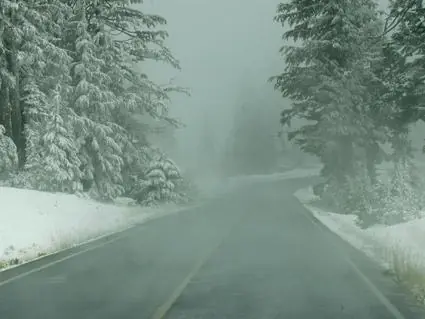
Si conduce una motocicleta y hay niebla ligera, ¿qué alumbrado debe utilizar?
If you are riding a motorcycle and there is light fog, which lights must you use?
- AEl de posición, el de cruce y el delantero de niebla si lo tiene instalado.The position light, the dipped headlight and the front fog light if fitted.
- BEl de posición, el de cruce y el delantero y trasero de niebla si los tiene instalados.The position light, the dipped headlight and the front and rear fog lights if fitted.
- CEl de posición y el de cruce, siendo optativo el de largo alcance.The position light and the dipped headlight, main beam being optional.
ExplanationWhen riding in light fog at any time of day, both inside and outside built-up areas, we must use the dipped headlight together with the position light and, if fitted, the front fog light. We only use the rear fog light when the weather or environmental conditions are especially unfavourable, such as thick fog, very heavy rain, heavy snowfall or dense clouds of dust or smoke.
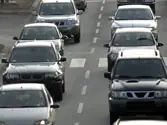
En vías con tráfico denso, ¿se puede hacer uso del claxon?
On roads with heavy traffic, can you use the horn?
- ASí, pero sólo fuera de poblado.Yes, but only outside built-up areas.
- BSí, pero sólo dentro de poblado.Yes, but only inside built-up areas.
- CNo, salvo que sea estrictamente necesario.No, unless it is strictly necessary.
ExplanationDrivers of non-priority vehicles may only use audible warnings when strictly necessary and not for purposes other than those in the regulations. They may be used to avoid an accident, to warn outside built-up areas of the intention to overtake, or to warn other road users of your presence when on an emergency call.
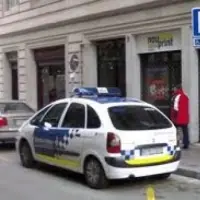
¿De qué color son las luces prioritarias de los servicios de policía?
What colour are the priority lights of police services?
- ARojoRed.
- BAzulBlue.
- CAmarillo-autoAmber.
ExplanationThe lights of all priority vehicles, not only police vehicles, must be blue, so that they can be told apart from other vehicles on the road.
Con niebla que reduce mucho la visibilidad, ¿está permitido conducir solo con las luces de posición y las luces de cruce?
In fog that greatly reduces visibility, are you allowed to drive with only sidelights and dipped headlights?
- ASí, si el vehículo no dispone de luces antiniebla.Yes, if the vehicle does not have fog lights.
- BNo, debe encender obligatoriamente las luces antiniebla delanteras y traseras.No, you must switch on the front and rear fog lights.
- CNo, deben llevarse encendidas las luces antiniebla delanteras en todos los casos.No, the front fog lights must be on in all cases.
ExplanationIn fog, Article 106.2 of the General Traffic Regulations requires the front fog light or dipped headlights or main beam, so dipped headlights are enough. In thick fog the rear fog light must also be switched on; if the vehicle has no fog lights, sidelights and dipped headlights are enough.
De noche circula con las luces de cruce a 40 km/h por una vía interurbana insuficientemente iluminada, ¿Es correcto?
At night you are driving at 40 km/h with dipped headlights on an insufficiently lit interurban road. Is this correct?
- ANo, debe encender la luz antiniebla trasera.No, you must switch on the rear fog light.
- BNo, debe encender la luz de largo alcance.No, you must switch on the main beam.
- CSí.Yes.
ExplanationUnder Article 101 of the General Traffic Regulations, on insufficiently lit interurban roads you may drive with dipped headlights if you are travelling at 40 km/h or less and not using the main beam. The rear fog light is used only in very poor visibility.
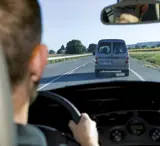
Si por circunstancias del tráfico prevé que va a tener que reducir considerablemente la velocidad, ¿qué debe hacer?
If traffic conditions mean you expect to have to reduce your speed considerably, what must you do?
- ACircular con la marcha más corta posible.Drive in the lowest possible gear.
- BDeberá advertirlo mediante el empleo reiterado de las luces de frenado.Warn others by repeatedly using the brake lights.
- CAdvertirlo mediante señales acústicas.Warn others with the horn.
ExplanationArticle 109 of the General Traffic Regulations requires you to warn that you are going to brake considerably, whenever possible, by repeatedly using the brake lights or by moving your arm up and down. This prevents rear-end collisions.
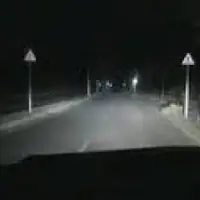
¿Puede utilizarse simultáneamente la luz de largo alcance con la luz de cruce?
Can main beam be used at the same time as dipped headlights?
- ANoNo.
- BSí.Yes.
- CÚnicamente en cruces no señalizadosOnly at junctions without signs.
ExplanationA vehicle's main beam may be used alone or at the same time as dipped headlights on all types of road, and it must always work together with the position lights and the rear number plate light.
¿Está permitido utilizar en poblado las advertencias acústicas?
Is it allowed to use audible warnings in a built-up area?
- ASí, si el sonido no es estridente.Yes, if the sound is not shrill.
- BNo, en poblado están prohibidas.No, they are prohibited in built-up areas.
- CSí, para evitar un posible accidente.Yes, to avoid a possible accident.
ExplanationAudible warnings may only be used in exceptional cases: to avoid a possible accident, especially on narrow roads with many bends; to warn outside built-up areas of the intention to overtake; or to warn other road users of your presence when on an emergency call.
Si conduce en una zona urbana y no puede leer una matrícula a 10 metros, ¿qué tipo de luces debe usar?
If you are driving in an urban area and cannot read a number plate at 10 metres, which lights must you use?
- ALuces largas (luz de carretera).Main beam.
- BLuces de cruce (luces cortas).Dipped headlights.
- CSolo luces de posición.Only position lights.
ExplanationAccording to Article 101 of the General Traffic Regulations, in urban areas and when the lighting is poor, dipped headlights must be used. This is especially important when you cannot read a number plate at less than 10 metres, as this shows poor visibility. Using dipped headlights helps avoid dazzling other drivers, which is essential for road safety.
Las motocicletas, ¿podrán llevar luz antiniebla delantera?
Can motorcycles have a front fog light?
- ANo, solo la pueden llevar los turismos.No, only cars can have one.
- BSí.Yes.
- CSolo en el caso de que además dispongamos de las traseras.Only if they also have rear ones.
ExplanationMotorcycles may optionally have a front fog light, whether or not they have a rear one.
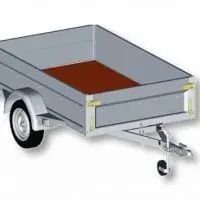
¿Cuántas luces de frenado pueden llevar los remolques de las máquinas agrícolas?
How many brake lights may trailers of agricultural machines have?
- ADosTwo.
- BCuatroFour.
- CNingunaNone.
ExplanationTrailers of agricultural machines may optionally have two red brake lights at the rear.
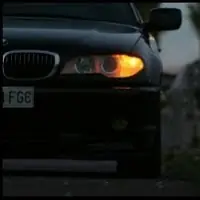
¿Es obligatorio que los automóviles lleven luces de posición lateral?
Is it compulsory for motor cars to have side position lights?
- ASolo en aquellos que superen los 6 metros de longitudOnly on those more than 6 metres long.
- BSi, en todasYes, on all of them.
- CSolo en aquellos que superen los 3 metros de longitudOnly on those more than 3 metres long.
ExplanationSide position lights are compulsory only for vehicles more than 6 metres long, and their purpose is to make the vehicle's size more visible to other road users.
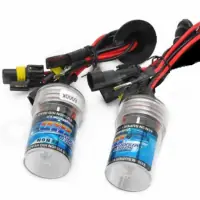
¿Qué vehículos están obligados a llevar un juego de lamparas de recambio?
Which vehicles are required to carry a set of spare bulbs?
- ATodos los vehículos están obligadosAll vehicles are required to.
- BNinguno, es opcional llevarloNone, carrying one is optional.
- CÚnicamente los vehículos especiales de motorOnly special motor vehicles.
ExplanationSince 2010 it has not been compulsory to carry a set of spare bulbs in our vehicle, nor a set of tools to change them. This is because most new vehicles have a lighting system that the user cannot work on; only an authorised workshop can.
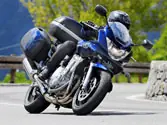
Las motocicletas tendrán que llevar la luz de cruce encendida...
Motorcycles must have the dipped headlight on...
- ASolo cuando circulen por vía interurbana, tanto de día como de noche.only when riding on roads outside built-up areas, both by day and at night.
- BCuando circulen por cualquier vía pública, tanto de día como de noche.when riding on any public road, both by day and at night.
- CCuando circulen por cualquier vía pública, solo durante la noche.when riding on any public road, only at night.
ExplanationMotorcycles must use the dipped headlight when riding on any public road, both by day and at night.
En rectas y llano, ¿cuál de las siguientes luces de un vehículo pueden producir deslumbramiento, aunque estén bien regladas?
On straight, level roads, which of the following vehicle lights can cause dazzle even when properly adjusted?
- ALas luces de corto alcance o de cruce.Dipped headlights.
- BLas luces de largo alcance o de carretera.Main beam.
- CLas dos anteriores.Both of the above.
ExplanationMain beam lights are designed to light longer distances and are more powerful. Even when properly adjusted, they can dazzle other drivers if used in unsuitable situations, such as on roads with oncoming traffic or in normal visibility, where so much light is not needed.
¿Qué alumbrado llevaremos encendido una motocicleta durante el día?
Which lights should a motorcycle have on during the day?
- AEl de corto alcance o cruce.The dipped headlight.
- BEl de carretera fuera de poblado y el de cruce dentro de poblado.Main beam outside built-up areas and the dipped headlight inside built-up areas.
- CEl de posición o el de cruce.The position light or the dipped headlight.
ExplanationMotorcycles must have at least the dipped headlight on, both by day and at night.
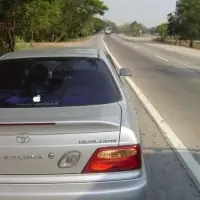
¿Cuantas luces de posición traseras debe llevar un turismo?
How many rear position lights must a car have?
- AUna única luz sin posibilidad de poner másA single light, with no possibility of fitting more.
- BTresThree.
- CDosTwo.
ExplanationCars must have two red rear position lights, placed at the outer edges of the vehicle.
Si el vehículo que nos precede emplea reiteradamente las luces de frenado, ¿qué nos está indicando?
If the vehicle in front repeatedly uses its brake lights, what is it telling us?
- AQue tiene una avería.That it has broken down.
- BQue tiene intención de inmovilizar el vehículo o de frenar considerablemente.That it intends to stop the vehicle or brake considerably.
- CQue estamos circulando demasiado próximos a él.That we are driving too close to it.
ExplanationThe intention to stop the vehicle or to slow down considerably must be signalled, whenever possible, by repeatedly using the brake lights.
¿Debes encender las luces al entrar en un túnel?
Must you switch on your lights when entering a tunnel?
- ASolo si es largoOnly if it is long.
- BSí, siempre al entrar en cualquier túnelYes, always when entering any tunnel.
- CSolo si no tiene iluminación propiaOnly if it has no lighting of its own.
ExplanationIt is compulsory to switch on dipped headlights when entering any tunnel, whatever its length and whether or not it has its own artificial lighting.
¿Qué alumbrado usaremos para circular por una vía interurbana suficientemente iluminada?
Which lights should we use to drive on a well-lit road outside a built-up area?
- AEl alumbrado de cruce.Dipped headlights.
- BEl alumbrado de carretera.Main beam.
- CEl alumbrado de posición.Position lights.
ExplanationOn a road outside a built-up area, we use dipped headlights if it is well lit and main beam if it is poorly lit.
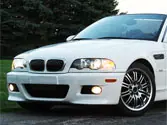
Si su vehículo dispone de ella y no existe niebla, ¿en qué otra circunstancia puede emplear la luz antiniebla delantera?
If your vehicle has a front fog light and there is no fog, in what other situation can you use it?
- AEn cualquier circunstancia en que disminuya la visibilidad.In any situation where visibility is reduced.
- BSólo se puede encender la luz antiniebla delantera con niebla espesa.The front fog light may only be switched on in thick fog.
- CEn tramos de vía estrechos, con sucesión de curvas peligrosas debidamente señalizada.On narrow stretches of road with a series of dangerous bends, properly signposted.
ExplanationFitting and using a front fog light is optional. It may be used when weather or environmental conditions greatly reduce visibility, such as fog, heavy rain, snowfall, clouds of smoke or dust or any similar situation. It may also be used on narrow stretches of road with many bends, meaning roads with a carriageway 6 metres 50 centimetres wide or less that are marked with signs showing a series of bends close together.
Se avería el alumbrado de largo alcance y se ve obligado a circular por una vía interurbana con la luz de corto alcance, ¿Qué debe hacer?
Your main beam fails and you have to drive on a road outside a built-up area with dipped headlights. What must you do?
- ACircular a una velocidad que permita la detención del vehículo dentro de la zona iluminada.Drive at a speed that lets you stop the vehicle within the lit area.
- BCircular siempre por el arcén.Always drive on the hard shoulder.
- CDetener el vehículo en el arcén.Stop the vehicle on the hard shoulder.
ExplanationAccording to Article 107 of the General Traffic Regulations, if a fault means you have to drive with weaker lights, you must reduce speed to one that lets you stop the vehicle within the lit area.
¿En que horas las imágenes se ven mas desdibujadas y es imprescindible llevar el alumbrado encendido?
At what time of day do images look more blurred, making it essential to have the lights on?
- AA media tardeIn the middle of the afternoon.
- BAl mediodiaAt midday.
- CAl amanecerAt dawn.
ExplanationDawn is the time of day when images and the road look more blurred because of the lack of sunlight, so it is essential to have the appropriate lights on for each road.
¿Qué alumbrado deberá dejar encendido, como norma general, el conductor de un vehículo inmovilizado entre la puesta y la salida del sol en el arcén de una travesía insuficientemente iluminada?
As a general rule, which lights must the driver of a vehicle immobilised between sunset and sunrise on the hard shoulder of a poorly lit travesía (stretch of road through a town) leave on?
- ANinguno.None.
- BLas luces de emergencia.The hazard warning lights.
- CLas luces de posición.The position lights.
ExplanationBetween sunset and sunrise, a vehicle immobilised on a poorly lit road or travesía must keep its position lights on so that others can see it.
Circula por una travesía; ya se ha puesto el sol y la vía está suficientemente iluminada. ¿Qué alumbrado debe encender?
You are driving on a travesía (stretch of road through a town); the sun has already set and the road is well lit. Which lights must you switch on?
- ANinguno, ya que la vía está suficientemente iluminada.None, because the road is well lit.
- BLas luces de posición y las de corto alcance o de cruce.The position lights and dipped headlights.
- CSolamente las luces de posición.Only the position lights.
ExplanationBetween sunset and sunrise, lights are compulsory even if the road is lit: on a travesía you must have the position lights and dipped headlights on.
All topics
- Definitions
- Documents and penalty points
- The driver's condition
- Duties of drivers and pedestrians
- Vehicle safety devices
- Vehicle controls and equipment
- Traffic signs, markings and signals
- The road and its lanes
- Speed and distances
- Manoeuvres
- Right of way
- Carrying passengers and loads
- Driving safely in difficult conditions
- Vehicle mechanics and maintenance
- Road accidents and first aid
- Defensive and eco-driving
Independent app: not affiliated with or endorsed by the DGT (Spain's Directorate-General for Traffic) or the Ministry of the Interior. The official exam is booked with the DGT and taken at its test centres. The questions here are practice material; the DGT's official question bank is not public.
Basado en datos de la Agencia Estatal Boletín Oficial del Estado (https://www.boe.es). Textos consolidados de carácter meramente informativo. La AEBOE no patrocina ni respalda este sitio.
Parte de las preguntas procede de los tests de la revista «Tráfico y Seguridad Vial» de la DGT, reproducidos con indicación de la fuente.