
DGT test · 150 questions
Defensive and eco-driving
Anticipating hazards, saving fuel and cutting emissions with smooth, forward-looking driving.
20 random questions
Loading questions…
Questions in this topic, with answers
150 questions, 50 per page, with the correct answer and the explanation. Page 1 of 3.
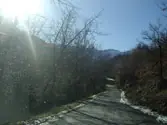
Para realizar un viaje, ¿es recomendable tener en cuenta la hora de salida en función del sol?
When planning a journey, is it advisable to consider the departure time in relation to the sun?
- ANo, es indiferente.No, it makes no difference.
- BSí, mejor circular durante la noche porque es más descansado.Yes, it is better to drive at night because it is more restful.
- CSí, para evitar el deslumbramiento del sol.Yes, to avoid being dazzled by the sun.
ExplanationIt is a good idea to make sure your journey does not coincide with sunrise or sunset, to avoid being dazzled. If the sun is in front of you and very low on the horizon, it will dazzle you, even if you use your vehicle's sun visor.
Al realizar una conducción preventiva, ¿el conductor solo ha de estar atento a cumplir todas las normas?
When driving defensively, does the driver only need to concentrate on obeying all the rules?
- ASí, porque al cumplir las normas no hay ningún riesgo en la conducción.Yes, because if you obey the rules there is no risk when driving.
- BNo, también debe estar atento a las reacciones del resto de conductores.No, they must also pay attention to how other drivers react.
- CSí, porque el resto de conductores también cumplen las normas.Yes, because other drivers also obey the rules.
ExplanationDefensive driving requires anticipating traffic situations, including trying to predict the reactions and possible mistakes of other road users.
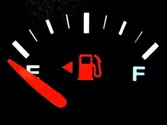
Para ahorrar combustible es aconsejable...
To save fuel, it is advisable to...
- Aconducir por encima de los 90 km/h.drive above 90 km/h.
- Bsobreinflar las ruedas.over-inflate the tyres.
- Cconducir suavemente sin acelerones ni frenadas bruscas.drive smoothly, without sudden acceleration or harsh braking.
ExplanationTo save fuel, it is advisable to drive at a steady speed, without heavy acceleration or braking.
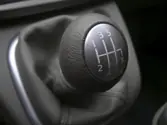
¿Qué velocidades o marchas dan más fuerza al vehículo?
Which gears give the vehicle the most power?
- ALa 1ª y la 2ª.1st and 2nd.
- BLa 3ª y la 4ª.3rd and 4th.
- CLa 4ª y la 5ª.4th and 5th.
ExplanationFirst and second are the lowest gears and have the most power to move the vehicle. We use first gear to move off, changing to second after about 2 seconds or 6 metres. Remember that first gear makes fuel consumption shoot up. As we change up to higher gears, we lose power but gain speed.
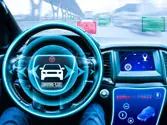
El sistema Start-Stop, ¿reduce el consumo de carburante?
Does the Start-Stop system reduce fuel consumption?
- ASí, y también la emisión de gases contaminantes.Yes, and also the emission of polluting gases.
- BNo, pero reduce la emisión de gases contaminantes.No, but it reduces the emission of polluting gases.
- CSí, pero no la emisión de gases contaminantes.Yes, but not the emission of polluting gases.
ExplanationThe Start-Stop system is a car technology that switches the engine off automatically when the vehicle stops (for example, at a traffic light) and restarts it when the driver wants to move off again. This reduces fuel consumption by preventing the engine from idling, which saves fuel and lowers polluting emissions.
El estilo de conducción de una motocicleta, ¿influye en el consumo de combustible?
Does the way a motorcycle is ridden affect fuel consumption?
- ASí.Yes.
- BNo, si se adopta una postura aerodinámica.No, if you adopt an aerodynamic riding position.
- CNo, sólo depende de la cilindrada de la motocicleta.No, it depends only on the motorcycle's engine size.
ExplanationDriving style affects fuel consumption in any vehicle, including a motorcycle: sudden acceleration and braking and high engine revs increase it. Smooth riding that anticipates what is ahead saves fuel.
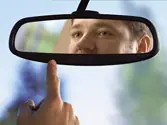
Al aplicar la técnica de visión, en conducción preventiva debemos ...
When applying the vision technique in defensive driving, we must...
- AMirar solamente al vehículo de delante.Look only at the vehicle in front.
- BNo es necesario mirar los retrovisores.Not check the mirrors, as it is not necessary.
- CMirar a lo lejos, a los lados y por lo retrovisores.Look far ahead, to the sides and in the mirrors.
ExplanationDefensive driving is based on the principles of vision, anticipation and space. As for vision, you must look far ahead, look to the sides often, check the mirrors frequently and turn your head to check the blind spot.
En las técnicas de conducción preventiva, ¿es suficiente con conducir cumpliendo las normas?
In defensive driving techniques, is it enough to drive obeying the rules?
- ANo, hay que tener también en cuenta que otro conductor puede cometer una infracción.No, you must also bear in mind that another driver may commit an offence.
- BSí, porque cumpliendo la normativa de tráfico el riesgo es nulo.Yes, because if you obey the traffic rules the risk is zero.
- CSí, porque cumplir las normas es obligatorio.Yes, because obeying the rules is compulsory.
ExplanationDefensive driving lets us anticipate any adverse situation, such as an offence by another driver, so that we can use the vehicle's controls in time and prevent possible road accidents. It is not only a matter of obeying the traffic rules but also of keeping a defensive attitude.
Como llamamos a la conducción que se basa en circular de forma segura ...
What do we call driving that is based on travelling safely...?
- AConducción eficiente.Eco-driving.
- BConducción preventiva.Defensive driving.
- CConducción temeraria.Reckless driving.
ExplanationDefensive driving lets you collect all the information needed to drive safely, always be ready to react quickly to anything unexpected and adapt your driving to the conditions around you. It is an attitude to driving that lets us drive more safely. It is based on the techniques of vision (looking far ahead and checking the mirrors often), anticipation (not trusting others and being ready to act) and space (keeping good distances in front, behind and to the sides).
Cuando circula próximo a otro vehículo, tiene que contar con la zona de incertidumbre del mismo. ¿Por dónde se extiende esta zona?
When you are driving close to another vehicle, you must allow for its zone of uncertainty. Where does this zone extend?
- APor delante del vehículo, solamente.In front of the vehicle only.
- BPor delante y por detrás del vehículo, solamente.In front of and behind the vehicle only.
- CPor delante, por detrás y lateralmente del vehículo.In front of, behind and to the sides of the vehicle.
ExplanationThe zone of uncertainty is the space around another vehicle into which it may move unexpectedly: braking, reversing, changing lane or swerving to one side. That is why it extends in front, behind and on both sides, and you should not stay in it longer than necessary, for example alongside the vehicle when overtaking.
Para una conducción eficiente, en motores de gasolina se recomienda cambiar de marcha:
For eco-driving with petrol engines, it is recommended to change gear:
- AEntre 1.000 y 1.500 rpm.Between 1,000 and 1,500 rpm.
- BEntre 2.000 y 2.500 rpm.Between 2,000 and 2,500 rpm.
- CEn el rango de 1.500 a 2.000 rpm.In the range of 1,500 to 2,000 rpm.
ExplanationFor eco-driving with petrol engines, it is recommended to change gear between 2,000 and 2,500 rpm. In this range the engine works at its best, which gives better fuel economy and lower emissions. The General Traffic Regulations emphasise economical, low-energy driving, which supports this practice.
La conducción preventiva es...
Defensive driving is...
- Auna forma de conducir peligrosa.a dangerous way of driving.
- Buna forma de conducción lenta e inadecuada.a slow and unsuitable way of driving.
- Cuna actitud ante la conducción que permite al conductor circular de una manera más segura.an attitude to driving that lets the driver drive more safely.
ExplanationDefensive driving lets you collect all the information needed to drive safely, always be ready to react quickly to anything unexpected and adapt your driving to the conditions around you. It is an attitude to driving that lets us drive more safely. It is based on the techniques of vision (looking far ahead and checking the mirrors often), anticipation (not trusting others and being ready to act) and space (keeping good distances in front, behind and to the sides).
Si su vehículo consume más carburante de lo habitual, ¿a qué puede ser debido?
If your vehicle uses more fuel than usual, what could be the cause?
- AAl sistema de encendido o alimentación.The ignition or fuel supply system.
- BAl sistema de escape.The exhaust system.
- CAl sistema de transmisión.The transmission system.
ExplanationThe fuel supply system supplies air and fuel to the engine, so a fault in it will increase fuel consumption.
Circular con las ventanillas bajadas ¿modifica la aerodinámica del vehículo?
Does driving with the windows down change the vehicle's aerodynamics?
- ASi, incrementando el consumo de combustible.Yes, increasing fuel consumption.
- BNo, y tampoco influye en el consumo de combustible.No, and it does not affect fuel consumption either.
- CSí, reduciendo el consumo de combustible.Yes, reducing fuel consumption.
ExplanationChanging the vehicle's aerodynamics increases fuel consumption, for example having a roof rack fitted or driving with the windows down.
Al circular con una marcha más larga pero a la misma velocidad, ¿qué se consigue?
What do you achieve by driving in a higher gear at the same speed?
- AQue el motor vaya más revolucionado.The engine runs at higher revs.
- BQue el motor vaya menos revolucionado pero que consuma mucho más carburante.The engine runs at lower revs but uses much more fuel.
- CQue el motor vaya menos revolucionado y que el consumo se reduzca.The engine runs at lower revs and fuel consumption goes down.
ExplanationWhen you drive in a higher gear at the same speed, the engine turns at fewer revolutions per minute (lower revs). This means it uses less fuel and the vehicle is more efficient, as long as the gear chosen is suitable for keeping the speed without straining the engine.
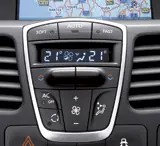
Si durante la conducción conecta el sistema de aire acondicionado, el consumo de carburante...
If you switch on the air conditioning while driving, fuel consumption...
- Adisminuye si las temperaturas son bajas.goes down if temperatures are low.
- Baumenta.goes up.
- Cno varía.does not change.
ExplanationThe air-conditioning compressor is driven by a belt connected to the engine. When you switch on the air conditioning, the engine has to work harder, so fuel consumption will increase.
En la conducción preventiva, ¿es suficiente respetar las normas?
In defensive driving, is it enough to obey the rules?
- ANo. También hay que tener en cuenta que otro conductor puede cometer una infracción.No. You must also bear in mind that another driver may commit an offence.
- BSí. Cumpliendo la normativa de tráfico, el riesgo es nulo.Yes. If you comply with traffic rules, the risk is zero.
- CSí. Cumplir las normas es obligatorio.Yes. Obeying the rules is compulsory.
ExplanationObeying the rules is compulsory, but it does not remove the risk. Defensive driving means anticipating other people's mistakes and offences, for example someone not respecting your right of way, and driving with enough margin to react in time.
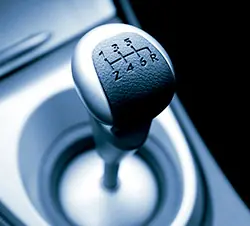
¿Es posible ahorrar combustible evitando cambios de marcha innecesarios?
Is it possible to save fuel by avoiding unnecessary gear changes?
- ASí.Yes.
- BNo, en ningún caso.No, never.
- CDepende de si el vehículo tiene motor diésel o de gasolina.It depends on whether the vehicle has a diesel or a petrol engine.
ExplanationEco-driving saves fuel: driving in high gears and avoiding unnecessary changes keeps the engine at low revs and reduces fuel consumption and emissions.
¿Es obligatorio circular con la pegatina medioambiental de la DGT?
Is it compulsory to drive with the DGT environmental sticker?
- ASí, en todos los vehículosYes, on all vehicles.
- BNo es obligatorio por ley general, pero puede serlo en Zonas de Bajas EmisionesIt is not compulsory under general law, but it may be in low emission zones (ZBE).
- CSí, solo en Madrid y BarcelonaYes, only in Madrid and Barcelona.
ExplanationThe environmental label is not compulsory nationwide, but cities with low emission zones (ZBE) may require it for access or driving. It is advisable to display it.
Las técnicas de conducción eficiente...
Eco-driving techniques...
- Ason complementarias a las técnicas de conducción preventiva.complement defensive driving techniques.
- Bson más eficaces que las técnicas de conducción preventiva.are more effective than defensive driving techniques.
- Cson lo mismo que las técnicas de conducción preventiva.are the same as defensive driving techniques.
ExplanationEco-driving techniques complement defensive driving techniques, since eco-driving requires applying defensive driving techniques (vision, anticipation and space).
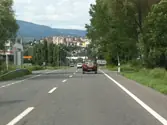
La conducción eficiente proporciona al conductor:
Eco-driving gives the driver:
- AAumenta costes de mantenimiento (frenos, embrague, caja de cambios ...).Higher maintenance costs (brakes, clutch, gearbox, etc.).
- BAumenta el riesgo y gravedad de los accidentes.A higher risk and severity of accidents.
- CMejora el confort en la conducción disminuyendo la tensión.More comfortable driving with less stress.
ExplanationThe aim of eco-driving is to reduce fuel consumption and environmental pollution. It also increases safety by reducing risk on the road, reduces running and maintenance costs, makes driving more comfortable by reducing stress, and reduces the noise the vehicle makes.
La velocidad, ¿influye en la capacidad de anticipación?
Does speed affect your ability to anticipate?
- ASí, aumentándola.Yes, it increases it.
- BSí, disminuyéndola.Yes, it reduces it.
- CNo.No.
ExplanationExcessive speed makes it harder to anticipate: it reduces this ability, so we take longer to react and avoid an accident.
¿Puedes circular por una zona de bajas emisiones si tu vehículo no cumple las condiciones exigidas por la autoridad?
Can you drive in a low emission zone (ZBE) if your vehicle does not meet the conditions set by the authority?
- ASí, porque no se infringe ninguna norma de circulación.Yes, because no traffic rule is broken.
- BSí, siempre que el vehículo lleve al menos 2 personas.Yes, as long as there are at least 2 people in the vehicle.
- CNo, está prohibido y se sanciona.No, it is prohibited and you can be fined.
ExplanationThe authorities may restrict entry to and driving in low emission zones (Article 157 of the General Traffic Regulations). Driving in them without meeting the required conditions is an offence that can be fined, even if there are several people in the vehicle.
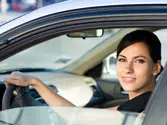
Circular con las ventanillas bajadas ...
Driving with the windows down...
- AReducirá el consumo de carburante.Will reduce fuel consumption.
- BNo variará el consumo de carburante.Will not change fuel consumption.
- CAumentará el consumo de carburante.Will increase fuel consumption.
ExplanationDriving with the windows down increases aerodynamic drag and therefore fuel consumption. Use the vehicle's ventilation system to air the inside of the car. Remember that using the air conditioning or climate control increases fuel consumption (set it to about 23 °C).
Los vehículos más antiguos y contaminantes, respecto al distintivo ambiental:
As regards the environmental label, the oldest and most polluting vehicles:
- ANo reciben etiqueta y suelen tener más restricciones en las Zonas de Bajas Emisiones.Do not get a label and usually face more restrictions in low emission zones.
- BReciben la etiqueta '0 emisiones'.Get the “zero emissions” label.
- CReciben siempre la etiqueta ECO.Always get the ECO label.
ExplanationThe most polluting vehicles (petrol vehicles from before 2000 and diesel vehicles from before 2006) have no label, and their use in low emission zones (ZBE) is restricted.
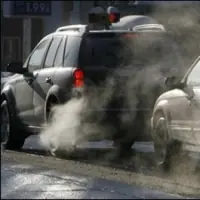
¿En qué consiste el efecto invernadero que producen los vehículos?
What is the greenhouse effect caused by vehicles?
- AAumento de la contaminación química y acústicaAn increase in chemical and noise pollution.
- BElevación de la temperatura de la atmósfera por emisión de gases nocivosA rise in the temperature of the atmosphere caused by the emission of harmful gases.
- CDescenso de la temperatura de la atmósfera por emisión de gases nocivosA fall in the temperature of the atmosphere caused by the emission of harmful gases.
ExplanationThe greenhouse effect caused by vehicles is the rise in the temperature of the atmosphere due to the harmful gases they emit, which causes abnormal warming because of the increase of carbon dioxide in the atmosphere.
Nuestra motocicleta no automática dispone de pedal para realizar los cambios de marchas. ¿En qué posición se encuentra habitualmente el punto muerto?
Our non-automatic motorcycle has a foot pedal for changing gear. Where is neutral usually found?
- AEn una posición más baja de la 1ª relación de marchas.Below 1st gear.
- BEntre la 2ª y la 3ª relación de marchas, tal y como sucede en los turismos.Between 2nd and 3rd gear, as in cars.
- CEntre la 1ª y la 2ª relación de marchas.Between 1st and 2nd gear.
ExplanationOn a non-automatic motorcycle, neutral is between 1st and 2nd gear. In neutral the engine is not connected to the wheels and no movement is transmitted. It is a neutral position that lets the rider stop without switching off the engine.
La distribución de la carga, ¿afecta significativamente al consumo de combustible?
Does the way the load is distributed significantly affect fuel consumption?
- ANo, no afecta al consumo.No, it does not affect consumption.
- BSí, y por ello la baca es muy recomendable.Yes, and that is why the roof rack is highly recommended.
- CSí, por lo que hay que utilizar la baca como última opción.Yes, so the roof rack should be used as a last option.
ExplanationYes. The way the load is distributed affects consumption: a roof rack increases air resistance and raises the centre of gravity. That is why the load should go in the boot and the roof rack should be used only as a last resort.
Si durante la conducción enciende el aire acondicionado, el consumo de combustible...
If you switch on the air conditioning while driving, fuel consumption...
- Ano cambia.does not change.
- Bdisminuye si la temperatura es baja.goes down if the temperature is low.
- Caumenta.goes up.
ExplanationFuel consumption increases when you switch on the air conditioning, because it needs extra energy to work. According to the General Traffic Regulations, this relates to the vehicle's fuel consumption and energy efficiency, which are affected by the use of auxiliary systems such as air conditioning. As the load on the engine increases, so does fuel consumption, which means more fuel is used while driving.
La forma particular de conducir de cada conductor, ¿influirá en el consumo de combustible del vehículo?
Does each driver's individual way of driving affect the vehicle's fuel consumption?
- ASí.Yes.
- BNo, el consumo depende solamente del tipo de vehículo y de su motor.No, consumption depends only on the type of vehicle and its engine.
- CNo, el consumo depende solamente del tipo de vía por la que circulemos.No, consumption depends only on the type of road we drive on.
ExplanationA driver who accelerates and brakes sharply or drives at high revs will use more fuel than one who drives more gradually and calmly. The way you drive certainly affects fuel consumption.
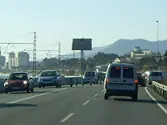
La conducción eficiente tiene como objetivo:
The aim of eco-driving is:
- AUna reducción del consumo de carburante pero no de la contaminación ambiental.To reduce fuel consumption but not environmental pollution.
- BDisminuir el riesgo en la carretera únicamente.Only to reduce risk on the road.
- CAumentar el confort en la conducción, reducir el consumo de combustible y disminuir el riesgo de accidente.To make driving more comfortable, reduce fuel consumption and reduce the risk of accidents.
ExplanationThe aim of eco-driving is to reduce fuel consumption and environmental pollution. It also increases safety by reducing risk on the road, reduces running and maintenance costs, makes driving more comfortable and reduces the noise the vehicle makes.
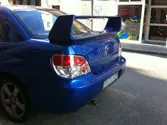
Si instalamos un alerón en nuestro vehículo, ¿qué ocurrirá?
If we fit a spoiler to our vehicle, what will happen?
- AEl vehículo consumirá más combustible.The vehicle will use more fuel.
- BEl vehículo consumirá menos combustible.The vehicle will use less fuel.
- CNo se alterará el consumo de combustible.Fuel consumption will not change.
ExplanationAny part that affects the vehicle's aerodynamics and was not specifically designed for it will change the drag coefficient, which increases fuel consumption.
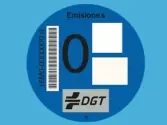
¿Qué características tienen que cumplir los vehículos provistos del distintivo medioambiental 0 emisiones?
What requirements must vehicles with the «0 emissions» environmental badge meet?
- ASer eléctricos puros de batería, incluidos los de autonomía extendida, híbridos enchufables con una autonomía mínima de 40 km o de pila de combustible.Be pure battery electric vehicles, including extended-range ones, plug-in hybrids with a range of at least 40 km, or fuel cell vehicles.
- BSer híbridos enchufables con menos de 40 km de autonomía, híbridos no enchufables, de gas natural o de GLP.Be plug-in hybrids with less than 40 km of range, non-plug-in hybrids, or natural gas or LPG vehicles.
- CTener motor de gasolina y estar matriculados a partir de 2006, o diésel a partir de 2015.Have a petrol engine and be registered from 2006 onwards, or a diesel engine from 2015 onwards.
ExplanationUnder annex II of the General Vehicle Regulations, «0 emissions» vehicles are battery electric vehicles, extended-range vehicles, hydrogen vehicles, plug-in hybrids with at least 40 km of range and fuel cell vehicles. Plug-in hybrids with less range, non-plug-in hybrids and gas vehicles are ECO.
Para contaminar lo menos posible, se recomienda...
To pollute as little as possible, it is recommended to...
- Amantener siempre una velocidad constante.always keep a constant speed.
- Bmantener la velocidad lo más uniforme posible, evitando acelerar y frenar bruscamente.keep your speed as steady as possible, avoiding sudden acceleration and braking.
- Cusar lo menos posible el transporte público.use public transport as little as possible.
ExplanationThe correct option is keeping your speed as steady as possible. Efficient driving, without unnecessary acceleration and braking, reduces fuel consumption and therefore polluting emissions. The General Traffic Regulations stress the importance of driving in a way that keeps changes in speed to a minimum, which helps reduce vehicle pollution.
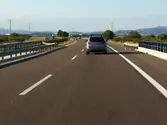
Una de las técnicas de visión en la conducción preventiva consiste en...
One of the vision techniques in defensive driving is...
- Amirar a lo lejos, a los lados y por los retrovisores.looking far ahead, to the sides and in the mirrors.
- Binstalar espejos panorámicos.fitting panoramic mirrors.
- Cacostumbrarse a los deslumbramientos.getting used to being dazzled.
Explanation90% of the information a driver uses to make decisions at the wheel comes through sight. So, to collect effectively all the information about the traffic around you that you need to drive safely, you can follow these rules: look far ahead; look to the sides often; check the mirrors regularly.
En caso de padecer una alergia respiratoria, ¿es conveniente conducir con las ventanillas abiertas?
If you suffer from a respiratory allergy, is it advisable to drive with the windows open?
- ANo.No.
- BSí, cuando el vehículo esté dotado de un filtro para el aire acondicionado.Yes, when the vehicle has an air-conditioning filter.
- CSí, porque ayuda a una mejor ventilación del vehículo.Yes, because it helps to ventilate the vehicle better.
ExplanationWith a respiratory allergy, opening the windows lets in pollen and other particles that cause sneezing and watery, itchy eyes; these symptoms are distracting and can make you lose control. It is better to drive with the windows closed and a good air filter.
La conducción eficiente permite ahorrar hasta un 25 % de combustible. ¿En qué medida contribuye también a reducir la contaminación?
Eco-driving can save up to 25% of fuel. To what extent does it also help reduce pollution?
- AEn la misma proporción que se ahorra combustible.In the same proportion as fuel is saved.
- BEn mayor proporción que se ahorra combustibleIn a greater proportion than fuel is saved.
- CEn menor proporción que se ahorra combustibleIn a smaller proportion than fuel is saved.
ExplanationEco-driving reduces polluting emissions considerably, making vehicle use more environmentally sustainable and improving air quality. By applying eco-driving techniques you can save 25% of fuel and reduce polluting emissions by 80%.
¿Es correcto arrancar el vehículo sin acelerar?
Is it correct to start the engine without pressing the accelerator?
- ANo, hay que acelerar a fondo para calentar el motor.No, you must press the accelerator fully to warm up the engine.
- BSí, para una conducción económica y eficiente.Yes, for economical and efficient driving.
- CNo, siempre se tiene que acelerar entre 1500 y 2000 r.p.m.No, you must always accelerate to between 1,500 and 2,000 rpm.
ExplanationFor economical and efficient driving, it is best not to rev the engine when starting it, because this way we will use less fuel.
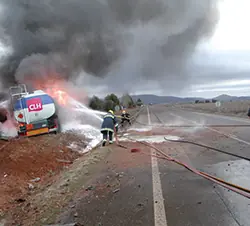
El medio ambiente, ¿se ve afectado por los accidentes de tráfico?
Is the environment affected by road accidents?
- ANo.No.
- BSí.Yes.
- CÚnicamente en vía interurbana.Only on roads outside built-up areas.
ExplanationAccidents also damage the environment: spills of fuel and oil, vehicle debris, fires or damage to vegetation. This happens on any type of road, in or outside built-up areas.
¿Cómo se llama la conducción que le permite anticiparse a los posibles riesgos?
What do we call driving that lets you anticipate possible risks?
- APreventiva.Defensive driving.
- BEficiente.Eco-driving.
- CPeligrosa.Dangerous driving.
ExplanationDriving that lets you anticipate possible risks is called defensive driving. It means paying attention to what is happening on the road and around it, predicting possible dangerous situations and acting in advance to avoid them. Defensive driving involves keeping a suitable safe distance, paying attention to traffic signs, predicting what other drivers will do, and adapting your speed and behaviour to the road, weather and traffic conditions. It is an approach that aims to reduce the risk of accidents by always keeping a margin of safety and control.
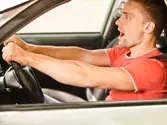
¿El estilo de conducción del conductor influye en el consumo de combustible?
Does the driver's driving style affect fuel consumption?
- ASí.Yes.
- BNo.No.
- CSolo en vehículos diésel.Only in diesel vehicles.
ExplanationAggressive driving, for example with a lot of sudden acceleration, will increase the vehicle's fuel consumption.
La conducción preventiva permite...
Defensive driving lets you...
- AAhorrar combustible.Save fuel.
- BEvitar totalmente los atropellos.Completely avoid hitting pedestrians.
- CReaccionar con tiempo suficiente para evitar riesgos.React in time to avoid risks.
ExplanationDefensive driving lets us anticipate any adverse situation, so that we can use the vehicle's controls in time and prevent possible road accidents. It is based on three principles: vision, anticipation and space.
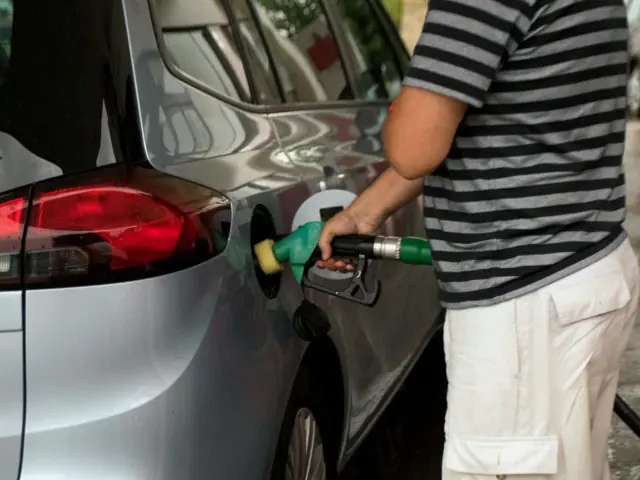
Si se observa un incremento en el consumo de carburante de un vehículo, ¿qué se debe revisar?
If a vehicle's fuel consumption increases, what should be checked?
- AEl circuito de escape.The exhaust circuit.
- BEl circuito de encendido y el de alimentación.The ignition and fuel supply circuits.
- CEl circuito de refrigeración y el de lubricación.The cooling and lubrication circuits.
ExplanationIf a vehicle's fuel consumption increases, the ignition and fuel supply circuits must be checked. These systems are crucial for the engine to work properly and for fuel efficiency. Problems in the ignition, such as worn spark plugs or faulty leads, and in the fuel supply system, such as blocked fuel filters or dirty injectors, can increase fuel consumption.
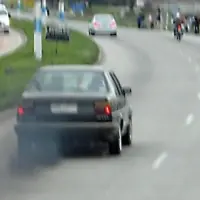
¿De qué dos tipos puede ser la contaminación que expulse un automóvil?
What two types of pollution can a motor vehicle give off?
- AAcústica y nitrógenaNoise and nitrogen.
- BAcústica y químicaNoise and chemical.
- CAcústica y catalizadaNoise and catalysed.
ExplanationVehicles can give off two types of pollution: noise pollution, produced by the horn and other sound devices of the vehicle, and chemical pollution, which is the gases that cars expel, for example through the exhaust pipe.
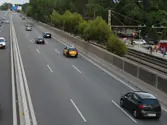
¿Qué acción contribuye a mejorar la eficiencia del combustible en un coche cuando se circula en autopista?
What helps improve a car's fuel efficiency when driving on a motorway (autopista)?
- AMantener el coche en una marcha baja para tener más potencia.Keeping the car in a low gear to have more power.
- BUsar el aire acondicionado a la máxima potencia para mantener la temperatura interior.Using the air conditioning at full power to keep the inside temperature.
- CConducir a una velocidad constante sin hacer aceleraciones o frenadas bruscas.Driving at a steady speed without sudden acceleration or braking.
ExplanationWhat helps improve a car's fuel efficiency on a motorway is driving at a steady speed without sudden acceleration or braking. A steady speed reduces the effort of the engine and avoids wasting extra energy on unnecessary acceleration or braking, which helps use less fuel.
¿Qué ocurre cuando el ralentí esta alto?
What happens when the idle speed is high?
- AQue aumenta el consumo.Fuel consumption increases.
- BQue disminuye el consumo.Fuel consumption decreases.
- CQue se contamina menos.There is less pollution.
ExplanationIf the idle speed is high, the engine is running faster, so fuel consumption increases and there is more pollution.
La etiqueta medioambiental clasifica los vehículos por:
The environmental label classifies vehicles by:
- AEl precio del vehículoThe price of the vehicle.
- BSu nivel de emisiones contaminantesTheir level of polluting emissions.
- CLa marca del vehículoThe make of the vehicle.
ExplanationThe DGT classifies vehicles with labels (0, ECO, C, B) according to their emissions and technology. The labels are used to identify the most environmentally friendly vehicles and to apply restrictions in low emission zones.
Para conducir con hielo en la calzada de forma preventiva, debe...
To drive defensively on an icy carriageway, you should...
- Atener especial cuidado durante el día.take special care during the day.
- Bdisminuir la velocidad y utilizar marchas cortas.reduce speed and use low gears.
- Cdisminuir la velocidad y utilizar marchas largas.reduce speed and use high gears.
ExplanationOn ice there is very little grip, so you must slow down a lot and drive in high gears: that way less force reaches the driving wheels and they are less likely to spin. You must also avoid sudden braking, sharp acceleration and abrupt steering.
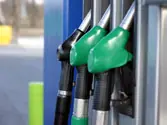
En conducción eficiente, ¿Cómo se puede ahorrar combustible?
In eco-driving, how can you save fuel?
- ACambiando a una marcha inferior lo antes posible.By changing down to a lower gear as soon as possible.
- BCambiando a una marcha superior lo antes posible.By changing up to a higher gear as soon as possible.
- CCirculando, con frecuencia, a altas revoluciones.By often driving at high revs.
ExplanationChoosing the right gear is one of the key aspects of eco-driving. At a given speed, the higher the gear and the lower the engine revs, the less fuel we use. So, to drive efficiently, we use the highest gear that lets us drive at the speed we want.
Para que la conducción sea más eficiente si nuestro coche tiene un motor de gasolina cambiaremos de marcha al acelerar...
To drive more efficiently, if your car has a petrol engine, when accelerating you should change gear...
- AEntre 1.500 y 2.000 r.p.m.Between 1,500 and 2,000 rpm.
- BEntre 2.000 y 2.500 r.p.m.Between 2,000 and 2,500 rpm.
- CEntre 3.000 y 4.000 r.p.m.Between 3,000 and 4,000 rpm.
ExplanationTo drive efficiently with a petrol engine, change up to the next gear between 2,000 and 2,500 revolutions per minute; with a diesel engine, between 1,500 and 2,000. This keeps the engine working in its lowest-consumption range.
All topics
- Definitions
- Documents and penalty points
- The driver's condition
- Duties of drivers and pedestrians
- Vehicle safety devices
- Vehicle controls and equipment
- Vehicle lights and horn
- Traffic signs, markings and signals
- The road and its lanes
- Speed and distances
- Manoeuvres
- Right of way
- Carrying passengers and loads
- Driving safely in difficult conditions
- Vehicle mechanics and maintenance
- Road accidents and first aid
Independent app: not affiliated with or endorsed by the DGT (Spain's Directorate-General for Traffic) or the Ministry of the Interior. The official exam is booked with the DGT and taken at its test centres. The questions here are practice material; the DGT's official question bank is not public.
Basado en datos de la Agencia Estatal Boletín Oficial del Estado (https://www.boe.es). Textos consolidados de carácter meramente informativo. La AEBOE no patrocina ni respalda este sitio.
Parte de las preguntas procede de los tests de la revista «Tráfico y Seguridad Vial» de la DGT, reproducidos con indicación de la fuente.