
DGT test · 1,397 questions
Traffic signs, markings and signals
Road signs, road markings, traffic lights, police signals and temporary markings: what they mean and which one wins when they disagree. The topic with the most questions in the bank.
20 random questions
Loading questions…
Questions in this topic, with answers
1,397 questions, 50 per page, with the correct answer and the explanation. Page 1 of 28.
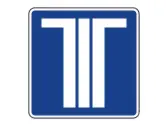
¿Se puede circular por el carril así señalizado si no disponemos de sistema de peaje dinámico?
May you use the lane marked like this if we do not have a dynamic toll system?
- ASolo si un empleado del peaje lo autoriza.Only if a toll employee authorises it.
- BNo.No.
- CSí, pues acepta otros medios de pago.Yes, because it accepts other payment methods.
ExplanationThis sign shows that in the lane marked like this you can pay the toll with the electronic toll system, although other payment methods can also be used.
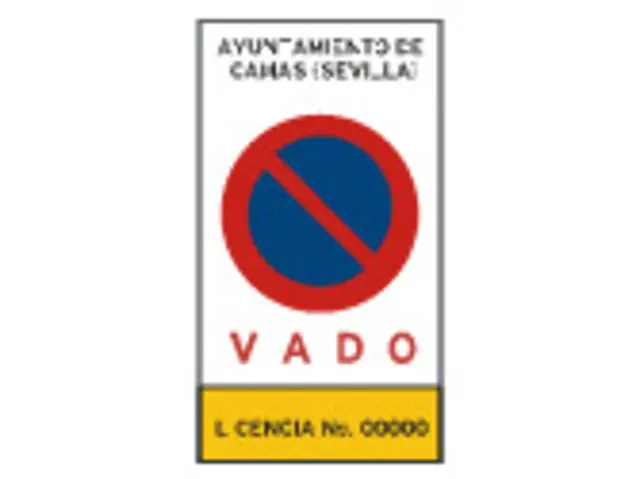
Frente a un vado, esta señal prohíbe:
In front of a vehicle entrance (vado), this sign prohibits:
- Ala parada y el estacionamientostopping and parking.
- Bsolo la paradaonly stopping.
- Csolo el estacionamientoonly parking.
ExplanationThe sign in the picture, with a blue background, a single red stripe and the word “Vado”, prohibits parking in front of the vehicle entrance. It does not prohibit stopping: that would require the sign with a red cross, no stopping and no parking.
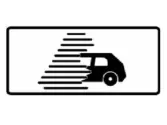
Este panel se refiere a...
This panel refers to...
- ANieve.Snow.
- BLluvia.Rain.
- CNiebla.Fog.
ExplanationThe additional panel in the picture, with a car and horizontal stripes representing fog, indicates that the sign it is placed under only applies when there is fog. There are different additional panels for rain and snow.
Usted llega a un paso de nivel con las barreras levantadas, ¿qué hará si existe un semáforo encendido con luz roja intermitente?
You arrive at a level crossing with the barriers raised. What will you do if a traffic light is showing a flashing red light?
- ADetenerme hasta que el semáforo se apague o se encienda otra luz.Stop until the traffic light goes out or another light comes on.
- BPasar, porque la barrera está levantada.Cross, because the barrier is raised.
- CDetenerme para observar y pasar sin esperar a que el semáforo me de paso.Stop to look, and cross without waiting for the traffic light to let me go.
ExplanationIt is important to stop when a traffic light is showing a flashing red light, even if the barriers are raised. This indicates that a train may be approaching and it is dangerous to cross. We must wait for the traffic light to go out or change to another light showing that it is safe to cross. Safety always comes first.
Un semáforo con luz amarilla fija indica:
A traffic light showing a steady amber light indicates:
- AQue se debe acelerar para pasar.That you must speed up to get through.
- BQue se debe detener, salvo que al encenderse se esté tan cerca que no pueda detenerse con seguridad.That you must stop, unless, when it comes on, you are so close that you cannot stop safely.
- CVía libre.That the road is clear.
ExplanationA steady amber light requires you to stop just like a red light, unless the vehicle is so close that it cannot stop safely.
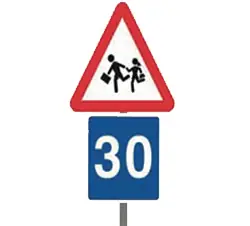
Con esta señalización, ¿a qué velocidad debe circular?
With these signs, at what speed should you drive?
- AAl menos a 30 km/h.At least 30 km/h.
- BObligatoriamente a 30 km/h.30 km/h, as a compulsory speed.
- CA 30 km/h, como recomendación, durante el tramo que dure el peligro.30 km/h, as a recommendation, for as long as the danger lasts.
ExplanationA square blue sign with a number shows an advisory speed, neither compulsory nor a minimum. Placed under the warning sign for children, it recommends driving at 30 km/h for as long as that danger lasts.
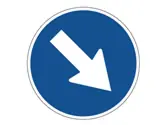
¿Esta flecha señala la dirección y sentido que los vehículos tienen la obligación de seguir?
Does this arrow show the direction that vehicles are required to follow?
- ASí, en la próxima intersección.Yes, at the next junction.
- BSí.Yes.
- CNo.No.
ExplanationThe sign in the question is a «Compulsory passage» sign. Do not confuse it with «Compulsory direction» signs. «Compulsory passage» signs show the side or sides of the traffic island on which vehicles must pass. «Compulsory direction» signs show the direction that vehicles are required to follow.
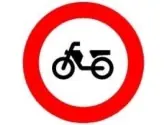
Si circula con un vehículo para personas de movilidad reducida, ¿le afecta esta señal?
If you are driving a vehicle for people with reduced mobility, does this sign apply to you?
- ANo, prohíbe sólo la entrada a motocicletas.No, it only prohibits entry to motorcycles.
- BNo, prohíbe sólo la entrada a ciclomotores.No, it only prohibits entry to mopeds.
- CSí.Yes.
ExplanationSign R-105 “No entry for mopeds” prohibits access to mopeds (two- or three-wheeled mopeds and light quadricycles) and also to vehicles for people with reduced mobility. That is why it also applies to anyone driving one of these vehicles.
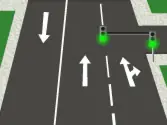
Circula por el carril derecho y el semáforo está verde. ¿Qué debe hacer?
You are driving in the right lane and the traffic light is green. What must you do?
- AGirar a la derecha o girar a la izquierda.Turn right or turn left.
- BGirar a la izquierda o continuar de frente.Turn left or go straight on.
- CGirar a la derecha o continuar de frente.Turn right or go straight on.
ExplanationOn this two-way road with two lanes in our direction, if we are in the right lane, as the road markings painted in our lane show, we may go straight on or turn right. In the left lane in our direction, on the other hand, the arrow shows that we must go straight on; if we want to turn right, we must change lane beforehand.
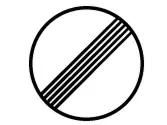
Esta señal indica que ha finalizado...
This sign indicates the end of...
- AUna obligación anterior.An earlier obligation.
- BUna prohibición anterior.An earlier prohibition.
- CUna recomendación anterior.An earlier recommendation.
ExplanationThe sign in the picture, white with black diagonal stripes, indicates the end of all prohibitions: from that point, the specific prohibitions previously signed for moving vehicles, such as speed limits or no overtaking, no longer apply.
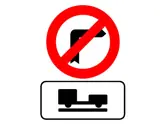
Este panel con esta señal indica que está prohibido...
This panel with this sign indicates that...
- Ael giro a la derecha a todos los vehículos.all vehicles are prohibited from turning right.
- Bque circulen vehículos con remolque.vehicles with a trailer are prohibited.
- Cel giro a la derecha a vehículos con remolque.vehicles with a trailer are prohibited from turning right.
ExplanationPlaced under the 'no right turn' road sign, it indicates that the sign applies only to the vehicles shown on the panel, in this case vehicles with a trailer.
¿Está permitido circular conduciendo si tomamos alguna medicación?
Is it allowed to drive if we are taking any medication?
- ANo, en ningún caso.No, never.
- BSí, siguiendo las indicaciones del médico.Yes, following the doctor's instructions.
- CSí, si la medicación es con receta médica.Yes, if the medication is on prescription.
ExplanationWe must always follow the guidance the doctor gives us so that we can drive while taking medication.
Si un agente que circula delante de nosotros, extiende el brazo inclinado y fijo, indica...
If a traffic officer travelling in front of you holds out an arm at an angle and keeps it still, this indicates...
- Aobligación de moderar la velocidad.that you must slow down.
- Bobligación de detenerse en el lado derecho.that you must stop on the right-hand side.
- Cque la calzada está cerrada.that the carriageway is closed.
ExplanationAn officer with an arm angled downwards and held still is telling the road users the signal is aimed at that they must stop on the right-hand side.
Al dar marcha atrás ve una señal de advertencia de otro vehículo. ¿Qué debe hacer?
While reversing, you see a warning signal from another vehicle. What should you do?
- ADetener el vehículo y renunciar a la maniobra si es necesario.Stop the vehicle and abandon the manoeuvre if necessary.
- BFinalizar la maniobra lo antes posible.Finish the manoeuvre as quickly as possible.
- CSeñalizar la maniobra con las luces de emergencia.Signal the manoeuvre with the hazard warning lights.
ExplanationUnder Article 81.3 of the RGC, reversing must be done with the utmost care, and you must stop the vehicle very quickly if you hear warnings or notice that another vehicle, person or animal is near, abandoning the manoeuvre if necessary.
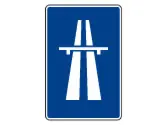
Se prohíbe circular por autopistas a los...
Driving on motorways (autopistas) is prohibited for...
- Avehículos que transporten mercancías peligrosas.vehicles carrying dangerous goods.
- Bvehículos con remolque.vehicles with a trailer.
- Cvehículos que no sean capaces de alcanzar en llano 60 km/h.vehicles that cannot reach 60 km/h on level ground.
ExplanationMotorways (autopistas) and dual carriageways (autovías) may be used by motor cars that can reach 60 km/h on level ground (the minimum speed for these roads) and by special vehicles if they can exceed that speed, or if they exceed the standard masses and dimensions and their special permit says so. They may not be used by cycles, mopeds, vehicles for people with reduced mobility, pedestrians, animals, animal-drawn vehicles or personal mobility vehicles. However, cyclists over 14 may ride on the hard shoulders of dual carriageways (autovías), unless signs prohibit it.
¿Qué indica una luz verde no intermitente en un semáforo circular para vehículos?
What does a non-flashing green light on a circular traffic light for vehicles indicate?
- AProhíbe girar a la derechaIt prohibits turning right
- BPermite el paso solo a peatonesIt allows only pedestrians to cross
- CPermite el paso con prioridad salvo excepcionesIt allows you to go with priority, with some exceptions
ExplanationA non-flashing circular green light means that you may go. As a general rule, you have priority over vehicles on the crossing road. However, the correct answer says “with some exceptions” because the General Traffic Regulations (Art. 59) prohibit entering a junction, even if the light is green, if traffic is so heavy that you are likely to end up stopped in the middle of the junction, obstructing other road users. So it allows you to go, but with that vital precaution.
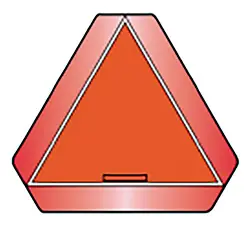
¿Qué indica esta señal situada en la parte posterior de un vehículo?
What does this sign on the rear of a vehicle indicate?
- AQue transporta mercancías peligrosas.That it is carrying dangerous goods.
- BQue es un vehículo especial y está realizando trabajos en la vía.That it is a special vehicle doing work on the road.
- CQue es un vehículo lento y no puede superar la velocidad de 40 km/h.That it is a slow vehicle and cannot exceed 40 km/h.
ExplanationThis panel on the rear identifies a slow vehicle: because of its characteristics it cannot exceed 40 km/h, which you should bear in mind before approaching or overtaking it.
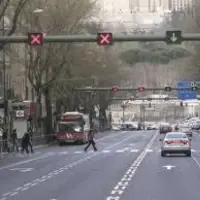
¿Qué otro nombre reciben los semáforos cuadrados para vehículos?
What is another name for square traffic lights for vehicles?
- ADe circulaciónTraffic lights.
- BDe peatónPedestrian lights.
- CDe carrilLane lights.
ExplanationSquare traffic lights for vehicles, also called lane lights, apply only to vehicles travelling in the lane above which they are placed, or in the lane shown on the variable message panel.
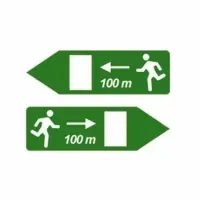
En un túnel, esta señal indica…
In a tunnel, this sign indicates…
- ALa situación de un teléfono de emergencia.Where an emergency telephone is.
- BLa situación de una salida de emergencia.Where an emergency exit is.
- CLa dirección y distancia de una salida de emergencia.The direction and distance to an emergency exit.
ExplanationIn a tunnel, the sign in the question indicates the direction and distance to an emergency exit.
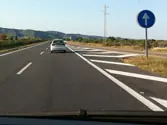
¿Podrá circular un ciclomotor por un cebreado en algún caso?
May a moped ever travel on a hatched area?
- ANo, porque está prohibido.No, because it is prohibited.
- BSí, los vehículos obligados a circular por el arcén podrá entrar en el cebreado cuando éste sea continuación del arcén.Yes, vehicles that must use the hard shoulder may enter the hatched area when it is a continuation of the hard shoulder.
- CNo, los ciclomotores tendrán que respetar las mismas normas que las motocicletas.No, mopeds must follow the same rules as motorcycles.
ExplanationAs a general rule, driving a vehicle into a hatched area is prohibited, except for vehicles that must use the hard shoulder, when the hatched area is a continuation of the hard shoulder they are using.
En una línea discontinua longitudinal, ¿qué indica que los trazos estén más juntos?
On a broken longitudinal line, what does it mean when the dashes are closer together?
- AQue hay un carril especial cerca.That there is a special lane nearby.
- BQue está prohibido cambiar de carril.That changing lanes is prohibited.
- CQue hay un tramo con peligro especial cerca.That there is a particularly dangerous stretch nearby.
ExplanationUnder the road-marking catalogue (RD 465/2025), the advance-warning broken line, with long dashes and short gaps (M-1.9 and M-1.10), announces that a solid marking or a stretch of road with a particular risk is coming up.
¿Está permitido circular sobre una línea longitudinal discontinua cuando los carriles de la calzada son estrechos?
Are you allowed to drive on a broken longitudinal line when the lanes of the carriageway are narrow?
- ANo, nunca.No, never.
- BSí, siempre.Yes, always.
- CSí, cuando sea necesario y siempre que no ponga en peligro la circulación.Yes, when necessary and as long as it does not endanger traffic.
ExplanationUnder the road-marking catalogue (RD 465/2025), no one should drive on a broken longitudinal marking, except when this is necessary because of the width of the lanes and traffic safety allows it. It is not a general permission: only when needed and without risk.
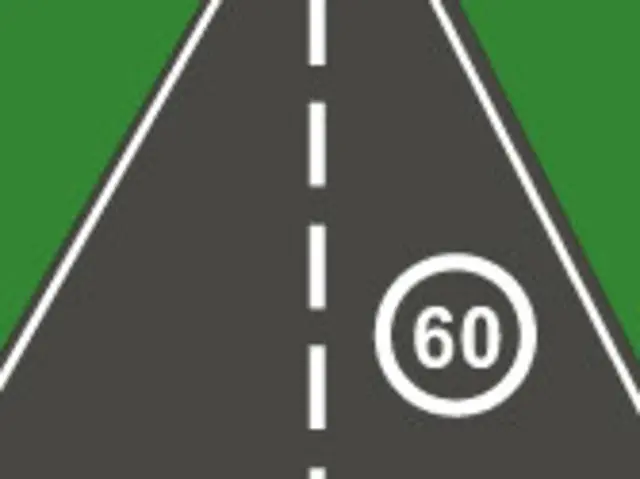
¿Qué indica la señal de velocidad máxima pintada en un carril?
What does a maximum speed sign painted in a lane indicate?
- ANo se puede ir a más de 60 km/h en todos los carriles.You may not drive faster than 60 km/h in any lane.
- BNo se puede ir a más de 60 km/h en ese carril.You may not drive faster than 60 km/h in that lane.
- CNo se puede ir a más de 60 km/h los vehículos que van a girar a la derecha.Vehicles turning right may not drive faster than 60 km/h.
ExplanationSigns painted on the carriageway mean the same as vertical signs, but if they are in a lane marked out by longitudinal lines they only apply to those driving in that lane (Article 147.2.e of the General Traffic Regulations). Here, a maximum of 60 km/h in that lane.
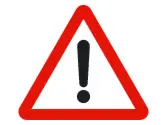
Esta señal es de...
This sign is a sign of...
- Aobligación.obligation.
- Bprohibición.prohibition.
- Cpeligro.danger.
ExplanationThis sign is triangular, so it belongs to the danger warning signs, and it indicates that you are approaching a danger other than those warned of by other signs.
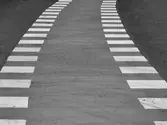
Dos líneas transversales, discontinuas y paralelas sobre la calzada indican...
Two broken, parallel transverse lines on the carriageway indicate...
- AUn reductor de velocidad.A speed hump.
- BUn paso para ciclistas.A cycle crossing.
- CUna línea de detención.A stop line.
ExplanationTwo parallel broken transverse lines form marking M-4.4, the cycle crossing: vehicles travelling on the carriageway must let cyclists cross. According to the 2025 catalogue, this marking may also be used at pedestrian crossings controlled by traffic lights.
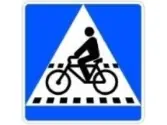
La señal que se muestra indica ...
The sign shown indicates...
- AAdvierte del peligro de un paso de ciclistas.It warns of the danger of a cyclist crossing.
- BLa situación de un paso reservado exclusivamente para ciclistas.The location of a crossing reserved only for cyclists.
- CLa ubicación de un paso ciclista adosado a uno de peatones.The location of a cyclist crossing next to a pedestrian crossing.
ExplanationThe sign shown indicates the location of a crossing intended only for cyclists. It informs drivers and pedestrians that it is there, to keep users of the cycle route safe.
¿Pueden los agentes de tráfico usar señales luminosas y sonoras?
May traffic officers use light and sound signals?
- ANo, solo pueden usar señales sonoras.No, they may only use sound signals.
- BNo, solo pueden usar señales ópticas.No, they may only use visual signals.
- CSí, pueden usar señales luminosas y sonoras.Yes, they may use light and sound signals.
ExplanationTraffic officers are entitled to give visual (light) and audible (sound) signals to control traffic. Visual signals can include flashing lights, signal paddles and hand gestures, while audible signals include sirens or loudhailers. Drivers must obey these signals, even if they contradict other road signs or traffic lights.
Una señal triangular con la silueta de una bicicleta advierte de:
A triangular sign with the outline of a bicycle warns of:
- AProhibido el paso a bicicletas.No bicycles.
- BPeligro por la posible presencia de ciclistas.Danger because cyclists may be present.
- CCarril exclusivo para coches.A lane only for cars.
ExplanationIt is a danger warning sign that warns of a stretch of road often used by cyclists.
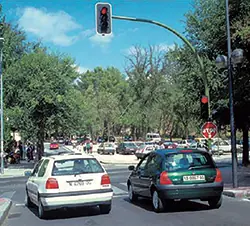
Cuando el semáforo se ponga verde, ¿qué debe hacer?
When the traffic light turns green, what must you do?
- AObedecer la señal de stop.Obey the STOP sign.
- BObedecer al semáforo, que tiene prioridad sobre la señal de stop.Obey the traffic light, which takes priority over the STOP sign.
- CObedecer al semáforo, pero debo ceder el paso.Obey the traffic light, but I must give way.
ExplanationIn the order of priority of signs, traffic lights prevail over priority road signs: when the light is green you go through without having to stop at the STOP sign.
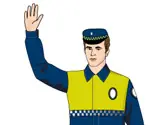
Un agente con el brazo levantado verticalmente obliga a los vehículos que se aproximan de frente a ...
A traffic officer with an arm raised vertically requires vehicles approaching from the front to...
- Adetenerse.stop.
- Breducir la velocidad.slow down.
- Ccontinuar la marcha.continue.
ExplanationUnder section 1.1 of Annex I of the General Traffic Regulations (RGC), an arm raised vertically requires all users approaching the officer to stop, except drivers who cannot do so safely. If the signal is given at a junction, it does not apply to those who have already entered it.
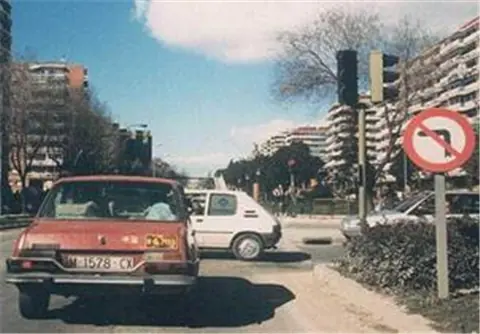
Ante este semáforo apagado, ¿qué debe hacer?
This traffic light is switched off. What must you do?
- APasar sin detenerse.Go through without stopping.
- BCeder el paso a los vehículos que vengan por la derecha.Give way to vehicles coming from the right.
- CDetenerme y después ceder el paso.Stop and then give way.
ExplanationIf a traffic light is switched off or not working and there are no other priority signs, the general rule applies: give way to vehicles approaching from the right. You do not have to stop if you can give way without doing so.
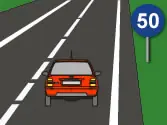
Si el vehículo de la imagen circula a 80 km/h, ¿lo hará correctamente a partir de la señal?
If the vehicle in the picture is travelling at 80 km/h, is it driving correctly after the sign?
- ANo, a partir de la señal no puede superar los 50 km/h.No, after the sign it may not go faster than 50 km/h.
- BSí.Yes.
- CNo.No.
ExplanationThe sign in the picture is the minimum speed sign, which means it requires you to drive at no less than 50 km/h. So a vehicle travelling at 80 km/h is driving correctly.
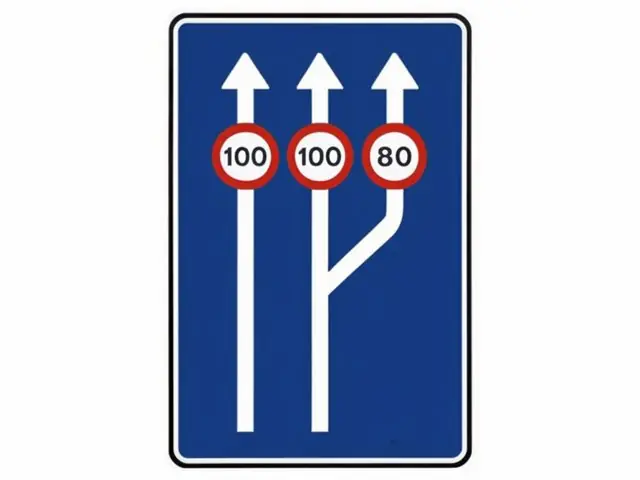
La señal indica que la carretera pasa de dos carriles a tres y además...
The sign indicates that the road changes from two lanes to three, and also...
- ALa velocidad máxima en cada carril.the maximum speed in each lane.
- BLa velocidad mínima en cada carril.the minimum speed in each lane.
- CLa velocidad máxima recomendada en cada carril.the recommended maximum speed in each lane.
ExplanationThis is sign S-53c: it indicates that the carriageway changes from two to three lanes and, with the numbers in red circles, the maximum speed allowed in each of them. If the numbers were in blue circles, they would be minimum speeds.
¿Se podrá circular en algún caso por el lado izquierdo de una línea continua?
May you ever drive on the left-hand side of a continuous line?
- ANo, en ningún caso.No, never.
- BSólo dentro de poblado.Only in built-up areas.
- CCuando la línea continua delimite carriles en un mismo sentido.When the continuous line separates lanes in the same direction.
ExplanationYou may not drive to the left of a continuous line when the lane on the left is for oncoming traffic. When the lane to the left of the continuous line is in our same direction, we may drive in it, but never crossing the continuous line.
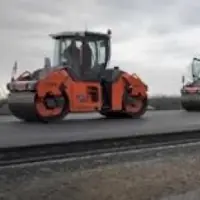
¿En qué situación utilizarán la señal luminosa los vehículos de obras?
When will works vehicles use the light signal?
- ACuando vayan a efectuar una parada o estacionamientoWhen they are going to stop or park.
- BCuando realicen trabajos de movimientos de rocas únicamenteOnly when moving rocks.
- CCuando realicen trabajos y su situación pueda suponer un peligroWhen they are working and their position may be a hazard.
ExplanationUnder Annex XI of the General Vehicle Regulations, the V-2 sign shows the position on or near the road of a vehicle that is doing a service or work, stopped, parked or travelling at no more than 40 km/h. Works vehicles use it when they are working on the road and are an obstacle.
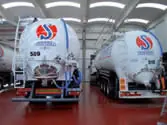
¿Qué indica la señal rectangular que lleva este camión?
What does the rectangular sign on this lorry indicate?
- AQue transporta mercancías peligrosas.That it is carrying dangerous goods.
- BQue transporta mercancías inflamables.That it is carrying flammable goods.
- CQue mide más de 12 metros.That it is more than 12 metres long.
ExplanationThe sign shows that the lorry is more than 12 metres long. The dangerous goods plate is orange.
¿Cómo se denomina la vía ciclista que está señalizada y situada físicamente sobre la acera?
What is the name of a marked cycle route that is physically located on the pavement?
- AAcera-biciAcera-bici (pavement cycle path)
- BPista-biciPista-bici (cycle track)
- CCarril-biciCarril-bici (cycle lane)
ExplanationThe correct answer is acera-bici. It is essential to distinguish the types of cycle routes by where they are: 1. Acera-bici (pavement cycle path): a cycle route marked on the pavement (the pedestrian area). 2. Carril-bici (cycle lane): a cycle route running alongside the carriageway (where cars travel), either one-way or two-way. 3. Pista-bici (cycle track): a cycle route separated from motor traffic, with its own route independent of the roads. So if the route is “on the pavement” (acera), its technical name includes that word.
Si al entrar en un túnel encontramos un semáforo de color rojo, ¿que tendremos que hacer?
If you find a red traffic light when entering a tunnel, what must you do?
- APasar con precaución.Go through with care.
- BDetenernos.Stop.
- CContinuar la marcha extremando la precaución.Continue, taking extra care.
ExplanationWhen you find a red traffic light, you must stop.
¿Cuándo termina el límite de velocidad que indica una señal de velocidad máxima de 30 km/h?
When does the limit shown by a 30 km/h maximum speed sign end?
- ACuando salga de la travesía.When you leave the travesía (stretch of road through a town).
- BCuando encuentre una señal que indique el fin de la limitación de velocidad.When you reach a sign showing the end of the speed limit.
- CCuando haya recorrido un kilómetro desde la señal.When you have driven one kilometre from the sign.
ExplanationThe maximum speed sign (R-301) applies from where it stands until the next end of speed limit sign (R-501), end of prohibitions sign (R-500) or another maximum speed sign; if it is on the same post as a danger sign, it ends where the danger ends. It does not expire when you leave a travesía or after a certain distance.
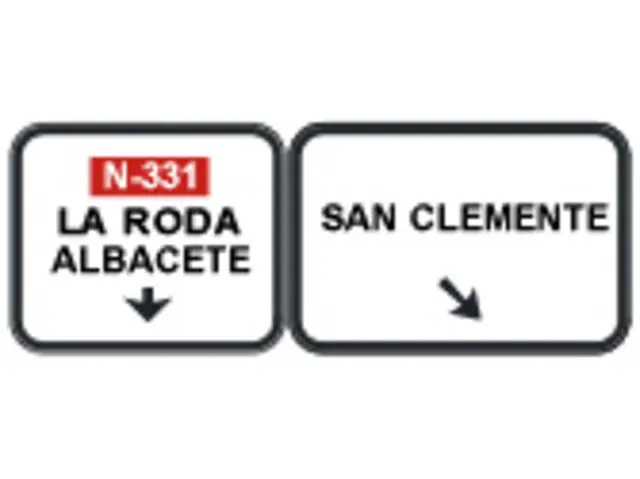
Estas señales, en una carretera convencional, indican salida inmediata hacia...
On a conventional road, these signs indicate an immediate exit towards...
- Aotra carretera convencional.another conventional road.
- Buna autovía.a dual carriageway (autovía).
- Cuna autopista.a motorway (autopista).
ExplanationThese are immediate-exit signs on a conventional road. The one showing the exit has a white background, used for destinations reached by conventional or multi-lane roads, so it leads to another conventional road. If it led to a motorway (autopista) or dual carriageway (autovía), the sign would have a blue background.
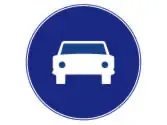
Al circular con una motocicleta, ¿podrás hacerlo por la calzada así señalizada?
When riding a motorcycle, may you use the carriageway with this sign?
- ASolo si es una motocicleta sin sidecar.Only if it is a motorcycle without a sidecar.
- BSí.Yes.
- CNo.No.
ExplanationThis is sign R-404: it requires motor cars, except two-wheeled motorcycles and three-wheeled vehicles treated as motorcycles, to use that carriageway. A motorcycle is not required to use it, but it may do so, because the sign does not prohibit it.
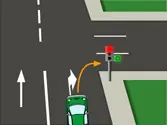
A la vista de la señalización, ¿Qué deberá hacer el vehículo de la imagen?
Given the signals, what must the vehicle in the picture do?
- AGirar hacia la derecha, por estar situado en el carril reservado para hacer este giro, cediendo el paso a los vehículos que circulen por la vía transversal.Turn right, as it is in the lane reserved for this turn, giving way to vehicles on the road it is turning into.
- BGirar hacia la derecha, teniendo prioridad de paso por ser la flecha de color verde.Turn right, having right of way because the arrow is green.
- CEsperar a que la luz del semáforo principal esté en verde, si pretende continuar de frente.Wait for the main traffic light to turn green, if it wants to go straight on.
ExplanationThe vehicle has a traffic light with a green arrow in the lane reserved for turning right, so it must turn, doing so with caution, letting vehicles in the lane it is joining go past and not endangering pedestrians.
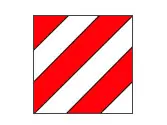
Utilizaremos la señal V-20...
Sign V-20 is used...
- ASolo en el caso de que la carga transportada sea indivisible.Only when the load carried is indivisible.
- BCuando la carga sobresalga por la parte posterior del vehículo.When the load sticks out beyond the rear of the vehicle.
- CSolo en los camiones y vehículos mixtos.Only on lorries and mixed-use vehicles.
ExplanationUnder Article 15.6 of the General Traffic Regulations (RGC), a load that sticks out beyond the rear of the vehicle must be marked with sign V-20, placed at the rear end of the load. Between sunset and sunrise, or when visibility is poor, a red light is also required. This applies to both goods vehicles and cars.
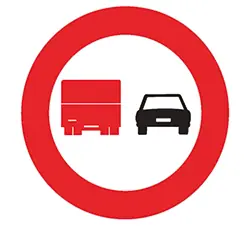
¿A qué vehículos prohíbe el adelantamiento esta señal?
Which vehicles does this sign prohibit from overtaking?
- AA los camiones de más de 3.500 kg. de M.M.A.Lorries with a MAM of more than 3,500 kg.
- BA todos los vehículos de motor, incluidos camiones.All motor vehicles, including lorries.
- CA todos los camiones de menos de 3.500 kg. de M.M.A.All lorries with a MAM of less than 3,500 kg.
ExplanationThe sign shows the outline of a lorry on the left: it prohibits overtaking for lorries with a maximum authorised mass of more than 3,500 kg. Cars and other vehicles may still overtake.
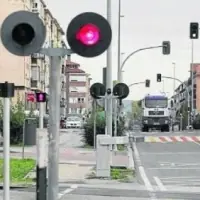
¿En qué lugar podemos encontrar un semáforo con luz roja intermitente?
Where might we find a traffic light with a flashing red light?
- AAntes de un túnelBefore a tunnel
- BAntes de un paso a nivelBefore a level crossing
- CEn medio de un paso de cebraIn the middle of a zebra crossing
ExplanationAt the entrance to a level crossing we may find a traffic light with one flashing red light or two red lights flashing alternately, which tell us that vehicles are temporarily not allowed to pass. We can also find this type of traffic light at the entrance to a movable bridge or a ferry.
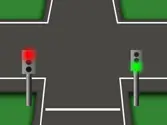
Hay un semáforo rojo a la izquierda y otro verde a la derecha. ¿Qué semáforo debe obedecer si quieres continuar recto?
There is a red traffic light on the left and a green one on the right. Which traffic light must you obey if you want to go straight on?
- AEl semáforo verde, porque le permite el paso.The green traffic light, because it lets you through.
- BEl semáforo verde, porque está a la derecha.The green traffic light, because it is on the right.
- CEl semáforo rojo, porque está a la izquierda y quiere seguir recto.The red traffic light, because it is on the left and you want to go straight on.
ExplanationIf there are traffic lights or road signs showing different instructions on the right and on the left, those who intend to turn left or go straight on must only obey the ones immediately to their left. Those who intend to turn right will obey the sign on the right.
En una intersección hay una señal de 'Stop' a la izquierda de la calzada y una de 'Ceda el paso' a la derecha. ¿Qué señal debe seguir el vehículo que circula por el carril derecho para girar a la derecha?
At a junction there is a STOP sign on the left of the carriageway and a give way sign on the right. Which sign must a vehicle in the right lane that is turning right follow?
- ALa señal 'Ceda el paso'.The give way sign.
- BLa señal de 'Stop', por estar situada a la izquierda.The STOP sign, because it is on the left.
- CLa señal de 'Stop', por ser la más restrictiva.The STOP sign, because it is the most restrictive.
ExplanationAccording to Article 132.3 of the RGC, you obey the signs placed immediately to your right; those on the left only count for drivers turning left or going straight on, when they show something different. A driver in the right lane who is turning right must follow the give way sign.
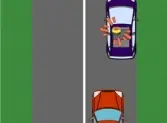
Si encontramos un vehículo averiado en la calzada, ¿es correcto rebasarlo pisando la línea continua?
If you find a broken-down vehicle on the carriageway, is it correct to pass it by driving over the continuous line?
- ASí.Yes.
- BNo, salvo que lo indique un agente.No, unless a traffic officer tells you to.
- CNo.No.
ExplanationWhere overtaking is prohibited, you may pass a vehicle immobilised by a breakdown, even if you have to move into the opposite direction, if there is no danger and the vehicle has not stopped because of traffic needs. You must leave at least 1.5 metres and reduce your speed by at least 20 km/h (Article 88, as worded by RD 518/2026).
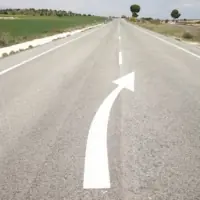
Si la distancia entre las líneas de una línea discontinua de forma alargada es llamativamente más corta de lo habitual, entonces significará...
If the gaps between the elongated dashes of a broken line are noticeably shorter than usual, this means...
- ALa proximidad de un tramo de carretera especialmente peligroso.A particularly dangerous stretch of road is coming up.
- BLa proximidad de una calle transversal.A side street is coming up.
- CLa proximidad de un tramo con un desnivel de más del 5%.A stretch with a gradient of more than 5% is coming up.
ExplanationA broken line with clearly shorter gaps than usual is a warning marking (M-1.9 and M-1.10): it announces that a continuous line or a stretch of road with a special risk is coming up. You must get ready not to overtake and pay extra attention.
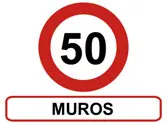
La señal que se observa en la fotografía obliga a mantener esa velocidad máxima en todo el poblado...
The sign in the photo requires you to keep to that maximum speed throughout the town...
- Aindependientemente de otras señales de velocidad que encuentre dentro de él.regardless of other speed signs you find inside it.
- Bpudiendo rebasarla en 20 km/h para adelantar.but you may exceed it by 20 km/h to overtake.
- Cexcepto donde se indique otra velocidad.except where a different speed is shown.
ExplanationUnder Article 145.3 of the General Traffic Regulations (RGC), regulatory signs placed next to the sign with the name of the town apply to the whole town, except where other signs show different rules. Also, you may not exceed that limit to overtake.
All topics
- Definitions
- Documents and penalty points
- The driver's condition
- Duties of drivers and pedestrians
- Vehicle safety devices
- Vehicle controls and equipment
- Vehicle lights and horn
- The road and its lanes
- Speed and distances
- Manoeuvres
- Right of way
- Carrying passengers and loads
- Driving safely in difficult conditions
- Vehicle mechanics and maintenance
- Road accidents and first aid
- Defensive and eco-driving
Independent app: not affiliated with or endorsed by the DGT (Spain's Directorate-General for Traffic) or the Ministry of the Interior. The official exam is booked with the DGT and taken at its test centres. The questions here are practice material; the DGT's official question bank is not public.
Basado en datos de la Agencia Estatal Boletín Oficial del Estado (https://www.boe.es). Textos consolidados de carácter meramente informativo. La AEBOE no patrocina ni respalda este sitio.
Parte de las preguntas procede de los tests de la revista «Tráfico y Seguridad Vial» de la DGT, reproducidos con indicación de la fuente.