
DGT test · 691 questions
Vehicle safety devices
Seat belts, child restraints, helmets, head restraints and airbags: when they are compulsory, the exceptions and how to use them properly.
20 random questions
Loading questions…
Questions in this topic, with answers
691 questions, 50 per page, with the correct answer and the explanation. Page 1 of 14.

¿Cómo regularemos correctamente el apoyacabezas?
How should you adjust the head restraint correctly?
- APoniendo por debajo de la nuca el borde del apoyacabezas.With the edge of the head restraint below the nape of the neck.
- BPoniendo justo encima de la nuca el borde del apoyacabezas.With the edge of the head restraint just above the nape of the neck.
- CPoniendo el borde del apoyacabezas entre el límite superior de la cabeza y la altura de los ojos.With the edge of the head restraint between the top of the head and eye level.
ExplanationRear-end collisions often cause whiplash. To prevent it, adjust the head restraint correctly: it must be between the top of the head and eye level, and never more than 4 cm from the head.
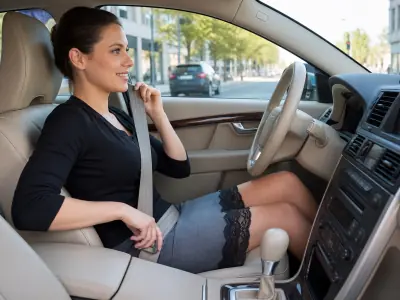
En vías urbanas, utilizar el cinturón de seguridad…
In built-up areas, wearing a seat belt...
- Ano es obligatorio aunque sí es recomendable.is not compulsory, although it is recommended.
- Bes obligatorio.is compulsory.
- Cúnicamente es obligatorio para los pasajeros.is only compulsory for passengers.
ExplanationArticle 117 of the General Traffic Regulations (RGC) requires the driver and all occupants to wear a seat belt both in and outside built-up areas. Dangerous collisions also happen in towns, even at low speed.
¿El conductor de un coche debe ponerse el cinturón de seguridad si el recorrido es corto?
Must a car driver wear a seat belt if the journey is short?
- ASí, siempre.Yes, always.
- BNo, si circula por vías urbanas.No, if driving in a built-up area.
- CNo, si realiza operaciones de carga y descarga en distancias cortas.No, if loading and unloading over short distances.
ExplanationSpanish rules, in Article 116 of the General Traffic Regulations (RGC), state that all drivers and occupants of motor vehicles must wear a seat belt, however long the journey. This means that even on a short journey in a built-up area, wearing a seat belt is compulsory, and not doing so is a serious offence. So the correct answer is 'Yes, always'.
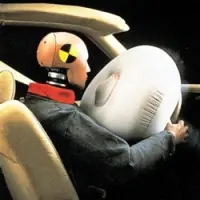
El airbag es un elemento de seguridad. ¿Cuál es su función?
The airbag is a safety feature. What is its function?
- AReforzar la eficacia del reposa cabezas.To make the head restraint more effective.
- BReforzar la eficacia del denominado ABS.To make the so-called ABS more effective.
- CReforzar la eficacia del cinturón de seguridad.To make the seat belt more effective.
ExplanationThe main function of the airbag, as a passive safety feature, is to make the seat belt more effective: it stops the occupants from hitting parts of the vehicle and slows their bodies down when the seat belt can no longer hold them. The airbag is never used on its own; it is always a complement to the seat belt.
¿Existe la posibilidad de que el airbag se active durante un estacionamiento?
Can the airbag go off while you are parking?
- ADepende del fabricante y del modelo del vehículo.It depends on the manufacturer and the vehicle model.
- BNo, los sistemas de airbag modernos están diseñados para activarse solo en situaciones específicas de impacto.No, modern airbag systems are designed to go off only in specific impact situations.
- CSí, un airbag puede desplegarse en cualquier momento.Yes, an airbag can deploy at any time.
ExplanationAirbags are designed to go off only in a strong collision, usually above a certain speed and impact force. When parking, speeds are very low and the forces are not strong enough for the system to detect a serious crash. The airbag sensors analyse deceleration and the force of the impact before deploying. If no significant impact is detected, the airbag will not deploy. Only in exceptional situations, such as hitting a wall hard while parking, could it go off.
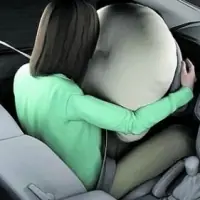
¿Puede utilizarse el airbag como único elemento de protección en caso de accidente?
Can the airbag be used as the only protection in an accident?
- ANo, debe ser complementario a los cinturones de seguridadNo, it must be used together with the seat belts
- BSí, siempre que el airbag esté homologadoYes, as long as the airbag is approved
- CSí, pero únicamente en el caso del conductorYes, but only for the driver
ExplanationThe airbag is a supplementary system to the seat belt; it does not replace it. Without a seat belt, the body moves towards the airbag while it is deploying and may suffer serious injuries. Seat belts are compulsory for all occupants.
Si los ocupantes de un vehículo no utilizan el cinturón de seguridad, ¿es eficaz el airbag?
If the occupants of a vehicle do not wear seat belts, is the airbag effective?
- ASí.Yes.
- BNo, y puede provocar graves lesiones.No, and it can cause serious injuries.
- CSí, si van sentados correctamente.Yes, if they are sitting correctly.
ExplanationThe airbag complements the seat belt; it does not replace it. Without a seat belt, the occupant moves forward before the airbag has fully inflated and can be hit by it with great force, suffering serious injuries.
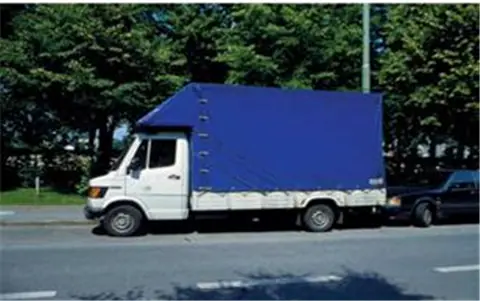
Cuando conduce un camión de 3.000 kg de MMA., ¿debe llevar puesto el cinturón de seguridad?
When driving a lorry with an MAM of 3,000 kg, must you wear a seat belt?
- ANo.No.
- BSí.Yes.
- CSolo en vías interurbanas.Only on roads outside built-up areas.
ExplanationIt must be worn on all roads.
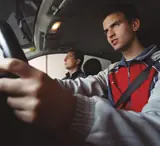
¿Qué sistemas de seguridad pueden perder eficacia si no se lleva abrochado el cinturón de seguridad?
Which safety systems can become less effective if the seat belt is not fastened?
- ALos frenos y el ABS.The brakes and ABS.
- BLa suspensión y los amortiguadores.The suspension and shock absorbers.
- CLos airbag y los reposacabezas.The airbags and head restraints.
ExplanationAirbags and head restraints are two very effective safety systems, but if they are not used together with the seat belt, they can be very dangerous. The seat belt must always be worn, apart from some exceptions.
¿El color del casco puede afectar a tu seguridad?
Can the colour of your helmet affect your safety?
- ANo, lo único importante es que esté homologado y bien abrochado.No, the only important thing is that it is approved and properly fastened.
- BSí, es mejor que sea de color claro.Yes, a light colour is better.
- CNo, el color es indistinto para la seguridad.No, colour makes no difference to safety.
ExplanationBright, light-coloured and reflective helmets are safer because they make it easier for other road users to see the motorcyclist.
¿Está permitido que un menor ocupe el asientos delantero de un turismo?
Is a minor allowed to sit in the front seat of a car?
- ANo, está prohibido en todo momento.No, it is prohibited at all times.
- BSí, siempre que utilice un dispositivo homologado, como una sillita.Yes, as long as they use an approved device, such as a child seat.
- CPuede hacerlo si su estatura supera 1,35 metros y utiliza el cinturón de seguridad de adultos.They may do so if they are taller than 1.35 metres and use the adult seat belt.
ExplanationMinors who are 1.35 m tall or less must sit in the rear seats of the vehicle, always using an approved restraint system suited to their height and weight. There are three exceptions in which minors below that height may travel in the front seat: 1. When the vehicle has no rear seats. 2. When all the rear seats are already taken by minors in the same situation, so it is impossible to fit all the child seats needed at that moment. 3. When it is not possible to fit child restraint systems in those seats. If they sit in the front seat and the vehicle has a front airbag, they may only use rear-facing restraint systems if the airbag has been deactivated. When minors are taller than 1.35 m, they may sit in the front seat using the adult seat belt.
La función del airbag es:
The function of the airbag is:
- ASustituir al cinturón de seguridadTo replace the seat belt
- BComplementar al cinturón, nunca sustituirloTo complement the seat belt, never to replace it
- CPermitir no usar cinturónTo let you drive without a seat belt
ExplanationThe airbag is a supplementary safety system, not a replacement for the seat belt. In fact, if the seat belt is not worn, the airbag can cause serious injuries when it deploys.
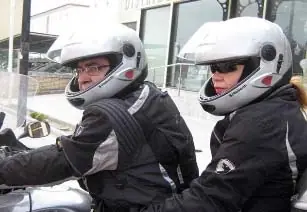
El uso adecuado del casco implica que la correa de sujección...
Using a helmet properly means that the chin strap…
- ANo debe abrocharse.Must not be fastened.
- BDebe llevarse correctamente abrochado para que el casco cumpla eficazmente su función.Must be correctly fastened so that the helmet does its job effectively.
- CPuede llevarse desabrochado en vía urbana.May be left unfastened on urban roads.
ExplanationA helmet only protects you if it fits well and the strap is fastened; otherwise it can come off at the first impact. Article 118 of the General Traffic Regulations requires it to be worn properly fastened on all types of road, both in and outside built-up areas.
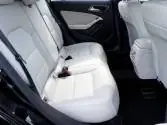
En el asiento trasero de un turismo equipado con cinturón de seguridad:
In the rear seat of a car fitted with a seat belt:
- ANo es obligatorio hacer uso de él aunque sí recomendable.Using it is not compulsory, although it is recommended.
- BEs recomendable y obligatorio hacer uso de él.Using it is recommended and compulsory.
- CEn vías urbanas no es obligatorio hacer uso de él.Using it is not compulsory in built-up areas.
ExplanationIf your vehicle has rear seat belts, it is important that people sitting in the back use them too. In Spain they have been compulsory in all seats of passenger cars and on all types of road since 1992. A passenger thrown forward from the rear seat not only injures themselves but can also injure the driver or whoever is in the front seat.
En un ciclo construido para ser ocupado por una persona, ¿se puede transportar a alguien?
On a cycle built for one person, can you carry someone?
- ANo, porque solo puede ocuparlo el conductor.No, because only the rider can use it.
- BSí, a un menor de hasta 22 kg en un asiento adicional.Yes, a child of up to 22 kg in an additional seat.
- CSí, a cualquier persona, siempre que vaya en una silla homologada.Yes, anyone, as long as they sit in an approved seat.
ExplanationUnder Article 154 of the General Traffic Regulations (RGC) (as worded by Royal Decree 518/2026), cycles that by design cannot carry more than one person may carry children of up to 22 kg who can sit up on their own, in additional seats, as long as the rider is an adult.
¿Dónde es más seguro que viaje un niño utilizando un dispositivo de retención adecuado?
Where is it safest for a child to travel, using a suitable restraint system?
- AEn el asiento delantero, para que le conductor pueda vigilarlo.In the front seat, so that the driver can watch them.
- BEn cualquiera de los asientos laterales traseros para que le proteja el respaldo del asiento delantero.In either of the rear side seats, so that the back of the front seat protects them.
- CEn el asiento central trasero, ya que resulta menos afectado por los impactos laterales.In the middle rear seat, because it is less affected by side impacts.
ExplanationThe safest place for a child with their restraint system is the middle rear seat, because it is furthest from the sides and is less affected in side impacts. The front seat is the least recommended.
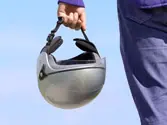
Si el pasajero de la motocicleta no lleva el casco de protección homologado, el responsable es...
If a motorcycle passenger is not wearing an approved protective helmet, the person responsible is...
- Ael conductor de la motocicleta.the rider of the motorcycle.
- Bel pasajero.the passenger.
- Clos dos.both.
ExplanationIf the motorcycle passenger is not wearing an approved protective helmet, the rider is responsible. In a car, if a passenger is not wearing a seat belt, the passenger is responsible.
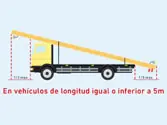
Los conjuntos de vehículos que arrastran un remolque ligero, ¿tienen que llevar un equipo homologado de extinción de incendios entre sus accesorios?
Must vehicle combinations towing a light trailer carry approved fire-fighting equipment among their accessories?
- ASí.Yes.
- BNo.No.
- CSólo cuando circulan por carretera.Only when travelling on roads outside built-up areas.
ExplanationUnder Annex XII of the General Vehicle Regulations, non-special vehicle combinations must carry, in addition to the V-16 hazard warning light and the reflective vest, approved fire-fighting equipment that is suitable and in working order.
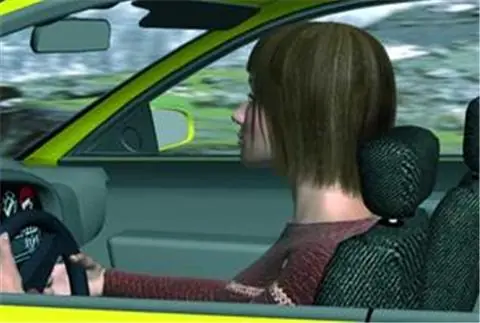
En relación al uso del cinturón de seguridad, una embarazada...
Regarding seat belt use, a pregnant woman...
- Asiempre está exenta de utilizarlo porque es peligroso para el feto.is always exempt, because it is dangerous for the foetus.
- Bdebe utilizarlo, salvo exención médica expresa.must wear it, unless she has an express medical exemption.
- Cpuede no utilizarlo si le dificulta los movimientos para conducir.may choose not to wear it if it makes it hard to move while driving.
ExplanationPregnancy does not exempt you from wearing a seat belt: correctly positioned, it protects both mother and foetus. The lap strap must go below the bump, over the hip bones, and the diagonal strap between the breasts. Only a woman with a medical exemption certificate is exempt.
¿Cómo llevaremos la correa del casco?
How should you wear the helmet strap?
- ASuelta o abrochada, es indiferente.Loose or fastened, it does not matter.
- BAbrochada solo en vías interurbanas.Fastened only on roads outside built-up areas.
- CAbrochada.Fastened.
ExplanationThe helmet strap must be fastened, because this is essential for the safety of the rider and passengers in an accident. A fastened strap keeps the helmet in place so that it does not come off while riding, which reduces the risk of serious head injuries in a crash.
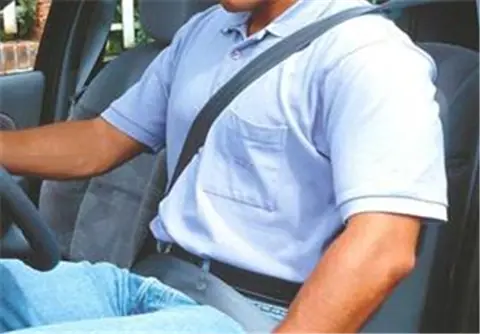
El uso del cinturón de seguridad, ¿reduce el riesgo de fallecimiento en un accidente de tráfico?
Does wearing a seat belt reduce the risk of death in a road accident?
- ASí, reduce a la mitad el riesgo de muerte o de sufrir heridas graves.Yes, it halves the risk of death or serious injury.
- BNo; al contrario, aumenta al doble la posibilidad de resultar muerto.No; on the contrary, it doubles the chance of being killed.
- CSolo reduce el riesgo en los asientos delanteros pero no en las plazas traseras.It only reduces the risk in the front seats, not in the rear seats.
ExplanationThe seat belt roughly halves the risk of dying or being seriously injured in an accident, in all seats. Without it, rear occupants can be thrown forward and also hit those in front.
¿Cuántos puntos se pierden por no usar el cinturón de seguridad?
How many points do you lose for not wearing a seat belt?
- A2 puntos2 points
- B3 puntos3 points
- C4 puntos4 points
ExplanationNot wearing a seat belt, a helmet or child restraint systems means losing 4 points and a €200 fine.
¿Cuál de las siguientes afirmaciones es correcta con respecto a que un menor viaje en el asiento delantero de un turismo?
Which of the following statements is correct about a child travelling in the front seat of a car?
- ANo está permitido.It is not allowed.
- BEstá permitido, pero debe utilizar siempre un dispositivo de retención orientado hacia atrás.It is allowed, but a rear-facing restraint device must always be used.
- CEstá permitido si mide más de 135 centímetros.It is allowed if the child is taller than 135 centimetres.
ExplanationUnder Article 117 of the General Traffic Regulations, children 135 cm tall or shorter travel in the rear seats with a child restraint system, and only exceptionally in the front. If they are taller than 135 cm, they may travel in the front seat using the seat belt.
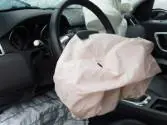
¿A que elemento de seguridad complementa el airbag?
Which safety feature does the airbag complement?
- AAl ABS.ABS.
- BAl cinturón de seguridad.The seat belt.
- CAl apoyacabezas.The head restraint.
ExplanationThe airbag is a very safe passive safety system, but to avoid harmful effects, keep the following in mind: - It complements the seat belt, so they must always be used together. - The airbag should be about 25 cm from your body, and never less than 10 cm. - Do not place objects near the airbag or put your legs on the dashboard: when the airbag goes off, this could cause very serious injuries. - When you use a rear-facing child restraint system in a seat with an airbag, you must deactivate the airbag.
¿Qué exigen las normas sobre el cinturón de seguridad?
What do the rules on seat belts require?
- ALlevarlo siempre puesto y abrochado.Wearing it at all times, properly fastened.
- BQue esté en el vehículo y abrochárselo solo en carretera.Having it in the vehicle and fastening it only on the open road.
- CLlevarlo puesto sin abrochar.Wearing it without fastening it.
ExplanationArticle 117.1 of the General Traffic Regulations requires the driver and passengers to wear approved seat belts, properly fastened, both in and outside built-up areas. It is not enough to wear it without fastening it, or to put it on only on the open road.
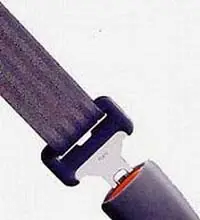
¿Deberá llevar cinturón de seguridad en su motocicleta?
Must you wear a seat belt on your motorcycle?
- ANo.No.
- BSí.Yes.
- CSí, si llevo sidecar.Yes, if I have a sidecar.
ExplanationMotorcycles, with or without a sidecar, do not have seat belts, and their riders and passengers must wear helmets. Article 118.1 of the General Traffic Regulations only requires a seat belt on motorcycles with a protective structure and seat belts fitted, when this is stated on their technical inspection card.
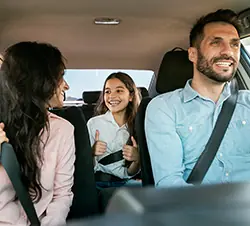
Respecto al uso del cinturón de seguridad, como norma general, el ocupante de un turismo distinto del conductor está obligado a...
Regarding seat belt use, as a general rule, a car occupant other than the driver must...
- Allevarlo puesto y sin abrochar, excepto si viaja en la plaza delantera.wear it unfastened, except in the front seat.
- Bllevarlo puesto y abrochado solo en vías interurbanas.wear it fastened only outside built-up areas.
- Cllevarlo puesto y correctamente abrochado.wear it correctly fastened.
ExplanationThe seat belt is compulsory for all occupants, not just the driver, and it must be worn correctly fastened on all roads: if it is badly positioned, it cannot hold the body properly.
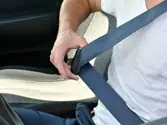
La parte inferior del cinturón de seguridad, ¿dónde irá colocada?
Where should the lower part of the seat belt go?
- ASobre la pelvis.Over the pelvis.
- BA la altura de la cintura.At waist height.
- CSobre el abdomen.Over the abdomen.
ExplanationThe lap strap of the belt must be as low as possible, over the pelvis and the hip bones, never over the abdomen: in a crash, pressure on the belly can cause internal injuries and makes submarining more likely.
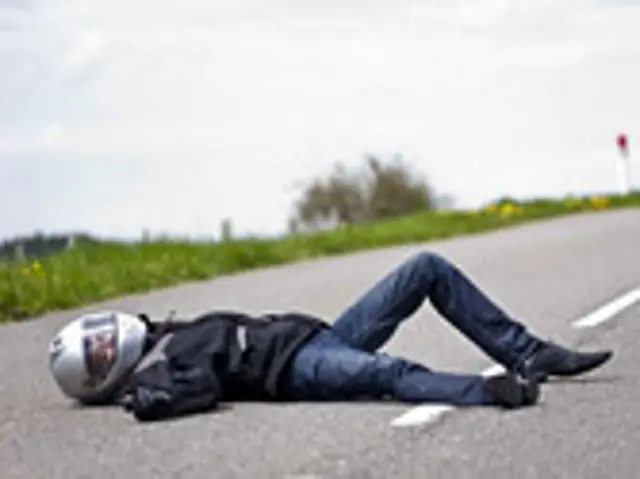
¿Se puede quitar el casco a un motociclista herido?
Should you take the helmet off an injured motorcyclist?
- ASí, en general.Yes, in general.
- BSí, para darle de beber.Yes, to give them something to drink.
- CNo, en general.No, in general.
ExplanationAs a general rule you should not take the helmet off an injured motorcyclist, because moving the head can make possible neck injuries worse. It is only removed if it prevents breathing or the person needs resuscitation, and always by someone who knows the technique. Never to give them something to drink.
Si usas un casco sin pantalla ni visera, ¿es aconsejable llevar gafas de protección?
If you use a helmet without a face shield or visor, is it advisable to wear protective goggles?
- ANo, no es necesario.No, it is not necessary.
- BSí, para proteger los ojos.Yes, to protect your eyes.
- CNo, porque todos los cascos deben tener pantalla.No, because all helmets must have a face shield.
ExplanationUnder Spain's General Traffic Regulations (RGC), motorcyclists must wear approved helmets for protection while riding. Although no specific rule requires safety goggles with a helmet that has no face shield or visor, they are recommended to protect the eyes from insects, debris or other objects that may fly into the face. This advice aims to keep the rider safer in unexpected situations.

¿Dónde debe viajar, como norma general, un menor que mida 1,30 m?
As a general rule, where must a minor who is 1.30 m tall travel?
- AEn cualquiera de los asientos del vehículo utilizando el cinturón de seguridad.In any seat of the vehicle, using the seat belt.
- BEn los asientos traseros, utilizando un sistema de retención infantil homologado adecuado a su talla y peso.In the rear seats, using an approved child restraint system suited to their height and weight.
- CEn el asiento delantero si utiliza un sistema de retención infantil.In the front seat, if they use a child restraint system.
ExplanationAs a general rule, minors who are 1.35 metres tall or less must travel in the rear seats of the vehicle, using an approved child restraint system (child seat) suited to their height and weight. This improves their protection in an accident and reduces the risk of serious injury. In exceptional cases, they may sit in the front seat when: - The vehicle has no rear seats, or - All the rear seats are taken by other minors in the same situation who also need child restraint systems, so it is not possible to fit all the child seats needed. Also, if the minor uses a rear-facing restraint system in the front seat, the front airbag must be deactivated, because if it goes off it could cause very serious injuries.
En un cuatriciclo con cinturones de seguridad, ¿quiénes deben usarlos?
In a quadricycle with seat belts, who must wear them?
- ASolo el conductor, en cualquier vía.Only the driver, on any road.
- BEl conductor y el pasajero solo cuando circulen por vías fuera de poblado.The driver and the passenger, only on roads outside built-up areas.
- CTanto el conductor como el pasajero.Both the driver and the passenger.
ExplanationUnder Article 117 of the General Traffic Regulations (RGC), both the driver and the occupants of vehicles with approved seat belts must wear them at all times, whether in or outside built-up areas. This obligation also applies to quadricycles fitted with seat belts, so the correct answer is that both the driver and the passenger must wear them.
Conducir sin utilizar el cinturón de seguridad, ¿puede ocasionar una sanción y la pérdida de puntos?
Can driving without wearing a seat belt lead to a fine and loss of points?
- ASolo puede ocasionar una sanción económica.It can only lead to a fine.
- BSí.Yes.
- CDentro de poblado no conllevará la pérdida de puntos.In built-up areas it will not lead to loss of points.
ExplanationDriving without your seat belt fastened is a serious offence, on both urban and interurban roads. As well as the 200-euro fine, under Annex II of the Traffic Law it means losing 4 points from your driving licence.
¿Los frenos son un medio de seguridad activa?
Are brakes an active safety feature?
- ASí.Yes.
- BNo, son un elemento de la seguridad pasiva.No, they are a passive safety feature.
- CNo, es un sistema mecánico del vehículo.No, it is a mechanical system of the vehicle.
ExplanationUnder the General Traffic Regulations (RGC), brakes are considered an active safety device because they let the driver control speed and stop the vehicle safely. This is essential to avoid accidents and keep traffic flowing safely. A braking device must make it easier to control the vehicle's movement in any conditions. So the correct answer is 'Yes'.
¿Pueden algunas motocicletas llevar sistemas de estabilidad al frenar o airbags?
Can some motorcycles have braking stability systems or airbags?
- ANo, estos sistemas solo están disponibles para los coches.No, these systems are only available for cars.
- BNo, está prohibido.No, it is prohibited.
- CSí, para evitar accidentes o reducir la gravedad de las lesiones.Yes, to prevent accidents or reduce the severity of injuries.
ExplanationSome motorcycles can have braking stability systems (such as ABS) and airbags. These technologies help reduce the risk of accidents and the severity of injuries in a collision. For example, ABS stops the wheels from locking under hard braking, and the airbag protects the rider in a frontal impact.
¿Por qué no se debe modificar la parte delantera del vehículo?
Why should you not modify the front of the vehicle?
- APorque está diseñada para evitar lesiones a los peatones.Because it is designed to prevent injuries to pedestrians.
- BPorque el vehículo podría perder velocidad máxima.Because the vehicle could lose top speed.
- CSolo porque las normas lo prohíben.Only because the rules prohibit it.
ExplanationThe front of a car is designed to reduce injuries to pedestrians if they are hit: the bonnet, bumper and front end absorb part of the energy of the impact. Adding rigid bull bars or other parts can cancel out that protection.
¿Por dónde tenemos que pasar la banda abdominal del cinturón de seguridad?
Where should the lap strap of the seat belt go?
- APor los muslos.Over the thighs.
- BPor los huesos de la cadera.Over the hip bones.
- CPor encima del abdomen.Over the abdomen.
ExplanationThe lap strap of the seat belt must go over the hip bones, as low as possible, and never over the abdomen, because in a crash it would damage internal organs. The diagonal strap must cross the chest and pass over the middle of the shoulder, without touching the neck.
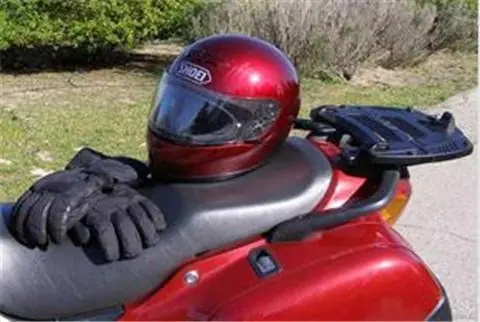
El conductor de una motocicleta que cuenta con estructura de autoprotección y cinturón de seguridad, ¿está obligado a utilizar casco?
Must the rider of a motorcycle with a protective structure and a seat belt wear a helmet?
- ANo, aunque está obligado a utilizar el cinturón de seguridad.No, although they must wear the seat belt.
- BSí, como en cualquier otra motocicletaYes, as on any other motorcycle
- CSolo cuando circule fuera de poblado, en cuyo caso debe utilizar casco y cinturón de seguridad.Only outside built-up areas, where they must wear both a helmet and a seat belt.
ExplanationUnder Article 118 of the General Traffic Regulations (RGC), if a motorcycle, moped or quadricycle has a protective structure and seat belts, and this is stated in its documents, its occupants are exempt from wearing a helmet, but they must wear the seat belt on all types of road.
El casco de protección homologado, en motocicletas y ciclomotores:
An approved protective helmet on motorcycles and mopeds:
- AEs obligatorio para conductor y pasajero.Is compulsory for rider and passenger.
- BSolo lo necesita el conductor.Is only needed by the rider.
- CEs opcional en ciudad.Is optional in towns.
ExplanationAn approved helmet is compulsory for both the rider and the passenger of motorcycles and mopeds.
¿Los cinturones de seguridad ayudan a prevenir lesiones?
Do seat belts help prevent injuries?
- ASí.Yes.
- BNo.No.
- CSí, pero solo a baja velocidad.Yes, but only at low speed.
ExplanationYes. The seat belt holds the occupant in place, spreads the forces of the crash over the strongest parts of the body and stops them from being thrown out, at any speed. That is why Article 117 of the General Traffic Regulations requires you to wear it fastened both in and outside built-up areas.
¿En qué caso puede un conductor de motocicleta circular sin casco?
In which case may a motorcycle rider ride without a helmet?
- ACuando la motocicleta tenga una estructura de protección y cinturón de seguridad, y así figure en su tarjeta ITV.When the motorcycle has a protective structure and a seat belt, and this is stated on its ITV card.
- BEn ningún caso, ya que el casco es siempre obligatorio.Never, because a helmet is always compulsory.
- CCuando circule por vías urbanas a baja velocidad.When riding in a built-up area at low speed.
ExplanationThe regulations state that riders of motorcycles, mopeds and similar vehicles may ride without a helmet if their vehicle has a protective structure and seat belts and this is recorded on its ITV card. This exemption applies because the rider is protected by other safety measures, so the correct answer is the one about the protective structure and seat belt.
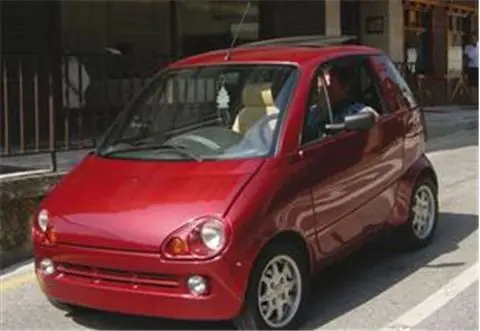
Si un cuadriciclo ligero tiene instalados cinturones de seguridad, ¿es obligatorio ponerse el casco?
If a light quadricycle has seat belts fitted, is it compulsory to wear a helmet?
- ASí, pero únicamente fuera de poblado.Yes, but only outside built-up areas.
- BNo.No.
- CSí, pero únicamente en vías urbanas.Yes, but only in built-up areas.
ExplanationArticle 118 of the General Traffic Regulations (RGC) exempts drivers and passengers of quadricycles and mopeds that have a protective structure and seat belts from wearing a helmet, if this is stated in their documents. In that case, they must wear the seat belt fastened on all types of road.
En la utilización del casco es fundamental:
When using a helmet, it is essential:
- AQue quede bastante holgado porque así es más cómodo.That it is quite loose, because that is more comfortable.
- BQue exteriormente esté bien, aunque haya sufrido caídas anteriores.That it looks fine on the outside, even if it has been dropped before.
- CQue esté correctamente abrochado.That it is correctly fastened.
ExplanationThe helmet must be correctly fastened to be effective in an accident. Fastening it properly makes sure the helmet stays in place and protects the head properly.
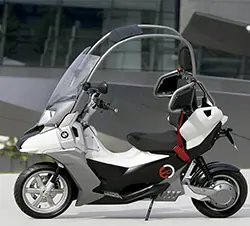
En la ficha de inspección técnica de esta motocicleta figura que tiene estructura de autoprotección y cinturón de seguridad. ¿Puede conducirla sin utilizar el casco de protección?
The technical inspection card of this motorcycle states that it has a protective structure and a seat belt. May you ride it without a protective helmet?
- ASólo cuando circule por vías urbanas.Only when riding in built-up areas.
- BSí.Yes.
- CNo.No.
ExplanationThe Regulations exempt from wearing a helmet those travelling in vehicles that, according to their technical inspection card, have a protective structure and seat belts, because these features do the protective job.
Respecto a la relación entre el airbag y el cinturón de seguridad:
Regarding the relationship between the airbag and the seat belt:
- ASi el vehículo dispone de airbag, el cinturón de seguridad sólo es necesario a altas velocidades.If the vehicle has an airbag, the seat belt is only needed at high speeds.
- BSi el vehículo dispone de airbag, no es necesario hacer uso del cinturón de seguridad.If the vehicle has an airbag, you do not need to wear the seat belt.
- CEl airbag y el cinturón de seguridad son sistemas de seguridad complementarios.The airbag and the seat belt are complementary safety systems.
ExplanationThe airbag and the seat belt are complementary safety systems because both are meant to protect the vehicle's occupants in an accident. The airbag is an extra measure on top of the seat belt: its function is to cushion the impact and reduce the risk of injury to the head and body. However, the airbag cannot fully replace the seat belt, because the seat belt is the main restraint system and helps keep the occupants in place during a crash. So it is important to use both the airbag and the seat belt for maximum protection in an accident.
¿Pueden utilizar los conductores de vehículos, auriculares o cascos, conectados a un aparato reproductor o emisor de sonido?
May drivers use earphones or headphones connected to a device that plays or transmits sound?
- ANo, ni siquiera los motoristas que los llevan integrados en el casco.No, not even motorcyclists who have them built into the helmet.
- BSí, porque así se evita tener que sujetar el teléfono con las manos.Yes, because that way you do not have to hold the phone in your hands.
- CNo, salvo los integrados en el casco de motos y ciclomotores, para comunicarse o navegar.No, except those built into the helmet of motorcycle and moped riders, for communication or navigation.
ExplanationUnder Article 18.2 of the General Traffic Regulations (RGC) (as worded by Royal Decree 518/2026), driving with headphones or earphones connected to sound-receiving or sound-playing devices is prohibited. The exception is certified or approved wireless devices built into the protective helmet of motorcycle and moped riders, used only for intercom or navigation.
El cinturón de seguridad es un elemento de seguridad...
The seat belt is a safety feature that is...
- APasiva.passive.
- BActiva.active.
- CPrimaria.primary.
ExplanationThe seat belt is a passive safety feature, because its function is to reduce the consequences of an accident.
Un niño de 4 años y que mide 1,35 metros.¿En qué lugar del vehículo deberá ir sentado?
A 4-year-old child is 1.35 metres tall. Where in the vehicle must they sit?
- AEn una silla homologada, y en el asiento delantero.In an approved child seat, in the front seat.
- BEn el asiento trasero.In the rear seat.
- CEn el asiento delantero.In the front seat.
ExplanationUnder Article 117 of the General Traffic Regulations (RGC), minors who are 135 cm tall or less must travel in the rear seats with a child restraint system suited to their height and weight. They may only travel in front in exceptional cases: if there are no rear seats, if the rear seats are taken by other minors, or if the child seats do not fit.
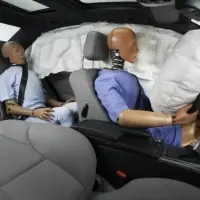
Además del de la parte delantera, ¿Existen otro tipo de airbags para el vehículo?
Apart from the front airbag, are there other types of airbag for vehicles?
- ASí, los de los laterales, los de techo y los de cortina.Yes: side airbags, roof airbags and curtain airbags.
- BNo.No.
- CSí, únicamente los airbags laterales.Yes, but only side airbags.
ExplanationYes. As well as front airbags, many vehicles have side airbags in the seats or doors, curtain airbags in the roof that protect the head in side impacts, and others such as knee airbags. They all work together with the seat belt.
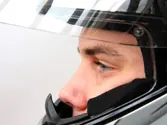
Circulando con su motocicleta deberá llevar siempre un casco homologado...
When riding your motorcycle, you must always wear an approved helmet...
- AConvenientemente abrochado sólo al circular dentro de poblado.properly fastened, only when riding in built-up areas.
- BConvenientemente abrochado tanto dentro como fuera de poblado.properly fastened, both in and outside built-up areas.
- CNo es necesario llevar el casco abrochado.It is not necessary to keep the helmet fastened.
ExplanationWhen riding a motorcycle or moped, you must always wear an approved helmet, always correctly fastened. The helmet must fit well on the head, must not be tilted back or forward over the eyes, and the chin strap must be fastened. The safest helmet is the full-face helmet, which covers the whole face.
All topics
- Definitions
- Documents and penalty points
- The driver's condition
- Duties of drivers and pedestrians
- Vehicle controls and equipment
- Vehicle lights and horn
- Traffic signs, markings and signals
- The road and its lanes
- Speed and distances
- Manoeuvres
- Right of way
- Carrying passengers and loads
- Driving safely in difficult conditions
- Vehicle mechanics and maintenance
- Road accidents and first aid
- Defensive and eco-driving
Independent app: not affiliated with or endorsed by the DGT (Spain's Directorate-General for Traffic) or the Ministry of the Interior. The official exam is booked with the DGT and taken at its test centres. The questions here are practice material; the DGT's official question bank is not public.
Basado en datos de la Agencia Estatal Boletín Oficial del Estado (https://www.boe.es). Textos consolidados de carácter meramente informativo. La AEBOE no patrocina ni respalda este sitio.
Parte de las preguntas procede de los tests de la revista «Tráfico y Seguridad Vial» de la DGT, reproducidos con indicación de la fuente.