
DGT test · 539 questions
Vehicle mechanics and maintenance
Engine, brakes, steering, suspension and tyres: how they work and what maintenance prevents breakdowns and crashes.
20 random questions
Loading questions…
Questions in this topic, with answers
539 questions, 50 per page, with the correct answer and the explanation. Page 1 of 11.
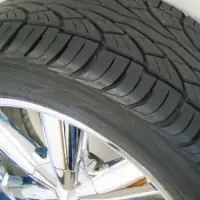
¿Qué sistema hace que los neumáticos y los frenos funcionen adecuadamente?
Which system makes the tyres and brakes work properly?
- ASistema de transmisiónTransmission system
- BSistema de suspensiónSuspension system
- CSistema eléctricoElectrical system
ExplanationThe suspension system allows both the tyres and the braking system to work effectively. It is the set of parts that keep the wheels in contact with the ground at all times and stop bumps in the road from being passed into the inside of the vehicle.
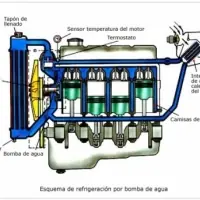
¿Qué dos tipos de refrigeración existen en el motor de un vehículo?
What are the two types of engine cooling in a vehicle?
- APor aire y por tuberíasAir and pipe cooling
- BPor aire y por aspiraciónAir and suction cooling
- CPor aire y por líquidoAir and liquid cooling
ExplanationThere are two types of cooling, depending on how the cooling system removes the heat produced in the engine: air cooling, where the engine is cooled directly by air, and liquid cooling, where it is cooled by coolant, which is in turn cooled by air.
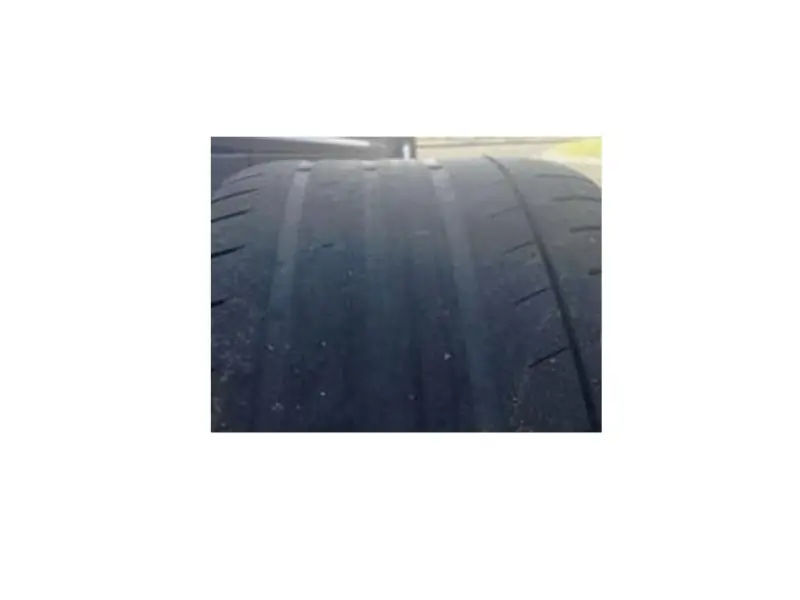
¿Cuál puede ser la causa de que un neumático se gaste más por el centro que por los bordes?
What can cause a tyre to wear more in the centre than at the edges?
- ACircular habitualmente a velocidad elevada.Usually driving at high speed.
- BCircular con una presión de inflado inferior a la correcta.Driving with a tyre pressure lower than the correct one.
- CQue la presión de inflado sea superior a la correcta.A tyre pressure higher than the correct one.
ExplanationIf a tyre wears more in the centre than at the edges, the usual reason is that its pressure is higher than the correct one: the centre of the tread bulges and carries almost all the load. With low pressure the opposite happens: the edges wear.
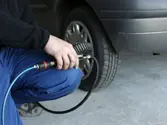
¿Cómo comprobaremos la presión de los neumáticos?
How will we check the tyre pressure?
- ACon los neumáticos fríos.With the tyres cold.
- BCon los neumáticos calientes.With the tyres hot.
- CLos neumáticos modernos no requieren mantenimiento.Modern tyres need no maintenance.
ExplanationWe will check the tyre pressure when the tyres are cold or after driving only a few metres, because if we do it when the tyre is hot, the pressure gauge will show a higher pressure than the real one.
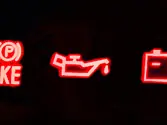
El motor se lubrica cuando el aceite está caliente y circula con la una presión determinada, ¿cómo sabremos que esta lubricación es correcta?
The engine is lubricated when the oil is hot and circulates at a certain pressure. How will we know that the lubrication is correct?
- APor el indicador de presión, que estará apagado.By the oil pressure warning light, which will be off.
- BPor el indicador de presión, que estará encendido.By the oil pressure warning light, which will be on.
- CQuitando el tapón de la culata con el motor parado y observando si sale humo.By removing the cap on the cylinder head with the engine stopped and seeing if smoke comes out.
ExplanationThe oil pressure warning light comes on on the dashboard when the pressure is too low and so the lubrication is not correct. As long as there is no lubrication problem, this light stays off.
¿Qué ocurre si la presión de inflado de los neumáticos es superior a la necesaria?
What happens if the tyre pressure is higher than necessary?
- AAmbas respuestas son correctas.Both answers are correct.
- BLos órganos de la suspensión sufren mayor fatiga y deterioro.The suspension parts suffer more strain and wear.
- CDisminuye la zona de contacto con el pavimento, y la adherencia.The area of contact with the road surface is reduced, and so is grip.
ExplanationBoth answers are correct because, when the tyre pressure is higher than necessary, the area of contact with the road surface is reduced and so is grip. In addition, the suspension parts suffer more strain and wear because of the vibrations caused by bumps in the road.
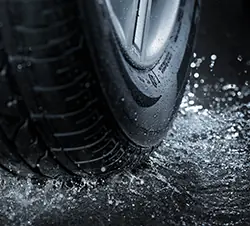
Cuando está lloviendo, ¿qué presión deben tener los neumáticos?
When it is raining, what pressure should the tyres have?
- AMayor que la aconsejada por el fabricante.Higher than the pressure recommended by the manufacturer.
- BMenor que la aconsejada por el fabricante.Lower than the pressure recommended by the manufacturer.
- CLa presión aconsejada por el fabricante.The pressure recommended by the manufacturer.
ExplanationTyres must always have the pressure recommended by the manufacturer, also in the rain: this is the pressure that makes sure the tread sits properly on the road and clears water correctly. Raising or lowering it reduces the useful contact area and grip.
El estado de los neumáticos, ¿influye en el frenado?
Does the condition of the tyres affect braking?
- ASí influye, porque los neumáticos en buen estado se agarran mejor al suelo y frena mejor.Yes, because tyres in good condition grip the road better and the vehicle brakes better.
- BNo, solamente depende del estado de la calzada.No, it only depends on the condition of the road surface.
- CNo influye, solamente depende del estado de los frenos.No, it only depends on the condition of the brakes.
ExplanationCheck the condition of your tyres regularly: - Check the tyre pressure with the tyres cold, using a pressure gauge. It must be the pressure recommended by the manufacturer. - Check that the tread is above the tread wear indicators; otherwise, you will have less stability on the road, you will need many more metres to brake and you will increase the risk of losing control of the vehicle when driving on water. - Make sure they have no cuts, deformations or irregularities.
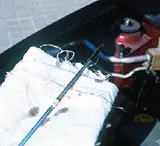
La varilla del aceite del motor, ¿para qué sirve?
What is the engine oil dipstick used for?
- APara comprobar la temperatura del aceite.To check the oil temperature.
- BPara comprobar el nivel del aceite.To check the oil level.
- CPara comprobar la presión del aceite.To check the oil pressure.
ExplanationThe dipstick is used to check the engine oil level, which must be between the minimum and maximum marks. The check is done with the engine cold and the vehicle on level ground so that the reading is reliable.
Si el motor de un ciclomotor es de combustión interna, su cilindrada...
If a moped has an internal combustion engine, its engine capacity...
- ANo puede ser superior a 50 cc.cannot be more than 50 cc.
- BNo puede ser 50 cc.cannot be 50 cc.
- CPuede ser superior a 50 cc.can be more than 50 cc.
ExplanationA moped with an internal combustion engine cannot have an engine capacity of more than 50 cm³, and its design maximum speed is limited to 45 km/h. If it exceeds these figures, it is considered a motorcycle.
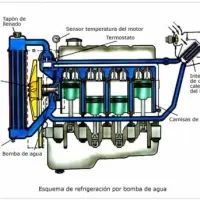
¿Cuál de estos elementos no forma parte del sistema de refrigeración del motor?
Which of these parts is not part of the engine cooling system?
- ALos manguitos.The hoses.
- BEl termostato.The thermostat.
- CEl filtro de aire.The air filter.
ExplanationThe engine cooling system consists of the cooling chambers, the radiator and fan, the pump, the thermostat and the hoses. The air filter belongs to the intake system: it cleans the air entering the engine.
Si frena bruscamente su motocicleta en línea recta y aprieta sus rodillas contra el depósito de combustible, conseguirá que...
If you brake hard on your motorcycle in a straight line and press your knees against the fuel tank, you will make...
- ALa motocicleta, gracias a la fuerza centrífuga, se mantenga en equilibrio y no se salga de la calzada.the motorcycle stay balanced thanks to centrifugal force and not leave the carriageway.
- BSu cuerpo se mantenga más estable y no se deslice hacia adelante.your body stay more stable and not slide forwards.
- CEl freno trasero sea más eficaz que el delantero.the rear brake more effective than the front brake.
ExplanationPressing your knees against the fuel tank gives the rider more control and body stability. This stops the body from sliding forwards during hard braking, which helps to keep balance and avoid falls. However, it has no direct link with centrifugal force or with how effective the brakes are.
Un vehículo que por el tubo de escape expulsa más humo del permitido legalmente, ¿puede circular?
Can a vehicle that gives off more exhaust smoke than is legally allowed be driven?
- ASí, si lo hace fuera de poblado.Yes, if it is driven outside built-up areas.
- BNo.No.
- CSí, si es humo no contaminante.Yes, if the smoke does not pollute.
ExplanationA vehicle with its engine running gives off smoke through the exhaust pipe and therefore pollutes. But if it pollutes more than is legally allowed, it may not be driven and it can be immobilised.
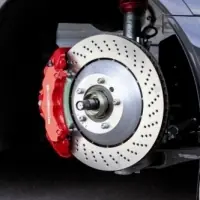
¿A qué tipo de seguridad pertenecen los frenos?
What type of safety do the brakes belong to?
- ASeguridad activaActive safety
- BSeguridad pasivaPassive safety
- CSeguridad infantilChild safety
ExplanationThe brakes are among the vehicle's active safety features, whose job is to prevent an accident from happening. The tyres and the lights also belong to this group.
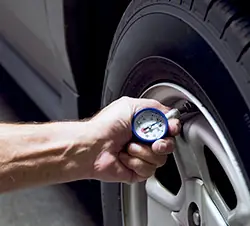
Si circula con la presión de inflado de los neumáticos descompensada, ¿aumenta el riesgo de perder el control del vehículo?
If you drive with unequal tyre pressures, does the risk of losing control of the vehicle increase?
- ASí, ya que la frenada es irregular y se reduce la estabilidad del vehículo.Yes, because braking is uneven and the vehicle is less stable.
- BNo, sobre todo si está descompensada por eje mejora la adherencia, incluso, cuando la calzada está resbaladiza.No, especially if the difference is between axles, grip improves, even when the road is slippery.
- CNo, porque aumenta el área de contacto del neumático con la calzada y facilita el rodaje.No, because the tyre's contact area with the road increases and the vehicle rolls more easily.
ExplanationWith unequal pressures, each wheel grips differently: braking is uneven, the vehicle loses stability and tends to pull to one side, which increases the risk of losing control, especially on bends or on a slippery surface.
Al poner en marcha un motor de gasolina, es conveniente...
When starting a petrol engine, it is advisable to...
- AAcelerar en vacío para que se caliente cuanto antes.Rev the engine while stationary so that it warms up as soon as possible.
- BIniciar la marcha inmediatamente después de arrancar el motor.Drive off immediately after starting the engine.
- CEsperar unos minutos antes de iniciar la marcha para que el motor se caliente.Wait a few minutes before driving off so that the engine warms up.
ExplanationWith modern engines, the right thing to do is start the engine and drive off gently straight away: the engine reaches its temperature sooner while driving, whereas warming it up while stationary wastes fuel and pollutes.
¿Qué neumáticos se sobrecargan más cuando el vehículo acelera?
Which tyres carry the most extra load when the vehicle accelerates?
- ALos delanterosThe front tyres
- BLos cuatro por igualAll four equally
- CLos traserosThe rear tyres
ExplanationWhen a vehicle accelerates, its weight shifts towards the rear wheels. That is why, when we do this, the tyres that carry the most extra load are the rear ones, because they receive more weight and have to do more work.
¿Qué debe hacer si un neumático se pincha durante la marcha?
What should you do if you get a puncture while driving?
- AFrenar bruscamenteBrake sharply
- BSujetar firmemente el volante, no frenar brusco y reducir velocidad gradualmenteHold the steering wheel firmly, do not brake sharply, and slow down gradually
- CApagar el motorSwitch off the engine
ExplanationIf you get a puncture: hold the steering wheel, do not brake sharply, slow down gradually.
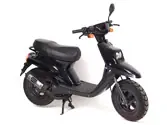
Un ciclomotor, ¿tiene motor?
Does a moped have an engine?
- ANo.No.
- BSí.Yes.
- CSí, pero no se considera vehículo de motor.Yes, but it is not considered a motor vehicle.
ExplanationA moped has an engine, but legally it is not considered a motor vehicle.
La profundidad mínima del dibujo del neumático tendrá que ser de...
The minimum tyre tread depth must be...
- A1.6 milímetros.1.6 millimetres.
- B2.6 milímetros.2.6 millimetres.
- C6 milímetros.6 millimetres.
ExplanationThe depth of the main grooves of the tyre tread must be at least 1.6 millimetres.
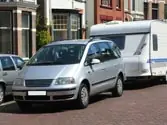
Si arrastra con su turismo un remolque ligero, ¿Debe llevar una rueda de repuesto para dicho remolque?
If you are towing a light trailer with your car, must you carry a spare wheel for the trailer?
- ANo.No.
- BSi, ya que es obligatoria para todos los vehículos a motor y para los remolquesYes, because it is compulsory for all motor vehicles and trailers
- CSolo, si se trata de un remolque pesado.Only if it is a heavy trailer.
ExplanationVehicles towing a trailer must carry a spare wheel for the towing vehicle, but not for the trailer.
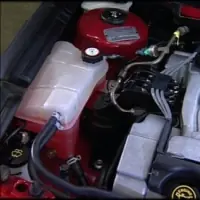
¿Con qué elementos se ha de llenar el depósito de líquido refrigerante?
What should the coolant reservoir be filled with?
- AAgua y carburanteWater and fuel
- BAgua y anticongelanteWater and antifreeze
- CCarburante y anticongelanteFuel and antifreeze
ExplanationCoolant is a mixture of water and antifreeze, so if we find that the coolant reservoir is not at the right level, we must top it up with a mixture of water and antifreeze.
Si el neumático se desgasta más por el centro de la banda de rodadura, será debido a...
If a tyre wears more in the centre of the tread, it will be because of...
- AUn exceso de presión.Too much pressure.
- BUn defecto de presión.Too little pressure.
- CUn desequilibrio en las ruedas.Unbalanced wheels.
ExplanationToo much pressure causes more wear in the centre of the tread. If there were too little pressure, the wear would be on the sides of the tread.
¿Tendremos que prestar atención a los latiguillos del freno?
Do we need to pay attention to the brake hoses?
- ANo, porque no se pueden romper nunca.No, because they can never break.
- BSí, sólo en el caso de que sean metálicos.Yes, but only if they are made of metal.
- CSí, para revisar que no existan fugas de liquido.Yes, to check that there are no fluid leaks.
ExplanationA brake hose is a flexible tube, usually made of rubber, that carries the brake fluid which transmits the pressure applied on the brake lever to the calliper. If this hose leaked, we would lose braking pressure.
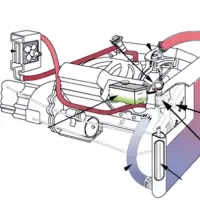
¿Cuál es la función del sistema de refrigeración de un motor?
What is the job of an engine's cooling system?
- AVentilar el habitáculo del vehículoTo ventilate the inside of the vehicle
- BRetirar parte del calor que se produce en un motorTo remove part of the heat produced in an engine
- CCanalizar el aire acondicionado del automóvilTo carry the car's air conditioning
ExplanationThe main job of the cooling system is to remove the heat produced during combustion down to limits where the engine performs at its best, without harming the mechanical strength of the parts or the lubricating power of the oils.
¿Cómo sabremos que el sistema de lubricación funciona correctamente?
How will we know that the lubrication system is working correctly?
- AAl apagarse la luz testigo de la presión con el motor en marcha.The oil pressure warning light goes out with the engine running.
- BAl comprobar que el nivel de aceite supera la marca de máximo.The oil level is above the maximum mark.
- CAl permanecer encendida la luz testigo de la presión con el motor en marcha.The oil pressure warning light stays on with the engine running.
ExplanationWhen we start the engine, the oil pressure warning light goes out. If it stays on, the oil pressure is not high enough. In that case we will switch off the engine to avoid serious damage.
¿Cuándo es recomendable cambiar los neumáticos de un turismo?
When is it advisable to change a car's tyres?
- AAntes de que la profundidad en las ranuras principales de la banda de rodamiento sea inferior a 6 mm.Before the depth of the main tread grooves goes below 6 mm.
- BCuando la profundidad en las ranuras de la banda de rodamiento sea inferior a 1,6 mm.When the depth of the tread grooves is below 1.6 mm.
- CAntes de que la profundidad en las ranuras principales de la banda de rodamiento sea inferior a 2 mm.Before the depth of the main tread grooves goes below 2 mm.
ExplanationThe legal minimum tread depth is 1.6 mm, but it is advisable to change the tyres before it goes below 2 mm, because from that point they clear water badly and the risk of aquaplaning increases.
¿Qué precauciones debemos tomar durante el invierno con el líquido de la refrigeración del motor?
What precautions should we take in winter with the engine coolant?
- AAñadir anticongelante.Add antifreeze.
- BMantener el nivel en el máximo.Keep the level at maximum.
- CEn invierno, debido al frío, no hace falta refrigeración.In winter, because of the cold, no cooling is needed.
ExplanationAt temperatures below 0 °C the coolant can freeze, so we must add the right amount of antifreeze for the temperatures in the area where we are.
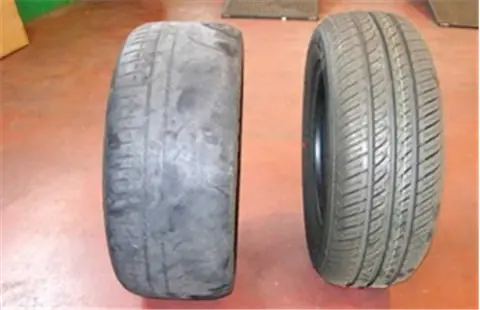
¿A qué puede deberse un desgaste irregular de los neumáticos de un vehículo?
What can cause uneven tyre wear on a vehicle?
- AA llevar la presión de inflado recomendada por el fabricante.Having the tyre pressure recommended by the manufacturer.
- BA circular con una masa por debajo de la máxima autorizada.Driving with a mass below the maximum authorised mass.
- CAl mal estado de la suspensión o de la amortiguación.Suspension or shock absorbers in poor condition.
ExplanationUneven tyre wear is usually caused by suspension or shock absorbers in poor condition, bad wheel alignment or incorrect pressure. Having the recommended pressure or driving with less than the maximum load does not cause it.
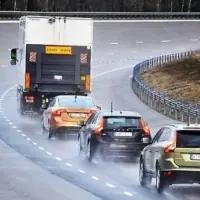
¿Es conveniente combinar el freno de motor y el freno de servicio al conducir?
Is it advisable to combine engine braking and the service brake when driving?
- ASi, se debe combinar su usoYes, you should use them together
- BNo, es conveniente conducir solo con el freno de servicioNo, it is advisable to drive using only the service brake
- CNo, es conveniente conducir solo con el freno de motorNo, it is advisable to drive using only engine braking
ExplanationIt is always advisable to combine engine braking with the service (foot) brake, because using them together gives more efficient braking.
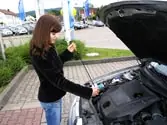
El nivel de aceite del motor, ¿cómo se debe comprobar?
How should the engine oil level be checked?
- ACon el motor funcionando.With the engine running.
- BCon el motor apagado y frío.With the engine switched off and cold.
- CCon el motor caliente.With the engine hot.
ExplanationWe will check the engine oil level with the vehicle on level ground and the engine stopped and cold. Leaving the engine stopped for 5 minutes is considered enough time to check the oil level.
¿Cada cuánto tiempo se recomienda cambiar los neumáticos de nuestro vehículo?
How often is it recommended to change our vehicle's tyres?
- ACada cinco años.Every five years.
- BCada tres años.Every three years.
- CCada vez que tengamos que pasar la inspección técnica de vehículos.Every time we have to take the vehicle inspection (ITV).
ExplanationIt is recommended to change the tyres every five years at the most, because over time the tyre hardens and loses grip.
La dirección de un vehículo es un sistema de ...
A vehicle's steering is a system of...
- Aseguridad activa.active safety.
- Bseguridad pasiva.passive safety.
- Cconducción eficiente.eco-driving.
ExplanationA vehicle's steering is the set of parts that takes the turning of the steering wheel and passes it to the steering wheels (the wheels that steer) to guide the vehicle. It is an active (primary) safety feature, whose aim is to reduce the chance of an accident by acting before it happens, either automatically or through the driver's action. With the steering we can avoid an accident.
¿Están obligados todos los automóviles a llevar una rueda de repuesto y las herramientas indispensables para su cambio?
Must all motor cars carry a spare wheel and the tools needed to change it?
- ASí.Yes.
- BNo.No.
- CSólo cuando su MMA es superior a 3.500 kg.Only when their MAM is more than 3,500 kg.
ExplanationNot all motor cars have to carry a spare wheel and its tools: the rules allow an emergency wheel or an alternative system instead, such as a puncture repair kit or tyres that let you keep driving after a puncture.
Llevar una rueda de repuesto y las herramientas indispensables para su cambio, ¿es obligatorio?
Is it compulsory to carry a spare wheel and the tools needed to change it?
- ASí.Yes.
- BNo, si se lleva un sistema alternativo que garantice la movilidad.No, if you carry an alternative system that keeps the vehicle mobile.
- CSolo cuando la MMA del vehículo es superior a 3.500 kg.Only when the vehicle's MAM is more than 3,500 kg.
ExplanationThe General Vehicle Regulations (RGV) require you to carry a complete spare wheel or a temporary-use spare wheel with its tools, or an alternative to changing the wheel that keeps the vehicle mobile, such as a puncture repair kit. With that alternative, the spare wheel is not compulsory.
Si se pincha una rueda mientras conduce, debe...
If you get a puncture while driving, you must...
- Aabandonar inmediatamente el vehículo, ocurra donde ocurra.leave the vehicle immediately, wherever it happens.
- Bdetener rápidamente el vehículo fuera de la calzada o en un lugar seguro.quickly stop the vehicle off the carriageway or in a safe place.
- Ccontinuar el viaje hasta el taller más cercano.continue the journey to the nearest garage.
ExplanationAccording to the General Traffic Regulations, if a wheel is punctured you must stop the vehicle quickly and safely off the carriageway or in a safe place. This is because, when the vehicle has broken down, the risks for the driver and for other road users must be kept as low as possible. Leaving the vehicle in the middle of the road or driving on with a punctured wheel can cause serious accidents.
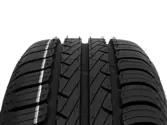
En el neumático, ¿consta la fecha de fabricación?
Is the date of manufacture shown on the tyre?
- ANo.No.
- BSí.Yes.
- CSolo en los neumáticos de invierno.Only on winter tyres.
ExplanationThe date of manufacture must be shown on the tyre. It is important to know this date, as driving on a tyre more than 5 years old is not recommended.
En caso de reventón de un neumático, ¿es aconsejable frenar bruscamente?
If a tyre bursts, is it advisable to brake hard?
- ASí, cuando el neumático que ha reventado pertenece al eje trasero.Yes, when the burst tyre is on the rear axle.
- BSí, para estabilizar el vehículo cuanto antes.Yes, to stabilise the vehicle as soon as possible.
- CNo, hay que utilizar el freno lo menos posible.No, you should use the brake as little as possible.
ExplanationNo. If a tyre bursts, hold the steering wheel firmly, keep your line, take your foot off the accelerator and brake gently and gradually, using the brake as little as possible. Braking hard can make you lose control, whichever axle is affected.
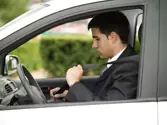
Con un motor de gasolina, al arrancar, iniciaremos la marcha…
With a petrol engine, after starting it, we will drive off...
- AInmediatamente después de arrancar el motor.Immediately after starting the engine.
- BEsperaremos unos segundos.We will wait a few seconds.
- CEsperaremos 10 minutos.We will wait 10 minutes.
ExplanationIn modern vehicles there is no need to press the accelerator to start the engine. With petrol engines, we will drive off after starting the engine; this way we avoid using fuel while idling (the lowest engine speed the engine needs so as not to stall when we are not accelerating). With diesel engines it is advisable to wait a few seconds before driving off so that lubrication is adequate.
¿Qué profundidad se considera como mínima admisible para el dibujo que presentan los neumáticos de los turismos en su banda de rodadura?
What is considered the minimum acceptable depth of the tread pattern on car tyres?
- A1,6 mm.1.6 mm.
- B2,4 mm.2.4 mm.
- C0,16 mm.0.16 mm.
ExplanationThe legal minimum tread depth in the main grooves of a car tyre is 1.6 mm. For safety it is recommended to change tyres earlier, when they get close to 2 or 3 mm, especially if you drive in the rain.
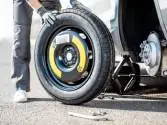
¿Un vehículo de hasta 3.500 kg de MMA puede llevar una rueda de uso temporal?
Can a vehicle with a MAM of up to 3,500 kg carry a temporary-use spare wheel?
- ASí.Yes.
- BSí, si además lleva un kit de reparación de pinchazos.Yes, if it also carries a puncture repair kit.
- CNo, porque debe llevar una rueda de repuesto completa.No, because it must carry a complete spare wheel.
ExplanationFor a vehicle with a MAM of up to 3,500 kg, the rules say that, in case of a puncture, the vehicle must carry one of these options: - A spare wheel, which can be normal or temporary-use, together with the tools needed to change it, or - an alternative system that keeps the vehicle mobile, for example run-flat tyres or systems that inflate automatically in case of a puncture. So a vehicle can carry a temporary-use spare wheel, but it is not compulsory, because it can be fitted with another alternative system that allows it to keep driving safely.
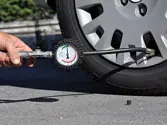
Si comprobamos la presión de los neumáticos en caliente...
If we check the tyre pressure when the tyres are hot...
- ALa medición será superior a la real.The reading will be higher than the real pressure.
- BLa medición será inferior a la real.The reading will be lower than the real pressure.
- CLa medición será correcta.The reading will be correct.
ExplanationWhen the air in the tyres heats up, the pressure rises, so the pressure gauge will show a higher pressure than the one we really have.
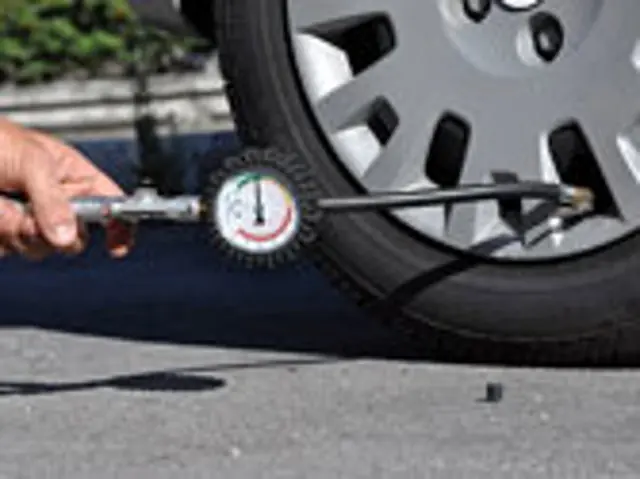
¿Qué presión deben tener los neumáticos cuando llueve?
What pressure should the tyres have when it is raining?
- ALa presión que recomienda el fabricante.The pressure recommended by the manufacturer.
- BMayor que la recomendada por el fabricante.Higher than the pressure recommended by the manufacturer.
- CMenor que la recomendada por el fabricante.Lower than the pressure recommended by the manufacturer.
ExplanationThe tyre pressure must be the one recommended by the manufacturer, because it is designed to give the best performance and better driving safety, especially in bad weather such as rain. Tyres that are not correctly inflated, whether above or below the recommended pressure, can affect grip and control of the vehicle and increase the risk of aquaplaning, as set out in the General Traffic Regulations.
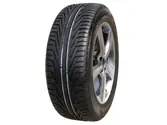
Los neumáticos del vehículo forman parte de los sistemas de...
A vehicle's tyres are part of the systems of...
- Aseguridad pasiva.passive safety.
- Bseguridad activa.active safety.
- Cseguridad secundaria.secondary safety.
ExplanationA vehicle's tyres are active safety features, which are those that can prevent us from having an accident.
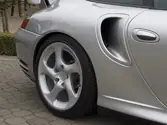
Si la presión del neumático es insuficiente...
If the tyre pressure is too low...
- ATendrá mejor adherencia en las curvas.It will have better grip on bends.
- BTendrá menor desgaste.It will wear less.
- CEl vehículo consumirá más combustible.The vehicle will use more fuel.
ExplanationIf the tyre pressure is too low, the vehicle will use more fuel because there is more friction with the road surface.
Cuando accionamos el freno de servicio estamos actuando sobre...
When we use the service brake, we are acting on...
- ATodas las ruedas del vehículo.All the wheels of the vehicle.
- BLas ruedas delanteras, solamente.Only the front wheels.
- CLas ruedas traseras, solamente.Only the rear wheels.
ExplanationWhen we brake with the foot brake (service brake), we are acting on all the wheels of the vehicle. The braking system puts more braking pressure on the front wheels, but it always acts on all four wheels.
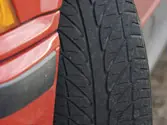
El calor, ¿influye en el desgaste de los neumáticos?
Does heat affect tyre wear?
- ASí, aumenta el desgaste.Yes, it increases wear.
- BSí, reduce el desgaste.Yes, it reduces wear.
- CNo.No.
ExplanationThe outside temperature (in particular, heat) can also speed up tyre wear.
¿Influye el estado de los neumáticos en el frenado?
Does the condition of the tyres affect braking?
- ASí. Si los neumáticos están en buen estado, agarran mejor la carretera y se frena mejor.Yes. If the tyres are in good condition, they grip the road better and braking is better.
- BNo, solo depende del estado de la calzada.No, it only depends on the condition of the road surface.
- CNo, solo depende del estado de los frenos.No, it only depends on the condition of the brakes.
ExplanationThe tyres are the only point where the vehicle touches the road. If they are worn, wrongly inflated or damaged, they lose grip and the braking distance increases, however good the brakes or the road surface are.
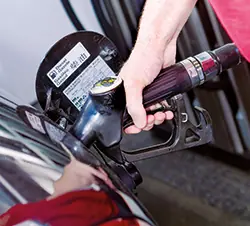
Al cargar combustible en el vehículo es obligatorio...
When refuelling the vehicle, it is compulsory to...
- Aapagar las luces y subir las ventanillas.switch off the lights and close the windows.
- Bparar el motor y encender la señal de emergencia.stop the engine and switch on the hazard warning lights.
- Capagar las luces y los sistemas eléctricos, como la radio.switch off the lights and the electrical systems, such as the radio.
ExplanationWhen refuelling, it is compulsory to stop the engine and switch off the lights and the electrical systems, such as the radio: any electrical spark could set fire to the fuel vapours.
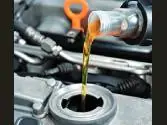
El aceite se deberá sustituir con el motor ...
The oil should be changed with the engine...
- Acaliente.hot.
- Bfrío.cold.
- Cfrío o caliente, pero en terreno llano.cold or hot, but on level ground.
ExplanationWe must regularly check that the oil level is between the maximum and minimum marks, with the engine cold and on level ground. The oil is changed when the manufacturer says, with the vehicle on level ground and the engine stopped and hot.
All topics
- Definitions
- Documents and penalty points
- The driver's condition
- Duties of drivers and pedestrians
- Vehicle safety devices
- Vehicle controls and equipment
- Vehicle lights and horn
- Traffic signs, markings and signals
- The road and its lanes
- Speed and distances
- Manoeuvres
- Right of way
- Carrying passengers and loads
- Driving safely in difficult conditions
- Road accidents and first aid
- Defensive and eco-driving
Independent app: not affiliated with or endorsed by the DGT (Spain's Directorate-General for Traffic) or the Ministry of the Interior. The official exam is booked with the DGT and taken at its test centres. The questions here are practice material; the DGT's official question bank is not public.
Basado en datos de la Agencia Estatal Boletín Oficial del Estado (https://www.boe.es). Textos consolidados de carácter meramente informativo. La AEBOE no patrocina ni respalda este sitio.
Parte de las preguntas procede de los tests de la revista «Tráfico y Seguridad Vial» de la DGT, reproducidos con indicación de la fuente.