
DGT test · 270 questions
Vehicle controls and equipment
The controls and equipment of a car — mirrors, wipers, dashboard, warning lights — and the rules for using them.
20 random questions
Loading questions…
Questions in this topic, with answers
270 questions, 50 per page, with the correct answer and the explanation. Page 1 of 6.
El mando para acelerar en una motocicleta convencional está en...
On a conventional motorcycle, the control for accelerating is on...
- AEl puño izquierdo.the left handgrip.
- BEl puño derecho.the right handgrip.
- CEl pedal derecho.the right pedal.
ExplanationThe control used to accelerate on a motorcycle is the right handgrip, and the right lever operates the front brake.
Si el equipaje disminuye la visibilidad por el espejo interior, ¿a qué está obligado?
If your luggage reduces the view through the interior mirror, what must you do?
- AEn ningún caso la carga puede disminuir la visibilidad.The load may never reduce visibility.
- BA tener instalados el espejo retrovisor interior y el exterior izquierdo.Have the interior mirror and the left exterior mirror fitted.
- CA tener instalados dos espejos retrovisores exteriores, uno a cada lado del vehículo.Have two exterior mirrors fitted, one on each side of the vehicle.
ExplanationWhen the view through the interior mirror is reduced for any reason, it is compulsory to have two exterior mirrors, one on the right and one on the left.
Una de las funciones del sistema avanzado de ayuda a la conducción conocido como "Asistencia inteligente de velocidad (ISA)" es:
One of the functions of the advanced driver assistance system known as ‘Intelligent Speed Assistance (ISA)’ is to:
- AMantener la velocidad elegida por el conductor.Maintain the speed chosen by the driver.
- BDetectar señales de límite de velocidad y ajustar la velocidad del vehículo según lo indicado por la señal, cuando sea aplicable.Detect speed limit signs and adjust the vehicle's speed to the one shown on the sign, where applicable.
- CAumentar la velocidad del vehículo cuando detecte que el conductor circula demasiado despacio.Increase the vehicle's speed when it detects that the driver is going too slowly.
ExplanationIntelligent Speed Assistance (ISA), compulsory on new cars registered in the EU since July 2024, recognises speed limits, warns the driver when they exceed them and, where appropriate, helps to adjust the speed. Maintaining the speed chosen by the driver is the job of cruise control.
¿Cómo se deben colocar los espejos?
How should the mirrors be adjusted?
- ACon el coche parado en calzada recta.With the car stationary on a straight carriageway.
- BCon el coche en movimiento para ver mejor.With the car moving, to see better.
- CParado o en movimiento, es igual.Stationary or moving, it makes no difference.
ExplanationMirrors are adjusted before setting off, with the car stationary on a straight, level carriageway, to get a correct reference. If you discover while driving that they are badly adjusted, you must stop in a safe place to adjust them; never do it while moving.
¿Cuál es la posición correcta al sentarse para conducir?
What is the correct sitting position for driving?
- ACuando tengo las piernas dobladas y el cuerpo inclinado hacia adelante.When my legs are bent and my body leans forward.
- BCuando tengo las piernas un poco dobladas y el cuerpo recto.When my legs are slightly bent and my body is upright.
- CCuando tengo las piernas estiradas y el cuerpo reclinado hacia atrás.When my legs are straight and my body leans back.
ExplanationYou should sit with your back straight and resting against the backrest, and your legs slightly bent, so that you can press the pedals all the way down without stretching your legs. Article 18.1 of the RGC requires the driver to keep freedom of movement, the necessary field of vision and a suitable position.
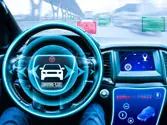
¿Qué aportan a la seguridad vial los sistemas avanzados de ayuda a la conducción también conocidos como ADAS?
What do advanced driver assistance systems, also known as ADAS, contribute to road safety?
- ADisminuyen el tiempo de reacción del conductor.They reduce the driver's reaction time.
- BPermiten al conductor reducir su nivel de alerta.They allow the driver to lower their level of alertness.
- CMejoran notablemente la seguridad activa del vehículo.They greatly improve the vehicle's active safety.
ExplanationADAS (Advanced Driver Assistance Systems) are a set of systems fitted in the vehicle that help the driver, to increase safety and make driving easier. They warn of danger and can even act on the vehicle's steering and/or brakes to avoid a collision or reduce its consequences. These systems use cameras and sensors that collect information about the surroundings, then act on it and help the driver make the safest possible decisions. ADAS can make up for some human errors, but safe and responsible driving by the driver is still essential.
Para arrancar el motor, ¿es necesario pisar el acelerador?
To start the engine, do you need to press the accelerator?
- ASolo en los vehículos diesel.Only in diesel vehicles.
- BNo.No.
- CSí, en todos los vehículos.Yes, in all vehicles.
ExplanationIn modern vehicles you do not need to press the accelerator to start the engine, because the regulating pump automatically controls the start when you turn the ignition key.
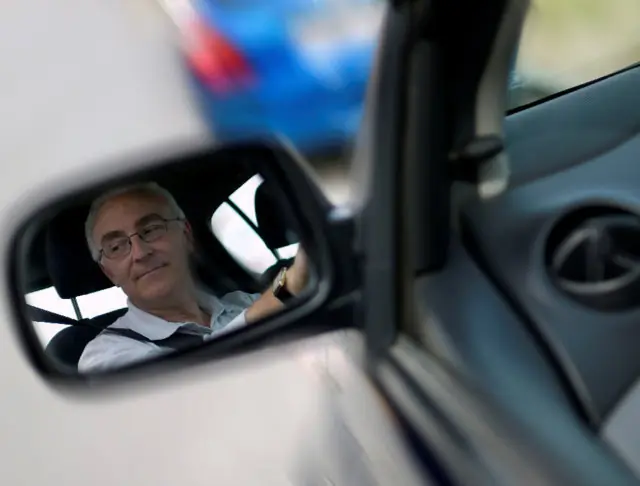
Los turismos, ¿están obligados a llevar espejo retrovisor izquierdo?
Must cars have a left-hand mirror?
- ASí, es obligatorio.Yes, it is compulsory.
- BSolo si el retrovisor interior no permite una visión completa de la vía.Only if the interior mirror does not give a full view of the road.
- CNo, es opcional.No, it is optional.
ExplanationCars must have a left exterior mirror fitted. The right exterior mirror is optional as long as the car has an interior mirror with good visibility.
¿Cómo hay que sujetar el volante?
How should you hold the steering wheel?
- ACon los brazos muy estirados.With your arms fully stretched.
- BCon los brazos ligeramente doblados.With your arms slightly bent.
- CCon los brazos muy doblados.With your arms sharply bent.
ExplanationHold the steering wheel with both hands, roughly in the ten-to-two or quarter-to-three position, with your arms slightly bent. This lets you steer precisely and without tiring; with your arms fully stretched or sharply bent you lose strength, control and speed of reaction.
¿Cuántos retrovisores debe llevar como mínimo un cuatriciclo con carrocería que cubra al conductor?
What is the minimum number of mirrors a quadricycle with bodywork enclosing the driver must have?
- ASolo el exterior derecho.Only the right-hand exterior mirror.
- BDos: el retrovisor interior y el exterior izquierdo.Two: the interior mirror and the left-hand exterior mirror.
- CSolo el exterior izquierdo.Only the left-hand exterior mirror.
ExplanationUnder Annex III of the General Vehicle Regulations (RGV), quadricycles with bodywork that fully or partly encloses the driver must have an interior mirror and a left-hand exterior mirror; the right-hand one is optional. If the interior mirror does not give enough visibility, the right-hand exterior mirror becomes compulsory.
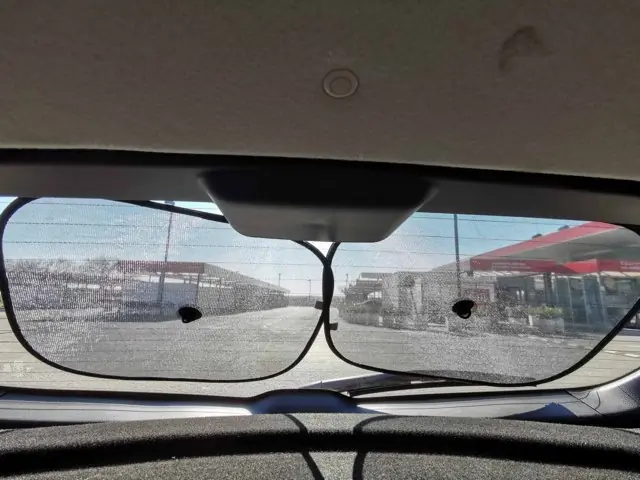
¿Está permitido circular con cortinillas para el sol en el cristal de atrás de un turismo?
Are you allowed to drive with sun blinds on the rear window of a car?
- ASolo está permitido cuando el vehículo lleva 2 retrovisores exteriores.It is only allowed when the vehicle has 2 exterior mirrors.
- BNo. Está prohibido.No. It is forbidden.
- CSí, siempre.Yes, always.
ExplanationArticle 19 of the General Traffic Regulations only allows sun films or blinds on the rear windows when the vehicle has two exterior mirrors, one on each side, to make up for the rear view that is lost.
¿Qué hace el sistema avanzado de ayuda a la conducción conocido como “LDW” o “Mantenimiento de carril” cuando el conductor realiza una maniobra evasiva?
What does the advanced driver assistance system known as ‘LDW’ or ‘Lane keeping’ do when the driver makes an evasive manoeuvre?
- ACalcula la mejor trayectoria y corrige la maniobra del conductor.It works out the best path and corrects the driver's manoeuvre.
- BPermanece desactivado.It stays inactive.
- CActiva el sistema “e-Call” o la llamada a los servicios de emergencia como medida preventiva.It activates the ‘eCall’ system or calls the emergency services as a precaution.
ExplanationLane departure warning and lane keeping systems only act when the vehicle leaves its lane with no apparent intention. If the driver turns the steering wheel firmly, for example in an evasive manoeuvre, or uses the indicator, the system understands that the movement is intentional and does not intervene.
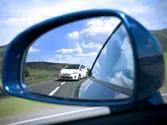
Con unos espejos retrovisores convexos, ¿cómo veremos los vehículos que circulan detrás nuestro?
With convex mirrors, how will we see the vehicles travelling behind us?
- AMás grandes que su tamaño real.Bigger than their real size.
- BMás pequeños que su tamaño real.Smaller than their real size.
- CSe verán a su tamaño real.At their real size.
ExplanationConvex mirrors give an image that is smaller than the real one, so vehicles will seem further away than they really are.
En la motocicleta ¿está permitido transportar a un niño entre el conductor y el manillar?
On a motorcycle, are you allowed to carry a child between the rider and the handlebars?
- ASí, siempre que lleve casco.Yes, as long as the child wears a helmet.
- BSólo si lleva casco y el conductor es familiar o persona autorizada.Only if the child wears a helmet and the rider is a family member or an authorised person.
- CNo, en ningún caso.No, never.
ExplanationCarrying a child between the rider and the handlebars of a motorcycle is never allowed. The rules say that people over 12 may travel as passengers on motorcycles as long as they use the seat behind the rider and do not sit between the handlebars and the rider. So carrying a child between the rider and the handlebars is not allowed.
¿Está permitido circular con una lámina adhesiva que impida la correcta visión del conductor a través de la ventanilla posterior?
Are you allowed to drive with an adhesive film that prevents the driver from seeing properly through the rear window?
- ANo, en ningún caso.No, never.
- BSolo cuando el vehículo lleve un espejo retrovisor exterior a cada lado.Only when the vehicle has an exterior mirror on each side.
- CSí, siempre que el vehículo disponga de espejo retrovisor izquierdo.Yes, as long as the vehicle has a left mirror.
ExplanationThe vehicle's glass surfaces must always give the driver a proper view of the road, with no interference from films or stickers. Driving with adhesive films or blinds on the rear windows is only allowed when the vehicle has two exterior mirrors. The adhesive films used must always be approved.
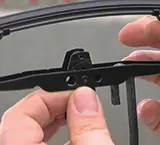
Los limpiaparabrisas deben mantenerse en buen estado para circular con seguridad. Para ello se debe...
Windscreen wipers must be kept in good condition to drive safely. To do this, you must...
- AComprobar que el depósito que contiene el líquido limpiaparabrisas esté siempre al máximo nivel.check that the windscreen washer fluid reservoir is always at the maximum level.
- BRealizar la revisión de las escobillas con el fin de asegurar su máxima eficacia.check the wiper blades to make sure they work as well as possible.
- CAplicar sobre el parabrisas el líquido que recomienda el fabricante para facilitar el desplazamiento de las escobillas.apply the fluid recommended by the manufacturer to the windscreen so that the blades move more easily.
ExplanationWiper blades wear out and harden with sun and use: you must check them regularly so that they clear the water properly and do not reduce visibility. Having a full reservoir is no use if the rubber blades are damaged.
De los siguientes sistemas avanzados de ayuda a la conducción o ADAS, ¿cuál es conocido con el nombre de “Alerta de tráfico cruzado”?
Which of the following advanced driver assistance systems (ADAS) is known as 'Cross traffic alert'?
- AEl “ACT”.'ACT'.
- BEl “LDW”.'LDW'.
- CEl “RCTA”.'RCTA'.
ExplanationRCTA, cross traffic alert: the system watches traffic crossing behind the vehicle when you reverse out of a parking space where cars are parked side by side. If it detects a vehicle approaching, it gives a sound and/or visual warning. LDW, lane departure warning: this system gives a warning if the car is leaving its lane without the driver having used the indicator in that direction; the driver must then correct the path, bring the vehicle back into the lane and continue safely.
¿Cómo obtienen información los sistemas ADAS para analizar el entorno del vehículo?
How do ADAS systems get information to analyse the vehicle's surroundings?
- AUtilizan sensores como cámaras, radares y escáneres láser para detectar objetos y evaluar el entorno.They use sensors such as cameras, radars and laser scanners to detect objects and assess the surroundings.
- BReciben datos únicamente del conductor a través de comandos manuales.They receive data only from the driver, through manual commands.
- CDependen exclusivamente del sistema GPS para obtener toda la información necesaria.They depend only on the GPS system to get all the information they need.
ExplanationADAS systems get information about the surroundings through advanced sensors such as cameras, radars and laser scanners, which detect objects, measure distances and assess the surroundings in real time. This allows them to identify vehicles, pedestrians, signs and obstacles to improve safety.
¿Qué deben llevar los ciclomotores de dos ruedas?
What must two-wheeled mopeds have?
- Ados espejos retrovisores exteriores obligatorios: uno a la izquierda y otro a la derecha.two compulsory exterior mirrors: one on the left and one on the right.
- Bel espejo del lado izquierdo es obligatorio y el del lado derecho es opcional.the left-hand mirror is compulsory and the right-hand one is optional.
- Cel espejo del lado izquierdo es opcional y el del lado derecho es obligatorio.the left-hand mirror is optional and the right-hand one is compulsory.
ExplanationUnder Annex III of the General Vehicle Regulations, referred to in its Article 11.2, two-wheeled mopeds must have an exterior mirror on the left-hand side; the right-hand one is optional.
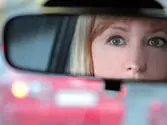
Si llevamos un retrovisor interior panorámico, ¿podremos sustituir el retrovisor exterior derecho cuando sea obligatorio su uso?
If we have a panoramic interior rear-view mirror, can it replace the right-hand exterior mirror when that mirror is compulsory?
- ASí, pero solo en poblado.Yes, but only in built-up areas.
- BSí.Yes.
- CNo.No.
ExplanationIn cases where the right-hand exterior mirror is compulsory, we must use that mirror; it cannot be replaced by any other.
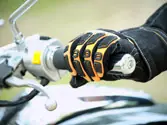
En una motocicleta automática, ¿dónde está el mando del freno delantero?
On an automatic motorcycle, where is the front brake control?
- AEn la maneta de la izquierda.On the left lever.
- BEn la maneta de la derecha.On the right lever.
- CEn el pedal accionado con el pie derecho.On the pedal operated with the right foot.
ExplanationOn an automatic motorcycle, the front brake is operated with the right lever and the rear brake with the left lever.
¿Los coches deben llevar el espejo lateral izquierdo?
Must cars have a left side mirror?
- ANo, no es obligatorio.No, it is not compulsory.
- BSolo si el espejo retrovisor interior no permite ver toda la carretera.Only if the interior mirror does not allow you to see the whole road.
- CSí, es obligatorio.Yes, it is compulsory.
ExplanationThe left mirror is compulsory on all cars in Spain. It lets the driver watch the vehicles on their left, which is crucial for changing lanes, overtaking and joining traffic. In addition, the right mirror is compulsory if the interior mirror does not give full visibility because of the vehicle's structure or its load.
¿Cómo utilizaremos el espejo retrovisor interior?
How should we use the interior mirror?
- AMirándolo detenidamente para poder ver con detalle lo que ocurre por detrás de nuestro vehículo.By looking at it carefully so that we can see in detail what is happening behind our vehicle.
- BMirándolo con frecuencia y brevedad.By looking at it often and briefly.
- CMirándolo únicamente antes de cambiar de carril.By looking at it only before changing lane.
ExplanationWe must look in the mirror often, because what happens behind the vehicle changes quickly. We will look briefly, because we must not neglect what is happening in front either.
Si realizamos una frenada de emergencia pisaremos el pedal del freno manteniendo la máxima presión hasta estar parado totalmente...
When braking in an emergency, we will press the brake pedal and keep maximum pressure on it until the vehicle has completely stopped...
- ACuando el vehículo disponga de ABS.when the vehicle has ABS.
- BCuando el vehículo no disponga de ABS.when the vehicle does not have ABS.
- CEn todo caso.in all cases.
ExplanationWhen braking in an emergency without ABS, we must press the brake pedal hard and then gradually reduce the force on it as the speed drops. On the other hand, if we have ABS, we must keep maximum pressure on the brake pedal until the end.
En una motocicleta con cambio de marchas, ¿el mando del freno delantero dónde estará situado?
On a motorcycle with gears, where is the front brake control?
- AEn la maneta derecha.On the right lever.
- BEn la maneta izquierda.On the left lever.
- CEn el pedal de la derecha.On the right pedal.
ExplanationOn a motorcycle with gears, the front brake control is on the right lever. The clutch lever is on the left, and the rear brake is the right pedal.
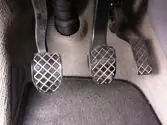
El pedal del freno demasiado alto puede provocar...
A brake pedal that is too high can cause...
- ALentitud a la hora de frenar.slowness when braking.
- BRapidez a la hora de frenar.speed when braking.
- CPrecisión a la hora de frenar.precision when braking.
ExplanationWhen moving your foot from the accelerator to the brake, the position of the brake pedal is vital for pressing it quickly. If the brake pedal is too high, we will lose a few tenths of a second pressing it, which can mean a long distance in metres.

¿Qué le permiten los espejos retrovisores?
What do the mirrors allow you to do?
- AObservar únicamente lo que está detrás del vehículo.See only what is behind the vehicle.
- BEvitar los ángulos muertos.Avoid blind spots.
- CObservar en todo momento lo que rodea al vehículo.See what is around the vehicle at all times.
ExplanationWhen driving, it is as important to see ahead and to both sides as it is to see behind. Without mirrors it would be impossible to drive correctly and safely, because we would not have the necessary information. Mirrors give us this by letting the driver see behind and to the sides of the vehicle.
El reglaje de los espejos retrovisores deberá hacerse...
The mirrors must be adjusted...
- AEn terreno llano y recto.on flat, straight ground.
- BMoviendo la cabeza lateralmente.by moving your head sideways.
- CCon el vehículo en movimiento y en terreno llano y recto.with the vehicle moving, on flat, straight ground.
ExplanationThe mirrors must be adjusted with the vehicle stationary, on flat, straight ground.
Si su motocicleta sólo dispone de un espejo retrovisor, ¿en qué lado debería de llevarlo?
If your motorcycle has only one rear-view mirror, on which side should it be?
- AEstá obligado a llevar 2 espejos retrovisores.You are required to have 2 rear-view mirrors.
- BEl derecho.The right.
- CEl izquierdo.The left.
ExplanationMotorcycles that cannot exceed 100 km/h are only required to have one exterior mirror, and it must be on the left-hand side, from where you watch vehicles that are overtaking. For them the right-hand mirror is optional; it is compulsory only on motorcycles that exceed that speed.
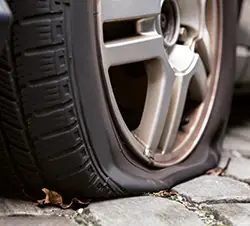
En caso de sufrir un reventón circulando por una vía a velocidad elevada, ¿es aconsejable pisar el pedal de freno con brusquedad?
If you have a blowout while driving at high speed, is it advisable to press the brake pedal hard and suddenly?
- ASí, para mantener con mayor facilidad la trayectoria recta del vehículo.Yes, to keep the vehicle going straight more easily.
- BNo; el frenado debe ser suave y progresivo.No; braking must be gentle and gradual.
- CSolo si el reventón se produce en una de las ruedas delanteras.Only if the blowout happens on one of the front wheels.
ExplanationAfter a blowout, you must hold the steering wheel firmly and brake gently and gradually: sudden hard braking makes the vehicle even more unstable and can cause a skid or complete loss of control.
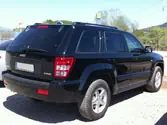
¿Está permitido circular con láminas adhesivas o cortinillas contra el sol?
Are you allowed to drive with adhesive films or sun blinds?
- ASí, sólo durante el día.Yes, only during the day.
- BNo, en ningún caso.No, never.
- CSí, en las ventanillas posteriores cuando el vehículo lleve dos espejos retrovisores exteriores.Yes, on the rear windows, when the vehicle has two exterior mirrors.
ExplanationDriving with adhesive films or sun blinds is only allowed on the rear windows, when the vehicle has two exterior mirrors.
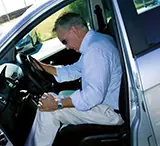
¿Cuándo está bien colocado en el asiento para conducir?
When are you sitting correctly to drive?
- ACuando llevo las piernas un poco dobladas y el cuerpo recto.When my legs are slightly bent and my body is upright.
- BCuando llevo las piernas rectas y el cuerpo hacia atrás.When my legs are straight and my body leans back.
- CCuando llevo las piernas dobladas y el cuerpo hacia adelante.When my legs are bent and my body leans forward.
ExplanationThe correct position is with the legs slightly bent and the back straight against the backrest: this way you can press the pedals with enough force and react quickly without tiring your muscles.
¿De qué forma responde el sistema avanzado de ayuda a la conducción conocido como “LDW o Mantenimiento de carril” cuando el conductor realiza una maniobra de dirección evasiva?
How does the advanced driver assistance system known as 'LDW or Lane keeping' respond when the driver makes an evasive steering manoeuvre?
- ACalcula la trayectoria más favorable del vehículo y corrige la maniobra del conductor.It works out the best path for the vehicle and corrects the driver's manoeuvre.
- BPermanece desactivado.It stays switched off.
- CActiva el sistema “e-Call o Aviso a los servicios de emergencia” como medida preventiva de accidente.It activates the 'eCall or emergency services alert' system as a precaution against an accident.
ExplanationThe LDW system, or lane change detector, is an active safety system that detects changes in the vehicle's path within the lane and recognises when a change is unintentional. It then warns the driver with a sound or light, to avoid collisions with other vehicles or leaving the road. More advanced systems even correct the vehicle's path. If an evasive steering manoeuvre is made or the indicator is on, the LDW system stays switched off. The 'eCall or emergency alert' system immediately calls the emergency services when the vehicle's sensors detect that an accident has happened.
¿Cuántos espejos retrovisores es obligatorio llevar instalados en un ciclomotor de tres ruedas que no está equipado de carrocería que cubra al conductor?
How many mirrors must be fitted on a three-wheeled moped that has no bodywork covering the driver?
- AUno colocado en el lado izquierdo.One, on the left side.
- BUno colocado en el lado derecho.One, on the right side.
- CDos, uno a cada lado del ciclomotor.Two, one on each side of the moped.
ExplanationA three-wheeled moped without bodywork covering the driver must have one mirror fitted on the left side. This is what the rules say.
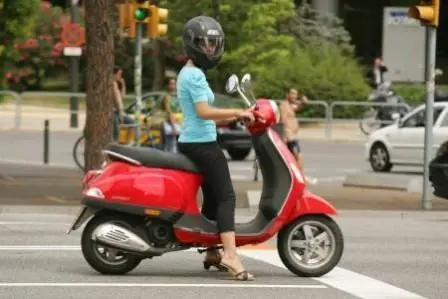
Un ciclomotor de dos ruedas está obligado a llevar...
A two-wheeled moped must have...
- Asólo el retrovisor derecho.only the right mirror.
- Bsólo el retrovisor izquierdo.only the left mirror.
- Cdos retrovisores, uno en cada lado.two mirrors, one on each side.
ExplanationTwo-wheeled mopeds only have to have an exterior mirror on the left side. They may also have a right one if they wish.
Una postura correcta del conductor en un ciclomotor es la que permite llegar al manillar con los brazos...
A correct riding position on a moped is one that lets you reach the handlebars with your arms...
- ASemiflexionados, sin apoyar el peso del cuerpo sobre ellos.half-bent, without resting your body weight on them.
- BBien estirados.fully stretched.
- CMuy flexionados, apoyando el peso del cuerpo sobre ellos.very bent, resting your body weight on them.
ExplanationA correct riding position on a moped is one that lets you reach the handlebars with your arms half-bent, without resting your body weight on them. Keeping your arms half-bent gives you better control and handling of the vehicle, because it makes it easier to move and to react to anything unexpected on the road. Also, by not resting your body weight on your arms, you avoid tiredness and reduce the risk of injury in a fall or collision.
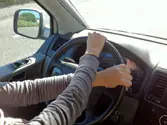
¿Tiene correctamente situadas las manos en el volante este conductor?
Are this driver's hands correctly placed on the steering wheel?
- ASí, si está efectuando una curva hacia la derecha.Yes, if they are taking a bend to the right.
- BSí, si está efectuando una curva hacia la izquierda.Yes, if they are taking a bend to the left.
- CNo.No.
ExplanationYou must never cross your hands on the steering wheel when turning it, not even when taking very sharp bends.
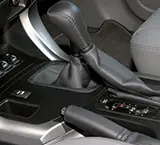
¿Es correcto el uso frecuente del freno de mano cuando se conduce?
Is it correct to use the handbrake often while driving?
- ASí, se debe utilizar en curvas cerradas.Yes, it should be used on sharp bends.
- BSí, siempre que el vehículo tenga ABS.Yes, as long as the vehicle has ABS.
- CNo, sólo se debe utilizar en los casos de inmovilización del vehículo.No, it should only be used to keep the vehicle stationary.
ExplanationThe handbrake is a parking brake: it is used to keep the vehicle still when it has stopped. Using it while moving can lock the rear wheels and cause a skid, because it works on only one axle and cannot be controlled as finely as the footbrake.
En la configuración más común de los mandos de una motocicleta, ¿con qué se acciona el acelerador?
In the most common layout of a motorcycle's controls, what do you use to operate the throttle?
- Ala mano izquierda.the left hand.
- Bla mano derecha.the right hand.
- Cel pie derecho.the right foot.
ExplanationIn the most common layout of a motorcycle's controls, the throttle is the right handlebar grip, which also has the front brake lever. The left hand operates the clutch and the right foot operates the rear brake.
En los coches, el espejo retrovisor izquierdo es...
On cars, the left mirror is...
- Aobligatorio solo si el espejo retrovisor interior no proporciona el campo de visión requerido.compulsory only if the interior mirror does not give the required field of view.
- Bsiempre obligatorio.always compulsory.
- Copcional.optional.
ExplanationAccording to the General Vehicle Regulations, cars must have an exterior mirror on the left side. This is to ensure proper visibility to the sides and rear of the vehicle, which is essential for safe driving. The interior mirror alone does not always give the required field of view, so the left mirror is always compulsory to meet the rules and drive safely.
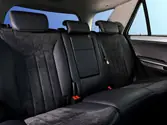
La función de los filamentos transversales de la luneta trasera del vehículo es...
The purpose of the horizontal lines (heating wires) on the vehicle's rear window is...
- ADetener el calor de los ocupantes de las plazas traseras.to keep in the heat of the rear-seat passengers.
- BEliminar el vaho de dicha luneta.to clear condensation from the rear window.
- CEvitar la acumulación de agua cuando llueve.to stop water building up when it rains.
ExplanationThe rear window has a de-icing or demisting device that produces heat when it is switched on, clearing ice or condensation.
En una motocicleta automática de 125 cc., ¿dónde se encuentra el mando del freno trasero?
On a 125 cc automatic motorcycle, where is the rear brake control?
- AEn el puño derecho.On the right handgrip.
- BEn la maneta de la izquierda.On the left lever.
- CEn el pedal de la derecha.On the right pedal.
ExplanationOn an automatic motorcycle, the rear brake control is on the left lever and the front brake control is on the right lever.
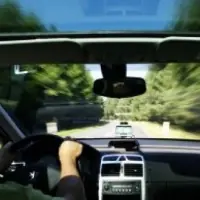
¿Que efectos tiene un cristal de parabrisas rayado?
What effects does a scratched windscreen have?
- AAumenta la seguridad del vehículoIt makes the vehicle safer
- BAumenta el deslumbramiento de nocheIt increases dazzle at night
- CReduce el deslumbramiento por rayos de solIt reduces dazzle from sunlight
ExplanationYou must never use the wipers on a dry windscreen, because it can get scratched, and scratched glass increases dazzle at night. It will never reduce dazzle from sunlight, and it will make the vehicle less safe.
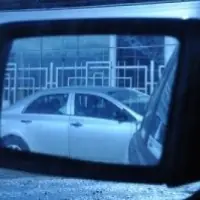
¿Que clase de espejos retrovisores puede tener un vehículo?
What types of mirrors can a vehicle have?
- AInteriores y lateralesInterior and side
- BInteriores y exterioresInterior and exterior
- CExteriores y lateralesExterior and side
ExplanationMirrors can be interior or exterior. Interior mirrors are designed to be fitted inside the passenger compartment and are class I. Exterior mirrors are designed to be mounted on part of the outside of the vehicle and are classes II, III, IV, V and L.
¿Cómo mejoran la seguridad vial los sistemas avanzados de ayuda a la conducción (ADAS)?
How do advanced driver assistance systems (ADAS) improve road safety?
- AReducen el tiempo de reacción del conductor.They reduce the driver's reaction time.
- BHacen que el conductor pueda bajar su nivel de atención.They let the driver lower their level of attention.
- CMejoran de forma significativa la seguridad activa del vehículo.They significantly improve the vehicle's active safety.
ExplanationAdvanced driver assistance systems (ADAS) greatly improve the vehicle's active safety by helping the driver prevent accidents. These systems include technologies such as adaptive cruise control, lane keeping assistance and collision detection. They make driving safer by reducing the chance of human error, which is one of the main causes of accidents. According to the General Traffic Regulations, road safety must be a priority, and adding technologies that improve it is essential to reduce the number of crashes.
¿A qué se denomina ángulo muerto?
What is a blind spot?
- AA la franja sin visibilidad al hacer un desplazamiento lateral.The area you cannot see when moving sideways.
- BA la franja con visibilidad al hacer un desplazamiento lateral.The area you can see when moving sideways.
- CA la franja sin visibilidad al hacer la maniobra hacia atrás.The area you cannot see when reversing.
ExplanationMirrors usually leave an area you cannot see when moving sideways; this is called the blind spot.
¿Cuántos espejos retrovisores exteriores izquierdos está obligado a llevar un motocultor que arrastra un remolque?
How many left exterior mirrors must a two-wheeled tractor (motocultor) towing a trailer have?
- AUnoOne
- BNingunoNone
- CDosTwo
ExplanationTwo-wheeled tractors (motocultores) do not have to have exterior mirrors when they travel alone or only pull farm implements. However, if the two-wheeled tractor tows something like a trailer, it must have an exterior mirror on the left side.
¿En qué caso está permitido circular con láminas adhesivas o cortinillas contra el sol en las ventanillas posteriores?
In which case are you allowed to drive with adhesive films or sun blinds on the rear windows?
- ASiempre que el conductor lo considere necesario.Whenever the driver considers it necessary.
- BÚnicamente si el vehículo dispone de dos espejos retrovisores exteriores.Only if the vehicle has two exterior mirrors.
- CSolo en vías urbanas.Only on urban roads.
ExplanationYou are allowed to use adhesive films or sun blinds on the rear windows only when the vehicle has two exterior mirrors, because then proper rear visibility is guaranteed.
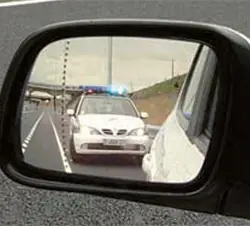
Si a través del espejo retrovisor observa al vehículo policial que se ve en la fotografía, ¿qué debe hacer?
If you see the police vehicle shown in the photo in your mirror, what must you do?
- AAumentar la velocidad, ya que me está indicando que voy despacio.Speed up, because it is telling me that I am going too slowly.
- BDetener el vehículo inmediatamente.Stop the vehicle immediately.
- CDetener el vehículo en el lado derecho, delante del coche policial, sin provocar riesgos a los demás usuarios.Stop the vehicle on the right-hand side, in front of the police car, without creating risks for other road users.
ExplanationThe device on the police vehicle seen in the mirror is an order to stop: you must stop on the right-hand side, in front of the police car, signalling the manoeuvre and without creating risk for others.
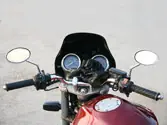
En una motocicletas automática la maneta de la derecha corresponde con...
On an automatic motorcycle, the right lever is for...
- Ael freno trasero.the rear brake.
- Bel freno delantero.the front brake.
- Cel embrague.the clutch.
ExplanationOn an automatic motorcycle, the right lever is for the front brake and the left lever is for the rear brake.
All topics
- Definitions
- Documents and penalty points
- The driver's condition
- Duties of drivers and pedestrians
- Vehicle safety devices
- Vehicle lights and horn
- Traffic signs, markings and signals
- The road and its lanes
- Speed and distances
- Manoeuvres
- Right of way
- Carrying passengers and loads
- Driving safely in difficult conditions
- Vehicle mechanics and maintenance
- Road accidents and first aid
- Defensive and eco-driving
Independent app: not affiliated with or endorsed by the DGT (Spain's Directorate-General for Traffic) or the Ministry of the Interior. The official exam is booked with the DGT and taken at its test centres. The questions here are practice material; the DGT's official question bank is not public.
Basado en datos de la Agencia Estatal Boletín Oficial del Estado (https://www.boe.es). Textos consolidados de carácter meramente informativo. La AEBOE no patrocina ni respalda este sitio.
Parte de las preguntas procede de los tests de la revista «Tráfico y Seguridad Vial» de la DGT, reproducidos con indicación de la fuente.