
DGT test · 150 questions
Defensive and eco-driving · Page 3 of 3
Anticipating hazards, saving fuel and cutting emissions with smooth, forward-looking driving.
Questions in this topic, with answers
150 questions, 50 per page, with the correct answer and the explanation. Page 3 of 3.
¿Que marchas dan más fuerza al vehículo?
Which gears give the vehicle the most power?
- ALa 3ª y la 4ª marcha.3rd and 4th gear.
- BLa 1ª y la 2ª marcha.1st and 2nd gear.
- CLa 4º y la 5º marcha.4th and 5th gear.
ExplanationLow gears (1st and 2nd) give the vehicle more power but less speed. High gears (3rd, 4th, 5th), on the other hand, have less power but more speed.
Para una conducción eficiente y ahorrar combustible debemos...
For eco-driving and to save fuel, we must...
- AUsar la marcha más larga posible.Use the highest possible gear.
- BCircular al mayor número de revoluciones posible.Drive at the highest possible revs.
- CCircular preferiblemente con marchas cortas.Preferably drive in low gears.
ExplanationTo save fuel, we must drive in the highest possible gear and at low revs.
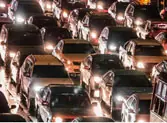
Si nos encontramos un atasco durante la noche, ¿qué deberemos hacer para ahorrar combustible?
If we are in a traffic jam at night, what must we do to save fuel?
- APoner el freno de mano y apagar las luces.Apply the handbrake and switch off the lights.
- BDejar encendidas las luces de posición y apagar el motor.Leave the sidelights on and switch off the engine.
- CApagar el motor y las luces de posición.Switch off the engine and the sidelights.
ExplanationWhen the vehicle is stationary at night because of traffic, we must keep the sidelights on and, to save fuel, switch off the engine.
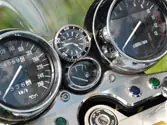
¿De qué color es la luz testigo de que el motor de la motocicleta está en punto muerto?
What colour is the warning light that shows the motorcycle's engine is in neutral?
- AAzul.Blue.
- BRoja.Red.
- CVerde.Green.
ExplanationThe warning light showing that the engine is in neutral is green. The blue light shows that the main beam is on, and the red light shows low oil pressure or that the battery is not charging.
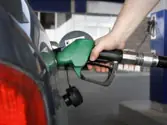
Para ahorrar carburante, ¿qué debe hacer?
What should you do to save fuel?
- ACircular a 90 kilómetros por hora, siempre.Always drive at 90 kilometres per hour.
- BAdaptar las marchas a las necesidades del vehículo.Adapt the gears to the vehicle's needs.
- CCircular con marchas cortas.Drive in low gears.
ExplanationChoosing the right gear is one of the key aspects of eco-driving. Driving in high gears with the engine at low revs means lower fuel consumption. We should use the highest possible gear (4th or 5th) even in town and keep the engine at low revs. In low gears the engine runs at higher revs and uses more fuel.
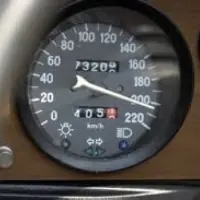
Para ahorrar combustible tengo que ...
To save fuel I must...
- Aconducir justo detrás del vehículo que se encuentra delante de mí con el fin de disminuir la resistencia del aire.drive just behind the vehicle in front of me in order to reduce air resistance.
- Bmantener la velocidad lo más alta posible y constante.keep my speed as high and constant as possible.
- Cconducir con moderación sin realizar frenazos en seco ni acelerones fuertes.drive moderately, without braking hard or accelerating sharply.
ExplanationFor safe and economical driving, we should drive at a steady speed, moderately, and always avoid braking sharply, especially on bends, where we should keep a steady speed. We should also avoid sharp and unnecessary acceleration because, as well as endangering road safety, it increases our vehicle's fuel consumption.
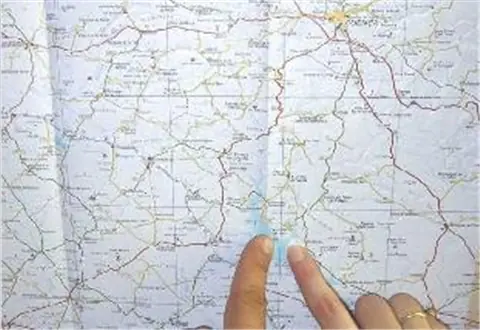
En un viaje es aconsejable planificar...
On a journey, it is advisable to plan...
- Alos descansos que se van a realizar.the breaks you are going to take.
- Bla hora de salida y la de llegada.the departure and arrival times.
- Cel itinerario más corto posible.the shortest possible route.
ExplanationBefore a journey it is a good idea to plan your breaks, for example every two hours or 200 km, because tiredness comes on gradually and is not always noticed in time. The shortest route is not necessarily the safest.
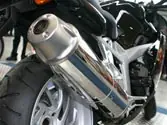
Para evitar la contaminación acústica, es aconsejable que los conductores de motocicletas...
To avoid noise pollution, motorcyclists are advised to...
- Acuiden que el tubo de escape y el silenciador estén siempre en buen estado.make sure the exhaust pipe and silencer are always in good condition.
- Bcirculen con el escape libre.ride with an open exhaust (without a silencer).
- Ccuiden solamente el silenciador, el tubo de escape no influye en los ruidos.look after only the silencer, as the exhaust pipe does not affect noise.
ExplanationVehicles must not be driven while giving off electromagnetic interference, noise, gases or other pollutants above the set limits. Motor vehicles and mopeds must not be driven with a so-called open exhaust, that is, without the silencer. In general, if we give off noise, smoke or gases above the permitted levels, the police may immobilise the vehicle as well as fining us.
Utilizar una gasolina de menor octanaje que el indicado por el fabricante del vehículo, ¿es aconsejable como medida de ahorro de combustible?
Is it advisable to use petrol with a lower octane rating than the one stated by the vehicle manufacturer, as a way to save fuel?
- ASí.Yes.
- BNo.No.
- CSí, pero solo en trayectos urbanos.Yes, but only on journeys in town.
ExplanationWe should not use petrol with a different octane rating from the one recommended by the vehicle manufacturer. Doing so could harm the vehicle, and it is not a correct way to save fuel.
¿Qué es la conducción preventiva?
What is defensive driving?
- APlanificar la ruta del viaje con tiempo.Planning your journey route well in advance.
- BCircular a la velocidad mínima permitida.Driving at the minimum speed allowed.
- CAnticipar y evitar las situaciones de peligro.Anticipating and avoiding dangerous situations.
ExplanationDefensive driving is an attitude to driving that lets us drive safely by anticipating and avoiding dangerous situations.
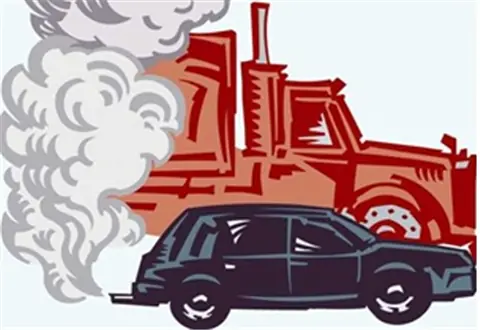
Para contaminar lo menos posible es recomendable...
To pollute as little as possible, it is recommended to...
- Amantener siempre la misma velocidad.always keep the same speed.
- Butilizar lo menos posible el transporte público.use public transport as little as possible.
- Cmantener la velocidad lo más uniforme posible evitando acelerones y frenazos innecesarios.keep your speed as steady as possible, avoiding unnecessary sudden acceleration and braking.
ExplanationBy driving at a steady speed and avoiding the sudden changes of speed caused by unnecessary use of the brake and accelerator pedals, we will reduce consumption considerably, and we will also make the journey more comfortable for passengers and driving safer.
Si un vehículo tiene el ralentí demasiado alto, ¿influye en el consumo de combustible?
If a vehicle's idle speed is too high, does it affect fuel consumption?
- ASí, porque el motor al girar a más revoluciones consume más.Yes, because the engine uses more fuel when it turns at higher revs.
- BNo.No.
- CSí, consume menos combustible porque aceleramos menos.Yes, it uses less fuel because we accelerate less.
ExplanationIdle speed is the engine's rpm when we are not pressing the accelerator. The higher the engine speed, the more fuel the engine uses. It is estimated that an engine idling for 1 hour can use up to 1/2 litre of petrol.
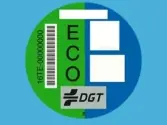
¿Qué vehículos podrán disponer del distintivo medioambiental ECO?
Which vehicles may have the ECO environmental badge?
- AHíbridos enchufables con menos de 40 km de autonomía, híbridos no enchufables, entre otros.Plug-in hybrids with less than 40 km of range and non-plug-in hybrids, among others.
- BEléctricos puros de batería, también los de autonomía extendida, híbridos enchufables con autonomía mínima de 40 km, entre otros.Pure battery electric vehicles, including extended-range ones, and plug-in hybrids with a range of at least 40 km, among others.
- CMotores de combustión interna fabricados a partir de 2015.Internal combustion engines made from 2015 onwards.
ExplanationUnder annex II of the General Vehicle Regulations, the ECO badge is for plug-in hybrids with less than 40 km of range, non-plug-in hybrids and vehicles powered by natural gas or LPG. Pure electric vehicles and plug-in hybrids with 40 km or more are «0 emissions».
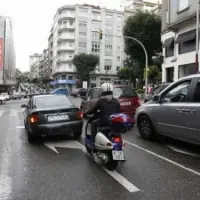
La densidad del tráfico en una zona urbana produce a menudo momento de incertidumbre, y por eso el conductor de una motocicleta…
Heavy traffic in a built-up area often creates moments of uncertainty, so a motorcyclist...
- ADeberá advertir de su presencia al resto de usuarios accionando la luz de largo alcance.Must warn other road users of their presence by using the main beam.
- BDeberá aumentar la velocidad para evitar cuanto antes esta situación.Must speed up to get out of this situation as soon as possible.
- CDeberá prevenir y anticiparse a los posibles comportamientos de los demás usuarios.Must be ready for and anticipate what other road users may do.
ExplanationIn built-up areas with heavy traffic, unexpected manoeuvres are common, such as lane changes, doors opening or pedestrians crossing. Safe riding means predicting and anticipating what others may do; speeding up or using the main beam increases the risk.
¿Incide en el consumo de combustible el llevar instalada sobre el vehículo una baca portaequipajes?
Does having a roof rack fitted to the vehicle affect fuel consumption?
- ANo, ya que es indiferenteNo, it makes no difference.
- BSí, lo disminuyeYes, it reduces it.
- CSí, lo aumentaYes, it increases it.
ExplanationIf we have a roof rack fitted to our vehicle, or luggage on it, the vehicle's aerodynamic drag increases, raising fuel consumption by up to 35%.
Entre otras causas, ¿a qué puede deberse que el motor tenga un consumo de carburante superior al indicado por el fabricante?
Among other causes, why might an engine use more fuel than the manufacturer states?
- AA que el conductor circula haciendo frecuentes frenadas y aceleradas.Because the driver brakes and accelerates frequently.
- BA una fuga de líquido en el sistema de dirección.Because of a fluid leak in the steering system.
- CA que el conductor circula seleccionando preferentemente marchas largas.Because the driver mostly chooses high gears.
ExplanationFuel consumption higher than the manufacturer states may be caused, among other things, by the driver accelerating and braking frequently, which makes the engine work harder and use more fuel. This increases fuel use and reduces the vehicle's efficiency. On the other hand, a steering leak or using high gears does not cause high fuel consumption.
¿Cree Ud. que el consumo de combustible es más bajo si el equipaje se transporta en el maletero y no en la baca de un turismo?
Do you think fuel consumption is lower if luggage is carried in the boot rather than on the roof rack of a car?
- ASí, porque la resistencia aerodinámica es menor.Yes, because aerodynamic drag is lower.
- BNo, porque el peso es el mismo.No, because the weight is the same.
- CEs indiferente. El consumo no varía.It makes no difference. Consumption does not change.
ExplanationAlthough the weight is the same, luggage on the roof rack increases the vehicle's frontal area and aerodynamic drag, which increases consumption, especially at high speeds. In the boot, the load does not change the aerodynamics.
¿Los accidentes de tráfico afectan al medio ambiente?
Do road accidents affect the environment?
- ASolo en carreteras interurbanas.Only on roads outside built-up areas.
- BSí.Yes.
- CNo.No.
ExplanationYes, the environment is affected by road accidents, both in and outside built-up areas. According to the Traffic and Road Safety Code, accidents cause not only harm to people and property but also environmental damage, such as pollution from fuel spills and gas emissions. This shows the importance of safe driving and of respecting the rules that protect both people and the environment.
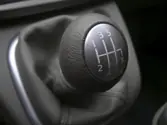
En los motores diesel cambiaremos de marcha:
With diesel engines, we will change gear:
- AEntre 1.500 y 2.000 revoluciones por minuto.Between 1,500 and 2,000 revolutions per minute.
- BEntre 2.000 y 2.500 revoluciones por minuto.Between 2,000 and 2,500 revolutions per minute.
- CEntre 1.000 y 1.500 revoluciones por minuto.Between 1,000 and 1,500 revolutions per minute.
ExplanationChoosing the right gear is one of the key aspects of eco-driving. With diesel engines, the right engine speed for changing gear without fuel consumption shooting up is between 1,500 and 2,000 revolutions per minute. Avoid unnecessary gear changes. You can change up to higher gears without going through all of them.
Para ahorrar carburante es aconsejado circular:
To save fuel, it is advisable to drive:
- AVariando continuamente la velocidad.Changing speed continuously.
- BA una velocidad uniforme y evitando frenazos y acelerones.At a steady speed, avoiding harsh braking and sudden acceleration.
- CA poca velocidad constantemente.Slowly all the time.
ExplanationAn increase in speed leads to a much greater increase in fuel consumption and makes it shoot up. Keep a steady speed, avoiding unnecessary sudden acceleration and braking, and try to keep a constant average speed for as long as possible.
Para ahorrar carburante, ¿qué se debe hacer?
What should you do to save fuel?
- ACircular con las ventanillas abiertas.Drive with the windows open.
- BCircular siempre a más de 100 km/h.Always drive at more than 100 km/h.
- CCircular con las ventanillas cerradas.Drive with the windows closed.
ExplanationMeasures that help save fuel: drive with the windows closed (using the air conditioning and climate control also increases consumption); do not carry more weight than necessary and load the vehicle correctly; carry luggage inside the vehicle (a roof rack increases consumption even when empty); switch off the engine during long stops (more than 60 seconds); avoid driving through town centres, on busy roads or anywhere else where you cannot keep a steady average speed; maintain the vehicle properly (tyres, air filter, etc.).
Conduciendo un vehículo de gasolina, ¿a cuántas revoluciones por minuto deberemos cambiar de marcha para ahorrar combustible?
When driving a petrol vehicle, at what engine speed should we change gear to save fuel?
- AEntre las 3000 y 3500.Between 3,000 and 3,500 rpm.
- BEntre las 2000 a 2500.Between 2,000 and 2,500 rpm.
- CEntre las 1500 a 2000.Between 1,500 and 2,000 rpm.
ExplanationIf we drive a vehicle with a petrol engine, we should change up to a higher gear between 2,000 and 2,500 revolutions per minute to reduce fuel consumption. If the engine is diesel, we change gear between 1,500 and 2,000 rpm.
En la conducción eficiente se aconseja circular ...
In eco-driving, it is advisable to drive...
- ACon marchas largas y a bajas revoluciones.In high gears at low revs.
- BCon marchas largas y a altas revoluciones.In high gears at high revs.
- CCon marchas cortas y a altas revoluciones.In low gears at high revs.
ExplanationChoosing the right gear is one of the key aspects of eco-driving. Driving in high gears with the engine at low revs means lower fuel consumption. We should use the highest possible gear (4th or 5th) even in town and keep the engine at low revs. In low gears the engine runs at higher revs and uses more fuel.
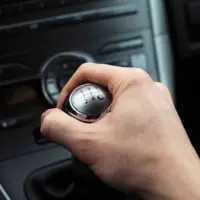
¿Cuál es la relación de marcha que menos fuerza transmite al vehículo?
Which gear ratio transmits the least force to the vehicle?
- ALa segunda o la tercera marcha, depende del vehículo que utilicemos.Second or third gear, depending on the vehicle.
- BLa primera marcha.First gear.
- CLa marcha más alta.The highest gear.
ExplanationA vehicle's highest gear transmits the least force but gives the highest speed. The lowest gear, first, transmits the most force forwards, but the vehicle moves more slowly.
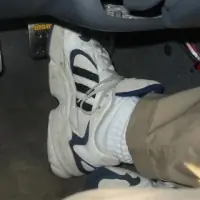
¿En qué situación se debe frenar con más anticipación?
In which situation should you brake further in advance?
- AA 50 km por horaAt 50 km/h.
- BA 100 km por horaAt 100 km/h.
- CA 30 km por horaAt 30 km/h.
ExplanationExcessive speed affects the driver's ability to anticipate, so the higher the speed, the earlier we must brake. That is why in this case the correct option is the highest speed.
La conducción preventiva consiste en...
Defensive driving is...
- Auna forma de conducción peligrosa.a dangerous way of driving.
- Buna forma de conducción lenta e inadecuada.a slow and unsuitable way of driving.
- Cuna actitud hacia la conducción que permite al conductor circular de manera más segura.an attitude to driving that lets the driver drive more safely.
ExplanationDefensive driving is an attitude that lets the driver anticipate risky situations, which makes driving safer. This is in line with the General Traffic Regulations, which stress the importance of basic skills and abilities for safe driving. Prevention is key to avoiding accidents, as it involves taking into account not only the physical condition of the vehicle but also the surroundings and the behaviour of other road users.

¿Qué actuación es la más efectiva para ahorrar combustible?
What is the most effective action to save fuel?
- AParar el motor siempre que el vehículo esté inmovilizado, incluso en las detenciones momentáneas.Stop the engine whenever the vehicle is stationary, even for brief stops.
- BNo cargar el vehículo en exceso.Not overload the vehicle.
- CDar a los neumáticos una presión de inflado inferior a la recomendada por el fabricante.Inflate the tyres to a lower pressure than the manufacturer recommends.
ExplanationA good way to save fuel is not to overload the vehicle. Extra mass makes the vehicle use more fuel. We should avoid carrying more weight than necessary and place the load correctly, as these factors also affect fuel consumption (use the roof rack only when there is no other option, as it increases consumption even when empty).
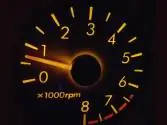
¿Entre que revoluciones se debe cambiar de marcha en un diesel?
At what engine speed should you change gear in a diesel?
- AEntre 1.000 y 1.500 revoluciones por minuto.Between 1,000 and 1,500 revolutions per minute.
- BEntre 1.500 y 2.000 revoluciones por minuto.Between 1,500 and 2,000 revolutions per minute.
- CEntre 2.000 y 2.500 revoluciones por minuto.Between 2,000 and 2,500 revolutions per minute.
ExplanationChoosing the right gear is one of the key aspects of eco-driving. With diesel engines, the right engine speed for changing gear without fuel consumption shooting up is between 1,500 and 2,000 revolutions per minute. Avoid unnecessary gear changes. You can change up to higher gears without going through all of them.
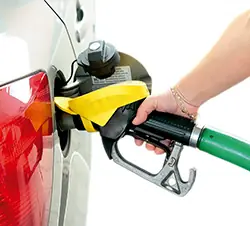
¿Cuál de las siguientes circunstancias hace que aumente el consumo de combustible?
Which of the following increases fuel consumption?
- ACircular con las ventanillas del vehículo subidas.Driving with the vehicle's windows closed.
- BCircular con el vehículo muy cargado.Driving with the vehicle heavily loaded.
- CCircular con unos neumáticos que carezcan de dibujo.Driving on tyres with no tread.
ExplanationThe heavier the load, the more mass has to be moved and braked, so consumption goes up. Closed windows improve aerodynamics and save fuel; tyres without tread are a serious risk, but they do not increase consumption.
Si el motor de nuestro vehículo es de gasolina, ¿deberemos efectuar el cambio de marcha cuando alcance las 2000-2500 revoluciones por minuto?
If our vehicle has a petrol engine, should we change gear when it reaches 2,000–2,500 revolutions per minute?
- ANo, lo haremos mucho más tarde.No, we will do it much later.
- BNo, lo haremos entre las 1500 y 2000 rpm.No, we will do it between 1,500 and 2,000 rpm.
- CSí.Yes.
ExplanationWith a petrol engine we change gear between 2,000 and 2,500 revolutions per minute. With a diesel engine, we do it between 1,500 and 2,000.
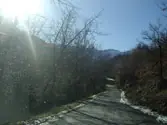
En la preparación de un viaje, ¿es importante escoger una hora de salida adecuada?
When preparing a journey, is it important to choose a suitable departure time?
- ANo, la hora de salida no es relevante para preparar un viaje.No, the departure time is not relevant when preparing a journey.
- BSí, para evitar conducir con el sol bajo y de frente durante las horas del ocaso o la salida del sol, evitando deslumbramientos.Yes, to avoid driving with the sun low and in front of you at sunset or sunrise, and so avoid being dazzled.
- CSí, para evitar hacer paradas de descanso.Yes, to avoid having to stop for rest breaks.
ExplanationThe departure time is important, among other things, to avoid driving with the sun in front of you, with the resulting risk of being dazzled.
¿Es conveniente escoger la hora de salida para comenzar un viaje?
Is it advisable to choose the departure time when starting a journey?
- ASí, es mejor circular desde el ocaso hasta la salida del sol.Yes, it is better to drive from sunset to sunrise.
- BSí, es conveniente circular a la hora de la salida del sol.Yes, it is advisable to drive at sunrise.
- CSí, es conveniente elegir una hora en la que el sol no nos deslumbre.Yes, it is advisable to choose a time when the sun will not dazzle us.
ExplanationIt is advisable to choose when to make a journey. It is better not to drive with the sun in front of you, that is, at sunrise or sunset, so that it does not dazzle you.
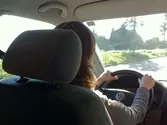
En la conducción preventiva debemos ...
In defensive driving, we must...
- AMirar solamente al vehículo de delante.Look only at the vehicle in front.
- BNo es necesario mirar los retrovisores.Not check the mirrors, as it is not necessary.
- CMirar a lo lejos, a los lados y por lo retrovisores.Look far ahead, to the sides and in the mirrors.
ExplanationDefensive driving is based on the principles of vision, anticipation and space. Its aim is to let the driver drive more safely. To do this, you must collect information early enough to analyse it and react properly. Look far ahead, look to the sides often, check the mirrors frequently and turn your head to check the blind spot.
Si nuestro vehículo consume más combustible de lo habitual, ¿a qué puede ser debido?
If our vehicle uses more fuel than usual, what could be the cause?
- AAl circuito de refrigeración.The cooling circuit.
- BAl circuito de lubricación.The lubrication circuit.
- CAl circuito de alimentación.The fuel supply circuit.
ExplanationThe fuel supply circuit supplies the right amount of fuel at all times while the engine is running. If it is out of adjustment, the vehicle's fuel consumption will be affected.
Para anticiparnos al peligro debemos...
To anticipate danger we must...
- AMirar fijamente al vehículo de delante.Stare at the vehicle in front.
- BMirar más lejos a medida que aumentamos la velocidad.Look further ahead as our speed increases.
- CMirar la línea continua que separa la calzada del arcén.Look at the solid line separating the carriageway from the hard shoulder.
ExplanationIf we drive looking only at the space immediately in front of us, we cannot anticipate what happens further ahead. So our view should cover the distance our vehicle will travel in the next 20 seconds, so that we can foresee possible dangers and act in time, avoiding unnecessary harsh braking and sudden acceleration. That is why, as our speed increases, our view must cover a larger area, as we will travel further in 20 seconds.
¿Qué vehículos pueden llevar el distintivo medioambiental ECO?
Which vehicles may display the ECO environmental label?
- AHíbridos enchufables con menos de 40 km de autonomía, híbridos no enchufables, entre otros.Plug-in hybrids with a range of less than 40 km, non-plug-in hybrids, among others.
- BEléctricos puros de batería y de autonomía extendida; híbridos enchufables con autonomía mínima de 40 km, entre otros.Pure battery electric and extended-range electric vehicles; plug-in hybrids with a range of at least 40 km, among others.
- CVehículos con motor de combustión interna fabricados a partir de 2015.Vehicles with an internal combustion engine made from 2015 onwards.
ExplanationUnder Annex II of the General Vehicle Regulations, the ECO label is for plug-in hybrids with a range of less than 40 km, non-plug-in hybrids and vehicles powered by natural gas or LPG. Pure electric vehicles and plug-in hybrids with a range of 40 km or more get the 0 emissions label, and combustion vehicles get C or B depending on their Euro standard.
Para llevar a cabo una conducción eficiente, en los motores gasolina, se recomienda cambiar de marcha:
For eco-driving with petrol engines, it is recommended to change gear:
- AEntre las 1.000 y las 1.500 rpm.Between 1,000 and 1,500 rpm.
- BEntre 2.000 y 2.500 rpm.Between 2,000 and 2,500 rpm.
- CEn el rango de las 1.500 a las 2.000 rpm.In the range of 1,500 to 2,000 rpm.
ExplanationChoosing the right gear is one of the key aspects of eco-driving. With petrol engines, the right engine speed for changing gear without fuel consumption shooting up is between 2,000 and 2,500 revolutions per minute, and with diesel engines between 1,500 and 2,000 rpm. Avoid unnecessary gear changes. You can change up to higher gears without going through all of them.
¿Qué acción ayuda a mejorar el consumo de combustible al conducir por la autopista?
What helps improve fuel consumption when driving on the motorway (autopista)?
- AMantener el coche en una marcha baja para tener más potencia.Keeping the car in a low gear to have more power.
- BUsar el aire acondicionado a máxima potencia para mantener la temperatura interior.Using the air conditioning at full power to keep the inside temperature.
- CConducir a velocidad constante, evitando aceleraciones o frenazos bruscos.Driving at a constant speed, avoiding sudden acceleration or harsh braking.
ExplanationThe General Traffic Regulations (RGC) state that drivers must drive safely and appropriately, keeping within the speed limits and avoiding excessive sudden acceleration and braking. These manoeuvres increase fuel consumption and reduce the vehicle's efficiency. So driving at a constant speed on the motorway improves fuel economy.
¿Cómo hay que ventilar el vehículo para ahorrar combustible?
How should you ventilate the vehicle to save fuel?
- AUsando las rejillas de ventilación del salpicadero.Using the air vents on the dashboard.
- BAbriendo todas las ventanillas.Opening all the windows.
- CAbriendo únicamente las ventanillas traseras.Opening only the rear windows.
ExplanationTo save fuel, it is more efficient to ventilate the vehicle using the air vents on the dashboard, because this way you use the vehicle's own ventilation system. Opening all the windows, or only the rear ones, can increase wind resistance, which can lead to higher fuel consumption, according to the Spanish traffic rules on vehicle energy efficiency.
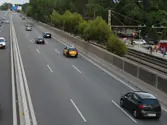
¿Qué ventajas ofrece la conducción eficiente?
What advantages does eco-driving offer?
- AAhorro de energía y menor contaminación, únicamente.Only energy saving and less pollution.
- BAhorro de energía y reducción de emisiones contaminantes, exclusivamente.Only energy saving and lower polluting emissions.
- CAhorro de energía, reducción de los costes de mantenimiento, menor contaminación acústica, menor riesgo de accidente y mejora del confort.Energy saving, lower maintenance costs, less noise pollution, lower accident risk and more comfort.
ExplanationThe way you drive directly affects fuel consumption: using the right gears, using the brake properly, avoiding sudden acceleration, etc. all directly affect energy saving. Smooth and appropriate driving reduces wear on the vehicle's working parts, so correct use means fewer visits to the garage. Lower engine revs mean less noise pollution. Eco-driving is based, among other things, on foresight and anticipation, so it reduces the risk of accidents.
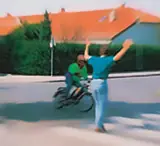
La velocidad, ¿influye en la capacidad de anticipación del conductor?
Does speed affect the driver's ability to anticipate?
- ASí, a mayor velocidad menor capacidad de anticipación.Yes, the higher the speed, the lower the ability to anticipate.
- BDepende de las condiciones de la vía.It depends on the road conditions.
- CNo.No.
ExplanationAt higher speed there is less time to notice what is happening, interpret it and decide, and the useful field of vision narrows. That is why the ability to anticipate dangers, such as a pedestrian or cyclist who suddenly appears, is reduced, whatever the road conditions.
¿Cuáles son los cuatro niveles de clasificación ambiental utilizados para identificar el nivel de contaminación de los vehículos en función de sus emisiones?
What are the four environmental classification levels used to identify how polluting vehicles are, according to their emissions?
- A0 emisiones, ECO, C y D.Zero emissions, ECO, C and D.
- BSin emisiones, ECO, A y B.No emissions, ECO, A and B.
- C0 emisiones, ECO, C y B.Zero emissions, ECO, C and B.
ExplanationThere are four environmental labels: Zero emissions (electric vehicles and plug-in hybrids with a range of 40 km or more), ECO (hybrids and gas-powered vehicles), C (Euro 4 to 6 petrol and Euro 6 diesel) and B (Euro 3 petrol and Euro 4 and 5 diesel). Older vehicles, in category A, have no label.
Una técnica de observación en la conducción preventiva es...
An observation technique in defensive driving is...
- Amirar lejos, a los lados y por los retrovisores.looking far ahead, to the sides and in the mirrors.
- Binstalar espejos panorámicos.fitting panoramic mirrors.
- Cacostumbrarse a los deslumbramientos.getting used to being dazzled.
ExplanationThe correct answer is looking far ahead, to the sides and in the mirrors, because this technique is part of defensive driving, which means the driver must have good visibility to anticipate possible dangers on the road. According to the General Traffic Regulations, prevention is essential for road safety, which means observing the surroundings in all directions, not only ahead.
Para ahorrar combustible, ¿qué debe hacer?
To save fuel, what should you do?
- AConducir siempre a 90 kilómetros por hora.Always drive at 90 kilometres per hour.
- BAdaptar las marchas a las necesidades del vehículo.Match the gears to what the vehicle needs.
- CCircular con marchas cortas.Drive in low gears.
ExplanationTo save fuel you must choose the right gear at all times: change up early and drive in the highest gear possible without straining the engine. That way it works in its lowest-consumption rev range. Driving in low gears or at a fixed speed regardless of the road does not save fuel.
En un motor de gasolina, al acelerar cambiaremos de marcha entre las...
In a petrol engine, when accelerating we will change gear between...
- A5000 y 5500 rpm.5,000 and 5,500 rpm.
- B1500 y 2000 rpm.1,500 and 2,000 rpm.
- C2000 y 2500 rpm.2,000 and 2,500 rpm.
ExplanationIn eco-driving, with a petrol engine you change up between 2,000 and 2,500 revolutions per minute; with a diesel engine, between 1,500 and 2,000. Taking the engine to high revs only increases consumption.
En vehículos con motor diésel, se recomienda efectuar el cambio de marcha entre las...
In vehicles with a diesel engine, it is recommended to change gear between...
- A2000 y 2500 rpm.2,000 and 2,500 rpm.
- B1500 y 2000 rpm.1,500 and 2,000 rpm.
- C3000 y 3500 rpm.3,000 and 3,500 rpm.
ExplanationWith diesel engines we change gear earlier than with petrol engines (1,500–2,000 rpm for diesel, 2,000–2,500 for petrol).
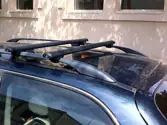
El hecho de llevar instalada una baca portaequipajes, aun sin transportar ningún tipo de carga en ella, ¿afecta al consumo de carburante del vehículo?
Does having a roof rack fitted, even without any load on it, affect the vehicle's fuel consumption?
- ANo, porque al no llevar peso el vehículo consume lo mismo.No, because with no weight on it the vehicle uses the same amount of fuel.
- BSí, porque la estructura de la baca reduce la aerodinámica del vehículo aumentado el consumo.Yes, because the roof rack structure makes the vehicle less aerodynamic, which increases consumption.
- CSí, el vehículo consumirá menos ya que la baca ejerce como elemento aerodinámico.Yes, the vehicle will use less fuel because the roof rack acts as an aerodynamic element.
ExplanationWhen a vehicle's shape is designed, the aim is to give the least possible air resistance. Anything sticking out from the vehicle's body increases air resistance and fuel consumption. A roof rack increases consumption even when there is no load on it.
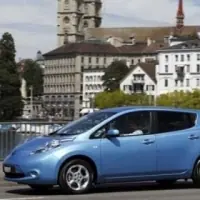
¿Dónde se sitúa la zona de incertidumbre de los vehículos?
Where is a vehicle's zone of uncertainty?
- AEn la diagonal del vehículoOn the diagonal of the vehicle.
- BEn la parte no visible trasera del vehículoIn the part behind the vehicle that cannot be seen.
- CDelante y detrás, en ocasiones en los laterales del vehículoIn front and behind, and sometimes to the sides of the vehicle.
ExplanationThe zone of uncertainty is the space around a vehicle's driver that we cannot perceive because our senses are focused on another part of the space we are driving through, and in which vehicles, pedestrians and animals on the road may move unexpectedly. Each vehicle has a different zone of uncertainty: at the sides for a motorcycle, or behind, in front and at the sides for a car.
Para conducir de una manera eficiente y reducir el consumo de carburante, es conveniente:
For eco-driving and to reduce fuel consumption, it is advisable to:
- AReducir la distancia de seguridad para poder ver todo antes.Reduce the safe distance so as to see everything earlier.
- BAcelerar cuando se arranca.Press the accelerator when starting the engine.
- CAumentar la distancia de seguridad con el fin de tener más tiempo para reaccionar.Increase the safe distance so as to have more time to react.
ExplanationEco-driving requires applying defensive driving techniques (vision, anticipation and space), so that you foresee what is going to happen early enough to use the vehicle's controls without sudden movements. This helps us save fuel and pollute less.
Si nuestro coche tiene un motor de gasolina, para reducir la contaminación es recomendable iniciar la marcha...
If our car has a petrol engine, to reduce pollution it is recommended to move off...
- AInmediatamente después de poner el motor en funcionamiento.Immediately after starting the engine.
- BDespués de haber esperado unos minutos.After waiting a few minutes.
- CDespués de haber dado varios acelerones para que el motor se caliente lo antes posible.After revving the engine several times so that it warms up as soon as possible.
ExplanationTo reduce the pollution produced by the engine, we should move off smoothly immediately after starting the engine.
All topics
- Definitions
- Documents and penalty points
- The driver's condition
- Duties of drivers and pedestrians
- Vehicle safety devices
- Vehicle controls and equipment
- Vehicle lights and horn
- Traffic signs, markings and signals
- The road and its lanes
- Speed and distances
- Manoeuvres
- Right of way
- Carrying passengers and loads
- Driving safely in difficult conditions
- Vehicle mechanics and maintenance
- Road accidents and first aid
Independent app: not affiliated with or endorsed by the DGT (Spain's Directorate-General for Traffic) or the Ministry of the Interior. The official exam is booked with the DGT and taken at its test centres. The questions here are practice material; the DGT's official question bank is not public.
Basado en datos de la Agencia Estatal Boletín Oficial del Estado (https://www.boe.es). Textos consolidados de carácter meramente informativo. La AEBOE no patrocina ni respalda este sitio.
Parte de las preguntas procede de los tests de la revista «Tráfico y Seguridad Vial» de la DGT, reproducidos con indicación de la fuente.