
DGT test · 403 questions
Right of way
Who goes first at junctions, roundabouts, narrow stretches and pedestrian crossings, and the priority of emergency vehicles.
20 random questions
Loading questions…
Questions in this topic, with answers
403 questions, 50 per page, with the correct answer and the explanation. Page 1 of 9.
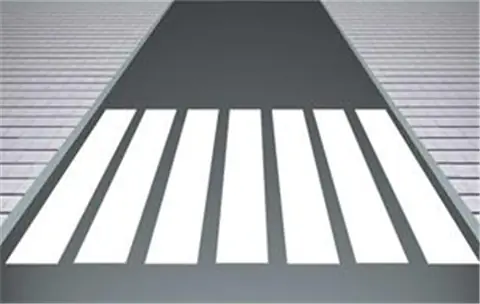
La marca de paso para peatones, ¿concede a éstos preferencia de paso?
Does the pedestrian crossing marking give pedestrians right of way?
- ASí, siempre.Yes, always.
- BNo, nunca.No, never.
- CSólo cuando el paso para peatones está regulado por un semáforo.Only when the pedestrian crossing is controlled by traffic lights.
ExplanationThe pedestrian crossing marking, made up of parallel white stripes, tells drivers that they must let pedestrians crossing on it go first. Traffic lights are not needed for pedestrians to have right of way; it is enough for the crossing to be marked.
Si en un estrechamiento sin señalizar llegan a la vez un vehículo de tracción animal y un camión, ¿cuál de los dos tendrá preferencia de paso?
If an animal-drawn vehicle and a lorry arrive at the same time at a narrowing without signs, which of the two has right of way?
- AEl vehículo de tracción animal.The animal-drawn vehicle.
- BEl camión.The lorry.
- CEl que tenga más facilidad de paso.The one that can get through more easily.
ExplanationOn stretches of road so narrow that it is impossible or very difficult for two vehicles to pass at the same time, if there is no specific sign, the vehicle that entered first has right of way, whatever type it is. The order of priority between the different types of vehicles, when it is not clear who entered first or when one of them has to reverse, is: 1. Special vehicles and vehicles under special transport rules that exceed the permitted masses and dimensions. 2. Combinations of vehicles, except cars towing a trailer with a MAM of up to 750 kg. 3. Animal-drawn vehicles. 4. Cars towing a trailer with a MAM of up to 750 kg, and motorhomes. 5. Vehicles for the public transport of passengers (buses). 6. Lorries, tractor units and box vans. 7. Cars, car-derived vehicles and adaptable mixed-use vehicles. 8. Special vehicles that do not exceed the permitted masses or dimensions, quadricycles and light quadricycles. 9. Three-wheeled vehicles, motorcycles with sidecars and three-wheeled mopeds. 10. Motorcycles, two-wheeled mopeds and bicycles. When the vehicles are of the same type, or of a type not listed above, right of way goes to the one that would have to reverse a longer distance and, if that is equal, to the one with the greater width, length or maximum authorised mass. So in this question the animal-drawn vehicle goes before the lorry.
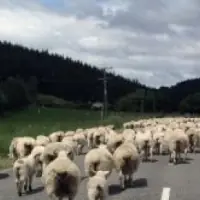
¿Están los conductores obligados a ceder el paso a animales en cañadas señalizadas?
Must drivers give way to animals on signed livestock routes (cañadas)?
- ANoNo
- BSi, en todo tipo de cañadas incluso las no señalizadasYes, on all types of livestock routes, even unsigned ones
- CSí.Yes.
ExplanationAs a general rule, drivers have right of way over animals, except on properly signed livestock routes, or when we turn to enter another road and animals are crossing it; in these cases the animals have priority.
Si por motivos de la circulación un vehículo queda detenido en el interior de un túnel por un tiempo superior a dos minutos, su conductor deberá…
If, because of traffic, a vehicle is stopped inside a tunnel for more than two minutes, its driver must…
- ADejar el motor arrancado y encender las luces de emergencia.Leave the engine running and switch on the hazard warning lights.
- BApagar el motor y las luces de posición.Switch off the engine and the sidelights.
- CApagar el motor y mantener encendidas las luces de posición.Switch off the engine and keep the sidelights on.
ExplanationIf the vehicle stops inside a tunnel or another enclosed place for more than two minutes, the engine must be switched off until the vehicle can move on again, keeping the sidelights on and, if circumstances require, the hazard warning lights.
Un ciclomotor y un turismo llegan al mismo tiempo a un estrechamiento sin señalizar la prioridad, ¿quién tiene prioridad?
A moped and a car arrive at the same time at a narrowing with no priority signs. Who has right of way?
- AEl turismo.The car.
- BEl ciclomotor.The moped.
- CEl que pueda circular con menos seguridad.The one that can travel less safely.
ExplanationOn a very narrow stretch of road with no priority signs, the vehicle that entered first has right of way. If it is not clear who entered first, the vehicle that has more difficulty manoeuvring has right of way. The order of priority between the different types of vehicles when one of them has to reverse is: 1. Special vehicles and special transport that exceed the permitted masses or dimensions. 2. Combinations of vehicles, except those in point 4. 3. Animal-drawn vehicles. 4. Cars towing trailers with a MAM of up to 750 kg, and motorhomes. 5. Vehicles for the public transport of passengers (buses). 6. Lorries, tractor units and vans. 7. Cars and car-derived vehicles. 8. Special vehicles that do not exceed the permitted masses or dimensions, quadricycles and light quadricycles. 9. Three-wheeled vehicles, motorcycles with sidecars and three-wheeled mopeds. 10. Motorcycles, two-wheeled mopeds and bicycles. When the vehicles are of the same type, or of a type not listed above, right of way goes to the one that would have to reverse a longer distance and, if that is equal, to the one with the greater width, length or maximum authorised mass.
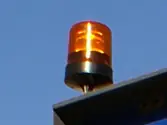
La luz rotativa de color amarillo auto que utilizan los vehículos especiales, ¿les concede prioridad de paso?
Does the rotating amber (auto-yellow) light used by special vehicles give them right of way?
- ASí, puesto que realizan trabajos en la vía.Yes, because they are doing work on the road.
- BSí, pero solo cuando circulan por el arcén.Yes, but only when they are driving on the hard shoulder.
- CNo.No.
ExplanationThe rotating amber light shows where these vehicles are on the road, but it does not give them right of way.
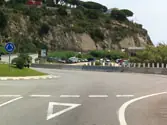
Si circulando un grupo de ciclistas, el primero ha entrado en una glorieta, ¿tendrá también el resto del grupo prioridad sobre los vehículos que accedan a la glorieta?
If the first rider of a group of cyclists has entered a roundabout, does the rest of the group also have right of way over vehicles entering the roundabout?
- ASí, pero solo si el grupo va con un vehículo de acompañamiento.Yes, but only if the group has an escort vehicle.
- BSí.Yes.
- CNo, sólo aplicaremos esta norma en las intersecciones que no sean glorietas.No, this rule only applies at junctions that are not roundabouts.
ExplanationWhen cyclists are riding in a group and the first one has already started to cross or has entered a roundabout, the whole group has right of way over other vehicles, which must wait until the last cyclist has passed (Article 64.2, as worded by RD 518/2026).
¿Qué debe hacer si sufre una avería en un túnel?
What must you do if your vehicle breaks down in a tunnel?
- AEncender las luces de largo alcance para que se vea mejor y que todos los ocupantes desciendan del vehículo.Switch on the main beam so that you can be seen better, and have all the occupants get out of the vehicle.
- BSi la avería permite la marcha del vehículo, debe continuar hasta salir del túnel o hasta una zona reservada para emergencias.If the vehicle can still be driven, you must carry on until you leave the tunnel or reach an area set aside for emergencies.
- CDetener el vehículo en cualquier lugar del túnel para evitar el peligro, aunque la avería permita la marcha del vehículo.Stop the vehicle anywhere in the tunnel to avoid danger, even if the vehicle can still be driven.
ExplanationIf, because of an emergency, a driver is stopped inside a tunnel or underpass, they must do the following. If the vehicle can still be driven, leave the tunnel or underpass; if that is not possible, drive the vehicle to the nearest emergency area (lay-by); otherwise, stop the vehicle at the right-hand edge. In addition, they must: switch off the engine, keep the sidelights on and switch on the hazard warning lights; place and switch on the hazard warning device. Both the driver and the other occupants must leave the vehicle and go quickly to the nearest shelter or exit, and must never walk on the carriageway if there are areas closed to vehicle traffic.
Si por motivos de circulación un vehículo queda detenido en un túnel durante más de dos minutos, el conductor deberá:
If, for traffic reasons, a vehicle is held up in a tunnel for more than two minutes, the driver must:
- ADejar el motor en marcha y encender las luces de emergencia.Keep the engine running and switch on the hazard warning lights.
- BApagar el motor y las luces de posición.Switch off the engine and the sidelights.
- CApagar el motor y mantener las luces de posición encendidas.Switch off the engine and keep the sidelights on.
ExplanationArticle 115.2 of the General Traffic Regulations (RGC) requires anyone who is held up in a tunnel for more than two minutes to stop the engine until they can move on again, keeping the sidelights on so that the vehicle stays visible.
Si nos encontramos con un ciclista en una intersección, ¿cuándo tendrá prioridad el ciclista?
If we meet a cyclist at a junction, when does the cyclist have right of way?
- AEl ciclista tendrá prioridad siempre.The cyclist always has right of way.
- BCuando venga por mi derecha.When coming from my right.
- CCuando forme parte de un grupo de ciclistas.When riding as part of a group of cyclists.
ExplanationA bicycle is a vehicle, so the general priority rule applies to it: when it approaches from the right, it has right of way. If, riding in a group, one of the cyclists has already crossed the junction, the whole group counts as one unit and we wait for the other cyclists to finish crossing.
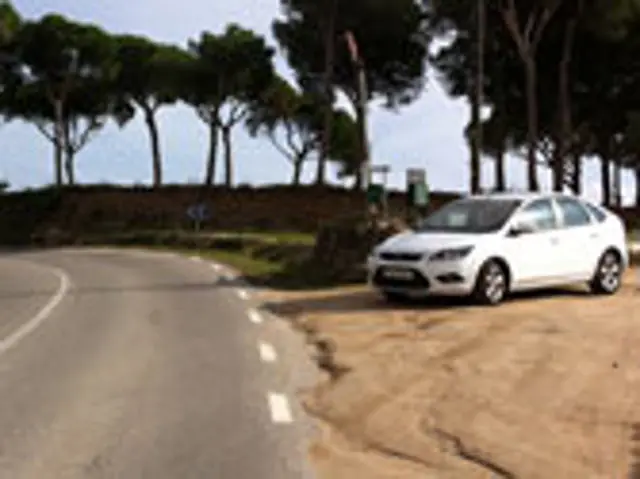
¿A qué vehículos debe ceder el paso un vehículo que sale de una vía sin pavimentar?
To which vehicles must a vehicle coming out of an unpaved road give way?
- ASolo a los vehículos que se aproximen por la izquierda.Only to vehicles approaching from the left.
- BA todos los que circulen por la vía pavimentada.To all vehicles on the paved road.
- CSolo a los vehículos a motor que se aproximen por la derecha.Only to motor vehicles approaching from the right.
ExplanationArticle 57.1 of the General Traffic Regulations states that vehicles on a paved road have priority over those coming from an unpaved road. So a vehicle coming out of an unpaved road must give way to all vehicles on the paved road, whichever direction they are coming from. This is essential for road safety and for traffic to flow properly.
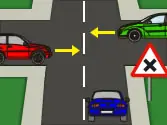
En esta situación, ¿qué vehículo pasará primero?
In this situation, which vehicle will go first?
- AEl vehículo que viene por la derecha.The vehicle coming from the right.
- BEl vehículo que va de frente.The vehicle coming from straight ahead.
- CEl vehículo que viene por la izquierda.The vehicle coming from the left.
ExplanationThe sign warns of a junction ahead where the general priority rule applies: priority to the right. So the vehicle coming from the right (green vehicle) goes first, then the vehicle coming from straight ahead (blue vehicle) and, finally, the vehicle coming from the left (red vehicle).
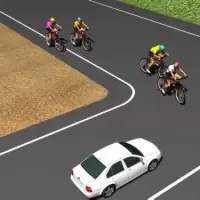
Aparece un grupo de ciclistas. ¿Quién debe pasar primero?
A group of cyclists appears. Who must go first?
- ALos ciclistas porque siempre tienen prioridad de paso.The cyclists, because they always have right of way.
- BLos ciclistas porque ya ha comenzado a pasar el primero.The cyclists, because the first one has already started to cross.
- CEl automóvil ya que los ciclistas vienen de la izquierda.The car, because the cyclists are coming from the left.
ExplanationUnder Article 64 of the General Traffic Regulations, cyclists riding in a group have priority when the first of them has already started to cross or has entered a roundabout; the group is treated as a single unit. They do not always have priority: in other cases the general rules apply.
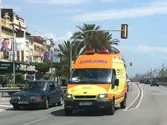
Cuando se acerque un vehículo prioritario en servicio urgente, los demás conductores deben...
When a priority vehicle on an emergency call approaches, other drivers must...
- Afacilitarle el paso llegando a detenerse si es preciso.let it through, even stopping if necessary.
- Bdetener su vehículo.stop their vehicle.
- Capartarse siempre a su derecha.always move over to their right.
ExplanationAs soon as they notice the special signals announcing that a priority vehicle is approaching, other drivers must take the appropriate measures, according to the circumstances of time and place, to let it through, normally by moving to their right or stopping if necessary. Priority vehicles travelling with only the flashing light, that is, without using the siren, have the same status and priority.
¿Debemos facilitar la incorporación en una intersección con prioridad sobre una incorporación por la derecha?
At a junction where we have priority, should we make it easier for a vehicle joining from the right?
- ASí.Yes.
- BSí, pero solo en autopistas y autovías.Yes, but only on motorways (autopistas) and dual carriageways (autovías).
- CNo.No.
ExplanationWhenever a vehicle joins the road we are driving on, we must make it as easy as possible for it to join, even though it must give way to us, because we have priority.
En un túnel suficientemente iluminado, ¿es necesario encender alguna luz en su turismo?
In a sufficiently lit tunnel, is it necessary to switch on any lights in your car?
- ASí, debo encender las de posición y las de cruce.Yes, I must switch on the sidelights and the dipped headlights.
- BNo, porque con la iluminación de la vía es suficiente.No, because the road lighting is enough.
- CSí, sólo las de posición, para advertir mi presencia a los demás usuarios.Yes, only the sidelights, to make other road users aware of me.
ExplanationEven if the tunnel is well lit, lights are compulsory at any time of day. According to Article 101.1 of the General Traffic Regulations, in sufficiently lit tunnels every motor vehicle must have its dipped (short-range) headlights on as well as its sidelights. The road lighting does not replace them.
Un coche quiere cruzar un carril bici. ¿Debe ceder el paso?
A car wants to cross a cycle lane. Must it give way?
- ASí, a los ciclistas que circulan por el carril bici.Yes, to cyclists riding in the cycle lane.
- BNo, porque el coche tiene prioridad.No, because the car has right of way.
- CSí, pero solo si el ciclista no puede frenar a tiempo.Yes, but only if the cyclist cannot brake in time.
ExplanationUnder Article 64.2 of the General Traffic Regulations, cyclists have right of way over other vehicles when they are riding in a properly signed cycle lane, cyclist crossing or hard shoulder. A car crossing the cycle lane must always give way to them, not only when they cannot brake.
¿Debe ceder el paso el vehículo que está dentro de una rotonda a un vehículo que quiere entrar por la derecha?
Must a vehicle that is already inside a roundabout give way to a vehicle that wants to enter from the right?
- ASí, cuando no hay señales de prioridad.Yes, when there are no priority signs.
- BSí, porque el que entra tiene prioridad.Yes, because the vehicle entering has priority.
- CNo, porque tiene preferencia de paso.No, because it has right of way.
ExplanationUnder Article 57.1.c of the General Traffic Regulations, at roundabouts vehicles already travelling on the circular road have priority over those wanting to enter it. That is why the vehicle inside does not give way to the one wanting to enter, even if it approaches from its right.
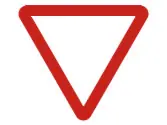
¿A qué vehículos se tiene que ceder el paso?
Which vehicles must you give way to?
- ASolo a los vehículos que se aproximen por la derecha.Only to vehicles approaching from the right.
- BSolo a los vehículos que se aproximen por la izquierda.Only to vehicles approaching from the left.
- CA todos los vehículos, tanto si se aproximan por la derecha como por la izquierda.To all vehicles, whether they approach from the right or from the left.
ExplanationThe sign means you must give way to all vehicles travelling on the road you are approaching, whether they come from the right or from the left.
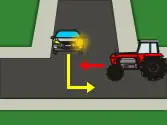
¿Qué vehículo tendrá prioridad de paso en esta intersección?
Which vehicle has right of way at this junction?
- AEl tractor agrícola.The farm tractor.
- BEl turismo.The car.
- CEl que llegue primero a la intersección.Whichever reaches the junction first.
ExplanationWhen there are no signs controlling the junction, the general right-of-way rule applies: priority to the right. So the tractor must let the car go first because the car is coming from its right, while the car has nobody on its right and does not have to give way to anyone.
Conduciendo su turismo, por una vía fuera de poblado, llega a una intersección que no está señalizada. ¿Debe dejar pasar a un grupo de ciclistas que se aproxima por su derecha?
Driving your car on a road outside a built-up area, you reach a junction with no signs or markings. Must you let a group of cyclists approaching from your right go first?
- ANo, porque circulan en grupo y está prohibido que circulen de esta forma.No, because they are riding in a group and riding like this is prohibited.
- BSí, pero sólo al ciclista que circula en primer lugar.Yes, but only the cyclist riding at the front.
- CSí, porque a efectos de prioridad de paso se consideran una misma unidad móvil.Yes, because for right-of-way purposes they are treated as a single moving unit.
ExplanationThis option is correct because, under the traffic rules, when a group of cyclists approaches, they are treated as a single moving unit. This means that, as they have priority, you must let the whole group through, not just the first cyclist.
¿Qué vehículo pasará primero en un estrechamiento sin señalizar?
Which vehicle goes first at an unsigned narrow section?
- AEl más ancho.The widest one.
- BEl que entró primero.The one that entered first.
- CEl que tenga mayor dificultad de maniobra.The one that finds it harder to manoeuvre.
ExplanationUnder Article 60 of the General Traffic Regulations (RGC), at an unsigned narrow section, the vehicle that entered first has right of way. Only if it is unclear which one entered first does the one that finds it harder to manoeuvre have right of way.
Si al llegar a una intersección nos encontramos con un ciclista, ¿en qué caso tendrá éste la prioridad?
If you meet a cyclist when you arrive at a junction, when does the cyclist have right of way?
- ACuando se acerque por la izquierda.When approaching from the left.
- BCuando se acerque por la derecha.When approaching from the right.
- CSiempre tendrá prioridad.Always.
ExplanationAt junctions without signs, drivers must give way to any vehicle approaching from their right, so this rule also applies to bicycles.
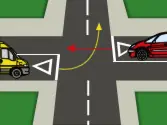
Cuando dos vehículos se aproximan en sentido contrario, y uno pretende girar a la izquierda, ¿Cuál de ellos deberá ceder el paso?
When two vehicles approach each other from opposite directions and one of them intends to turn left, which of them must give way?
- AEl vehículo que pretende seguir de frente.The vehicle that intends to go straight on.
- BEl vehículo que pretende girar a la izquierda.The vehicle that intends to turn left.
- CEl que sigue de frente, si no hay un carril de espera, reservado para hacer el giro.The one going straight on, if there is no waiting lane reserved for the turn.
ExplanationWhen you need to turn left to take a new road, you must give way to vehicles coming from the opposite direction, unless there are signs indicating otherwise.
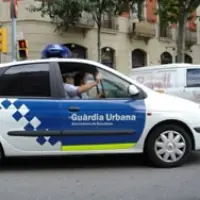
¿Cuáles de estos vehículos tienen la consideración de prioritarios?
Which of these vehicles are considered priority vehicles?
- ALos que advierten su presenciaThose that signal their presence
- BLos que circulen en servicio urgenteThose on an emergency call
- CLos que transportan a agentes de la autoridadThose carrying police officers
ExplanationUnder Article 68.2 of the General Traffic Regulations, police, fire, civil protection, rescue and medical vehicles are priority vehicles when they are on an emergency call and signal their presence with the special light and sound signals. When they are not on an emergency call, they are not priority vehicles.
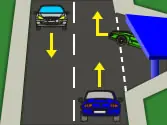
¿El vehículo azul deberá ceder el paso al vehículo verde?
Must the blue vehicle give way to the green vehicle?
- ASí, porque el vehículo verde sale de la derecha.Yes, because the green vehicle is coming from the right.
- BNo, porque el vehículo verde se incorpora saliendo de un garaje.No, because the green vehicle is joining the road from a garage.
- CSí, en aplicación de la norma general de prioridad.Yes, under the general priority rule.
ExplanationWhenever a driver enters a public road from a purely private road, from a service area or from an adjoining property, they must make sure they can do so safely, drive at a speed that lets them stop immediately, and give way to vehicles on that road, whichever direction they are travelling in. In this case the vehicle on the right is joining the traffic from a garage, so it is the one that must give way.
Un conductor detenido en un paso inferior por motivos de la circulación debe...
A driver who is stopped in an underpass because of the traffic must...
- Asalir del vehículo, al igual que los pasajeros.get out of the vehicle, as must the passengers.
- Bactivar las luces de emergencia, mantener las luces de posición encendidas y apagar el motor.switch on the hazard warning lights, keep the sidelights on and switch off the engine.
- Capagar todos los sistemas eléctricos.switch off all electrical systems.
ExplanationAccording to Article 97.3 of the General Traffic Regulations, if the vehicle is brought to a standstill in a tunnel or underpass because of the traffic, you must switch on the hazard warning lights for a short time, keep the sidelights on and switch off the engine, without leaving the vehicle.
Si debido a una avería, un vehículo queda inmovilizado en el interior de un túnel, su conductor, siempre que pueda deberá...
If a vehicle is immobilised inside a tunnel because of a breakdown, its driver, whenever possible, must...
- Asolicitar ayuda a otro conductor para remolcar el vehículo fuera del túnel.ask another driver for help to tow the vehicle out of the tunnel.
- Binmovilizar el vehículo lo más cerca posible del borde de la calzada.stop the vehicle as close as possible to the edge of the carriageway.
- Cdirigir el vehículo a la zona de emergencia más próxima al sentido de su marcha.take the vehicle to the nearest emergency lay-by in its direction of travel.
ExplanationUnder Article 97 of the General Traffic Regulations, if a vehicle is immobilised in a tunnel, its driver must take it, if possible, to the nearest emergency lay-by in their direction of travel. Only if there is none will they stop it as close as possible to the right-hand edge.
En el interior de un túnel que disponga de dos carriles para cada sentido, está prohibido...
Inside a tunnel with two lanes in each direction, what is prohibited?
- AEl cambio de sentido.Making a U-turn.
- BEl adelantamiento.Overtaking.
- CEl cambio de dirección.Changing direction.
ExplanationIn tunnels and underpasses it is prohibited to make a U-turn, as well as to stop, park and reverse (Article 95 of the General Traffic Regulations). If there are two lanes in each direction, you may overtake without entering the opposite side.
¿Qué vehículos tienen que disponer del seguro obligatorio?
Which vehicles must have compulsory insurance?
- ATodos los vehículos.All vehicles.
- BLos vehículos a motor, solamente.Motor vehicles only.
- CLos vehículos a motor y los ciclomotores.Motor vehicles and mopeds.
ExplanationMotor vehicles, mopeds and trailers of more than 750 kg must be insured.
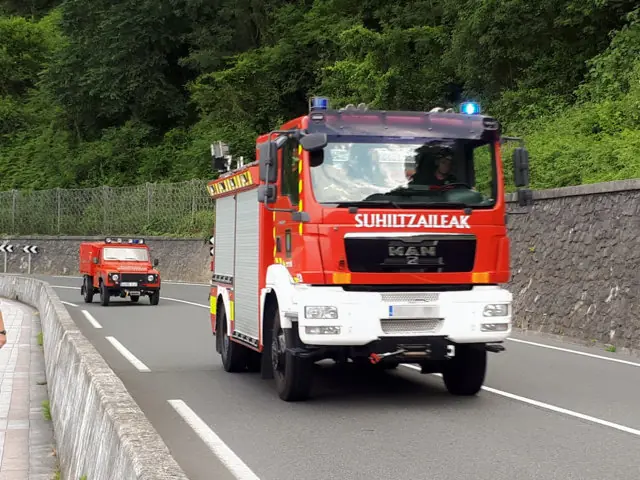
En una intersección en la que tiene prioridad, ¿debe ceder el paso a un vehículo prioritario que circule en servicio de urgencia?
At a junction where you have priority, must you give way to a priority vehicle on an emergency call?
- ANo, ya que circula por una calzada con prioridad.No, because you are travelling on a carriageway with priority.
- BSí.Yes.
- CSolo si el vehículo prioritario utiliza conjuntamente las luces y las señales ópticas.Only if the priority vehicle is using both its lights and its visual signals.
ExplanationPriority vehicles on an emergency call have priority over everyone else, even if you are travelling on the road with priority. Under Article 69 of the General Traffic Regulations (RGC), when you notice their special signals you must make way for them by moving to the right, or by stopping if necessary.
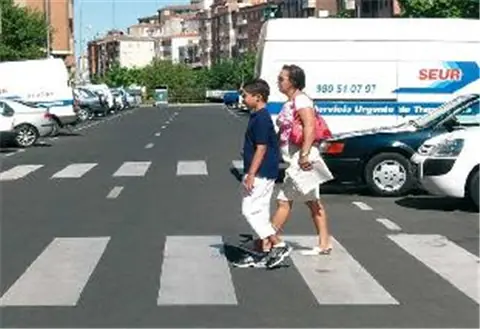
En los pasos para peatones no regulados por semáforo o agente, ¿tienen preferencia los peatones?
At pedestrian crossings not controlled by traffic lights or a traffic officer, do pedestrians have right of way?
- ANo, aunque por cortesía se les puede ceder el paso.No, although you may let them go first out of courtesy.
- BSí, en cualquier caso.Yes, in all cases.
- CSí, solamente en vías urbanas.Yes, but only on urban roads.
ExplanationAt properly marked pedestrian crossings, pedestrians have right of way over vehicles (Article 65 of the General Traffic Regulations), both on urban and non-urban roads. Only when the crossing is controlled by traffic lights or a traffic officer do you follow their instructions.
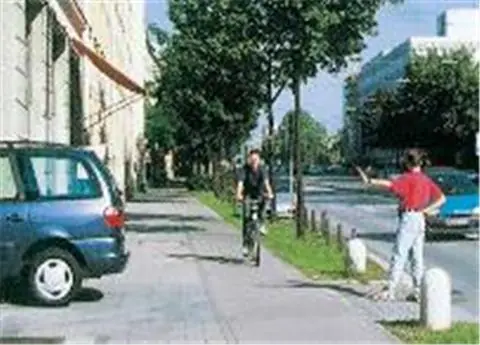
El vehículo azul sale marcha atrás de un garaje. ¿Quién tiene preferencia?
The blue vehicle is reversing out of a garage. Who has priority?
- ALa bicileta.The bicycle.
- BEl vehículo azul.The blue vehicle.
- CNinguno de los dos.Neither of them.
ExplanationA driver coming out of a garage or private property onto the road must give way to all road users travelling on it, whatever their direction. That is why the bicycle has priority over the vehicle reversing out.
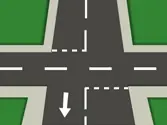
Si al llegar a una intersección se acerca un grupo de ciclistas por su lado izquierdo, ¿quién tendrá prioridad de paso?
When you arrive at a junction, a group of cyclists is approaching from your left. Who has right of way?
- AYo en aplicación de la norma general.I do, under the general rule.
- BEl grupo de ciclistas.The group of cyclists.
- CEl que llegue primero a la intersección.Whoever reaches the junction first.
ExplanationAt a junction without signs, with a group of cyclists we apply the general right-of-way rule, that is, priority to the right. In this case the cyclists must give way to us, as we are on their right, unless one of them has already started to cross the junction. Then we must wait for the whole group to pass, because they count as a single unit. Cyclists have right of way over motor vehicles: - When they are riding on a properly signed cycle lane, cyclist crossing or hard shoulder. - When a motor vehicle turns right or left to enter another road, where this is allowed, and there is a cyclist nearby. - When they are riding in a group and the first one has already started to cross or has entered a roundabout.
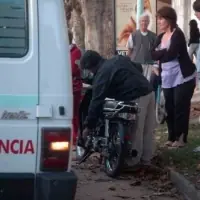
Respetar la prioridad de paso por parte de los conductores de motocicletas, ¿puede evitar accidentes?
Can respecting the right of way of motorcycle riders prevent accidents?
- ANo, porque estos conductores no dificultan la visibilidadNo, because these riders do not block visibility
- BNo, porque ocupan poco lugar en la calzadaNo, because they take up little space on the carriageway
- CSí.Yes.
ExplanationRespecting right of way, especially at junctions, for motorcycles and any other type of vehicle can stop the number of road accidents from rising, because this care prevents side and rear-end collisions at junctions.
Si por necesidades de la circulación nuestro vehículo queda inmovilizado en el interior de un túnel debemos...
If, because of traffic, our vehicle is brought to a standstill inside a tunnel, we must...
- AAbandonar el vehículo lo antes posible.Leave the vehicle as soon as possible.
- BColocar los triángulos de preseñalización de peligro.Place the warning triangles.
- CDetenernos lo más lejos posible del vehículo que nos precede.Stop as far as possible from the vehicle in front.
ExplanationIf, because of traffic, a vehicle is brought to a standstill inside a tunnel, we must stop as far as possible from the vehicle in front, switch on the hazard warning lights, keep the sidelights on, switch off the engine and not leave the vehicle.
¿Qué debe hacer si tiene una avería en un túnel?
What must you do if your vehicle breaks down in a tunnel?
- AEncender las luces largas y pedir a los ocupantes que salgan del vehículo.Switch on the main beam and ask the occupants to get out of the vehicle.
- BSi la avería permite continuar la marcha, debe seguir hasta salir del túnel o hasta una zona habilitada para emergencias.If the breakdown allows you to keep going, you must continue until you leave the tunnel or reach an area set aside for emergencies.
- CDetener el vehículo en cualquier punto del túnel, aunque la avería permita continuar la marcha.Stop the vehicle at any point in the tunnel, even if the breakdown allows you to keep going.
ExplanationArticle 97.3.f of the General Traffic Regulations (RGC) states that, if the breakdown allows you to keep moving, you must continue to the tunnel exit and, if that is not possible, to an area reserved for emergencies. Stopping at any point creates a dangerous obstacle for others.
Los vehículos que circulan por una vía pavimentada tienen prioridad sobre los que circulan por otra sin pavimentar...
Vehicles on a paved road have priority over those on an unpaved road...
- ASiempre.Always.
- BEn ausencia de señales.When there are no signs.
- CEn vías situadas fuera de poblado.On roads outside built-up areas.
ExplanationAt junctions without signs, vehicles on a paved road have right of way over those coming from an unpaved one.
Los conductores de bicicletas tienen prioridad de paso respecto a los vehículos de motor...
Cyclists have right of way over motor vehicles...
- Aen las zonas peatonales debidamente señalizadas.in properly signed pedestrian zones.
- Ben todas las intersecciones.at all junctions.
- Ccuando circulen por un paso para ciclistas.when they are using a cycle crossing.
ExplanationCyclists have priority over motor vehicles when they are using a properly marked cycle crossing, just as pedestrians have it on their crossing.
Si por necesidades de la circulación su vehículo queda detenido en un paso inferior deberá...
If, because of traffic, your vehicle is stopped in an underpass, you must...
- AApagar el motor, conectar la señal de emergencia y mantener encendidas las luces de posición.Switch off the engine, switch on the hazard warning lights and keep the sidelights on.
- BAbandonar el vehículo dirigiéndome rápidamente al refugio o salida más próxima.Leave the vehicle and go quickly to the nearest emergency shelter or exit.
- CApagar todos los sistemas eléctricos.Switch off all electrical systems.
ExplanationIf a vehicle is brought to a standstill inside a tunnel or underpass because of traffic: - The driver and passengers must not leave the vehicle. - In this case, the hazard warning lights must be switched on for a while to warn drivers behind. - The sidelights must be kept on. - The engine must be switched off. - The vehicle must be kept as far as possible from the vehicle in front.
Si al cambiar de dirección encontramos peatones cruzando la calzada sin disponer de un paso para peatones, ¿tendrán prioridad de paso?
If, when turning, we find pedestrians crossing the carriageway where there is no pedestrian crossing, do they have right of way?
- ANo, porque no existe un paso para peatones.No, because there is no pedestrian crossing.
- BSí.Yes.
- CNo, pero moderaremos la velocidad llegando incluso a detenernos en caso necesario.No, but we will slow down and even stop if necessary.
ExplanationWhen we turn into another road and there are pedestrians crossing it, we must give way to them, even if there is no pedestrian crossing.
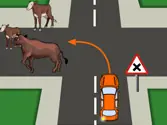
En esta situación, ¿tienen prioridad de paso los animales?
In this situation, do the animals have right of way?
- ASí, porque la señalización les da prioridad.Yes, because the signs give them right of way.
- BNo, los animales en la calzada no tienen nunca prioridad de paso.No, animals on the carriageway never have right of way.
- CSí, porque el vehículo está cambiando de dirección.Yes, because the vehicle is turning.
ExplanationAs a general rule, drivers have right of way over animals, except in the following cases: - On properly signposted livestock routes (cañadas). A cañada is a route set aside for livestock. - When drivers are turning to enter another road and there are animals crossing it, even if there is no crossing for them. - When the vehicle crosses a hard shoulder on which animals are moving and there is no livestock route for them.
Si se detiene en el interior de un túnel por más de dos minutos…
If you stop inside a tunnel for more than two minutes…
- AEs necesario apagar el motor y las luces.You must switch off the engine and the lights.
- BSe debe apagar el motor y mantener las luces de posición encendidas.You must switch off the engine and keep the sidelights on.
- CSe deben activar las luces de emergencia, únicamente.You must switch on the hazard warning lights, and nothing else.
ExplanationIf you stop inside a tunnel for more than two minutes, the correct thing to do is switch off the engine to avoid giving off unnecessary fumes and heat, which is especially important in an enclosed space like a tunnel. However, you must keep the sidelights on so that other drivers can see you, because visibility in tunnels can be limited, and the sidelights help show that you are there. We switch on the hazard warning lights briefly until another vehicle has stopped behind us.
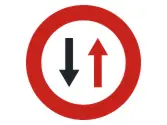
¿Quién tiene prioridad si en el paso estrecho se encuentra con otro turismo?
Who has right of way if you meet another car at the narrow section?
- ASu vehículo.Your vehicle.
- BEl que tenga mayor dificultad de maniobra.Whoever finds it harder to manoeuvre.
- CEl otro turismo.The other car.
ExplanationWhen approaching a narrow section, depending on the side we come from, we may find one of two signs. The first, the one in the question, shows that oncoming traffic has priority and prohibits us from entering the narrow section until we can get through it without making oncoming vehicles stop. The second would show that we have right of way over oncoming vehicles.
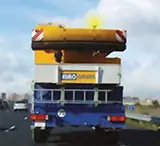
La luz rotativa que llevan los vehículos especiales, ¿les concede prioridad frente a los demás conductores?
Does the rotating beacon on special vehicles give them priority over other drivers?
- ANo, sólo señaliza su situación.No, it only shows where they are.
- BSí, en cualquier caso.Yes, in any case.
- CSí, cuando circulan con ella encendida.Yes, when they are driving with it switched on.
ExplanationSpecial vehicles or vehicles carrying abnormal loads, among others, must use an amber rotating beacon, visible from all directions at a distance of 100 m, both day and night, whenever they travel on public roads at a speed not exceeding 40 kilometres per hour. If this V-2 light signal breaks down, they must use the dipped headlights together with the hazard warning lights. This light only shows where the vehicles are; it does not give them priority.
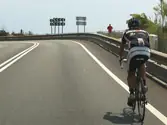
¿Cuándo tendrán preferencia los ciclistas respecto a los vehículos de motor?
When do cyclists have right of way over motor vehicles?
- ASiempre en todos los casos.Always, in every case.
- BCuando circulando en grupo, el primero haya iniciado ya el cruce.When they are riding in a group and the first cyclist has already started to cross.
- CNunca, siempre tendrán que ceder el paso.Never; they always have to give way.
ExplanationCyclists have right of way over motor vehicles, among other cases, when they are riding in a group and the first cyclist has already started to cross or has entered a roundabout.
Los peatones tendrán preferencia sobre los vehículos cuando éstos...
Pedestrians have priority over vehicles when they...
- ATransiten por la calzada.are walking on the carriageway.
- BEstén dentro de poblado.are in a built-up area.
- CEstén circulando por un arcén sin zona peatonal y los vehículos lo crucen.are walking on a hard shoulder with no pedestrian area and vehicles cross it.
ExplanationPedestrians have priority at pedestrian crossings; when they are about to get on or have got off a bus at a signposted stop; when they form school groups, organised processions or troops in formation; when they are in pedestrian areas; when they are walking on the hard shoulder and a vehicle crosses it; and when a vehicle turns to enter another road and pedestrians are crossing it.
¿Qué vehículos deben disponer del seguro obligatorio?
Which vehicles must have compulsory insurance?
- ASolo los vehículos automóvilesOnly motor cars.
- BTodos los vehículos.All vehicles.
- CLos vehículos de motor, ciclomotores, remolques y semiremolques.Motor vehicles, mopeds, trailers and semi-trailers.
ExplanationEvery owner of a motor vehicle, moped, or trailer or semi-trailer with a MAM of more than 750 kg, whether or not it is coupled, must have insurance for each vehicle registered in their name.
Si por motivos del tráfico un vehículo permanece detenido dentro de un túnel más de dos minutos, el conductor deberá:
If, because of traffic, a vehicle stays stopped inside a tunnel for more than two minutes, the driver must:
- ADejar el motor encendido y poner las luces de emergencia.Leave the engine running and switch on the hazard warning lights.
- BApagar el motor y las luces de posición.Switch off the engine and the sidelights.
- CApagar el motor y dejar las luces de posición encendidas.Switch off the engine and leave the sidelights on.
ExplanationUnder Article 115.2 of the General Traffic Regulations, anyone who has to stay stopped in a tunnel for more than two minutes must switch off the engine until they can move on, keeping the sidelights on so that others can see the vehicle.
Si dos vehículos que circulan en sentido contrario encuentran un paso estrecho, en un tramo de gran pendiente, y no pueden pasar a la vez, ¿cuál tendrá preferencia?
If two vehicles travelling in opposite directions come to a narrow stretch on a steep slope and cannot pass each other, which one has right of way?
- AEl que circula en sentido ascendente.The one going uphill.
- BEl que circula en sentido descendente.The one going downhill.
- CEl que pese más.The heavier one.
ExplanationIf two vehicles travelling in opposite directions cannot pass each other on a steep stretch (a gradient of at least 7%), the vehicle going uphill has right of way.
All topics
- Definitions
- Documents and penalty points
- The driver's condition
- Duties of drivers and pedestrians
- Vehicle safety devices
- Vehicle controls and equipment
- Vehicle lights and horn
- Traffic signs, markings and signals
- The road and its lanes
- Speed and distances
- Manoeuvres
- Carrying passengers and loads
- Driving safely in difficult conditions
- Vehicle mechanics and maintenance
- Road accidents and first aid
- Defensive and eco-driving
Independent app: not affiliated with or endorsed by the DGT (Spain's Directorate-General for Traffic) or the Ministry of the Interior. The official exam is booked with the DGT and taken at its test centres. The questions here are practice material; the DGT's official question bank is not public.
Basado en datos de la Agencia Estatal Boletín Oficial del Estado (https://www.boe.es). Textos consolidados de carácter meramente informativo. La AEBOE no patrocina ni respalda este sitio.
Parte de las preguntas procede de los tests de la revista «Tráfico y Seguridad Vial» de la DGT, reproducidos con indicación de la fuente.