
DGT test · 961 questions
Speed and distances
Speed limits by road and vehicle type, adapting speed to conditions, safe following distance and stopping distance.
20 random questions
Loading questions…
Questions in this topic, with answers
961 questions, 50 per page, with the correct answer and the explanation. Page 1 of 20.
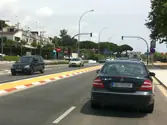
A la hora de determinar la distancia de seguridad con el vehículo que circula delante...
When deciding on the safe distance to keep from the vehicle in front...
- Adebe tener en cuenta la velocidad, la visibilidad y el estado de la calzada.you must take into account speed, visibility and the condition of the carriageway.
- Bdebe tener en cuenta las características del vehículo que circula delante.you must take into account the characteristics of the vehicle in front.
- Cdebe tener en cuenta la velocidad, exclusivamente.you must take into account speed only.
ExplanationWhen following other vehicles, drivers must leave a distance that allows them to stop without a collision if the vehicle in front brakes suddenly. When deciding on this distance, they must take into account especially their speed and the grip and braking conditions.
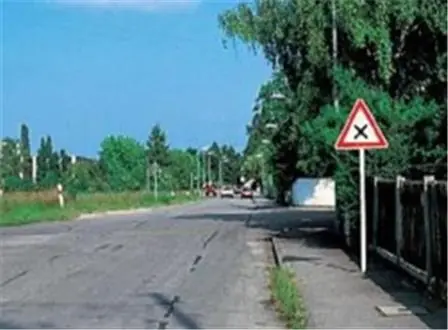
Cuando se aproxime a un cruce con visibilidad nula, ¿debe moderar su velocidad?
When you approach a junction with zero visibility, must you reduce your speed?
- ASí, y no tengo que prestar atención al límite de velocidad.Yes, and I do not have to pay attention to the speed limit.
- BSí, y si hay señal que no establezca la prioridad, no debo superar los 50 km/h.Yes, and if there is a sign that does not establish priority, I must not exceed 50 km/h.
- CNo, siempre y cuando haya una señal de ceda el paso.No, as long as there is a give way sign.
ExplanationWhen approaching a junction where you do not have priority, you must reduce your speed. Under Article 46 of the General Traffic Regulations, if the junction is signed and visibility is practically zero, you must not exceed 50 km/h, even if the road's limit is higher.
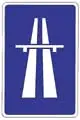
Si circulo por una autopista con mi turismo, ¿cuál será la velocidad mínima permitida?
If I am driving my car on a motorway (autopista), what is the minimum speed allowed?
- A50 km/hora.50 km/h.
- B60 km/hora.60 km/h.
- C70 km/hora.70 km/h.
ExplanationOn motorways (autopistas) and dual carriageways (autovías), it is prohibited to drive motor vehicles at less than 60 km/h, even if there are no other vehicles, unless the circumstances justify it. On other roads the minimum speed is half the vehicle's general maximum speed.
¿Cuál será la velocidad máxima de un triciclo circulando por una carretera convencional?
What is the maximum speed of a tricycle on a conventional road?
- A60 km/h.60 km/h.
- B45 km/h.45 km/h.
- C70 km/h.70 km/h.
ExplanationUnder Article 48.1.h of the General Traffic Regulations (RGC), three-wheeled vehicles and quadricycles have a limit of 70 km/h on any road where they are allowed to travel. In built-up areas, the urban limit for the road also applies if it is lower.
Ud. utiliza el carril que, por motivos de fluidez, está habilitado para circular en sentido contrario al habitual. ¿A qué velocidad máxima le está permitido circular por el mismo si conduce un turismo?
You are using a lane that has been opened for traffic in the opposite direction to the usual one to keep traffic flowing. What is the maximum speed at which you may drive in it if you are driving a car?
- AEn este caso, como está instalado en una autopista o autovía, a la que le corresponde a estas vías.In this case, as it is on a motorway (autopista) or dual carriageway (autovía), the speed that applies to these roads.
- BA 80 kilómetros por hora.80 kilometres per hour.
- CA 60 kilómetros por hora.60 kilometres per hour.
ExplanationThis option is correct because, when you use a lane opened for traffic in the opposite direction to the usual one, the maximum speed for a car is 80 kilometres per hour. This rule exists to keep traffic safe and flowing in special situations.
La distancia de reacción depende...
Reaction distance depends on...
- ADel estado de la vía.the condition of the road.
- BDe la velocidad.speed.
- CDel estado de los frenos del vehículo.the condition of the vehicle's brakes.
ExplanationReaction distance depends on the driver's reaction time and on the speed. For example, with a reaction time of 0.75 seconds at 50 km/h, we will have travelled 10 metres before starting to brake.
¿Hasta cuánto puede aumentar la distancia de frenado ante la presencia de hielo en la calzada?
How much can braking distance increase when there is ice on the carriageway?
- AHasta 2 veces más que si la calzada está seca.Up to 2 times more than on a dry carriageway.
- BHasta 5 veces más que si la calzada está seca.Up to 5 times more than on a dry carriageway.
- CHasta 10 veces más que si la calzada está seca.Up to 10 times more than on a dry carriageway.
ExplanationBraking distance is the distance the vehicle travels from the moment the driver applies the brake until it stops. It can vary depending on: the speed you are travelling at; the condition of the vehicle's tyres, suspension and brakes; the vehicle's load; the condition of the road surface; the weather conditions on the road. On a wet surface, braking distance can be up to twice as long as on a dry surface, and up to ten times longer when there is ice on the carriageway.
¿Cuál es la velocidad máxima en la autopista para un vehículo mixto adaptable?
What is the maximum speed on a motorway (autopista) for a convertible dual-purpose vehicle?
- A100 km/h.100 km/h.
- B120 km/h.120 km/h.
- C90 km/h.90 km/h.
ExplanationSpeed limits for convertible dual-purpose vehicles depend on the type of road. In Spain, the maximum speed for a convertible dual-purpose vehicle on a motorway (autopista) or dual carriageway (autovía) is 100 km/h, while for cars and motorcycles it is 120 km/h. This limit is set by Article 48 of the General Traffic Regulations (RGC). Exceeding the permitted speed can lead to a fine, the amount of which depends on how far the limit was exceeded.
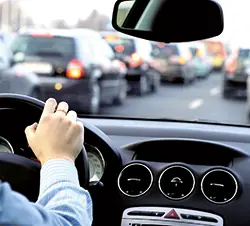
¿Por qué es aconsejable circular en vías urbanas respetando en todo momento la velocidad establecida para cada tramo de vía?
Why is it advisable, on urban roads, to keep to the speed set for each stretch of road at all times?
- APorque el motor del vehículo consume menos combustible si trabaja a altas revoluciones.Because the engine uses less fuel when it runs at high revs.
- BPorque las multas por exceso de velocidad en vías urbanas son más caras que en vías interurbanas.Because speeding fines on urban roads are higher than on interurban roads.
- CPorque la mayoría de los atropellos con muerte del peatón se producen en vías urbanas.Because most accidents in which a pedestrian is hit and killed happen on urban roads.
ExplanationMost accidents in which pedestrians are hit and killed happen on urban roads, where vehicles and pedestrians share the space: keeping to the limit on each stretch gives you room to stop and makes an impact less likely to be fatal.
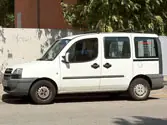
¿Cuál será la velocidad máxima de un vehículo mixto adaptable circulando por una autopista?
What is the maximum speed of an adaptable mixed-use vehicle on a motorway (autopista)?
- A100 km/h.100 km/h.
- B120 km/h.120 km/h.
- C90 km/h.90 km/h.
ExplanationThe speed of an adaptable mixed-use vehicle on a motorway (autopista) or dual carriageway (autovía) is 100 km/h.
¿Tendremos que adecuar la velocidad durante la noche?
Should you adapt your speed at night?
- ANo, especialmente por ser durante la noche.No, especially because it is night-time.
- BSí.Yes.
- CSolamente si existen circunstancias meteorológicas o ambientales adversas.Only if there are adverse weather or environmental conditions.
ExplanationAt night you must adapt your speed to your field of vision, so that you can stop the vehicle within the lit area.
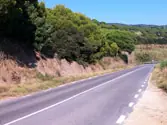
¿Qué velocidad se considera que es anormalmente reducida circulando por esta vía?
What speed counts as abnormally low on this road?
- ALa inferior a 60 km/h.Below 60 km/h.
- BLa inferior a 45 km/h.Below 45 km/h.
- CLa inferior a 50 km/h.Below 50 km/h.
ExplanationConventional roads have a speed limit of 90 km/h, so their minimum speed is 45 km/h, and any speed below this counts as abnormally low.
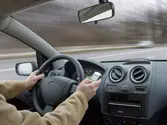
La distancia de detención, se verá modificada por...
Stopping distance will be affected by...
- Ael mal estado de la vía, solamente.only the poor condition of the road.
- Bel mal estado del vehículo, únicamente.only the poor condition of the vehicle.
- Cel estado del conductor y del mal estado de la vía y el vehículo.the condition of the driver and the poor condition of the road and the vehicle.
ExplanationStopping distance is the distance travelled during the reaction time plus the braking distance, so it is affected by the condition of the driver, the vehicle and the road.
¿A qué velocidad máxima puede adelantar un turismo en una carretera convencional?
What is the maximum speed at which a car may overtake on a conventional road?
- A90 km/h90 km/h
- B110 km/h110 km/h
- C120 km/h120 km/h
ExplanationOn a conventional road the general maximum speed for a car is 90 km/h (Article 48.1.a of the General Traffic Regulations), and you may not exceed it to overtake: the option of going 20 km/h over it was abolished in 2022.
¿Cuál es la velocidad mínima en una autovía que discurre por suelo urbano?
What is the minimum speed on a dual carriageway (autovía) that runs through urban land?
- A50 km/h50 km/h
- B60 km/h60 km/h
- C25 km/h25 km/h
ExplanationOn motorways (autopistas) and dual carriageways (autovías) the minimum speed is 60 km/h, also when they run through urban land (Article 49 of the General Traffic Regulations). The rule of half the general speed limit applies on other roads.
¿Cuál es la velocidad máxima para un turismo que arrastra un remolque en una autopista dentro de poblado?
What is the maximum speed for a car towing a trailer on a motorway (autopista) inside a built-up area?
- A60 km/h.60 km/h.
- B70 km/h.70 km/h.
- C80 km/h.80 km/h.
ExplanationThe general maximum speed for vehicles on a motorway (autopista) or dual carriageway (autovía) inside a built-up area is 80 km/h.

El chaleco reflectante de uso obligatorio al descender del vehículo en caso de inmovilización en vía interurbana, ¿a qué distancia deberá ser visible como mínimo?
The reflective vest that must be worn when getting out of a vehicle that has stopped on an interurban road must be visible from at least what distance?
- A100 metros.100 metres.
- B150 metros.150 metres.
- C50 metros.50 metres.
ExplanationThe approved reflective vest must be visible from a distance of at least 150 metres.
¿Qué debe hacer el conductor de un vehículo de gran tamaño para facilitar que otro vehículo lo adelante?
What must the driver of a large vehicle do to make it easier for another vehicle to overtake?
- AReducir la velocidad o apartarse al arcén si es posible.Reduce speed or move onto the hard shoulder if possible.
- BNada. La responsabilidad del adelantamiento siempre corresponde al que adelanta.Nothing. Responsibility for overtaking always lies with the driver who overtakes.
- CDetenerse en el arcén obligatoriamente.Stop on the hard shoulder in all cases.
ExplanationUnder Article 86 of the General Traffic Regulations, a driver who notices that a vehicle behind intends to overtake must keep close to the right-hand edge of the carriageway and, if possible, move onto the hard shoulder. This lets the other vehicle overtake safely without its manoeuvre being hindered. The correct answer is to slow down or move onto the hard shoulder if it is usable, because this makes overtaking easier and helps road safety.
¿La velocidad incide de forma especial en la gravedad en los accidentes de tráfico?
Does speed have a particular effect on how serious road traffic accidents are?
- ASólo en el caso de atropellos en peatones.Only when pedestrians are hit.
- BSí.Yes.
- CNo.No.
ExplanationExcessive speed is responsible for 1 in every 4 accidents, and it also makes them more serious.
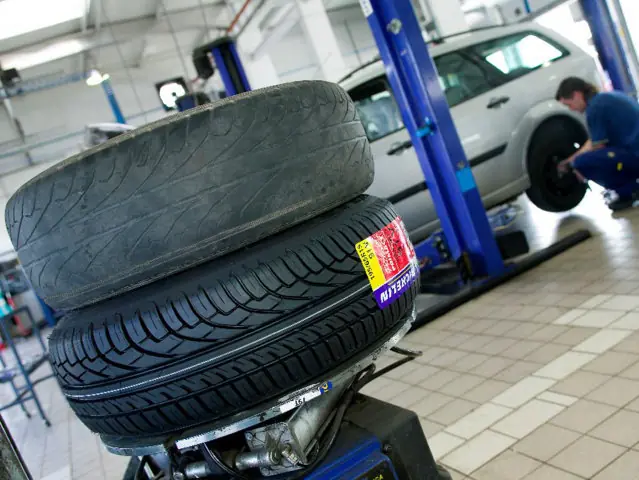
El estado de los neumáticos, ¿influye en la distancia de frenado?
Does the condition of the tyres affect the braking distance?
- ASí; los neumáticos en buen estado se agarran mejor al suelo y el vehículo frena mejor.Yes; tyres in good condition grip the road better and the vehicle brakes better.
- BSolo influye cuando la profundidad del dibujo es inferior a 1,6 milímetros.It only has an effect when the tread depth is less than 1.6 millimetres.
- CNo; la distancia de frenado depende solo del estado de los frenos.No; the braking distance depends only on the condition of the brakes.
ExplanationThe condition of the tyres is a key factor in vehicle safety, because they are the only point of contact with the road. Their grip directly affects how well the vehicle brakes. A tyre in good condition, with the right pressure and tread, improves stability and reduces the braking distance. On the other hand, if the tyres are worn or in poor condition, grip is lost, especially on wet surfaces. That is why maintaining them is essential for safe driving.
Los límites de velocidad establecidos en las vías tienen como objetivo...
The aim of the speed limits set on roads is...
- Agarantizar la seguridad únicamente.to ensure safety only.
- Bgarantizar la seguridad y la fluidez.to ensure safety and traffic flow.
- Cadaptar la conducción a las nuevas tecnologías de los vehículos y el medio ambiente.to adapt driving to new vehicle technologies and the environment.
ExplanationBy adapting our vehicle's speed to the conditions of the road and its surroundings, the vehicle and the driver, we not only avoid the risks directly related to speed but also help traffic flow.
Con su turismo circula por una autovía detrás de un conjunto formado por un turismo y un remolque al que desea adelantar. ¿Le está permitido adelantarlo si el turismo con remolque circula a la velocidad máxima permitida para este tipo de vehículos?
In your car, you are driving on a dual carriageway (autovía) behind a combination made up of a car and a trailer, which you want to overtake. May you overtake it if the car with the trailer is driving at the maximum speed allowed for this type of vehicle?
- ASí, siempre que, al adelantarlo, no supere la velocidad de 120 kilómetros por hora.Yes, provided you do not exceed 120 kilometres per hour while overtaking.
- BSí, siempre que, al adelantarlo, no supere la velocidad de 100 kilómetros por hora.Yes, provided you do not exceed 100 kilometres per hour while overtaking.
- CNo, porque el conjunto de vehículos circula a la velocidad máxima permitida.No, because the combination is driving at the maximum speed allowed.
ExplanationYou may overtake the car with the trailer provided you do not exceed 120 kilometres per hour. Although the car with the trailer is driving at its own maximum permitted speed, you as a driver may overtake it, always keeping to the speed limit that applies to your vehicle on the dual carriageway.
¿Cuál es la velocidad máxima de una autocaravana de hasta 3500 kg circulando por una autopista?
What is the maximum speed on a motorway (autopista) for a motorhome of up to 3,500 kg?
- A90 km/h.90 km/h.
- B100 km/h.100 km/h.
- C120 km/h.120 km/h.
ExplanationCars, motorcycles, motorhomes with a maximum authorised mass (MAM) of up to 3,500 kg and pick-ups may travel on motorways at a maximum speed of 120 km/h. When a motorhome's MAM is over 3,500 kg, its maximum speed allowed on a motorway is 90 km/h.
Si el vehículo que nos sigue lo hace demasiado cerca de nosotros, ¿qué haremos?
If the vehicle behind us is following too closely, what should we do?
- AAumentar la distancia de frenado.Increase the braking distance.
- BAumentar la distancia de seguridad.Increase the safe distance.
- CNada, la culpa en caso de colisión por alcance será del vehículo que nos sigue.Nothing; if it runs into the back of us, it will be the other driver's fault.
ExplanationIf the vehicle behind is following too closely, we increase the safe distance from the vehicle in front, to make up for the distance that the vehicle behind is not leaving.
¿Qué relación hay entre la visión y la velocidad?
What is the link between vision and speed?
- AA mayor velocidad mayor visión.The higher the speed, the better the vision.
- BA menor velocidad menor visión.The lower the speed, the poorer the vision.
- CA mayor velocidad menor visión.The higher the speed, the poorer the vision.
ExplanationAs speed increases, the field of vision narrows, because of what is called the tunnel effect.
¿La velocidad a la que va un vehículo influye en la distancia de reacción del conductor?
Does the speed of a vehicle affect the driver's reaction distance?
- ANo.No.
- BSí. Porque mientras el conductor reacciona, el vehículo recorre más distancia.Yes. Because while the driver is reacting, the vehicle covers more distance.
- CNo. Sólo afecta a la distancia de frenado.No. It only affects the braking distance.
ExplanationThe reaction distance is the distance the vehicle covers from the moment the driver notices the danger until they start braking. As the reaction time is similar, at a higher speed more metres are covered in that time: speed affects the reaction distance and also the braking distance.
¿Cuál es la velocidad mínima de un camión circulando por una autopista?
What is the minimum speed for a lorry on a motorway (autopista)?
- A45 km/h.45 km/h.
- B50 km/h.50 km/h.
- C60 km/h.60 km/h.
ExplanationThe minimum speed on a motorway (autopista) is 60 km/h.
Se acerca un autobús del que bajan niños. ¿Qué debe hacer?
You are approaching a bus from which children are getting off. What must you do?
- AModerar la velocidad sólo cuando los niños pasen a la calzada.Slow down only when the children step onto the carriageway.
- BModerar la velocidad, hasta detenerme, cuando sea necesario.Slow down, and even stop, when necessary.
- CModerar la velocidad a 50 kilométros por hora.Slow down to 50 kilometres per hour.
ExplanationWhen approaching a bus from which children are getting off, you must slow down and even stop if necessary, because they may cross in front of or behind the bus unexpectedly. Pedestrians getting off a bus at a stop have right of way.
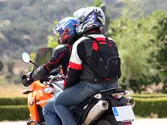
Si en la motocicleta transportamos un pasajero, la distancia de frenado...
If we carry a passenger on the motorcycle, the braking distance...
- AAumenta.Increases.
- BDisminuye.Decreases.
- CNo varía.Does not change.
ExplanationCarrying a passenger increases the weight, so the motorcycle is harder to stop and the braking distance increases.
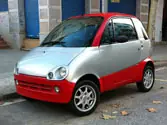
¿En qué caso la distancia lateral al adelantar a un ciclista será como mínimo de 1,50 metros?
In which case must the side gap when overtaking a cyclist be at least 1.50 metres?
- ATanto dentro como fuera de poblado.Both inside and outside built-up areas.
- BSolo cuando circule dentro de poblado.Only inside built-up areas.
- CSolo cuando circule fuera de poblado.Only outside built-up areas.
ExplanationAccording to Article 85.4 of the General Traffic Regulations (RGC), as worded by Royal Decree 518/2026, when overtaking cyclists you must leave a safe side gap of at least 1.5 metres, both inside and outside built-up areas. Outside built-up areas, you must also reduce your speed by at least 20 km/h below the road's limit.
Una motocicleta, al adelantar a otro vehículo fuera de poblado, debe dejar una separación lateral no inferior a …
A motorcycle overtaking another vehicle outside built-up areas must leave a side clearance of no less than …
- A0,50 metros.0.50 metres.
- B1,50 metros.1.50 metres.
- C1 metro.1 metre.
ExplanationUnder Article 85.5 of the General Traffic Regulations, when the rider of a two-wheeled vehicle overtakes any other vehicle outside built-up areas, they must leave a side clearance of no less than 1.50 metres between the two.
¿La velocidad elevada aumenta la probabilidad de un accidente?
Does high speed increase the likelihood of an accident?
- ASí.Yes.
- BNo.No.
- CDepende de la vía, no es así en autopistas y autovías.It depends on the road; not on motorways and dual carriageways.
ExplanationThe higher the speed, the more distance you cover during your reaction time, the longer the braking distance and the narrower your field of vision, so the likelihood of an accident increases, and so does its severity. This happens on every type of road, including motorways and dual carriageways.
Al conducir un coche por una carretera convencional, ¿cuál es la velocidad máxima para adelantar?
When driving a car on a conventional road, what is the maximum speed for overtaking?
- A90 km/h90 km/h
- B100 km/h más 20 km/h para adelantar.100 km/h plus 20 km/h to overtake.
- C120 km/h más 20 km/h para adelantar.120 km/h plus 20 km/h to overtake.
ExplanationUnder Article 48.1.a of the General Traffic Regulations, a car may drive at a maximum of 90 km/h on a conventional road, and that limit also applies when overtaking: the 20 km/h margin for overtaking was abolished on 21 March 2022.
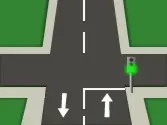
¿Cuál es la velocidad máxima en una vía urbana con un único carril por sentido de circulación?
What is the maximum speed on an urban road with only one lane in each direction?
- A20 kilómetros por hora.20 kilometres per hour.
- B30 kilómetros por hora.30 kilometres per hour.
- C50 kilómetros por hora.50 kilometres per hour.
ExplanationThe general speed limits on urban roads depend on the type of carriageway: a) 20 km/h on single-level streets where the carriageway and pavement are at the same level; b) 30 km/h on roads with only one lane in each direction; c) 50 km/h on roads with two or more lanes in each direction (40 km/h for vehicles carrying dangerous goods). Lanes reserved for certain users or only for public transport are not counted for this purpose. The local authority may lower or raise these limits with specific signs. On travesías the limit is 50 km/h for all vehicles, except vehicles carrying dangerous goods, which have a limit of 40 km/h. The local authority may lower this limit by agreement with the road owner, with specific signs.
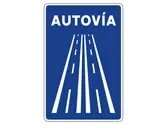
Con una motocicleta de hasta 125 cm³, ¿a qué velocidad máxima puede circular por una autovía?
On a motorcycle of up to 125 cm³, what is the maximum speed at which you may ride on a dual carriageway (autovía)?
- AA 120 km/h.120 km/h.
- BA 90 km/h.90 km/h.
- CA 80 km/h.80 km/h.
ExplanationThe maximum speed that may not be exceeded on motorways (autopistas) and dual carriageways (autovías) by cars, motorcycles, motorhomes with a MAM of less than 3,500 kg and pick-ups is 120 km/h.
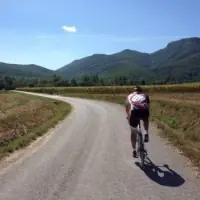
¿Cuál es la velocidad máxima a la que podrá circular una bicicleta fuera de poblado?
What is the maximum speed at which a bicycle may travel outside built-up areas?
- A40 km/hora, excepto en aquellos tramos de vía en que sea posible desarrollar una velocidad superior40 km/h, except on stretches of road where a higher speed is possible
- B50 km/hora, excepto en aquellos tramos de vía en que sea posible desarrollar una velocidad superior50 km/h, except on stretches of road where a higher speed is possible
- C45 km/hora, excepto en aquellos tramos de vía en que sea posible desarrollar una velocidad superior45 km/h, except on stretches of road where a higher speed is possible
ExplanationThe maximum speed that cycles, two- and three-wheeled mopeds and light quadricycles must not exceed on roads outside built-up areas is 45 kilometres per hour, except on stretches of road where a higher speed is possible.
¿Cuál será la velocidad máxima circulando por un carril en sentido contrario al habitual?
What is the maximum speed when driving in a lane running against its usual direction?
- A80 km/h.80 km/h.
- B60 km/h.60 km/h.
- CLa velocidad máxima genérica de la vía.The general maximum speed for that road.
ExplanationWhen driving in a lane running against its usual direction, the maximum speed is 80 km/h and the minimum 60 km/h, and we must use dipped headlights, both by day and by night.
¿Es peligroso conducir a velocidad elevada?
Is it dangerous to drive at high speed?
- ASí, en el caso de que la vía no esté en buen estado.Yes, if the road is not in good condition.
- BNo, porque los vehículos actuales están diseñados para circular a más velocidad que la limitada.No, because modern vehicles are designed to travel faster than the speed limit.
- CSí, porque a más velocidad más difícil es controlar el vehículo frente a un imprevisto.Yes, because the faster you go, the harder it is to control the vehicle if something unexpected happens.
ExplanationThe higher the speed, the harder it is to control the vehicle and the more serious the consequences of a possible accident.
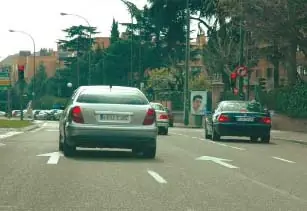
En poblado, en una vía con dos o más carriles por sentido, ¿cuál es la velocidad máxima permitida para un turismo con remolque?
In a built-up area, on a road with two or more lanes in each direction, what is the maximum speed allowed for a car towing a trailer?
- A40 kilómetros por hora.40 kilometres per hour.
- B60 kilómetros por hora.60 kilometres per hour.
- C50 kilómetros por hora.50 kilometres per hour.
ExplanationIn a built-up area a trailer does not change the limit: the road's general limit applies, which is a maximum of 50 km/h on roads with two or more lanes in each direction, 30 km/h with a single lane and 20 km/h on single-level (shared) streets (Article 50 of the General Traffic Regulations). The 40 km/h limit is for vehicles carrying dangerous goods.
¿Cuál será la velocidad máxima permitida para un camión de menos de 3500 kg circulando por una autopista?
What is the maximum speed allowed for a lorry of less than 3,500 kg on a motorway (autopista)?
- A100 km/h.100 km/h.
- B90 km/h.90 km/h.
- C80 km/h.80 km/h.
ExplanationLorries, whatever their maximum mass, have a maximum speed limit of 90 km/h on motorways (autopistas).
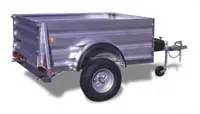
Un turismo, el cual lleva enganchado un remolque de menos de 750 kg de m.m.a, ¿puede superar en 20 km/h la velocidad genérica, si circula por una carretera convencional?
May a car towing a trailer with a MAM of less than 750 kg exceed the general speed limit by 20 km/h on a conventional road?
- ASí, siempre.Yes, always.
- BSí, si es carretera convencional.Yes, if it is a conventional road.
- CNo, ya que está prohibido.No, because it is prohibited.
ExplanationThe option of exceeding the limit by 20 km/h to overtake on conventional roads was abolished by Law 18/2021, with effect from 21 March 2022. A car towing a trailer may not exceed 80 km/h on a conventional road, not even when overtaking.
Al circular por autopista con un turismo que arrastra un remolque, la velocidad máxima es:
When driving a car towing a trailer on a motorway (autopista), the maximum speed is:
- ALa misma que sin remolque (120 km/h)The same as without a trailer (120 km/h)
- B90 km/h90 km/h
- C80 km/h80 km/h
ExplanationUnder Article 48.1.a) of the General Traffic Regulations, motor cars towing a trailer have a maximum of 90 km/h on motorways (autopistas) and dual carriageways (autovías) and 80 km/h on conventional roads, whatever the mass of the trailer.
¿Cuál será la velocidad máxima para un turismo, como norma general, al circular por una travesía?
As a general rule, what is the maximum speed for a car when driving on a travesía (stretch of road through a town)?
- A40 km/h.40 km/h.
- B50 km/h.50 km/h.
- C60 km/h.60 km/h.
ExplanationAs a travesía is a road inside a built-up area, its general speed limit is 50 km/h.
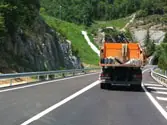
En una carretera convencional con un carril para cada sentido y delimitado con línea continúa, si delante nuestro circula un camión a una velocidad anormalmente reducida, ¿lo podremos adelantar?
On a conventional road with one lane in each direction separated by a solid line, if a lorry in front of us is moving at an abnormally low speed, may we overtake it?
- ASí, porque se considera un rebasamiento.Yes, because it counts as passing (rebasamiento).
- BNo.No.
- CSí, aunque tengamos que pisar la línea continúa.Yes, even if we have to drive over the solid line.
ExplanationFor it to count as passing (rebasamiento), which would let us go past the lorry even driving over the solid line, the lorry would have to be completely stationary. If the lorry is moving, even at an abnormally low speed, it counts as overtaking, and we may not do it.
Un vehículo especial que arrastra un remolque, ¿qué velocidad máxima no debe rebasar fuera de poblado?
What maximum speed must a special vehicle towing a trailer not exceed outside built-up areas?
- A25 kilómetros por hora.25 kilometres per hour.
- B70 kilómetros por hora.70 kilometres per hour.
- C40 kilómetros por hora.40 kilometres per hour.
ExplanationUnder Article 48 of the General Traffic Regulations, special vehicles towing a trailer, those without brake lights and two-wheel tractors may not exceed 25 km/h outside built-up areas. The 40 and 70 km/h limits apply to other special vehicles.
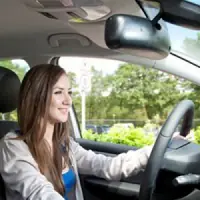
Cualquier conductor está obligado a…
Every driver must...
- ACircular siempre a la velocidad máxima de la vía.Always drive at the road's maximum speed.
- BCircular siempre por debajo de la velocidad máxima de la vía.Always drive below the road's maximum speed.
- CComportarse de una manera que no dificulte indebidamente la circulación.Behave in a way that does not unduly hinder traffic.
ExplanationArticle 2 of the General Traffic Regulations (RGC) requires all road users to behave in a way that does not unduly obstruct traffic or cause danger, harm or unnecessary nuisance. There is no obligation to always drive at the maximum or always below it.
Circula por una autovía y sufre una avería que le obliga a ir muy despacio. ¿Qué debe hacer?
You are driving on a dual carriageway (autovía) and have a breakdown that forces you to go very slowly. What should you do?
- ASeguir hasta el destino con las luces de cruce encendidas.Continue to your destination with the dipped headlights on.
- BNo detenerse bajo ninguna circunstancia.Not stop under any circumstances.
- CCircular hasta la primera salida por la que pueda abandonar la autovía.Drive to the first exit where you can leave the dual carriageway.
ExplanationUnder Article 38.2 of the General Traffic Regulations, a driver who, because of an emergency, has to drive on a motorway (autopista) or dual carriageway at an abnormally low speed must leave it at the first exit. Meanwhile, if there is a risk of being hit from behind, they keep the hazard warning lights on (Article 49.3).
Al conducir una motocicleta, debe tener en cuenta que...
When riding a motorcycle, you must bear in mind that...
- AA mayor velocidad, es más difícil mantener el equilibrio.The higher the speed, the harder it is to keep your balance.
- BEs menos estable y más frágil que otros vehículos.It is less stable and more vulnerable than other vehicles.
- CEs más visible que los automóviles.It is more visible than cars.
ExplanationA motorcycle is less stable than a four-wheeled vehicle and protects its rider much less in a fall or a collision, which is why it is more vulnerable. It is also less visible than a car. On the other hand, keeping your balance is harder at very low speed than at higher speeds.
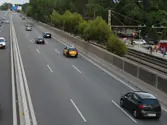
En una autopista con tres carriles para cada sentido, ¿qué distancia de seguridad debe dejar un turismo con el vehículo que circula delante?
On a motorway (autopista) with three lanes in each direction, what safe distance must a car keep from the vehicle in front?
- A50 metros.50 metres.
- BLa que permita detener el vehículo en caso de frenado brusco y permita que los demás adelanten con seguridad.One that lets it stop in case of sudden braking and lets others overtake it safely.
- CLa que permita detener el vehículo en caso de frenado brusco del que va delante sin colisionar con él.One that lets it stop, if the vehicle in front brakes suddenly, without hitting it.
ExplanationWhen driving behind another vehicle, you must leave a space that lets you stop without hitting it if it brakes suddenly, taking into account speed, grip and braking conditions. Also, if you are driving without signalling that you intend to overtake, this gap must let the vehicle behind you overtake you safely. For this purpose, drivers of vehicles with a MAM over 3,500 kg and of vehicles or combinations of vehicles more than 10 metres long must keep a minimum gap of 50 metres. A distance that simply avoids a collision is enough (you do not need to leave room to be overtaken): - In built-up areas. - Where overtaking is prohibited. - Where there is more than one lane in the same direction. - When traffic is congested. - When you intend to overtake.
¿Cuál será la velocidad máxima circulando por autopista dentro de poblado?
What is the maximum speed when driving on a motorway (autopista) inside a built-up area?
- A70 km/h.70 km/h.
- B50 km/h.50 km/h.
- C80 km/h.80 km/h.
ExplanationAccording to Article 50.6 of the General Traffic Regulations (RGC), the general limit on motorways (autopistas) and dual carriageways (autovías) that run through built-up areas is 80 km/h. The local authority and the road owner may raise it with signs, but not above the limit outside built-up areas.
All topics
- Definitions
- Documents and penalty points
- The driver's condition
- Duties of drivers and pedestrians
- Vehicle safety devices
- Vehicle controls and equipment
- Vehicle lights and horn
- Traffic signs, markings and signals
- The road and its lanes
- Manoeuvres
- Right of way
- Carrying passengers and loads
- Driving safely in difficult conditions
- Vehicle mechanics and maintenance
- Road accidents and first aid
- Defensive and eco-driving
Independent app: not affiliated with or endorsed by the DGT (Spain's Directorate-General for Traffic) or the Ministry of the Interior. The official exam is booked with the DGT and taken at its test centres. The questions here are practice material; the DGT's official question bank is not public.
Basado en datos de la Agencia Estatal Boletín Oficial del Estado (https://www.boe.es). Textos consolidados de carácter meramente informativo. La AEBOE no patrocina ni respalda este sitio.
Parte de las preguntas procede de los tests de la revista «Tráfico y Seguridad Vial» de la DGT, reproducidos con indicación de la fuente.