
DGT test · 150 questions
Defensive and eco-driving · Page 2 of 3
Anticipating hazards, saving fuel and cutting emissions with smooth, forward-looking driving.
Questions in this topic, with answers
150 questions, 50 per page, with the correct answer and the explanation. Page 2 of 3.
Si nuestro vehículo consume más combustible de lo habitual, puede ser debido...
If our vehicle uses more fuel than usual, it may be due to...
- AAl sistema de refrigeración.The cooling system.
- BAl sistema de arranque.The starting system.
- CAl sistema de alimentación.The fuel supply system.
ExplanationThe fuel supply system supplies fuel and air to the engine in the right proportions. A fault in it can increase fuel consumption.
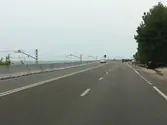
La conducción preventiva se basa en tres principios:
Defensive driving is based on three principles:
- AVisión, aceleración y frenado.Vision, acceleration and braking.
- BVisión, anticipación y espacio.Vision, anticipation and space.
- CProteger, avisar y socorrer.Protect, alert and help.
ExplanationDefensive driving is based on three principles. Vision: collect information early enough to analyse it and react properly; look far ahead, look to the sides often, check the mirrors frequently and turn your head to check the blind spot. Anticipation: anticipate risk by not trusting others and being ready to act, adapting your speed to the circumstances, and making yourself seen and understood (correct use of signals and lights). Space: keeping good distances in front, behind and to the sides gives you room to manoeuvre if anything unexpected happens.
¿Qué haremos para ahorrar combustible?
What will we do to save fuel?
- AApagaremos siempre el motor, tanto en atascos como en semáforos e intersecciones donde tengamos que ceder el paso.Always switch off the engine, in traffic jams as well as at traffic lights and junctions where we have to give way.
- BConduciremos en marchas cortas y aceleraremos con suavidad.Drive in low gears and accelerate gently.
- CConduciremos con suavidad, sin frenadas ni aceleradas bruscas.Drive smoothly, without sudden braking or acceleration.
ExplanationTo save fuel you must drive smoothly, anticipating the traffic to avoid sudden braking and acceleration. Driving in low gears increases consumption, and switching off the engine only pays off for stops of more than a minute, not at every junction.
Para conseguir una conducción eficiente se debe circular...
For eco-driving you must drive...
- Avariando continuamente la velocidad, para que no se fatigue el motor.changing speed continuously so that the engine does not get tired.
- Ba una velocidad uniforme, evitando los frenazos y los acelerones.at a steady speed, avoiding harsh braking and sudden acceleration.
- Cutilizando, en la medida de lo posible, las marchas más cortas.using the lowest gears as far as possible.
ExplanationFor eco-driving, keep your speed as steady as possible, avoiding unnecessary acceleration and braking. It is not a question of driving faster or slower, but of keeping a constant average speed for as long as possible. Choosing the right gear is another key aspect of eco-driving. Driving in high gears with the engine at low revs means lower fuel consumption. We should use the highest possible gear (4th or 5th) even in town and keep the engine at low revs. In low gears the engine runs at higher revs and uses more fuel.
La conducción eficiente ayuda un 25% ahorrar combustible y en ¿qué proporción se reduce la contaminación?
Eco-driving helps save 25% of fuel. In what proportion is pollution reduced?
- AEn la misma proporción que se ahorra combustible.In the same proportion as fuel is saved.
- BEn mayor proporción que se ahorra combustibleIn a greater proportion than fuel is saved.
- CEn menor proporción que se ahorra combustibleIn a smaller proportion than fuel is saved.
ExplanationEco-driving reduces polluting emissions considerably, making vehicle use more environmentally sustainable and improving air quality. By applying eco-driving techniques you can save 25% of fuel and reduce polluting emissions by 80%.
Para ahorrar combustible circularemos usando...
To save fuel, we will drive using...
- AMarchas cortas y altas revoluciones.Low gears and high revs.
- BMarchas largas y bajas revoluciones.High gears and low revs.
- CMarchas largas y altas revoluciones.High gears and high revs.
ExplanationFuel consumption is reduced if we drive in high gears (third, fourth, fifth) and at low revs (without pressing the accelerator hard).
Para circular con seguridad, tiene que haber espacio suficiente...
To drive safely, there must be enough space...
- APor delante del vehículo, por detrás y por los laterales.In front of the vehicle, behind it and to the sides.
- BSolamente por delante del vehículo.Only in front of the vehicle.
- CSolamente a los lados.Only to the sides.
ExplanationGood defensive driving requires keeping suitable safe distances on all sides of the vehicle (in front, behind and to the sides).
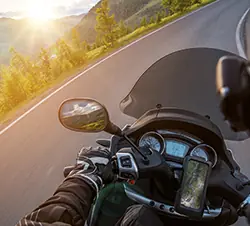
El estilo de conducción de una motocicleta, ¿puede influir en el consumo de combustible?
Can the way a motorcycle is ridden affect fuel consumption?
- ANo, solo depende de la cilindrada de la motocicleta.No, it depends only on the motorcycle's engine size.
- BNo, si se adopta una postura aerodinámica.No, if you adopt an aerodynamic riding position.
- CSí.Yes.
ExplanationRiding style directly affects consumption: sudden acceleration, harsh braking and high revs use more fuel than smooth riding that anticipates what is ahead, on a motorcycle too.
El consumo de éxtasis, ¿qué efectos produce?
What effects does taking ecstasy have?
- AUn aumento de la capacidad de reacción.An increase in the ability to react.
- BUna disminución del tiempo de reacción.A decrease in reaction time.
- CProduce alucinaciones.It causes hallucinations.
ExplanationTaking ecstasy reduces the ability to react, so our reaction time will increase. It can also cause visual illusions, such as seeing flashes at the edge of our field of vision, with the resulting risk of making dangerous manoeuvres.
El consumo de combustible es menor si se conduce en marchas...
Fuel consumption is lower if you drive in...
- Alargas y a altas revoluciones.high gears at high revs.
- Bcortas y a altas revoluciones.low gears at high revs.
- Clargas y a bajas revoluciones.high gears at low revs.
ExplanationA vehicle's fuel consumption is lowest when high gears are used and the engine is kept at low revs. This is because an engine running at high revs uses more fuel. According to the General Traffic Regulations, low consumption is associated with efficient use of the engine, which is achieved by keeping suitable revs (especially on long journeys). That is why the correct option is high gears at low revs.
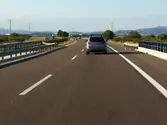
La visión, como técnica, en la conducción preventiva consiste en...
Vision, as a defensive driving technique, consists of...
- Amirar a lo lejos, a los lados y por los retrovisores.looking far ahead, to the sides and in the mirrors.
- Binstalar espejos panorámicos.fitting panoramic mirrors.
- Cacostumbrarse a los deslumbramientos.getting used to being dazzled.
Explanation90% of the information a driver uses to make decisions at the wheel comes through sight. So, to collect effectively all the information about the traffic around you that you need to drive safely, you can follow these rules: look far ahead; look to the sides often; check the mirrors regularly.
La forma de conducir, ¿tiene alguna influencia en el consumo de carburante?
Does the way you drive have any effect on fuel consumption?
- ANo, porque sólo depende de los avances tecnológicos del propio vehículo.No, because it depends only on the vehicle's own technology.
- BSí, un conductor más nervioso e intranquilo reduce el consumo.Yes, a more nervous and restless driver reduces consumption.
- CSí, los acelerones y frenazos innecesarios impiden aprovechar la inercia del vehículo.Yes, unnecessary sudden acceleration and braking prevent you from making use of the vehicle's momentum.
ExplanationTo optimise fuel consumption, you need to make good use of the engine, gearbox and brakes. Both fuel consumption and polluting emissions increase with speed (as speed increases, rolling resistance and air resistance increase). So it is recommended to drive at a moderate speed suited to the circumstances. We should also keep our speed as steady as possible, avoiding unnecessary sudden acceleration and braking (keeping a constant average speed for as long as possible). This is achieved with the defensive driving techniques of vision, anticipation and space.
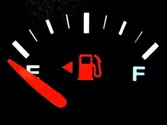
¿El consumo de combustible del vehículo tiene relación con la contaminación producida por éste?
Is a vehicle's fuel consumption related to the pollution it produces?
- ANo, un vehículo que realice las revisiones correspondientes no contamina.No, a vehicle that has had the required services does not pollute.
- BSí, a mayor consumo mayor contaminación.Yes, the higher the consumption, the higher the pollution.
- CSí, a mayor consumo menor contaminación.Yes, the higher the consumption, the lower the pollution.
ExplanationPollution is produced by burning fuel, so the more fuel a vehicle uses, the more pollution it produces. That is why eco-driving is so important: to try to use less fuel and pollute less.
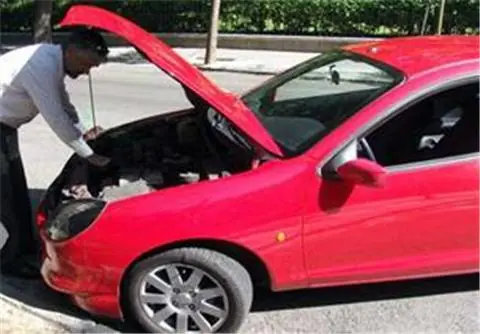
Su vehículo consume mucho carburante, ¿qué debe revisar?
Your vehicle uses a lot of fuel. What should you check?
- ACircuito de lubricación y refrigeración.The lubrication and cooling system.
- BCircuito de escape.The exhaust system.
- CCircuito de alimentación y de encendido.The fuel supply and ignition system.
ExplanationExcessive fuel consumption is usually caused by faults in the fuel supply system, such as a dirty air filter or badly adjusted injection, or in the ignition system, such as worn spark plugs. These faults make combustion worse, so they should be checked at a garage.
¿Cuáles son los cuatro niveles de clasificación ambiental para identificar la contaminación de los vehículos según sus emisiones?
What are the four environmental classification levels used to identify how polluting vehicles are according to their emissions?
- ACero emisiones, ECO, C y D.Zero emissions, ECO, C and D.
- BSin emisiones, ECO, A y B.No emissions, ECO, A and B.
- CCero emisiones, ECO, C y B.Zero emissions, ECO, C and B.
ExplanationUnder Annex XI of the General Vehicle Regulations, the V-25 environmental label identifies four classes: 0 emissions, ECO, C and B, from least to most polluting. Vehicles in category A do not get a label. These labels are used to control access to low emission zones (ZBE).
El tipo de vía por la que se circula, ¿influye en el consumo de carburante?
Does the type of road you drive on affect fuel consumption?
- ANo.No.
- BSí, en las vías interurbanas se consume siempre más carburante.Yes, more fuel is always used on interurban roads.
- CSí, en las vías urbanas se consume más carburante, con carácter general.Yes, as a general rule more fuel is used on urban roads.
ExplanationMore fuel is used in town because traffic forces you to stop and start continually, to drive in low gears and to spend time idling. On the open road you can keep a constant speed in high gears, although at very high speeds consumption also shoots up.
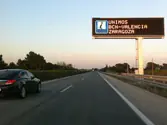
¿Qué ventajas tiene la conducción eficiente?
What are the advantages of eco-driving?
- ADisminuye los siniestros de tráfico.It reduces road accidents.
- BAumenta la tensión en la conducción.It increases stress when driving.
- CDisminuye el confort en la conducción.It reduces comfort when driving.
ExplanationEnergy saving: eco-driving reduces fuel consumption. Less pollution: lower consumption means lower polluting emissions, which improves the environment and air quality. More safety: eco-driving requires applying defensive driving techniques (vision, anticipation and space), which increases safety and reduces risk on the road and road accidents. Lower running and maintenance costs: the vehicle's parts last longer (the engine, brakes, clutch and gearbox suffer less if you drive correctly). More comfort: you avoid sudden acceleration and braking and drive smoothly and calmly, which makes driving more comfortable, with less stress and tension.
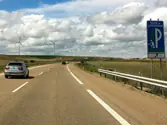
Para hacer una conducción eficiente y reducir el consumo de carburante, es conveniente:
To drive efficiently and reduce fuel consumption, it is advisable to:
- Areducir la distancia de seguridad ya que, de esta manera, los obstáculos se ven antes.reduce the safe distance, because this way you see obstacles sooner.
- Baumentar la distancia de seguridad con el fin de tener más tiempo para reaccionar.increase the safe distance so that you have more time to react.
- Cutilizar relaciones de marchas cortas.use low gear ratios.
ExplanationA generous safe distance lets you see what is happening ahead in good time, anticipate, and slow down by lifting your foot off the accelerator instead of braking sharply. Less hard braking and accelerating means lower fuel consumption and more safety.
Para consumir menos carburante, tendremos que circular...
To use less fuel, we must drive...
- Acon marchas cortas a altas revoluciones.in low gears at high revs.
- Bcon marchas largas a bajas revoluciones.in high gears at low revs.
- Ccon marchas altas a altas revoluciones.in top gears at high revs.
ExplanationTo use less fuel, we should drive in the highest gear possible for the circumstances, changing quickly from 1st to 2nd and from 2nd to 3rd, at the lowest possible revs, because the higher the revs, the faster the engine turns and the more fuel it uses.
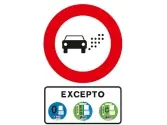
¿Puedes circular por una zona de bajas emisiones si su vehículo no cumple con las condiciones impuestas por la autoridad para poder circular por dicha zona?
Can you drive in a low emission zone if your vehicle does not meet the conditions set by the authority for driving in that zone?
- ASí, ya que no se infringe ninguna norma de circulación.Yes, because no traffic rule is broken.
- BSí, siempre que el vehículo esté ocupado por al menos 2 personas.Yes, as long as there are at least 2 people in the vehicle.
- CNo; es una falta grave.No; it is a serious offence.
ExplanationDriving in a low emission zone in a vehicle that does not meet the conditions set by the local authority for entering that zone is a serious offence. These zones are usually introduced to improve air quality and reduce pollution, so access is restricted according to vehicles' emission levels.
Las motocicletas presentan generalmente una mayor aceleración que los turismos por lo que...
Motorcycles generally accelerate faster than cars, so...
- ARepresenta un peligro para los demás usuarios de la vía al costarles más estimar la correcta velocidad y distancia a la que se encuentra la motocicleta.This is a danger to other road users, as it is harder for them to judge the motorcycle's speed and distance correctly.
- BLlegaremos antes utilizando toda la aceleración hasta el próximo semáforo.We will get there sooner by using full acceleration up to the next traffic light.
- CNos pondremos siempre en primera fila ante los semáforos en rojo y podremos salir antes que los turismos.We will always move to the front at red traffic lights so that we can pull away before the cars.
ExplanationMotorcycles accelerate faster than cars, which can make it hard for other road users to judge the motorcycle's speed and distance correctly. This can create dangerous situations, as other drivers may not properly anticipate the motorcycle's movements and may make wrong decisions that lead to accidents. So motorcyclists must be aware of this and ride defensively to avoid possible collisions.
¿Entre qué revoluciones por minuto (rpm) se debe cambiar de marcha en un motor diésel?
At what engine speed (rpm) should you change gear in a diesel engine?
- AEntre 1.000 y 1.500 rpm.Between 1,000 and 1,500 rpm.
- BEntre 1.500 y 2.000 rpm.Between 1,500 and 2,000 rpm.
- CEntre 2.000 y 2.500 rpm.Between 2,000 and 2,500 rpm.
ExplanationIn diesel vehicles, it is recommended to change gear between 1,500 and 2,000 rpm. Diesel engines work most efficiently in this range, which gives lower fuel consumption and lower emissions. Changing at lower revs can lead to a lack of power, while changing at higher revs increases consumption and engine wear.
El consumo de combustible de un ciclomotor circulando a gran velocidad es...
The fuel consumption of a moped travelling at high speed is...
- AMenor que si circula a menor velocidad.Lower than at a lower speed.
- BMayor que si circula a menor velocidad.Higher than at a lower speed.
- CIgual que si circula a menor velocidad.The same as at a lower speed.
ExplanationA moped's fuel consumption at high speed is higher than at a lower speed. This is because at higher speed the air puts more resistance on the vehicle, so you have to press the accelerator more to keep the speed. As a result, more fuel is used. Also, at higher speed the moped's engine works at higher revs, which also increases fuel consumption.
¿Qué características deben tener los vehículos con el distintivo medioambiental '0 emisiones'?
What characteristics must vehicles with the '0 emissions' environmental label have?
- ASer vehículos eléctricos puros de batería, incluidos los de autonomía extendida, los híbridos enchufables con una autonomía mínima de 40 km, o los de pila de combustible.They must be pure battery electric vehicles, including extended-range ones, plug-in hybrids with a range of at least 40 km, or fuel cell vehicles.
- BSer vehículos enchufables con menos de 40 km de autonomía, híbridos no enchufables, vehículos a gas natural y GLP.They must be plug-in vehicles with a range of less than 40 km, non-plug-in hybrids, or natural gas and LPG vehicles.
- CTener motores de gasolina matriculados a partir de 2006 o diésel a partir de 2015.They must have petrol engines registered from 2006 onwards or diesel engines from 2015 onwards.
ExplanationUnder Annex II of the General Vehicle Regulations, the 0 emissions label is for battery electric vehicles, extended-range electric vehicles, hydrogen vehicles, plug-in hybrids with a range of at least 40 km and fuel cell vehicles. Plug-ins with a shorter range, non-plug-in hybrids and gas vehicles get the ECO label.
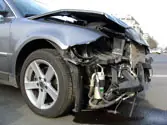
En la circulación segura, tendremos en cuenta el espacio que existe...
For safe driving, we must take into account the space...
- Asolo por delante de nuestro vehículo.only in front of our vehicle.
- Bpor delante y por detrás.in front and behind.
- Cpor delante, por detrás y por los lados de nuestro vehículo.in front of, behind and to the sides of our vehicle.
ExplanationTo drive safely, we must take into account all the space around our vehicle: in front, behind and to the sides.
Para realizar una conducción económica y eficiente...
For economical, efficient driving...
- ASe debe circular con la relación de marchas más corta en la que sea posible hacerlo.you should drive in the lowest gear possible.
- BSe debe circular con la relación de marchas más larga en la que sea posible hacerlo.you should drive in the highest gear possible.
- CSe debe circular en punto muerto en las bajadas.you should coast downhill in neutral.
ExplanationDriving in high gears lowers engine revs, and as a result fuel consumption is lower.
Si nuestro vehículo está dotado de un motor de gasolina, para realizar una conducción eficiente cambiaremos de marcha al acelerar...
If our vehicle has a petrol engine, for eco-driving we will change gear when accelerating...
- AEntre las 2000 y 2500 rpm.Between 2,000 and 2,500 rpm.
- BEntre las 1500 y 2000 rpm.Between 1,500 and 2,000 rpm.
- CEntre las 3000 y 4000 rpm.Between 3,000 and 4,000 rpm.
ExplanationEco-driving means using the least possible amount of fuel. With a petrol engine we change gear between 2,000 and 2,500 revolutions per minute, while with a diesel engine we do so between 1,500 and 2,000 revolutions per minute.
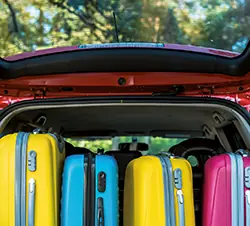
Para ahorrar carburante, ¿dónde se debe cargar el equipaje?
To save fuel, where should luggage be carried?
- AEn el maletero.In the boot.
- BEn la baca.On the roof rack.
- CEn el maletero o en la baca, es indistinto.In the boot or on the roof rack; it makes no difference.
ExplanationA load on the roof rack increases aerodynamic drag and therefore fuel consumption, and it also raises the centre of gravity. In the boot it hardly affects aerodynamics.
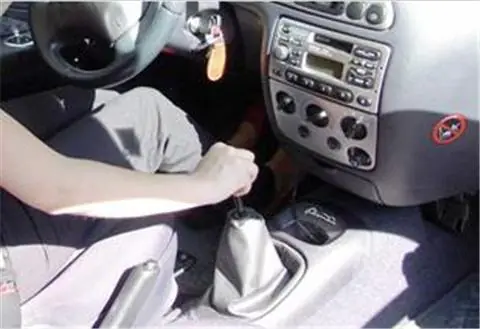
Una técnica para ahorrar combustible es...
One technique for saving fuel is...
- Aapurar la utilización de las marchas cortas.using low gears for as long as possible.
- Butilizar marchas altas, incluso en ciudad.using high gears, even in town.
- Cir subiendo de marcha de una en una, sin saltarse ninguna.changing up one gear at a time, without skipping any.
ExplanationDriving in the highest possible gear, also in town, keeps engine revs low and reduces consumption. That is why it is recommended to change up early and even skip a gear when accelerating, instead of staying in the low gears for as long as possible.
En los motores de gasolina cambiaremos de marcha:
With petrol engines, we will change gear:
- AEntre 1.500 y 2.000 revoluciones por minuto.Between 1,500 and 2,000 revolutions per minute.
- BEntre 2.000 y 2.500 revoluciones por minuto.Between 2,000 and 2,500 revolutions per minute.
- CEntre 1.000 y 1.500 revoluciones por minuto.Between 1,000 and 1,500 revolutions per minute.
ExplanationChoosing the right gear is one of the key aspects of eco-driving. With petrol engines, the right engine speed for changing gear without fuel consumption shooting up is between 2,000 and 2,500 revolutions per minute. Avoid unnecessary gear changes. You can change up to higher gears without going through all of them.
Las técnicas de conducción eficiente, ¿aumentan la seguridad vial?
Do eco-driving techniques increase road safety?
- ASí, son técnicas similares a las de la conducción preventiva, y la prevención aumenta la seguridad.Yes, they are similar to defensive driving techniques, and prevention increases safety.
- BNo, únicamente reducen la contaminación ambiental.No, they only reduce environmental pollution.
- CNo, sólo mejoran el confort de la conducción.No, they only make driving more comfortable.
ExplanationEco-driving techniques aim to reduce fuel consumption and environmental pollution, while also making driving more comfortable. They mean calmer driving, which increases the level of safety. Defensive driving techniques, for their part, let us anticipate any adverse situation, so that we can use the vehicle's controls in time and prevent possible road accidents. These two driving techniques complement each other.
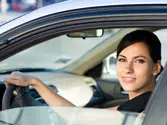
Para una conducción eficiente, abrir las ventanas en lugar de utilizar los dispositivos de aireación del vehículo...
For eco-driving, opening the windows instead of using the vehicle's ventilation system...
- AAhorra combustible.Saves fuel.
- BEs una medida de ahorro equivocada por que se gasta más combustible.Is a mistaken way to save, because more fuel is used.
- CEs mejor para mantenerse despierto.Is better for staying awake.
ExplanationUse the vehicle's ventilation system to air the inside of the car, because with the windows down aerodynamic drag and fuel consumption increase.
El distintivo ambiental de la DGT (etiqueta) sirve para:
The DGT environmental label is used to:
- AClasificar los vehículos según su impacto medioambiental.Classify vehicles according to their environmental impact.
- BIndicar la potencia del motor.Show the engine power.
- CSustituir a la ITV.Replace the vehicle inspection (ITV).
ExplanationThe environmental label classifies vehicles by their level of emissions and determines whether they can drive in low emission zones.
¿Qué será lo mejor para conseguir una conducción eficiente?
What is the best way to achieve eco-driving?
- AMantener una velocidad constante, a ser posible.Keep a constant speed, if possible.
- BAcelerar y frenar constantemente.Accelerate and brake constantly.
- CCircular siempre en las marchas más cortas posibles.Always drive in the lowest possible gears.
ExplanationKeeping a constant speed, for example on motorways, and driving in the highest possible gear is the best way to drive more efficiently and use less fuel.
Para ahorrar carburante debo...
To save fuel, I must...
- ACircular más cerca del vehículo que va delante para disminuir la resistencia del aire.Drive closer to the vehicle in front to reduce air resistance.
- BConducir con suavidad, sin frenazos ni acelerones.Drive smoothly, without harsh braking or sudden acceleration.
- CMantener la velocidad lo más elevada y constante posible.Keep my speed as high and constant as possible.
ExplanationEco-driving is based on driving smoothly, anticipating to avoid harsh braking and sudden acceleration, and using high gears. Driving close behind the vehicle in front is dangerous, and driving at high speeds makes fuel consumption shoot up because air resistance increases a lot.
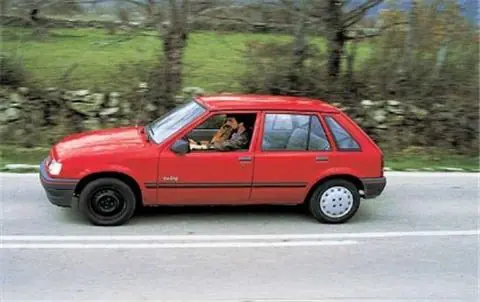
Un vehículo consume mucho carburante. ¿Qué se debe revisar?
A vehicle uses a lot of fuel. What should be checked?
- AEl circuito de escape.The exhaust circuit.
- BEl circuito de refrigeración y el de lubricación.The cooling and lubrication circuits.
- CEl circuito de encendido y el de alimentación.The ignition and fuel supply circuits.
ExplanationExcessive fuel consumption is usually caused by a fault in the ignition system, such as worn spark plugs, or in the fuel supply system, such as dirty filters or badly adjusted injection. That is why these are the first things to check.
¿La velocidad afecta a la capacidad de anticipación?
Does speed affect the ability to anticipate?
- ASí, disminuyéndola.Yes, it reduces it.
- BSí, aumentándola.Yes, it increases it.
- CNo afecta.It has no effect.
ExplanationAs speed increases, the ability to perceive and anticipate situations decreases, which can lead us to make serious mistakes.
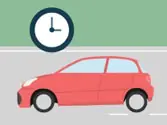
¿Deberemos tener en cuenta la hora de salida para realizar un viaje?
Should we consider the departure time when making a journey?
- ASí, para evitar los deslumbramientos provocados por el sol.Yes, to avoid being dazzled by the sun.
- BNo, la hora es indiferente.No, the time makes no difference.
- CSí, es mejor circular durante la noche porque hay menos tráfico.Yes, it is better to drive at night because there is less traffic.
ExplanationAmong other things, when making a journey we should consider the departure time so as not to have the sun in front of us at sunrise or sunset, and so avoid being dazzled by the sun low on the horizon.
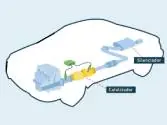
¿De qué se encarga el catalizador de un vehículo?
What does a vehicle's catalytic converter do?
- Areduce el ruido y la temperatura de los gases.It reduces the noise and temperature of the gases.
- Breduce la cantidad de gases tóxicos que salen al exterior.It reduces the amount of toxic gases released into the air.
- Creduce la temperatura del motor.It reduces the engine temperature.
ExplanationThe exhaust system collects the gases from the engine and takes them outside. It has a silencer, which reduces the noise and temperature of the gases, and a catalytic converter, which reduces the amount of toxic gases released into the air.
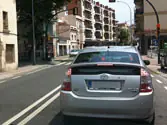
En la conducción eficiente se aconseja para decelerar:
In eco-driving, to slow down it is advisable to:
- AFrenar de forma suave y progresiva sin necesidad de pasar por todas las marchas.Brake smoothly and gradually without going through all the gears.
- BFrenar de forma suave y pasar por todas las marchas para reducir la velocidad.Brake smoothly and go through all the gears to reduce speed.
- CFrenar bruscamente y pasar por todas las marchas para reducir la velocidad.Brake sharply and go through all the gears to reduce speed.
ExplanationTo slow down, it is advisable to take your foot off the accelerator and let the vehicle roll in gear. This uses engine braking, and fuel consumption will be zero. Brake smoothly and gradually, and if you need to change down, do it as late as possible and without going through all the gears.
¿El estilo de conducir influye en el consumo de combustible?
Does your driving style affect fuel consumption?
- ASolo en los vehículos diésel.Only in diesel vehicles.
- BSí.Yes.
- CNo.No.
ExplanationDriving style directly affects consumption: sudden acceleration and braking, driving at high revs or at excessive speed increase fuel use, while smooth, anticipating driving reduces it in any type of vehicle.
Para ahorrar combustible, ¿qué hay que hacer?
To save fuel, what should you do?
- AConducir con las ventanillas abiertas.Drive with the windows open.
- BConducir siempre a más de 100 km/h.Always drive at more than 100 km/h.
- CConducir con las ventanillas cerradas.Drive with the windows closed.
ExplanationWith the windows open, aerodynamic drag increases, especially at high speeds, and the engine has to work harder to keep going, so it uses more fuel. Driving with the windows closed and at a moderate speed saves fuel.
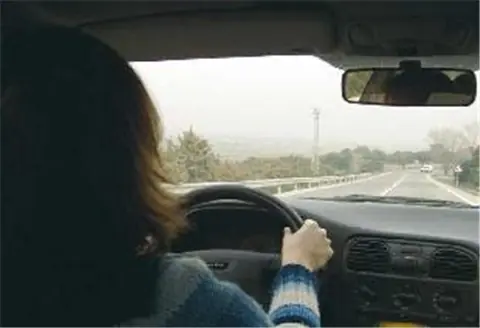
Las técnicas de conducción eficiente, ¿mejoran la seguridad vial?
Do eco-driving techniques improve road safety?
- ASí, son técnicas similares a las de conducción preventiva, y la prevención aumenta la seguridad.Yes, they are similar to defensive driving techniques, and prevention increases safety.
- BNo, sólo sirven para reducir la contaminación ambiental.No, they only help reduce environmental pollution.
- CNo, su único objeto es reducir el consumo de carburante.No, their only purpose is to reduce fuel consumption.
ExplanationYes. Eco-driving is based on anticipating, keeping a steady speed and avoiding hard braking and sharp acceleration, just like defensive driving. As well as reducing consumption and pollution, it reduces stress and the risk of a crash.
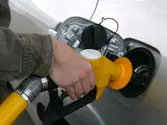
¿Cómo actuaremos para ahorrar combustible?
How will we act to save fuel?
- AApagaremos siempre el motor, tanto en atascos como en semáforos e intersecciones en las que debamos ceder el paso.Always switch off the engine, in traffic jams as well as at traffic lights and at junctions where we have to give way.
- BConduciremos con la marcha más corta y aceleraremos con suavidad.Drive in the lowest gear and accelerate smoothly.
- CConduciremos con suavidad, sin frenadas ni aceleradas bruscas.Drive smoothly, without sudden braking or acceleration.
ExplanationChoosing the right gear is one of the key aspects of eco-driving. At a given speed, the higher the gear and the lower the engine revs, the less fuel we use. So, to drive efficiently, we use the highest gear that lets us drive at the speed we want, and we drive smoothly, without sudden acceleration or harsh braking.
¿Cómo se llama la conducción que permite anticipar los riesgos?
What do we call driving that lets you anticipate risks?
- APreventiva.Defensive driving.
- BEficiente.Eco-driving.
- CPeligrosa.Dangerous driving.
ExplanationDefensive driving is the driver's ability to anticipate possible risks and dangers on the road, which is supported by the Spanish Traffic and Road Safety Code. This ability is essential for road safety, as it lets drivers make the right decisions to avoid accidents. For example, the rules stress the importance of recognising dangerous situations and acting accordingly to change or prevent a potential danger. Safe driving skills and risk assessment are essential parts of defensive driving, which is why this is the correct option.
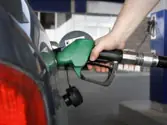
Para realizar una conducción eficiente y reducir el consumo de combustible, ¿qué debe hacer?
For eco-driving and to reduce fuel consumption, what should you do?
- ARealizar el mayor número de cambios de marchas posibles.Make as many gear changes as possible.
- BPisar el pedal del acelerador al arrancar.Press the accelerator when starting the engine.
- CUsar la relación de marchas más adecuada en cada momento.Use the most suitable gear at all times.
ExplanationFor eco-driving, keep your speed as steady as possible, avoiding unnecessary acceleration and braking. It is not a question of driving faster or slower, but of keeping a constant average speed for as long as possible. Choosing the right gear is another key aspect of eco-driving. Driving in high gears with the engine at low revs means lower fuel consumption. We should use the highest possible gear (4th or 5th) even in town and keep the engine at low revs. In low gears the engine runs at higher revs and uses more fuel. Every gear change wastes fuel, so try not to make unnecessary changes and use the gear that suits the circumstances at each moment.
Para ahorrar carburante, ¿cómo se debe ventilar el vehículo?
To save fuel, how should you ventilate the vehicle?
- ACon las entradas de aire que hay en el salpicadero.With the air vents on the dashboard.
- BAbriendo todas las ventanillas.By opening all the windows.
- CAbriendo solamente las ventanillas traseras.By opening only the rear windows.
ExplanationDriving with the windows down changes the vehicle's aerodynamics and increases the fuel needed to keep the speed. To ventilate the inside of the car, make proper use of the vehicle's ventilation and forced-air systems.
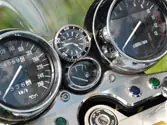
En conducción eficiente es aconsejable circular ...
In eco-driving, it is advisable to drive...
- ACon marchas largas y a bajas revoluciones.In high gears at low revs.
- BCon marchas largas y a altas revoluciones.In high gears at high revs.
- CCon marchas cortas y a altas revoluciones.In low gears at high revs.
ExplanationChoosing the right gear is one of the key aspects of eco-driving: driving in high gears with the engine at low revs means lower fuel consumption. We should use the highest possible gear (4th or 5th) even in town and keep the engine at low revs.
¿Con qué tipo de carburante funciona un motor de explosión de un ciclomotor?
What type of fuel does a moped's internal combustion engine run on?
- ACon una mezcla de gasolina y aceite.A mixture of petrol and oil.
- BSólo con gasolina de 95 octanos.Only 95-octane petrol.
- CCon gasóleo.Diesel.
ExplanationA moped's internal combustion engine runs on a mixture of petrol and oil. This is because two-stroke engines, like those in mopeds, need extra lubrication for the moving parts of the engine to work properly. The petrol and oil are mixed in specific proportions according to the moped manufacturer's instructions.
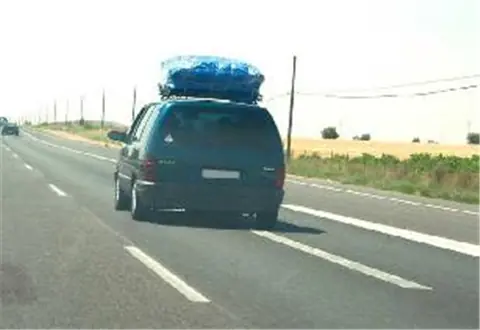
La distribución de la carga en un vehículo, ¿afecta al consumo de combustible?
Does the way the load is distributed in a vehicle affect fuel consumption?
- ANo, en el consumo sólo afecta el tipo de vehículo.No, only the type of vehicle affects consumption.
- BSí, por ello es muy importante colocar la carga de manera adecuada.Yes, which is why it is very important to place the load correctly.
- CNo, en el consumo sólo afecta la velocidad.No, only speed affects consumption.
ExplanationA badly distributed load, or a load on the roof rack, increases air resistance and upsets the vehicle's balance, which increases consumption. So the load should be placed correctly, preferably in the boot, and the roof rack should be removed when not in use.
All topics
- Definitions
- Documents and penalty points
- The driver's condition
- Duties of drivers and pedestrians
- Vehicle safety devices
- Vehicle controls and equipment
- Vehicle lights and horn
- Traffic signs, markings and signals
- The road and its lanes
- Speed and distances
- Manoeuvres
- Right of way
- Carrying passengers and loads
- Driving safely in difficult conditions
- Vehicle mechanics and maintenance
- Road accidents and first aid
Independent app: not affiliated with or endorsed by the DGT (Spain's Directorate-General for Traffic) or the Ministry of the Interior. The official exam is booked with the DGT and taken at its test centres. The questions here are practice material; the DGT's official question bank is not public.
Basado en datos de la Agencia Estatal Boletín Oficial del Estado (https://www.boe.es). Textos consolidados de carácter meramente informativo. La AEBOE no patrocina ni respalda este sitio.
Parte de las preguntas procede de los tests de la revista «Tráfico y Seguridad Vial» de la DGT, reproducidos con indicación de la fuente.