
DGT test · 626 questions
Road accidents and first aid
What to do at a crash: protect, alert and help, basic first aid, and marking a stopped vehicle with the V-16 beacon.
20 random questions
Loading questions…
Questions in this topic, with answers
626 questions, 50 per page, with the correct answer and the explanation. Page 1 of 13.
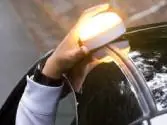
Ante una avería, ¿cómo debe colocar la luz de preseñalización de peligro V-16?
If your vehicle breaks down, how should you place the V-16 hazard warning light?
- AA 150 metros del vehículo inmovilizado.150 metres from the broken-down vehicle.
- BA 100 metros del vehículo inmovilizado.100 metres from the broken-down vehicle.
- CEn la parte más alta posible del vehículo inmovilizado garantizado su máxima visibilidad.On the highest possible point of the broken-down vehicle, to make it as visible as possible.
ExplanationThe V-16 hazard warning device is an approved amber-yellow light with geolocation. It runs on its own power supply (batteries). It must be placed on the highest point of the broken-down vehicle, to make it as visible as possible. Today the V-16 is the only legal way to signal a broken-down vehicle or an obstacle on the road. Warning triangles are no longer used.
¿Todos los factores de riesgo tienen la misma importancia como causa de un accidente?
Do all risk factors have the same weight as a cause of accidents?
- ANo, la mayoría de los accidentes se deben al factor humano.No. Most accidents are caused by the human factor.
- BSí, porque el conductor, la vía y el vehículo siempre están involucrados en un accidente.Yes, because the driver, the road and the vehicle are always involved in an accident.
- CNo, el factor humano apenas influye.No. The human factor has hardly any influence.
ExplanationAccording to Spain's Traffic and Road Safety Code, most road accidents are caused by the human factor. The driver's behaviour, decisions and physical and mental state are decisive for road safety. There are other factors, such as the road and the vehicle, but the human factor matters more because it contributes to most crashes. So not all risk factors are equally important.
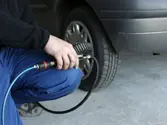
¿Se puede disminuir el riesgo de accidentes por el factor vehículo?
Can the risk of accidents caused by the vehicle factor be reduced?
- ASí, pero solo conduciendo un vehículo nuevo.Yes, but only by driving a new vehicle.
- BNo, es inevitable.No, it is unavoidable.
- CSí, con un adecuado mantenimiento.Yes, with proper maintenance.
ExplanationWith proper maintenance of the vehicle, following the manufacturer's instructions, you can greatly reduce the risk of accidents caused by the vehicle factor.
Las personas mayores, como conductores, ¿Cuando suelen tener más accidentes?
When do older people usually have more accidents as drivers?
- AEn situaciones complejas, que exigen respuestas rápidas.In complex situations that need a quick response.
- BEn los cambios de dirección.When changing direction.
- CEn los adelantamientos.When overtaking.
ExplanationOlder people may have more accidents in complex situations that need a quick response. This is especially true at junctions and roundabouts, and when joining or leaving roads with fast traffic. We should be respectful and patient with older people who need more time when driving, especially in complex situations.
Si se produce un incendio dentro de un túnel o paso subterráneo, el conductor de un vehículo...
If a fire breaks out inside a tunnel or underpass, the driver of a vehicle…
- Adejará el motor encendido y las puertas abiertas.will leave the engine running and the doors open.
- Bdejará las puertas abiertas y la llave en el contacto.will leave the doors open and the key in the ignition.
- Cdejará el motor apagado y las puertas cerradas.will leave the engine off and the doors closed.
ExplanationUnder Article 97.3 of the General Traffic Regulations, if there is a fire in a tunnel the driver pulls over to the right, switches off the engine and leaves the key in and the doors open, so that the emergency services can move the vehicle; then everyone goes to the nearest shelter or exit.
¿Cómo advertiremos a un ciclista del peligro de atropello inminente?
How should you warn a cyclist of an imminent danger of being hit?
- ADesde lejos, para evitar un posible sobresalto.From far away, to avoid startling them.
- BCerca de él, para que perciba bien la señal acústica.Close to them, so that they hear the sound signal clearly.
- CCon señales ópticas o acústicas, independientemente de la distancia.With light or sound signals, whatever the distance.
ExplanationUse light or sound signals to avoid a possible accident, whatever the distance between you and, in this case, the cyclist.
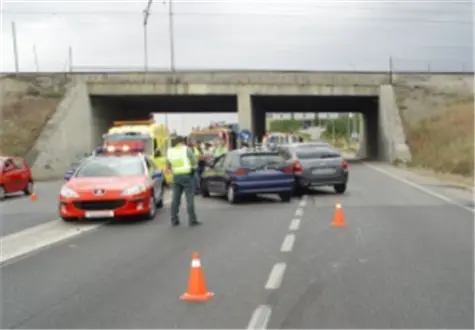
Conforme a los datos de accidentalidad, la mayor parte de los conductores menores de 24 años fallecidos en accidente de tráfico...
According to accident data, most drivers under 24 killed in traffic accidents…
- Ason mujeres.are women.
- Bconducían una motocicleta.were riding a motorcycle.
- Cson varones.are men.
ExplanationAccording to DGT accident data, the great majority of young drivers killed in traffic accidents are men, partly because they spend more time on the road and are more likely to take risks, such as excessive speed or alcohol.
¿Es necesario comprobar si los heridos en un accidente están conscientes o respiran?
Is it necessary to check whether people injured in an accident are conscious or breathing?
- ASí, para valorar la gravedad de su estado.Yes, to assess how serious their condition is.
- BNo, eso es responsabilidad de los servicios de urgencia.No, that is the job of the emergency services.
- CNo es necesario, como norma general.No, as a general rule it is not necessary.
ExplanationChecking whether an injured person is conscious and breathing lets you assess how serious their condition is, decide what to do and give useful information to 112. If they are not breathing, start cardiopulmonary resuscitation (CPR) without waiting for the emergency services.
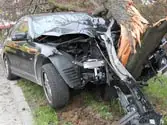
¿En qué tipo de vía se producen más accidentes con víctimas mortales?
On which type of road do most fatal accidents happen?
- AEn travesías.On travesías (stretches of road through a town).
- BEn vías urbanas.On roads in built-up areas.
- CEn vías interurbanas.On roads outside built-up areas.
ExplanationMost fatal accidents happen on roads outside built-up areas, mainly because speeds are higher there.
En caso de accidente se utilizará la regla PAS, ¿cuál es su significado?
In an accident you will use the PAS rule. What does it mean?
- AProteger, avisar y socorrerProtect, alert and help (proteger, avisar, socorrer)
- BPrevenir, avisar y socorrerPrevent, alert and help (prevenir, avisar, socorrer)
- CPrecaución, atención y seguridadCaution, attention and safety (precaución, atención, seguridad)
ExplanationThe PAS rule means: first protect ourselves, then the accident scene, then the injured. Next alert, usually by calling 112. Finally, help.
Sobrevalorar su propia capacidad para conducir o percibir menos riesgo son conductas que, en general, hacen que los conductores jóvenes…
Overestimating their own driving ability or perceiving less risk are behaviours that, in general, make young drivers…
- Atengan menos probabilidades de sufrir una lesión en un accidente.less likely to be injured in an accident.
- Btengan más probabilidades de sufrir una lesión en un accidente.more likely to be injured in an accident.
- Csean más prudentes al volante.more careful at the wheel.
ExplanationThe correct answer is that they are more likely to be injured. Overestimating driving ability and perceiving less risk are common among young drivers, and this greatly increases the likelihood of accidents. According to the Traffic and Road Safety Code, drivers must recognise the risks linked to their behaviour on the road. Road safety awareness and education stress how wrong ideas about driving can lead to dangerous decisions. Young drivers often underestimate risks, and this puts them at greater risk of accidents.
En caso de accidente de circulación, ¿debe darse de beber a los heridos graves?
In a road accident, should seriously injured people be given something to drink?
- ASí, siempre que el herido presente quemaduras graves.Yes, if the injured person has serious burns.
- BNo, en ningún caso.No, never.
- CNo, como norma general.No, as a general rule.
ExplanationAs a general rule, do not give seriously injured people anything to drink, because it can make their condition worse. In an emergency it is better to wait for medical help and follow the professionals' instructions. This way the injured person gets the right treatment without extra risks.
En caso de incendio en el interior de un túnel, debemos...
If there is a fire inside a tunnel, you must...
- AApagar el motor y colocar los dispositivos de preseñalización de peligro.Switch off the engine and place the hazard warning devices.
- BApagar el motor, dejar las llaves puestas y las puertas abiertas.Switch off the engine, leave the keys in and leave the doors open.
- CApagar el motor y dejar las puertas abiertas.Switch off the engine and leave the doors open.
ExplanationIf there is a fire inside a tunnel, the driver must move the vehicle as far to the right as possible so as not to block emergency vehicles, switch off the engine, leave the key in and leave the doors open.
¿En qué situaciones complicadas las personas mayores tienen más probabilidad de sufrir un accidente?
In which difficult situations are older people more likely to have an accident?
- AEn situaciones que requieren una reacción rápida.In situations that need a quick reaction.
- BEn los cambios de dirección.When changing direction.
- CAl adelantar a otro vehículo.When overtaking another vehicle.
ExplanationComplex situations that need a quick response are especially hard for older people. Their reflexes are slower, and they may have health problems that affect their ability to react. The General Traffic Regulations recognise that road safety is at risk when quick decisions are needed. This increases the risk of accidents, especially for vulnerable groups such as older people.
En caso de detención por emergencia, ¿cómo debe colocar la señal luminosa de preseñalización de peligro?
If you stop because of an emergency, how should you place the hazard warning light?
- AA 150 metros del vehículo inmovilizado.150 metres from the broken-down vehicle.
- BA 100 metros del vehículo inmovilizado.100 metres from the broken-down vehicle.
- CEn la parte más alta posible del vehículo inmovilizado, garantizado su máxima visibilidad.On the highest possible point of the broken-down vehicle, to make it as visible as possible.
ExplanationThe V-16 hazard warning device is an approved amber-yellow light with geolocation. It runs on its own power supply (batteries). It must be placed on the highest point of the broken-down vehicle, to make it as visible as possible. Today the V-16 is the only legal way to signal a broken-down vehicle or an obstacle on the road. Warning triangles are no longer used.
¿Dónde se colocará el dispositivo de preseñalización de peligro?
Where should the hazard warning device be placed?
- AA 100 metros del vehículo inmovilizado.100 metres from the broken-down vehicle.
- BA 150 metros del vehículo inmovilizado.150 metres from the broken-down vehicle.
- CEn la parte más alta del vehículo inmovilizado garantizando su máxima visibilidad.On the highest point of the broken-down vehicle, to make it as visible as possible.
ExplanationUnder Article 130.4 of the General Traffic Regulations (RGC), every driver must use the regulation hazard warning device. Since 1 January 2026 only the V-16 light is valid. It is amber-yellow and is placed on the highest possible point of the broken-down vehicle, to make it as visible as possible (Annex XI of the General Vehicle Regulations).

A un motorista herido en accidente, ¿debe quitarle el casco?
Should you remove the helmet of a motorcyclist injured in an accident?
- ANo, como norma general.No, as a general rule.
- BSí, para que respire mejor.Yes, so that they can breathe better.
- CHaré lo que él me diga.I will do what they tell me.
ExplanationAt an accident, do not remove the helmets of injured people, unless it is essential and you know the correct technique.
Debido a una avería, su turismo ha quedado inmovilizado, en un día claro, en una vía fuera de poblado. ¿Cómo debe señalizarlo?
Your car has broken down on a clear day on a road outside a built-up area. How must you signal it?
- ACon la señal de emergencia y el dispositivo luminoso de preseñalización de peligro V-16.With the hazard warning lights and the V-16 hazard warning light.
- BCon el dispositivo luminoso de preseñalización de peligro V-16, únicamente.With the V-16 hazard warning light only.
- CCon la señal de emergencia, las luces de posición y el dispositivo luminoso de preseñalización de peligro V-16.With the hazard warning lights, the sidelights and the V-16 hazard warning light.
ExplanationUnder Article 130.4 of the General Traffic Regulations, you must switch on the hazard warning lights and use the regulation hazard warning device. Since 1 January 2026 this is the V-16 light. The sidelights are switched on only when needed, for example at night.
El número 112, servicio de emergencia, es un número gratuito y de uso ...
The emergency number 112 is free and its use is...
- Anacional.national.
- Binternacional.international.
- Ceuropeo.European.
Explanation112 is a free emergency service for urgent situations. The correct answer is 'European': 112 is the standard emergency number in most European countries. You can dial it anywhere in Europe to get help in an emergency.
¿Debe un conductor detenerse para auxiliar y prestar ayuda a las víctimas en un accidente de tráfico en el que no está implicado?
Must a driver stop to help the victims of a road accident in which they are not involved?
- ASí.Yes.
- BSí, si lo solicita alguna autoridad presente.Yes, if an authority at the scene asks them to.
- CNo, ya que al no estar implicado, no tiene ninguna responsabilidad.No. As they are not involved, they have no responsibility.
ExplanationEvery road user who is involved in an accident, witnesses it or learns about it must help the victims or call for help, even if they are not responsible for it. No authority needs to ask. Failing to help can be a criminal offence.
¿Cuáles son las principales causas de atropellos a niños?
What are the main causes of children being hit by vehicles?
- ALa actitud imprudente del conductor y la escasa señalización de las zonas más frecuentadas por niños.The driver's careless attitude and poor signage in areas where children often go.
- BLa velocidad excesiva y la falta de atención de los conductores.Excessive speed and drivers' lack of attention.
- CSus imprudencias, su desconocimiento de las normas y sus limitaciones de vista y oído.Their own careless behaviour, not knowing the rules, and the limits of their sight and hearing.
ExplanationMost cases of children being hit are caused by their own behaviour: they act on impulse, they do not know the rules, and because of their height and development they see and hear traffic less well. That is why drivers must take extra care where there are children.
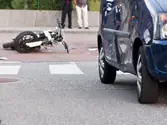
Los accidentes de motocicletas...
Motorcycle accidents...
- Aproducen lesiones de menor gravedad para sus ocupantes que los de otros vehículos.cause less serious injuries to the riders than accidents with other vehicles.
- Bson siempre de menor importancia que los de otros vehículos.are always less serious than accidents with other vehicles.
- Cresultan fácilmente mortales para sus ocupantes.can easily be fatal for the riders.
ExplanationMotorcycles have no bodywork to protect the people on them: their own body is the bodywork. That is why injuries are more serious on motorcycles and mopeds than in other vehicles, and they can easily be fatal.
¿Cuál de estos factores explica por qué los jóvenes tienen más accidentes?
Which of these factors explains why young people have more accidents?
- ATienen menos reflejos.They have poorer reflexes.
- BNo revisar el vehículo.Not checking the vehicle.
- CTienen menos percepción del riesgo.They perceive less risk.
ExplanationFive factors affect how young people accept and assess risk: their attitudes to traffic, how they explain behaviour, little driving experience, their level of control, and lower risk perception.
Mientras se circula, ¿dónde debe llevarse el chaleco reflectante de alta visibilidad?
While driving, where should the high-visibility reflective vest be kept?
- APreferentemente en el maletero del vehículo.Preferably in the boot of the vehicle.
- BSobre el respaldo del asiento, ya que aumenta la eficacia del cinturón de seguridad.Over the back of the seat, as this makes the seat belt more effective.
- CDentro del habitáculo, nunca en el maletero ni sobre el respaldo del asiento.Inside the passenger compartment, never in the boot or over the back of the seat.
ExplanationThe high-visibility reflective vest must be kept inside the passenger compartment, never in the boot or over the back of the seat. If you need it, it must be within reach so that you can put it on quickly and be more visible and safer in an emergency. In the boot or over the seat back it would be harder to reach, and using it would take longer.
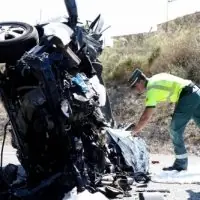
En un accidente con heridos graves en el que esté implicado debe...
If you are involved in an accident with seriously injured people, you must...
- Amarcharse después de avisar y facilitar sus datos.leave after calling for help and giving your details.
- Besperar a que los heridos se recuperen.wait for the injured to recover.
- Cpermanecer en el lugar del accidente hasta que lleguen los agentes de tráfico.stay at the scene of the accident until the traffic officers arrive.
ExplanationAnyone involved in an accident with injured people must help them, alert the officers and stay at the scene until they arrive, unless they are allowed to leave or must take an injured person for treatment. Leaving after giving your details is not enough.
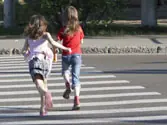
En caso de atropello, ¿son los niños especialmente vulnerables?
When hit by a vehicle, are children especially vulnerable?
- ANo.No.
- BSí, debido a su baja estatura.Yes, because they are short.
- CSí, porque el vehículo suele ir a mayor velocidad.Yes, because the vehicle is usually going faster.
ExplanationTake special care with children: when hit by a vehicle, they are the most vulnerable. Because they are short, the impact often hits their head or other vital parts of the body.
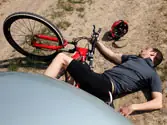
Si un herido sangra por el oído y la nariz, ¿qué debemos hacer?
If an injured person is bleeding from the ear and nose, what should you do?
- ATaponar y poner la cabeza hacia atrás.Plug it and tilt the head back.
- BTaponar y poner la cabeza hacia delante.Plug it and tilt the head forward.
- CNo taponar.Do not plug it.
ExplanationNever plug internal bleeding that comes out through the ear or nose, and do not move the head. Keep the injured person in the recovery position.
En las ciudades, los accidentes que producen más víctimas mortales son…
In cities, the accidents that cause the most deaths are…
- ALas colisiones por alcance entre vehículos.rear-end collisions between vehicles.
- BLas colisiones frontolaterales.front-to-side collisions.
- CLos atropellos a peatones.pedestrians being hit.
ExplanationIn built-up areas, the type of accident that causes the most deaths is pedestrians being hit. Pedestrians are vulnerable road users. That is why in town you must keep your speed down and pay extra attention at pedestrian crossings.
¿Es obligatorio emplear el dispositivo de preseñalización de peligro para advertir la presencia de un turismo averiado en la calzada?
Is it compulsory to use the hazard warning device to warn others of a broken-down car on the carriageway?
- ASí.Yes.
- BNo.No.
- CSólo si la visibilidad es insuficiente.Only if visibility is poor.
ExplanationUnder Article 130.4 of the General Traffic Regulations, every driver must use the regulation hazard warning device to warn that their vehicle is immobilised. Since 1 January 2026 this device is the V-16 light, which is placed on the highest point of the vehicle.
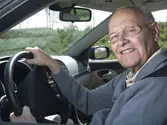
¿En qué situaciones, suelen tener más accidentes las personas mayores, como conductores?
In which situations do older people usually have more accidents as drivers?
- AEn situaciones complejas, que exijan una respuesta rápida.In complex situations that need a quick response.
- BEn los cambios de dirección.When changing direction.
- CEn los estacionamientos.When parking.
ExplanationOlder people may have more accidents in complex situations that need a quick response. This is especially true at junctions and when leaving roads with fast traffic. We should be respectful and patient with older people who need more time when driving, especially in complex situations.
Cuando ha habido heridos en un accidente de circulación es fundamental...
When people have been injured in a road accident, it is essential to...
- Adarles algo de beber para reanimarlos.give them something to drink to revive them.
- Bmoverlos lo menos posible y llamar al 112.move them as little as possible and call 112.
- Csacarlos del vehículo para intentar reanimarlostake them out of the vehicle to try to revive them.
ExplanationAs a general rule, do not give an injured person food or drink, and do not move them or take them to a medical centre. Injured people must be transported in special vehicles (ambulances) by professional staff. Call 112 so that the emergency services can take all necessary measures.
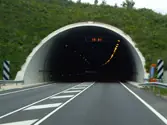
En caso de incendio en el interior de un túnel, ¿Qué hará?
If there is a fire inside a tunnel, what will you do?
- ADejara el motor encendido y las llaves puestas.Leave the engine running and the keys in.
- BDejara el motor apagado y las llaves puestas.Leave the engine off and the keys in.
- CDejara las puertas abiertas y el motor encendido.Leave the doors open and the engine running.
ExplanationIf a fire breaks out inside a tunnel, the driver must: move the vehicle as far to the right as possible so as not to block emergency vehicles; switch off the engine; leave the key in and not close the doors; leave the vehicle with all occupants and go quickly to the nearest shelter or exit, away from the fire. Never walk on the carriageway if there are areas closed to vehicles.
¿Cuántos dispositivos de preseñalización de peligro deberá llevar en el vehículo obligatoriamente?
How many hazard warning devices must you carry in the vehicle?
- ATres.Three.
- BUno.One.
- CNo es obligatorio llevar ninguno.You do not have to carry any.
ExplanationCars, mixed-use vehicles and goods vehicles with a maximum authorised mass (MAM) of up to 3,500 kg must carry these accessories, spare parts and tools: - One approved high-visibility vest. - One hazard warning device: an amber-yellow device with geolocation and its own power supply (batteries). It is placed on the highest possible point of the broken-down vehicle, to make it as visible as possible. - One complete spare wheel or a temporary-use spare wheel, with all the tools needed to change it.
¿Tienen más accidentes los conductores que fuman que los que no fuman?
Do drivers who smoke have more accidents than drivers who do not smoke?
- ASí, el doble.Yes, twice as many.
- BNo.No.
- CDepende de la cantidad que fumen.It depends on how much they smoke.
ExplanationDrivers who smoke are involved in twice as many accidents as non-smokers. They are distracted more easily and have less control of the vehicle because one hand is busy.
La mayoría de los accidentes de tráfico son...
Most road accidents are...
- Ainevitables, aunque se eviten los factores de riesgo.unavoidable, even if risk factors are avoided.
- Bevitables, si se previenen los factores de riesgo.avoidable, if risk factors are prevented.
- Cinevitables, porque siempre está presente el factor humano.unavoidable, because the human factor is always present.
ExplanationAlmost all accidents stem from known risk factors (driver, vehicle, road and environment). If these are prevented and controlled, for example with appropriate speed, full attention and good maintenance, most accidents can be avoided.
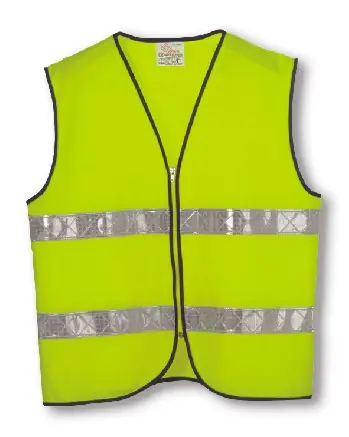
¿Es recomendable llevar un chaleco reflectante en su turismo?
Is it advisable to carry a reflective vest in your car?
- ASí.Yes.
- BSí, ya que és obligatorio.Yes, because it is compulsory.
- CNo.No.
ExplanationThe high-visibility reflective vest is part of a car's compulsory equipment. As well as carrying it, you must put it on when you get out of the vehicle and are on the carriageway or hard shoulder of a road outside a built-up area. So it is not only advisable: it is compulsory.
¿Cuándo se producen más accidentes?
When do more accidents happen?
- AEn período vacacional.During holiday periods.
- BFuera del periodo vacacional.Outside holiday periods.
- CEs indiferente.It makes no difference.
ExplanationMost accidents happen during holiday periods: Easter, summer and December.
Las estadísticas de siniestralidad demuestran que la causa más común de los accidentes es:
Accident statistics show that the most common cause of accidents is:
- ACircular en dirección contraria al sentido de la vía.Driving against the direction of traffic.
- BRealizar adelantamientos en zonas prohibidas.Overtaking where it is prohibited.
- CNo mantener la distancia de seguridad adecuada.Not keeping an adequate safe distance.
ExplanationAccident statistics show that one of the most common causes of accidents is not keeping a sufficient safe distance between vehicles. This stops you reacting in time to unexpected situations, such as sudden braking or sudden changes of speed. Keeping an adequate distance is essential to avoid collisions and make roads safer.
En relación a los accidentes de trafico...
Regarding road traffic accidents...
- ALa gente no tiene una percepción real del grave problema que representan los accidentes de tráfico.People do not have a real idea of how serious a problem road traffic accidents are.
- BSus consecuencias afectan únicamente a quienes los provocan.Their consequences only affect those who cause them.
- CLa gente está perfectamente informada acerca de lo que representan los accidentes de tráfico.People are fully informed about what road traffic accidents mean.
ExplanationIn general, people do not have much information about the serious social problem that road traffic accidents represent, a problem that affects us all.

Si conduce una motocicleta, ¿es obligatorio llevar un chaleco reflectante?
If you ride a motorcycle, is it compulsory to carry a reflective vest?
- ASí, para utilizarlo en caso de avería en una vía interurbana.Yes, to use it if you break down on a road outside a built-up area.
- BNo, no es obligatorio pero es recomendable.No. It is not compulsory, but it is advisable.
- CSí, porque en caso de lluvia es obligatorio llevarlo puesto.Yes, because it is compulsory to wear it when it rains.
ExplanationUnder Article 118.4 of the General Traffic Regulations (as worded by Royal Decree 518/2026), a motorcycle rider must wear a high-visibility reflective vest when they get off the motorcycle and are on the carriageway or hard shoulder of a road outside a built-up area. Also, from 1 October 2026 motorcycles must carry one as part of their equipment (Annex XII of the General Vehicle Regulations).

Si los heridos en un accidente hubieran ingerido alcohol, ¿podría influir este hecho en la gravedad de sus heridas?
If the people injured in an accident had drunk alcohol, could this affect how serious their injuries are?
- ASi, influye positivamente en las lesiones que puedan tener los heridos.Yes, it has a positive effect on their injuries.
- BEl hecho de haber ingerido alcohol no afecta para nada.Having drunk alcohol has no effect at all.
- CSí, influye negativamente en las lesiones que tengan los heridos.Yes, it has a negative effect on their injuries.
ExplanationAlcohol widens the blood vessels (it is a vasodilator). So injuries from an accident can be more serious, with heavier bleeding.
El conductor de un turismo averiado debe colocar una señal V-16..
The driver of a broken-down car must place a V-16 light...
- Acuando por avería o accidente quede inmovilizado en la calzada o en el arcén.when it is immobilised on the carriageway or hard shoulder by a breakdown or accident.
- Bcada vez que se detenga, aunque sea por poco tiempo.every time they stop, even if only for a short time.
- Csolo en calzadas de doble sentido.only on two-way carriageways.
ExplanationUnder Article 130 of the General Traffic Regulations, when a vehicle is immobilised on the carriageway or hard shoulder because of an accident or breakdown, the driver must use the regulation hazard warning device. Since 1 January 2026 this is the V-16 light. The obligation does not depend on how many directions of traffic the carriageway has.
Las lesiones más graves en los atropellos a ciclistas se suelen producir en...
When cyclists are hit by a vehicle, the most serious injuries usually affect...
- ALas extremidades inferiores.the lower limbs.
- BLa cabeza.the head.
- CEl tronco.the torso.
ExplanationWhen a cyclist is hit, the most serious injuries are head injuries. Wearing a helmet makes this type of injury up to 3 times less likely.
Si no está implicado en un accidente, ¿debe ayudar a los heridos?
If you are not involved in an accident, must you help the injured?
- ASolo si algún herido lo pide.Only if one of the injured asks for help.
- BNo.No.
- CSí, a menos que la ayuda ya esté organizada.Yes, unless help is already organised.
ExplanationUnder Article 129 of the General Traffic Regulations, all road users who witness or learn about an accident must help any victims. This includes working together to avoid further danger and to restore traffic safety. The correct answer is 'Yes, unless help is already organised': if no emergency service is already on its way, the person who witnesses the accident has a duty to help the injured.
¿La velocidad es un factor de riesgo que causa accidentes?
Is speed a risk factor that causes accidents?
- ANo. Solo empeora las consecuencias de un accidente, no lo provoca.No. It only makes the consequences of an accident worse; it does not cause it.
- BSí. Por eso la velocidad debe ser la adecuada en cada momento.Yes. That is why your speed must be appropriate at all times.
- CNo. Si el vehículo cuenta con los últimos sistemas de seguridad, la velocidad no sería la causa.No. If the vehicle has the latest safety systems, speed would not be the cause.
ExplanationExcessive or inappropriate speed is one of the main risk factors: it reduces the time you have to react, lengthens the stopping distance and makes the vehicle harder to control, so it causes accidents and also makes their consequences worse. That is why you must always adapt your speed to the road, the traffic and the conditions.
Se ve obligado a trasladar en su turismo a un herido. ¿Debe respetar las normas de circulación?
You have to take an injured person in your car. Must you respect the traffic rules?
- ASí, y me aseguraré de que no pongo en peligro a otros usuarios.Yes, and I will make sure I do not endanger other road users.
- BSí, pero sólo en las intersecciones.Yes, but only at junctions.
- CNo, y estoy exento de respetar las señales de los agentes.No, and I do not have to obey the traffic officers' signals.
ExplanationIf you need to move an injured person, move them as a rigid block (at least 3 people). Injured people should be transported by ambulance. However, in cases of extreme urgency you may use a private vehicle (obeying all traffic rules): - When it has been impossible to call for medical help by any means. - When the person's condition gets seriously worse and medical help does not arrive. - When more than 30 minutes have passed since you called for help and the injured person has bleeding that cannot be stopped, increasing signs of shock, or a tourniquet.
¿Cuál es la función del registrador de datos de incidencias o EDR?
What does the event data recorder (EDR) do?
- AAlmacena información sobre la operación y estado del vehículo antes, durante y después de un accidente.It stores information on how the vehicle was working and its condition before, during and after an accident.
- BGraba las conversaciones dentro del vehículo para mejorar la experiencia del usuario.It records conversations inside the vehicle to improve the user experience.
- CAlmacenar la música y los programas de entretenimiento reproducidos en el sistema de audio del vehículo.It stores the music and entertainment programmes played on the vehicle's audio system.
ExplanationThe event data recorder (EDR) is a device fitted in vehicles. It stores key information about how the vehicle was working and its condition at critical moments: before, during and after an accident. Its main purpose is to provide objective data to analyse the causes of an accident, improve vehicle safety and help with legal and insurance investigations. This information is useful for car makers, traffic authorities, accident investigators and insurance companies. It helps them understand the circumstances of accidents and develop measures to prevent future ones.
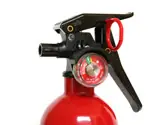
Un turismo destinado al servicio público o privado de pasajeros, ¿debe llevar un extintor entre su dotación obligatoria?
Must a car used for public or private passenger transport carry a fire extinguisher as part of its compulsory equipment?
- ASí, siempre.Yes, always.
- BSí, cuando supere las 5 plazas.Yes, when it has more than 5 seats.
- CNo, no es obligatorio.No, it is not compulsory.
ExplanationOnly buses and coaches, combinations of vehicles (other than special vehicles), mixed-use vehicles and motor vehicles with a MAM over 3,500 kg must carry an approved fire extinguisher. So cars and motorcycles do not have to carry one. Cars, mixed-use vehicles and goods vehicles with a MAM of up to 3,500 kg (except three-wheeled vehicles and quadricycles) must carry: - One hazard warning device: an amber-yellow device with geolocation and its own power supply (batteries). It is placed on the highest possible point of the broken-down vehicle, to make it as visible as possible. - One reflective vest. - A spare wheel or temporary-use wheel with the tools needed to change wheels, or an alternative system that gives enough guarantee that you can keep moving.
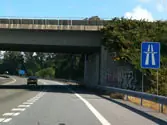
Si por accidente, avería o malestar físico tuviésemos que inmovilizar el vehículo en una autopista o autovía, ¿podrán los ocupantes del vehículo transitar por la calzada para pedir auxilio en el poste de socorro más próximo?
If an accident, a breakdown or feeling unwell forces you to stop your vehicle on a motorway (autopista) or dual carriageway (autovía), may the occupants walk along the carriageway to call for help at the nearest SOS post?
- ANo, en ningún caso.No, never.
- BSí, con el chaleco reflectante homologado.Yes, wearing the approved reflective vest.
- CSí, pero sólo los mayores de edad.Yes, but only adults.
ExplanationThe occupants of the vehicle may never walk along the carriageway of a motorway or dual carriageway, not even wearing the approved vest. The carriageway is the part of the road for vehicles, so walking there would be extremely dangerous, especially as speeds on motorways and dual carriageways are high.
Los accidentes de tráfico son una de las primeras causas de lesiones importantes...
Road accidents are one of the leading causes of serious injuries...
- AEntre la población infantil.among children.
- BEntre la población mayor.among older people.
- CEntre la población joven.among young people.
ExplanationEvery year there are about 500 cases of paraplegia caused by road accidents. Almost 75% of them affect young people.
All topics
- Definitions
- Documents and penalty points
- The driver's condition
- Duties of drivers and pedestrians
- Vehicle safety devices
- Vehicle controls and equipment
- Vehicle lights and horn
- Traffic signs, markings and signals
- The road and its lanes
- Speed and distances
- Manoeuvres
- Right of way
- Carrying passengers and loads
- Driving safely in difficult conditions
- Vehicle mechanics and maintenance
- Defensive and eco-driving
Independent app: not affiliated with or endorsed by the DGT (Spain's Directorate-General for Traffic) or the Ministry of the Interior. The official exam is booked with the DGT and taken at its test centres. The questions here are practice material; the DGT's official question bank is not public.
Basado en datos de la Agencia Estatal Boletín Oficial del Estado (https://www.boe.es). Textos consolidados de carácter meramente informativo. La AEBOE no patrocina ni respalda este sitio.
Parte de las preguntas procede de los tests de la revista «Tráfico y Seguridad Vial» de la DGT, reproducidos con indicación de la fuente.