
DGT test · 200 questions
Duties of drivers and pedestrians
The general duties of people driving and walking on the road: due care, phones and headphones, how pedestrians must behave.
20 random questions
Loading questions…
Questions in this topic, with answers
200 questions, 50 per page, with the correct answer and the explanation. Page 1 of 4.

Según el manual de características de los vehículos de movilidad personal (VMP), estos vehículos deberán disponer de los sieguientes sistemas de iluminación:
According to the manual of characteristics for personal mobility vehicles (PMVs), these vehicles must have the following lighting:
- ASólo un sistema de iluminación en la parte delantera color blanca y trasera color roja.Only a white light at the front and a red light at the rear.
- BSistema de iluminación en la parte delantera de color blanca y uno en la parte trasera de color rojo, además de la luz de freno.A white light at the front and a red light at the rear, plus a brake light.
- CEste tipo de vehículos no están obligados a disponer de dispositivos de iluminación.These vehicles do not have to have any lighting devices.
ExplanationAccording to the manual of characteristics for personal mobility vehicles (PMVs), they must have lighting that keeps them visible and safe on the road. This includes: - A white front light, so they can be seen from the front. - A red rear light, to show they are there from behind. - A brake light, which comes on when stopping, to warn other road users. This equipment is compulsory for riding, especially in poor visibility or at night.
En un paso de peatones, ¿hay que indicar a los peatones que crucen?
At a pedestrian crossing, should you signal to pedestrians to cross?
- ASí, pero solo si van a cruzar.Yes, but only if they are going to cross.
- BSí, porque así los peatones pueden cruzar con seguridad.Yes, because that way pedestrians can cross safely.
- CNo, porque otros conductores pueden no ver a los peatones.No, because other drivers may not see the pedestrians.
ExplanationWaving pedestrians across is dangerous: other drivers, for example in the next lane, may not have seen them and may not stop. The right thing to do is to stop and let them cross, without inviting them to do so.
Circula de noche con las luces largas encendidas. Ve peatones en el arcén. ¿Está obligado a cambiar la luz larga por la corta?
You are driving at night with main beam on. You see pedestrians on the hard shoulder. Must you switch from main beam to dipped headlights?
- ANo es necesario.It is not necessary.
- BSí, pero solamente en los tramos rectos.Yes, but only on straight stretches.
- CSí, para no deslumbrarYes, so as not to dazzle them.
ExplanationMain beam must not be used when it could dazzle other drivers or users of the same road, or of any other route, travelling in the opposite direction, or drivers of vehicles travelling in the same direction. In these cases main beam must be replaced by dipped headlights.
En una vía interurbana sin acera, ¿por qué lado deben caminar los peatones?
On an interurban road without a pavement, which side should pedestrians walk on?
- APor la derecha.On the right.
- BPor cualquiera de los dos lados.On either side.
- CPor la izquierda.On the left.
ExplanationWhen there is no usable pedestrian area, pedestrians walk on the left-hand hard shoulder in their direction of travel or, if there is none, on the carriageway, as far from vehicles as possible (Article 122.1 of the General Traffic Regulations). That way they can see approaching vehicles face on.
Cuando un peatón no disponga de zona peatonal transitará por:
When a pedestrian has no pedestrian area, where do they walk?
- ALa calzada obligatoriamente.On the carriageway, always.
- BNo podrá circular.They may not walk.
- CPor el arcén o la calzada.On the hard shoulder or the carriageway.
ExplanationAccording to Article 122.1 of the General Traffic Regulations (as worded by RD 518/2026), when there is no usable pedestrian area, pedestrians must walk on the left-hand hard shoulder, if there is one and it is usable, or otherwise on the carriageway, as far as possible from vehicle traffic.
En una vía interurbana sin zona peatonal, ¿por qué lado de la misma tienen que circular los peatones?
On an interurban road with no pedestrian area, on which side of it must pedestrians walk?
- ALos peatones no podrán circular si no hay zona para ellos.Pedestrians may not walk there if there is no area for them.
- BPor el lado derecho.On the right-hand side.
- CPor el lado izquierdo.On the left-hand side.
ExplanationPedestrians must walk on the left of the carriageway, in the opposite direction to the traffic.
¿Puede un peatón circular por la derecha en una vía fuera del poblado?
May a pedestrian walk on the right on a road outside a built-up area?
- ASí, siempre.Yes, always.
- BNo.No.
- CSí, cuando lo hace por motivos de seguridad.Yes, when they do so for safety reasons.
ExplanationUnder Article 122.1 of the General Traffic Regulations (as worded by RD 518/2026), when there is no usable pedestrian area pedestrians walk on the left-hand hard shoulder or, if there is none, on the carriageway, and only exceptionally on the right-hand side when there are safety reasons that justify it.
Un peatón que circule fuera de poblado durante la noche por la calzada o por el arcén...
A pedestrian walking outside a built-up area at night on the carriageway or hard shoulder...
- ADeberá ir provisto de un elemento luminoso o retrorreflectante homologado.Must carry an approved luminous or retroreflective item.
- BDeberá llevar una luz de color blanco.Must carry a white light.
- CDeberá llevar una luz de color rojo hacia atrás.Must carry a red light facing backwards.
ExplanationPedestrians walking at night, or in conditions that reduce visibility, on the carriageway or hard shoulder of a road outside built-up areas must carry an approved luminous or retroreflective item that is visible from at least 150 metres.
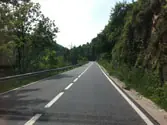
¿Los peatones pueden ir por una carretera convencional?
May pedestrians walk along a conventional road?
- ANo, si no hay arcén transitable.No, if there is no passable hard shoulder.
- BSolo si van empujando un carro.Only if they are pushing a cart.
- CSí, por el arcén suficiente y transitable o, en su defecto, por la parte imprescindible de la calzada.Yes, on the hard shoulder if it is wide enough and passable or, if not, on the part of the carriageway that is strictly necessary.
ExplanationOn a conventional road, pedestrians must walk on the hard shoulder if there is one and it is passable. If there is none or it is not passable, they must walk on the part of the carriageway that is strictly necessary, on its left-hand side.
Al repostar combustible en la motocicleta, ¿qué precauciones tomará el conductor?
When refuelling a motorcycle, what precautions must the rider take?
- AParar el motor, apagar las luces y el teléfono móvil.Stop the engine and switch off the lights and the mobile phone.
- BParar el motor y mantener encendidas las luces de posición y cruce.Stop the engine and keep the sidelights and dipped headlights on.
- CParar el motor, apagar el teléfono móvil y mantener encendida la luz de posición.Stop the engine, switch off the mobile phone and keep the sidelight on.
ExplanationThe rider must stop the engine to avoid any risk of fire or explosion while refuelling the motorcycle. It is also important to switch off the lights and the mobile phone to avoid any source of ignition that could cause an accident. There is no need to keep the sidelight on while refuelling.

En un paso de peatones, donde no existe semáforo, ¿Cómo sabe el peatón cuando puede cruzar?
At a pedestrian crossing with no traffic lights, how does the pedestrian know when they can cross?
- APor la señal que debe hacerle el conductor.By the signal the driver must give them.
- BPor los dispositivos luminosos del vehículo.By the vehicle's lights.
- CPor la distancia y velocidad de los vehículos que se acercan.By the distance and speed of the approaching vehicles.
ExplanationAt a pedestrian crossing you must never signal to pedestrians inviting them to cross. This is because other drivers cannot see our signals and could hit these pedestrians. It is the pedestrian who must decide whether or not to cross, based on the distance and speed of the approaching vehicles.
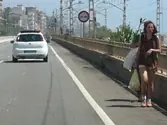
Fuera de poblado donde no exista zona peatonal, ¿por dónde están obligados a circular los peatones como norma general?
Outside built-up areas, where there is no pedestrian area, where must pedestrians walk as a general rule?
- AEs indiferente.It makes no difference.
- BPor su derecha.On their right.
- CPor su izquierda.On their left.
ExplanationUnder Article 122.1 of the General Traffic Regulations (RGC), as worded by RD 518/2026, when there is no usable pedestrian area, pedestrians must walk on the left-hand hard shoulder or, if there is none, on the carriageway, and only exceptionally on the right-hand side when there are safety reasons that justify it.
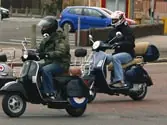
¿Cuál de las siguientes características pertenece a los vehículos de dos ruedas?
Which of the following is a feature of two-wheeled vehicles?
- AMenos estables.Less stable.
- BMás visibles.More visible.
- CMenos frágiles.Less fragile.
ExplanationTwo-wheeled vehicles are less stable than four-wheeled ones. It is easier to fall off a bicycle than to have an accident in a car.
¿En qué situación las personas mayores, como peatones, tienen menos accidentes?
In which situation do older people, as pedestrians, have fewer accidents?
- ACuando van acompañadas por otra persona mayor.When they are with another older person.
- BCuando van acompañando a niños.When they are accompanying children.
- CCuando van solos.When they are alone.
ExplanationAccording to the DGT manual, older people have more accidents as pedestrians when they are alone than when they are accompanying children. When they are with children they are more careful, to set a good example and to protect them.
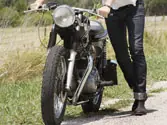
Un peatón que empuja un vehículo de dos ruedas, ¿por dónde está obligado a circular?
Where must a pedestrian pushing a two-wheeled vehicle go?
- APor la derecha, por la calzada o el arcén, según su sentido de la marcha.On the right, on the carriageway or the hard shoulder, in their direction of travel.
- BPor la izquierda, por la calzada o el arcén, según su sentido de la marcha.On the left, on the carriageway or the hard shoulder, in their direction of travel.
- CPor la derecha o por la izquierda indistintamente.On either the right or the left.
ExplanationPeople on foot pushing a two-wheeled vehicle that is not a cycle or a moped are not considered pedestrians, so they must keep to the right of the carriageway or hard shoulder, as close as possible to its right-hand edge.
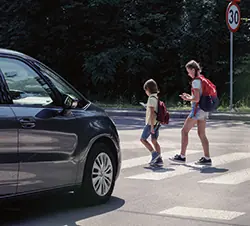
A la entrada y salida del colegio, para evitar riesgos, ¿qué precauciones deberá tomar cuando los niños desciendan del vehículo, además de la previa vigilancia del entorno?
When arriving at and leaving school, to avoid risks, what precautions must you take when children get out of the vehicle, in addition to first checking the surroundings?
- ANo deberán abrir las puertas ni apearse antes de la completa inmovilización del vehículo.They must not open the doors or get out before the vehicle has come to a complete stop.
- BPara mayor seguridad lo harán siempre por la puerta del conductor.For greater safety, they will always get out through the driver's door.
- CDeberán bajar del vehículo por la puerta más alejada del borde de la vía.They must get out through the door furthest from the edge of the road.
ExplanationUnder Article 114 of the General Traffic Regulations, it is prohibited to open the doors or get out before the vehicle has come to a complete stop. Children must get out on the side nearest the pavement or the edge of the road, never on the traffic side or through the driver's door.
¿Se puede conducir un vehículo con el escape abierto?
May you drive a vehicle with an open exhaust?
- ASí, pero no en vías urbanas, porque molestaría a los vecinos.Yes, but not on urban roads, because it would disturb local residents.
- BNo, está prohibida la circulación con el escape libre tanto en vías urbanas como interurbanas.No, driving with an open exhaust is forbidden on both urban and non-urban roads.
- CNo, si se conduce por vías interurbanas.No, if you are driving on non-urban roads.
ExplanationOn both urban and non-urban roads, it is forbidden to drive motor vehicles and mopeds with a so-called open exhaust, that is, without the required silencer (Article 7.2 of the General Traffic Regulations).
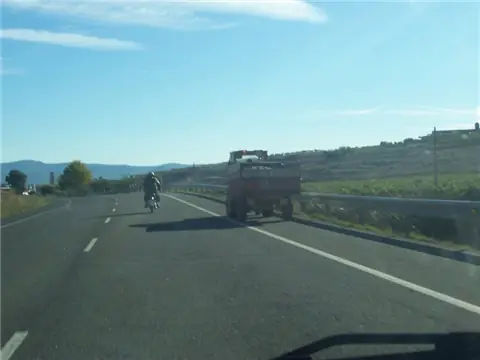
¿Circula correctamente este tractor agrícola de 2500 kg de MMA?
Is this 2,500 kg MAM agricultural tractor being driven correctly?
- ASí, porque al no supera los 3.500 kg de MMA debe circular por el arcén.Yes, because as its MAM does not exceed 3,500 kg, it must use the hard shoulder.
- BNo, porque estos vehículos deben circular siempre por la calzada.No, because these vehicles must always use the carriageway.
- CSí, pero sólo si está averiado.Yes, but only if it has broken down.
ExplanationAccording to Article 36 of the General Traffic Regulations (RGC), special vehicles with a maximum authorised mass of no more than 3,500 kg, like this agricultural tractor, must use the hard shoulder on their right if it is driveable and wide enough. Only if it is not will they use the part of the carriageway that is strictly necessary.
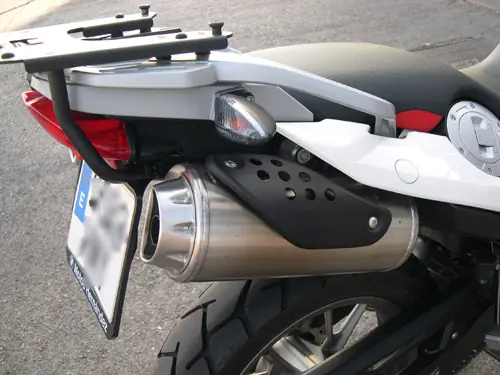
¿Está permitida la circulación de vehículos y ciclomotores con el llamado escape libre?
Are vehicles and mopeds allowed on the road with a so-called open exhaust?
- ASí, en vehículos con una M.M.A. igual o inferior a 3.500 kg.Yes, in vehicles with a maximum authorised mass (MAM) of 3,500 kg or less.
- BSolo está permitido en motocicletas y ciclomotores.It is only permitted on motorcycles and mopeds.
- CNo, está totalmente prohibido.No, it is completely prohibited.
ExplanationDriving vehicles and mopeds with a so-called open exhaust is completely prohibited. An open exhaust is an exhaust system with no silencer or with a modified silencer; it significantly increases engine noise and can exceed the emission limits allowed by law.
¿Como atravesarán los peatones las plazas y glorietas?
How must pedestrians cross squares and roundabouts?
- ADe manera perpendicular al eje.At right angles to the centre line.
- BLo más rápidamente posible.As quickly as possible.
- CRodeándolas.By walking round them.
ExplanationAccording to Article 124.4 of the General Traffic Regulations (RGC), as worded by Royal Decree 518/2026, pedestrians may not cross squares and roundabouts over the carriageway and must walk round them, unless there is a pedestrian crossing.
¿En qué circunstancias se permite que un peatón camine por el lado derecho en una carretera convencional?
In what circumstances may a pedestrian walk on the right-hand side of a conventional road?
- AEn cualquier situación, ya que no hay restricciones.In any situation, as there are no restrictions.
- BSolamente cuando hay tráfico intenso por la izquierda.Only when there is heavy traffic on the left.
- CCuando existan razones de seguridad que así lo justifiquen.When there are safety reasons that justify it.
ExplanationUnder Article 122.1 of the General Traffic Regulations (as worded by RD 518/2026), where there is no usable pedestrian area, pedestrians walk on the left-hand hard shoulder or, if there is none, on the carriageway, and only exceptionally on the right-hand side when safety reasons justify it.
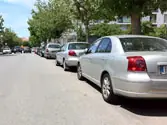
Antes de abrir las puertas para bajar de un vehículo, debe cerciorarse...
Before opening the doors to get out of a vehicle, you must make sure...
- Ade que no se ocasiona peligro a otros usuarios.that it does not cause danger to other road users.
- Búnicamente de que no se acercan peatones.only that no pedestrians are approaching.
- Csólo de que no se acercan vehículos.only that no vehicles are approaching.
ExplanationBefore opening the doors of a vehicle you must first make sure that this does not cause danger or obstruction to other road users, especially cyclists.
¿Cuándo se permite que un peatón vaya por la derecha en una carretera convencional?
When is a pedestrian allowed to walk on the right on a conventional road?
- AEn cualquier caso, no existen restricciones.In any case; there are no restrictions.
- BSolo cuando hay mucho tráfico en el lado izquierdo.Only when there is a lot of traffic on the left-hand side.
- CCuando existan razones de seguridad que así lo justifiquen.When there are safety reasons that justify it.
ExplanationUnder Article 122.1 of the General Traffic Regulations (as worded by RD 518/2026), when there is no usable pedestrian area pedestrians walk on the left-hand hard shoulder or, if there is none, on the carriageway, and only exceptionally on the right-hand side when there are safety reasons that justify it.
Un vehiculo de dos ruedas con cilindrada superior a 50 cm3 es...
A two-wheeled vehicle with an engine capacity of more than 50 cm³ is...
- Aun cuadriciclo.a quadricycle.
- Buna motocicleta.a motorcycle.
- Cun ciclomotor de 2 ruedas.a two-wheeled moped.
ExplanationA motorcycle is a two-wheeled vehicle with an engine capacity of more than 50 cm³ and/or a maximum design speed of more than 45 km/h.
Cuando no hay zona peatonal o no es practicable, los peatones...
When there is no pedestrian area or it cannot be used, pedestrians...
- Apueden caminar por el arcén.may walk on the hard shoulder.
- Bdeben caminar por la calzada.must walk on the carriageway.
- Cno pueden circular por las carreteras.may not walk on roads.
ExplanationUnder Article 122.1 of the General Traffic Regulations (as worded by RD 518/2026), when there is no usable pedestrian area, pedestrians must walk on the left-hand hard shoulder, if there is one and it is usable, or, if not, on the carriageway, as far as possible from vehicle traffic.
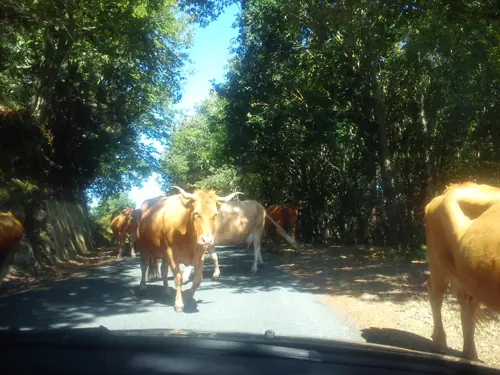
Cuando no hay una vía pecuaria, ¿por dónde pueden circular los rebaños de animales?
When there is no livestock track (vía pecuaria), where may herds of animals travel?
- AEn todas las vías, menos en autopistas y autovías.On all roads except motorways (autopistas) and dual carriageways (autovías).
- BEn todas las vías interurbanas.On all interurban roads.
- CEn todos los tipos de vías, tanto urbanas como interurbanas.On all types of roads, both urban and interurban.
ExplanationHerds must use livestock tracks. If there are none, they may use other roads, but never motorways (autopistas) or dual carriageways (autovías), where animals are prohibited. That is why they cannot use every type of road.
Si se nos ha estropeado el dispositivo silenciador de explosiones de nuestra motocicleta y produce ruidos que molestan, ¿podremos circular?
If the exhaust silencer of our motorcycle is broken and makes a disturbing noise, may we ride it?
- ASí, pero sólo fuera de poblado para no molestar a los peatones.Yes, but only outside built-up areas, so as not to disturb pedestrians.
- BSí.Yes.
- CNo.No.
ExplanationThe correct answer is "No" because if the exhaust silencer is broken and makes a disturbing noise, it no longer does its job of reducing engine noise and helping to prevent pollution. So the vehicle may not be used in that condition.
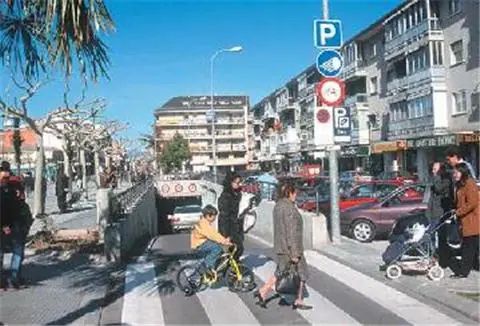
¿Qué comportamiento como conductor puede poner en riesgo a los peatones?
What behaviour as a driver can put pedestrians at risk?
- AExtremar la atención al aproximarse a un autobús.Paying extra attention when approaching a bus.
- BEstacionar sobre la acera.Parking on the pavement.
- CNo hacer señales para que crucen la calzada.Not signalling to pedestrians to cross the carriageway.
ExplanationIf a driver parks on a pavement, for more than 2 minutes or leaving the vehicle, they are occupying the part of the road intended for pedestrians. With their area occupied, pedestrians have to use part of the carriageway to keep walking and can be hit by vehicles using it. Parking on pavements is prohibited. Paying extra attention near a bus and not signalling to pedestrians to cross are both things we should do so as not to put pedestrians at risk.
Los conductores de vehículos de movilidad personal (VMP) deben:
Riders of personal mobility vehicles (PMV, e-scooters) must:
- AUtilizar casco de protección homologado o certificado.Wear an approved or certified protective helmet.
- BCircular por las aceras a paso de persona.Ride on pavements at walking pace.
- CCircular por travesías si no hay carril bici.Ride through travesías (stretches of road through a town) if there is no cycle lane.
ExplanationUnder Article 118.3 of the General Traffic Regulations (as worded by RD 518/2026), PMV riders must wear an approved or certified helmet. In addition, Article 152.1 prohibits riding any vehicle on pavements, and Article 38.4 bans PMVs from travesías.
Los agentes, ¿pueden inmovilizar un vehículo si hace un ruido excesivo?
Can traffic officers immobilise a vehicle if it makes excessive noise?
- ASí, cuando el ruido supera los niveles permitidos.Yes, when the noise exceeds the permitted levels.
- BNo, pero lo pueden multar.No, but they can fine the driver.
- CNo, porque no comporta ningún peligro para la circulación.No, because it poses no danger to traffic.
ExplanationTraffic officers may immobilise our vehicle when it exceeds the levels of gases, smoke and noise legally allowed for each type of vehicle. They may also immobilise it for other reasons, for example when the vehicle is carrying too many occupants or when they suspect that the vehicle's control instruments have been tampered with.
¿Está permitido que una persona en silla de ruedas circule por el arcén (parte lateral de la carretera)?
Is a person in a wheelchair allowed to travel on the hard shoulder (the side part of the road)?
- ASolo en vías urbanas.Only on urban roads.
- BNo.No.
- CSí, cuando no exista zona peatonal practicable.Yes, when there is no usable pedestrian area.
ExplanationUnder Article 122.1 of the General Traffic Regulations (as worded by RD 518/2026), when there is no usable pedestrian area, pedestrians must use the hard shoulder, if there is one and it is usable, or otherwise the carriageway, keeping as far as possible from vehicle traffic. The old exception in Article 121.2, which allowed use of the hard shoulder even when there was a pedestrian area, has been removed.
Un peatón circula por su izquierda en una vía interurbana. ¿Circula correctamente?
A pedestrian is walking on their left on a road outside built-up areas. Are they doing it correctly?
- ASí.Yes.
- BNo, porque debe circular siempre por el lado de la calzada donde el arcén sea transitable.No, because they must always walk on the side of the carriageway where the hard shoulder is usable.
- CNo, porque debe circular por la derecha de la calzada en el sentido de su marcha.No, because they must walk on the right of the carriageway in their direction of travel.
ExplanationOutside built-up areas, and in travesías (stretches of road through a town) with no area for pedestrians, as a general rule pedestrians must walk on their left, unless it is safer to walk on their right.
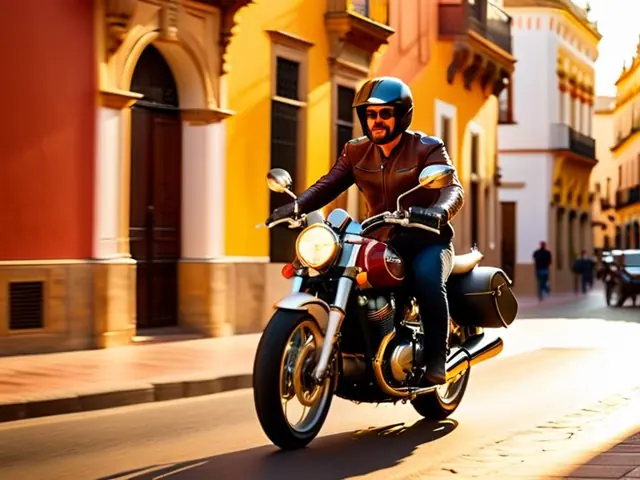
Para evitar ruidos excesivos e innecesarios, el conductor de una motocicleta debe...
To avoid excessive, unnecessary noise, a motorcyclist must...
- Acircular con el escape libre.ride with an open exhaust.
- Bevitar dar acelerones.avoid sudden bursts of acceleration.
- Cconducir utilizando la relación de marchas más baja posible.ride in the lowest possible gear.
ExplanationSudden bursts of acceleration make excessive, unnecessary noise, as well as increasing fuel consumption and pollution. Riding with an open exhaust is prohibited, and using very low gears raises engine revs and noise. Smooth riding avoids this disturbance.
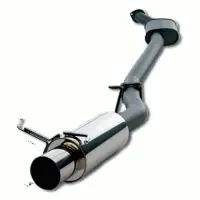
¿Para qué sirve el silenciador en un vehículo?
What is the silencer on a vehicle for?
- APara hacer que el vehículo vaya a más revoluciones.To make the vehicle run at higher revs.
- BPara reducir la cantidad de gases nocivos que expulsa el motor.To reduce the amount of harmful gases the engine gives off.
- CPara disminuir el ruido de las explosiones producidas en el motor.To reduce the noise of the explosions produced in the engine.
ExplanationThe silencer, located in the exhaust pipe, dampens the noise made by the engine's explosions as the gases leave. It does not increase the revs or clean the harmful gases; that is the job of the catalytic converter. Driving with an open exhaust, without a silencer, is prohibited (Article 7.2 of the General Traffic Regulations, RGC).
Circular con el escape libre está prohibido...
Driving with an open exhaust (no silencer) is prohibited for...
- Asólo a los vehículos automóviles.motor cars only.
- Ba todos los vehículos de motor y a los ciclomotores.all motor vehicles and mopeds.
- Ca los vehículos de motor, excepto ciclomotores, en vías urbanas.motor vehicles, except mopeds, on urban roads.
ExplanationDriving with an open exhaust, without a silencer or with ineffective silencers is prohibited for all motor vehicles and also for mopeds, on any road. Excessive noise is a form of pollution that can be fined.
¿Es conveniente hacer señales a los peatones para que crucen la calzada?
Is it a good idea to signal to pedestrians to cross the carriageway?
- ASí, porque así pasan más confiados.Yes, because it makes them cross with more confidence.
- BNo.No.
- CSí, sobre todo si son niños.Yes, especially if they are children.
ExplanationWe should not signal to pedestrians to cross the carriageway, because the pedestrian might feel too confident, cross, and be hit by other vehicles.
Al encontrarse usted detenido con su vehículo en un semáforo que cambia a verde, y en ese momento se encuentra un peatón cruzando.¿Cuál debe ser su actitud?
You are stopped at traffic lights that change to green, and at that moment a pedestrian is crossing. What should you do?
- AAvisarle al peatón que se apure mediante señales luminosas y/o sonoras.Tell the pedestrian to hurry up by flashing your lights and/or sounding your horn.
- BIniciar la marcha en forma lenta y precautoria, para no molestar al peatón.Move off slowly and carefully, so as not to bother the pedestrian.
- CEsperar a que el peatón termine de cruzar la calle.Wait for the pedestrian to finish crossing the street.
ExplanationEven if the light turns green, you must wait for a pedestrian who is already crossing to finish. Pedestrians have right of way when they are already on the carriageway, and hurrying them with the horn or lights is prohibited.
Para adelantar, fuera de poblado, a un grupo de peatones que llevan animales, ¿cómo realizará la maniobra?
Outside built-up areas, how should you overtake a group of pedestrians leading animals?
- AEn general, en estos casos no se debe realizar el adelantamiento por razones de seguridad.In general, you should not overtake in these cases for safety reasons.
- BDejando una separación lateral no inferior a 1,50 m.Leaving a lateral clearance of at least 1.50 m.
- CDejando una separación lateral de seguridad, proporcional al ancho de la calzada.Leaving a safe lateral clearance in proportion to the width of the carriageway.
ExplanationAccording to Article 85.4 of the General Traffic Regulations (as worded by RD 518/2026), when overtaking pedestrians or animals you must move partly or fully into the next lane or the opposite lane and leave a safety gap of at least 1.5 metres. Outside built-up areas you must also reduce your speed by at least 20 km/h below the road's limit.
Los animales domésticos, cuando circulen formando un rebaño, ¿tienen prioridad de paso?
Do domestic animals moving as a flock or herd have right of way?
- ASí.Yes.
- BNo.No.
- CSí, si están controlados por un pastor.Yes, if they are controlled by a shepherd.
ExplanationAnimals have priority on signposted livestock routes (cañadas), when the vehicle is turning into another road and the animals are crossing it, and when the vehicle crosses a hard shoulder on which animals are moving.
Para evitar ruidos excesivos e innecesarios en la conducción, se debe...
To avoid excessive and unnecessary noise when driving, you must...
- ACircular con el tubo de escape libre.Drive with an open exhaust.
- BUtilizar el claxon frecuentemente pero sin producir ruidos estridentes o notas musicales.Use the horn often, but without making shrill noises or musical tones.
- CCuidar de que el tubo de escape y el silenciador del vehículo estén siempre en buen estado.Make sure the vehicle's exhaust pipe and silencer are always in good condition.
ExplanationNoise pollution is becoming a major problem in cities. That is why, in built-up areas, you should not sound the horn, and the exhaust pipe and silencer must be in perfect condition so that they make as little noise as possible. Driving with a so-called 'open exhaust' is completely prohibited, because it creates a lot of noise pollution.
Un peatón que circula durante la noche por el arcén de una vía interurbana debe...
A pedestrian walking at night on the hard shoulder of a road outside built-up areas must...
- AIr por el arcén del lado izquierdo.Walk on the left-hand hard shoulder.
- BIr por el arcén del lado izquierdo y estar provisto de un elemento luminoso o retro reflectante.Walk on the left-hand hard shoulder and carry a luminous or retroreflective item.
- CLlevar obligatoriamente un chaleco reflectante que sea visible a 50 metros como mínimo.Always wear a reflective vest that is visible from at least 50 metres.
ExplanationPedestrians walking at night on the carriageway or hard shoulder of a road must carry a luminous or retroreflective item that is visible from at least 150 metres.
¿Se puede conducir con auriculares?
May you drive with earphones?
- ASí, si es manos libresYes, if they are hands-free
- BNo, está prohibidoNo, it is prohibited
- CSí, si solo es un oídoYes, if only in one ear
ExplanationUnder Article 18.2 of the General Traffic Regulations (as worded by RD 518/2026), it is prohibited to drive using any kind of headset, earphones or similar devices connected to sound equipment. The phone may only be used with a hands-free system that does not require a headset or earphones.
¿Podrán los peatones circular por una carretera convencional?
May pedestrians walk along a conventional road?
- ANo nunca.No, never.
- BSí, cuando no exista zona peatonal.Yes, when there is no pedestrian area.
- CSí, pero solo por el arcén, nunca por la calzada.Yes, but only on the hard shoulder, never on the carriageway.
ExplanationUnder Article 122.1 of the General Traffic Regulations (RGC) (as worded by RD 518/2026), when there is no usable pedestrian area, pedestrians must walk on the hard shoulder or, if there is none, on the carriageway. However, they may not walk on motorways (autopistas) or dual carriageways (autovías), except in the cases and under the conditions of Article 130 (Article 125.1).
¿Qué tipo de motor deben llevar los vehículos de movilidad personal?
What type of engine must personal mobility vehicles (PMVs) have?
- AEléctrico o híbrido.Electric or hybrid.
- BEléctrico únicamente.Electric only.
- CEléctrico, híbrido o de combustión, indistintamente.Electric, hybrid or combustion, any of them.
ExplanationPersonal mobility vehicles, such as e-scooters, are vehicles with one or more wheels powered exclusively by electric motors, with a maximum design speed of between 6 and 25 km/h. They cannot have a combustion or hybrid engine.
Una de las conductas de riesgo más comunes que cometen los peatones es...
One of the most common risky behaviours by pedestrians is...
- Arespetar los semáforos pero no usar los pasos peatonales.obeying traffic lights but not using pedestrian crossings.
- Bno colocarse correctamente en la calzada o en los arcenes.not positioning themselves correctly on the carriageway or the hard shoulder.
- Ccruzar siempre por los pasos para peatones.always crossing at pedestrian crossings.
ExplanationUnder Article 122 of the General Traffic Regulations (as worded by RD 518/2026), when there is no usable pedestrian area, pedestrians must walk on the left-hand hard shoulder in their direction of travel or, if there is none, on the carriageway, as far as possible from traffic, keeping close to the outer edge and walking one behind the other. Not positioning themselves correctly on the carriageway or the hard shoulder is a common risky behaviour.
¿Pueden los agentes inmovilizar un vehículo por producir un ruido excesivo?
May police officers immobilise a vehicle for making excessive noise?
- ASí, si el ruido supera los niveles permitidos.Yes, if the noise exceeds the permitted levels.
- BNo, sólo pueden multarlo.No, they may only fine it.
- CNo, porque no supone un peligro para la circulación.No, because it is not a danger to traffic.
ExplanationYes, police officers may immobilise a vehicle that makes excessive noise if it exceeds the permitted levels, as set out in Article 7 of the General Traffic Regulations. This article forbids driving vehicles that emit noise above the set levels, which affects safety and coexistence on public roads. So immobilisation is a suitable measure to ensure the rules are followed and to protect other road users.
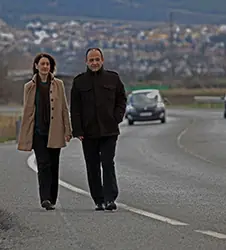
Todo peatón que circule por el arcén de una vía fuera de poblado, entre el ocaso y la salida del sol, ¿debe ir provisto de un elemento luminoso o retrorreflectante?
Must every pedestrian walking on the hard shoulder of a road outside built-up areas between sunset and sunrise carry a lit or retroreflective item?
- ANo, si circula lo más próximo posible al borde de la calzada.No, if they walk as close as possible to the edge of the carriageway.
- BSí, para hacerse visible a una distancia mínima de 150 metros por los conductores que se le aproximen.Yes, so that approaching drivers can see them from a distance of at least 150 metres.
- CSí, pero solamente debe llevarlo puesto cuando existan condiciones meteorológicas que disminuyan sensiblemente la visibilidad.Yes, but they only need to wear it when the weather significantly reduces visibility.
ExplanationBetween sunset and sunrise, a pedestrian walking on the carriageway or hard shoulder outside built-up areas must carry a lit or retroreflective item that makes them visible to drivers from at least 150 metres away.

¿Bajo qué circunstancias se permite que un peatón transite por la derecha en una carretera convencional?
In what circumstances may a pedestrian walk on the right-hand side of a conventional road?
- AEn cualquier situación, ya que no hay restricciones.In any situation, because there are no restrictions.
- BSolamente cuando hay tráfico intenso por la izquierda.Only when there is heavy traffic on the left.
- CCuando existan razones de seguridad que así lo justifiquen.When there are safety reasons that justify it.
ExplanationAccording to Article 122.1 of the General Traffic Regulations (RGC), as worded by Royal Decree 518/2026, when there is no usable pedestrian area, pedestrians walk on the left-hand hard shoulder or, if there is none, on the carriageway. They may walk on the right-hand side only in exceptional cases, when there are safety reasons that justify it. Walking on the left, they can see approaching vehicles coming towards them.
¿Se permite que los animales circulen por una carretera convencional?
Are animals allowed on a conventional road?
- ASí, solo cuando no exista vía pecuaria.Yes, only when there is no livestock track.
- BNo.No.
- CSí, excepto cuando circulen en rebaño.Yes, except when they move in a herd.
ExplanationDraught, pack or riding animals and livestock are only allowed on roads when there is no usable livestock track and they are always accompanied (Article 126 of the General Traffic Regulations). Moving in a herd is not forbidden.
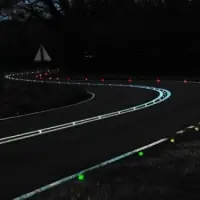
¿Que precaución se debe seguir en zonas mal iluminadas dónde hay peatones de noche?
What precaution should you take at night in poorly lit areas where there are pedestrians?
- APoner las luces de cruceSwitch on the dipped headlights
- BUtilizar lentes de visión nocturnaUse night-vision glasses
- CReducir la velocidadReduce speed
ExplanationOn poorly lit stretches of road where pedestrians often walk, drivers must take the precaution of reducing speed, because high speed combined with poor visibility could mean they do not see a pedestrian properly if one crosses their path. Night-vision glasses are not necessary.
All topics
- Definitions
- Documents and penalty points
- The driver's condition
- Vehicle safety devices
- Vehicle controls and equipment
- Vehicle lights and horn
- Traffic signs, markings and signals
- The road and its lanes
- Speed and distances
- Manoeuvres
- Right of way
- Carrying passengers and loads
- Driving safely in difficult conditions
- Vehicle mechanics and maintenance
- Road accidents and first aid
- Defensive and eco-driving
Independent app: not affiliated with or endorsed by the DGT (Spain's Directorate-General for Traffic) or the Ministry of the Interior. The official exam is booked with the DGT and taken at its test centres. The questions here are practice material; the DGT's official question bank is not public.
Basado en datos de la Agencia Estatal Boletín Oficial del Estado (https://www.boe.es). Textos consolidados de carácter meramente informativo. La AEBOE no patrocina ni respalda este sitio.
Parte de las preguntas procede de los tests de la revista «Tráfico y Seguridad Vial» de la DGT, reproducidos con indicación de la fuente.