
DGT test · 247 questions
Driving safely in difficult conditions
Driving in rain, fog, snow, ice, wind and at night, and how to adapt to risky situations on the road.
20 random questions
Loading questions…
Questions in this topic, with answers
247 questions, 50 per page, with the correct answer and the explanation. Page 1 of 5.
Si circula con una motocicleta con lluvia torrencial, ¿qué debe hacer?
If you are riding a motorcycle in torrential rain, what should you do?
- AModerar la velocidad y estacionar en un lugar seguro.Reduce your speed and park in a safe place.
- BAcercarse lo máximo posible al vehículo de delante para que nos proteja.Get as close as possible to the vehicle in front so that it protects you.
- CEncender las luces de largo alcance aunque circule por vía urbana.Switch on the main beam even if you are on an urban road.
ExplanationIn torrential rain visibility and grip drop sharply, and a motorcyclist is especially vulnerable. The sensible thing is to reduce your speed and, if you cannot continue safely, stop in a safe place until the rain eases. Staying close behind the vehicle in front or using the main beam in town increases the danger.
Su coche se queda atascado en el barro y las ruedas motrices patinan. ¿Qué debe hacer para poder seguir circulando?
Your car is stuck in mud and the driving wheels are spinning. What should you do to get moving again?
- AAcelerar a fondo para que las ruedas ganen tracción.Accelerate hard so the wheels gain traction.
- BColocar tablas o gravilla delante de las ruedas motrices.Put boards or gravel in front of the driving wheels.
- CEmpujar el vehículo desde un lateral hacia una zona firme.Push the vehicle from the side towards firm ground.
ExplanationIf the driving wheels spin in mud, accelerating hard only digs them in deeper. What works is putting something that gives grip in front of them, such as boards, branches or gravel, and moving off gently in a high gear. Pushing the car from the side is dangerous and does not usually get it out.
Al aproximarse a una curva peligrosa hacia la izquierda se debe...
When approaching a dangerous left-hand bend, you should...
- AEntrar ceñido al eje de la calzada.Enter it keeping close to the centre line of the carriageway.
- BEntrar ceñido al borde derecho de la calzada.Enter it keeping close to the right-hand edge of the carriageway.
- CEntrar ceñido al borde izquierdo de la calzada.Enter it keeping close to the left-hand edge of the carriageway.
ExplanationWhen approaching a bend, we must reduce speed, brake before entering it and keep close to the right-hand edge of the carriageway.
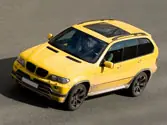
Si nuestro vehículo patina por la parte posterior, ¿qué deberemos hacer?
If the rear of our vehicle skids, what must we do?
- AGirar el volante hacia el mismo lado que patina el vehículo.Turn the steering wheel in the same direction as the vehicle is skidding.
- BGirar el volante hacia el lado contrario al que patina el vehículo.Turn the steering wheel in the opposite direction to the skid.
- CMantener las ruedas rectas y frenar a fondo.Keep the wheels straight and brake hard.
ExplanationIf the rear of the vehicle skids, we must countersteer, that is, turn the steering wheel in the same direction as the rear of the vehicle is moving.
Al circular por una carretera con pavimento deslizante por lluvia, ¿debe moderarse la velocidad?
When driving on a road that is slippery because of rain, should you reduce your speed?
- ASí, siempre.Yes, always.
- BNo, cuando haya poco tráfico.No, when there is little traffic.
- CSolamente al cruzarse con otro vehículo que circula de frente.Only when passing another vehicle coming the other way.
ExplanationWhen the carriageway is wet, vehicles have less grip, which can cause skids or much longer stopping distances than on dry roads (braking distance increases). That is why drivers must take these factors into account and reduce their speed according to the road conditions.
¿Qué medidas debe adoptar con su vehículo un conductor que sufre un deslumbramiento?
What should a driver who is dazzled do with their vehicle?
- ACircular por el arcén lo antes posible.Move onto the hard shoulder as soon as possible.
- BReducir la velocidad sin detener el vehículo.Reduce speed without stopping the vehicle.
- CReducir la velocidad, incluso hasta la detención total.Reduce speed, even to the point of stopping completely.
ExplanationA dazzled driver must reduce speed as much as necessary, even stopping, without leaving their path. It helps to look towards the right-hand edge of the carriageway so as not to lose track of the road.
Hay hielo en la carretera. ¿Qué debe hacer?
There is ice on the road. What should you do?
- AConducir en primera marcha, porque es la más corta.Drive in first gear, because it is the lowest.
- BAcelerar para salir rápidamente.Speed up to get out of it quickly.
- CConducir con cuidado; frenar y acelerar con suavidad solo cuando sea necesario.Drive carefully; brake and accelerate gently and only when necessary.
ExplanationOn ice there is very little grip: any sudden acceleration, braking or steering can make the vehicle skid. You must drive slowly, in high gears, and accelerate, brake and steer very gently and only when necessary. Speeding up to get out quickly or driving in first gear increases the risk of skidding.
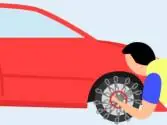
En caso de tener que utilizarlas, las cadenas para circular sobre nieve, deben situarse ...
If you have to use snow chains, they must be fitted...
- Auna a cada lado del eje directriz.one on each side of the steering axle.
- Buna a cada lado del eje motriz.one on each side of the drive axle.
- Ctodas en el mismo lado del vehículo.all on the same side of the vehicle.
ExplanationSnow chains or other approved devices must be fitted on the driving wheels, which receive the power from the engine. The driving wheels may be the front ones (front-wheel drive) or the rear ones (rear-wheel drive).
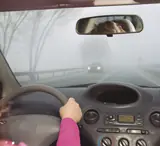
¿Qué vehículos son los más afectados por el viento lateral?
Which vehicles are most affected by side winds?
- ALos camiones.Lorries.
- BLas motocicletas y los ciclomotores.Motorcycles and mopeds.
- CLos turismos.Cars.
ExplanationSide winds mainly affect light two-wheeled vehicles such as motorcycles and mopeds, because they weigh little and are easily thrown off balance by a gust. When overtaking or passing them in strong wind, give them more room.
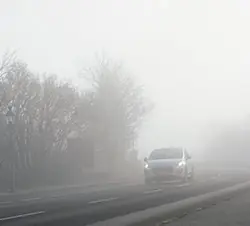
Circula por una calzada en la que debido a la niebla el pavimento está húmedo y resbaladizo. ¿Cómo debe ser la conducción?
You are driving on a carriageway where the surface is damp and slippery because of fog. How should you drive?
- ADinámica y, a una velocidad alta para evitar que las ruedas patinen.Dynamically and at high speed to stop the wheels slipping.
- BSuave, sin movimientos bruscos, aumentando la distancia de seguridad, además de reducir la velocidad.Smoothly, without sudden movements, increasing the safe distance and also reducing speed.
- CIgual que cuando la calzada está seca, ya que los neumáticos no pierden adherencia.The same as when the carriageway is dry, as the tyres do not lose grip.
ExplanationOn a damp, slippery surface tyres lose grip: drive smoothly, without sudden acceleration or braking, reducing speed and increasing the safe distance.
¿En qué ruedas se deben poner las cadenas para nieve?
On which wheels should snow chains be fitted?
- AEn las motrices.The driving wheels.
- BEn las directrices.The steering wheels.
- CEn las delanteras.The front wheels.
ExplanationChains must be fitted on the driving wheels, which, depending on the vehicle model, may be the front wheels, the rear wheels or all four.
El deslumbramiento por los faros de un vehículo que viene de frente de noche:
Being dazzled at night by the headlights of an oncoming vehicle:
- ANo afecta a la visión.Does not affect your vision.
- BReduce momentáneamente la visión; conviene no mirar al foco y fijarse en el borde derecho de la calzada.Reduces your vision for a moment; do not look at the light and focus on the right-hand edge of the carriageway.
- CSe soluciona acelerando.Is solved by accelerating.
ExplanationWhen dazzled, look away from the light, follow the right-hand edge marking and, if necessary, reduce speed.
Al conducir con niebla, ¿influye en la pérdida de adherencia?
When driving in fog, does it affect loss of grip?
- ASí, porque la niebla humedece el asfalto.Yes, because fog makes the road surface wet.
- BNo, nunca.No, never.
- CNo, la niebla solo afecta a la visibilidad.No, fog only affects visibility.
ExplanationFog does not only reduce visibility: the moisture it leaves on the road surface reduces tyre grip, especially if the surface is dirty. That is why in fog you must reduce your speed and increase your safe distance.
Si la calzada está helada...
If the carriageway is icy...
- APodemos usar cadenas o neumáticos con clavos para mejorar la adherencia.We may use snow chains or studded tyres to improve grip.
- BNo podremos usar neumáticos con clavos.We may not use studded tyres.
- CNo podremos circular.We may not drive.
ExplanationOn an icy carriageway you may keep driving with caution and, to improve grip, use snow chains or other anti-skid devices, or special tyres such as studded tyres. Their use is compulsory only when signs require it; in that case they are fitted on the driving wheels.
Frena con mucha fuerza en una curva. ¿Hay peligro?
You brake very hard on a bend. Is there any danger?
- ASí, porque puede reventar alguna rueda.Yes, because a tyre may burst.
- BNo, porque el vehículo frena mejor.No, because the vehicle brakes better.
- CSí, porque el vehículo puede derrapar.Yes, because the vehicle may skid.
ExplanationWhen you brake hard on a bend, part of the tyres' grip is used up by braking and what is left is not enough to hold the vehicle's line: it may skid and leave the bend or cross into the opposite lane. You must slow down before entering the bend and, once in it, avoid braking or accelerating sharply.
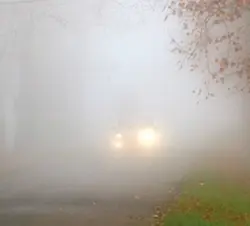
En condiciones de niebla espesa deberá...
In thick fog you must...
- ALlevar encendida la luz antiniebla delantera solamente.Have only the front fog light on.
- BModerar la velocidad.Reduce your speed.
- CCircular por el arcén.Drive on the hard shoulder.
ExplanationIn thick fog visibility is drastically reduced: you must reduce your speed so that you can stop within the distance you can see. The hard shoulder is not for driving on, and the front fog light alone is not enough.
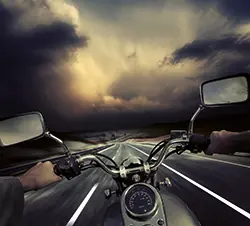
Circular en motocicleta bajo una lluvia intensa obliga a...
Riding a motorcycle in heavy rain means you must...
- Acircular lo más cerca posible del vehículo que va por delante.ride as close as possible to the vehicle in front.
- Bmoderar la velocidad, e incluso detenerse si fuera preciso.reduce your speed, and even stop if necessary.
- Cencender la luz de largo alcance, incluso dentro de poblado.switch on the main beam, even in built-up areas.
ExplanationOn a motorcycle, heavy rain greatly reduces grip and visibility, and the risk of falling is high: you must reduce your speed and even stop if conditions require it.
Circulando en un día de calor...
When driving on a hot day...
- Ase deben hacer más descansos, ya que la fatiga aparece más fácilmente.you should take more breaks, as tiredness sets in more easily.
- Bhay que realizar los mismos descansos que si la temperatura es normal.you should take the same breaks as when the temperature is normal.
- Cse deben hacer menos descansos, para llegar al destino cuanto antes.you should take fewer breaks, to reach your destination as soon as possible.
ExplanationOn very hot days, remember that the symptoms of tiredness or fatigue appear sooner and more easily, and drivers feel more irritable. To combat these symptoms, it is advisable to take more and longer breaks. The most important rules to avoid an accident caused by tiredness are: if you are tired, the best thing is to stop and rest in a suitable place and sleep for about 20 or 30 minutes; rest for 20 to 30 minutes every 2 hours or every 200 kilometres at most; always watch for the signs and symptoms of tiredness.
Si es obligatorio usar cadenas, ¿en qué ruedas hay que ponerlas?
If chains are compulsory, which wheels must you fit them to?
- AEn las ruedas delanteras siempre.Always on the front wheels.
- BEn las ruedas de dirección (delanteras).On the steering (front) wheels.
- CEn las ruedas motrices.On the driving wheels.
ExplanationUnder Article 12.5.2 of the General Vehicle Regulations, when chains are compulsory you must fit them to at least one driving wheel on each side of the vehicle, or else use special tyres. The driving wheels are the ones that transmit traction, whether they are at the front or the rear.
Si sopla un fuerte viento lateral por la izquierda, los conductores de coches deben...
If a strong crosswind is blowing from the left, car drivers should...
- Asujetar el volante con firmeza, pero sin tensión, hacia la izquierda.hold the steering wheel firmly, but without tension, towards the left.
- Bconducir por el arcén despacio.drive slowly on the hard shoulder.
- Csujetar el volante con firmeza, pero sin tensión, hacia la derecha.hold the steering wheel firmly, but without tension, towards the right.
ExplanationA strong wind blowing from the left pushes the car to the right. To compensate, you must hold the steering wheel firmly, but without tension, correcting towards the left, that is, towards the side the wind is coming from, and reduce your speed. Driving on the hard shoulder is not a solution.
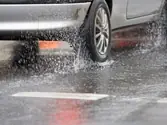
Cuando llueve, ¿cómo afecta la adherencia de las ruedas del vehículo a la calzada?
When it rains, how is the grip of the vehicle's wheels on the carriageway affected?
- ALa adherencia es menor, por lo que las ruedas se agarran menos a la calzada.Grip is lower, so the wheels hold the road less.
- BLa adherencia es mayor, por lo que las ruedas se agarran más a la calzada.Grip is higher, so the wheels hold the road more.
- CLa adherencia es igual que cuando no llueve, por lo que las ruedas se agarran igual.Grip is the same as when it is not raining, so the wheels hold the road in the same way.
ExplanationWhen it rains, the carriageway becomes more slippery because of the water on the surface. This reduces the grip of the vehicle's tyres, that is, the ability of the wheels to “hold” the road surface. In dry conditions grip is higher because the tyres can make better contact with the road surface. When it rains, the water acts as a layer between the tyres and the road, which reduces friction. This can make the vehicle take longer to stop and make it harder to keep control, especially if the carriageway is wet or there is standing water (such as puddles).
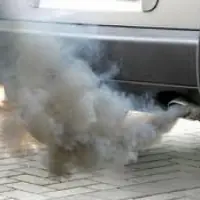
¿De qué color debe ser el humo que eche un vehículo que funcione correctamente?
What colour should the exhaust smoke of a vehicle that is working properly be?
- AGrisGrey.
- BBlancoWhite.
- CTransparenteClear.
ExplanationThe engine of a vehicle in good condition should give off colourless smoke. White smoke would mean that the engine is cold, while grey smoke would mean that the injectors are dirty.
En las curvas, el vehículo tiende a salirse de la carretera por la fuerza centrífuga. ¿Cómo se puede evitar?
On bends, centrifugal force tends to push the vehicle off the road. How can this be avoided?
- AReduciendo la velocidad antes de la curva y acelerando suavemente al salir.By slowing down before the bend and accelerating gently on the way out.
- BFrenando en la curva.By braking in the bend.
- CAcelerando antes de entrar en la curva.By accelerating before entering the bend.
ExplanationCentrifugal force increases with speed, so you must take the bend slowly: brake before entering, with the vehicle straight, go through it without braking and accelerate gently on the way out. Braking in the bend or accelerating into it makes the vehicle more likely to skid or leave the road.
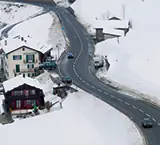
En condiciones meteorológicas o ambientales desfavorables, ¿cómo debe ser la separación con los vehículos que circulan delante?
In poor weather or environmental conditions, how much distance should you keep from the vehicles in front?
- AIgual que cuando son favorables.The same as in good conditions.
- BMenor, para ver mejor a los vehículos que circulan delante.Less, to see the vehicles in front better.
- CMayor, para así disponer de más tiempo y espacio para reaccionar.More, so as to have more time and space to react.
ExplanationIn rain, fog or ice, braking distance increases and visibility decreases, so the gap to the vehicle in front must be greater: this gives you time and space to react to anything unexpected.
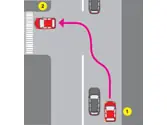
¿Qué tenemos que hacer si al arrancar, las ruedas patinan en la nieve?
What should we do if the wheels spin on snow when moving off?
- AArrancar con las ruedas rectas y la marcha más larga posible, normalmente la segunda.Move off with the wheels straight and in the highest gear possible, usually second.
- BArrancar en primera acelerando con fuerza para vencer el deslizamiento.Move off in first gear, pressing the accelerator hard to overcome the slipping.
- CArrancar con las ruedas giradas y la marcha más corta posible.Move off with the wheels turned and in the lowest gear possible.
ExplanationTo move off on snow, we must set the wheels straight and use the highest gear possible, usually second gear, and let the clutch out slowly, pressing the accelerator as little as possible.
En una zona donde la calzada está helada...
In an area where the carriageway is icy...
- ASe puede mejorar la adherencia con cadenas o neumáticos con clavos.Grip can be improved with chains or studded tyres.
- BNo se pueden utilizar neumáticos con clavos.Studded tyres cannot be used.
- CNo se puede circular.You cannot drive.
ExplanationOn an icy carriageway you may improve grip by using chains or studded tyres, which is essential for the safety of the driver and passengers. According to the General Traffic Regulations, in adverse conditions such as ice or snow it is appropriate to fit these devices to vehicles to avoid skidding and keep proper control of the vehicle on the road. This is supported by the sections dealing with the compulsory use of chains in specific situations and the need to drive safely.
Entre otros, ¿qué efectos produce el éxtasis durante la conducción?
Among other things, what effects does ecstasy have while driving?
- AAumenta la capacidad de concentración.It increases the ability to concentrate.
- BDisminuye la capacidad de concentración.It reduces the ability to concentrate.
- CDisminuye el tiempo de reacción.It reduces reaction time.
ExplanationUnder the effects of ecstasy it is harder to stay concentrated. It can also cause hallucinations, sensitivity to glare, emotional changes, physical and mental exhaustion and even flashbacks.
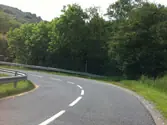
Entra en esta curva a mucha velocidad. ¿Qué puede pasar?
You enter this bend at high speed. What can happen?
- ANada, porque está bien señalizada.Nothing, because it is well signposted.
- BEl vehículo se puede ir hacia la izquierda.The vehicle may go off to the left.
- CEl vehículo se puede ir hacia la derecha.The vehicle may go off to the right.
ExplanationCentrifugal force pushes us to keep going in a straight line, that is, towards the outside of the bend. Centrifugal force must be counteracted by reducing speed.
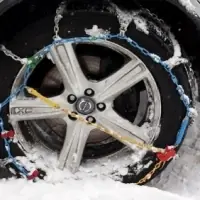
¿Es obligatorio llevar un juego de cadenas para la nieve en el vehículo?
Is it compulsory to carry a set of snow chains in the vehicle?
- ASí.Yes.
- BSólo en invierno.Only in winter.
- CNo.No.
ExplanationUnder Annex XII of the General Vehicle Regulations, cars must carry the V-16 light-emitting hazard warning device, a high-visibility reflective vest and a spare or temporary-use wheel (or an alternative system) with the necessary tools. Snow chains are not part of this compulsory equipment.
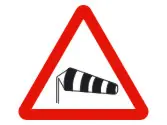
Si sopla un fuerte viento lateral de la izquierda, los conductores de turismos deberán...
If there is a strong side wind from the left, car drivers must...
- Asujetar el volante, con firmeza pero sin rigidez, hacia la izquierda.hold the steering wheel firmly but not rigidly, towards the left.
- Bcircular por el arcén lentamente.drive slowly on the hard shoulder.
- Csujetar el volante, con firmeza pero sin rigidez, hacia la derecha.hold the steering wheel firmly but not rigidly, towards the right.
ExplanationTo correct the deviations caused by the side force of the wind and keep the vehicle on course, we must hold the steering wheel firmly but not rigidly, pushing against the wind: that is, to the left if the wind blows from the left, and to the right if it blows from the right. The sign in the picture, which warns of side winds, does not show which side the wind is blowing from.
Con lluvia, el ciclomotor se agarra mejor a la calzada si...
In the rain, a moped grips the road better if...
- ASe aumenta la presión de inflado del neumático.The tyre pressure is increased.
- BEl neumático conserva el dibujo en toda la superficie.The tyre keeps its tread over the whole surface.
- CSe baja la presión de inflado del neumático.The tyre pressure is reduced.
ExplanationKeeping the tread over the whole surface of the tyre is correct because the tread is there to improve grip on the road surface, especially when it is wet. If the tread is worn or uneven, the tyre can lose grip and the braking distance can increase. So it is important that the tread is in good condition for better grip in the rain.
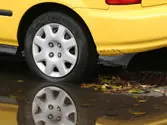
Con los frenos mojados a consecuencia de una lluvia intensa...
With brakes wet from heavy rain...
- ADisminuirá la distancia de frenado.The braking distance will decrease.
- BAumentará la distancia de frenado.The braking distance will increase.
- CQue se mojen los frenos no afecta a su eficacia.Wet brakes are just as effective.
ExplanationWet brakes are less effective, so the vehicle will travel further before stopping; that is, the braking distance will increase. In rain the braking distance can double, and on ice or snow it can be up to 10 times longer.
¿En qué situación el viento implica mayor peligro para la conducción de una motocicleta?
In which situation is wind most dangerous when riding a motorcycle?
- ACuando sople de frente.When it blows head-on.
- BCuando sople de costado y a ráfagasWhen it blows from the side and in gusts.
- CCuando sople por detrás.When it blows from behind.
ExplanationSide winds are especially dangerous for two-wheeled vehicles such as motorcycles, as they are much more vulnerable. When the wind blows from the side and in gusts, riding becomes dangerous because the force of the wind can push the motorcycle off its path. So this situation is the most dangerous for riding a motorcycle.
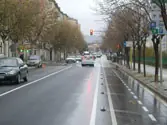
Si tiene que circular con su motocicleta por una zona especialmente deslizante, ¿qué precauciones debe tomar?
If you have to ride your motorcycle through an especially slippery area, what precautions should you take?
- AFrenar en la zona para controlar la trayectoria.Brake in the area to control your path.
- BDisminuir la velocidad antes de llegar y mantener la motocicleta vertical al pasar sobre ella.Reduce speed before reaching it and keep the motorcycle upright as you ride over it.
- CAcelerar para pasar por la zona en el menor tiempo posible.Accelerate to get through the area as quickly as possible.
ExplanationRiding in the rain is dangerous and needs some experience; it puts all your senses on alert and requires full concentration. Take extra care, reduce your speed more than normal and try to ride through as upright as possible.
Cuando llueve, ¿hay que prestar atención a alguna parte de la vía en especial?
When it rains, should you pay attention to any particular part of the road?
- ASí, a los badenes y a las zonas donde pueden formarse charcos.Yes, to dips and to areas where puddles may form.
- BNo, porque conducir bajo la lluvia es peligroso en todas partes.No, because driving in the rain is dangerous everywhere.
- CNo, solo hay que prestar atención cuando haya niños cerca.No, you only need to pay attention when there are children nearby.
ExplanationWhen it rains, road conditions can become dangerous, especially in dips and places where puddles can form. This is because of the risk of aquaplaning and because water can hide other dangers or defects in the road. The General Traffic Regulations, in the section on adverse weather, say that drivers must be especially careful when driving on slippery surfaces and in situations where water may splash or be thrown onto other road users. So the correct answer is to pay attention to these specific areas.
Después de una exposición prolongada a altas temperaturas, ¿conviene revisar si los faros y pilotos del vehículo se han dañado?
After long exposure to high temperatures, is it a good idea to check whether the vehicle's headlights and rear lights have been damaged?
- ASí, para comprobar visualmente su estado y su capacidad de iluminación.Yes, to check visually their condition and how well they light.
- BNo. El acabado de los faros está hecho de un material que resiste factores externos y no se deteriora.No. The headlight finish is made of a material that resists external factors and does not deteriorate.
- CSí, excepto en vehículos relativamente nuevos.Yes, except on relatively new vehicles.
ExplanationYes, it is a good idea to check a vehicle's headlights and rear lights after long exposure to high temperatures. Under the General Vehicle Regulations, lighting devices must work properly, as poor condition can compromise road safety. Heat can affect the materials of the lights, causing them to deteriorate or light less effectively, and lighting is essential for visibility and accident prevention.
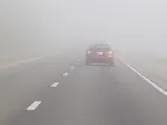
Cuando se circula con niebla, el conductor debe...
When driving in fog, the driver must...
- Aacercarse todo lo posible al vehículo que circula delante para poder verlo mejor.get as close as possible to the vehicle in front to see it better.
- Badaptar la velocidad a las condiciones atmosféricas de visibilidad.adapt their speed to the visibility conditions.
- Cparar en la calzada, hasta que desaparezca la niebla.stop on the carriageway until the fog clears.
ExplanationThe big problem with driving in fog is that visibility is reduced and the road surface can be slippery. As our visibility is reduced, we must adapt our speed to our field of vision and use the right lights. FRONT FOG LIGHT: fitting and using it is NOT compulsory; it is white or selective yellow; it may be used, voluntarily, in fog, heavy rain, snowfall, clouds of smoke or dust or similar conditions; it may also be used on narrow roads with many bends, that is, roads with a carriageway 6.5 m wide or less that are signposted with “dangerous bends” signs. REAR FOG LIGHT: fitting and using it is compulsory; it is red; it must be used in THICK fog, VERY heavy rain, HEAVY snowfall or DENSE clouds of smoke or dust. During the day, the front fog light may be on with just the sidelights, but it may also be used together with the dipped headlights or main beam. At night, it must be used at least with the dipped headlights. During the day, the rear fog light must be used at least together with the front fog light or the dipped headlights. At night, it must be used at least with the dipped headlights.
Llevar las ventanillas del vehículo bajadas es un factor que ...
Driving with the vehicle's windows down is a factor that...
- Aaumenta el consumo de carburante.increases fuel consumption.
- Bno influye en el consumo de carburante.does not affect fuel consumption.
- Creduce el consumo de carburante.reduces fuel consumption.
ExplanationWith the windows down, the vehicle's aerodynamics get worse: air resistance increases, the engine has to work harder and uses more fuel, especially at high speeds. To ventilate the inside of the vehicle, it is better to use the vehicle's own ventilation system.
Si conducimos de noche para evitar los atascos debemos tener en cuenta que...
If we drive at night to avoid traffic jams, we must bear in mind that...
- Ael sueño o la somnolencia al volante aparecen con mayor facilidad.sleepiness or drowsiness at the wheel appears more easily.
- Bno es necesario descansar en trayectos largos, ya que durante la noche no aparece la fatiga.there is no need to rest on long journeys, as tiredness does not appear at night.
- Cla oscuridad impide la aparición del sueño, pero favorece la aparición de la fatiga.darkness prevents sleepiness but makes tiredness more likely.
ExplanationAt night the body is programmed to sleep: sleepiness and drowsiness appear more easily, made worse by monotony and darkness, even if there is less traffic.
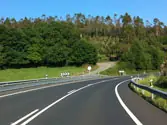
En esta curva pisa el freno muy fuerte. ¿Hay peligro?
You brake very hard on this bend. Is there any danger?
- ASí, porque puede reventar alguna rueda.Yes, because a tyre may burst.
- BNo, porque el vehículo frena mejor.No, because the vehicle brakes better.
- CSí, porque el vehículo puede derrapar.Yes, because the vehicle may skid.
ExplanationWhen you brake very hard, the wheels may lock, causing a loss of grip on the road surface, and centrifugal force will make the vehicle tend to go straight on.
¿Qué nombre recibe el dispositivo a la altura de la frente que evita el deslumbramiento del conductor debido al sol?
What is the name of the device at forehead height that stops the driver being dazzled by the sun?
- ASombrilla quitasolSunshade umbrella.
- BParasolSun visor.
- CDispositivo antideslumbramientoAnti-dazzle device.
ExplanationThe sun visor is a kind of flap that folds down and to the left and protects you from the sun's rays and from being dazzled while driving.
¿Qué podemos añadir a los neumáticos de nieve para mejorar su adherencia?
What can we add to snow tyres to improve their grip?
- ACadenas.Chains.
- BClavos sin cantos redondeados.Studs without rounded edges.
- CNo se le puede añadir nada a los neumáticos.Nothing can be added to tyres.
ExplanationIf studs are fitted to tyres to improve grip in snow, they must have rounded edges and stick out no more than two millimetres from the surface. Even so, the most common way to improve grip in bad weather is chains.
Las cadenas para nieve, en caso de usarlas obligatoriamente, las tendremos que instalar en...
If snow chains are compulsory, we must fit them on...
- Alas ruedas delanteras.the front wheels.
- Blas ruedas directrices.the steering wheels.
- Clas ruedas motrices.the driving wheels.
ExplanationSnow chains are fitted on the driving wheels, which may be the front or the rear wheels depending on the vehicle model. The driving wheels are usually the front ones; in some cases they may be the rear ones, or even all four wheels.
Para evitar el deslumbramiento de otros usuarios deberá ...
To avoid dazzling other road users you must…
- ASustituir el alumbrado de largo alcance o carretera por el de corto alcance o de cruce.Switch from the main beam to dipped headlights.
- BUtilizar siempre el alumbrado de largo alcance.Always use the main beam.
- CAumentar la velocidad.Increase your speed.
ExplanationTo avoid dazzling others you must switch from the main beam to dipped headlights as soon as you notice that this could happen, especially when meeting other vehicles or driving behind them (Article 102 of the General Traffic Regulations).
En caso de deslumbramiento al volante:
If you are dazzled at the wheel:
- ADisminuye la velocidad y, en caso necesario, detén el vehículo con la máxima precaución.Reduce speed and, if necessary, stop the vehicle with the greatest care.
- BCierra los dos ojos para evitar las luces que deslumbran.Close both eyes to avoid the dazzling lights.
- CMira fijamente hacia las luces que te deslumbran para que el ojo se acostumbre rápidamente a ese nivel de luminosidad.Stare at the dazzling lights so that your eyes quickly get used to that level of brightness.
ExplanationWhen dazzled, reduce speed as much as necessary, even stopping, and look towards the right-hand edge of the carriageway so as not to lose your path. Closing your eyes or staring at the lights only makes the momentary blindness last longer.
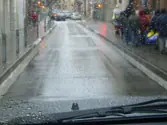
La conducción, en condiciones climatológicas adversas como la lluvia...
Driving in bad weather conditions such as rain...
- Aexige al conductor tomar más precauciones por la falta de adherencia de los neumáticos.requires the driver to take more precautions because of the lack of tyre grip.
- Bno exige del conductor tomar precauciones, salvo, en casos de lluvia muy intensa.does not require the driver to take precautions, except in very heavy rain.
- Cúnicamente disminuye la visibilidad.only reduces visibility.
ExplanationRain reduces the grip of the tyres on the road and makes it harder to see, so the braking distance can double.
El aquaplaning ¿afecta a la adherencia en caso de frenado?
Does aquaplaning affect grip when braking?
- ASí, hay mayor adherencia.Yes, there is more grip.
- BSí, hay menos adherencia.Yes, there is less grip.
- CNo afecta.It has no effect.
ExplanationAquaplaning happens on very wet roads when the tyre cannot clear all the water in its path, which makes it lose contact with, and grip on, the road surface.
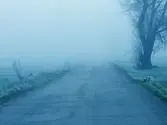
Circulando con niebla es aconsejable...
When driving in fog, it is advisable to...
- Acircular con las ventanillas abiertas para obtener mayor visibilidad.drive with the windows open to see better.
- Bmantener el habitáculo bien ventilado para evitar que se empañen los cristales.keep the inside of the car well ventilated to stop the windows misting up.
- Cponer la calefacción muy alta para conducir cómodamente.turn the heating up very high to drive comfortably.
ExplanationFog reduces visibility not only because there is less light but also because the windscreen and rear window mist up on the inside.
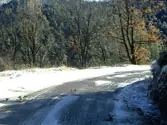
En caso de calzada helada...
If the carriageway is icy...
- APara mejorar la adherencia podremos usar cadenas o ruedas con clavos.We may use chains or studded tyres to improve grip.
- BNo podremos usar ruedas con clavos.We may not use studded tyres.
- CNo podremos circular.We may not drive.
ExplanationWe can improve grip on ice or snow by using: snow chains; other approved devices, such as textile snow socks; winter tyres (MS), specially designed for snow and mud; studded tyres, whose studs must have rounded edges and stick out no more than two millimetres from the surface.
¿Está permitido parar en las proximidades de una curva de visibilidad reducida?
Is it allowed to stop near a bend with reduced visibility?
- ASí, en el arcén no transitable.Yes, on a hard shoulder that cannot be driven on.
- BNo, porque está prohibido.No, because it is prohibited.
- CSí, si no obstaculiza la circulación.Yes, if it does not obstruct traffic.
ExplanationStopping is prohibited on bends and brows of hills with reduced visibility and near them, whether on the carriageway or on the hard shoulder.
All topics
- Definitions
- Documents and penalty points
- The driver's condition
- Duties of drivers and pedestrians
- Vehicle safety devices
- Vehicle controls and equipment
- Vehicle lights and horn
- Traffic signs, markings and signals
- The road and its lanes
- Speed and distances
- Manoeuvres
- Right of way
- Carrying passengers and loads
- Vehicle mechanics and maintenance
- Road accidents and first aid
- Defensive and eco-driving
Independent app: not affiliated with or endorsed by the DGT (Spain's Directorate-General for Traffic) or the Ministry of the Interior. The official exam is booked with the DGT and taken at its test centres. The questions here are practice material; the DGT's official question bank is not public.
Basado en datos de la Agencia Estatal Boletín Oficial del Estado (https://www.boe.es). Textos consolidados de carácter meramente informativo. La AEBOE no patrocina ni respalda este sitio.
Parte de las preguntas procede de los tests de la revista «Tráfico y Seguridad Vial» de la DGT, reproducidos con indicación de la fuente.