
DGT test · 270 questions
Vehicle controls and equipment · Page 6 of 6
The controls and equipment of a car — mirrors, wipers, dashboard, warning lights — and the rules for using them.
Questions in this topic, with answers
270 questions, 50 per page, with the correct answer and the explanation. Page 6 of 6.
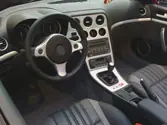
En caso de activarse el sistema avanzado de ayuda a la conducción “AEBS”, ¿de qué forma actuará?
If the advanced driver assistance system 'AEBS' is activated, how will it act?
- AActuará tomando el control de la dirección del vehículo y realizando una maniobra evasiva.It will take control of the vehicle's steering and make an evasive manoeuvre.
- BEmitirá un rápido parpadeo de las luces de frenado cuando se apliquen los frenos de manera potente ante una situación de emergencia.It will make the brake lights flash quickly when the brakes are applied hard in an emergency.
- CEmitirá un aviso al conductor y si este no responde tomará el control del vehículo para detenerlo.It will give the driver a warning and, if the driver does not respond, it will take control of the vehicle to stop it.
ExplanationAEBS, or the urban and interurban automatic emergency braking system: when the driver is distracted and there is a risk of a rear-end collision, the system can detect imminent danger and act in two ways: it gives the driver a warning (visual/audible) and, if the driver ignores it, it takes control of the vehicle to stop it with emergency braking.
Hay que mirar los retrovisores...
You should look in the mirrors...
- Acon regularidad mientras conduces.regularly while you drive.
- Bsolo cuando tengas que adelantar.only when you have to overtake.
- Csolo al realizar maniobras.only when manoeuvring.
ExplanationThe mirrors should be checked regularly throughout the journey, every few seconds, and not only when overtaking or manoeuvring. This way the driver always knows which vehicles are behind or approaching and can anticipate, for example, before braking or changing lanes.
¿Cuál de estos vehículos es un ciclo?
Which of these vehicles is a cycle?
- AEl ciclomotor.The moped.
- BLa bicicleta.The bicycle.
- CEl patinete eléctrico.The electric scooter.
ExplanationA cycle is a vehicle with at least two wheels powered exclusively or mainly by the muscular energy of the people riding it, usually by means of pedals. A bicycle is a cycle; a moped and an electric scooter are driven by a motor, so they are not cycles.
En las motocicletas, la postura del conductor ha de ser...
On motorcycles, the rider's position should be...
- Alo más aerodinámica posible, encorvando el cuerpo cuanto más mejor.as aerodynamic as possible, bending the body as much as possible.
- Bsuelta y no forzada, sin encorvar el cuerpo más de lo necesario.loose and not forced, without bending the body more than necessary.
- Cun poco forzada, para evitar relajamientos.a little forced, to avoid relaxing too much.
ExplanationA motorcycle rider's position should be loose and not forced, always adapted to the type of motorcycle, and it should allow the rider to use the controls easily. In any case, the rider should feel comfortable, without forcing any particular position.

En una motocicleta provista de cambio automático, el freno delantero se acciona con...
On a motorcycle with automatic transmission, the front brake is operated with...
- Ala mano derecha.the right hand.
- Bla mano izquierda.the left hand.
- Cel pie derecho.the right foot.
ExplanationIf the motorcycle is automatic, the front brake is operated with the right hand and the rear brake with the left hand. There are no controls at the feet.
El sistema avanzado de ayuda a la conducción conocido como “StartStop”, ¿en qué momento apaga el motor del vehículo?
When does the advanced driver assistance system known as 'Start-Stop' switch off the vehicle's engine?
- ACuando el motor está al ralentí.When the engine is idling.
- BCuando se pisa el embrague.When the clutch is pressed.
- CCuando el motor está muy revolucionado.When the engine is running at high revs.
ExplanationThe Start-Stop system switches off the engine when the vehicle stops and the engine is idling, for example at traffic lights, and starts it again when you press the clutch or release the brake. This saves fuel and reduces emissions while the car is stopped.
En una motocicleta la maneta derecha corresponderá...
On a motorcycle, the right lever is for...
- AAl embrague.the clutch.
- BAl freno trasero.the rear brake.
- CAl freno delantero.the front brake.
ExplanationThe right lever on the motorcycle is for the front brake. The left lever is for the rear brake or the clutch.
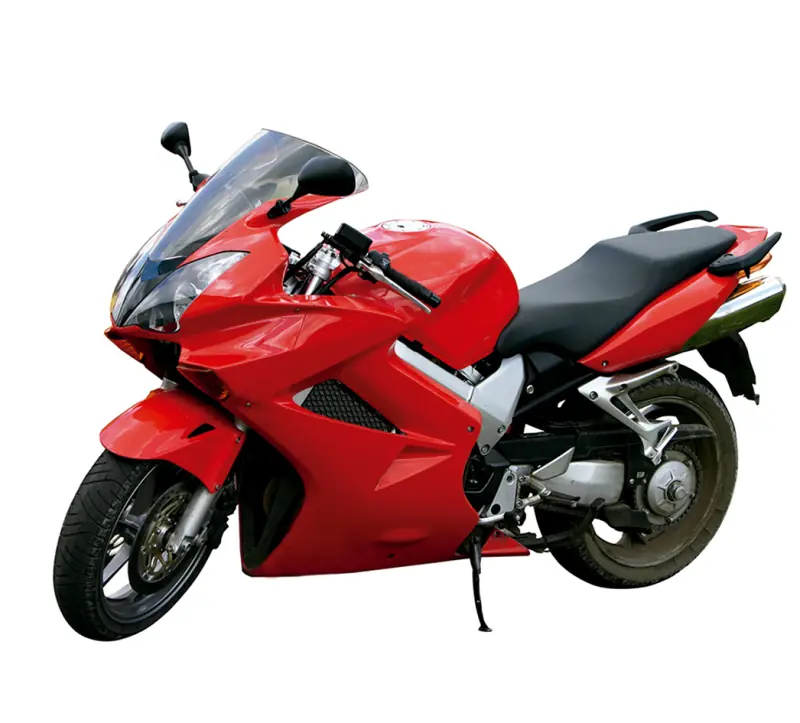
¿Qué puede verse afectado si cambia el carenado de una motocicleta?
What can be affected if you change a motorcycle's fairing?
- ALa estética, exclusivamente.Only its appearance.
- BLa aerodinámica y el consumo.The aerodynamics and fuel consumption.
- CLa visibilidad del vehículo.The vehicle's visibility.
ExplanationThe fairing guides the air around the motorcycle: changing it alters the aerodynamics and, with them, how the motorcycle cuts through the air, its stability at high speed and its fuel consumption.
¿Con qué mano se acciona la maneta de embrague en una motocicleta?
Which hand operates the clutch lever on a motorcycle?
- ACon la derecha.The right hand.
- BCon la izquierda.The left hand.
- CCon la derecha o la izquierda indistintamente.Either the right or the left hand.
ExplanationWe use the right hand for the front brake, the left hand for the clutch, the right foot for the rear brake and the left foot for the gear change.
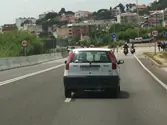
El sistema ADAS de mantenimiento de carril (LKA), después de emitir un aviso y no recibir respuesta por parte del conductor, ¿cómo actúa?
How does the lane keeping assist (LKA) ADAS system act after giving a warning and getting no response from the driver?
- ADetiene el vehículo y enciende las luces de emergencia para evitar un accidente.It stops the vehicle and switches on the hazard warning lights to avoid an accident.
- BDetiene el vehículo ante la presencia de un obstáculo.It stops the vehicle when there is an obstacle.
- CRealiza una corrección en la dirección o en los frenos para que el vehículo retorne hacia el centro del carril.It corrects the steering or applies the brakes so that the vehicle returns towards the centre of the lane.
ExplanationIf the driver does not respond to the warning, the lane keeping assist (LKA or LKS) corrects the steering or brakes one of the wheels to bring the vehicle back to the centre of the lane. A simple lane departure warning (LDW) only warns. Neither of them acts if you use the indicator or steer decisively.
El espejo retrovisor sirve para...
The mirror is used to...
- APermitir visibilidad hacia atrás y hacia los lados del vehículo.give visibility behind and to the sides of the vehicle.
- BPermitir visibilidad solamente hacia atrás.give visibility only behind.
- CPermitir visibilidad en los ángulos muertos del vehículo.give visibility into the vehicle's blind spots.
ExplanationMirrors are used to give visibility behind and to the sides of the vehicle.
En la disposición más generalizada de los mandos de una motocicleta, ¿qué dispositivo se acciona con el pie izquierdo?
In the most common layout of motorcycle controls, which device is operated with the left foot?
- AEl freno de la rueda trasera.The rear wheel brake.
- BEl freno de la rueda delantera.The front wheel brake.
- CEl cambio de velocidades.The gear change.
ExplanationIn the most common layout of motorcycle controls, the left foot works the gear change pedal. The rear brake is worked with the right foot and the front brake with the right-hand lever on the handlebar.
¿De qué manera contribuyen a la seguridad vial los sistemas avanzados de ayuda a la conducción, conocidos como ADAS?
How do advanced driver assistance systems, known as ADAS, contribute to road safety?
- ADisminuyen el tiempo de reacción del conductor.They reduce the driver's reaction time.
- BMejoran notablemente la seguridad activa del vehículo.They greatly improve the vehicle's active safety.
- CPermiten al conductor reducir su nivel de alerta.They allow the driver to lower their level of alertness.
ExplanationADAS contribute to road safety because they improve the vehicle's active safety, helping to prevent accidents before they happen. They assist the driver with functions such as collision warning, automatic emergency braking or lane control. They do not replace the driver's attention or reduce their level of alertness, but they do give extra support for safer driving.
Si una motocicleta está obligada a llevar un solo espejo retrovisor, ¿en qué lado lo debe llevar?
If a motorcycle is required to have only one rear-view mirror, on which side must it be?
- AEn el lado derecho.On the right-hand side.
- BEn el lado izquierdo.On the left-hand side.
- CEn el derecho o en el izquierdo, es indiferente.On the right or the left, it makes no difference.
ExplanationUnder Annex III of the General Vehicle Regulations, motorcycles that cannot exceed 100 km/h are only required to have one exterior mirror, and it must be on the left-hand side, from where you watch vehicles that are overtaking. Those that exceed that speed must have both.
Como norma general, ¿con qué pie se acciona el pedal del cambio de una motocicleta?
As a general rule, which foot do you use to operate the gear pedal on a motorcycle?
- ACon el pie izquierdo.The left foot.
- BCon el pie derecho.The right foot.
- CEl cambio de marchas de una motocicleta no se acciona con el pie.You do not change gear on a motorcycle with your foot.
ExplanationAs a general rule, on a motorcycle the gear pedal is on the left side and you operate it with your left foot. The right foot operates the rear brake; the throttle is the right handlebar grip and the clutch is the left lever.
Si se emite un aviso y el conductor no responde, ¿qué hace el sistema ADAS “Mantenimiento de carril (LKS)”?
If a warning is given and the driver does not respond, what does the ADAS ‘Lane Keeping System (LKS)’ do?
- ADetiene el vehículo y enciende las luces de emergencia para evitar un accidente.It stops the vehicle and switches on the hazard warning lights to avoid an accident.
- BDetiene el vehículo ante la presencia de un obstáculo.It stops the vehicle when there is an obstacle.
- CCorrige la dirección o actúa sobre los frenos para devolver el vehículo al centro del carril.It corrects the steering or applies the brakes to bring the vehicle back to the centre of the lane.
ExplanationThe lane keeping system (LKS) monitors the lines on the road. If the vehicle drifts out of its lane with no apparent intention and the driver does not respond to the warning, it corrects the steering or brakes a wheel to bring it back to the centre of the lane. It does not stop the vehicle: that is the job of other systems, such as emergency braking.
¿Cuándo avisa el sistema de asistencia a la conducción llamado "LDW" al conductor?
When does the driver assistance system called 'LDW' warn the driver?
- ACuando el vehículo se mueve lateralmente y se ha puesto el intermitente.When the vehicle moves sideways and the indicator is on.
- BCuando el vehículo cambia de dirección sin intención del conductor.When the vehicle changes direction without the driver meaning to.
- CCuando el vehículo cambia de carril sin intención del conductor.When the vehicle changes lanes without the driver meaning to.
ExplanationThe advanced driver assistance system known as 'LDW' (Lane Departure Warning) is designed to warn drivers when the vehicle starts to leave its lane unintentionally. This technology is crucial for road safety, because it helps prevent accidents caused by distraction or lack of attention. According to the General Traffic Regulations, drivers must keep control of the vehicle's steering at all times, which makes LDW a valuable tool for spotting unintended lane changes.
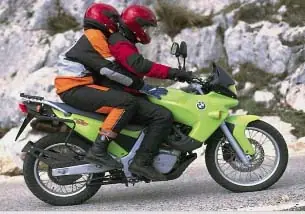
Si circulas con una motocicleta ¿con que mano accionarás la maneta de freno trasero?
If you are riding a motorcycle, what do you use to operate the rear brake lever?
- ACon la mano derecha.The right hand.
- BCon la mano izquierda.The left hand.
- CCon el pie derecho.The right foot.
ExplanationOn motorcycles with a manual gearbox, the rear brake is not operated with a lever but with the pedal on the right-hand side, that is, with the right foot. The levers on the handlebar are the front brake, on the right, and the clutch, on the left.
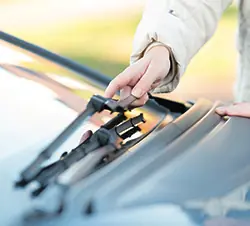
¿Cuándo se deben cambiar las escobillas del limpiaparabrisas?
When should the wiper blades be changed?
- ACada dos años obligatoriamente.Every two years, compulsorily.
- BCuando las gomas estén dañadas.When the rubbers are damaged.
- CSiempre antes de pasar la inspección técnica del vehículo.Always before the vehicle inspection.
ExplanationThere is no legal deadline: the blades are replaced when their rubbers are hardened or damaged, because then they do not clear the water properly and they reduce visibility.
¿Se podrá sustituir el retrovisor exterior por uno interior panorámico?
Can an exterior rear-view mirror be replaced with a panoramic interior mirror?
- ANo, porque está prohibido.No, because it is prohibited.
- BSí, tanto el izquierdo como el derecho.Yes, both the left and the right one.
- CEl izquierdo no, el derecho sí.Not the left one, but the right one can.
ExplanationThe left exterior rear-view mirror is compulsory and cannot be replaced with any other. The right exterior rear-view mirror, in cases where it must be used (that is, when the interior mirror does not give a good view of the road), cannot be replaced with the panoramic interior mirror either.
All topics
- Definitions
- Documents and penalty points
- The driver's condition
- Duties of drivers and pedestrians
- Vehicle safety devices
- Vehicle lights and horn
- Traffic signs, markings and signals
- The road and its lanes
- Speed and distances
- Manoeuvres
- Right of way
- Carrying passengers and loads
- Driving safely in difficult conditions
- Vehicle mechanics and maintenance
- Road accidents and first aid
- Defensive and eco-driving
Independent app: not affiliated with or endorsed by the DGT (Spain's Directorate-General for Traffic) or the Ministry of the Interior. The official exam is booked with the DGT and taken at its test centres. The questions here are practice material; the DGT's official question bank is not public.
Basado en datos de la Agencia Estatal Boletín Oficial del Estado (https://www.boe.es). Textos consolidados de carácter meramente informativo. La AEBOE no patrocina ni respalda este sitio.
Parte de las preguntas procede de los tests de la revista «Tráfico y Seguridad Vial» de la DGT, reproducidos con indicación de la fuente.