
DGT test · 270 questions
Vehicle controls and equipment · Page 2 of 6
The controls and equipment of a car — mirrors, wipers, dashboard, warning lights — and the rules for using them.
Questions in this topic, with answers
270 questions, 50 per page, with the correct answer and the explanation. Page 2 of 6.
Si el retrovisor interior de un turismo no permite ver suficientemente la vía por detrás, ¿qué espejos retrovisores debe llevar obligatoriamente?
If a car's interior rear-view mirror does not give a sufficient view of the road behind, which rear-view mirrors must it have?
- AEl retrovisor interior y el retrovisor exterior derecho.The interior mirror and the right-hand exterior mirror.
- BLos retrovisores exteriores izquierdo y derecho.The left-hand and right-hand exterior mirrors.
- CSólo el retrovisor interior y el retrovisor exterior izquierdo.Only the interior mirror and the left-hand exterior mirror.
ExplanationUnder Annex III of the General Vehicle Regulations, a car must have the interior mirror and the left-hand exterior mirror. If the interior mirror does not give a view of the road behind, for example because of the load, it becomes optional and a second exterior mirror on the right-hand side is compulsory.
Un diseño poco ergonómico del asiento puede producir...
A seat with a poor ergonomic design can cause...
- Aaparición de fatiga al volante.tiredness at the wheel.
- Baumento de la capacidad de reacción.an increase in the ability to react.
- Cdisminución del tiempo de reacción.a reduction in reaction time.
ExplanationA seat with a poor ergonomic design makes driving less comfortable, so it makes tiredness at the wheel more likely.
En una motocicleta dotada de cambio de marchas, ¿dónde se encuentra la palanca para efectuar el cambio?
On a motorcycle with gears, where is the gear lever?
- AEn el lado izquierdo, accionándolo con el pie izquierdo.On the left side, operated with the left foot.
- BEn el lado derecho, accionándolo con el pie derecho.On the right side, operated with the right foot.
- CEn la parte derecha del manillar, accionándolo con la mano derecha.On the right side of the handlebars, operated with the right hand.
ExplanationThe gear lever is operated with the left foot. With the right foot we operate the rear brake.
Si se activa el sistema avanzado de ayuda a la conducción (AEBS), ¿cómo actuará?
If the advanced driver assistance system AEBS is activated, what will it do?
- ATomará el control de la dirección del vehículo para realizar una maniobra evasiva.It will take control of the steering to make an evasive manoeuvre.
- BLas luces de freno parpadearán rápidamente cuando se frene con fuerza en una situación de emergencia.The brake lights will flash quickly when braking hard in an emergency.
- CAvisará al conductor y, si este no responde, tomará el control del vehículo para detenerlo.It will warn the driver and, if the driver does not respond, it will take control of the vehicle to stop it.
ExplanationThe advanced emergency braking system (AEBS) is an active safety system designed to prevent collisions. Under the rules on driver assistance, AEBS must be able to warn the driver and, if there is no response, take control of the vehicle to stop it. This is supported by the General Traffic Regulations, which stress the importance of active safety and of technologies that reduce the risk of road accidents, helping to respond quickly in emergencies.
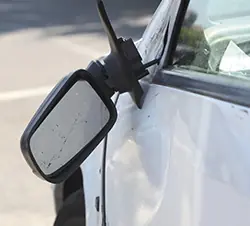
A un turismo, ¿le está permitido circular si tiene roto el espejo retrovisor exterior izquierdo?
Is a car allowed to be driven if its left exterior mirror is broken?
- ASí, porque el retrovisor exterior izquierdo no es obligatorio.Yes, because the left exterior mirror is not compulsory.
- BSólo si el vehículo tiene espejo retrovisor interior.Only if the vehicle has an interior mirror.
- CNo, cuando el conductor no pueda ver la circulación por detrás del vehículo.No, when the driver cannot see the traffic behind the vehicle.
ExplanationThe compulsory mirrors must let the driver see the traffic behind. If the broken mirror prevents this, the vehicle does not meet the rules and cannot be driven.
Un conductor circula por una carretera muy mojada; si para frenar necesita pisar el pedal del freno hasta abajo, ¿a qué puede deberse principalmente?
A driver is on a very wet road. If they have to press the brake pedal right to the floor to brake, what is the most likely cause?
- AA una avería en el sistema de frenos.A fault in the braking system.
- BA que el sistema ABS necesita una revisión.The ABS needs checking.
- CAl enfriamiento excesivo de los discos de freno.The brake discs have cooled down too much.
ExplanationIf you have to press the brake pedal right down to brake, the most likely cause is a fault in the brake circuit, such as a lack of fluid or air in the system. Water can briefly reduce braking efficiency, but it does not make the pedal sink; you should stop and have it checked.
¿Cuántos espejos tendrá que llevar un cuadriciclo ligero que disponga de carrocería cerrada?
How many mirrors must a light quadricycle with closed bodywork have?
- ADos, uno interior y otro exterior izquierdo.Two, one interior and one left exterior.
- BDos, un exterior derecho y otro izquierdo.Two, one right exterior and one left exterior.
- CDos, uno interior y otro exterior derecho.Two, one interior and one right exterior.
ExplanationQuadricycles with closed bodywork must have at least one interior mirror and one left exterior mirror.
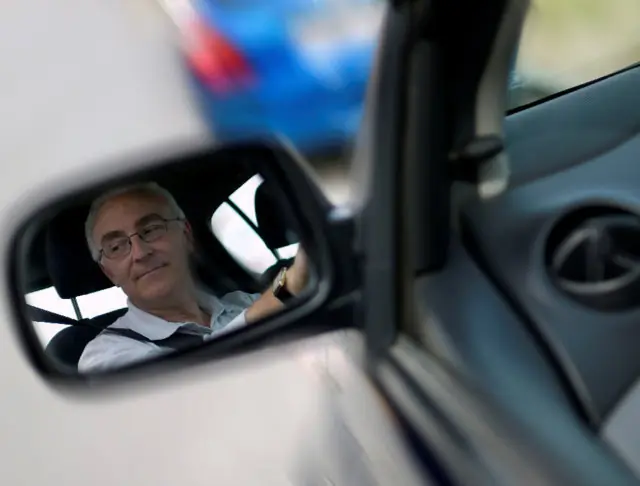
Un turismo, ¿está obligado a llevar el espejo retrovisor izquierdo?
Must a car have a left mirror?
- ASí, es obligatorio.Yes, it is compulsory.
- BNo. Es opcional.No. It is optional.
- CSolo cuando el retrovisor interior no tiene una visión completa de la vía.Only when the interior mirror does not give a full view of the road.
ExplanationYes. Cars must have the interior mirror and the left exterior mirror. The right exterior mirror is optional, unless the interior mirror does not give a good view of the road behind, in which case it is also compulsory (Annex III of the General Vehicle Regulations).
¿Cuántos espejos retrovisores está obligado a llevar un ciclomotor?
How many mirrors must a moped have?
- ADos, uno a cada lado.Two, one on each side.
- BSólo uno en el lado izquierdo.Only one, on the left side.
- CSólo uno en el lado derecho.Only one, on the right side.
ExplanationA moped only has to have the left mirror, because a vehicle that does not go faster than 100 km/h does not have to have two.
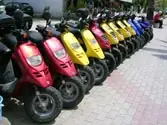
Una motocicleta automática, ¿dónde tendrá el freno trasero?
Where is the rear brake on an automatic motorcycle?
- AEn la maneta derecha.On the right lever.
- BEn la maneta izquierda.On the left lever.
- CEn el pié izquierdo.At the left foot.
ExplanationAn automatic motorcycle has the rear brake on the left lever and the front brake on the right lever.
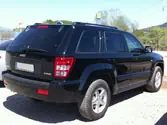
¿Un conductor novel puede llevar cortinillas oscuras en el cristal posterior del vehículo?
Can a novice driver have dark blinds on the rear window of the vehicle?
- ASí.Yes.
- BNo.No.
- CSí, llevando dos retrovisores exteriores, uno a la derecha y otro a la izquierda.Yes, if the vehicle has two exterior mirrors, one on the right and one on the left.
ExplanationIt is forbidden to drive with tinted or coloured glass that is not approved. Remember that, in any case, the vehicle's glass surfaces must give the driver a clear view of the whole road, especially ahead, to the right and to the left, without interference from films or stickers. So the windscreen and the front side windows may not be tinted or have films. Adhesive films or sun blinds are only allowed on the rear windows, and for this the vehicle must have two exterior mirrors. A novice driver, like any other driver, may have blinds on the rear window of their vehicle as long as the right mirror is fitted, because they will not have enough view through the interior mirror. The left mirror is always compulsory.
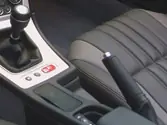
El freno de mano generalmente actúa sobre las ruedas...
The handbrake usually works on the...
- ADelanteras.front wheels.
- BTraseras.rear wheels.
- CTanto delanteras como traseras.front and rear wheels.
ExplanationAs a general rule, the handbrake works on the rear wheels.
En una motocicleta la maneta situada en el lado derecho del manillar actuará sobre...
On a motorcycle, the lever on the right side of the handlebars operates...
- AEl freno trasero.the rear brake.
- BEl freno delantero.the front brake.
- CEl acelerador.the throttle.
ExplanationThe lever on the right of the handlebars operates the front brake, whether the motorcycle is automatic or has gears.
¿Con qué frecuencia debemos mirar el espejo retrovisor interior circulando por una vía urbana?
How often should we look in the interior mirror when driving on an urban road?
- ADe vez en cuando.From time to time.
- BCada 5 ó 10 segundos.Every 5 or 10 seconds.
- CCada 2 ó 3 segundos.Every 2 or 3 seconds.
ExplanationHow often you look in the mirrors depends on the road. On urban roads it is every 5 to 10 seconds; on roads with no traffic and on dual carriageways (autovías), every 10 to 15 seconds.
En las motocicletas, la postura del conductor debe ser...
On a motorcycle, the rider's posture should be...
- Alo más aerodinámica posible, encorvando el cuerpo todo lo posible.as aerodynamic as possible, hunching the body as much as possible.
- Brelajada y no forzada, sin encorvar el cuerpo más de lo necesario.relaxed and not forced, without hunching the body more than necessary.
- Cligeramente tensa, para evitar una excesiva relajación.slightly tense, to avoid being too relaxed.
ExplanationYour posture on a motorcycle should be relaxed and natural, with your arms slightly bent and without hunching your body more than necessary, so that you can react quickly and do not get tired. Article 18.1 of the RGC requires the driver to keep their freedom of movement and the necessary field of vision.
¿Cómo se deben ajustar los espejos del vehículo?
How should the vehicle's mirrors be adjusted?
- ACon el vehículo detenido en una carretera recta.With the vehicle stationary on a straight road.
- BCon el vehículo en movimiento para poder ver mejor.With the vehicle moving, so you can see better.
- CCon el vehículo detenido o en movimiento, da igual.With the vehicle stationary or moving; it makes no difference.
ExplanationMirrors are adjusted before setting off, with the vehicle stationary and, if possible, on a straight, level stretch, once you are sitting in the driving position. Doing it while moving is distracting and makes you take your eyes off the road; also, on a straight road you can check the rear field of vision better.
¿Estamos obligados a llevar dos espejos retrovisores exteriores en nuestro vehículo?
Must our vehicle have two exterior mirrors?
- ANo, sólo es obligatorio el retrovisor izquierdo.No, only the left mirror is compulsory.
- BSí, el derecho y el izquierdo, pudiendo ser sustituido el derecho por uno interior panorámico.Yes, the right and the left, and the right one can be replaced by a panoramic interior mirror.
- CNo, sólo es obligatorio el retrovisor derecho.No, only the right mirror is compulsory.
ExplanationThe right exterior mirror is only compulsory when the interior mirror does not give a view 60 metres behind and 20 metres wide.
En una motocicleta el acelerador y el freno delantero se manejan con...
On a motorcycle, the throttle and the front brake are operated with...
- ALa mano izquierda.the left hand.
- BLa mano derecha.the right hand.
- CEl acelerador con la mano derecha y el freno delantero con el pie derecho.the throttle with the right hand and the front brake with the right foot.
ExplanationOn a motorcycle, both the throttle and the front brake are operated with the right hand.
En el campo de visión definido por la normativa, ¿para qué sirve el retrovisor de un vehículo?
Within the field of vision set by the regulations, what is a vehicle's rear-view mirror for?
- APermite ver claramente lo que hay detrás del vehículo, pero no a los lados.It lets you see clearly what is behind the vehicle, but not to the sides.
- BReducir la resistencia al viento del vehículo.To reduce the vehicle's wind resistance.
- CPermite ver claramente lo que hay detrás y a los lados del vehículo.It lets you see clearly what is behind and to the sides of the vehicle.
ExplanationUnder Annex III of the General Vehicle Regulations, the purpose of the rear-view mirror is to give clear visibility to the rear and sides of the vehicle, within the field of vision set by the regulations. It has no aerodynamic function.
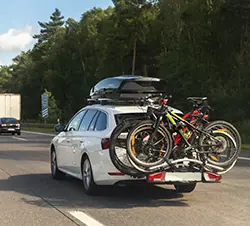
¿Puede circular con su turismo si el equipaje no permite una visión adecuada de la vía por el espejo retrovisor interior?
Can you drive your car if the luggage does not allow a proper view of the road through the interior mirror?
- ANo; en ningún caso la carga puede disminuir la visibilidad a través del espejo retrovisor.No; the load may never reduce visibility through the mirror.
- BSí, si el vehículo lleva dos espejos retrovisores exteriores, uno a cada lado.Yes, if the vehicle has two exterior mirrors, one on each side.
- CSolo si el retrovisor derecho es gran angular y el interior es panorámico.Only if the right mirror is wide-angle and the interior mirror is panoramic.
ExplanationIf the load blocks the view through the interior mirror, the car may be driven as long as it has two exterior mirrors, one on each side, that guarantee rear visibility.
Si el equipaje reduce la visibilidad en el espejo retrovisor interior, ¿qué debe hacer?
If the luggage reduces visibility in the interior mirror, what must you do?
- ALa carga no debe reducir la visibilidad.The load must not reduce visibility.
- BDebe llevar instalado el espejo retrovisor interior y el exterior izquierdo.You must have the interior mirror and the left exterior mirror fitted.
- CDebe llevar instalados dos espejos retrovisores exteriores, uno a cada lado del vehículo.You must have two exterior mirrors fitted, one on each side of the vehicle.
ExplanationAccording to the General Traffic Regulations, vehicles must have at least two mirrors to guarantee proper visibility while driving. If the luggage or load blocks visibility through the interior mirror, the driver must use at least two exterior mirrors (one on each side). This makes sure the driver has a safe, wide view of the road and other vehicles, which is essential to avoid accidents.
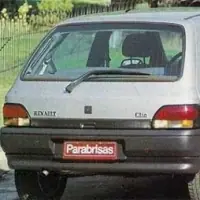
¿Es obligatorio que un automóvil cuente con limpialuneta posterior?
Must a motor car have a rear window wiper?
- ASi, no se puede conducir sin él ya que impide la visión traseraYes, you cannot drive without one because it would block the rear view
- BNo es obligatorio, pero si recomendableIt is not compulsory, but it is advisable
- CSi, pero únicamente en vehículos de dos ruedasYes, but only on two-wheeled vehicles
ExplanationA rear window wiper is not compulsory for any type of vehicle, but it is highly advisable to have one, because it cleans off dirt and gives a much clearer view through the rear window.
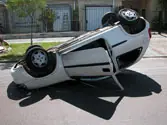
¿Qué son los llamados ADAS?
What are ADAS?
- AUna serie de dispositivos que permiten al conductor reducir la atención en la conducción.A set of devices that allow the driver to pay less attention to driving.
- BSon los elementos de seguridad que reducen los daños en caso de accidente.The safety features that reduce damage in an accident.
- CSon una serie de sistemas avanzados de ayuda a la conducción, que hacen la conducción más segura, pero que exigen toda la atención del conductor en la conducción.A set of advanced driver assistance systems that make driving safer, but still require the driver's full attention.
ExplanationADAS (Advanced Driver Assistance Systems) are a set of systems fitted in the vehicle that help the driver, to increase safety and make driving easier. They warn of danger and can even act on the vehicle's steering and/or brakes to avoid a collision or reduce its consequences.
¿Cuándo debe mirar los retrovisores?
When should you look in the mirrors?
- ACuando vaya a realizar una maniobra, únicamente.Only when you are going to make a manoeuvre.
- BSolo cuando sea necesario.Only when necessary.
- CDe forma regular, incluso si no va a realizar ninguna maniobra.Regularly, even if you are not going to make any manoeuvre.
ExplanationAccording to the General Traffic Regulations, the driver must check the mirrors regularly, even when not making manoeuvres, to stay properly aware of the surroundings and respond to any unexpected change. The rule says the driver must stay in touch with how the vehicle is moving and therefore keep checking continuously, so the correct answer is to look regularly, even when not making a manoeuvre.
¿Qué es el sistema ADAS conocido con el nombre de “AEBS”?
What is the ADAS system known as 'AEBS'?
- AUn sistema de frenado automático de emergencia.An automatic emergency braking system.
- BUn sistema antibloqueo de frenos electrónicos avanzado.An advanced electronic anti-lock braking system.
- CUn sistema que retiene el vehículo en bajadas pronunciadas.A system that holds the vehicle on steep downhill slopes.
ExplanationThe AEBS system, or urban and interurban emergency braking, works when the driver is distracted and there is a risk of a rear-end collision. The system can detect imminent danger and act in two ways: it warns the driver and, if the driver ignores the warning, the system takes control of the vehicle to stop it with emergency braking.
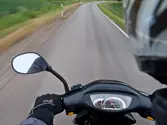
¿Cuantos espejos retrovisores deberá llevar una motocicleta que puede alcanzar la velocidad de 100 k/h?
How many mirrors must a motorcycle that can reach 100 km/h have?
- AUn solo retrovisor en el lado izquierdo.Only one mirror, on the left side.
- BDos obligatoriamente, uno a la derecha y otro a la izquierda.Two, compulsory, one on the right and one on the left.
- CUno obligatorio en el lado izquierdo y otro opcional en el derecho.One compulsory on the left side and one optional on the right.
ExplanationTwo-wheeled vehicles that can reach 100 km/h must have two mirrors, one on each side.
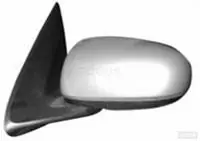
¿De qué espejo retrovisor se puede prescindir?
Which mirror can you do without?
- ADel interior.The interior mirror.
- BDel exterior izquierdo.The left exterior mirror.
- CDel exterior derecho si se posee uno interior y otro exterior izquierdo.The right exterior mirror, if you have an interior mirror and a left exterior mirror.
ExplanationAn interior mirror and a left exterior mirror are compulsory; the right exterior mirror is optional.
¿Con qué pie accionaremos el freno trasero de una motocicleta?
Which foot do we use to operate a motorcycle's rear brake?
- ACon el pie izquierdo.The left foot.
- BCon el pie derecho.The right foot.
- CNo se acciona con ningún pie ya que se utiliza la maneta del lado izquierdo del manillar.No foot, because the lever on the left side of the handlebars is used.
ExplanationOn motorcycles with gears, the left lever is the clutch control and the rear brake is operated with the pedal on the right side.
¿Con qué frecuencia debe mirar por los espejos retrovisores de su ciclomotor?
How often should you look in your moped's mirrors?
- ASolamente al iniciar la marcha.Only when moving off.
- BCon regularidad, durante la marcha.Regularly, while riding.
- CSolamente cuando realice una maniobra.Only when making a manoeuvre.
ExplanationYou should look in your moped's mirrors regularly while riding, to avoid blind spots and be aware of vehicles coming from behind. This gives you a complete view of your surroundings so you can make safe decisions on the road.
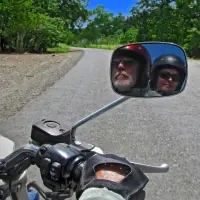
¿Cuantos retrovisores debe llevar obligatoriamente un ciclomotor de dos ruedas?
How many mirrors must a two-wheeled moped have?
- ADos, exteriores de mabos ladosTwo, exterior mirrors on both sides
- BUno, el exterior derechoOne, the right exterior mirror
- CUno, el exterior izquierdoOne, the left exterior mirror
ExplanationTwo-wheeled mopeds must have the left exterior mirror, to improve visibility and make riding safer. The right mirror is therefore optional but advisable.
¿Cuántos retrovisores deben llevar las motocicletas?
How many mirrors must motorcycles have?
- AAl menos uno en el lado derecho, aunque pueden llevar dos.At least one on the right side, although they may have two.
- BDeben llevar siempre dos espejos, uno a cada lado.They must always have two mirrors, one on each side.
- CUn espejo exterior izquierdo si no superan 100 km/h; y dos, uno a cada lado, si superan 100 km/h.One left exterior mirror if they cannot exceed 100 km/h; and two, one on each side, if they can exceed 100 km/h.
ExplanationMotorcycles must have at least one exterior mirror on the left side. If their maximum speed is 100 km/h or less, they may have only this mirror; if their maximum speed is over 100 km/h, they must also have a mirror on the right side. This is set out in the General Vehicle Regulations, which make clear that visibility is crucial for road safety, so the correct arrangement of mirrors is essential.
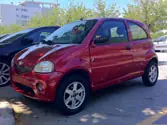
¿Cuántos espejos retrovisores debe de llevar este cuatriciclo?
How many mirrors must this quadricycle have?
- ASólo el exterior derecho.Only the right exterior mirror.
- BDos, el interior y el exterior izquierdo.Two, the interior mirror and the left exterior mirror.
- CSólo el exterior izquierdo.Only the left exterior mirror.
ExplanationQuadricycles with bodywork covering the driver must have a left exterior mirror and an interior mirror. If they have no bodywork, only the left mirror is compulsory and the right one is optional.
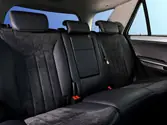
¿Para qué sirve la luneta térmica?
What is the heated rear window for?
- APara eliminar el hielo de la parte interior de los cristales.To remove ice from the inside of the glass.
- BPara eliminar el vaho de la parte exterior de los cristales.To remove condensation from the outside of the glass.
- CPara eliminar el vaho de la parte interior de los cristales y el hielo de la parte exterior.To remove condensation from the inside of the glass and ice from the outside.
ExplanationIn winter or in bad weather, a layer of ice can form on the outside of the glass, or the inside can mist up with condensation. To prevent this, we switch on the heated rear window: small electric heating wires warm the glass and remove the ice and condensation.
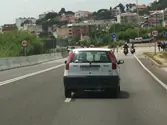
En caso de emitir un aviso y no recibir respuesta por parte del conductor, ¿qué acciones lleva a cabo el sistema ADAS “Mantenimiento de carril o LKS”?
If it gives a warning and the driver does not respond, what does the ADAS system 'Lane keeping or LKS' do?
- ADetiene el vehículo y enciende las luces de emergencia para evitar un accidente.It stops the vehicle and switches on the hazard warning lights to avoid an accident.
- BDetiene el vehículo ante la presencia de un obstáculo.It stops the vehicle when there is an obstacle.
- CRealiza una corrección en la dirección o en el sistema de frenos para qué el vehículo retorne hacia el centro del carril.It makes a correction to the steering or the brakes so that the vehicle returns towards the centre of the lane.
ExplanationThe lane keeping assistant, also called LKA (Lane Keeping Assist) or LKS (Lane Keeping System), controls the steering to keep the vehicle in the same lane, so that it does not leave the lane because of distraction or drowsiness. Remember that the system can be switched off, as European rules allow. However, it will always switch on automatically as soon as you start the car.
¿Qué sistema puede detectar peatones o animales marcándolos en color rojo u otro en la pantalla de información del conductor?
Which system can detect pedestrians or animals and mark them in red or another colour on the driver's information screen?
- AEl head up display.The head-up display.
- BEl Departure Warning and prevention.The Departure Warning and Prevention system.
- CEl asistente de visión nocturna.The night vision assistant.
ExplanationThe night vision system uses infrared radiation to capture images that the human eye may not see with the help of the headlights, and shows them in colour on a screen in the instrument panel or on the vehicle's head-up display. This helps you see pedestrians or animals that were out of the driver's sight.
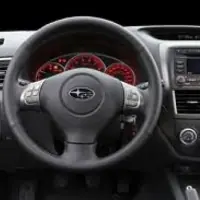
¿Cual es la posición mas correcta para coger el volante?
What is the best position for holding the steering wheel?
- AEquivalente a las cuatro menos diez de las agujas del relojLike the hands of a clock at ten to four
- BEquivalente a las diez y media de las agujas del relojLike the hands of a clock at half past ten
- CEquivalente a las tres menos cuarto de las agujas del relojLike the hands of a clock at a quarter to three
ExplanationThe most correct and safe way to hold the steering wheel is with the driver's hands at an angle like a clock showing a quarter to three. A narrower or wider angle could be dangerous when driving, especially when turning.
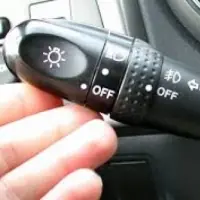
¿Qué tipos de mandos existen en un vehículo de motor?
What types of controls are there in a motor vehicle?
- AMandos superiores y mandos inferioresUpper controls and lower controls
- BMandos verticales y mandos horizontalesVertical controls and horizontal controls
- CMandos de pie y mandos de manoFoot controls and hand controls
ExplanationIn motor vehicles there are always two types of controls which, depending on how we use them, cause one action or another in the vehicle: hand controls, such as the gear lever, and foot controls, such as the clutch.
El lavaparabrisas del vehículo…
The vehicle's windscreen washer...
- ANo necesita ningún mantenimiento.does not need any maintenance.
- BNecesita que se vigile el nivel del circuito de refrigeración de donde toma el agua.needs you to check the level of the cooling circuit it takes water from.
- CNecesita que se vigile el nivel de agua de su propio depósito.needs you to check the water level in its own reservoir.
ExplanationWe must check the water level in the windscreen washer reservoir often. We fill it only with water, to which a neutral detergent solution can be added. It is important to keep the windscreen very clean so that it gives us good visibility.
Todos los turismos están obligados a llevar dos espejos como mínimo. ¿Qué espejo es siempre obligatorio?
All cars must have at least two mirrors. Which mirror is always compulsory?
- AEl derecho.The right one.
- BEl izquierdo.The left one.
- CEl central.The central one.
ExplanationCars must have two mirrors fitted: a left exterior mirror and an interior mirror. If there is not a good view through the interior mirror, another exterior mirror must also be fitted on the right side.
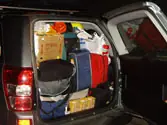
Este turismo, ¿qué espejos retrovisores debe llevar obligatoriamente?
Which mirrors must this car have?
- AEl espejo interior y el exterior derecho.The interior mirror and the right exterior mirror.
- BLos exteriores izquierdo y derecho, porque por el espejo interior no tiene suficiente visibilidad.The left and right exterior mirrors, because there is not enough visibility through the interior mirror.
- CSólo el espejo interior y el exterior izquierdo.Only the interior mirror and the left exterior mirror.
ExplanationWhen the view through the interior mirror is reduced for any reason, it is compulsory to have two exterior mirrors, one on the right and one on the left.
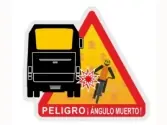
¿Cuál es el propósito principal del nuevo distintivo de ángulo muerto que se encuentra en algunos vehículos?
What is the main purpose of the new blind spot sticker found on some vehicles?
- AIndicar la velocidad máxima permitida en esa zona.To show the maximum speed allowed in that area.
- BAdvertir a los usuarios vulnerables sobre el peligro de situarse en zonas no visibles.To warn vulnerable road users about the danger of being in areas that cannot be seen.
- CMostrar la clasificación de emisiones del vehículo.To show the vehicle's emissions rating.
ExplanationIts aim is to warn vulnerable road users of the danger of being in one of those areas that cannot be seen when they come near these marked vehicles, so that they can move to where they can be seen and avoid risks.
¿Un turismo puede llevar únicamente el retrovisor exterior izquierdo y el retrovisor interior?
May a car have only the left-hand exterior mirror and the interior mirror?
- ANo, solo son obligatorios el retrovisor interior y el retrovisor exterior derecho.No, only the interior mirror and the right-hand exterior mirror are compulsory.
- BSí.Yes.
- CNo, también debe llevar el retrovisor exterior derecho.No, it must also have the right-hand exterior mirror.
ExplanationUnder Annex III of the General Vehicle Regulations, a car must have the interior mirror and the left-hand exterior mirror; the right-hand exterior mirror is optional. It is only compulsory when the interior mirror does not give a view of the road behind, for example because of the load.
En caso de activarse el sistema avanzado de ayuda a la conducción “AEBS” o Sistema automático de frenado de emergencia, ¿de qué forma actuará?
If the advanced driver assistance system 'AEBS', or automatic emergency braking system, is activated, how will it act?
- AActuará tomando el control de la dirección del vehículo y realizando una maniobra evasiva.It will take control of the vehicle's steering and make an evasive manoeuvre.
- BEmitirá un rápido parpadeo de las luces de frenado cuando se apliquen los frenos de manera potente, ante una situación de emergencia, avisando al vehículo que nos precede.It will make the brake lights flash quickly when the brakes are applied hard in an emergency, to warn the vehicle behind us.
- CEmitirá un aviso al conductor y si este no responde, tomará de forma automática el control del vehículo para detenerlo, ante la presencia de un obstáculo.It will give the driver a warning and, if the driver does not respond, it will automatically take control of the vehicle to stop it when there is an obstacle.
ExplanationAEBS, or the automatic emergency braking system, works when the driver is distracted and there is a risk of a rear-end collision. The system can detect imminent danger and act in two ways: it gives the driver a warning (visual/audible) and, if the driver ignores it, it takes control of the vehicle to stop it with emergency braking.
¿Mirar el espejo retrovisor mientras se conduce puede aumentar el riesgo de accidente?
Can looking in the mirror while driving increase the risk of an accident?
- ASí, porque el tiempo que se pasa mirando el espejo distrae de la conducción.Yes, because the time spent looking in the mirror takes attention away from driving.
- BSí, pero solo por la noche.Yes, but only at night.
- CNo, porque se puede mirar el espejo y conducir al mismo tiempo.No, because you can look in the mirror and drive at the same time.
ExplanationThe danger of distraction while driving: using the mirror is important, but spending too long looking in the mirror while driving increases the risk of an accident. The driver must check the mirrors briefly without losing control of the situation on the road. Constantly taking attention away from the traffic ahead, even for a short time, reduces the ability to react to sudden obstacles, pedestrians and other vehicles' manoeuvres.
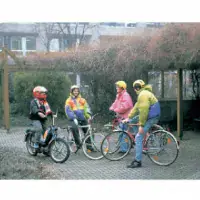
¿Qué mando se acciona con la mano derecha en las motocicletas?
Which control is operated with the right hand on motorcycles?
- AEl puño aceleradorThe throttle grip
- BLa maneta de embragueThe clutch lever
- CLa bocinaThe horn
ExplanationOn a motorcycle, the clutch is operated with the left lever, the rear brake with the right foot and the throttle with the right hand. The gear lever is at the left foot, and the front brake is operated with the right lever.
En una autopista, ¿con qué frecuencia miraremos los espejos retrovisores?
On a motorway (autopista), how often will we look in the mirrors?
- ASolo cuando tengamos que realizar un cambio de carril.Only when we have to change lanes.
- BComo máximo cada 15 segundos.At least every 15 seconds.
- CCada 5 segundos miraremos todos los espejos retrovisores del vehículo.Every 5 seconds we will look in all the vehicle's mirrors.
ExplanationWe will look in the mirrors even when we do not have to make any manoeuvre. On a motorway (autopista), we look every 10 to 15 seconds.
Un conductor novel, ¿puede llevar cortinillas en el cristal posterior del vehículo?
Can a novice driver have blinds on the rear window of the vehicle?
- ASí, si el vehículo lleva dos retrovisores exteriores.Yes, if the vehicle has two exterior mirrors.
- BNo, si impide la visibilidad de la placa con la letra L.No, if they block the view of the plate with the letter L.
- CSí, si el vehículo lleva dos retrovisores exteriores y la placa L es visible.Yes, if the vehicle has two exterior mirrors and the L plate can be seen.
ExplanationThe L plate must be placed where it is clearly visible on the rear left, without reducing the driver's visibility and without covering any lights or signs.
¿Qué es el sistema ADAS llamado «AEBS»?
What is the ADAS system called AEBS?
- AUn sistema de frenado automático de emergencia.An automatic emergency braking system.
- BUn sistema antibloqueo de frenos (ABS).An anti-lock braking system (ABS).
- CUn sistema que mantiene el vehículo en pendientes pronunciadas.A system that holds the vehicle on steep slopes.
ExplanationAEBS (Advanced Emergency Braking System) is the automatic emergency braking system: using cameras or radar, it detects an obstacle ahead and, if the driver does not react, warns and brakes by itself to avoid the collision or reduce its consequences. It is not ABS or hill-start assist.

¿Cada cuánto tiempo debemos mirar a los espejos retrovisores en una vía urbana?
How often should we look in the mirrors on an urban road?
- ACada 5-10 segundos.Every 5–10 seconds.
- BCada 10-15 segundos.Every 10–15 seconds.
- CCada 20-30 segundos.Every 20–30 seconds.
ExplanationEach type of road has a suitable rhythm for looking in the mirror. On an urban road it is every 5 to 10 seconds, and on a motorway (autopista) every 10 to 15 seconds.
El limpiaparabrisas del vehículo...
For the vehicle's windscreen wipers...
- Ahay que controlar el nivel de agua en su depósito.you must check the water level in their reservoir.
- Bhay que controlar el nivel del circuito de refrigeración del que toma el agua.you must check the level of the cooling circuit they take water from.
- Cno necesita ningún mantenimiento.no maintenance is needed.
ExplanationThe windscreen wipers and washer are essential parts for making sure the driver can see in the rain or when the windscreen is dirty. The General Traffic Regulations stress the importance of keeping water in the washer reservoir, because if there is no fluid the system cannot work properly, which puts road safety at risk. The correct answer is that you must check the water level in their own reservoir, so that the wipers can work properly and give good visibility.
All topics
- Definitions
- Documents and penalty points
- The driver's condition
- Duties of drivers and pedestrians
- Vehicle safety devices
- Vehicle lights and horn
- Traffic signs, markings and signals
- The road and its lanes
- Speed and distances
- Manoeuvres
- Right of way
- Carrying passengers and loads
- Driving safely in difficult conditions
- Vehicle mechanics and maintenance
- Road accidents and first aid
- Defensive and eco-driving
Independent app: not affiliated with or endorsed by the DGT (Spain's Directorate-General for Traffic) or the Ministry of the Interior. The official exam is booked with the DGT and taken at its test centres. The questions here are practice material; the DGT's official question bank is not public.
Basado en datos de la Agencia Estatal Boletín Oficial del Estado (https://www.boe.es). Textos consolidados de carácter meramente informativo. La AEBOE no patrocina ni respalda este sitio.
Parte de las preguntas procede de los tests de la revista «Tráfico y Seguridad Vial» de la DGT, reproducidos con indicación de la fuente.