
DGT test · 270 questions
Vehicle controls and equipment · Page 3 of 6
The controls and equipment of a car — mirrors, wipers, dashboard, warning lights — and the rules for using them.
Questions in this topic, with answers
270 questions, 50 per page, with the correct answer and the explanation. Page 3 of 6.
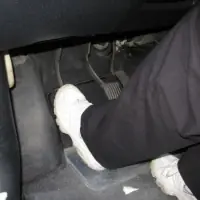
¿Qué se ha de hacer antes de accionar la palanca del cambio de marcha?
What must you do before moving the gear lever?
- AAcelerar y justo en ese momento cambiar la marchaAccelerate and change gear at that exact moment
- BPisar a fondo el pedal de embraguePress the clutch pedal all the way down
- CPisar levemente el freno y reducir la velocidadPress the brake lightly and slow down
ExplanationTo move the gear lever, when changing up or down, we must first press the clutch pedal all the way down with the left foot. This is what allows us to change to the gear best suited to the vehicle's speed at that moment.
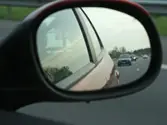
Cuando sea obligatorio el uso del espejo retrovisor exterior derecho, ¿podrá sustituirse éste por un espejo interior panorámico?
When a right-hand exterior rear-view mirror is compulsory, can it be replaced by a panoramic interior mirror?
- ASí.Yes.
- BSí, pero solo en poblado.Yes, but only in built-up areas.
- CNo.No.
ExplanationThe right-hand exterior rear-view mirror is compulsory when the interior mirror does not give enough visibility, so even with a panoramic (larger) interior mirror we would still not have enough visibility.
¿En qué situación avisa al conductor el sistema avanzado de ayuda a la conducción conocido como “LDW”?
In what situation does the advanced driver assistance system known as 'LDW' warn the driver?
- AEn un desplazamiento lateral indicado con el intermitente.When moving sideways after signalling with the indicator.
- BEn un cambio involuntario de dirección.When changing direction without meaning to.
- CEn un cambio involuntario de carril.When changing lanes without meaning to.
ExplanationThe LDW (Lane Departure Warning) system, which warns of an unintended lane change, continuously detects or reads the road markings, whether solid or broken, using infrared sensors pointed at the road surface.

En el campo de visión definido por la normativa, ¿cuál es la finalidad del retrovisor en un vehículo?
Within the field of view set by the rules, what is the purpose of a vehicle's mirror?
- APermitir una visibilidad clara hacia atrás del vehículo, pero no hacia los lados.To give a clear view behind the vehicle, but not to the sides.
- BReducir la resistencia al viento del vehículo.To reduce the vehicle's wind resistance.
- CPermitir una visibilidad clara hacia atrás y hacia los lados del vehículo.To give a clear view behind and to the sides of the vehicle.
ExplanationA vehicle's mirror lets the driver see clearly what is happening behind and to the sides of the vehicle. This makes driving safer by making it easier to notice other vehicles and objects nearby. This is especially important for manoeuvres such as changing lanes or turning, where it is crucial to know what is happening in areas that may be outside the driver's direct field of view.

Para conducir con seguridad, ¿qué debe hacer el conductor?
To drive safely, what must the driver do?
- APoner un cojín en el asiento para cansarse menos.Put a cushion on the seat to get less tired.
- BMirar siempre hacia delante. Solo debe usar los espejos cuando está parado.Always look ahead. Only use the mirrors when stopped.
- CObservar todo el rato lo que pasa en la vía.Watch what is happening on the road all the time.
ExplanationDriving safely means constantly watching what is happening on the road – ahead, to the sides and behind – using the mirrors while moving too. Looking only ahead stops you anticipating dangers, and a cushion on the seat can change the correct driving position.
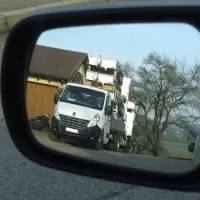
¿En qué parte del vehículo se colocan los espejos retrovisores de clase III?
Where on the vehicle are class III mirrors fitted?
- AEn el interior del vehículoInside the vehicle
- BLos retrovisores de clase III ya no se fabricanClass III mirrors are no longer made
- CEn el exterior del vehículoOn the outside of the vehicle
ExplanationClass II and class III mirrors are the main exterior mirrors, with the field of view set in current rules, and, as their name says, they are fitted on the outer sides of the vehicle. Class I mirrors, on the other hand, are fitted inside the passenger compartment.

¿Que mando se acciona con la mano izquierda en las motocicletas?
Which control is operated with the left hand on motorcycles?
- AEl aceleradorThe throttle
- BEl cambio de marchasThe gear change
- CEl embragueThe clutch
ExplanationOn a motorcycle, we use the left hand to operate the clutch lever and the right hand to operate the throttle grip and the front brake.
¿Cuál es el sistema ADAS que ayuda a evitar que el coche se desplace hacia atrás cuando está detenido en una pendiente?
Which ADAS system helps stop the car rolling backwards when it is stopped on a slope?
- AStar-stop.Start-stop.
- BHill holder.Hill holder.
- CEmergency Brake Display.Emergency Brake Display.
ExplanationHill start assist, or hill holder, keeps the brakes applied for a few moments after you release the brake pedal, so that the car does not roll backwards when moving off uphill. Start-stop only switches the engine off and on when the car stops.
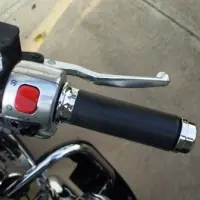
Generalmente, en las motocicletas la maneta del freno delantero se acciona con…
On motorcycles, the front brake lever is usually operated with…
- ALa mano izquierda.the left hand.
- BLa mano derecha.the right hand.
- CLas dos manos.both hands.
ExplanationThe most common layout of controls on motorcycles is: right hand – throttle and front brake; right foot – rear brake; left hand – clutch; left foot – gear change.
¿Qué sistema puede detectar peatones o animales y mostrarlos en la pantalla de información del conductor, por ejemplo en color rojo?
Which system can detect pedestrians or animals and show them on the driver's information display, for example in red?
- AEl head‑up display (HUD).The head-up display (HUD).
- BEl sistema de aviso y prevención de salida de carril.The lane departure warning and prevention system.
- CEl asistente de visión nocturna.Night vision assist.
ExplanationNight vision assist uses an infrared or thermal camera to detect pedestrians or animals beyond the reach of the headlights and shows them on the driver's display, often highlighted in red. The head-up display only projects information, and lane departure warning monitors the lines on the road.
¿Qué función tiene la luneta térmica trasera?
What is the heated rear window for?
- AEliminar el agua de la lluvia.To remove rainwater.
- BEvitar la formación de hielo.To prevent ice forming.
- CEvitar la formación de hielo y vaho.To prevent ice and condensation forming.
ExplanationThe rear window glass usually has a de-icing and demisting device, called the heated rear window.
¿Cuál de los sistemas ADAS ayuda al conductor a evitar atropellar a peatones al realizar marcha atrás?
Which ADAS system helps the driver avoid hitting pedestrians when reversing?
- AControl de crucero adaptativo (ACC).Adaptive cruise control (ACC).
- BAsistente de frenado trasero con detección de peatones.Rear braking assistant with pedestrian detection.
- CMonitor de ángulo muerto (BSM).Blind spot monitor (BSM).
ExplanationThe rear braking assistant with pedestrian detection uses sensors to detect people or obstacles behind the vehicle when reversing. If there is a risk of hitting someone, it warns the driver and can brake automatically to avoid the collision.

En un turismo, ¿cuántos espejos retrovisores son obligatorios?
On a car, how many mirrors are compulsory?
- ADos, el interior y el exterior izquierdo.Two, the interior mirror and the left exterior mirror.
- BTres, el interior y los dos exteriores.Three, the interior mirror and both exterior mirrors.
- CDos, el interior y el exterior derecho.Two, the interior mirror and the right exterior mirror.
ExplanationOn a car, the left exterior mirror and the interior mirror are compulsory. If you cannot see through the interior mirror, a right exterior mirror is also compulsory.
El sistema ADAS de ayuda a la conducción denominado con sus siglas en inglés RCTA, ¿qué ayuda proporciona al conductor?
What help does the ADAS system known by the English initials RCTA give the driver?
- AEvita el bloqueo de las ruedas cuando hay poco agarre en el pavimento como en caso de lluvia o nieve.It stops the wheels locking when there is little grip on the road, such as in rain or snow.
- BAlerta del tráfico cruzado por detrás del vehículo cuando éste circula marcha atrás, pudiendo llegar a detener al vehículo en caso de colisión inminente.It warns of traffic crossing behind the vehicle when reversing, and can even stop the vehicle if a collision is imminent.
- CEvita los cambios de carril si existe un vehículo en el ángulo muerto y el conductor no es consciente de esta circunstancia.It prevents lane changes if there is a vehicle in the blind spot and the driver is not aware of it.
ExplanationRCTA (Rear Cross Traffic Alert) is an ADAS driver assistance system that warns the driver of cross traffic approaching from behind when the vehicle is reversing, for example when leaving a parking space. In some vehicles it can brake automatically if a collision is imminent.
Los cuadriciclos ligeros, ¿cuántos espejos retrovisores tendrán que llevar?
How many rear-view mirrors must light quadricycles have?
- AUno exterior en el lado derecho.One exterior mirror on the right-hand side.
- BUn espejo exterior en el lado izquierdo y uno exterior en el lado derecho, siempre.One exterior mirror on the left-hand side and one exterior mirror on the right-hand side, always.
- CSi están equipados de carrocería que cubra total o parcialmente al conductor, llevarán un espejo retrovisor interior y otro exterior izquierdo.If they have bodywork that fully or partly covers the driver, an interior mirror and a left exterior mirror.
ExplanationUnder Annex III of the General Vehicle Regulations (RGV), light quadricycles with bodywork covering the driver have an interior mirror and a left exterior mirror. Without bodywork, a left exterior mirror is enough. In both cases the right exterior mirror is optional, unless the interior mirror does not give visibility.
¿Cómo regularemos los espejos retrovisores?
How will we adjust the mirrors?
- ACon el vehículo en marcha, para que sea más real.With the vehicle moving, so that it is more realistic.
- BCon el vehículo inmovilizado.With the vehicle stationary.
- CCon el vehículo inmovilizado en terreno llano y en un tramo recto.With the vehicle stationary, on flat ground and on a straight stretch.
ExplanationThe mirrors are adjusted before moving off, with the vehicle stopped on flat ground and on a straight stretch, and with you already sitting in the driving position. Doing it while moving is distracting and dangerous, and on a slope or bend the view of the road gives a false reference.
¿Qué sistema ADAS evita que el coche se mueva hacia atrás cuando está parado en una pendiente?
Which ADAS system stops the car from rolling backwards when it is stationary on a slope?
- ASistema Start-StopStart-Stop system
- BSistema de retención en pendiente (Hill holder)Hill hold system (hill holder)
- CSistema de frenada de emergencia (Emergency Brake Display)Emergency braking system (Emergency Brake Display)
ExplanationHill start assist (hill holder) keeps the brakes applied for a few seconds after you release the pedal, so that the vehicle does not roll back while you move your foot to the accelerator. Start-Stop only switches off the engine when you stop and does not hold the vehicle in place.
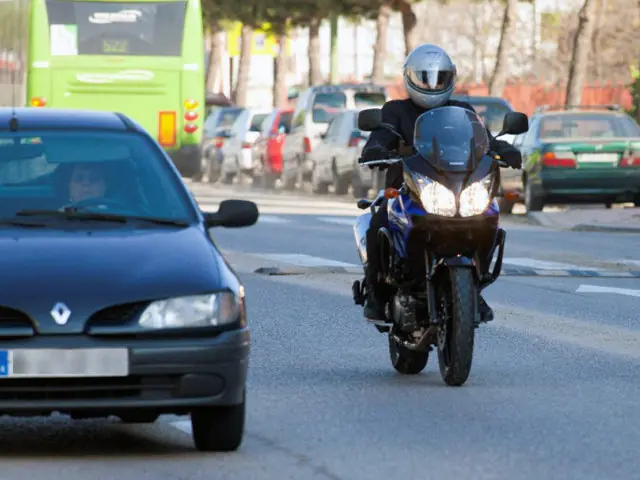
Cuando conduces un turismo, ¿es peligroso ir al lado de otro vehículo de 2 ruedas?
When you are driving a car, is it dangerous to travel alongside a two-wheeled vehicle?
- ASolo cuando circulas a más velocidad de la permitida.Only when you are going faster than the speed limit.
- BSí. Está el riesgo de no verlo si queda en el ángulo muerto del retrovisor.Yes. There is a risk of not seeing it if it is in the mirror's blind spot.
- CNo. En la circulación en paralelo no hay riesgos.No. Travelling side by side has no risks.
ExplanationYes. A motorcycle or moped travelling level with the car can be in the mirrors' blind spot and go unnoticed when you change lanes or turn. It is best not to stay alongside it, and to check the blind spot by turning your head before moving sideways.
El sistema de ayuda de salida en pendiente (Hill Holder), ¿cómo actúa cuando el conductor levanta el pie del freno en una pendiente?
How does the hill start assist system (Hill Holder) act when the driver lifts their foot off the brake on a slope?
- AAumenta automáticamente las revoluciones del motor para evitar que el vehículo se desplace hacia atrás.It automatically increases engine revs to stop the vehicle moving backwards.
- BMantiene momentáneamente la presión del freno para evitar que el vehículo retroceda mientras el conductor inicia la marcha.It keeps the brakes applied for a moment to stop the vehicle rolling back while the driver moves off.
- CActiva el freno de estacionamiento y lo mantiene hasta que el vehículo supera cierta velocidad.It applies the parking brake and keeps it on until the vehicle reaches a certain speed.
ExplanationThe hill start assist system (Hill Holder) is designed to make moving off on slopes easier. When the driver lifts their foot off the brake, the system keeps the brakes applied for a moment, stopping the vehicle rolling back while the accelerator is pressed and the vehicle moves off. This improves safety and stops the vehicle moving backwards.
Si cambia el carenado de una motocicleta, ¿a qué puede afectar?
If you change the fairing on a motorcycle, what can this affect?
- ASolo a la estética.Only its appearance.
- BAl consumo y a la aerodinámica.Fuel consumption and aerodynamics.
- CA la visibilidad del vehículo.The vehicle's visibility.
ExplanationThe fairing affects how the air hits the motorcycle and the rider. Changing it alters the aerodynamics and, with them, the air resistance and fuel consumption, so it is not just a question of appearance.
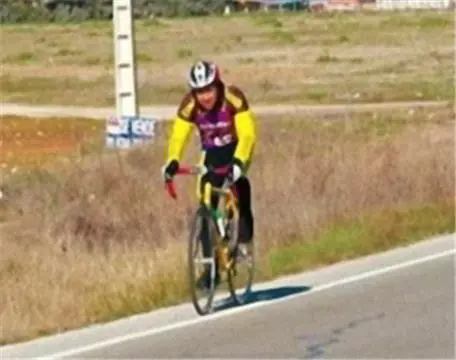
Ciclo es el vehículo de...
A cycle is a vehicle with...
- Ados ruedas accionado con un motor.two wheels, powered by an engine.
- Bdos o más ruedas accionado con un motor o con pedales.two or more wheels, powered by an engine or by pedals.
- Cdos ruedas por lo menos, accionado por su conductor mediante pedales o manivelas.at least two wheels, powered by its rider using pedals or hand cranks.
ExplanationA cycle is a vehicle with at least two wheels, moved only by the muscle power of the person riding it, using pedals or hand cranks. If it has an engine as its main source of propulsion, it is no longer a cycle but, for example, a moped.
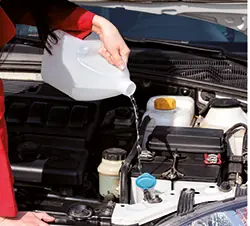
El nivel del depósito de líquido lavaparabrisas, ¿se debe revisar con cierta frecuencia?
Should the level in the windscreen washer fluid reservoir be checked regularly?
- ASí, es conveniente para no quedarnos sin él cuando lo necesitemos.Yes, it is advisable, so that we do not run out when we need it.
- BSolo hay que revisarlo en verano porque con el calor el líquido se evapora.It only needs checking in summer, because the fluid evaporates in the heat.
- CNo es necesario, basta con revisarlo antes de pasar la inspección técnica.It is not necessary; checking it before the vehicle inspection is enough.
ExplanationIt is advisable to check the washer fluid level regularly: running out just when the glass gets dirty (mud, insects, spray) leaves the driver unable to see while driving.

El sistema ADAS conocido como “EBD” (aviso de frenado de emergencia), ayuda a detectar cuándo el vehículo que circula por delante...
The ADAS system known as 'EBD' (emergency braking warning) helps you detect when the vehicle in front...
- ASe dispone a realizar un cambio de dirección en la próxima intersección.is about to change direction at the next junction.
- BCircula a una velocidad inferior a la mínima establecida en la vía.is going slower than the minimum speed set for the road.
- CEstá realizando una frenada de emergencia.is braking in an emergency.
ExplanationEBD (Emergency Braking Display), or emergency braking warning, helps drivers detect when the vehicle in front is braking in an emergency. This avoids or reduces rear-end collisions caused by unexpected braking. The emergency braking warning is a quick flashing of the brake lights when the brakes are applied hard and fast in an emergency.
En una motocicleta dotada de cambio de marchas, ¿cómo realizaremos dicho cambio?
On a motorcycle with gears, how will we change gear?
- ACon el pie derecho.With the right foot.
- BCon el pie izquierdo.With the left foot.
- CCon la mano derecha.With the right hand.
ExplanationOn a motorcycle, we use the left foot to change gear, the right foot for the rear brake, and the right hand for the front brake and the throttle.
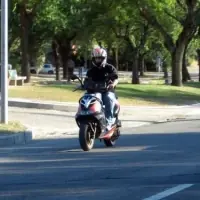
¿Cómo debe conducirse un ciclomotor?
How should a moped be ridden?
- APisando al máximo el acelerador en los girosOpening the throttle fully on bends
- BEn zig-zagZigzagging
- CEn línea rectaIn a straight line
ExplanationMopeds and motorcycles must always be ridden in a straight line, without zigzagging between vehicles and without opening the throttle fully on bends.
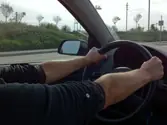
¿Es correcta la posición del conductor respecto al volante?
Is the driver sitting in the correct position in relation to the steering wheel?
- ASí, porque no está muy pegado a él.Yes, because they are not very close to it.
- BNo, está demasiado alejado.No, they are too far away.
- CNo, está demasiado cerca.No, they are too close.
ExplanationThe arms should be slightly bent when holding the steering wheel. The driver in the picture has set the seat too far from the steering wheel, so their arms are completely straight. Keeping the arms slightly bent lets us move freely to deal with any unexpected situation.
¿Una motocicleta podrá circular con un solo espejo retrovisor?
Can a motorcycle be ridden with only one mirror?
- ANo, en ningún caso.No, never.
- BSí, cuando su velocidad no supere los 100 km/h.Yes, when its speed does not exceed 100 km/h.
- CSí, si es una motocicleta sin sidecar.Yes, if it is a motorcycle without a sidecar.
ExplanationMotorcycles that cannot exceed 100 km/h may be ridden with only the left mirror, although they may also have the right one fitted.
En una motocicleta la maneta que se acciona con la mano derecha corresponde a...
On a motorcycle, the lever operated with the right hand is for...
- AEl freno delantero.the front brake.
- BEl freno posterior.the rear brake.
- CEl mando del acelerador.the throttle control.
ExplanationOn a motorcycle, whether it is automatic or not, the right lever operates the front brake.
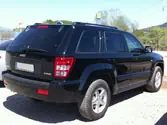
¿Está permitido colocar cortinillas en los cristales traseros del vehículo?
Are you allowed to fit blinds on the vehicle's rear windows?
- ANo, está prohibido.No, it is forbidden.
- BSí, si el vehículo dispone de un espejo retrovisor exterior a cada lado.Yes, if the vehicle has an exterior mirror on each side.
- CSí, si se trata de un accesorio homologado.Yes, if it is an approved accessory.
ExplanationThe vehicle's glass surfaces must always give the driver a proper view of the whole road, with no interference from films or stickers. Driving with adhesive films or blinds on the rear windows is only allowed when the vehicle has two exterior mirrors.
¿Se pueden poner láminas adhesivas en las ventanas traseras de su vehículo?
May you fit adhesive films to the rear windows of your vehicle?
- ANo.No.
- BSí, si tiene dos espejos retrovisores exteriores.Yes, if it has two exterior rear-view mirrors.
- CNo, si no dispone de un espejo retrovisor interior.No, if it does not have an interior rear-view mirror.
ExplanationArticle 19.1 of the General Traffic Regulations allows adhesive films or sun blinds only on the rear windows, and only if the vehicle has two exterior rear-view mirrors that meet the technical specifications.
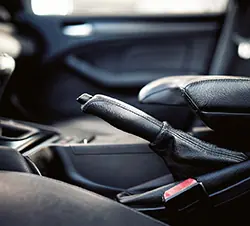
¿Cuál es la función del freno de mano?
What is the handbrake for?
- AReducir la velocidad del vehículo en ciudad.To reduce the vehicle's speed in town.
- BInmovilizar el vehículo al estacionar.To keep the vehicle still when parking.
- CReducir la velocidad del vehículo cuando circule por una vía con una pendiente prolongada.To reduce the vehicle's speed on a road with a long slope.
ExplanationThe handbrake is the parking brake: its job is to keep the parked vehicle still. While moving, it would only be used as an emergency measure if the footbrake fails.
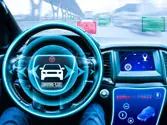
Los sistemas ADAS (sistemas avanzados de ayuda a la conducción) instalados en el vehículo, ¿pueden ser desconectados en algún momento?
Can the ADAS systems (advanced driver assistance systems) fitted in the vehicle be switched off at any time?
- APueden desconectarse de forma permanente pero nunca de forma temporal.They can be switched off permanently, but never temporarily.
- BSí, de forma permanente o temporal.Yes, permanently or temporarily.
- CNo pueden desconectarse en ningún caso.They can never be switched off.
ExplanationUsing sensors and smart cameras, ADAS (Advanced Driver Assistance Systems) greatly improve the vehicle's active safety. They give the driver useful information that helps with decisions and creates a safe environment in the vehicle. Where applicable, they can also intervene safely in driving when the driver does not respond to a dangerous situation. However, the driver must remember that these systems are only a driving aid, and some of them may not work properly in certain conditions such as rain, fog, ice, snow, dust clouds or smoke. Dirt can make a sensor or camera ineffective, and in that case it would be advisable to switch it off if necessary. These systems can usually be switched off permanently, or temporarily at a given moment by the driver, who must have complete control of the vehicle. So using them does not free the driver from responsibility for causing an accident or dangerous situation by using these systems wrongly, by trusting them too much or by ignoring a signal or order from a traffic officer.
En cuanto a los sistemas de ayuda a la conducción, ¿cómo funciona el sistema avanzado AEB-PCD o de frenado de emergencia frente a peatones y ciclistas?
Regarding driver assistance systems, how does the advanced AEB-PCD system, or emergency braking for pedestrians and cyclists, work?
- AFrena el vehículo si detecta una situación de emergencia frente a peatones o ciclistas.It brakes the vehicle if it detects an emergency involving pedestrians or cyclists.
- BEnvía una alerta sonora si detecta el riesgo de colisión con ciclistas o peatones, pero no frena el vehículo.It gives a sound warning if it detects a risk of collision with cyclists or pedestrians, but it does not brake the vehicle.
- CDesvía la trayectoria actuando sobre la dirección del vehículo, pero no sobre el sistema de frenado.It changes the vehicle's path by acting on the steering, but not on the braking system.
ExplanationAEB-PCD is an advanced driver assistance system designed to prevent collisions with pedestrians and cyclists or at least make them less serious. This system: 1. detects pedestrians and cyclists in front of the vehicle using cameras and sensors; 2. assesses the risk of collision in real time; 3. if it detects an emergency and the driver does not react in time, it automatically applies the brakes to stop the vehicle or greatly reduce its speed.
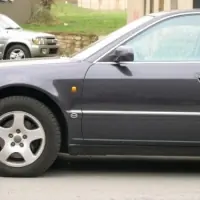
¿Cuál de estas afirmaciones es correcta?
Which of these statements is correct?
- AEl conductor debe usar el espejo retrovisor a tiempoThe driver must use the rear-view mirror in good time.
- BNunca deberemos observar los retrovisores al realizar una maniobra de cualquier tipoWe should never look in the mirrors when making any kind of manoeuvre.
- CSe deben mirar los retrovisores más de 3 segundos cada vezYou should look in the mirrors for more than 3 seconds each time.
ExplanationThe driver must check the mirrors often and always in good time, before starting any manoeuvre such as overtaking, changing lanes, turning or braking. Glances should be short, about one second, so that you keep paying attention to what is happening in front.
Si al pisar el pedal de freno siente un tacto esponjoso, ¿a qué se puede deber?
If the brake pedal feels spongy when you press it, what could be the cause?
- APresencia de aire en el circuito hidráulico de frenos.Air in the hydraulic brake circuit.
- BCalentamiento excesivo de las pastillas de freno.The brake pads have overheated.
- CInexistencia de líquido de frenos.There is no brake fluid.
ExplanationWhen the brake pedal feels soft and spongy, the cause may be air in the hydraulic circuit. When the brake pedal travels too far and goes almost to the floor, this is due to a loss of brake fluid.
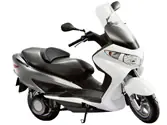
¿Cuántos espejos retrovisores tienen que llevar instalados las motocicletas?
How many mirrors must motorcycles have fitted?
- AObligatoriamente uno en el lado derecho, pero pueden llevar dos.One on the right side is compulsory, but they may have two.
- BSiempre deben llevar dos espejos, uno en cada lado.They must always have two mirrors, one on each side.
- CUn espejo exterior izquierdo si no superan los 100 km/h y dos, uno en cada lado, si la velocidad es mayor.One left exterior mirror if they cannot exceed 100 km/h, and two, one on each side, if they can go faster.
ExplanationMotorcycles with or without a sidecar whose maximum speed does not exceed 100 km/h must have a left exterior mirror (and may also have one on the right). If they can exceed that speed, they must have one on each side.
En un ciclomotor, ¿qué mando acciona el freno delantero?
On a moped, which control operates the front brake?
- ALa maneta izquierda.The left lever.
- BLa maneta derecha.The right lever.
- CEl pedal derecho.The right pedal.
ExplanationOn a moped the front brake is operated with the right lever, whether the vehicle is automatic or has gears.
¿Dónde está colocado el mando del embrague de una motocicleta dotada de cambio de marchas?
Where is the clutch control on a motorcycle with gears?
- AEn la maneta derecha.On the right lever.
- BEn la maneta izquierda.On the left lever.
- CEn el pie derecho.At the right foot.
ExplanationOn a motorcycle with gears, the clutch control is on the left lever. The front brake is on the right lever, the rear brake at the right foot and the gear change at the left foot.
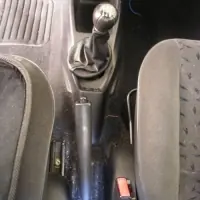
¿Puede estar la palanca del freno de mano situada en el salpicadero?
Can the handbrake lever be on the dashboard?
- ASi, pero únicamente en vehículos de grande tonelajeYes, but only on heavy vehicles
- BSi, aunque no es lo más habitualYes, although this is not the most common
- CNo, nuncaNo, never
ExplanationThe handbrake lever can be on the vehicle's dashboard, not only on heavy vehicles but also on cars, although this is not the most common. Most vehicles today have this lever between the driver's seat and the front passenger seat, at a height where it can be used comfortably with the right hand.

Circulando entre la puesta y la salida del sol, ¿qué finalidad tiene el sistema ADAS “Asistente de visión nocturna”?
When driving between sunset and sunrise, what is the purpose of the ADAS system 'Night vision assistant'?
- APoder desconectar el alumbrado al cruzarse con otro vehículo para evitar el deslumbramiento.To be able to switch off the lights when meeting another vehicle, to avoid dazzle.
- BDetectar un vehículo inmovilizado fuera de la calzada y de la parte transitable del arcén.To detect a broken-down vehicle outside the carriageway and the usable part of the hard shoulder.
- CDetectar peatones o animales marcándolos en un color u otro en la pantalla de información del conductor.To detect pedestrians or animals and mark them in one colour or another on the driver's information screen.
ExplanationThe night vision system uses infrared radiation to capture images that the human eye may not see with the help of the headlights, and shows them in colour on a screen in the instrument panel or on the vehicle's head-up display. This helps you see pedestrians or animals that were out of the driver's sight.
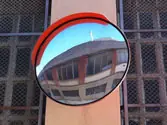
En los espejos convexos la imagen se observa...
In convex mirrors, the image appears...
- ADe mayor tamaño y más cercana.bigger and closer.
- BDe menor tamaño y más lejana.smaller and further away.
- CDe menor tamaño y más cercana.smaller and closer.
ExplanationConvex mirrors give a smaller image, so things seem further away, but they give a wider field of view because they curve outwards.

¿Qué indica el testigo de la temperatura del motor, cuando la luz está encendida, en el tablero de instrumentos?
What does the engine temperature warning light on the instrument panel mean when it is on?
- AQue la temperatura exterior es elevada.That the outside temperature is high.
- BQue el motor está demasiado caliente.That the engine is too hot.
- CQue es momento de cambiar el aceite del motor.That it is time to change the engine oil.
ExplanationThe engine temperature warning light on the instrument panel is an important warning that the engine temperature has reached a high level. This can be dangerous for the engine and may damage it if nothing is done. An overheated engine can mean problems such as a leak in the cooling system, lack of coolant, a faulty thermostat or problems with the radiator fan. If this light comes on, it is crucial to stop the vehicle safely, switch off the engine and let it cool down before looking for the cause of the overheating. Ignoring this warning can cause serious engine damage.
¿Cómo debe realizarse la regulación de los espejos retrovisores?
How should the mirrors be adjusted?
- ACon el vehículo detenido.With the vehicle stopped.
- BCon el vehículo en movimiento.With the vehicle moving.
- CCirculando a reducida velocidad.While driving at low speed.
ExplanationThe mirrors must be adjusted with the vehicle stopped, to avoid distraction and ensure safety. Adjusting them while the vehicle is moving, even at low speed, takes your attention away from the road, which increases the risk of an accident. Once they are correctly adjusted before moving off, the mirrors give the driver a good view of the surroundings without needing to touch them while driving.
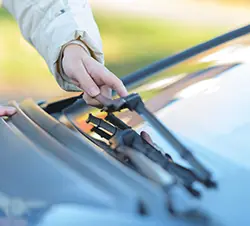
Una exposición continuada del vehículo a temperaturas elevadas, puede provocar un deterioro mayor de las gomas de las escobillas de los limpiaparabrisas. ¿Cuáles son los efectos más comunes?
Long exposure of the vehicle to high temperatures can make the rubber of the wiper blades wear more. What are the most common effects?
- ASe reblandecen y pierden elasticidad.They soften and lose elasticity.
- BSe endurecen y se agrietan.They harden and crack.
- CSe dilatan y ejercen mayor presión sobre el cristal.They expand and press harder on the glass.
ExplanationConstant heat and sun dry out the rubber of the wiper blades, which hardens, loses flexibility and cracks. Then the blades stop cleaning well, leave marks on the windscreen and can even scratch it, so it is advisable to check and replace them regularly.
La información que proporcionan los sistemas ADAS del vehículo...
The information given by the vehicle's ADAS systems...
- Aes irrelevante para la conducción.is irrelevant to driving.
- Bfacilita al conductor la toma de decisiones.helps the driver make decisions.
- Ces contraproducente en caso de peligro.is counterproductive in a dangerous situation.
ExplanationADAS (Advanced Driver Assistance Systems) are a set of systems fitted in the vehicle that help the driver, to increase safety and make driving easier. They warn of danger and can even act on the vehicle's steering and/or brakes to avoid a collision or reduce its consequences. These systems use cameras and sensors that collect information about the surroundings, then act on it and help the driver make the safest possible decisions.
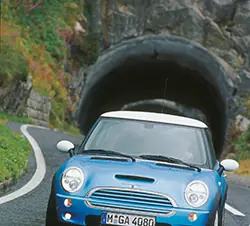
El sistema de lavaparabrisas del vehículo, ¿necesita mantenimiento?
Does the vehicle's windscreen washer system need maintenance?
- ANo.No.
- BSí; vigilar el nivel del circuito de refrigeración, de donde toma el agua.Yes; check the level of the cooling circuit, which it takes water from.
- CSí; vigilar el nivel de líquido lavaparabrisas.Yes; check the windscreen washer fluid level.
ExplanationYou must check and top up the washer reservoir, which is separate from the cooling circuit; without fluid you cannot clean the glass and you lose visibility just when you need it most.
El sistema ADAS conocido como “EBD” ayuda a detectar cuándo el vehículo que circula por delante...
The ADAS system known as 'EBD' helps you detect when the vehicle in front...
- ASe dispone a realizar un cambio de dirección en la próxima intersección.is about to change direction at the next junction.
- BCircula a una velocidad inferior a la mínima establecida en la vía.is going slower than the minimum speed set for the road.
- CEstá realizando una frenada de emergencia.is braking in an emergency.
ExplanationEBD (Emergency Braking Display), or emergency braking warning, helps drivers detect when the vehicle in front is braking in an emergency. This avoids or reduces rear-end collisions caused by unexpected braking. The emergency braking warning is a quick flashing of the brake lights when the brakes are applied hard and fast in an emergency.
Si es obligatorio usar el espejo retrovisor exterior derecho, ¿se puede sustituir por un espejo interior panorámico?
If a right-hand exterior mirror is compulsory, can it be replaced by a panoramic interior mirror?
- ASolo si el vehículo circula por vías urbanas.Only if the vehicle is used on urban roads.
- BSí.Yes.
- CNo.No.
ExplanationWhen the right-hand exterior mirror is compulsory, it cannot be replaced by a panoramic interior mirror: an interior mirror does not give the view of the right side and the rear right area that the driver needs to change lanes or turn safely, whatever the road.
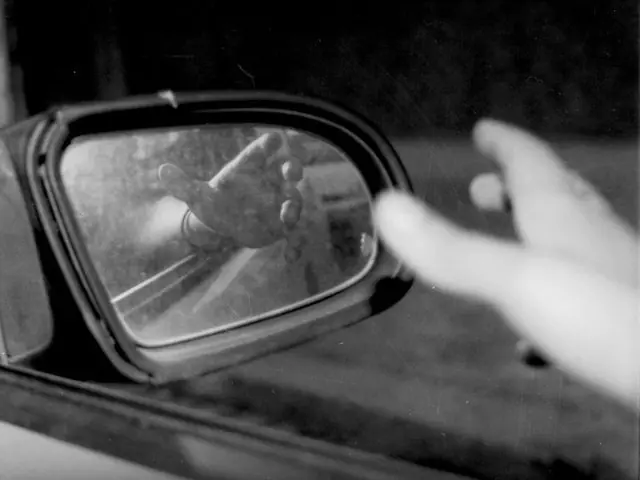
¿Cómo hay que colocar de manera correcta los espejos retrovisores?
How should the mirrors be positioned correctly?
- ACon el vehículo parado en una calzada recta.With the vehicle stopped on a straight road.
- BCon el vehículo en movimiento en una calzada con pendiente hacia arriba.With the vehicle moving on an uphill road.
- CCon el vehículo en movimiento en una calzada recta o con pendiente hacia abajo.With the vehicle moving on a straight or downhill road.
ExplanationThe mirrors are adjusted before you start driving, with the vehicle stopped on a straight, level surface, so that they show the road as you will see it when driving normally. Adjusting them while moving is distracting and dangerous.
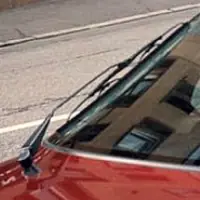
¿Se puede poner en funcionamiento el limpiaparabrisas cuando el cristal está seco?
Can you switch on the windscreen wipers when the glass is dry?
- ASi, pero solo si está demasiado sucioYes, but only if it is very dirty
- BSi, para abrillantarlo y mejorar su visiónYes, to polish it and improve your view
- CNo, porque lo rayariaNo, because they would scratch it
ExplanationYou must never use the wipers when the glass is dry, because it can get scratched, and scratched glass increases dazzle at night and makes the vehicle less safe.
All topics
- Definitions
- Documents and penalty points
- The driver's condition
- Duties of drivers and pedestrians
- Vehicle safety devices
- Vehicle lights and horn
- Traffic signs, markings and signals
- The road and its lanes
- Speed and distances
- Manoeuvres
- Right of way
- Carrying passengers and loads
- Driving safely in difficult conditions
- Vehicle mechanics and maintenance
- Road accidents and first aid
- Defensive and eco-driving
Independent app: not affiliated with or endorsed by the DGT (Spain's Directorate-General for Traffic) or the Ministry of the Interior. The official exam is booked with the DGT and taken at its test centres. The questions here are practice material; the DGT's official question bank is not public.
Basado en datos de la Agencia Estatal Boletín Oficial del Estado (https://www.boe.es). Textos consolidados de carácter meramente informativo. La AEBOE no patrocina ni respalda este sitio.
Parte de las preguntas procede de los tests de la revista «Tráfico y Seguridad Vial» de la DGT, reproducidos con indicación de la fuente.