
DGT test · 270 questions
Vehicle controls and equipment · Page 4 of 6
The controls and equipment of a car — mirrors, wipers, dashboard, warning lights — and the rules for using them.
Questions in this topic, with answers
270 questions, 50 per page, with the correct answer and the explanation. Page 4 of 6.
El ajuste del espejo lateral izquierdo será correcto...
The left side mirror is correctly adjusted...
- ACuando, desde el asiento del conductor y moviendo un poco la cabeza, veamos una pequeña parte del lateral del vehículo y la mayor parte de la calzada.when, from the driver's seat and moving your head slightly, you see a small part of the side of the vehicle and most of the carriageway.
- BCuando, desde el asiento del conductor y sin mover la cabeza, veamos una pequeña parte del lateral del vehículo y la mayor parte de la calzada.when, from the driver's seat and without moving your head, you see a small part of the side of the vehicle and most of the carriageway.
- CCuando, desde el asiento del conductor y sin mover la cabeza, veamos la mayor parte del lateral del vehículo y una parte pequeña de la calzada.when, from the driver's seat and without moving your head, you see most of the side of the vehicle and a small part of the carriageway.
ExplanationThe left exterior mirror must be adjusted so that the driver can see a little of the side of their own vehicle and as much of the carriageway as possible. This makes sure the driver has proper control of their surroundings and can judge the situation on the road correctly. The correct answer – from the driver's seat, without moving your head, you see a small part of the side of the vehicle and most of the carriageway – meets this rule, because it gives a proper, safe view without moving your head, which is essential to avoid distraction and keep your attention on the road.
El sistema ADAS llamado 'EBD' ayuda a detectar cuándo el vehículo que va delante...
The ADAS system called 'EBD' helps you detect when the vehicle in front...
- ATiene intención de girar en la próxima intersección.intends to turn at the next junction.
- BCircula a una velocidad inferior a la mínima permitida en la vía.is travelling below the minimum speed allowed on the road.
- CEstá realizando una frenada de emergencia.is making an emergency stop.
ExplanationEBD (Emergency Brake Display) makes the brake lights flash, and sometimes the hazard warning lights too, when the vehicle brakes sharply. This way the driver behind immediately notices that the vehicle in front is making an emergency stop and can react sooner.
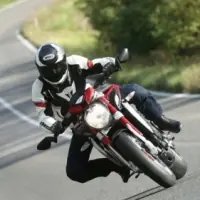
¿En qué lado tiene que estar el retrovisor de una motocicleta si solamente hay uno?
If a motorcycle has only one mirror, on which side must it be?
- AEn el lado derecho.On the right-hand side.
- BEn el lado derecho o en el lado izquierdo, indistintamente.On either the right-hand or the left-hand side.
- CEn el lado izquierdo.On the left-hand side.
ExplanationUnder Annex III of the General Vehicle Regulations (RGV), the left-hand exterior mirror is compulsory on all motorcycles. If a motorcycle has only one, it must be on the left; the right-hand one is only compulsory when the motorcycle can go faster than 100 km/h.
¿Qué indica en el tablero el testigo de la temperatura del motor cuando está encendido?
What does the engine temperature warning light on the dashboard mean when it is on?
- AQue la temperatura exterior es alta.That the outside temperature is high.
- BQue el motor está demasiado caliente.That the engine is too hot.
- CQue es momento de cambiar el aceite del motor.That it is time to change the engine oil.
ExplanationWhen the engine temperature warning light comes on, it means the engine is too hot. This is crucial to avoid serious engine damage, because overheating can lead to major mechanical failures. The rules say vehicles must have warning systems that alert the driver to dangerous operating conditions, such as excessive temperature, to protect the vehicle and its occupants.
La orientación de los espejos retrovisores del ciclomotor debe comprobarse...
The position of the moped's mirrors must be checked...
- ADurante la conducción, aprovechando cualquier detención.while riding, at any stop.
- BAntes de iniciar la marcha.before moving off.
- CCon el vehículo inmovilizado y el conductor fuera del vehículo.with the vehicle stationary and the rider off the vehicle.
ExplanationThe position of the moped's mirrors must be checked before moving off, because it is important to make sure they are correctly adjusted to give good visibility while riding. This way the rider can properly watch the traffic behind and make the decisions needed to ride safely.
Si circulando nos damos cuenta que el retrovisor interior está mal reglado, ¿cuándo debemos regularlo?
If, while driving, we realise that the interior mirror is badly adjusted, when should we adjust it?
- ACuando circulemos en terreno llano y a poca velocidad.When driving on flat ground at low speed.
- BParados y antes de iniciar la marcha.When stopped, before moving off.
- CDentro de poblado a poca velocidad y en terreno llano.In a built-up area, at low speed and on flat ground.
ExplanationThe mirror must be adjusted before moving off, after adjusting the seat and the backrest, with the vehicle stationary on flat, straight ground.
En la disposición más común de los mandos de una motocicleta, ¿qué extremidad se utiliza para accionar el freno delantero?
In the most common layout of a motorcycle's controls, which limb do you use to operate the front brake?
- ACon la mano derecha.The right hand.
- BCon el pie derecho.The right foot.
- CCon la mano izquierda.The left hand.
ExplanationIn the most common layout of a motorcycle's controls, the front brake is operated with a lever on the right side of the handlebars, using the right hand, which also operates the throttle. The rear brake is operated with the right foot and the clutch with the left hand.
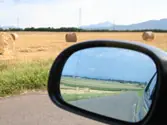
¿Cómo apreciamos la imagen en un retrovisor convexo?
How do we see the image in a convex mirror?
- AMás grande que en un retrovisor plano.Bigger than in a flat mirror.
- BMás pequeña que en un retrovisor plano.Smaller than in a flat mirror.
- CIgual que en un retrovisor plano.The same as in a flat mirror.
ExplanationIn a convex mirror the image looks smaller, so the things you see in it seem further away than they really are.
¿Cómo realizaremos un buen reglaje del espejo retrovisor izquierdo del vehículo?
How do we adjust the vehicle's left mirror correctly?
- ASe regulará para que se vea la mayor parte del costado posterior del vehículo.It is adjusted so that you can see most of the rear side of the vehicle.
- BSe regulará con el conductor sentado en posición normal y que pueda ver la calzada y lo mínimo indispensable del lado izquierdo del vehículo, sin desviar la cabeza.It is adjusted with the driver sitting in the normal position, so that they can see the carriageway and the minimum necessary of the left side of the vehicle, without moving their head.
- CSe regulará con el conductor sentado en posición normal y que con un leve movimiento de la cabeza, pero sin desplazar el cuerpo, pueda ver la calzada.It is adjusted with the driver sitting in the normal position, so that with a slight movement of the head, but without moving the body, they can see the carriageway.
ExplanationThe vehicle's left mirror is adjusted with the driver sitting in the normal driving position, without moving their head from that position. With the left hand, the driver angles the mirror until they can see the carriageway and the minimum necessary of the side of the vehicle.
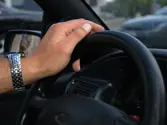
¿Cómo se debe agarrar el volante?
How should you hold the steering wheel?
- ACon los brazos muy estirados.With your arms fully stretched out.
- BCon los brazos un poco doblados.With your arms slightly bent.
- CCon los brazos muy doblados.With your arms very bent.
ExplanationThe driver must sit at the right distance from the steering wheel, so that their arms are slightly bent and not straight.
¿El sistema limpiaparabrisas del vehículo necesita mantenimiento?
Does the vehicle's windscreen wiper system need maintenance?
- ANo.No.
- BSí. Comprobar el nivel del líquido refrigerante, de donde podría tomar el agua.Yes. Check the coolant level, as it may draw its water from there.
- CSí. Comprobar el nivel del líquido del limpiaparabrisas.Yes. Check the windscreen washer fluid level.
ExplanationThe windscreen wipers need maintenance: you must keep an eye on the level in the washer fluid reservoir and change the wiper blades when they leave streaks or make noise. The water is not taken from the cooling system, which is separate and has its own reservoir.
¿Está permitido conducir con una pegatina que impida la correcta visión del conductor a través de la ventana trasera?
Are you allowed to drive with a sticker that stops the driver seeing properly through the rear window?
- ANo, en ningún caso.No, never.
- BSolo si el vehículo tiene espejo retrovisor exterior en ambos lados.Only if the vehicle has an exterior mirror on both sides.
- CSí, siempre que el vehículo disponga de espejo retrovisor izquierdo.Yes, as long as the vehicle has a left mirror.
ExplanationUnder Article 19 of the General Traffic Regulations, the driver's view must be completely clear at all times. Adhesive films on the rear window are only allowed if the vehicle has two exterior mirrors that meet the technical requirements. This makes sure that, even with a film, the driver keeps a proper field of view through the mirrors, which is crucial for road safety.
¿En que lugar está el mando del acelerador en una motocicleta?
Where is the throttle control on a motorcycle?
- AEn el pedal de la derecha.On the right pedal.
- BEn el puño de la derecha.On the right handgrip.
- CEn la maneta de la izquierda.On the left lever.
ExplanationThe throttle control is on the motorcycle's right handgrip. The right lever is for the front brake, and the left lever is for the clutch or the rear brake, depending on whether the motorcycle has manual gears or is automatic.
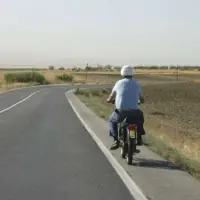
Un ciclomotor de dos ruedas está obligado a...
A two-wheeled moped must...
- ALlevar dos retrovisores, uno en cada lado.Have two mirrors, one on each side.
- BLlevar solamente el retrovisor de la derecha.Have only the right-hand mirror.
- CLlevar solamente el retrovisor de la izquierda.Have only the left-hand mirror.
ExplanationTwo-wheeled mopeds must have a left-hand exterior mirror; the right-hand one is optional (Annex III of the General Vehicle Regulations). So the left-hand mirror is enough.
¿Pueden desconectarse los sistemas ADAS (sistemas avanzados de ayuda a la conducción) instalados en el vehículo?
Can the ADAS systems (advanced driver assistance systems) fitted in the vehicle be switched off?
- APueden desconectarse de forma permanente, pero no de forma temporal.They can be switched off permanently, but not temporarily.
- BSí, pueden desconectarse de forma permanente o temporal.Yes, they can be switched off permanently or temporarily.
- CNo pueden desconectarse en ningún caso.They can never be switched off.
ExplanationIn Spain, advanced driver assistance systems (ADAS) can be switched off both permanently and temporarily, under current rules. This is allowed because these systems are considered tools that help improve safety, but they are not essential for operating the vehicle. So the driver can decide to switch these systems off when they consider it necessary, while remaining responsible for driving the vehicle at all times.
Para conducir de forma segura, el conductor debe...
To drive safely, the driver must...
- Adistraerse con frecuencia.get distracted often.
- Bprestar muy poca atención a la conducción.pay very little attention to driving.
- Ccentrar toda su atención en la tarea de la conducción.focus all their attention on the task of driving.
ExplanationThe driver must always stay attentive and alert to notice what is happening around them, to assess it and turn it into decisions and actions on the vehicle's controls, and to adapt their driving to the traffic situation at each moment.
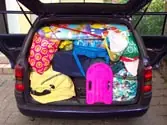
Si nuestro vehículo no dispone de buena visibilidad trasera porqué el equipaje impide ver a través de la luneta trasera, ¿cuántos espejos llevaremos?
If our vehicle does not have good rear visibility because the luggage blocks the view through the rear window, how many mirrors will we have?
- ADos exteriores.Two exterior mirrors.
- BUno interior y el exterior derecho.One interior mirror and the right exterior mirror.
- CUno interior y el exterior izquierdo.One interior mirror and the left exterior mirror.
ExplanationIf you cannot see through the rear window, you must have a right exterior mirror as well as the left one.
En caso de emergencia, ¿es conveniente pisar el pedal de freno a fondo y mantener la máxima presión hasta el final?
In an emergency, is it advisable to press the brake pedal fully and keep maximum pressure until the end?
- AÚnicamente si el vehículo dispone de sistema ABS.Only if the vehicle has ABS.
- BSí, en cualquier caso.Yes, in all cases.
- CNo.No.
ExplanationWith ABS you can press the brake fully and keep the pressure, because the system stops the wheels from locking and lets you keep steering. Without ABS, braking like this locks the wheels and you lose steering control, so it is better to control the braking pressure.
Para controlar el ángulo muerto, ¿qué debe hacer?
To check the blind spot, what should you do?
- ACircular por el centro del carril.Drive in the centre of the lane.
- BGirar un poco la cabeza para completar la visión del retrovisor.Turn your head slightly to complete the view from the mirror.
- CMover los retrovisores hacia afuera.Move the mirrors outwards.
ExplanationThe blind spot is the area around the vehicle that cannot be seen in the mirrors. To check it properly, the mirrors are not enough: you need to turn your head slightly to check that area before a manoeuvre such as changing lanes or overtaking.
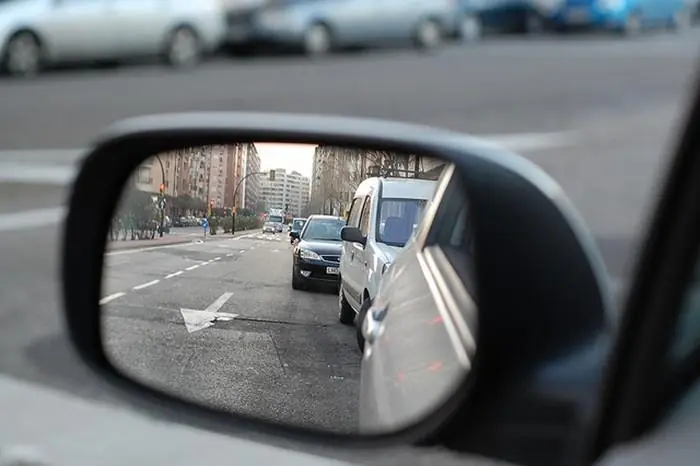
Un turismo, ¿puede llevar sólo el espejo exterior izquierdo y el interior?
Can a car have only the left exterior mirror and the interior mirror?
- ANo, sólo son obligatorios el espejo interior y el exterior derecho.No, only the interior mirror and the right exterior mirror are compulsory.
- BSí.Yes.
- CNo, también debe llevar el espejo exterior derecho.No, it must also have the right exterior mirror.
ExplanationCars must have two mirrors fitted: a left exterior mirror and an interior mirror. If there is not a good view through the interior mirror, another exterior mirror must also be fitted on the right side.
La posición de conducción en una motocicleta debe ser...
The riding position on a motorcycle should be...
- ACentrada y relajada.centred and relaxed.
- BAlta y erguida, para mejorar la visibilidad.high and upright, to see better.
- CLo más avanzada posible.as far forward as possible.
ExplanationThe riding position on a motorcycle should be centred and relaxed, to keep your balance and have more control over the motorcycle. This position spreads the weight better and makes the movements needed to manoeuvre safely easier. Also, a relaxed position reduces tiredness and makes the journey more comfortable.
Si Ud. lleva acoplado a su turismo un remolque vivienda que disminuye el campo de visión hacia atrás, ¿qué espejos retrovisores llevará en este caso?
If you have a caravan hitched to your car that reduces your field of view to the rear, which rear-view mirrors will you have in this case?
- ALos dos exteriores, uno a cada lado.Both exterior mirrors, one on each side.
- BEl interior y el exterior izquierdo.The interior mirror and the left-hand exterior mirror.
- CEl interior y el exterior derecho.The interior mirror and the right-hand exterior mirror.
ExplanationIf the trailer prevents you from seeing in the interior mirror, you must have both exterior mirrors, one on each side, with enough rear view (Annex III of the General Vehicle Regulations). With wide caravans, mirror extensions are usually needed.
En una motocicleta con cambio automático, ¿dónde está situado el mando del freno delantero?
On a motorcycle with automatic transmission, where is the front brake control?
- AEn la maneta derecha.On the right lever.
- BEn la maneta izquierda.On the left lever.
- CEn el pedal de la derecha.On the right pedal.
ExplanationOn all motorcycles, both automatic and with gears, the front brake is operated with the lever on the right.
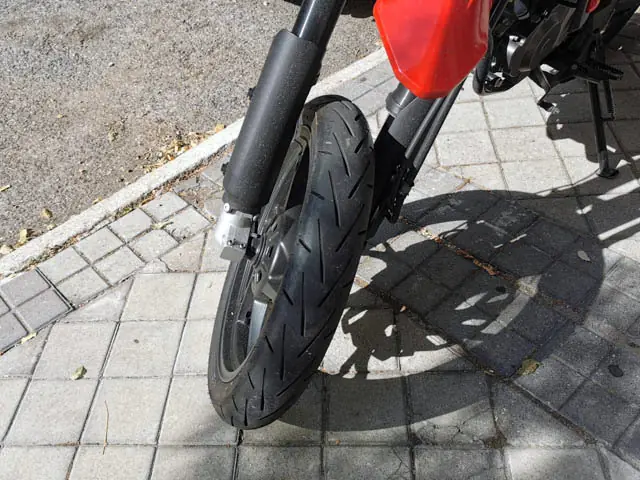
En la disposición más generalizada de los mandos de una motocicleta, ¿con cuál de las siguientes extremidades se acciona el mando del freno de la rueda delantera?
In the most common layout of motorcycle controls, which of these limbs operates the front wheel brake control?
- ACon la mano derecha.The right hand.
- BCon el pie derecho.The right foot.
- CCon la mano izquierda.The left hand.
ExplanationIn the most common layout of motorcycle controls, the front wheel brake is operated with the right hand. This is the standard arrangement on most motorcycles: the front brake is controlled by a lever on the right handlebar, while the rear wheel brake is usually operated with the right foot.
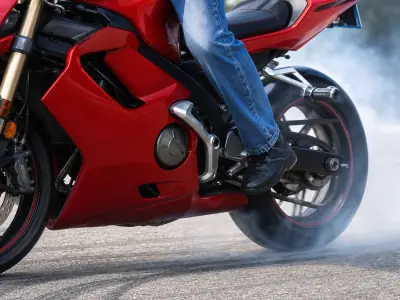
¿Qué mando se acciona con el pie derecho en las motocicletas?
Which control is operated with the right foot on motorcycles?
- AEl freno traseroThe rear brake
- BEl embragueThe clutch
- CEl pedal de cambio de velocidadesThe gear pedal
ExplanationIn the most common layout of motorcycle controls, the right foot operates the rear brake pedal. The gear pedal is on the left-hand side, and the clutch is worked with the left hand from the handlebar.
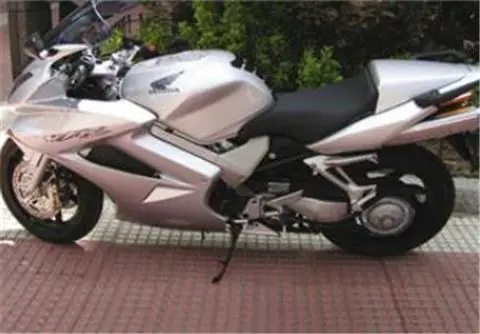
Generalmente, ¿con qué mano se acciona el embrague en una motocicleta?
On a motorcycle, which hand is usually used to operate the clutch?
- AIndistintamente con la mano derecha o izquierda.Either the right or the left hand.
- BCon la mano derecha.The right hand.
- CCon la mano izquierda.The left hand.
ExplanationIn the usual layout of a motorcycle, the clutch is operated with the left hand by means of a lever on the handlebars, and the gears with the left foot. The brakes are on the right-hand side: the front brake on the right hand and the rear brake on the right foot.
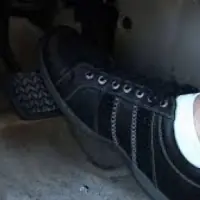
¿Cuál de éstos calzados está recomendado a la hora de conducir?
Which of these types of footwear is recommended for driving?
- ACalzado de suela gruesaShoes with thick soles
- BZapatos de tacón para las mujeresHigh heels for women
- CCalzado deportivo transpirableBreathable trainers
ExplanationFor driving, it is advisable to wear trainers that are breathable, flexible and light, so that you can use the pedals properly. Shoes with very thick soles, high heels or shoes that are not held firmly on the foot, such as flip-flops, are not recommended.
Al conducir entre el atardecer y el amanecer, ¿cuál es la finalidad del sistema ADAS "Asistente de visión nocturna"?
When driving between dusk and dawn, what is the purpose of the ADAS ‘Night Vision Assist’?
- APermitir apagar las luces al encontrarse con otro vehículo para evitar el deslumbramiento.To let you switch off your lights when you meet another vehicle, to avoid dazzling.
- BDetectar un vehículo inmovilizado fuera de la calzada o en el arcén.To detect a vehicle immobilised off the carriageway or on the hard shoulder.
- CDetectar peatones o animales y señalarlos con colores distintos en la pantalla de información del conductor.To detect pedestrians or animals and highlight them in different colours on the driver's information display.
ExplanationNight vision assist uses cameras, usually infrared, to detect pedestrians or animals beyond the reach of the headlights and highlights them on the driver's display. It does not switch off the lights and is not intended for vehicles immobilised off the carriageway.
En una motocicleta automática la maneta de la izquierda es...
On an automatic motorcycle, the left-hand lever is...
- AEl mando del embrague.the clutch control.
- BEl mando del freno trasero.the rear brake control.
- CEl mando del freno delantero.the front brake control.
ExplanationAutomatic motorcycles have no clutch, so the left-hand lever, which is the clutch on manual motorcycles, operates the rear brake. The right-hand lever is still the front brake, as on any motorcycle.
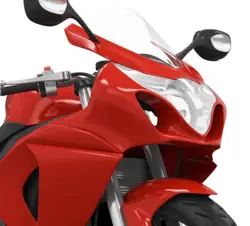
¿A qué puede afectar si cambia el carenado de una motocicleta?
What can be affected if you change a motorcycle's fairing?
- ASólo a la estética.Only its appearance.
- BA la aerodinámica y el consumo.Its aerodynamics and fuel consumption.
- CA que la batería se desgaste antes.How quickly the battery wears out.
ExplanationThe fairing determines how air flows around the motorcycle and the rider. If you change it, the aerodynamics change, and with them the drag, which affects fuel consumption. It has nothing to do with battery wear.
Si debido a la carga que transporta en su vehículo no ve bien por el espejo retrovisor interior, ¿debe llevar instalado el espejo exterior derecho?
If, because of the load in your vehicle, you cannot see well in the interior rear-view mirror, must you have the right-hand exterior mirror fitted?
- ASí, pero sólo si en llano puedo ver por él una distancia por detrás de 60 metros.Yes, but only if on level ground I can see 60 metres behind me with it.
- BNo, es suficiente con el espejo exterior izquierdo.No, the left-hand exterior mirror is enough.
- CSí.Yes.
ExplanationYes. When the load prevents you from seeing in the interior mirror, the right-hand exterior mirror becomes compulsory, as well as the left-hand one (Annex III of the General Vehicle Regulations). The left-hand one alone is not enough, because you would lose sight of the right-hand side.
¿Qué es la zona ciega?
What is the blind zone?
- AEs la zona alrededor del vehículo que no se ve en los espejos.The area around the vehicle that cannot be seen in the mirrors.
- BEs una parte del vehículo que puede causar accidentes.A part of the vehicle that can cause accidents.
- CEs la zona sin visibilidad que tiene el conductor al girar.The area the driver cannot see when turning.
ExplanationThe blind spot is the area around the vehicle that cannot be seen in the mirrors. This idea is critical for road safety, because it is a potential risk when changing lanes or turning and makes accidents more likely. This is indirectly supported by the traffic rules, which say that drivers must be aware of their surroundings and of anything that may affect safe driving.
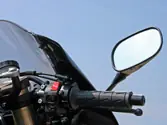
La maneta derecha de una motocicleta acciona...
The right lever on a motorcycle operates...
- AEl embrague.the clutch.
- BEl freno delantero.the front brake.
- CEl freno trasero.the rear brake.
ExplanationThe right lever on a motorcycle operates the front brake. The left lever or the right pedal, depending on whether the motorcycle is automatic or has gears, operates the rear brake.
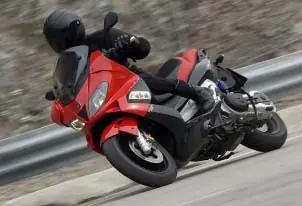
Si circulas con una motocicleta ¿con que mano accionarás la maneta de embrague?
If you are riding a motorcycle, what do you use to operate the clutch lever?
- ACon la mano derecha.The right hand.
- BCon la mano izquierda.The left hand.
- CCon el pie derecho.The right foot.
ExplanationIn the usual layout of the controls, the clutch lever is on the left side of the handlebar and is operated with the left hand. The lever on the right is the front brake, and the feet work the gear lever, on the left, and the rear brake, on the right.
¿Con qué frecuencia debemos mirar los espejos retrovisores dentro de poblado?
How often should we look in the mirrors in a built-up area?
- ACada 10-15 segundos.Every 10–15 seconds.
- BCada 5-10 segundos.Every 5–10 seconds.
- CCada 20-30 segundos.Every 20–30 seconds.
ExplanationIt is very important to use the mirrors regularly, even when the driver is not going to make any manoeuvre. You should look every 5–10 seconds in a built-up area and every 10–15 seconds on the open road.
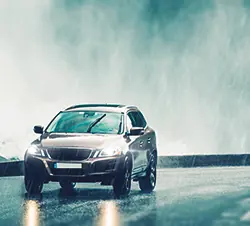
Un conductor circula por una calzada muy mojada; si para frenar necesita pisar a fondo el pedal de freno, ¿a qué puede ser debido, principalmente?
A driver is on a very wet carriageway. If they need to press the brake pedal all the way down to brake, what is the main possible cause?
- AA un fallo del sistema de frenos.A fault in the braking system.
- BA que el sistema ABS necesita una revisión.The ABS system needs to be checked.
- CAl enfriamiento excesivo de los discos de freno.The brake discs have cooled down too much.
ExplanationHaving to press the pedal all the way down to brake shows that the brake circuit has lost effectiveness: a fault in the braking system. Neither the ABS nor cooling of the discs causes this symptom.
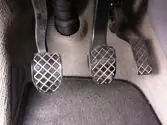
Al arrancar pisar el acelerador...
Pressing the accelerator when starting the engine...
- AEs una buena medida para ahorrar carburante.is a good way to save fuel.
- BNo variará el consumo de carburante.will not change fuel consumption.
- CEs una mala medida para ahorrar carburante.is a bad way to save fuel.
ExplanationIn today's engines you do not need to accelerate to start the engine. Doing so is a mistake if you want to save fuel, because fuel consumption is directly linked to how much you accelerate the engine.
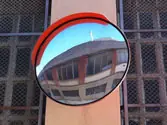
La imagen reflejada en un espejo convexo será...
The image reflected in a convex mirror will be...
- AUna imagen igual a la real.the same as the real image.
- BUna imagen más lejana que la real.further away than the real image.
- CUna imagen más cercana a la real.closer than the real image.
ExplanationThe image reflected in a convex mirror is smaller than normal, so it gives the impression that the vehicle is further away than it really is.
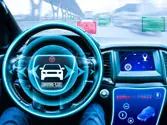
En un vehículo provisto de ADAS, ¿Qué deberá tener en cuenta, si se descarga o desconecta la batería?
In a vehicle with ADAS, what must you bear in mind if the battery goes flat or is disconnected?
- ANinguna en especial, ya que estos sistemas se activan de forma automática.Nothing in particular, because these systems switch on automatically.
- BHabrá que volver a programar el sistema, para garantizar su funcionamiento.The system will have to be reprogrammed to make sure it works.
- CLa carga de la batería no afecta a los ADAS.The battery charge does not affect ADAS.
ExplanationIf the battery is disconnected, the driver assistance systems, known as ADAS, will have to be reprogrammed to make sure they work properly.
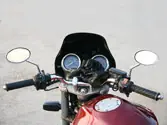
¿Cuándo tendrá que llevar 2 espejos retrovisores una motocicleta?
When will a motorcycle have to have 2 mirrors?
- ASiempre.Always.
- BCuando pueda superar los 100 km/h.When it can exceed 100 km/h.
- CCuando pueda alcanzar 100 km/h.When it can reach 100 km/h.
ExplanationWhen a motorcycle's maximum speed can exceed 100 km/h, it must have another mirror on the right side, in addition to the left mirror, which is always compulsory.
¿Cómo podemos evitar el ángulo muerto?
How can we avoid the blind spot?
- AReglando correctamente los espejos exteriores.By adjusting the exterior mirrors correctly.
- BInstalando en el interior un espejo panorámico.By fitting a panoramic mirror inside.
- CGirando la cabeza como máximo 45º para ver lateralmente.By turning your head no more than 45° to see to the side.
ExplanationMirrors leave an area you cannot see, called the blind spot. The only way to know whether there are vehicles in that blind spot is to turn your head about 45° at most when moving sideways.
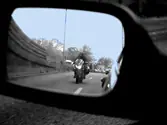
¿Podrá circular una motocicleta que disponga de un solo espejo retrovisor?
May a motorcycle with only one rear-view mirror be ridden?
- ANo.No.
- BSí, si por construcción no supera los 100 km/h y el espejo está en el lado izquierdo.Yes, if by design it cannot exceed 100 km/h and the mirror is on the left-hand side.
- CSí, pero solo si es el derecho.Yes, but only if it is the right-hand one.
ExplanationUnder annex III of the General Vehicle Regulations, a motorcycle whose maximum speed does not exceed 100 km/h must have a left-hand exterior mirror; the right-hand one is optional. If it exceeds 100 km/h, both are compulsory.
El sistema avanzado de ayuda a la conducción conocido como “RCTA o Alerta de tráfico cruzado”, ¿en qué momento emite un aviso al conductor?
When does the advanced driver assistance system known as 'RCTA or Cross traffic alert' warn the driver?
- ACuando detecta un vehículo que se acerca en sentido transversal en la próxima intersección y existe peligro de colisión.When it detects a vehicle approaching from the side at the next junction and there is a danger of collision.
- BCuando al salir marcha atrás de un hueco de estacionamiento, detecta que se acerca un vehículo en sentido transversal.When, while reversing out of a parking space, it detects a vehicle approaching from the side.
- CCuando realizando un adelantamiento, detecta que se acerca un vehículo en sentido contrario.When, while overtaking, it detects a vehicle approaching from the opposite direction.
ExplanationThe system watches traffic crossing behind the vehicle when you reverse out of a parking space where cars are parked side by side. If it detects a vehicle approaching and the estimated time to collision is 2 to 3.5 seconds, based on the relative distance and speed, it gives a sound and/or visual warning on the vehicle's multifunction display or in the exterior mirrors themselves. (If the driver does not react to the warning, some manufacturers' systems even apply the brakes with maximum force when a collision is imminent, as long as the vehicle is going slower than 15 km/h.)
¿Cuál de los siguientes tipos de vidrio se considera más seguro para el parabrisas de un turismo?
Which of the following types of glass is considered safest for a car's windscreen?
- AVidrio templado.Toughened glass.
- BVidrio laminado.Laminated glass.
- CVidrio ahumado.Tinted glass.
ExplanationLaminated glass is considered the safest for a car's windscreen. This type of glass is made of two layers of glass with a layer of plastic in between.
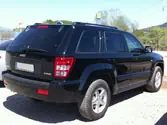
¿Puede instalar láminas adhesivas en las ventanas traseras de su vehículo?
Can you fit adhesive films on your vehicle's rear windows?
- ANo.No.
- BSí, si lleva dos espejos retrovisores exteriores.Yes, if it has two exterior mirrors.
- CNo, si no dispone de un espejo retrovisor interior.No, if it does not have an interior mirror.
ExplanationThe vehicle's glass surfaces must always give the driver a proper view of the road, with no interference from films or stickers. Driving with adhesive films or blinds on the rear windows is only allowed when the vehicle has two exterior mirrors. The adhesive films used must always be approved.
En una motocicleta el freno delantero lo accionaremos con...
On a motorcycle, we will operate the front brake with...
- ALa maneta del lado derecho del manillar.the lever on the right side of the handlebars.
- BLa maneta del lado izquierdo del manillar.the lever on the left side of the handlebars.
- CEl pedal del lado derecho.the pedal on the right side.
ExplanationAll motorcycles, whether automatic or with gears, have the front brake on the lever on the right side of the handlebars, next to the throttle grip.
¿Cuántos espejos retrovisores son obligatorios en un turismo?
How many mirrors are compulsory on a car?
- ADos.Two.
- BTres, como mínimo.Three, at least.
- CCuatro, como máximo.Four, at most.
ExplanationOn a car, the interior mirror and the left exterior mirror are compulsory. The right exterior mirror is compulsory when the interior mirror does not give proper visibility. A car may have a maximum of three mirrors.
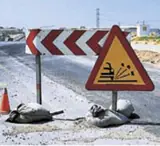
Si existe gravilla en la calzada, ¿qué se debe hacer para evitar la rotura del parabrisas?
If there is loose gravel on the road, what should you do to avoid breaking the windscreen?
- AAumentar la separación con los vehículos que nos preceden.Increase the distance from the vehicles in front.
- BAumentar la velocidad para disminuir los efectos del impacto.Increase speed to reduce the effects of the impact.
- CNada, porque si el parabrisas está limpio se reduce el riesgo de rotura por gravilla.Nothing, because if the windscreen is clean the risk of it breaking from gravel is lower.
ExplanationThere are several situations where we should increase the safe distance to avoid danger. If there are stones or gravel on the road, we should increase it to avoid the windscreen breaking.
Si una motocicleta tiene un solo espejo retrovisor, ¿en qué lado debe llevarlo?
If a motorcycle has only one mirror, on which side must it be?
- AEn cualquiera de los dos lados, da igual.On either side, it does not matter.
- BEn el lado izquierdo.On the left side.
- CEn el lado derecho.On the right side.
ExplanationAccording to the General Traffic Regulations, motorcycles must have at least one exterior mirror, and it must be on the left side. This is because the left mirror gives the rider the best field of view, allowing them to watch the traffic approaching from behind and on their left. This rule makes sure the rider has proper visibility for their own safety and that of other road users. So the correct answer is that the mirror must be on the left side.

¿Cómo se deben regular los espejos en los vehículos?
How should the mirrors on vehicles be adjusted?
- ACon el vehículo parado en calzada recta.With the vehicle stopped on a straight road.
- BCon el vehículo en movimiento para ver mejor.With the vehicle moving, to see better.
- CCon el vehículo parado o en movimiento, es igual.With the vehicle stopped or moving, it makes no difference.
ExplanationThe mirrors must be adjusted on flat, straight ground, with the vehicle stopped and before moving off.
All topics
- Definitions
- Documents and penalty points
- The driver's condition
- Duties of drivers and pedestrians
- Vehicle safety devices
- Vehicle lights and horn
- Traffic signs, markings and signals
- The road and its lanes
- Speed and distances
- Manoeuvres
- Right of way
- Carrying passengers and loads
- Driving safely in difficult conditions
- Vehicle mechanics and maintenance
- Road accidents and first aid
- Defensive and eco-driving
Independent app: not affiliated with or endorsed by the DGT (Spain's Directorate-General for Traffic) or the Ministry of the Interior. The official exam is booked with the DGT and taken at its test centres. The questions here are practice material; the DGT's official question bank is not public.
Basado en datos de la Agencia Estatal Boletín Oficial del Estado (https://www.boe.es). Textos consolidados de carácter meramente informativo. La AEBOE no patrocina ni respalda este sitio.
Parte de las preguntas procede de los tests de la revista «Tráfico y Seguridad Vial» de la DGT, reproducidos con indicación de la fuente.