
DGT test · 200 questions
Duties of drivers and pedestrians · Page 3 of 4
The general duties of people driving and walking on the road: due care, phones and headphones, how pedestrians must behave.
Questions in this topic, with answers
200 questions, 50 per page, with the correct answer and the explanation. Page 3 of 4.
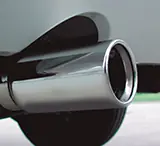
El silenciador...
The silencer...
- Ano es una parte del sistema de escape de los motores.is not part of the engine's exhaust system.
- Bdisminuye o silencia las explosiones producidas en el interior del motor.reduces or silences the noise of the explosions produced inside the engine.
- Cno tiene influencia en la contaminación.has no effect on pollution.
ExplanationThe silencer is an essential part of the vehicle's exhaust system, and its main job is to reduce the noise made by the engine's exhaust gases as they leave the combustion system. While the engine is running, small explosions take place in the cylinders, producing high-pressure gases that make a loud noise when they are expelled. The silencer reduces the impact of that noise, so the vehicle runs more quietly.
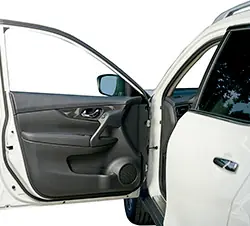
Antes de abrir las puertas para bajar de un vehículo, debe cerciorarse siempre de que…
Before opening the doors to get out of a vehicle, you must always make sure that…
- Ano se ocasiona peligro a otros usuarios.no danger is caused to other road users.
- Blas luces de emergencia del vehículo están encendidas.the vehicle's hazard warning lights are on.
- Cse ha puesto el chaleco reflectante.you have put on the reflective vest.
ExplanationThe Regulations prohibit opening the doors before the vehicle has come to a complete stop and without checking that no danger is created: an approaching cyclist or motorcycle may crash into the open door.
Un peatón camina por la izquierda en una vía interurbana. ¿Lo hace correctamente?
A pedestrian is walking on the left on a road outside built-up areas. Are they doing it correctly?
- ASí.Yes.
- BNo, porque debe caminar por el lado de la carretera donde el arcén sea transitable.No, because they must walk on the side of the road where the hard shoulder is usable.
- CNo, porque debe caminar por la derecha de la carretera en el sentido de su marcha.No, because they must walk on the right of the road in their direction of travel.
ExplanationOn roads outside built-up areas, pedestrians must walk on the left, because this lets them see the vehicles coming towards them and avoid dangerous situations. Article 122 of the General Traffic Regulations states that outside built-up areas pedestrians must walk on the left. So the correct answer is that the pedestrian is walking correctly on their left.
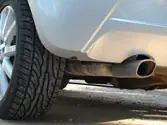
¿Podemos circular con un vehículo con escape libre?
May we drive a vehicle with an open exhaust?
- ASí, pero no podemos hacerlo en vías urbanas ya que causaríamos molestias a los vecinos.Yes, but not on urban roads, because we would disturb local residents.
- BNo, pues está prohibida la circulación con el escape libre tanto en vías urbanas como interurbanas.No, driving with an open exhaust is prohibited on both urban and interurban roads.
- CNo, si la conducción es vías interurbanas.No, if we are driving on interurban roads.
ExplanationOn both urban and interurban roads, motor vehicles and mopeds must not be driven with an open exhaust, that is, without a silencer in the exhaust pipe.
Los vehículos no podrán circular por las vías emitiendo...
Vehicles may not be driven on the road if they give off...
- Aruidos, de cualquier clase.noise of any kind.
- Bniveles de ruido superiores a los límites establecidos.noise levels above the set limits.
- Cgases por el tubo de escape, porque contamina.gases from the exhaust, because this pollutes.
ExplanationVehicles may not be driven if they give off electromagnetic interference, noise, gases, fumes or other pollutants above the set limits. In general, if they give off noise, fumes or gases above the permitted values, police officers may immobilise the vehicle as well as imposing the corresponding fine.

En vías fuera de poblado que no dispongan de espacio especialmente reservado para ellos, a los peatones, ¿les está permitido circular por su derecha?
On roads outside built-up areas with no space specially reserved for them, are pedestrians allowed to walk on their right?
- ANo, en ningún caso.No, never.
- BSi, los peatones siempre circularán por su derecha en este tipo de vías.Yes, pedestrians must always walk on their right on this type of road.
- CSolo excepcionalmente si existen razones de mayor seguridad.Only exceptionally, if there are reasons of greater safety.
ExplanationUnder Article 122.1 of the General Traffic Regulations (RGC), as worded by RD 518/2026, when there is no usable pedestrian area, pedestrians must walk on the left-hand hard shoulder or, if there is none, on the carriageway, and only exceptionally on the right-hand side when there are safety reasons that justify it.
Fuera de poblado, ¿por dónde circularán los peatones?
Outside built-up areas, where must pedestrians walk?
- APor la zona peatonal, en el caso de existir.In the pedestrian area, if there is one.
- BPor el arcén de la derecha.On the right-hand hard shoulder.
- CPor el arcén de la izquierda.On the left-hand hard shoulder.
ExplanationOutside built-up areas, pedestrians must use the pedestrian area when there is one. Only if there is no usable pedestrian area do they walk on the left-hand hard shoulder, facing the traffic, or, if there is none, on the carriageway, as far from the traffic as possible.
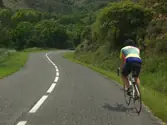
El ciclista que se muestra en la imagen ...
The cyclist shown in the picture...
- Adebería circular lo más cerca posible del eje central de la calzada.should ride as close as possible to the centre line of the carriageway.
- Bno debería circular por esa vía, pues no tiene arcén.should not ride on that road, because it has no hard shoulder.
- Ccircula correctamente.is riding correctly.
ExplanationThe driver of any animal-drawn vehicle, special vehicle with a maximum authorised mass of no more than 3,500 kilograms, cycle, moped, cyclist support vehicle or vehicle for people with reduced mobility must, if there is no road or part of a road specially intended for them, travel on the right-hand hard shoulder, if it is passable and wide enough, and if not, use the smallest possible part of the carriageway. In this case the cyclist is keeping to the right, because there is no hard shoulder to ride on.
¿Es conveniente circular al lado de un vehículo de dos ruedas?
Is it advisable to drive alongside a two-wheeled vehicle?
- ASí.Yes.
- BNo, salvo en vías urbanas o con mucho tráfico.No, except on urban roads or in heavy traffic.
- CNo.No.
ExplanationIt is not advisable: the two-wheeled vehicle may be hidden in the blind spot, and any sideways movement could cause a collision. In addition, under Article 36.2 of the General Traffic Regulations (as worded by RD 518/2026), of the vehicles that must use the hard shoulder only bicycles may ride two abreast; mopeds may not.
¿Puede un ciclomotor circular por un arcén marcado con cebreado?
May a moped ride on a hard shoulder marked with hatching (diagonal stripes)?
- ASí, porque debe circular por el arcén en esa zona.Yes, because it must ride on the hard shoulder in that area.
- BNo, ningún vehículo puede circular por él.No, no vehicle may drive on it.
- CSí, cuando necesite utilizarlo para realizar un giro a la izquierda.Yes, when it needs to use it to turn left.
ExplanationA hatched area (cebreado) marks a zone that no driver may enter, except those required to use the hard shoulder (Article 147 of the General Traffic Regulations). A moped must ride on the hard shoulder, so it may pass over hatched markings located on it.
¿Por dónde circulará un peatón en una vía fuera de poblado?
Where must a pedestrian walk on a road outside built-up areas?
- ASi no existe una zona peatonal, circulará por la calzada o el arcén de la izquierda.If there is no pedestrian area, on the left of the carriageway or hard shoulder.
- BCirculará siempre por la zona peatonal y en ningún caso podrán usar la calzada.Always in the pedestrian area; they may never use the carriageway.
- CCircularán por la zona peatonal y si no la hubiese por la calzada o arcén de la derecha.In the pedestrian area and, if there is none, on the right of the carriageway or hard shoulder.
ExplanationOn roads outside built-up areas that have no pedestrian area, pedestrians must walk on the left of the carriageway or hard shoulder; exceptionally, they may walk on the right for safety reasons.
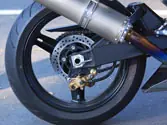
¿Está prohibido circular con el escape libre?
Is it forbidden to drive with an open exhaust?
- ASí, para los vehículos de motor y ciclomotores.Yes, for motor vehicles and mopeds.
- BSí, para todos los vehículos.Yes, for all vehicles.
- CSí, solo para los automóviles.Yes, only for motor cars.
ExplanationMotor vehicles and mopeds may not be driven with an open exhaust and without a silencer. The ban does not apply to all vehicles, nor only to motor cars.
¿Un peatón puede circular por la parte derecha en una vía interurbana?
Can a pedestrian walk on the right-hand side of a road outside built-up areas?
- ANo, siempre debe ir por la izquierda.No, they must always walk on the left.
- BSi, siempre debe de circular por la derecha.Yes, they must always walk on the right.
- CSi, cuando sea más seguro hacerlo por ese lado.Yes, when it is safer to walk on that side.
ExplanationOn roads outside built-up areas, pedestrians must walk on the left, so that they can see vehicles coming towards them, unless it is safer to walk on the right.
En la carretera, los animales deben circular...
On the road, animals must move...
- Apor el borde izquierdo de la vía, como norma general.along the left edge of the road, as a general rule.
- Bpor la derecha o por la izquierda de la vía, es indiferente.on the right or the left of the road; it makes no difference.
- Clo más cerca posible del borde derecho de la vía.as close as possible to the right edge of the road.
ExplanationAnimals being led along the road must use the right-hand hard shoulder or, if they use the carriageway, keep as close as possible to its right edge; herds must not take up more than the right half (Article 127 of the General Traffic Regulations). A single animal may be led on the left only for safety reasons.
Las pruebas ciclistas, ¿deben estar autorizadas?
Must cycling events be authorised?
- ANo.No.
- BSí.Yes.
- CSolo las que se realizan en días festivos.Only those held on public holidays.
ExplanationYes. Cycling sports events on public roads need prior authorisation from the competent authority, under Annex II of the General Traffic Regulations, whatever day they are held.
¿Se permite que un vehículo circule sin el silenciador del escape?
Is a vehicle allowed to be driven without an exhaust silencer?
- ASí, si no molesta a otros usuarios de la vía.Yes, if it does not disturb other road users.
- BNo, excepto los ciclomotores de dos ruedas.No, except two-wheeled mopeds.
- CNo.No.
ExplanationUnder the General Traffic Regulations, it is forbidden to drive motor vehicles and mopeds without an exhaust silencer. This protects the environment and reduces noise pollution. Vehicles without this device are considered unsafe and a nuisance to other road users. The rules state this ban clearly, so the correct answer is «No».
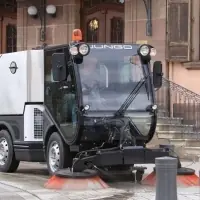
El vehículo que aparece en la foto está destinado…
The vehicle in the picture is intended for...
- Aa obrasconstruction work
- Ba serviciosservices
- Ca tareas agrícolasfarm work
ExplanationThe vehicle in the picture is considered a special service vehicle.
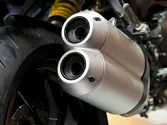
¿Está permitido que un vehículo circule con el llamado, escape libre?
May a vehicle be driven with a so-called open exhaust?
- ASi, cuando no resulte molesto para lo demás usuarios.Yes, when it does not disturb other road users.
- BNo, excepto los ciclomotores de dos ruedas.No, except two-wheeled mopeds.
- CNo.No.
ExplanationOn both urban and interurban roads, motor vehicles and mopeds may not be driven with an open exhaust, without a silencer, or with the gases coming out through resonator pipes.
Fuera de poblado, como norma general, los peatones deberán circular...
Outside built-up areas, as a general rule, pedestrians must walk...
- APor la izquierda, según el sentido de la marcha.on the left, in their direction of travel.
- BPor la derecha , según el sentido de la marcha.on the right, in their direction of travel.
- CSiempre que no lo hagan por la calzada, será indiferente que lo hagan por la derecha o por la izquierda.as long as they are not on the carriageway, it makes no difference whether they walk on the right or the left.
ExplanationOutside built-up areas, as a general rule, pedestrians must walk on the left, unless safety reasons justify walking on the right.
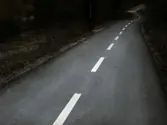
Los peatones que transiten por una vía fuera de poblado, durante la noche, tendrán que llevar...
Pedestrians walking on a road outside a built-up area at night must carry...
- AUn elemento luminoso o reflectante que se vea al menos a 150 metros.A light or reflective item that can be seen from at least 150 metres.
- BUn catadrióptico de color rojo que se vea al menos a 150 metros.A red reflector that can be seen from at least 150 metres.
- CUna linterna de luz blanca que se vea al menos a 50 metros.A white-light torch that can be seen from at least 50 metres.
ExplanationPedestrians walking at night on a road outside a built-up area must carry a light or reflective item that can be seen from at least 150 metres away.
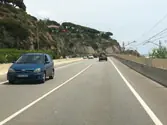
¿Una persona en silla de ruedas con motor podrá circular por el arcén de esta vía?
Can a person in a motorised wheelchair travel on the hard shoulder of this road?
- ANo, en vías fuera de poblado no podrán circular las sillas de ruedas.No, wheelchairs may not travel on roads outside built-up areas.
- BSí, debiendo circular obligatoriamente por el arcén cuando éste sea transitable.Yes, and they must use the hard shoulder when it is driveable.
- CSí, pudiendo circular indistintamente por la calzada o el arcén.Yes, and they may use either the carriageway or the hard shoulder.
ExplanationOn roads outside built-up areas that have a driveable hard shoulder, pedestrians must use that hard shoulder. A person in a wheelchair is considered a pedestrian, so they must also use the hard shoulder.
Fuera de poblado, como norma general , ¿por qué lado de la vía deberán circular los peatones?
Outside built-up areas, as a general rule, on which side of the road must pedestrians walk?
- APor la derecha en casos de poca visibilidad.On the right when visibility is poor.
- BPor la izquierda.On the left.
- CIndistintamente, por la derecha o por la izquierda siempre que haya un arcén.On either the right or the left, as long as there is a hard shoulder.
ExplanationOutside built-up areas pedestrians must walk on the left as a general rule: this way they face oncoming vehicles and can react in time.
¿Está permitida la circulación de animales por una carretera convencional?
May animals travel along a conventional road?
- ASí, únicamente cuando no exista vía pecuaria.Yes, only when there is no livestock route.
- BNo.No.
- CSí, excepto cuando circulen en rebaño.Yes, except when they travel in a herd.
ExplanationAnimals may only travel along conventional roads when there is no other route specially adapted for them. As a general rule, drivers have right of way over animals, except on livestock routes.

Los animales domésticos, en manada o rebaño…
Domestic animals in a herd or flock...
- Atransitaran por la calzada o arcén, siempre que estén custodiados por una persona mayor de 16 años.may move along the carriageway or hard shoulder, as long as they are in the care of a person over 16.
- Ben ningún caso podrán circular de noche o en condiciones climatológicas adversas.may never travel at night or in bad weather.
- Cirán al paso, lo más cerca al borde derecho de la vía y sin ocupar más de la mitad derecha de la calzada.must go at walking pace, as close as possible to the right-hand edge of the road and without taking up more than the right-hand half of the carriageway.
ExplanationAnimals driven in a herd or flock must go at walking pace, as close as possible to the right-hand edge of the road and never taking up more than the right-hand half of the carriageway, always in the care of at least one person over 18.
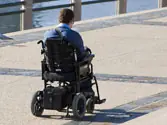
Las personas que circulan en una silla de ruedas con motor, ¿son peatones?
Are people using a motorised wheelchair pedestrians?
- ANo, porque pueden circular por la calzada.No, because they may travel on the carriageway.
- BSí.Yes.
- CSí, pero solo si la silla no tiene motor.Yes, but only if the wheelchair has no motor.
ExplanationA person using a wheelchair, with or without a motor, is considered a pedestrian.
Con la reforma de 2026, quien circula de noche con un patinete eléctrico (VMP) debe llevar:
With the 2026 reform, anyone riding an e-scooter (personal mobility vehicle, PMV) at night must have:
- AUn elemento luminoso o reflectante.A lit or reflective item.
- BPermiso de conducir de la clase B.A category B driving licence.
- CUn remolque homologado.An approved trailer.
ExplanationUnder Article 118.3 of the General Traffic Regulations (as worded by RD 518/2026), PMV riders must wear a helmet and, between sunset and sunrise or in poor visibility, use at least one lit or reflective item visible from 150 metres. A reflective vest is only compulsory on all types of road for people who use the PMV for their work.
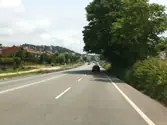
¿Por qué lado circularán los peatones en una vía interurbana?
On which side must pedestrians walk on an interurban road?
- ALos peatones no pueden circular por una vía interurbana.Pedestrians may not walk on an interurban road.
- BPor la derecha.On the right.
- CPor la izquierda.On the left.
ExplanationOn interurban roads, pedestrians must walk on the left-hand side in their direction of travel: in the pedestrian area if there is one, otherwise on the hard shoulder and, if there is none, on the part of the carriageway that is strictly necessary.
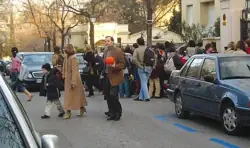
Cuando circule por una vía por la que transiten peatones, sobre todo si son niños o ancianos, es obligatorio...
When you are driving on a road used by pedestrians, especially children or elderly people, you must…
- AReducir al máximo posible la velocidad del vehículo, hasta llegar incluso a detenerse.Reduce your speed as much as possible, even to the point of stopping.
- BAdoptar las precauciones necesarias para su seguridad.Take the necessary precautions for their safety.
- CAdvertir la presencia a los peatones utilizando las señales acústicas y luminosas.Warn the pedestrians of your presence using sound and light signals.
ExplanationWith pedestrians around, especially children or elderly people, who may react unpredictably, the driver must take the necessary precautions: slow down, pay more attention and be ready to stop. Sounding the horn or flashing the lights may frighten them.
Un vehículo de movilidad personal (VMP) tiene prohibido circular por:
A personal mobility vehicle (PMV, e-scooter) is prohibited from being ridden on:
- AAceras, autopistas, autovías y travesías.Pavements, motorways (autopistas), dual carriageways (autovías) and travesías.
- BÚnicamente por las autopistas.Motorways (autopistas) only.
- CSolo por los carriles-bici.Cycle lanes only.
ExplanationUnder Article 38.4 of the General Traffic Regulations (as worded by RD 518/2026), personal mobility vehicles are prohibited on motorways (autopistas), dual carriageways (autovías) and travesías (stretches of road through a town), and on roads outside built-up areas and in urban tunnels, except on cycle routes. Riding any vehicle on pavements is prohibited (Article 152.1).
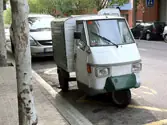
¿Un vehículo de tres ruedas puede ser considerado un ciclomotor?
Can a three-wheeled vehicle be considered a moped?
- ANo, sólo los de dos ruedas.No, only two-wheeled ones.
- BSí, de dos ruedas, tres y también los cuatriciclos ligeros.Yes, two- and three-wheeled ones, and also light quadricycles.
- CSí, sólo los de dos y tres ruedas.Yes, only two- and three-wheeled ones.
ExplanationThere are two-wheeled and three-wheeled mopeds. Light quadricycles are also considered mopeds.
Con un vehículo que emita niveles de ruido superiores a los permitidos...
With a vehicle that makes more noise than permitted...
- Aúnicamente está permitido circular por carretera.you may only drive on roads outside towns.
- Bestá permitido circular por carreteras pero no por travesías.you may drive on roads, but not on travesías (stretches of road through a town).
- Cno está permitido circular.you may not drive.
ExplanationNoise pollution is considered a very serious problem in towns and cities. For this reason, driving a vehicle that makes more noise than permitted, for example with an open exhaust, is prohibited. In addition to imposing the corresponding fine, the police may immobilise our vehicle.
La maquinaria agrícola remolcada está considerada como...
Towed agricultural machinery is considered to be...
- AUn vehículo especial agrícola sin motor.An agricultural special vehicle without an engine.
- BUn vehículo de motor.A motor vehicle.
- CUn automóvil agrícola.An agricultural motor car.
ExplanationTowed agricultural machinery is an agricultural special vehicle designed for farm work. It has no engine of its own and must be towed by a tractor, a two-wheel tractor or another agricultural machine to move. That is why it is neither a motor vehicle nor a motor car.
En las grandes ciudades, la utilización de motocicletas, ¿es mayor o menor que en otras ciudades?
In large cities, is the use of motorcycles higher or lower than in other cities?
- AIgual, no hay diferencias entre unas ciudades y otras.The same; there are no differences between cities.
- BMayor.Higher.
- CMenor.Lower.
ExplanationIn large cities motorcycles are used more because traffic is heavier and parking is difficult. A motorcycle lets you get around easily, takes up little space and is easy to park, which makes it especially practical there.
¿Puede un vehículo de movilidad personal circular por vías interurbanas?
Can a personal mobility vehicle (PMV, e-scooter) be used on roads outside built-up areas?
- ASí, si circula por el arcén.Yes, if it travels on the hard shoulder.
- BNo, debe circular solo por vías urbanas y travesías.No, it must only be used on urban roads and travesías.
- CSolo por vías ciclistas o por vías cerradas a los vehículos de motor.Only on cycle routes or on roads closed to motor vehicles.
ExplanationAccording to Article 38.4.c of the General Traffic Regulations (RGC), as worded by RD 518/2026, personal mobility vehicles are not allowed on roads outside built-up areas, unless these are cycle routes, cycle lanes, cycle tracks, cycle paths or roads where motor vehicles are prohibited, as long as signs do not prohibit it. They are prohibited on travesías, motorways (autopistas) and dual carriageways (autovías) (Art. 38.4.a and b).
Fuera del poblado, cuando no hay zona peatonal, ¿por dónde deben caminar los peatones normalmente?
Outside built-up areas, when there is no pedestrian area, on which side should pedestrians normally walk?
- ANo tiene importancia.It does not matter.
- BPor la derecha.On the right.
- CPor la izquierda.On the left.
ExplanationIf there is no usable pedestrian area, pedestrians must walk on the left-hand hard shoulder in their direction of travel or, if there is none, on the carriageway (Article 122.1 of the General Traffic Regulations (RGC)). That way they see approaching vehicles head-on; only in exceptional cases, for safety reasons, should they walk on the right.
¿Por dónde atravesará un peatón una glorieta?
How must a pedestrian get across a roundabout?
- ADe forma perpendicular al eje de la calzada.At right angles to the centre line of the carriageway.
- BSin utilizar la calzada, deberán rodearla.Without using the carriageway; they must walk round it.
- CPor donde sea más rápido.By the quickest way.
ExplanationUnder Article 124.4 of the General Traffic Regulations (RGC) (as worded by RD 518/2026), pedestrians may not cross squares and roundabouts over the carriageway and must walk round them, unless there is a pedestrian crossing provided.

¿Puede el conductor de un turismo conducir con auriculares conectados?
Can the driver of a car drive with earphones connected?
- ASi, siempre que no pase de 20 dBYes, as long as they do not exceed 20 dB
- BSi, pero deben ser cascos y al mínimo volumen posibleYes, but they must be headphones at the lowest possible volume
- CNo, en ningún casoNo, under no circumstances
ExplanationDriving on public roads with earphones, headphones or similar devices that prevent the driver from hearing and understanding the sound signals that other road users and the authorities may make is completely prohibited. You should also try not to play music too loudly inside the vehicle.

¿Es obligatorio que los vehículos de movilidad personal dispongan de sistema de iluminación?
Must personal mobility vehicles (PMVs, e-scooters) have a lighting system?
- ASí; es obligatorio llevar la lámpara delantera, la lámpara trasera y la lámpara de freno.Yes; a front light, a rear light and a brake light are compulsory.
- BSí; es obligatorio llevar la luz delantera y la trasera; la lámpara de freno es opcional.Yes; a front light and a rear light are compulsory; the brake light is optional.
- CNo; la instalación de un sistema de iluminación es opcional.No; fitting a lighting system is optional.
ExplanationPersonal mobility vehicles (PMVs) must have front reflectors (white), side reflectors (white or amber) and rear reflectors (red), as well as front lighting (white) and rear lighting (red). They must also have a brake light, either separate or combined with the rear light. PMVs used to carry goods must have side reflectors (amber) and rear reflectors (red) that clearly show the height and width of the load in poor visibility.
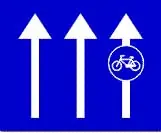
¿Pueden circular las motocicletas por el carril situado más a la derecha de esta vía?
May motorcycles use the right-hand lane of this road?
- ANo, porque está reservado para ciclistas.No, because it is reserved for cyclists.
- BNo, porque está reservado para ciclistas y ciclomotores.No, because it is reserved for cyclists and mopeds.
- CSí, porque está destinado a vehículos de dos ruedas.Yes, because it is intended for two-wheeled vehicles.
ExplanationThe sign shows that the right-hand lane is reserved for cycles, so only bicycles may use it. Motorcycles must use the other lanes, even though they are also two-wheeled vehicles, and mopeds may not use it either.
Los vehículos de movilidad personal, ¿Pueden circular por túneles urbanos?
Can personal mobility vehicles (PMVs) be used in urban tunnels?
- ASí, por cualquiera que esté dentro de poblado.Yes, in any tunnel within a built-up area.
- BSí, por aquellos que se encuentren en el desarrollo de una travesía.Yes, in those located along a travesía (stretch of road through a town).
- CNo, salvo que se trate de vías ciclistas o de vías cerradas a los vehículos de motor.No, unless they are cycle paths or roads closed to motor vehicles.
ExplanationUnder Article 38.4.c of the General Traffic Regulations (as worded by RD 518/2026), personal mobility vehicles may not be used on interurban roads or in urban tunnels, unless these are cycle paths, cycle lanes, cycle tracks, cycle trails or roads where motor vehicles are prohibited. They are also prohibited in travesías (Article 38.4.b).
¿Cómo deben cruzar los peatones las plazas y glorietas?
How must pedestrians cross squares and roundabouts?
- Arodeándolas.by going around them.
- Bpor el centro de la calzada.through the middle of the carriageway.
- Cpor el recorrido más corto.by the shortest route.
ExplanationUnder Article 124.4 of the General Traffic Regulations (as worded by RD 518/2026), pedestrians may not cross squares and roundabouts over their carriageway and must go around them, unless there is a pedestrian crossing provided.
¿Un vehículo de movilidad personal (VMP) puede llevar un asiento o sillín incorporado?
Can a personal mobility vehicle (PMV, e-scooter) have a built-in seat or saddle?
- ASí, siempre que esté dotado de un sistema de autoequilibrado.Yes, as long as it has a self-balancing system.
- BNo, los VMP nunca pueden llevar asiento o sillín.No, PMVs can never have a seat or saddle.
- CSí, pero solo en vías urbanas.Yes, but only on urban roads.
ExplanationThe rules allow PMVs to have a seat or saddle only if they are fitted with a self-balancing system, such as electric unicycles or some scooters with this technology.
¿Está prohibido tirar cualquier objeto que pueda provocar incendios o poner en peligro la seguridad en la vía?
Is it prohibited to throw any object that could cause a fire or endanger road safety?
- ASí, en la vía, pero no en los alrededores.Yes, onto the road, but not in the surrounding area.
- BNo.No.
- CSí, tanto en la vía como en los alrededores.Yes, both onto the road and in the surrounding area.
ExplanationArticle 6.1 of the General Traffic Regulations (RGC) prohibits throwing onto the road or near it any object that could start a fire or, in general, endanger road safety. The ban covers the road and also its surroundings.
Cuando un peatón arrastra o tira de un ciclomotor, ¿Qué señales tiene que obedecer?
When a pedestrian is pushing or pulling a moped, which signals must they obey?
- ASolo las señales dirigidas específicamente a los peatones.Only signs aimed specifically at pedestrians.
- BLas órdenes de los agentes y las señales de tráfico que encuentre a su paso.The instructions of traffic officers and the traffic signs they come across.
- CÚnicamente las órdenes de los agentes de la autoridad.Only the instructions of traffic officers.
ExplanationUnder Article 122.2 of the General Traffic Regulations (as worded by RD 518/2026), people pushing or pulling a two-wheeled cycle or moped must keep to the right and must obey the instructions of traffic officers and the traffic signs they come across.

¿Qué debe tener en cuenta un peatón al cruzar por un paso de peatones señalizado?
What must a pedestrian keep in mind when crossing at a marked pedestrian crossing?
- ADebe intentar pasar rápido aunque siempre tiene preferencia sobre los vehículos que se aproximan.They should try to cross quickly, although they always have right of way over approaching vehicles.
- BSólo debe penetrar en la calzada cuando la distancia y la velocidad de los vehículos que se aproximan permita hacerlo con seguridad.They should only step onto the carriageway when the distance and speed of approaching vehicles allow them to do so safely.
- CDebe atravesar la calzada de forma oblicua al eje de ésta.They must cross the carriageway diagonally.
ExplanationAlthough the pedestrian has right of way, before crossing the carriageway they must make sure that the distance and speed of the approaching vehicle will allow it to stop safely and let them cross.
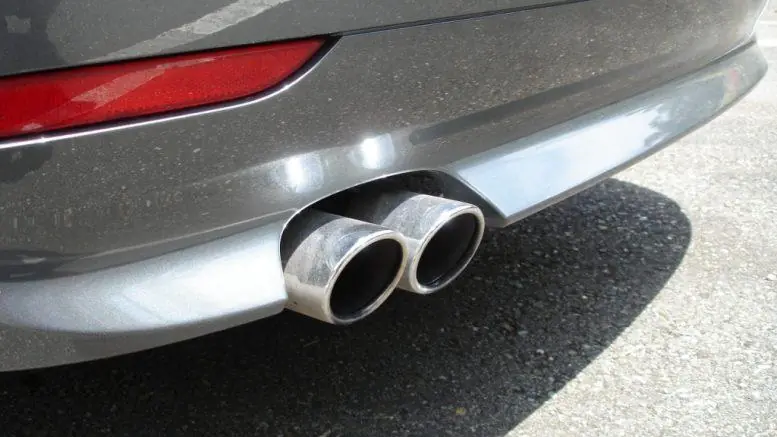
¿Está permitido que un vehículo circule sin silenciador de explosiones?
May a vehicle be driven without a silencer?
- ASí, cuando no moleste a otros usuarios de la vía.Yes, when it does not disturb other road users.
- BNo, excepto los ciclomotores de dos ruedas.No, except two-wheeled mopeds.
- CNo.No.
ExplanationWhen driving on public roads, vehicles may not make noise above the maximum levels allowed, as happens when driving with an open exhaust or a broken silencer.
Un vehículo de movilidad personal (VMP), como un patinete eléctrico, a efectos de circulación es:
For traffic purposes, a personal mobility vehicle (PMV), such as an e-scooter, is:
- AUn peatón.A pedestrian.
- BUn vehículo, con sus propias normas de circulación.A vehicle, with its own traffic rules.
- CUna bicicleta.A bicycle.
ExplanationA personal mobility vehicle is a vehicle, and its rider must follow the traffic rules. Under the General Traffic Regulations (as worded by RD 518/2026), it may not be ridden on pavements (Art. 152.1) or on motorways (autopistas), dual carriageways (autovías) or travesías (stretches of road through a town), and on roads outside built-up areas only on cycle routes, cycle lanes or other roads where motor vehicles are prohibited (Art. 38.4).
El conductor de un turismo, ¿tiene permitido escuchar música a través de auriculares mientras conduce?
Is a car driver allowed to listen to music through earphones while driving?
- ASí, pero cuando se circule por vía urbana.Yes, but when driving on an urban road.
- BNo, está prohibido.No, it is prohibited.
- CSí, puesto que no es peligroso.Yes, since it is not dangerous.
ExplanationArticle 18 of the General Traffic Regulations prohibits driving with earphones connected to sound devices on any road, urban or interurban. They reduce attention and stop you from hearing warnings, horns or sirens.
Como norma general, en las vías fuera de poblado que no dispongan de zona peatonal los peatones circularán...
As a general rule, on roads outside built-up areas without a pedestrian area, pedestrians will walk...
- APor la derecha.On the right.
- BPor la izquierda.On the left.
- CIndistintamente por la derecha o por la izquierda.On either the right or the left.
ExplanationOn roads outside built-up areas and on travesías (stretches of road through a town) with no pedestrian area, pedestrians will, as a general rule, walk on the left. They may walk on the right for safety reasons.
¿Cuál de estos está considerado peatón según la ley de tráfico?
Which of these is considered a pedestrian under traffic law?
- ATodos los ciclistas por regla generalAll cyclists, as a general rule.
- BAquel que conduce un ciclomotor a 30 km/h o una velocidad inferiorSomeone riding a moped at 30 km/h or less.
- CAquel que conduce a pie un ciclomotor de dos ruedasSomeone pushing a two-wheeled moped on foot.
ExplanationA pedestrian is a person who travels on foot on public roads covered by the Traffic Law. People pushing a pram, or pushing a bicycle or moped on foot, are also pedestrians.
All topics
- Definitions
- Documents and penalty points
- The driver's condition
- Vehicle safety devices
- Vehicle controls and equipment
- Vehicle lights and horn
- Traffic signs, markings and signals
- The road and its lanes
- Speed and distances
- Manoeuvres
- Right of way
- Carrying passengers and loads
- Driving safely in difficult conditions
- Vehicle mechanics and maintenance
- Road accidents and first aid
- Defensive and eco-driving
Independent app: not affiliated with or endorsed by the DGT (Spain's Directorate-General for Traffic) or the Ministry of the Interior. The official exam is booked with the DGT and taken at its test centres. The questions here are practice material; the DGT's official question bank is not public.
Basado en datos de la Agencia Estatal Boletín Oficial del Estado (https://www.boe.es). Textos consolidados de carácter meramente informativo. La AEBOE no patrocina ni respalda este sitio.
Parte de las preguntas procede de los tests de la revista «Tráfico y Seguridad Vial» de la DGT, reproducidos con indicación de la fuente.