
DGT test · 200 questions
Duties of drivers and pedestrians · Page 2 of 4
The general duties of people driving and walking on the road: due care, phones and headphones, how pedestrians must behave.
Questions in this topic, with answers
200 questions, 50 per page, with the correct answer and the explanation. Page 2 of 4.
Circula con su motocicleta a la que le ha cambiado el silenciador, ¿podría multarle un agente de tráfico?
You are riding your motorcycle, on which you have changed the silencer. Could a traffic officer fine you?
- ANo, nunca.No, never.
- BSí, en caso de que el silenciador no esté homologado o no esté en buen estado.Yes, if the silencer is not approved or is not in good condition.
- CDependerá del criterio del agente.It will depend on the officer's judgement.
ExplanationArticle 7.2 of the General Traffic Regulations prohibits driving when the exhaust gases, instead of going through an effective silencer, come out through an incomplete, unsuitable or damaged one. So an officer can report a silencer that is not approved or is in poor condition, and can even immobilise the motorcycle if it exceeds the noise levels.
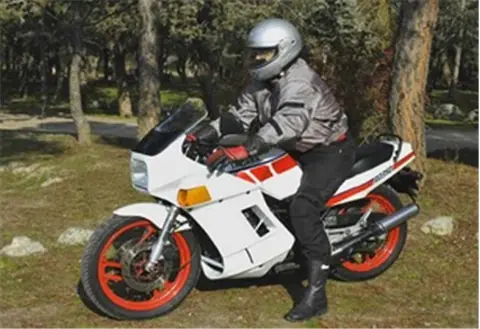
Los conductores de motocicletas, ¿tienen permitido utilizar, durante la conducción, auriculares conectados a aparatos reproductores de sonido?
Are motorcyclists allowed to use earphones connected to sound-playing devices while riding?
- ANo, como norma general.No, as a general rule.
- BSí, porque son dispositivos de manos libres.Yes, because they are hands-free devices.
- CSí, si los llevan integrados en el casco.Yes, if they are built into the helmet.
ExplanationArticle 18.2 of the General Traffic Regulations prohibits driving with earphones connected to sound-playing devices. Motorcyclists are only allowed approved wireless devices built into the helmet for intercom or navigation purposes, not for listening to music.
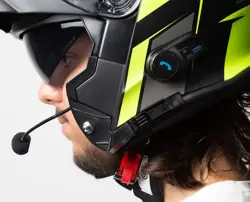
¿Se permiten dispositivos de comunicación en motocicletas?
Are communication devices allowed on motorcycles?
- ANo, está prohibido.No, they are prohibited.
- BSí, cualquier tipo de dispositivo.Yes, any type of device.
- CSí, siempre que no afecte a la seguridad en la conducción.Yes, as long as they do not affect driving safety.
ExplanationArticle 18.2 of the General Traffic Regulations (as worded by RD 518/2026) allows motorcyclists to use certified or approved wireless devices built into the helmet, only for intercom or navigation and as long as they do not affect driving safety.
Un vehículo tiene el silenciador del escape estropeado. ¿Se puede circular así?
A vehicle's exhaust silencer is damaged. May it be driven like this?
- ANo. Produce contaminación acústica.No. It causes noise pollution.
- BSí, solo en carretera.Yes, only on non-urban roads.
- CNo. Pero las motocicletas y los ciclomotores pueden circular sin él.No. But motorcycles and mopeds may be driven without one.
ExplanationIt is forbidden to drive when the engine gases, instead of passing through an effective silencer, come out through one that is incomplete, unsuitable or damaged (Article 7.2 of the General Traffic Regulations). The ban applies on all types of road and also to motorcycles and mopeds.
Los agentes pueden inmovilizar un vehículo cuando...
Police officers may immobilise a vehicle when it...
- AEmite humo negro por el tubo de escape.gives off black smoke from the exhaust.
- BEmite gases contaminantes o ruidos por encima de los máximos legales.gives off polluting gases or noise above the legal limits.
- CEmite humo por el tubo de escape.gives off smoke from the exhaust.
ExplanationWhen we start our vehicle's engine, it gives off fumes and polluting residues and makes noise. The law sets the maximum levels of noise and pollution an engine may give off. If our vehicle is being driven above these legal limits, the officers, besides imposing the corresponding fine, may immobilise it.
¿Por qué parte de la carretera debe circular un rebaño?
Which part of the road must a herd use?
- APor el arcén izquierdo, en la dirección en que van.The left hard shoulder, in the direction they are going.
- BLo más cerca posible del borde derecho de la calzada, en la dirección en que van.As close as possible to the right edge of the carriageway, in the direction they are going.
- CPor el arcén derecho o izquierdo, indistintamente.The right or left hard shoulder, either way.
ExplanationAnimals in a herd or flock must move at walking pace, as close as possible to the right edge of the road and never taking up more than the right half of the carriageway, split into groups with at least one person in charge of each (Article 127.1 of the General Traffic Regulations).

Los animales pueden circular...
Animals may travel...
- Aúnicamente por vías interurbanas.only on interurban roads.
- Bpor todas las vías, excepto por autopistas y autovías.on all roads except motorways and dual carriageways.
- Cpor todas las vías sin excepción.on all roads, without exception.
ExplanationDraught, pack or saddle animals and loose livestock must move along the right-hand hard shoulder and, if they have to use the carriageway, as close as possible to its right-hand edge; as an exception, a single animal may be led along the left-hand edge if this is safer. They may use all roads, although they should try to use roads with less traffic. The exception is motorways and dual carriageways, where they are completely prohibited.
En vías fuera de poblado que no disponen de zona peatonal practicable, ¿qué peatones deben circular en todo caso por su derecha?
On roads outside built-up areas with no usable pedestrian area, which pedestrians must always walk on their right?
- ALos que circulen de noche por el arcén.Those walking on the hard shoulder at night.
- BLos que empujen o arrastren un ciclomotor de dos ruedas.Those pushing or pulling a two-wheeled moped.
- CLos que caminen solos, sin formar parte de un grupo.Those walking alone, not as part of a group.
ExplanationUnder Article 122.2 of the General Traffic Regulations (RGC), as worded by RD 518/2026, the following must always walk on the right: people pushing or pulling a cycle, a two-wheeled moped or a personal mobility vehicle, and any group of pedestrians led by a person. Other pedestrians, as a general rule, walk on the left-hand hard shoulder.
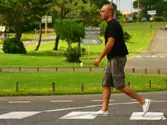
Un peatón pretende cruzar por un paso de peatones debidamente señalizado, ¿cuándo debe penetrar en la calzada?
A pedestrian wants to cross at a properly marked pedestrian crossing. When should they step onto the carriageway?
- ACuando el peatón lo decida, puesto que dispone de la preferencia de paso.Whenever the pedestrian decides, because they have right of way.
- BCuando la distancia y velocidad de los vehículos permitan hacerlo con seguridad.When the distance and speed of the vehicles allow them to do so safely.
- CSolamente cuando no haya vehículos cerca.Only when there are no vehicles nearby.
ExplanationAt pedestrian crossings marked on the road, although pedestrians have right of way, they should only step onto the carriageway when the distance and speed of approaching vehicles allow them to do so safely.
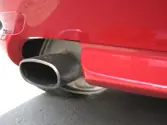
Si su vehículo emite humos negros al circular, ¿qué deberá hacer?
If your vehicle gives off black smoke while you are driving, what should you do?
- AEvitar circular, pues además de la alta contaminación que producimos podemos dificultar la visibilidad de los otros conductores.Avoid driving, because as well as causing a lot of pollution we may reduce other drivers' visibility.
- BSi el motor sigue funcionando y el humo no afecta nuestra conducción, podemos continuar la marcha.If the engine keeps running and the smoke does not affect our driving, we may carry on.
- CSeguiremos circulando normalmente ya que es normal que el vehículo eche humo.Carry on driving normally, because it is normal for a vehicle to give off smoke.
ExplanationBlack smoke is the result of poor combustion, which greatly increases pollution from CO emissions. Driving while polluting above the set limits is prohibited, and the vehicle may even be immobilised. Bluish smoke may be a sign that the engine is burning oil, which gets into the combustion chamber because of a poor seal. White smoke is normal when starting and moving off, but only for the first few minutes, and is caused by water condensing inside the exhaust.
Si un peatón quiere circular de noche por un arcén fuera de poblado, deberá...
If a pedestrian wants to walk along a hard shoulder at night outside built-up areas, they must...
- AIr provisto de un elemento luminoso o retroreflectante.Carry a light or a retroreflective item.
- BCircular por el arcén de la izquierda ya que es de noche,. Durante el día lo hará por el de la derecha.Walk on the left-hand hard shoulder because it is night. During the day they must walk on the right-hand one.
- CLos peatones no pueden circular por las vías fuera de poblado.Pedestrians may not use roads outside built-up areas.
ExplanationWhen a pedestrian walks along a hard shoulder at night outside built-up areas, they must carry a light or a retroreflective item. Also, as a general rule, both by day and by night, pedestrians must walk on the left.
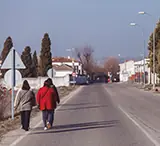
Fuera de poblado, los peatones deberán circular siempre por su derecha cuando...
Outside built-up areas, pedestrians must always walk on their right when...
- ALa vía sea de sentido único, solamente.The road is one-way, and only then.
- BEmpujen o arrastren un ciclomotor de dos ruedas.They are pushing or pulling a two-wheeled moped.
- CLa circulación sea nocturna.They are walking at night.
ExplanationUnder Article 122.2 of the General Traffic Regulations (as worded by RD 518/2026), the following must always walk on the right: those pushing or pulling a cycle, a two-wheeled moped or a personal mobility vehicle (PMV), any group of pedestrians led by one person, and those who, for safety reasons, should not walk on the left.
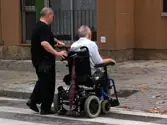
¿Está permitido que una persona en silla de ruedas se desplace por el arcén?
May a person in a wheelchair travel on the hard shoulder?
- ASólo en vías urbanas.Only on urban roads.
- BNo.No.
- CSí, cuando no exista zona peatonal practicable.Yes, when there is no usable pedestrian area.
ExplanationAccording to Article 122.1 of the General Traffic Regulations (RGC), as worded by Royal Decree 518/2026, when there is no usable pedestrian area, pedestrians will walk on the hard shoulder if there is one and it is usable, or otherwise on the carriageway, as far as possible from the vehicle traffic. The old exception in Article 121.2, which allowed use of the hard shoulder even when there was a pedestrian area, has been removed.
¿Puede circular con su vehículo si emite un ruido que supera los límites autorizados?
May you drive your vehicle if it makes more noise than the permitted limits?
- ASí, ya que el ruido no supone ningún peligro.Yes, because noise is not a danger.
- BSí, mientras que no se trate de una avería.Yes, as long as it is not due to a fault.
- CNo, está prohibido.No, it is prohibited.
ExplanationMotor vehicles and mopeds must not be driven making unnecessary noise (horn, music, revving, etc.) or giving off electromagnetic interference. In general, if they give off noise, smoke or gases above the set levels, as well as fining us, police officers may immobilise the vehicle.
La circulación de los peatones por el arcén de una vía interurbana se realizará...
Pedestrians walking on the hard shoulder of an interurban road must use...
- APor el lado derecho.the right-hand side.
- BPor el lado izquierdo.the left-hand side.
- CIndistintamente por el lado derecho o izquierdo.either the right-hand or the left-hand side.
ExplanationOn roads outside built-up areas and on travesías (stretches of road through a town) that have no pedestrian area, as a general rule pedestrians must walk on the left-hand side, and may walk on the right for safety reasons.

Los animales conducidos en manada o en rebaño...
Animals driven in a herd or flock...
- Aatravesarán las vías por cualquier lugar, siempre que estén custodiados por una persona mayor de 18 años.may cross roads anywhere, as long as they are in the care of a person over 18.
- Bno podrán circular por la noche a no ser que el conductor disponga de elementos retrorreflectantes.may not travel at night unless the person in charge has reflective items.
- Cirán al paso, lo más cerca al borde derecho de la vía y sin ocupar más de la mitad derecha de la calzada.must go at walking pace, as close as possible to the right-hand edge of the road and without taking up more than the right-hand half of the carriageway.
ExplanationAnimals driven in a herd or flock must go at walking pace, as close as possible to the right-hand edge of the road and never taking up more than the right-hand half of the carriageway. They must be divided into groups of moderate length, each with at least one person in charge (over 18), and spaced far enough apart to disrupt traffic as little as possible. They may only cross roads at authorised, signposted crossings (cañadas) or at places that are safe enough. On poorly lit roads or in conditions that reduce visibility, the people in charge must carry lights showing their position and size: white or yellow to the front and red to the rear.
Los peatones, ¿tienen los mismos derechos que los conductores para utilizar las vías públicas?
Do pedestrians have the same rights as drivers to use public roads?
- ASólo en las calles residenciales.Only in residential streets.
- BSí.Yes.
- CNo.No.
ExplanationPedestrians have the same right to use the road as drivers. They are one more part of traffic and we must respect them, especially given how vulnerable they are. Pedestrians have priority: - At properly signposted pedestrian crossings. - When drivers are turning to enter another road and there are pedestrians crossing it, even if there is no crossing for them. - When the vehicle crosses a hard shoulder on which pedestrians are walking and there is no pedestrian area for them. - In pedestrian areas: when vehicles cross them at the crossings provided, drivers must let the pedestrians walking there go first. - Pedestrians about to get on, or who have got off, a public passenger vehicle at a signposted stop, when they are between that vehicle and the nearest pedestrian area or refuge. - Troops in formation, school groups and organised processions.
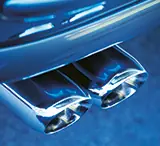
Un vehículo tiene el silenciador del escape estropeado. ¿Está permitido circular así?
A vehicle has a damaged exhaust silencer. Is it allowed to drive like that?
- ASí, solamente en carretera.Yes, but only outside built-up areas.
- BNo, pero las motos y ciclomotores pueden circular sin él.No, but motorcycles and mopeds may be ridden without it.
- CNo, por la contaminación acústica que produce.No, because of the noise pollution it causes.
ExplanationVehicles must not be driven while emitting electromagnetic interference, noise, gases, fumes or other pollutants above the established limits. In general, if they emit noise, fumes or gases above the permitted levels, the police may immobilise the vehicle in addition to imposing the corresponding fine.
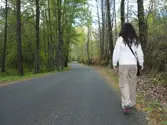
¿A cuántos metros tendrán que ser visibles los elementos reflectantes de los peatones?
From how many metres away must pedestrians' reflective items be visible?
- AA 150 metros.150 metres.
- BA 100 metros.100 metres.
- CA 50 metros.50 metres.
ExplanationPedestrians walking on roads outside built-up areas between sunset and sunrise, or in conditions that reduce visibility, must carry a light or reflective item that can be seen from at least 150 m away.
Está prohibido el paso de peatones...
Pedestrians are prohibited...
- Aen autopistas, pero no en autovías.on motorways (autopistas), but not on dual carriageways (autovías).
- Ben autovías, pero no en autopistas.on dual carriageways (autovías), but not on motorways (autopistas).
- Cen autopistas y en autovías.on motorways (autopistas) and on dual carriageways (autovías).
ExplanationUnder Article 125 of the RGC, pedestrians may not walk on motorways (autopistas) or dual carriageways (autovías), except in the cases and conditions of Article 130, such as a breakdown or an accident, and they may not hitchhike on any stretch of them.
Si no existe vía pecuaria y un rebaño tiene que usar la calzada, ¿por qué lado lo hará?
If there is no livestock route and a herd of animals has to use the carriageway, which side should it use?
- APor el lado derecho o izquierdo indistintamente.Either the right or the left side.
- BPor el lado derecho, lo más cerca posible del borde de la vía.The right side, as close as possible to the edge of the road.
- CPor el lado izquierdo de la calzada.The left side of the carriageway.
ExplanationWhen there is no livestock route and herds have to use the carriageway, they must keep as close as possible to the right-hand edge of the road, without taking up more than the right half of the carriageway.

¿Cómo actuaremos al encontrarnos un animal en la calzada?
What will we do if we find an animal on the carriageway?
- APasaremos sin detenernos, el animal no tiene prioridad.We will pass without stopping; the animal does not have priority.
- BModeraremos la velocidad hasta, en caso necesario, llegarnos a detener.We will slow down and, if necessary, even stop.
- CHaremos uso de las señales ópticas y acústicas para que el animal nos advierta y abandone la calzada sin que tengamos que frenar.We will use light and sound signals so that the animal notices us and leaves the carriageway without us having to brake.
ExplanationWhen we find animals on the carriageway, even though they do not have priority, we must slow down and even stop. As a general rule, drivers have right of way over animals, except in the following cases: on properly signed livestock routes; when turning into another road where animals are crossing, even if there is no crossing for them; and when the vehicle crosses a hard shoulder along which animals are travelling where there is no livestock route. General livestock routes or crossings are shown by additional panels with the word CAÑADA placed under the domestic animals crossing sign.
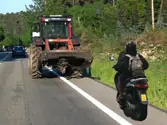
Un tractor agrícola de 3000 kg. de MMA, una bicicleta y un ciclomotor circulan por el arcén. ¿Es correcto?
An agricultural tractor with a MAM of 3,000 kg, a bicycle and a moped are travelling on the hard shoulder. Is this correct?
- ANo, sólo debe circular por el arcén la bicicleta.No, only the bicycle should travel on the hard shoulder.
- BSí, todos deben circular por el arcén.Yes, they must all travel on the hard shoulder.
- CSí, salvo el tractor, que debe circular por la calzada.Yes, except the tractor, which must travel on the carriageway.
ExplanationDrivers of any animal-drawn vehicle, special vehicle with a maximum authorised weight of no more than 3,500 kg, cycle, moped, cyclist support vehicle or vehicle for people with reduced mobility must use the hard shoulder on their right if there is no road, or part of the road, specially intended for them, as long as it is usable and wide enough for each of them. If it is not, they must use the part of the carriageway that is strictly necessary.
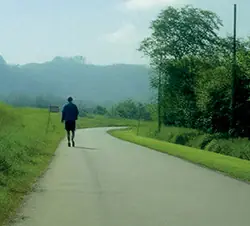
En una vía fuera de poblado en la que no exista zona peatonal ni arcén practicable, ¿está permitido que un peatón circule por la calzada?
On a road outside built-up areas where there is no pedestrian area and no usable hard shoulder, may a pedestrian walk on the carriageway?
- ASí, siempre que tome las debidas precauciones.Yes, as long as they take due care.
- BSólo si arrastra un vehículo de reducidas dimensiones que no sea de motor.Only if they are pulling a small vehicle without an engine.
- CNo.No.
ExplanationOutside built-up areas, if there is no pedestrian area and no usable hard shoulder, pedestrians may walk on the carriageway taking due care, as a general rule on their left, so that they face the oncoming vehicles.
Los conductores de turismos, ¿tienen permitido utilizar, durante la conducción, auriculares conectados a aparatos reproductores de sonido?
Are car drivers allowed to use earphones connected to sound players while driving?
- ANo, está prohibido.No, it is prohibited.
- BSí, cuando circulen por vía urbana.Yes, when driving on an urban road.
- CSí, porque son dispositivos de manos libres.Yes, because they are hands-free devices.
ExplanationArticle 18 of the General Traffic Regulations prohibits driving with earphones connected to sound devices on any road. They are not a hands-free system: you may only talk without using your hands and without earphones.
¿Por dónde debe circular un rebaño?
Where must a herd of animals travel?
- APor el arcén de la izquierda en el sentido de su marcha.On the left-hand hard shoulder in its direction of travel.
- BLo más cerca posible del borde derecho de la vía en el sentido de su marcha.As close as possible to the right-hand edge of the road in its direction of travel.
- CPor el arcén derecho o el izquierdo, indistintamente.On either the right-hand or the left-hand hard shoulder.
ExplanationAnimals: must be led by at least one person over 18; must keep as close as possible to the right-hand edge of the road, although an animal may be led along the left-hand edge when this is safer; may cross roads only at authorised and signposted crossings or at places that are safe enough; may not go into pedestrian areas or use motorways (autopistas) or dual carriageways (autovías), and this includes animal-drawn vehicles. Leaving animals unattended on the road or near it is prohibited.
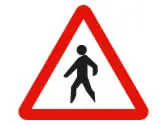
Al transitar fuera de poblado, ¿Cuál de las siguientes, se considera una conducta de riesgo por parte de los peatones?
Outside built-up areas, which of the following is considered risky behaviour by pedestrians?
- ATransitar por el arcén izquierdo, como norma general.Walking on the left-hand hard shoulder, as a general rule.
- BNo situarse o transitar en por la calzada o arcén de forma reglamentaria.Not keeping to or walking on the carriageway or hard shoulder in the way the rules require.
- CLlevar elementos reflectantes cuando transiten entre la puesta y la salida del sol.Wearing reflective items when walking between sunset and sunrise.
ExplanationOutside built-up areas pedestrians must, as a general rule, walk on the left-hand hard shoulder, unless it is clearly safer to walk on the right. Not using the road in the required way is one of the main causes of pedestrians being hit outside built-up areas.
Una persona en silla de ruedas, ¿podrá circular por una carretera?
Can a person in a wheelchair travel along a road?
- ASí, pero obligatoriamente por la zona peatonal.Yes, but only in the pedestrian area.
- BSí, por el arcén transitable o en su ausencia por la calzada.Yes, on the hard shoulder if it is usable, or on the carriageway if there is none.
- CNo, tiene prohibida la circulación por su seguridad.No, it is forbidden for their own safety.
ExplanationA person in a wheelchair counts as a pedestrian. They will travel on the hard shoulder or, if there is none, on the carriageway.
Es obligatorio que todos los vehículos de motor estén dotados de...
All motor vehicles must be fitted with...
- Aun dispositivo silenciador de explosiones.an exhaust silencer.
- Bun juego de correas para el equipo motor.a set of belts for the engine.
- Cun extintor de incendios adecuado y eficaz.a suitable, effective fire extinguisher.
ExplanationOn both urban and interurban roads, it is prohibited to drive motor vehicles and mopeds with an open exhaust, without the exhaust silencer, or when the gases come out through resonator pipes.
Las motocicletas y ciclomotores son medios de transporte…
Motorcycles and mopeds are means of transport…
- AUtilizados cada vez con mayor frecuencia.That are used more and more often.
- BDifíciles de manejar.That are difficult to handle.
- CQue por su incomodidad cada vez se utilizan menos.That are used less and less because they are uncomfortable.
ExplanationMotorcycles and mopeds are used more and more, especially in cities, because they move easily in heavy traffic, use little fuel and are easy to park. This increase means all drivers must pay more attention to these especially vulnerable road users.
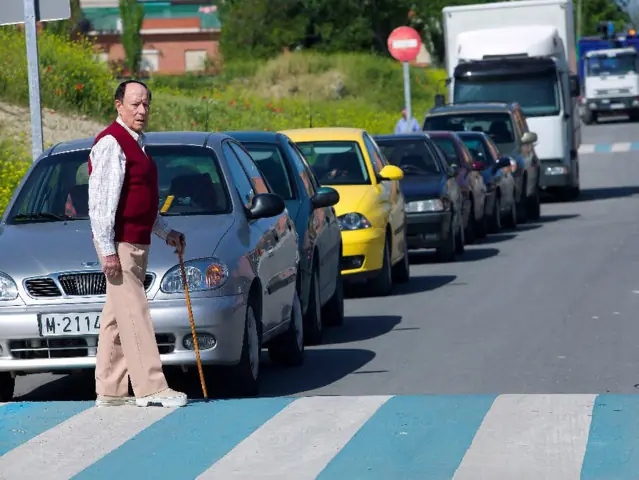
¿Cuál de estas situaciones suelen afectar a las personas mayores cuando son peatones?
Which of these situations often affects older people when they are pedestrians?
- AQue no se desorientan, incluso en calles que no conocen.They do not get disoriented, even in streets they do not know.
- BQue reaccionan mejor ante cualquier situación.They react better to any situation.
- CQue muchos no aprecian bien la velocidad a la que se acercan los vehículos.Many do not judge well the speed of approaching vehicles.
ExplanationWith age, the ability to judge the speed and distance of approaching vehicles usually declines, and sight, hearing and reflexes also get worse. That is why many older people start crossing when the vehicle is too close; the driver must anticipate this and slow down.
¿De qué color serán los catadriópticos traseros de una motocicleta?
What colour must a motorcycle's rear reflectors be?
- ADe color amarillo auto.Amber.
- BDe color blanco.White.
- CDe color rojo.Red.
ExplanationMotorcycles must have a red, non-triangular reflector at the rear.
Circular en motocicleta con el llamado “escape libre”, ¿está permitido?
Is it allowed to ride a motorcycle with a so-called “open exhaust”?
- ASí, pero sólo en vías interurbanas.Yes, but only on interurban roads.
- BSí, tanto en vías urbanas como interurbanas.Yes, on both urban and interurban roads.
- CNo.No.
ExplanationArticle 7.2 of the General Traffic Regulations prohibits driving with a so-called open exhaust, that is, without the required silencer, on both urban and interurban roads. Apart from the noise it causes, the vehicle may be reported and immobilised.
¿Un ciclomotor está considerado como vehículo de motor?
Is a moped considered a motor vehicle?
- ASí, es un vehículo especial.Yes, it is a special vehicle.
- BNo.No.
- CSí, porque funciona con un motor.Yes, because it runs on an engine.
ExplanationThe Traffic Act defines a motor vehicle as one that has an engine to propel it, but it expressly excludes mopeds, trams and vehicles for people with reduced mobility. A moped is not a special vehicle either.
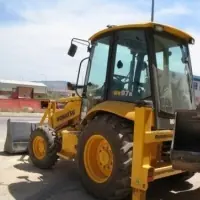
¿Qué tipo de vehículo especial aparece en la foto?
What type of special vehicle is shown in the picture?
- AUno agrícolaAn agricultural one
- BUno de serviciosA service one
- CUno de obrasA construction one
ExplanationThe vehicle in the picture is considered a special construction vehicle.
¿Puede una persona en silla de ruedas motorizada circular por el arcén de una carretera interurbana?
May a person in a motorised wheelchair travel on the hard shoulder of an interurban road?
- ANo. Las sillas de ruedas no pueden circular por carreteras fuera de poblaciones.No. Wheelchairs may not travel on roads outside towns.
- BSí. Deben circular por el arcén cuando este sea transitable.Yes. They must use the hard shoulder when it is passable.
- CSí. Pueden circular por la calzada o por el arcén.Yes. They may travel on the carriageway or on the hard shoulder.
ExplanationIf the motorised wheelchair moves at walking pace, its user is a pedestrian and, where there is no pedestrian area, must use the hard shoulder if it is usable. If it goes faster, it is a vehicle for people with reduced mobility, which must use the right-hand hard shoulder if it is passable (Article 36.1 of the General Traffic Regulations).
¿Podrá un vehículo circular con el llamado escape libre?
May a vehicle be driven with a so-called open exhaust?
- ASí, pero sólo fuera de poblado.Yes, but only outside built-up areas.
- BNo, en ningún caso.No, never.
- CSí, pero a bajas revoluciones.Yes, but at low revs.
ExplanationDriving with an open exhaust means driving without an effective device that reduces the noise made by the engine, so it is prohibited.
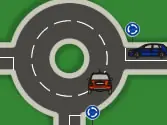
¿Cómo pasarán los peatones por una glorieta?
How will pedestrians get past a roundabout?
- AAtravesándola por la calzada.By crossing it over the carriageway.
- BPerpendicularmente al eje de la calzada.At right angles to the centre line of the carriageway.
- CLa rodearán.They will walk round it.
ExplanationAccording to Article 124.4 of the General Traffic Regulations (RGC), as worded by Royal Decree 518/2026, pedestrians may not cross squares and roundabouts over the carriageway and must walk round them, unless there is a pedestrian crossing.
Los animales domésticos, ¿por qué parte de la vía circularán?
On which part of the road must domestic animals move?
- ATanto por el lado derecho como por el izquierdo indistintamente.On either the right or the left side, it makes no difference.
- BPor el lado izquierdo, en el sentido de su marcha.On the left-hand side, in their direction of travel.
- CPor la parte más cercana posible a la parte derecha de la calzada.As close as possible to the right-hand side of the carriageway.
ExplanationDomestic animals must move along the right-hand hard shoulder and, if they have to use the carriageway, as close as possible to its right-hand edge. A single animal may exceptionally be led along the left-hand edge for safety reasons.
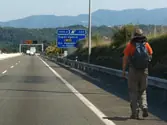
La circulación de peatones está prohibida...
Pedestrians are prohibited from walking...
- Aen autopistas, pero no en autovías.on motorways (autopistas), but not on dual carriageways (autovías).
- Ben autovías, pero no en autopistas.on dual carriageways (autovías), but not on motorways (autopistas).
- Cen autopistas y en autovías.on motorways (autopistas) and on dual carriageways (autovías).
ExplanationThe following may not use motorways or dual carriageways: pedestrians, animals, animal-drawn vehicles, bicycles, mopeds and vehicles for people with reduced mobility. However, cyclists over 14 may ride on the hard shoulders of dual carriageways, unless signs prohibit it for justified road safety reasons. Such a ban is supplemented by a panel showing the alternative route.
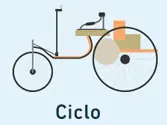
¿Cuál de los siguientes vehículos es un ciclo?
Which of the following vehicles is a cycle?
- AEl ciclomotor.A moped.
- BEl patinete eléctrico.An electric scooter.
- CLa bicicleta.A bicycle.
ExplanationA cycle is a vehicle with at least two wheels that is powered by the muscular effort of the people on it. So a bicycle is a two-wheeled cycle, while a moped is not considered a cycle.
En caso de caída si conduzco una motocicleta...
If I fall while riding a motorcycle…
- AIntentaré agarrarme a la motocicleta todo lo posible.I will try to hold on to the motorcycle as much as possible.
- BIntentaré soltar la motocicleta inmediatamente.I will try to let go of the motorcycle immediately.
- CIntentaré levantarme lo antes posible, antes de deternerme.I will try to get up as soon as possible, before I stop.
ExplanationDuring a fall it is best to let go of the motorcycle as soon as possible, because holding on to it can leave the rider trapped, or dragged along and hit by the motorcycle. Nor should you try to get up before you have come to a complete stop.
Con la reforma de 2026, la edad mínima para circular con un patinete eléctrico (VMP) es de:
With the 2026 reform, the minimum age for riding an e-scooter (personal mobility vehicle, PMV) is:
- A15 años.15.
- B12 años.12.
- C18 años.18.
ExplanationThe new rules set 15 as the minimum age for riding a PMV.
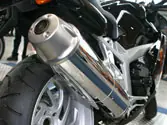
¿Se puede circular con el escape libre?
Can you drive with an open exhaust (without a silencer)?
- ALas motocicletas sí, pero los turismos no.Motorcycles can, but cars cannot.
- BNo.No.
- CEstá permitido fuera de poblado, pero no lo está dentro de poblado.It is allowed outside built-up areas, but not inside them.
ExplanationDriving with an open exhaust, without the silencer, makes more noise than is allowed and is prohibited.
Los patinetes eléctricos (VMP) pueden circular por:
E-scooters (personal mobility vehicles, PMV) may be ridden on:
- AAceras y zonas peatonalesPavements and pedestrian areas
- BCalzada de vías urbanas, respetando la ordenanza municipalThe carriageway of roads in built-up areas, following the local by-law
- CAutovías y carreterasDual carriageways (autovías) and other roads
ExplanationUnder Article 38.4 of the General Traffic Regulations (as worded by RD 518/2026), PMVs may not be ridden on motorways (autopistas), dual carriageways (autovías) or travesías (stretches of road through a town), nor on roads outside built-up areas or in urban tunnels, except on cycle paths, cycle lanes and similar. They may not be ridden on pavements either (Article 152.1); on roads in built-up areas, the local authority decides where they may be ridden (Article 155.1).
En un ciclomotor, ¿está permitido llevar un tubo resonador?
On a moped, is it allowed to have a resonator exhaust pipe?
- ASí, está permitido porque no se considera un vehículo de motor.Yes, it is allowed because a moped is not considered a motor vehicle.
- BNo, está totalmente prohibido.No, it is completely prohibited.
- CSí, está permitido si el conductor tiene más de 16 años.Yes, it is allowed if the rider is over 16.
ExplanationIt is prohibited to drive motor vehicles and mopeds with an open exhaust, without a silencer, or with ineffective silencers or resonator pipes, because of the noise they make. The rider's age does not change this prohibition.
¿Pueden los agentes inmovilizar un vehículo si produce un ruido excesivo?
May police officers immobilise a vehicle if it makes excessive noise?
- ASí, cuando el ruido supere los niveles permitidos.Yes, when the noise goes over the permitted levels.
- BNo, sólo pueden multarle.No, they can only fine you.
- CNo, ya que no supone ningún peligro para la circulación.No, because it is not a danger to traffic.
ExplanationIf vehicles make more noise than is acceptable, traffic police officers may report them and immobilise the vehicle when it is being driven with an open exhaust or a broken silencer, or when for any other reason it makes a noise level clearly above the set maximum limits.
Cuando no exista zona peatonal los peatones...
When there is no pedestrian area, pedestrians...
- ADeben transitar por la calzada.Must walk on the carriageway.
- BDeben transitar por el arcén.Must walk on the hard shoulder.
- CNo pueden usar la carretera si no hay vía peatonal.May not use the road if there is no pedestrian path.
ExplanationWhen there is no pedestrian area, pedestrians must walk on the hard shoulder, and if there is no hard shoulder, on the carriageway.
Al adelantar a un grupo de peatones que caminan por una vía interurbana, ¿qué separación lateral se deberá guardar respecto a éstos?
When overtaking a group of pedestrians walking along an interurban road, what side clearance must you leave from them?
- ANinguna en concreto, ya que los peatones tienen prohibido caminar por las vías interurbanas.None in particular, because pedestrians are not allowed to walk on interurban roads.
- BUna distancia razonable en función de las características de la vía.A reasonable distance depending on the features of the road.
- CUna distancia que será, como mínimo, de 1,50 metros.A distance of at least 1.50 metres.
ExplanationWhen overtaking pedestrians, including a group walking on the hard shoulder of an interurban road, you must leave a side clearance of at least 1.5 metres and, outside built-up areas, reduce your speed by at least 20 km/h below the limit. Pedestrians are allowed on interurban roads.

¿Está permitido conducir utilizando auriculares conectados a un reproductor de sonido?
Is it allowed to drive using earphones connected to a sound player?
- ASí, cuando el volumen sea bajo.Yes, when the volume is low.
- BNo, está prohibido.No, it is prohibited.
- CSí, si solo se usa un auricular.Yes, if only one earphone is used.
ExplanationArticle 18 of the General Traffic Regulations prohibits driving with headphones, earphones or similar devices connected to sound equipment, whatever the volume and even if only one is used. They reduce attention and prevent you from hearing warnings and sirens.
All topics
- Definitions
- Documents and penalty points
- The driver's condition
- Vehicle safety devices
- Vehicle controls and equipment
- Vehicle lights and horn
- Traffic signs, markings and signals
- The road and its lanes
- Speed and distances
- Manoeuvres
- Right of way
- Carrying passengers and loads
- Driving safely in difficult conditions
- Vehicle mechanics and maintenance
- Road accidents and first aid
- Defensive and eco-driving
Independent app: not affiliated with or endorsed by the DGT (Spain's Directorate-General for Traffic) or the Ministry of the Interior. The official exam is booked with the DGT and taken at its test centres. The questions here are practice material; the DGT's official question bank is not public.
Basado en datos de la Agencia Estatal Boletín Oficial del Estado (https://www.boe.es). Textos consolidados de carácter meramente informativo. La AEBOE no patrocina ni respalda este sitio.
Parte de las preguntas procede de los tests de la revista «Tráfico y Seguridad Vial» de la DGT, reproducidos con indicación de la fuente.