
DGT test · 247 questions
Driving safely in difficult conditions · Page 5 of 5
Driving in rain, fog, snow, ice, wind and at night, and how to adapt to risky situations on the road.
Questions in this topic, with answers
247 questions, 50 per page, with the correct answer and the explanation. Page 5 of 5.
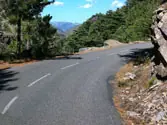
En esta curva de visibilidad reducida, ¿está permitido cambiar de sentido?
On this bend with reduced visibility, are you allowed to make a U-turn?
- ASí, siempre que no se obstaculice a los vehículos que circulen detrás.Yes, as long as you do not obstruct vehicles behind you.
- BNo, en ningún caso.No, never.
- CSí, porque no hay señal que lo prohíba.Yes, because there is no sign prohibiting it.
ExplanationA U-turn is prohibited in any situation where you cannot check that you will not endanger or obstruct other road users, even without a specific sign: for example, on bends and brows of hills with reduced visibility, or in fog or heavy rain. U-turns are also prohibited: - On level crossings (not prohibited near them). - In tunnels, underpasses and stretches of road covered by the 'Tunnel' sign. - On autopistas (motorways) and autovías (dual carriageways), except at places provided for this. - On one-way carriageways and stretches of road. - On all stretches of road where overtaking is prohibited, unless the U-turn is expressly authorised.

El calor excesivo en el interior del vehículo, ¿puede aumentar el riesgo en la conducción?
Can excessive heat inside the vehicle increase the risk when driving?
- ASí, porque favorece la aparición de fatiga al volante.Yes, because it encourages fatigue at the wheel.
- BNo, siempre que el conductor lleve ropas ligeras.No, as long as the driver wears light clothes.
- CNo, solamente si se conduce con las ventanillas abiertas.No, only if you drive with the windows open.
ExplanationExcessive heat inside the vehicle encourages fatigue and drowsiness, reduces attention and lengthens reaction time. It is recommended to keep the inside between 21 and 23 °C; neither light clothing nor open windows remove this risk.
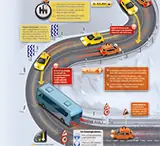
Por seguridad, ¿cuál es la forma más aconsejable de bajar un puerto de montaña cuando en la calzada existan placas de hielo?
For safety, what is the best way to go down a mountain pass when there are patches of ice on the carriageway?
- ACon la marcha más corta que se pueda para evitar deslizamientosIn the lowest gear possible, to avoid sliding
- BUtilizando el freno de mano para trazar las curvas.Using the handbrake to take the bends.
- CA baja velocidad con la marcha más larga que se pueda, evitando frenadas bruscas.At low speed in the highest gear possible, avoiding sudden braking.
ExplanationWith patches of ice, it is best to go down in the lowest gear possible: engine braking holds the vehicle back with hardly any use of the brake, which avoids locking the wheels and sliding. Using the handbrake on a bend would cause a skid.
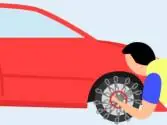
En caso de ser necesario utilizar cadenas para circular sobre nieve, ¿dónde deben colocarse?
If you need to use chains to drive on snow, where must they be fitted?
- AUna a cada lado del eje directriz.One on each side of the steering axle.
- BUna a cada lado del eje motriz.One on each side of the drive axle.
- CTodas en el mismo lado del vehículo.All on the same side of the vehicle.
ExplanationSnow chains or other approved devices must be fitted on the driving wheels, which receive the engine's power. This gives the traction needed to move forward on snow or ice. Fitting them on the wrong axle can make the vehicle lose control or not have enough grip. The driving wheels can be either the front wheels (front-wheel drive vehicles) or the rear wheels (rear-wheel drive vehicles).
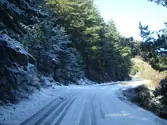
¿Cómo se sugiere iniciar la conducción en un turismo cuando la calzada está cubierta de nieve?
What is the recommended way to move off in a car when the carriageway is covered in snow?
- AIniciando en la marcha más corta, generalmente la primera.Starting in the lowest gear, usually first.
- BUtilizando la marcha más alta posible, segunda o tercera.Using the highest gear possible, second or third.
- COptando por la marcha atrás para una mayor suavidad.Choosing reverse gear for more smoothness.
ExplanationWhen there is snow on the carriageway, to move off without the vehicle losing grip and skidding, use the highest gear possible (2nd or 3rd), with the wheels straight, releasing the clutch slowly and accelerating gently and evenly. In this situation, 1st gear will make the vehicle skid because it sends too much force to the wheels.
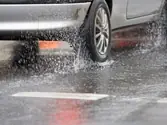
Para evitar que el vehículo en caso de lluvia planee sobre el agua...
To stop the vehicle from gliding on the water when it rains...
- Adebe usar cadenas.you must use chains.
- Bdebe disminuir la velocidad.you must reduce speed.
- Cdebe aumentar la velocidad.you must increase speed.
ExplanationWhether aquaplaning happens depends on how much water the tyres can clear, measured in litres per second, and on your speed. The higher the speed, the less time the tyres have to clear the water from the carriageway, so aquaplaning becomes more likely. The best way to prevent aquaplaning is to moderate your speed.
¿Cuándo el viento es especialmente peligroso al conducir una motocicleta?
When is wind especially dangerous when riding a motorcycle?
- ACuando sopla de frente, porque puede reducir la velocidad.When it blows from the front, because it can reduce speed.
- BCuando sopla lateralmente.When it blows from the side.
- CCuando sopla por detrás, porque puede aumentar la velocidad.When it blows from behind, because it can increase speed.
ExplanationWind is especially dangerous for motorcycles when it blows from the side, because the vehicle is unstable. According to the General Traffic Regulations (RGC), motorcycles are highly vulnerable to bad weather. A crosswind can destabilise the motorcycle, making it hard to control and increasing the risk of falls. This is because their light weight and shape make motorcycles easier to push off course with strong gusts of wind.
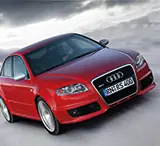
Hay hielo en la vía. ¿Qué debe hacer?
There is ice on the road. What should you do?
- ACircular con el pie en el embrague.Drive with your foot on the clutch.
- BCircular a poca velocidad para no tener que frenar.Drive at low speed so that you do not have to brake.
- CCircular pisando el freno intermitentemente.Drive pressing the brake on and off.
ExplanationOn ice, grip is minimal: the safe thing is to drive very slowly and smoothly so that you do not have to brake. Pressing the brake or the clutch on ice makes it easier for the wheels to lock and for you to lose control.
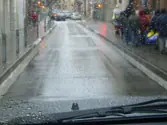
La lluvia...
Rain...
- Aexige al conductor tomar más precauciones por la falta de adherencia de los neumáticos.requires the driver to take more precautions because the tyres have less grip.
- Bes un fenómeno atmosférico que no influye en la conducción.is a weather phenomenon that does not affect driving.
- Cmejora la visibilidad porque limpia el parabrisas.improves visibility because it cleans the windscreen.
ExplanationRain reduces the grip of the tyres on the carriageway and makes it harder to see. On a wet carriageway, the tyres lose grip and need a longer distance to stop, so you should reduce speed and increase the safe distance. Always brake gently to avoid locking the wheels. When rain reduces visibility, use dipped headlights and, where appropriate, fog lights. Driving in rain is more demanding and tiring, so take rest breaks more often.
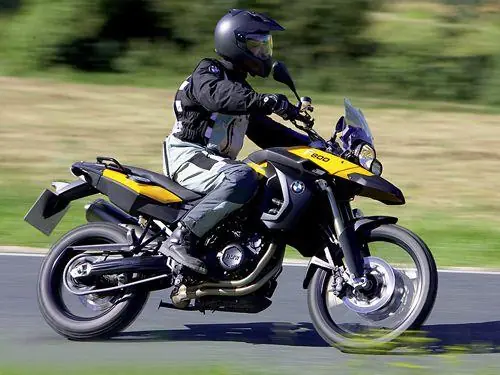
Conduciendo una motocicleta debe tener especial cuidado al circular…
When riding a motorcycle, you must take special care when riding…
- APor calzadas con arena o gravilla suelta.On roads with sand or loose gravel.
- BEntre las marcas viales de los pasos para peatones.Between the road markings of pedestrian crossings.
- CSobre pavimentos rugosos y secos.On rough, dry surfaces.
ExplanationSand and loose gravel greatly reduce tyre grip, and a motorcycle, which rests on only two wheels, can easily slide and fall when braking or leaning. You must reduce your speed and avoid sudden manoeuvres on them.
¿Se podrá parar o estacionar en una curva de visibilidad reducida?
May you stop or park on a bend with reduced visibility?
- APara si, estacionar no.Stop, yes; park, no.
- BNo.No.
- CSí, por tiempo inferior a 2 minutos.Yes, for less than 2 minutes.
ExplanationOn bends with reduced visibility and near them, both stopping and parking are expressly prohibited.
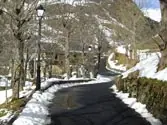
Hay hielo en la calzada. ¿Qué debe hacer?
There is ice on the carriageway. What should you do?
- ACircular con la primera marcha, que es la más corta.Drive in first gear, which is the lowest.
- BAcelerar para salir rápidamente.Speed up to get out quickly.
- CConducir con cuidado, frenar y acelerar con cuidado sólo cuando sea necesario.Drive carefully, braking and accelerating gently, and only when necessary.
ExplanationOn ice, act in the same way as on snow: move off in high gears, reduce speed, use the steering wheel and pedals smoothly and, if the vehicle does not have ABS, use engine braking whenever possible. Braking distance (from the moment you touch the brake until the vehicle stops) is up to 2 times longer in rain, and up to 10 times longer on ice.
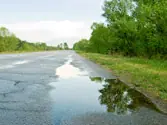
¿Cómo podemos prevenir la aparición del aquaplaning?
How can you prevent aquaplaning?
- AModerando la velocidad.By moderating your speed.
- BDisminuyendo la presión de los neumáticos.By reducing tyre pressure.
- CEl aquaplaning es un fenómeno inesperado y no se puede prevenir.Aquaplaning is unexpected and cannot be prevented.
ExplanationOne of the most dangerous effects of rain is aquaplaning. It can happen when you drive at a certain speed over stretches of carriageway where water has built up. When the tyre tread cannot clear all the water, the tyre loses contact with the road surface and slides, floating on the water, and the driver loses control of the vehicle. The best way to prevent aquaplaning is to moderate your speed.
¿Podemos realizar un cambio de sentido de la marcha en una curva de visibilidad reducida?
May we make a U-turn on a bend with limited visibility?
- ASí, si hay línea discontinua.Yes, if there is a broken line.
- BSí, si se señaliza con antelación suficiente.Yes, if it is signalled well in advance.
- CNo.No.
ExplanationMaking a U-turn on a bend with limited visibility is prohibited, because we cannot make sure of the vehicles coming towards us.
¿Cómo se circulará por una pendiente ascendente cuando haya nieve?
How should you drive up a slope when there is snow?
- ACon una marcha corta y acelerando mucho.In a low gear, accelerating hard.
- BA una velocidad sostenida y sin acelerar.At a steady speed, without accelerating.
- CA gran velocidad y acelerando.At high speed, accelerating.
ExplanationDriving on snowy surfaces must be very smooth, both with the steering wheel and with the brake and the accelerator.
¿Qué debemos hacer si, por el hielo, nuestro vehículo queda atascado y las ruedas patinan?
What should you do if your vehicle gets stuck because of ice and the wheels spin?
- APondremos marcha atrás, porque es la marcha de más potencia.Engage reverse gear, because it is the most powerful gear.
- BPondremos la primera velocidad y aceleraremos a fondo.Engage first gear and accelerate hard.
- CPondremos una marcha lo más larga posible y aceleraremos con suavidad.Engage the highest gear possible and accelerate gently.
ExplanationThe correct answer is to use the highest gear possible and accelerate gently. This makes the wheels spin less and helps you regain control of the vehicle in slippery conditions such as ice. In a high gear, the engine delivers torque in a more controlled way, preventing the wheels from locking. This matches safe driving advice for icy conditions, which stresses smooth and controlled manoeuvres.
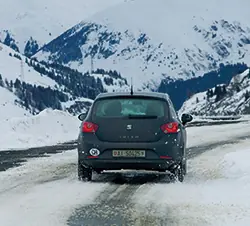
El hielo, la nieve, la calzada mojada y las obras, ¿de qué factor de riesgo forman parte?
Ice, snow, a wet carriageway and roadworks: which risk factor are they part of?
- ADel factor humano.The human factor.
- BDel factor vehículo.The vehicle factor.
- CDel factor vía y entorno.The road and environment factor.
ExplanationIce, snow, a wet carriageway and roadworks are conditions of the road and its surroundings: they belong to the road and environment factor, one of the three risk factors along with the human factor and the vehicle factor.
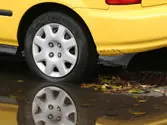
Cuando llueve, las ruedas del vehículo, ¿cómo se agarran a la calzada?
When it rains, how well do the vehicle's wheels grip the carriageway?
- ASe agarran más a la calzada.They grip the carriageway better.
- BSe agarran igual que cuando no llueve.They grip the same as when it is not raining.
- CSe agarran menos a la calzada.They grip the carriageway less.
ExplanationRain is a weather phenomenon that can have a negative effect on driving and requires extra care. On a wet carriageway, the tyres lose some of their grip. The carriageway becomes extremely slippery when the first drops fall. To avoid an accident on a wet carriageway, as well as keeping your tyres at the right pressure and with enough tread, you should: - Moderate your speed and increase the safe distance (up to double). - Brake earlier and more gently (braking distance can be up to double). - Test your brakes after driving through a flooded stretch or pools of water (remember that if they get wet, you should brake several times to dry them). - Take extra care when driving at high speed, because you may aquaplane (the tyres cannot clear the layer of water on the carriageway and lose grip).
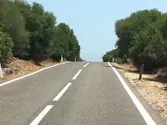
En las proximidades de un cambio de rasante de visibilidad reducida, está prohibido....
Near a brow of a hill with reduced visibility, it is prohibited to...
- AEstacionar y parar.park and stop.
- BSolo estacionar.only park.
- CSolo parar.only stop.
ExplanationNear a brow of a hill with reduced visibility, and near a bend with the same features, it is prohibited to stop and to park.
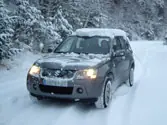
En caso de nieve en la calzada, ¿con qué marcha nos pondremos en movimiento?
If there is snow on the carriageway, which gear should you move off in?
- ACon la primera marcha.In first gear.
- BCon la más larga posible.In the highest gear possible.
- CCon la marcha hacia atrás.In reverse gear.
ExplanationTo stop the wheels from spinning when you move off, keep the steering wheel straight and use the highest gear possible: between first and second, choose second gear.
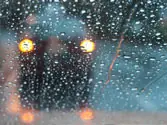
En caso de lluvia debemos circular con más precaución, porqué...
When it rains, you should drive more carefully because...
- Aaumenta la adherencia de los neumáticos.tyre grip increases.
- Bse reduce la visibilidad.visibility is reduced.
- Cse reduce la distancia de frenada.braking distance is reduced.
ExplanationWhen it rains, the carriageway is wet, so tyre grip decreases, braking distance increases and visibility is reduced, both because of the rain itself and because of the water thrown up by other vehicles.
¿Para qué vehículos es más peligroso el viento lateral racheado?
For which vehicles are gusty side winds most dangerous?
- APara los turismos.For cars.
- BPara los remolques.For trailers.
- CPara los de dos ruedas.For two-wheeled vehicles.
ExplanationGusty side winds affect two-wheeled vehicles most, such as bicycles, mopeds and motorcycles: they are light and narrow, and a gust can push them off their path or make them lose balance. When overtaking or passing them, leave more room.
Para evitar el hidroplaneo en caso de lluvia...
To avoid aquaplaning in the rain...
- Adebe usar cadenas.you must use chains.
- Bdebe reducir la velocidad.you must reduce speed.
- Cno debe aumentar la velocidad.you must not increase speed.
ExplanationTo stop the vehicle from gliding on the water in the rain, you need to reduce speed. When it rains, water can form a thin film on the road, which reduces tyre grip and can make the vehicle slide or 'float' on the water. Reducing speed increases the contact between the tyres and the road surface, improving traction and reducing the risk of accidents. This measure is mentioned in the context of road safety, specifically in bad weather.
Si los frenos están mojados por una lluvia intensa...
If the brakes are wet from heavy rain...
- ADisminuirá la distancia de frenado.braking distance will decrease.
- BAumentará la distancia de frenado.braking distance will increase.
- CQue los frenos se mojen no afecta su eficacia.wet brakes work just as well.
ExplanationWhen the brakes are wet from heavy rain, their effectiveness is seriously affected. Water can form a lubricating film on the braking surfaces, so the brake pads do not make proper contact with the discs or drums, which increases braking distance. According to the Traffic and Road Safety Code, braking performance must be adequate to ensure safety. You cannot rely on wet brakes to work effectively, which confirms the correct answer: braking distance will increase.
¿Cómo subiremos una pendiente ascendente que esté nevada?
How should you drive up a snowy slope?
- ADe la forma más rápida posible, porque si el vehículo se cala patinará hacia atrás.As fast as possible, because if the engine stalls, the vehicle will slide backwards.
- BCon la marcha más corta posible acelerando al máximo.In the lowest gear possible, accelerating as hard as possible.
- CCon suavidad y con una velocidad sostenida.Smoothly and at a steady speed.
ExplanationOn ice or snow, there is a risk that the vehicle will skid. If you use low gears, they deliver too much power and the wheels will simply spin on the ice or snow. If you use high gears, the wheels will not spin as much because they do not get too much power. To move off in snow, use second or third gear so that the wheels do not spin. While driving, try to use the highest gear possible and drive very smoothly. Remember that in these situations braking distance increases considerably, so you must drive carefully and adapt your safe distance accordingly.
El calor al volante ...
Heat at the wheel...
- Ase puede combatir con las ventanillas bajadas, lo que además contribuye a ahorrar combustible.can be dealt with by opening the windows, which also helps save fuel.
- Bno representa ningún riesgo para la seguridad vial.is no risk at all to road safety.
- Crepresenta un claro riesgo para la seguridad vial.is a clear risk to road safety.
ExplanationPoor ventilation or a high temperature inside the vehicle can make driving less comfortable and even affect your physical and mental state, for example by making you more irritable or drowsy, which increases your reaction time. So it is a clear risk to road safety.
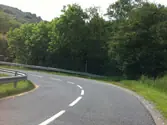
Al tomar una curva, ¿hacia qué lado tiende a salirse el vehículo por acción de la fuerza centrífuga?
When taking a bend, in which direction does centrifugal force tend to push the vehicle off?
- AHacia el interior de la curva.Towards the inside of the bend.
- BHacia la derecha, si la curva es hacia la derecha y viceversa.To the right if the bend goes to the right, and vice versa.
- CHacia el exterior de la curva.Towards the outside of the bend.
ExplanationWhen a vehicle takes a bend, centrifugal force acts on it and tends to push it towards the outside of the bend, that is, away from the centre of the turn. That is why it is important to moderate your speed and keep your line so that you do not leave the carriageway.
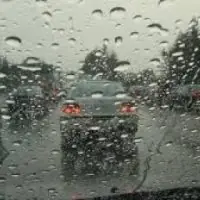
Cuando llueve, ¿hay que prestar especial atención a alguna zona de la vía en particular?
When it rains, should you pay special attention to any particular part of the road?
- ANo, puesto que circular con lluvia es muy peligroso en todas partes.No, because driving in rain is very dangerous everywhere.
- BSí, a los badenes y a las zonas en las que se pueden producir charcos.Yes, to dips in the road and areas where puddles may form.
- CNo, únicamente hay que prestar atención cuando hay niños en las proximidades.No, you only need to pay attention when there are children nearby.
ExplanationWhen it rains, pay special attention to dips in the road and areas that may flood, as well as to puddles on the carriageway. Try to keep your tyres out of these patches of water by passing them between your wheels or to one side, if this is possible, the traffic allows it and you do not create danger. In any case, always moderate your speed.
En condiciones meteorológicas que disminuyan sensiblemente la visibilidad...
In weather conditions that noticeably reduce visibility...
- Aes obligatorio utilizar el sistema de alumbrado.you must use the vehicle's lights.
- Bsolamente es obligatorio utilizar la luz antiniebla trasera.only the rear fog light is compulsory.
- Cno es obligatorio el uso del alumbrado, salvo que la señalización indique otra cosa.lights are not compulsory unless the signs say otherwise.
ExplanationAll vehicles must have the appropriate lights switched on when travelling between sunset and sunrise, at any time of day in tunnels, underpasses and stretches of road covered by the 'Tunnel' sign, and at any time of day when weather or environmental conditions noticeably reduce visibility. In especially bad weather or environmental conditions, the rear fog light must be used together with the sidelights and also with dipped headlights, main beam or the front fog lights. Never use only the rear fog light, as the wrong answer 'only the rear fog light is compulsory' suggests.
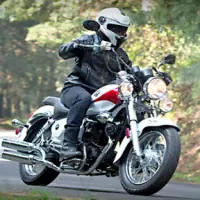
El viento, ¿en qué situación implica un peligro mayor para la conducción de una motocicleta?
In which situation is wind most dangerous when riding a motorcycle?
- ACuando sopla por detrás.When it blows from behind.
- BCuando sopla de lado y a ráfagas.When it blows from the side and in gusts.
- CCuando sopla de cara.When it blows head-on.
ExplanationSide wind, especially in gusts, pushes the motorcycle sideways and can suddenly push it off its line, because its weight and contact area are small. It is more dangerous than a headwind or a tailwind, which mainly affect speed.
Cuando sea obligatorio montar cadenas en el vehículo las pondremos en las ruedas...
When chains are compulsory, you should fit them on the...
- AMotrices.driving wheels.
- BTraseras.rear wheels.
- CDirectrices.steering wheels.
ExplanationFit the chains on the driving wheels, which receive the engine's power. These may be the front or the rear wheels, depending on the vehicle model.
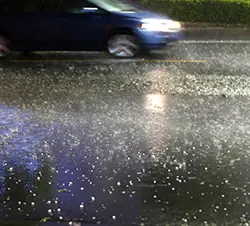
En condiciones meteorológicas especialmente desfavorables, como en caso de fuerte granizada, ¿qué precauciones, entre otras, debe tomar?
In especially bad weather, such as a heavy hailstorm, what precautions, among others, should you take?
- ADisminuir la velocidad, evitando pisar el freno, y aumentar la distancia de seguridad.Reduce speed, avoiding using the brake, and increase the safe distance.
- BAcercarse al vehículo de delante y encender el dispositivo de preseñalización de peligro.Get closer to the vehicle in front and switch on the hazard warning device.
- CCircular con cambios frecuentes de dirección para evitar que se produzca “aquaplaning”.Drive with frequent changes of direction to prevent aquaplaning.
ExplanationHail suddenly reduces grip: you must reduce speed gently, avoiding using the brake, and increase the safe distance to prevent sliding.
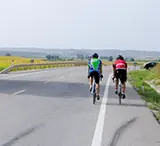
Cuando llueve o hay viento, ¿por qué hay que tener más precaución con los ciclistas?
When it rains or is windy, why should you take more care with cyclists?
- APorque tienen más probabilidad de caerse.Because they are more likely to fall.
- BPorque pueden salpicar agua.Because they may splash water.
- CPorque suelen estorbar el tráfico.Because they often get in the way of traffic.
ExplanationIn rain or wind, cyclists lose stability and grip and may be pushed sharply sideways: they are more likely to fall, so you should leave more space when overtaking them.
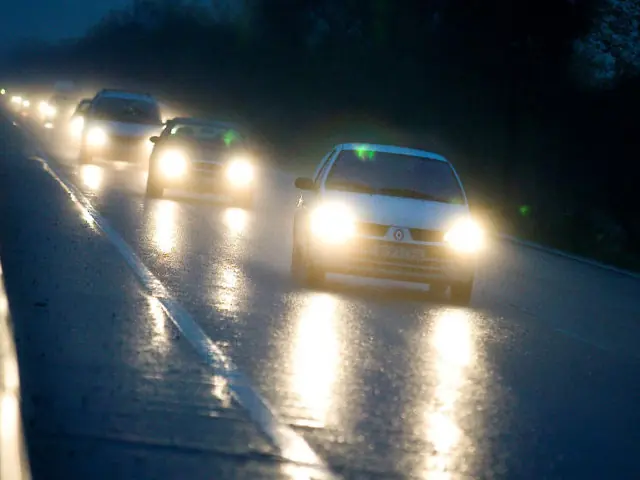
Cuando hay lluvia, ¿puede afectar a la seguridad la capa de agua que se forma en el suelo?
When it rains, can the layer of water on the road affect safety?
- ANo afecta, porque el agua baja la temperatura de los neumáticos, y el coche frena mejor.No, because the water cools the tyres and the car brakes better.
- BSí puede afectar, porque los neumáticos se adhieren peor y puede haber aquaplaning.Yes, because the tyres grip less and aquaplaning may happen.
- CSí puede afectar, porque los frenos se calientan demasiado.Yes, because the brakes get too hot.
ExplanationThe layer of water reduces tyre grip. If the tread cannot clear the water, the wheel loses contact with the road surface (aquaplaning) and the vehicle stops responding to the steering and the brakes. That is why in rain you must reduce speed and increase the safe distance.
Con viento, la conducción de la motocicleta es más peligrosa cuando éste sopla...
In windy conditions, riding a motorcycle is most dangerous when the wind blows...
- ADe frente.from the front.
- BA ráfagas.in gusts.
- CPor detrás.from behind.
ExplanationRiding a motorcycle is most dangerous when the wind blows in gusts, because its direction can change unexpectedly. This can push the motorcycle off its line and make it difficult to control. So you should take special care and reduce speed in these conditions.
En una autopista, ¿está permitido conducir a una velocidad muy baja cuando hay niebla densa?
On a motorway (autopista), are you allowed to drive at a very low speed when there is dense fog?
- ANo, no se debe conducir a una velocidad anormalmente baja en autopista.No, you must not drive at an abnormally low speed on a motorway.
- BSí.Yes.
- CSí, si el tráfico es escaso; no, si es denso.Yes, if traffic is light; no, if it is heavy.
ExplanationOn motorways and dual carriageways (autovías) you may not drive at less than 60 km/h, but Article 49.2 of the General Traffic Regulations allows you to go below that minimum when road conditions make it impossible to keep to it safely. In dense fog you must adapt your speed to the visibility, even if that means a very low speed.

Cuando el uso de cadenas sea obligatorio, ¿se podrán sustituir por algún otro dispositivo autorizado?
When chains are compulsory, can they be replaced by another approved device?
- ANo.No.
- BSí, por el uso de un espray para nieve.Yes, by using a snow spray.
- CSí, por neumáticos de invierno.Yes, by winter tyres.
ExplanationWhen chains are compulsory, you may continue your journey if you have one of the following approved devices fitted: - Snow chains. - Other approved devices, such as textile snow socks. - Winter tyres (MS), designed for snow and mud. - Studded tyres, whose studs must have rounded edges and must not stick out more than two millimetres from the tyre surface.
Los materiales que produzcan polvo o puedan caer deben transportarse...
Materials that produce dust or may fall must be carried...
- Acubriéndolas totalmente y eficazmente.fully and effectively covered.
- Ben vehículos totalmente cerrados.in fully enclosed vehicles.
- Cen contenedores de pequeño tamaño.in small containers.
ExplanationArticle 14(2) of the General Traffic Regulations (RGC) states: 'Materials that produce dust or may fall shall always be carried fully and effectively covered.' This stops dust from spreading on the road and bits of the load from falling off and causing accidents, which keeps the road safe. So the only correct way to carry these materials is fully and effectively covered, not simply in enclosed vehicles or in small containers.
Conduciendo con lluvia, ¿tendremos que extremar las precauciones?
When driving in the rain, must we take extra care?
- ASí, por la falta de visibilidad.Yes, because of poor visibility.
- BSolo si circulamos de noche.Only if we are driving at night.
- CNo es necesario.It is not necessary.
ExplanationRain reduces visibility, so we must take extra care and reduce our speed.
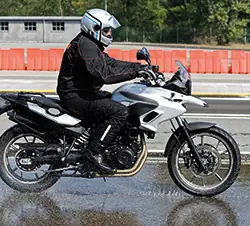
Con lluvia intensa, una motocicleta, ¿puede sufrir “aquaplaning”?
In heavy rain, can a motorcycle aquaplane?
- ANo; solo los turismos pueden sufrir “aquaplaning”.No; only cars can aquaplane.
- BSolo si la motocicleta lleva sidecarOnly if the motorcycle has a sidecar
- CSí, especialmente si circula a velocidad elevada.Yes, especially at high speed.
ExplanationAquaplaning affects any vehicle, including motorcycles: if the tyre cannot clear the water, it loses contact with the road surface, and high speed is the main trigger.
El aquaplaning produce...
Aquaplaning causes...
- Auna pérdida de visibilidad en caso de lluvia.a loss of visibility when it rains.
- Bun aumento de adherencia en caso de lluvia.an increase in grip when it rains.
- Cuna pérdida de adherencia en caso de lluvia.a loss of grip when it rains.
ExplanationAquaplaning usually involves a loss of contact between the tyres and the road, caused by a layer of water on the surface and excessive speed. If this happens, the tyres lose their grip and you lose control of the vehicle.
Hay nieve en la calzada. ¿Cómo debe conducir?
There is snow on the carriageway. How should you drive?
- ADespacio, a la menor velocidad posible.Slowly, at the lowest possible speed.
- BRápidamente para que no patine el vehículo.Fast, so that the vehicle does not skid.
- CEn la primera relación de marchas y acelerando a fondo.In first gear, with the accelerator pressed right down.
ExplanationWith snow, grip is very low, so you must drive slowly, in high gears and gently with the accelerator, brake and steering. Driving fast or pulling away in first gear with the accelerator pressed right down makes the wheels spin and you lose control of the vehicle.
En caso de lluvia se debe circular con precaución porque...
When it rains, you must drive carefully because...
- Aaumenta la adherencia de los neumáticos.tyre grip increases.
- Bse reduce la distancia de frenado.braking distance is reduced.
- Cse reduce la visibilidad.visibility is reduced.
ExplanationRain reduces the grip of the tyres on the carriageway and makes it harder to see. Ventilate the inside of the vehicle properly to stop the windows from misting up. When rain reduces visibility, use dipped headlights and, where appropriate, fog lights.
¿Qué no se podrá hacer en las curvas con visibilidad reducida?
What may you not do on bends with reduced visibility?
- AAdelantar.Overtake.
- BCambiar de sentido.Make a U-turn.
- CAmbas maniobras.Both manoeuvres.
ExplanationOvertaking is prohibited on bends with reduced visibility. You also cannot make a U-turn, because you would have to enter the opposite side of the road without being able to see oncoming vehicles well enough, which would be a serious risk.
¿Podrá usted efectuar un cambio de dirección hacia la izquierda en esta curva de visibilidad reducida?
May you turn left on this bend with reduced visibility?
- ASí, porque no existe línea discontinua que me lo impida.Yes, because there is no broken line to stop me.
- BNo, por no disponer de suficiente visibilidad.No, because there is not enough visibility.
- CSí, si no veo vehículos en sentido contrario.Yes, if I cannot see any vehicles coming the other way.
ExplanationOn a bend with reduced visibility, turning left is prohibited because you cannot see oncoming vehicles early enough. You also cannot overtake or make a U-turn.
Al tomar una curva, ¿puede influir el peso de la motocicleta en su control?
When taking a bend, can the weight of the motorcycle affect its control?
- ASí, porque el peso puede afectar a la trayectoria de la motocicleta haciendo que se salga de la curva.Yes, because weight can affect the motorcycle's line and make it leave the bend.
- BNo, porque a la trayectoria de la motocicleta sólo le va a afectar el radio de la curva.No, because the motorcycle's line is only affected by the radius of the bend.
- CNo, aunque se circule a una velocidad elevada.No, even when riding at high speed.
ExplanationThe weight of the motorcycle can affect control on a bend because the heavier it is, the greater the centrifugal force acting on it. This force pushes towards the outside of the bend, which can make the motorcycle leave its intended line. So the weight of the motorcycle is an important factor to consider when taking a bend.
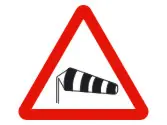
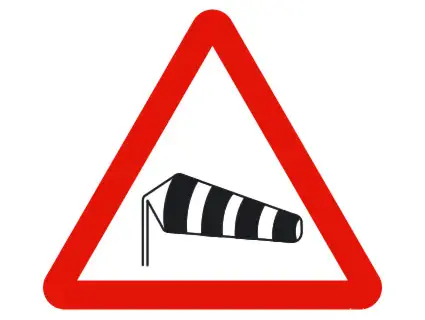
¿Cuándo es más peligroso el viento?
When is wind most dangerous?
- ACuando sea frontal al vehículo.When it hits the vehicle from the front.
- BCuando sea lateral racheado.When it is a gusty crosswind.
- CCuando sea posterior al vehículo.When it hits the vehicle from behind.
ExplanationA gusty crosswind can push the vehicle sideways, even into another lane, so this type of wind is the most dangerous. The sign in the question warns of crosswinds, because it marks an area where strong wind often blows across the road.
All topics
- Definitions
- Documents and penalty points
- The driver's condition
- Duties of drivers and pedestrians
- Vehicle safety devices
- Vehicle controls and equipment
- Vehicle lights and horn
- Traffic signs, markings and signals
- The road and its lanes
- Speed and distances
- Manoeuvres
- Right of way
- Carrying passengers and loads
- Vehicle mechanics and maintenance
- Road accidents and first aid
- Defensive and eco-driving
Independent app: not affiliated with or endorsed by the DGT (Spain's Directorate-General for Traffic) or the Ministry of the Interior. The official exam is booked with the DGT and taken at its test centres. The questions here are practice material; the DGT's official question bank is not public.
Basado en datos de la Agencia Estatal Boletín Oficial del Estado (https://www.boe.es). Textos consolidados de carácter meramente informativo. La AEBOE no patrocina ni respalda este sitio.
Parte de las preguntas procede de los tests de la revista «Tráfico y Seguridad Vial» de la DGT, reproducidos con indicación de la fuente.