
DGT test · 247 questions
Driving safely in difficult conditions · Page 4 of 5
Driving in rain, fog, snow, ice, wind and at night, and how to adapt to risky situations on the road.
Questions in this topic, with answers
247 questions, 50 per page, with the correct answer and the explanation. Page 4 of 5.
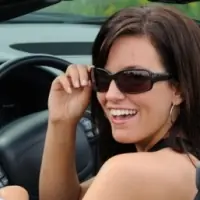
¿Si es de día, que debe hacer para evitar el deslumbramiento del sol?
In daytime, what should you do to avoid being dazzled by the sun?
- AProtegerse con gafas graduadas de cristal transparenteWear prescription glasses with clear lenses
- BProtegerse con los parasolesUse the sun visors
- CMirar de frente al sol y posteriormente a la carreteraLook straight at the sun and then at the road
ExplanationTo avoid being dazzled in daytime, when the sun shines straight onto your vehicle, you should use the sun visors at eye level. You do not need to drive with prescription glasses. Above all, you must avoid looking straight at the sun and then at the road, because your vision may become blurred.
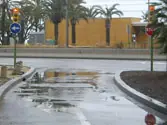
Las malas condiciones meteorológicas, como lluvia, viento o hielo, ¿pueden influir en los accidentes de motocicleta?
Can bad weather, such as rain, wind or ice, play a part in motorcycle accidents?
- ASí, pero solamente cuando el conductor no va bien equipado.Yes, but only when the rider is not properly equipped.
- BSí, ya que existe mayor probabilidad de movimientos bruscos o caídas de los motoristas.Yes, because riders are more likely to make sudden movements or fall.
- CNo, las condiciones meteorológicas no influyen en la conducción de motocicletas.No, the weather does not affect riding a motorcycle.
ExplanationRiding a motorcycle in bad weather is much more dangerous than driving a car. With only two wheels, motorcycles are much less stable and more vulnerable. Also, they have no bodywork to protect the rider from bad conditions, so riding is less comfortable and more difficult.
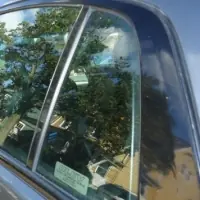
¿Por qué los elementos de vidrio del vehículo han de ser de seguridad?
Why must the glass parts of a vehicle be safety glass?
- APara resistir mejor la fuerza del vientoTo withstand the force of the wind better
- BPara que la visión del conductor sea más nítidaSo that the driver can see more clearly
- CPara evitar lesiones corporales en caso de roturaTo prevent injuries if the glass breaks
ExplanationAll the glass in a vehicle must be safety glass, because it is harder to break than ordinary glass, and if it breaks in a crash, the injuries it causes to the occupants will be less serious.
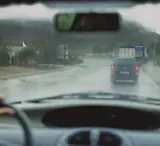
Si conduciendo le sorprende una lluvia torrencial...
If you are caught in torrential rain while driving...
- ADebe estacionar en un lugar permitido y seguro, manteniendo encendidas las luces de posición.You must park in a permitted and safe place, keeping your sidelights on.
- BDebe acelerar para pasar la tormenta.You must speed up to get through the storm.
- CDebe parar en todo caso, aunque sea en la calzada.You must stop in any case, even on the carriageway.
ExplanationIn torrential rain that stops you from seeing and controlling the vehicle, the sensible thing is to stop off the carriageway, in a permitted and safe place, with your sidelights on so that you can be seen. Stopping on the carriageway carries a serious risk of being hit from behind.
En una zona de calzada helada…
On an icy stretch of carriageway...
- Ase puede mejorar la adherencia, con cadenas o neumáticos de clavos.grip can be improved with chains or studded tyres.
- Bno se pueden utilizar neumáticos de clavos.studded tyres cannot be used.
- Cno se puede circular.you cannot drive.
ExplanationYou can improve grip on ice or snow by using: - Snow chains. - Other approved devices, such as textile snow socks. - Winter tyres (MS), designed for snow and mud. - Studded tyres, whose studs must have rounded edges and must not stick out more than two millimetres from the tyre surface.
Si Ud. ha sido deslumbrado por las luces de otro vehículo, ¿qué debe hacer para combatir dicho deslumbramiento?
If you have been dazzled by the lights of another vehicle, what should you do to deal with the dazzle?
- AReducir la velocidad lo necesario, llegando incluso a la detención, hasta recuperarse de los efectos del deslumbramiento.Reduce speed as much as needed, even stopping, until you have recovered from the effects of the dazzle.
- BApartarme lentamente de la calzada y detenerme en el arcén hasta que mi visión sea normal.Move slowly off the carriageway and stop on the hard shoulder until your vision is normal again.
- CSalirme de la vía para no ser un obstáculo ni un peligro para otros usuarios.Leave the road so that you are not an obstacle or a danger to other road users.
ExplanationReducing speed is essential when you are dazzled by another vehicle's lights. This gives the driver more control of the vehicle and lets them react properly to anything unexpected. If necessary, stopping is a safe option to avoid accidents until your vision returns to normal and you can continue driving safely.
Cuando llueve o hay viento, ¿por qué hay que tener más cuidado con los ciclistas?
When it is raining or windy, why must you take more care with cyclists?
- APorque pueden salpicar agua.Because they may splash water.
- BPorque es más probable que se caigan.Because they are more likely to fall.
- CPorque suelen estorbar el tráfico.Because they tend to hold up traffic.
ExplanationWhen it rains the road surface is slippery and cyclists easily lose grip, and side winds push them off course. They are more likely to fall or swerve, so you must leave more space at the side and a greater distance when overtaking or following them.
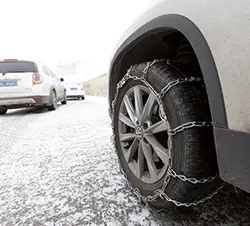
Hay nieve y solo tiene cadenas para dos ruedas. ¿Dónde debe ponerlas?
There is snow and you only have chains for two wheels. Where should you fit them?
- AEn las ruedas delanteras siempre.Always on the front wheels.
- BEn las ruedas motrices siempre.Always on the driving wheels.
- CEn las ruedas traseras siempre.Always on the rear wheels.
ExplanationWith only one set of chains, you always fit them on the driving wheels. These are the wheels that transmit the engine's power to the road, so they need traction on the snow.
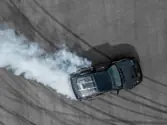
¿Cuál es la causa más frecuente del derrape?
What is the most common cause of skidding?
- AUtilizar los frenos de manera brusca.Using the brakes harshly.
- BLlevar el vehículo poco cargado.Driving a lightly loaded vehicle.
- CLa dirección asistida.Power steering.
ExplanationSkids happen when the wheels lose grip. The most common causes are: - Harsh or incorrect use of the vehicle's controls, such as the accelerator, brake and steering (main cause). - Excessive speed with worn or under-inflated tyres, shock absorbers and brakes in poor condition, and a slippery road surface.
Circulando sobre hielo...
When driving on ice...
- ADisminuiremos la velocidad y usaremos marchas largas.we will reduce speed and use high gears.
- BDisminuiremos la velocidad y usaremos marchas cortas.we will reduce speed and use low gears.
- CAumentaremos la velocidad para no quedarnos detenidos.we will increase speed so as not to get stuck.
ExplanationWhen driving on ice we must reduce speed and use high gears to stop the wheels from spinning.
¿Podrá una motocicleta sufrir aquaplaning?
Can a motorcycle aquaplane?
- ANo, solo los turismos.No, only cars can.
- BNo.No.
- CSí, especialmente con la calzada mojada a alta velocidad.Yes, especially at high speed on a wet carriageway.
ExplanationMotorcycles travelling at high speed on a wet carriageway can aquaplane just like a car.
Circulando con nieve es conveniente...
When driving in snow, you should...
- ADisminuir la distancia de seguridad con el vehículo que nos precede.reduce the safe distance from the vehicle in front.
- BAumentar la distancia de seguridad con el vehículo que nos precede.increase the safe distance from the vehicle in front.
- CAcercarse más al vehículo que nos precede para poder seguir mejor las roderas que deja en la calzada.get closer to the vehicle in front to follow its tyre tracks more easily.
ExplanationIn snow, braking distance is longer because of the lack of grip, so you should increase the safe distance from the vehicle in front.
Con el calor, puede que...
In hot weather, it is possible that...
- AAumenta el tiempo de reacción y disminuye la agresividad.reaction time increases and aggressiveness decreases.
- BAumenta el tiempo de reacción y la agresividad.reaction time and aggressiveness increase.
- CDisminuye el tiempo de reacción y aumenta la agresividad.reaction time decreases and aggressiveness increases.
ExplanationUnderstanding how heat affects driving is important for road safety. According to the General Traffic Regulations (RGC), environmental conditions can influence driver behaviour. Excessive heat can increase the driver's reaction time because of dehydration and fatigue. At the same time, it can increase aggressiveness because of heat stress, which may lead to more hurried and impulsive driving. So the correct answer is that heat increases both reaction time and aggressiveness.
¿Se puede mejorar la adherencia del vehículo en una zona donde haya hielo en la calzada?
Can you improve the vehicle's grip in an area where there is ice on the carriageway?
- ASí, usando cadenas o neumáticos con clavos.Yes, by using chains or studded tyres.
- BSolo usando cadenas, pero nunca neumáticos con clavos, ya que están prohibidos.Only by using chains, but never studded tyres, as they are prohibited.
- CNo, está prohibido circular cuando hay hielo en la calzada.No, driving is prohibited when there is ice on the carriageway.
ExplanationOn ice you may drive with care and improve grip by using chains or other authorised anti-skid devices, or special tyres such as studded tyres. Driving on ice is not prohibited, and chains are only compulsory when signs say so.
¿Una motocicleta puede sufrir el efecto aquaplaning?
Can a motorcycle be affected by aquaplaning?
- ANo, el aquaplaning solamente se produce en los turismos.No, aquaplaning only happens to cars.
- BSí, especialmente cuando se circula a velocidad muy reducida.Yes, especially when riding at very low speed.
- CSí.Yes.
ExplanationOne of the most dangerous effects of rain is aquaplaning. When the tyre tread cannot clear away all the water, the tyre loses contact with the road surface and slides, floating on the water, and the driver loses control of the vehicle. The higher the speed, the more likely this is to happen. Any type of vehicle can aquaplane.
Si circulamos con viento...
When driving in windy conditions...
- AAumentaremos la velocidad para que el vehículo sea más estable.you should speed up to make the vehicle more stable.
- BReduciremos la velocidad y sujetaremos el volante con firmeza.you should reduce speed and hold the steering wheel firmly.
- CReduciremos la velocidad y sujetaremos el volante muy suavemente.you should reduce speed and hold the steering wheel very lightly.
ExplanationWhen driving in strong wind, reduce speed and hold the steering wheel firmly, especially in exposed areas or when the wind is gusty.
¿La lluvia afecta a la conducción?
Does rain affect driving?
- ACirculando en una motocicleta sí, circulando en un turismo no.When riding a motorcycle, yes; when driving a car, no.
- BSí, aumenta el tiempo de reacción.Yes, it increases reaction time.
- CSí, aumenta la distancia de frenado.Yes, it increases braking distance.
ExplanationBesides reducing visibility, rain makes the carriageway wet and reduces grip, so the distance travelled while braking is longer than on a dry road. Braking distance is the distance the vehicle travels from the moment the driver applies the brake until the vehicle stops. It can vary depending on speed, the condition of the tyres, suspension and brakes, the vehicle's load, the road conditions and the weather. In rain, braking distance can be up to 2 times longer, and on ice or snow up to 10 times longer.
¿Qué efecto produce el aquaplaning?
What effect does aquaplaning have?
- AResta visibilidad.It reduces visibility.
- BAumenta la adherencia.It increases grip.
- CDisminuye la adherencia.It reduces grip.
ExplanationAquaplaning reduces the vehicle's grip. If there is more water on the road than the tyre grooves can clear, the water builds up and forms a film between the road and the tyre. This makes the vehicle slide and 'glide on the water'.
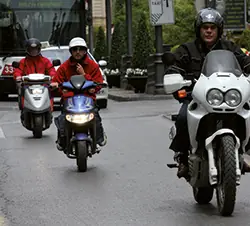
Las malas condiciones meteorológicas, como lluvia, viento o hielo, ¿aumentan la probabilidad de sufrir un accidente con una motocicleta?
Does bad weather, such as rain, wind or ice, make a motorcycle accident more likely?
- ANo; el mal tiempo no influye en la conducción de motocicletas.No; bad weather does not affect riding a motorcycle.
- BSí; es más probable que el motorista se caiga si hace movimientos bruscos.Yes; the rider is more likely to fall if they make sudden movements.
- CSí, pero solo si el conductor no lleva el equipamiento adecuado.Yes, but only if the rider is not wearing the right equipment.
ExplanationA motorcycle stands on only two wheels. In rain, wind or ice, grip and stability are reduced, and any sudden movement (braking, turning or accelerating sharply) makes it easier to lose control and fall.
¿A qué factor de riesgo pertenecen el hielo, la nieve, la calzada mojada y las obras?
Which risk factor do ice, snow, a wet carriageway and roadworks belong to?
- AAl factor humano.The human factor.
- BAl factor de la vía y del entorno.The road and environment factor.
- CAl factor del vehículo.The vehicle factor.
ExplanationIce, snow, a wet carriageway and roadworks directly affect the condition of the road and its surroundings. According to Spain's General Traffic Regulations (RGC), these elements increase the risk of accidents because they interrupt or hinder traffic, and they are an inherent part of the environment in which vehicles operate. For this reason, the correct answer is that these factors belong to the 'road and environment factor'.
Si al tomar una curva nuestro vehículo derrapa, ¿cómo actuaremos?
If your vehicle skids when taking a bend, what should you do?
- AHaciendo siempre contra volante, girándolo hacia el lado contrario al que se derrapa.Always countersteer, turning the steering wheel to the side opposite the skid.
- BMoviendo el volante enérgicamente para que las ruedas directrices vuelvan a tener adherencia.Turn the steering wheel vigorously so that the wheels that steer regain grip.
- CNo frenaremos nunca.Never brake.
ExplanationIf your vehicle skids, one of the main recommendations is not to brake, whether the vehicle is front-wheel drive or rear-wheel drive.
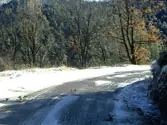
Las cadenas, en caso de ser obligatorio su uso, las pondremos en las ruedas...
If chains are compulsory, you should fit them on the...
- Atraseras.rear wheels.
- Bdelanteras.front wheels.
- Cmotrices.driving wheels.
ExplanationIf chains are compulsory, fit them on the driving wheels. When all 4 wheels are driving wheels, fit them on the two wheels of the same drive axle.
Cuando la calzada está cubierta de nieve, ¿de qué manera es más recomendable comenzar la marcha para evitar que las ruedas patinen o se hundan?
When the carriageway is covered with snow, what is the best way to move off so that the wheels do not spin or sink in?
- AAcelerando con intensidad para incrementar la tracción de las ruedas.Accelerating hard to increase the traction of the wheels.
- BUtilizando la primera velocidad y soltando el embrague de forma brusca.Using first gear and releasing the clutch sharply.
- CIniciando la circulación con la marcha más larga posible, normalmente la segunda.Moving off in the highest gear possible, usually second.
ExplanationOn ice or snow, there is a high risk that the vehicle will skid. If you use a low gear, too much power goes to the wheels, and they will spin on the slippery surface. If you use a higher gear, the wheels receive less power and the risk of wheelspin is lower. To move off on snow or ice, use the highest gear possible, usually second or third, suited to the conditions, bearing in mind that you cannot drive fast and that keeping control of the vehicle is essential. While driving, you should also drive smoothly and stay in the highest gear that suits the situation. It is also important to remember that in these conditions braking distance increases considerably, so you must drive carefully and adapt your safe distance to the state of the carriageway.
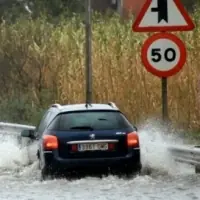
¿Qué hay que realizar cuando los frenos se mojan por la lluvia?
What should you do when the brakes get wet from rain?
- ANo es posible que los frenos de un vehículo se mojenA vehicle's brakes cannot get wet
- BPresionar suavemente el pedal de freno para que las pastillas se aprietenPress the brake pedal gently so that the brake pads are pressed on
- CParar el vehículo y secarlos manualmenteStop the vehicle and dry them by hand
ExplanationIf your brakes get wet when you drive through a flooded stretch of road, you should press the brake pedal gently so that the drums and pads are pressed on and the brakes work properly again.
¿Cómo procederemos en caso de derrape?
What should you do in a skid?
- AFrenaremos fuertemente para detener el vehículo lo antes posible.Brake hard to stop the vehicle as soon as possible.
- BNo frenaremos.Do not brake.
- CPisaremos el embrague para desconectar la fuerza de retención del motor.Press the clutch to cut out engine braking.
ExplanationSkids happen when the wheels lose grip. The most common causes are: - Harsh or incorrect use of the vehicle's controls (main cause). - Excessive speed with worn or under-inflated tyres, shock absorbers and brakes in poor condition, and a slippery road surface. If your vehicle skids, one of the main recommendations is not to brake, whether the vehicle is front-wheel drive or rear-wheel drive.
Las gafas oscuras son muy convenientes para combatir el deslumbramiento que produce...
Sunglasses are very useful against the dazzle caused by...
- ALas luces de los vehículos.vehicle lights.
- BCualquier tipo de luz, natural o artificial.any type of light, natural or artificial.
- CEl sol.the sun.
ExplanationSunglasses are very useful against the dazzle caused by the sun.
¿Cómo actuaremos si nuestro vehículo derrapa?
What should you do if your vehicle skids?
- AGiraremos el volante hacia el lado contrario al que derrapan las ruedas traseras.Turn the steering wheel to the side opposite the one the rear wheels are skidding towards.
- BDejaremos de frenar inmediatamente.Stop braking immediately.
- CPisaremos el pedal del embrague hasta el fondo.Press the clutch pedal all the way down.
ExplanationSkids happen when the wheels lose grip. The most common causes are: - Harsh or incorrect use of the vehicle's controls (main cause). - Excessive speed with worn or under-inflated tyres, shock absorbers and brakes in poor condition, and a slippery road surface. If your vehicle skids when braking, it is because the wheels have locked, so when you stop braking, the vehicle will also stop skidding. If the rear of the vehicle skids, turn the steering wheel towards the same side as the rear wheels are skidding. That is, if the rear of the vehicle slides to the left, turn the steering wheel to the left as well.
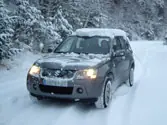
Si tenemos que arrancar nuestro vehículo con nieve en la vía, ¿con qué marcha lo haremos?
If you have to move off with snow on the road, which gear should you use?
- ACon una marcha larga.A high gear.
- BCon una marcha corta.A low gear.
- CSiempre con la primera marcha.Always first gear.
ExplanationOn ice or snow, there is a risk that the vehicle will skid. If you use low gears, they deliver too much power and the wheels will simply spin on the ice or snow. If you use high gears, the wheels will not spin as much because they do not get too much power. To move off in snow, use second or third gear so that the wheels do not spin. While driving, try to use the highest gear possible and drive very smoothly. Remember that in these situations braking distance increases considerably, so you must drive carefully and adapt your safe distance accordingly.
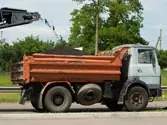
Las materias que produzcan polvo o puedan caer, es obligatorio transportarlas ...
Materials that produce dust or may fall must by law be carried...
- Acubriéndolas total y eficazmente.fully and effectively covered.
- Ben vehículos totalmente cerrados.in fully enclosed vehicles.
- Cen contenedores de pequeño tamaño.in small containers.
ExplanationMaterials that produce dust or bad smells or that may fall onto the road, such as cement, manure, rubble and others, must be carried in suitable containers or covered with tarpaulins of a suitable size fastened to the vehicle, so that they are fully and effectively covered.
Si el vehículo derrapa de la parte trasera, deberemos...
If the rear of the vehicle skids, you should...
- Agirar el volante hacia el mismo lado que derrapa el vehículo.turn the steering wheel towards the same side as the vehicle is skidding.
- Bgirar el volante hacia el lado contrario que derrapa el vehículo.turn the steering wheel towards the side opposite the one the vehicle is skidding towards.
- Cfrenar con fuerza.brake hard.
ExplanationIf the rear of the vehicle skids, you should countersteer, which means turning the steering wheel towards the same side as the rear is skidding.
Una motocicleta en una zona especialmente deslizante debe…
On an especially slippery area, a motorcycle must…
- AFrenar para controlar la trayectoria.Brake to control its path.
- BDisminuir la velocidad antes de llegar y mantener la motocicleta vertical al pasar sobre ella.Slow down before reaching it and keep the motorcycle upright when riding over it.
- CAcelerar para pasar por la zona en el menor tiempo posible.Speed up to cross the area as quickly as possible.
ExplanationOn a slippery area a motorcycle has very little grip, and braking, accelerating or leaning it can make the wheels skid. That is why you must slow down before you reach it and ride across it with the motorcycle as upright as possible, without sudden manoeuvres.
En caso de ser obligatorio el uso de las cadenas para nieve, ¿en qué ruedas las colocaremos?
If snow chains are compulsory, on which wheels should you fit them?
- AEn las ruedas motrices.On the driving wheels.
- BEn las ruedas directrices.On the steering wheels.
- CEn las ruedas delanteras.On the front wheels.
ExplanationSnow chains must be fitted at least on the driving wheels.
Circula por una carretera en la que, debido a la niebla, el pavimento está húmedo y resbaladizo. ¿Cómo debe conducir?
You are driving on a road where, because of fog, the surface is wet and slippery. How should you drive?
- ADe forma dinámica y a una velocidad alta, para evitar que las ruedas patinen.Dynamically and at high speed, to stop the wheels from skidding.
- BDe forma suave, sin movimientos bruscos; aumentando la distancia de seguridad y reduciendo la velocidad.Smoothly, without sudden movements, increasing the safe distance and reducing speed.
- CDe la misma manera que cuando la calzada está seca, ya que los neumáticos no pierden adherencia.The same way as on a dry carriageway, as the tyres do not lose grip.
ExplanationWhen the road surface is wet from fog, tyres grip less, so you must drive smoothly, without sudden braking or steering, reduce speed and increase the safe distance. Your speed must suit the weather and road conditions (Article 45 of the General Traffic Regulations (RGC)).
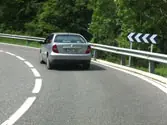
Una buena técnica para aplicar en el desarrollo de una curva será...
A good technique to use when going through a bend is to...
- AFrenar con el freno de servicio desde que entramos en la curva y hasta la mitad de la misma.brake with the service brake from the moment you enter the bend until halfway through it.
- BMantener pisado el embrague desde la entrada de la curva hasta la salida de la misma.keep the clutch pressed from the start of the bend to the end.
- CFrenar antes de entrar en la curva y acelerar suavemente hasta la salida de la misma.brake before entering the bend and accelerate gently until the exit.
ExplanationWhile going through a bend, you should press neither the brake nor the clutch pedal, because both would affect the vehicle's stability. The correct thing is to brake before entering the bend (adapting your speed) and accelerate gently until you leave it.
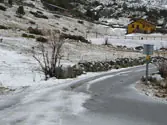
Para circular sobre superficies heladas es preferible usar marchas...
To drive on icy surfaces, it is better to use...
- Alargas.high gears.
- Bcortas.low gears.
- Ccon mayor potencia.gears with more power.
ExplanationTo drive on icy or slippery surfaces, it is better to use the highest gear possible.
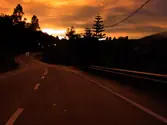
¿Qué vehículo cambiará antes de largas a cortas?
Which vehicle should switch from main beam to dipped headlights first?
- AEl vehículo que toma la curva hacia la izquierda.The vehicle taking the bend to the left.
- BEl vehículo que toma la curva hacia la derecha.The vehicle taking the bend to the right.
- CLos dos a la vez.Both at the same time.
ExplanationThe headlight beam of the vehicle taking the bend to the right shines straight at vehicles coming in the opposite direction, so it must switch from main beam to dipped headlights first.
Si hay charcos en la calzada...
If there are puddles on the carriageway...
- AReduzca la velocidad en cualquier caso.Reduce speed in any case.
- BAcelere para atravesarlos lo antes posible.Speed up to get through them as quickly as possible.
- CNo se recomienda tomar ninguna precaución.No precautions are recommended.
ExplanationWhen you drive through a puddle at high speed, the tyre cannot clear the water and aquaplaning can occur; you may also splash other road users and affect the brakes. So when you see puddles, reduce speed before reaching them and go through without braking or steering sharply.
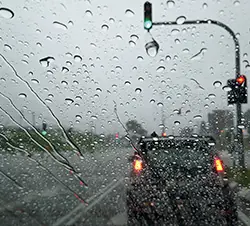
Si, debido a la lluvia, el pavimento está deslizante, ¿qué precauciones se deben tomar?
If the road surface is slippery because of rain, what precautions should you take?
- AModerar la velocidad y, si fuera preciso, detener el vehículo.Moderate your speed and, if necessary, stop the vehicle.
- BMantener la velocidad y estar atento al cumplimiento de la señalización vertical.Keep your speed and make sure you obey the road signs.
- CNinguna, ya que las circunstancias de la vía son idénticas para todos los usuarios.None, because the road conditions are the same for all road users.
ExplanationOn a slippery surface, grip drops and the vehicle responds less well: you must moderate your speed and, if necessary, stop. The rules require you to adapt your speed to the state of the road, not only to the signs.
¿Está permitido detenerse en una curva de visibilidad reducida?
Are you allowed to stop on a bend with reduced visibility?
- ANo en la curva, pero sí cerca de ella.Not on the bend, but you may near it.
- BSí.Yes.
- CNo, ni en la curva ni cerca de ella.No, neither on the bend nor near it.
ExplanationArticle 94.1.a of the General Traffic Regulations prohibits stopping on bends and brows of hills with reduced visibility and also near them. A vehicle stopped there would surprise drivers arriving, who would not have time to see it.
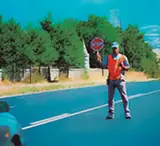
El personal de obras de la fotografía le está ordenando que se detenga. ¿Está obligado a obedecerle?
The roadworks worker in the photo is ordering you to stop. Must you obey?
- ASí, porque está autorizado a regular el paso de vehículos en el tramo de obras.Yes, because they are authorised to control the traffic through the roadworks.
- BNo, porque no es un agente de circulación.No, because they are not a traffic officer.
- CSolamente si circulan vehículos en sentido contrario.Only if vehicles are coming in the opposite direction.
ExplanationRoad users must follow the instructions of roadworks staff assigned to control traffic.
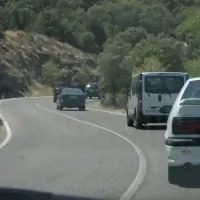
¿Cuál de estas es norma específica para las curvas de visibilidad reducida?
Which of these is a specific rule for bends with reduced visibility?
- ADeber de mantenerse lo más a la izquierda posible de la calzadaThe duty to keep as far to the left of the carriageway as possible.
- BObligación de moderar la velocidadThe obligation to reduce speed.
- CObligación de no sobrepasar los 50 km/horaThe obligation not to exceed 50 km/h.
ExplanationArticle 46.1.h of the General Traffic Regulations (RGC) requires you to reduce speed, and to stop if necessary, when approaching places with reduced visibility, such as these bends. There is no fixed 50 km/h limit for them.
Dado que el conductor de una motocicleta está situado en un punto más alto que los conductores de turismos, ¿pueden ser deslumbrados por los turismos que circulan en sentido contrario al circular de noche?
As a motorcyclist sits higher than car drivers, can they be dazzled at night by cars coming in the opposite direction?
- ANo, porque el haz luminoso de los turismos nunca le llegará a deslumbrar.No, because the headlight beam of cars will never dazzle them.
- BNo, porque al circular con casco la visera le protegerá totalmente de este peligro.No, because the helmet visor will fully protect them from this danger.
- CSí, sobre todo si circula con casco provisto de una visera algo rayada.Yes, especially if their helmet visor is slightly scratched.
ExplanationThe correct answer is: 'Yes, especially if their helmet visor is slightly scratched.' A scratched visor can cause distortion and reflections that make it harder for the motorcyclist to see, especially when facing the headlights of oncoming cars at night. It is important to keep the helmet visor in good condition to avoid dazzle and to see clearly at all times.
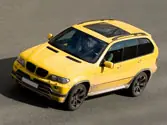
En caso de que el vehículo derrape de la parte trasera, ¿qué haremos?
If the rear of your vehicle skids, what should you do?
- APisar el embrague a fondo para aumentar la tracción de las ruedas.Press the clutch all the way down to increase the traction of the wheels.
- BGirar el volante alternativamente a derecha e izquierda.Turn the steering wheel alternately right and left.
- CGirar el volante hacia el lado del derrape de su vehículo.Turn the steering wheel towards the side your vehicle is skidding.
ExplanationIf the rear of the vehicle skids, it means you are driving a rear-wheel drive vehicle. What you must do in this case is turn the steering wheel towards the same side as the vehicle is skidding. Pressing the clutch would be counterproductive, and jerking the wheel right and left even more so.
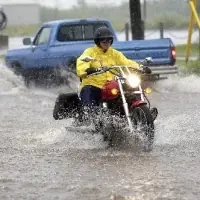
Cuando usted va en moto con lluvia fuerte, es obligatorio...
When you ride a motorcycle in heavy rain, you must...
- AConducir lo más cerca posible detrás del vehículo que le precedente para tener mayor seguridad y una mejor visibilidad.ride as close as possible behind the vehicle in front, for more safety and better visibility.
- BModerar la velocidad y detenerse, si es necesario.moderate your speed and stop if necessary.
- CEncender la luz larga también en poblaciones.switch on main beam in towns as well.
ExplanationWhen you drive in heavy rain like in the picture, you should brake more gently to stop the wheels from skidding, because a wet carriageway gives less grip than a dry one. You should also moderate your speed so that you have more time to react to an obstacle, even stopping the vehicle if necessary, and keep a greater safe distance from the vehicle in front to avoid a collision.
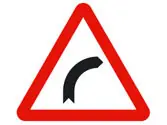
Al circular por una curva de visibilidad reducida así señalizada, ¿cómo lo haremos?
How should you drive through a bend with reduced visibility marked like this?
- AAcelerando durante toda la curva.Accelerating throughout the bend.
- BFrenando a media curva.Braking halfway through the bend.
- CAcercándonos lo máximo posible al lado derecho.Keeping as far to the right as possible.
ExplanationWhen visibility is poor, keep even further to the right than usual, as close as possible to the right-hand side of the carriageway.
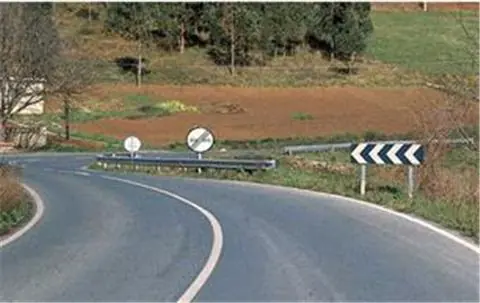
En un descenso prolongado con curvas y cuando razones de seguridad que lo permitan, ¿podrán circular los ciclistas por la parte derecha de la calzada que necesiten?
On a long downhill stretch with bends, when safety allows it, may cyclists ride on the part of the right side of the carriageway that they need?
- ANo, siempre utilizarán el arcén.No, they must always use the hard shoulder.
- BPodrán utilizar toda la calzada.They may use the whole carriageway.
- CSí.Yes.
ExplanationCyclists must ride on the hard shoulder if it is usable, but on long downhill stretches with bends, when safety allows it, they may leave it and use the part of the right side of the carriageway that they need (Article 36 of the General Traffic Regulations). They may not take up the whole carriageway, and on dual carriageways (autovías) they must always ride on the hard shoulder.
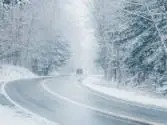
En un descenso pronlogado con placas de hielo, ¿cuál es la forma más segura de circular?
On a long descent with patches of ice, what is the safest way to drive?
- ACon marchas cortas para frenar lo menos posible.In low gears, so that you brake as little as possible.
- BCon marchas largas para que las ruedas motrices se adhieran bien al suelo.In high gears, so that the driving wheels grip the road well.
- CCon el freno de mano especialmente en curvas.Using the handbrake, especially on bends.
ExplanationOn a steep descent with patches of ice, the safest option is to drive in low gears to reduce speed in a controlled way. Keeping the vehicle in low gears reduces the need to use the brake, which lowers the risk of the wheels locking and the vehicle sliding out of control on the ice. Low gears also give more control over speed and let the driver adapt better to the conditions, which makes the descent safer.
En caso de ser obligatorio el uso de cadenas, ¿en qué ruedas deberán instalarse?
If chains are compulsory, on which wheels must they be fitted?
- AEn las ruedas delanteras siempre.Always on the front wheels.
- BEn las ruedas directrices.On the steering wheels.
- CEn las ruedas motrices.On the driving wheels.
ExplanationSnow chains or other approved devices must be fitted on the driving wheels, which receive the engine's power. The driving wheels can be either the front wheels (front-wheel drive vehicles) or the rear wheels (rear-wheel drive vehicles).
Si nuestro vehículo queda atascado en la nieve, ¿cómo lograremos ponerlo nuevamente en movimiento?
If your vehicle gets stuck in snow, how can you get it moving again?
- ACon la marcha atrás.In reverse gear.
- BCon la primera marcha por ser la que tiene más fuerza.In first gear, because it has the most power.
- CCon la marcha más larga que sea posible, soltando lentamente el embrague y acelerando constantemente con suavidad.In the highest gear possible, releasing the clutch slowly and accelerating gently and steadily.
ExplanationIf your vehicle gets stuck in snow, try to move off very smoothly. The higher the gear you use, the less force and the more smoothness you get, which helps stop the driving wheels from spinning.
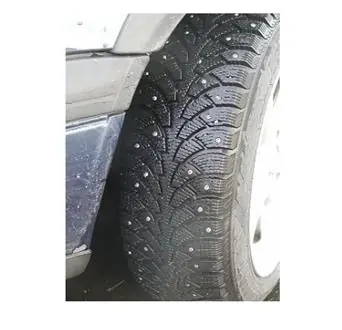
En un puerto de montaña con la calzada cubierta de nieve, ¿cuándo es obligatorio el uso de cadenas o neumáticos especiales de invierno?
On a mountain pass with the carriageway covered in snow, when is it compulsory to use chains or special winter tyres?
- ACuando el panel de la señal de transitabilidad en puerto de montaña sea de color amarillo.When the panel of the mountain pass passability sign is yellow.
- BCuando el panel de la señal de transitabilidad en puerto de montaña sea de color rojo.When the panel of the mountain pass passability sign is red.
- CCuando el panel de la señal de transitabilidad en puerto de montaña sea de color negro.When the panel of the mountain pass passability sign is black.
ExplanationOn the mountain pass passability sign, a red panel means that chains or special winter tyres are compulsory and the maximum speed is 30 km/h. Yellow limits speed, and black means the pass is closed.
All topics
- Definitions
- Documents and penalty points
- The driver's condition
- Duties of drivers and pedestrians
- Vehicle safety devices
- Vehicle controls and equipment
- Vehicle lights and horn
- Traffic signs, markings and signals
- The road and its lanes
- Speed and distances
- Manoeuvres
- Right of way
- Carrying passengers and loads
- Vehicle mechanics and maintenance
- Road accidents and first aid
- Defensive and eco-driving
Independent app: not affiliated with or endorsed by the DGT (Spain's Directorate-General for Traffic) or the Ministry of the Interior. The official exam is booked with the DGT and taken at its test centres. The questions here are practice material; the DGT's official question bank is not public.
Basado en datos de la Agencia Estatal Boletín Oficial del Estado (https://www.boe.es). Textos consolidados de carácter meramente informativo. La AEBOE no patrocina ni respalda este sitio.
Parte de las preguntas procede de los tests de la revista «Tráfico y Seguridad Vial» de la DGT, reproducidos con indicación de la fuente.