
DGT test · 247 questions
Driving safely in difficult conditions · Page 3 of 5
Driving in rain, fog, snow, ice, wind and at night, and how to adapt to risky situations on the road.
Questions in this topic, with answers
247 questions, 50 per page, with the correct answer and the explanation. Page 3 of 5.
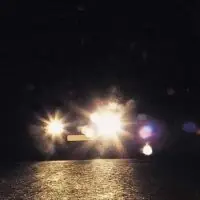
¿Qué debe hacer un conductor que ha sido deslumbrado?
What should a driver who has been dazzled do?
- AEncender el alumbrado de largo alcance.Switch on the main beam.
- BReducir la velocidad, incluso hasta llegar a detenerse totalmente, si fuera necesario.Reduce speed, even to the point of stopping completely if necessary.
- CDesviarse siempre a la derecha para detenerse en el arcén.Always move to the right and stop on the hard shoulder.
ExplanationIf you are dazzled: look towards the right-hand side of the carriageway and avoid looking straight at the lights of the oncoming vehicle; reduce speed as much as necessary, even stopping, until you recover from the dazzle; avoid moving onto the hard shoulder, as you may leave the road or meet road users on it.
¿La lluvia afecta el agarre de las ruedas del vehículo en la carretera?
Does rain affect the grip of the vehicle's tyres on the road?
- ANo, el agarre es el mismo que con la carretera seca.No, grip is the same as on a dry road.
- BSí, se agarran más a la carretera.Yes, they grip the road more.
- CSí, se agarran menos a la carretera.Yes, they grip the road less.
ExplanationIn rain, the water on the carriageway, and in the first few minutes the mixture of water with dust and oil, reduces tyre grip. The vehicle takes longer to brake and skids more easily, and if the layer of water is thick, aquaplaning can occur.
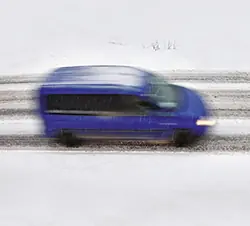
En una calzada con nieve, ¿el uso brusco e inadecuado de los frenos puede ser causa de derrape?
On a snowy carriageway, can sudden and improper use of the brakes cause a skid?
- ASí, si se frena bruscamente, los neumáticos pueden perder la adherencia sobre el pavimento.Yes, if you brake sharply, the tyres can lose grip on the road surface.
- BNo, si las ruedas están perfectamente alineadas y equilibradas.No, if the wheels are perfectly aligned and balanced.
- CNo, si los neumáticos tienen la presión de inflado recomendada.No, if the tyres are at the recommended pressure.
ExplanationOn snow, grip is minimal: sharp braking locks the wheels and the vehicle skids, regardless of the wheel alignment or tyre pressure. Brake gently and use engine braking.

Instalaremos las cadenas para nieve en las ruedas...
We will fit snow chains on the...
- AMotrices.Driving wheels.
- BDirectrices.Steering wheels.
- CDelanteras.Front wheels.
ExplanationWe will fit the chains at least on the driving wheels, one on each side of the same drive axle.
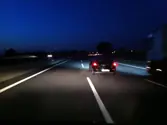
Al circular de noche, ¿tomaremos alguna precaución especial?
When driving at night, will we take any special precautions?
- ANo, las mismas precauciones que de día.No, the same precautions as during the day.
- BSí, debemos adaptar la velocidad al campo de visión.Yes, we must adapt our speed to our field of vision.
- CNo, por la noche se circula con mayor seguridad al percibirse mejor los vehículos que circulan en sentido contrario.No, driving is safer at night because oncoming vehicles are easier to see.
ExplanationAt night we will drive at a speed that allows us to stop the vehicle within the area lit by our headlights.
Circulando con nuestro vehículo mientras está lloviendo...
When driving our vehicle while it is raining...
- AMejora la visibilidad, pues usamos el limpiaparabrisas.Visibility improves, because we use the windscreen wipers.
- BAdaptaremos la conducción a las condiciones ambientales.We will adapt our driving to the weather conditions.
- CCircularemos del mismo modo que sin lluvia, ya que el A.B.S y el ESP se adaptan a las nuevas condiciones ambientales.We will drive in the same way as without rain, as ABS and ESP adapt to the new conditions.
ExplanationWe must adapt our driving to adverse conditions such as rain to avoid accidents. To do this, we will reduce speed, watch out for aquaplaning and stop the windows misting up, among other things.

¿Deben las obras estar balizadas luminosamente durante las horas diurnas?
Must roadworks be marked with lights during daylight hours?
- ASí, pero únicamente en vías con numerosas curvasYes, but only on roads with many bends.
- BNo, solo será necesario en horas nocturnas o condiciones meteorológicas adversasNo, it is only necessary at night or in adverse weather.
- CSí, siempre deben ser balizadasYes, they must always be marked with lights.
ExplanationRoadworks that obstruct traffic must be signposted by day and by night, and marked with lights at night or in adverse weather.
¿Qué vehículos son más vulnerables a las ráfagas de viento lateral?
Which vehicles are most vulnerable to gusts of side wind?
- ALos turismos.Cars.
- BLos camiones.Lorries.
- CLos ciclomotores y las motocicletas.Mopeds and motorcycles.
ExplanationMotorcycles and mopeds are the vehicles most easily thrown off balance. To avoid being pushed sideways and falling, they must be ridden very slowly.
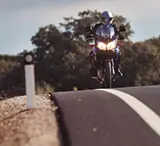
En curvas y cambios de rasante de visibilidad reducida está prohibido...
On bends and brows of hills with reduced visibility, it is prohibited to...
- AAdelantar, únicamente.Overtake only.
- BAdelantar y cambiar de sentido.Overtake and make a U-turn.
- CCambiar de sentido, solamente.Make a U-turn only.
ExplanationOvertaking and U-turns are prohibited on bends and brows of hills with reduced visibility, because we do not have enough visibility to be sure that we are not endangering any road user.
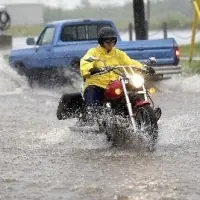
¿Qué precauciones debe tomar conduciendo una motocicleta si empieza a llover intensamente?
What precautions should you take when riding a motorcycle if it starts to rain heavily?
- AMantenerse muy cerca de los vehículos de grandes dimensiones para que nos protejan de la lluvia.Stay very close to large vehicles so that they shelter us from the rain.
- BAumentar la velocidad para llegar cuanto antes a su destino.Increase speed to reach your destination as soon as possible.
- CReducir la velocidad, deteniéndose si fuera necesario.Reduce speed, stopping if necessary.
ExplanationIn a storm or heavy rain, the best thing is to stop and take shelter, leaving the motorcycle parked in a safe place.
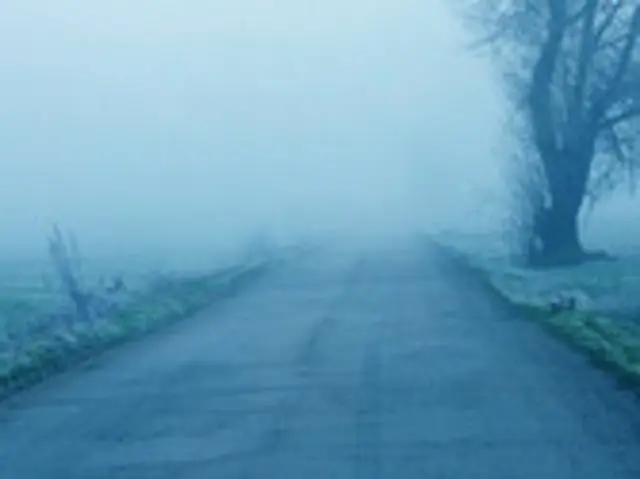
Al conducir con niebla, es aconsejable...
When driving in fog, it is advisable to...
- Aabrir las ventanillas para tener mejor visibilidad.open the windows to see better.
- Bmantener el interior bien ventilado para evitar que se empañen los cristales.keep the inside well ventilated to stop the windows misting up.
- Csubir la calefacción al máximo para conducir con comodidad.turn the heating up to maximum to drive comfortably.
ExplanationIn fog, humidity and the occupants' breath easily mist up the windows from the inside, reducing visibility even further. So it is best to keep the inside of the car well ventilated and use the demister; opening the windows does not improve your view, and too much heat makes you drowsy.
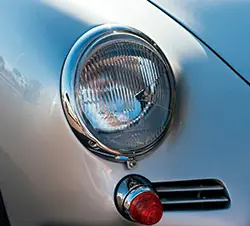
Tras la exposición prolongada de un vehículo a altas temperaturas y al calor, ¿es conveniente revisar si sus faros y pilotos han sufrido algún deterioro?
After a vehicle has been exposed to high temperatures and heat for a long time, is it a good idea to check whether its headlights and rear lights have deteriorated?
- ASí, para comprobar de forma visual su estado y capacidad de iluminación.Yes, to check visually their condition and how well they light.
- BNo, ya que el acabado de los faros está hecho de un material que soporta todo tipo de factores sin deteriorarse.No, because the headlight finish is made of a material that withstands all kinds of factors without deteriorating.
- CSí, salvo en los vehículos de poca antigüedad.Yes, except on fairly new vehicles.
ExplanationIntense, prolonged heat can cloud or damage the plastic materials and seals of headlights and rear lights: it is a good idea to check visually their condition and how well they light, whatever the age of the vehicle.
Las cadenas las tendremos que montar en las ruedas...
We must fit the chains on the...
- AMotrices.Driving wheels.
- BDirectrices.Steering wheels.
- CSiempre en las traseras.Rear wheels, always.
ExplanationChains must be fitted on the driving wheels, which may be the front or the rear wheels depending on the vehicle model.
Si en un día de lluvia circulamos cerca de un ciclista...
If on a rainy day we are driving near a cyclist...
- Autilizaremos las señales acústicas para que se aparte.we will use the horn to make them move aside.
- Brespetaremos la señalización.we will obey the signs.
- Cmoderaremos la velocidad.we will reduce our speed.
ExplanationWhen approaching a cyclist on a wet road, we must reduce our speed, because the cyclist may wobble and is more likely to fall. We must also be careful not to splash them.
En una curva sin visibilidad, ¿podemos realizar una parada?
On a bend without visibility, may we stop?
- ANo, ni en la curva ni en sus proximidades.No, neither on the bend nor near it.
- BEn la curva no pero sí en sus proximidades.Not on the bend, but we may near it.
- CSí, tanto en la curva como en sus proximidades.Yes, both on the bend and near it.
ExplanationOn a bend with reduced visibility we may not stop or park, either on the bend or near it.
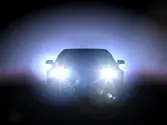
¿Cómo actuaremos en caso de deslumbramiento?
How will we act if we are dazzled?
- AAccionaremos las luces de largo alcance para hacer saber al conductor del vehículo que se acerca de frente que circula con el alumbrado incorrecto.We will switch on the main beam to let the oncoming driver know they are using the wrong lights.
- BNos desviaremos hacia el arcén sin disminuir la velocidad.We will move onto the hard shoulder without reducing speed.
- CReduciremos la velocidad, incluso hasta la detención total.We will reduce speed, even to the point of stopping completely.
ExplanationIf we are dazzled, we will reduce speed, even stopping in an extreme case, to avoid hitting other vehicles travelling in our direction, and we will not move onto the hard shoulder, so as not to hit pedestrians who may be walking on it.
¿Cómo se agarran las ruedas del coche a la carretera cuando llueve?
How do a car's tyres grip the road when it rains?
- ASe agarran mejor a la calzada.They grip the carriageway better.
- BSe agarran igual que cuando no llueve.They grip the same as when it is not raining.
- CSe agarran peor a la calzada.They grip the carriageway worse.
ExplanationIn the rain, water forms a film between the tyre and the road surface and grip decreases; when it starts to rain, water mixed with dust and oil makes the surface even more slippery. That is why the braking distance increases and you should reduce your speed.
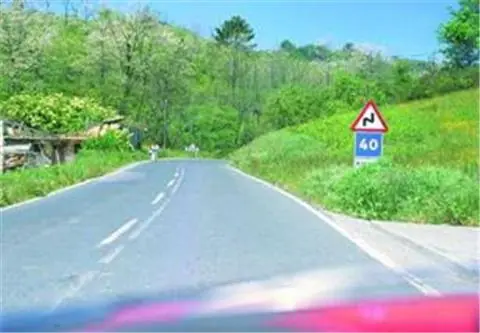
Al tomar una curva, nota que su vehículo no gira tanto como debería porque los neumáticos delanteros han perdido cierta adherencia; ¿qué es lo primero que debe hacer?
When taking a bend, you notice that your vehicle is not turning as much as it should because the front tyres have lost some grip. What is the first thing you should do?
- AAumentar el ángulo de viraje para conseguir un mayor agarre.Increase the steering angle to get more grip.
- BSoltar el pedal del acelerador, y no tocar el pedal del freno, para conseguir más adherencia y tomar la curva.Release the accelerator pedal, without touching the brake pedal, to get more grip and take the bend.
- CPisar el pedal del freno con fuerza y corregir la trayectoria.Press the brake pedal hard and correct your path.
ExplanationIf on a bend the vehicle does not turn enough because the front wheels are losing grip, the first thing to do is lift your foot off the accelerator without braking. This shifts weight onto the front wheels and they regain grip. Braking hard or turning the steering wheel more makes the situation worse.
¿Cómo subimos por una pendiente nevada?
How do we drive up a snowy slope?
- ALo más rápido posible, porque si el vehículo se cala, podría deslizarse hacia atrás.As fast as possible, because if the engine stalls the vehicle could slide backwards.
- BCon la marcha más corta posible, acelerando al máximo.In the lowest possible gear, accelerating hard.
- CCon suavidad y con una velocidad sostenida.Smoothly and at a steady speed.
ExplanationTo drive up a snowy slope, it is essential to do so smoothly and at a steady speed. This technique lets the wheels keep the traction needed to stop the vehicle skidding or stopping. The General Traffic Regulations also state that special precautions must be taken when driving in adverse conditions such as snow or ice. The correct option, which stresses a smooth and controlled approach, reduces the risk of skidding and makes the manoeuvre safer.
En condiciones de niebla densa, deberá...
In dense fog, you must...
- Areducir la velocidad.reduce speed.
- Bconducir solo con las luces antiniebla delanteras encendidas.drive with only the front fog lights on.
- Ccircular por el arcén.drive on the hard shoulder.
ExplanationIn dense fog visibility drops a lot and you must moderate your speed so that you can stop for any obstacle. Article 106.2 of the RGC requires the front fog lights or the dipped headlights or main beam, but it does not require driving with only the front fog lights, and the hard shoulder is not for driving on.
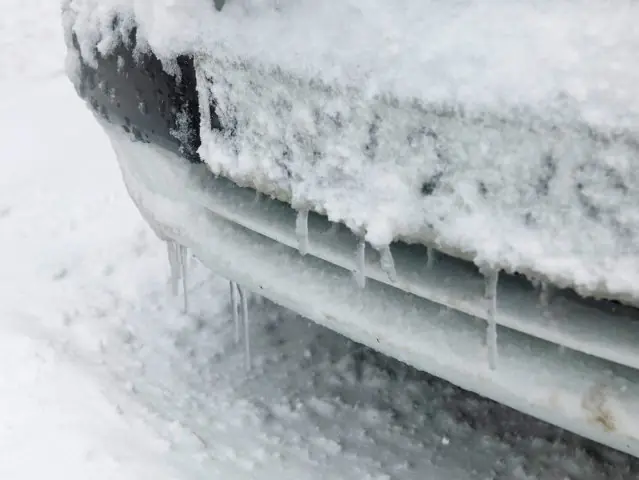
Cuando existan placas de hielo en la calzada, ¿cuál es la forma más aconsejable y segura de descender una pendiente prolongada?
When there are patches of ice on the carriageway, what is the most advisable and safest way to go down a long slope?
- ACon marchas largas para mejorar el agarre de las ruedas motrices.In high gears, to improve the grip of the driving wheels.
- BCon marchas cortas para frenar lo menos posible.In low gears, so as to brake as little as possible.
- CReduciendo la velocidad con el freno de mano, especialmente al trazar las curvas.Reducing speed with the handbrake, especially on bends.
ExplanationOn ice, avoid pressing the brake, because the wheels lock easily. A low gear uses engine braking and holds the vehicle back with hardly any braking. High gears let the car run away, and the handbrake can lock the rear wheels and cause a skid.
¿Pueden las malas condiciones meteorológicas, como la lluvia, el viento o el hielo, influir en los accidentes de motocicletas?
Can bad weather, such as rain, wind or ice, play a part in motorcycle accidents?
- ASí, pero solo cuando el motociclista no está bien equipado.Yes, but only when the motorcyclist is not properly equipped.
- BSí, porque aumenta la probabilidad de movimientos bruscos o caídas de los motoristas.Yes, because it makes sudden movements or falls by motorcyclists more likely.
- CNo, las condiciones meteorológicas no afectan la conducción de las motocicletas.No, the weather does not affect riding a motorcycle.
ExplanationAdverse weather, such as rain, wind or ice, significantly increases the risk of motorcycle accidents because these vehicles are naturally unstable. These factors can cause sudden movements and make control harder, so falls or accidents are more likely. According to the General Traffic Regulations, riders must be aware of these conditions and adapt their riding accordingly, using the right equipment, including a helmet and protective clothing, and adjusting their speed.
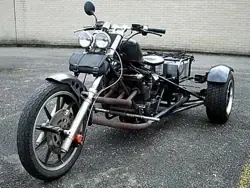
Al tomar una curva conduciendo un vehículo de 3 ó 4 ruedas, ¿el conductor deberá inclinar el cuerpo en el sentido de la curva?
When taking a bend while driving a 3- or 4-wheeled vehicle, should the driver lean their body in the direction of the bend?
- ASí, para que la trayectoria del vehículo sea más suave.Yes, to make the vehicle's path smoother.
- BSí, para vencer la fuerza centrífuga.Yes, to overcome centrifugal force.
- CNo.No.
ExplanationThe driver should lean their body in the direction of the bend only when riding two-wheeled vehicles.
Si conduciendo una motocicleta tiene que atravesar una zona con poca adherencia, debe hacerlo...
If, when riding a motorcycle, you have to cross an area with poor grip, you should do so...
- Aaumentando la velocidad para pasar rápidamente.speeding up to get through quickly.
- Bfrenando para disminuir el peligro.braking to reduce the danger.
- Ccon la motocicleta perpendicular al suelo y sin acelerar o frenar bruscamente.with the motorcycle perpendicular to the ground and without sudden acceleration or braking.
ExplanationIf we have to ride through an area with poor grip, we should reduce speed before entering it, not accelerate or brake sharply in it, and keep the motorcycle as upright as possible so that the tyres grip the road surface better.
Si se frena bruscamente en una carretera con el firme deslizante, ¿habrá de modificarse la presión ejercida sobre los frenos de la motocicleta?
If you brake sharply on a slippery road surface, should you change the pressure you apply to the motorcycle's brakes?
- ASí, con carácter general se ejercerá menor presión en el delantero y mayor en el trasero.Yes, as a general rule, less pressure on the front brake and more on the rear brake.
- BSí, se ejercerá mayor presión en ambos frenos.Yes, more pressure on both brakes.
- CNo; se actuará de igual manera que con firme no deslizante.No; you should act in the same way as on a non-slippery surface.
ExplanationOn a slippery surface, the front wheel locks easily and, if it skids, the motorcycle falls. That is why, as a general rule, you brake with less pressure on the front brake and more on the rear brake, progressively and without locking the wheels.
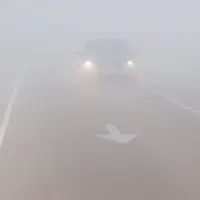
¿Hay que modificar la velocidad de conducción cuando hay niebla?
Should you change your driving speed when there is fog?
- ASolamente si hay niebla muy densa.Only if the fog is very thick.
- BNo, no es necesario.No, it is not necessary.
- CSí, reducirla para adaptarla al espacio visible.Yes, reduce it to suit the distance you can see.
ExplanationAs a general rule, when driving on a road in fog you must slow down, matching your speed to the distance you can see and adjusting it to how thick the fog is. You should not overtake, as the poor visibility ahead will not allow it, and you should follow the road markings to help you keep to the correct path.
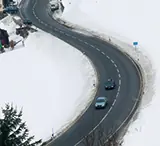
Al conducir bajo condiciones climatológicas adversas...
When driving in adverse weather conditions...
- AEs necesario descansar con más frecuencia.You need to rest more often.
- BEs menos probable que aparezca la fatiga.Tiredness is less likely to appear.
- CNo es necesario descansar.There is no need to rest.
ExplanationRain, fog or wind demand more attention and cause more tension at the wheel, so tiredness appears sooner: in adverse conditions you must rest more often.
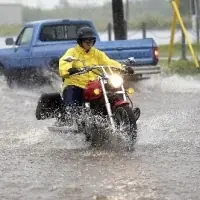
Si circula en motocicleta cuando llueve intensamente, ¿qué precauciones deberá tomar?
If you are riding a motorcycle in heavy rain, what precautions must you take?
- ACircular a una velocidad moderada y, si es necesario, detener el vehículo.Ride at a moderate speed and, if necessary, stop the vehicle.
- BCircular tan cerca como sea posible del vehículo que circule delante para tener una mayor protección y visibilidad.Ride as close as possible to the vehicle in front for more protection and better visibility.
- CEncender la luz de largo alcance incluso circulando dentro de poblado.Switch on the main beam, even when riding in a built-up area.
ExplanationIn heavy rain, visibility and grip are reduced and the braking distance increases. You must ride at a moderate speed and stop in a safe place if you cannot carry on safely. Riding close behind the vehicle in front or using the main beam in a built-up area only increases the risk.
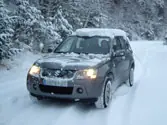
¿Cómo actuaremos si por causa del hielo nuestro vehículo queda atrapado patinándole las ruedas?
How will we act if, because of ice, our vehicle is stuck with its wheels spinning?
- APondremos la marcha atrás, por ser la marcha de mayor potencia.We will engage reverse, as it is the most powerful gear.
- BPondremos la primera velocidad y aceleraremos a fondo.We will engage first gear and accelerate hard.
- CPondremos la relación de marchas más larga posible acelerando con suavidad.We will engage the highest possible gear and accelerate gently.
ExplanationIf our vehicle is stuck on ice, to get out we must make the vehicle transmit its power as smoothly as possible so that the wheels do not spin again. That is why we will use the highest possible gear and accelerate very gently.
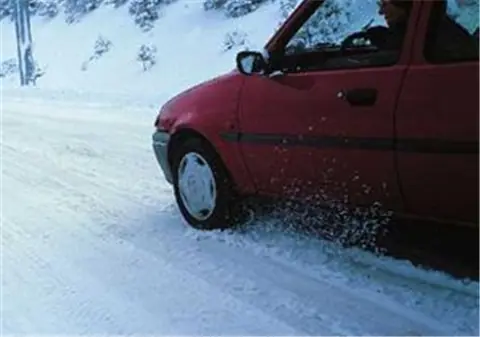
Con nieve en la calzada...
With snow on the carriageway...
- Ase deben utilizar cadenas, que se colocarán siempre en las ruedas delanteras.chains must be used, and they are always fitted to the front wheels.
- Bla conducción debe ser suave, sin movimientos bruscos de la dirección ni cambios repentinos.driving must be smooth, without sudden steering movements or sudden changes.
- Cse circulará lo más cerca posible del vehículo que va delante para aprovechar sus rodadas.you should drive as close as possible to the vehicle in front to use its tyre tracks.
ExplanationWith snow, grip is very low, so driving must be smooth: no sudden turns of the steering wheel, no sharp acceleration or hard braking, using high gears and greatly increasing the safe distance. Chains are fitted to the driving wheels, not always to the front ones.
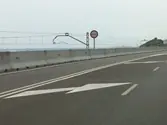
En las proximidades de curvas y cambios de rasante de visibilidad reducida, ¿esta prohibido?
Near bends and brows of hills with reduced visibility, what is prohibited?
- AAdelantar únicamente.Overtaking only.
- BAdelantar y cambiar el sentido de la marcha.Overtaking and making a U-turn.
- CSolamente cambiar de sentido.Only making a U-turn.
ExplanationOvertaking and U-turns are prohibited on bends and brows of hills with reduced visibility, because we do not have enough visibility to be sure that we are not endangering any road user.
Los neumáticos de invierno, frente a las cadenas:
Compared with chains, winter tyres:
- AOfrecen mejor agarre en frío/nieve ligera y permiten circular con normalidad.Give better grip in cold weather and light snow and let you drive normally.
- BNo sirven para nada.Are of no use.
- CSolo se usan en verano.Are only used in summer.
ExplanationWinter tyres improve grip in cold weather, rain or snow; chains are kept for heavy snow.
Circulando con lluvia prestaremos más atención a...
When driving in the rain, we will pay more attention to...
- ALas pendientes ascendentes.Uphill slopes.
- BLas pendientes descendentes.Downhill slopes.
- CLos charcos.Puddles.
ExplanationIn puddles, because water collects there, aquaplaning can occur and you can lose control of the vehicle.
¿Qué marcha debemos llevar para arrancar el vehículo sobre hielo o nieve?
Which gear should we use to move off on ice or snow?
- ALa más alta que sea posible, normalmente la segunda.The highest gear possible, usually second.
- BLa más corta que es siempre la primera.The lowest gear, which is always first.
- CLa marcha atrás, que es la que transmite más suavidad a las ruedas.Reverse, which transmits power most smoothly to the wheels.
ExplanationWhen driving on ice or snow, there is a risk that the vehicle will slide. In low gears there is too much power and the wheels will just spin on the ice or snow. In high gears the wheels do not spin as much, because they do not get too much power. To move off in snow, we will use second or third gear to stop the wheels spinning. When driving, we will try to use the highest gear possible and drive very smoothly. Remember that in these situations the braking distance increases considerably, so drive carefully and adapt your safe distance accordingly.
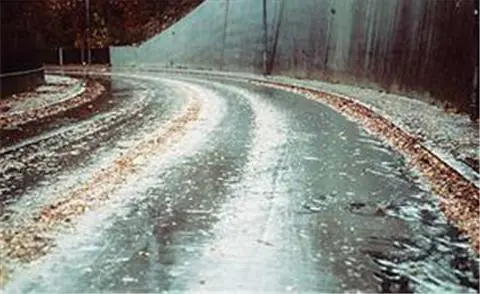
¿Cómo se debe actuar cuando las ruedas traseras derrapen?
What should you do when the rear wheels skid?
- AAgarrar el volante fuerte y no girarlo.Grip the steering wheel firmly and do not turn it.
- BGirar el volante hacia el lado contrario.Turn the steering wheel to the opposite side.
- CGirar el volante hacia el mismo lado.Turn the steering wheel to the same side.
ExplanationIf the rear wheels skid, turn the steering wheel gently towards the same side the rear of the vehicle is moving to, without braking sharply, to recover your path. Turning to the opposite side or holding the steering wheel rigid makes the skid worse.
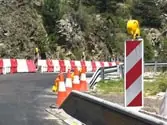
Es obligatorio que las obras que dificulten la circulación estén señalizadas...
Roadworks that obstruct traffic must be signposted...
- Atanto de día como de noche.both by day and by night.
- Bsólo de noche.only at night.
- Csólo de día.only by day.
ExplanationRoadworks that obstruct traffic in any way must be signposted, both by day and by night, and marked with lights at night or when weather or environmental conditions require it. This is the responsibility of whoever is carrying out the works, according to the basic rules set for this purpose by the Ministry of Public Works.
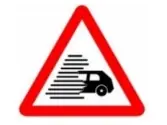
Circulando con niebla espesa, deberá...
When driving in thick fog, you must...
- Areducir la velocidad y aumentar la separación con el vehículo que le precede.reduce your speed and increase the gap to the vehicle in front.
- Bcircular sólo con la luz antiniebla delantera encendida.drive with only the front fog light on.
- Ccircular por el arcén.drive on the hard shoulder.
ExplanationFog sharply reduces visibility, and sometimes it even makes it impossible to continue. When driving in fog, we must reduce our speed to suit our field of vision and increase the safe distance.
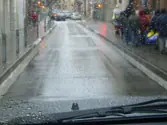
Si conduce con lluvia...
If you drive in the rain...
- Adebe aumentar la distancia de seguridad con el vehículo que circula delante.you must increase the safe distance from the vehicle in front.
- Bla distancia de frenado disminuye.the braking distance decreases.
- Cla distancia de reacción aumenta.the reaction distance increases.
ExplanationAs a general rule, a driver following another vehicle must leave enough distance to be able to stop without hitting it if it brakes sharply, taking particular account of speed, grip and braking conditions, and the weather and surroundings, as when driving in the rain. In rain the braking distance can double. The braking distance is the distance the vehicle travels from when we press the brake until it stops completely.
Si circulamos con una motocicleta bajo una lluvia intensa...
If we ride a motorcycle in heavy rain...
- AModeraremos la velocidad y nos detendremos si fuese preciso.We will reduce speed and stop if necessary.
- BUtilizaremos las luces largas incluso dentro de poblado.We will use the main beam even in built-up areas.
- CCircularemos cerca del vehículo que nos precede para ver mejor sus luces de posición.We will ride close to the vehicle in front to see its position lights better.
ExplanationWhen riding a motorcycle in heavy rain, we must reduce our speed and even stop if necessary, to avoid skidding, losing control or leaving the road.
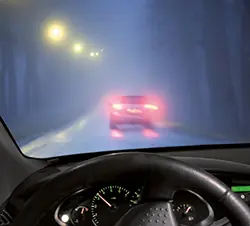
En caso de existir niebla espesa, además de reducir la visibilidad, ¿puede disminuir la adherencia de los neumáticos sobre la calzada?
In thick fog, as well as visibility being reduced, can the grip of the tyres on the carriageway decrease?
- ASí, pero solamente en caso de frenar bruscamente.Yes, but only when braking sharply.
- BNo, la adherencia de los neumáticos solamente disminuye cuando llueve.No, tyre grip only decreases when it rains.
- CSí, debido a que la niebla humedece la calzada haciéndola más deslizante.Yes, because fog makes the carriageway damp and more slippery.
ExplanationThick fog leaves a thin layer of moisture on the road surface that makes it slippery: as well as reducing visibility, it reduces tyre grip all the time, not only when braking.
Para evitar el deslumbramiento, ¿qué debe hacer?
To avoid dazzle, what should you do?
- AApagar todas las luces de la motocicleta.Switch off all the motorcycle's lights.
- BSustituir la luz de carretera por la de cruce hasta rebasar la posición del vehículo cruzado.Switch from main beam to dipped headlights until you have passed the oncoming vehicle.
- CDesplazarse al arcén y circular sólo con las luces de posición.Move onto the hard shoulder and ride with only the sidelights on.
ExplanationThe correct answer is “Switch from main beam to dipped headlights until you have passed the oncoming vehicle”, because this reduces the dazzle caused by the main beam and avoids disturbing other drivers.
Si está lloviendo, ¿a qué prestará especial atención si conduce una motocicleta?
If it is raining, what will you pay special attention to if you are riding a motorcycle?
- AA las marcas viales que son muy resbaladizas.Road markings, which are very slippery.
- BA que se puede mojar el motor.The fact that the engine may get wet.
- CA que disminuye el tiempo de reacción.The fact that your reaction time gets shorter.
ExplanationIn the rain, the paint of road markings loses grip and becomes very slippery, which for a motorcycle means a risk of falling when braking or leaning over it. That is why it is best to avoid them, or ride over them with the motorcycle upright and without sudden manoeuvres.
Cuando hay niebla, el conductor debe...
In fog, the driver must...
- Aacercarse lo más posible al vehículo que circula delante para verlo mejor.get as close as possible to the vehicle in front to see it better.
- Badaptar la velocidad a las condiciones de visibilidad.adapt their speed to the visibility conditions.
- Cdetenerse en la calzada hasta que desaparezca la niebla.stop on the carriageway until the fog clears.
ExplanationIn fog visibility is reduced and you must adjust your speed so that you can stop the vehicle within your field of vision (Article 45 of the RGC); in dense fog, drive at a moderate speed (Article 46). Do not drive right behind the vehicle in front or stop on the carriageway.
Para combatir el deslumbramiento producido, de noche, por las luces de los vehículos, ¿es recomendable el uso de gafas de sol?
To reduce the glare from other vehicles' lights at night, is it advisable to wear sunglasses?
- ANo, únicamente son recomendables, durante el día, para combatir el deslumbramiento producido por el sol.No, they are only advisable during the day, to reduce the glare from the sun.
- BSí, si son gafas de cristales amarillos.Yes, if they have yellow lenses.
- CSí, porque disminuyen la intensidad de las luces.Yes, because they reduce the intensity of the lights.
ExplanationThe DGT manual advises against wearing dark glasses or sunglasses at night: although they reduce the glare from other vehicles, you see the road much worse with them. If you are dazzled, slow down or even stop carefully, using the line at the right edge of the road as a guide.
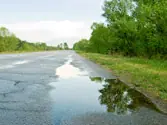
Después de pasar por un charco profundo, ¿qué es lo primero que tenemos que comprobar?
After driving through a deep puddle, what is the first thing you should check?
- ALos frenos.The brakes.
- BLos amortiguadores.The shock absorbers.
- CLa dirección.The steering.
ExplanationWhen you drive through a puddle, the brakes get wet and may lose effectiveness. So you should press the brake pedal gently, so that the heat produced dries off the water on the brakes.
¿Qué restricciones se aplican a la circulación de vehículos en un puerto de montaña señalizado con nivel amarillo?
What restrictions apply to traffic on a mountain pass marked with the yellow level?
- ALos vehículos de mercancías de más de 3500kg de MMA no podrán adelantar.Goods vehicles over 3,500 kg MAM may not overtake.
- Blos vehículos de mercancías de más de 3500kg de MMA no podrán circular.Goods vehicles over 3,500 kg MAM may not travel on it.
- CLos vehículos de mercancías deberán llevar cadenas.Goods vehicles must fit chains.
ExplanationThe yellow passability level on a mountain pass bans goods vehicles over 3,500 kg maximum authorised mass (MAM), and bans all other vehicles from driving faster than 60 km/h.
¿En qué ruedas montaremos las cadenas para la nieve?
On which wheels should snow chains be fitted?
- ADepende del vehículo.It depends on the vehicle.
- BEn las motrices.On the driving wheels.
- CEn las directrices.On the steering wheels.
ExplanationSnow chains must be fitted at least on the driving wheels, one on each side of the same drive axle.
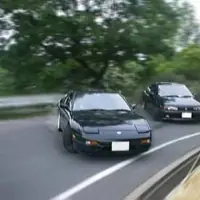
¿Qué se debe hacer en un derrape si el vehículo es de tracción delantera?
What should you do in a skid if the vehicle has front-wheel drive?
- APresionar totalmente el freno y el acelerador a la vezPress the brake and the accelerator fully at the same time.
- BNo levantar el pie del pedal aceleradorDo not take your foot off the accelerator.
- CLevantar totalmente el pie del pedal aceleradorTake your foot completely off the accelerator.
ExplanationIn a front-wheel drive vehicle, the engine drives the front wheels. If it skids, you should not brake or suddenly release the accelerator: keep accelerating gently so that the front wheels pull the vehicle, and steer towards the side the wheels are sliding to.
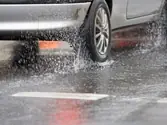
¿Cuándo es más peligrosa la lluvia?
When is rain most dangerous?
- ACuando empieza a llover.When it starts to rain.
- BCuando llueve intensamente.When it rains heavily.
- CCuando llueve después de haber nevado.When it rains after it has snowed.
ExplanationDust, pollen, fine sand and oil from other vehicles build up on the carriageway. When it starts to rain, they form a very slippery layer of mud. For all these reasons, rain is more dangerous when the first drops fall than when it has been raining for a while.
El aquaplaning (hidroplaneo) causa...
Aquaplaning causes...
- Auna pérdida de visibilidad cuando llueve.a loss of visibility when it rains.
- Bun aumento de la adherencia cuando llueve.an increase in grip when it rains.
- Cuna pérdida de la adherencia cuando llueve.a loss of grip when it rains.
ExplanationAquaplaning happens when a vehicle's tyres lose contact with the road because of a layer of water on the surface, which causes a significant loss of grip. This loss of grip can lead to loss of control of the vehicle, especially in rain. Under the General Traffic Regulations (RGC), drivers must be aware of these risks and adapt their driving to the weather to keep the road safe. So the correct answer is that aquaplaning causes a loss of grip when it rains.
All topics
- Definitions
- Documents and penalty points
- The driver's condition
- Duties of drivers and pedestrians
- Vehicle safety devices
- Vehicle controls and equipment
- Vehicle lights and horn
- Traffic signs, markings and signals
- The road and its lanes
- Speed and distances
- Manoeuvres
- Right of way
- Carrying passengers and loads
- Vehicle mechanics and maintenance
- Road accidents and first aid
- Defensive and eco-driving
Independent app: not affiliated with or endorsed by the DGT (Spain's Directorate-General for Traffic) or the Ministry of the Interior. The official exam is booked with the DGT and taken at its test centres. The questions here are practice material; the DGT's official question bank is not public.
Basado en datos de la Agencia Estatal Boletín Oficial del Estado (https://www.boe.es). Textos consolidados de carácter meramente informativo. La AEBOE no patrocina ni respalda este sitio.
Parte de las preguntas procede de los tests de la revista «Tráfico y Seguridad Vial» de la DGT, reproducidos con indicación de la fuente.