
DGT test · 403 questions
Right of way · Page 4 of 9
Who goes first at junctions, roundabouts, narrow stretches and pedestrian crossings, and the priority of emergency vehicles.
Questions in this topic, with answers
403 questions, 50 per page, with the correct answer and the explanation. Page 4 of 9.
Si en un estrechamiento se encuentran por un lado un camión y por el otro un turismo, ¿qué vehículo tendrá que retroceder si el turismo ha entrado primero?
If a lorry on one side and a car on the other meet at a narrowing, which vehicle must reverse if the car entered first?
- AEl turismo.The car.
- BEl camión.The lorry.
- CPasará el vehículo con mayor dificultad de paso.The vehicle that has more difficulty getting through goes first.
ExplanationIf there are no signs, right of way goes to the vehicle that entered first, in this case the car, so the lorry must reverse.
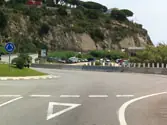
En las glorietas, ¿qué vehículos tienen prioridad?
At roundabouts, which vehicles have priority?
- ALos vehículos que se aproximan por la izquierda.Vehicles approaching from the left.
- BLos vehículos que se aproximen a la glorieta por la derecha.Vehicles approaching the roundabout from the right.
- CLos vehículos que se encuentran circulando dentro de la glorieta.Vehicles already travelling inside the roundabout.
ExplanationUnder Article 57.1.c of the General Traffic Regulations (RGC), at roundabouts vehicles already travelling on the circular carriageway have right of way over those intending to enter it, whether these come from the right or from the left.
En una intersección sin señales, ¿se deberá ceder el paso a un tranvía?
At a junction without signs, must you give way to a tram?
- ASolo si se aproxima por la derecha.Only if it is approaching from the right.
- BSí.Yes.
- CNo.No.
ExplanationWhen there are no signs, vehicles running on rails have priority.
Si el vehículo queda detenido en el interior de un túnel debido a circunstancias de la circulación...
If the vehicle is brought to a stop inside a tunnel because of traffic conditions...
- ASe apagarán el motor y las luces.The engine and the lights will be switched off.
- BSe apagará el motor y dejará encendida la luz de posición.The engine will be switched off and the sidelights left on.
- CNo se apagará el motor y se dejará encendido el alumbrado de corto alcance.The engine will not be switched off and the dipped headlights will be left on.
ExplanationUnder Article 97 of the General Traffic Regulations, if the vehicle is brought to a stop in a tunnel because of traffic conditions, you must switch off the engine, keep the sidelights on and not leave the vehicle, switching on the hazard warning lights briefly to warn those behind.
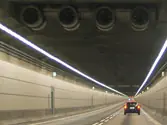
Si por congestión de tráfico tenemos que detenernos en el interior de un túnel debemos...
If we have to stop inside a tunnel because of traffic congestion, we must...
- AApagar el motor y dejar encendidas las luces de posición.Switch off the engine and leave the sidelights on.
- BApagar el motor y dejar encendidas las luces de posición y de corto alcance.Switch off the engine and leave the sidelights and dipped headlights on.
- CApagar el motor y dejar encendidas las luces de posición y emergencia.Switch off the engine and leave the sidelights and hazard warning lights on.
ExplanationWhen a vehicle is stopped inside a tunnel or underpass because of traffic rather than a breakdown, the driver and passengers must not leave the vehicle. In this case the hazard warning lights are switched on for a while to warn drivers behind, the sidelights are kept on and the engine is switched off. The vehicle must stop as far as possible from the vehicle in front.
En un estrechamiento se encuentra un camión de hasta 3500 kg. y un autobús, ¿cuál de los dos tendrá prioridad?
A lorry of up to 3,500 kg and a bus meet on a narrow stretch. Which of the two has priority?
- AEl autobús.The bus.
- BEl camión.The lorry.
- CEl que tenga mayor M.M.A.The one with the higher maximum authorised mass (MAM).
ExplanationOn a narrow stretch without signs, the order of priority between these two types of vehicle is: first the vehicle used for public passenger transport, then lorries and vans.
¿Cuál de las siguientes infracciones relativas a la prioridad de paso se da habitualmente en los accidentes de circulación?
Which of the following right-of-way offences is commonly found in road accidents?
- ANo cumplir la señal de Ceda el Paso.Not obeying the Give Way sign.
- BRespetar la preferencia.Respecting right of way.
- CSobrepasar la velocidad establecida.Exceeding the set speed.
ExplanationOne of the most frequent causes of road accidents is road users failing to respect right of way, especially by not obeying Give Way signs. Drivers must always give way to road users who have priority over them.
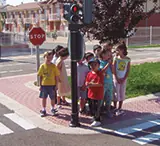
Una fila escolar va a cruzar la calzada. ¿Es obligatorio cederle el paso?
A line of schoolchildren is about to cross the carriageway. Is it compulsory to give way to them?
- ANo.No.
- BSolo si cruza por un paso para peatones.Only if they cross at a pedestrian crossing.
- CSí.Yes.
ExplanationAccording to Article 65 of the General Traffic Regulations, lines of schoolchildren, organised processions and military units on foot have right of way over vehicles. You must always give way to them, whether or not they cross at a pedestrian crossing.
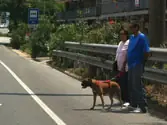
Al acercarse a un peatón que quiere cruzar la calzada, ¿qué debe hacer?
When approaching a pedestrian who wants to cross the carriageway, what should you do?
- AModerar la velocidad y detenerse si es necesario.Slow down and stop if necessary.
- BContinuar circulando, ya que el vehículo tiene prioridad.Keep going, because the vehicle has priority.
- CTocar el claxon y seguir la marcha a la misma velocidad.Sound the horn and continue at the same speed.
ExplanationWhen a pedestrian shows the intention of crossing the carriageway, we must reduce speed and stop if necessary. Pedestrians are very fragile and vulnerable road users, so we must take great care to avoid hitting them.
Los ciclistas tienen prioridad de paso respecto a los vehículos de motor...
Cyclists have right of way over motor vehicles...
- Acuando circulen por un carril bici debidamente señalizado.when they are on a properly signposted cycle lane.
- Búnicamente en los pasos para ciclistas.only at cycle crossings.
- Csiempre que circulen en grupo.whenever they are riding in a group.
ExplanationCyclists have right of way over motor vehicles when they are on a properly signposted cycle lane, cycle crossing or hard shoulder.
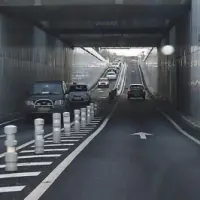
Un conductor detenido dentro de un paso inferior por necesidades de la circulación está obligado a…
A driver who has stopped inside an underpass because of the traffic must...
- AApagar todos los sistemas eléctricos.Switch off all electrical systems.
- BConectar la señal de emergencia, mantener encendidas las luces de posición y apagar el motor.Switch on the hazard warning lights, keep the sidelights on and switch off the engine.
- CAbandonar el vehículo, al igual que los pasajeros.Leave the vehicle, as the passengers must too.
ExplanationWhen the vehicle is stopped inside a tunnel or underpass not because of a breakdown but because of the traffic, the driver and passengers must not leave the vehicle. In this case the hazard warning lights are switched on for a short time to warn drivers behind, the sidelights are kept on and the engine is switched off. You must stop as far as possible from the vehicle in front.
Si en un estrechamiento sin señales de preferencia,se encuentran al mismo tiempo un camión y un turismo que arrastra un remolque de 750 kg de m.m.a,¿Cuál pasará primero?
If, at a narrowing with no priority signs, a lorry and a car towing a trailer with a maximum authorised mass of 750 kg meet at the same time, which one will go first?
- AEl camión.The lorry.
- BEl turismo con remolque.The car with the trailer.
- CEl que tenga menos dificultades de maniobra.The one that has less difficulty manoeuvring.
ExplanationAt a narrowing without signs, if it is not clear who entered first, the vehicle with greater difficulty manoeuvring has right of way. In the order in Article 62 of the General Traffic Regulations, cars towing trailers of up to 750 kg come before lorries.
En un estrechamiento sin señalizar y en llano, un turismo con remolque de 750 kg y un autobús llegan a la vez. ¿Cuál tiene preferencia de paso?
At a narrow stretch with no signs, on level ground, a car towing a 750 kg trailer and a bus arrive at the same time. Which has right of way?
- AEl autobús, por transportar más viajeros.The bus, because it carries more passengers.
- BEl turismo con remolque, por encontrarse antes en el orden de dificultad de maniobra.The car with the trailer, because it comes first in the order of difficulty of manoeuvre.
- CEl que tenga que dar marcha atrás menor distancia.The one that would have to reverse the shorter distance.
ExplanationIf it cannot be known who entered the narrow stretch first, Article 62 of the General Traffic Regulations sets an order based on how difficult it is to manoeuvre: cars towing trailers with a maximum authorised mass of up to 750 kg come before buses, so it is the bus that must reverse.
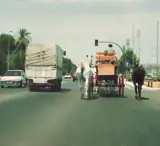
En una intersección que no tiene señal de preferencia, ¿cuándo debe ceder el paso a un vehículo de tracción animal?
At a junction with no priority sign, when must you give way to an animal-drawn vehicle?
- ACuando entra por mi derecha.When it comes from my right.
- BNunca, porque no es un vehículo de motor.Never, because it is not a motor vehicle.
- CSiempre, porque tienen preferencia.Always, because they have priority.
ExplanationAt junctions with no sign regulating priority, we must give way to vehicles approaching from the right. We apply this rule always, except in the following cases: - Vehicles on a paved road have right of way over those coming from an unpaved road. - Vehicles running on rails, such as trams, have priority over other road users. - Vehicles already on a roundabout have priority over those wanting to enter it. - Vehicles on a motorway (autopista) or dual carriageway (autovía) have right of way over those wanting to join it. Therefore, with an animal-drawn vehicle we apply the general rule of priority to the right.
Si en una intersección sin señalizar, se acerca por nuestra izquierda un grupo de ciclistas y el primero de ellos ya ha empezado a cruzar la intersección, ¿deberemos ceder el paso a los ciclistas?
At an unmarked junction a group of cyclists approaches from our left and the first of them has already started to cross the junction. Must we give way to the cyclists?
- ASí, a todo el grupo.Yes, to the whole group.
- BNo.No.
- CSí, pero sólo al primero.Yes, but only to the first one.
ExplanationUnder Article 64 of the General Traffic Regulations, cyclists riding in a group have right of way once the first one has started to cross. The group is treated as a single unit, so you must give way to all of them, even if they come from the left.
Si llega a un paso estrecho sin señalización que regule la prioridad, conduciendo un camión que arrastra un remolque no ligero, a la vez que un vehículo de tracción animal, ¿quién deberá dar marcha atrás?
You are driving a lorry towing a trailer that is not light and you reach a narrow passage with no signs regulating priority at the same time as an animal-drawn vehicle. Who must reverse?
- AEl vehículo de tracción animal.The animal-drawn vehicle.
- BEl que tenga que dar marcha atrás mayor distancia.The one that would have to reverse the greater distance.
- CEl conjunto de vehículos que conduce.The vehicle combination you are driving.
ExplanationWhen there are no signs and it is not possible to know who entered first, Article 62 of the General Traffic Regulations sets the order of priority: vehicle combinations, such as a lorry with a trailer, come before animal-drawn vehicles. That is why the cart must reverse.
Si en una intersección debe ceder el paso, ¿cuándo puede reanudar la marcha?
If you have to give way at a junction, when may you move off again?
- AInmediatamente después de que haya pasado el vehículo al que ha cedido el paso.Immediately after the vehicle you gave way to has passed.
- BCuando haya suficiente espacio para incorporarse.When there is enough room to join the traffic.
- CCuando esté seguro de que no obligará al vehículo con prioridad a cambiar su trayectoria o velocidad.When you are sure you will not force the vehicle with priority to change its path or speed.
ExplanationTo move off again after giving way, the driver must make sure that doing so will not force the vehicle with priority to change its path or speed suddenly. Under Article 58.1 of the General Traffic Regulations, the driver who must give way must not start, continue or resume their movement until they are sure that this will not force the vehicle with priority to change its driving in a dangerous way. This rule applies both at junctions with a «give way» sign and at unmarked junctions where priority to the right applies, among others.
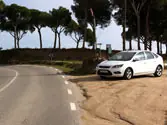
Un vehículo que se incorpora a la circulación desde una vía no pavimentada, ¿a qué vehículos tendrá que ceder el paso?
Which vehicles must a vehicle give way to when joining traffic from an unpaved road?
- AA todos los vehículos que circulen por la vía pavimentada.All vehicles on the paved road.
- BSolo a los que se aproximen por la derecha.Only those approaching from the right.
- CSolo a los vehículos de motor que se le aproximen por el lado derecho.Only motor vehicles approaching from the right.
ExplanationAt a junction between a paved road and an unpaved one, vehicles on the paved road have right of way.
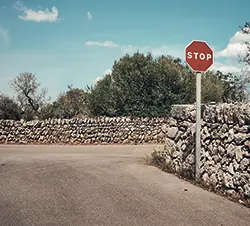
En este cruce, ¿qué se debe hacer?
At this junction, what must you do?
- ADetenerse solo si se aproximan vehículos por la derecha.Stop only if vehicles are approaching from the right.
- BDetenerse y ceder el paso a todos los vehículos que se aproximen por ambos lados.Stop and give way to all vehicles approaching from both sides.
- CDetenerse solo si se aproximan vehículos por la izquierda.Stop only if vehicles are approaching from the left.
ExplanationThe stop sign requires you always to stop at the stop line or, if there is none, before the junction, and to give way to all vehicles travelling on the road you are entering, whether they come from the right or from the left. Stopping is compulsory even if you cannot see anyone.
En los túneles y pasos inferiores con mi vehículo de menos de 3.500 kg de m.m.a, la distancia de separación con el vehículo que me precede será de...
In tunnels and underpasses, with my vehicle of less than 3,500 kg maximum authorised mass, the distance from the vehicle in front will be...
- AMínima de 50 metros o un intervalo de 4 segundos.At least 50 metres or an interval of 4 seconds.
- BMínima de 100 metros o un intervalo de 6 segundos.At least 100 metres or an interval of 6 seconds.
- CMínima de 100 metros o un intervalo de 4 segundos.At least 100 metres or an interval of 4 seconds.
ExplanationUnder Article 95 of the General Traffic Regulations, in tunnels and underpasses a vehicle of up to 3,500 kg that is not going to overtake must keep at least 100 metres or 4 seconds from the one in front. The 6 seconds apply to vehicles over 3,500 kg.
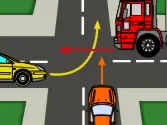
En esta intersección ¿quién debe pasar primero?
At this junction, who must go first?
- AEl turismo amarillo, porque se incorpora a la vía preferente.The yellow car, because it is joining the main road.
- BEl camión, porque se aproxima por la derecha.The lorry, because it is approaching from the right.
- CEl turismo naranja, porque tiene preferencia sobre el resto de vehículos.The orange car, because it has priority over the other vehicles.
ExplanationWhen there is no sign regulating right of way, drivers must give way to vehicles approaching from their right. So the lorry will go first, then the orange car and finally the yellow one.
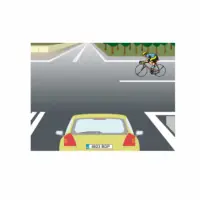
En esta intersección sin señalizar se encuentra con un ciclista, ¿debe cederle el paso?
At this junction with no signs you meet a cyclist. Must you give way to them?
- ANo, porque los vehículos de motor tienen preferencia sobre los ciclos de dos ruedas.No, because motor vehicles have right of way over two-wheeled cycles.
- BSí, porque se aproxima por la derecha.Yes, because they are approaching from the right.
- CSí, porque los vehículos de dos ruedas siempre tienen preferencia.Yes, because two-wheeled vehicles always have right of way.
ExplanationAt a junction where right of way is not shown by traffic lights, a STOP sign, traffic officers or other means, as in the picture, you must give way to all vehicles approaching from your right, in this case the cyclist. Once the cyclist has crossed, you may enter the junction.
Si un vehículo gira en otra vía y encuentra a peatones cruzándola aunque no existe paso peatonal para ellos, ¿tienen preferencia de paso?
If a vehicle turns into another road and finds pedestrians crossing it, even though there is no pedestrian crossing for them, do they have right of way?
- ANo, ya que no disponen de paso de peatones.No, because they have no pedestrian crossing.
- BSí, pero sólo si disponen de un semáforo de peatones en verde.Yes, but only if they have a green pedestrian light.
- CSí, aunque no dispongan de paso de peatones.Yes, even if they have no pedestrian crossing.
ExplanationAs a general rule, drivers have right of way over pedestrians, except in the following cases: at properly signed pedestrian crossings; when turning into another road and there are pedestrians crossing it, even if there is no crossing for them; when the vehicle crosses a hard shoulder used by pedestrians who have no pedestrian area; in pedestrian zones, where vehicles cross them at the points provided, drivers must let the pedestrians walking there go first; pedestrians about to get on or who have just got off a public passenger vehicle at a signed stop, when they are between the vehicle and the nearest pedestrian area or refuge; troops in formation, lines of schoolchildren or organised processions.
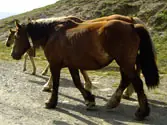
¿Los conductores tendrán siempre prioridad para sus vehículos respecto de los animales?
Do drivers always have right of way over animals?
- ASí.Yes.
- BNo, en algunos casos, como por ejemplo en las cañadas, los animales tienen preferencia.No, in some cases, for example on livestock tracks (cañadas), animals have right of way.
- CNo, los animales siempre tienen preferencia de paso sobre los vehículos.No, animals always have right of way over vehicles.
ExplanationIn some cases, such as on livestock tracks (cañadas), when vehicles are about to turn, or when they cross a hard shoulder, animals have right of way over vehicles.
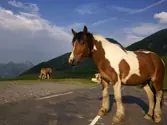
¿En la situación de la imagen los animales tienen prioridad de paso?
In the situation in the picture, do the animals have right of way?
- ASí, porque se encuentran en la calzada.Yes, because they are on the carriageway.
- BSí.Yes.
- CNo, pero nos detendremos en caso de ser necesario.No, but we will stop if necessary.
ExplanationAnimals only have priority on signed livestock routes, when the vehicle is turning into another road that they are crossing, or when it crosses a hard shoulder along which they are travelling. In other cases they do not have it, but if they are on the carriageway, you must slow down and stop if necessary.
En un tramo de carril bus con líneas discontinuas, ¿Qué vehículo tendrá más preferencia?
On a stretch of bus lane marked with broken lines, which vehicle has priority?
- AUn autobúsA bus
- BUn turismo que continúa rectoA car going straight on
- CUn turismo que quiere girar a la derechaA car that wants to turn right
ExplanationThe bus lane is reserved for buses, which have priority in using it. If the line marking it is broken, other vehicles may only enter it for permitted manoeuvres, such as turning right, and must do so without getting in the way of buses.
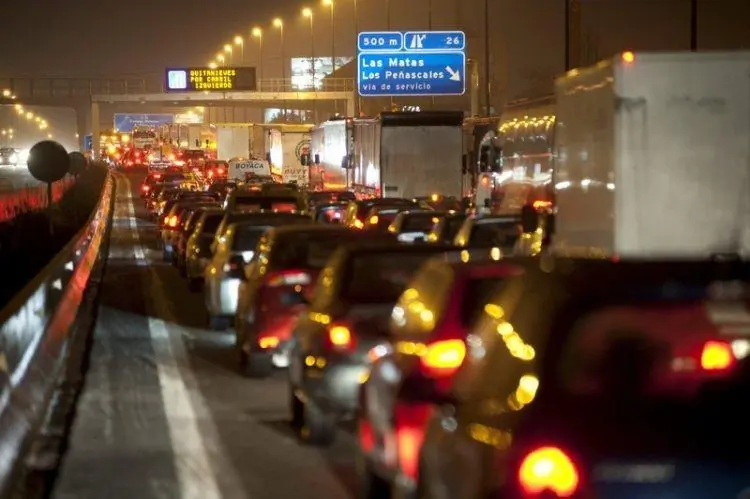
Cuando el vehículo queda inmovilizado por necesidades de la circulación dentro de un túnel, ¿qué deben hacer los pasajeros?
When the vehicle is brought to a standstill by traffic inside a tunnel, what must the passengers do?
- AAbandonar inmediatamente el vehículo.Leave the vehicle immediately.
- BSolicitar auxilio a través de un poste de socorro o del teléfono móvil.Call for help from an SOS post or on a mobile phone.
- CNo abandonar el vehículo.Stay in the vehicle.
ExplanationUnder Article 97 of the General Traffic Regulations, if the vehicle is brought to a standstill in a tunnel by traffic, the driver and passengers must not leave it. Walking between stopped vehicles is dangerous; you only leave the vehicle in the event of a breakdown, accident or fire.
Si en un estrechamiento se encuentran por un lado un vehículo de tracción animal y por el otro un turismo, ¿cuál de los dos tendrá prioridad de paso?
If an animal-drawn vehicle on one side and a car on the other meet at a narrowing, which of the two has right of way?
- AEl turismo, por tener mayor facilidad de paso.The car, because it can get through more easily.
- BEl vehículo de tracción animal, por ser el que tiene mayor dificultad de paso.The animal-drawn vehicle, because it has more difficulty getting through.
- CEl vehículo que tenga que recorrer mayor distancia hacia atrás.The vehicle that would have to reverse a longer distance.
ExplanationIf there is no sign regulating who goes first and we do not know which vehicle entered first, the vehicle that has more difficulty manoeuvring has right of way.
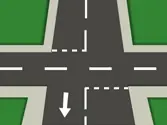
Si llegamos a una intersección sin señalizar y se acercan ciclistas por nuestra izquierda, ¿les deberemos ceder el paso?
If we reach a junction without signs and cyclists are approaching from our left, must we give way to them?
- ASí.Yes.
- BNo.No.
- CSí, si circulan en grupo.Yes, if they are riding in a group.
ExplanationAt a junction with a group of cyclists we apply the rule of priority to the right. If one of the cyclists had already crossed the junction, we would have to wait for the whole group to finish passing, because they count as a single unit. Cyclists have right of way over motor vehicles: - When they are riding on a properly signed cycle lane, cyclist crossing or hard shoulder. - When a motor vehicle turns right or left to enter another road, where this is allowed, and there is a cyclist nearby. - When they are riding in a group and the first one has already started to cross or has entered a roundabout.
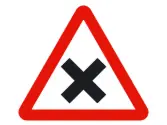
Si llegamos a una intersección así señalizada, ¿qué haremos?
If we reach a junction with this sign, what should we do?
- ACeder siempre el paso a los vehículos que se acerquen a la intersección.Always give way to the vehicles approaching the junction.
- BAplicar la regla general de prioridad de paso.Apply the general right-of-way rule.
- CPasar la intersección teniendo prioridad de paso.Cross the junction with right of way.
ExplanationThis sign warns us of the danger of a junction ahead where the general right-of-way rule applies, which is the rule of priority to the right.
¿Debes ceder el paso a un grupo de animales?
Must you give way to a group of animals?
- ANo, nunca.No, never.
- BSí, cuando circulen en grupo.Yes, when they are moving in a group.
- CSí, cuando vaya a girar con el vehículo para entrar en otra vía y haya animales cruzándola.Yes, when you are turning into another road and there are animals crossing it.
ExplanationWhen we are turning our vehicle into another road and there are animals crossing it, those animals have right of way.
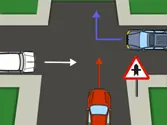
A la vista de la imagen que se muestra,¿debe el vehículo rojo ceder el paso en la intersección?
Looking at the picture, must the red vehicle give way at the junction?
- ASí,tanto a los vehículos que se aproximen por la derecha como por la izquierda.Yes, both to vehicles approaching from the right and to those from the left.
- BÚnicamente a los vehículos que se aproximen por la derecha.Only to vehicles approaching from the right.
- CNo.No.
ExplanationIn the picture, the red vehicle has a “junction with priority” sign, which warns of an upcoming junction with a road whose users must give way to it. So the red vehicle does not have to give way to either of the other two vehicles.
Si por necesidades de la circulación queda detenido dentro del paso inferior, debe…
If you are stopped inside an underpass because of the traffic, you must...
- AAbandonar el vehículo, al igual que los pasajeros.Leave the vehicle, as the passengers must too.
- BApagar todos los sistemas eléctricos.Switch off all electrical systems.
- CApagar el motor, dejar las luces de posición encendidas y poner la señal de emergencia temporalmente.Switch off the engine, leave the sidelights on and switch on the hazard warning lights for a short time.
ExplanationYou must switch off the engine, leave the sidelights on and switch on the hazard warning lights for a short time. This makes sure the vehicle can be seen by other drivers, which helps to prevent accidents. In addition, switching off the engine avoids the risk of the vehicle overheating or giving off dangerous gases in an enclosed space.
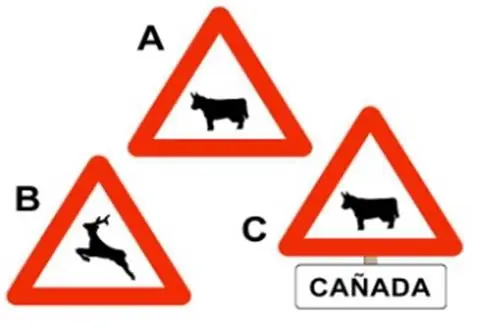
Los animales tienen preferencia de paso en el lugar indicado con...
Animals have right of way at the place shown by...
- Ala señal C.sign C.
- Bla señal A.sign A.
- Cla señal B.sign B.
ExplanationAnimal crossing signs only warn that animals may be present. Animals have right of way on properly signed livestock routes ('cañadas'), which are shown with the domestic animals sign and a 'Cañada' plate.
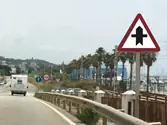
En esta intersección y según la señalización, ¿a qué vehículos debe ceder el paso?
At this junction, according to the signs, which vehicles must you give way to?
- AA todos los que se aproximan por la derecha.To all those approaching from the right.
- BA los que se incorporan a la vía.To those joining the road.
- CA ninguno.To none.
ExplanationThe sign in the picture warns of an upcoming junction with a road whose users must give way to us.
Si en un estrechamiento se encuentran por un lado un camión y por el otro un turismo con remolque, ¿qué vehículo tendrá prioridad de paso?
If a lorry on one side and a car with a trailer on the other meet at a narrowing, which vehicle has right of way?
- AEl camión, por ser más grande.The lorry, because it is bigger.
- BEl turismo con remolque.The car with a trailer.
- CEl que tenga que dar marcha hacia atrás mayor distancia.The one that would have to reverse a longer distance.
ExplanationThe order of priority between the different types of vehicles when one of them has to reverse on a narrow stretch without signs is: 1. Special vehicles and special transport that exceed the masses or dimensions set in vehicle regulations. 2. Combinations of vehicles, except those in point 4. 3. Animal-drawn vehicles. 4. Cars towing trailers with a MAM of up to 750 kg, and motorhomes. 5. Vehicles for the public transport of passengers. 6. Lorries, tractor units and vans. 7. Cars and car-derived vehicles. 8. Special vehicles that do not exceed the masses or dimensions set in vehicle regulations, quadricycles and light quadricycles. 9. Three-wheeled vehicles, motorcycles with sidecars and three-wheeled mopeds. 10. Motorcycles, two-wheeled mopeds and bicycles. So the car with a trailer has right of way over the lorry.
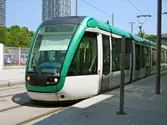
¿Tendrán prioridad de paso sobre los demás usuarios los vehículos que circulan por raíles?
Do vehicles running on rails have right of way over other road users?
- ANo, respetarán la norma general de prioridad.No, they follow the general right-of-way rule.
- BSí.Yes.
- CSolo si se aproximan por nuestra derecha.Only if they approach from your right.
ExplanationAccording to Article 57 of the General Traffic Regulations (RGC), at unmarked junctions vehicles running on rails have right of way over other road users, even if they approach from the left.
Si salimos de un garaje a la vía pública, ¿a qué vehículos cederemos el paso?
If we are coming out of a garage onto the public road, which vehicles must we give way to?
- ATanto a los vehículos que se aproximen por la derecha como por la izquierda.To vehicles approaching from both the right and the left.
- BSolo a los vehículos que se aproximen por la derecha.Only to vehicles approaching from the right.
- CSolo a los vehículos que se aproximen por la izquierda.Only to vehicles approaching from the left.
ExplanationWhen we join traffic from a garage, we must give way to all vehicles, both on the right and on the left.
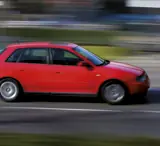
Si un turismo traslada a un enfermo al hospital con urgencia:
If a car is taking a sick person to hospital urgently:
- ADebe respetar las normas de circulación, sobre todo en las intersecciones.It must obey the traffic rules, especially at junctions.
- BNo está obligado a respetar las normas de circulación.It does not have to obey the traffic rules.
- CSólo debe respetar las normas que regulan las intersecciones.It only has to obey the rules that govern junctions.
ExplanationA car taking a sick person somewhere urgently is not a priority (emergency) vehicle. It may warn others of its situation by sounding the horn intermittently and using the hazard warning lights, or by waving a handkerchief, but it must obey the traffic rules, especially at junctions (Article 70 of the General Traffic Regulations).
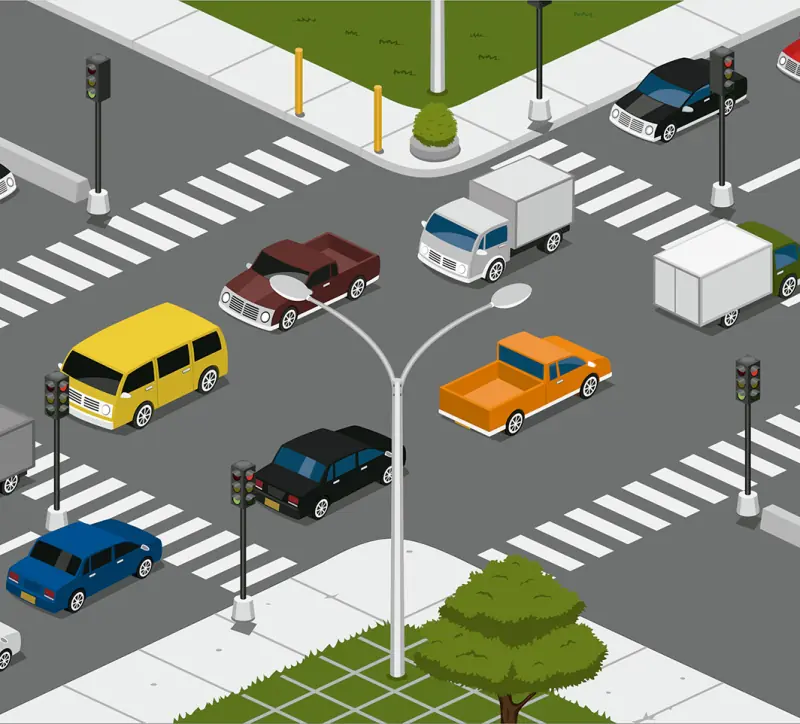
Si una intersección con prioridad de paso está saturada y es previsible que se quede detenido sin terminar de atravesarla, impidiendo la circulación transversal, ¿qué debe hacer?
If a junction where you have right of way is congested and you can expect to be stopped before you have finished crossing it, blocking cross traffic, what should you do?
- AEntrar en la intersección, porque tiene prioridad de paso.Enter the junction, because you have right of way.
- BTocar el claxon con insistencia hasta que los otros conductores le dejen pasar.Sound the horn repeatedly until the other drivers let you through.
- CNo entrar en la intersección.Do not enter the junction.
ExplanationEven if you have right of way, it is prohibited to enter a junction if the traffic situation makes it foreseeable that you will be stopped inside it and block cross traffic.
Los conductores de bicicletas, ¿cuándo tienen prioridad de paso respecto a los vehículos de motor?
When do cyclists have right of way over motor vehicles?
- ACuando, circulando en grupo, el primer ciclista haya iniciado ya el cruce o haya entrado en una glorieta.When, riding in a group, the first cyclist has already started crossing or has entered a roundabout.
- BSiempre.Always.
- CNunca.Never.
ExplanationUnder Article 64 of the General Traffic Regulations, cyclists have right of way when riding on a marked cycle lane, cyclist crossing or hard shoulder, when a vehicle is turning and there is a cyclist nearby, and when, in a group, the first cyclist has already started crossing or entered the roundabout.
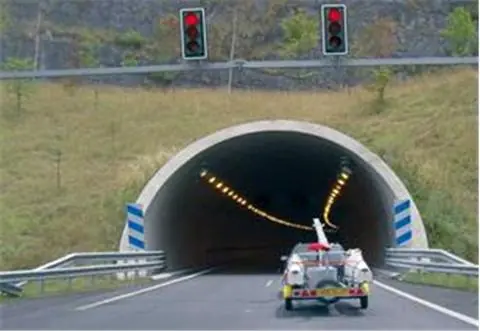
Si a la entrada de un túnel hay un semáforo con luz roja encendida, ¿es obligatorio detenerse?
If there is a red traffic light at the entrance to a tunnel, must you stop?
- ANo, porque no es una intersección.No, because it is not a junction.
- BSí, siempre.Yes, always.
- CSí, pero cuando llegue al final del túnel.Yes, but when you reach the end of the tunnel.
ExplanationA red traffic light always means you must stop, including at the entrance to a tunnel, even if there is no junction. It usually means the tunnel is closed because of an incident or maintenance work, and you may not enter until the light turns green.
El conductor de un vehículo detenido en un paso inferior durante más de dos minutos está obligado a...
The driver of a vehicle held up in an underpass for more than two minutes must...
- AMantener el motor encendido y encender las luces de posición.Keep the engine running and switch on the sidelights.
- BApagar el motor y mantener encendidas las luces de posición.Switch off the engine and keep the sidelights on.
- CMantener el motor encendido y encender las luces de corto alcance.Keep the engine running and switch on the dipped headlights.
ExplanationArticle 115.2 of the General Traffic Regulations (RGC) requires anyone who is held up for more than two minutes in a tunnel or other enclosed place, such as an underpass, to switch off the engine until they can move on, keeping the sidelights on.
En una intersección donde no funciona el semáforo, ¿qué debe hacer?
At a junction where the traffic light is not working, what must you do?
- APasar porque se considera que el semáforo está en verde.Go through, because the light is treated as green.
- BCeder el paso a los vehículos que vienen por la derecha y extremar la precaución.Give way to vehicles coming from the right and take extra care.
- CDetenerse porque está prohibido el paso.Stop, because crossing is forbidden.
ExplanationAt a junction where the traffic light is not working, the light is considered to be out of order, which means the right-of-way rules must be applied. Under the General Traffic Regulations, in the rule on giving way to vehicles coming from the right, the correct option is to give way and take extra care. So you must give priority to vehicles approaching from the right, which makes traffic safer and more orderly.
En una intersección en la que es previsible quedarse detenido, ¿qué debe hacer si tiene prioridad de paso?
At a junction where you are likely to be left stopped, what should you do if you have right of way?
- APasar porque tiene prioridad de paso.Go ahead, because you have right of way.
- BPasar y apartarse a un lado si obstaculiza la circulación.Go ahead, and move to one side if you block traffic.
- CNo entrar en la intersección.Do not enter the junction.
ExplanationIf you expect you could be left stopped inside a junction, you must not enter it, even if you have right of way. If you are stopped inside the junction, you could block it and stop other vehicles getting through. In that case, we must leave the junction without waiting to be able to move in the direction we wanted, without getting in the way of other road users.
El conductor de un vehículo detenido en un paso inferior por un tiempo superior a dos minutos está obligado a...
The driver of a vehicle stopped in an underpass for more than two minutes must...
- Aconservar encendido el motor y poner la luz de posición.keep the engine running and switch on the sidelights.
- Bapagar el motor y conservar encendido el alumbrado de posición.switch off the engine and keep the sidelights on.
- Cconservar encendido el motor y poner la luz corta.keep the engine running and switch on the dipped headlights.
ExplanationAny driver forced to remain stopped inside a tunnel or underpass for more than two minutes must switch off the engine and keep the sidelights on. We may temporarily switch on the hazard warning lights so that vehicles approaching from behind can see us better.
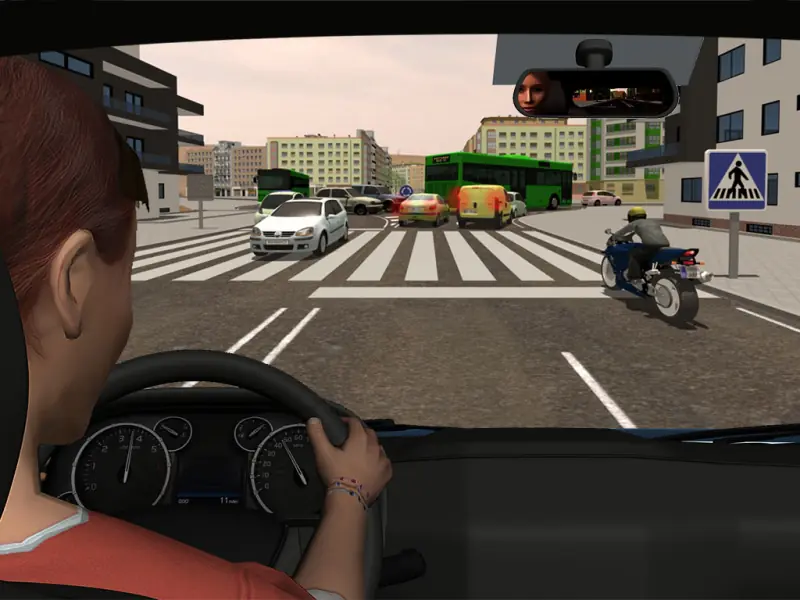
El tráfico está congestionado y prevé que se va a quedar detenido sobre el paso para peatones; ¿debe entrar en el paso?
Traffic is congested and you expect to end up stopped on the pedestrian crossing. Should you enter the crossing?
- ANo, porque se obstaculiza el paso a los peatones.No, because it blocks the way for pedestrians.
- BSolo si no hay ningún peatón con intención de cruzar por el paso.Only if there are no pedestrians intending to use the crossing.
- CSí.Yes.
ExplanationWhen traffic is congested and you expect to end up stopped on a pedestrian crossing, you must not enter it, because you would block the way for pedestrians. Pedestrian crossings are designed so that people can cross the street safely; stopping on them prevents pedestrians from using them properly, which can put their safety at risk.
¿Se debe ceder el paso a una ambulancia que sólo usa la señal luminosa especial?
Must you give way to an ambulance that is only using its special flashing light?
- ANo, porque siempre debe usarla junto con la señal sonora.No, because it must always use it together with the siren.
- BSí.Yes.
- CSí, pero sólo cuando se trate de una vía urbana.Yes, but only on an urban road.
ExplanationUnder the Spanish General Traffic Regulations, drivers must give way to priority (emergency) vehicles using their flashing light, even if they are not using the siren. This is set out in Article 69, which states that other drivers must take suitable steps to let these vehicles through as soon as they notice their signals. So giving way to an ambulance using only its special flashing light is correct.
¿Cuántos minutos deben pasar detenido en un túnel para interrumpir el funcionamiento del motor?
How many minutes must you be stopped in a tunnel before you have to switch off the engine?
- A2 minutos2 minutes
- B1 minuto1 minute
- C5 minutos5 minutes
ExplanationIf, because of an emergency, your vehicle breaks down or is stopped inside a tunnel and the stop is expected to last more than two minutes, you must switch off the engine and start it again when traffic moves on.
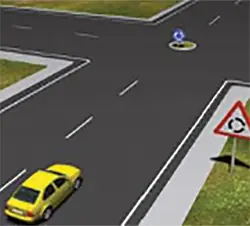
En esta intersección con “circulación giratoria”, que no es glorieta, ¿a qué vehículos debe ceder el paso?
At this junction with 'gyratory traffic' that is not a roundabout, which vehicles must you give way to?
- AA los que entren por la izquierda.To those entering from the left.
- BA los que entren por la derecha.To those entering from the right.
- CA los que están girando alrededor de la isleta.To those going round the island.
ExplanationSince it is not a roundabout, the priority for those already going round does not apply: the general priority rule applies and you must give way to vehicles approaching from the right.
All topics
- Definitions
- Documents and penalty points
- The driver's condition
- Duties of drivers and pedestrians
- Vehicle safety devices
- Vehicle controls and equipment
- Vehicle lights and horn
- Traffic signs, markings and signals
- The road and its lanes
- Speed and distances
- Manoeuvres
- Carrying passengers and loads
- Driving safely in difficult conditions
- Vehicle mechanics and maintenance
- Road accidents and first aid
- Defensive and eco-driving
Independent app: not affiliated with or endorsed by the DGT (Spain's Directorate-General for Traffic) or the Ministry of the Interior. The official exam is booked with the DGT and taken at its test centres. The questions here are practice material; the DGT's official question bank is not public.
Basado en datos de la Agencia Estatal Boletín Oficial del Estado (https://www.boe.es). Textos consolidados de carácter meramente informativo. La AEBOE no patrocina ni respalda este sitio.
Parte de las preguntas procede de los tests de la revista «Tráfico y Seguridad Vial» de la DGT, reproducidos con indicación de la fuente.