
DGT test · 403 questions
Right of way · Page 7 of 9
Who goes first at junctions, roundabouts, narrow stretches and pedestrian crossings, and the priority of emergency vehicles.
Questions in this topic, with answers
403 questions, 50 per page, with the correct answer and the explanation. Page 7 of 9.
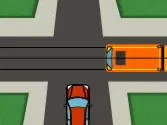
¿Quién tiene preferencia de paso en esta intersección?
Who has right of way at this junction?
- AEl tranvía.The tram.
- BEl automóvil.The motor car.
- CEl que circule por la vía principal.Whoever is on the main road.
ExplanationUnder Article 57.1.b of the General Traffic Regulations (RGC), vehicles that run on rails, such as trams, have right of way over other road users. If there are no signs controlling right of way, the motor car must give way to the tram whether it comes from the right or from the left.
En una marca de paso para ciclistas, ¿qué vehículos tienen preferencia de paso?
At a cycle crossing marking, which vehicles have right of way?
- ALos ciclistas y los ciclomotores de dos ruedas.Cyclists and two-wheeled mopeds.
- BLos ciclistas.Cyclists.
- CCualquier vehículo de dos ruedas.Any two-wheeled vehicle.
ExplanationCyclists have right of way at a cycle crossing marking because they are using a space set aside specifically for them.
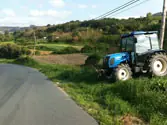
El vehículo de la imagen se quiere incorporar a la circulación proveniente de un camino particular; ¿debe cederle el paso?
The vehicle in the picture wants to join the traffic from a private track. Must you give way to it?
- ASólo si el vehículo está destinado al servicio público.Only if the vehicle is used for public service.
- BNo.No.
- CSí, porque se incorpora por la derecha.Yes, because it is joining from the right.
ExplanationWhen there are no signs regulating right of way, drivers must give way to vehicles approaching from their right, except in the following cases: – Vehicles on a paved road have right of way over those coming from an unpaved road. – Vehicles on a public road have right of way over those wishing to join from a private road. – Vehicles running on rails have right of way over other road users. – On roundabouts, vehicles already on the roundabout have right of way over those wishing to enter it. – Vehicles on a motorway (autopista) have right of way over those wishing to join it.
¿Qué vehículos deben tener contratado el seguro obligatorio?
Which vehicles must have compulsory insurance?
- ALos vehículos a motor y ciclomotores.Motor vehicles and mopeds.
- BTodos los vehículos a motor excepto los ciclomotores.All motor vehicles except mopeds.
- CTodos los vehículos que circulen por las vías públicas.All vehicles travelling on public roads.
ExplanationCompulsory third-party liability insurance is required for motor vehicles (cars, motorcycles, vans, lorries, etc.), mopeds, and trailers and semi-trailers with an MAM over 750 kilograms.
Cuando un conductor gire para entrar en otra vía y haya peatones cruzándola, ¿tienen prioridad los peatones?
When a driver turns into another road and there are pedestrians crossing it, do the pedestrians have priority?
- ASí, en el caso de que dispongan de un paso para peatones.Yes, if there is a pedestrian crossing.
- BSí.Yes.
- CSí, en el caso de que vayan el grupo.Yes, if they are in a group.
ExplanationWhen a driver turns to enter another road and there are pedestrians crossing it, even if there is no crossing for them, the pedestrians have right of way over vehicle drivers.
En un tramo de fuerte pendiente, dos vehículos se encuentran en una zona estrecha donde no pueden cruzarse. ¿Cuál tiene preferencia de paso?
On a steep stretch, two vehicles meet in a narrow section where they cannot pass each other. Which one has right of way?
- AEl de mayor masa máxima autorizada (MMA).The one with the greater maximum authorised mass (MAM).
- BEl que circula en sentido descendente.The one going downhill.
- CEl que circula en sentido ascendente.The one going uphill.
ExplanationUnder Article 63.1 of the General Traffic Regulations, on narrow steep stretches the vehicle going uphill has priority, unless it can reach a passing place provided for this purpose first. In case of doubt, the order in Article 62 applies.
En un estrechamiento sin señales de prioridad hay un turismo con remolque y un autobús, y no se sabe quién entró primero. ¿Cuál tiene preferencia?
At a narrowing with no priority signs there is a car towing a trailer and a bus, and it is not clear which entered first. Which one has right of way?
- AEl que tenga que retroceder más.The one that would have to reverse further.
- BEl autobús.The bus.
- CEl turismo que arrastra el remolque.The car towing the trailer.
ExplanationWhen it is not clear who entered first, the order in Article 62 of the General Traffic Regulations decides: cars towing trailers of up to 750 kg (letter d) and vehicle combinations (letter b) come before vehicles for public passenger transport (letter e), so the bus gives way.
En la intersección entre una vía pavimentada con otra sin pavimentar, ¿qué vehículos tienen prioridad de paso?
At a junction between a paved road and an unpaved road, which vehicles have right of way?
- ALos que acceden por la derecha.Those coming from the right.
- BLos que circulan por la vía más ancha.Those travelling on the wider road.
- CLos que circulan por la vía pavimentada.Those travelling on the paved road.
ExplanationVehicles travelling on the paved road have priority over those travelling on the unpaved road.
En un paso a nivel (cruce de ferrocarril), ¿está permitido hacer un giro en U?
At a level crossing (railway crossing), are you allowed to make a U-turn?
- ANo.No.
- BSí, cuando las barreras no estén en movimiento.Yes, when the barriers are not moving.
- CSí, en los pasos a nivel sin barreras.Yes, at level crossings without barriers.
ExplanationArticle 79.1 of the General Traffic Regulations expressly prohibits U-turns at level crossings, whether or not they have barriers and whether or not the barriers are moving. A vehicle turning on the tracks would be exposed to an oncoming train.
Si se queda detenido en el interior de un túnel por un tiempo superior a dos minutos, ¿qué debe hacer?
If you are stopped inside a tunnel for more than two minutes, what must you do?
- AApagar el motor y las luces de posición.Switch off the engine and the sidelights.
- BApagar el motor.Switch off the engine.
- CEncender, solamente, la señal de emergencia.Switch on only the hazard warning lights.
ExplanationWhenever we are stopped inside a tunnel, we must keep the sidelights on. If we expect the stop to be long (more than 2 minutes), we must switch off the engine. We must also switch on the hazard warning lights briefly if the stop is due to congestion, or keep them on if it is due to an emergency.
En un paso para ciclistas, ¿los ciclistas tendrán preferencia?
At a cycle crossing, do cyclists have priority?
- ASolo cuando se acerquen por la derecha.Only when they approach from the right.
- BSiempre.Always.
- CSolo cuando esté señalizado mediante semáforos.Only when it is controlled by traffic lights.
ExplanationAt a signposted cycle crossing, cyclists always have right of way, whether they approach from the right or from the left.
Si en un estrechamiento sin señalizar han entrado a la vez un turismo y un vehículo de tracción animal, ¿quién tendrá preferencia de paso?
If a car and an animal-drawn vehicle entered a narrowing without signs at the same time, who has right of way?
- AEl turismo.The car.
- BEl de tracción animal.The animal-drawn vehicle.
- CEl que tenga que dar hacia atrás mayor distancia.The one that would have to reverse a longer distance.
ExplanationIf two vehicles meet at a narrowing without signs and we do not know which one entered first, priority goes to the one that has more difficulty manoeuvring. In this question, as the animal-drawn vehicle has more difficulty than the car, it has right of way over the car.
Encender el intermitente, ¿da preferencia siempre para hacer maniobras?
Does switching on the indicator always give you priority to make manoeuvres?
- ASí, porque he avisado.Yes, because I have warned others.
- BNo.No.
- CSí, pero debo hacer la maniobra rápidamente.Yes, but I must make the manoeuvre quickly.
ExplanationThe indicator only warns of the intention to manoeuvre, but does not give priority: the manoeuvre may only be started when it does not create danger or hinder other road users.
Si en una intersección se acerca un grupo de ciclistas por el lado izquierdo, ¿debemos cederles el paso?
If a group of cyclists approaches a junction from the left, must we give way to them?
- ANo.No.
- BSí, porque un grupo de ciclistas tienen prioridad.Yes, because a group of cyclists has right of way.
- CSí, las bicicletas siempre tendrán prioridad en las intersecciones.Yes, bicycles always have right of way at junctions.
ExplanationIn this case we would apply the general priority rule, so we would not have to give way to the cyclists. It would be different if, riding in a group, the first one had already started to cross or had entered a roundabout.
A una ambulancia que usa únicamente la señal especial luminosa, ¿se le debe ceder el paso?
Must you give way to an ambulance that is using only its special flashing light?
- ANo, ya que siempre debe emplearla conjuntamente con la acústica.No, because it must always use it together with the siren.
- BSí.Yes.
- CSí, pero sólo cuando se trate de vía urbana.Yes, but only on urban roads.
ExplanationPriority vehicles on an emergency call warn of their presence by using the flashing light and the special siren at the same time. However, their drivers may use the flashing light alone when not using the siren poses no danger to other road users. In that case, other road users must still treat them as priority vehicles and give way to them.
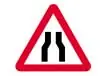
Llegan a un estrechamiento al mismo tiempo dos vehículos. Un camión y un turismo con remolque ligero. Si no hay una señal que regule la prioridad de paso.¿Qué vehículo pasará primero?
Two vehicles arrive at a narrow stretch at the same time: a lorry and a car towing a light trailer. If there is no sign regulating right of way, which vehicle goes first?
- AEl camión.The lorry.
- BEl turismo con remolque ligero.The car with the light trailer.
- CEl que tenga que retroceder menos distancia.The one that has to reverse the shorter distance.
ExplanationAt a narrow stretch with no signs, when two vehicles arrive at the same time, right of way goes to the one that has more difficulty manoeuvring, according to the order in Article 62 of the General Traffic Regulations, in which cars towing a light trailer come before lorries.
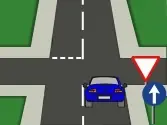
¿Qué debe hacer el vehículo al llegar a la intersección?
What must the vehicle do when it reaches the junction?
- AContinuar de frente sin ceder el paso.Go straight on without giving way.
- BCeder el paso a los vehículos que se aproximen y continuar recto.Give way to approaching vehicles and go straight on.
- CCeder el paso y cambiar de dirección si lo desea.Give way and turn if it wishes.
ExplanationOn reaching the junction, the driver must give way to approaching vehicles, making sure the manoeuvre can be completed safely. They must also obey the sign that requires them to go straight on, which prohibits turning and U-turns.
¿Qué hará un vehículo, si al llegar a un paso a nivel, las semibarreras están en movimiento?
What should a vehicle do if, on reaching a level crossing, the half-barriers are moving?
- ADetenerse.Stop.
- BPasar si no se ve el tren.Cross if no train can be seen.
- CPasar rápidamente.Cross quickly.
ExplanationNo road user may enter a level crossing when its barriers or half-barriers are across the road or moving.
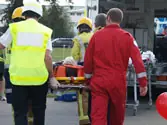
En caso de accidente, ¿quién tiene mayor probabilidad de morir o de sufrir lesiones?
In an accident, who is most likely to be killed or injured?
- ALos conductores de vehículos pesados.Drivers of heavy vehicles.
- BLos conductores de motocicletas, ciclomotores y bicicletas.Riders of motorcycles, mopeds and bicycles.
- CLos conductores de turismos.Car drivers.
ExplanationCyclists and riders of motorcycles and mopeds can be considered vulnerable groups because, due to their characteristics and the type of transport they use, they are more likely to be injured or killed in an accident.
Si por causas del tráfico queda detenido en el interior de un túnel más de 2 minutos, deberá...
If traffic makes you stop inside a tunnel for more than 2 minutes, you must...
- ADejar encendido el alumbrado de posición y apagar el motor.Leave the sidelights on and switch off the engine.
- BApagar las luces y el motor.Switch off the lights and the engine.
- CDejar encendido el alumbrado de posición y el de emergencia.Leave the sidelights and the hazard warning lights on.
ExplanationArticle 115.2 of the General Traffic Regulations requires anyone who is stopped in a tunnel for more than two minutes to switch off the engine until they can move on, keeping the sidelights on. This is not a recommendation but an obligation.
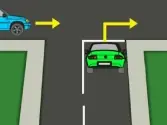
En la intersección de la imagen, ¿quién tendrá preferencia de paso?
At the junction in the picture, who has right of way?
- AEl vehículo verde.The green vehicle.
- BEl vehículo azul porque el verde tiene una línea de detención.The blue vehicle, because the green one has a stop line.
- CEl vehículo azul porque circula por la vía principal.The blue vehicle, because it is on the main road.
ExplanationThe junction in the picture has no signs regulating right of way, so the general priority rule applies: priority to the right. Although the green vehicle has a stop line, this line does not take away its priority because there is no sign telling it to stop. In this case the line only shows where the green vehicle should stop if it had to.
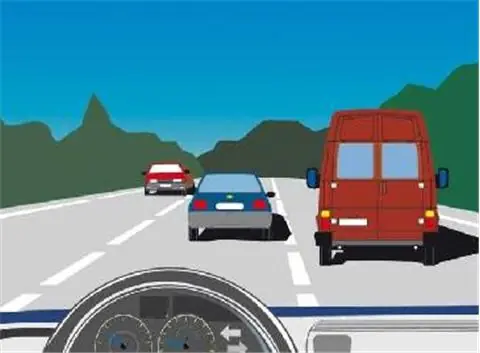
En un cambio de carril, ¿qué vehículo tiene preferencia de paso?
When changing lanes, which vehicle has right of way?
- AEl vehículo que ya circulaba por el carril.The vehicle already travelling in the lane.
- BEl vehículo que cambia de carril, si circula a gran velocidad.The vehicle changing lanes, if it is travelling at high speed.
- CEl vehículo que cambia de carril, en cualquier caso.The vehicle changing lanes, in all cases.
ExplanationAny sideways movement involving a change of lane must be made respecting the priority of the vehicle travelling in the lane you want to move into.
Si en un tramo de gran pendiente se encuentran 2 vehículos que circulan en sentido contrario, ¿cuál de ellos tendrá prioridad de paso si no pudieran cruzarse al mismo tiempo?
If 2 vehicles travelling in opposite directions meet on a steep stretch, which of them has right of way if they cannot pass each other at the same time?
- AEl que circula en sentido ascendente.The one going uphill.
- BEl que circula en sentido descendente.The one going downhill.
- CEl de mayor MMA.The one with the greater MAM.
ExplanationOn steep stretches, the vehicle going uphill has right of way, unless it could reach a passing place provided for this purpose first.
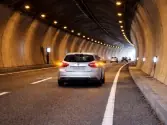
Circulando por un túnel, su vehículo sufre una avería que le permite continuar la marcha, ¿qué debe hacer?
While driving through a tunnel, your vehicle breaks down but can still move. What should you do?
- AContinuar hasta la salida del túnel con las luces de carretera encendidas.Carry on to the tunnel exit with main beam on.
- BContinuar hasta la salida del túnel, siempre que sea posible.Carry on to the tunnel exit, whenever possible.
- CDetener el vehículo inmediatamente en el lado izquierdo de la calzada.Stop the vehicle immediately on the left side of the carriageway.
ExplanationIf a vehicle breaks down inside a tunnel but can still move, it must carry on to the tunnel exit whenever possible. Stopping inside the tunnel, unless it is completely unavoidable, increases the risk of collisions because of the limited space and visibility. You must also keep taking care, keep the safe distance and switch on dipped headlights to be more visible.
Si en el interior de un túnel sufre una avería …
If you have a breakdown inside a tunnel…
- AInmovilizaré el vehículo y saldré por la salida de emergencia más próxima.I will bring the vehicle to a stop and leave by the nearest emergency exit.
- BNo abandonaré el vehículo y me mantendré en el interior.I will not leave the vehicle and will stay inside.
- CPediré ayuda obligando a detenerse a otros usuarios si fuera necesario.I will ask for help, making other road users stop if necessary.
ExplanationIf the breakdown allows you to continue, you must carry on to the tunnel exit or to an emergency area. If the vehicle is immobilised, you switch off the engine, mark the vehicle, call for help from the SOS post and leave the vehicle, heading for the nearest emergency exit.
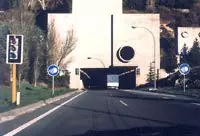
¿Está permitido detenerse en un túnel?
Is it allowed to stop in a tunnel?
- ASí.Yes.
- BNo.No.
- CSí, si el túnel está suficientemente iluminado.Yes, if the tunnel is well enough lit.
ExplanationStopping and parking are prohibited in tunnels, underpasses and stretches covered by the tunnel sign, because a vehicle stopped there is a serious danger. You may only be at a standstill there because of traffic, such as a traffic jam, or because of an emergency.
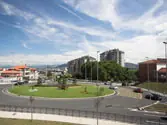
En una glorieta...
At a roundabout...
- Atenemos prioridad sobre los que circulan por ella.we have priority over those driving on it.
- Bcederemos el paso a los que circulen por ella.we give way to those driving on it.
- Caplicaremos la norma general de prioridad a la derecha.we apply the general rule of priority to the right.
ExplanationAt a roundabout, we must give way to the vehicles already driving on it. In this case, the general rule of priority to the right does not apply.
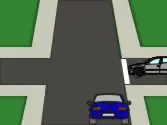
¿Qué vehículo tendrá prioridad de paso?
Which vehicle has right of way?
- AEl vehículo gris.The grey vehicle.
- BEl que llegue primero a la intersección.Whichever reaches the junction first.
- CEl vehículo azul.The blue vehicle.
ExplanationA solid transverse line does not by itself require the vehicle that comes to it to stop. It shows where to stop if stopping is required. So in this case, right of way is decided by the general rule of priority to the right, and the grey vehicle has right of way.
¿Cuándo tendrán prioridad de paso los ciclistas?
When do cyclists have right of way?
- ACuando se aproximen por la izquierda.When they approach from the left.
- BCuando se aproximen por la derecha.When they approach from the right.
- CCuando circulen en grupo.When they are riding in a group.
ExplanationFor cyclists, right of way follows the general rule. When they are riding in a group and the first cyclist has already started to cross a junction or has entered a roundabout, the rest of the cyclists in the group have right of way over motor vehicles.
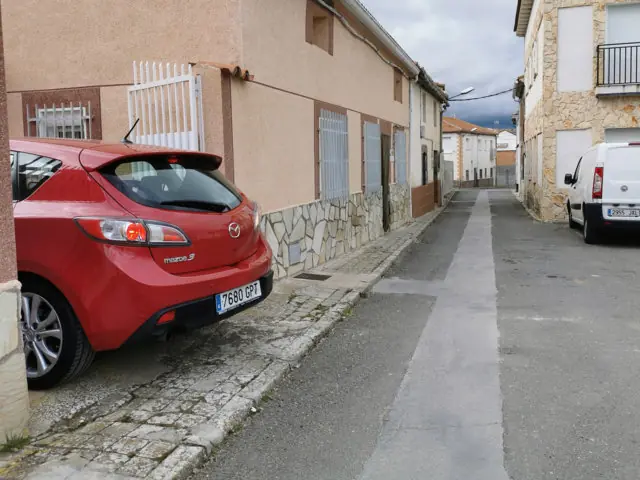
Para evitar el riesgo de atropello a peatones, ¿qué debe hacer al salir de un garaje si para incorporarse a la circulación tiene que atravesar la acera?
To avoid the risk of hitting pedestrians, what should you do when leaving a garage if you have to cross the pavement to join traffic?
- ADetener siempre el vehículo y avisar de su presencia tocando el claxon.Always stop the vehicle and warn of your presence by sounding the horn.
- BAumentar la velocidad para quitarse de en medio lo antes posible.Speed up to get out of the way as soon as possible.
- CModerar la velocidad por si hubiese peatones cruzando.Reduce speed in case there are pedestrians crossing.
ExplanationWhen leaving a garage and having to cross the pavement to join traffic, it is important to reduce speed and watch out for pedestrians who may be crossing. Stopping the vehicle if necessary and giving way to pedestrians is essential to prevent the risk of hitting them. Speeding up to get out of the way quickly could increase the risk of accidents.
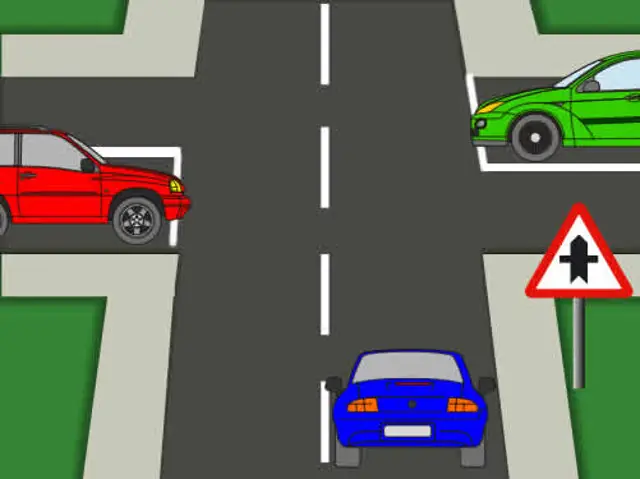
En esta intersección, ¿qué vehículo será el último en pasar si el vehículo rojo gira a la izquierda?
At this junction, which vehicle will go last if the red vehicle turns left?
- AEl vehículo verde.The green vehicle.
- BEl vehículo rojo.The red vehicle.
- CEl vehículo azul.The blue vehicle.
ExplanationThe sign shows that the blue vehicle is on the road with priority, so it goes first (Article 56.4 of the General Traffic Regulations). The green and red vehicles are coming towards each other on the minor road; the red one, turning left, crosses the green one's path and must let it go first, so the red vehicle goes last.
Al cambiar de carril, ¿qué vehículo tiene prioridad?
When changing lanes, which vehicle has priority?
- AEl vehículo que cambia de carril en cualquier caso.The vehicle changing lanes, in all cases.
- BEl vehículo que ya circula por el carril.The vehicle already travelling in the lane.
- CEl vehículo que cambia de carril si circula a gran velocidad.The vehicle changing lanes, if it is travelling at high speed.
ExplanationArticle 74.2 of the General Traffic Regulations requires any sideways movement that involves changing lanes to respect the priority of the vehicle already travelling in the lane you want to move into. The speed of the vehicle changing lanes does not give it priority.
Si en un estrechamiento sin señales de preferencia,se encuentran al mismo tiempo un turismo con remolque de 750 kg de m.m.a y un vehículo de tracción animal,¿Cuál pasará primero?
If, at a narrow stretch with no priority signs, a car towing a trailer with a MAM of 750 kg and an animal-drawn vehicle arrive at the same time, which one goes first?
- AEl turismo con remolque.The car with the trailer.
- BEl que tenga que retroceder menos distancia.The one that has to reverse the shorter distance.
- CEl vehículo de tracción animal.The animal-drawn vehicle.
ExplanationAt a narrow stretch with no signs, if they arrive at the same time, right of way is decided by the order in Article 62 of the General Traffic Regulations, in which animal-drawn vehicles come before cars towing trailers of up to 750 kg.
Un vehículo prioritario que circula en servicio de urgencia, ¿tendrá prioridad en una intersección?
Does a priority (emergency) vehicle on an emergency call have right of way at a junction?
- ASí, en todo caso.Yes, in all cases.
- BSí, habiendo extremado las precauciones, cerciorándose de que no existe peligro para los demás usuarios.Yes, after taking extreme care and making sure there is no danger to other road users.
- CNo, tendrá que respetar todas las señales de prioridad de paso.No, it must obey all right-of-way signs.
ExplanationPriority (emergency) vehicles on an emergency call have right of way over other road users, but they must take extreme care and make sure there is no risk to other pedestrians and vehicles.
En una zona de obras en la que se ha producido un estrechamiento de la calzada, ¿qué vehículo tendrá preferencia si no hay señal que la regule?
In a roadworks area where the carriageway has narrowed, which vehicle has priority if there is no sign controlling it?
- AEl que haya entrado primero.The one that entered first.
- BEl que se encuentre el estrechamiento a su derecha.The one that has the narrowing on its right.
- CEl que no tenga que cambiar de carril para entrar en el estrechamiento.The one that does not have to change lanes to enter the narrowing.
ExplanationAt a narrowing with no signs controlling priority, the vehicle that enters the narrowing first has right of way. These narrowings are usually signposted with these signs.
Los ciclistas tienen prioridad sobre los vehículos a motor...
Cyclists have right of way over motor vehicles…
- Acuando circulen por un carril para bicicletas correctamente señalizado.when they are riding in a properly signed cycle lane.
- Bsolo en pasos para bicicletas.only at cycle crossings.
- Csiempre que circulen en grupo.whenever they are riding in a group.
ExplanationUnder Article 64.2 of the General Traffic Regulations, cyclists have right of way when they are riding on a properly signed cycle lane, cycle crossing or hard shoulder; when a vehicle is turning and there is a cyclist nearby; and, when riding in a group, if the first rider has already started crossing. Not only at cycle crossings, and not whenever they ride in a group.
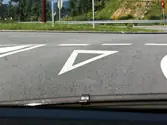
¿A qué vehículos debe ceder el paso?
Which vehicles must you give way to?
- ASólo a los vehículos que se aproximan por la izquierda.Only to vehicles approaching from the left.
- BA todos los vehículos que se aproximan por la derecha o por la izquierda.To all vehicles approaching from the right or from the left.
- CSolo a los vehículos que se aproximen por la derecha.Only to vehicles approaching from the right.
ExplanationThe give way sign means that every driver must give way, at the next junction, to vehicles travelling on the road they are approaching, or in the lane they want to join. This sign can appear as a road sign or as a road marking (as in the picture), and it means the same.
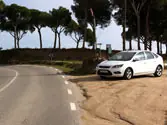
Si se encuentran un vehículo que circula por una vía pavimentada con otro que circula por una vía sin pavimentar, ¿cual tendrá prioridad de paso?
If a vehicle on a paved road meets another vehicle coming from an unpaved road, which one has right of way?
- AEl vehículo que se aproxime por la derecha.The vehicle approaching from the right.
- BEl vehículo que circule por la vía pavimentada.The vehicle on the paved road.
- CEl vehículo de mayores dimensiones.The larger vehicle.
ExplanationVehicles on a paved road have right of way over those coming from an unpaved road.
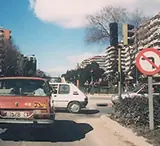
El semáforo de la fotografía está estropeado. ¿A quién debe ceder el paso en la intersección?
The traffic light in the photo is broken. Who must you give way to at the junction?
- AA los vehículos que entran por la derecha.To vehicles coming from the right.
- BA los vehículos que entran por la izquierda.To vehicles coming from the left.
- CA todos los vehículos.To all vehicles.
ExplanationIf the traffic light is out of service and there are no other priority signs, the general rule applies: you must give way to vehicles approaching from the right.
Si su vehículo se avería mientras circula por un paso inferior, pero puede seguir avanzando, ¿qué debe hacer?
If your vehicle breaks down while you are driving through an underpass, but you can keep moving, what must you do?
- AApagar el motor y encender las luces de emergencia.Switch off the engine and switch on the hazard warning lights.
- BDetener el vehículo, salir de él y dirigirse a la salida del paso inferior.Stop the vehicle, get out and walk to the exit of the underpass.
- CContinuar circulando hasta salir del paso inferior, siempre que sea posible.Keep driving until you are out of the underpass, whenever possible.
ExplanationAccording to Article 130 of the General Traffic Regulations (RGC), if a vehicle has a breakdown that does not stop it from moving, the driver must keep driving until they are out of the underpass, as long as it is safe to do so. This article requires drivers to remove the vehicle from the carriageway if it is obstructing traffic, and in this underpass the best option is to move forward carefully until you are out of the area. Stopping inside an underpass can be a safety risk, both for the driver and for other road users.
Si se aproxima a una intersección regulada con semáforo en luz verde teniendo en cuenta que Ud. tiene preferencia, ¿le está siempre permitido pasar?
If you approach a junction controlled by traffic lights showing green, so that you have right of way, may you always go through?
- ASí, siempre.Yes, always.
- BNo, cuando la situación de la circulación me haga prever que puedo quedar detenido de forma que impida u obstruya la circulación transversal.No, not when the traffic situation suggests that I may end up stopped in a way that blocks or obstructs crossing traffic.
- CNo, cuando al lado del semáforo exista una señal vertical de STOP o CEDA EL PASO.No, not when there is a STOP or GIVE WAY sign next to the traffic light.
ExplanationThis option is correct because it says that, even if the light is green and you have right of way, you must not go through if there is a risk that you will stop and block other vehicles. It is essential to avoid situations that could cause congestion or accidents.
Al percibir la presencia de una ambulancia circulando en servicio de urgencia, ¿cómo debemos actuar?
When you notice an ambulance travelling on an emergency call, what should you do?
- ANos detendremos inmediatamente.Stop immediately.
- BNos arrimaremos siempre a la derecha.Always move over to the right.
- CLe facilitaremos el paso adoptando los medios adecuados según las circunstancias.Let it through, using the right means for the circumstances.
ExplanationWhen we notice an ambulance on an emergency call we must let it through. Sometimes we will do this by stopping, other times by moving over to the right or to the left, depending on the circumstances. Priority vehicles on an emergency call show they are there by using the flashing light and the special siren at the same time. However, their drivers may use the flashing light alone when not using the siren is no danger to other road users. In that case other road users must still treat them as priority vehicles and give way to them.
En una intersección en la que previsiblemente puede quedar detenido en ella, ¿qué debe hacer si tiene prioridad de paso?
At a junction where you are likely to be left stopped inside it, what should you do if you have right of way?
- ANo entrar en la intersección a pesar de que tiene prioridad de paso.Do not enter the junction, even though you have right of way.
- BPasar porque tiene prioridad de paso.Go ahead, because you have right of way.
- CPasar y apartarse a un lado si obstaculiza la circulación.Go ahead, and move to one side if you block traffic.
ExplanationEven if they have right of way, no driver may enter a junction, or a pedestrian or cycle crossing, if the traffic situation is such that they are likely to be left stopped in a way that blocks or obstructs crossing traffic. Any driver whose vehicle is stopped at a junction controlled by traffic lights, and is blocking traffic, must leave it without waiting for traffic to be allowed in the direction they intend to take, as long as doing so does not get in the way of other road users moving in the permitted direction.
Dos vehículos se encuentran en un tramo de gran pendiente no pudiendo cruzarse a la vez, ¿cuál de ellos tiene prioridad?
Two vehicles meet on a very steep stretch where they cannot pass each other at the same time. Which of them has priority?
- AEl vehículo que tenga más dificultad de paso.The vehicle that has more difficulty getting through.
- BEl vehículo que circule en sentido ascendente.The vehicle travelling uphill.
- CEl vehículo que circule en sentido descendente.The vehicle travelling downhill.
ExplanationOn very steep stretches where priority is not signposted, the vehicle travelling uphill has right of way, unless it could reach a passing place.
Un peatón va a cruzar por un paso de peatones señalizado. ¿Cuándo debe entrar en la calzada?
A pedestrian is going to cross at a marked pedestrian crossing. When should they step onto the carriageway?
- ACuando el peatón lo decida, porque tiene prioridad de paso.Whenever the pedestrian decides, because they have right of way.
- BCuando la distancia y la velocidad de los vehículos permitan cruzar con seguridad.When the distance and speed of vehicles allow them to cross safely.
- CSolo cuando no haya vehículos cerca.Only when there are no vehicles nearby.
ExplanationUnder Article 124.1.c of the General Traffic Regulations, at pedestrian crossings marked on the road, pedestrians, even though they have priority, should only step onto the carriageway when the distance and speed of approaching vehicles allow them to do so safely.
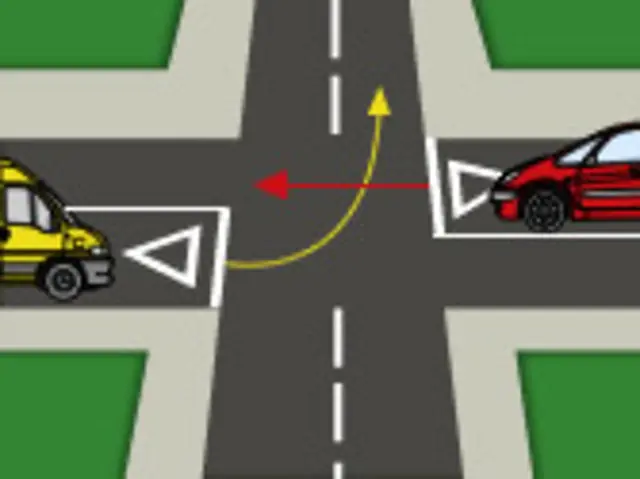
¿Qué vehículo pasará primero en esta situación?
Which vehicle will go first in this situation?
- AEl vehículo amarillo.The yellow vehicle.
- BEl vehículo rojo.The red vehicle.
- CLos conductores tendrán que ponerse de acuerdo.The drivers will have to agree between themselves.
ExplanationBoth vehicles face the same give way sign and are approaching each other head-on, so the rule of giving way to the right does not apply. The yellow one is turning left and crosses the path of the red one, which is going straight on; under Article 74.1 of the RGC, the driver who turns must make sure that oncoming vehicles allow them to do so safely.
¿Debe ceder el paso a un ciclista en una intersección sin señalizar?
Must you give way to a cyclist at an unmarked junction?
- ASí, si viene por la derecha.Yes, if they are coming from the right.
- BSí, si viene por la izquierda.Yes, if they are coming from the left.
- CNo, los ciclistas no siempre tienen prioridad en las intersecciones.No, cyclists do not always have priority at junctions.
ExplanationAt an unmarked junction, Article 57 of the General Traffic Regulations (RGC) states that drivers must give way to vehicles approaching from their right. This includes cyclists, who have priority on the road in certain circumstances. So if a cyclist is approaching from the right, the driver must give way to them.
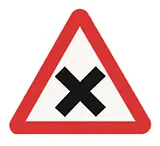
En una intersección regulada por esta señal, ¿a quién debe ceder el paso?
At a junction controlled by this sign, who must you give way to?
- AA ningún vehículo, porque esta señal me indica que circulo por la vía con prioridad.To no vehicle, because this sign tells me I am on the road with priority.
- BSólo a los vehículos que tengan mayores dificultades de maniobra.Only to vehicles that find it more difficult to manoeuvre.
- CA los vehículos que se aproximen por mi derecha.To vehicles approaching from my right.
ExplanationThe triangle with a cross warns of a junction where the general priority rule applies: neither road has priority, so you must give way to vehicles approaching from your right.
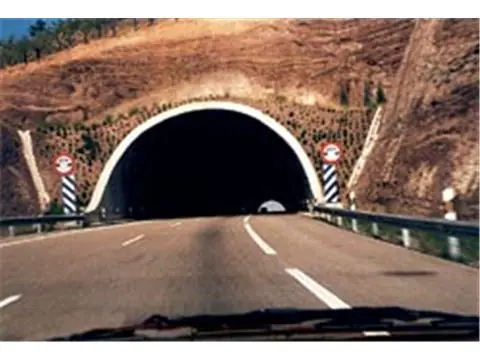
En caso de incendio en el interior de un túnel o paso inferior, el conductor de un vehículo...
If a fire breaks out inside a tunnel or underpass, the driver of a vehicle...
- Adejará el motor encendido y las puertas abiertas.will leave the engine running and the doors open.
- Bdejará las puertas abiertas y la llave puesta.will leave the doors open and the key in the ignition.
- Cdejará el motor apagado y las puertas cerradas.will leave the engine off and the doors closed.
ExplanationIf there is a fire in a tunnel, you must pull over to the right, switch off the engine, leave the key in the ignition and the doors open, and walk to the nearest shelter or exit, away from the fire. This way the emergency services can move the vehicle if they need to.
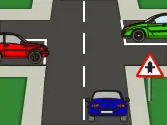
En esta intersección, ¿qué vehículo pasará en último lugar si el vehículo rojo gira hacia la izquierda?
At this junction, which vehicle will go last if the red vehicle turns left?
- AEl vehículo verde.The green vehicle.
- BEl vehículo rojo.The red vehicle.
- CEl vehículo azul.The blue vehicle.
ExplanationThe blue vehicle will go first, because it has the “junction with priority” sign, so all the other vehicles must give way to it; the green vehicle will go second, as it has no one on its right; and the red vehicle will go last.
All topics
- Definitions
- Documents and penalty points
- The driver's condition
- Duties of drivers and pedestrians
- Vehicle safety devices
- Vehicle controls and equipment
- Vehicle lights and horn
- Traffic signs, markings and signals
- The road and its lanes
- Speed and distances
- Manoeuvres
- Carrying passengers and loads
- Driving safely in difficult conditions
- Vehicle mechanics and maintenance
- Road accidents and first aid
- Defensive and eco-driving
Independent app: not affiliated with or endorsed by the DGT (Spain's Directorate-General for Traffic) or the Ministry of the Interior. The official exam is booked with the DGT and taken at its test centres. The questions here are practice material; the DGT's official question bank is not public.
Basado en datos de la Agencia Estatal Boletín Oficial del Estado (https://www.boe.es). Textos consolidados de carácter meramente informativo. La AEBOE no patrocina ni respalda este sitio.
Parte de las preguntas procede de los tests de la revista «Tráfico y Seguridad Vial» de la DGT, reproducidos con indicación de la fuente.