
DGT test · 403 questions
Right of way · Page 5 of 9
Who goes first at junctions, roundabouts, narrow stretches and pedestrian crossings, and the priority of emergency vehicles.
Questions in this topic, with answers
403 questions, 50 per page, with the correct answer and the explanation. Page 5 of 9.
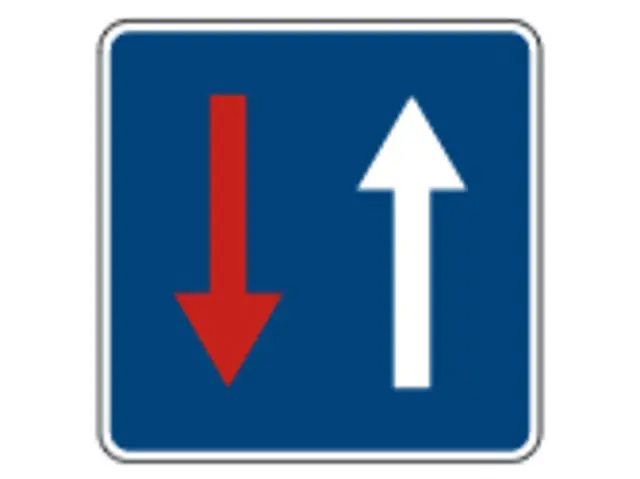
Al acercarnos a un paso estrecho vemos la señal de la imagen. ¿Debemos ceder el paso al vehículo que viene en sentido contrario?
As we approach a narrow passage we see the sign in the picture. Must we give way to the vehicle coming the other way?
- ASí.Yes.
- BNo.No.
- CSí, si es un vehículo con más dificultad para maniobrar.Yes, if it is a vehicle that finds it harder to manoeuvre.
ExplanationThe sign in the picture, square and blue with a white arrow pointing up, shows priority over oncoming traffic: in the narrow passage, whoever travels in the direction of the white arrow has priority. You do not have to give way to the vehicle coming towards you; it is that vehicle that must wait.
Usted se aproxima a una intersección sin señalizar y observa que por su derecha se aproxima un grupo de ciclistas. ¿Qué debe hacer si el primero de ellos ya ha iniciado el cruce?
You are approaching a junction with no signs or markings and see a group of cyclists approaching from your right. What must you do if the first of them has already started to cross?
- ASeguir circulando, porque los vehículos de motor tienen siempre preferencia de paso.Carry on, because motor vehicles always have right of way.
- BCeder el paso al ciclista que circula en primer lugar, únicamente.Give way only to the cyclist riding at the front.
- CCeder el paso a todo el grupo.Give way to the whole group.
ExplanationGiving way to the whole group is correct because, as there are no signs or markings, you must respect the right of way of the cyclists who have already started to cross. This makes sure that all the cyclists can get through safely and avoids possible accidents.

Un ciclista que atraviesa la calzada por un paso para ciclistas ¿cuándo tendrá prioridad?
When does a cyclist crossing the carriageway on a cyclist crossing have right of way?
- ACuando se aproxime por la derecha.When approaching from the right.
- BSiempre.Always.
- CEl ciclista no tendrá nunca prioridad.The cyclist never has right of way.
ExplanationAt a cyclist crossing, cyclists always have right of way, whether they approach from the right or from the left.
En un estrechamiento donde no es posible cruzarse a la vez y no está señalizado, se encuentran por un lado un turismo y por el otro un ciclomotor, ¿cuál de los dos tendrá prioridad de paso?
On a narrow stretch without signs where two vehicles cannot pass each other at the same time, there is a car on one side and a moped on the other. Which of the two has right of way?
- AEl ciclomotor, porque tiene más facilidad de paso.The moped, because it finds it easier to get through.
- BEl turismo, porque tiene más dificultad de paso.The car, because it finds it harder to get through.
- CEl vehículo que sea más ligero.The lighter vehicle.
ExplanationWhen two vehicles cannot pass at the same time on a narrow stretch, the one that finds it harder to manoeuvre has priority, following a set order. In this case, that is the car.
Si en un estrechamiento sin señalizar han entrado a la vez un coche y un vehículo tirado por animales, ¿cuál de los dos tendrá preferencia de paso?
If a car and an animal-drawn vehicle have entered an unsigned narrow section of road at the same time, which of the two has right of way?
- AEl vehículo tirado por animales.The animal-drawn vehicle.
- BEl que tenga que retroceder una mayor distancia.The one that would have to reverse the longer distance.
- CEl coche.The car.
ExplanationOn an unsigned narrow section, the vehicle that entered first goes first; if they entered at the same time, the one that finds it harder to manoeuvre has right of way (Article 60.1 of the General Traffic Regulations, RGC). In the order set out in Article 62, animal-drawn vehicles come before cars.
Si debido a la congestión de la circulación, un vehículo queda inmovilizado en un paso inferior, su conductor...
If a vehicle is brought to a stop in an underpass because of traffic congestion, its driver...
- ADebe apagar el motor y las luces.Must switch off the engine and the lights.
- BDebe salir del vehículo, y abandonar el paso inferior junto con sus pasajeros.Must get out of the vehicle and leave the underpass together with the passengers.
- CDebe mantener encendida la luz de posición, apagar el motor, y encender la luz de emergencia temporalmenteMust keep the sidelights on, switch off the engine and switch on the hazard warning lights for a short time
ExplanationIf the vehicle is brought to a stop in a tunnel or underpass because of traffic congestion, you must switch off the engine, keep the sidelights on and switch on the hazard warning lights for a short time to warn those behind. Neither the driver nor the passengers should leave the vehicle.
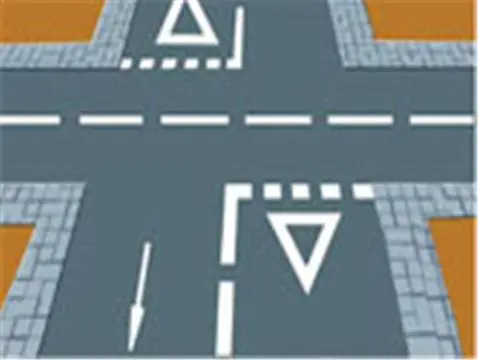
¿Qué significa el triángulo pintado en el suelo?
What does the triangle painted on the road mean?
- ACarril preferente.Priority lane.
- BObligación de detenerse en la intersección.You must stop at the junction.
- CObligación de ceder el paso en la intersección.You must give way at the junction.
ExplanationA triangle painted on the carriageway, with its point towards the driver, is the give way marking: it requires you to give way at the next junction to vehicles on the road you are entering. It does not require you to stop if no one is coming.
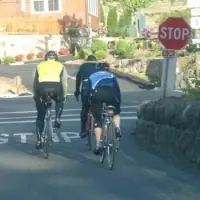
¿Se debe ceder el paso en una intersección sin semáforo a una bicicleta que se aproxima por la derecha?
At a junction without traffic lights, must you give way to a bicycle approaching from the right?
- ASolo hay que ceder el paso si viene por la izquierda.You only have to give way if it comes from the left.
- BSí, si no hay señales que regulen la prioridad.Yes, if there are no signs regulating priority.
- CNo, los vehículos a motor siempre tienen preferencia.No, motor vehicles always have priority.
ExplanationIf there is no sign regulating priority, you must give way to vehicles approaching from the right, including bicycles. If there are signs, the signs apply: if the cyclist has a STOP sign (R-2), as in the picture, it is the cyclist who must give way.
Si en un estrechamiento se encuentran un camión y una motocicleta y no pueden pasar a la vez, ¿cual tendrá prioridad?
If a lorry and a motorcycle meet at a narrowing and cannot pass at the same time, which one has right of way?
- AEl camión.The lorry.
- BLa motocicleta.The motorcycle.
- CEl que haya entrado primero.The one that entered first.
ExplanationIf there are no signs, right of way goes to the vehicle that entered first; how difficult it is for the vehicle to get through is not taken into account.
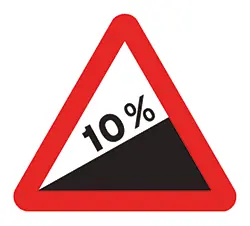
Como norma general, en un tramo de vía estrecho de gran pendiente debe ceder el paso...
As a general rule, on a narrow, steep stretch of road, who must give way...
- Ael vehículo que sube.the vehicle going uphill.
- Bel vehículo que baja.the vehicle going downhill.
- Cel vehículo más ligero.the lighter vehicle.
ExplanationUnder Article 63 of the General Traffic Regulations, on a narrow, steep stretch of road the vehicle going uphill has priority, because moving off again uphill is more difficult and dangerous. Therefore, the vehicle going downhill gives way, unless the one going uphill has a passing place nearer to it.
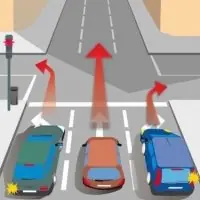
En esta intersección, ¿qué vehículos están obligados a detenerse?
At this junction, which vehicles must stop?
- ATodos.All of them.
- BEl verde y el rojo.The green one and the red one.
- CEl rojo y el azul.The red one and the blue one.
ExplanationWhen there are traffic lights only on the left, only drivers who intend to go straight on or turn left must obey them. Those who intend to turn right must follow the general priority rule: give way to vehicles from the right.
Los vehículos que circulen por una vía pavimentada...
Vehicles on a paved road...
- ATendrán preferencia de paso frente a los procedentes de una vía sin pavimentar.have right of way over those coming from an unpaved road.
- BEstarán obligados a ceder el paso a los vehículos que se aproximen por la derecha por una vía sin pavimentar.must give way to vehicles approaching from the right on an unpaved road.
- CEstarán obligados a ceder el paso a los vehículos que se aproximen desde una vía sin pavimentar.must give way to vehicles approaching from an unpaved road.
ExplanationThere are some cases in which we do not apply the general priority rule, like this one: vehicles on a paved road have priority over those on an unpaved road, even if the latter are approaching from the right.
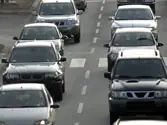
Cuando un vehículo cambia de carril, ¿quien tiene la prioridad?
When a vehicle changes lanes, who has priority?
- AEl vehículo que cambia de carril, si ha puesto el intermitente.The vehicle changing lanes, if it has used its indicator.
- BEl vehículo que ya circula por el carril.The vehicle already travelling in the lane.
- CEl que circule a mayor velocidad.The one travelling faster.
ExplanationA vehicle travelling in a lane without changing its path has priority over vehicles that intend to move into that lane.
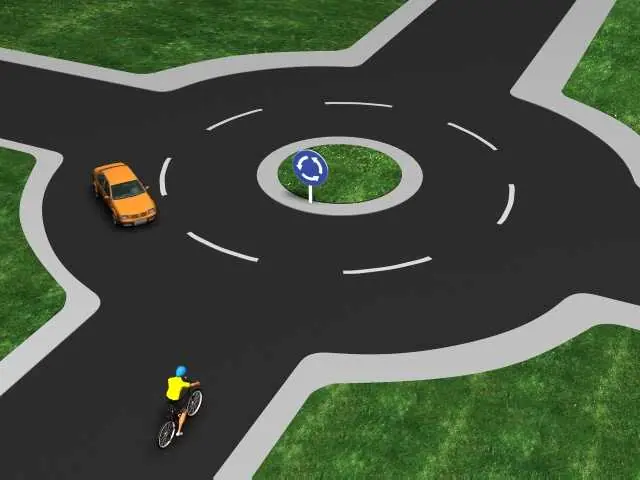
¿Quién tiene preferencia para pasar?
Who has priority to go?
- AEl turismo.The car.
- BEl que llegue al cruce a mayor velocidad.Whoever reaches the junction at the higher speed.
- CLa bicicleta.The bicycle.
ExplanationAt roundabouts, those already on the roundabout have priority over those who want to enter it. The car is on the roundabout and the bicycle is entering, so the cyclist must give way. Cyclists would only have priority if they were riding in a group and the first one had already entered.
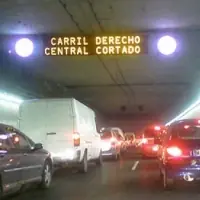
Si queda detenido en el interior de un túnel durante más de dos minutos, ¿qué debe hacer?
If you are stopped inside a tunnel for more than two minutes, what must you do?
- AApagar el motor y todas las luces.Switch off the engine and all the lights.
- BApagar el motor, conectar la señal de emergencia y mantener encendidas las luces de posición.Switch off the engine, switch on the hazard warning lights and keep the sidelights on.
- CEncender únicamente la señal de emergencia.Switch on only the hazard warning lights.
ExplanationIf you are stopped in a tunnel for more than two minutes, you must switch off the engine so that fumes do not build up, switch on the hazard warning lights to warn those coming behind, and keep the sidelights on so that you can be seen.
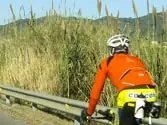
¿Dónde tiene la prioridad los conductores de bicicletas, respecto a otros vehículos?
Where do cyclists have priority over other vehicles?
- AEn zonas peatonales.In pedestrian areas.
- BEn todas las intersecciones.At all junctions.
- CEn los pasos para ciclistas, entre otros.At cycle crossings, among other places.
ExplanationAccording to Article 64.2 of the General Traffic Regulations (RGC), as worded by Royal Decree 518/2026, cyclists have right of way over other vehicles: when they are riding in a properly signed cycle lane, cycle crossing or hard shoulder; when a motor vehicle or moped turns to enter another road and there is a cyclist nearby; and when, riding in a group, the first cyclist has already started crossing or has entered a roundabout.
En un puente estrecho sin señal de prioridad al sentido contrario, se encuentran un tractor agrícola y una motocicleta con sidecar. Si no es posible el cruce o paso simultáneo de ambos vehículos y uno de ellos tiene que dar marcha atrás, ¿qué conductor deberá retroceder con su vehículo?
On a narrow bridge with no sign giving priority to oncoming traffic, an agricultural tractor and a motorcycle with a sidecar meet. If they cannot pass each other and one of them has to reverse, which driver must reverse?
- AEl del tractor agrícola.The driver of the agricultural tractor.
- BEl que tenga que recorrer menos distancia marcha atrás.The one who has to reverse the shorter distance.
- CEl de la motocicleta con sidecar.The rider of the motorcycle with a sidecar.
ExplanationAccording to Article 62 of the General Traffic Regulations, when there are no signs, priority in a narrow passage follows an order by type of vehicle. Special vehicles that do not exceed the regulation masses or dimensions, such as an agricultural tractor, come before motorcycles with a sidecar, so the motorcycle reverses.
Si se aproxima un vehículo prioritario en servicio de urgencia, ¿cómo actuaremos?
If a priority (emergency) vehicle on an emergency call is approaching, what should we do?
- ANos apartaremos siempre al lado derecho para facilitarle el paso.Always pull over to the right to let it through.
- BNos detendremos inmediatamente.Stop immediately.
- CLe facilitaremos el pasoMake it easier for it to get through.
ExplanationWhen a driver notices the special signals of a priority (emergency) vehicle, they must take suitable action, depending on the circumstances of the moment and place, to make it easier for it to get through, normally by pulling over to the right or stopping if necessary.
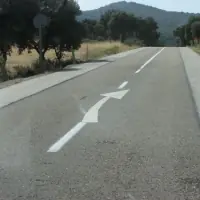
¿Qué indica una flecha de fin de carril?
What does an end-of-lane arrow mean?
- AQue el carril sigue normalmente hasta dentro de 5 kmThat the lane continues normally for another 5 km
- BQue el carril termina próximamente y debemos salir en la siguiente salidaThat the lane ends soon and we must take the next exit
- CQue el carril termina próximamente y debemos cambiar a otroThat the lane ends soon and we must change to another one
ExplanationThe end-of-lane arrow means that the lane where it is painted ends soon, so you must leave it towards the side the arrow points to, respecting the priority of vehicles in the lane you move into. It does not require you to take any exit.
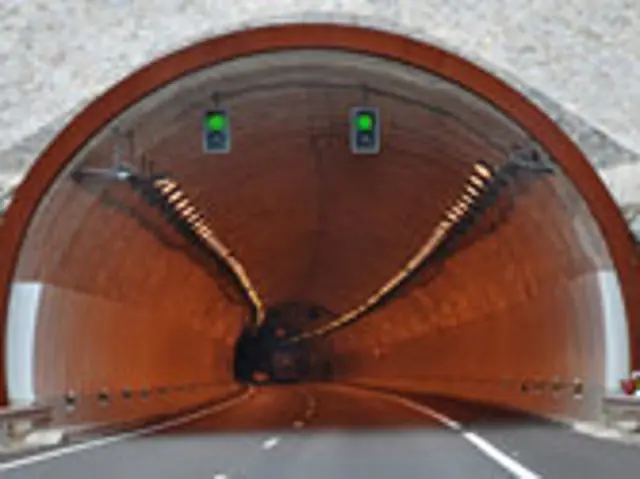
Si su vehículo se avería en un túnel, debe...
If your vehicle breaks down in a tunnel, you must...
- Aquedarse dentro del vehículo y no abandonarlo bajo ninguna circunstancia.stay inside the vehicle and not leave it under any circumstances.
- Bpedir ayuda a otros conductores; si es necesario, pedirles que se detengan.ask other drivers for help and, if necessary, ask them to stop.
- Cabandonar el vehículo dentro del túnel y dirigirse al refugio o salida más próximos.leave the vehicle inside the tunnel and go to the nearest shelter or exit.
ExplanationAccording to the General Traffic Regulations (RGC), if your vehicle breaks down inside a tunnel, you must leave the vehicle and go to the nearest shelter or exit. This is crucial for safety, because staying inside the vehicle in a tunnel can be dangerous owing to poor ventilation and the possibility of a fire. The rules state that occupants must avoid risks and look for safe areas away from danger.
Si dos vehículos se encuentran en mitad de un estrechamiento y es imposible su paso simultaneo, ¿cuál pasará primero?
If two vehicles meet in the middle of a narrowing and cannot pass at the same time, which one goes first?
- AEl que tenga mayor dificultad de maniobra.The one that has more difficulty manoeuvring.
- BEl que tenga que recorrer mayor distancia marcha atrás.The one that would have to reverse a longer distance.
- CEl que tenga que recorrer menor distancia marcha atrás.The one that would have to reverse a shorter distance.
ExplanationAt a narrowing without signs, the vehicle that entered first has right of way. If it is not clear, the one that has more difficulty manoeuvring goes first.
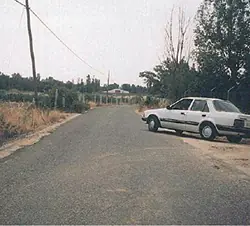
En la intersección de una vía pavimentada con otra sin pavimentar, ¿qué vehículos tienen preferencia de paso?
At a junction between a paved road and an unpaved road, which vehicles have right of way?
- ALos que circulen por la vía más ancha.Those on the wider road.
- BLos que se aproximen por la derecha.Those approaching from the right.
- CLos que circulen por la vía pavimentada.Those on the paved road.
ExplanationThis is an exception to the rule of giving way to the right: at a junction between a paved road and an unpaved road, vehicles on the paved road have priority.
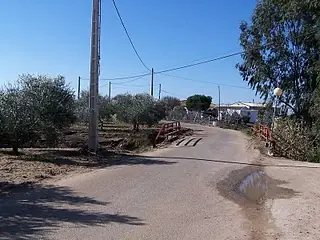
Circulando con su turismo, llega a un estrechamiento sin señalizar por el que no pueden pasar dos vehículos a la vez y viene un ciclomotor en sentido contrario. ¿Qué vehículo pasará primero?
Driving your car, you reach an unsigned narrow stretch where two vehicles cannot pass at the same time, and a moped is coming in the opposite direction. Which vehicle goes first?
- AEl que haya entrado primero en el estrechamiento.The one that entered the narrow stretch first.
- BEl turismo.The car.
- CEl ciclomotor.The moped.
ExplanationUnder Article 60.1 of the General Traffic Regulations, at a narrow stretch without specific signs, right of way goes to the vehicle that entered first, whatever type it is. Only if there is doubt does the order in Article 62 apply, based on how difficult each vehicle is to manoeuvre.
¿Los ciclistas tendrán prioridad cuando crucen la vía por un paso para ciclistas?
Do cyclists have right of way when they cross the road at a cycle crossing?
- ASí, cuando los vehículos se acerquen por la derecha.Yes, when vehicles are approaching from the right.
- BSí, siempre.Yes, always.
- CSolo cuando dispongan de un semáforo que regule el paso.Only when there is a traffic light controlling the crossing.
ExplanationCyclists have right of way when they cross the road at a cycle crossing.
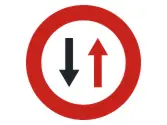
Si entramos en un estrechamiento teniendo esta señal en nuestro sentido y no pudiéramos atravesarlo juntamente con los vehículos que se acercan en sentido contrario, ¿qué vehículo deberá retroceder?
If we enter a narrowing with this sign in our direction and cannot get through at the same time as the vehicles coming the other way, which vehicle must reverse?
- AEl que ha recorrido menor distancia.The one that has travelled the shorter distance.
- BEl más ligero.The lighter one.
- CNosotros.We must.
ExplanationIf the narrowing had no signs, the vehicle that entered first would have right of way. But as we have the "priority for oncoming traffic" sign, we must reverse. The other vehicle will find on its side the "priority over oncoming traffic" sign, which gives it right of way.
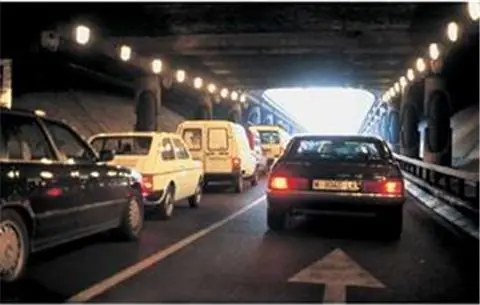
Si por necesidades de la circulación, un vehículo queda inmovilizado en el interior de un paso inferior, el conductor, entre otras medidas, deberá...
If, because of traffic, a vehicle is brought to a standstill inside an underpass, the driver must, among other measures…
- Aabandonar el vehículo y dirigirse al refugio más próximo.leave the vehicle and go to the nearest emergency shelter.
- Bmantener encendidas las luces de posición y apagar el motor.keep the sidelights on and switch off the engine.
- Capagar todos los sistemas eléctricos del vehículo.switch off all the vehicle's electrical systems.
ExplanationIf the vehicle is stopped in a tunnel or underpass because of traffic, you must switch off the engine if the stop lasts more than two minutes and keep the sidelights on (Article 115 of the General Traffic Regulations). You must not leave the vehicle or switch off all the lights.
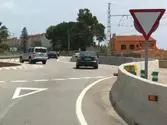
¿Cuál debe ser su comportamiento al ceder el paso?
How should you behave when giving way?
- ADetenerse en las intersecciones si se acerca otro vehículo.Stop at junctions if another vehicle is approaching.
- BParar y comprobar si otro usuario de la vía tiene prioridad.Stop and check whether another road user has priority.
- CNo obligar al vehículo que tiene prioridad a modificar bruscamente su trayectoria o velocidad.Do not force the vehicle that has priority to suddenly change its path or speed.
ExplanationWe must show clearly that we intend to respect the right of way, at the next junction, of vehicles travelling on the road we are approaching or in the lane we want to join, without forcing them to suddenly change their path or speed.
En un cruce entre una vía pavimentada y otra sin pavimentar, ¿qué vehículos tienen la prioridad de paso?
At a junction between a paved road and an unpaved road, which vehicles have right of way?
- ALos que circulan por la vía sin pavimentar.Those travelling on the unpaved road.
- BLos que circulan por la vía pavimentada.Those travelling on the paved road.
- CLos que se acerquen por el lado derecho.Those approaching from the right.
ExplanationVehicles travelling on a paved road have right of way over those travelling on an unpaved road. This case is an exception to the priority-to-the-right rule.
Dos vehículos del mismo tipo están en un estrechamiento y no se sabe cuál tiene prioridad. ¿Cuál de ellos tiene prioridad?
Two vehicles of the same type are in a narrow section and it is not clear which has priority. Which one has priority?
- AEl vehículo que tenga que retroceder más.The vehicle that would have to reverse further.
- BEl vehículo que tenga que retroceder menos.The vehicle that would have to reverse a shorter distance.
- CEl vehículo que sea más ancho o más largo.The vehicle that is wider or longer.
ExplanationUnder Article 62 of the General Traffic Regulations, when both vehicles are of the same type, priority goes to the one that would have to reverse the greater distance. Only if that distance is the same does priority go to the vehicle with the greater width, length or maximum authorised mass (MAM).
Circulando por el interior de una rotonda dentro de poblado, ¿por qué carril lo hará como norma general?
Driving on a roundabout in a built-up area, which lane will you use as a general rule?
- APor el carril más próximo a la derecha.The lane nearest the right.
- BPor el carril central.The centre lane.
- CPor el carril que mejor convenga a mi destino.The lane that best suits my destination.
ExplanationIn a built-up area you drive in the lane that best suits your destination. Outside built-up areas you drive in the right-hand lane.
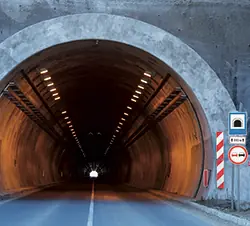
¿Qué debe hacer si se ve obligado a detener su vehículo en el interior de un túnel por motivos de circulación?
What must you do if traffic forces you to stop your vehicle inside a tunnel?
- AEncender la señal de emergencia y las luces de carretera.Switch on the hazard warning lights and the main beam.
- BDetenerse lo más lejos posible del vehículo de delante.Stop as far as possible from the vehicle in front.
- CDetenerse lo más cerca posible del vehículo de delante.Stop as close as possible to the vehicle in front.
ExplanationInside a tunnel, if traffic forces you to stop, you must leave the greatest possible gap to the vehicle in front: that space makes evacuation and manoeuvring easier in the event of a fire or emergency.
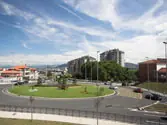
En las glorietas, ¿qué vehículos tienen preferencia de paso?
At roundabouts, which vehicles have right of way?
- ALos que pretendan acceder a ellas.Those intending to enter them.
- BLos que se hallen en su interior.Those already inside them.
- CLos que se aproximen a ellas por la derecha.Those approaching them from the right.
ExplanationAt a roundabout, vehicles already on the circular carriageway have right of way over vehicles intending to enter it.
Si en un estrechamiento se encuentran por un lado un autobús y por el otro un camión de 3500 Kg, ¿cuál de los dos tendrá prioridad de paso?
If a bus on one side and a 3,500 kg lorry on the other meet at a narrowing, which of the two has right of way?
- AEl autobús.The bus.
- BEl camión.The lorry.
- CEl que hubiese recorrido mayor distancia.The one that has travelled the longer distance.
ExplanationAt a narrowing, when two vehicles cannot pass each other at the same time, we follow the signs that regulate priority. If there are no such signs, the vehicle that entered first has right of way. If it is not clear, the vehicle that has more difficulty getting through has right of way, in this case the bus.
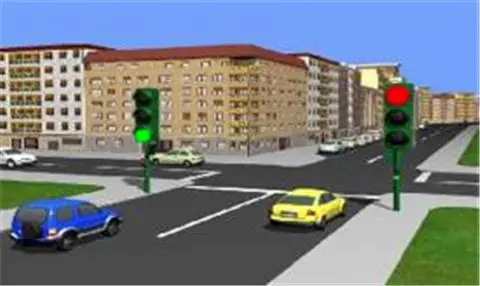
¿Qué vehículos deben obedecer al semáforo situado a la izquierda?
Which vehicles must obey the traffic light on the left?
- ALos que giran a la izquierda.Those turning left.
- BLos que continuen de frente únicamente.Only those going straight on.
- CLos que continuen de frente o giren a la izquierda.Those going straight on or turning left.
ExplanationWhen there is a traffic light on each side showing different signals, the one on the left controls drivers going straight on or turning left, and the one on the right controls those turning right.
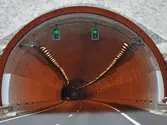
Al averiarse el vehículo que conduce dentro de un túnel debe...
If the vehicle you are driving breaks down inside a tunnel, you must...
- Aesperar dentro del túnel y no abandonar el vehículo en ningún caso.wait inside the tunnel and never leave the vehicle.
- Bsolicitar el auxilio de otros conductores llegando a ordenar su detención si es preciso.ask other drivers for help, even ordering them to stop if necessary.
- Cabandonar el vehículo dentro del túnel y dirigirse al refugio o salida más próximos.leave the vehicle inside the tunnel and go to the nearest shelter or exit.
ExplanationIf, because of an emergency, a driver's vehicle comes to a stop inside a tunnel or underpass: if the fault allows you to keep going, you must leave the tunnel or underpass; if that is not possible, take the vehicle to the nearest emergency lay-by; otherwise, stop the vehicle at the right-hand edge. You must also: – Switch off the engine, keep the sidelights on and switch on the hazard warning lights. – Place the hazard warning device: an amber, self-powered (battery) device with geolocation, placed on the highest possible part of the stopped vehicle so that it is as visible as possible. – Call for help from the nearest emergency post (SOS post), if there is one, and follow the instructions given through it. – Both the driver and the other occupants must leave the vehicle and go quickly to the nearest shelter or exit, and must never walk on the carriageway if there are areas closed to vehicle traffic.
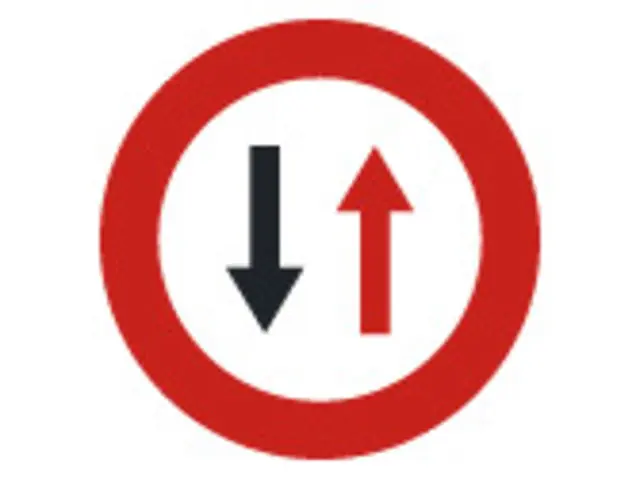
Si encuentra esta señal a la entrada de un paso estrecho y viene otro turismo en sentido contrario, ¿quién tiene prioridad?
If you see this sign at the entrance to a narrow passage and another car is coming the other way, who has priority?
- ASu vehículo.Your vehicle.
- BEl que tenga más dificultades para maniobrar.The one that finds it harder to manoeuvre.
- CEl otro turismo.The other car.
ExplanationThe sign in the picture, round with a red border and a red arrow pointing up, forbids entering the narrow passage unless you can do so without making oncoming vehicles stop. Whoever faces this sign must give way, so the other car has priority.
Si dos vehículos se encuentran en un estrechamiento en un tramo con gran pendiente con la preferencia sin señalizar, tendrá preferencia de paso...
If two vehicles meet at a narrowing on a steep stretch and there are no signs giving priority, right of way goes to...
- AEl vehículo que circule en sentido ascendente.The vehicle going uphill.
- BEl que haya entrado primero en el estrechamiento.The one that entered the narrowing first.
- CEl vehículo que circule en sentido descendente.The vehicle going downhill.
ExplanationIf there is no specific sign, the vehicle going uphill has right of way, unless it could reach a passing place first.
¿Qué vehículos tienen que disponer de tarjeta I.T.V.?
Which vehicles must have an ITV card (vehicle inspection card)?
- ASolo los turismos y camiones.Only cars and lorries.
- BTodos los vehículos de motor, ciclomotores, remolques y semirremolques de más de 750 kg.All motor vehicles, mopeds, and trailers and semi-trailers of more than 750 kg.
- CTodos los vehículos de motor, ciclomotores, remolques y semirremolques ligeros o no ligeros.All motor vehicles, mopeds, and trailers and semi-trailers, light or not.
ExplanationThe ITV card is compulsory for all motor vehicles, mopeds, and all trailers and semi-trailers, whether light or not.
Para evitar atropellos, ¿qué deben hacer los conductores?
To avoid hitting pedestrians, what must drivers do?
- ADecir a los peatones cuándo cruzar.Tell pedestrians when to cross.
- BTocar el claxon cuando se acerquen a un paso de peatones.Sound the horn when approaching a pedestrian crossing.
- CRespetar la prioridad de paso de los peatones.Respect pedestrians' right of way.
ExplanationUnder Article 65.1.a of the General Traffic Regulations (as worded by RD 518/2026), pedestrians have right of way on properly marked pedestrian crossings, pavements and other pedestrian areas. The driver must not tell the pedestrian when to cross or use the horn for that: they must respect the pedestrian's right of way.
¿Qué indican dos luces rojas intermitentes antes de un paso a nivel?
What do two flashing red lights before a level crossing mean?
- AQue debo pasar rápidamente.That I must cross quickly.
- BProhibición temporal de paso.A temporary ban on crossing.
- CPuedo pasar, pero con máxima precaución.I may cross, but with the utmost care.
ExplanationUnder section 4.2 of Annex I of the General Traffic Regulations, a flashing red light or two alternately flashing red lights before a level crossing temporarily forbid crossing. You must stop and wait until they go out.
En un paso de peatones regulado por semáforo, si el semáforo no funciona, ¿debe detenerse y ceder el paso a los peatones que quieren cruzar?
At a pedestrian crossing controlled by traffic lights, if the lights are not working, must you stop and give way to pedestrians who want to cross?
- ASolo si quien intenta cruzar es un grupo de escolares.Only if the people trying to cross are a group of schoolchildren.
- BNo, porque los vehículos tienen prioridad.No, because vehicles have right of way.
- CSí, porque los peatones tienen prioridad.Yes, because pedestrians have right of way.
ExplanationUnder Article 65.1.a of the General Traffic Regulations (RGC) (as worded by RD 518/2026), pedestrians have right of way on properly marked pedestrian crossings. If the traffic lights are not working, the crossing is still marked by its road markings, and you must give way to pedestrians.
Si por necesidades de la circulación un vehículo queda inmovilizado en el interior de un túnel...
If, because of traffic, a vehicle is brought to a standstill inside a tunnel...
- ASe abandonará el vehículo lo más rápido posible.The vehicle must be left as quickly as possible.
- BSe apagará inmediatamente el motor y las luces del vehículo.The engine and the vehicle's lights must be switched off immediately.
- CLa detención deberá hacerse lejos del vehículo que nos precede.The vehicle must stop well back from the vehicle in front.
ExplanationWhen a vehicle is stopped inside a tunnel or underpass because of traffic rather than a breakdown, the driver and passengers must not leave the vehicle. In this case the hazard warning lights are switched on for a while to warn drivers behind, the sidelights are kept on and the engine is switched off. The vehicle must stop as far as possible from the vehicle in front.
En una intersección sin señalización expresa, la norma general de preferencia de paso es...
At a junction without specific signs, the general right-of-way rule is...
- ACeder el paso a los vehículos que circulen por la izquierda.Give way to vehicles coming from the left.
- BCeder el paso a los vehículos más rápidos, ciclistas y peatones.Give way to faster vehicles, cyclists and pedestrians.
- CCeder el paso a los vehículos que se aproximen por la derecha.Give way to vehicles approaching from the right.
ExplanationAccording to Article 57.1 of the General Traffic Regulations, where there are no signs you must give way to vehicles approaching from the right. The exceptions are vehicles on a paved road (over those on an unpaved one), vehicles on rails, vehicles already on a roundabout and vehicles on a motorway (autopista) or dual carriageway (autovía).
Si por causa del tráfico su vehículo queda detenido en el interior de un túnel, ¿qué hará?
If your vehicle comes to a standstill inside a tunnel because of traffic, what will you do?
- AApagar las luces pero manteniendo encendida la señal de emergencia.Switch off the lights but keep the hazard warning lights on.
- BColocar los dispositivos de preseñalización de peligro.Place the hazard warning devices.
- CApagar el motor si la duración es superior a 2 minutos.Switch off the engine if the stop lasts more than 2 minutes.
ExplanationIf we are brought to a standstill in a tunnel because of traffic, we switch on the hazard warning lights, keep the sidelights on and, if the stop lasts more than 2 minutes, switch off the engine.
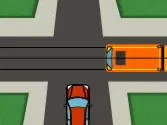
En un cruce no hay señales de preferencia. ¿Debe ceder el paso a un tranvía?
There are no priority signs at a junction. Must you give way to a tram?
- ANo.No.
- BSolo si se aproxima por la derecha.Only if it is approaching from the right.
- CSí.Yes.
ExplanationAt junctions without priority signs, vehicles running on rails, such as trams, have right of way over other road users, whether they approach from the right or from the left (Article 57 of the General Traffic Regulations, RGC).
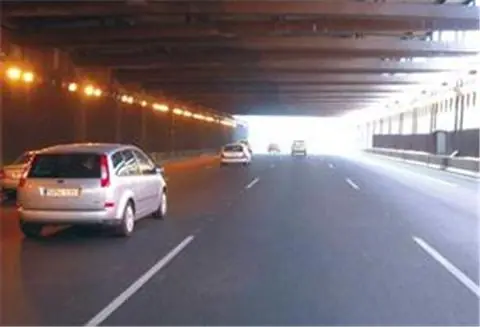
¿Qué debe hacer el conductor de un vehículo que por motivos de emergencia queda inmovilizado en un paso inferior?
What must the driver of a vehicle do if, because of an emergency, the vehicle becomes immobilised in an underpass?
- APermanecer en el interior del vehículo.Stay inside the vehicle.
- BSolicitar auxilio a través del poste de socorro más próximo si existiese.Call for help from the nearest SOS post, if there is one.
- CInmovilizar el vehículo lo más cerca posible del borde de la calzada.Stop the vehicle as close as possible to the edge of the carriageway.
ExplanationIf the vehicle becomes immobilised because of an emergency in a tunnel or underpass, you must mark it and call for help from the nearest SOS post, following its instructions; the occupants must then go to the emergency shelter or the exit. Staying inside the vehicle is not the right thing to do.
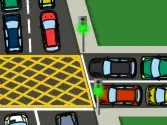
Cuando prevé que puede quedar detenido en una intersección, ¿qué debe hacer?
When you foresee that you may be left stopped in a junction, what should you do?
- AAtravesarla rápidamente.Cross it quickly.
- BDetener el vehículo sólo en el caso de no tener la prioridad.Stop the vehicle only if you do not have priority.
- CDetener el vehículo antes de entrar en la intersección.Stop the vehicle before entering the junction.
ExplanationIf you foresee that you may be left stopped inside a junction, you must not enter it, even if you have right of way. If you are stopped inside the junction, it could become blocked, preventing other vehicles from passing. In that case, we must leave the junction without waiting until we can move in the direction we wanted to take, and without obstructing other road users.
Al circular por un túnel, respecto a la velocidad conviene:
When driving through a tunnel, as regards speed, it is best to:
- AAdaptarla y mantener la distancia de seguridadAdapt it and keep a safe distance
- BCircular a la máxima posibleDrive as fast as possible
- CDetenerse a mitad de recorridoStop halfway through
ExplanationIn tunnels you must adapt your speed, keep to the limit and keep a safe distance.
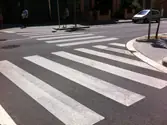
Un conductor que gira para entrar en otra vía, ¿debe ceder el paso a un peatón que esté cruzándola?
Must a driver who is turning into another road give way to a pedestrian who is crossing it?
- ASólo cuando exista un paso para peatones señalizado.Only when there is a marked pedestrian crossing.
- BSí.Yes.
- CNo.No.
ExplanationAs a general rule, drivers have right of way over pedestrians, except: - At pedestrian crossings. - When they turn into another road and there are pedestrians crossing it, even if there is no crossing for them. - When crossing a hard shoulder along which pedestrians are walking because they have no pedestrian area. - When crossing pedestrian areas. - When pedestrians are getting on or off a bus at a marked stop and are between the vehicle and the nearest pedestrian area or refuge. - When pedestrians form a troop, a line of schoolchildren or an organised procession.
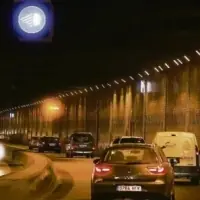
Si por una emergencia queda inmovilizado con su vehículo dentro de un túnel…
If an emergency leaves you and your vehicle stuck inside a tunnel...
- ADebe conectar la señal de emergencia y dejar encendidas las luces de cruce.You must switch on the hazard warning lights and leave the dipped headlights on.
- BDebe apagar el motor, conectar la señal de emergencia y dejar encendidas las luces de posición.You must switch off the engine, switch on the hazard warning lights and leave the sidelights on.
- CDebe conectar la señal de emergencia y tocar el claxon.You must switch on the hazard warning lights and sound the horn.
ExplanationAccording to Article 97.3 of the General Traffic Regulations, if an emergency leaves you stuck in a tunnel you must switch off the engine, switch on the hazard warning lights and keep the sidelights on. After that, you switch on the V-16 beacon, call for help from the SOS post and leave the vehicle.
All topics
- Definitions
- Documents and penalty points
- The driver's condition
- Duties of drivers and pedestrians
- Vehicle safety devices
- Vehicle controls and equipment
- Vehicle lights and horn
- Traffic signs, markings and signals
- The road and its lanes
- Speed and distances
- Manoeuvres
- Carrying passengers and loads
- Driving safely in difficult conditions
- Vehicle mechanics and maintenance
- Road accidents and first aid
- Defensive and eco-driving
Independent app: not affiliated with or endorsed by the DGT (Spain's Directorate-General for Traffic) or the Ministry of the Interior. The official exam is booked with the DGT and taken at its test centres. The questions here are practice material; the DGT's official question bank is not public.
Basado en datos de la Agencia Estatal Boletín Oficial del Estado (https://www.boe.es). Textos consolidados de carácter meramente informativo. La AEBOE no patrocina ni respalda este sitio.
Parte de las preguntas procede de los tests de la revista «Tráfico y Seguridad Vial» de la DGT, reproducidos con indicación de la fuente.