
DGT test · 403 questions
Right of way · Page 8 of 9
Who goes first at junctions, roundabouts, narrow stretches and pedestrian crossings, and the priority of emergency vehicles.
Questions in this topic, with answers
403 questions, 50 per page, with the correct answer and the explanation. Page 8 of 9.
¿Tiene preferencia una ambulancia si solo usa la señal luminosa?
Does an ambulance have priority if it is only using its flashing light signal?
- ANo, tendrá que usar conjuntamente también la acústica.No, it must also use the sound signal at the same time.
- BSí.Yes.
- CSí, pero solo dentro de poblado.Yes, but only in built-up areas.
ExplanationThe ambulance has right of way using only the flashing light signal when this does not put other road users in danger; otherwise, it should use both the light signal and the sound signal.
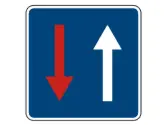
En un paso estrecho observamos la señal de la imagen, ¿deberemos ceder el paso al que viene en sentido contrario?
At a narrow passage we see the sign in the picture. Must we give way to vehicles coming from the opposite direction?
- ASí.Yes.
- BNo.No.
- CSí, si es un vehículo de mayores dimensiones que el nuestro.Yes, if it is a vehicle larger than ours.
ExplanationAt a signposted narrow passage we will find the two signs shown. The first one, priority to oncoming traffic, takes away our priority, and we must give way to traffic coming from the opposite direction. With the second one, priority over oncoming traffic, we have priority over the other direction, so the others must give way to us.
En un paso a nivel, ¿qué se debe hacer cuando la barrera está subiendo?
At a level crossing, what should you do when the barrier is going up?
- APasar cuando por la altura a la que se ha levantado ya podamos hacerlo.Cross as soon as the barrier is high enough for us to get through.
- BPasar con el resto de los vehículos aunque se mueva la barrera.Cross with the other vehicles even though the barrier is moving.
- CEsperar a que la barrera haya subido totalmente.Wait until the barrier has gone up completely.
ExplanationWhile the barrier is moving, we must stay stopped and wait until it is fully raised before moving on.
Si en un estrechamiento sin señales de preferencia,se encuentran al mismo tiempo un turismo con remolque de más de 750 kg de m.m.a y un vehículo de tracción animal,¿Cuál pasará primero?
If, at a narrowing with no priority signs, a car towing a trailer with a maximum authorised mass of more than 750 kg and an animal-drawn vehicle meet at the same time, which one will go first?
- AEl turismo con remolque.The car with the trailer.
- BEl que tenga menos dificultades de maniobra.The one that has less difficulty manoeuvring.
- CEl vehículo de tracción animal.The animal-drawn vehicle.
ExplanationA car with a trailer of more than 750 kg is a combination of vehicles and, in the order of priority in Article 62 of the General Traffic Regulations for narrowings without signs, combinations come before animal-drawn vehicles.
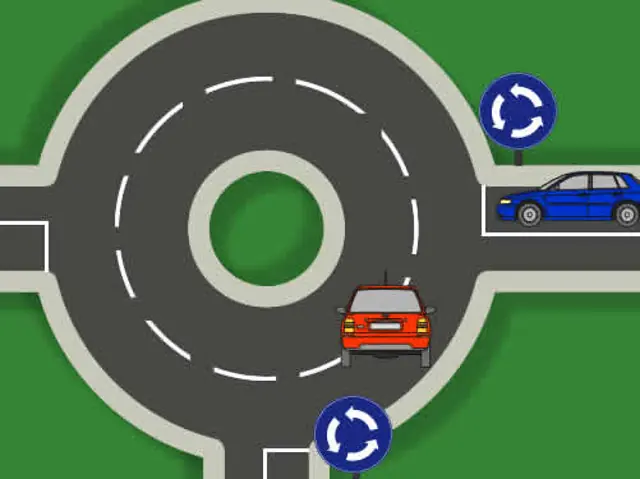
¿Qué coche tiene prioridad?
Which car has right of way?
- AEl coche rojoThe red car
- BEl coche azul, si el rojo va a salirThe blue car, if the red one is going to leave
- CEl coche azulThe blue car
ExplanationUnder Article 57.1.c of the General Traffic Regulations, on roundabouts vehicles already driving on the circular carriageway have right of way over those wanting to enter it. The red car is inside the roundabout, so the blue one must wait to enter.
¿Quién tiene preferencia de paso en una glorieta que no tiene más señalización que una línea de detención discontinua en la entrada?
Who has right of way at a roundabout whose only marking is a broken stop line at the entrance?
- AEl que llegue primero a la glorieta.Whoever reaches the roundabout first.
- BEl vehículo que se halle dentro de la vía circular.The vehicle that is already on the circular road.
- CEl vehículo que va a entrar en la glorieta porque la línea discontinua significa que tiene que ceder el paso sólo a los vehículos que se aproximen por la derecha.The vehicle about to enter the roundabout, because the broken line means it only has to give way to vehicles approaching from the right.
ExplanationAt a roundabout, vehicles already driving on it have right of way. This means that a vehicle on the circular road has right of way over those trying to enter. The broken stop line tells approaching vehicles that they must give way to those already on the roundabout.
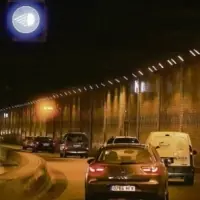
¿Qué debe hacer cuando su vehículo queda detenido durante más de dos minutos en un túnel?
What must you do when your vehicle is stopped in a tunnel for more than two minutes?
- ADejar encendidos el motor y las luces de posición.Leave the engine running and the sidelights on.
- BApagar el motor y dejar puestas las luces de posición.Switch off the engine and leave the sidelights on.
- CDejar encendidos el motor y las luces de largo alcance.Leave the engine running and the main beam on.
ExplanationIf the vehicle is stopped in a tunnel or enclosed place for more than two minutes, you must switch off the engine so that exhaust gases do not build up, and keep the sidelights on so that you can be seen. Leaving the engine running pollutes the air in the tunnel.
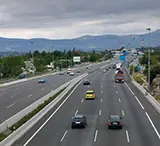
En los cambios de carril en un mismo sentido, ¿quién tiene prioridad?
When changing lanes in the same direction, who has priority?
- AEl vehículo que circula por el carril que se pretende ocupar.The vehicle travelling in the lane you want to move into.
- BEl vehículo que realiza el cambio de carril.The vehicle changing lanes.
- CSiempre los turismos sobre el resto de vehículos.Cars always have priority over other vehicles.
ExplanationChanging lanes is a manoeuvre, and the driver making it must give way: priority belongs to the vehicle already travelling in the lane you want to move into. The indicator warns others, but does not give you priority.
En caso de incendio en un túnel hay que accionar el freno de estacionamiento, apagar el motor y...
If there is a fire in a tunnel, you must apply the parking brake, switch off the engine and...
- ADejar las llaves puestas.Leave the key in the ignition.
- BQuitar las llaves.Take the key out.
- CNo desconectar la batería.Not disconnect the battery.
ExplanationAccording to Article 97.3 of the General Traffic Regulations, if there is a fire in a tunnel you must pull the vehicle over to the right, switch off the engine and leave the key in the ignition and the doors open, so that the emergency services can move it. Then you leave the vehicle and go to the shelter or the exit.
Si circulamos por una vía calificada de atención preferente y en la próxima intersección por la derecha se acerca un vehículo, ¿quién tendrá prioridad?
If we are driving on a road classed as a 'priority attention' road (vía de atención preferente) and a vehicle approaches from the right at the next junction, who has right of way?
- AEl que llegue primero a la intersección.Whoever reaches the junction first.
- BEl que circula por la vía de atención preferente.The vehicle on the 'priority attention' road.
- CEl que se acerca por la derecha.The vehicle approaching from the right.
ExplanationA public road classed as a 'priority attention' road (vía de atención preferente) refers to a dangerous place or one that seriously obstructs traffic. As this has nothing to do with right of way, the general rule of priority to the right applies.
Si por una emergencia queda inmovilizado en un túnel, deberá…
If you are immobilised in a tunnel because of an emergency, you must…
- ADejar el vehículo cerrado y salir del túnel cuanto antes.Leave the vehicle locked and get out of the tunnel as quickly as possible.
- BApagar todas las luces si el túnel está iluminado y solicitar auxilio a través del teléfono móvil.Switch off all the lights if the tunnel is lit and call for help on your mobile phone.
- CApagar el motor, conectar la señal de emergencia y mantener encendidas las luces de posición.Switch off the engine, switch on the hazard warning lights and keep the sidelights on.
ExplanationUnder Article 97 of the General Traffic Regulations, if you are immobilised in a tunnel because of an emergency, you must switch off the engine, switch on the hazard warning lights and keep the sidelights on. You then activate the V-16 device, call for help from the SOS post, and the occupants go to the nearest emergency shelter or exit.

Si encontramos un STOP ante una intersección, ¿qué debemos hacer?
If we find a STOP sign before a junction, what must we do?
- ADetenernos siempre para ceder el paso.Always stop to give way.
- BDetenernos para ceder el paso solo si se aproxima algún vehículo.Stop to give way only if a vehicle is approaching.
- CDetenernos directamente donde tengamos suficiente visibilidad pudiendo atravesar la línea de detención si existe.Stop directly where we have enough visibility, even if this means crossing the stop line, if there is one.
ExplanationThe STOP sign requires every driver to stop their vehicle at the next stop line or, if there is none, immediately before the junction, and to give way to vehicles on the road they are approaching. If there is not enough visibility from where they stopped, they must stop again where they can see, without endangering any road user.
En un estrechamiento sin señal de prioridad se encuentran por un lado un turismo que arrastra un remolque y por el otro un autobús, sin que se sepa quien entró primero. ¿Cuál de ellos tendrá prioridad?
On a narrow stretch without a priority sign, a car towing a trailer is on one side and a bus is on the other, and it is not known who entered first. Which of them has priority?
- AEl autobús.The bus.
- BEl turismo que arrastra el remolque.The car towing the trailer.
- CEl que tenga que dar marcha atrás mayor distancia.The one that would have to reverse the longer distance.
ExplanationOn stretches of road so narrow that it is impossible or very difficult for two vehicles travelling in opposite directions to pass at the same time, and where there are no specific signs, the vehicle that entered first has right of way. If there is doubt, the vehicle that finds it harder to manoeuvre has right of way, in this order of priority: 1. Special vehicles and special transport exceeding the masses or dimensions set in vehicle regulations. 2. Combinations of vehicles, except those in point 4. 3. Animal-drawn vehicles. 4. Cars towing trailers with a maximum authorised mass of up to 750 kg, and motor caravans. 5. Vehicles used for public passenger transport. 6. Lorries, tractor units and vans. 7. Cars and car-derived vehicles. 8. Special vehicles not exceeding the masses or dimensions set in vehicle regulations, quadricycles and light quadricycles. 9. Three-wheeled vehicles, motorcycles with sidecar and three-wheeled mopeds. 10. Motorcycles, two-wheeled mopeds and bicycles. So in the case in the question, the car towing a trailer has right of way.
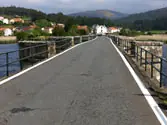
Si un camión y un autobús se encuentran en un estrechamiento y no pueden pasar a la vez, ¿cuál de los dos tendrá que retroceder?
If a lorry and a bus meet at a narrow section and cannot pass at the same time, which of the two must reverse?
- AEl autobús.The bus.
- BEl camión.The lorry.
- CEl más ancho y más largo.The wider and longer one.
ExplanationWhen a lorry and a bus meet at a narrow section, the order of priority lets the bus go first. So the lorry must reverse.
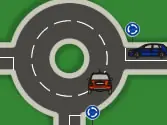
¿Qué vehículo tendrá prioridad en esta glorieta?
Which vehicle has right of way at this roundabout?
- AEl vehículo rojo.The red vehicle.
- BEl vehículo azul.The blue vehicle.
- CEl que llegue primero al punto de cruce.Whichever reaches the crossing point first.
ExplanationAt roundabouts, vehicles already driving on the circular carriageway have right of way over those trying to enter it, under Article 57 of the General Traffic Regulations (RGC). So the red vehicle, which is on the roundabout, goes before the blue one, which is waiting to enter.
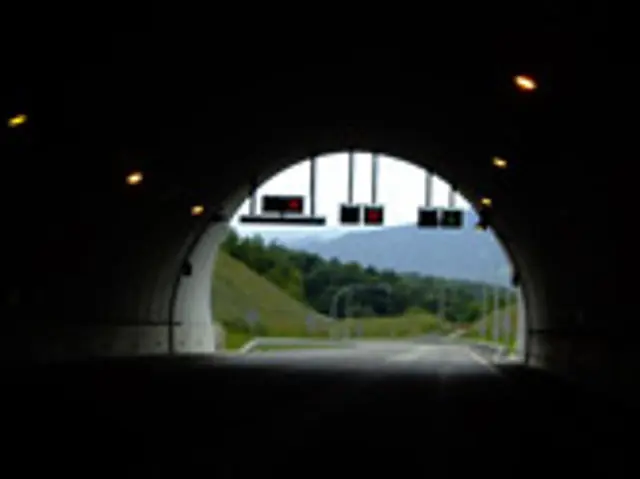
Si por una emergencia su vehículo queda inmovilizado dentro de un túnel, deberá...
If your vehicle is brought to a standstill inside a tunnel because of an emergency, you must...
- APoner las luces de emergencia y mantener encendidas las luces de cruce.Switch on the hazard warning lights and keep the dipped headlights on.
- BApagar el motor, poner las luces de emergencia y mantener encendidas las luces de posición.Switch off the engine, switch on the hazard warning lights and keep the sidelights on.
- CPoner las luces de emergencia y tocar el claxon.Switch on the hazard warning lights and sound the horn.
ExplanationIf a vehicle is brought to a standstill inside a tunnel because of an emergency, the driver must switch off the engine, switch on the hazard warning lights and keep the sidelights on. This is crucial for safety: switching off the engine avoids the risk of smoke and fire, the hazard warning lights alert other drivers to the danger, and the sidelights make the stationary vehicle more visible. These measures are set out in Article 97 and improve safety in risky situations in tunnels.
Al circular por un túnel, el conductor debe:
When driving through a tunnel, the driver must:
- AApagar todas las luces.Switch off all the lights.
- BEncender el alumbrado (al menos la luz de cruce).Switch on the lights (at least the dipped headlights).
- CUsar solo las luces de emergencia.Use only the hazard warning lights.
ExplanationIn tunnels and underpasses you must switch on your lights, at least the dipped headlights, even during the day.
En un tramo de gran pendiente tendrá preferencia el vehículo que circule en sentido...
On a steep stretch, the vehicle that has right of way is the one travelling...
- ADescendente.downhill.
- BAscendente.uphill.
- CIndistinto, el que llegue primero.in either direction: whoever arrives first.
ExplanationOn a steep stretch, the vehicle going uphill has right of way, unless it can reach a passing place before meeting the vehicle coming the other way.
Si en una intersección sin señalizar se acerca un grupo de ciclistas por nuestra izquierda, ¿debemos cederles el paso?
If a group of cyclists approaches from our left at a junction without signs, must we give way to them?
- ASí, pues es una excepción a la norma general cuando circulen en grupo.Yes, because riding in a group is an exception to the general rule.
- BNo, porque rige la norma general.No, because the general rule applies.
- CSí, si el grupo lo forman más de diez ciclistas.Yes, if the group has more than ten cyclists.
ExplanationAt a junction without signs, the driver must give way to vehicles approaching from their right. As an exception, if one or more cyclists in a group are already in the junction or on the roundabout when we arrive, the group of cyclists has right of way over motor vehicles.
¿Cómo se circulará en las glorietas?
How must you drive on roundabouts?
- ADejando el centro de la glorieta a la derecha.Keeping the centre of the roundabout on your right.
- BDejando el centro de la glorieta a la izquierda.Keeping the centre of the roundabout on your left.
- CPasaremos por la izquierda de la glorieta.Passing to the left of the roundabout.
ExplanationOn roundabouts we drive with the centre on our left; in other words, we drive round the right-hand side of the roundabout.
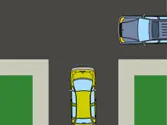
En el caso de la imagen, ¿quién tiene prioridad?
In the situation in the picture, who has priority?
- AEl vehículo amarillo porque circula por la vía principal.The yellow vehicle, because it is on the main road.
- BEl vehículo azul, se aproxima por la derecha del amarillo.The blue vehicle, because it is approaching from the right of the yellow one.
- CEl vehículo amarillo porque sigue de frente mientras que el azul tiene que cambiar de dirección.The yellow vehicle, because it is going straight on, while the blue one has to turn.
ExplanationIn the picture, the junction has no signs, so the general right-of-way rule applies, giving priority to vehicles on the right. In this case the blue vehicle has priority, as it is approaching from the right of the yellow vehicle.
Al salir de un garaje, ¿qué debe hacer?
When coming out of a garage, what should you do?
- AModerar la velocidad por si hay peatones cruzando porque tienen prioridad.Slow down in case pedestrians are crossing, because they have priority.
- BAumentar la velocidad para salir lo antes posible.Speed up to get out as soon as possible.
- CDetenerse siempre a la salida.Always stop at the exit.
ExplanationWhen joining the traffic from inside a building, you must take extreme care and use the places meant for this, paying special attention to pedestrians walking on the hard shoulder or in pedestrian areas, to whom you must give way.
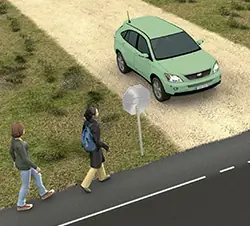
Al cruzar un arcén por el que transitan peatones, ¿qué debe hacer?
When crossing a hard shoulder on which pedestrians are walking, what must you do?
- AAvisarles mediante señales acústicas para que se aparten.Warn them with the horn so that they move aside.
- BCederles el paso, pero solamente si forman un grupo.Give way to them, but only if they are in a group.
- CCederles el paso si no disponen de zona peatonal.Give way to them if they have no pedestrian area.
ExplanationIf pedestrians have no pedestrian area, the hard shoulder is the space where they walk: a driver who is going to cross it (for example, to enter or leave the road) must give way to them.
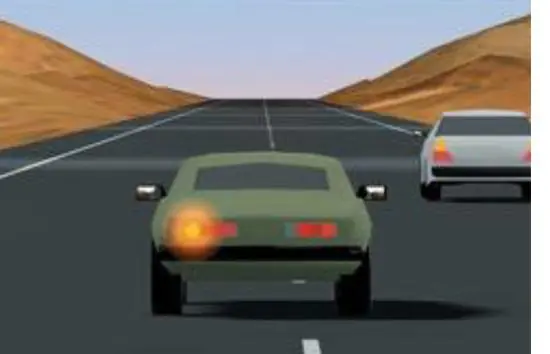
Cuando señaliza un cambio de carril, ¿tiene preferencia sobre los vehículos que ya circulan por ese carril?
When you signal a lane change, do you have priority over vehicles already travelling in that lane?
- ASí.Yes.
- BNo.No.
- CSí, si ha señalizado con suficiente antelación.Yes, if you have signalled well in advance.
ExplanationAny lateral movement involving a lane change must respect the priority of vehicles travelling in the lane you intend to move into. Signalling does not give you priority to carry out manoeuvres; it only serves to warn other road users of your intention.
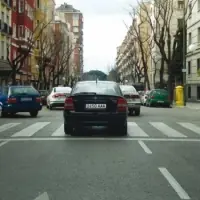
¿Puede entrar en esta intersección en la cual tiene prioridad de paso?
May you enter this junction, where you have right of way?
- ANo, si es previsible que quede detenido dentro o que obstaculice un paso de peatones.No, if you are likely to be left stopped in it or to block a pedestrian crossing.
- BSí, porque si tiene prioridad siempre puede pasar.Yes, because if you have right of way you can always go.
- CSí, porque no hay ninguna señal que advierta de otra cosa.Yes, because there is no sign warning otherwise.
ExplanationArticle 59 of the Traffic Regulations states that a driver, even with right of way, must not enter a junction or a pedestrian or cycle crossing if traffic is such that they are likely to be left stopped in a way that prevents or obstructs the passage of pedestrians and cross traffic.
El 'gálibo' de un vehículo o de una vía hace referencia a:
The 'clearance' (gálibo) of a vehicle or a road refers to:
- ASu color.Its colour.
- BSus dimensiones máximas, especialmente la altura permitida.Its maximum dimensions, especially the permitted height.
- CSu antigüedad.Its age.
ExplanationClearance refers to limit dimensions; for example, the maximum height allowed under a bridge or in a tunnel.
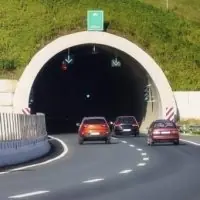
Si queda detenido en un túnel por necesidades de la circulación durante un tiempo superior a 2 minutos, ¿qué debe hacer?
If you are stopped in a tunnel because of traffic for more than 2 minutes, what must you do?
- ADetener el vehículo lo más cerca posible del vehículo que circula delante.Stop the vehicle as close as possible to the vehicle in front.
- BConectar la señal de emergencia, mantener encendidas las luces de posición y apagar el motor.Switch on the hazard warning lights, keep the sidelights on and switch off the engine.
- CEncender, solamente, la señal de emergencia.Switch on only the hazard warning lights.
ExplanationUnder Article 97 of the General Traffic Regulations, if the vehicle is stopped in a tunnel because of traffic, you must switch on the hazard warning lights to warn the vehicles behind, keep the sidelights on and switch off the engine, stopping as far as possible from the vehicle in front.
Si en un tramo de vía estrecha sin señalizar se encuentran un turismo y un camión, ¿qué vehículo pasará primero?
If a car and a lorry meet on a narrow stretch of road without signs, which vehicle goes first?
- AEl turismo, por tener menor dificultad de paso.The car, because it has less difficulty getting through.
- BEl camión, por tener mayor dificultad del paso.The lorry, because it has more difficulty getting through.
- CEl vehículo que haya entrado primero.The vehicle that entered first.
ExplanationOn stretches of road so narrow that it is impossible or very difficult for two vehicles travelling in opposite directions to pass at the same time, and where there is no specific sign, the vehicle that entered first has right of way. If this is not clear, the vehicle that has more difficulty manoeuvring has right of way.
En un estrechamiento en un tramo de gran pendiente, si dos vehículos entran a la vez, ¿cuál tendrá prioridad?
On a narrow stretch with a steep gradient, if two vehicles enter at the same time, which one has priority?
- AEl que circula en sentido ascendente, salvo que pueda llegar primero a un apartadero.The one travelling uphill, unless it can reach a passing place first.
- BEl que circule en sentido descendente.The one travelling downhill.
- CSiempre el que circule en sentido ascendente.Always the one travelling uphill.
ExplanationOn a steep stretch, the vehicle travelling uphill has priority, unless it could reach a passing place first. In that case, it would wait there and the vehicle travelling downhill would go first.
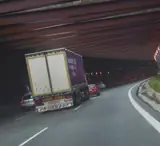
Si por emergencia se queda inmovilizado con su vehículo dentro de un túnel, deberá...
If, because of an emergency, your vehicle comes to a stop inside a tunnel, you must...
- AConectar la señal de emergencia y mantener encendidas las luces de cruce.Switch on the hazard warning lights and keep the dipped headlights on.
- BApagar el motor, conectar la señal de emergencia y mantener encendidas las luces de posición.Switch off the engine, switch on the hazard warning lights and keep the sidelights on.
- CConectar la señal de emergencia, y hacer sonar el claxon.Switch on the hazard warning lights and sound the horn.
ExplanationAccording to Article 97 of the General Traffic Regulations, if a vehicle is stopped in a tunnel because of an emergency, you must switch off the engine, switch on the hazard warning lights and keep the sidelights on. You should also activate the V-16 beacon and call for help from the nearest SOS post.
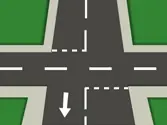
Si al llegar a una intersección se acerca un grupo de ciclistas por el lado izquierdo y el primero del grupo ya ha empezado a pasar, ¿deberá usted cederles el paso?
When you arrive at a junction, a group of cyclists is approaching from the left and the first one has already started to cross. Must you give way to them?
- ASí al primero pero no al resto del grupo, pues se aproximan por la izquierda.Yes to the first one, but not to the rest of the group, because they are approaching from the left.
- BSí, pues debo tratarlos como si de una unidad se tratase.Yes, because I must treat them as a single unit.
- CSí, puesto que al aproximarse por la izquierda gozan de prioridad de paso.Yes, because approaching from the left gives them right of way.
ExplanationIf we and the cyclists arrived at the same time, we would have right of way, because the cyclists are coming from the left. But if we reach the junction when the first cyclist in the group has already started to cross, we must treat the whole group as one unit, so we must wait until the last cyclist has passed.
¿Los vehículos prioritarios tienen prioridad sobre el resto de usuarios de la vía?
Do priority vehicles have priority over all other road users?
- ASí.Yes.
- BNo.No.
- CSolo cuando vayan en servicio de emergencia.Only when they are on an emergency call.
ExplanationUnder Article 67.1 of the General Traffic Regulations, emergency service vehicles have right of way over other vehicles and road users only when they are on an emergency call. When they are not on an emergency call, they must follow the rules like any other driver.
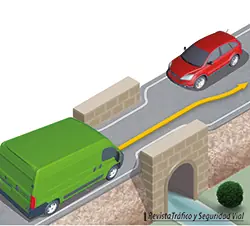
Como norma general, ¿quién tiene la preferencia en un estrechamiento sin señalizar?
As a general rule, who has priority at an unsigned narrowing of the road?
- AEl vehículo que entre primero.The vehicle that enters first.
- BEl vehículo más pesado.The heavier vehicle.
- CLos vehículos de tracción animal.Animal-drawn vehicles.
ExplanationAt an unsigned narrowing, priority belongs to the vehicle that entered first; the other must wait or make way, regardless of the type or weight of the vehicle.
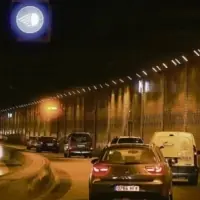
Si se queda detenido dentro de un túnel durante más de dos minutos, ¿qué debe hacer?
If you are stopped inside a tunnel for more than two minutes, what must you do?
- AApagar el motor y apagar también las luces de posición.Switch off the engine and also switch off the sidelights.
- BEncender únicamente la señal de emergencia.Switch on only the hazard warning lights.
- CApagar el motor, conectar la señal de emergencia y dejar encendidas las luces de posición.Switch off the engine, switch on the hazard warning lights and leave the sidelights on.
ExplanationIf the vehicle is stopped inside a tunnel for more than two minutes, you must switch off the engine and keep the sidelights on (Article 115 of the General Traffic Regulations); the hazard warning lights help others to see it. Switching off all the lights would be dangerous.
Si nos quedamos detenidos en un túnel por congestión del tráfico, ¿qué debemos hacer?
If we are stopped in a tunnel because of traffic congestion, what should we do?
- ADejar puestas las luces de emergencia temporalmente y mantener encendidas las luces de posición.Switch on the hazard warning lights for a while and keep the sidelights on.
- BDejar puestas las luces de cruce y apagar el motor.Keep the dipped headlights on and switch off the engine.
- CApagar el motor y las luces, pues nos quedaremos sin batería.Switch off the engine and the lights, or the battery will go flat.
ExplanationIf a vehicle is brought to a standstill inside a tunnel or underpass because of traffic: - The driver and passengers must not leave the vehicle. - In this case, the hazard warning lights must be switched on for a while to warn drivers behind. - The sidelights must be kept on. - The engine must be switched off. - The vehicle must be kept as far as possible from the vehicle in front.
¿Cuándo tienen los peatones prioridad de paso?
When do pedestrians have right of way?
- ACuando circulando por la calzada se corten su trayectoria con la de los vehículos.When they are walking on the carriageway and their path crosses that of vehicles.
- BSiempre.Always.
- CCuando vayan a subir o bajen de un autobús en una parada.When they are going to get on or have got off a bus at a stop.
ExplanationAs a general rule, vehicles have right of way over pedestrians and animals when their paths cross. Exceptions include when pedestrians are going to get on or have got off a public passenger transport vehicle at a signposted stop and are between that vehicle and the nearest pedestrian area or traffic island.
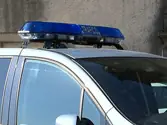
¿Tienen los vehículos prioritarios preferencia de paso sobre el resto de los usuarios de la vía?
Do priority (emergency) vehicles have right of way over all other road users?
- ASí, siempre.Yes, always.
- BNo.No.
- CSólo cuando circulen en servicio de urgencia.Only when they are on an emergency call.
ExplanationPriority vehicles, public or private, have right of way over other vehicles and road users when they are on an emergency call and signal this with their flashing light and special sound device. Exceptionally, they may use the light signal on its own when leaving out the sound signal does not put other road users in any danger.
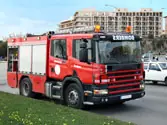
A un vehículo prioritario que circula en servicio de urgencia se le facilitará el paso...
A priority (emergency) vehicle on an emergency call should be helped to get through...
- Aadoptando las medidas adecuadas según las circunstancias del momento.by taking the appropriate measures according to the circumstances at the time.
- Bapartándose siempre a la derecha de la calzada.by always pulling over to the right of the carriageway.
- Cdeteniendo siempre el vehículo en el lado izquierdo de la calzada.by always stopping the vehicle on the left side of the carriageway.
ExplanationAs soon as they notice the special signals announcing that a priority vehicle is approaching, other drivers must take the appropriate measures, according to the circumstances of time and place, to let it through, normally by moving to their right or stopping if necessary. Even with only the flashing light on, these vehicles have priority and we must let them through.
El conductor de un vehículo que, por motivos de emergencia, queda inmovilizado dentro de un túnel, ¿qué debería hacer?
What should the driver of a vehicle that becomes immobilised inside a tunnel because of an emergency do?
- ASolicitar auxilio a través del poste de socorro más próximo, si existe.Call for help from the nearest SOS post, if there is one.
- BÚnicamente esperar a que se reanude la marcha.Just wait until traffic starts moving again.
- CNo abandonar nunca el vehículo.Never leave the vehicle.
ExplanationUnder Article 97 of the General Traffic Regulations, if the vehicle becomes immobilised in a tunnel because of an emergency, you must switch off the engine, switch on the hazard warning lights, activate the V-16 device, call for help from the nearest SOS post if there is one, and leave the vehicle for the nearest emergency shelter or exit.
Al entrar en una glorieta que no dispone de señalización que regule la preferencia de paso, debe...
When entering a roundabout that has no signs regulating right of way, you must...
- Aceder el paso a los vehículos que circulan dentro de la glorieta.give way to vehicles already travelling on the roundabout.
- Bdetenerse por completo antes de entrar, como ante una señal de stop.stop completely before entering, as at a STOP sign.
- Cincorporarse antes que los vehículos que se aproximen por su izquierda.join before the vehicles approaching from your left.
ExplanationAt roundabouts without signs regulating priority, vehicles already travelling on the roundabout have right of way over those wishing to enter it, according to Article 57 of the General Traffic Regulations. Those entering must give way to them, stopping only if necessary.
¿En que horarios se deben llevar encendidas las luces dentro de un tunel?
At what times must the lights be on inside a tunnel?
- ADurante todo el diaAll day long
- BEntre la salida y la puesta de solBetween sunrise and sunset
- CEntre el ocaso y la salida del solBetween sunset and sunrise
ExplanationIn tunnels, underpasses and stretches with the tunnel sign, the lights must be on at all times, including during the day. Even if the tunnel is lit, the lights let you see and be seen when you go from the daylight outside into the half-light.
Al girar para entrar en otra vía, ¿debe ceder el paso a un peatón que la esté cruzando?
When turning into another road, must you give way to a pedestrian who is crossing it?
- ASolo si hay un paso de peatones marcado.Only if there is a marked pedestrian crossing.
- BSí, debe ceder el paso.Yes, you must give way.
- CNo, no debe ceder el paso.No, you do not have to give way.
ExplanationUnder Article 65.1.b of the General Traffic Regulations (as worded by RD 518/2026), pedestrians have right of way when a vehicle is going to turn into another road and there are pedestrians crossing it, even if there is no pedestrian crossing.
En un estrechamiento de la calzada, entre un turismo y una motocicleta, ¿quién tiene prioridad?
On a narrow stretch of the carriageway, between a car and a motorcycle, who has priority?
- AEl turismo.The car.
- BLa motocicleta.The motorcycle.
- CEl que entre primero.The one that enters first.
ExplanationOn a narrow stretch without signs, the vehicle that enters first has priority. If there is doubt, the vehicle that finds it harder to get through has priority.
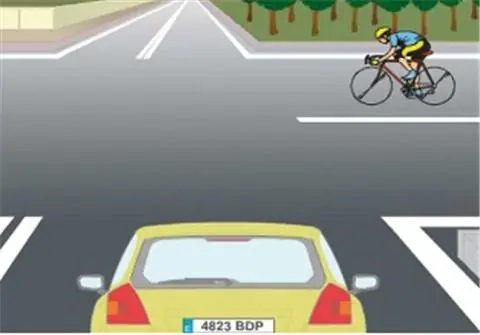
En esta intersección sin señales de preferencia, circulan ciclistas. ¿Cuándo debe cederles el paso?
Cyclists are riding at this junction with no priority signs. When must you give way to them?
- ACuando se aproximen por la izquierda.When they approach from the left.
- BCuando se aproximen por la derecha.When they approach from the right.
- CNunca, los vehículos a motor siempre tienen preferencia sobre las bicicletas.Never; motor vehicles always have right of way over bicycles.
ExplanationAt a junction without signs the general rule applies: you must give way to those approaching from the right, including cyclists. In addition, cyclists have right of way when a motor vehicle turns to enter another road and there is a cyclist nearby, or when they ride in a group and the first one has already started to cross.
Un niño de 12 años que mide más de 150 centímetros de alto, ¿qué asientos puede ocupar en un turismo?
A 12-year-old child is more than 150 centimetres tall. Which seats may they occupy in a car?
- ASólo los traseros.Only the rear seats.
- BEl delantero, con preferencia sobre los asientos traseros.The front seat, in preference to the rear seats.
- CTanto el delantero como los traseros.Both the front and the rear seats.
ExplanationWhat determines the use of a child restraint system and the rear seat is height, not age: the rule applies to children 135 cm tall or less (Article 117 of the General Traffic Regulations). At more than 150 cm, a 12-year-old child may sit in the front or the back using the seat belt.
¿Qué vehículos deben tener un seguro obligatorio de responsabilidad civil?
Which vehicles must have compulsory third-party liability insurance?
- ALos automóviles solamente.Only motor cars.
- BCualquier vehículo.Any vehicle.
- CLos vehículos de motor, ciclomotores,ciclos de motor y remolques o semirremolques.Motor vehicles, mopeds, powered cycles and trailers or semi-trailers.
ExplanationEvery owner of a motor vehicle, moped, powered cycle, or trailer or semi-trailer with a maximum authorised mass of more than 750 kg, whether or not it is coupled, must take out an insurance contract for each vehicle registered in their name. Railways, trams and other vehicles that run on their own tracks are excluded. Insurers give us the joint accident report form (parte amistoso), which we can use after an accident to speed up the handling of the damage. On it we write the personal details of the two parties involved and a small drawing of what happened.
¿Quién tiene preferencia de paso en una glorieta que no tiene más señalización que una línea de detención discontinua a la entrada?
Who has right of way at a roundabout that has no other signs or markings than a broken stop line at the entry?
- AEl vehículo que va a entrar a la glorieta porque la línea discontinua significa que tiene que ceder el paso sólo a los vehículos que se aproximen por la derecha.The vehicle about to enter the roundabout, because the broken line means it only has to give way to vehicles approaching from the right.
- BEl que llegue primero.The one that arrives first.
- CEl vehículo que se halle dentro de la vía circular.The vehicle that is already on the circular carriageway.
ExplanationAt roundabouts, vehicles already travelling on the circular carriageway have right of way over those wanting to enter. The broken line at the entry shows where to stop, if necessary, to give way to those already on the roundabout.
En una intersección con una rotonda en el centro, ¿cómo haremos un cambio de sentido?
At a junction with a roundabout in the middle, how do we make a U-turn?
- ANo se puede hacer.It cannot be done.
- BDando la vuelta alrededor de la rotonda por la derecha.By going around the roundabout on the right.
- CDando la vuelta alrededor de la rotonda por la izquierda.By going around the roundabout on the left.
ExplanationUnder Article 43.2 of the General Traffic Regulations, in squares, roundabouts and meeting points of roads, you drive keeping their centre on your left. To make a U-turn, you go around the roundabout on the right until you leave by the road you arrived on, in the opposite direction.
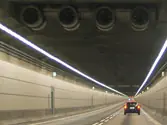
Si un vehículo queda inmovilizado por necesidades de la circulación en el interior de un túnel, deberá...
If a vehicle is brought to a standstill inside a tunnel because of traffic conditions, it must...
- Amantener las luces de posición y de cruce.Keep the sidelights and dipped headlights on.
- Bconectar la señal de emergencia, para advertir a los otros conductores que circulen detrás, manteniendo las luces de posición.Switch on the hazard warning lights to warn drivers behind, keeping the sidelights on.
- Capagar todas las luces y también el motor.Switch off all lights and the engine as well.
ExplanationIf a vehicle is brought to a standstill inside a tunnel because of traffic conditions, it must keep the sidelights on, switch on the hazard warning lights and, if it is stopped for more than 2 minutes, switch off the engine.
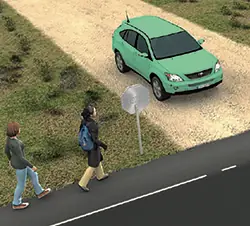
Al cruzar un arcén por el que circulan peatones en una zona en la que no existe zona peatonal, ¿qué debe hacer?
When crossing a hard shoulder on which pedestrians are walking, in an area where there is no pedestrian area, what must you do?
- ACeder el paso a los peatones, pues tienen preferencia.Give way to the pedestrians, because they have priority.
- BAvisar a los peatones de su presencia con señales acústicas.Warn the pedestrians that you are there with the horn.
- CContinuar circulando, ya que tiene preferencia de paso.Keep going, because you have right of way.
ExplanationWhen a vehicle crosses the hard shoulder, pedestrians walking on it have right of way. The driver must give way to them, just as when crossing a pavement to enter a garage.
All topics
- Definitions
- Documents and penalty points
- The driver's condition
- Duties of drivers and pedestrians
- Vehicle safety devices
- Vehicle controls and equipment
- Vehicle lights and horn
- Traffic signs, markings and signals
- The road and its lanes
- Speed and distances
- Manoeuvres
- Carrying passengers and loads
- Driving safely in difficult conditions
- Vehicle mechanics and maintenance
- Road accidents and first aid
- Defensive and eco-driving
Independent app: not affiliated with or endorsed by the DGT (Spain's Directorate-General for Traffic) or the Ministry of the Interior. The official exam is booked with the DGT and taken at its test centres. The questions here are practice material; the DGT's official question bank is not public.
Basado en datos de la Agencia Estatal Boletín Oficial del Estado (https://www.boe.es). Textos consolidados de carácter meramente informativo. La AEBOE no patrocina ni respalda este sitio.
Parte de las preguntas procede de los tests de la revista «Tráfico y Seguridad Vial» de la DGT, reproducidos con indicación de la fuente.