
DGT test · 590 questions
The driver's condition · Page 10 of 12
Alcohol, drugs, medicines, fatigue, sleepiness and distraction: how they affect driving, the legal alcohol limits and roadside testing.
Questions in this topic, with answers
590 questions, 50 per page, with the correct answer and the explanation. Page 10 of 12.
Algunos síntomas que pueden indicar fatiga son:
Some symptoms that may show fatigue are:
- Aansiedad y depresión.anxiety and depression.
- Bpicor intenso.intense itching.
- Cbostezos, cambiar de postura en el asiento y molestias en la nuca.yawning, changing position in the seat and discomfort in the back of the neck.
ExplanationFatigue significantly affects attention and the ability to drive. According to the General Traffic Regulations, it is essential for drivers to recognise the symptoms of fatigue so that they can take the right action and avoid accidents. The correct symptoms, such as yawning, shifting in the seat and discomfort in the back of the neck, show that a driver may be losing concentration, which can lead to dangerous driving. So it is vital to watch for these signs and rest when necessary.

Las distracciones pueden estar originadas...
Distractions can be caused...
- Aúnicamente por elementos internos del vehículo.only by things inside the vehicle.
- Btanto por elementos externos al vehículo como por elementos internos.both by things outside the vehicle and by things inside it.
- Csólo por elementos externos al vehículo.only by things outside the vehicle.
ExplanationThere are distracting things both outside and inside the vehicle. An example of a distraction inside the vehicle would be the radio, or any passenger travelling with you. An example of a distraction outside the vehicle would be seeing someone you know, or hearing a loud crash.
¿Qué suele pasar cuando el conductor se distrae al volante?
What usually happens when the driver gets distracted at the wheel?
- APresiona el pedal del freno en lugar de presionar el acelerador.They press the brake pedal instead of the accelerator.
- BSe necesita más tiempo para reaccionar ante una situación peligrosa.They need more time to react to a dangerous situation.
- CEnciende las luces de emergencia o presiona el pedal del freno repetidamente.They switch on the hazard warning lights or press the brake pedal repeatedly.
ExplanationDistraction at the wheel affects the driver's ability to perceive and respond quickly to unexpected situations. This can be dangerous, because a delay in reacting can lead to accidents or collisions. For example, if a car brakes suddenly in front of you and you are distracted, you might not brake in time to avoid a crash. In addition, distractions can make the driver miss traffic signs, pedestrians or other vehicles, increasing the risk of incidents. Keeping full attention on driving is crucial for road safety.
Conduciendo con fatiga...
When driving while tired...
- Ase gana sensibilidad auditiva.you become more sensitive to sound.
- Bse cambia constantemente de postura.you keep changing position.
- Cdisminuye el tiempo de reacción.reaction time decreases.
ExplanationSigns of fatigue include frequent changes of posture, stretching, yawning and shifting in the seat.

Para disminuir la probabilidad de somnolencia debe evitar conducir...
To make drowsiness less likely, you should avoid driving...
- Adurante las primeras horas de la mañana.in the early hours of the morning.
- Bdurante las últimas horas de la tarde.in the last hours of the afternoon.
- Cdurante las horas de la madrugada.in the small hours of the night.
ExplanationHow easily sleepiness appears is not the same throughout the day. The small hours of the night (especially between 3:00 and 5:00) and the early afternoon (roughly between 14:00 and 16:00) are times when drowsiness is especially likely, even if you have slept enough. If we are tired or sleepy, the best thing is to stop and rest in a suitable place. Every 2 hours or 200 km of driving we should rest for at least 20-30 minutes to avoid an accident caused by fatigue or sleepiness.

Ud es un conductor nóvel.¿Cuál será su tasa máxima de alcohol permitida en sangre?
You are a novice driver. What is your maximum permitted blood alcohol level?
- A0.5 gramos/litro en sangre.0.5 grams per litre of blood.
- B0.3 gramos/litro en sangre.0.3 grams per litre of blood.
- C0.25 gramos/litro en sangre.0.25 grams per litre of blood.
ExplanationDuring the two years after obtaining the licence, the maximum level is 0.3 grams of alcohol per litre of blood (0.15 mg per litre of air). 0.5 g per litre is the general level, and 0.25 mg is the general level in breath.
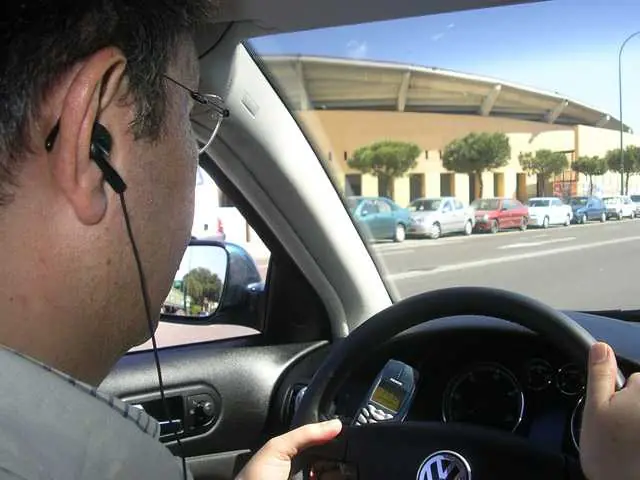
Mientras conduces, ¿puedes llevar cascos o auriculares conectados a un teléfono móvil?
While driving, can you wear a headset or earphones connected to a mobile phone?
- ASí. Cuando los auriculares son inalámbricos.Yes, when the earphones are wireless.
- BNo. Excepto los conductores de bicicletas y los de vehículos de movilidad personal.No, except cyclists and riders of personal mobility vehicles.
- CNo. Está prohibido, como norma general.No, it is prohibited as a general rule.
ExplanationArticle 18 of the General Traffic Regulations prohibits driving with a headset, earphones or similar devices connected to sound devices, whether wired or wireless. The prohibition also covers cyclists and e-scooter riders. Talking on the phone is only allowed without using your hands and without earphones.
¿Qué situaciones en la carretera favorecen la somnolencia?
Which situations on the road encourage drowsiness?
- ASituaciones monótonas.Monotonous situations.
- BSituaciones con cambios frecuentes en el entorno.Situations with frequent changes in the surroundings.
- CConducir en zona urbana con tráfico intenso.Driving in an urban area with heavy traffic.
ExplanationMonotonous situations, such as a straight dual carriageway (autovía) with little traffic and unchanging surroundings, reduce stimulation and alertness, so they encourage drowsiness. Heavy traffic or frequent changes, on the other hand, force you to pay more attention, although they can be tiring.
¿Qué síntomas son comunes en la alergia al polen?
Which symptoms are common in pollen allergy?
- ADolor muscular.Muscle pain.
- BMareos, náuseas y vómitos.Dizziness, nausea and vomiting.
- CEstornudos continuos y ojos irritados.Constant sneezing and irritated eyes.
ExplanationPollen allergy causes constant sneezing, itchy and watery eyes and a blocked nose. A sneeze at 90 km/h means travelling tens of metres without seeing, and some antihistamines cause drowsiness, so it is advisable to consult your doctor before driving.
Si la temperatura dentro del vehículo es muy alta, ¿puede afectar el tiempo de reacción del conductor?
If the temperature inside the vehicle is very high, can it affect the driver's reaction time?
- ANo, no afecta.No, it does not.
- BSí, lo aumenta.Yes, it increases it.
- CSí, lo reduce.Yes, it reduces it.
ExplanationA very high temperature inside the vehicle causes drowsiness, fatigue and discomfort and reduces attention, so reaction time increases. It is recommended to keep the cabin at about 21–23 degrees and ventilate it well.
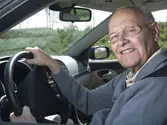
La edad avanzada, ¿puede ser causa de distracción?
Can old age be a cause of distraction?
- ASí.Yes.
- BSolo si se conduce de noche.Only when driving at night.
- CNo, la edad no influye en las distracciones.No, age does not affect distractions.
ExplanationOld age can cause attention problems, so it makes distractions more likely if the proper precautions are not taken.
La fatiga durante la conducción produce...
Fatigue while driving causes...
- Aaumento de la atención.increased attention.
- Bun sentimiento de euforia.a feeling of euphoria.
- Cagarrotamiento muscular, ya que los músculos no están relajados.muscle stiffness, because the muscles are not relaxed.
ExplanationFatigue reduces the driver's performance. Physical fatigue shows up as tiredness and muscle stiffness, slower movements and changes of posture; mental fatigue shows up as loss of concentration and irritability. To avoid it, you should rest for at least 20-30 minutes every 2 hours or 200 km.
¿Qué finalidad tiene el sistema ADAS “Detección de fatiga”?
What is the purpose of the ADAS 'fatigue detection' system?
- ATomar el control de la dirección del vehículo en caso de somnolencia del conductor.To take control of the vehicle's steering if the driver becomes drowsy.
- BEvitar un posible accidente por fatiga o sueño.To prevent a possible accident caused by fatigue or sleepiness.
- CRealizar una detención de emergencia cuando detecta que el conductor no se encuentra en condiciones óptimas de continuar la marcha.To make an emergency stop when it detects that the driver is not in optimal condition to continue.
ExplanationThe 'fatigue warning' monitors the driver's actions to determine whether they are actively taking part in driving. Some systems monitor the user through eye movements and head position to detect fatigue or sleepiness and prevent a possible accident for that reason.

Una enfermedad leve, ¿impide la conducción?
Does a mild illness prevent you from driving?
- ANo, pero durante el tiempo que dure se deben tomar las precauciones indicadas por el médico.No, but while it lasts you must take the precautions your doctor tells you.
- BSí, siempre influye.Yes, it always has an effect.
- CNo, si es leve no hay que tomar ningún tipo de precauciones.No, if it is mild you do not need to take any precautions.
ExplanationHaving a mild illness does not necessarily mean you are unable to drive. However, while the illness lasts, the driver's ability to drive safely may be affected, so they should always ask their doctor what precautions to take to avoid risks.
Como norma general, está prohibido conducir un camión de 3.500 kg de MMA con una tasa de alcohol en sangre superior a…
As a general rule, it is prohibited to drive a lorry with a MAM of 3,500 kg with a blood alcohol level above...
- A0,8 gramos por litro.0.8 grams per litre.
- B0,3 gramos por litro.0.3 grams per litre.
- C0,5 gramos por litro.0.5 grams per litre.
ExplanationA lorry with a MAM of 3,500 kg does not exceed 3,500 kg, so the general level in Article 20 of the General Traffic Regulations applies: 0.5 g/l in blood or 0.25 mg/l in breath. The level of 0.3 g/l is for goods vehicles of more than 3,500 kg and for novice drivers.
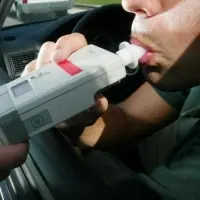
Un conductor con dos años de antigüedad con el permiso AM, acaba de obtener el permiso B, ¿Cuál será su tasa máxima permitida de alcohol?
A driver who has held an AM licence for two years has just obtained a B licence. What is their maximum permitted alcohol level?
- A0,15 miligramos por litro de aire espirado.0.15 milligrams per litre of exhaled air.
- B0,30 miligramos por litro de aire espirado.0.30 milligrams per litre of exhaled air.
- C0,25 miligramos por litro de aire espirado.0.25 milligrams per litre of exhaled air.
ExplanationDrivers of any vehicle must not exceed a blood alcohol level of 0.3 grams per litre or a breath alcohol level of 0.15 milligrams per litre during the two years after obtaining their first driving permit or licence. In this case the driver has already held a licence for two years, so the general maximum alcohol level applies: 0.25 milligrams per litre of exhaled air.
¿Cuál es la tasa máxima de alcoholemia para un conductor durante los dos años siguientes a la obtención del primer permiso de conducción?
What is the maximum alcohol level for a driver during the two years after obtaining their first driving licence?
- A0,15 mg por litro de aire.0.15 mg per litre of air.
- B0,30 mg por litro de aire.0.30 mg per litre of air.
- C0,50 mg por litro de aire.0.50 mg per litre of air.
ExplanationDuring the first 2 years after obtaining the first driving licence, the maximum alcohol level is 0.15 mg of alcohol per litre of air.

El tiempo desde que ve un peligro hasta que actúa, ¿cómo se llama?
What is the time from seeing a hazard until you act called?
- ATiempo de frenado.Braking time.
- BTiempo de reacción.Reaction time.
- CTiempo de detención.Stopping time.
ExplanationReaction time is the time between noticing the hazard and starting to act (for example, pressing the brake). Reaction time plus braking time gives the total stopping time.

¿Cuál es la tasa máxima de alcohol en sangre para un conductor durante los 2 primeros años desde la obtención del permiso de conducir?
What is the maximum blood alcohol level for a driver during the first 2 years after obtaining the driving licence?
- A0,3 grs/l.0.3 g/l.
- B0,5 grs/l.0.5 g/l.
- C0,25 mg/l0.25 mg/l.
ExplanationDuring the first 2 years after obtaining the first driving licence, the maximum blood alcohol level is 0.3 g/l.
¿La velocidad afecta el campo de visión del conductor?
Does speed affect the driver's field of vision?
- ADepende de las condiciones del vehículo.It depends on the condition of the vehicle.
- BSí, el campo de visión se reduce al aumentar la velocidad.Yes, the field of vision narrows as speed increases.
- CNo.No.
ExplanationAs speed increases, the driver focuses further ahead and their peripheral field of vision narrows (tunnel effect). They also have less time to perceive and react to what happens at the sides of the road.

Si bebes alcohol...
If you drink alcohol...
- Aeres más consciente de las consecuencias de tener un accidente.you are more aware of the consequences of having an accident.
- Beres menos consciente de las consecuencias de tener un accidente.you are less aware of the consequences of having an accident.
- CDisminuye el tiempo de reacción.your reaction time gets shorter.
ExplanationA driver who has drunk alcohol is less aware of the consequences of accidents and underestimates the risk.

¿Qué debe tener en cuenta a la hora de conducir, si padece una alergia respiratoria?
If you have a respiratory allergy, what should you bear in mind when driving?
- AEvitar conducir en cualquier caso.Avoid driving in all cases.
- BNo poner muy fuerte el aire acondicionado y circular con las ventanillas cerradas.Do not set the air conditioning too high, and drive with the windows closed.
- CCircular con las ventanillas abiertas para mejorar la ventilación.Drive with the windows open for better ventilation.
ExplanationRespiratory allergies can greatly reduce your ability to drive safely. For example, allergies cause frequent sneezing, a runny nose and constant watery eyes, among other symptoms. So, among other precautions, you should drive with the windows closed and not set the air conditioning too high.
¿Qué molestias suele provocar el latigazo cervical?
What symptoms does whiplash usually cause?
- ADolor muscular y de cabeza, rigidez o menor movilidad del cuello, vértigo o mareos, entre otras.Muscle pain and headache, stiffness or reduced neck movement, vertigo or dizziness, among others.
- BMolestias en la garganta.Throat discomfort.
- CDolor en las extremidades.Pain in the limbs.
ExplanationWhiplash is a neck injury typical of rear-end collisions. It usually causes muscle pain and headache, stiffness or reduced neck movement, vertigo or dizziness; a properly adjusted head restraint helps prevent it.
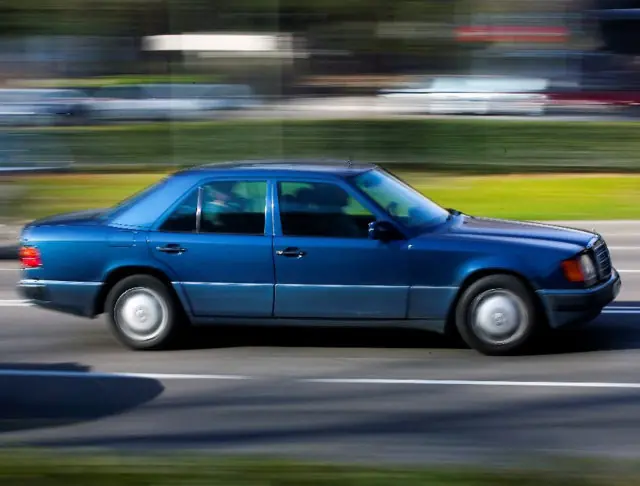
¿Qué relación hay entre la velocidad y el campo de visión del conductor?
What is the relationship between speed and the driver's field of vision?
- AA menos velocidad, menos campo visual.The lower the speed, the narrower the field of vision.
- BA más velocidad, más campo visual.The higher the speed, the wider the field of vision.
- CA más velocidad, menos campo visual.The higher the speed, the narrower the field of vision.
ExplanationThe higher the speed, the narrower the field of vision: your eyes focus on a distant point and you lose perception of what is happening at the sides. This is called tunnel vision. That is why at high speed it is harder to spot pedestrians or vehicles at the sides.
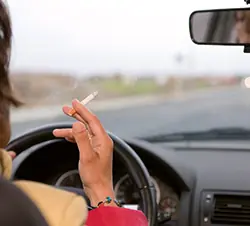
Fumar, mientras conduce, puede provocar...
Smoking while driving can cause...
- ADistracciones y problemas de visión a causa del humodistractions and vision problems because of the smoke.
- BUn aumento de la capacidad de atención.an increase in the ability to pay attention.
- CSomnolencia.drowsiness.
ExplanationSmoking at the wheel means taking one hand off (to light, hold and finish the cigarette), and the smoke or ash can irritate your eyes: distractions and brief loss of vision increase the risk.
¿Cómo afecta fumar al conducir?
How does smoking affect driving?
- AProvoca somnolencia.It causes drowsiness.
- BAumenta la atención.It increases attention.
- CHace que una mano no pueda usarse y provoca problemas de visión por el humo.It means one hand cannot be used, and the smoke causes vision problems.
ExplanationSmoking at the wheel can affect driving because you need at least one hand to hold the cigarette, which reduces control of the vehicle. In addition, the smoke can block the driver's vision, which can lead to accidents. According to the General Traffic Regulations (RGC), any factor that alters the driver's physical and mental fitness, including smoking, can increase the risk of crashes.
¿Pueden algunos anuncios sobre conducción influir en cómo conducen ciertos conductores jóvenes?
Can some advertisements about driving influence how certain young drivers drive?
- ALa publicidad solo influye en la manera de conducir de conductores novatos.Advertising only influences the way novice drivers drive.
- BSí, especialmente los anuncios que promueven la conducción arriesgada.Yes, especially advertisements that promote risky driving.
- CNo, la publicidad no influye en la manera de conducir de los jóvenes.No, advertising does not influence the way young people drive.
ExplanationAdvertising that links driving with speed, competition or risk can influence some young drivers, who tend to copy that behaviour and underestimate danger. This influence is not limited to novice drivers.
¿Está prohibido que el conductor fume durante la conducción?
Is the driver prohibited from smoking while driving?
- ASí.Yes.
- BNo.No.
- CNo, pero puede distraer.No, but it can be distracting.
ExplanationSmoking while driving is not expressly prohibited, but it is a so-called interfering behaviour, which means it can cause distractions while driving.
¿Está prohibido fumar mientras se conduce?
Is it prohibited to smoke while driving?
- ASí.Yes.
- BNo, incluso es aconsejable porque relaja.No, it is even advisable because it relaxes you.
- CNo, pero puede producir distracciones.No, but it can cause distractions.
ExplanationSmoking at the wheel is not prohibited, but it can affect driving and cause distractions, for example when lighting a cigarette.
¿Puede el navegador G.P.S ayudarnos a saber la velocidad a la circulamos?
Can a GPS navigator help us know the speed we are driving at?
- ANo.No.
- BSí, pero tenemos que priorizar el velocímetro.Yes, but we must give priority to the speedometer.
- CSí, son más exactas que el velocímetro.Yes, it is more accurate than the speedometer.
ExplanationA GPS navigator can help us check the speed we are driving at, but the speedometer must always be the main source of information.
¿Cuál es la tasa máxima de alcohol en sangre permitida para los conductores con carácter general?
What is the general maximum blood alcohol level allowed for drivers?
- A0,25 mg/l.0.25 mg/l.
- B0,5 g/l.0.5 g/l.
- C0,3 g/l.0.3 g/l.
ExplanationThe general maximum blood alcohol level is 0.5 grams per litre of blood, which is equivalent to 0.25 mg per litre of air.
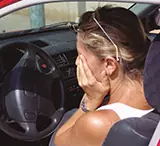
Para evitar la fatiga en la conducción, conviene descansar...
To avoid fatigue when driving, you should rest...
- Acada 3 horas o cada 400 kilómetros.every 3 hours or every 400 kilometres.
- Bcuando el conductor compruebe que ha perdido totalmente la capacidad de reaccionar.when the driver finds they have completely lost the ability to react.
- Ccada 2 horas o cada 200 kilómetros.every 2 hours or every 200 kilometres.
ExplanationThe most important rules to avoid an accident caused by sleepiness or fatigue are: - If you feel tired or sleepy while driving, the best thing is to stop and rest in a suitable place and sleep for about 20 or 30 minutes. - Rest for 20 to 30 minutes every 2 hours or every 200 kilometres at most. - Always watch for the signs and symptoms of sleepiness or fatigue.
¿Conducir con mal tiempo puede causar fatiga?
Can driving in bad weather cause fatigue?
- ASí, por eso hay que descansar más a menudo.Yes, so you need to rest more often.
- BNo.No.
- CSólo en viajes largos.Only on long journeys.
ExplanationDriving in bad weather can increase the driver's fatigue, which affects their ability to react properly to risky situations. Spain's traffic rules, specifically the Traffic and Road Safety Code, stress the importance of recognising factors that alter the driver's physical and mental fitness, including fatigue and drowsiness. These conditions can lead to more road crashes. So it is crucial for drivers to rest more often in bad conditions.
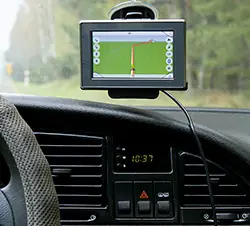
¿Cómo debe colocar el navegador GPS portátil en el vehículo?
Where should you place a portable GPS navigator in the vehicle?
- ADebajo del volante, tan cerca del suelo como sea posible.Below the steering wheel, as close to the floor as possible.
- BJusto detrás del volante, a la altura de los ojos del conductor.Just behind the steering wheel, at the driver's eye level.
- CDonde no entorpezca ni la visión ni el despliegue del airbagWhere it does not block your view or get in the way of the airbag opening.
ExplanationA portable navigator must be fixed where it does not reduce your field of vision or interfere with the airbags opening: a badly placed device can block your view of the road, or it can be thrown around and cause injuries in an accident.
¿Deberemos tomar alguna precaución al colocar el navegador GPS?
Should we take any precautions when placing the GPS navigator?
- ASí, únicamente que sea fácilmente visible.Yes, only that it is easy to see.
- BSí, que no obstaculice el airbag.Yes, that it does not obstruct the airbag.
- CNo, cualquier sitio será adecuado.No, any place will be fine.
ExplanationWe must avoid placing the navigator holder near the airbag, as it can obstruct the airbag opening and injure the driver and/or passenger.

¿Qué le pasa a un conductor con sueño?
What happens to a driver who is sleepy?
- AQue tiene más problemas para concentrarse en el tráfico.They find it harder to concentrate on the traffic.
- BQue tiene menos problemas para concentrarse en el tráfico.They find it easier to concentrate on the traffic.
- CQue reacciona antes cuando en el tráfico pasa algo inesperado.They react sooner when something unexpected happens in the traffic.
ExplanationSleepiness reduces your ability to concentrate and makes your reaction time longer, so the driver takes longer to respond to the unexpected and may even have micro-sleeps. At the first symptoms, you must stop in a safe place and rest.
¿Cuál es la tasa máxima de alcohol permitida para conducir, por regla general?
What is the maximum alcohol level allowed for driving, as a general rule?
- A0,10 miligramos de alcohol por litro de aire espirado.0.10 milligrams of alcohol per litre of exhaled air.
- B0,50 miligramos de alcohol por litro de aire espirado.0.50 milligrams of alcohol per litre of exhaled air.
- C0,25 miligramos de alcohol por litro de aire espirado.0.25 milligrams of alcohol per litre of exhaled air.
ExplanationAs a general rule, the maximum level is 0.25 milligrams of alcohol per litre of exhaled air (0.5 g/l in blood). It drops to 0.15 mg/l for drivers who have held their licence for less than two years and for the professional drivers listed in Article 20 of the General Traffic Regulations, and to 0 for drivers under 18.
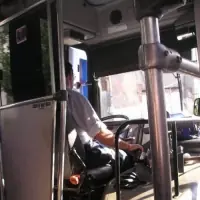
¿Cual es la tasa máxima de alcoholemia permitida para un conductor de autobús?
What is the maximum alcohol level allowed for a bus driver?
- A0,25 miligramos por litro de aire espirado0.25 milligrams per litre of exhaled air.
- B0,15 miligramos por litro de aire espirado0.15 milligrams per litre of exhaled air.
- C0,30 miligramos por litro de aire espirado0.30 milligrams per litre of exhaled air.
ExplanationProfessional drivers, such as bus drivers, are prohibited from driving with an alcohol level above 0.3 grams per litre of blood or 0.15 milligrams per litre of exhaled air.
¿Qué es el denominado efecto túnel?
What is the so-called tunnel effect?
- AEl deslumbramiento al entrar en un túnel.Being dazzled when entering a tunnel.
- BEl deslumbramiento al salir de un túnel.Being dazzled when leaving a tunnel.
- CLa disminución del campo visual.The narrowing of the field of vision.
ExplanationAs speed increases, the field of vision gets narrower: images at the sides pass so quickly that they are not properly perceived.
Bajo los efectos del sueño al volante...
When you are sleepy at the wheel...
- AAumentará el tiempo de reacción.your reaction time will increase.
- BDisminuirá el tiempo de reacción.your reaction time will decrease.
- CAumentara la capacidad de reacción.your ability to react will increase.
ExplanationWhen sleepy, the driver becomes slower to react, so their reaction time increases.

¿Cuál será la tasa máxima de alcohol en sangre para un conductor durante los dos primeros años desde la obtención del primer permiso de conducción?
What will the maximum blood alcohol level be for a driver during the first two years after obtaining their first driving licence?
- A0,15 g/l.0.15 g/l.
- B0,30 g/l.0.30 g/l.
- C0,25 g/l.0.25 g/l.
ExplanationDuring the first 2 years, the maximum blood alcohol level will be 0.30 g/l. Do not confuse this with alcohol in breath, which would be 0.15 mg/l of air.
La fatiga, ¿afecta al tiempo de reacción?
Does fatigue affect reaction time?
- ASí, aumentándolo.Yes, it increases it.
- BSí, disminuyéndolo.Yes, it decreases it.
- CNo afecta.It does not affect it.
ExplanationFatigue, among many other factors, affects reaction time: it makes it longer.
Si toma alcohol antes de circular con su motocicleta, debe saber que...
If you drink alcohol before riding your motorcycle, you should know that...
- ANo afecta en ningún caso a la conducción de vehículos.it never affects driving vehicles.
- BExiste mayor riesgo de accidente por el efecto del alcohol.there is a greater risk of an accident because of the effect of alcohol.
- CNo afecta a la conducción de la motocicleta si antes ha comido algo.it does not affect riding the motorcycle if you have eaten something first.
ExplanationAlcohol has a negative influence on driving and can cause many accidents. Even in small amounts, alcohol can affect concentration and cause dizziness, blurred vision, fatigue and sleepiness, among other effects. In addition, alcohol combined with driving can have unpredictable effects. So drinking alcohol before riding a motorcycle increases the risk of an accident.
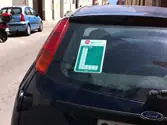
Un conductor novel tendrá un limite máximo de alcoholemia de...
A novice driver will have a maximum alcohol limit of...
- A0,15 mg de alcohol por litro de sangre.0.15 mg of alcohol per litre of blood.
- B0,30 gr. de alcohol por litro de sangre.0.30 g of alcohol per litre of blood.
- C0,25 mg de alcohol por litro de sangre.0.25 mg of alcohol per litre of blood.
ExplanationDuring the first two years after obtaining their first licence, a driver will have a maximum permitted alcohol level of 0.30 g of alcohol per litre of blood.
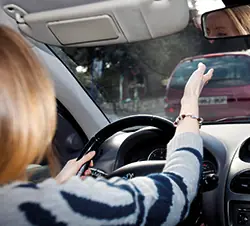
Bajo los efectos del estrés la conducción se vuelve...
Under the effects of stress, driving becomes...
- AMenos temeraria.less reckless.
- BMás temeraria.more reckless.
- CMás segura.safer.
ExplanationStress causes impatience and aggression at the wheel: the driver takes more risks, makes more mistakes and their driving becomes more reckless, not more careful.
¿A qué llamamos el efecto túnel?
What do we call the tunnel effect?
- AEl conductor solo es capaz de percibir con nitidez el centro de la vía y las imágenes laterales no se perciben adecuadamente.The driver can only see the centre of the road clearly, and images at the sides are not properly perceived.
- BAl entrar en un túnel podemos ser deslumbrados por los vehículos que circulan de frente.When entering a tunnel, we can be dazzled by oncoming vehicles.
- CEl conductor percibe un estrechamiento en la parte central de la calzada.The driver perceives a narrowing in the central part of the carriageway.
ExplanationAs speed increases, the driver's field of vision gets narrower, and the driver stops seeing images at the sides clearly because of the fast movement.
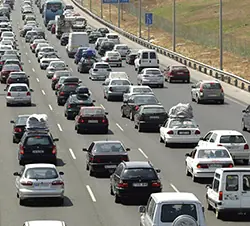
En una retención en la que están los vehículos detenidos, ¿está permitido usar el teléfono móvil?
In a traffic jam where the vehicles are stopped, is it allowed to use a mobile phone?
- ANo, excepto en vías urbanas.No, except in built-up areas.
- BÚnicamente con un dispositivo de manos libres y sin usar auriculares.Only with a hands-free device and without using earphones.
- CSí, porque el vehículo no está en movimiento.Yes, because the vehicle is not moving.
ExplanationWhen stopped in a traffic jam, you are still a driver in traffic, so the general rule applies: you may only use the phone with a hands-free device and without earphones. Holding the phone in your hand is prohibited even if the vehicle is not moving.
En general, la fatiga en el conductor...
In general, fatigue in the driver...
- Aaumenta el tiempo de reacción.increases reaction time.
- Bfavorece los movimientos rápidos y precisos.helps quick and precise movements.
- Cno afecta sus condiciones físicas.does not affect their physical condition.
ExplanationReaction time is the time from when the driver sees an obstacle until they react. This time varies with the driver's physical and mental state, never with speed or the condition of the road. Although it may seem that the reaction to an obstacle or an unexpected situation should be instant, a driver's average reaction time is about 0.75 seconds, between 0.5 and 1 second. The most important rules to avoid an accident caused by sleepiness or fatigue are: - If you feel tired or sleepy while driving, the best thing is to stop and rest in a suitable place and sleep for about 20 or 30 minutes. - Rest for 20 to 30 minutes every 2 hours or every 200 kilometres at most. - Always watch for the signs and symptoms of sleepiness or fatigue.
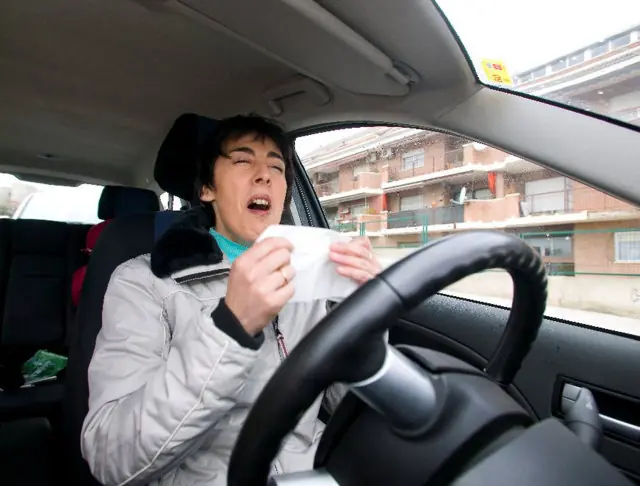
El conductor tiene alergia y estornuda mucho. ¿Se concentra igual al conducir?
The driver has an allergy and sneezes a lot. Do they concentrate just as well when driving?
- ASe concentra peor cuando estornuda.They concentrate less well when they sneeze.
- BSe concentra mejor cuando estornuda.They concentrate better when they sneeze.
- CSe concentra igual que cuando no estornuda.They concentrate just as well as when they do not sneeze.
ExplanationWhen you sneeze, your eyes close for a moment and the vehicle travels several metres without the driver seeing the road. In addition, allergies and many antihistamines cause drowsiness, so concentration gets worse.
Los conductores de motocicletas, ¿pueden conducir utilizando cascos o auriculares conectados a un teléfono móvil?
Can motorcycle riders ride using headphones or earphones connected to a mobile phone?
- ANo, porque está prohibido.No, because it is prohibited.
- BSí, si no tiene que emplear las manos.Yes, if they do not have to use their hands.
- CSí, porque los conductores de los vehículos de 2 ruedas no lo tienen prohibido.Yes, because riders of 2-wheeled vehicles are not prohibited from doing so.
ExplanationAll drivers are prohibited from driving while using headphones or earphones connected to receivers or sound devices. The use of mobile phones is also prohibited, except when they can be used without the hands; earphones or similar devices are not allowed either.
All topics
- Definitions
- Documents and penalty points
- Duties of drivers and pedestrians
- Vehicle safety devices
- Vehicle controls and equipment
- Vehicle lights and horn
- Traffic signs, markings and signals
- The road and its lanes
- Speed and distances
- Manoeuvres
- Right of way
- Carrying passengers and loads
- Driving safely in difficult conditions
- Vehicle mechanics and maintenance
- Road accidents and first aid
- Defensive and eco-driving
Independent app: not affiliated with or endorsed by the DGT (Spain's Directorate-General for Traffic) or the Ministry of the Interior. The official exam is booked with the DGT and taken at its test centres. The questions here are practice material; the DGT's official question bank is not public.
Basado en datos de la Agencia Estatal Boletín Oficial del Estado (https://www.boe.es). Textos consolidados de carácter meramente informativo. La AEBOE no patrocina ni respalda este sitio.
Parte de las preguntas procede de los tests de la revista «Tráfico y Seguridad Vial» de la DGT, reproducidos con indicación de la fuente.