
DGT test · 590 questions
The driver's condition · Page 3 of 12
Alcohol, drugs, medicines, fatigue, sleepiness and distraction: how they affect driving, the legal alcohol limits and roadside testing.
Questions in this topic, with answers
590 questions, 50 per page, with the correct answer and the explanation. Page 3 of 12.

Uno de los casos que producen fatiga en la conducción es...
One of the things that causes fatigue when driving is...
- Atomar bebidas estimulantes en exceso.having too many stimulant drinks.
- Bmantener una velocidad excesiva al circular.driving at an excessive speed.
- Cllevar las ventanillas bajadas.driving with the windows down.
ExplanationKeeping an excessive speed for a long time requires great concentration from the driver, which makes fatigue more likely and can also affect their physical and mental state.
Si conduce un vehículo articulado destinado al transporte de mercancías de más de 3.500 kg de MMA, ¿qué tasa de alcohol por litro de aire espirado no podrá rebasar para que le esté permitido circular?
If you drive an articulated vehicle for carrying goods with a maximum authorised mass (MAM) of more than 3,500 kg, what alcohol level per litre of exhaled air must you not exceed to be allowed to drive?
- A0,15 miligramos de alcohol.0.15 milligrams of alcohol.
- B0,25 miligramos de alcohol.0.25 milligrams of alcohol.
- C0,40 miligramos de alcohol.0.40 milligrams of alcohol.
ExplanationThe correct answer is 0.15 milligrams of alcohol, because drivers of articulated goods vehicles with a MAM of more than 3,500 kg have a permitted alcohol level of 0.15 mg/l of exhaled air. This means they may not exceed this amount of alcohol per litre of exhaled air if they want to drive legally.
Al efectuar un viaje, ¿cada cuánto tiempo pararemos para descansar?
When making a journey, how often should we stop to rest?
- ACada 3 o 4 horas.Every 3 or 4 hours.
- BCada 300 km.Every 300 km.
- CCada 2 horas o cada 200 km.Every 2 hours or every 200 km.
ExplanationWhen we make a long journey, we will stop to rest every 2 hours or every 200 km at most. These breaks will last at least 20 or 30 minutes.

Uno de los efectos del estrés es...
One of the effects of stress is...
- Ael incremento de la capacidad de concentración.a greater ability to concentrate.
- Bun comportamiento más prudente.more careful behaviour.
- Cla aparición de fatiga al volante.fatigue at the wheel.
ExplanationStress is a defence mechanism that our body switches on when we face threatening situations or situations that demand a great mental effort. That is why, when we suffer from stress, fatigue can easily appear at the wheel. In addition, aggression increases, behaviour becomes more reckless, decisions may be slower, more mistakes are made and distractions increase.

El consumo de alcohol, ¿altera la posibilidad de deslumbramiento de un conductor?
Does drinking alcohol change how likely a driver is to be dazzled?
- ASí, la disminuye.Yes, it makes it less likely.
- BNo, en ningún caso.No, never.
- CSí, la aumentaYes, it makes it more likely.
ExplanationUnder the effects of alcohol, a driver's perception of the traffic around them is altered and they are more sensitive to glare. There is also a phenomenon called the tunnel effect: we lose peripheral vision and only see the centre of the carriageway clearly. This also happens with speed.
¿Qué se denomina tiempo de reacción?
What is meant by reaction time?
- AEl tiempo que transcurre desde que el conductor ve un peligro hasta que reacciona.The time from when the driver sees a hazard until they react.
- BEl tiempo que tarda en detenerse el vehículo después de accionar el freno.The time the vehicle takes to stop after the brake is applied.
- CEl tiempo que transcurre desde que el conductor ve un peligro hasta que el vehículo se detiene.The time from when the driver sees a hazard until the vehicle stops.
ExplanationReaction time is the time from when the driver perceives a hazard until they start to act, for example until they press the brake. It does not include the time the vehicle takes to stop; under normal conditions it is between half a second and one second.
Dar positivo por presencia de drogas en la prueba salival conlleva la pérdida de:
Testing positive for drugs in the saliva test means losing:
- A4 puntos.4 points.
- B6 puntos.6 points.
- C3 puntos.3 points.
ExplanationThe presence of drugs takes away 6 points; not 4 or 3.
¿Comer y beber mientras se conduce puede distraer al conductor?
Can eating and drinking while driving distract the driver?
- ASe puede comer, pero no beber.You may eat, but not drink.
- BSí.Yes.
- CNo.No.
ExplanationEating or drinking at the wheel makes you look away from the road and take a hand off the steering wheel, so it distracts you and reduces your ability to react. Article 18.1 of the General Traffic Regulations requires the driver to pay constant attention to driving.
¿Es peligroso tomar anfetaminas antes de conducir?
Is it dangerous to take amphetamines before driving?
- ASí.Yes.
- BNo, porque nos ayudan a conducir más despiertos.No, because they help us stay more awake when driving.
- CNo, ya que mejoran la concentración del conductor.No, because they improve the driver's concentration.
ExplanationUnder the effects of amphetamines we overrate our abilities, we may behave violently and the feeling of fatigue decreases, so we may suddenly suffer acute exhaustion with serious consequences.
¿Está permitido usar el teléfono móvil con manos libres mientras conduces?
Are you allowed to use a mobile phone with a hands-free system while driving?
- ASí, siempre que no suponga distracciónYes, as long as it does not distract you.
- BNo, está totalmente prohibidoNo, it is completely prohibited.
- CSolo en ciudadOnly in towns and cities.
ExplanationUsing a hands-free system is allowed, but if a police officer considers that it is distracting you and affecting your driving, they can still fine you. You must not operate the device, even when it is in a holder (for example, changing the song or the route on the GPS).
¿Cuál es la tasa máxima de alcoholemia para un conductor novel?
What is the maximum alcohol level for a novice driver?
- A0,3 mg de alcohol por litro de aire.0.3 mg of alcohol per litre of air.
- B0,15 mg de alcohol por litro de aire.0.15 mg of alcohol per litre of air.
- C0,5 mg de alcohol por litro de aire.0.5 mg of alcohol per litre of air.
ExplanationDuring the two years after obtaining the licence, the maximum level is 0.15 milligrams of alcohol per litre of exhaled air, equivalent to 0.3 grams per litre of blood (Article 20 of the General Traffic Regulations).
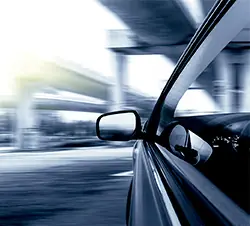
Entre los efectos negativos de la velocidad se encuentra el efecto túnel, en el que el conductor...
One of the negative effects of speed is the tunnel effect, in which the driver...
- Asólo percibe el centro de la calzada y deja de ver los laterales.only sees the centre of the carriageway and stops seeing the sides.
- Btiene la falsa sensación de que circula a velocidad reducida.has the false feeling of driving at a low speed.
- Cpercibe mejor los laterales de la vía que el centro de la calzada.sees the sides of the road better than the centre of the carriageway.
ExplanationAs speed increases, the driver's field of vision narrows: this is the tunnel effect, in which you only see the centre of the carriageway and stop seeing what happens at the sides, where dangers can appear.

En un viaje largo es aconsejable descansar...
On a long journey, it is advisable to rest...
- Asiempre que se encuentre un área de descanso.whenever you find a rest area.
- Bcada 2 horas aproximadamente.about every 2 hours.
- Ccada 5 horas aproximadamente.about every 5 hours.
ExplanationOn long journeys it is advisable to stop and rest about every 2 hours (or every 200 km): stretching your legs and clearing your head prevents fatigue and sleepiness at the wheel.
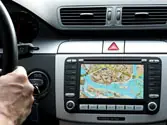
El navegador GPS se deberá programar...
The GPS navigator should be programmed...
- Adurante la circulación.while driving.
- Bantes de iniciar la marcha.before setting off.
- Ccuando lo necesitemos.when we need it.
ExplanationThe GPS navigator must be programmed before setting off, with the vehicle stationary.
¿Cuál será la tasa máxima de alcohol para un conductor novel?
What is the maximum alcohol level for a novice driver?
- A0,3 gr de alcohol por litro de sangre.0.3 g of alcohol per litre of blood.
- B0,5 mg de alcohol por litro de aire.0.5 mg of alcohol per litre of air.
- C0,3 mg de alcohol por litro de aire.0.3 mg of alcohol per litre of air.
ExplanationA novice driver has a maximum permitted alcohol level of 0.3 g per litre of blood, equivalent to 0.15 mg of alcohol per litre of air, during the two years after obtaining their licence.
¿Dónde debemos colocar el GPS?
Where should we place the GPS?
- AFrente al conductor a la altura de los ojos para no tener que desviar la vista al consultarlo.In front of the driver at eye level, so that you do not have to look away to check it.
- BA una altura correcta sin que entorpezca la visión de la carretera y sin que obligue a apartar la vista de la misma.At a correct height, where it does not block the view of the road or make you look away from it.
- CEs indiferente siempre que esté fijado firmemente en su sitio.It does not matter, as long as it is firmly fixed in place.
ExplanationThe GPS device must be placed at a correct height, where it does not block the view of the road or make you look away from it. It is important not to place it near an airbag, because it may obstruct the airbag when it opens. The cables of the GPS device must not get in the way of driving either.
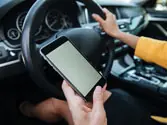
Mientras conduce, ¿qué teléfonos están permitidos utilizar?
While driving, which phones are you allowed to use?
- ALos sistemas de “manos libres”.Hands-free systems.
- BLos sistemas con auriculares.Systems with earphones.
- CEstán permitidos todos los sistemas.All systems are allowed.
ExplanationUsing mobile phones or any other means or system of communication while driving is prohibited, except when the call takes place without using your hands and without using a headset, earphones or similar devices. A driver's level of attention drops when they use a mobile phone, even with a hands-free device. Talking on the phone, even hands-free, creates a mental load that distracts the driver and reduces their ability to concentrate on driving. Several studies have shown that a phone conversation can affect reaction time and the perception of the road environment.

La niebla, la lluvia o la nieve, ¿favorecen la aparición de la fatiga?
Do fog, rain or snow make fatigue more likely?
- ASolo si conducimos mucho tiempo durante la noche.Only if we drive for a long time at night.
- BNo.No.
- CSí.Yes.
ExplanationDriving in bad weather makes fatigue more likely, because driving is more difficult and requires a higher level of attention.
¿Beber mucha agua o fumar reduce el nivel de alcohol en la sangre?
Does drinking a lot of water or smoking lower the level of alcohol in the blood?
- ANo.No.
- BSolo beber mucha agua.Only drinking a lot of water.
- CSí.Yes.
ExplanationNo. Drinking water, having coffee or smoking does not speed up the removal of alcohol or change the result of a breath test. The body removes alcohol at a fixed rate, and the only way to lower your alcohol level is to wait long enough without drinking any more.
¿Qué podemos hacer para evitar sufrir un accidente como consecuencia de la fatiga?
What can we do to avoid having an accident as a result of fatigue?
- AParar para descansar cada 3 ó 4 horas.Stop to rest every 3 or 4 hours.
- BParar para descansar cada 2 horas o 200 km como máximo.Stop to rest every 2 hours or 200 km at most.
- CParar para descansar al menos cada 30 minutos.Stop to rest at least every 30 minutes.
ExplanationTo avoid accidents caused by sleepiness and fatigue, you should rest for at least 30 minutes every 2 hours or every 200 km of driving at most.
Si Ud. circula con su turismo por una vía urbana, como norma general, ¿le está permitido utilizar su teléfono móvil en el que tiene que emplear las manos para el desarrollo de la comunicación?
If you are driving your car on an urban road, as a general rule, are you allowed to use a mobile phone that you have to hold in your hands to make the call?
- ASí, porque sólo está prohibido su uso en las vías interurbanas.Yes, because its use is only prohibited on interurban roads.
- BNo, porque su utilización está prohibida en todas las vías.No, because its use is prohibited on all roads.
- CSí, cuando circule por “Calles Residenciales”.Yes, when driving in 'Residential Streets'.
ExplanationThe correct answer is no: using a mobile phone is prohibited on all roads, because it can distract the driver and put their safety and that of other road users at risk.
¿Por qué los niños tienen el campo visual más limitado?
Why do children have a more limited field of vision?
- APorque suelen caminar mirando al suelo.Because they usually walk looking at the ground.
- BPor su baja estatura.Because they are short.
- CPorque no tienen el sentido de la vista suficientemente desarrollado.Because their sense of sight is not developed enough.
ExplanationBecause they are short, children can have up to 40% less field of vision than adults when they walk between parked cars.
La fatiga al volante es un factor de riesgo para la conducción producida por...
Fatigue at the wheel is a risk factor for driving caused by...
- AConducir sin descanso durante demasiado tiempo.driving for too long without a rest.
- BUn diseño muy ergonómico del asiento.a very ergonomic seat design.
- CUna excesiva ventilación en el interior del vehículo.too much ventilation inside the vehicle.
ExplanationFatigue appears mainly from driving for too long without resting, and also from too little sleep, heat or a bad posture. An ergonomic seat or good ventilation help to prevent it; they do not cause it. The solution is to stop and rest every 2 hours or 200 kilometres.
Si hoy obtenemos nuestro primer permiso de conducir, la tasa máxima de alcohol en el aire espirado será de...
If we get our first driving licence today, the maximum alcohol level in exhaled air will be…
- A0,30 mg de alcohol por cada litro de aire espirado.0.30 mg of alcohol per litre of exhaled air.
- B0,15 mg de alcohol por cada litro de aire espirado.0.15 mg of alcohol per litre of exhaled air.
- C0,26 mg de alcohol por cada litro de aire espirado.0.26 mg of alcohol per litre of exhaled air.
ExplanationUnder Article 20 of the General Traffic Regulations, for the two years after getting your licence the maximum level is 0.15 mg of alcohol per litre of exhaled air (0.3 g/l in blood). Someone who has just got their first licence is in that period.

Si mientras conducimos nos entra sueño, ¿qué debemos hacer?
If we feel sleepy while driving, what should we do?
- ATomar una bebida estimulante.Have a stimulant drink.
- BSeguir hasta llegar a nuestro destino.Carry on until we reach our destination.
- CDetenernos y descansar.Stop and rest.
ExplanationThe most important rules to avoid an accident caused by sleepiness or fatigue are: if we feel tired or sleepy while driving, the best thing is to stop and rest in a suitable place and sleep for about 20 or 30 minutes; rest for 20 to 30 minutes every 2 hours or every 200 kilometres at most; always watch for the signs and symptoms of sleepiness or fatigue. Stimulant drinks such as tea, coffee, etc. can cause a rebound effect (sleepiness appears suddenly when their effects wear off).
¿Es aconsejable conducir un coche con chanclas?
Is it advisable to drive a car wearing flip-flops?
- ANo, porque pueden caerse y dificultar el uso de los pedales.No, because they can come off and make it hard to use the pedals.
- BSí, porque al no sujetar el pie, es más fácil presionar los pedales correctamente.Yes, because they do not hold the foot, so it is easier to press the pedals correctly.
- CSí, porque permiten un control más rápido y seguro de los pedales.Yes, because they allow faster and safer control of the pedals.
ExplanationIt is advisable not to drive a car wearing flip-flops. This recommendation is based on the need to have full control of the vehicle's pedals. Flip-flops do not give the foot proper grip and support, so the footwear can slip or come off, which makes using the pedals harder and increases the risk of an accident. This is linked to the driver's obligation to have full control of their vehicle at all times, as set out in the General Traffic Regulations.
¿Cuál es la tasa máxima de alcohol en sangre para un profesional?
What is the maximum blood alcohol level for a professional driver?
- A0,5 g/l.0.5 g/l.
- B0,3 g/l.0.3 g/l.
- C0,15 g/l.0.15 g/l.
ExplanationFor professional drivers, and for other drivers during the 2 years after obtaining their first driving licence, the maximum permitted blood alcohol level is 0.3 g/l.
¿Cuál es la tasa máxima de alcohol permitida para un conductor principiante?
What is the maximum alcohol level allowed for a novice driver?
- A0,25 miligramos de alcohol por litro de aire espirado.0.25 milligrams of alcohol per litre of exhaled air.
- B0,3 miligramos de alcohol por litro de aire espirado.0.3 milligrams of alcohol per litre of exhaled air.
- C0,15 miligramos de alcohol por litro de aire espirado.0.15 milligrams of alcohol per litre of exhaled air.
ExplanationUnder Article 20 of the General Traffic Regulations, for the two years after getting their licence, drivers may not exceed 0.15 mg of alcohol per litre of exhaled air (0.3 g per litre of blood). The general limit is 0.25 mg per litre of air.
¿Qué tipo de vías producen más fatiga en el conductor?
Which types of road cause the most fatigue in drivers?
- ALas autopistas.Motorways (autopistas).
- BLas autopistas y autovías.Motorways (autopistas) and dual carriageways (autovías).
- CLas carreteras convencionales.Conventional roads.
ExplanationThe drop in attention that leads to fatigue can happen on any type of road, but it is more common on motorways (autopistas) and dual carriageways (autovías) if we drive on them for long periods, because they are more monotonous roads, with no obvious obstacles, changes of speed, bends or other dangers.
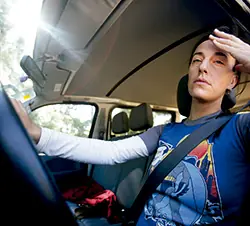
De los siguientes, ¿cuál es un síntoma característico de la aparición de la fatiga durante la conducción?
Which of the following is a typical symptom of fatigue while driving?
- ASe distingue mejor la información relevante de la irrelevante.You can tell relevant information from irrelevant information better.
- BLa disminución en el número de correcciones de la direcciónFewer steering corrections.
- CEl incremento de la agudeza visual.An increase in visual acuity.
ExplanationA tired driver corrects their path less: they make fewer and slower steering movements. Fatigue also reduces visual acuity and the ability to filter out the relevant information.

¿Se puede utilizar el teléfono móvil cuando el vehículo está detenido en un semáforo?
Can you use a mobile phone when the vehicle is stopped at traffic lights?
- ASí, siempre que el vehículo esté detenido.Yes, as long as the vehicle is stopped.
- BNo, a menos que se utilice un sistema "manos libres".No, unless you use a hands-free system.
- CSí, pero solo en vías interurbanas y a baja velocidad.Yes, but only on interurban roads and at low speed.
ExplanationEven when the vehicle is stopped at traffic lights, it is still part of the traffic flow, because it has not been brought to a standstill out of the traffic. So using a mobile phone is still prohibited, unless you use a hands-free system. The rules prohibit using a mobile phone while you are on the road in traffic, even if the vehicle is not moving.
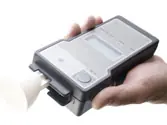
¿Cuál será la tasa máxima de alcohol en aire?
What is the maximum alcohol level in exhaled air?
- A0,50 mg/l.0.50 mg/l.
- B0,25 mg/l.0.25 mg/l.
- C0,10 mg/l.0.10 mg/l.
ExplanationThe maximum alcohol level in exhaled air is 0.25 mg/l. For novice drivers it is 0.15 mg/l.
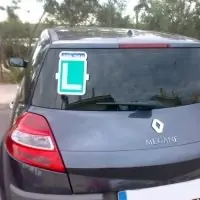
¿Cuál es la tasa maxima de alcohol permitida a un conductor novel?
What is the maximum alcohol level allowed for a novice driver?
- A0,25 miligramos por litro de aire espirado.0.25 milligrams per litre of exhaled air.
- B0,15 miligramos por litro de aire espirado.0.15 milligrams per litre of exhaled air.
- C0,3 miligramos por litro de aire espirado .0.3 milligrams per litre of exhaled air.
ExplanationDuring the first two years of holding a licence, the maximum level is 0.15 mg of alcohol per litre of exhaled air, equivalent to 0.3 g per litre of blood. The level of 0.25 mg per litre is the general level for other drivers.
¿En qué tipo de vías se presenta con mayor frecuencia la monotonía y la disminución de la atención al circular?
On which types of road do monotony and reduced attention while driving occur most often?
- AVías urbanas y travesías.Urban roads and travesías (stretches of road through a town).
- BCarreteras convencionales.Conventional roads.
- CAutopistas y autovías.Motorways (autopistas) and dual carriageways (autovías).
ExplanationMonotony and reduced attention while driving occur most often on motorways (autopistas) and dual carriageways (autovías) because of their specific features. These roads usually have straight layouts, less variety in the surroundings and less interaction with other road users than conventional roads or urban roads. This more predictable and uniform environment can make the driver feel too comfortable, so they relax too much, lose concentration and may even become drowsy.
¿Cuál es la tasa máxima de alcohol en aire para un conductor novel durante el segundo año de haber obtenido el permiso?
What is the maximum breath alcohol level for a novice driver during the second year after obtaining the licence?
- A0,30 mg/l.0.30 mg/l.
- B0,25 mg/l.0.25 mg/l.
- C0,15 mg/l.0.15 mg/l.
ExplanationDuring the first two years after obtaining the licence, the maximum permitted alcohol level is 0.15 mg/l of air.
Conduciendo en un día caluroso...
When driving on a hot day...
- AEs necesario hacer más descansos, porque la fatiga aparece con más facilidad.You need to take more breaks, because fatigue sets in more easily.
- BHay que hacer los mismos descansos que si la temperatura fuera normal.You should take the same breaks as if the temperature were normal.
- CHay que hacer menos descansos para llegar al destino más rápido.You should take fewer breaks to reach your destination sooner.
ExplanationHeat leads to sweating, dehydration and drowsiness, so fatigue sets in sooner than usual. On hot days, ventilate the inside of the car well, drink water and take more breaks than usual.
Tasa máxima de alcohol en aire espirado para conductores generales:
Maximum breath alcohol level for drivers in general:
- A0,15 mg/l0.15 mg/l.
- B0,25 mg/l0.25 mg/l.
- C0,50 mg/l0.50 mg/l.
ExplanationThe maximum breath alcohol level is 0.25 mg/l for drivers in general. This is equivalent to 0.5 g/l of blood.
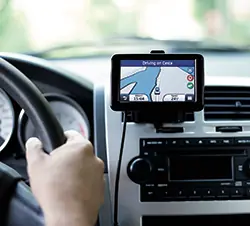
¿Es peligroso introducir una dirección en un navegador GPS mientras se conduce?
Is it dangerous to enter an address into a GPS navigator while driving?
- ASolo si el navegador no está integrado en el vehículo.Only if the navigator is not built into the vehicle.
- BNo, porque es una ayuda para conducir con mayor seguridad.No, because it helps you drive more safely.
- CSí, ya que distrae al conductor.Yes, because it distracts the driver.
ExplanationOperating the navigator while moving takes your eyes and attention off the road for several seconds: it is a dangerous distraction. The route should be programmed before setting off or with the vehicle stopped in a safe place.
¿Qué puede hacer para evitar accidentes por sueño o fatiga?
What can you do to avoid accidents caused by sleepiness or fatigue?
- AAcelerar para no quedarse dormido.Speed up so as not to fall asleep.
- BAtender los signos y síntomas de sueño o fatiga y parar a descansar.Pay attention to the signs and symptoms of sleepiness or fatigue and stop to rest.
- CCircular por carreteras desconocidas.Drive on unfamiliar roads.
ExplanationSleepiness and fatigue increase reaction time and can cause microsleeps. To avoid accidents you must pay attention to their first symptoms, such as yawning, frequent blinking or heavy eyes, and stop to rest; it is also advisable to take a break every two hours or 200 km.
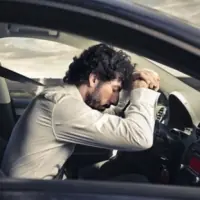
¿Qué debe hacer un conductor al volante que comienza a notar síntomas de sueño o fatiga?
What should a driver do if they start to notice symptoms of sleepiness or fatigue at the wheel?
- AAumentar la velocidad del vehículo para llegar antes a su destino.Increase the vehicle's speed to reach their destination sooner.
- BTomar alguna bebida estimulante u excitante.Have a stimulant or energising drink.
- CEstacionar el vehículo el tiempo que sea necesario y tomar un descanso.Park the vehicle for as long as necessary and take a rest.
ExplanationWhen we start to notice the first symptoms of sleepiness or fatigue at the wheel, which may show as constant shifting in the seat, stretching or yawning, we should look for a suitable place to park, such as a lay-by or a service area, and rest for as long as necessary. We will never stop on the central reservation or on the hard shoulder.
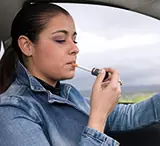
Fumar mientras se conduce...
Smoking while driving...
- Aestá prohibido.is prohibited.
- Bes recomendable, porque ayuda a mantener la atención.is advisable, because it helps you stay attentive.
- Cno es recomendable, porque puede afectar a la atención en la conducción.is not advisable, because it can affect your attention to driving.
ExplanationSmoking at the wheel is not expressly prohibited, but it is not advisable: lighting the cigarette, holding it or flicking the ash makes you take your eyes and hands off driving, and the smoke can irritate your eyes. It can be penalised if it prevents you from driving with freedom of movement or attention.
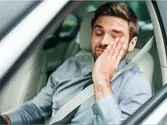
¿Cuál de los siguientes factores hace que aumente la fatiga cuando se conduce?
Which of the following factors increases fatigue when driving?
- ALas congestiones y retenciones de tráfico.Traffic congestion and queues.
- BLos asientos demasiado blandos.Seats that are too soft.
- CLa luz solar.Sunlight.
ExplanationAnything that requires high concentration from the driver or makes driving less comfortable will make them tired sooner and make fatigue more likely. Driving on a road with a lot of traffic makes fatigue more likely because it requires more concentration. Traffic queues also make fatigue more likely, because they can cause stress, and stress causes fatigue.
El sueño provoca que el conductor...
Drowsiness causes the driver to...
- ADisminuya el tiempo de reacción.Have a shorter reaction time.
- BSe comporte de forma más peligrosa.Behave more dangerously.
- CPerciba mejor el entorno del tráfico.Perceive the traffic environment better.
ExplanationDrowsiness increases reaction time, that is, we take longer to perceive a danger and decide what to do; it also reduces attention and perception of the surroundings. That is why a drowsy driver behaves more dangerously.
¿Qué efecto produce conducir bajo los efectos de las anfetaminas?
What effect does driving under the effects of amphetamines have?
- ADisminuye la sensación de fatiga.The feeling of fatigue decreases.
- BAumenta la sensación de fatiga.The feeling of fatigue increases.
- CSomos más conscientes de nuestras propias capacidades.We are more aware of our own abilities.
ExplanationUnder the effects of amphetamines the feeling of fatigue decreases, so you may suffer sudden acute exhaustion, with serious consequences for your health and for traffic.
Tras beber alcohol, el tiempo de reacción del conductor:
After drinking alcohol, the driver's reaction time:
- AAumenta, por lo que tarda más en responder ante un peligro.increases, so they take longer to respond to a danger.
- BDisminuye, respondiendo más rápido.decreases, so they respond faster.
- CSe mantiene exactamente igual.stays exactly the same.
ExplanationAlcohol increases reaction time: the driver takes longer to brake or to avoid an obstacle.
¿Cuándo programaremos el navegador GPS?
When should we program the GPS navigator?
- AAntes de iniciar la marcha.Before setting off.
- BCuando paremos en el arcén.When we stop on the hard shoulder.
- CCuando necesitemos orientación por satélite.When we need satellite guidance.
ExplanationThe GPS should be programmed before starting the journey, when we are planning it, to avoid distractions at the wheel.
Durante el primer año de conducción, la condición de conductor novel implica que la tasa máxima de alcohol permitida es de...
During the first year of driving, being a novice driver means that the maximum alcohol level allowed is...
- A0,25 miligramos por litro en aire espirado.0.25 milligrams per litre of exhaled air.
- B0,15 miligramos por litro en aire espirado.0.15 milligrams per litre of exhaled air.
- C0 miligramos por litro en aire espirado.0 milligrams per litre of exhaled air.
ExplanationUnder Article 20 of the General Traffic Regulations (RGC), during the two years after obtaining the licence you may not exceed 0.3 g/l of alcohol in blood or 0.15 mg/l in exhaled air. After that, the general limit of 0.25 mg/l applies.
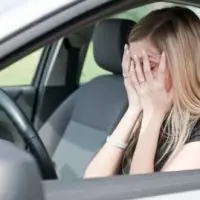
Conducir con depresión, ¿puede provocar un accidente?
Can driving while suffering from depression cause an accident?
- ASí, porque se pueden tomar decisiones erróneas.Yes, because you may make wrong decisions.
- BNo, si el conductor es adulto y tiene experiencia.No, if the driver is an adult and has experience.
- CNo, porque es algo habitual en muchos conductores.No, because it is common among many drivers.
ExplanationDepression has a clear effect on our ability to drive a vehicle safely, so it is important to take the necessary precautions. Under the effects of depression, you feel less sure of yourself and decision-making is more uncertain, so the driver may make mistakes or behave in ways that other drivers do not expect.
Normalmente, ¿qué ocurre cuando un conductor se distrae al volante?
Normally, what happens when a driver gets distracted at the wheel?
- APisa el freno en lugar del acelerador.They press the brake instead of the accelerator.
- BTarda más tiempo en reaccionar ante una situación de riesgo.They take longer to react to a risky situation.
- CEnciende las luces de emergencia o pisa el freno repetidamente.They switch on the hazard warning lights or press the brake repeatedly.
ExplanationWhen a driver is distracted at the wheel, their reaction time to risky situations is usually affected. This is in line with Spain's traffic rules, which state that factors such as lack of attention can alter the driver's physical and mental abilities and increase the risk of accidents. Drivers must be aware that a distraction can lead them to fail to react properly to a dangerous situation on the road.
Normalmente, ¿qué pasa cuando un conductor se distrae al volante?
What normally happens when a driver is distracted at the wheel?
- AEnciende las luces de emergencia o pisa el freno repetidamente.They switch on the hazard warning lights or press the brake repeatedly.
- BPisa el freno en lugar del acelerador.They press the brake instead of the accelerator.
- CTarda más tiempo en reaccionar ante una situación de riesgo.They take longer to react to a risky situation.
ExplanationA distraction, even one lasting a couple of seconds, makes the driver slower to spot a danger and react, and during that time the vehicle keeps moving without control. That is why Article 18.1 of the RGC requires drivers to pay constant attention to driving.
All topics
- Definitions
- Documents and penalty points
- Duties of drivers and pedestrians
- Vehicle safety devices
- Vehicle controls and equipment
- Vehicle lights and horn
- Traffic signs, markings and signals
- The road and its lanes
- Speed and distances
- Manoeuvres
- Right of way
- Carrying passengers and loads
- Driving safely in difficult conditions
- Vehicle mechanics and maintenance
- Road accidents and first aid
- Defensive and eco-driving
Independent app: not affiliated with or endorsed by the DGT (Spain's Directorate-General for Traffic) or the Ministry of the Interior. The official exam is booked with the DGT and taken at its test centres. The questions here are practice material; the DGT's official question bank is not public.
Basado en datos de la Agencia Estatal Boletín Oficial del Estado (https://www.boe.es). Textos consolidados de carácter meramente informativo. La AEBOE no patrocina ni respalda este sitio.
Parte de las preguntas procede de los tests de la revista «Tráfico y Seguridad Vial» de la DGT, reproducidos con indicación de la fuente.