
DGT test · 590 questions
The driver's condition · Page 2 of 12
Alcohol, drugs, medicines, fatigue, sleepiness and distraction: how they affect driving, the legal alcohol limits and roadside testing.
Questions in this topic, with answers
590 questions, 50 per page, with the correct answer and the explanation. Page 2 of 12.

Si un conductor ha consumido cocaína...
If a driver has taken cocaine...
- Aes más tranquilo y menos competitivo.they are calmer and less competitive.
- Bpuede ser más competitivo y agresivo.they may be more competitive and aggressive.
- Ces más agresivo y menos competitivo.they are more aggressive and less competitive.
ExplanationThe behaviour of a driver who has taken cocaine may become more competitive and aggressive towards other drivers, which increases the risk of having an accident.

Un conductor bajo los efectos del cannabis...
A driver under the effects of cannabis...
- ATendrá una mejor percepción del tiempo y del espacio.will have a better perception of time and space.
- BDisminuirá su tiempo de reacción.will have a shorter reaction time.
- CTendrá alterada la percepción del entorno.will have an altered perception of their surroundings.
ExplanationA driver under the effects of cannabis will have an altered perception of their surroundings. They will find it hard to judge distances, time and space, it will be harder for them to stay focused and their reaction time will increase. They may also feel sleepy at the wheel.
¿Cuál de estos factores favorecen las distracciones al conducir?
Which of these factors makes distractions more likely while driving?
- AUna situación de tráfico normal.A normal traffic situation.
- BUna situación de tráfico excesivamente compleja.An extremely complex traffic situation.
- CUna carretera desconocida.An unfamiliar road.
ExplanationWhen driving, there are certain factors on the road, in its surroundings or in the vehicle itself that can make distractions more likely. So an extremely complex traffic situation (with a large number of signs, vehicles, pedestrians, etc.) can make us unable to pay proper attention to the most important stimuli.
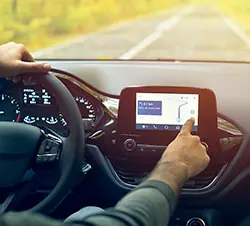
Buscar una dirección en el navegador GPS durante la conducción, ¿puede ser peligroso?
Can looking up an address on the GPS navigator while driving be dangerous?
- ASolo si el navegador GPS se encuentra muy alejado del asiento del conductor.Only if the GPS navigator is very far from the driver's seat.
- BNo, porque ayuda a conducir con mayor seguridad.No, because it helps you drive more safely.
- CSí, porque el conductor se distrae.Yes, because the driver gets distracted.
ExplanationOperating the navigator while moving is a distraction: it takes your eyes, hands and attention off driving for several seconds. Addresses should be entered before setting off or with the vehicle stopped in a safe place.
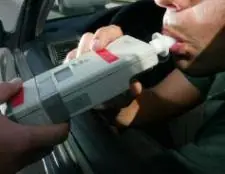
Para los conductores noveles, la tasa máxima de alcoholemia con la que tienen permitido conducir, durante los dos primeros años, es...
For novice drivers, the maximum alcohol level allowed for driving during the first two years is...
- A0,3 miligramos por litro de aire espirado.0.3 milligrams per litre of exhaled air.
- B0,15 miligramos por litro de aire espirado.0.15 milligrams per litre of exhaled air.
- C0,25 miligramos por litro de aire espirado.0.25 milligrams per litre of exhaled air.
ExplanationUnder Article 20 of the General Traffic Regulations, during the two years after obtaining the licence the maximum level is 0.15 mg/l of exhaled air or 0.3 g/l of blood. Watch out for the trap: 0.3 is the blood figure, not the breath figure.
¿Cuál es la tasa de alcoholemia en menores?
What is the alcohol limit for minors?
- ALa misma que para los demás conductores.The same as for other drivers.
- BIgual que los conductores noveles.The same as for novice drivers.
- C0,0 g/l de sangre.0.0 g/l of blood.
ExplanationDrivers under 18 may not drive with any alcohol level: their limit is 0.0. The level of 0.3 g per litre of blood is the one for novice and professional drivers, and 0.5 g is the general one.
¿Qué efectos tiene la fatiga en los conductores?
What effects does fatigue have on drivers?
- AAumenta el campo visual.It widens the field of vision.
- BLa visión puede volverse borrosa.Vision may become blurred.
- CAumenta la sensibilidad auditiva.It increases sensitivity to sound.
ExplanationFatigue harms the driver's physical and mental abilities and causes changes in vision, such as vision becoming blurred. This relates to the rules that stress the importance of being in a suitable physical and mental state to drive, as mentioned in the regulations on the role of fatigue and drowsiness in road accidents. The option saying that vision may become blurred is the correct answer because it shows a direct effect of fatigue on the driver's perception, which is crucial for safe driving.
En un viaje largo, ¿cuándo debe descansar?
On a long journey, when should you rest?
- ACada 2 horas aproximadamente.About every 2 hours.
- BCuando encuentre un área de descanso.When you find a rest area.
- CCada 5 horas aproximadamente.About every 5 hours.
ExplanationThe most important rules to avoid an accident caused by sleepiness or fatigue are: if we feel tired or sleepy while driving, the best thing is to stop and rest in a suitable place and sleep for about 20 or 30 minutes; rest for 20 to 30 minutes every 2 hours or every 200 kilometres at most; always watch for the signs and symptoms of sleepiness or fatigue.

¿Qué se entiende por un microsueño?
What is a microsleep?
- AUn breve episodio en el que el conductor se queda dormido unos pocos segundos sin darse cuenta.A short episode in which the driver falls asleep for a few seconds without realising it.
- BEl momento en el que el conductor sueña durante algunos segundos.The moment when the driver dreams for a few seconds.
- CUn sueño profundo durante la noche que involucra múltiples ciclos de sueño.A deep sleep during the night that involves several sleep cycles.
ExplanationA microsleep is a short episode of drowsiness during which a person, such as a driver, can fall asleep involuntarily for a few seconds. During this time the person may not be aware that they are asleep, which can be a significant risk, especially during tasks that require attention, such as driving. It is a dangerous phenomenon because it can increase the risk of accidents.
Tomar un café bien cargado después de beber alcohol:
Drinking a strong coffee after drinking alcohol:
- AElimina el alcohol de la sangre de inmediato.removes the alcohol from your blood immediately.
- BNo reduce la tasa de alcohol; solo puede darte una falsa sensación de estar más despierto.does not reduce your alcohol level; it can only give you a false feeling of being more awake.
- CReduce la tasa a la mitad.cuts your alcohol level by half.
ExplanationCoffee does not reduce the alcohol level; at most it gives a misleading feeling of alertness, but the impairment remains.
¿Dónde se producen más distracciones?
Where do more distractions happen?
- AEn las carreteras convencionales.On conventional roads.
- BEn las vías urbanas.On urban roads.
- CEn autopistas o autovías.On motorways (autopistas) or dual carriageways (autovías).
ExplanationOn motorways (autopistas) and dual carriageways (autovías), the driver has less work to do, so their level of attention drops and distractions are more likely.

¿Cuál es la tasa máxima de alcoholemia para un conductor que acaba de obtener el permiso B y que ya tiene el permiso A1 con más de 1 año de antigüedad?
What is the maximum alcohol level for a driver who has just obtained licence B and has already held licence A1 for more than 1 year?
- A0,5 gr. de alcohol por litro de sangre.0.5 g of alcohol per litre of blood.
- B0,25 gr. de alcohol por litro de sangre.0.25 g of alcohol per litre of blood.
- C0,30 gr. de alcohol por litro de sangre.0.30 g of alcohol per litre of blood.
ExplanationWhen a driver who has held another licence for more than 1 year obtains a new one, their alcohol limit is 0.3 g of alcohol per litre of blood until the first licence is more than 2 years old. Once the first licence is more than 2 years old, the maximum level is 0.5 g of alcohol per litre of blood.
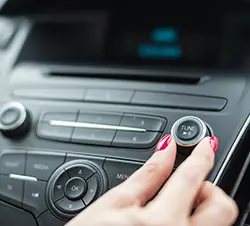
Buscar una emisora de radio o manipular el reproductor de música, ¿pueden distraer al conductor?
Can looking for a radio station or operating the music player distract the driver?
- ANo.No.
- BSolo si las emisoras de radio no están guardadas en memoria.Only if the radio stations are not saved in memory.
- CSí, aumentando el riesgo de accidente.Yes, and this increases the risk of an accident.
ExplanationLooking for stations or operating the music player takes your eyes and attention off the road: it is a distraction that increases the risk of an accident. It is best to do it with the vehicle stopped.
Con sueño...
When you are sleepy...
- ALos movimientos son más rápidos y automatizados.your movements are faster and more automatic.
- BLa visión se vuelve borrosa y es más difícil enfocar la vista.your vision becomes blurred and it is harder to focus your eyes.
- CDisminuye el tiempo de reacción.your reaction time is shorter.
ExplanationSleepiness affects the driver's movements: they become slower and less precise and are carried out automatically. Vision becomes blurred, so it is harder to focus the eyes, and reaction time increases.
¿Pueden ocurrir durante el día accidentes de tráfico causados principalmente por el sueño?
Can road accidents caused mainly by sleepiness happen during the day?
- ASí, especialmente entre las 14:00 y las 16:00.Yes, especially between 14:00 and 16:00.
- BSí, pero solo afectan a los conductores profesionales.Yes, but they only affect professional drivers.
- CNo, ocurren principalmente por la noche.No, they mainly happen at night.
ExplanationDrowsiness does not only appear at night: after lunch, especially between 14:00 and 16:00, the body goes through a natural drop in alertness and the risk of falling asleep at the wheel increases. It affects any driver; if you feel sleepy, the safe thing is to stop and rest.

Uno de los efectos que producen los ansiolíticos es...
One of the effects of anti-anxiety medicines (anxiolytics) is...
- Ala aparición de periodos de somnolencia.periods of sleepiness.
- Bel aumento de la agudeza visual.an increase in visual acuity.
- Cla disminución de la sensibilidad al deslumbramiento.a reduced sensitivity to glare.
ExplanationAnti-anxiety medicines make you more sensitive to the effects of sleepiness, so driving at night, on monotonous roads and for several hours will be very dangerous. Visual acuity decreases and sensitivity to glare increases.
¿Puede suponer algún peligro el disponer de un sistema de navegación GPS en nuestro vehículo?
Can having a GPS navigation system in our vehicle be dangerous in any way?
- ANo, solamente aporta una ayuda al conductor.No, it only helps the driver.
- BSí, pude provocar distracciones al conductor.Yes, it can distract the driver.
- CEstá prohibido llevar conectado el sistema GPS mientras circulamos.It is prohibited to have the GPS system switched on while we are driving.
ExplanationA GPS navigation system is a great help for the driver, but if we do not use it properly it will be a cause of distraction and can lead to accidents because of a lack of attention to the traffic.
¿Cómo debe colocarse el navegador GPS portátil en el vehículo?
Where should a portable GPS navigation device be placed in the vehicle?
- AA una distancia de 10 a 25 centímetros.At a distance of 10 to 25 centimetres.
- BEn un lugar donde no obstruya la visibilidad y nunca cerca de un airbag.Where it does not block visibility, and never near an airbag.
- CDelante del volante.In front of the steering wheel.
ExplanationThe navigation device must be placed where it does not reduce the driver's field of vision or freedom of movement, as required by Article 18.1 of the General Traffic Regulations. Nor should it be in an airbag's deployment area, because in a crash it would be thrown at the occupants.
Negarse a hacerse la prueba de alcoholemia...
Refusing to take an alcohol test...
- Aes un delito penado por el Código Penal.is a crime punishable under the Criminal Code.
- Bsolo conlleva una multa de hasta 300 euros.only carries a fine of up to 300 euros.
- Cno tiene importancia si no ha habido accidente.does not matter if there has been no accident.
ExplanationEvery driver is required to take the alcohol tests requested by police officers (Article 14.2 of the Traffic Law). Refusing is a crime punished under the Criminal Code with a prison sentence and loss of the right to drive, even if there has been no accident.
Conducir por una carretera con el pavimento en mal estado, ¿puede causar cansancio?
Can driving on a road with a poor surface cause tiredness?
- ASí, porque la conducción es más incómoda y requiere más esfuerzo.Yes, because driving is less comfortable and takes more effort.
- BNo, porque el conductor se mantiene más alerta.No, because the driver stays more alert.
- CSolo si el conductor es novato o tiene poca experiencia.Only if the driver is a beginner or has little experience.
ExplanationA poor road surface makes you watch out more for potholes and bumps, transmits more vibration and requires more steering corrections. This extra physical and mental effort makes fatigue set in sooner, whether the driver has a lot of experience or little.
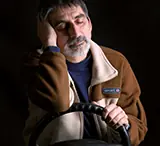
Existe un mayor riesgo de somnolencia en vías con...
There is a higher risk of sleepiness on roads with...
- Amuchas curvas.a lot of bends.
- Bmucho tráfico.a lot of traffic.
- Ctrazado monótono.a monotonous layout.
ExplanationMonotonous layouts (long straight stretches, little visual stimulation, like a motorway) lower your level of alertness and make sleepiness more likely; bends or heavy traffic force you to stay attentive.
La distracción al volante…
Distraction at the wheel...
- Ano causan accidentes.does not cause accidents.
- Bcausan una gran cantidad de accidentes.causes a large number of accidents.
- Ccausan muy pocos accidentes.causes very few accidents.
ExplanationDistractions such as using a mobile phone, operating the sat nav or eating at the wheel are behind a large number of road accidents. Taking your eyes off the road for a few seconds means travelling many metres without control of the vehicle.
El navegador GPS...
The GPS navigator...
- Ase debe colocar cerca del air-bag.must be placed near the airbag.
- Bsus indicaciones siempre prevalecen a la opinión del conductor.its instructions always prevail over the driver's opinion.
- Clo instalaremos en un soporte adecuado.should be fitted in a suitable holder.
ExplanationWe must place the GPS navigator in a suitable holder that is not a risk to us in the event of an accident, and away from the airbag.
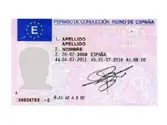
Si obtenemos hoy nuestro primer permiso de conducir sabremos que la tasa máxima de alcoholemia en aire espirado será de...
If we obtain our first driving licence today, the maximum breath alcohol level will be...
- A0,30 mg de alcohol por cada litro de aire.0.30 mg of alcohol per litre of air.
- B0,15 mg de alcohol por cada litro de aire.0.15 mg of alcohol per litre of air.
- C0,26 mg de alcohol por cada litro de aire.0.26 mg of alcohol per litre of air.
ExplanationThe maximum alcohol level for a driver during the two years after obtaining their first driving licence is 0.15 milligrams of alcohol per litre of exhaled air or, which is the same, 0.30 grams of alcohol per litre of blood. After this time, the general level applies: 0.25 milligrams of alcohol per litre of exhaled air or 0.50 grams of alcohol per litre of blood.
¿Cuál es la tasa máxima de alcohol con la que puede circular el conductor de un vehículo especial?
What is the maximum alcohol level with which the driver of a special vehicle may drive?
- A0,25 mg de alcohol por litro de aire.0.25 mg of alcohol per litre of air.
- B0,15 mg de alcohol por litro de aire.0.15 mg of alcohol per litre of air.
- C0,50 mg de alcohol por litro de aire.0.50 mg of alcohol per litre of air.
ExplanationDrivers of special vehicles may not drive with an alcohol level above 0.25 mg of alcohol per litre of air. Do not confuse them with drivers of special transport, whose maximum permitted level is 0.15 mg of alcohol per litre of air.
Si la antigüedad de su primer permiso de conducción es menor de 2 años, la tasa máxima de alcohol permitida para poder conducir es de...
If you have held your first driving licence for less than 2 years, the maximum alcohol level permitted for driving is...
- A0,15 miligramos de alcohol por litro de aire espirado.0.15 milligrams of alcohol per litre of exhaled air.
- B0,25 miligramos de alcohol por litro de aire espirado.0.25 milligrams of alcohol per litre of exhaled air.
- C0,3 miligramos de alcohol por litro de aire espirado.0.3 milligrams of alcohol per litre of exhaled air.
ExplanationDuring the first two years after obtaining your first driving licence, the maximum alcohol level is 0.15 milligrams per litre of exhaled air, or 0.3 grams per litre of blood. After that, the general limit of 0.25 mg applies.

Los niños pueden tener problemas en el tráfico porqué...
Children can have problems in traffic because...
- Asu campo visual es mayor.their field of vision is wider.
- Bsu visión periférica es mayor.their peripheral vision is wider.
- Cno conocen los comportamientos adecuados en la circulación.they do not know how to behave properly in traffic.
ExplanationChildren have a narrower field of vision than adults, and their peripheral vision is also narrower. In addition, they do not know how to behave properly in traffic.
Conduciendo bajo los efectos del cannabis, ¿el conductor verá afectado su tiempo de reacción?
When driving under the effects of cannabis, is the driver's reaction time affected?
- ANo, el tiempo de reacción permanece siempre constante.No, reaction time always stays the same.
- BSi, aumentará.Yes, it will increase.
- CSi, disminuirá.Yes, it will decrease.
ExplanationCannabis increases reaction time: the driver will take longer to make a decision.
¿Se puede circular hablando por un móvil con dispositivo manos libres?
Can you drive while talking on a mobile phone with a hands-free device?
- ASí, pero no es recomendable.Yes, but it is not advisable.
- BSí, si se utiliza un auricular en un solo oído.Yes, if you use an earphone in only one ear.
- CNo.No.
ExplanationTalking on a mobile phone with a hands-free device while driving is not prohibited, but it is not advisable, because it distracts the driver.
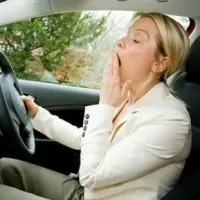
¿Qué circunstancias del conductor favorecen la aparición de la fatiga?
Which of the driver's circumstances make fatigue more likely?
- AConducir manteniendo los hábitos normales de conducción.Driving while keeping normal driving habits.
- BConducir durante largos periodos sin parar o hacer descansos inadecuados.Driving for long periods without stopping, or not resting properly.
- CMantener una velocidad adecuada durante mucho tiempo, ya que requiere mucha concentración.Keeping a suitable speed for a long time, because it needs a lot of concentration.
ExplanationFatigue, also called tiredness, usually appears after driving for long periods without taking proper breaks, or when the breaks are not long enough. The most important rules to avoid an accident caused by sleepiness or fatigue are: if we feel tired or sleepy while driving, the best thing is to stop and rest in a suitable place and sleep for about 20 or 30 minutes; rest for 20 to 30 minutes every 2 hours or every 200 kilometres at most; always watch for the signs and symptoms of sleepiness or fatigue.
Si hemos obtenido el permiso de conducción por primera vez hace 15 meses, ¿cuál será la tasa máxima de alcoholemia permitida?
If we obtained our driving licence for the first time 15 months ago, what is the maximum alcohol level allowed?
- A0,3 g de alcohol por litro de sangre.0.3 g of alcohol per litre of blood.
- B0,5 g de alcohol por litro de sangre.0.5 g of alcohol per litre of blood.
- C0,25 g de alcohol por litro de sangre.0.25 g of alcohol per litre of blood.
ExplanationDuring the first two years after we obtain our first driving licence, the maximum alcohol level is 0.3 g of alcohol per litre of blood or, the equivalent in exhaled air, 0.15 mg of alcohol per litre of air.
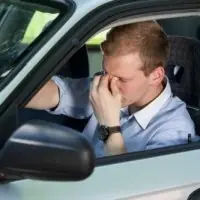
¿Puede sentir mayor sensación de fatiga si sufre de estrés?
Can you feel more tired if you suffer from stress?
- ANo.No.
- BSí.Yes.
- CSólo si además tiene problemas de sueño.Only if you also have sleep problems.
ExplanationStress can seriously impair our ability to drive safely and can have negative effects on driving, such as fatigue, which can easily appear at the wheel. It increases aggression, hostility and competitiveness, and behaviour can become more reckless.
Si tienes una enfermedad, ¿debes preguntarle al médico qué precauciones tomar para conducir?
If you have an illness, should you ask your doctor what precautions to take when driving?
- ANo.No.
- BSí.Yes.
- CSólo cuando la enfermedad es crónica.Only when the illness is chronic.
ExplanationYes, it is right to ask your doctor about the precautions to take for driving if you have an illness. Spain's traffic rules, in particular what the regulations say about diseases of the central nervous system and other medical conditions that can affect driving, state that drivers must not have illnesses that reduce motor, cognitive or coordination functions. That is why a medical assessment is essential to ensure safety at the wheel.
¿Cuál es la tasa máxima de alcohol en sangre para conductores con menos de 2 años de carnet?
What is the maximum blood alcohol level for drivers who have held their licence for less than 2 years?
- A0,5 g/l0.5 g/l
- B0,3 g/l0.3 g/l
- C0,1 g/l0.1 g/l
ExplanationNovice drivers (less than 2 years) have a maximum limit of 0.3 g/l in blood.

Está detenido ante un semáforo. ¿Cuándo está permitido hablar por teléfono móvil?
You are stopped at traffic lights. When are you allowed to talk on a mobile phone?
- ASólo cuando el semáforo está en zona urbana.Only when the traffic lights are in a built-up area.
- BSólo mientras el semáforo está en rojo.Only while the traffic light is red.
- CSólo cuando se utilice un dispositivo manos libres.Only when you use a hands-free device.
ExplanationWhile driving, using mobile phones and any other means or system of communication is prohibited, except when the call takes place without using your hands and without using a headset, earphones or similar devices. Being stopped at traffic lights does not mean we are not driving, because we are still part of the traffic flow and the prohibition still applies. We may only use the mobile phone with a hands-free device.

El efecto túnel producido por la velocidad hace que el conductor...
The tunnel effect caused by speed means that the driver...
- Asea más sensible a los deslumbramientos.is more sensitive to glare.
- Bsólo sea capaz de percibir con nitidez la parte lateral de la vía.can only see the sides of the road clearly.
- Csólo sea capaz de percibir con nitidez el centro de la vía.can only see the centre of the road clearly.
ExplanationAs we increase speed, our useful field of vision gets narrower; this is known as the tunnel effect. The driver can only see the centre of the road clearly, and the images at the sides pass so quickly that they are not seen properly. This also happens after drinking alcohol.
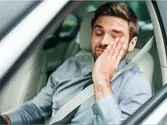
La fatiga del conductor además de otros síntomas...
Driver fatigue, as well as other symptoms...
- AReduce la capacidad de reacción.reduces the ability to react.
- BAumenta la capacidad de reacción.increases the ability to react.
- CReduce el tiempo de reacción.reduces the reaction time.
ExplanationDriver fatigue reduces the ability to react, which means we are less able to react. As a result, reaction time increases, because it takes longer to react, and so does the reaction distance.
Durante los dos primeros años con el permiso de conducir, ¿cuál es el límite máximo de alcohol?
During the first two years with a driving licence, what is the maximum alcohol limit?
- A0,10 mg/l en aire espirado = 0,2 g/l en sangre.0.10 mg/l in exhaled air = 0.2 g/l in blood.
- B0,15 mg/l en aire espirado = 0,3 g/l en sangre.0.15 mg/l in exhaled air = 0.3 g/l in blood.
- C0,25 mg/l en aire espirado = 0,5 g/l en sangre.0.25 mg/l in exhaled air = 0.5 g/l in blood.
ExplanationUnder Article 20 of the General Traffic Regulations, for the two years after getting your licence you may not exceed 0.15 mg of alcohol per litre of exhaled air, which is equal to 0.3 g per litre of blood. The general limit is 0.25 mg/l in air and 0.5 g/l in blood.
Entre los factores que influyen en la conducción de una motocicleta están...
The factors that affect riding a motorcycle include...
- AExclusivamente el estado del conductor.only the condition of the rider.
- BEl estado del conductor, del vehículo y de la vía.the condition of the rider, the vehicle and the road.
- CExclusivamente el estado de la vía.only the condition of the road.
ExplanationThe condition of the rider, the vehicle and the road all affect riding a motorcycle, because each of them can affect the rider's safety and performance. The rider's condition, such as their level of fatigue, their mood and their alcohol level, can affect their ability to react and make the right decisions. The condition of the vehicle, such as how the tyres, brakes and steering work, can affect the rider's ability to control it. And the condition of the road, such as the weather conditions and how well the rider adapts to the road, can affect grip and visibility. So all these factors are important for riding a motorcycle safely.
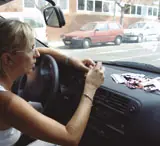
Bajo los efectos de la depresión...
Under the effects of depression...
- ADisminuyen las distracciones.distractions decrease.
- BSe pierde información del entorno.information about the surroundings is missed.
- CSe tiene más seguridad.you feel more confident.
ExplanationUnder the effects of depression, information about the surroundings is missed. The driver looks for relevant information less actively, so they may be slow to notice events that are important for safety.
¿Cuántos puntos se pierden por conducir sujetando con la mano un dispositivo de telefonía móvil?
How many points do you lose for driving while holding a mobile phone in your hand?
- A3 puntos.3 points.
- B4 puntos.4 points.
- C6 puntos.6 points.
ExplanationThe Traffic Law punishes holding a mobile phone in your hand while driving with the loss of 6 points.
¿Los accidentes causados por el sueño también ocurren durante el día?
Do accidents caused by sleepiness also happen during the day?
- ASí.Yes.
- BNo, solo ocurren por la noche.No, they only happen at night.
- CSí, pero solo en las primeras horas de la tarde.Yes, but only in the early afternoon.
ExplanationAccidents caused by sleepiness can happen at any time of day. Drowsiness is an important risk factor identified in Spain's traffic rules, which point out that other factors that can affect the driver's physical and mental abilities, including fatigue and lack of sleep, matter both during the day and at night. The Traffic and Road Safety Code mentions the need to raise awareness of drowsiness and its impact on road safety, which shows that it can cause accidents at any time, not only at night.
En caso de enfermedad leve, ¿podemos conducir?
If we have a mild illness, can we drive?
- ANo, si la enfermedad afecta al aparato respiratorio.No, if the illness affects the respiratory system.
- BNo, en ningún caso.No, never.
- CSí, conociendo nuestras limitaciones debido al estado en el que nos encontramos.Yes, if we know our limitations because of the condition we are in.
ExplanationIf we have a mild illness we can drive, but first we should find out about the possible effects the illness may have on driving and about the precautions we need to take to ensure safety on the road.

¿Cuál será la tasa máxima de alcoholemia permitida conduciendo una bicicleta?
What is the maximum alcohol level allowed when riding a bicycle?
- ALos conductores de bicicletas no tienen tasa de alcoholemia establecida.Cyclists do not have a set alcohol limit.
- B0,5 gramos de alcohol por cada litro de sangre.0.5 grams of alcohol per litre of blood.
- C0,3 gramos de alcohol por cada litro de sangre.0.3 grams of alcohol per litre of blood.
ExplanationAs a general rule, drivers of any vehicle, including bicycles, may not drive with an alcohol level above 0.5 grams of alcohol per litre of blood or 0.25 milligrams of alcohol per litre of exhaled air.
¿Qué factores del conductor pueden causar fatiga?
Which driver factors can cause fatigue?
- AConducir a la misma velocidad durante mucho tiempo, porque requiere mucha concentración.Driving at the same speed for a long time, because it requires a lot of concentration.
- BConducir durante mucho tiempo sin parar o con descansos inadecuados.Driving for a long time without stopping or with inadequate breaks.
- CConducir manteniendo los hábitos normales, lo cual no suele causar fatiga.Driving while keeping to normal habits, which does not usually cause fatigue.
ExplanationFatigue mainly appears when driving for many hours in a row or with insufficient breaks. It is recommended to stop and rest at least every two hours or every 200 kilometres; keeping a constant speed does not cause fatigue on its own, and driving with normal habits does not prevent it.
Conducir un vehículo a motor o ciclomotor con una tasa de alcohol superior a 1,2 g/l en sangre:
Driving a motor vehicle or moped with a blood alcohol level above 1.2 g/l:
- AÚnicamente puede ser sancionado con una multa de tráfico y la suspensión del permiso.can only be punished with a traffic fine and suspension of the licence.
- BPuede ser considerado un delito contra la seguridad vial.can be considered a crime against road safety.
- CEs una infracción administrativa, pero no un delito contra la seguridad del tráfico.is an administrative offence, but not a crime against road safety.
ExplanationThe correct answer is that it can be considered a crime against road safety. This is because driving a motor vehicle or moped with a blood alcohol level above 1.2 g/l is considered dangerous behaviour that puts other road users at risk. Under the Criminal Code, this can be considered a crime against road safety and be subject to criminal penalties, in addition to the corresponding administrative penalties.

Si toma analgésicos narcóticos para tratar algún dolor intenso, lo más aconsejable es…
If you take narcotic painkillers to treat severe pain, the best thing to do is...
- Aconducir con normalidad, ya que no tienen efectos secundarios.drive normally, because they have no side effects.
- Bconducir sólo de noche, ya que sus efectos secundarios son menores.drive only at night, because their side effects are smaller.
- Cno conducir durante el tratamiento.not drive during the treatment.
ExplanationNarcotic painkillers cause sleepiness and reduce attention, reflexes and coordination, so it is advisable not to drive while the treatment lasts and to consult your doctor.
Durante un viaje largo, ¿cada cuánto tiempo se tiene que descansar?
On a long journey, how often must you rest?
- AAproximadamente cada cuatro o cinco horas.About every four or five hours.
- BCada dos horas aproximadamente.About every two hours.
- CSolo cuando nos encontremos muy cansados.Only when we feel very tired.
ExplanationOn a long journey we will stop to rest every two hours or about every 200 km, even if we do not feel tired.
Una temperatura elevada en el interior del vehículo, ¿puede provocar fatiga?
Can a high temperature inside the vehicle cause fatigue?
- ASí.Yes.
- BNo.No.
- CNo, solo influye en la comodidad del conductor.No, it only affects the driver's comfort.
ExplanationPoor ventilation or a high temperature inside the vehicle can make driving less comfortable and can even affect our physical and mental state. Too much heat can make us more irritable.
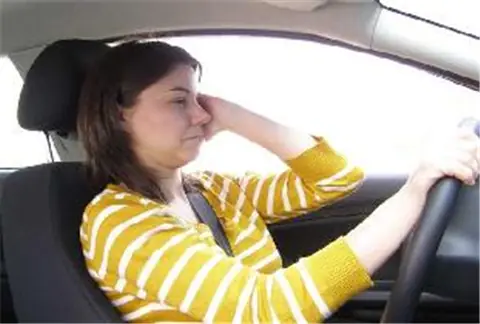
¿Qué circunstancias del entorno favorecen la aparición de la fatiga?
What environmental circumstances make fatigue appear sooner?
- ALas condiciones climatológicas adversas.Bad weather conditions.
- BCircular por una vía muy conocida.Driving on a very familiar road.
- CLas condiciones climatológicas favorables.Good weather conditions.
ExplanationBad weather conditions, such as rain, fog, snow or wind, require more attention and cause more tension, which makes fatigue appear sooner. Heat inside the vehicle, noise and poor ventilation also play a part.
All topics
- Definitions
- Documents and penalty points
- Duties of drivers and pedestrians
- Vehicle safety devices
- Vehicle controls and equipment
- Vehicle lights and horn
- Traffic signs, markings and signals
- The road and its lanes
- Speed and distances
- Manoeuvres
- Right of way
- Carrying passengers and loads
- Driving safely in difficult conditions
- Vehicle mechanics and maintenance
- Road accidents and first aid
- Defensive and eco-driving
Independent app: not affiliated with or endorsed by the DGT (Spain's Directorate-General for Traffic) or the Ministry of the Interior. The official exam is booked with the DGT and taken at its test centres. The questions here are practice material; the DGT's official question bank is not public.
Basado en datos de la Agencia Estatal Boletín Oficial del Estado (https://www.boe.es). Textos consolidados de carácter meramente informativo. La AEBOE no patrocina ni respalda este sitio.
Parte de las preguntas procede de los tests de la revista «Tráfico y Seguridad Vial» de la DGT, reproducidos con indicación de la fuente.