
DGT test · 590 questions
The driver's condition · Page 11 of 12
Alcohol, drugs, medicines, fatigue, sleepiness and distraction: how they affect driving, the legal alcohol limits and roadside testing.
Questions in this topic, with answers
590 questions, 50 per page, with the correct answer and the explanation. Page 11 of 12.
Estás detenido en un semáforo. ¿Cuándo está permitido usar el teléfono móvil para hablar?
You are stopped at a traffic light. When are you allowed to talk on your mobile phone?
- ASolo si el semáforo está en una zona urbana.Only if the traffic light is in a built-up area.
- BSolo mientras el semáforo esté en rojo.Only while the traffic light is red.
- CSolo cuando se utilice un dispositivo manos libres.Only when using a hands-free device.
ExplanationArticle 18.2 of the General Traffic Regulations prohibits using a mobile phone while driving, and being stopped at a traffic light is part of driving. The only exception is a call made without using your hands and without earphones, a headset or similar devices.
Conduciendo bajo los efectos del cannabis...
When driving under the effects of cannabis...
- ASe produce un aumento del tiempo de reacción.reaction time increases.
- BSe produce una disminución del tiempo de reacción.reaction time decreases.
- CSe produce un aumento de la distancia de frenado.braking distance increases.
ExplanationUnder the effects of cannabis, reaction time increases: the driver takes longer to react to unexpected events, so the reaction distance also increases. Once the driver reacts and presses the brake, the braking distance will be the same.
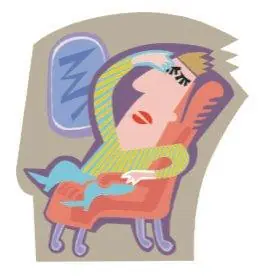
La fatiga, ¿provoca lentitud y falta de precisión en los movimientos?
Does fatigue cause slow and imprecise movements?
- ANo, la fatiga sólo produce calambres.No, fatigue only causes cramps.
- BNo.No.
- CSí, por lo cual la conducción se hace más peligrosa.Yes, which makes driving more dangerous.
ExplanationFatigue means a drop in the driver's performance, that is, in the ability to drive with normal levels of safety. Physical fatigue shows as tiredness of the muscles or of the body in general. Mental fatigue shows as a reduced ability to concentrate and to perceive the stimuli from the surroundings.
¿Puede tener un accidente debido al sueño sin haberse quedado totalmente dormido?
Can you have an accident caused by sleepiness without having fallen completely asleep?
- ASí, pero sólo por la noche.Yes, but only at night.
- BNo.No.
- CSí, los primeros síntomas de somnolencia ya afectan a la conducción.Yes, the first symptoms of drowsiness already affect driving.
ExplanationYou do not need to fall completely asleep to have an accident caused by sleepiness. When driving, the risks linked to drowsiness appear long before the driver falls asleep. The first symptoms of drowsiness already affect driving.
¿Cuál de los siguientes síntomas es más característico de la fatiga durante la conducción?
Which of the following symptoms is most typical of fatigue while driving?
- AAumento de la sensibilidad a los estímulos del tráfico y mayor rapidez en la toma de decisiones.Greater sensitivity to traffic stimuli and faster decision-making.
- BAparición de micro correcciones constantes en la trayectoria, rigidez muscular y dificultad para mantener una atención estable.Constant small corrections to the vehicle's path, muscle stiffness and difficulty keeping steady attention.
- CPeor confort en la conducción y disminución del tiempo de reacción.Less comfort when driving and a shorter reaction time.
ExplanationFatigue while driving appears after a long period of physical and mental effort, and it directly affects control of the vehicle and the driver's attention. Its most typical symptoms include the need to make constant small corrections to the vehicle's path, muscle stiffness and difficulty keeping steady attention on driving and the surroundings. These effects make driving less effective and increase the risk of making mistakes, because the driver gradually loses precision and concentration.
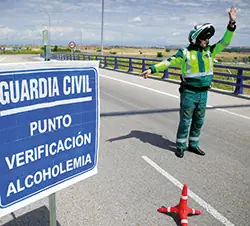
Si la antigüedad de su primer permiso de conducción es menor de 2 años, la tasa máxima de alcohol permitida para poder conducir es de...
If you have held your first driving licence for less than 2 years, the maximum alcohol level allowed for driving is...
- A0,25 miligramos de alcohol por litro de aire espirado.0.25 milligrams of alcohol per litre of exhaled air.
- B0,15 miligramos de alcohol por litro de aire espirado.0.15 milligrams of alcohol per litre of exhaled air.
- C0,3 miligramos de alcohol por litro de aire espirado.0.3 milligrams of alcohol per litre of exhaled air.
ExplanationNovice drivers (the first 2 years of holding a licence) have a lower limit: 0.15 mg/l in exhaled air, equivalent to 0.3 g/l in blood, the same limit that applies to professional drivers.
El aumento de la velocidad ¿afecta al campo visual del conductor?
Does increasing speed affect the driver's field of vision?
- ASí.Yes.
- BSí, lo amplía.Yes, it widens it.
- CNo.No.
ExplanationAs speed increases, the useful field of vision narrows. This is known as the tunnel effect.

Si se transportan niños en el vehículo...
If children are being carried in the vehicle...
- ASon una fuente importante de distracciones.they are an important source of distraction.
- BCircularemos siempre más atentos a las circunstancias del tráfico.we will always drive paying more attention to the traffic conditions.
- CEn ningún caso pueden viajar en el asiento delantero del acompañante.they may never travel in the front passenger seat.
ExplanationChildren can be an important source of distraction while driving, because their behaviour prevents the driver from paying all the attention that is needed.
¿Cuál es la tasa máxima de alcohol en sangre permitida al conductor mayor de edad de un vehículo de movilidad personal?
What is the maximum blood alcohol level allowed for an adult rider of a personal mobility vehicle?
- A0,0 g/l de sangre.0.0 g/l of blood.
- B0,15 g/l de sangre.0.15 g/l of blood.
- C0,5 g/l de sangre.0.5 g/l of blood.
ExplanationAn adult rider of a personal mobility vehicle is subject to the general limit: 0.5 grams of alcohol per litre of blood or 0.25 milligrams per litre of exhaled air. If they are under 18, the permitted level is 0.
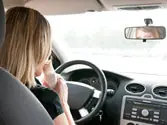
Comer y beber cuando se conduce, ¿puede provocar que el conductor se distraiga?
Can eating and drinking while driving distract the driver?
- AComer sí, beber no.Eating yes, drinking no.
- BSí.Yes.
- CNo.No.
ExplanationWhenever the driver of a vehicle does activities other than driving, these will generally cause distractions. In addition, if these other activities need the hands, it is even easier to get distracted and we will have more trouble controlling the vehicle.
¿Cual es la tasa de alcoholemia permitida para un conductor de un camión con M.M.A. no superior a 3.500 kg?
What is the alcohol level allowed for the driver of a lorry with a maximum authorised mass (MAM) of no more than 3,500 kg?
- A0,8gr por litro de sangre.0.8 g per litre of blood.
- B0,5gr, por litro de sangre.0.5 g per litre of blood.
- C0,3gr por litro de sangre.0.3 g per litre of blood.
ExplanationThe maximum alcohol level allowed for the driver of a lorry with a MAM of up to 3,500 kg is 0.5 g of alcohol per litre of blood. If the lorry's mass were over 3,500 kg, the maximum alcohol level allowed for the driver would be 0.3 g of alcohol per litre of blood.
¿Puede un motorista circular llevando el teléfono móvil entre la cara y el casco?
May a motorcyclist ride with a mobile phone placed between the face and the helmet?
- ASí, se considera un dispositivo homologado.Yes, it counts as an approved device.
- BSí, en detenciones y semáforos en rojo.Yes, when stopped and at red lights.
- CNo.No.
ExplanationDriving while using a mobile phone is forbidden, and placing it between the face and the helmet does not turn it into a hands-free system. Motorcyclists are only allowed approved wireless devices built into the helmet for intercom or navigation.
Conducir durante mucho tiempo a alta velocidad...
Driving for a long time at high speed...
- Aacelera la fatiga y aumenta la agresividad.brings on fatigue sooner and increases aggressiveness.
- Bdisminuye la fatiga pero aumenta la agresividad.reduces fatigue but increases aggressiveness.
- Cacelera la fatiga y, por tanto, disminuye la agresividad.brings on fatigue sooner and therefore reduces aggressiveness.
ExplanationDriving for many hours at high speed requires constant attention and tension, so fatigue sets in sooner. Fatigue, in turn, makes irritability and aggressiveness more likely: the two effects add up; they do not cancel each other out.
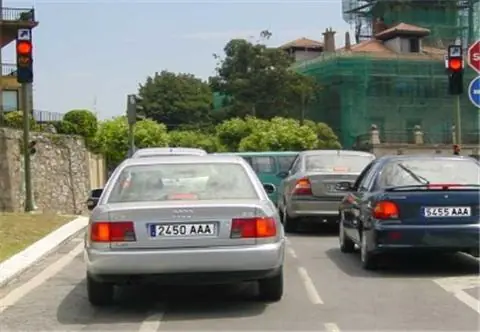
¿Puede utilizar las manos para hablar por teléfono mientras se encuentra detenido ante un semáforo?
Can you use your hands to talk on the phone while you are stopped at a traffic light?
- ASolo mientras el semáforo está en rojo.Only while the traffic light is red.
- BNo.No.
- CSí.Yes.
ExplanationBeing stopped at a traffic light or in a traffic jam is part of driving, so it is prohibited to hold the phone in your hand. You may only talk without using your hands and without earphones; to use the phone in your hand, you must stop in a place where this is allowed.
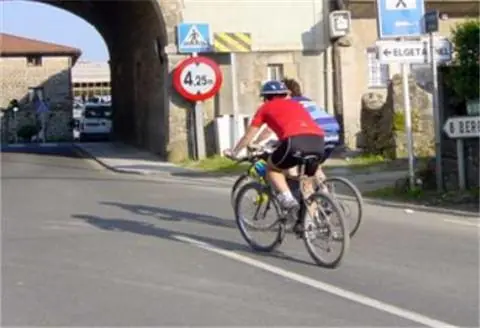
¿Cuál es la tasa máxima de alcohol permitida para el conductor mayor de edad de una bicicleta?
What is the maximum alcohol level allowed for an adult cyclist?
- A0,25 miligramos por litro de aire espirado.0.25 milligrams per litre of exhaled air.
- BLos conductores de bicicletas no están obligados a someterse a las pruebas de alcoholemia.Cyclists are not required to take alcohol tests.
- C0,15 miligramos por litro de aire espirado.0.15 milligrams per litre of exhaled air.
ExplanationAdult cyclists have the same general limit as other drivers: 0.25 milligrams per litre of exhaled air or 0.5 grams per litre of blood (Article 20 of the General Traffic Regulations). For minors the limit is 0.
Los síntomas de las alergias respiratorias pueden causar...
The symptoms of respiratory allergies can cause...
- Auna mejora de los reflejos.improved reflexes.
- Buna menor capacidad para mantener la concentración en el tráfico.a reduced ability to stay focused in traffic.
- Cuna reducción del tiempo de reacción.a shorter reaction time.
ExplanationThe symptoms of respiratory allergies, such as sneezing, itchy eyes or congestion, and some of the medicines taken for them reduce your ability to stay focused in traffic. They do not shorten reaction time or improve reflexes: if anything, they make them worse.

Cuando se padece una alergia respiratoria y se tiene una crisis de estornudos...
When you have a respiratory allergy and a sneezing fit...
- Ael conductor mantiene la misma concentración en el tráfico.the driver keeps the same concentration on the traffic.
- Bla capacidad de concentración del conductor aumenta.the driver's ability to concentrate increases.
- Cla capacidad del conductor para mantener la concentración en el tráfico disminuye.the driver's ability to keep concentrating on the traffic decreases.
ExplanationWe must bear in mind that a driver tends to close their eyes with each sneeze and so misses a lot of traffic information. That is why the ability to concentrate decreases.

El tiempo de reacción de un conductor cuando está cansado...
When a driver is tired, their reaction time...
- Aaumenta.increases.
- Bdisminuye.decreases.
- Cno varía.does not change.
ExplanationA tired driver's reaction time will be longer: they will take more time to react, so it increases.
Durante la conducción, ¿qué horas son especialmente propicias para la aparición del sueño?
When driving, which times of day are especially likely to bring on sleepiness?
- ALas últimas horas de la mañana.The late morning.
- BLas horas de la madrugada y las primeras horas de la tarde.The early hours of the night and the early afternoon.
- CLas últimas horas de la tarde y las primeras de la mañana.The late afternoon and the early morning.
ExplanationBecause of the body's circadian rhythm, drowsiness at the wheel increases in the early hours of the night (after midnight) and in the early afternoon, after lunch. It is best to avoid driving at these times or to rest beforehand.
¿Cada cuánto tiempo conviene descansar si circulamos por una autopista con buen tiempo?
How often should you rest when driving on a motorway (autopista) in good weather?
- ACada 3 ó 4 horas.Every 3 or 4 hours.
- BCada media hora.Every half hour.
- CCada 2 horas.Every 2 hours.
ExplanationWhen driving on a motorway (autopista), even in good weather and favourable conditions, we should stop and rest for at least 30 minutes every 2 hours or 200 km at most.
Tras obtener el permiso para conducir ciclomotores, ¿qué tasa de alcohol en el aire espirado no podremos superar durante los dos primeros años de conducción?
After obtaining the licence to ride mopeds, what breath alcohol level must we not exceed during the first two years of driving?
- A0,15 miligramos por litro.0.15 milligrams per litre.
- B0,25 miligramos por litro.0.25 milligrams per litre.
- C0,50 miligramos por litro.0.50 milligrams per litre.
ExplanationThe correct answer is 0.15 milligrams per litre, because during the first two years of riding with a moped licence, novice drivers have an alcohol limit of 0.15 mg per litre of exhaled air. This is part of the special rules for novice drivers.
Los accidentes debidos a distracciones suceden más...
Accidents caused by distractions happen more...
- Adurante la tarde.in the afternoon.
- Ben los meses de invierno.in the winter months.
- Cdurante el día y los fines de semana.during the day and at weekends.
ExplanationAccidents caused by distractions: - are more common among young people aged 18 to 25 and people over 70; - happen more during the day and at weekends.
¿Cuál es la tasa máxima de alcohol en aire espirado para un conductor novel?
What is the maximum breath alcohol level for a novice driver?
- A0,3 gr/litro de aire.0.3 g/litre of air.
- B0,5 gr/litro de aire.0.5 g/litre of air.
- C0,15 mg/litro de aire.0.15 mg/litre of air.
ExplanationThe general breath alcohol level is 0.25 mg per litre of air, but for novice drivers, during the 2 years after obtaining their first licence, it is 0.15 mg per litre.
¿Puede un ciclista que ha consumido estupefacientes circular?
Can a cyclist who has taken drugs ride?
- ASí, si ha consumido una pequeña cantidad.Yes, if they have taken a small amount.
- BNo.No.
- CSí, porque la bicicleta no es un vehículo de motor.Yes, because a bicycle is not a motor vehicle.
ExplanationAccording to Article 27 of the General Traffic Regulations (RGC), drivers, including cyclists, may not ride or drive if they have taken narcotics, psychotropic drugs, stimulants or other substances that alter their physical or mental state. This is a very serious offence. So the correct answer is that the cyclist may not ride, because their ability to ride the bicycle safely is impaired.
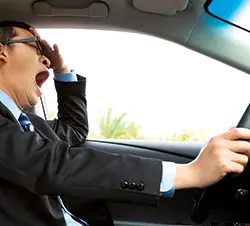
Durante la conducción, la fatiga...
While driving, fatigue...
- Ahace que aumenten los errores de forma considerable.makes mistakes increase considerably.
- Bfacilita la percepción de las señales de tráfico.makes it easier to see traffic signs.
- Chace que disminuyan los errores de forma considerable.makes mistakes decrease considerably.
ExplanationFatigue impairs attention and perception and makes reaction time longer, so the driver's mistakes increase considerably. The only effective remedy is to stop and rest.
El campo visual de los niños es limitado debido a...
Children's field of vision is limited because of...
- Asu baja estatura.their short height.
- Bsu falta de atención.their lack of attention.
- Cel escaso desarrollo del sentido de la vista, principalmente.mainly, the poor development of their sense of sight.
ExplanationStudies show that the sense of sight is similarly developed in adults and in children. But because children are shorter, their field of vision is much more limited: their eyes focus closer and they miss information from distant stimuli.
Los síntomas de las alergias respiratorias pueden producir...
The symptoms of respiratory allergies can cause...
- Aun retraso en la aparición del sueño.a delay in falling asleep.
- Buna menor capacidad para mantener la concentración en el tráfico.a reduced ability to keep concentrating on the traffic.
- Cuna disminución del tiempo de reacción.a shorter reaction time.
ExplanationToo often, behind an accident caused by distraction there is a respiratory allergy that the driver had suffered from for a long time and thought they knew very well. Respiratory allergies greatly reduce our basic abilities to drive safely. That is why it is important to avoid driving during allergy attacks and to take certain precautions at the wheel.
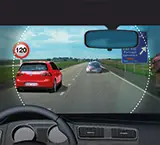
¿Qué relación existe entre la velocidad y el campo de visión del conductor?
What is the relationship between speed and the driver's field of vision?
- AA mayor velocidad, menor campo visual.The higher the speed, the narrower the field of vision.
- BA menor velocidad, menor campo visual.The lower the speed, the narrower the field of vision.
- CA mayor velocidad, mayor campo visual.The higher the speed, the wider the field of vision.
ExplanationAs speed increases, the useful field of vision narrows and your eyes focus on a distant point: this is the so-called tunnel effect. You lose information from the sides, such as pedestrians, cyclists or vehicles joining the road.

¿Cuál es la tasa máxima de alcohol para un conductor durante su segundo año desde la obtención del permiso de conducir?
What is the maximum alcohol level for a driver during their second year after obtaining the driving licence?
- A0,3 g/l de sangre.0.3 g/l of blood.
- B0,5 g/l sangre.0.5 g/l of blood.
- C0,25 g/l sangre.0.25 g/l of blood.
ExplanationDuring the first 2 years after obtaining the first driving licence, the maximum alcohol level will be 0.3 grams of alcohol per litre of blood. A novice driver must display the 'L' plate for only 1 year, but the alcohol restriction lasts 2 years.
¿Puede sentir sueño conduciendo aunque haya dormido suficiente?
Can you feel sleepy while driving even if you have slept enough?
- ASí, en las primeras horas de la noche.Yes, in the first hours of the night.
- BNo.No.
- CSí, especialmente en horas de madrugada y las primeras horas de la tarde.Yes, especially in the early hours of the night and the early afternoon.
ExplanationEven if they have slept enough, a driver can feel drowsy, especially in the early hours of the night (between 3:00 and 5:00) and in the early afternoon (just after lunch, during digestion, between 14:00 and 16:00). The most important rules to avoid an accident caused by sleepiness or fatigue are: - If you feel tired or sleepy while driving, the best thing is to stop and rest in a suitable place and sleep for about 20 or 30 minutes. - Rest for 20 to 30 minutes every 2 hours or every 200 kilometres at most. - Always watch for the signs and symptoms of sleepiness or fatigue.
¿Qué efectos tiene el sueño sobre los conductores?
What effects does sleepiness have on drivers?
- AAumenta el tiempo de reacción.It increases reaction time.
- BDisminuye el tiempo de reacción.It reduces reaction time.
- CAumenta la capacidad de reacción.It increases the ability to react.
ExplanationSleepiness increases reaction time: the driver takes longer to decide what to do when something unexpected happens, and their ability to react decreases.
¿Cuál es la tasa máxima de alcohol en sangre permitido durante los 2 primeros años desde la obtención de un primer permiso de conducción?
What is the maximum blood alcohol level allowed during the first 2 years after obtaining a first driving licence?
- A0,3 gr/l.0.3 g/l.
- B0,15 gr/l.0.15 g/l.
- C0,50 gr/l.0.50 g/l.
ExplanationDuring the first two years after obtaining the first driving licence, the maximum blood alcohol level is 0.3 g/l. Measured in breath, it is 0.15 mg/l of air.
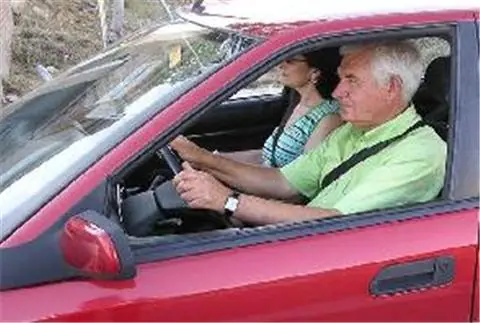
La edad avanzada, ¿puede ser un factor que favorezca la distracción al volante?
Can old age be a factor that makes distraction at the wheel more likely?
- ASí, siempre.Yes, always.
- BSí, si no se toman las debidas precauciones.Yes, if the proper precautions are not taken.
- CNo.No.
ExplanationWith age, eyesight, hearing, reflexes and the ability to pay attention to several things at once may decline, which makes distraction more likely. By taking precautions, such as avoiding night driving or heavy traffic and having regular health checks, the risk is reduced.
Un conductor menor de edad, ¿qué tasa máxima de alcoholemia tiene permitida en aire espirado para circular?
What is the maximum breath alcohol level allowed for a driver under 18?
- A0,15 miligramos por litro.0.15 milligrams per litre.
- B0,0 miligramos por litro.0.0 milligrams per litre.
- C0,25 miligramos por litro.0.25 milligrams per litre.
ExplanationSince the 2022 reform of the Traffic Law, drivers under 18 may not drive with any alcohol level: the limit is 0.0 mg/l in exhaled air, whatever the vehicle, including mopeds and bicycles.
Si usted realiza un viaje de largo recorrido, ¿cada cuánto tiempo debe descansar?
If you are making a long journey, how often should you rest?
- APuede conducir mientras no se encuentre cansado.You can drive as long as you do not feel tired.
- BCada 5 horas aproximadamenteAbout every 5 hours.
- CCada 2 horas o 200 Km aproximadamente.About every 2 hours or 200 km.
ExplanationOn a long journey you should rest every 2 hours or every 200 kilometres, even if you do not feel physically tired.
¿Pueden determinados anuncios relacionados con la conducción influir en el comportamiento de conducción de algunos conductores jóvenes?
Can certain driving-related advertisements influence the driving behaviour of some young drivers?
- ALa publicidad sólo influye en el comportamiento de los conductores novatos.Advertising only influences the behaviour of novice drivers.
- BSí, especialmente aquellos que fomentan la conducción arriesgada.Yes, especially those that encourage risky driving.
- CNo, la publicidad no influye en el comportamiento de los jóvenes.No, advertising does not influence the behaviour of young people.
ExplanationYes, certain driving-related advertisements can influence the behaviour of some young drivers, especially those that promote or glorify risky or reckless driving. Advertising can have a significant impact on young people's perception of and attitudes towards driving, because they may see certain behaviours as acceptable or desirable based on what they see in adverts. For example, adverts showing dangerous manoeuvres or extreme speeds could lead some young people to copy this behaviour, believing it is normal or exciting. That is why it is important to be critical of the messages we receive through advertising and always to drive safely and responsibly.
Durante un desplazamiento largo, ¿cada cuánto tiempo pararemos para descansar?
On a long journey, how often should we stop to rest?
- ACada 3 o 4 horas.Every 3 or 4 hours.
- BCada 2 horas o cada 200 km recorridos.Every 2 hours or every 200 km driven.
- CCada 100 km, aproximadamente.About every 100 km.
ExplanationOn a long journey we should stop every 2 hours of driving or every 200 kilometres. These stops should last at least 20 minutes so that we can rest.
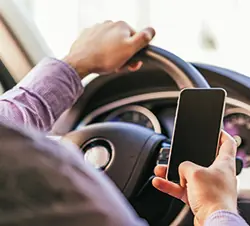
Normalmente, ¿qué ocurre cuando un conductor sufre una distracción al volante?
What normally happens when a driver is distracted at the wheel?
- AEnciende las luces de emergencia o pisa el pedal de freno reiteradamente.They switch on the hazard warning lights or press the brake pedal repeatedly.
- BPisa el pedal de freno en lugar del acelerador.They press the brake pedal instead of the accelerator.
- CTarda más tiempo en reaccionar ante una situación de riesgo.They take longer to react to a risky situation.
ExplanationDistraction takes attention away from the road: the driver spots the hazard later and takes longer to react, which makes the stopping distance longer and greatly increases the risk.
Para un conductor profesional, ¿cuál es la tasa máxima permitida de alcohol en sangre?
For a professional driver, what is the maximum blood alcohol level allowed?
- A0.5 gr/l.0.5 g/l.
- B0.3 gr/l.0.3 g/l.
- C0.25 gr/l.0.25 g/l.
ExplanationFor professional drivers, the maximum blood alcohol level is 0.3 grams of alcohol per litre of blood, which is equivalent to 0.15 milligrams of alcohol per litre of air.
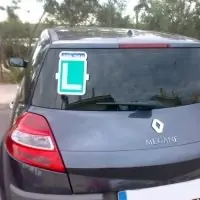
¿Cuál es la tasa máxima de alcohol permitida para los conductores en general en aire espirado?
What is the general maximum breath alcohol level allowed for drivers?
- A0,25 miligramos por litro de aire espirado.0.25 milligrams per litre of exhaled air.
- B0,15 miligramos por litro de aire espirado.0.15 milligrams per litre of exhaled air.
- C0,50 miligramos por litro de aire espirado.0.50 milligrams per litre of exhaled air.
ExplanationThe general maximum level is 0.25 mg of alcohol per litre of exhaled air, equivalent to 0.5 g per litre of blood. For novice and professional drivers, the limit goes down to 0.15 mg per litre of air.
¿Cuál es la tasa máxima de alcohol en sangre para conductores profesionales?
What is the maximum blood alcohol level for professional drivers?
- A0,5 g/l0.5 g/l
- B0,3 g/l0.3 g/l
- C0,1 g/l0.1 g/l
ExplanationProfessional drivers have a lower limit: 0.3 g/l in blood (0.15 mg/l in exhaled air).
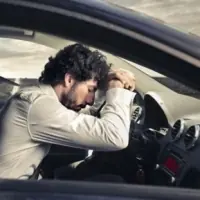
La principal causa de fatiga al volante es conducir...
The main cause of fatigue at the wheel is driving for...
- ALargos periodos con descansos adecuados.long periods with adequate rest breaks.
- BCortos periodos con descansos adecuados.short periods with adequate rest breaks.
- CLargos periodos con descansos muy breves.long periods with very short rest breaks.
ExplanationThe most important rules to avoid an accident caused by sleepiness or fatigue are: - If you feel tired or sleepy while driving, the best thing is to stop and rest in a suitable place and sleep for about 20 or 30 minutes. - Rest for 20 to 30 minutes every 2 hours or every 200 kilometres at most. - Always watch for the signs and symptoms of sleepiness or fatigue.
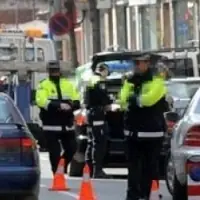
¿Puede la Autoridad someter a un conductor de bicicleta a realizar la prueba de alcoholemia?
Can the authorities require a cyclist to take an alcohol test?
- ANo, solo cuando circulen fuera del carril biciNo, only when they are riding outside the cycle lane.
- BSí.Yes.
- CNo, solo a los conductores de vehículos a motorNo, only drivers of motor vehicles.
ExplanationA cyclist must take alcohol and drug tests when requested by the authorities if they are involved in a road accident, show clear symptoms, or are reported for committing an offence.
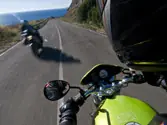
¿Tienen permitido los conductores de motocicletas utilizar, durante la conducción, dispositivos inalámbricos integrados en el casco con fines de intercomunicación o navegación?
Are motorcycle riders allowed to use wireless devices built into the helmet for intercom or navigation while riding?
- ASí, si están certificados u homologados y no afectan a la seguridad de la conducción.Yes, if they are certified or approved and do not affect riding safety.
- BSí, y también cualquier auricular, porque son dispositivos de manos libres.Yes, and any earphones too, because they are hands-free devices.
- CNo, porque está prohibida su utilización durante la conducción.No, because using them while riding is prohibited.
ExplanationAccording to Article 18.2.a of the General Traffic Regulations (RGC) (as worded by Royal Decree 518/2026), an exception to the prohibition is made for certified or approved wireless devices built into the protective helmet of motorcycle and moped riders, used only for intercom or navigation and provided they do not affect riding safety. Earphones that are not built into the helmet are still prohibited.
¿Cuándo puede la somnolencia ser un riesgo para la conducción?
When can drowsiness be a risk for driving?
- AInstantes antes de que el conductor se quede dormido.Moments before the driver falls asleep.
- BMucho antes de que el conductor se quede dormido.Long before the driver falls asleep.
- CSólo durante la noche.Only at night.
ExplanationThe risks of drowsiness while driving appear long before the driver falls asleep. We should know that accidents caused by sleepiness do not only happen at night.
¿En qué tipo de vías se pueden sufrir más distracciones?
On which types of road are you more likely to be distracted?
- AEn autopistas y autovías.On motorways (autopistas) and dual carriageways (autovías).
- BEn travesías.On travesías (stretches of road through a town).
- CEn vías urbanas.On roads in built-up areas.
ExplanationThere is more risk of distraction on motorways (autopistas) and dual carriageways (autovías), because driving on them is monotonous.

Si su permiso de conducir tiene un año de antigüedad, ¿cuál es tasa máxima permitida de alcohol?
If you have held your driving licence for one year, what is the maximum alcohol level allowed?
- A0,25 miligramos por litro de aire espirado.0.25 milligrams per litre of exhaled air.
- B0,30 miligramos por litro de aire espirado.0.30 milligrams per litre of exhaled air.
- C0,15 miligramos por litro de aire espirado.0.15 milligrams per litre of exhaled air.
ExplanationDuring the first two years of holding a licence, the lower limit for novice drivers applies: 0.15 mg/l of alcohol in exhaled air, equivalent to 0.3 g/l in blood, the same as for professional drivers.
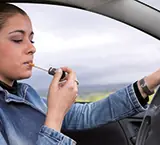
Fumar al volante...
Smoking at the wheel...
- AEs una conducta que puede interferir en la conducción y provocar un accidente.is a behaviour that can interfere with driving and cause an accident.
- BRelaja y proporciona serenidad al fumador, lo que repercute positivamente en la conducción.relaxes the smoker and makes them calm, which has a positive effect on driving.
- CEs la principal causa de distracción durante la conducción.is the main cause of distraction while driving.
ExplanationSmoking means taking one hand off the wheel, and the smoke or falling ash can be distracting, so it can interfere with driving and cause an accident. However, it is not the main cause of distraction.
En caso de padecer una enfermedad, ¿hay que preguntar al médico sobre las precauciones que se deben tomar para conducir?
If you have an illness, should you ask your doctor about the precautions to take when driving?
- ANo.No.
- BSí.Yes.
- CSólo cuando la enfermedad es crónica.Only when the illness is chronic.
ExplanationMany illnesses, and the medicines used to treat them, can affect your ability to drive: reflexes, vision, attention or drowsiness. So with any illness, chronic or temporary, you should ask your doctor whether you can drive and with what precautions.
Si se bebe alcohol con el estómago vacío (en ayunas):
If you drink alcohol on an empty stomach (without having eaten):
- ASe absorbe más lentamente que con el estómago lleno.It is absorbed more slowly than on a full stomach.
- BSe absorbe más rápidamente, alcanzando antes tasas altas.It is absorbed more quickly, reaching high levels sooner.
- CNo llega a pasar a la sangre.It does not get into the blood.
ExplanationOn an empty stomach, alcohol is absorbed faster, so the alcohol level rises sooner and higher.
All topics
- Definitions
- Documents and penalty points
- Duties of drivers and pedestrians
- Vehicle safety devices
- Vehicle controls and equipment
- Vehicle lights and horn
- Traffic signs, markings and signals
- The road and its lanes
- Speed and distances
- Manoeuvres
- Right of way
- Carrying passengers and loads
- Driving safely in difficult conditions
- Vehicle mechanics and maintenance
- Road accidents and first aid
- Defensive and eco-driving
Independent app: not affiliated with or endorsed by the DGT (Spain's Directorate-General for Traffic) or the Ministry of the Interior. The official exam is booked with the DGT and taken at its test centres. The questions here are practice material; the DGT's official question bank is not public.
Basado en datos de la Agencia Estatal Boletín Oficial del Estado (https://www.boe.es). Textos consolidados de carácter meramente informativo. La AEBOE no patrocina ni respalda este sitio.
Parte de las preguntas procede de los tests de la revista «Tráfico y Seguridad Vial» de la DGT, reproducidos con indicación de la fuente.