
DGT test · 539 questions
Vehicle mechanics and maintenance · Page 2 of 11
Engine, brakes, steering, suspension and tyres: how they work and what maintenance prevents breakdowns and crashes.
Questions in this topic, with answers
539 questions, 50 per page, with the correct answer and the explanation. Page 2 of 11.
Cuando aparezcan los primeros signos de desgaste en las pastillas de freno, ¿qué debemos hacer?
When the first signs of wear appear on the brake pads, what should we do?
- AEsperar a que aparezcan chirridos anormales al frenar.Wait until there is abnormal squealing when braking.
- BComprobar mediante observación directa si las pastillas de freno están desgastadas.Check by looking directly whether the brake pads are worn.
- CSustituir las pastillas por otras nuevas en cuanto aparezcan los primeros signos.Replace the pads with new ones as soon as the first signs appear.
ExplanationBrake pads are a safety component: if they wear too much, the car brakes less well and the discs can be damaged. That is why you must replace them as soon as the first signs of wear appear, without waiting to hear squealing when braking.
La profundidad mínima legal del dibujo de los neumáticos es:
The legal minimum tyre tread depth is:
- A1,0 mm1.0 mm
- B1,6 mm1.6 mm
- C2,0 mm2.0 mm
ExplanationThe legal minimum tread depth is 1.6 mm in the main grooves. It is recommended to change tyres at 3 mm to keep good grip in the wet.
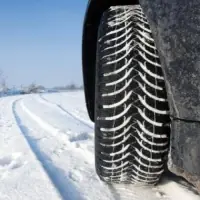
¿Cómo se conoce al fenómeno en que la superficie del neumático se agarra al pavimento?
What is the name of the effect by which the tyre surface grips the road surface?
- AEstabilidadStability
- BResistenciaResistance
- CAdherenciaGrip
ExplanationGrip is what allows (or does not allow) a vehicle's tyres to hold onto the surface of a road. Grip can be reduced, for example, when the road is wet or icy.
Si la banda de rodadura de los neumáticos presenta un desgaste más acusado en la parte central que en los laterales, esto indica...
If the tyre tread is more worn in the centre than at the edges, this shows...
- AQue los neumáticos llevan la presión correcta.That the tyres have the correct pressure.
- BQue los neumáticos deberían ir más inflados.That the tyres should be inflated more.
- CQue los neumáticos deberían ir menos inflados.That the tyres should be inflated less.
ExplanationIf the tread wears more in the centre than at the sides, the tyre has too much pressure: it bulges and rests mainly on its central part. The pressure must be reduced to the one recommended by the manufacturer. Wear at the sides shows the opposite.
¿Qué circunstancias pueden hacer que los neumáticos se desgasten más de lo habitual?
What can make tyres wear more than usual?
- ALas aceleraciones fuertes y los frenazos bruscos.Hard acceleration and sudden braking.
- BLlevar siempre los neumáticos con la presión adecuada.Always having the tyres at the right pressure.
- CCircular con una velocidad moderada.Driving at a moderate speed.
ExplanationHard acceleration and sudden braking can make tyres wear more than usual because of the friction and force on them during these manoeuvres. This can make the tread wear faster and shorten the life of the tyres. It is important to drive smoothly and moderately to avoid early tyre wear.
Si la rueda de repuesto es igual a las demás, ¿Qué presión de inflado deberemos darle?
If the spare wheel is the same as the other wheels, what pressure should we inflate it to?
- ALa más alta de las fijadas por el fabricante.The highest of the pressures set by the manufacturer.
- BLa recomendada por el fabricante para el resto de las ruedas.The pressure recommended by the manufacturer for the other wheels.
- CLa más baja de las fijadas por el fabricante.The lowest of the pressures set by the manufacturer.
ExplanationA vehicle's tyres must always be inflated to the pressure recommended by the manufacturer for that type of vehicle, except the spare wheel, which must be inflated to the highest of the pressures set by the manufacturer.
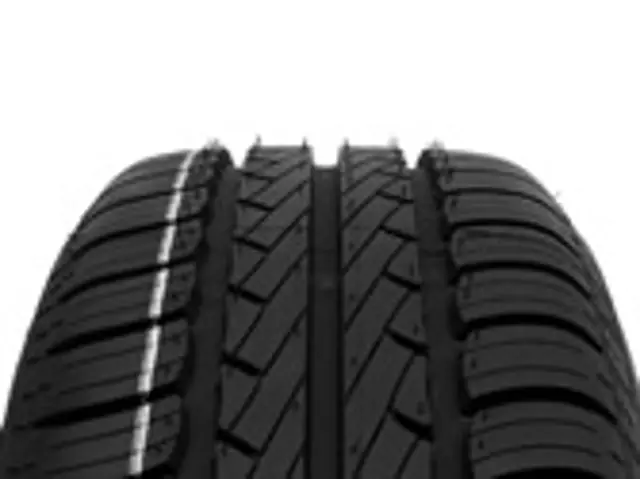
Para circular con seguridad, la profundidad mínima del dibujo de los neumáticos debe ser de...
To drive safely, the minimum tyre tread depth must be…
- A1,6 milímetros.1.6 millimetres.
- B1,5 milímetros.1.5 millimetres.
- C1,2 milímetros.1.2 millimetres.
ExplanationThe main tread grooves of the tyres on cars, light vans and light trailers must be at least 1.6 mm deep (Annex VII of the General Vehicle Regulations). Below that, the tyre clears water poorly and the risk of aquaplaning increases.
Un vehículo circula con poca presión en las ruedas. ¿Cuánto combustible consumirá?
A vehicle is being driven with low tyre pressure. How much fuel will it use?
- AIgual que con la presión normal.The same as with normal pressure.
- BMenos que con la presión normal.Less than with normal pressure.
- CMás que con la presión normal.More than with normal pressure.
ExplanationWith low pressure the tyre deforms more and rolling resistance increases, so the engine needs more energy to move the vehicle and fuel consumption rises. The tyre also heats up and wears out sooner.
La profundidad mínima legal del dibujo de la banda de rodadura de los neumáticos es:
The legal minimum tyre tread depth is:
- A1,6 mm.1.6 mm.
- B3 mm.3 mm.
- C0,8 mm.0.8 mm.
ExplanationThe legal minimum depth of the tyre's main grooves is 1.6 mm.
¿Qué produce un motor de combustión?
What does a combustion engine produce?
- AGas naturalNatural gas
- BDióxido de carbonoCarbon dioxide
- CMetanoMethane
ExplanationThe combustion process in the engine produces various gases and products; the most important are carbon monoxide, carbon dioxide, oxygen, nitrogen and water.
La rueda de repuesto de nuestro vehículo, ¿en qué condiciones debe estar?
What condition should our vehicle's spare wheel be in?
- ADebe tener una presión menor que las demás ruedas.It should have a lower pressure than the other wheels.
- BPuede estar en mal estado, porque solo se usa en emergencias.It may be in poor condition, because it is only used in emergencies.
- CDebe estar en condiciones adecuadas para ser utilizada en cualquier momento.It should be in suitable condition to be used at any time.
ExplanationThe spare wheel must be in a condition to be used at any time: with adequate tread, no damage and the correct pressure. It should be checked along with the others, because it loses air over time even if it is not used.
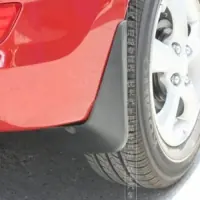
¿Qué es aconsejable poner junto a las ruedas para complementar el efecto del guardabarros?
What is it advisable to fit next to the wheels to add to the effect of the mudguard?
- APiedras de cantos redondeadosRound-edged stones
- BFrenos de manoHandbrakes
- CCortinillas o gomasMud flaps or rubber strips
ExplanationVehicle bodies are designed to prevent spray from the wheels, except for special vehicles, which are not required to. Fitting rubber strips or mud flaps at the wheels to prevent spray is recommended.
¿Qué elemento proporciona energía eléctrica al vehículo mientras el motor está en movimiento?
What part supplies electrical power to the vehicle while the engine is running?
- ALa batería.The battery.
- BEl sistema de carga.The charging system.
- CEl árbol de transmisión.The drive shaft.
ExplanationThe battery is the part of the electrical system that allows the engine to be started and supplies power to the vehicle's electrical equipment. It needs maintenance by the user: even with so-called maintenance-free batteries, you need to check that the terminals are clean, tight and covered in grease. The charging system gives the vehicle the electrical power it needs while the engine is running. When the system fails (faulty alternator, broken or loose belt, etc.), a warning light comes on on the dashboard to show that it is not charging enough.
Los amortiguadores en mal estado pueden...
Shock absorbers in poor condition can...
- AAumentar la distancia de frenado.Increase braking distance.
- BReducir la distancia de frenado.Reduce braking distance.
- CAumente el tiempo de reacción.Increase reaction time.
ExplanationA shock absorber in poor condition reduces the contact between the tyre and the road surface, so the braking distance will increase.
Si la presión de los neumáticos es menor que la recomendada, ¿aumenta el consumo de combustible?
If tyre pressure is lower than recommended, does fuel consumption increase?
- ASí, porque aumenta la fricción con la carretera.Yes, because friction with the road increases.
- BSí, y además el desgaste es mayor en el centro de la banda de rodadura.Yes, and the tread also wears more in the centre.
- CNo, si las presiones están compensadas entre todos los neumáticos del vehículo.No, if the pressures are the same in all the vehicle's tyres.
ExplanationWith lower pressure than recommended, the tyre deforms more and its rolling resistance increases, so the engine needs more energy and fuel consumption goes up. The tyre also wears more at the edges, not in the centre, and having all the wheels equally low does not make up for it.
¿A qué se le conoce como el "efecto fading"?
What is known as the "fading effect"?
- AA la falta de eficacia de la frenada por el calentamiento de los frenos.Loss of braking effectiveness because the brakes overheat.
- BA un bloqueo de las ruedas por abuso del freno.Wheels locking because the brakes are overused.
- CA la pérdida de contacto de los neumático con el pavimento cuando la calzada esta mojada.Tyres losing contact with the road surface when the road is wet.
ExplanationThe "fading effect" means loss of braking effectiveness because the brakes get too hot. When brakes overheat, they can lose their ability to brake effectively for a while; this is called "fading". It can happen with aggressive driving or when braking for a long time, such as on steep descents or when braking repeatedly in a short time. In these situations, the heat can reduce the brakes' ability to create the necessary friction between the pads and the discs, which temporarily reduces the vehicle's braking ability.
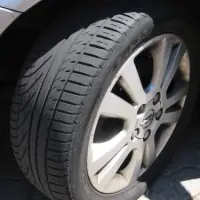
¿Qué movimiento recibe la llanta de una rueda?
What movement does the wheel rim receive?
- AEl movimiento de giroRotation
- BEl movimiento de marcha atrásReversing movement
- CEl movimiento en adelantamientosMovement when overtaking
ExplanationA vehicle's wheel rim is the rigid part of the wheel, made of metal, which receives the rotation and on which the tyre is fitted.
¿En qué consisten los kits reparapinchazos que se utilizan como alternativa a la rueda de repuesto clásico de tipo "galleta"?
What are the puncture repair kits used as an alternative to the classic space-saver spare wheel?
- ASon pequeños trozos de caucho que se pegan al neumático para reparar la zona afectada por el pinchazo.They are small pieces of rubber that are stuck onto the tyre to repair the area with the puncture.
- BConsiste en una sustancia, normalmente una espuma que se debe inyectar en el neumático para poder seguir circulando pese al pinchazo.They are a substance, usually a foam, which is injected into the tyre so you can keep driving despite the puncture.
- CConsiste en un tipo de neumático especial que, pese al pinchazo, no necesita repuesto, permite seguir circulando a menor velocidad hasta un máximo de 150 km.They are a special type of tyre that needs no spare despite the puncture and lets you keep driving at a lower speed for up to 150 km.
ExplanationA puncture repair kit contains a sealing liquid, usually as a foam, which is injected into the tyre through the valve together with air from a small compressor. It lets you keep driving temporarily, at reduced speed, until the wheel is repaired.
Si los neumáticos de nuestro vehículo tienen demasiada presión de aire...
If our vehicle's tyres have too much air pressure...
- ASe desgastarán más por la parte central.They will wear more in the centre.
- BSe desgastarán más por los lados.They will wear more at the sides.
- CNo influirá en el desgaste.It will not affect wear.
ExplanationIf our vehicle's tyre has too much air pressure, it will wear more in the centre of the tread. When the pressure is lower than it should be, the tyres wear more at the edges or sides of the tread.
Después de arrancar un vehículo con el motor de gasolina...
After starting a vehicle with a petrol engine...
- AEsperaremos unos segundos antes de iniciar la marcha.We will wait a few seconds before driving off.
- BIniciaremos la marcha inmediatamente.We will drive off immediately.
- CEsperaremos unos minutos antes de iniciar la marcha.We will wait a few minutes before driving off.
ExplanationIf the engine is a petrol engine, you should drive off after starting it. If it is a diesel engine, you should wait a few seconds.
¿Qué haremos si fallan los frenos?
What will we do if the brakes fail?
- ATirar bruscamente del freno de mano.Pull the handbrake sharply.
- BChocar contra un objeto rígido de la vía para detenerse lo antes posible.Crash into a solid object by the road to stop as soon as possible.
- CBombear el pedal de freno por si alguno de los circuitos aún mantiene capacidad de frenado.Pump the brake pedal in case one of the circuits still has some braking power.
ExplanationIf the brakes fail, it is vital to stay calm and act in a controlled way. The correct answer is to pump the brake pedal, because if one of the circuits of the braking system still works, this could give some braking. This is in line with the General Traffic Regulations, which say that the vehicle must be able to stop effectively and safely. The other options, such as pulling the parking brake sharply or crashing into a solid object, could create more dangerous situations and are not a safe solution to the brake problem.
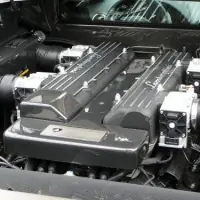
¿Qué parte del automóvil transfiere la potencia del motor a las ruedas?
Which part of the car transfers the engine's power to the wheels?
- ALa direcciónThe steering
- BLa suspensiónThe suspension
- CLa transmisiónThe transmission
ExplanationThe transmission is the set of mechanisms in the vehicle that pass the engine's power to the wheels. It also allows the vehicle to move off from a standstill, keeps the engine running while the vehicle is not moving, and allows it to move backwards, for example to park.
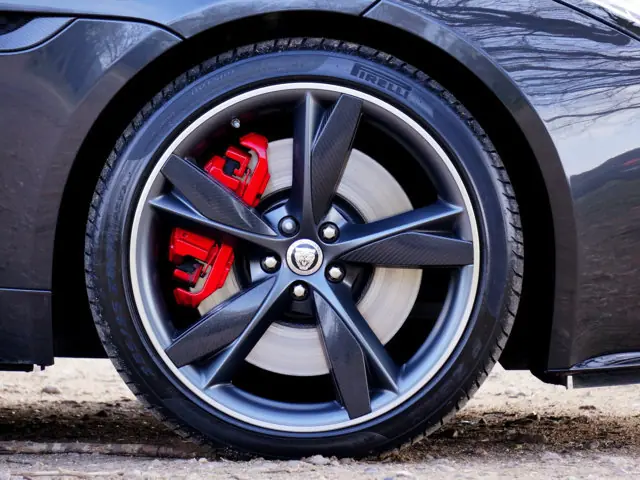
¿Qué hace el sistema de frenos ABS?
What does the ABS braking system do?
- APermite mantener bien el control sobre la dirección el vehículo.It helps you keep good control of the vehicle's steering.
- BDetecta cuando las ruedas delanteras no se agarran bien.It detects when the front wheels are not gripping well.
- CActúa por sí mismo cuando el vehículo patina en una curva.It acts on its own when the vehicle skids on a bend.
ExplanationABS stops the wheels from locking when you brake hard, so the vehicle still responds to the steering wheel and you can steer round an obstacle while braking. It does not detect on its own that the front wheels are losing grip, and it does not act unless you press the brake.
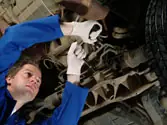
Circular con el filtro del aire sucio, ¿influye en la contaminación producida por el vehículo?
Does driving with a dirty air filter affect the pollution produced by the vehicle?
- ANo, sólo afecta al gasto de combustible.No, it only affects fuel consumption.
- BSí.Yes.
- CSí, la contaminación será menor al entrar menos aire en el motor.Yes, pollution will be lower because less air gets into the engine.
ExplanationA dirty air filter (dust, insects, impurities, etc.) stops the engine from getting all the air it needs to perform at its best, which increases fuel consumption and pollution. That is why it is important to check it regularly, bearing in mind that it gets dirtier in summer than in winter.
Si usted sustituye, en viaje, una rueda pinchada por la rueda de repuesto siendo ésta una "rueda de uso temporal"...
If, during a journey, you replace a punctured wheel with the spare wheel and it is a "temporary-use wheel"...
- ANo puede circular con ella; debe solicitar una grúa.You cannot drive with it; you must call a tow truck.
- BPuede continuar su viaje normalmente hasta llegar a su destino.You can continue your journey normally until you reach your destination.
- CEs conveniente dirigirse al taller más cercano para arreglar la rueda y volver a colocarla.It is advisable to go to the nearest garage to have the wheel repaired and put back on.
ExplanationA temporary-use wheel, narrower than normal ones, is intended only to get you out of trouble and usually has a limited maximum speed set by the manufacturer. So you can drive with it, carefully, to the nearest garage to have the punctured wheel repaired and fitted again.
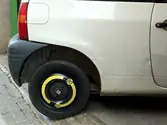
Al circular con una rueda de repuesto de uso temporal deberemos tener en cuenta...
When driving with a temporary-use spare wheel, we must bear in mind...
- AQue si está homologada podemos circular con ella en las mismas condiciones en que lo haríamos con una rueda normal.That if it is approved, we can drive with it in the same conditions as with a normal wheel.
- BQue se tendrán que seguir las indicaciones del fabricante para este tipo de ruedas.That the manufacturer's instructions for this type of wheel must be followed.
- CQue estará prohibido circular por autopista con dicha rueda.That driving on a motorway (autopista) with this wheel is prohibited.
ExplanationTemporary-use wheels must be used in the conditions set by their manufacturer.
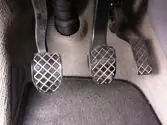
Una de las causas más frecuentes del fallo de los frenos es...
One of the most common causes of brake failure is...
- ALa falta de líquido de freno.Lack of brake fluid.
- BLa cristalización del líquido de frenos.Crystallisation of the brake fluid.
- CEl mal estado de los amortiguadores.Shock absorbers in poor condition.
ExplanationThe most common causes of brake failure are lack of brake fluid, air in the brake circuit, overheating, worn brake shoes or pads, and brakes acting unevenly.
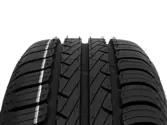
Si un neumático presenta mayor desgaste por la parte central de su banda de rodadura, ¿a qué será debido?
If a tyre shows more wear in the central part of its tread, what will be the cause?
- ALlevará más presión que la recomendada por el fabricante.It has more pressure than the manufacturer recommends.
- BLlevará menos presión que la recomendada por el fabricante.It has less pressure than the manufacturer recommends.
- CLas ruedas estarán desequilibradas.The wheels are unbalanced.
ExplanationBear in mind that a tyre with the wrong pressure wears unevenly, has a higher risk of a blowout and can increase fuel consumption. * With a pressure lower than the manufacturer's: - They wear more at the sides of the tread. - They flex and heat up more. - The risk of a blowout increases. - Grip is reduced and the risk of aquaplaning increases (the tyres cannot clear the layer of water on the road and lose grip). - Fuel consumption increases. * With a pressure higher than the manufacturer's: - They wear more in the centre. - The area of contact with the road and grip are reduced. - They do not absorb bumps in the road well (they vibrate more and the suspension wears).
Si se revienta un neumático, ¿es correcto frenar de golpe?
If a tyre bursts, is it correct to brake sharply?
- ASí.Yes.
- BSolo si el reventón es en una rueda trasera.Only if the burst is on a rear wheel.
- CNo.No.
ExplanationIf a tyre bursts, you must hold the steering wheel firmly, keep your course and reduce speed gradually by releasing the accelerator. Braking sharply makes the vehicle unstable and can make you lose control, whichever wheel is affected.
¿Qué se debe comprobar en los neumáticos además de la presión?
Apart from the pressure, what should be checked on the tyres?
- ALa profundidad del dibujo y la ausencia de cortes o deformaciones.The tread depth and that there are no cuts or deformations.
- BEl color de la llanta.The colour of the wheel rim.
- CLa marca del fabricante del vehículo.The make of the vehicle manufacturer.
ExplanationApart from the pressure, you need to watch the tread depth and the general condition (cuts, bulges, wear).
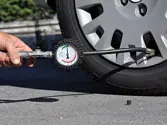
Un neumático con más presión que la recomendada por el fabricante provocará...
A tyre with more pressure than the manufacturer recommends will cause...
- AUn mayor desgaste debido al calentamiento.More wear because of heating.
- BFalta de adherencia al asfalto.Lack of grip on the road surface.
- CMayor agarre del dibujo al pavimento.Better grip of the tread on the road surface.
ExplanationIt is important to check tyre pressure at least once or twice a month. We will do it when the tyres are cold, keeping to the pressures recommended by the manufacturer. Bear in mind that a tyre with the wrong pressure wears unevenly, has a higher risk of a blowout and can increase fuel consumption. * With a pressure lower than the manufacturer's: - They wear more at the edges. - They flex and heat up more. - The risk of a blowout increases. - Grip is reduced and the risk of aquaplaning increases (the tyres cannot clear the layer of water on the road and lose grip). - Fuel consumption increases. * With a pressure higher than the manufacturer's: - They wear more in the centre. - The area of contact with the road and grip are reduced. - They do not absorb bumps in the road well (they vibrate more and the suspension wears).
¿Cuál de los frenos detiene a la motocicleta en un espacio visiblemente más corto?
Which brake stops a motorcycle in a clearly shorter distance?
- AEl freno trasero.The rear brake.
- BEl delantero o el trasero, indistintamente.The front or the rear brake, either one.
- CEl freno delantero.The front brake.
ExplanationThe front brake stops the motorcycle in a clearly shorter distance because most of the braking force is concentrated on the front wheel. When you apply the front brake, the vehicle's weight shifts forwards, which increases the grip of the front wheel on the ground and gives more efficient braking. So the front brake is the most effective one for stopping the motorcycle in a shorter distance.
Si la carretera tiene el asfalto muy deteriorado, ¿se verá afectada la adherencia de los neumáticos?
If the road surface is badly damaged, will tyre grip be affected?
- ASí, esto perjudicará a la adherencia de los neumáticos, y aumentará la distancia de reacción.Yes, this will reduce tyre grip and increase reaction distance.
- BSí, esto perjudicará la adherencia de los neumáticos, pero no aumentará la distancia de reacción.Yes, this will reduce tyre grip, but it will not increase reaction distance.
- CNo, el estado del asfalto no influye en la adherencia de los neumáticos.No, the condition of the road surface does not affect tyre grip.
ExplanationA damaged road surface reduces tyre grip and increases braking distance. Reaction distance depends on how long the driver takes to react and on the speed, not on the condition of the road.
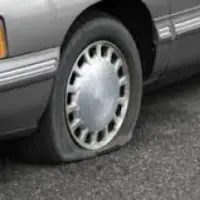
¿Qué consecuencia se da si la presión de los neumáticos es inferior a la necesaria?
What happens if tyre pressure is lower than required?
- ASe reducen la estabilidad y la seguridad del vehículo.The vehicle's stability and safety are reduced.
- BMejora la adherencia sobre pavimento mojado.Grip on wet road surfaces improves.
- CDisminuye el consumo de carburante.Fuel consumption goes down.
ExplanationWhen the inflation pressure is lower than required, the tyres deform and wear more at the edges of the tread. The vehicle also loses stability, grip on wet road surfaces is reduced and fuel consumption increases, so the vehicle's safety is compromised.
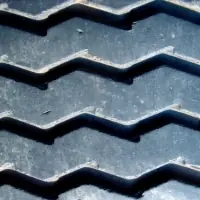
¿Cuántos milímetros de profundidad deberá tener como mínimo el dibujo de un neumático?
What is the minimum depth in millimetres that a tyre tread must have?
- A2 milímetros2 millimetres
- B1,6 milímetros1.6 millimetres
- C2,5 milímetros2.5 millimetres
ExplanationThe Traffic Regulations say that the minimum depth of a tyre tread is 1.6 millimetres, although it is advisable for it to be above 2 millimetres. Below 1.6 millimetres you will be driving without any safety, because the tyre will not grip the road surface properly.
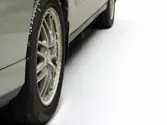
Llevar los neumáticos con poca presión, ¿afectará al consumo de combustible?
Will driving with low tyre pressure affect fuel consumption?
- ANo, el consumo no se verá afectado.No, fuel consumption will not be affected.
- BSí, el vehículo consumirá menos combustible.Yes, the vehicle will use less fuel.
- CSí, el vehículo consumirá más combustible.Yes, the vehicle will use more fuel.
ExplanationIt is important to check tyre pressure at least once or twice a month. We will do it when the tyres are cold, keeping to the pressures recommended by the manufacturer. Bear in mind that a tyre with the wrong pressure wears unevenly, has a higher risk of a blowout and can increase fuel consumption. * With a pressure lower than the manufacturer's: - They wear more at the edges. - They flex and heat up more. - The risk of a blowout increases. - Grip is reduced and the risk of aquaplaning increases (the tyres cannot clear the layer of water on the road and lose grip). - Fuel consumption increases. * With a pressure higher than the manufacturer's: - They wear more in the centre. - The area of contact with the road and grip are reduced. - They do not absorb bumps in the road well (they vibrate more and the suspension wears).
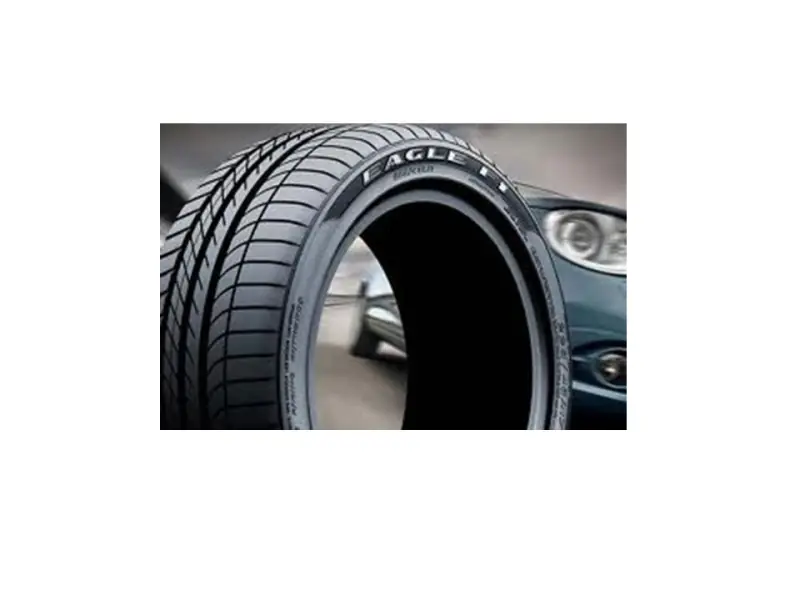
¿Qué ventajas tienen los neumáticos sin cámara?
What are the advantages of tubeless tyres?
- AMayor resistencia en los flancos a los impactos.Sidewalls that are more resistant to impacts.
- BNo necesitan que se revise la presión de inflado.Their inflation pressure does not need to be checked.
- CAumenta la seguridad en caso de pinchazo.Greater safety in the event of a puncture.
ExplanationA tubeless tyre loses air slowly when it is punctured instead of deflating suddenly, which reduces the risk of losing control. Even so, its pressure must be checked regularly, and it does not make the sidewalls more resistant to impacts.
Llevar regularmente el vehículo al mecánico...
Taking the vehicle to the mechanic regularly...
- ANos evitará tener un accidente.Will stop us from having an accident.
- BNo previene los accidentes.Does not prevent accidents.
- CPreviene de los principales siniestros por fallo mecánico.Helps prevent the main accidents caused by mechanical failure.
ExplanationIf we do not check and maintain the vehicle properly, we will be more likely to have an accident.
¿Qué controla el sistema PMS?
What does the PMS system monitor?
- AControla que se mantenga la distancia de seguridad entre vehículos.It checks that the safe distance between vehicles is kept.
- BControla que se mantenga la presión indicada por el fabricante.It checks that the pressure set by the manufacturer is kept.
- CControl el tiempo y el peso máximo permitido.It checks the time and the maximum permitted weight.
ExplanationThe PMS (Pressure Monitoring System) is a device that monitors tyre pressure to make sure it stays within the values recommended by the manufacturer. It measures the pressure in each tyre with sensors and, if it detects that the pressure is not right, it warns the driver with a light on the dashboard. Keeping the right pressure is essential for safety, fuel efficiency and tyre life.
¿Se podrán montar unos neumáticos con un código de velocidad distinto al indicado por el fabricante?
Can tyres with a speed code different from the one given by the manufacturer be fitted?
- ANo, tienen que tener del mismo código.No, they must have the same code.
- BSí, pero tendrán que ser en todo caso de un código de velocidad máxima superior.Yes, but they must always have a higher maximum speed code.
- CEs indiferente.It makes no difference.
ExplanationTyres have a code for the maximum speed at which they can be driven safely. When buying new tyres, we must make sure that their maximum speed code is higher than or equal to the one recommended by the manufacturer, never lower.
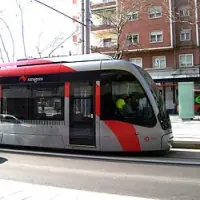
¿Cuál de éstos NO está considerado un vehículo a motor?
Which of these is NOT considered a motor vehicle?
- AMotocicletaMotorcycle
- BTranvíaTram
- CCamiónLorry
ExplanationSome vehicles, although they have an engine, are not considered motor vehicles. These are: trams, mopeds and vehicles for people with reduced mobility. Motorcycles and lorries are considered motor vehicles.
¿Cómo se denominan a los surcos y canales de la banda de rodamiento de un neumático?
What are the grooves and channels on a tyre's tread called?
- ADibujo del neumáticoTyre tread pattern
- BDiseño del neumáticoTyre design
- CSerie del neumáticoTyre series
ExplanationA tyre's tread has a series of grooves and channels that make up the tread pattern. Their purpose is to help the tyres hold onto the road surface and improve grip, because on a wet road surface a bald tyre has no grip at all.
¿Cuándo se deben cambiar los neumáticos?
When must tyres be changed?
- ACuando la profundidad del dibujo sea inferior a 1,6 mm.When the tread depth is less than 1.6 mm.
- BCuando la profundidad del dibujo sea inferior a 2 mm.When the tread depth is less than 2 mm.
- CCuando la profundidad del dibujo sea inferior a 3 mm.When the tread depth is less than 3 mm.
ExplanationFor a vehicle to be driven safely, the tyre tread must have a minimum depth of 1.6 millimetres. The deeper the tread, the better the tyre can clear water.
Si su motocicleta tiene un motor de 4 tiempos, funcionará con una mezcla de...
If your motorcycle has a 4-stroke engine, it will run on a mixture of...
- AAceite y aire.Oil and air.
- BAire y gasolina.Air and petrol.
- CAceite y gasolina.Oil and petrol.
ExplanationA 4-stroke engine runs on a mixture of air and petrol or air and diesel. A 2-stroke engine, on the other hand, runs on a mixture of air, petrol and oil.
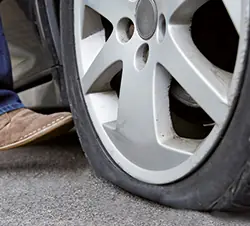
Si mientras circula se le pincha una rueda, ¿qué debe hacer?
If you get a puncture while driving, what must you do?
- AContinuar circulando hasta llegar al taller más próximo.Keep driving until you reach the nearest garage.
- BInmovilizar rápidamente el vehículo fuera de la calzada o en lugar seguro.Quickly bring the vehicle to a stop off the carriageway or in a safe place.
- CDetener el vehículo rápidamente en cualquier lugar y abandonarlo.Stop the vehicle quickly anywhere and leave it.
ExplanationWith a punctured wheel the vehicle loses stability and braking ability, so you must stop it as soon as possible off the carriageway or in a safe place. Driving on ruins the tyre and makes the risk worse.
La presión del neumático deberá comprobarse...
Tyre pressure should be checked...
- APeriódicamente y con los neumáticos fríos.Regularly and with the tyres cold.
- BPeriódicamente y con los neumáticos calientes.Regularly and with the tyres hot.
- CDeberá comprobarse en un taller especializado en cada cambio de estación como máximo.At a specialist garage, at least at every change of season.
ExplanationTyre pressure must be checked regularly, every 15 days to a month at most, and with the tyres cold. If we do it with the tyres hot, the pressure gauge will give a wrong reading, higher than the real one.
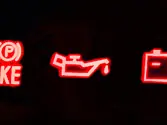
El motor se lubrica cuando el aceite está caliente y circula con una presión determinada, ¿cómo sabremos que dicha lubricación es la correcta?
The engine is lubricated when the oil is hot and circulates at a certain pressure. How will we know that this lubrication is correct?
- APorque el indicador de presión estará apagado.Because the oil pressure warning light will be off.
- BPorque el indicador de presión estará encendido.Because the oil pressure warning light will be on.
- CPorque al quitar el tapón de la culata con el motor parado sale humo.Because smoke comes out when you remove the cap on the cylinder head with the engine stopped.
ExplanationThe oil pressure warning light comes on on the dashboard when the pressure is too low and so the lubrication is not correct. As long as there is no lubrication problem, this light stays off.
¿Cada cuánto tiempo tenemos que revisar la presión de los neumáticos?
How often do we have to check the tyre pressure?
- ACuando veamos que están deshinchados.When we see that they are flat.
- BCuatro veces al año, coincidiendo con el cambio de estación.Four times a year, at each change of season.
- CPeriódicamente, cada semana o cada quince días.Regularly, every week or every fortnight.
ExplanationWe must check tyre pressure regularly, because from one day to the next, for many possible reasons, it can suddenly drop.
Ante el reventón de un neumático delantero a velocidad de crucero, lo correcto es:
If a front tyre blows out at cruising speed, the right thing to do is:
- AFrenar a fondo de inmediato y girar el volante con fuerza.Brake hard immediately and turn the steering wheel firmly.
- BSujetar firme el volante, no frenar bruscamente y reducir la velocidad poco a poco.Hold the steering wheel firmly, do not brake sharply and reduce speed gradually.
- CAcelerar para estabilizar el vehículo.Accelerate to stabilise the vehicle.
ExplanationIf a tyre blows out, hold the steering wheel firmly, do not brake suddenly and reduce speed gradually.
Si al intentar detener su vehículo, el servofreno no funciona, ¿cómo actuará?
If, when trying to stop your vehicle, the brake servo does not work, what will you do?
- AAumentando la presión sobre el pedal del freno.Press harder on the brake pedal.
- BBombeando el pedal del freno hasta notar resistencia.Pump the brake pedal until you feel resistance.
- CUtilizará el freno de mano.Use the handbrake.
ExplanationThe brake servo is a device, driven by the engine, that multiplies the force you put on the pedal when braking. If it fails, we will have to make up for it by pressing harder on the brake pedal.
All topics
- Definitions
- Documents and penalty points
- The driver's condition
- Duties of drivers and pedestrians
- Vehicle safety devices
- Vehicle controls and equipment
- Vehicle lights and horn
- Traffic signs, markings and signals
- The road and its lanes
- Speed and distances
- Manoeuvres
- Right of way
- Carrying passengers and loads
- Driving safely in difficult conditions
- Road accidents and first aid
- Defensive and eco-driving
Independent app: not affiliated with or endorsed by the DGT (Spain's Directorate-General for Traffic) or the Ministry of the Interior. The official exam is booked with the DGT and taken at its test centres. The questions here are practice material; the DGT's official question bank is not public.
Basado en datos de la Agencia Estatal Boletín Oficial del Estado (https://www.boe.es). Textos consolidados de carácter meramente informativo. La AEBOE no patrocina ni respalda este sitio.
Parte de las preguntas procede de los tests de la revista «Tráfico y Seguridad Vial» de la DGT, reproducidos con indicación de la fuente.