
DGT test · 539 questions
Vehicle mechanics and maintenance · Page 9 of 11
Engine, brakes, steering, suspension and tyres: how they work and what maintenance prevents breakdowns and crashes.
Questions in this topic, with answers
539 questions, 50 per page, with the correct answer and the explanation. Page 9 of 11.
¿Cada cuánto tiempo tenemos que controlar la presión de los neumáticos?
How often do we have to check the tyre pressure?
- ACada 3 meses.Every 3 months.
- B1 ó 2 veces al año.Once or twice a year.
- C1 ó 2 veces al mes.Once or twice a month.
ExplanationTyre pressure must be checked at least once or twice a month. It is very important to do it when the tyres are cold and to keep to the pressure recommended by the manufacturer.
¿Qué es el "efecto fading"?
What is the "fading effect"?
- ALa pérdida de eficacia del frenado por el calentamiento de los frenos.Loss of braking effectiveness because the brakes overheat.
- BEl bloqueo de las ruedas por un uso excesivo del freno.The wheels locking because the brake is used too much.
- CPérdida de contacto del neumático con el pavimento cuando la calzada está mojada.The tyre losing contact with the road surface when the road is wet.
ExplanationThe "fading effect" means a lack of braking effectiveness, which can happen because the brakes overheat. When the brakes get too hot, their ability to stop the vehicle is reduced, which can lead to a longer braking distance and a higher risk of accidents. This effect is not specifically mentioned in the traffic rules, but understanding how braking works is essential for road safety. It is vital for drivers to be aware that heavy use of the brakes can reduce braking ability, which shows how important proper maintenance of the braking system is.
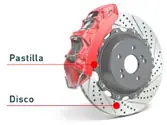
Cuando las pastillas de freno están muy desgastadas...
When the brake pads are very worn...
- AEl nivel del líquido puede bajar.The fluid level may drop.
- BEl desgaste de las pastillas de freno no afecta en nada al líquido de frenos.Brake pad wear does not affect the brake fluid at all.
- CEl líquido de frenos trabajará a menor temperatura.The brake fluid will work at a lower temperature.
ExplanationYou must check the braking system, the pads, the discs and also the brake fluid regularly. If the brake fluid level drops, it may be because of a leak in the hydraulic circuit or because of brake pad wear, as the callipers have to close further to make up for it and so use more fluid.
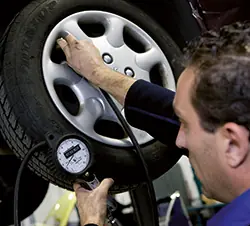
El inflado correcto de los neumáticos es...
The correct tyre inflation is...
- AEl superior al recomendado en un 10%.10% higher than recommended.
- BEl adecuado a los amortiguadores que lleve el coche.The one that suits the car's shock absorbers.
- CEl recomendado por el fabricante en cada caso.The one recommended by the manufacturer in each case.
ExplanationThe correct pressure is always the one given by the manufacturer (in the manual or on a label on the vehicle) according to the load: both too much and too little pressure make grip, wear and fuel consumption worse.
Si los amortiguadores de su vehículo están en mal estado...
If your vehicle's shock absorbers are in poor condition...
- AAumenta peligrosamente la distancia de frenado.The braking distance increases dangerously.
- BDisminuye la distancia de frenado.The braking distance decreases.
- CNo influye en la distancia de frenado.It does not affect the braking distance.
ExplanationIf the shock absorbers are in poor condition, the vehicle's grip on the road surface is reduced, so the braking distance will increase: more metres will be covered while we are braking.
Un turismo, ¿debe llevar obligatoriamente una rueda de repuesto?
Must a car carry a spare wheel?
- ANo, si dispone de un sistema alternativo al cambio de rueda.No, if it has an alternative system to changing the wheel.
- BSí.Yes.
- CNo, pues sólo es obligatorio para los vehículos de MMA superior a 3.500 kg.No, because it is only compulsory for vehicles with a MAM of more than 3,500 kg.
ExplanationThe General Vehicle Regulations allow the spare wheel to be replaced by an alternative to changing the wheel that keeps the vehicle mobile, such as a puncture repair kit or tyres that can be driven on when punctured. If none of these is carried, the spare wheel is compulsory.
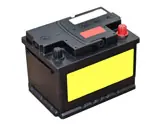
Cuando una batería necesita líquido, ¿qué líquido se debe poner?
When a battery needs liquid, what liquid should be added?
- AAgua y anticongelante.Water and antifreeze.
- BAgua y aceite.Water and oil.
- CAgua destilada.Distilled water.
ExplanationThe battery supplies electrical energy for the vehicle's needs, mainly when the engine is stopped, using chemical energy produced by the reaction of an electrolyte (a solution of distilled water and sulphuric acid). Over time, the distilled water in the battery cells gradually evaporates. When the level is low, we will add distilled water without going above the normal level and avoiding splashes.
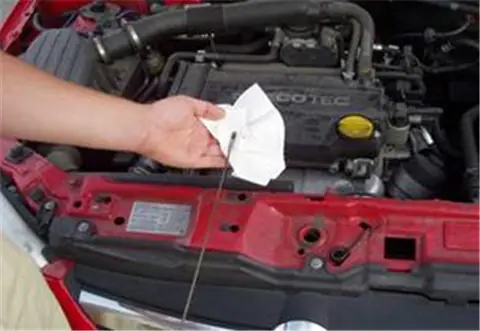
El estado del vehículo influye en...
The condition of the vehicle affects...
- Ael tiempo de reacción.the reaction time.
- Bla distancia de reacción.the reaction distance.
- Cla distancia de frenado.the braking distance.
ExplanationReaction depends on the condition of the driver, and braking distance depends especially on the condition of the vehicle (suspension, tyres, brakes, etc.).
Para que el vehículo se agarre bien a la carretera, ¿qué hay que hacer?
What must you do so that the vehicle grips the road well?
- AUsar neumáticos radiales en las ruedas delanteras y diagonales en las traseras.Use radial tyres on the front wheels and cross-ply tyres on the rear wheels.
- BAsegurarse de que la profundidad del dibujo de los neumáticos nunca sea inferior a 1,6 mm.Make sure the tread depth of the tyres is never less than 1.6 mm.
- CInflar más los neumáticos.Inflate the tyres more.
ExplanationGrip depends largely on the tyre tread, which clears away water; its depth must not be less than 1.6 mm on cars (Annex VII of the General Vehicle Regulations). Inflating above the recommended pressure reduces the contact area and grip.
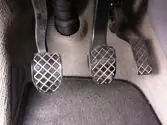
Un turismo equipado con servofreno, con el motor apagado ...
In a car fitted with a brake servo, with the engine switched off...
- AEl servofreno seguirá funcionando normalmente.The brake servo will keep working normally.
- BEl servofreno perderá su asistencia y será necesario aplicar más fuerza al pedal de freno.The brake servo will lose its assistance and you will need to press harder on the brake pedal.
- CEl servofreno se desconectará automáticamente para evitar el consumo de energía innecesarioThe brake servo will switch off automatically to avoid wasting energy.
ExplanationThe brake servo is a device, driven by the engine, that multiplies the force you put on the pedal when braking. If it fails, we will have to make up for it by pressing harder on the brake pedal.
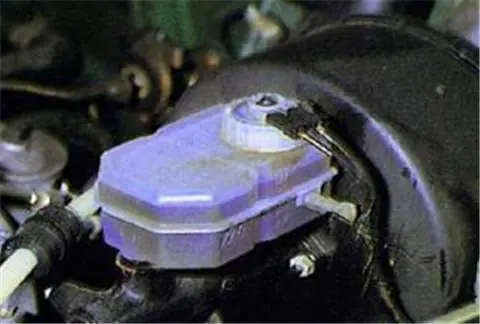
Mientras circula se produce un fallo en el sistema de frenado, ¿qué debe hacer?
While you are driving, the braking system fails. What should you do?
- ATirar brucamente de la palanca de freno de mano.Pull the handbrake lever sharply.
- BDirigir el vehículo hacia un obstáculo para detenerloSteer the vehicle towards an obstacle to stop it.
- CSoltar el acelerador y reducir la velocidad con el freno motor.Release the accelerator and reduce speed using engine braking.
ExplanationIf the brakes fail, release the accelerator and change down gradually so that engine braking reduces your speed, then use the handbrake gently. Pulling it sharply can lock the wheels and make you lose control.
¿Influye la presión de los neumáticos en el consumo?
Does tyre pressure affect fuel consumption?
- ANo, no tiene relaciónNo, there is no link
- BSí, una presión baja aumenta el consumoYes, low pressure increases fuel consumption
- CSolo afecta a la seguridadIt only affects safety
ExplanationA tyre pressure lower than recommended increases rolling resistance and fuel consumption. Checking the pressure regularly is key to efficiency.
Si nuestro vehículo está dotado de sistema de frenos ABS y al frenar percibimos una vibración en el pedal del freno...
If our vehicle has ABS brakes and we feel a vibration in the brake pedal when braking...
- ADejaremos de frenar inmediatamente.We will stop braking immediately.
- BPresionaremos y soltaremos el pedal repetidamente en cortos intervalos de tiempo.We will press and release the pedal repeatedly at short intervals.
- CNo dejaremos de frenar y seguiremos ejerciendo la misma presión sobre el pedal del freno.We will not stop braking and will keep the same pressure on the brake pedal.
ExplanationIf our vehicle has ABS brakes and we notice a vibration in the brake pedal when braking, we will know that the system is working to stop the wheels from locking, so we will keep the same pressure on the pedal.
¿Es importante invertir en la supervisión y mantenimiento de los sistemas de seguridad del vehículo?
Is it important to invest in checking and maintaining the vehicle's safety systems?
- ASí.Yes.
- BNo, es más importante invertir en la vía.No, it is more important to invest in the road.
- CSolo en vehículos de más de cinco años.Only for vehicles more than five years old.
ExplanationMost accidents caused by mechanical faults could have been avoided if the driver had checked and maintained the vehicle properly.
El motor de combustión interna (explosión) de un ciclomotor de dos ruedas, ¿qué cilindrada máxima debe tener?
What is the maximum engine capacity of the internal combustion (explosion) engine of a two-wheeled moped?
- A50 centímetros cúbicos.50 cubic centimetres.
- B75 centímetros cúbicos.75 cubic centimetres.
- C125 centímetros cúbicos.125 cubic centimetres.
ExplanationThe correct answer is 50 cubic centimetres because, according to the definition of a two-wheeled moped, the internal combustion engine must not have a capacity of more than 50 cm³.
Cuando la presión de inflado de los neumáticos es superior a la correcta...
When tyre pressure is higher than the correct pressure...
- ADisminuye la adherencia con el pavimento.Grip on the road surface decreases.
- BAumenta la adherencia con el pavimento.Grip on the road surface increases.
- CNo influye en la adherencia.It does not affect grip.
ExplanationWhen a tyre is over-inflated, its contact area with the road surface is smaller, so grip decreases.
¿Cuándo debe comprobarse la presión de inflado de los neumáticos?
When should the tyre pressure be checked?
- AComo mínimo, dos veces al año.At least twice a year.
- BCada tres meses.Every three months.
- CCon frecuencia, y siempre antes de iniciar un viaje largo.Often, and always before starting a long journey.
ExplanationTyre pressure must be checked often, at least once a month, and always before a long journey, with the tyres cold. Incorrect pressure increases fuel consumption, wear and the risk of a blowout.
El humo que sale por el tubo de escape en un ciclomotor de 4 tiempos será...
The smoke coming out of the exhaust pipe of a 4-stroke moped will be...
- ASiempre de color muy negro.Always very black.
- BSiempre de color blanco azulado.Always bluish-white.
- CIncoloro, si el motor está en buen estado.Colourless, if the engine is in good condition.
ExplanationThe smoke coming out of the exhaust pipe of a 4-stroke moped should be colourless, since an engine in good condition should not give off visible smoke. However, black smoke may indicate a rich fuel mixture, meaning that there is too much fuel in the combustion. Bluish-white smoke, on the other hand, may be a sign that the engine is burning oil because of wear. Bear in mind that these are only possible causes; it is advisable to take the moped to a specialist workshop for a more accurate assessment.
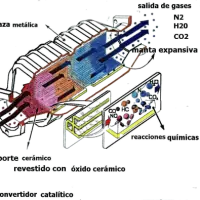
¿Qué parte del automóvil permite la salida de los gases quemados del motor?
Which part of the car lets the burnt gases out of the engine?
- ASistema de refrigeraciónCooling system
- BSistema de lubricaciónLubrication system
- CSistema de escapeExhaust system
ExplanationThe exhaust system lets the gases burnt in the engine out into the open air. These gases must come out in good condition so that pollution is as low as possible.
¿Cada cuánto es recomendable cambiar los neumáticos del vehículo?
How often is it advisable to replace a vehicle's tyres?
- ACada 5 años como máximo.Every 5 years at most.
- BCada 5000 km.Every 5,000 km.
- CCuando la profundidad de las ranuras sea inferior a 2,6 mm.When the depth of the grooves is less than 2.6 mm.
ExplanationThe material tyres are made of ages over time, so it is advisable to replace them every 5 years at most.
Si observa que cuando circula en línea recta el vehículo se desvía hacia un lado, puede ser debido a...
If you notice that your vehicle pulls to one side when driving in a straight line, it may be due to...
- AA no mantener girado el volante al máximo durante las maniobras.Not keeping the steering wheel turned fully during manoeuvres.
- BUn bajo nivel del líquido de frenos.A low brake fluid level.
- CUna presión distinta en los neumáticos de un mismo eje.Different pressures in the tyres on the same axle.
ExplanationIf the vehicle pulls to one side in a straight line, a common cause is different pressures in the tyres on the same axle: the wheel with lower pressure offers more resistance. It may also be due to a brake fault or wheel misalignment, but not to the brake fluid level.
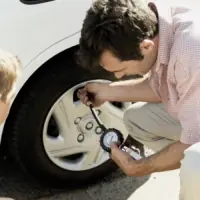
¿Por qué se debe comprobar la presión de los neumáticos estando fríos?
Why should tyre pressure be checked when the tyres are cold?
- APorqué si están calientes la presión disminuyeBecause when they are hot, the pressure decreases
- BPorqué estando calientes nos podríamos quemar con la gomaBecause when they are hot, we could burn ourselves on the rubber
- CPorqué si están calientes la presión aumentaBecause when they are hot, the pressure increases
ExplanationWe should check the tyre pressure often, before starting a long journey and when the tyres are cold, because if it is checked when they are hot, their pressure will be higher.
¿Los bornes de la batería deben mantenerse limpios?
Must the battery terminals be kept clean?
- ANo, si la batería es sin mantenimiento.No, if it is a maintenance-free battery.
- BSí, si la batería es con mantenimiento.Yes, if it is a battery that needs maintenance.
- CSí, en todas las baterías.Yes, on all batteries.
ExplanationBattery terminals must be tight, clean and, if possible, covered with a soft grease so that they make good contact and are protected from the outside.
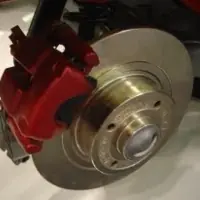
¿Cuál de éstos frenos proporciona una frenada progresiva con buena refrigeración?
Which of these brakes gives progressive braking with good cooling?
- AFrenos de mandoControl brakes
- BFrenos de discoDisc brakes
- CFrenos de tamborDrum brakes
ExplanationDisc brakes, unlike drum brakes, give more progressive braking and also good cooling of the braking system, which prevents it from overheating during hard braking.
Si su vehículo tiene tracción delantera:
If your vehicle has front-wheel drive:
- ALa potencia del motor se transmite a las ruedas delanteras.The engine power is transmitted to the front wheels.
- BLa potencia del motor se transmite a las cuatro ruedas.The engine power is transmitted to all four wheels.
- CLa caja de cambios es automática.The gearbox is automatic.
ExplanationIn front-wheel drive vehicles, the engine's power is transmitted to the front wheels. This means that steering and traction are mainly handled by these wheels, which gives better manoeuvrability and grip on the road. According to the General Vehicle Regulations, vehicles are classified by their type of drive, and for front-wheel drive vehicles this feature is essential to how they perform on the road.
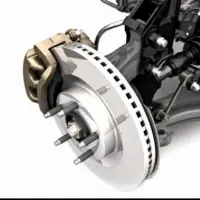
¿Cuál de éstos elementos NO forma parte del dispositivo de freno?
Which of these is NOT part of the braking device?
- AElemento frenanteThe braking element
- BSistema de suspensiónThe suspension system
- CEl mandoThe control
ExplanationA vehicle's braking device is made up of four parts: the braking element, the control, the brake and the parts that transmit the braking force. The suspension system is not part of the vehicle's braking system; it is a separate system.
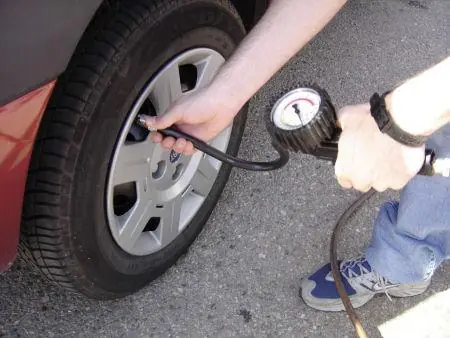
La presión de los neumáticos se mide...
Tyre pressure is measured...
- ACon las ruedas equilibradas.With the wheels balanced.
- BEn frío.When cold.
- CEn caliente.When hot.
ExplanationTyre pressure must be checked when the tyres are cold, before setting off or after driving only a few kilometres. When hot, the air expands and the pressure gauge shows more than the real pressure; that is why you must not let air out of a hot tyre.
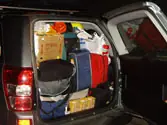
Si su vehículo circula muy cargado...
If your vehicle is heavily loaded...
- AAfectará solo al consumo.It will only affect fuel consumption.
- BAfectará al consumo y a la distancia de frenado.It will affect fuel consumption and braking distance.
- CAfectará al consumo, a la distancia de frenado y a la estabilidad.It will affect fuel consumption, braking distance and stability.
ExplanationThe greater the weight, the higher the consumption, because more power is needed to move the vehicle. The braking distance increases because of the vehicle's weight, and the risk of skidding is higher because the centrifugal force increases. The braking distance is the distance travelled by the vehicle from the moment the driver applies the brake until it comes to a stop. This distance can vary depending on the following factors: - The speed you are travelling at. - The condition of the vehicle's tyres, suspension and brakes. - The vehicle's load. - The condition of the road surface. - The weather conditions on the road.
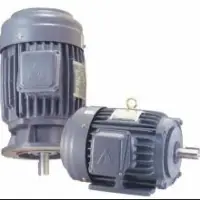
¿Cuál de éstas partes del circuito de carga produce corriente continua?
Which of these parts of the charging circuit produces direct current?
- ADínamoDynamo
- BAlternadorAlternator
- CBateríaBattery
ExplanationThe dynamo generates direct current, which is what the electrical system uses. The alternator produces alternating current, which is then converted (rectified) into direct current, and the battery does not produce current: it stores and supplies it.
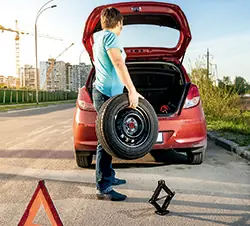
Los conductores de turismos, ¿están obligados a llevar en su vehículo una rueda de uso temporal y las herramientas indispensables para su cambio?
Are car drivers obliged to carry a temporary-use spare wheel and the tools needed to change it?
- ANo, ya que puede sustituirse por un sistema alternativo que permita la movilidad.No, because it can be replaced by an alternative system that keeps the vehicle mobile.
- BEs obligatorio llevar una rueda de uso temporal, pero no las herramientas para su cambio.A temporary-use spare wheel is compulsory, but not the tools to change it.
- CSí, es un repuesto obligatorio e insustituible que deben llevar todos los turismos.Yes, it is a compulsory spare that cannot be replaced and that all cars must carry.
ExplanationA spare wheel is not compulsory if you carry an alternative system that allows you to continue driving, such as a puncture repair kit or run-flat tyres.
Si su vehículo dispone de una batería de las denominadas "sin mantenimiento", ¿deberá tener algún cuidado con ella?
If your vehicle has a so-called 'maintenance-free' battery, do you need to take any care of it?
- ANo, puesto que es sin mantenimiento.No, because it is maintenance-free.
- BSí, limpiar los bornes y protegerlos con grasa.Yes, clean the terminals and protect them with grease.
- CSí, cubrir las placas con agua destilada.Yes, cover the plates with distilled water.
ExplanationWith a so-called 'maintenance-free' battery we do not need to worry about the electrolyte, that is, the mixture of distilled water and sulphuric acid. We only need to pay attention to the terminal connections, so that they are tight, clean and covered with grease.
¿Cuál será la profundidad mínima que tendrán que tener las ranuras de la banda de rodadura del neumático de un turismo?
What is the minimum depth that the tread grooves of a car tyre must have?
- A1,6 milímetros.1.6 millimetres.
- B2,0 milímetros.2.0 millimetres.
- C16 centímetros16 centimetres
ExplanationTyres must have no deformations or cuts, and their tread must have a minimum depth of 1.6 mm in the main grooves. The greater the depth, the better the tyre can drain water.
Unos neumáticos con la presión más baja de la recomendada provocan:
Tyres with a pressure lower than recommended cause:
- AMenor consumo de combustible.Lower fuel consumption.
- BMayor consumo, mayor desgaste y peor comportamiento del vehículo.Higher consumption, more wear and worse vehicle handling.
- CNingún efecto apreciable.No noticeable effect.
ExplanationInsufficient pressure increases consumption and wear, worsens stability and braking, and can cause blowouts.
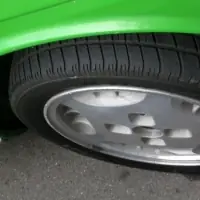
¿Cuáles son habitualmente las ruedas directrices de un automóvil?
Which are usually the steering wheels of a motor car?
- ANingunas, la dirección está en la caja de cambiosNone; the steering is in the gearbox
- BLas traserasThe rear wheels
- CLas delanterasThe front wheels
ExplanationThe steering wheels of a motor car, that is, the wheels that guide the vehicle and make it turn left and right, are usually the front wheels. Even so, many vehicles today have four-wheel steering, meaning that all four wheels help to steer.
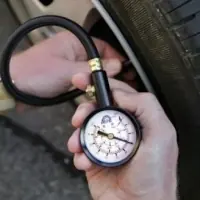
¿Cómo deben estar los neumáticos cuando se comprueba su presión?
What condition must the tyres be in when you check their pressure?
- ADeshinchadosDeflated
- BCalientesHot
- CFríosCold
ExplanationInflation pressure is measured with a pressure gauge, which may be a pocket gauge or one at a garage or service station. We must check the tyre pressure often, before starting a long journey and when the tyres are cold.
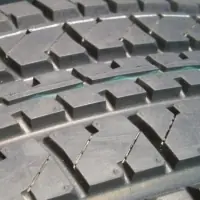
¿Cuál es la misión del dibujo del neumático?
What is the purpose of the tyre tread pattern?
- AQue el neumático se agarre más al pavimentoTo make the tyre grip the road surface better
- BQue disminuya la adherenciaTo reduce grip
- CQue la velocidad aumente considerablementeTo increase speed considerably
ExplanationThe tread pattern improves grip on the road surface, especially by clearing water away when the road is wet and preventing aquaplaning. That is why its legal minimum depth is 1.6 mm. A worn tread reduces grip.
¿A qué sistema del vehículo pertenece la caja de velocidades?
Which vehicle system does the gearbox belong to?
- ATransmisión.Transmission.
- BDirección.Steering.
- CRefrigeración.Cooling.
ExplanationThe transmission system transmits the engine's power to the driving wheels. It is made up of: the clutch, the gearbox, the propeller shaft, the differential (bevel gear and differential unit) and the drive shafts. The job of the gearbox is to change the gear ratio between the engine and the wheels, to adapt the wheels' speed to traffic needs.
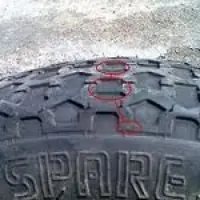
¿Cuál de éstos elementos forman parte SIEMPRE de la cubierta de un neumático?
Which of these is ALWAYS part of the outer casing of a tyre?
- ALa banda de rodamientoThe tread
- BLa cámaraThe inner tube
- CEl filtro estabilizadorThe stabiliser filter
ExplanationThe tread is a common element found on all types of tyre, whereas there are tyres with or without an inner tube, and there are also tyres without a stabiliser filter in their structure.
¿Deben los vehículos especiales a motor llevar una rueda de recambio?
Must special motor vehicles carry a spare wheel?
- AEstán obligados a llevar dos ruedas de recambioThey are obliged to carry two spare wheels
- BSíYes
- CNo, no es necesarioNo, it is not necessary
ExplanationUnder Annex XII of the General Vehicle Regulations, a spare wheel (or a temporary-use wheel, or an alternative system) is part of the required equipment for cars and for mixed-use and goods vehicles up to 3,500 kg; special vehicles are not among those required to carry one.
¿En qué consiste la dirección asistida progresiva?
What is progressive power steering?
- AA mayor velocidad la dirección es menos dura.The higher the speed, the lighter the steering.
- BA mayor velocidad la dirección es más dura.The higher the speed, the heavier the steering.
- CA menor velocidad la dirección es más dura.The lower the speed, the heavier the steering.
ExplanationProgressive power steering adapts how heavy the steering feels to the vehicle's speed: when the car is stationary or moving very slowly, the effort needed to turn the steering wheel is minimal, but at higher speeds the steering becomes heavier to make control easier.
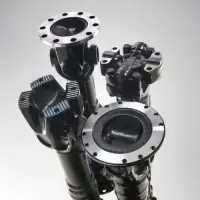
¿A qué parte transmite velocidad de giro la caja de cambios de un vehículo?
To which part does a vehicle's gearbox transmit its rotation?
- AA la caja de velocidadesTo the gearbox
- BAl árbol de transmisiónTo the propeller shaft
- CAl embragueTo the clutch
ExplanationThe propeller shaft is a cylindrical part connected both to the gearbox output shaft and to the rear axle, designed so that when the driving wheels move up and down, the rigidity of the shaft does not cause it to break. The vehicle's gearbox transmits its rotation to this part.
¿Cómo se denomina el sistema de seguridad que monitoriza y avisa al conductor cuando la presión de los neumáticos es baja?
What is the name of the safety system that monitors tyre pressure and warns the driver when it is low?
- AISAISA
- BTPMSTPMS
- CE-CallE-Call
ExplanationThe correct answer is TPMS (Tyre Pressure Monitoring System). This driver assistance (ADAS) system has been compulsory on new cars registered in the EU since November 2014. Its main job is to monitor the inflation pressure of the wheels constantly and switch on a warning light on the dashboard if it detects a loss of pressure, helping to prevent blowouts, uneven wear and excessive fuel consumption. The other options are ruled out: - eCall: the automatic emergency call system that is activated after a serious accident. - ISA: Intelligent Speed Assistance, which warns the driver or intervenes if the road's speed limit is exceeded.
¿Qué debe hacer si un neumático explosiona en autopista?
What should you do if a tyre bursts on a motorway (autopista)?
- AFrenar a fondoBrake as hard as possible
- BSujetar volante, no frenar brusco y reducir gradualmenteHold the steering wheel, do not brake sharply, and slow down gradually
- CApagar el motorSwitch off the engine
ExplanationHold the steering wheel, do not brake sharply, slow down smoothly.
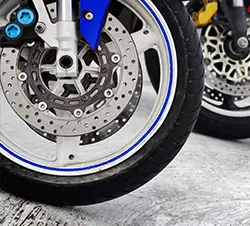
¿Qué condiciones deben tener los neumáticos de una motocicleta?
What condition must a motorcycle's tyres be in?
- ALas dos ruedas tienen que ser del mismo tamaño y características.Both wheels must be the same size and have the same characteristics.
- BLas ranuras de la banda de rodadura deben tener una profundidad mínima de 1,6 milímetros.The tread grooves must have a minimum depth of 1.6 millimetres.
- CNo deben presentar ampollas, deformaciones anormales o roturas.They must not have bulges, abnormal deformations or tears.
ExplanationMotorcycle tyres must not have bulges, abnormal deformations or tears: any visible damage puts stability at risk. The 1.6 mm minimum tread depth applies to cars, not to motorcycles.
La mayoría de los vehículos tiene un filtro de habitáculo (filtro antipolen). ¿Hay que sustituirlo?
Most vehicles have a cabin filter (pollen filter). Does it need to be replaced?
- ANo, dura toda la vida del vehículo.No, it lasts for the whole life of the vehicle.
- BSí, cada seis meses, porque necesita una revisión periódica.Yes, every six months, because it needs regular servicing.
- CSí, especialmente al inicio de la primavera, porque su capacidad para retener partículas es limitada.Yes, especially at the start of spring, because its ability to trap particles is limited.
ExplanationThe pollen filter traps pollen, dust and particles in the air entering the cabin, but it becomes clogged with use. It should be replaced regularly as the manufacturer recommends, especially before spring, when there is more pollen.
La profundidad mínima legal del dibujo de los neumáticos de un turismo es de:
The legal minimum tread depth of a car's tyres is:
- A1,6 milímetros.1.6 millimetres.
- B1,8 milímetros.1.8 millimetres.
- C1,4 milímetros.1.4 millimetres.
ExplanationThe exact legal value is 1.6 mm; the other figures (1.8 and 1.4 mm) are incorrect.
¿Puede una motocicleta circular sin tubo de escape?
May a motorcycle be ridden without an exhaust pipe?
- ANo, porque dañaría el motor.No, because it would damage the engine.
- BSí, si es una motocicleta deportiva.Yes, if it is a sports motorcycle.
- CNo, está prohibido, excepto si la motocicleta es eléctrica.No, it is prohibited, unless the motorcycle is electric.
ExplanationUnder the General Traffic Regulations, it is prohibited to drive motor vehicles, including motorcycles, without a suitable exhaust system that complies with the rules on reducing noise and polluting emissions. The exception applies to electric motorcycles, which do not need an exhaust pipe. This is covered in the article on open exhausts and emissions above the permitted limits.
La rueda de repuesto que debe llevar como dotación de su turismo, ¿puede ser una rueda de uso temporal?
May the spare wheel that you must carry as part of your car's equipment be a temporary-use wheel?
- ANo, debe ser una rueda completa.No, it must be a full-size wheel.
- BSí.Yes.
- CSolo si el turismo circula por vías urbanas.Only if the car travels on urban roads.
ExplanationThe law allows vehicles to carry a temporary-use wheel as part of their equipment. These wheels are smaller and lighter, which makes them easier to handle and store in the vehicle. However, remember that these wheels have speed and distance limits, so they must be replaced with a normal wheel as soon as possible.
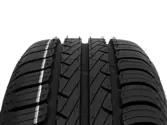
Para circular de forma segura la profundidad mínima de las ranuras del dibujo de los neumáticos será de...
To drive safely, the minimum depth of the tyre tread grooves must be...
- A1,6 milímetros.1.6 millimetres.
- B1,5 milímetros.1.5 millimetres.
- C1,2 milímetros.1.2 millimetres.
ExplanationFor a vehicle to be driven safely, the tyre tread must have a minimum depth of 1.6 millimetres. The greater the depth, the better the tyre can drain water.
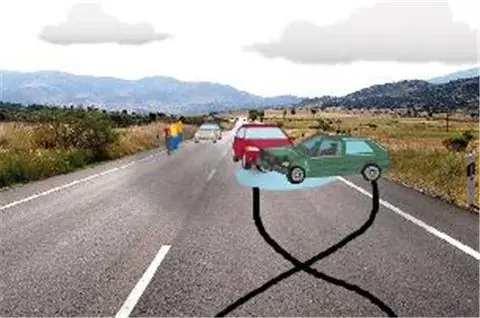
La principal causa de accidente debido a un fallo mecánico del vehículo son...
The main cause of crashes due to a mechanical fault in the vehicle is...
- Alos problemas con los frenos.problems with the brakes.
- Blos problemas en los neumáticos.problems with the tyres.
- Clos problemas con la dirección.problems with the steering.
ExplanationAmong crashes caused by a mechanical fault, the main cause is tyre problems, ahead of brakes or steering. That is why you must check tyre pressure and wear often.
All topics
- Definitions
- Documents and penalty points
- The driver's condition
- Duties of drivers and pedestrians
- Vehicle safety devices
- Vehicle controls and equipment
- Vehicle lights and horn
- Traffic signs, markings and signals
- The road and its lanes
- Speed and distances
- Manoeuvres
- Right of way
- Carrying passengers and loads
- Driving safely in difficult conditions
- Road accidents and first aid
- Defensive and eco-driving
Independent app: not affiliated with or endorsed by the DGT (Spain's Directorate-General for Traffic) or the Ministry of the Interior. The official exam is booked with the DGT and taken at its test centres. The questions here are practice material; the DGT's official question bank is not public.
Basado en datos de la Agencia Estatal Boletín Oficial del Estado (https://www.boe.es). Textos consolidados de carácter meramente informativo. La AEBOE no patrocina ni respalda este sitio.
Parte de las preguntas procede de los tests de la revista «Tráfico y Seguridad Vial» de la DGT, reproducidos con indicación de la fuente.