
DGT test · 539 questions
Vehicle mechanics and maintenance · Page 6 of 11
Engine, brakes, steering, suspension and tyres: how they work and what maintenance prevents breakdowns and crashes.
Questions in this topic, with answers
539 questions, 50 per page, with the correct answer and the explanation. Page 6 of 11.
¿Qué efecto tiene sobre la seguridad circular con los neumáticos poco hinchados?
What effect on safety does driving with under-inflated tyres have?
- AMejora el agarre y reduce el consumo.It improves grip and reduces fuel consumption.
- BAumenta el consumo, el desgaste y la distancia de frenado.It increases fuel consumption, wear and braking distance.
- CNo tiene ningún efecto apreciable.It has no noticeable effect.
ExplanationLow pressure increases fuel consumption, uneven wear and braking distance.
¿Cómo sabemos que el sistema de lubricación de nuestro motor funciona correctamente?
How do we know that our engine's lubrication system is working properly?
- APorque con el motor en marcha la luz testigo de la presión de aceite está apagada.Because with the engine running the oil pressure warning light is off.
- BPorque con el motor en marcha la luz testigo de la presión de aceite permanece encendida.Because with the engine running the oil pressure warning light stays on.
- CSolo es necesario comprobar el nivel de aceite en el cárter motor.You only need to check the oil level in the engine sump.
ExplanationWhen you switch on the ignition without starting the engine, a red light comes on to show that there is no oil pressure. When the engine starts, this light goes off to show that the oil pressure for lubrication is correct.
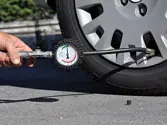
Si tiene los neumáticos de su vehículo con mayor presión que la indicada por el fabricante...
If your vehicle's tyres have a higher pressure than the one set by the manufacturer...
- Atendrán mayor adherencia en las curvas.they will have more grip on bends.
- Btendrán menor adherencia en las curvas.they will have less grip on bends.
- Cse desgastarán más por los flancos.they will wear more on the sidewalls.
ExplanationA tyre with a higher pressure than the one set by the manufacturer will have a smaller contact area with the ground, so it will have less grip on bends.
¿Cuál será la profundidad mínima que tiene que tener las ranuras del dibujo de los neumáticos?
What is the minimum depth that the tyre tread grooves must have?
- A1,6 milímetros.1.6 millimetres.
- B5 milímetros.5 millimetres.
- C20 milímetros.20 millimetres.
ExplanationThe tyre tread grooves must have a minimum depth of 1.6 millimetres. If the depth is less, we must replace the tyres with new ones.
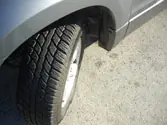
¿Con el calor se gastan más los neumáticos?
Do tyres wear more in the heat?
- ASí, disminuye su desgaste.Yes, it reduces their wear.
- BEl calor no influye en el desgaste.Heat does not affect wear.
- CSí, aumenta su desgaste.Yes, it increases their wear.
ExplanationThe outside temperature (in particular, heat) can also speed up tyre wear.
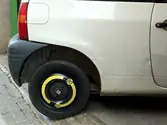
Si debido a un pinchazo usted se ve obligado a circular con una rueda de uso temporal, ¿qué deberá tener en cuenta?
If, because of a puncture, you have to drive with a temporary-use wheel, what must you bear in mind?
- AQue no debe circular a más de 80 kilómetros por hora.That you must not drive faster than 80 kilometres per hour.
- BQue no se debe circular más de 80 kilómetros con ella.That you must not drive more than 80 kilometres with it.
- CQue no se debe circular a más de 50 kilómetros por hora.That you must not drive faster than 50 kilometres per hour.
ExplanationEmergency tyres are special spare tyres, narrower than normal, which allow you to drive at a reduced speed of no more than 80 km/h and for a recommended maximum distance of no more than 200 km. If we have to use one of these tyres, it is very important to follow the specifications given by the manufacturer.
Los conductores de turismos, ¿están obligados a llevar en su vehículo una rueda de repuesto temporal y las herramientas necesarias para cambiarla?
Must car drivers carry a temporary spare wheel and the tools needed to change it in their vehicle?
- ANo. Puede sustituirse por un sistema alternativo que permita la movilidad.No. It can be replaced by an alternative system that keeps the vehicle mobile.
- BEs obligatorio llevar una rueda de repuesto temporal, pero no las herramientas para cambiarla.You must carry a temporary spare wheel, but not the tools to change it.
- CSí. Es un repuesto obligatorio que no puede sustituirse y que deben llevar todos los turismos.Yes. It is compulsory equipment that cannot be replaced and that all cars must carry.
ExplanationCars must carry a full-size or temporary spare wheel with the tools to change it, or else an alternative system that gives enough guarantee that the vehicle can keep moving, such as a puncture repair kit (Annex XII of the General Vehicle Regulations).
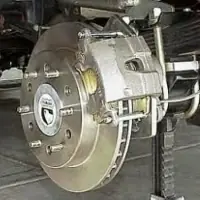
¿Por qué los frenos de disco se calientan menos que los frenos de tambor?
Why do disc brakes heat up less than drum brakes?
- APorque su superfície de fricción es mucho mayorBecause their friction surface is much larger
- BPorque se encuentran muy ventiladosBecause they are very well ventilated
- CPorque la frenada con éste freno es brusca y poco progresivaBecause braking with this brake is sudden and not very progressive
ExplanationDisc brakes heat up less than drum brakes because they are better ventilated, while drum brakes have little ability to get rid of the heat produced by their friction.
El estado y el mantenimiento del vehículo influirá en...
The condition and maintenance of the vehicle will affect...
- ALa distancia de reacción.The reaction distance.
- BEl tiempo de reacción.The reaction time.
- CLa distancia de frenado.The braking distance.
ExplanationBoth the reaction time and the reaction distance depend on the driver's physical and mental condition. The reaction distance is also affected by the vehicle's speed, and a key factor in the braking distance is the maintenance of the vehicle's brakes, suspension and tyres.
Si conduce una motocicleta que tiene un motor de explosión de cuatro tiempos, ¿con qué tipo de mezcla funciona este motor?
If you ride a motorcycle with a four-stroke explosion engine, what type of mixture does this engine run on?
- ACon gasóleo, aceite y aire.Diesel, oil and air.
- BCon gasolina y aire.Petrol and air.
- CCon gasolina, aceite y aire.Petrol, oil and air.
ExplanationA four-stroke explosion engine runs on a mixture of petrol and air. In this type of engine, air and petrol are mixed in the intake manifold before being compressed and ignited by an electric spark from the spark plugs. Oil is not part of the fuel mixture in this type of engine.
¿Cuándo debe comprobarse la presión de los neumáticos?
When should tyre pressure be checked?
- ACon los neumáticos fríos.When the tyres are cold.
- BCon los neumáticos calientes.When the tyres are hot.
- CNo importa, fríos o calientes.It does not matter, cold or hot.
ExplanationTyre pressure must be checked when the tyres are cold, because they heat up as you drive and the air pressure rises, which would give a false reading. If you measure it when they are hot, you must not let air out to bring it down to the recommended pressure.
La mayoría de los vehículos tienen un filtro en el habitáculo, llamado filtro antipolen. ¿Debe sustituirse?
Most vehicles have a filter in the cabin called a pollen filter. Should it be replaced?
- ASí. Especialmente a comienzos de la primavera, porque su capacidad para retener polen es limitada.Yes, especially at the beginning of spring, because its ability to trap pollen is limited.
- BNo, no necesita sustituirse nunca.No, it never needs to be replaced.
- CSolo si lo exige la inspección técnica periódica.Only if the periodic vehicle inspection (ITV) requires it.
ExplanationThe pollen filter traps pollen, dust and particles in the air entering the cabin, but its capacity is limited and it becomes clogged with use. It should be replaced regularly, especially before spring, when there is more pollen.
La parte exterior de uno de los neumáticos de su vehículo tiene un bulto. ¿Es recomendable cambiar el neumático cuanto antes?
The outer side of one of your vehicle's tyres has a bulge. Is it advisable to change the tyre as soon as possible?
- ASí. Aumenta el riesgo de reventón.Yes. It increases the risk of a blowout.
- BNo. Puede seguir circulando, no representa un riesgo importante.No. You can keep driving; it is not a significant risk.
- CNo. No es necesario cambiarlo porque siempre se puede reparar en un taller.No. It does not need changing because it can always be repaired at a garage.
ExplanationA bulge in the sidewall shows that the tyre's internal structure is damaged, and that greatly increases the risk of a blowout. The tyre must be replaced as soon as possible: this type of damage cannot be repaired.
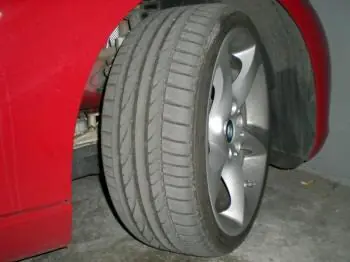
Ud. debe saber que la parte neumática de la rueda se compone de la cubierta, la cámara (en su caso) y el aire. ¿Qué tipo de neumático aumenta la seguridad en caso de pinchazo?
You should know that the pneumatic part of the wheel is made up of the tyre casing, the inner tube (if there is one) and the air. Which type of tyre increases safety in the event of a puncture?
- AEl neumático con cámara.A tyre with an inner tube.
- BEl neumático sin cámara (tubeless).A tubeless tyre.
- CEs indiferente.It makes no difference.
ExplanationA tubeless tyre increases safety in the event of a puncture because the air escapes slowly and the tyre does not deflate suddenly, which gives you time to stop the vehicle under control. A tyre with an inner tube can lose its air suddenly.
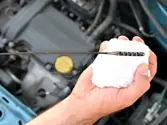
¿Cómo mediremos el nivel de aceite del motor?
How will we measure the engine oil level?
- ACon el vehículo en terreno horizontal y el motor frío.With the vehicle on level ground and the engine cold.
- BCon el vehículo en terreno horizontal y el motor caliente.With the vehicle on level ground and the engine hot.
- CCon el vehículo en terreno horizontal y con el motor en marcha, para que la medición sea más exacta.With the vehicle on level ground and the engine running, so that the reading is more accurate.
ExplanationTo measure the engine oil level, we will put the vehicle on level ground with the engine cold.
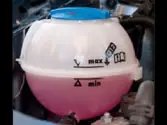
¿Cuál es la función principal del sistema de refrigeración del motor?
What is the main job of the engine cooling system?
- AReducir el consumo de combustible durante la conducción.To reduce fuel consumption while driving.
- BRefrigerar el habitáculo del vehículo durante la marcha.To cool the passenger compartment while driving.
- CMantener el motor a una temperatura adecuada de funcionamiento, evitando su sobrecalentamiento.To keep the engine at the right working temperature, preventing it from overheating.
ExplanationThe job of the cooling system is to keep the engine at its best working temperature, stopping it from reaching excessive temperatures that could cause serious breakdowns. To do this, it circulates coolant through the engine, which absorbs the heat and gets rid of it through the radiator.
Cuando la presión de inflado de los neumáticos es superior a la indicada por el fabricante, disminuye la zona de contacto con la calzada y, por consiguiente,...
When the tyre pressure is higher than the one set by the manufacturer, the area of contact with the road is reduced and, as a result,...
- ASe pierde adherencia y, por lo tanto, seguridad.Grip is lost, and so is safety.
- BSe absorben mejor las irregularidades del terreno y el vehículo vibra menos.Bumps in the road are absorbed better and the vehicle vibrates less.
- CLos neumáticos se desgastan menos.The tyres wear less.
ExplanationWhen the tyre pressure is higher than recommended, the contact area with the road is reduced. This means there is less tyre area that can grip the road surface, which reduces grip. Less grip can make the vehicle skid or not respond properly to the steering wheel, which affects driving safety.
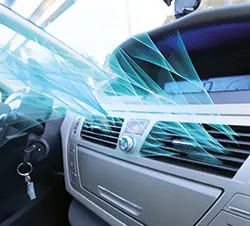
La mayoría de los vehículos disponen de un filtro en el habitáculo. ¿Debe sustituirse?
Most vehicles have a filter in the passenger compartment. Should it be replaced?
- ASí, sobre todo al inicio de la primavera, ya que su capacidad de retención es limitada.Yes, especially at the start of spring, because its ability to hold particles is limited.
- BSí, cada seis meses porque es un elemento sujeto a inspección técnica periódica.Yes, every six months, because it is checked at the periodic technical inspection.
- CNo, ya que es un filtro que se limpia automáticamente.No, because it is a filter that cleans itself.
ExplanationThe passenger compartment filter holds back pollen, dust and other particles in the air coming into the vehicle, but its capacity is limited. It is advisable to replace it regularly, especially before spring, when there is more pollen. It does not clean itself and it is not checked at the ITV.
¿Es necesario modificar la presión de los neumáticos del vehículo en función de que nos encontremos en temporada de invierno o verano?
Is it necessary to change the vehicle's tyre pressure depending on whether it is the winter or summer season?
- ASí, en invierno hay que reducirla para mejorar la adherencia.Yes, in winter it should be reduced to improve grip.
- BSí, debido a los cambios de temperatura.Yes, because of the changes in temperature.
- CNo, no es necesario.No, it is not necessary.
ExplanationThe correct inflation pressure is the one given by the vehicle manufacturer and does not depend on the season. What matters is checking it regularly, at least once a month, and adjusting it to those values, including the spare wheel.
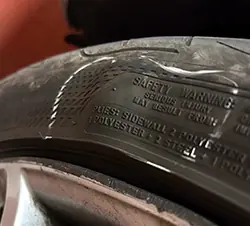
La parte externa de uno de los neumáticos de su vehículo presenta una deformación en forma de bulto, ¿es recomendable sustituir el neumático lo antes posible?
The outer part of one of your vehicle's tyres has a bulge-shaped deformation. Is it advisable to replace the tyre as soon as possible?
- ASí, porque aumenta la posibilidad de sufrir un reventón.Yes, because it increases the chance of a blowout.
- BNo. Se puede seguir circulando con seguridad ya que no supone un riesgo importante.No. You can keep driving safely because it is not a significant risk.
- CNo; no es necesario sustituirlo ya que siempre se puede reparar en un taller especializado.No; there is no need to replace it, because it can always be repaired at a specialist garage.
ExplanationA bulge on the sidewall shows damage to the internal structure of the tyre and greatly increases the risk of a sudden blowout. It cannot be repaired, so the tyre must be replaced as soon as possible.
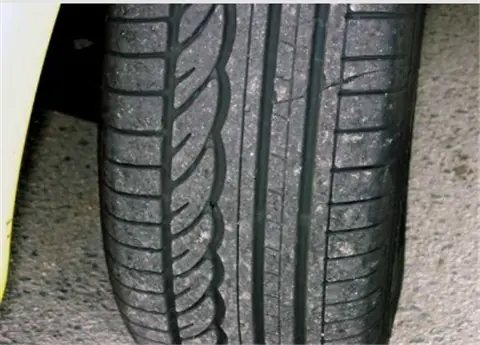
¿Qué puede acelerar el desgaste de los neumáticos?
What can make tyres wear out faster?
- ACircular con una presión de inflado muy inferior a la recomendada por el fabricante.Driving with a tyre pressure far below the one recommended by the manufacturer.
- BCircular a velocidad moderada.Driving at a moderate speed.
- CCircular con la presión de inflado recomendada por el fabricante.Driving with the tyre pressure recommended by the manufacturer.
ExplanationDriving with a pressure far below the recommended one makes the tyre flex, heat up and wear out faster, especially at the sides, as well as increasing fuel consumption and reducing stability. Driving at a moderate speed and with the correct pressure makes tyres last longer.
¿Se pueden sustituir los neumáticos por otros con código de velocidad diferente al recomendado por el fabricante?
Can tyres be replaced with others that have a different speed rating from the one recommended by the manufacturer?
- ANo.No.
- BSí, por otros cuyo código de velocidad sea menor.Yes, with others that have a lower speed rating.
- CSí, por otros cuyo código de velocidad sea mayor.Yes, with others that have a higher speed rating.
ExplanationYou may fit tyres with a speed rating equal to or higher than the one given in the vehicle's documents, because they can handle that speed with a margin. Never a lower one, as it could fail at the vehicle's top speed.
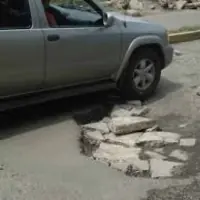
¿Qué elemento del vehículo soporta más los baches y desniveles del terreno?
Which part of the vehicle takes the most strain from potholes and uneven ground?
- ALas llantasThe wheel rims
- BEl chasisThe chassis
- CLos neumáticosThe tyres
ExplanationThe tyres and the suspension system are the two parts of the vehicle that take the most strain from potholes and uneven ground. Tyres in good condition also mean that the shock absorbers wear less when going over a speed bump or a dip.
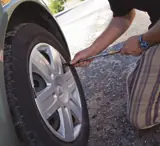
El inflado correcto de los neumáticos es el...
The correct tyre inflation is...
- ARecomendado por el fabricante en cada caso.The one recommended by the manufacturer in each case.
- BSuperior al recomendado por el fabricante en un 20%.20% higher than the one recommended by the manufacturer.
- CAdecuado a la forma de conducir de cada persona.The one that suits each person's way of driving.
ExplanationThe correct pressure is the one recommended by the vehicle manufacturer for each case, depending on the load and use, and it is shown in the manual or on a label on the vehicle. Over-inflating or adapting the pressure to your driving style reduces grip and affects braking.
¿Cómo se denomina la parte del neumático que apoya sobre el suelo?
What is the part of the tyre that rests on the ground called?
- ABanda de rodadura.Tread.
- BCubierta.Outer cover.
- CCinturón.Belt.
ExplanationThe part of the tyre that rests on the ground is called the tread. This part of the tyre gives grip, clears water and resists impacts. It is the surface that grips the road and plays an essential role in the vehicle's grip and safety.
Para cortar una hemorragia abundante en un brazo, ¿cuál es la actuación más eficaz y de menor riesgo que debe realizarse en primer lugar?
To stop heavy bleeding from an arm, what is the most effective and least risky action to take first?
- AElevar el brazo y envolver la zona sangrante con una tela limpia sin hacer presión.Raise the arm and wrap the bleeding area with a clean cloth without pressing.
- BPresionar directamente sobre la herida con la mano protegida con un guante, a ser posible, y mantener elevado el brazo.Press directly on the wound with your hand, protected by a glove if possible, and keep the arm raised.
- CRealizar un ‘torniquete’.Apply a tourniquet.
ExplanationPressing directly on the wound with your hand, protected by a glove if possible, and keeping the arm raised is the most effective option, because direct pressure on the wound helps to stop the bleeding. Keeping the arm raised also helps to reduce the blood flow to the injured area, which is vital with heavy bleeding.
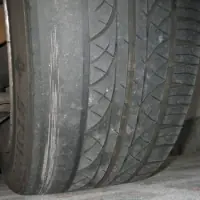
¿Cuál de éstos motivos hace que los neumáticos se desgasten más rápidamente?
Which of these causes tyres to wear out faster?
- ALa conducción agresivaAggressive driving
- BConducir habitualmente a menos de 50 km/horaUsually driving at less than 50 km/h
- CEl clima invernalWinter weather
ExplanationAggressive driving, with sudden acceleration, hard braking and bends taken fast, wears tyres out much faster. Tyres are also worn by high speed, overloading, incorrect pressure and summer heat, but not by winter weather or by driving slowly.
¿Qué mantenimiento ha de tener el freno de tambor?
What maintenance does a drum brake need?
- AComprobar el desgaste de las zapatas.Checking the wear of the brake shoes.
- BComprobar el desgaste de las pastillas.Checking the wear of the brake pads.
- CComprobar que esté bien alineado.Checking that it is properly aligned.
ExplanationThe braking part of a drum brake, the brake shoe, wears with use, so it must be replaced when necessary. The braking part of a disc brake is called a pad.
¿Cuáles son las ruedas que reciben la fuerza del motor en un vehículo de tracción total?
Which wheels receive the engine's power in an all-wheel-drive vehicle?
- ALas ruedas delanteras.The front wheels.
- BLas ruedas traseras.The rear wheels.
- CTodas las ruedas.All the wheels.
ExplanationThe wheels that receive the engine's power are the driving wheels. Depending on the type of vehicle, they can be the front wheels (front-wheel drive), the rear wheels (rear-wheel drive) or all the wheels (all-wheel drive).
¿Cuál es el tipo de estructura del neumático más empleado en la actualidad en los autobuses?
What type of tyre structure is most used today on buses?
- ADiagonal cinturada.Belted bias-ply.
- BDiagonal.Bias-ply (cross-ply).
- CRadial.Radial.
ExplanationThe type of tyre structure most used today on buses is radial. This is because radial tyres give more grip and a longer life in kilometres than bias-ply tyres.
Los surcos que hay en la banda de rodadura de los neumáticos del vehículo deben garantizar un buen drenaje del agua hacia...
The grooves in the tread of the vehicle's tyres must ensure good drainage of water towards...
- AAtrás y por los laterales.The rear and the sides.
- BEl interior de los surcos y hacia delante.The inside of the grooves and the front.
- CEl interior de los surcos y por los laterales.The inside of the grooves and the sides.
ExplanationThe grooves in the tyre tread collect the water between the wheel and the road surface and push it out towards the rear and the sides, so that the rubber stays in contact with the ground and aquaplaning is avoided.
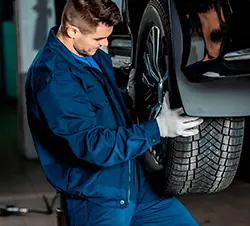
Para mantener la seguridad, ¿qué elementos se deben revisar periódicamente y con mayor frecuencia que el resto de componentes del vehículo?
To stay safe, which parts should be checked regularly and more often than the other parts of the vehicle?
- ALos neumáticos, el sistema de frenado y los amortiguadores.The tyres, the braking system and the shock absorbers.
- BLas luces, la batería y las llantas.The lights, the battery and the wheel rims.
- CEl filtro del aire, la dirección y los retrovisores.The air filter, the steering and the mirrors.
ExplanationTyres, brakes and shock absorbers are the safety parts that wear most with use, and grip and braking distance depend directly on them: they need more frequent checks.
¿Cada cuánto tiempo es aconsejable revisar la presión de los neumáticos de su vehículo?
How often is it advisable to check your vehicle's tyre pressure?
- AUna o dos veces al mes, siempre con los neumáticos en caliente.Once or twice a month, always with the tyres hot.
- BUna o dos veces al mes, siempre con los neumáticos en frío.Once or twice a month, always with the tyres cold.
- CUna o dos veces al año, siempre con los neumáticos en frío.Once or twice a year, always with the tyres cold.
ExplanationIt is advisable to check your vehicle's tyre pressure once or twice a month, always with the tyres cold. This means the tyres should not have been used recently or driven a long distance before the check. The main reason for checking the pressure with the tyres cold is to get more accurate and reliable readings, because the pressure rises when the tyres heat up with use.
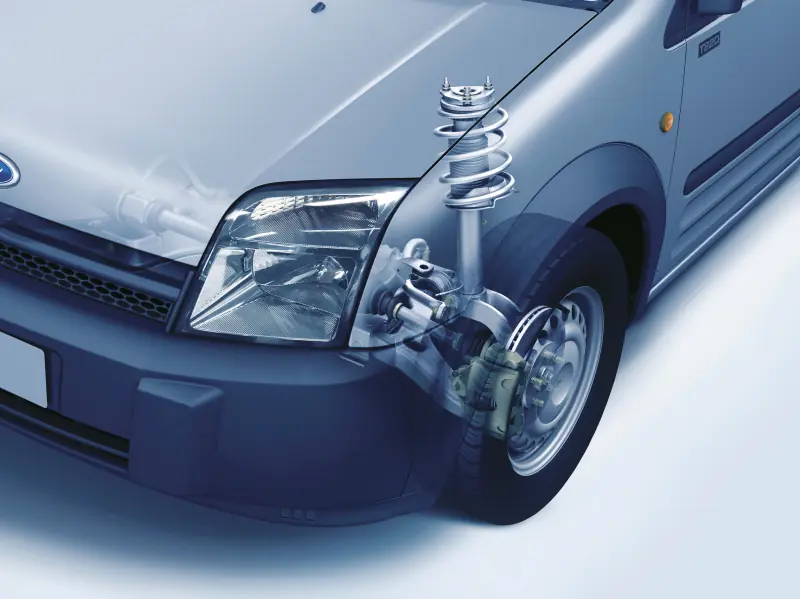
La amortiguación, ¿contribuye a prevenir los accidentes?
Do the shock absorbers help to prevent accidents?
- ANo, en ningún caso.No, never.
- BNo, sólo contribuye al confort.No, they only add to comfort.
- CSí.Yes.
ExplanationShock absorbers keep the wheels in contact with the ground, giving effective stability, steering and braking: they are an active safety feature that helps to avoid accidents, not only a comfort feature.
La presión de los neumáticos deberá comprobarse con los neumáticos
Tyre pressure should be checked with the tyres...
- AFríos.Cold.
- BCalientes.Hot.
- CFríos o calientes, es indiferente.Cold or hot, it makes no difference.
ExplanationTyre pressure should be checked with the tyres cold, not hot. When driving they heat up and the pressure increases, so the pressure reading would be wrong.
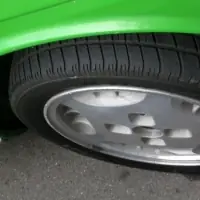
¿En qué parte de los neumáticos debe situarse el dibujo de los mismos?
On which part of the tyres must the tread pattern be?
- AEn la banda de rodamientoOn the tread band
- BEn la banda de fricciónOn the friction band
- CEn la banda de desplazamientoOn the travel band
ExplanationThe tyre's tread pattern is on the tread band, the part that is in contact with the ground. Its grooves clear water and improve grip; that is why its minimum legal depth is 1.6 mm.
Todos los vehículos a motor deben llevar...
All motor vehicles must have...
- Aun dispositivo para silenciar explosiones.a device to silence explosions.
- Bun juego de correas para el motor.a set of engine belts.
- Cun extintor de incendios adecuado y eficaz.a suitable and effective fire extinguisher.
ExplanationAll motor vehicles must be fitted with a device to silence explosions (a silencer), so that they meet the noise rules and reduce noise impact on the environment and on public health. According to the General Vehicle Regulations, this measure is not only about keeping within the law, but also about more responsible driving that respects the surroundings.
¿En qué condiciones deben estar los neumáticos de una motocicleta?
What condition must a motorcycle's tyres be in?
- AAmbas ruedas deben ser del mismo tamaño y tener las mismas características.Both wheels must be the same size and have the same characteristics.
- BNo deben presentar cortes, desgastes, deformaciones u otros daños.They must not have cuts, wear, deformations or other damage.
- CLas ranuras de la banda de rodadura deben tener una profundidad mínima de 1,6 milímetros.The grooves of the tread must be at least 1.6 millimetres deep.
ExplanationTyres must not have cuts, bulges, deformations or other damage (Annex VII of the General Vehicle Regulations). The minimum depth of 1.6 mm set in that annex applies to cars, light vans and light trailers, not to motorcycles.
Si circula con una presión inferior a la correcta en los neumáticos, ¿afecta al consumo?
If you drive with a tyre pressure lower than correct, does it affect fuel consumption?
- ASi, disminuyen el consumo.Yes, fuel consumption goes down.
- BNo, no influye en el consumo.No, it does not affect fuel consumption.
- CSi , aumenta el consumo.Yes, fuel consumption goes up.
ExplanationWith a pressure lower than correct, the tyre flexes more and its rolling resistance increases, so the engine has to work harder and fuel consumption goes up. The tyre also wears out sooner at the edges.
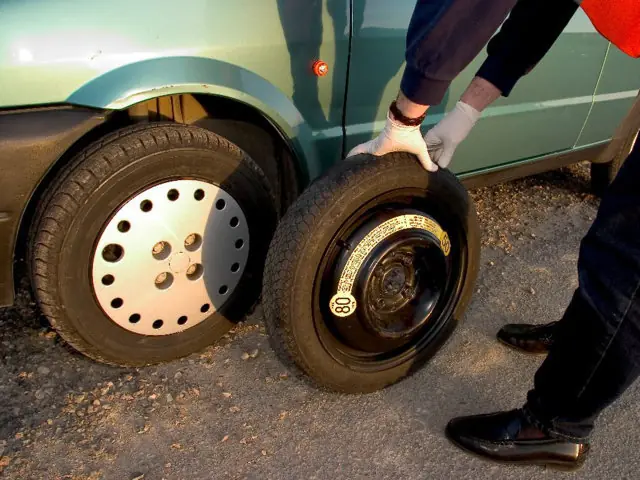
Cuando tienes que circular con una rueda de repuesto temporal o de emergencia. ¿Qué debes tener en cuenta?
When you have to drive with a temporary or emergency spare wheel, what must you bear in mind?
- AQue debe tener más presión que las otras 3 ruedas.That it must have more pressure than the other 3 wheels.
- BLo que diga el fabricante de esa rueda.What the manufacturer of that wheel says.
- CQue si está homologada dura igual que una rueda normal.That if it is approved, it lasts as long as a normal wheel.
ExplanationThe pressure, maximum speed and distance you can drive with a temporary-use wheel are set by its manufacturer, usually on a label on the wheel itself. It is a temporary solution: even if it is approved, it does not last like a normal wheel and must be replaced as soon as possible.
Una rueda de repuesto de uso temporal ('galleta'):
A temporary-use spare wheel (space-saver):
- APermite circular a cualquier velocidad.Allows you to drive at any speed.
- BObliga a circular a velocidad reducida y sustituirla cuanto antes por una definitiva.Requires you to drive at reduced speed and to replace it with a permanent wheel as soon as possible.
- CPuede dejarse montada indefinidamente.Can be left fitted indefinitely.
ExplanationA temporary wheel limits the speed (usually shown on the wheel itself) and must be replaced with a normal wheel as soon as possible.
Los neumáticos deben tener la misma estructura y dimensiones:
Tyres must have the same structure and size:
- AEn cada ejeOn each axle
- BEn las 4 ruedas siempreOn all 4 wheels, always
- CSolo en el eje traseroOnly on the rear axle
ExplanationTyres on the same axle must be the same in size, structure, load index and speed code. Radial and bias-ply tyres cannot be mixed on the same axle.
¿En invierno tomaremos alguna precaución con el líquido refrigerante?
In winter, will we take any precautions with the coolant?
- ASí, añadirle anticongelante si no lo lleva.Yes, add antifreeze if it has none.
- BNo, con agua destilada es suficiente.No, distilled water is enough.
- CSí, controlar el nivel periódicamente.Yes, check the level regularly.
ExplanationIn winter, with temperatures below zero, the coolant could freeze, so you need to add an antifreeze additive if it has none.
Si los neumáticos tienen una presión inferior a la recomendada por el fabricante...
If the tyres have a pressure lower than the one recommended by the manufacturer...
- ATendrán mayor adherencia a la calzada.They will have more grip on the road.
- BConsumirán más carburante.They will use more fuel.
- CConsumirán menos carburante.They will use less fuel.
ExplanationIf the tyres have a pressure lower than the one recommended by the manufacturer, friction with the road surface increases, which increases fuel consumption and makes the tyres wear out early.
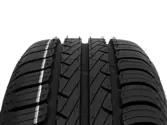
¿Cuál es la profundidad mínima de las ranuras principales de la banda de rodamiento en un neumático?
What is the minimum depth of the main tread grooves on a tyre?
- A1.6 milímetros.1.6 millimetres.
- B2 milímetros.2 millimetres.
- C2.5 milímetros.2.5 millimetres.
ExplanationOn cars, the tyre must have a depth of at least 1.6 millimetres in the main tread grooves.
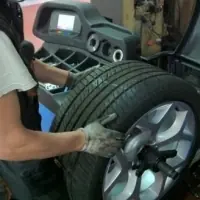
¿Quién debe realizar el equilibrado de las ruedas?
Who should balance the wheels?
- AUn mecánico cualquiera en su tallerAny mechanic at their garage
- BEl conductor de cada vehículo con el manualThe driver of each vehicle, using the manual
- CUn profesional mecánico con los medios adecuadosA professional mechanic with the right equipment
ExplanationTo correct any imbalance in a vehicle's wheels, a professional mechanic with the right equipment must balance them using small lead weights fitted to the wheel rim.
Cuando el motor de la motocicleta se alimenta con gasolina, sin mezcla de aceite, será un motor...
When a motorcycle engine runs on petrol with no oil mixed in, it is...
- ADe dos tiemposA two-stroke engine
- BDe ignición.An ignition engine.
- CDe cuatro tiempos.A four-stroke engine.
ExplanationA motorcycle engine that runs only on petrol, with no oil mixed in, is a four-stroke engine. This is because four-stroke engines work by taking a mixture of air and fuel (in this case, petrol) into the cylinder, then compressing the mixture, burning it and finally pushing out the exhaust gases. Two-stroke engines, on the other hand, need a mixture of petrol and oil to lubricate the moving parts of the engine.
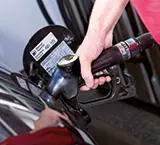
¿Es obligatorio apagar el motor cuando está cargando combustible?
Is it compulsory to switch off the engine while refuelling?
- ANo.No.
- BSí, pero no es necesario si es el empleado de la gasolinera quien llena el depósito.Yes, but it is not necessary if the petrol station attendant fills the tank.
- CSí, siempre.Yes, always.
ExplanationWhen refuelling, you must always switch off the engine: fuel vapours are flammable and any spark could cause a fire, no matter who fills the tank.
Es recomendable efectuar una revisión de la dirección del vehículo cuando...
It is advisable to have the vehicle's steering checked when...
- AEl neumático se desgasta uniformemente.The tyre wears evenly.
- BAl soltar el volante, el vehículo no se desvía.The vehicle does not pull to one side when you let go of the steering wheel.
- CSe vuelve excesivamente dura o demasiado floja.It becomes too heavy or too loose.
ExplanationIt is advisable to have the vehicle's steering checked when it becomes too heavy or too loose, and also if the vehicle pulls to one side when you let go of the steering wheel, if the tyres wear unevenly or if the steering wheel vibrates.
¿Qué presión deben llevar los neumáticos?
What pressure should the tyres have?
- AEs recomendable que lleven distinta presión en cada eje.It is advisable for them to have a different pressure on each axle.
- BLos neumáticos deben llevar la presión más alta de las recomendadas por el fabricante.The tyres must have the highest of the pressures recommended by the manufacturer.
- CLos neumáticos deben llevar siempre la presión recomendada por el fabricante.The tyres must always have the pressure recommended by the manufacturer.
ExplanationThe tyre pressure must be the one set by the manufacturer, which you can find in the vehicle's instruction manual. Tyres in poor condition are the main cause of accidents due to mechanical failure. They are the part that needs the most checking. We must check the tyre pressure regularly, with the tyres cold and with a pressure gauge.
All topics
- Definitions
- Documents and penalty points
- The driver's condition
- Duties of drivers and pedestrians
- Vehicle safety devices
- Vehicle controls and equipment
- Vehicle lights and horn
- Traffic signs, markings and signals
- The road and its lanes
- Speed and distances
- Manoeuvres
- Right of way
- Carrying passengers and loads
- Driving safely in difficult conditions
- Road accidents and first aid
- Defensive and eco-driving
Independent app: not affiliated with or endorsed by the DGT (Spain's Directorate-General for Traffic) or the Ministry of the Interior. The official exam is booked with the DGT and taken at its test centres. The questions here are practice material; the DGT's official question bank is not public.
Basado en datos de la Agencia Estatal Boletín Oficial del Estado (https://www.boe.es). Textos consolidados de carácter meramente informativo. La AEBOE no patrocina ni respalda este sitio.
Parte de las preguntas procede de los tests de la revista «Tráfico y Seguridad Vial» de la DGT, reproducidos con indicación de la fuente.