
DGT test · 539 questions
Vehicle mechanics and maintenance · Page 4 of 11
Engine, brakes, steering, suspension and tyres: how they work and what maintenance prevents breakdowns and crashes.
Questions in this topic, with answers
539 questions, 50 per page, with the correct answer and the explanation. Page 4 of 11.

¿En qué tipo de pavimento la adherencia del neumático será más difícil?
On what type of road surface will tyre grip be most difficult?
- APavimentos rugosos como los de cementoRough surfaces such as concrete
- BPavimento flexible como el asfaltoFlexible surfaces such as asphalt
- CPavimento de adoquinesPaving stones (cobbles)
ExplanationGrip is better on flexible, rigid or rough surfaces than on polished surfaces such as paving stones. Surfaces in good condition that are dry and clean also give more grip than uneven or icy surfaces or surfaces with loose gravel, for example.
Si nuestro vehículo tiene los amortiguadores en mal estado, ¿qué ocurrirá al frenar?
If our vehicle's shock absorbers are in poor condition, what will happen when braking?
- ABajará la parte delantera del vehículo.The front of the vehicle will dip.
- BBajará excesivamente la parte trasera del vehículo.The rear of the vehicle will dip too much.
- CBajará excesivamente la parte delantera del vehículo.The front of the vehicle will dip too much.
ExplanationWhen braking, the front of the vehicle always dips as the shock absorbers compress. If they are in poor condition, this compression will be excessive, making the front dip more than normal.
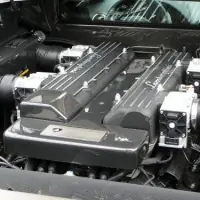
¿Qué dos tipos de motores puede tener un automóvil?
What two types of engine can a motor car have?
- ADe explosión y de aceleraciónExplosion and acceleration engines
- BDe explosión y de combustiónExplosion and combustion engines
- CDe explosión y de direcciónExplosion and steering engines
ExplanationThere are two types of engine: the explosion engine (petrol), in which air and petrol are mixed and burn by exploding, and the combustion engine (diesel), in which air enters the cylinders so that the fuel ignites when it is injected.
Si las ruedas rebotan en los baches de la carretera, será debido a que...
If the wheels bounce over potholes in the road, it will be because...
- ALos amortiguadores están en mal estado.The shock absorbers are in poor condition.
- BLos frenos están en mal estado.The brakes are in poor condition.
- CEl cambio de marchas está en mal estado.The gearbox is in poor condition.
ExplanationThe job of the shock absorbers is to absorb bumps in the road, so if they are in poor condition, instead of the vehicle staying close to the ground, the wheels will bounce over potholes and lose grip.
Cuando los neumáticos se desgastan más por el centro que por los bordes, la presión de inflado es...
When tyres wear more in the centre than at the edges, the tyre pressure is...
- ACorrecta.Correct.
- BInferior a la necesaria.Lower than necessary.
- CSuperior a la necesaria.Higher than necessary.
ExplanationHigher than necessary is the correct answer. When tyres are over-inflated, the centre of the tyre wears faster than the edges. This happens because an over-inflated tyre has a smaller contact area with the ground, which causes uneven wear.
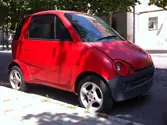
¿Un cuatriciclo ligero es un automóvil?
Is a light quadricycle a motor car?
- ASí, porque tiene cuatro ruedas.Yes, because it has four wheels.
- BSí.Yes.
- CNo.No.
ExplanationA light quadricycle is not classed as a motor car. Even though it has an engine, it is not considered a motor vehicle.
Los frenos del vehículo se consideran un dispositivo de seguridad...
The vehicle's brakes are considered a safety device of the following type:
- AActiva.Active.
- BPasiva.Passive.
- CSecundaria.Secondary.
ExplanationActive (primary) safety features aim to reduce the chance of an accident by acting before it happens, either automatically or through the driver's action. Active safety devices include the brakes, the tyres, the lights and the suspension and shock absorber system.
Un mantenimiento correcto de la cadena de su motocicleta requiere:
Correct maintenance of your motorcycle's chain requires:
- AComprobar periódicamente que su tensado es el correcto.Regularly checking that its tension is correct.
- BLimpiarla periódicamente con agua.Cleaning it regularly with water.
- CCambiar los forros de amianto de sus eslabones, si han sufrido deterioro.Changing the asbestos linings of its links if they are damaged.
ExplanationCorrect maintenance of a motorcycle chain requires regularly checking that its tension is correct, because a chain that is too loose can cause transmission problems and a chain that is too tight can wear out the transmission parts early. It is important to keep the chain in the best condition so that the motorcycle works properly.
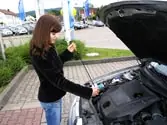
¿Cómo sabremos que no tenemos ningún problema relacionado con el aceite del motor?
How will we know that there is no problem with the engine oil?
- APorque el testigo del aceite no estará encendido.Because the oil warning light will not be on.
- BPorque el testigo del aceite estará encendido.Because the oil warning light will be on.
- CPorque el nivel de aceite estará por encima de la marca de máximo.Because the oil level will be above the maximum mark.
ExplanationThe oil warning light on the dashboard stays off as long as the oil pressure is correct.
¿Qué ocurre si el nivel de aceite del motor es insuficiente?
What happens if the engine oil level is too low?
- AEl motor se enfría más rápido.The engine cools down faster.
- BAumenta la fricción y puede producirse avería.Friction increases and a breakdown can occur.
- CMejora el rendimiento del motor.Engine performance improves.
ExplanationWhen the engine oil level is too low, the internal parts are not properly lubricated. This increases friction between the parts, which causes more wear and overheating and can end in a serious engine breakdown.
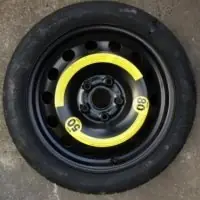
¿Es obligatorio en un turismo llevar una rueda de repuesto?
Is it compulsory for a car to carry a spare wheel?
- ANo, si lleva un sistema alternativo para el cambio de ruedas.No, if it carries an alternative system to changing the wheel.
- BSí.Yes.
- CSólo es obligatorio para los de M.M.A. superior a 3.500 kg.It is only compulsory for cars with a MAM of more than 3,500 kg.
ExplanationThe General Vehicle Regulations require cars to carry a complete spare wheel or a temporary-use spare wheel with its tools, or an alternative to changing the wheel, such as a puncture repair kit or tyres that can be driven on when punctured. With that alternative, the spare wheel is not compulsory.
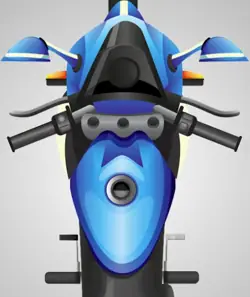
¿Cómo se acciona el embrague en una motocicleta?
How is the clutch operated on a motorcycle?
- ACon la mano izquierda.With the left hand.
- BCon la mano derecha.With the right hand.
- CCon el pie izquierdo.With the left foot.
ExplanationIn the usual layout of motorcycle controls, the clutch is the lever on the left side of the handlebar and is operated with the left hand. The left foot works the gear pedal, not the clutch.
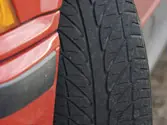
¿Cómo influye el estado de los neumáticos en la eficacia del frenado?
How does the condition of the tyres affect braking efficiency?
- ANo influye, sólo depende del estado de los frenos.It has no effect; it only depends on the condition of the brakes.
- BNo influye, la eficacia de la frenada depende sólo del estado de la calzada.It has no effect; braking efficiency only depends on the condition of the road surface.
- CUnos neumáticos en buen estado permiten una mejor adherencia a la calzada y un frenado más eficaz.Tyres in good condition give better grip on the road and more efficient braking.
ExplanationThe condition of the tyres is essential for the vehicle's safety, especially when braking. Tyres in good condition can grip the road better, which allows the car to stop more quickly and efficiently when we brake. If the tyres are worn or have low pressure, the car may slide, which increases the distance needed to stop and the risk of accidents. So keeping the tyres in good condition is key to good braking and to the vehicle's general safety.
¿Cuál de éstas causas pueden provocar un desgaste prematuro del neumático?
Which of these can cause early tyre wear?
- ATener las ruedas bien equilibradas y alineadas.Having the wheels well balanced and aligned.
- BUna presión de aire inadecuada.Incorrect air pressure.
- CContacto ocasional con liquido de frenos.Occasional contact with brake fluid.
ExplanationSeveral things can make tyres wear faster: - Incorrect tyre pressure. - Unbalanced and misaligned wheels. - Excessive speed. - Overloading the vehicle. - Frequent contact with solvents.
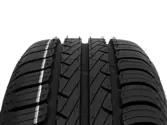
¿Cuál será la profundidad mínima del dibujo de los neumáticos en un turismo?
What is the minimum tyre tread depth on a car?
- A2 milímetros.2 millimetres.
- B1,6 milímetros.1.6 millimetres.
- C5 milímetros.5 millimetres.
ExplanationThe minimum tread depth of a car's tyres is 1.6 millimetres. A smaller depth is very dangerous, because the tyre will give poor grip in the rain.
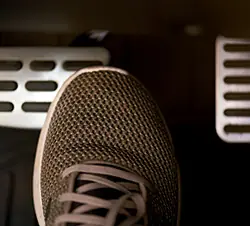
El freno de pie, ¿sobre qué ruedas actúa?
Which wheels does the foot brake act on?
- ASobre las ruedas delanteras.On the front wheels.
- BSobre las cuatro ruedas.On all four wheels.
- CSobre las ruedas motrices.On the driving wheels.
ExplanationThe foot brake is the service brake and it acts on all four wheels: that is why it is the vehicle's main brake, able to reduce speed and stop the vehicle effectively.
¿Cómo debemos arrancar el motor de un vehículo para que el gasto de combustible sea menor?
How should we start a vehicle's engine so that it uses less fuel?
- ASin pisar el acelerador.Without pressing the accelerator.
- BPisando el acelerador.Pressing the accelerator.
- CPisando el acelerador y el embrague a la misma vez.Pressing the accelerator and the clutch at the same time.
ExplanationTo use less fuel, we should always start our vehicle's engine without pressing the accelerator pedal, because pressing it would considerably increase the vehicle's fuel use.
Si nuestra motocicleta se refrigera sólo por aire, ¿qué mantenimiento precisa para que se refrigere adecuadamente?
If our motorcycle is cooled only by air, what maintenance does it need to be cooled properly?
- AVerificar el estado de la correa del ventilador.Check the condition of the fan belt.
- BMantener en buen estado de limpieza las aletas exteriores del motor.Keep the outer fins of the engine clean.
- CComprobar el nivel del líquido refrigerante en su depósito correspondiente.Check the coolant level in its reservoir.
ExplanationMotorcycles that are cooled only by air depend on the outer fins of the engine to get rid of the heat. If these fins are dirty or blocked, the airflow will be restricted and the engine will not cool properly. So it is important to keep the outer engine fins clean to make sure it is cooled properly.
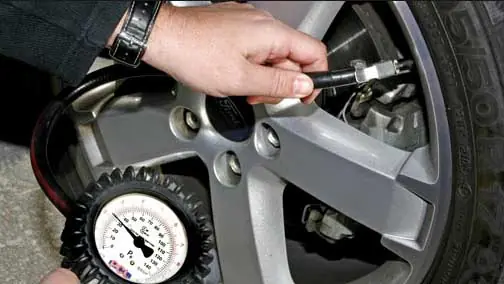
Deberemos de comprobar la presión de inflado de los neumáticos...
You should check the tyre inflation pressure…
- AComo mínimo, dos veces al añoAt least twice a year
- BCon frecuencia, y siempre antes de iniciar un viaje largoFrequently, and always before starting a long journey
- CCada tres mesesEvery three months
ExplanationTyre pressure should be checked frequently, at least once a month, and always before a long journey or before carrying a heavy load, with the tyres cold. Checking it only twice a year or every three months is not enough, because tyres lose air little by little.
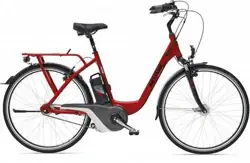
La bicicleta con pedaleo asistido...
A pedal-assisted bicycle...
- ADispone de dos ruedas y un motor de 50 cc.Has two wheels and a 50 cc engine.
- BUtiliza un motor como ayuda al esfuerzo muscular del conductor.Uses a motor to help the rider's muscle power.
- CNo utiliza un motor como ayuda al esfuerzo muscular del conductor.Does not use a motor to help the rider's muscle power.
ExplanationA pedal-assisted bicycle has an auxiliary electric motor that only helps the rider's muscle power while pedalling, and it stops helping when it reaches 25 km/h. That is why it is considered a bicycle and not a moped.
Para mantener adecuadamente la caja de velocidades de su motocicleta se precisa...
To maintain your motorcycle's gearbox properly, you need to...
- AComprobar el estado del electrolito y reponerlo si fuera preciso, tal y como se detalla en el manual de mantenimiento de la motocicleta.Check the condition of the electrolyte and top it up if necessary, as described in the motorcycle's maintenance manual.
- BSustituir periódicamente los elementos del ruptor y, en caso de avería, el cofre de accionamiento.Regularly replace the parts of the contact breaker and, if it fails, the actuator housing.
- CVerificar su correcto funcionamiento, prestando atención a la aparición de ruidos extraños y a la limpieza exterior.Check that it works properly, paying attention to any strange noises and to external cleanliness.
ExplanationThe correct answer is to check that the gearbox works properly, paying attention to any strange noises and to external cleanliness, because gearbox maintenance is limited to external cleaning and greasing. There is no need to check the electrolyte or to replace contact breaker parts or the actuator housing.
Un conductor que revisa periódicamente los neumáticos puede...
A driver who checks the tyres regularly can...
- Aevitar los fallos mecánicos del vehículo.avoid mechanical failures of the vehicle.
- Bpasar la ITV con total seguridad.pass the ITV with complete certainty.
- Cdetectar a tiempo un deterioro y prevenir un reventón.detect damage in time and prevent a blowout.
ExplanationOf all the parts of the vehicle, the tyres are probably the ones that need the most checking by the driver. Checking them regularly allows us to keep them in perfect condition and drive completely safely. We must regularly check the pressure with the tyres cold, using a pressure gauge. We also have to check that they have no cuts, deformations or uneven wear.
¿Qué presión de inflado se debe poner en las ruedas de repuesto?
What pressure should spare wheels be inflated to?
- ALa más alta recomendada por el fabricante.The highest pressure recommended by the manufacturer.
- BLa recomendada por el fabricante.The pressure recommended by the manufacturer.
- CLa que creamos conveniente.Whatever pressure we think is suitable.
ExplanationThe spare wheel should have the highest pressure recommended by the manufacturer, slightly more than the others, because it loses air over time without us noticing. If it has to be fitted, it is then adjusted to the correct pressure for its axle.
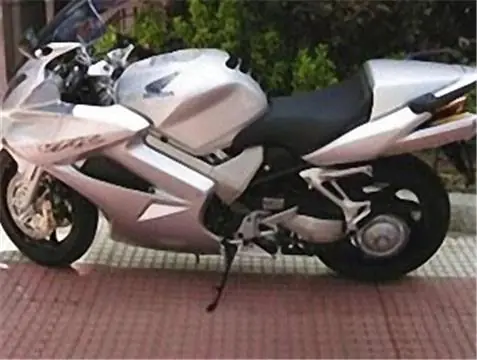
Si una motocicleta acaba de pasar su primera revisión técnica periódica, debe pasar su siguiente revisión periódica en un plazo de...
If a motorcycle has just passed its first periodic inspection, its next periodic inspection is due within...
- A1 año.1 year.
- B6 meses.6 months.
- C2 años.2 years.
ExplanationMotorcycles have their first ITV inspection four years after first registration, and after that every two years, according to Royal Decree 920/2017. So after the first periodic inspection, the next one is due two years later.
¿Qué ventajas sobre la conducción tiene una motocicleta dotada del sistema de frenado ABS respecto una que no lo tenga?
What driving advantage does a motorcycle with an ABS braking system have over one without it?
- AQue en caso de frenada brusca, gracias al sistema abs, disminuye el riesgo de bloqueo en las ruedas.In case of sudden braking, thanks to ABS, the risk of the wheels locking is reduced.
- BNo representa ninguna ventaja porque el sistema de frenado abs no se puede implantar en las motocicletas.It has no advantage, because ABS braking cannot be fitted to motorcycles.
- CQue permite que la presión de frenado sea siempre exactamente igual en el freno delantero que en el trasero.It makes the braking pressure always exactly the same on the front and rear brakes.
ExplanationABS on a motorcycle has the advantage of reducing the risk of the wheels locking during sudden braking. This is important because when the wheels lock, the rider loses control of the vehicle and this can lead to an accident. ABS lets the wheels keep turning, which prevents them from locking and allows the rider to keep control of the motorcycle.
En los motores de gasolina es recomendable iniciar la marcha...
With petrol engines, it is advisable to drive off...
- ADespués de esperar unos segundos desde que hemos arrancado el motor.After waiting a few seconds from starting the engine.
- BInmediatamente después de haber arrancado el motor.Immediately after starting the engine.
- CDespués de esperar por lo menos 5 minutos para que el motor coja temperatura.After waiting at least 5 minutes so that the engine warms up.
ExplanationWith petrol engines it is advisable to drive off immediately after starting the engine, in order to drive economically. With diesel engines, on the other hand, we should wait a few seconds between starting the engine and driving off.
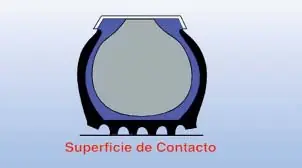
Si examinas los neumáticos de tu vehículo y detectas un mayor desgaste a lo largo de ambos laterales de la banda de rodadura:
If you examine your vehicle's tyres and find more wear along both sides of the tread:
- APuede que tu vehículo circule con frecuencia con poca presión en los neumáticos o con un exceso de carga.Your vehicle may often be driven with low tyre pressure or with too much load.
- BPuede que tu vehículo circule con frecuencia con un exceso de presión en los neumáticos.Your vehicle may often be driven with too much tyre pressure.
- CLo más probable es que el desgaste se haya producido durante un frenazo, por lo que no tienes por qué preocuparte.The wear most likely happened during sudden braking, so you do not need to worry.
ExplanationWhen a tyre has low pressure or too much load, it rests mainly on its shoulders, so both sides of the tread wear. If the wear is in the centre, the cause is usually too much pressure.
¿En qué debemos fijarnos para inspeccionar un neumático?
What should we look at when inspecting a tyre?
- ALa presión del aire únicamenteOnly the air pressure
- BLas llantas únicamenteOnly the wheel rims
- CSi existen grietas o desgaste irregular en el dibujoWhether there are cracks or uneven wear in the tread
ExplanationWhen we examine a tyre to find out its condition and whether it is fit for safe driving, we should look especially at the tread depth, whether there are cracks, and whether the wear is uneven across the different sides of the tyre.
Conducir de una forma agresiva, es decir, realizando fuertes acelerones, frenazos o arrancadas bruscas, ¿influye en el rendimiento normal de los neumáticos?
Does driving aggressively, that is, with hard acceleration, sudden braking or sudden starts, affect the normal performance of the tyres?
- ANo, salvo que el pavimento esté en mal estado.No, unless the road surface is in poor condition.
- BNo, pero se consume más carburante.No, but more fuel is used.
- CSí, porque se desgastan más.Yes, because they wear more.
ExplanationBecause driving aggressively, with hard acceleration, sudden braking or sudden starts, causes more tyre wear. These actions create more friction between the tyres and the road surface, which speeds up tread wear. Also, sudden movements increase the chance of the tyres being damaged, for example with cuts or deformations, which also affect their normal performance.
Si sustituye los neumáticos originales por otros de mayor anchura..
If you replace the original tyres with wider ones..
- AAumenta el consumo de combustible.Fuel consumption increases.
- BSe desgastan menos.They wear less.
- CDisminuye el consumo de combustible.Fuel consumption decreases.
ExplanationTyres wider than the original ones have a larger contact area with the road, which increases rolling resistance and, with it, fuel consumption. They must also be approved for that vehicle.
¿En qué situación de las siguientes se produce el efecto Fading?
In which of the following situations does the fading effect occur?
- AFreno pisado durante poco tiempoBrake pressed for a short time
- BFrenado continuado en un largo periodo de tiempoContinuous braking over a long period of time
- CFrenar violentamente en las curvasBraking violently on bends
ExplanationBrake fading in a vehicle is caused by the driver braking continuously over a long period of time, which can make the brakes lose effectiveness if they are not used correctly.
Si circulamos con el filtro del aire sucio...
If we drive with a dirty air filter...
- AEl motor producirá más emisiones contaminantes al aire.The engine will produce more polluting emissions into the air.
- BEl motor consumirá menos combustible y funcionará mejor.The engine will use less fuel and run better.
- CLa mezcla de aire/gasolina será pobre.The air/petrol mixture will be lean.
ExplanationA dirty air filter (dust, insects, impurities, etc.) stops the engine from getting all the air it needs to perform at its best, which increases fuel consumption and pollution. That is why it is important to check it regularly, bearing in mind that it gets dirtier in summer than in winter. The air/petrol mixture will be rich, because it will have too much petrol, as it cannot take in all the air the engine needs when the air filter is dirty or blocked.
¿En qué condiciones debe estar la rueda de repuesto?
What condition should the spare wheel be in?
- AEn buenas condiciones para poder utilizarla en cualquier momento.In good condition, so it can be used at any time.
- BEn cualquier estado, porque solo se usa en emergencias.In any condition, because it is only used in emergencies.
- CCon una presión de inflado inferior a las demás ruedas.With a lower inflation pressure than the other wheels.
ExplanationThe spare wheel must always be in good condition and at the correct pressure, so it can be used at any time. It should be checked regularly together with the other wheels, as it tends to be forgotten until the day it is needed.
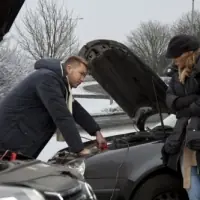
¿Cuál de éstas NO es una causa frecuente de fallo de los frenos?
Which of these is NOT a common cause of brake failure?
- ADesgaste de zapatas o pastillasWorn brake shoes or pads
- BEnfriamiento excesivoExcessive cooling
- CPérdida de liquido de frenosLoss of brake fluid
ExplanationThe most common causes of brake failure are loss of fluid, worn brake shoes or pads, overheating and air in the brake circuit. Excessive cooling of the brakes will never cause them to fail.
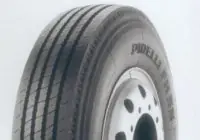
Cuando llega el invierno ¿es conveniente que el conductor modifique la presión de inflado de los neumáticos de su vehículo?
When winter comes, is it advisable for the driver to change their vehicle's tyre pressure?
- ASí, se debe aumentar la presión cuando las temperaturas son bajas.Yes, the pressure should be increased when temperatures are low.
- BNo, se deben mantener con la misma presión que en verano.No, they should be kept at the same pressure as in summer.
- CSí, se debe disminuir la presión cuando las temperaturas son bajas.Yes, the pressure should be reduced when temperatures are low.
ExplanationTyre pressure does not change with the season: it must stay at the pressure set by the vehicle manufacturer, checked when cold. In winter it is a good idea to check it more often, because it drops slightly in the cold, but you should not deliberately inflate the tyres more or less.
¿En qué estado deben estar los neumáticos para comprobar correctamente su presión?
What state should the tyres be in to check their pressure correctly?
- AEn caliente, después de un largo recorrido.Hot, after a long journey.
- BIndistintamente, la temperatura no influye.It does not matter, temperature has no effect.
- CEn frío, antes de rodar o tras recorrer poca distancia.Cold, before driving or after a short distance.
ExplanationPressure must be measured with the tyres cold, because they heat up when driving and the reading is not reliable.
¿Con qué frecuencia conviene revisar la presión de los neumáticos del vehículo?
How often is it advisable to check the vehicle's tyre pressure?
- AUna o dos veces al mes, siempre con los neumáticos calientes.Once or twice a month, always with the tyres hot.
- BUna o dos veces al mes, siempre con los neumáticos fríos.Once or twice a month, always with the tyres cold.
- CUna o dos veces al año, siempre con los neumáticos fríos.Once or twice a year, always with the tyres cold.
ExplanationIt is advisable to check the tyre pressure with the tyres cold, because the pressure can rise when the tyres heat up with use, which can give a wrong reading. This advice is in line with good vehicle maintenance practice and helps you drive safely and efficiently. There are rules on vehicle safety and maintenance that show how important the condition of the tyres is, as reflected in the General Traffic Regulations.
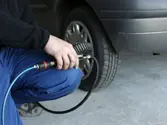
¿Es necesario controlar periódicamente la presión de los neumáticos?
Is it necessary to check the tyre pressure regularly?
- ANo si llevamos neumáticos sin cámara.Not if we have tubeless tyres.
- BSí, y lo haremos en frío.Yes, and we will do it when they are cold.
- CSí, debemos preocuparnos del estado de los neumáticos controlando su presión, siendo indistinto que estén fríos o calientes.Yes, we must look after the condition of the tyres by checking their pressure, and it does not matter whether they are cold or hot.
ExplanationThe valve that keeps the air inside the tyre constantly lets some air escape, so we will regularly add air until the pressure recommended by the manufacturer is reached. We will measure the pressure with the tyre cold so that the reading is as accurate as possible.
El estado de los neumáticos, ¿influye en la eficacia de frenado?
Does the condition of the tyres affect braking efficiency?
- ASí, influye ya que los neumáticos en buen estado permiten un mejor agarre al suelo y una mejor frenada.Yes, because tyres in good condition give better grip on the ground and better braking.
- BNo, solamente depende del estado de la calzada.No, it only depends on the condition of the road surface.
- CNo influye, solamente depende del estado de los frenos.No, it only depends on the condition of the brakes.
ExplanationThe brakes stop the wheel, but it is the tyre that passes that force to the ground. A worn tyre or one with the wrong pressure has less grip, especially in the rain, and makes the braking distance longer even if the brakes are perfect.
Todos los automóviles, ¿deben llevar una rueda de repuesto y las herramientas necesarias para su cambio?
Must all motor cars carry a spare wheel and the tools needed to change it?
- ASolo los automóviles de más de 3.500 Kg de MMA.Only motor cars with a MAM of more than 3,500 kg.
- BSí.Yes.
- CNo.No.
ExplanationNot all motor cars have to carry a spare wheel: the rules allow it to be replaced by an emergency wheel or an alternative system, such as a puncture repair kit or tyres that can run without air. What is required is being able to deal with a puncture.
¿Qué sucederá al frenar utilizando el freno motor?
What will happen when you slow down using engine braking?
- AEl cambio de marchas experimentará un desgaste.The gearbox will suffer wear.
- BEl consumo de combustible disminuirá.Fuel consumption will go down.
- CLas ruedas directrices se pueden llegar a bloquear.The steering wheels may lock.
ExplanationEngine braking is a technique for reducing your car's speed using the engine, without using the wheel brakes at any point. With this technique we will reduce fuel consumption, and the brake pads and discs of our car will also last longer. It is advisable to use this technique when driving at low or medium engine speed because, even if we shift down a gear, the vehicle can easily cope with the new engine speed.
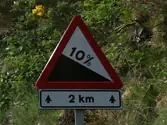
En una bajada, ¿qué hay que hacer para que no se calienten los frenos?
On a downhill stretch, what should you do to stop the brakes from overheating?
- APoner una velocidad más larga.Change to a higher gear.
- BPoner una velocidad más corta.Change to a lower gear.
- CPoner el freno de mano.Put the handbrake on.
ExplanationOn a long or steep downhill stretch, to stop the brakes from overheating through repeated use (known as the fading effect), it is advisable to change down to a lower gear to make use of the vehicle's engine braking.
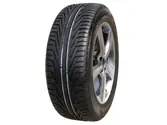
La presión de inflado de la rueda de repuesto será...
The spare wheel's tyre pressure will be...
- ALa que recomiende el fabricante.The pressure recommended by the manufacturer.
- BLa más alta de las recomendadas por el fabricante.The highest of the pressures recommended by the manufacturer.
- CLa más baja de las recomendadas por el fabricante.The lowest of the pressures recommended by the manufacturer.
ExplanationAs the spare wheel is stored for a long time, it may gradually lose some pressure, so we should give it the highest of the pressures recommended by the manufacturer.
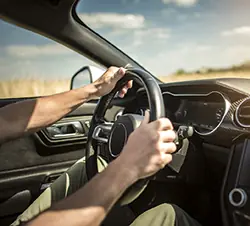
Para circular con mayor seguridad...
To drive more safely...
- Ael vehículo debe estar en perfecto estado pero no es necesario que lo esté el conductor.the vehicle must be in perfect condition, but the driver does not need to be.
- Bel conductor debe estar en perfecto estado pero no es necesario que lo esté el vehículo.the driver must be in perfect condition, but the vehicle does not need to be.
- Ctanto el conductor como el vehículo deben estar en perfecto estado.both the driver and the vehicle must be in perfect condition.
ExplanationSafety depends on all the factors at once: a driver who is fully fit to drive and a well-maintained vehicle. A problem with either of them increases the risk of an accident.
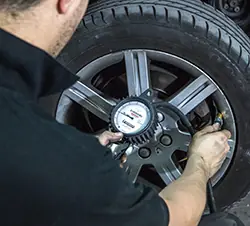
Para comprobar la presión de inflado, ¿cómo deben estar los neumáticos?
To check the tyre pressure, what state should the tyres be in?
- AFríos.Cold.
- BCalientes.Hot.
- CFríos o calientes, es igual.Cold or hot, it makes no difference.
ExplanationPressure is checked with the tyres cold: when driving, the air heats up and expands, so if checked hot the reading would be too high and the tyre would be left with less pressure than it should have.
¿Se pueden montar en su turismo neumáticos con un índice de velocidad superior al indicado por el fabricante?
Can tyres with a higher speed index than the one given by the manufacturer be fitted to your car?
- ANo.No.
- BSí, siempre que tengan un índice de velocidad igual o superior al indicado por el fabricante.Yes, as long as their speed index is equal to or higher than the one given by the manufacturer.
- CSí, siempre que tengan un índice de velocidad inferior al indicado por el fabricante.Yes, as long as their speed index is lower than the one given by the manufacturer.
ExplanationSpanish rules allow tyres with a higher speed code than the one given by the manufacturer to be fitted, as long as these tyres have the same or a higher speed capacity. This is based on the idea that tyres with a higher speed capacity can give the vehicle better performance and safety, as long as the fitting rules and the vehicle's specifications are still met.
¿Se podrá circular con el sistema de escape libre?
Can you drive with an open (unsilenced) exhaust?
- ALos ciclomotores y motocicletas sí, los turismos no.Mopeds and motorcycles can, cars cannot.
- BSolamente los ciclomotores.Only mopeds.
- CNo.No.
ExplanationMotor vehicles and mopeds are prohibited from driving with a so-called open exhaust, that is, without an effective device to silence the engine's explosions.
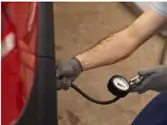
La presión de los neumáticos, ¿deberá ser mayor en verano que en invierno?
Should tyre pressure be higher in summer than in winter?
- ASí.Yes.
- BNo, debe ser mayor en invierno.No, it should be higher in winter.
- CNo.No.
ExplanationTyre pressure must always be the one recommended by the manufacturer, whether the weather is cold or hot. The manufacturer gives different pressures depending on the load we put in the vehicle.
¿Qué freno es más eficaz en una motocicleta?
Which brake is more effective on a motorcycle?
- AEl freno trasero.The rear brake.
- BEl freno delantero.The front brake.
- CLos dos frenos son igual de eficaces.Both brakes are equally effective.
ExplanationThe front brake is more effective than the rear brake because when braking more weight is put on the front wheel, so more braking force can be applied to it. The rear wheel, on the other hand, becomes lighter, so it tends to lock if we brake hard on it.
La presión de los neumáticos se debe comprobar...
Tyre pressure should be checked...
- ADespués de un trayecto largo por autopista.After a long motorway journey.
- BEn caliente.When the tyres are hot.
- CEn frío.When the tyres are cold.
ExplanationTyre pressure must be checked with the tyres cold or after driving only a short distance. Otherwise, the temperature of the air in the tyre rises, and so does the pressure, which would give a wrong reading.
All topics
- Definitions
- Documents and penalty points
- The driver's condition
- Duties of drivers and pedestrians
- Vehicle safety devices
- Vehicle controls and equipment
- Vehicle lights and horn
- Traffic signs, markings and signals
- The road and its lanes
- Speed and distances
- Manoeuvres
- Right of way
- Carrying passengers and loads
- Driving safely in difficult conditions
- Road accidents and first aid
- Defensive and eco-driving
Independent app: not affiliated with or endorsed by the DGT (Spain's Directorate-General for Traffic) or the Ministry of the Interior. The official exam is booked with the DGT and taken at its test centres. The questions here are practice material; the DGT's official question bank is not public.
Basado en datos de la Agencia Estatal Boletín Oficial del Estado (https://www.boe.es). Textos consolidados de carácter meramente informativo. La AEBOE no patrocina ni respalda este sitio.
Parte de las preguntas procede de los tests de la revista «Tráfico y Seguridad Vial» de la DGT, reproducidos con indicación de la fuente.