
DGT test · 539 questions
Vehicle mechanics and maintenance · Page 5 of 11
Engine, brakes, steering, suspension and tyres: how they work and what maintenance prevents breakdowns and crashes.
Questions in this topic, with answers
539 questions, 50 per page, with the correct answer and the explanation. Page 5 of 11.
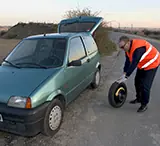
Debido a un pinchazo sustituye una de las ruedas de su vehículo por la de uso temporal. ¿Cuántos kilómetros podrá circular en esas condiciones?
Because of a puncture, you replace one of your vehicle's wheels with the temporary-use wheel. How many kilometres can you drive like this?
- ATantos como sean necesarios siempre que dicha rueda no haya sido utilizada anteriormente.As many as necessary, as long as that wheel has not been used before.
- BLos que recomiende, como máximo, cada fabricante, y circulando a la velocidad que se indica en dicha rueda.At most the number each manufacturer recommends, driving at the speed shown on that wheel.
- CNo hay limitación de kilómetros porque se trata de una situación excepcional.There is no limit on kilometres because it is an exceptional situation.
ExplanationA temporary-use wheel is a temporary solution: it only allows you to drive the number of kilometres set by the manufacturer, without going over the speed shown on the wheel itself (usually 80 km/h), until a normal tyre is fitted.
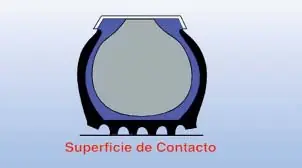
Cuando vayas a cambiar los neumáticos de tu vehículo, es importante que tengas en cuenta que:
When you are going to change your vehicle's tyres, it is important to bear in mind that:
- AComo regla general, no utilices neumáticos con índices de carga y códigos de velocidad inferiores a los previstos por la marca del vehículo.As a general rule, you should not use tyres with lower load indexes and speed codes than those set by the vehicle's maker.
- BPuedes colocar neumáticos cuyo índice de carga sea inferior a los originales, siempre que lo hagas en el mismo eje.You can fit tyres with a lower load index than the original ones, as long as you do so on the same axle.
- CPuedes colocar neumáticos cuya estructura sea diferente, incluso en el mismo eje.You can fit tyres with a different structure, even on the same axle.
ExplanationWhen changing tyres, you must at least keep to the load index and speed code given by the vehicle manufacturer. Tyres on the same axle must be the same in size, structure and features, and different structures must not be mixed.
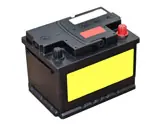
Las baterías denominadas "sin mantenimiento", ¿requieren alguna atención en particular?
Do so-called "maintenance-free" batteries need any particular attention?
- ANo, ya que no requieren mantenimiento.No, because they need no maintenance.
- BSí, debemos prestar atención al estado de los bornes.Yes, we must pay attention to the condition of the terminals.
- CNo, ya que las baterías se recargan solas.No, because batteries recharge by themselves.
ExplanationOn all batteries you must check that the terminals are clean, tight and, if possible, covered in soft grease.
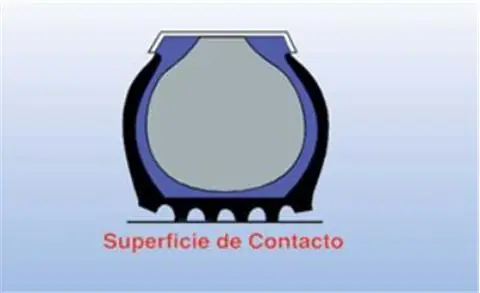
Cuando un neumático tiene mucho aire, ¿qué ocurre?
What happens when a tyre has too much air?
- ASe agarra mejor a la calzada.It grips the road better.
- BSe agarra peor a la calzada.It grips the road worse.
- CSe desgasta más por los lados.It wears more at the sides.
ExplanationWith too much pressure the tyre bulges, only the central part of the tread touches the road and the contact area is reduced, so it grips the road worse and wears more in the centre. Wear at the sides is typical of too little pressure.
Cuando desaparece el dibujo de los neumáticos...
When the tyre tread disappears...
- ADisminuye la adherencia.Grip is reduced.
- BEl vehículo se desliza de forma más estable y segura.The vehicle slides in a more stable and safe way.
- CSe consume menos carburante y la conducción es más ecológica.Less fuel is used and driving is more eco-friendly.
ExplanationWhen the tyre tread disappears, grip is reduced. The tread's job is to clear away the water on the road surface. Without enough tread, the tyre cannot clear water efficiently, which leads to loss of contact with the road surface and less grip. This can make the vehicle slide and be harder to control.
¿Cuál es la función principal de la batería del vehículo?
What is the main job of the vehicle's battery?
- ADar energía al sistema eléctrico cuando el vehículo está encendido.To power the electrical system when the vehicle is switched on.
- BProporcionar energía al sistema eléctrico cuando el motor está apagado y permitir el arranque.To power the electrical system when the engine is off and to allow the engine to start.
- CGenerar energía eléctrica de forma continua durante la circulación.To produce electricity continuously while driving.
ExplanationThe battery powers the electrical system when the engine is off and allows the engine to be started by the starter motor. Once the engine is running, the electricity needed for the vehicle's systems (lights, radio, climate control, etc.) is supplied mainly by the alternator, which also recharges the battery so that it is ready for the next start. That is why the answer about powering the electrical system when the vehicle is switched on is wrong: when the engine is running, the battery is not the main source of power, but acts as a reserve and back-up when extra power is needed.
La cilindrada máxima de un ciclomotor de motor de combustión es de:
The maximum engine capacity of a moped with a combustion engine is:
- A50 cc.50 cc.
- B125 cc.125 cc.
- C45 cc.45 cc.
ExplanationUnder Annex II of the General Vehicle Regulations (RGV), a moped with an internal combustion engine has an engine capacity of no more than 50 cm³ and a maximum design speed of no more than 45 km/h. If it exceeds either of these values, it is a motorcycle.
La presión de inflado de los neumáticos...
Tyre pressure...
- ASe debe comprobar al menos dos veces al año.Must be checked at least twice a year.
- BSe debe comprobar cada tres meses.Must be checked every three months.
- CSe debe comprobar con regularidad y siempre antes de iniciar un viaje largo.Must be checked regularly and always before starting a long journey.
ExplanationTyre pressure is critical for road safety, so it must be checked often, especially before starting a long journey. This is backed by the General Traffic Regulations, which say that tyre pressure must be checked regularly to ensure proper grip on the road surface and vehicle stability. Checking the pressure often prevents accidents and improves fuel efficiency.
Si se mojan los frenos, ¿pueden perder temporalmente parte de su eficacia?
If the brakes get wet, can they temporarily lose some of their effectiveness?
- ANo, sólo perderán eficacia si les falta líquido de frenos.No, they will only lose effectiveness if they are short of brake fluid.
- BSólo perderán eficacia en caso de sobrecalentamiento.They will only lose effectiveness if they overheat.
- CSí.Yes.
ExplanationWhen the brakes get wet, the friction between the pads and the disc is reduced, so the brake is temporarily less effective when braking. The brake fluid level is also important, as is avoiding overheating of the brakes.
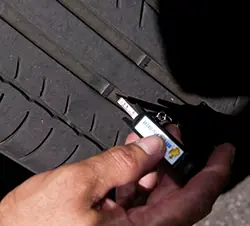
Los neumáticos, ¿cuándo hay que cambiarlos?
When do tyres have to be changed?
- ACuando la profundidad del dibujo sea menor de 1,6 mm.When the tread depth is less than 1.6 mm.
- BCuando la profundidad del dibujo sea menor de 2 mm.When the tread depth is less than 2 mm.
- CCuando la profundidad del dibujo sea menor de 3 mm.When the tread depth is less than 3 mm.
ExplanationThe legal minimum tyre tread depth is 1.6 mm; below this, the tyre does not clear water well, loses grip and must be replaced.
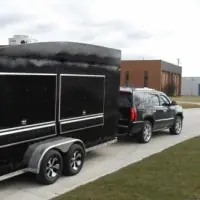
¿Cuál de estos frenos NO está obligado a llevar un remolque de más de 750 kg?
Which of these brakes is a trailer of more than 750 kg NOT required to have?
- AFreno de servicioService brake
- BFreno de socorroEmergency brake
- CFreno de estacionamientoParking brake
ExplanationUnder the General Vehicle Regulations (RGV), trailers of more than 750 kg must have a service brake and a parking brake and, if they exceed 1,500 kg, also automatic braking if they become uncoupled. They are not required to have an emergency brake.
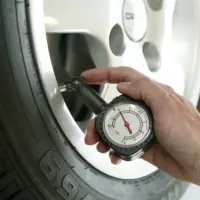
A menudo es necesario examinar la presión de los neumáticos. En este sentido, ¿cómo debemos medir la presión?
Tyre pressure often needs to be checked. How should the pressure be measured?
- ACon los neumáticos fríos.With the tyres cold.
- BCon los neumáticos calientes.With the tyres hot.
- CDa igual, la temperatura no influye en la presión.It makes no difference; temperature does not affect pressure.
ExplanationPressure is measured with the tyres cold, that is, before driving or after only a few kilometres. As you drive, the air warms up and the pressure rises, so measuring it hot gives a false reading and would lead you to let air out until the tyres are below the recommended pressure.
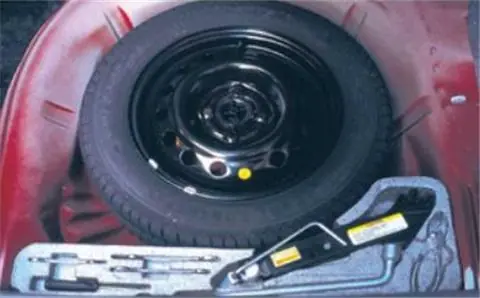
Si un vehículo lleva rueda de repuesto y no dispone de sistema alternativo al cambio de las ruedas, es obligatorio...
If a vehicle carries a spare wheel and does not have an alternative system to changing the wheels, it is compulsory...
- Aque la rueda de repuesto tenga un neumático resistente a los pinchazos.for the spare wheel to have a puncture-resistant tyre.
- Bllevar las herramientas necesarias para el cambio de ruedas.to carry the tools needed to change the wheels.
- Cque la rueda de repuesto sea de uso temporal.for the spare wheel to be a temporary-use wheel.
ExplanationUnder Annex XII of the General Vehicle Regulations, a car must carry a complete spare wheel or a temporary-use spare wheel with the tools needed to change it, or an alternative system. Its equipment also includes the V-16 hazard warning light device and a reflective vest.
Un buen mantenimiento del vehículo, ¿podrá reducir el riesgo de accidentes?
Can good vehicle maintenance reduce the risk of accidents?
- ASí.Yes.
- BSolo en vehículos de más de diez años.Only for vehicles more than ten years old.
- CNo.No.
ExplanationGood vehicle maintenance, for example keeping the tyres at the correct pressure and with the tread in good condition, can reduce the risk of accidents.
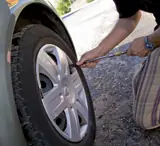
La presión de inflado del neumático...
Tyre pressure...
- Adebe comprobarse, como mínimo, dos veces al año.must be checked at least twice a year.
- Bdebe comprobarse cada tres meses.must be checked every three months.
- Cdebe comprobarse con frecuencia, y siempre antes de iniciar un viaje largo.must be checked often, and always before starting a long journey.
ExplanationTyre pressure must be checked often, at least once a month and always before a long journey or before loading the vehicle heavily, and with the tyres cold. Checking only twice a year or every three months is not enough, because tyres lose air little by little.
Con el fin de que los neumáticos de un turismo sean eficaces, cualquiera que fuera el estado de la calzada, deben sustituirse cuando la hendidura del dibujo de la banda de rodamiento tenga una profundidad inferior a...
For a car's tyres to be effective, whatever the condition of the road, they must be replaced when the tread grooves are less deep than...
- A1,6 milímetros.1.6 millimetres.
- B2 milímetros.2 millimetres.
- C3 milímetros.3 millimetres.
ExplanationThe legal minimum tyre tread depth for cars is 1.6 mm in the main grooves. Below this figure, grip, especially in the wet, is not enough and the tyres must be replaced, although it is advisable to do it earlier.
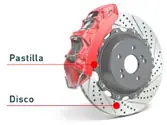
¿Qué mantenimiento debemos realizar en un freno de disco?
What maintenance should we carry out on a disc brake?
- AEngrasar los discos periódicamente.Grease the discs regularly.
- BAñadir semanalmente líquido en la bomba de frenado.Add fluid to the brake master cylinder every week.
- CComprobar el desgaste de las pastillas de freno.Check the wear on the brake pads.
ExplanationIn a disc brake, the brake pads wear down, so we must check their condition regularly. We should also check the fluid level in the brake master cylinder. If we had to add fluid every week, it would no longer be a maintenance matter but a serious fault, and we should go to a mechanic immediately.
¿Qué mantenimiento debemos hacer a un freno de disco?
What maintenance should we carry out on a disc brake?
- AAñadir líquido de frenos al depósito cada semana.Add brake fluid to the reservoir every week.
- BRevisar el desgaste de las pastillas de freno.Check the wear of the brake pads.
- CEngrasar los discos de freno periódicamente.Grease the brake discs regularly.
ExplanationThe DGT manual says that in the braking system you must check that the pads or shoes are not worn and are firmly fixed, and that the brake fluid is between the minimum and maximum marks and in good condition. Worn pads make braking less effective.
Si los amortiguadores de nuestro vehículo están en mal estado, afectarán entre otros...
If our vehicle's shock absorbers are in poor condition, among other things they will affect...
- AA la distancia de frenado, que será mayor.The braking distance, which will be longer.
- BA la distancia de frenado, que será menor.The braking distance, which will be shorter.
- CA la distancia de reacción.The reaction distance.
ExplanationWhen braking with shock absorbers in poor condition, the wheels will lose contact with the road surface, reducing their grip, which will increase the braking distance.
Si un neumático tiene más de 5 años y se ha endurecido con el tiempo, ¿es peligroso para la conducción?
If a tyre is more than 5 years old and has hardened over time, is it dangerous to drive on?
- ANo, si tiene la profundidad mínima de 1,6 mm.No, if it has the minimum tread depth of 1.6 mm.
- BSí.Yes.
- CNo, si la presión es la recomendada por el fabricante.No, if the pressure is the one recommended by the manufacturer.
ExplanationIt is very important that a tyre is no more than 5 years old, because over time it hardens and loses its grip.
¿Cada cuánto tiempo tendremos que cambiar los neumáticos?
How often will we have to change the tyres?
- ACada diez años.Every ten years.
- Bcada 10 mil quilómetros.Every 10,000 kilometres.
- CCada cinco años.Every five years.
ExplanationEven if the tyres are not worn from use, it is advisable to change them at the latest 5 years after their date of manufacture, because the material they are made of gradually loses its grip and hardens over time.
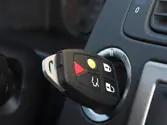
¿En qué momento entra en funcionamiento el sistema de frenado automático de emergencia “AEBS”?
When does the automatic emergency braking system (AEBS) come into action?
- ACuando exista un peligro, en todo caso.Whenever there is danger, in all cases.
- BEn caso de despiste del conductor y riesgo de colisión por alcance.When the driver is not paying attention and there is a risk of a rear-end collision.
- CÚnicamente en caso de una colisión inevitable.Only when a collision cannot be avoided.
ExplanationAEBS, or urban and interurban automatic emergency braking system: if the driver is not paying attention and there is a risk of a rear-end collision, the system can detect an imminent danger and act in two ways: - by giving the driver a warning (visual/sound), and - if the driver ignores it, by taking control of the vehicle to stop it with an emergency stop.
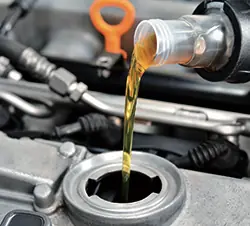
¿Por qué es aconsejable cambiar periódicamente el aceite lubricante?
Why is it advisable to change the engine oil regularly?
- APorque, estando en buenas condiciones, mantiene el buen estado del motor más tiempo y el desgaste de las piezas es menor.Because, when it is in good condition, it keeps the engine in good condition for longer and the parts wear less.
- BPorque el aceite con el tiempo se vuelve más viscoso y no fluye correctamente entre las piezas.Because over time the oil becomes thicker and does not flow properly between the parts.
- CPorque el aceite con el uso y pasado un tiempo pierde excesiva cantidad de volumen y hay que reponerlo.Because with use and over time the oil loses too much volume and has to be topped up.
ExplanationWith use, oil breaks down and loses its lubricating properties; changing it regularly keeps the engine in good condition for longer and reduces wear and friction between the parts.
Circular con los neumáticos a la presión recomendada por el fabricante:
Driving with the tyres at the pressure recommended by the manufacturer:
- AAumenta el consumo.Increases fuel consumption.
- BOptimiza el agarre, el desgaste y el consumo.Gives the best grip, wear and fuel consumption.
- CNo tiene ninguna ventaja.Has no advantage.
ExplanationThe correct pressure improves grip and safety, and reduces wear and fuel consumption.
Cuando el filtro del aire del motor está sucio...
When the engine air filter is dirty...
- AEl motor consumirá menos combustible.The engine will use less fuel.
- BEl motor consumirá más combustible.The engine will use more fuel.
- CEl motor contaminará menos.The engine will pollute less.
ExplanationDirt in the air filter restricts the flow of air, which upsets the balance between air and fuel and increases fuel consumption.
La altura del asiento es muy importante para que el conductor se acomode correctamente sobre la motocicleta. Debemos saber que...
The seat height is very important for the rider to sit correctly on the motorcycle. We should know that...
- ATodas las motocicletas tienen el asiento a la misma altura del suelo.All motorcycles have their seat at the same height from the ground.
- BLa altura del asiento se modificará regulando la presión del inflado de los neumáticos de la motocicleta.The seat height is adjusted by changing the motorcycle's tyre pressure.
- CElegiremos el tipo y modelo de motocicleta que más convenga a nuestra estatura.We will choose the type and model of motorcycle that best suits our height.
ExplanationTo control the motorcycle well, the rider must be able to put their feet on the ground when stopping and reach the handlebars and controls comfortably. As seat height varies from model to model, you must choose a motorcycle that suits your own height.
¿Cómo se puede reducir el riesgo relacionado con el vehículo?
How can the risk related to the vehicle be reduced?
- ARevisando y dando mantenimiento al vehículo.By checking and maintaining the vehicle.
- BManteniendo limpio el motor.By keeping the engine clean.
- CAjustando correctamente la posición del asiento del conductor.By adjusting the driver's seat position correctly.
ExplanationThe correct answer is by checking and maintaining the vehicle, because the traffic rules say that keeping the vehicle in good condition is essential for road safety. A well-maintained vehicle makes sure its systems, such as the brakes and steering, work at their best, which reduces the risk of accidents. This is implied in the rules on drivers' duty to keep their vehicle in a safe condition to be driven, which helps the safety not only of the driver but of all road users.
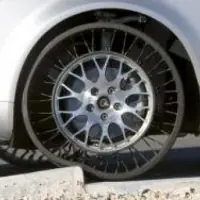
¿Qué ventaja tienen los neumáticos sin cámara frente a los que sí que la tienen?
What advantage do tubeless tyres have over tyres with an inner tube?
- AAumenta la seguridad en caso de pinchazoThey increase safety in case of a puncture
- BPermite al vehículo alcanzar velocidades más altasThey allow the vehicle to reach higher speeds
- CDuran de media diez años más que los que tienen cámaraOn average they last ten years longer than tyres with an inner tube
ExplanationA tubeless tyre loses air slowly when punctured, because the rubber itself tends to close the hole. This way the driver keeps control and can stop safely, whereas a tyre with an inner tube can burst and go flat suddenly.
¿Cuándo decimos que un vehículo es de tracción total o integral?
When do we say that a vehicle has all-wheel drive (four-wheel drive)?
- ACuando la potencia del motor se transmite únicamente a la rueda motrizWhen the engine's power is sent only to the driving wheel
- BCuando la potencia del motor se transmite a las ruedas traserasWhen the engine's power is sent to the rear wheels
- CCuando la potencia del motor se transmite a las cuatro ruedasWhen the engine's power is sent to all four wheels
ExplanationThe engine's power can be sent to the rear wheels, in which case we say the vehicle has rear-wheel drive; to the front wheels, in which case it has front-wheel drive; or to all four wheels, in which case it has all-wheel (four-wheel) drive, because the engine's power is sent to all four wheels of the vehicle.
Nuestra motocicleta dispone de sistema de frenado tanto en la rueda trasera como en la delantera. Habitualmente, ¿cuál de estos sistemas tendrá un mayor desgaste durante la conducción?
Our motorcycle has brakes on both the rear and the front wheel. Usually, which of these systems will wear more when riding?
- AEl sistema de freno delantero.The front brake system.
- BEl sistema de freno trasero.The rear brake system.
- CAmbos sistemas se desgastarán de la misma forma.Both systems will wear in the same way.
ExplanationThe front brake system will wear more when riding because it provides most of the braking force. When braking, the vehicle's weight shifts forwards, which puts more load on the front wheel. So the front brake system is used more often and therefore wears faster than the rear brake system.
El aquaplaning se produce en suelos muy mojados cuando el neumático no puede evacuar todo el agua que encuentra a su paso. Para evitar su aparición es preferible no utilizar…
Aquaplaning happens on very wet surfaces when the tyre cannot clear all the water in its path. To prevent it, it is better not to use...
- ANeumáticos con más de 2 cm de profundidad en los surcos del dibujo.Tyres with tread grooves more than 2 cm deep.
- BNeumáticos muy anchos.Very wide tyres.
- CNeumáticos estrechos.Narrow tyres.
ExplanationA very wide tyre, a badly worn tyre or an unsuitable speed make aquaplaning more likely.
¿Cuándo entra en funcionamiento el sistema de frenado automático de emergencia (AEBS)?
When does the automatic emergency braking system (AEBS) come into action?
- ACuando hay peligro.When there is danger.
- BCuando el conductor está distraído y hay riesgo de colisión por alcance.When the driver is distracted and there is a risk of a rear-end collision.
- CSolo en caso de colisión inevitable.Only when a collision cannot be avoided.
ExplanationAutomatic emergency braking system (AEBS): the AEBS system comes on when there is a risk of collision and the driver does not react in time. It uses sensors and cameras to detect obstacles and reduces speed automatically, avoiding the impact or making it less severe. It is especially useful in towns and on high-speed roads. However, it does not remove the need to keep a safe distance and to drive attentively. This technology is regulated by the European standard UNECE R131 on emergency braking systems.
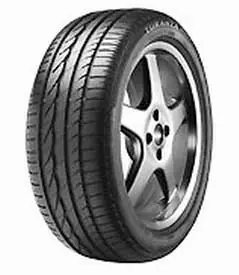
Si tenemos los neumáticos de nuestro turismo bajos de presión...
If our car's tyres are under-inflated...
- AEl consumo de nuestro vehículo disminuye.Our vehicle's fuel consumption decreases.
- BDisminuye el riesgo de reventón.The risk of a blowout decreases.
- CSe desgastarán más rapidamente.They will wear out more quickly.
ExplanationWith pressure below the correct level, the tyre deforms and rests mainly on its edges, which wear out sooner. Fuel consumption also increases rather than decreases, and the tyre heats up more, so the risk of a blowout grows.
Cuando el motor está en marcha, ¿quién suministra principalmente la electricidad al vehículo?
When the engine is running, what mainly supplies electricity to the vehicle?
- ALa batería.The battery.
- BEl alternador.The alternator.
- CEl motor de arranque.The starter motor.
ExplanationWhen the engine is running, electricity is supplied to the vehicle by the alternator. This device produces electricity while the engine is running and also recharges the battery. The battery takes a back seat, because its main job is to supply power to start the engine.
Si tiene que conducir con una rueda de repuesto temporal o de emergencia, debe tener en cuenta...
If you have to drive on a temporary or emergency spare wheel, you must bear in mind…
- Aque la presión debe ser más alta que la de los neumáticos normales del vehículo.that the pressure must be higher than that of the vehicle's normal tyres.
- Blas instrucciones del fabricante de ese tipo de repuesto.the manufacturer's instructions for that type of spare.
- Cque si está homologada, no hace falta reemplazarla por una rueda normal.that if it is approved, it does not need to be replaced with a normal wheel.
ExplanationA temporary-use wheel has its own speed, pressure and usage limits set by its manufacturer, and you must drive within them (Annex XII of the General Vehicle Regulations). Even if it is approved, it must be replaced with a normal wheel as soon as possible.
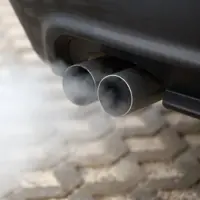
¿Cuál es la función del tubo de escape?
What is the job of the exhaust pipe?
- AEnfriar el liquido refrigeranteTo cool the coolant
- BSilenciar las explosiones que produce el motorTo silence the explosions produced by the engine
- CCanalizar los gases quemados desde el catalizador al silenciadorTo carry the burnt gases from the catalytic converter to the silencer
ExplanationThe main job of the exhaust pipe, which is part of the vehicle's exhaust system, is to carry the gases the vehicle burns from the catalytic converter to the silencer.
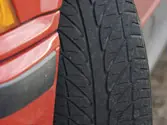
Si las ruedas de su vehículo están desgastadas por la parte central se deberá a...
If your vehicle's tyres are worn in the central part, it will be because of...
- ALlevar más presión que la recomendada por el fabricante.Having more pressure than the manufacturer recommends.
- BLlevar menos presión que la recomendada por el fabricante.Having less pressure than the manufacturer recommends.
- CLlevar los amortiguadores en mal estado.Having shock absorbers in poor condition.
Explanation* With a pressure lower than the manufacturer's: - They wear more at the edges. - They flex and heat up more. - The risk of a blowout increases. - Grip is reduced and the risk of aquaplaning increases (the tyres cannot clear the layer of water on the road and lose grip). - Fuel consumption increases. * With a pressure higher than the manufacturer's: - They wear more in the centre. - The area of contact with the road and grip are reduced. - They do not absorb bumps in the road well (they vibrate more and the suspension wears).
Si los amortiguadores están en mal estado, ¿qué puede ocurrir?
If the shock absorbers are in poor condition, what can happen?
- AQue aumente peligrosamente la distancia de frenado.The braking distance can increase dangerously.
- BQue disminuya la distancia de frenado.The braking distance can decrease.
- CQue aumente la distancia de reacción.The reaction distance can increase.
ExplanationIf the shock absorbers are in poor condition, the tyre loses contact with the road surface when braking and bounces slightly, so the braking distance increases.
El desgaste irregular de un neumático, a manchas o en escalones, suele deberse a...
Irregular tyre wear, in patches or in steps, is usually caused by...
- APresión demasiado alta.Pressure that is too high.
- BPresión demasiado baja.Pressure that is too low.
- CAmortiguadores defectuosos.Faulty shock absorbers.
ExplanationIrregular wear, in patches or in steps, is usually caused by faulty shock absorbers that let the wheel bounce. Incorrect pressure produces a characteristic wear pattern: on the edges if it is too low and in the centre if it is too high.
Después de poner en marcha un motor de gasolina...
After starting a petrol engine...
- Aesperaremos unos minutos antes de empezar a circular.we will wait a few minutes before driving off.
- Bempezaremos a circular inmediatamente.we will drive off immediately.
- Ctenemos que desembragar el motor.we must disengage the clutch.
ExplanationWe will drive off immediately after starting a petrol engine, smoothly and without straining it. If the engine is a diesel, we will wait a few seconds before driving off.
¿Circular con un filtro de aire sucio influye en la contaminación que produce el vehículo?
Does driving with a dirty air filter affect the pollution the vehicle produces?
- ANo, solo afecta al consumo de combustible.No, it only affects fuel consumption.
- BSí, influye en la contaminación.Yes, it affects pollution.
- CNo, el filtro de aire solo afecta a la climatización del habitáculo.No, the air filter only affects the climate control in the passenger compartment.
ExplanationA dirty air filter lets less air into the engine, the mixture becomes richer and combustion is incomplete. As a result, both fuel consumption and emissions of polluting gases increase; it has nothing to do with the climate control in the passenger compartment.
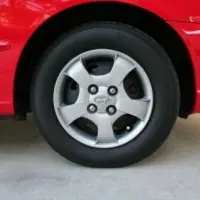
¿Dónde suele encontrarse normalmente el aire a presión en un vehículo?
Where is the pressurised air normally found in a vehicle's tyre?
- AEn la cubierta del neumáticoIn the outer cover of the tyre
- BEn la cámara del neumáticoIn the inner tube of the tyre
- CEntre la llanta y la cubiertaBetween the wheel rim and the outer cover
ExplanationIn tyres with an inner tube, the tube sits between the outer cover and the wheel rim and holds the pressurised air, so if there is a puncture the cover will burst as the air escapes quickly.
Como norma general, revisaremos el nivel del aceite estando el motor...
As a general rule, we will check the oil level with the engine...
- AFrío.Cold.
- BCaliente, después de haber rodado unos kilómetros.Hot, after driving a few kilometres.
- CEs indiferente.It makes no difference.
ExplanationWe will normally check the oil level with the engine cold. If we did it with the engine hot, the reading would not be correct.
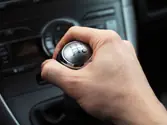
Si realizamos una frenada utilizando el freno motor, ¿qué sucederá?
If we slow down using engine braking, what will happen?
- ASe desgastará el cambio de marchas.The gearbox will wear.
- BConsumiremos menos combustible.We will use less fuel.
- CSe bloquearán las ruedas directrices.The steering wheels will lock.
ExplanationEngine braking is a technique for reducing your car's speed using the engine, without using the wheel brakes at any point. With this technique we will reduce fuel consumption, and the brake pads and discs of our car will also last longer. It is advisable to use this technique when driving at low or medium engine speed because, even if we shift down a gear, the vehicle can easily cope with the new engine speed.
Para evitar gastos innecesarios de combustible, al arrancar un vehículo con motor diesel...
To avoid wasting fuel, when starting a vehicle with a diesel engine...
- AHay que iniciar la marcha inmediatamente después de arrancar el motor.You must drive off immediately after starting the engine.
- BConviene esperar unos segundos una vez arrancado el motor antes de iniciar la marcha.It is advisable to wait a few seconds after starting the engine before driving off.
- CTenemos que acelerar hasta 1.500 r.p.m. y mantenerlo así de 4 a 5 segundos.We must rev up to 1,500 rpm and hold it there for 4 to 5 seconds.
ExplanationIn diesel cars it is advisable to start the engine without accelerating and to wait a few seconds before driving off. In cars with a petrol engine, however, it is advisable to drive off immediately after starting the engine.
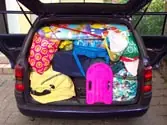
¿Puede afectar la carga excesiva del vehículo en el correcto funcionamiento de los neumáticos?
Can overloading the vehicle affect how well the tyres work?
- ASí, cuando se superen los límites de carga permitidos.Yes, when the permitted load limits are exceeded.
- BNo, en ningún caso.No, never.
- CNo, si el vehículo lleva amortiguadores nuevos.No, if the vehicle has new shock absorbers.
ExplanationOverloading the vehicle can affect how well the tyres work, because going over the permitted load limits increases wear, temperature and the risk of a blowout. Having new shock absorbers does not make up for the extra weight, so you must always keep to the load limits set by the manufacturer.
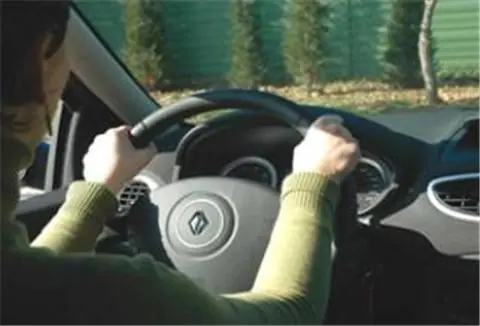
A baja velocidad, la dirección asistida progresiva...
At low speed, progressive power steering...
- Apermite un control más preciso del vehículo.allows more precise control of the vehicle.
- Breduce al mínimo el esfuerzo necesario para mover al volante.reduces to a minimum the effort needed to turn the steering wheel.
- Chace que la dirección se endurezcamakes the steering heavier.
ExplanationProgressive power steering helps more the lower the speed: when manoeuvring and at low speed it reduces to a minimum the effort needed to turn the steering wheel. At high speeds the assistance is reduced and the steering gets heavier to give more stability.
Si circulamos con el filtro de aire sucio...
If we drive with a dirty air filter...
- AEl motor emitirá más gases contaminantes.The engine will emit more polluting gases.
- BEl motor consumirá menos combustible.The engine will use less fuel.
- CLa mezcla de aire y gasolina será pobre.The air-petrol mixture will be lean.
ExplanationWith a dirty air filter, less air gets into the engine: the mixture becomes rich, not lean, and combustion is incomplete. As a result, the engine emits more polluting gases and also uses more fuel.
Un buen mantenimiento del vehículo...
Good vehicle maintenance...
- Aelimina la posibilidad de tener un accidente.removes the possibility of having an accident.
- Bpuede reducir la probabilidad de sufrir un accidente.can reduce the likelihood of having an accident.
- Cnunca reduce la probabilidad de sufrir un accidente.never reduces the likelihood of having an accident.
ExplanationProper vehicle maintenance reduces the likelihood of having an accident because it makes sure all the vehicle's parts are in the best working condition. According to the General Traffic Regulations, periodic technical inspections are the main way to make sure vehicles are safe and reduce risks on the road. Although good maintenance does not completely remove the chance of accidents, it does reduce many of the factors that could cause them, such as mechanical failures.
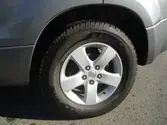
¿Para qué sirve el sistema de suspensión?
What is the suspension system for?
- APara mover las ruedas.To move the wheels.
- BPara no patinar.To avoid skidding.
- CPara amortiguar las irregularidades del terreno y mantener el vehículo estable.To absorb bumps in the road and keep the vehicle stable.
ExplanationThe suspension system absorbs bumps in the road so that the wheels do not lose contact with the ground, which keeps the vehicle stable.
All topics
- Definitions
- Documents and penalty points
- The driver's condition
- Duties of drivers and pedestrians
- Vehicle safety devices
- Vehicle controls and equipment
- Vehicle lights and horn
- Traffic signs, markings and signals
- The road and its lanes
- Speed and distances
- Manoeuvres
- Right of way
- Carrying passengers and loads
- Driving safely in difficult conditions
- Road accidents and first aid
- Defensive and eco-driving
Independent app: not affiliated with or endorsed by the DGT (Spain's Directorate-General for Traffic) or the Ministry of the Interior. The official exam is booked with the DGT and taken at its test centres. The questions here are practice material; the DGT's official question bank is not public.
Basado en datos de la Agencia Estatal Boletín Oficial del Estado (https://www.boe.es). Textos consolidados de carácter meramente informativo. La AEBOE no patrocina ni respalda este sitio.
Parte de las preguntas procede de los tests de la revista «Tráfico y Seguridad Vial» de la DGT, reproducidos con indicación de la fuente.