
DGT test · 539 questions
Vehicle mechanics and maintenance · Page 10 of 11
Engine, brakes, steering, suspension and tyres: how they work and what maintenance prevents breakdowns and crashes.
Questions in this topic, with answers
539 questions, 50 per page, with the correct answer and the explanation. Page 10 of 11.
¿Sobre qué ruedas actúa el freno de pie?
Which wheels does the foot brake act on?
- ALas ruedas impulsoras.The driving wheels.
- BLas cuatro ruedas.All four wheels.
- CLas ruedas delanteras.The front wheels.
ExplanationThe foot brake is the service brake and acts on all four wheels of the vehicle. The parking brake or handbrake, by contrast, usually acts only on the wheels of one axle, normally the rear ones.
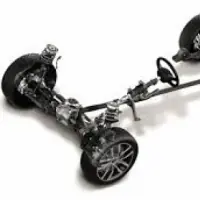
¿En los vehículos de tracción total cuales son las ruedas motrices?
In four-wheel-drive vehicles, which are the driving wheels?
- ALas ruedas delanterasThe front wheels
- BLas ruedas traserasThe rear wheels
- CTodas las ruedasAll the wheels
ExplanationEngine power can be transmitted to the front wheels (front-wheel drive), to the rear wheels (rear-wheel drive), or to the front and rear wheels at the same time (four-wheel drive). In four-wheel-drive vehicles, all the wheels are driving wheels.
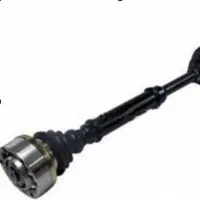
¿Qué parte del sistema de transmisión recibe el movimiento de giro del eje secundario?
Which part of the transmission system receives the rotation of the secondary (output) shaft?
- AEmbragueClutch
- BÁrbol de transmisiónPropeller shaft
- CCaja de velocidadesGearbox
ExplanationThe secondary shaft of the gearbox transmits the rotation to the propeller shaft, which takes it to the differential of the driving axle. Its universal joints let it follow the movements of the suspension without breaking.
Si circula con una motocicleta.¿Con qué accionaré el embrague?
If you are riding a motorcycle, what do you operate the clutch with?
- ACon el pie izquierdo.With your left foot.
- BCon la mano izquierda.With your left hand.
- CCon la mano derecha.With your right hand.
ExplanationOn a motorcycle with a manual gearbox, the clutch is the lever on the left side of the handlebar and is operated with the left hand. The left foot works the gear pedal, and the right hand works the front brake and the throttle.
Se tendrá que revisar con frecuencia el nivel de líquido de frenos pero además¿ tendrá que sustituirse completamente?
The brake fluid level must be checked often, but must the fluid also be replaced completely?
- ANo, el líquido de frenos nunca deberá sustituirse.No, brake fluid never needs to be replaced.
- BSi,deberá sustituirse totalmente en los plazos indicados por el fabricante del vehículo.Yes, it must be replaced completely at the intervals set by the vehicle manufacturer.
- CNo,simplemente tendremos que añadir líquido si vemos que el nivel ha bajado.No, we only need to top it up if we see that the level has dropped.
ExplanationThe brake fluid level must be checked often, and the fluid must be replaced completely at the intervals set by the vehicle manufacturer.
¿En qué marchas el vehículo tiene más fuerza?
In which gears does the vehicle have more power?
- A1.ª y 2.ª.1st and 2nd.
- B3.ª y 4.ª.3rd and 4th.
- C4.ª y 5.ª.4th and 5th.
ExplanationThe low gears, first and second, have the highest gear reduction: they multiply the engine torque and give more force to the wheels, although at lower speed. That is why they are used to move off, climb steep hills or hold the vehicle back on descents.
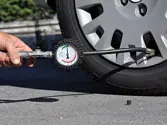
¿Cuál es la presión adecuada para los neumáticos?
What is the correct pressure for the tyres?
- ALa más alta de las recomendadas por el fabricante.The highest pressure recommended by the manufacturer.
- BLa recomendada por el fabricante.The pressure recommended by the manufacturer.
- CLa mitad de la recomendada por el fabricante.Half the pressure recommended by the manufacturer.
ExplanationWe must always inflate the tyres to the pressure recommended by the manufacturer. If the question were about the spare wheel, then the answer would be the highest pressure recommended by the manufacturer.
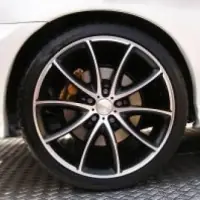
¿Qué dos tipos de llanta existen en la actualidad?
What two types of wheel rim exist today?
- ADe chapa y de aleación pesadaPressed steel and heavy alloy
- BDe aleación ligera y de aleación pesadaLight alloy and heavy alloy
- CDe chapa y de aleación ligeraPressed steel and light alloy
ExplanationWheel rims can be pressed steel or light alloy. They must be light, to offer little resistance, and rigid, to bear the mass and forces the vehicle is subjected to.
Un turismo con remolque, ¿está obligado a llevar una rueda de repuesto para el remolque?
Must a car towing a trailer carry a spare wheel for the trailer?
- ASí, cuando el remolque no es ligero.Yes, when the trailer is not light.
- BSí.Yes.
- CNo.No.
ExplanationAnnex XII of the General Vehicle Regulations requires the car to carry a spare wheel, a temporary-use wheel or an alternative system, but it does not require another one for the trailer, whether light or not. The combination is, however, also required to carry an approved fire extinguisher.
Ud. debe sustituir los neumáticos de su turismo por otros nuevos cuando la profundidad del dibujo en las ranuras principales de rodamiento sea inferior a...
You must replace the tyres of your car with new ones when the tread depth in the main grooves is less than...
- A1,7 milímetros.1.7 millimetres.
- B1,6 milímetros.1.6 millimetres.
- C1,8 milímetros.1.8 millimetres.
ExplanationThis is the correct answer. The minimum tread depth in the main grooves of the tyres is 1.6 millimetres. This figure is important because it ensures that the tyres can clear water and keep their grip on the road, which is essential for safe driving.
Si la presión de inflado de los neumáticos de su turismo es inferior a la recomendada por el fabricante...
If the tyre pressure on your car is lower than the manufacturer recommends...
- Ael neumático se calentará más.the tyre will heat up more.
- Bel consumo de combustible será menor.fuel consumption will be lower.
- Cel neumático se desgastará más por el centro de la banda de rodamiento.the tyre will wear more in the centre of the tread.
ExplanationWhen the tyre pressure is lower than the manufacturer recommends: - The tyres deform and heat up too much because of greater friction, so they wear more and faster at the edges, shoulders or sidewalls, increasing the risk of a blowout. - The vehicle becomes less stable. - Grip is reduced. - Fuel consumption increases.
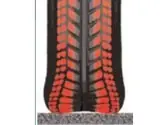
Circular con una presión inferior a la recomendada en los neumáticos:
Driving with tyre pressure below the recommended level:
- AMejora la adherencia en curvas.Improves grip on bends.
- BPuede aumentar el consumo de combustible y el desgaste.Can increase fuel consumption and wear.
- CReduce la distancia de frenado.Reduces the braking distance.
ExplanationWith low pressure the tyre changes shape more and has more rolling resistance, so fuel consumption goes up and the tyre wears more, especially at the edges. It also makes the vehicle less stable on bends and makes the braking distance longer.
Si los amortiguadores están en mal estado, ¿qué consecuencia tendrá sobre el frenado?
If the shock absorbers are in poor condition, what effect will this have on braking?
- ASe reduce la distancia de frenado.The braking distance is reduced.
- BAumenta peligrosamente la distancia de frenado.The braking distance increases dangerously.
- CNo influye en la frenada, sólo influye en el confort.It does not affect braking, only comfort.
ExplanationWith the shock absorbers in poor condition, grip on the road surface is reduced, because the suspension and shock absorbers keep the vehicle in contact with the road and make it stable. So the braking distance increases dangerously.
La presión de los neumáticos debe comprobarse siempre con las ruedas:
Tyre pressure must always be checked with the tyres:
- AEn frío.Cold.
- BEn caliente.Hot.
- CA temperatura ambiente tras un viaje largo.At air temperature after a long journey.
ExplanationThe correct measurement is taken cold; when the tyres are hot or after a long journey the pressure rises and the reading is wrong.
Su motocicleta dispone de una llave de paso situado entre el depósito de combustible y el motor. ¿Qué misión tiene esta llave?
Your motorcycle has a fuel tap located between the fuel tank and the engine. What is this tap for?
- ARegular el paso de la gasolina del depósito a la cuba del carburador.To regulate the flow of petrol from the tank to the carburettor float bowl.
- BRegular el paso del líquido refrigerante del carburador a los cilindros.To regulate the flow of coolant from the carburettor to the cylinders.
- CControlar el correcto engrase y mantenimiento de los elementos del sistema de transmisión.To check that the parts of the transmission system are properly lubricated and maintained.
ExplanationThe fuel tap located between the fuel tank and the engine regulates the flow of petrol from the tank to the carburettor float bowl. This is important to ensure an adequate supply of fuel to the engine and keep it running properly.
Si su vehículo es de tracción delantera:
If your vehicle has front-wheel drive:
- ALa fuerza del motor se transmite en las ruedas delanteras.The engine's power is transmitted to the front wheels.
- BLa fuerza del motor se transmite en las cuatro ruedas.The engine's power is transmitted to all four wheels.
- CLa caja de cambios es automática.The gearbox is automatic.
ExplanationIn a front-wheel-drive vehicle, the engine's power is transmitted only to the front wheels, which drive the vehicle forward. In this case the rear wheels simply roll and receive no power from the engine. If the vehicle had rear-wheel drive, the engine's power would be transmitted to the rear wheels, which would be the driving wheels. In that case, the front wheels would only steer the car.
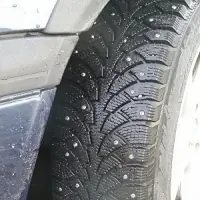
¿Qué deben llevar los neumáticos adicionalmente en caso de nieve o hielo?
What must tyres also have when there is snow or ice?
- AClavos de cantos puntiagudosStuds with pointed edges
- BChinchetas especiales para cocheSpecial drawing pins for cars
- CClavos de cantos redondeadosStuds with rounded edges
ExplanationWhen there is snow or ice on the road surface, the tyres must have studs with rounded edges fitted, which must not stick out more than 2 millimetres from the surface.
¿Cuál de éstas funciones cumple un neumático?
Which of these functions does a tyre perform?
- AParticipar en la transmisión de la corriente de la batería.Helping to carry the current from the battery.
- BRegular la presión de aire en los frenos.Regulating the air pressure in the brakes.
- CMantener la estabilidad de la trayectoria del vehículo.Keeping the vehicle stable on its path.
ExplanationTyres are essential parts of a vehicle and perform several important functions. One of the main ones is keeping the vehicle stable on its path. Tyres provide traction and grip on the road surface, which lets the vehicle stay on course and be steered, especially when accelerating, slowing down and turning. This helps to make sure the vehicle is handled safely and steadily in many different driving conditions. The other options are wrong: tyres do not carry current from the battery and do not regulate the air pressure in the brakes.
El filtro del aire sucio, ¿puede afectar al consumo de combustible?
Can a dirty air filter affect fuel consumption?
- ANo.No.
- BSí, reduciéndolo hasta en un 5%.Yes, reducing it by up to 5%.
- CSí, aumentándolo hasta en un 5%.Yes, increasing it by up to 5%.
ExplanationA dirty air filter blocks the flow of air into the engine and can increase consumption by up to 5%.
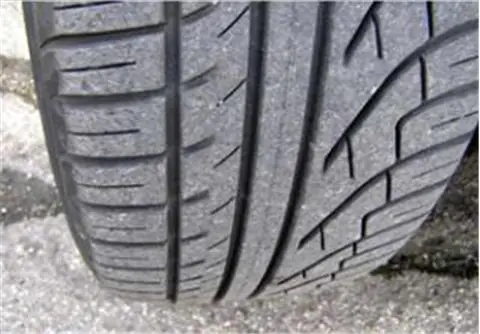
El desgaste de los neumáticos puede ser mayor debido a...
Tyre wear can be greater because of...
- Arealizar viajes largos.making long journeys.
- Bcircular a una velocidad adecuada.driving at a suitable speed.
- Cla carga, el estado de la vía y la temperatura del ambiente.the load, the condition of the road and the outside temperature.
ExplanationTyre wear increases with excess load, poor road condition and high temperatures, which heat up the rubber. Incorrect pressure and harsh driving also play a part. The length of the journey or driving at a suitable speed do not speed it up.
La eficacia del frenado, ¿depende, entre otros factores, del estado de los neumáticos?
Does braking efficiency depend, among other factors, on the condition of the tyres?
- ANo, sólo depende de la presión que las zapatas ejerzan contra los tambores o las pastillas contra los discos.No, it depends only on the pressure of the shoes against the drums or of the pads against the discs.
- BNo, sólo depende del estado de los frenos.No, it depends only on the condition of the brakes.
- CSí, porque son los neumáticos los que están en contacto con el suelo.Yes, because the tyres are what is in contact with the ground.
ExplanationYes. The tyres are what is in contact with the ground, so worn tread or incorrect pressure reduces grip and lengthens the braking distance, however good the brakes are.
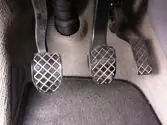
¿A qué puede ser debido que se produzca un fallo de los frenos?
What can cause the brakes to fail?
- AA las escobillas gastadas.Worn brushes.
- BPérdida de líquido de frenos.Loss of brake fluid.
- CGenerador en mal estado.A faulty generator.
ExplanationThe most common causes of brake failure are air in the brake circuit, loss of brake fluid, and worn brake shoes or pads. The brushes and the generator have nothing to do with the brakes.
La presión de inflado de los neumáticos, ¿es conveniente variarla en invierno y en verano?
Is it advisable to change the tyre inflation pressure in winter and in summer?
- ASí, se debe aumentar en verano y disminuir en invierno.Yes, it should be increased in summer and reduced in winter.
- BNo, no debe modificarse.No, it should not be changed.
- CSi, se debe disminuir en verano y aumentar en invierno.Yes, it should be reduced in summer and increased in winter.
ExplanationThe inflation pressure is the one the manufacturer specifies according to the load, and it should not be changed with the season. What matters is checking it regularly with the tyres cold, because temperature changes the reading.
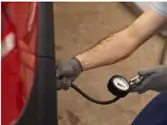
¿Cómo y cuándo deberemos comprobar la presión de los neumáticos?
How and when should we check the tyre pressure?
- AAntes de iniciar la marcha y con los neumáticos fríos.Before setting off, with the tyres cold.
- BDespués de haber recorrido unos cuantos kilómetros y con los neumáticos en caliente.After driving a few kilometres, with the tyres hot.
- CSi los neumáticos son sin cámara no se debe comprobar la presión de los mismos.If the tyres are tubeless, their pressure should not be checked.
ExplanationTyre pressure should be checked when the tyres are cold, not hot. When you drive, the tyres heat up and the pressure rises, so the pressure reading would be wrong.
¿A qué presión tendremos que hinchar la rueda de repuesto?
To what pressure should we inflate the spare wheel?
- AA la mínima de la recomendada por el fabricante.To the lowest pressure recommended by the manufacturer.
- BA la máxima recomendada por el fabricante.To the highest pressure recommended by the manufacturer.
- CA la media de las recomendadas por el fabricante.To the average of the pressures recommended by the manufacturer.
ExplanationThe spare wheel must be inflated to the highest of all the pressures recommended by the manufacturer, which depend on the load and on where the wheel is fitted.
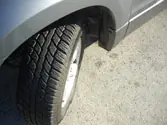
Si la rueda sufre desgaste por los lados de la banda de rodadura, ¿a qué puede ser debido?
If a tyre is wearing at the sides of the tread, what may be the cause?
- AA que las ruedas tienen más presión de la recomendada por el fabricante.The tyres have a higher pressure than the manufacturer recommends.
- BA que las ruedas tiene menor presión de la recomendada por el fabricante.The tyres have a lower pressure than the manufacturer recommends.
- CA que los amortiguadores están en mal estado.The shock absorbers are in poor condition.
ExplanationIt is important to check tyre pressure at least once or twice a month. Do it when the tyres are cold, using the pressures recommended by the manufacturer. A tyre with the wrong pressure wears unevenly, has a higher risk of a blowout and can increase fuel consumption. * With a pressure lower than the manufacturer's: - They wear more at the sides of the tread. - They deform and heat up more. - The risk of a blowout increases. - Grip is reduced and the risk of aquaplaning increases (the tyres cannot clear the layer of water on the road and lose grip). - Fuel consumption increases. * With a pressure higher than the manufacturer's: - They wear more in the centre. - The contact area with the road and the grip are reduced. - They do not absorb bumps in the road well (they vibrate more and the suspension deteriorates).
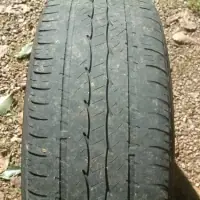
El desgaste de los neumáticos puede ser mayor a causa de...
Tyre wear can be greater because of...
- ALa carga, el estado de la vía yla temperatura del ambiente.The load, the condition of the road and the outside temperature.
- BCircular a una velocidad adecuada.Driving at a suitable speed.
- CHacer viajes largos a alta velocidad, únicamente.Only making long journeys at high speed.
ExplanationSeveral factors can make your vehicle's tyres wear faster than normal. They include the temperature of the air or the road surface: the higher it is, the more the tread wears. Overloading the vehicle above the tyre's maximum load index, driving at high speed or driving on a road surface in poor condition will also make wear greater than usual.
Con los amortiguadores defectuosos...
With faulty shock absorbers...
- Ase reduce la distancia de frenado en más de un 60%.the braking distance is reduced by more than 60%.
- Baumenta la distancia de frenado.the braking distance increases.
- Cel pedal del freno tendrá un tacto esponjoso.the brake pedal will feel spongy.
ExplanationWith faulty shock absorbers the tyres have less grip on the road, which increases the distance needed to brake.
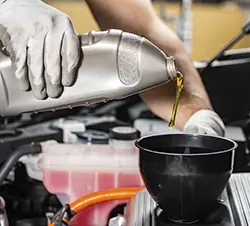
¿Es conveniente utilizar un aceite lubricante con un índice de viscosidad tan bajo que, al calentarse el motor, se vuelva excesivamente líquido?
Is it advisable to use a lubricating oil with such a low viscosity index that it becomes too thin when the engine warms up?
- ANo, ya que el aceite no llega a engrasar bien las piezas del motor.No, because the oil does not lubricate the engine parts properly.
- BSí; cuanto más líquido, mejor engrasa y además arrastra los residuos depositados en el motor.Yes; the thinner it is, the better it lubricates, and it also carries away deposits in the engine.
- CSolo si el motor se calienta en exceso, ya que engrasa mejor y ayuda a bajar su temperatura.Only if the engine overheats, because it lubricates better and helps to lower the engine temperature.
ExplanationAn oil that becomes too thin when hot loses its lubricating film and stops protecting the engine parts: you must use the viscosity specified by the manufacturer to make sure the engine is lubricated at any temperature.
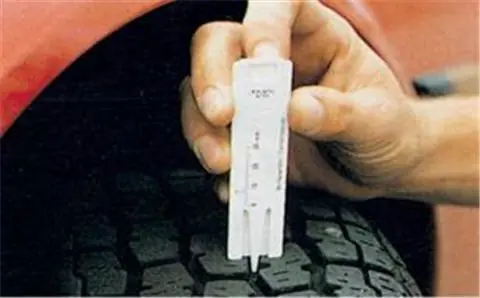
Los neumáticos deberán cambiarse siempre que...
Tyres must always be changed when...
- Ala profundidad del dibujo sea inferior a 3 mm.the tread depth is less than 3 mm.
- Bla profundidad del dibujo sea inferior a de 2 mm.the tread depth is less than 2 mm.
- Cla profundidad del dibujo sea inferior a 1,6 mm.the tread depth is less than 1.6 mm.
ExplanationThe legal minimum tread depth for car tyres is 1.6 millimetres; below that, the tyres must be changed. Even so, with less than 3 mm a lot of the ability to clear water is already lost, so it is best not to wait until the minimum.
¿Con qué frecuencia se debe controlar la presión de los neumáticos?
How often should you check the tyre pressure?
- AUna o dos veces al mes, siempre cuando los neumáticos están fríos.Once or twice a month, always when the tyres are cold.
- BÚnicamente antes del inicio de un largo viaje.Only before starting a long journey.
- CUna o dos veces al mes, cuando los neumáticos están calientes.Once or twice a month, when the tyres are hot.
ExplanationA vehicle's tyre pressure should be measured once or twice a month with a pressure gauge, which may be a pocket gauge or one at a garage or petrol station. It is advisable to check the tyre pressure this often, or before starting a long journey, and always with the tyres cold.
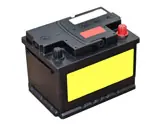
Para un correcto mantenimiento de la batería de nuestro vehículo deberemos...
To look after your vehicle's battery properly, you must...
- AMantener los bornes limpios y bien apretados.Keep the terminals clean and tight.
- BAñadir agua destilada a la batería periódicamente.Top up the battery with distilled water regularly.
- CLa batería no precisa ningún mantenimiento especial.The battery does not need any special maintenance.
ExplanationWith so-called maintenance-free batteries, which are the ones usually fitted in cars, we do not need to check the electrolyte level, but we do need to look after the terminals and their connection to the vehicle. The terminals must be clean, tight and covered with soft grease.
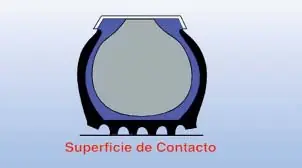
Los neumáticos en su banda de rodadura lleva unas ranuras.¿qué profundidad mínima tendrán los turismos?
Tyres have grooves in their tread. What minimum depth must they have on cars?
- A1,4 milímetros.1.4 millimetres.
- B1,5 milímetros.1.5 millimetres.
- C1,6 milímetros.1.6 millimetres.
ExplanationThe tread of car tyres must have grooves with a minimum depth of 1.6 millimetres. Below that depth the tyre does not clear water properly, the risk of aquaplaning increases, and the tyre must be changed.
¿Cómo deberá comprobarse la presión de inflado de los neumáticos?
How should tyre pressure be checked?
- AEstando los neumáticos fríos.When the tyres are cold.
- BEstando los neumáticos calientes después de un largo viaje.When the tyres are hot after a long journey.
- CEs indiferente, pero al menos dos veces cada mes.It does not matter, but at least twice a month.
ExplanationWe will check the tyre pressure when the tyres are cold. Otherwise the pressure gauge will show a higher reading than the real one. We will check the tyre pressure at least once a month.
¿Qué diferencia existe entre la rueda de repuesto de tipo "galleta" y los neumáticos run flat?
What is the difference between a space-saver spare wheel and run-flat tyres?
- ALa de galleta es una rueda de emergencia estrecha; el run flat, un neumático reforzado que rueda pinchado.The space-saver is a narrow emergency wheel; a run-flat is a reinforced tyre that can run when punctured.
- BLa de galleta la llevan los coches antiguos y la run flat, los modernos, como repuesto.Old cars carry the space-saver and modern cars carry the run-flat, as a spare.
- CNo hay ninguna diferencia: son iguales.There is no difference: they are the same.
ExplanationA space-saver is an emergency wheel narrower than normal ones, for temporary use at a limited speed. Run-flat tyres have reinforced sidewalls and let you keep driving after a puncture for a limited distance to the garage.
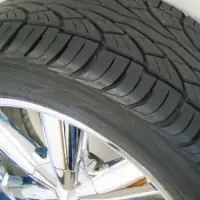
A qué parte del vehículo van fijadas las ruedas?
What part of the vehicle are the wheels attached to?
- AAl motorThe engine
- BA la caja de cambiosThe gearbox
- CAl bujeThe hub
ExplanationThe wheel is a high-precision metal part. It is designed and standardised for the vehicle it is made for, and a wheel must not be fitted to the wrong vehicle. The wheels are attached with nuts or bolts to a part called the hub, in the centre of the brake discs or drums.
¿Cuál es la presión correcta de los neumáticos?
What is the correct tyre pressure?
- ALa indicada por el fabricanteThe one stated by the manufacturer
- BLa máxima del neumáticoThe tyre's maximum pressure
- C2,5 bares siempreAlways 2.5 bar
ExplanationThe pressure recommended by the manufacturer.
¿Puede la carga excesiva del vehículo afectar el funcionamiento de los neumáticos?
Can overloading the vehicle affect how the tyres work?
- ASí, si se supera la carga máxima permitida.Yes, if the maximum permitted load is exceeded.
- BNo, en ningún caso.No, under no circumstances.
- CNo, si el vehículo tiene amortiguadores nuevos.No, if the vehicle has new shock absorbers.
ExplanationEvery tyre has a maximum load index. If the vehicle's permitted load is exceeded, the tyres deform and overheat, wear out sooner and the risk of a blowout increases; new shock absorbers do not prevent this.
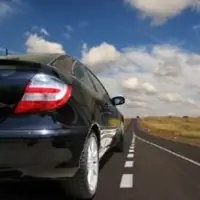
¿Que neumáticos se sobrecargan más cuando un vehículo frena?
Which tyres carry the most extra load when a vehicle brakes?
- ALos cuatro por igualAll four equally
- BLos traserosThe rear ones
- CLos delanterosThe front ones
ExplanationWhen a vehicle brakes, the tyres that carry the most extra load are the front ones. This is because, when braking, the front brake takes most of the braking load, and for this reason the front wheels wear more.
Si los neumáticos tienen más de 5 años...
If the tyres are more than 5 years old...
- Ala adherencia será mejor.the grip will be better.
- BLa adherencia será peor.the grip will be worse.
- Cno influye para nada en la adherencia.it has no effect at all on grip.
ExplanationIf a tyre is more than 5 years old, it will have hardened over time, so its grip will be lower. Driving on tyres more than 5 years old is strongly advised against.
En caso de que la batería de nuestro vehículo precise mantenimiento...
If our vehicle's battery needs maintenance...
- AComprobaremos el nivel de líquido de los vasos y que los bornes estén limpios y secos.We will check the fluid level in the cells and that the terminals are clean and dry.
- BComprobaremos que los bornes estén limpios y untados de grasa antiácido.We will check that the terminals are clean and coated with anti-acid grease.
- CLa sustituiremos cada año o cada 10.000 km.We will replace it every year or every 10,000 km.
ExplanationIn batteries that need maintenance, you must check the electrolyte level (a mixture of water and sulphuric acid). It must cover the plates inside the battery; if not, add only distilled water. In maintenance-free batteries, you need to check that the terminals are clean, tight and coated with grease.
El freno de pie o de servicio, ¿sobre qué ruedas actúa?
Which wheels does the foot brake (service brake) act on?
- ASolo sobre las delanteras.Only on the front wheels.
- BSobre las delanteras y traseras, pero con más presión sobre las traseras.On the front and rear wheels, but with more pressure on the rear wheels.
- CSobre las delanteras y traseras.On the front and rear wheels.
ExplanationThe foot brake or service brake acts on the front and rear wheels, applying more pressure to the front wheels.
¿Es posible la instalación de neumáticos en su turismo con un código de velocidad superior al indicado por el fabricante?
Can you fit tyres on your car with a higher speed rating than the one stated by the manufacturer?
- ANo.No.
- BSí, siempre y cuando sean iguales o superiores a la velocidad indicada por el fabricante.Yes, as long as it is equal to or higher than the speed stated by the manufacturer.
- CSí, siempre y cuando sean de menor velocidad a la indicada por el fabricante.Yes, as long as it is lower than the speed stated by the manufacturer.
ExplanationThe speed rating shows the maximum speed the tyres can reach. As a general rule, a vehicle may only be fitted with tyres that have the speed rating recommended by the manufacturer. In exceptional cases, other tyres may be fitted, as long as their speed rating is higher than the one recommended by the manufacturer, never lower.
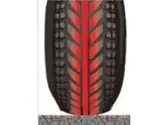
Si la rueda sufre un mayor desgaste por el centro de la banda de rodadura, ¿cuál podría ser la causa?
If a tyre is wearing more in the centre of the tread, what could be the cause?
- APresión de neumáticos insuficiente.Tyre pressure too low.
- BPresión de neumáticos excesiva.Tyre pressure too high.
- CAlineación incorrecta de las ruedas.Incorrect wheel alignment.
ExplanationIf the tyres show wear in the centre of the tread, the most likely cause is tyre pressure that is too high. When the pressure is too high, the centre of the tread carries more load than the edges, so it wears more in the centre. This uneven wear can harm the tyres' performance and shorten their life. So it is important to keep the tyre pressure within the range recommended by the vehicle manufacturer, so that the tread wears evenly and the vehicle is as safe and efficient as possible.
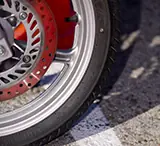
Si conduce una motocicleta y la calzada está mojada, ¿es necesario incrementar la presión de inflado de los neumáticos por encima de la recomendada por el fabricante?
If you are riding a motorcycle and the road surface is wet, do you need to increase the tyre pressure above the one recommended by the manufacturer?
- ANo, ya que una mayor presión de inflado no contribuye a aumentar la seguridad de circulación.No, because a higher tyre pressure does not make riding any safer.
- BSí, porque aumenta la adherencia de los neumáticos y mejorará la seguridad de circulación.Yes, because it increases tyre grip and will make riding safer.
- CSí, ya que aumenta la seguridad de circulación y así se evitan los derrapes.Yes, because it makes riding safer and prevents skids.
ExplanationThe correct pressure is always the one recommended by the manufacturer. Over-inflating reduces the contact area between the tyre and the road surface, so it does not improve grip or safety, not even on a wet road.
Es obligatorio para circular por las vías públicas cambiar los neumáticos de su turismo cuando la profundidad de las ranuras de la banda de rodamiento sea inferior a...
To drive on public roads, you must change your car's tyres when the depth of the tread grooves is less than...
- A1,6 milímetros.1.6 millimetres.
- B2 milímetros.2 millimetres.
- C2,5 milímetros.2.5 millimetres.
ExplanationYou must change a car's tyres when the depth of the tread grooves is less than 1.6 millimetres. Shallower tread reduces the tyre's grip on the road, especially in the rain, increasing the risk of aquaplaning and making the vehicle less safe.
Para evitar que se congele el líquido de la refrigeración...
To stop the coolant from freezing...
- ASe debe activar el termostato.The thermostat must be switched on.
- BSe usará un producto anticongelante.An antifreeze product must be used.
- CSe activará la bomba del agua.The water pump must be switched on.
ExplanationIn winter the coolant can freeze; to prevent this, we must use a suitable antifreeze product.
La presión de inflado del neumático deberá comprobarse...
Tyre pressure should be checked...
- ACon el neumático caliente.When the tyre is hot.
- BCon el neumático frío.When the tyre is cold.
- CEs indiferente.It makes no difference.
ExplanationTyre pressure should be checked with the tyre cold, because with a hot tyre the pressure gauge will show a higher pressure, as the tyre's pressure has increased.
¿A qué puede ser debido un mayor desgaste de los neumáticos?
What can cause greater tyre wear?
- AA Realizar viajes largos.Making long journeys.
- BA Circular a una velocidad adecuada.Driving at a suitable speed.
- CA la carga, el estado de la vía y la temperatura del ambiente.The load, the condition of the road and the outside temperature.
ExplanationTyre wear increases with overloading, poor road conditions and high temperatures. Incorrect pressure and harsh driving also play a part. Making long journeys or driving at a suitable speed does not in itself cause abnormal wear.
¿Es conveniente modificar la presión de inflado de los neumáticos de su vehículo en invierno?
Is it advisable to change your vehicle's tyre inflation pressure in winter?
- ANo, es una medida errónea que puede traer consecuencias peligrosas.No, it is a mistaken measure that can have dangerous consequences.
- BSí, lo adecuado es disminuir la presión.Yes, the right thing is to lower the pressure.
- CSí, lo adecuado es aumentar la presión.Yes, the right thing is to raise the pressure.
ExplanationNo. The correct pressure is always the one the manufacturer specifies, and you should not lower it in winter to gain grip or raise it: incorrect pressure reduces grip, wears the tyres and makes braking worse. In cold weather you just need to check it more often, with the tyres cold.
All topics
- Definitions
- Documents and penalty points
- The driver's condition
- Duties of drivers and pedestrians
- Vehicle safety devices
- Vehicle controls and equipment
- Vehicle lights and horn
- Traffic signs, markings and signals
- The road and its lanes
- Speed and distances
- Manoeuvres
- Right of way
- Carrying passengers and loads
- Driving safely in difficult conditions
- Road accidents and first aid
- Defensive and eco-driving
Independent app: not affiliated with or endorsed by the DGT (Spain's Directorate-General for Traffic) or the Ministry of the Interior. The official exam is booked with the DGT and taken at its test centres. The questions here are practice material; the DGT's official question bank is not public.
Basado en datos de la Agencia Estatal Boletín Oficial del Estado (https://www.boe.es). Textos consolidados de carácter meramente informativo. La AEBOE no patrocina ni respalda este sitio.
Parte de las preguntas procede de los tests de la revista «Tráfico y Seguridad Vial» de la DGT, reproducidos con indicación de la fuente.