
DGT test · 574 questions
Carrying passengers and loads · Page 2 of 12
Passengers, children, loads and trailers: what you may carry and how it must be secured and marked.
Questions in this topic, with answers
574 questions, 50 per page, with the correct answer and the explanation. Page 2 of 12.
Una de las obligaciones que tiene el personal en las instalaciones de carga y descarga es conocer...
One of the obligations of staff at loading and unloading facilities is to know...
- ALas características y peligrosidad de los productos.The characteristics and hazards of the products.
- BEl tipo de vehículo.The type of vehicle.
- CLa documentación del vehículo.The vehicle documents.
ExplanationThe characteristics and hazards of the products are important for safety during loading and unloading. Knowing this information allows staff to take the necessary precautions and avoid accidents or incidents.
Los vehículos de una anchura inferior a un metro, la carga no podrá sobresalir lateralmente más de...
On vehicles less than one metre wide, the load may not stick out at the sides by more than...
- A40 centímetros a cada lado del eje longitudinal del vehículo.40 centimetres on each side of the vehicle's longitudinal axis.
- B50 centímetros a cada lado del eje longitudinal del vehículo.50 centimetres on each side of the vehicle's longitudinal axis.
- CNo podrá sobresalir nada.It may not stick out at all.
ExplanationUnder Article 15 of the General Traffic Regulations, on vehicles less than one metre wide the load may not stick out at the sides by more than 0.50 metres on each side of the vehicle's longitudinal axis. It may not stick out at the front, and at the rear by 0.25 metres at most.
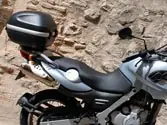
En un vehículo de anchura inferior a un metro, ¿puede sobresalir la carga por delante o por detrás?
In a vehicle less than one metre wide, may the load stick out at the front or at the back?
- ASí, hasta 25 centímetros, por delante y por detrás.Yes, up to 25 centimetres, at the front and at the back.
- BNo, en ningún caso.No, never.
- CSólo por detrás hasta 25 centímetros.Only at the back, up to 25 centimetres.
ExplanationIn vehicles less than one metre wide, the load must not stick out more than 0.50 metres on each side of the vehicle's centre line, or more than 0.25 metres at the back, and not at all at the front.
¿Una motocicleta puede llevar un remolque?
Can a motorcycle tow a trailer?
- ACuando no sea de noche y el peso del remolque no supere el 50% del peso neto de la motocicleta.When it is not night-time and the weight of the trailer does not exceed 50% of the net weight of the motorcycle.
- BNo, está prohibido.No, it is prohibited.
- CSí, en cualquier caso.Yes, in all cases.
ExplanationAccording to Article 12.3 of the General Traffic Regulations (RGC), as worded by RD 518/2026, motorcycles, three-wheeled vehicles and mopeds may tow a trailer or semi-trailer of no more than 50 % of the unladen mass of the towing vehicle, travelling during the day and in conditions that do not reduce visibility, with speed reduced by 10 % and without carrying people in the towed vehicle.
¿Se permite dejar mercancías en la acera al descargarlas de un vehículo?
Is it allowed to leave goods on the pavement when unloading them from a vehicle?
- ANo.No.
- BSí, si no hay peatones.Yes, if there are no pedestrians.
- CNo, a menos que el lugar esté señalizado para evitar peligro a los peatones.No, unless the place is marked off to avoid danger to pedestrians.
ExplanationUnder Article 16 of the General Traffic Regulations, loading and unloading must be done off the road. If it is unavoidable to do it on the road, it must not cause danger or disturbance to other users. Leaving goods on the pavement is forbidden, because it can obstruct pedestrians and put their safety at risk. So the correct answer is «No».
¿Está permitido que el equipaje colocado en la baca de un turismo sobresalga por los laterales?
May luggage on the roof rack of a car stick out at the sides?
- ASí, cuando el equipaje sea indivisible.Yes, when the luggage is indivisible.
- BSí, pero el ancho total tiene que ser menor de 2,5 metros.Yes, but the total width must be less than 2.5 metres.
- CNo.No.
ExplanationOn vehicles not intended for carrying goods, such as cars, the load may stick out at the back: up to 10% of the vehicle's length if the load is divisible; up to 15% of the vehicle's length if the load is indivisible. It may not stick out at the front or at the sides.
¿Cuánto podrá sobresalir como máximo la carga lateralmente en vehículos de anchura inferior a 1 metro?
In vehicles less than 1 metre wide, what is the most the load may stick out to the side?
- A0,50 m a cada lado de su eje longitudinal.0.50 m on each side of the vehicle's centre line (longitudinal axis).
- B0,40 m por cada lateral.0.40 m on each side.
- C0,50 m por cada lateral.0.50 m on each side.
ExplanationIn vehicles less than 1 metre wide, the load must not stick out to the side more than 0.50 metres on each side of the vehicle's centre line (longitudinal axis). In addition, nothing may stick out at the front, nor more than 0.25 metres at the back.
¿Durante el día se señalizará la carga que sobresalga por detrás con una luz roja?
During the day, must a load sticking out at the rear be marked with a red light?
- ANo, en ningún caso.No, never.
- BSí, en condiciones adversas que disminuyan la visibilidad.Yes, in bad conditions that reduce visibility.
- CSí, siempre junto con el panel reglamentario.Yes, always together with the regulation panel.
ExplanationA load sticking out at the rear must be marked with a red light in bad conditions that reduce visibility, to warn other road users that the load is there. This is important for safety when visibility may be reduced by rain, fog or snow.
Ud. transporta sobre la caja de su camión, de 3.500 kilogramos de masa máxima autorizada y 4,50 metros de longitud, una tubería que mide 6 metros de largo y sobresale por la parte posterior del vehículo. ¿Debe señalizarla?
On the body of your lorry, which has a maximum authorised mass of 3,500 kilograms and is 4.50 metres long, you are carrying a pipe 6 metres long that sticks out at the rear of the vehicle. Must you mark it with a signal?
- ASí, tanto de día como de noche.Yes, both by day and by night.
- BNo.No.
- CSí, pero sólo si circulo de noche o de día en condiciones adversas.Yes, but only when driving at night or by day in bad conditions.
ExplanationThe pipe sticking out of the lorry must be marked both by day and by night. Any load sticking out of a vehicle can be a danger to other drivers and pedestrians. Proper marking helps warn others that the load is there and prevents accidents.
En los vehículos de anchura inferior a 1 metro la carga podrá sobresalir...
On vehicles less than 1 metre wide, the load may stick out...
- AHasta 0,25 metros por la parte posterior.up to 0.25 metres at the back.
- BHasta 0,50 metros por la parte posterior.up to 0.50 metres at the back.
- CNo podrá sobresalir nada por la parte posterior.It may not stick out at all at the back.
ExplanationOn vehicles less than 1 metre wide, the load may stick out at the back by no more than 0.25 metres, and it does not need to be marked.
¿Cómo señalizaremos la carga que sobresale por la parte posterior en un turismo?
How will we mark a load sticking out from the back of a car?
- AEn los turismos no es necesario señalizar la carga.Loads on cars do not need to be marked.
- BCon el panel reflectante V-20, solamente y en todo caso.Only with the V-20 reflective panel, in all cases.
- CCon el panel reflectante V-20 y si es de noche, además, con una luz de color rojo.With the V-20 reflective panel and, at night, also with a red light.
ExplanationOn cars, we will mark a load sticking out from the back with the V-20 reflective panel and, when driving at night, also with a red light.
Si utiliza neumáticos especiales con clavos para circular sobre hielo o nieve, ¿cuánto pueden sobresalir, como máximo, dichos clavos?
If you use special studded tyres to drive on ice or snow, what is the maximum those studs may stick out?
- A2 mm2 mm
- B3 mm3 mm
- C4 mm4 mm
ExplanationSpanish rules state that studded tyres, allowed only when there is a layer of snow or ice on the road, must meet specific requirements so as not to damage the road surface. The studs must have rounded edges and must not stick out more than 2 millimetres from the tyre surface. So any larger figure (such as 3 mm or 4 mm) is prohibited, as it would cause excessive damage to the road.
Durante el día, con buen tiempo y visibilidad normal, ¿cómo debe señalizarse la carga que sobresale por delante del vehículo?
During the day, in good weather and normal visibility, how must a load sticking out at the front of the vehicle be signalled?
- ACon un panel de 50 por 50 cm reglamentario.With an official 50 by 50 cm panel.
- BNo es necesario señalizarla.It does not need to be signalled.
- CCon un trapo de color vivo.With a brightly coloured cloth.
ExplanationThe General Traffic Regulations (RGC), specifically the article on signalling loads that stick out of vehicles, state that during the day, in normal visibility and good weather, a load sticking out at the front of the vehicle does not need to be signalled. This is because the rules only require signalling for loads sticking out at the back or in poor visibility. So the correct answer is that it does not need to be signalled.
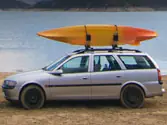
El turismo de la imagen, ¿transporta correctamente la carga?
Is the car in the picture carrying its load correctly?
- ANo, porque sobresale por la parte delantera.No, because the load sticks out at the front.
- BNo, porque los turismos no pueden transportar carga.No, because cars may not carry loads.
- CSí.Yes.
ExplanationThe load in the picture is being carried correctly, as it does not stick out at the front or the back of the car. If necessary, it could stick out at the back by up to 10% of the car's length, and by up to 15% when the load is indivisible.
Ud. conduce un conjunto de vehículos formado por un turismo y un remolque cuya longitud total es de 8 metros, por una vía fuera de poblado que tiene tres carriles para el mismo sentido de circulación. ¿Le está permitido utilizar el carril situado más a la izquierda?
You are driving a vehicle combination made up of a car and a trailer with a total length of 8 metres on a road outside built-up areas with three lanes in the same direction. May you use the lane furthest to the left?
- ASí, para adelantar.Yes, to overtake.
- BNo, en ningún caso.No, never.
- CSí, siempre que las circunstancias del tráfico o de la circulación lo aconsejen y no entorpezca la marcha de otro vehículo que me siga.Yes, whenever traffic or road conditions make it advisable and I do not hold up a vehicle behind me.
ExplanationIn general, vehicles towing a trailer may not use the lane furthest to the left on roads with more than one lane in the same direction. This is because their length and characteristics can make traffic flow and road safety worse.
Los vehículo de transporte de mercancías o cosas de MMA igual o inferior a 3,5 toneladas y de 6 a 10 años de antigüedad...
Vehicles for carrying goods or things with a maximum authorised mass (MAM) of 3.5 tonnes or less that are 6 to 10 years old...
- APasarán la inspección técnica cada seis meses.Must pass the vehicle inspection (ITV) every six months.
- BPasarán la inspección técnica anualmente.Must pass the vehicle inspection (ITV) once a year.
- CEstán exentos de la inspección técnica.Are exempt from the vehicle inspection (ITV).
ExplanationThe correct answer is "Must pass the vehicle inspection (ITV) once a year" because vehicles for carrying goods or things with a MAM of 3.5 tonnes or less that are 6 to 10 years old must pass the inspection every year.
¿Qué tanto por ciento puede sobresalir una carga indivisible por la parte posterior en un vehículo no destinado exclusivamente a la carga?
What percentage may an indivisible load stick out at the rear of a vehicle not used exclusively for goods?
- AUn 15 %15%
- BUn 10 %10%
- CUn 20 %20%
ExplanationOn vehicles not used exclusively for carrying goods, an indivisible load may stick out at the rear by up to 15% of the vehicle's total length.
¿Dónde debe colocarse el pasajero que viaje en un ciclomotor de dos ruedas?
Where must a passenger travelling on a two-wheeled moped sit?
- AEn el lugar intermedio entre el manillar y el puesto del conductor.In the space between the handlebars and the rider's position.
- BEn un sidecar acoplado específicamente para este fin.In a sidecar fitted specially for this purpose.
- CEn el asiento situado detrás del conductor.On the seat behind the rider.
ExplanationA passenger travelling on a two-wheeled moped must sit on the seat behind the rider. This is important for the safety and stability of the vehicle during the journey.
¿Cómo se debe realizar la carga y descarga de personas o mercancías?
How must people or goods be loaded and unloaded?
- ARápidamente, pero sólo en las zonas donde esté permitido.Quickly, but only in areas where it is allowed.
- BSin crear peligros y, si es posible, por el lado del vehículo más cercano al borde de la calzada.Without creating danger and, if possible, on the side of the vehicle nearest the edge of the carriageway.
- CSeñalizando correctamente, pudiendo realizarla por cualquier lado del vehículo.With proper signals, and it may be done on any side of the vehicle.
ExplanationArticle 16 of the General Traffic Regulations requires loading and unloading to be done off the road and, if it is unavoidable to do it on the road, without causing danger or serious disruption and, where possible, on the side of the vehicle nearest the edge of the carriageway.
¿Puede un tubo que no se puede cortar sobresalir por la parte delantera del vehículo?
May a pipe that cannot be cut stick out at the front of the vehicle?
- ANo, salvo en el caso de vehículos especiales.No, except for special vehicles.
- BSí, pero solo en vehículos diseñados exclusivamente para el transporte de mercancías.Yes, but only on vehicles designed exclusively for carrying goods.
- CSí, en cualquier tipo de vehículo.Yes, on any type of vehicle.
ExplanationUnder Article 15 of the General Traffic Regulations, only vehicles used exclusively for carrying goods may carry indivisible loads, such as pipes or beams, sticking out at the front. On other vehicles the load may only stick out at the rear.
Como norma general, ¿los menores de 12 años pueden viajar como pasajeros en una motocicleta?
As a general rule, may children under 12 travel as passengers on a motorcycle?
- ASí, siempre y cuando lleven un casco homologado.Yes, as long as they wear an approved helmet.
- BSí, siempre que lleguen con los pies en los reposapiés laterales.Yes, as long as their feet reach the side footrests.
- CNo.No.
ExplanationAs a general rule, children under 12 may not travel as passengers on a motorcycle. They may do so from the age of 7, as long as the rider is their father, mother or legal guardian or an authorised adult.
¿Se podrá transportar a un pasajero en una bicicleta construida para una sola persona?
Can a passenger be carried on a bicycle built for only one person?
- ANo, porque la bicicleta está construida para una sola persona.No, because the bicycle is built for only one person.
- BSí, si el conductor es mayor de edad, a un niño de hasta 22 kg en un asiento adicional.Yes, if the rider is an adult: a child weighing up to 22 kg on an additional seat.
- CSí, si el pasajero tiene más de 12 años.Yes, if the passenger is over 12 years old.
ExplanationAccording to Article 154 of the General Traffic Regulations (RGC), as worded by RD 518/2026, if the rider is an adult, bicycles that by design cannot carry more than one person may carry children weighing up to 22 kg who are able to sit up on their own, on additional seats.
En un vehículo de 9 plazas, ¿pueden viajar como pasajeros 9 niños?
In a 9-seat vehicle, can 9 children travel as passengers?
- ASí, podrían hacerlo, ocupando de esta manera todas las plazas del vehículo.Yes, they could, thus occupying all the seats in the vehicle.
- BNo, ya que exceden del número de plazas autorizadas.No, because that exceeds the number of authorised seats.
- CSí, si los niños tienen edades comprendidas entre los 2 y los 12 años de edad.Yes, if the children are aged between 2 and 12.
ExplanationA vehicle may not carry more people than it has authorised seats, and each child takes up one seat, whatever their age. If the vehicle has 9 seats including the driver's, there is room for only 8 passengers, so 9 children plus the driver exceed that number.
Si paramos para efectuar una carga o descarga del vehículo, ¿podremos dejar el motor en marcha bajar del vehículo?
If we stop to load or unload the vehicle, may we leave the engine running and get out of the vehicle?
- ASí, siempre que dejemos el freno de mano puesto.Yes, as long as we leave the handbrake on.
- BNo, en ningún caso.No, never.
- CSí, siempre que no nos alejemos.Yes, as long as we do not go far.
ExplanationWhen the driver has to leave the driving seat, they must stop the engine and switch off the ignition, and also leave the parking brake on.
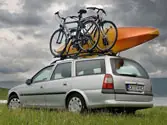
En un turismo, ¿cuánto puede sobresalir la carga por la parte posterior, como máximo?
In a car, how far may the load stick out at the back, at most?
- A1/3 de la longitud del vehículo.1/3 of the vehicle's length.
- BEl 15% de la longitud del vehículo.15% of the vehicle's length.
- CEl 20% de la longitud del vehículo.20% of the vehicle's length.
ExplanationAt the back of a car the load may stick out by at most 15% of the vehicle's length if the load is indivisible; if it is divisible, by 10%.
El compartimento de carga de los vehículos de transporte de mercancías peligrosas de la Clase 1, explosivos, se construirán con materiales...
The load compartment of vehicles carrying Class 1 dangerous goods (explosives) must be built with materials...
- AQue no puedan reaccionar peligrosamente con los explosivos.That cannot react dangerously with the explosives.
- BLigeros para reducir peso al vehículo.That are light, to reduce the vehicle's weight.
- CDe larga duración para aumentar la rentabilidad.That last a long time, to make the vehicle more profitable.
ExplanationThe load compartments of vehicles carrying Class 1 dangerous goods (explosives) are built with materials that cannot react dangerously with the explosives, to ensure safety during transport. This is important to prevent any accident or incident that could endanger people's lives and the environment.
Los vehículos que transportan simultáneamente personas y carga, ¿deben tener una protección adecuada?
Must vehicles that carry people and a load at the same time have suitable protection?
- ASí, de manera que la carga no moleste a los ocupantes ni pueda producir daños al ser proyectada.Yes, so that the load does not bother the occupants or cause injury if it is thrown forward.
- BNo, si la carga va situada en la parte trasera del vehículo.No, if the load is placed at the back of the vehicle.
- CNo está permitido transportar personas y carga simultáneamente.It is not allowed to carry people and a load at the same time.
ExplanationWhen people and a load are carried at the same time, the load must be placed, secured and, if necessary, separated from the occupants, so that it does not bother them or get thrown against them under braking or in a crash.
En un camión de 5 metros de largo, ¿cuánto podrá sobresalir por la parte posterior una carga indivisible?
On a lorry 5 metres long, how far may an indivisible load stick out at the back?
- Aun 15% de su longitud.15% of its length.
- B1/3 de su longitud.1/3 of its length.
- C3 metros.3 metres.
ExplanationIf the lorry is longer than 5 metres, an indivisible load may stick out 3 metres at the back. On lorries up to 5 metres long, the load may stick out by 1/3 of the lorry's length.
¿Con 15 años se puede llevar a un menor de 8 años como pasajero en un ciclomotor?
At 15, may you carry a child under 8 as a passenger on a moped?
- ASí, si es un familiar directo.Yes, if they are a close relative.
- BNo, en ningún caso.No, never.
- CSí, si se trata de mi hermano pequeño.Yes, if it is my little brother.
ExplanationAccording to Article 12.2 of the General Traffic Regulations (as worded by RD 518/2026), children under twelve may only travel as passengers from the age of seven, on motorcycles or mopeds ridden by their father, mother or guardian or by adults authorised by them; a 15-year-old rider does not meet this condition.
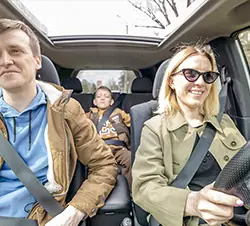
¿Quién está obligado a cuidar de que los pasajeros de un vehículo mantengan la posición adecuada para garantizar la seguridad?
Who must make sure that the passengers in a vehicle keep the proper position to ensure safety?
- ALos pasajeros mayores de edad.Adult passengers.
- BEl pasajero que ocupe el asiento delantero.The passenger in the front seat.
- CEl conductor.The driver.
ExplanationThe driver is responsible for safety on board: they must make sure that passengers keep the proper position and use the restraint systems correctly.
En los vehículos de anchura inferior a un metro la carga podrá sobresalir...
On vehicles less than one metre wide, the load may stick out...
- ANo podrá sobresalir nada.It may not stick out at all.
- B0,50 metros por la parte posterior.0.50 metres at the back.
- C0,25 metros por la parte posterior.0.25 metres at the back.
ExplanationOn vehicles less than one metre wide, the load may stick out 0.25 metres at the back and 0.50 metres at the sides, measured from the longitudinal axis.
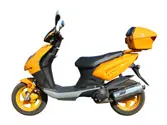
Un ciclomotor, ¿puede llevar equipaje que sobresalga lateralmente?
May a moped carry luggage that sticks out at the sides?
- ANo.No.
- BSí, 50 centímetros por cada lado de su eje longitudinal.Yes, 50 centimetres on each side of its longitudinal axis.
- CSí, 40 centímetros por cada lado.Yes, 40 centimetres on each side.
ExplanationOn vehicles less than 1 metre wide, the load must not stick out at the sides more than 50 centimetres on each side of the longitudinal axis. The load may never stick out at the front, or more than 25 centimetres at the back.
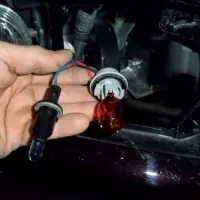
¿Están obligados todos los vehículos a llevar herramientas para el cambio de rueda?
Must all vehicles carry tools for changing a wheel?
- ASí, todos los vehículos están obligados incluso los ciclos y ciclomotoresYes, all vehicles must, even cycles and mopeds
- BÚnicamente los turismos, vehículos mixtos y otros automóviles destinados al transporte de mercancíasOnly cars, dual-purpose vehicles and other motor cars intended for carrying goods
- CNingún vehículo a motor estará obligado a llevar herramientas para el cambio de ruedasNo motor vehicle is required to carry tools for changing wheels
ExplanationCars, dual-purpose vehicles and other motor cars intended for carrying goods with a maximum mass below 3,500 kg must carry a spare wheel and the tools needed to change it. Buses or lorries, for example, are not required to.
Un 'automóvil' se diferencia de un ciclomotor principalmente en que:
A 'motor car' (automóvil) differs from a moped mainly in that:
- AEl automóvil está concebido para circular sin carriles ni raíles y por sus características no es ciclomotor.The motor car is designed to run without tracks or rails and, because of its characteristics, is not a moped.
- BEl automóvil siempre tiene cuatro ruedas.The motor car always has four wheels.
- CEl automóvil no puede transportar mercancías.The motor car cannot carry goods.
ExplanationA motor car is any motor vehicle that runs without rails and is not a moped, a tram or a vehicle for people with reduced mobility.
En una motocicleta, ¿cómo debe viajar un pasajero mayor de 12 años?
On a motorcycle, how must a passenger over 12 years old ride?
- AA horcajadas en el espacio entre el manillar y el asiento del conductor.Astride, in the space between the handlebar and the rider's seat.
- BA horcajadas o con ambas piernas a un lado, indistintamente.Astride or with both legs on one side, either way.
- CA horcajadas y con los pies apoyados en los reposapiés laterales.Astride, with their feet on the side footrests.
ExplanationAs a general rule, children under twelve may not ride as passengers on mopeds and motorcycles. As an exception, children aged 7 and over may ride as passengers on these vehicles as long as the rider is their father, mother, legal guardian or an adult authorised by them. The following conditions must also be met: 1. The vehicle's registration documents must show that it is approved for more than one person. 2. The passenger must use the seat behind the rider. 3. The passenger must sit astride, with their feet on the side footrests. The passenger may never sit between the rider and the handlebar of the moped or motorcycle. 4. Both must wear approved protective helmets.
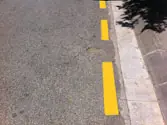
¿Puede inmovilizar el vehículo en esta zona para bajar a recoger una mercancía abandonando el vehículo?
May you stop your vehicle in this area and leave it to go and pick up some goods?
- ASí, mientras que la duración sea inferior a dos minutos.Yes, as long as it takes less than two minutes.
- BNo, ya que se considera estacionamiento y está prohibido.No, because it counts as parking and is prohibited.
- CSí, ya que es una zona donde se permite la parada.Yes, because stopping is allowed in this area.
ExplanationThe line in the photo shows that parking is prohibited or subject to a time restriction, but stopping is allowed. Keep in mind that if the driver leaves the driving seat, it counts as parking. If the line painted on the kerb is solid yellow, both stopping and parking are prohibited.
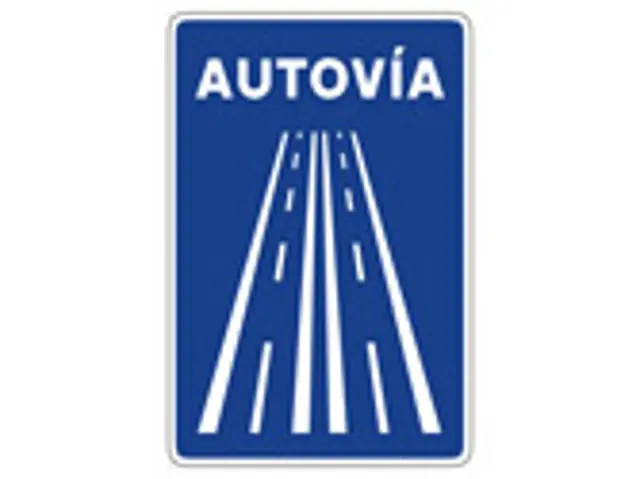
Circulando por una autovía, un vehículo destinado al transporte de mercancías peligrosas sufre una avería. ¿Está permitido que un turismo lo remolque?
While travelling on a dual carriageway (autovía), a vehicle carrying dangerous goods breaks down. Is a car allowed to tow it?
- ASí, pero no está permitido remolcarlo más de 100 km.Yes, but it is not allowed to tow it for more than 100 km.
- BNo, está prohibido.No, it is prohibited.
- CSí, pero solamente hasta el taller más cercano.Yes, but only as far as the nearest garage.
ExplanationAccording to the General Traffic Regulations (RGC) and Royal Decree 97/2014 on the transport of dangerous goods, towing vehicles that carry dangerous goods is prohibited. This is because these vehicles are subject to strict safety rules owing to the risks they pose. The rules state that only designated and approved vehicles may carry out the transport of these goods, so towing by a car is not allowed, which keeps the roads safe.
En un cargamento completo, ¿para quién se efectúan todas las operaciones de carga y descarga?
With a full load, on whose behalf are all loading and unloading operations carried out?
- APara el expedidor, conforme a las instrucciones del expedidor o del destinatario.On behalf of the sender, following the instructions of the sender or the recipient.
- BPara el destinatario.On behalf of the recipient.
- CPara el transportista.On behalf of the carrier.
ExplanationWith a full load, loading and unloading operations are carried out on behalf of the sender, following the instructions of the sender or the recipient. This means that the sender, or in some cases the recipient, is responsible for carrying out these operations according to the instructions given.
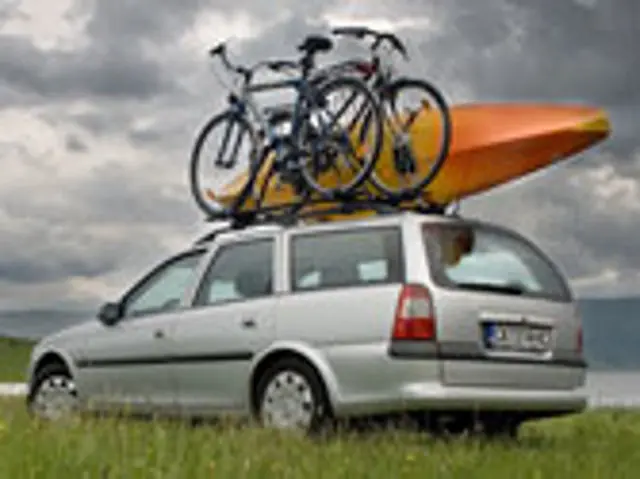
¿Debe señalarse la carga que sobresale por detrás de un turismo?
Must a load sticking out at the back of a car be signalled?
- ASí. Si es necesario, además se señalizará con una luz roja.Yes. If necessary, it must also be signalled with a red light.
- BNo. En los turismos no es necesario señalizar la carga.No. Loads on cars do not need to be signalled.
- CNo. No deberá señalizarse si la carga sobresale menos de un 10%.No. It does not need to be signalled if the load sticks out by less than 10%.
ExplanationA load sticking out at the back of a car must be signalled with the V-20 sign at its rear end and, at night or in poor visibility, also with a red light (Article 15.6 of the General Traffic Regulations (RGC)). There is no exception for loads that stick out only a little.
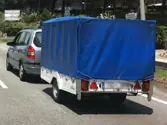
¿Un turismo con remolque puede circular por un carril VAO?
May a car towing a trailer travel in an HOV lane (VAO)?
- ASí.Yes.
- BNo.No.
- CSí, si no excede los 750 kg de MMA.Yes, if the trailer's MAM does not exceed 750 kg.
ExplanationAs a general rule, BUS-HOV (BUS-VAO) lanes may be used by two- or three-wheeled motorcycles, cars, buses with a maximum authorised mass of more than 3,500 kg, articulated buses and convertible dual-purpose vehicles carrying the number of occupants set for each stretch. All other vehicles and vehicle combinations are prohibited, including cars towing trailers, cycles and mopeds. However, they may also be used, even with only the driver on board, by: - the authorised types of vehicle if they display the V-15 sign (reduced mobility badge); - two- or three-wheeled motorcycles; - buses with a maximum authorised mass of more than 3,500 kg and articulated buses; - vehicles classed as taxis under the use criteria in Annex II of the General Vehicle Regulations, with an external roof light and a valid taxi licence; - police, fire, civil protection, rescue and ambulance vehicles on an emergency call, and maintenance crews for the road's facilities and infrastructure; - vehicles with environmental badges (CERO, ECO, B and C) may use the BUS-HOV lane only when road signs say so.
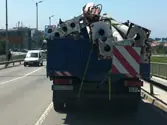
En un vehículo de más de 5 metros, destinado al transporte de mercancías, una carga de longitud indivisible puede sobresalir...
In a vehicle more than 5 metres long used for carrying goods, an indivisible load may stick out...
- Ael 15% de la longitud del vehículo por delante y por detrás.15% of the vehicle's length at the front and at the back.
- B3 metros por la parte anterior y 2 por la posterior.3 metres at the front and 2 at the back.
- C2 metros por la parte anterior y 3 por la posterior.2 metres at the front and 3 at the back.
ExplanationIn vehicles designed exclusively for carrying goods, an indivisible load may stick out as follows, provided the conditions for stowing and securing it are met: - In vehicles 5 metres long or less: one third of the vehicle's length at each end, front and back. - In vehicles more than 5 metres long: 2 metres at the front and 3 metres at the back.
¿Puede sobresalir la carga por delante en un turismo?
May a load stick out at the front of a car?
- ANo, porque los turismos no están destinados exclusivamente al transporte de mercancías.No, because cars are not intended exclusively for carrying goods.
- BSí, hasta 0,50 metros.Yes, up to 0.50 metres.
- CSí, hasta el 10 % de la longitud del vehículo.Yes, up to 10% of the vehicle's length.
ExplanationNo. On vehicles not intended exclusively for carrying goods, such as cars, the load may only stick out at the rear, by up to 10% of the vehicle's length, or 15% if it is indivisible (Article 15 of the General Traffic Regulations). Nothing may stick out at the front.
¿Está permitido depositar la carga en las zonas peatonales?
Is it allowed to put the load down in pedestrian areas?
- ASí, durante las operaciones de carga y descarga.Yes, during loading and unloading.
- BSí.Yes.
- CNo.No.
ExplanationDuring loading and unloading it is forbidden to put goods down on the carriageway, the hard shoulder or in pedestrian areas (Article 16 of the General Traffic Regulations). So the load may not be left there, not even during these operations.
Su vehículo tiene una MMA de 2.500 kg, ¿está permitido superarla entre ocupantes y carga?
Your vehicle has a maximum authorised mass of 2,500 kg. Are you allowed to exceed it with occupants and load together?
- ASí, mientras las personas transportadas no superen el número de plazas autorizadas.Yes, as long as the people carried do not exceed the number of authorised seats.
- BSí, siempre que no la supere en un 50 %.Yes, as long as it is not exceeded by more than 50%.
- CNo, no está permitido.No, it is not allowed.
ExplanationThe maximum authorised mass is the highest mass at which the vehicle may be driven, adding up its unladen weight, the occupants and the load. It may never be exceeded, even if the number of people does not exceed the number of authorised seats.
¿Cuánto puede sobresalir la carga por la parte delantera en un vehículo mixto?
How far may the load stick out at the front of a mixed-use vehicle?
- A1/3 si es indivisible.1/3 if it is indivisible.
- Bun 10% si es indivisible.10% if it is indivisible.
- CNada.Not at all.
ExplanationIn a car or a mixed-use vehicle, the load must not stick out at the front; it may only stick out at the back, by 15% if it is indivisible or by 10% if it is divisible.
Si la ventanilla posterior de su turismo no es de dimensiones suficientes o su equipaje o remolque dificultan la visibilidad posterior, ¿qué espejos retrovisores debe llevar?
If the rear window of your car is not big enough, or your luggage or trailer blocks your view to the rear, which rear-view mirrors must you have?
- AObligatoriamente dos exteriores, uno en el lado derecho y otro en el izquierdo.Two outside mirrors are compulsory, one on the right and one on the left.
- BUno interior de grandes dimensiones y el exterior izquierdo.One large inside mirror and the outside mirror on the left.
- CEl interior y dos exteriores, uno a cada lado.The inside mirror and two outside mirrors, one on each side.
ExplanationYou must have two outside rear-view mirrors, one on the right and one on the left, because if the rear window does not give good visibility, these mirrors are essential to see what is behind the vehicle. They help to prevent accidents by giving the driver a clear view of vehicles and obstacles at the sides of and behind the car.
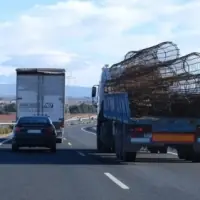
¿Puede la carga de un vehículo sobresalir de la proyección en planta del vehículo?
May a vehicle's load stick out beyond the vehicle's outline as seen from above?
- ANo, como norma generalNo, as a general rule
- BÚnicamente se podrán llevar bicicletasOnly bicycles may be carried that way
- CSi, siempre que sobresalga menos de 50 cmYes, as long as it sticks out by less than 50 cm
ExplanationArticle 15 of the General Traffic Regulations sets the general rule that the load must not stick out beyond the vehicle's outline as seen from above. Only specific exceptions are allowed, such as indivisible loads or a certain percentage at the rear, with the proper marking.
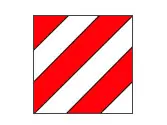
Si la carga sobresale por la parte posterior de un turismo, ¿circulando de noche deberá señalizarse, además de con el panel V-20, con una luz roja?
If the load sticks out at the back of a car, must it be marked at night with a red light as well as the V-20 panel?
- AUna luz de color rojo solo será necesaria cuando se trate de camiones.A red light is only needed on lorries.
- BSí.Yes.
- CSí, y también con una luz de color blanco en la parte delantera del vehículo.Yes, and also with a white light at the front of the vehicle.
ExplanationOn cars, the load may only stick out at the back, and at night it must be marked with a red light as well as the V-20 panel.
En un vehículo es obligatorio colocar y sujetar la carga de forma que no pueda ......
In a vehicle, the load must be placed and secured so that it cannot......
- ADesplazarse de manera peligrosa, únicamente.Shift dangerously, only.
- BCaer o desplazarse de manera peligrosa, únicamente.Fall or shift dangerously, only.
- CArrastrar, caer o desplazarse de manera peligrosa.Drag, fall or shift dangerously.
ExplanationUnder Article 14 of the General Traffic Regulations, the load must be arranged and secured so that it cannot drag, fall wholly or partly, or shift dangerously. All three situations are prohibited, not just some of them.
¿Se puede utilizar la baca para transportar el equipaje en un turismo?
May you use the roof rack to carry luggage on a car?
- ASí, siempre que se acondicione adecuadamente.Yes, as long as the luggage is properly secured.
- BNo, no se puede utilizar como portaequipajes.No, it may not be used to carry luggage.
- CÚnicamente se podrá utilizar si el turismo transporta 3 ó más pasajeros.Only if the car is carrying 3 or more passengers.
ExplanationIn cars, the load must always be placed in the boot or on the roof rack, and always properly secured. If there is not enough space, you may put it on the rear seats, secured so that it does not bother the occupants.
All topics
- Definitions
- Documents and penalty points
- The driver's condition
- Duties of drivers and pedestrians
- Vehicle safety devices
- Vehicle controls and equipment
- Vehicle lights and horn
- Traffic signs, markings and signals
- The road and its lanes
- Speed and distances
- Manoeuvres
- Right of way
- Driving safely in difficult conditions
- Vehicle mechanics and maintenance
- Road accidents and first aid
- Defensive and eco-driving
Independent app: not affiliated with or endorsed by the DGT (Spain's Directorate-General for Traffic) or the Ministry of the Interior. The official exam is booked with the DGT and taken at its test centres. The questions here are practice material; the DGT's official question bank is not public.
Basado en datos de la Agencia Estatal Boletín Oficial del Estado (https://www.boe.es). Textos consolidados de carácter meramente informativo. La AEBOE no patrocina ni respalda este sitio.
Parte de las preguntas procede de los tests de la revista «Tráfico y Seguridad Vial» de la DGT, reproducidos con indicación de la fuente.