
DGT test · 574 questions
Carrying passengers and loads · Page 4 of 12
Passengers, children, loads and trailers: what you may carry and how it must be secured and marked.
Questions in this topic, with answers
574 questions, 50 per page, with the correct answer and the explanation. Page 4 of 12.
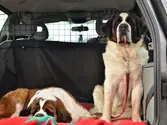
El conductor de este vehículo, ¿está obligado a mantener la adecuada colocación de los animales que transporta?
Is the driver of this vehicle obliged to keep the animals being carried properly positioned?
- ASí, los animales deben ir colocados correctamente en todo momento.Yes, the animals must be properly positioned at all times.
- BNo, no está obligado.No, they are not obliged to.
- CSí, aunque no está obligado una vez iniciada la marcha.Yes, but they are no longer obliged to once the journey has started.
ExplanationWhen carrying a pet in the vehicle, such as a dog, unless there is a specific place for carrying it, we will put it on the rear seats, restrained or at least separated from the front seats by a net or other device so that it does not disturb the driver.
¿Pueden los niños menores de 12 años viajar como pasajeros en una motocicleta?
May children under 12 travel as passengers on a motorcycle?
- ANo, en ningún caso.No, never.
- BSí, siempre que lleven un casco aprobado.Yes, as long as they wear an approved helmet.
- CNo, como norma general.No, as a general rule.
ExplanationAs a general rule, a motorcycle passenger must be over twelve. Exceptionally, children over seven may travel if the rider is their father, mother, guardian or an adult authorised by them, and the child wears an approved helmet (Article 12 of the General Traffic Regulations).
Si un camión transporta una viga que sobresale del vehículo por su parte delantera, ¿deberá señalizarla entre el ocaso y la salida del sol?
If a lorry is carrying a beam that sticks out at the front of the vehicle, must it be marked between sunset and sunrise?
- ASí, con una luz blanca.Yes, with a white light.
- BSí, con una luz roja.Yes, with a red light.
- CNo, no es necesario.No, it is not necessary.
ExplanationUnder Article 15 of the General Traffic Regulations, a load sticking out at the front must be marked between sunset and sunrise, or in poor visibility, with a white light. If it sticks out at the rear, the light is red and the V-20 panel is added.
En algún caso, ¿un niño menor de 7 años podrá circular como pasajero en una motocicleta?
Can a child under 7 ever travel as a passenger on a motorcycle?
- ANo, en ningún caso.No, never.
- BSí.Yes.
- CSolo cuando el conductor sea su padre.Only when the rider is their father.
ExplanationOnly children over 7 may travel as passengers and, if the child is under 12, only when the rider is their father, mother, legal guardian or an authorised adult.
En un vehículo destinado exclusivamente al transporte de mercancías, ¿cuánto podrá sobresalir excepcionalmente la carga por su parte posterior?
In a vehicle designed exclusively for carrying goods, how far may the load exceptionally stick out at the back?
- AComo máximo 1/3 de su longitud en todo caso.At most 1/3 of its length in all cases.
- BComo máximo 3 metros.At most 3 metres.
- CComo máximo un 15 por ciento de su longitud.At most 15 per cent of its length.
ExplanationIf the vehicle is more than 5 metres long, the load may stick out 2 metres at the front and 3 metres at the back.
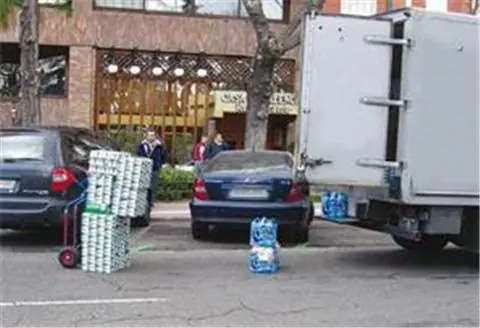
¿Está permitido depositar la mercancía en la vía mientras se realizan operaciones de carga y descarga?
Is it allowed to put goods down on the road while loading and unloading?
- ANo, está prohibido depositar la mercancía en la calzada, arcén o aceras.No, it is forbidden to put goods on the carriageway, hard shoulder or pavements.
- BSí; se puede depositar la mercancía en la calzada o en el arcén pero no en la acera.Yes; goods may be put on the carriageway or hard shoulder, but not on the pavement.
- CSolo cuando la carga o descarga se realice fuera de poblado.Only when loading or unloading takes place outside built-up areas.
ExplanationDuring loading and unloading it is forbidden to put goods down on the carriageway, the hard shoulder or in pedestrian areas. The goods must be taken directly from the vehicle to the building or the other way round, so as not to obstruct vehicles or pedestrians.
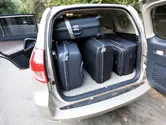
Si llevamos mucho equipaje en nuestro vehículo, ¿tendremos que reglar los faros?
If we are carrying a lot of luggage in our vehicle, do we need to adjust the headlights?
- ANo, si la carga está toda en la parte posterior.No, if all the load is at the back.
- BSí, para que los faros no deslumbren a los otros vehículos.Yes, so that the headlights do not dazzle other vehicles.
- CNo, esta regulación solo la puede hacer un mecánico.No, only a mechanic can make this adjustment.
ExplanationIf we are carrying a lot of luggage in the vehicle, especially at the back, the beam of the dipped headlights will point higher than normal. So we must adjust the height of the headlights to suit the load we are carrying.
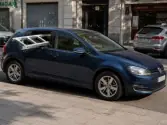
¿Le está permitido circular con un turismo si por las ventanas laterales sobresale la carga que lleva dentro del vehículo, como una escalera?
Are you allowed to drive a car if the load inside it, such as a ladder, sticks out of the side windows?
- ASí, señalizando debidamente la carga.Yes, if the load is properly marked.
- BNo.No.
- CSólo si la carga no sobresale más de 30 centímetros.Only if the load does not stick out more than 30 centimetres.
ExplanationYou are not allowed to drive a car if the load sticks out at the sides of the vehicle. In vehicles not used exclusively for carrying goods, the load may stick out only at the back, and only up to 10% of the vehicle's length, or up to 15% if the load is indivisible. Nothing may stick out at the front or the sides, so a ladder or any other object coming out of the side windows would not be allowed.
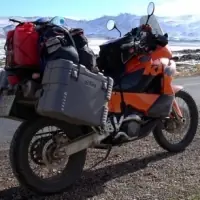
En una motocicleta de anchura inferior a un metro, ¿cuánto puede sobresalir la carga por la parte delantera?
On a motorcycle less than one metre wide, how far may the load stick out at the front?
- A0,25 metros.0.25 metres.
- B0,50 metros.0.50 metres.
- CNada.Not at all.
ExplanationOn vehicles less than one metre wide, such as mopeds or motorcycles, the load may stick out 0.50 metres on each side of the vehicle and 0.25 metres at the rear, and it may not stick out at all at the front.
En un vehículo de 5 plazas, el conductor incluido, ¿cuántos niños pueden viajar en él?
In a vehicle with 5 seats, including the driver's seat, how many children may travel in it?
- A6 niños, como máximo.6 children at most.
- B4 niños, si dispone de los dispositivos de seguridad adaptados.4 children, if it has suitable safety devices.
- C5 niños, como máximo.5 children at most.
ExplanationIn a 5-seat car, four passengers may travel as well as the driver, whether they are adults or children: you may not carry more people than there are authorised seats. Children 135 cm tall or less must use a child restraint system suited to their height and weight, generally in the rear seats.
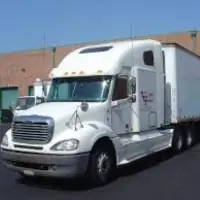
Cuál de éstos vehículos no está obligado a llevar dispositivo trasero antiempotramiento?
Which of these vehicles is not required to have a rear underrun protection device?
- ASemiremolque de un turismoA car's semi-trailer
- BTractor agrícolaAn agricultural tractor
- CCamión que transporte maderaA lorry carrying timber
ExplanationUnder the Traffic Regulations, the following are not required to have a rear underrun protection device: tractor units for semi-trailers, trailers for carrying unworked timber or very long items, agricultural tractors, agricultural trailers and other agricultural machinery.
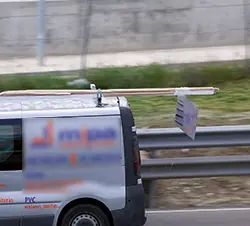
En un vehículo de menos de 5 metros de longitud destinado al transporte de mercancías, ¿cuánto podrá sobresalir una carga de longitud indivisible por su parte delantera?
On a goods vehicle less than 5 metres long, how far may an indivisible load stick out at the front?
- AUn tercio de la longitud del vehículo.One third of the vehicle's length.
- BUn 15% de la longitud del vehículo.15% of the vehicle's length.
- CNada; solo podrá sobresalir por su parte trasera.Not at all; it may only stick out at the back.
ExplanationOn vehicles used exclusively to carry goods, an indivisible load may stick out up to 2 metres at the front and 3 at the back. If the vehicle is less than 5 metres long, the maximum overhang at each end, front or back, is one third of its length.
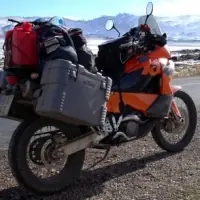
En una motocicleta, ¿cuánto puede sobresalir longitudinalmente la carga transportada?
On a motorcycle, how far may the load stick out lengthwise?
- ANada, en las motocicletas la carga no puede sobresalir.Not at all; on motorcycles the load may not stick out.
- BNada por delante y hasta 0,25 metros por detrás.Not at all at the front, and up to 0.25 metres at the rear.
- CHasta 0,25 metros, tanto por delante como por detrás.Up to 0.25 metres, both at the front and at the rear.
ExplanationOn vehicles less than one metre wide, the load must not stick out sideways more than 0.50 metres on each side of the vehicle's centre line, nor more than 0.25 metres at the rear, and not at all at the front.
En un camión de longitud igual o inferior a 5 metros, ¿cuánto podrá sobresalir la carga?
On a lorry 5 metres long or less, how far may the load stick out?
- A2 m por la parte anterior y 3 m por la parte posterior.2 m at the front and 3 m at the back.
- B1/3 de la longitud del vehículo, tanto por la parte anterior como posterior.1/3 of the vehicle's length, both at the front and at the back.
- CUn 15% de la longitud del vehículo.15% of the vehicle's length.
ExplanationOn lorries up to 5 m long, the load may stick out by 1/3 of the vehicle's length, both at the front and at the back. When the length is over 5 m, it may stick out 2 m at the front and 3 m at the back.
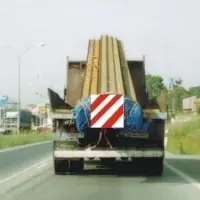
La carga que sobresalga de la proyección en planta del vehículo, ¿debe ir protegida?
Must a load that sticks out beyond the vehicle's outline as seen from above be protected?
- ASí, en la parte saliente para reducir los efectos de un roce o choque posibles.Yes, on the part that sticks out, to reduce the effects of any possible scrape or collision.
- BNo, no es necesario si va debidamente señalizada.No, it is not necessary if it is properly marked.
- CÚnicamente cuando se circule entre la puesta y la salida del sol.Only when driving between sunset and sunrise.
ExplanationUnder Article 15 of the General Traffic Regulations, a load that sticks out beyond the vehicle's outline must be covered at its protruding end to reduce the effects of a possible scrape or collision. This is an obligation in addition to marking it, by day and by night.
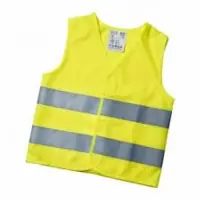
Es obligatorio llevar en un turismo un chaleco reflectante para el acompañante?
Is it compulsory to carry a reflective vest for the passenger in a car?
- ANo, el chaleco reflectante no es obligatorio para los turismos.No, a reflective vest is not compulsory for cars.
- BNo.No.
- CSí, ya que deberá ponérselo si sale del vehículo y ocupa la calzada en una vía interurbana.Yes, because the passenger must put it on if they get out of the vehicle and walk on the carriageway of a road outside built-up areas.
ExplanationAccording to Article 118.4 of the General Traffic Regulations (as worded by RD 518/2026), the vest must be worn by drivers of motorcycles, cars, buses, goods vehicles, mixed-use vehicles and non-agricultural vehicle combinations when they get out of the vehicle and are on the carriageway or hard shoulder of roads outside built-up areas. The obligation is on the driver: only one vest is compulsory, and a vest for the passenger is optional.
¿En un turismo podrá sobresalir la carga por la parte delantera del mismo?
In a car, may the load stick out at the front?
- ANo, en ningún caso.No, never.
- BSí, un 10% de la longitud del vehículo.Yes, 10% of the vehicle's length.
- CSí, 1/3 de la longitud del vehículo.Yes, 1/3 of the vehicle's length.
ExplanationIn a car, the load may never stick out at the front. This is because the rules say that, in general, the load on vehicles may not stick out beyond the front end.
En un turismo, la carga divisible puede sobresalir por su parte posterior...
In a car, a divisible load may stick out at the rear...
- AHasta un 15 por ciento de su longitud y, si la carga fuera indivisible hasta un 10 por ciento.By up to 15 per cent of its length and, if the load is indivisible, by up to 10 per cent.
- BHasta un 10 por ciento de su longitud y, si la carga fuera indivisible hasta un 15 por ciento.By up to 10 per cent of its length and, if the load is indivisible, by up to 15 per cent.
- CNo está permitido que sobresalga la carga del vehículo.The load is not allowed to stick out of the vehicle.
ExplanationUnder Article 15 of the General Traffic Regulations, in vehicles not intended exclusively for goods, such as a car, the load may stick out at the rear by up to 10% of the vehicle's length, or 15% if it is indivisible. It may not stick out at the front.
En un vehículo de más de 5 metros destinado al transporte de mercancías, una carga indivisible puede sobresalir...
On a goods vehicle more than 5 metres long, an indivisible load may stick out…
- AHasta un 15% de la longitud del vehículo por delante y por detrás.Up to 15% of the vehicle's length at the front and at the rear.
- B3 metros por la parte delantera y 2 metros por la trasera.3 metres at the front and 2 metres at the rear.
- C2 metros por la parte delantera y 3 metros por la trasera.2 metres at the front and 3 metres at the rear.
ExplanationUnder Article 15.2 of the General Traffic Regulations, on vehicles used exclusively for carrying goods and more than 5 metres long, a load of indivisible length may stick out 2 metres at the front and 3 metres at the rear.
En los vehículos de servicio público y en los autobuses, ¿está permitido superar la masa máxima autorizada para el vehículo?
In public service vehicles and buses, is it allowed to exceed the vehicle's maximum authorised mass?
- ANo, en ningún caso.No, never.
- BSí, siempre que el número de viajeros no supere al número de plazas autorizas.Yes, as long as the number of passengers does not exceed the number of authorised seats.
- CSí, siempre que se trate de un servicio regular de pasajeros y su trayecto no supere los 50 kilómetros.Yes, as long as it is a regular passenger service and its route is no longer than 50 kilometres.
ExplanationNo vehicle may be driven with a mass above its maximum authorised mass, and that includes buses and public service vehicles, even if the number of seats is not exceeded. Excess mass makes braking and stability worse.
¿Cuánto puede sobresalir la carga indivisible por la parte posterior de un turismo?
How far may an indivisible load stick out at the rear of a car?
- A0,25 metros.0.25 metres.
- BHasta un 10% de la longitud del vehículo.Up to 10% of the vehicle's length.
- CHasta un 15% de la longitud del vehículo.Up to 15% of the vehicle's length.
ExplanationIn a car, as a vehicle not intended exclusively for carrying goods, an indivisible load may stick out at the rear by up to 15% of the vehicle's length. If it is divisible, the limit is 10%.
¿Está permitido que un vehículo de tres ruedas pueda arrastrar un remolque?
Is a three-wheeled vehicle allowed to tow a trailer?
- ANo, porque esta prohibido.No, because it is forbidden.
- BSí, siempre que se cumplan todos los requisitos reglamentarios y entre ellos no transportar, en ningún caso, personas en el vehículo remolcado.Yes, as long as all the legal requirements are met, including never carrying people in the towed vehicle.
- CSólo en el caso de que el vehículo de tres ruedas con remolque circule por vías urbanas y a una velocidad máxima de 20 kilómetros por hora.Only if the three-wheeled vehicle with a trailer travels on urban roads at a maximum speed of 20 kilometres per hour.
ExplanationA three-wheeled vehicle may tow a trailer as long as all the legal requirements are met. One of these requirements is that people may not be carried in the trailer, which keeps all road users safe.
El 'peso en carga' que realmente lleva un vehículo no debe superar:
The 'laden weight' that a vehicle actually carries must not exceed:
- AEl doble de la tara.Twice the unladen weight.
- BLa masa máxima autorizada (MMA).The maximum authorised mass (MAM).
- CNo tiene límite si la carga va sujeta.There is no limit if the load is secured.
ExplanationThe loaded vehicle may not exceed its MAM; overloading affects braking, stability and the tyres.
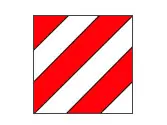
Durante el día, ¿cómo señalizaremos la carga que sobresalga por la parte posterior del vehículo?
During the day, how will we mark a load that sticks out at the back of the vehicle?
- ACon el panel reflectante V-20 y luces rojas y blancas.With the V-20 reflective panel and red and white lights.
- BCon el panel reflectante V-20 y una luz de color rojo.With the V-20 reflective panel and a red light.
- CSolo con el panel reflectante V-20.Only with the V-20 reflective panel.
ExplanationA load that sticks out at the back of a vehicle, except on vehicles less than 1 metre wide, must be marked with the V-20 sign. At night, it must also be marked with a red light.
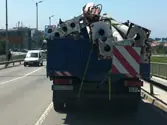
Si circula de noche y la carga sobresale por delante y por detrás del vehículo deberá:
If you are driving at night and the load sticks out at the front and the back of the vehicle, you must:
- AColocar la luz sólo en la parte trasera, pues en la delantera no es obligatoria.Put a light only at the rear, because one at the front is not compulsory.
- BSeñalizar la carga con una luz roja en la parte posterior y una luz blanca en la anterior.Mark the load with a red light at the rear and a white light at the front.
- CColocar un trapo rojo a cada lado de la carga.Put a red cloth on each side of the load.
ExplanationIf the load sticks out at the front and the back between sunset and sunrise, or in weather or environmental conditions that noticeably reduce visibility, it must be marked with a white light at the front and a red light at the rear.
La edad mínima para viajar como acompañante en una motocicleta o ciclomotor será de...
The minimum age to ride as a passenger on a motorcycle or moped is...
- Atres años, pero siempre con asiento adicional.three years, but always with an extra seat.
- Bsiempre 12 años.always 12 years.
- C12 años y, excepcionalmente, siete años si la motocicleta o ciclomotor van conducidos por el padre, madre o tutor.12 years and, exceptionally, seven years if the motorcycle or moped is ridden by their father, mother or guardian.
ExplanationOn mopeds and motorcycles, as long as the vehicle's registration documents allow it, one passenger may ride besides the rider, provided the passenger is over 12 and wears a protective helmet. As an exception, children aged 7 and over may ride on motorcycles or mopeds ridden by their father, mother or guardian, or by adults they have authorised, as long as they wear an approved helmet.
Circulando por una vía interurbana de noche o en condiciones de baja visibilidad, ¿está permitido que una bicicleta arrastre un remolque?
On a road outside built-up areas, at night or in poor visibility, is a bicycle allowed to tow a trailer?
- ANo, a ninguna horaNo, at no time
- BSí, si lleva la señalización adecuadaYes, if it has the appropriate markings
- CNo, solo durante el díaNo, only during the day
ExplanationUnder Article 154.5 of the General Traffic Regulations (as worded by RD 518/2026), on roads outside built-up areas bicycles may tow a trailer only in daylight and in conditions that do not reduce visibility.
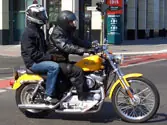
Llevar un pasajero en una motocicleta, ¿qué efecto produce al frenar?
What effect does carrying a passenger on a motorcycle have when braking?
- AEs más difícil que se bloquee la rueda trasera.The rear wheel is less likely to lock.
- BEl peso se desplaza hacia la parte trasera.The weight shifts towards the rear.
- CLa motocicleta es más estable y tiene más equilibrio por el aumento de peso.The motorcycle is more stable and better balanced because of the extra weight.
ExplanationBecause the passenger's weight rests mainly on the rear wheel, this wheel presses harder on the road, which delays the moment when it locks under braking, so more pressure on the rear brake pedal will be needed.
Con carácter general, ¿puede sobresalir la carga de la proyección en planta de un vehículo?
As a general rule, may the load stick out beyond the vehicle's outline seen from above?
- ASí, siempre que esté debidamente señalizada.Yes, as long as it is properly marked.
- BSí, siempre que no sobrepase la anchura, altura o longitud máxima autorizada por cualquier vehículo.Yes, as long as it does not exceed the maximum width, height or length authorised for any vehicle.
- CNo.No.
ExplanationAs a general rule, the load may not stick out beyond the vehicle's outline seen from above (Article 15 of the General Traffic Regulations). Only specific exceptions are allowed, such as indivisible loads or a small overhang at the rear, and always with marking.
En su turismo, con capacidad para 5 plazas incluida la del conductor viajan, además de usted, que es el conductor, tres adultos y dos niños de 3 y 6 años respectivamente, ¿es correcto?
In your car, which has 5 seats including the driver's, you, the driver, are travelling with three adults and two children aged 3 and 6. Is this correct?
- ANo, porque viajan más personas que plazas autorizadas hay.No, because there are more people travelling than authorised seats.
- BSí, siempre que no se sobrepase la masa máxima autorizada del vehículo.Yes, provided the vehicle's maximum authorised mass is not exceeded.
- CSí, si el niño de tres años va acompañado de un adulto y no ocupa plaza.Yes, if the three-year-old child is with an adult and does not occupy a seat.
ExplanationThe number of people carried may not exceed the number of authorised seats (Article 9.1 of the General Traffic Regulations). With the driver, three adults and two children, six people are travelling in a five-seat car; the children's age does not change the count.
Una motocicleta, ¿puede arrastrar un remolque?
Can a motorcycle tow a trailer?
- ANo.No.
- BSí.Yes.
- CSí, siempre que no supere el 50% de la masa en vacío de la motocicleta.Yes, as long as it does not exceed 50% of the motorcycle's unladen mass.
ExplanationA motorcycle may tow a trailer as long as the trailer does not exceed 50% of the motorcycle's unladen mass. Other conditions also apply: it may only be ridden in daylight, no people may be carried in the trailer, and the maximum speed is reduced by 10%.
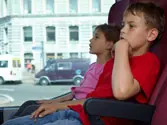
Un menor de 12 años, ¿cuántas plazas ocupará si viaja en un turismo?
How many seats does a child under 12 count as when travelling in a car?
- AMedia plaza siempre que no se supere el 50% de plazas del vehículo, excluido el conductor.Half a seat, as long as this does not exceed 50% of the vehicle's seats, not counting the driver.
- BUna plaza.One seat.
- CMedia plaza siempre y cuando no tenga más de 7 años.Half a seat, as long as the child is not older than 7.
ExplanationAny person travelling in a vehicle, whatever their age, always counts as one full seat. Children used to count as half a seat, but this has not been the case for years.
En un vehículo con anchura inferior a un metro, ¿podrá sobresalir la carga?
On a vehicle less than one metre wide, may the load stick out?
- ANo, en ningún caso.No, under no circumstances.
- BSí, 25 cm por detrás.Yes, 25 cm at the rear.
- CSí, un 10% por delante y un 15% por detrás.Yes, 10% at the front and 15% at the rear.
ExplanationOn vehicles less than one metre wide, the load may not stick out at the front, and at the rear only up to 0.25 metres; sideways, no more than 0.50 metres on each side of the vehicle's longitudinal centre line (Article 15.4 of the General Traffic Regulations).
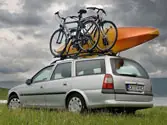
¿Cuánto puede sobresalir como máximo la carga indivisible por la parte posterior de un turismo?
What is the most that an indivisible load may stick out at the back of a car?
- A10% de la longitud del vehículo.10% of the vehicle's length.
- B15% de la longitud del vehículo.15% of the vehicle's length.
- C10% de la longitud de la carga.10% of the load's length.
ExplanationIn vehicles not intended only for carrying goods, such as cars, the load may stick out at the back by up to 10 per cent of the vehicle's length and, if it is indivisible, by 15 per cent. It must not stick out at all at the front or at the sides.
¿Pueden circular, por la vía pública, las motocicletas arrastrando un remolque?
May motorcycles tow a trailer on public roads?
- ANo.No.
- BSí, siempre que no vayan personas en el remolque.Yes, provided no people are carried in the trailer.
- CSí, siempre que no vayan personas en el remolque y su masa no supere el 50 % de la masa en vacío de la motocicleta.Yes, provided no people are carried in the trailer and its mass does not exceed 50% of the motorcycle's unladen mass.
ExplanationUnder Article 12.3 of the RGC, a motorcycle may tow a trailer whose mass does not exceed 50% of its unladen mass, with no people carried in it, travelling by day in good visibility and at a speed 10% lower than the general limit.
La carga indivisible de un turismo podrá sobresalir como máximo por la parte posterior...
An indivisible load in a car may stick out at the back by at most...
- Aun 10% de su longitud.10% of its length.
- Bun 15% de su longitud.15% of its length.
- Cun tercio de su longitud.a third of its length.
ExplanationAn indivisible load in a car may stick out by at most 15% of the car's length. If it is divisible, it may stick out by at most 10%.
En una vía urbana, es obligatorio realizar las operaciones de carga y descarga...
On an urban road, loading and unloading must be done...
- Arespetando las disposiciones que dicten las autoridades municipales.following the rules set by the local authorities.
- Brespetando únicamente las disposiciones sobre paradas y estacionamientos.following only the rules on stopping and parking.
- Csiempre por el lado más próximo al borde de la calzada.always on the side nearest the edge of the carriageway.
ExplanationLoading and unloading must be done off the road. As an exception, when it is unavoidable to do it on the road, it must be done without causing danger or serious disruption to other road users and following these rules: - The rules on stopping and parking must be respected and, in built-up areas, the rules set by the local authorities on suitable times and places. - Where possible, it must be done on the side of the vehicle nearest the edge of the carriageway. - It must be done with enough means to finish as quickly as possible, avoiding unnecessary noise and disturbance. - Goods may not be placed on the carriageway, the hard shoulder or pedestrian areas.
En un vehículo de anchura inferior a un metro, ¿cuánto podrá sobresalir la carga por la parte delantera y trasera?
In a vehicle less than one metre wide, how far may the load stick out at the front and at the back?
- ANada, tanto por delante como por detrás.Not at all, either at the front or at the back.
- BPor la parte trasera 25 centímetros.25 centimetres at the back.
- C25 centímetros, tanto por la parte delantera como por la posterior.25 centimetres, both at the front and at the back.
ExplanationIn a vehicle less than one metre wide, the load may not stick out at the front. At the back it may stick out by at most 25 centimetres, and by 50 centimetres at each side, measured from the vehicle's centre line.
Como norma general la responsabilidad de la carga recae sobre...
As a general rule, responsibility for the load lies with...
- AEl cargador.The loader.
- BEl expedidor y el destinatario.The sender and the recipient.
- CEl destinatario.The recipient.
ExplanationResponsibility for the load lies with the loader, because the loader prepares the load and secures it correctly on the vehicle. The loader must make sure the load is properly packed, secured and labelled according to the safety rules. The loader must also give the driver all the necessary information about the load, such as its weight, dimensions and possible risks. In this way, the loader is responsible for the load during transport.
¿Es necesario señalizar la carga que sobresalga por la parte trasera de una motocicleta?
Must a load that sticks out at the rear of a motorcycle be marked?
- AEn las motocicletas la carga no se debe señalizar.On motorcycles the load does not have to be marked.
- BSí, con una placa rectangular de color amarillo y borde rojo.Yes, with a yellow rectangular plate with a red border.
- CÚnicamente cuando la carga sobresalga más de 0,50 metros.Only when the load sticks out more than 0.50 metres.
ExplanationArticle 15.6 of the General Traffic Regulations requires the V-20 sign for loads sticking out at the rear of the vehicles in its sections 2 and 3. For vehicles less than one metre wide, such as a motorcycle, the rules only limit the load to 0.25 metres at the rear and do not require this sign.

Un menor de 12 años que viaje en el asiento de atrás, ¿cuántas plazas ocupa?
How many seats does a child under 12 travelling in the back seat count as?
- AMedia plaza.Half a seat.
- BUna plaza.One seat.
- CUna plaza si el asiento está homologado, media plaza si no está homologado.One seat if the child seat is approved, half a seat if it is not.
ExplanationAny person travelling in a vehicle, whatever their age, always counts as one full seat. If your manual says otherwise, it is out of date. In the past, children counted as half a seat.
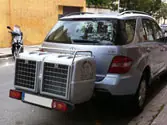
En un turismo, ¿cuánto podrá sobresalir la carga por la parte posterior?
In a car, how far may the load stick out at the back?
- ANo podrá sobresalir nada.Not at all.
- BUn tercio de la longitud del vehículo.A third of the vehicle's length.
- CComo máximo un 15%, si la carga es indivisible.At most 15%, if the load is indivisible.
ExplanationIn a car, the load may only stick out at the back: 10% when it is divisible and 15% when it is indivisible.
Si un camión mide menos de 5 metros de longitud, ¿cuánto podrá sobresalir por la parte posterior una carga indivisible?
If a lorry is less than 5 metres long, how far may an indivisible load stick out at the back?
- AUn tercio de la longitud del vehículo.One third of the vehicle's length.
- BUn 15% de la longitud del vehículo.15% of the vehicle's length.
- C2 metros.2 metres.
ExplanationOn a lorry less than 5 metres long, the load may stick out at the front and at the back by no more than one third of the vehicle's total length. If the lorry were more than 5 metres long, the load could stick out no more than 2 metres at the front and 3 metres at the back.
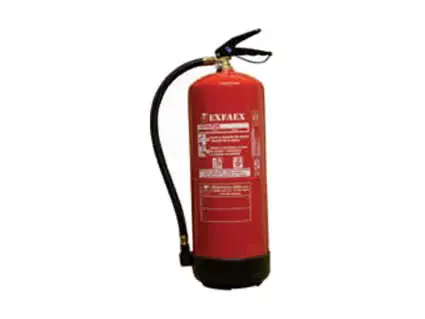
¿Cuántos extintores se debe llevar obligatoriamente a bordo de un vehículo de mercancías peligrosas cuya MMA sea de 6 toneladas?
How many fire extinguishers must be carried on board a dangerous goods vehicle with an MAM of 6 tonnes?
- AAl menos, uno de 2 kg y otro de 4 kg.At least one of 2 kg and another of 4 kg.
- BAl menos, uno de 2 kg y uno o varios que sumen 8 kg.At least one of 2 kg and one or more that add up to 8 kg.
- CAl menos, uno de 2 kg y otro de 12 kg.At least one of 2 kg and another of 12 kg.
ExplanationAccording to the rules, dangerous goods vehicles with an MAM of 6 tonnes must carry at least one 2 kg extinguisher and one or more extinguishers adding up to 8 kg in total. This is for safety in case of fire.
¿Por qué lado tendrán que subir y bajar los ocupantes de un vehículo?
On which side must a vehicle's occupants get in and out?
- APor el lado de la calzada.On the carriageway side.
- BPor el lado del borde de la vía.On the side of the road edge.
- CPor donde sea más cómodo.Wherever is most convenient.
ExplanationOccupants must get in or out of vehicles on the side of the road edge that is closest to them.
¿Se puede transportar carga en un turismo, de manera que sobresalga por su parte posterior?
Can a load be carried in a car so that it sticks out at the rear?
- ASí, pero deberá ir señalizada mediante una placa de 50 x 50 con franjas diagonales rojas y blancas.Yes, but it must be marked with a 50 x 50 panel with red and white diagonal stripes.
- BNo, porque en los turismos no se puede transportar carga.No, because loads cannot be carried in cars.
- CNo, porque en los turismos no puede sobresalir la carga.No, because on cars the load may not stick out.
ExplanationIn a car the load may stick out at the rear by up to 10% of the vehicle's length, or 15% if it is indivisible. It must be marked with the V-20 panel, 50 x 50 cm with red and white diagonal stripes.
En un vehículo no dedicado al transporte exclusivo de mercancías ¿cuánto puede sobresalir la carga por la parte delantera?
In a vehicle not used exclusively for carrying goods, how far may the load stick out at the front?
- AUn 10% de su longitud si la carga es divisible.10% of its length if the load is divisible.
- BUn 15% de su longitud si la carga es indivisible.15% of its length if the load is indivisible.
- CNada.Not at all.
ExplanationIn other vehicles not designed exclusively for carrying goods, the load may stick out at the back by up to 10 per cent of the vehicle's length, or 15 per cent if it is indivisible. It may not stick out at all at the front or at the sides.
Excepcionalmente, ¿se permite la circulación de menores en ciclomotores o motocicletas?
As an exception, are children allowed to travel on mopeds or motorcycles?
- ASí, a partir de 5 años, siempre que los conductores sean los padres, madres, tutores o persona mayor de edad autorizada por ellos y utilicen casco homologado.Yes, from the age of 5, provided the riders are their parents, guardians or an adult authorised by them and the children wear an approved helmet.
- BSí, a partir de 2 años, siempre que los conductores sean los padres, madres, tutores o persona mayor de edad autorizada por ellos y utilicen casco homologado.Yes, from the age of 2, provided the riders are their parents, guardians or an adult authorised by them and the children wear an approved helmet.
- CSí, a partir de 7 años, siempre que los conductores sean los padres, madres, tutores o persona mayor de edad autorizada por ellos y utilicen casco homologado.Yes, from the age of 7, provided the riders are their parents, guardians or an adult authorised by them and the children wear an approved helmet.
ExplanationAs an exception, children over 7 may travel on mopeds or motorcycles if the rider is their father, mother, guardian or an adult authorised by them, with an approved helmet and on the rear seat. Below that age it is not allowed.
Para arrastrar un remolque pesado que hace que el conjunto supere los 3.500 kg suele necesitarse:
To tow a heavy trailer that takes the combination over 3,500 kg, you usually need:
- AEl permiso B+E (o la categoría superior correspondiente).A B+E licence (or the corresponding higher category).
- BNada especial.Nothing special.
- CEl permiso AM.An AM licence.
ExplanationWhen the combination goes over the limits of the B licence, you need a B+E licence or another suitable category.
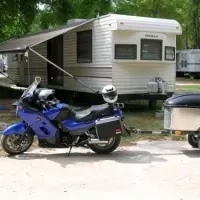
¿Pueden las motocicletas, los ciclomotores o vehículos con tres ruedas llevar un remolque o semirremolque?
May motorcycles, mopeds or three-wheeled vehicles tow a trailer or semi-trailer?
- ASí, mientras que, entre otras condiciones, sea de día y bajo condiciones que no limiten la visibilidad.Yes, provided that, among other conditions, it is daytime and visibility is not reduced.
- BSí, y además pueden transportar personas en el remolque.Yes, and they may also carry people in the trailer.
- CNo.No.
ExplanationMotorcycles, three-wheeled vehicles and mopeds may tow a trailer of up to 50% of their unladen mass if they are driven in daylight and with good visibility, reduce their maximum speed by 10% and carry no people in the trailer (Article 12 of the General Traffic Regulations).
All topics
- Definitions
- Documents and penalty points
- The driver's condition
- Duties of drivers and pedestrians
- Vehicle safety devices
- Vehicle controls and equipment
- Vehicle lights and horn
- Traffic signs, markings and signals
- The road and its lanes
- Speed and distances
- Manoeuvres
- Right of way
- Driving safely in difficult conditions
- Vehicle mechanics and maintenance
- Road accidents and first aid
- Defensive and eco-driving
Independent app: not affiliated with or endorsed by the DGT (Spain's Directorate-General for Traffic) or the Ministry of the Interior. The official exam is booked with the DGT and taken at its test centres. The questions here are practice material; the DGT's official question bank is not public.
Basado en datos de la Agencia Estatal Boletín Oficial del Estado (https://www.boe.es). Textos consolidados de carácter meramente informativo. La AEBOE no patrocina ni respalda este sitio.
Parte de las preguntas procede de los tests de la revista «Tráfico y Seguridad Vial» de la DGT, reproducidos con indicación de la fuente.