
DGT test · 574 questions
Carrying passengers and loads · Page 8 of 12
Passengers, children, loads and trailers: what you may carry and how it must be secured and marked.
Questions in this topic, with answers
574 questions, 50 per page, with the correct answer and the explanation. Page 8 of 12.
Carga Ud. el equipaje en la baca de su turismo que tiene una anchura de dos metros. ¿Está permitido que sobresalga por los laterales del vehículo?
You load luggage onto the roof rack of your car, which is two metres wide. May it stick out beyond the sides of the vehicle?
- ASí, podrá sobresalir hasta 0,40 metros por cada lateral, siempre que el ancho no sea superior a 2,55 metros.Yes, it may stick out by up to 0.40 metres on each side, provided the width does not exceed 2.55 metres.
- BSí, cuando el objeto cargado sea indivisible y el ancho total del vehículo con la carga no sea superior a 2,55 metros.Yes, when the object loaded is indivisible and the total width of the vehicle with the load does not exceed 2.55 metres.
- CNo, en ningún caso.No, never.
ExplanationThis option is correct because the rules do not allow the load to stick out beyond the sides of the vehicle in any case. This is important for the safety of both the driver and other road users, and helps avoid accidents.
En vehículos de ancho inferior a un metro, la carga no debe sobresalir lateralmente más de...
On vehicles less than one metre wide, the load must not stick out sideways more than...
- A0,50 metros a cada lado del eje longitudinal del vehículo.0.50 metres on each side of the vehicle's centre line.
- B0,50 metros a cada lado del vehículo.0.50 metres beyond each side of the vehicle.
- C0,40 metros a cada lado del vehículo.0.40 metres beyond each side of the vehicle.
ExplanationThe General Traffic Regulations (RGC) clearly state that on vehicles less than one metre wide, the load must not stick out sideways more than 0.50 metres on each side of the vehicle's centre line. This is important for safety on public roads, since a load that sticks out too far could be a danger to other road users, especially on narrow or urban roads. So the correct option is 0.50 metres on each side of the centre line.
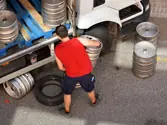
¿Cómo debe realizar la operación de carga y descarga, ya sea de personas o de mercancías?
How should you load and unload, whether people or goods?
- ARápidamente, pero sólo en las zonas donde esté permitido.Quickly, but only in areas where it is allowed.
- BSin ocasionar peligros y, si es posible, por el lado del vehículo más próximo al borde de la calzada.Without causing danger and, if possible, from the side of the vehicle nearest the edge of the carriageway.
- CSeñalizando correctamente, pudiendo realizarla por cualquier lado del vehículo.With the correct signals, from either side of the vehicle.
ExplanationLoading and unloading must be done off the road. In exceptional cases, when it cannot be avoided on the road, it must be done without causing danger or serious disruption to other road users, and following these rules: respect the rules on stopping and parking and, in built-up areas, the local authority's rules on suitable times and places; do it, where possible, from the side of the vehicle nearest the edge of the carriageway; use enough means to do it as quickly as possible, trying to avoid unnecessary noise and disturbance. It is forbidden to leave goods on the carriageway, the hard shoulder or pedestrian areas.
Para el conductor y los pasajeros de una motocicleta, ¿es importante el vestuario a utilizar?
For a motorcycle rider and passengers, is the clothing they wear important?
- ASí, es fundamental para proteger el cuerpo de las inclemencias del tiempo.Yes, it is essential for protecting the body from bad weather.
- BNo, lo importante es utilizar el casco.No, what matters is wearing a helmet.
- CNo, porque no aporta nada a la seguridad.No, because it does nothing for safety.
ExplanationOn a motorcycle there is no bodywork to protect the riders, so suitable clothing is essential: it protects from cold, rain and wind and reduces injuries in a fall. That is why a close-fitting suit, gloves and boots are recommended, as well as a helmet.
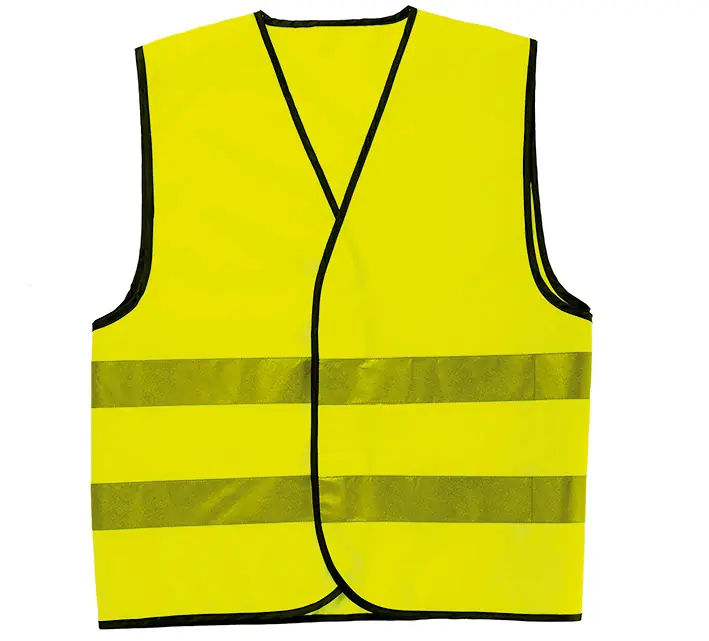
En un turismo, ¿es obligatorio llevar dos chalecos reflectantes, uno para el conductor del vehículo y otro para su acompañante?
In a car, is it compulsory to carry two reflective vests, one for the driver and one for the passenger?
- ASólo es obligatorio en motocicletas, pero no en turismos.It is only compulsory on motorcycles, not in cars.
- BSí, se debe llevar un chaleco por cada plaza del vehículo.Yes, you must carry one vest for each seat in the vehicle.
- CNo.No.
ExplanationThe rules require you to wear the reflective vest when you get out of the vehicle and are on the carriageway or hard shoulder of a road outside built-up areas, but they do not require the car to carry one vest for each occupant.
¿Podrá un niño menor de 12 años viajar como pasajero en una motocicleta?
May a child under 12 travel as a passenger on a motorcycle?
- ANo, en ningún caso.No, never.
- BSí, en el caso de que el conductor sea el padre, madre, tutor legal o mayor de edad autorizado.Yes, if the rider is the father, mother, legal guardian or an authorised adult.
- CSólo en el caso de medir más de 1,50 metros.Only if the child is taller than 1.50 metres.
ExplanationA child under 12 may travel as a passenger on a motorcycle as long as the rider is the father, the mother, an authorised adult or the legal guardian. The child must be over 7, must not sit between the rider and the handlebars, must wear an approved protective helmet, must keep their feet on the footrests and must sit astride.
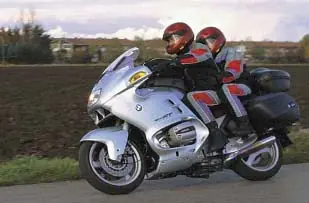
En las motocicletas,¿qué es obligatorio tener en cuenta con el equipaje tramsportado?
On motorcycles, what is it compulsory to bear in mind about the luggage carried?
- AQue no sobresalga por la parte trasera.That it does not stick out at the rear.
- BQue vaya colocado y sujeto de forma que no afecte a la estabilidad de la motocicleta.That it is placed and secured so that it does not affect the motorcycle's stability.
- CQue no sobresalga lateralmente.That it does not stick out sideways.
ExplanationArticle 14 of the General Traffic Regulations requires the load to be placed and, if necessary, secured so that it cannot fall, shift dangerously or affect the vehicle's stability. On a motorcycle, which balances on two wheels, badly secured luggage is especially dangerous.
Los pasajeros deben subir o bajar de un vehículo...
Passengers must get into or out of a vehicle...
- Apor el lado de la calzada.on the carriageway side.
- Bpor el lado más próximo al borde de la vía.on the side nearest the edge of the road.
- Csiempre por el lado derecho.always on the right-hand side.
ExplanationOnce the vehicle is stationary, as a general rule occupants must get in or out on the side nearest the pavement or hard shoulder. On one-way urban roads you may stop and park on both sides of the road, so we should always try to get out where there is less risk of being hit, which is the side nearest the edge of the road, not the carriageway side, where vehicles are moving.
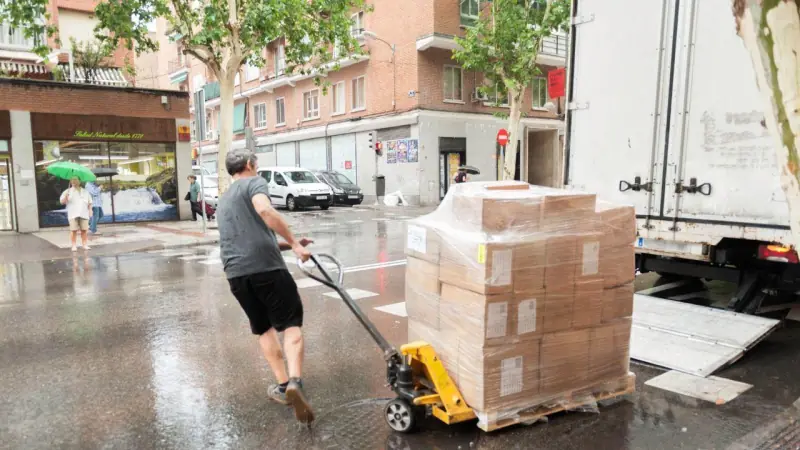
Las operaciones de carga y descarga se deben realizar...
Loading and unloading must be done...
- Adepositando la mercancía en la calzada para agilizar el trabajo.by placing the goods on the carriageway to speed up the work.
- Brespetando siempre las normas de parada y estacionamiento.always respecting the rules on stopping and parking.
- Cúnicamente por el lado derecho de la calzada.only on the right-hand side of the carriageway.
ExplanationAs a general rule, loading and unloading must be done off the road. If it is essential to do it on the road, these rules must be followed: if possible, do it from the side of the vehicle nearest the edge of the carriageway; respect the rules on stopping and parking and, in built-up areas, the rules on times and places; never put goods on the carriageway, the hard shoulder or pedestrian areas; use the necessary means to do it quickly, avoiding danger, noise and unnecessary nuisance.
A efectos de capacidad del vehículo, ¿cuántas plazas ocupa cada menor de edad (de más de 2 años y menos de 12) en la parte trasera de un turismo?
For the purposes of the vehicle's capacity, how many seats does each child (over 2 and under 12 years old) take up in the back of a car?
- AOcupa una plaza enteraA whole seat
- BOcupa media plazaHalf a seat
- CLos menores no ocupan plazaChildren do not take up a seat
ExplanationThe correct answer is that each child takes up a whole seat. Under current Spanish rules, for the purposes of the vehicle's authorised number of seats, each person counts as a whole seat, regardless of age or size. There used to be exceptions, but now it is prohibited to carry more people than the vehicle's approved number of seats. In addition, each child must have their own safety system (seat belt or child restraint system), which physically requires a whole seat.
Si se realiza transporte escolar en un vehículo de la categoría M1, ¿cuántos niños se pueden transportar en cada plaza?
If school transport is provided in a category M1 vehicle, how many children may be carried in each seat?
- ADos.Two.
- BUno.One.
- CTres cada dos.Three for every two seats.
ExplanationIn a category M1 vehicle, which is a car, one child may be carried per seat. So the correct answer is "One".
Durante la carga de combustible, ¿debe apagar la radio instalada en su cuadriciclo ligero?
While refuelling, must you switch off the radio fitted in your light quadricycle?
- ASí.Yes.
- BNo, basta con parar el motor.No, it is enough to stop the engine.
- CNo.No.
ExplanationAccording to Article 115 of the General Traffic Regulations, when refuelling the engine must be stopped, and the lights, electrical systems such as the radio, and mobile phones must be switched off. Stopping the engine is not enough.
¿Debe asegurar el remolque que lleva enganchado a su tractor?
Must you secure the trailer that is hitched to your towing vehicle?
- ASí, si tiene más de 750 kg de masa máxima autorizada.Yes, if its maximum authorised mass is over 750 kg.
- BSí, siempre.Yes, always.
- CNo.No.
ExplanationYes. The trailer must always be properly hitched and secured to the towing vehicle, with the coupling device closed and, where applicable, the safety cable or chain in place, so that it cannot come loose while moving. This does not depend on its mass.
¿Cuánto puede sobresalir la carga en un ciclomotor?
How far may a load stick out on a moped?
- APor los lados 50 centímetros a cada lado del eje longitudinal y por detrás 25 centímetros.At the sides, 50 centimetres on each side of the longitudinal axis, and at the rear, 25 centimetres.
- BNada.Not at all.
- CSolo por los lados 0,50 metros desde el centro.Only at the sides, 0.50 metres from the centre.
ExplanationA moped is less than one metre wide, so under Article 15 of the General Traffic Regulations the load may stick out up to 0.50 metres on each side of its longitudinal axis and up to 0.25 metres at the rear. Nothing may stick out at the front.
El remolque ligero es aquel cuya masa máxima autorizada no excede de...
A light trailer is one whose maximum authorised mass does not exceed...
- A750 kg.750 kg.
- B770 kg.770 kg.
- C760 kg.760 kg.
ExplanationThe exact figure is 750 kg. The other options differ by only 10 or 20 kilos, to mislead you.
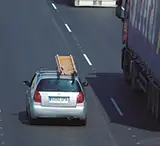
En los vehículos de anchura inferior a un metro, la carga no debe sobresalir por la parte posterior más de...
On vehicles less than one metre wide, the load must not stick out at the back by more than...
- A0,40 metros.0.40 metres.
- B0,50 metros.0.50 metres.
- C0,25 metros0.25 metres
ExplanationArticle 15 of the General Traffic Regulations states that, on vehicles less than one metre wide, the load may not stick out at the front, nor more than 0.25 metres at the back, nor more than 0.50 metres on each side of the vehicle's longitudinal axis.
Llevar la baca portaequipajes vacía:
Driving with an empty roof rack:
- ANo afecta al consumoDoes not affect fuel consumption
- BAumenta el consumo por la resistencia al aireIncreases fuel consumption because of air resistance
- CEs recomendable por seguridadIs advisable for safety
ExplanationA roof rack, even when empty, increases aerodynamic drag and fuel consumption. It is advisable to remove it when it is not in use.
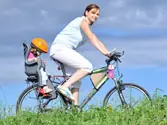
¿Puede el conductor de una bicicleta transportar un pasajero?
May a cyclist carry a passenger?
- ANo, está prohibido.No, it is prohibited.
- BSí, sentado entre el conductor y el manillar.Yes, sitting between the rider and the handlebars.
- CSí, a un menor de hasta 22 kg en un asiento adicional.Yes, a child of up to 22 kg in an additional seat.
ExplanationUnder Article 154 of the General Traffic Regulations (RGC) (as worded by RD 518/2026), if the rider is an adult, bicycles built for only one person may carry children of up to 22 kg who can sit up on their own, in additional seats.
Si un vehículo tiene una MMA de 8,5 toneladas y una carga útil de 3,6 toneladas es...
If a vehicle has an MAM of 8.5 tonnes and a payload of 3.6 tonnes, it is...
- APesado.Heavy.
- BSemipesado.Medium-heavy.
- CLigero.Light.
ExplanationThe vehicle is heavy because its MAM is 8.5 tonnes, which shows it is designed to carry a large load. The payload of 3.6 tonnes is also large. So it is classed as a heavy vehicle.

Esta placa es para señalizar la carga que sobresale por la parte posterior de los camiones, pero, cuando sobresalga la carga por la parte posterior de un turismo, ¿también es obligatorio colocar esta placa?
This plate is used to mark a load that sticks out at the rear of lorries. But when a load sticks out at the rear of a car, is it also compulsory to fit this plate?
- ASí, pero solo fuera de poblado.Yes, but only outside built-up areas.
- BNo.No.
- CSí.Yes.
ExplanationThe V-20 sign must be fitted when a load sticks out at the rear, both on vehicles intended for carrying goods and on all others, including cars, on which the load may stick out at the rear by up to 10% of their length (Article 15 of the General Traffic Regulations).
¿Está permitido que viajen 6 personas en un turismo de 5 plazas, incluido el conductor?
Is it allowed for 6 people to travel in a 5-seat car, including the driver?
- ANo, no se pueden ocupar más plazas de las autorizadas.No, you may not occupy more seats than the number authorised.
- BSí, cuando no se supera la M.M.A del vehículo.Yes, as long as the vehicle's MAM is not exceeded.
- CSí, cuando el vehículo circula en vías urbanas.Yes, when the vehicle is driven on urban roads.
ExplanationIn Spain, under the General Traffic Regulations, cars are designed to carry a maximum of 9 people, including the driver. However, in a car with 5 seats a sixth person may not be carried, because the number of authorised seats would be exceeded. This limit keeps all occupants and the vehicle itself safe, and follows the traffic rules on vehicle capacity that aim to prevent accidents.
Si la carga cae en la calzada, el conductor debe...
If the load falls onto the carriageway, the driver must…
- Adetener la circulación en cualquier caso.stop the traffic in any case.
- Bseguir conduciendo y avisar a las autoridades competentes.keep driving and inform the relevant authorities.
- Cretirarla lo antes posible y, mientras tanto, tomar las medidas necesarias para avisar a los demás usuarios y evitar que se obstruya la circulación.remove it as soon as possible and, in the meantime, take the necessary steps to warn other road users and prevent traffic from being blocked.
ExplanationUnder Article 130 of the General Traffic Regulations, if the vehicle or its load blocks the carriageway, the driver must mark the obstacle and take the necessary steps to have it removed as quickly as possible. It is not enough to inform the authorities and carry on, and you do not have to stop the traffic in every case.
Llevar carga sobre la baca del techo:
Carrying a load on the roof rack:
- ANo afecta a nada.Has no effect on anything.
- BEleva el centro de gravedad y puede afectar a la estabilidad y a la altura del vehículo (gálibo).Raises the centre of gravity and can affect the vehicle's stability and height (clearance).
- CReduce el consumo.Reduces fuel consumption.
ExplanationA load on the roof must be well secured; it raises the centre of gravity, reduces stability, and increases fuel consumption and the overall height of the vehicle.
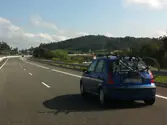
En un turismo, ¿dónde colocaremos preferiblemente la carga?
In a car, where should we preferably put the load?
- AEn la baca, bien sujeta.On the roof rack, well secured.
- BEn el maletero.In the boot.
- CEn el interior del habitáculo.Inside the passenger compartment.
ExplanationThe load should preferably be carried in the boot, because that is the part of the vehicle designed for it. When the load cannot go in the boot of your car, remember that: - You may only put light, small objects in the passenger compartment, because they can be thrown around and injure the occupants. - Heavy, bulky objects on the roof rack can affect the vehicle's stability and may even make it overturn. They also increase fuel consumption.
Una furgoneta de masa máxima autorizada no superior a 3.500 kg circula por una carretera convencional. ¿Cuál es su velocidad máxima genérica?
A van with a maximum authorised mass of no more than 3,500 kg is driving on a conventional road. What is its general maximum speed?
- A90 km/h.90 km/h.
- B80 km/h.80 km/h.
- C120 km/h.120 km/h.
ExplanationUnder Article 48.1.a) of the General Traffic Regulations, vans, whatever their mass, have a maximum of 80 km/h on conventional roads and 90 km/h on motorways (autopistas) and dual carriageways (autovías). The 90 km/h limit on conventional roads applies to cars, car-derived vans and adaptable mixed-use vehicles, among others.
Si hay condiciones meteorológicas que reducen mucho la visibilidad, ¿cómo debe señalizarse la carga que sobresale por delante del vehículo?
If weather conditions greatly reduce visibility, how must a load sticking out at the front of the vehicle be signalled?
- ACon una luz roja.With a red light.
- BCon una luz blanca.With a white light.
- CCon una luz blanca y un dispositivo reflectante blanco.With a white light and a white reflective device.
ExplanationAt night or in conditions that noticeably reduce visibility, a load sticking out at the front is signalled with a white light (Article 15.6 of the General Traffic Regulations (RGC)). The red light is for a load sticking out at the back, and the white reflector is added only for loads sticking out at the sides.
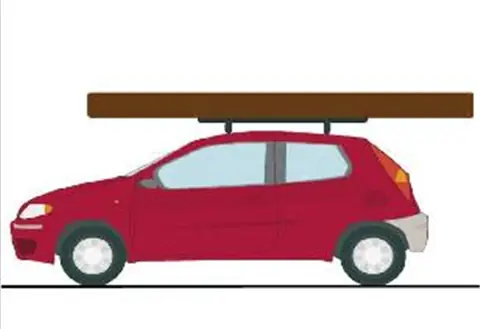
La carga de su turismo sobresale por detrás. ¿Qué debe hacer?
The load in your car sticks out at the rear. What must you do?
- ASeñalizarla con tela de color.Mark it with a coloured cloth.
- BSeñalizarla con paneles de franjas rojas y blancas.Mark it with panels with red and white stripes.
- CNo es obligatorio señalizarla.It does not have to be marked.
ExplanationA load sticking out at the rear of a car, by up to 10% of its length or 15% if it is indivisible, must be marked with the V-20 panel, which has red and white diagonal stripes. A coloured cloth is not an acceptable way to mark it.
¿A qué automóvil se le puede sustituir eventualmente la zona destinada al transporte de carga por asientos?
In which motor car may the space intended for carrying goods occasionally be replaced with seats?
- AAl turismo.In a car.
- BAl turismo especial.In a special car.
- CAl vehículo mixto adaptable.In an adaptable mixed-use vehicle.
ExplanationAn adaptable mixed-use vehicle is a motor car intended to carry people and goods at the same time or alternately, in which the load area can occasionally be replaced with seats. A car, on the other hand, is intended to carry people.
¿Se puede disminuir la visibilidad del conductor con la carga?
May the load reduce the driver's visibility?
- ASolo un 20% como máximo.Only by 20% at most.
- BSolo un 10% como máximo.Only by 10% at most.
- CNo.No.
ExplanationNo. The driver's vision and freedom of movement must never be reduced by the load or the occupants.
La carga que sobresale por detrás en los turismos, ¿debe señalizarse?
Must a load sticking out at the back of a car be marked?
- ANo, en los turismos no es necesario.No, it is not necessary in cars.
- BSí, con un panel reglamentario.Yes, with the regulation panel.
- CSólo si es durante la noche.Only at night.
ExplanationA load sticking out at the back of a car must be marked with the regulation panel and, when driving at night, also with a red light.
¿Una bicicleta puede arrastrar un remolque?
Can a bicycle tow a trailer?
- ANo.No.
- BSí, con ciertas condiciones.Yes, under certain conditions.
- CLas bicicletas no pueden, pero las motocicletas sí.Bicycles cannot, but motorcycles can.
ExplanationAccording to Article 154 of the General Traffic Regulations (RGC), as worded by RD 518/2026, bicycles may use trailers or semi-trailers that meet the technical specifications for carrying people, animals weighing up to 15 kg or goods, subject to any restrictions set by the local authority; on roads outside built-up areas, only during the day and in conditions that do not reduce visibility. The rule limiting the trailer to 50 % of the unladen mass no longer applies to bicycles.
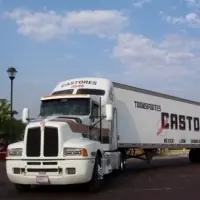
¿Deben los remolques destinados al transporte de mercancías llevar dispositivos de protección lateral?
Must trailers used for carrying goods have side protection devices?
- ANo, nuncaNo, never
- BNo, únicamente lo llevarán los destinados al transporte de personasNo, only those used for carrying people must have them
- CSíYes
ExplanationAll vehicles used for carrying goods, including trailers and semi-trailers, must have a side protection device if this is required by the rules in Annex I of the General Vehicle Regulations, which set the masses and dimensions at which this protection becomes compulsory.
En la manipulación y estiba, la carga no debe...
When handling and stowing the load, the load must not...
- ADesestabilizar el vehículo.Make the vehicle unstable.
- BTener demasiado volumen.Be too bulky.
- CTener demasiado peso.Be too heavy.
ExplanationThe load must not make the vehicle unstable, because this would put driving safety at risk. It is important to place the load so that it does not affect the vehicle's stability and does not cause sudden movements or imbalance while driving.
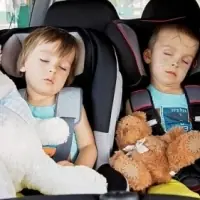
En un vehículo de 9 plazas, incluido el conductor, ¿Se podrá transportar a 9 niños?
In a vehicle with 9 seats, including the driver's seat, may 9 children be carried?
- ASí, siempre que los niños sean de entre 2 y 12 años de edad.Yes, as long as the children are between 2 and 12 years old.
- BNo. porque se excede la cantidad de asientos permitida.No, because that exceeds the number of seats allowed.
- CSí, cuando los niños se encuentren a cargo de un adulto.Yes, when the children are in the care of an adult.
ExplanationThe number of people carried may not exceed the number of authorised seats, and each child takes up one seat. In a 9-seat vehicle, including the driver's seat, only 8 passengers may travel, so 9 children plus the driver would exceed that number.
Para conductores y pasajeros de motocicletas, ¿es importante la ropa que usan?
For motorcycle riders and passengers, are the clothes they wear important?
- ANo, da igual siempre que lleven casco.No, it does not matter as long as they wear a helmet.
- BNo, porque no mejora la seguridad.No, because they do not improve safety.
- CSí, es fundamental porque el cuerpo queda expuesto directamente al clima.Yes, they are essential because the body is directly exposed to the weather.
ExplanationIn addition to the helmet, Article 118.1 of the General Traffic Regulations (RGC), as worded by RD 518/2026, requires motorcycle riders and passengers to wear protective gloves on roads outside built-up areas and closed footwear covering the whole foot on all types of road. The motorcyclist's body is directly exposed to the weather and to impacts, so clothing is essential.
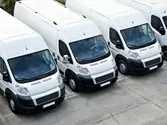
Si en una furgoneta la carga no se puede transportar en su totalidad en el interior del vehículo, ¿podremos circular con el portón de la parte de atrás abierto?
If the load in a van cannot all be carried inside the vehicle, may we drive with the rear door open?
- ASí, siempre que la carga no supere el 15% de la longitud del vehículo.Yes, as long as the load does not exceed 15% of the vehicle's length.
- BSí, un máximo de 3 metros.Yes, up to 3 metres.
- CNo.No.
ExplanationA van may carry a load sticking out at the back, but not with the rear door open.
Un vehículo transporta más carga que la masa máxima autorizada (MMA). ¿Está permitido circular así?
A vehicle is carrying more load than its maximum authorised mass (MAM). Is it allowed to drive like this?
- ASí, pero solo cuando lleva equipaje y pasajeros dentro de un poblado.Yes, but only when it is carrying luggage and passengers in a built-up area.
- BSí, cuando se trata de un vehículo destinado al transporte de mercancías.Yes, when it is a vehicle used for carrying goods.
- CNo, porque es peligroso.No, because it is dangerous.
ExplanationAccording to the General Traffic Regulations (RGC), a vehicle may not be driven with a load above its maximum authorised mass (MAM), for road safety reasons. Exceeding the MAM can affect the vehicle's stability, increase braking time and put both the driver and other road users at risk. This rule is essential to prevent accidents and ensure safe traffic. So the correct answer is «No, because it is dangerous».
¿Cuál es la MMA de un autobús articulado de tres ejes?
What is the MAM of a three-axle articulated bus?
- A38 toneladas.38 tonnes.
- B36 toneladas.36 tonnes.
- C28 toneladas.28 tonnes.
ExplanationThe MAM (maximum authorised mass) is the maximum weight allowed for travelling on public roads. For a three-axle articulated bus, the MAM is 28 tonnes.
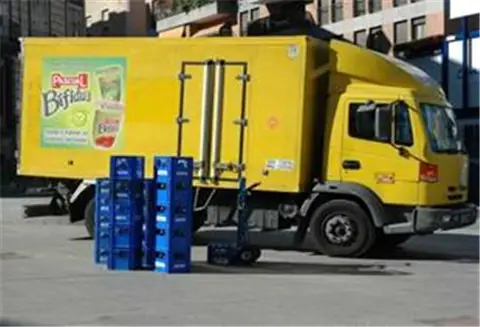
¿Dónde está prohibido depositar la mercancía durante las operaciones de carga y descarga?
Where is it forbidden to put goods down during loading and unloading?
- AEn la calzada, en el arcén y en las zonas peatonales.On the carriageway, on the hard shoulder and in pedestrian areas.
- BEn las zonas peatonales, pero si esta permitido depositarla en la calzada y en el arcén.In pedestrian areas, but it is allowed to put them on the carriageway and on the hard shoulder.
- CEn la calzada, pero está permitido depositarla en el arcén y en las zonas peatonales.On the carriageway, but it is allowed to put them on the hard shoulder and in pedestrian areas.
ExplanationLoading and unloading must be done without putting the goods down on the carriageway, the hard shoulder or in pedestrian areas; they must be taken directly from the vehicle to the building or the other way round. This way vehicles and pedestrians are not obstructed.
Un vehículo lleva más carga que la MMA. ¿Está permitido circular así?
A vehicle is carrying more than its maximum authorised mass. Is it allowed to drive like this?
- ANo, porque es peligroso.No, because it is dangerous.
- BSí, cuando es un vehículo de transporte de mercancías.Yes, if it is a goods vehicle.
- CSí, pero solamente cuando transporta equipaje y personas dentro de poblado.Yes, but only when it is carrying luggage and people in a built-up area.
ExplanationIt is prohibited to drive with a load that takes the vehicle over its maximum authorised mass: the vehicle brakes worse, loses stability, and the tyres and suspension may fail. The ban applies to all vehicles.
¿Es responsable el conductor de la distribución correcta de la carga, cuando no realice el trabajo físico de cargar el vehículo?
Is the driver responsible for the correct distribution of the load when the driver does not do the physical work of loading the vehicle?
- ASolo si la carga sobresale del vehículo.Only if the load sticks out beyond the vehicle.
- BSí.Yes.
- CNo.No.
ExplanationThe driver is responsible for the correct distribution of the load, even if the driver does not do the physical work of loading the vehicle. This means the driver must make sure the load is placed so that it does not compromise the vehicle's stability and does not hide the vehicle's lights, number plate or identification markings.
En un coche de 9 plazas, incluido el conductor, ¿pueden viajar 9 niños?
In a 9-seat car, including the driver's seat, may 9 children travel?
- ANo. No hay suficientes plazas: una la ocupa el conductor.No. There are not enough seats: the driver takes up one.
- BSí, si van acompañados por un adulto.Yes, if they are with an adult.
- CSí, si los niños tienen entre 2 y 12 años.Yes, if the children are aged between 2 and 12.
ExplanationThe number of people carried may not be more than the number of authorised seats in the vehicle, whatever the age of the occupants (Article 9.1 of the General Traffic Regulations). In a nine-seat vehicle, one seat is the driver's, so there is only room for eight passengers.
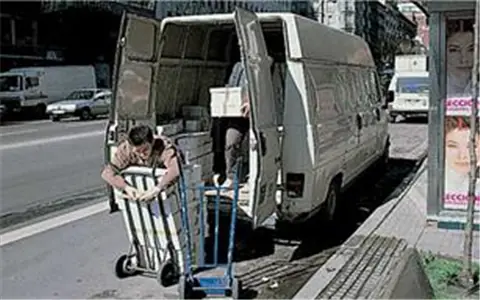
Las operaciones de carga y descarga se llevarán a cabo...
Loading and unloading must be carried out...
- Adepositando la mercancía en la calzada y en las zonas peatonales.by putting the goods down on the carriageway and in pedestrian areas.
- Bpor el lado del vehículo más próximo al centro de la calzada.from the side of the vehicle nearest the centre of the carriageway.
- Cprocurando evitar ruidos y molestias innecesarias.trying to avoid unnecessary noise and disturbance.
ExplanationLoading and unloading must be done, where possible, from the side of the vehicle nearest the edge of the carriageway, for example the pavement. These operations must be carried out as quickly as possible, avoiding unnecessary noise and disturbance. It is prohibited to put goods down on the carriageway, the hard shoulder and pedestrian areas.
Los extintores que lleven los vehículos que transportan mercancías peligrosas para la lucha contra incendios...
Fire extinguishers carried by vehicles transporting dangerous goods, for fighting fires...
- ADispondrá de unas abrazaderas que permitan su colocación únicamente en la cabina.Must have brackets that allow them to be fitted only in the cab.
- BDeberán estar precintados y marcados según la norma autorizada, con indicación de la fecha de su próxima inspección.Must be sealed and marked according to the approved standard, showing the date of their next inspection.
- CDeberán estar precintados, pero no es necesario revisarlos periódicamente.Must be sealed, but they do not need to be checked periodically.
ExplanationFire extinguishers carried by vehicles transporting dangerous goods must be sealed and marked according to the approved standard, showing the date of their next inspection. This is to make sure the extinguishers are in good condition and ready for use in an emergency. The marking and the periodic inspection are safety measures that ensure the extinguishers are in the best possible condition and do their job properly.
En un turismo de 9 plazas incluido el conductor, ¿pueden viajar 9 niños?
In a 9-seat car, including the driver, may 9 children travel?
- ANo, porque se supera el número de plazas autorizado.No, because that exceeds the number of authorised seats.
- BSí, cuando van al cargo de un adulto.Yes, when they are in the care of an adult.
- CSí, cuando los niños tienen edades comprendidas entre los 2 y los 12 años de edad.Yes, when the children are between 2 and 12 years old.
ExplanationIn a nine-seat car including the driver, only eight passengers may travel. Each person takes up one seat, whatever their age.
Si transporta a un único pasajero en su motocicleta con sidecar, ¿dónde viajará este?
If you carry only one passenger on your motorcycle with a sidecar, where will the passenger travel?
- AEn el asiento de la motocicleta detrás del conductor.On the motorcycle seat behind the rider.
- BEs indiferente.It does not matter.
- CEn el sidecar.In the sidecar.
ExplanationIf a motorcycle with a sidecar carries only one passenger, the passenger should travel in the sidecar: their weight on that side balances the combination and improves stability, especially on bends. The rear seat is for a second passenger, if the vehicle's documents allow it.
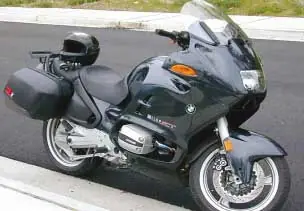
En una motocicleta,¿puede sobresalir la carga lateralmente?
On a motorcycle, may the load stick out sideways?
- ASí, hasta 50 centímetros del eje longitudinal de la motocicleta.Yes, up to 50 centimetres from the motorcycle's longitudinal axis.
- BSí, hasta 50 centímetros de cada lateral.Yes, up to 50 centimetres from each side.
- CNo, en ningún caso.No, in no case.
ExplanationUnder Article 15 of the General Traffic Regulations, on vehicles less than one metre wide, such as motorcycles, the load may stick out sideways up to 0.50 metres on each side of the longitudinal axis, not from each side of the vehicle. At the rear, up to 0.25 metres.
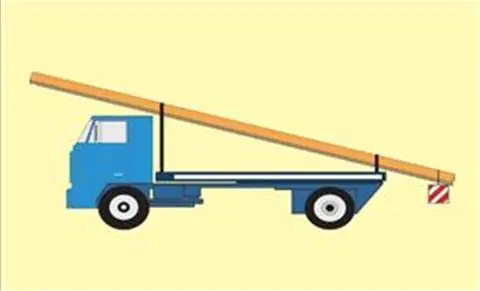
Si circula entre la puesta y la salida del sol, ¿cómo debe señalizar una carga indivisible que sobresale por la parte delantera y la trasera de su vehículo?
If you are driving between sunset and sunrise, how must you mark an indivisible load that sticks out at the front and at the rear of your vehicle?
- ACon una luz roja en ambos extremos de la carga.With a red light at both ends of the load.
- BCon una luz blanca en la parte trasera de la carga y una luz roja en la delantera.With a white light at the rear of the load and a red light at the front.
- CCon una luz roja en la parte trasera de la carga y una luz blanca en la delantera,With a red light at the rear of the load and a white light at the front.
ExplanationAt night or in poor visibility, a load that sticks out is marked in the same way as the vehicle's own lights: with a white light to the front and a red light to the rear. At the rear it also carries the V-20 sign with red and white stripes.
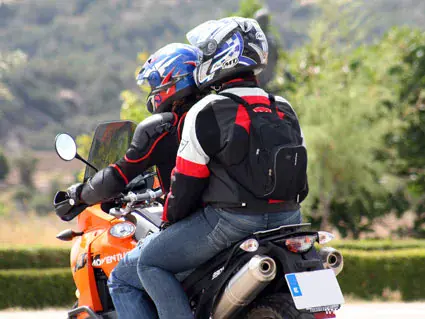
¿Cómo debe viajar el pasajero de una motocicleta?
How must a motorcycle passenger travel?
- AComo vaya más cómodo.However is most comfortable for them.
- BA horcajadas y con los pies apoyados en los reposapiés laterales, sólo cuando circule por vías interurbanas.Astride, with their feet on the side footrests, only on roads outside built-up areas.
- CA horcajadas y con los pies apoyados en los reposapiés laterales, tanto en poblado como fuera del poblado.Astride, with their feet on the side footrests, both in and outside built-up areas.
ExplanationA motorcycle passenger must sit astride with their feet on the side footrests, both in and outside built-up areas, because this position gives more stability and safety during the journey.
Si va a realizar operaciones de carga y descarga , ¿qué puede hacer con la mercancía?
If you are going to load or unload, what can you do with the goods?
- ADepositarla en la calzada.Put them down on the carriageway.
- BDepositarla en el arcén.Put them down on the hard shoulder.
- CNo puedo depositar la carga ni en la calzada ni en zonas peatonales.I cannot put the load down on the carriageway or in pedestrian areas.
ExplanationUnder Article 16 of the General Traffic Regulations, loading and unloading must be done quickly, and it is prohibited to put the goods down on the carriageway, the hard shoulder or in pedestrian areas.
All topics
- Definitions
- Documents and penalty points
- The driver's condition
- Duties of drivers and pedestrians
- Vehicle safety devices
- Vehicle controls and equipment
- Vehicle lights and horn
- Traffic signs, markings and signals
- The road and its lanes
- Speed and distances
- Manoeuvres
- Right of way
- Driving safely in difficult conditions
- Vehicle mechanics and maintenance
- Road accidents and first aid
- Defensive and eco-driving
Independent app: not affiliated with or endorsed by the DGT (Spain's Directorate-General for Traffic) or the Ministry of the Interior. The official exam is booked with the DGT and taken at its test centres. The questions here are practice material; the DGT's official question bank is not public.
Basado en datos de la Agencia Estatal Boletín Oficial del Estado (https://www.boe.es). Textos consolidados de carácter meramente informativo. La AEBOE no patrocina ni respalda este sitio.
Parte de las preguntas procede de los tests de la revista «Tráfico y Seguridad Vial» de la DGT, reproducidos con indicación de la fuente.