
DGT test · 574 questions
Carrying passengers and loads · Page 9 of 12
Passengers, children, loads and trailers: what you may carry and how it must be secured and marked.
Questions in this topic, with answers
574 questions, 50 per page, with the correct answer and the explanation. Page 9 of 12.
Conduce un vehículo articulado de 4 ejes. Si el tractocamión dispone de 2 ejes y en el semirremolque, la distancia entre ejes es superior a 1,80 metros, ¿cuál es la masa máxima permitida?
You are driving a 4-axle articulated vehicle. If the tractor unit has 2 axles and the distance between the semi-trailer's axles is more than 1.80 metres, what is the maximum permitted mass?
- A38 toneladas.38 tonnes.
- B44 toneladas.44 tonnes.
- C36 toneladas.36 tonnes.
ExplanationThe maximum permitted mass for a 4-axle articulated vehicle, with a 2-axle tractor unit and a semi-trailer whose axles are more than 1.80 metres apart, is 36 tonnes. This comes from the rules on weight and load distribution set for this type of vehicle.
La diferencia entre un remolque y un semirremolque es que el semirremolque:
The difference between a trailer and a semi-trailer is that the semi-trailer:
- ANo existe tal diferencia.There is no such difference.
- BApoya parte de su peso sobre el vehículo tractor.Rests part of its weight on the towing vehicle.
- CSiempre es más ligero.Is always lighter.
ExplanationA semi-trailer is coupled to the tractor unit so that part of its mass rests on it; a trailer spreads its weight over its own axles.
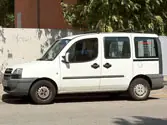
¿Donde deberá colocar la carga en un vehículo mixto?
Where must you place the load in a mixed-use vehicle?
- AEn la baca en todo caso.On the roof rack in all cases.
- BEn cualquier sitio, ya que este tipo de vehicula puede transportar personas y mercancíasAnywhere, because this type of vehicle can carry people and goods.
- CEn el compartimento destinado a las mercancías, separada del habitáculo destinado a los pasajeros.In the goods compartment, separate from the passenger compartment.
ExplanationMixed-use (adaptable) vehicles may carry passengers and goods, as long as they are in separate compartments: the goods in the load compartment and the passengers in the passenger compartment.
Entre la dotación de accesorios y repuestos de un turismo con remolque es obligatorio llevar…
Among the accessories and spare parts that a car towing a trailer must carry is…
- AUna rueda de repuesto del remolque, con las herramientas necesarias para su cambio.A spare wheel for the trailer, with the tools needed to change it.
- BUn juego de lámparas de repuesto de las luces obligatorias del remolque.A set of spare bulbs for the trailer's compulsory lights.
- CUn equipo homologado de extinción de incendios, adecuado y en condiciones de uso.An approved fire extinguisher, suitable and in working order.
ExplanationA car with a trailer forms a combination of vehicles and must carry an approved fire extinguisher, suitable and in working order, even though the car on its own is not required to. A spare wheel or spare bulbs for the trailer are not compulsory.
La altura máxima de un vehículo, como norma general, es de...
As a general rule, the maximum height of a vehicle is...
- A4 metros.4 metres.
- B3 metros.3 metres.
- C2,50 metros.2.50 metres.
ExplanationAs a general rule, the maximum height of a vehicle is 4 metres, the maximum width 2.55 metres and the maximum length 12 metres.
Un 'remolque' se diferencia de un semirremolque en que el remolque:
A 'trailer' differs from a semi-trailer in that the trailer:
- ASe apoya sobre sus propios ejes y no descarga peso sobre el vehículo tractor.Rests on its own axles and puts no weight on the towing vehicle.
- BDescarga parte de su peso sobre el vehículo tractor.Puts part of its weight on the towing vehicle.
- CNo tiene ruedas propias.Has no wheels of its own.
ExplanationA trailer has its own axles, which carry all its weight; a semi-trailer rests part of its mass on the tractor unit.
¿Está permitido dejar mercancías en la calzada durante las operaciones de carga y descarga?
Is it allowed to leave goods on the carriageway while loading and unloading?
- ANo en la calzada; sí en los arcenes y en las zonas peatonales.Not on the carriageway; yes on the hard shoulder and in pedestrian areas.
- BNo.No.
- CSí.Yes.
ExplanationArticle 16 of the General Traffic Regulations requires loading and unloading to be done off the road and, when it is unavoidable to do it on the road, expressly prohibits putting the goods down on the carriageway, the hard shoulder or pedestrian areas.
En los vehículos de anchura inferior a un metro la carga no debe sobresalir lateralmente más de...
On vehicles less than one metre wide, the load must not stick out at the sides more than...
- A0,50 metros a cada lado del eje longitudinal del vehículo.0.50 metres on each side of the vehicle's longitudinal axis.
- B0,50 metros a cada lado del vehículo.0.50 metres on each side of the vehicle.
- C0,40 metros a cada lado del vehículo.0.40 metres on each side of the vehicle.
ExplanationOn vehicles less than one metre wide, the load must not stick out at the sides more than 0.50 metres on each side of the vehicle's longitudinal axis, nor more than 0.25 metres at the back, and not at all at the front.
Si conduce un camión de cuatro ejes, debe saber que la longitud máxima autorizada, incluida su carga, no podrá exceder, como norma general, de...
If you drive a four-axle lorry, you should know that, as a general rule, its maximum authorised length, including the load, must not exceed...
- A16,50 metros.16.50 metres.
- B12 metros.12 metres.
- C15 metros.15 metres.
ExplanationThe maximum authorised length for rigid vehicles, except buses, is 12 metres.
En un turismo, ¿dónde debe colocarse la carga más pesada?
In a car, where should the heaviest load be placed?
- AEn la baca del techoOn the roof rack
- BLo más abajo posible y cerca del centro de gravedadAs low as possible and close to the centre of gravity
- CEn el maletero sin importar la distribuciónIn the boot, regardless of how it is distributed
ExplanationThe load must be distributed with the heaviest items low down and close to the centre of the vehicle. A badly distributed load affects stability and how the car behaves on bends and when braking.
¿Dónde es mejor llevar el equipaje y otras cargas en un turismo?
Where is the best place to carry luggage and other loads in a car?
- AEn la baca del techo, bien sujetos.On the roof rack, firmly secured.
- BEn el maletero.In the boot.
- CSueltos dentro del habitáculo.Loose inside the passenger compartment.
ExplanationThe DGT manual advises carrying luggage in the boot and not fitting a roof rack, which increases air resistance and fuel consumption. In addition, the load must be arranged and secured so that it cannot fall or shift dangerously (Article 14.1 of the General Traffic Regulations); if it is loose in the passenger compartment, it can hit the occupants.
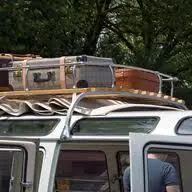
¿Está permitido transportar la carga que lleva en la baca ese turismo?
Is it allowed to carry the load that this car has on its roof rack?
- ASí, cuando no comprometa la estabilidad del vehículo.Yes, when it does not affect the vehicle's stability.
- BNo.No.
- CSí, pero sólo si no sobresale del vehículo.Yes, but only if it does not stick out beyond the vehicle.
ExplanationYou may carry a load on the roof rack as long as it is well secured, cannot fall or shift, and does not affect the vehicle's stability. The load may stick out at the rear within the legal limits, but its weight up high raises the centre of gravity, so you must drive more smoothly.
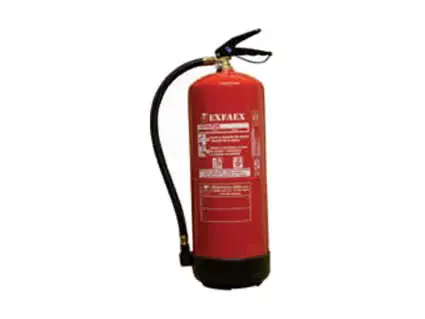
¿Dónde estarán situados los extintores de la cabina de un vehículo de mercancías peligrosas?
Where must the cab fire extinguishers of a dangerous goods vehicle be located?
- AEn cualquier lugar de la cabina.Anywhere in the cab.
- BEn un lugar de fácil acceso para el conductor y claramente señalizado.In a place that is easy for the driver to reach and clearly marked.
- CDebajo del asiento del conductor.Under the driver's seat.
ExplanationThe cab fire extinguisher of a dangerous goods vehicle must be in a place that is easy for the driver to reach and clearly marked. This lets the driver reach it quickly in an emergency and use it effectively to control a fire. Clear marking also helps to find the extinguisher quickly and exactly.
¿Puede la carga de un turismo sobresalir lateralmente?
May a car's load stick out at the sides?
- ANo, porque está prohibido.No, because it is prohibited.
- BSí, si llevo paneles indicándolo.Yes, if I have panels showing it.
- CSí, si no desestabiliza el vehículo.Yes, if it does not make the vehicle unstable.
ExplanationA load may never stick out at the sides or the front. It may stick out at the back, but only by a maximum of 15% of the vehicle's length if the load is indivisible. If the load is divisible, it may only stick out by 10% of the vehicle's total length.
Si en un turismo la carga sobresale por la parte posterior, ¿cómo deberá señalizarse?
If the load on a car sticks out at the back, how must it be marked?
- AEn los turismos no es necesario señalizar la carga.On cars the load does not need to be marked.
- BCon el panel reflectante V-20.With the V-20 reflective panel.
- CCon el panel reflectante V-20 y además con una luz de color rojo si es de noche.With the V-20 reflective panel and also a red light at night.
ExplanationWhen the load sticks out at the back, it must be marked with the V-20 panel. Also, at night or in conditions that reduce visibility, a red light must be used as well.
Si es Ud. propietario de un remolque ligero, ¿debe asegurarlo?
If you own a light trailer, must you insure it?
- ANo, porque lo remolques ligeros están exentos de esta obligación, ya que no son vehículos de motor.No, because light trailers are exempt from this obligation, as they are not motor vehicles.
- BNo, porque sólo deben asegurarse los remolques de masa máxima autorizada superior a 750 kilogramos.No, because only trailers with a maximum authorised mass over 750 kilograms must be insured.
- CSí, es obligatorio.Yes, it is compulsory.
ExplanationOnly trailers with a maximum authorised mass over 750 kilograms must be insured. Light trailers, whose maximum authorised mass is below this limit, do not need insurance.
¿Podrá un vehículo circular si su peso supera la MMA?
May a vehicle be driven if its weight exceeds its MAM?
- ASí, si es un turismo.Yes, if it is a car.
- BNo, en el caso de que sea un camión de más de 3500 kg.No, if it is a lorry of more than 3500 kg.
- CNo, ningún vehículo podrá circular con una masa en carga superior a su MMA.No, no vehicle may be driven with a laden mass above its MAM.
ExplanationNo vehicle may be driven with a weight above its MAM. In other words, the vehicle's unladen weight (tare) plus the maximum load must not exceed the MAM.
Un autobús o vehículo de transporte escolar detenido, del que pueden bajar niños:
A stationary bus or school transport vehicle from which children may get off:
- AObliga a extremar la precaución por si aparecen peatones.Requires extreme care in case pedestrians appear.
- BPuede adelantarse a gran velocidad.May be overtaken at high speed.
- CNo requiere ninguna precaución.Requires no precautions.
ExplanationA vehicle from which children may get off means you must slow down and pay extra attention.
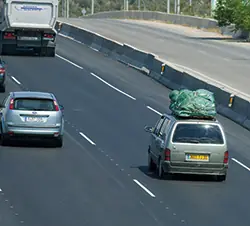
En un turismo, la carga puede sobresalir por su parte posterior...
On a car, the load may stick out at the back...
- AHasta un 5 por 100 de su longitud.By up to 5 per cent of its length.
- BHasta un 10 por 100 de su longitud y, si la carga fuera indivisible hasta un 15 por 100.By up to 10 per cent of its length and, if the load is indivisible, by up to 15 per cent.
- CNo está permitido que sobresalga la carga del vehículo.The load is not allowed to stick out of the vehicle.
ExplanationThe Regulations allow the load to stick out at the back by up to 10% of the vehicle's length and, if it is indivisible, by up to 15%, marked with the V-20 panel.
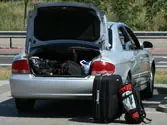
¿Dónde es preferible llevar la carga?
Where is it best to carry the load?
- AEn el maletero del vehículo.In the vehicle's boot.
- BEn la baca.On the roof rack.
- CDentro del habitáculo del vehículo.Inside the passenger compartment.
ExplanationThe boot is the part of the vehicle mainly intended for carrying luggage, packages and loads in general. It is safer because it is separate from the passenger compartment. Inside the passenger compartment, things can be thrown forward in sudden braking or a crash and injure the occupants. We will only use the roof rack when strictly necessary, because heavy and bulky objects on it can make the vehicle unstable and even make it roll over. It also increases fuel consumption, even without a load.
Durante el día, ¿cómo se señalizará la carga que sobresalga por delante en un camión?
During the day, how will a load that sticks out at the front of a lorry be marked?
- ACon una luz de color blanco.With a white light.
- BCon una luz de color rojo.With a red light.
- CNo es necesario señalizarlo.It does not need to be marked.
ExplanationDuring the day a load that sticks out at the front does not need to be marked; only at night or in adverse weather conditions.
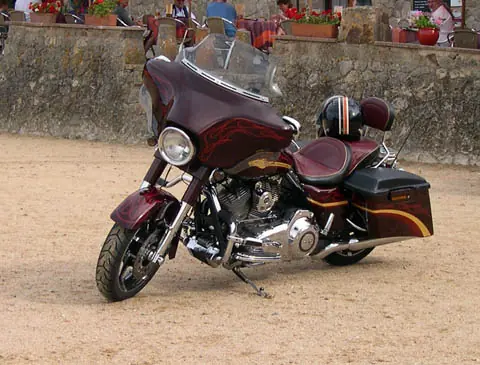
En un vehículo que mida menos de un metro de ancho, ¿cuánto puede sobresalir la carga que lleve por los lados?
In a vehicle less than one metre wide, how far may the load stick out at the sides?
- APuede sobresalir 40 centímetros.It may stick out 40 centimetres.
- BPuede sobresalir un 15 por ciento de la longitud de la carga.It may stick out by 15% of the length of the load.
- CPuede sobresalir 50 centímetros.It may stick out 50 centimetres.
ExplanationUnder Article 15 of the General Traffic Regulations (RGC), in vehicles less than one metre wide the load may stick out sideways up to 0.50 metres on each side of the vehicle's longitudinal axis. It must not stick out at the front at all, and at the rear by no more than 0.25 metres.
¿Se permite que un vehículo de tres ruedas arrastre un remolque?
Is a three-wheeled vehicle allowed to tow a trailer?
- ANo.No.
- BSí.Yes.
- CSí, cualquier tipo de remolque.Yes, any type of trailer.
ExplanationAccording to Article 12.3 of the General Traffic Regulations (as worded by RD 518/2026), motorcycles, three-wheeled vehicles and mopeds may tow a trailer or semi-trailer that does not exceed 50% of the towing vehicle's unladen mass. They must travel during the day and in conditions that do not reduce visibility, at a speed reduced by 10%, and without carrying people in the towed vehicle.
¿Le está permitido a un turismo llevar una carga, adecuada a sus características, que sobresalga de la estructura del vehículo?
May a car carry a load, suited to its characteristics, that sticks out beyond the vehicle's structure?
- ANo, en ningún caso puede sobresalir de la estructura del vehículo.No, it may never stick out beyond the vehicle's structure.
- BNo, porque a los turismos no se les permite llevar carga.No, because cars are not allowed to carry loads.
- CSí, por la parte posterior, hasta un 10 por ciento de su longitud y si la carga fuera indivisible hasta un 15 por ciento.Yes, at the rear, by up to 10 per cent of its length, and by up to 15 per cent if the load is indivisible.
ExplanationThis option is correct because the rules allow the load to stick out from the rear of the vehicle by up to 10% of its length. If the load is indivisible, it may stick out by up to 15%. This ensures that the load is carried safely and within the set limits.
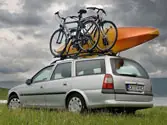
¿En un turismo cuánto puede sobresalir lateralmente la carga indivisible?
On a car, how far may an indivisible load stick out at the sides?
- A40 cm por cada lado sin sobrepasar los 2,55 metros de anchura total.40 cm on each side, without exceeding a total width of 2.55 metres.
- B0,25 m por cada lado desde el eje longitudinal.0.25 m on each side from the centre line.
- CNo podrá sobresalir nada.It may not stick out at all.
ExplanationThe load carried on cars may only stick out at the back, never at the sides or at the front. If we carry an indivisible load on a car, it may stick out at the back by up to 15% of the vehicle's length; if it is divisible, by up to 10%.
¿Pueden las motocicletas, los ciclomotores o los vehículos de tres ruedas remolcar un remolque o semirremolque?
May motorcycles, mopeds or three-wheeled vehicles tow a trailer or semi-trailer?
- ANo.No.
- BSí, siempre que se cumplan ciertos requisitos, por ejemplo que sea de día y la visibilidad no esté reducida.Yes, as long as certain conditions are met, for example that it is daytime and visibility is not reduced.
- CSí, y además pueden transportar personas en el remolque.Yes, and they may also carry people in the trailer.
ExplanationUnder Article 12.3 of the General Traffic Regulations, motorcycles, mopeds and three-wheeled vehicles may tow a trailer that does not exceed 50% of their unladen weight, only during the day and without reduced visibility, with their speed reduced by 10% and without carrying people in the trailer.
¿Se pueden llevar pasajeros en las motocicletas?
May passengers be carried on motorcycles?
- ASí, uno, siempre que lleve casco homologado.Yes, one, as long as they wear an approved helmet.
- BDepende de las plazas que tenga autorizadas el vehículo según la tarjeta de inspección técnica.It depends on the number of seats authorised for the vehicle according to its technical inspection card.
- CSí, tantos como puedan ir sentados cómodamente en la misma.Yes, as many as can sit comfortably on it.
ExplanationUnder Article 12.1 of the General Traffic Regulations, only one passenger may travel on a motorcycle in addition to the rider, and only if this is stated in the vehicle's documents, which show its authorised seats. That passenger must wear a helmet and sit astride behind the rider.
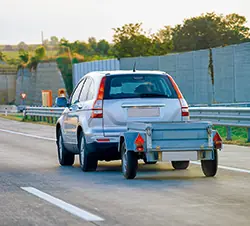
Circula con un turismo que arrastra un remolque de menos de 750 kg. de M.M.A. en el que transporta mercancías. En cuanto a la distribución de la carga, ¿debe tomar precauciones especiales?
You are driving a car towing a trailer with a maximum authorised mass (MAM) under 750 kg, in which you are carrying goods. Must you take special precautions about how the load is distributed?
- ASí, la carga debe estar bien distribuida e ir bien sujeta para evitar que se desplace y pueda llegar a desestabilizar al vehículo.Yes, the load must be well distributed and well secured so that it does not shift and destabilise the vehicle.
- BNo, salvo que supere la masa máxima autorizada del remolque.No, unless it exceeds the trailer's maximum authorised mass.
- CSí, debe situarse en la parte trasera del remolque para bajar el centro de gravedad y asegurar la estabilidad del vehículo.Yes, it must be placed at the back of the trailer to lower the centre of gravity and keep the vehicle stable.
ExplanationAny towed load must be well distributed and secured: if it shifts, it can destabilise the whole combination, especially on bends, when braking and during sudden manoeuvres.
En un vehículo de anchura inferior a un metro, ¿cuánto puede sobresalir lateralmente la carga?
In a vehicle less than one metre wide, how far may the load stick out at the sides?
- ANo puede sobresalir nada.Not at all.
- B25 centímetros por cada lado.25 centimetres on each side.
- C50 centímetros por cada lado.50 centimetres on each side.
ExplanationIn vehicles less than one metre wide, the load may stick out at most 50 centimetres on each side, measured from the vehicle's centre line.
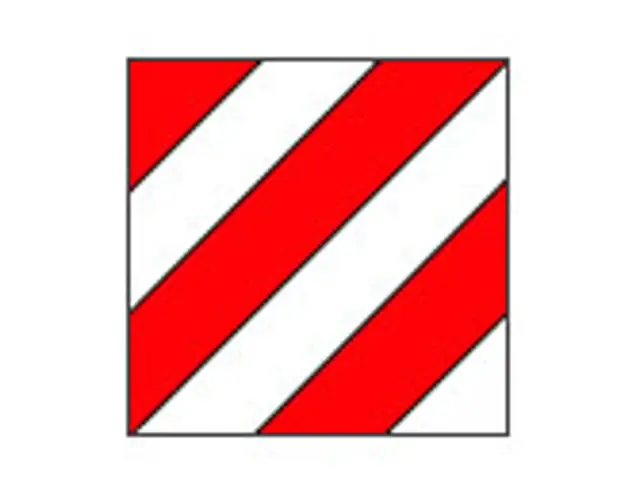
Cuando la carga sobresale de un vehículo, ¿es obligatorio señalizarla con el panel que se muestra en la imagen?
When a load sticks out of a vehicle, is it compulsory to signal it with the panel shown in the picture?
- ANo, excepto en los vehículos destinados al transporte de mercancías.No, except on vehicles used for carrying goods.
- BEs obligatorio solo si la carga sobresale por la parte trasera.It is compulsory only if the load sticks out at the back.
- CSí, para todo tipo de vehículos, pero solo cuando la carga sea indivisible.Yes, for all types of vehicle, but only when the load is indivisible.
ExplanationAccording to the General Traffic Regulations (RGC), a load that sticks out at the back of the vehicle must be signalled with the V-20 panel. This is required to prevent accidents and warn other drivers of a load that may extend beyond the outline of the vehicle, which can be a risk on the road. Specifically, the signal is needed so that other vehicles have enough information about the movement and size of the loaded vehicle, which helps road safety.
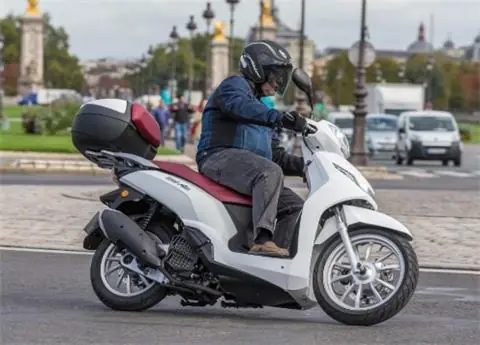
A cada lado de su eje longitudinal, ¿cuál es la longitud máxima que podrá sobresalir lateralmente la carga en un vehículo de anchura inferior a un metro?
On a vehicle less than one metre wide, what is the maximum distance the load may stick out sideways on each side of its centre line?
- A0,40 metros.0.40 metres.
- BUn 15 % de la longitud de la carga.15% of the length of the load.
- C0,50 metros.0.50 metres.
ExplanationAccording to Article 15 of the General Traffic Regulations, on vehicles less than one metre wide the load may not stick out sideways more than 0.50 metres on each side of the vehicle's centre line. In addition, it may not stick out at the front, nor more than 0.25 metres at the rear.
¿En un turismo podrá sobresalir lateralmente la carga?
On a car, may the load stick out at the sides?
- ASí, como máximo el 10% de la longitud de la carga.Yes, by up to 10% of the length of the load.
- BSí, como máximo el 15% de la longitud del vehículo.Yes, by up to 15% of the length of the vehicle.
- CNo.No.
ExplanationOn a car, the load may not stick out at the sides. When the load is divisible, it may stick out 10% at the back, or 15% when it is indivisible.
¿Puede un turismo llevar carga en la baca?
Can a car carry a load on the roof rack?
- ASí, siempre que no comprometa la estabilidad del vehículo.Yes, as long as it does not affect the vehicle's stability.
- BSí, pero sólo si circula de día.Yes, but only if it is driven during the day.
- CNo.No.
ExplanationIn Spain, the General Traffic Regulations (RGC) allow cars to carry a load on the roof rack as long as it does not affect the vehicle's stability. This is because a badly placed load can seriously affect the vehicle's handling and safety, increasing the risk of accidents. Under the rules, it is essential that the load does not stick out dangerously and does not block the driver's view.
¿Puede la carga sobresalir por los lados de una motocicleta?
May a load stick out at the sides of a motorcycle?
- ANo.No.
- BSí. Hasta 50 cm desde el eje longitudinal de la moto.Yes. Up to 50 cm from the motorcycle's centre line.
- CSí. Hasta 40 cm desde cada lado de la moto.Yes. Up to 40 cm beyond each side of the motorcycle.
ExplanationA motorcycle is less than one metre wide, and for such vehicles Article 15 of the General Traffic Regulations allows the load to stick out sideways up to 0.50 metres on each side of the vehicle's centre line. It may not stick out at the front, and at the rear by no more than 0.25 metres.
Al descargar mercancías de un vehículo, ¿está permitido depositarlas en la acera?
When unloading goods from a vehicle, is it allowed to put them on the pavement?
- ANo.No.
- BSí, siempre que no pasen peatones.Yes, as long as no pedestrians are passing.
- CNo, salvo que se señalice el lugar para evitar el peligro para los peatones.No, unless the place is marked to avoid danger to pedestrians.
ExplanationIt is prohibited to leave or put the load, or part of it, on the carriageway, the pavements or the hard shoulders.
¿Por qué lado del vehículo saldrán sus ocupantes?
On which side of the vehicle should its occupants get out?
- ASiempre por el lado derecho.Always on the right-hand side.
- BSiempre por el lado más próximo al centro de la calzada.Always on the side closest to the middle of the carriageway.
- CPor el lado más próximo al borde de la calzada.On the side closest to the edge of the carriageway.
ExplanationThe vehicle's occupants must get out on the side closest to the edge of the carriageway, usually the right-hand side. When the road is one-way and the vehicle is parked on the left-hand side, they must get out of the vehicle on the left-hand side.
¿En una motocicleta se podrá transportar a un menor de 9 años en algún caso?
Can a child under 9 ever be carried on a motorcycle?
- ANo, en ningún caso.No, never.
- BSí, siempre y cuando lleve un casco homologado.Yes, as long as they wear an approved helmet.
- CSí, cuando el conductor sea el padre, madre, tutor legal o mayor de edad autorizado.Yes, when the rider is their father, mother, legal guardian or an authorised adult.
ExplanationAs a general rule, children under 12 may not travel as passengers on a motorcycle, except when the rider is their father, mother, legal guardian or an authorised adult.
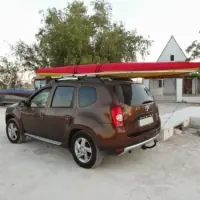
¿Está permitido que la carga de un turismo sobresalga por los lados?
Is a car's load allowed to stick out at the sides?
- ANo.No.
- BSí, cuando no comprometa la estabilidad del vehículo.Yes, when it does not affect the vehicle's stability.
- CSí, señalizada con un panel de franjas rojas y blancas.Yes, signalled with a panel with red and white stripes.
ExplanationWhen a load is carried in a car, it may not stick out at the sides or at the front of the vehicle; it may only stick out at the back. If the load is indivisible, it may stick out at the back of the car by up to 15% of the vehicle's total length. If, on the other hand, the load is divisible, it may only stick out by 10% of the car's total length.
En un camión de 9 metros de largo, ¿cuánto puede sobresalir la carga divisible por la parte posterior?
On a lorry 9 metres long, how far may a divisible load stick out at the rear?
- ANada.Not at all.
- B3 metros.3 metres.
- C2 metros.2 metres.
ExplanationOn vehicles intended for carrying goods, the load may stick out only when it is indivisible, such as beams or pipes (Article 15 of the General Traffic Regulations). If the load is divisible, it may not stick out at all: it must be spread out inside the vehicle.
De noche, ¿cómo debe señalizarse la carga que sobresale por delante y por detrás?
At night, how must a load that sticks out at the front and at the back be signalled?
- ASolo con el panel de franjas diagonales rojas y blancasOnly with the panel with red and white diagonal stripes.
- BCon una luz blanca delante, una luz roja detrás y el panel de franjas diagonales rojas y blancas.With a white light at the front, a red light at the back and the panel with red and white diagonal stripes.
- CCon un catadióptrico blanco delante y uno rojo detrás.With a white reflector at the front and a red one at the back.
ExplanationAccording to the General Traffic Regulations (RGC), a load sticking out at the front and back of a vehicle must be signalled with both lights and reflective panels. Specifically, a white light is required at the front and a red light at the back, as well as the panel with red and white diagonal stripes. This is essential for visibility and safety on the road, especially at night or in poor visibility, and is backed by the relevant article of the regulations.
Los pasajeros de un vehículo, que se encuentra inmovilizado por avería en una autovía, ¿tienen permitido circular por la calzada?
Are the passengers of a vehicle that has broken down and is immobilised on a dual carriageway (autovía) allowed to walk on the carriageway?
- ASí, si llevan chaleco reflectante.Yes, if they are wearing a reflective vest.
- BNo.No.
- CSí, siempre que lo hagan por el lado izquierdo.Yes, as long as they walk on the left-hand side.
ExplanationUnder Article 130 of the General Traffic Regulations, the occupants of an immobilised vehicle must get out on the side away from the traffic and must not walk or stay in the lanes or on the hard shoulders. Wearing a vest does not allow you to walk on the carriageway.
Si llevas una bicicleta en un portabicicletas trasero:
If you carry a bicycle on a rear bike rack:
- ANo necesitas señalización adicionalYou do not need any extra signalling
- BDebes señalizarla con un panel V-20 si sobresaleYou must mark it with a V-20 panel if it sticks out
- CPuede tapar la matrícula y las lucesIt may cover the number plate and the lights
ExplanationA load that sticks out at the rear must be marked with a V-20 panel (a square with red and white stripes). It must not cover the number plate or the lights; if it does, you need additional plates and lights.
¿Se podrá realizar la carga o descarga durante la noche de cualquier mercancía peligrosa de la Clase 1?
May any Class 1 dangerous goods be loaded or unloaded at night?
- ASí, en el caso de material de voladuras para canteras.Yes, in the case of blasting materials for quarries.
- BSí, en el caso de cartuchería y material pirotécnico y siempre que se cuente con la iluminación suficiente.Yes, in the case of cartridges and pyrotechnic material, as long as there is enough lighting.
- CSí, independientemente de las materias.Yes, whatever the substances.
ExplanationYes, in the case of cartridges and pyrotechnic material, as long as there is enough lighting. Transporting and handling Class 1 dangerous goods, such as cartridges and pyrotechnic material, needs extra precautions because they are explosive. So loading or unloading at night is allowed as long as there is suitable lighting to keep these operations safe.
En un vehículo de 5 metros, destinado al transporte de mercancías, una carga de longitud indivisible puede sobresalir...
On a 5-metre goods vehicle, a load of indivisible length may stick out...
- A15% de la longitud del vehículo.15% of the vehicle's length.
- B1/3 de la longitud del vehículo.1/3 of the vehicle's length.
- C2 metros por la parte anterior y 3 metros por la parte posterior.2 metres at the front and 3 metres at the rear.
ExplanationUnder Article 15 of the General Traffic Regulations, on goods vehicles 5 metres long or less, a load of indivisible length may stick out by one third of the vehicle's length at each end. The 2 and 3 metres apply to vehicles over 5 metres long.
¿Está permitido que las bicicletas circulen arrastrando un remolque o semirremolque?
Are bicycles allowed to tow a trailer or semi-trailer?
- ASí, para transportar personas, animales de hasta 15 kg o carga.Yes, to carry people, animals of up to 15 kg or goods.
- BÚnicamente podrán llevar un remolque si éste pesa menos de 50 kg de masa.Only if the trailer has a mass of less than 50 kg.
- CNo, está prohibido.No, it is forbidden.
ExplanationAccording to Article 154 of the General Traffic Regulations (as worded by RD 518/2026), bicycles may use trailers or semi-trailers that meet the technical specifications to carry people, animals of up to 15 kg or goods, with any restrictions set by the local authority; on roads outside built-up areas, only during the day and in conditions that do not reduce visibility. The rule of 50% of the unladen mass no longer applies to bicycles.
Si en su motocicleta va a transportar objetos pesados, ¿cuál será el lugar más adecuado?
If you are going to carry heavy items on your motorcycle, where is the most suitable place for them?
- AEn las maletas laterales.In the side panniers.
- BEn un portaequipajes colocado en la parte traseraOn a luggage rack fitted at the rear
- CEn un portaequipajes delantero, situado sobre el deposito de la gasolina.On a front luggage rack, placed over the fuel tank.
ExplanationHeavy items should go as low and as close to the motorcycle's centre of gravity as possible, so that they affect its stability as little as possible. Over the fuel tank they meet this condition better than in the side panniers or on a rear luggage rack, which move the weight away and take load off the front wheel.
La 'masa máxima autorizada' (MMA) de un vehículo:
A vehicle's 'maximum authorised mass' (MAM):
- AEs fijada por la Administración para su circulación y no puede superar la masa máxima técnicamente admisible.Is set by the authorities for its use on the road and cannot exceed the technically permissible maximum mass.
- BSiempre coincide con la tara del vehículo.Is always the same as the vehicle's unladen weight.
- CEs la carga que lleva en cada viaje.Is the load it carries on each journey.
ExplanationThe MAM is set by the authorities for driving on public roads and is equal to or less than the technically permissible maximum mass set at manufacture.
La masa en carga, ¿Incluye la masa del personal de servicio y de los pasajeros?
Does the laden mass include the mass of the service staff and the passengers?
- ADel personal de servicio sí, pero de los pasajeros no.Of the service staff, yes, but of the passengers, no.
- BNo.No.
- CSí.Yes.
ExplanationThe laden mass is the actual mass of the vehicle with everything it is carrying at that moment: the load, the driver, the service staff and the passengers. It must not exceed the maximum authorised mass.
¿Pueden las bicicletas llevar un remolque en su parte trasera?
May bicycles pull a trailer behind them?
- ANo, está prohibido.No, it is forbidden.
- BÚnicamente podrán llevar un remolque si éste pesa menos de 50 kg de masa.Only if the trailer has a mass of less than 50 kg.
- CSí, para transportar personas, animales de hasta 15 kg o carga.Yes, to carry people, animals of up to 15 kg or goods.
ExplanationAccording to Article 154 of the General Traffic Regulations (as worded by RD 518/2026), bicycles may use trailers or semi-trailers that meet the technical specifications to carry people, animals of up to 15 kg or goods, with any restrictions set by the local authority; on roads outside built-up areas, only during the day and in conditions that do not reduce visibility. The rule of 50% of the unladen mass no longer applies to bicycles.
Cuando sustituya un neumático, los índices de carga o velocidad deben ser...
When you replace a tyre, its load or speed ratings must be...
- AExactamente los que aparecen en la tarjeta ITV.Exactly those shown on the ITV card.
- BDe un valor igual o superior a los indicados por el fabricante.Equal to or higher than those specified by the manufacturer.
- CÚnicamente del valor homologado por el fabricante.Only the value approved by the manufacturer.
ExplanationWhen you change a tyre, its load and speed ratings must be equal to or higher than those specified by the manufacturer for that vehicle. If they are lower, the tyre may not be able to bear the weight or the speed.
All topics
- Definitions
- Documents and penalty points
- The driver's condition
- Duties of drivers and pedestrians
- Vehicle safety devices
- Vehicle controls and equipment
- Vehicle lights and horn
- Traffic signs, markings and signals
- The road and its lanes
- Speed and distances
- Manoeuvres
- Right of way
- Driving safely in difficult conditions
- Vehicle mechanics and maintenance
- Road accidents and first aid
- Defensive and eco-driving
Independent app: not affiliated with or endorsed by the DGT (Spain's Directorate-General for Traffic) or the Ministry of the Interior. The official exam is booked with the DGT and taken at its test centres. The questions here are practice material; the DGT's official question bank is not public.
Basado en datos de la Agencia Estatal Boletín Oficial del Estado (https://www.boe.es). Textos consolidados de carácter meramente informativo. La AEBOE no patrocina ni respalda este sitio.
Parte de las preguntas procede de los tests de la revista «Tráfico y Seguridad Vial» de la DGT, reproducidos con indicación de la fuente.