
DGT test · 626 questions
Road accidents and first aid · Page 11 of 13
What to do at a crash: protect, alert and help, basic first aid, and marking a stopped vehicle with the V-16 beacon.
Questions in this topic, with answers
626 questions, 50 per page, with the correct answer and the explanation. Page 11 of 13.
¿Qué tipo de accidente es más común en las motocicletas?
What type of accident is most common for motorcycles?
- AAccidente en solitario.Single-vehicle accidents.
- BColisiones entre 2 vehículos.Collisions between 2 vehicles.
- CAtropellos.Hitting pedestrians.
ExplanationHead-on, front-to-side and overtaking collisions are typical, accounting for almost 77% of motorcycle accidents.
Si un niño es atropellado, el mayor punto de impacto es ...
If a child is hit by a vehicle, the main point of impact is...
- ALa cabeza y otras partes vitales del cuerpo.The head and other vital parts of the body.
- BEl torso.The torso.
- CLas extremidades inferiores.The lower limbs.
ExplanationWhen a child is hit by a vehicle, the injuries can be more serious than for an adult because, being shorter, children take more of the impact on the vital areas of the body.
Los conductores de turismos deberán utilizar un chaleco reflectante de alta visibilidad, certificado, cuando salgan de éste y ocupen la calzada o el arcén...
Car drivers must wear a certified high-visibility reflective vest when they get out of the car and step onto the carriageway or hard shoulder...
- AEn vía interurbana, pero no es obligatorio entre el ocaso y la salida del sol.On roads outside built-up areas, but it is not compulsory between sunset and sunrise.
- BEn vía interurbana, tanto de día como de noche.On roads outside built-up areas, both by day and by night.
- CEn todo tipo de vías, sólo entre el ocaso y la salida del sol.On all types of road, only between sunset and sunrise.
ExplanationUnder Article 118 of the General Traffic Regulations, car drivers must put on the reflective vest when they get out of the vehicle and step onto the carriageway or hard shoulder of a road outside a built-up area, both by day and by night.
Los costes derivados de los accidentes de tráfico...
The costs of road traffic accidents...
- ARecaen en el conductor.Fall on the driver.
- BRecaen en la compañía aseguradora.Fall on the insurance company.
- CDirecta o indirectamente los asumen los ciudadanos.Are borne, directly or indirectly, by citizens.
ExplanationBesides the human cost, accidents have a large economic impact that all of us, as citizens, end up paying for directly or indirectly. The costs of road accidents amount to 2% of gross domestic product.
A un herido en un accidente que se encuentra inconsciente, ¿qué se le debe hacer primero?
What should you do first for an accident victim who is unconscious?
- ALlevarlo al hospital con mi vehículo.Take them to hospital in my vehicle.
- BDarle alguna bebida.Give them something to drink.
- CComprobar su respiración y su pulso.Check their breathing and pulse.
ExplanationIf, after a first check of the victim's consciousness, we find that they really are unconscious, we will find out whether they are breathing by putting our face close to their nose and watching their abdomen move. After that we will also check whether they have a pulse.
Presencia un accidente. ¿Está obligado a auxiliar o solicitar auxilio?
You witness an accident. Are you obliged to help or to call for help?
- ANo, porque no estoy implicado en el accidente.No, because I am not involved in the accident.
- BSólo en el caso de que soliciten mi ayuda.Only if they ask for my help.
- CSí, además debo colaborar para evitar otros daños o peligros.Yes, and I must also help to prevent further damage or danger.
ExplanationYes: you are obliged to help or to call for help after an accident. It is also important to help prevent further damage or danger, for example by signalling the accident scene or helping the people affected, as long as it is safe to do so.
En un accidente de motocicleta las lesiones más graves y frecuentes se localizan en…
In a motorcycle accident, the most serious and most frequent injuries are to…
- ALa cabeza.The head.
- BLa región torácica y abdominalThe chest and abdomen
- CLas extremidades inferiores.The legs.
ExplanationThe head is the most exposed part of the body in a motorcycle fall or collision and the one that suffers the most serious injuries, often fatal, because there is no bodywork to protect the rider. That is why an approved, properly fastened helmet is the rider's most important protection.
En situaciones de emergencia extrema, ¿cuándo está permitido usar un vehículo particular para llevar a un herido, según las normas de seguridad vial?
In an extreme emergency, when is it allowed to use a private vehicle to take an injured person to hospital, according to road safety rules?
- ASi el conductor tiene conocimientos médicos.If the driver has medical knowledge.
- BSi el conductor cree que puede llegar más rápido al hospital en su vehículo.If the driver thinks they can get to hospital faster in their vehicle.
- CCuando no sea posible solicitar ayuda sanitaria por ningún medio.When it is not possible to call for medical help by any means.
ExplanationThe correct option is the one about not being able to call for medical help by any means: moving an injured person in an emergency is allowed when medical help could not be called in any other way. According to the General Traffic Regulations, in exceptional emergency circumstances using private vehicles to transport injured people is justified, as no other means of assistance are available. This rule aims to ensure fast and effective care for the injured when effective emergency services are not available at that moment.
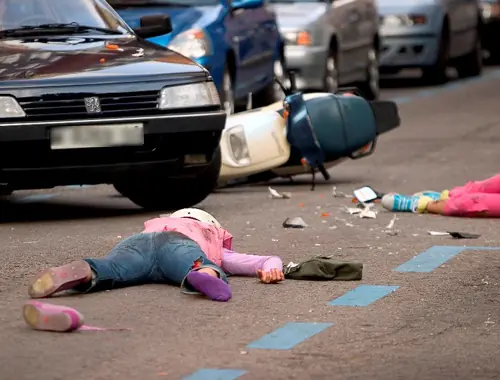
Los accidentes de tráfico en España son una de las principales causas de muerte. ¿A qué edad?
Road accidents are one of the main causes of death in Spain. In which age group?
- AEntre los 85 y los 89 años.Between 85 and 89.
- BEntre los 60 y los 64 años.Between 60 and 64.
- CEntre los 15 y los 19 años.Between 15 and 19.
ExplanationRoad accidents are one of the main causes of death among young people aged 15 to 19. Inexperience, overconfidence, speed and the use of alcohol or drugs increase the risk in this age group.
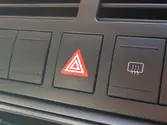
De día y con buena visibilidad, si su vehículo queda inmovilizado por una emergencia, además del dispositivo de preseñalización reglamentario debe encender...
By day and with good visibility, if your vehicle is immobilised by an emergency, in addition to the mandatory hazard warning device you must switch on...
- Alas luces de emergencia.the hazard warning lights.
- Blas luces de emergencia y las de posición.the hazard warning lights and the sidelights.
- Clas luces de emergencia, las de posición y las de corto alcance o cruce.the hazard warning lights, the sidelights and the dipped headlights.
ExplanationAccording to Article 130.4 of the General Traffic Regulations, an immobilised vehicle is signalled with the V-16 and the hazard warning lights; the sidelights are added only when appropriate, that is, at night, in poor visibility or inside a tunnel. By day and with good visibility, the hazard warning lights are enough.
Los niños suelen sufrir más atropellos porque...
Children are more often hit by vehicles because...
- Asu visión periférica es mayor.their peripheral vision is wider.
- Bsu campo visual es mayor.their field of vision is wider.
- Cdesconocen las normas y tienen un campo visual menor, entre otros motivos.they do not know the rules and have a narrower field of vision, among other reasons.
ExplanationAs pedestrians, children have a number of limitations: - Their field of vision is narrower. It can be up to 40% smaller than an adult's when they walk between parked vehicles. - Hearing problems. Under the age of 7 they cannot tell which direction a vehicle is coming from by its sound. - Poor control of their attention. - They do not know the rules. They do not know all the signs or how to behave correctly. For all these reasons it is very important to pay extra attention and take extra care around children.
El dispositivo de preseñalizacion de peligro lo situaremos ...
Where do we place the hazard warning device?
- AA 100 m de distancia del vehículo inmovilizado.100 m from the immobilised vehicle.
- BEn la parte más baja posible del vehículo inmovilizado.On the lowest possible part of the immobilised vehicle.
- CEn la parte más alta posible del vehículo inmovilizado garantizado su máxima visibilidadOn the highest possible part of the immobilised vehicle, ensuring maximum visibility.
ExplanationUnder Article 130.4 of the General Traffic Regulations, every driver must use the regulation hazard warning device. Since 1 January 2026 only the V-16 warning light is valid. It is amber and is placed on the highest possible part of the immobilised vehicle to ensure maximum visibility (Annex XI of the General Vehicle Regulations).
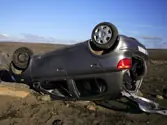
La Organización Mundial de la Salud (OMS) considera que la siniestralidad vial es un problema prioritario de salud pública...
The World Health Organization (WHO) considers road accidents to be a priority public health problem...
- Asólo en los países más desarrollados.only in the most developed countries.
- Ben todo el mundo.all over the world.
- Cen Europa, pero no en Estados Unidos ni Japón porque es muy baja.in Europe, but not in the United States or Japan, because rates there are very low.
ExplanationBecause of the high costs of road accidents, several international organisations, including the World Health Organization (WHO), consider road accidents a priority public health problem all over the world.
Si tiene que auxiliar a un herido en accidente de circulación que tiene quemaduras graves y extensas, ¿qué debe hacer?
If you have to help a road accident victim with serious and extensive burns, what should you do?
- ADarle un calmante para evitar el dolor.Give them a painkiller to relieve the pain.
- BSi es posible, cubrir las heridas con telas o apósitos limpios y mojados.If possible, cover the wounds with clean, wet cloths or dressings.
- CAplicar a las zonas quemadas abundante pomada.Apply plenty of ointment to the burnt areas.
ExplanationCovering the wounds with clean, wet cloths or dressings is correct because it helps protect the burns from infection and relieves the pain by keeping the area moist. This is especially important with serious burns, as it stops the skin drying out and the injury getting worse.
En general, ¿podemos evitar un accidente?
In general, can we avoid an accident?
- ANo, porque el factor humano es imprevisible.No, because the human factor is unpredictable.
- BSí, si nos anticipamos a las causas del accidente.Yes, if we anticipate the causes of the accident.
- CNo porque el factor vehículo no depende del conductor.No, because the vehicle factor does not depend on the driver.
ExplanationIn most cases the accident could have been avoided if the driver had acted differently.

Si tenemos que realizar insuflaciones boca a boca a un herido, ¿qué es lo primero que haremos?
If we have to give mouth-to-mouth rescue breaths to an injured person, what is the first thing we will do?
- AInspeccionar la boca en busca de cuerpos extraños.Check the mouth for foreign objects.
- BColocar al herido en posición de defensa.Place the injured person in the recovery position.
- CRealizar una tracción mandibular al herido.Perform a jaw thrust on the injured person.
ExplanationBefore giving mouth-to-mouth rescue breaths, the first thing we will do is check the injured person's mouth for foreign objects that could block the breaths or make them choke. We must also open the airway with the head tilt–chin lift manoeuvre (with one hand we lift the chin slightly and with the other we push the forehead back).
Si presencia un accidente de circulación en el que no está implicado, ¿debe auxiliar o solicitar auxilio para las víctimas?
If you witness a traffic accident in which you are not involved, must you help the victims or call for help for them?
- ANo.No.
- BSí, salvo que la ayuda esté ya organizada.Yes, unless help has already been organised.
- CSolo si alguna víctima se lo pide.Only if a victim asks you to.
ExplanationAnyone who witnesses an accident must help the victims or call for help for them. Under Article 129.3 of the General Traffic Regulations, a witness who is not involved is exempt only when their help is clearly not needed or when the authorities or their officers are already at the scene. Failing to help can be a criminal offence (failure to assist a person in danger).
Las personas mayores pueden sufrir más accidentes de circulación en situaciones...
Older people may have more road accidents in situations...
- Adonde hay tiempo suficiente para reaccionar.where there is enough time to react.
- Bque exigen una respuesta rápida.that require a quick response.
- Cla edad no influye en la accidentalidad.age has no effect on accident rates.
ExplanationIn general, older people lose some of their physical and mental abilities, with problems of vision, hearing, etc. This makes it harder for them to drive in complex situations that require quick action, such as joining and leaving high-speed roads.
¿Cómo podemos contener una hemorragia?
How can we control bleeding?
- AAplicando un torniquete en primer lugar.By applying a tourniquet first.
- BPresionando directamente la hemorragia.By pressing directly on the bleeding.
- CNo presionando la hemorragia.By not pressing on the bleeding.
ExplanationTo control bleeding, first press directly on the wound, if possible with gauze or a clean cloth, and do not remove it even if it gets soaked. Second, if the bleeding does not stop, raise the injured limb. Third, if that is not enough, press on the artery that supplies the wound, at a point before the wound. As a last resort, a tourniquet could be applied above the bleeding.
En un accidente hay heridos muy graves, ¿se debe modificar el estado de las cosas y de las huellas u otras pruebas que puedan ser útiles para determinar la responsabilidad?
In an accident with very seriously injured people, should the state of things and the marks or other evidence that could help establish responsibility be changed?
- ASí, para desalojar la calzada cuanto antes y restablecer la normalidad y fluidez de la circulación.Yes, to clear the carriageway as soon as possible and get traffic back to normal and flowing.
- BNo, salvo que lo pida alguno de los conductores implicados.No, unless one of the drivers involved asks for it.
- CNo, excepto que con ello se perjudique la seguridad de los heridos o de la circulación.No, unless not doing so would put the safety of the injured or of traffic at risk.
ExplanationIf an accident has caused deaths or serious injuries, those involved must avoid changing the state of things and the marks or evidence that could help establish responsibility, unless this would put the safety of the injured or of traffic at risk (Article 129.2 of the General Traffic Regulations).
Para la prestación de auxilio en un accidente, debemos...
To give help at an accident, we must...
- AEstacionar en lugar seguro y alejado del accidente.Park in a safe place, away from the accident.
- BSituar los triángulos lo más cerca posible del accidente.Place the triangles as close to the accident as possible.
- CEsperar mientras llegan los servicios de urgencia.Wait while the emergency services arrive.
ExplanationThe correct answer is “Park in a safe place, away from the accident”, because the first thing to do when you witness an accident is to protect yourself. By parking in a safe place away from the accident, we make sure we are not at risk and do not become another victim. Also, by keeping away from the accident we make it easier for the emergency services to get there and avoid blocking traffic.
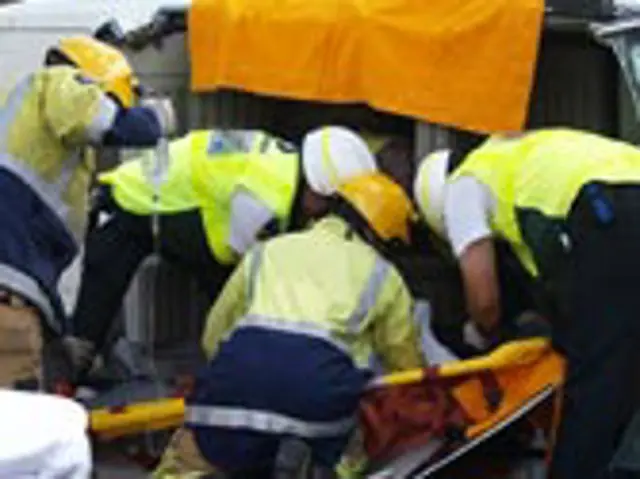
Si presencia un accidente en el que no está implicado y es evidente que su ayuda no es necesaria, ¿debe detenerse?
If you witness an accident in which you are not involved and it is clear that your help is not needed, must you stop?
- ASí, debe detenerse y colaborar siempre.Yes, you must always stop and help.
- BNo, debe continuar su marcha.No, you must carry on.
- CSolo si ocurre fuera de poblado y no hay ningún poste SOS cerca.Only if it happens outside a built-up area and there is no SOS post nearby.
ExplanationAnyone who witnesses an accident without being involved must help, unless their help is clearly not needed or the police are already there (Article 129.3 of the General Traffic Regulations (RGC)). If it is clearly not needed, you must carry on without getting in the way.
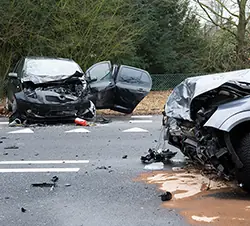
En caso de estar implicado en un accidente, ¿debe detenerse para ayudar a restablecer la seguridad de la circulación?
If you are involved in an accident, must you stop to help restore road safety?
- ANo, esa tarea corresponde a la policía de tráfico.No, that is the traffic police's job.
- BSí, en la medida de lo posible.Yes, as far as possible.
- CSolo si hay fallecidos o heridos graves.Only if there are deaths or serious injuries.
ExplanationEveryone involved in an accident must stop and help, as far as possible, to restore road safety: signalling the danger, moving obstacles and helping the victims. This is not only the job of the police.
¿En qué tipo de vía ocurren más accidentes mortales con motocicletas?
On which type of road do most fatal motorcycle accidents happen?
- AEn vías urbanas.On roads in built-up areas.
- BEn intersecciones.At junctions.
- CEn vías interurbanas.On roads outside built-up areas.
ExplanationMost fatal motorcyclist accidents happen on roads outside built-up areas because of the high speeds and the road conditions, such as bends and poor road surfaces. According to the 2022 road accident report, 66% of motorcyclists involved in fatal crashes were on roads outside built-up areas, which shows how important training and following the traffic rules are to reduce these risks.
¿Qué personas incurren en el delito de omisión de socorro?
Who commits the offence of failing to help (omisión de socorro)?
- ALas que piden auxilio cuando no pueden prestarlo.Those who call for help when they cannot give it themselves.
- BLas que no se detienen ante un accidente en el que la ayuda no está organizada.Those who do not stop at an accident where help has not been organised.
- CLas que no ayudan a las víctimas por correr riesgo propio.Those who do not help the victims because doing so would put themselves at risk.
ExplanationThe Criminal Code punishes anyone who does not help a person who is helpless and in obvious and serious danger when they could do so without risk to themselves or others. So a person who does not stop at an accident where help has not yet been organised commits the offence of failing to help; someone who cannot help must call for help.
Si estamos implicados en un accidente con heridos, después de proteger y avisar, ¿qué tendremos que hacer?
If we are involved in an accident with injured people, what must we do after protecting and alerting?
- ANo mover a los heridos hasta que llegue un servicio de urgencias y no modificar el estado de las cosas.Not move the injured until an emergency service arrives, and not change the state of things.
- BTrasladar rápidamente a los heridos al hospital más cercano.Quickly take the injured to the nearest hospital.
- CRealizar un masaje cardiaco de 2 ventilaciones por 30 compresiones.Give cardiac massage at 2 breaths per 30 compressions.
ExplanationIn an accident we must not change the position of the victims or the vehicles, except when not doing so would be dangerous for the injured or for traffic. If you do not have basic first-aid knowledge and there is no risk to the victims, it is best not to handle them, to avoid more serious harm such as spinal cord injuries.
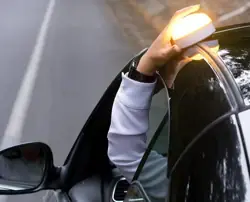
¿Dónde colocaremos el dispositivo de preseñalización de peligro?
Where will we place the hazard warning device?
- AEn la parte más alta posible del vehículo inmovilizado garantizado su máxima visibilidadOn the highest possible part of the immobilised vehicle, ensuring maximum visibility.
- BA 100 metros del vehículo inmovilizado.100 metres from the immobilised vehicle.
- CA 150 metros del vehículo inmovilizado.150 metres from the immobilised vehicle.
ExplanationThe V-16 hazard warning device is a type-approved amber flashing light with geolocation, powered by its own battery. It must be placed on the highest part of the immobilised vehicle to ensure maximum visibility. At present the V-16 is the only legal option for signalling an immobilised vehicle or an obstacle on the road; warning triangles are no longer used.
En un accidente de circulación, ¿se deben tapar a los heridos?
In a road accident, should the injured be covered?
- ASí, como norma general, evitando que suden.Yes, as a general rule, but without making them sweat.
- BSólo en invierno.Only in winter.
- CSólo en verano.Only in summer.
ExplanationAs a general rule, the injured should be covered so that they do not lose body heat, because cold makes shock worse. This should be done without making them sweat, whether it is winter or summer.
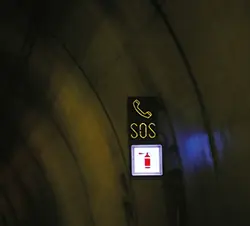
En caso de producirse un incendio en el interior de un túnel, ¿qué medida de seguridad, entre otras, adoptará el conductor?
If a fire breaks out inside a tunnel, what safety measure, among others, will the driver take?
- AApartará su vehículo a la derecha para dejar paso a los servicios de emergencia.Move the vehicle to the right to let the emergency services through.
- BApagará el motor del vehículo y permanecerá en su interior.Switch off the engine and stay inside the vehicle.
- CDejará arrancado el motor de su vehículo y abandonará el túnel.Leave the engine running and leave the tunnel.
ExplanationUnder Article 97 of the General Traffic Regulations, if there is a fire in a tunnel you must move the vehicle as far to the right as possible so as not to block the emergency services, switch off the engine leaving the key in the ignition and the doors open, and leave the vehicle, heading for the nearest shelter or exit. Staying inside is a serious mistake.
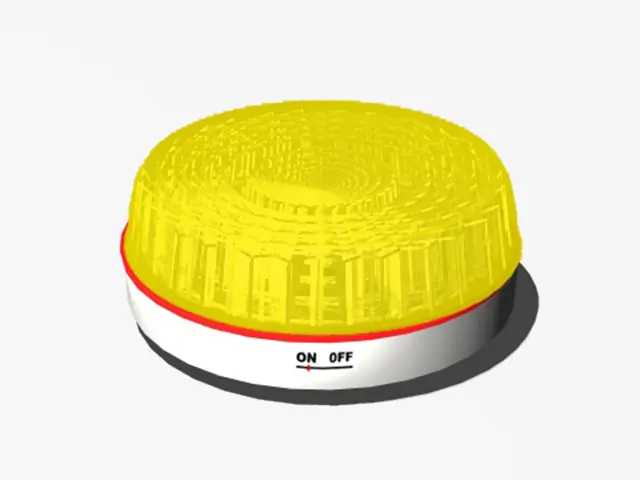
Cuando tienes una avería, ¿dónde debes colocar la luz V-16 para señalizar el peligro?
When you break down, where should you place the V-16 light to signal the danger?
- AEn la puerta del conductor, a la altura del espejo retrovisor.On the driver's door, at the height of the rear-view mirror.
- BEn la parte más alta posible del vehículo para que se vea muy bien.On the highest possible part of the vehicle, so that it can be seen clearly.
- CEn la parte de atrás del vehículo, justo encima de la luz de emergencia.At the back of the vehicle, just above the hazard warning light.
ExplanationSince 1 January 2026 the V-16 beacon has replaced warning triangles. It is placed on the highest possible part of the vehicle, usually the roof, so that it can be seen from far away. It can be put in place without getting out of the car, so you do not have to walk on the carriageway.
¿En qué tanto por ciento de los accidentes en vía interurbana con víctimas, la velocidad es inadecuada o excesiva?
In what percentage of accidents with casualties on roads outside built-up areas is speed inappropriate or excessive?
- AEn un tercio de los accidentesIn one third of accidents.
- BEn el 85% de los accidentesIn 85% of accidents.
- CEn el 10% de los accidentesIn 10% of accidents.
ExplanationInappropriate speed is present in one third of fatal road accidents in Spain, because driving at an inappropriate speed has a negative effect on things such as the safe distance, the field of vision, the driver's mental workload and the stability of the vehicle.
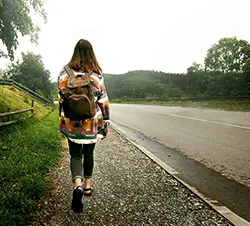
En vías interurbanas, ¿cuál es la infracción más habitual que cometen los peatones víctimas de atropello?
On roads outside built-up areas, what is the most common offence committed by pedestrians who are hit by vehicles?
- ANo respetar los semáforos.Not obeying traffic lights.
- BEstar o marchar por la calzada de forma antirreglamentaria.Standing or walking on the carriageway against the rules.
- CNo obedecer las señales de los agentes.Not obeying the signals of traffic officers.
ExplanationOn roads outside built-up areas, the most common offence of pedestrians who are hit by vehicles is standing or walking on the carriageway against the rules, instead of using the hard shoulder or crossing at safe places.
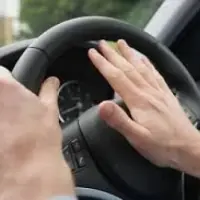
¿Cuál es el funcionamiento correcto de los avisadores acústicos?
How should horns work?
- ASonido largo y prolongado en el tiempo, al menos 10 segundos.A long sound lasting at least 10 seconds.
- BSonido continuo y uniforme.A continuous, uniform sound.
- CNo se deben utilizar los avisadores acústicos excepto en caso de accidente.Horns must not be used except in the event of an accident.
ExplanationUnder Article 11.7 of the General Vehicle Regulations (Reglamento General de Vehículos), every motor vehicle must have a horn that produces a continuous, uniform sound of sufficient intensity. Its use is limited: to avoid an accident or, outside built-up areas, to warn that you are overtaking; never without reason or excessively.
¿En qué situaciones pueden tener más accidentes las personas mayores?
In what situations may older people have more accidents?
- ACuando hay tiempo suficiente para reaccionar.When there is enough time to react.
- BEn situaciones complejas que exigen respuestas rápidas.In complex situations that require quick responses.
- CLas personas mayores tienen menos accidentes porque tienen más experiencia.Older people have fewer accidents because they are more experienced.
ExplanationOlder people may have more accidents in complex situations that require quick responses, especially at junctions and when joining traffic. On the other hand, when there is enough time to react, they have the same problems as younger people.
¿Cuándo se sufren más accidentes por distracción?
When do more accidents caused by distraction happen?
- AEn invierno y de noche.In winter and at night.
- BEn verano y de día.In summer and during the day.
- CEn primavera y de noche.In spring and at night.
ExplanationDistractions are more common in the summer months, on leisure trips at weekends and during the day.
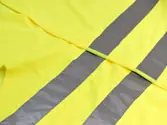
El chaleco obligatorio de alta visibilidad se usará...
The compulsory high-visibility vest must be worn...
- ASiempre que el conductor salga del vehículo.Whenever the driver gets out of the vehicle.
- BSiempre que el conductor salga del vehículo y ocupe la calzada o el arcén en vías interurbanas.Whenever the driver gets out of the vehicle and steps onto the carriageway or hard shoulder of a road outside a built-up area.
- CSiempre que el vehículo tenga una avería.Whenever the vehicle breaks down.
ExplanationThe compulsory high-visibility vest must be worn when the driver gets out of the vehicle and steps onto the carriageway or hard shoulder of a road outside a built-up area.
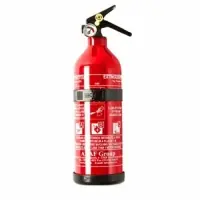
¿Es obligatorio llevar un extintor como equipamiento de un automóvil que circula en servicio particular?
Is a fire extinguisher compulsory equipment for a motor car in private use?
- ANo, si se trata de un turismo o de una motocicleta.No, if it is a car or a motorcycle.
- BNo, sólo lo llevan los autobuses.No, only buses carry one.
- CSí, todos los vehículos deben llevarlo.Yes, all vehicles must carry one.
ExplanationOnly buses, combinations of non-special vehicles, dual-purpose (mixed) vehicles and motor vehicles with a MAM over 3,500 kg must carry an approved fire extinguisher. So cars and motorcycles do not have to carry one. Cars, dual-purpose vehicles and goods vehicles with a MAM of no more than 3,500 kg, except three-wheeled vehicles and quadricycles, must carry: a hazard warning device (an amber device with geolocation, powered by its own battery, placed on the highest possible part of the immobilised vehicle to ensure maximum visibility); a reflective vest; and a spare wheel or temporary-use wheel with the tools needed to change wheels, or an alternative system that gives sufficient guarantees of mobility.
¿Cuál es la principal característica del número 112 como teléfono de emergencias?
What is the main feature of 112 as an emergency number?
- AEs de pagoYou have to pay to call it.
- BEs gratuitoIt is free.
- CNo está habilitado para atender accidentes de tráficoIt does not handle road accidents.
Explanation112 is the single number for helping the public in any type of emergency, including road accidents. It is a free, fixed number.
Una vez protegidos el lugar del accidente y las víctimas, y tras alertar a los servicios de emergencias, ¿qué se debe hacer hasta la llegada de la ayuda sanitaria?
Once the accident scene and the victims have been protected and the emergency services alerted, what should you do until medical help arrives?
- ASalir al encuentro de la ambulancia para guiarla hasta el lugar del siniestro.Go to meet the ambulance and guide it to the accident scene.
- BSi se sabe cómo, actuar sobre los heridos para estabilizarlos y mantener sus constantes vitales.If you know how, help the injured to stabilise them and maintain their vital signs.
- CEsperar lejos de los heridos sin hacer nada.Wait away from the injured and do nothing.
ExplanationMedical help is essential to assess the condition of the injured and take them to hospital if necessary. However, while waiting for it to arrive, it is important to help the injured, if you know how, to stabilise them and maintain their vital signs. This is part of the chain of care, in which everyone helping an accident victim has an important role. So if you have the knowledge and skills to help the injured safely, it is advisable to do so until medical help arrives.
Para recordar las pautas básicas de actuación en un accidente se utiliza la regla PAS. Estas siglas significan...
To remember the basic steps to take at an accident, the PAS rule is used. These letters stand for...
- Aproteger, alertar y socorrer.protect, alert and help (proteger, alertar y socorrer).
- Bprevenir, atender y servir.prevent, attend and serve (prevenir, atender y servir).
- Cprecaución, atención y seguridad.precaution, attention and safety (precaución, atención y seguridad).
ExplanationThe basic procedure at an accident follows the PAS rule (protect, alert, help; in Spanish proteger, avisar, socorrer): 1. Protect: take protective measures, both for ourselves and for other road users. 2. Alert: call 112 or the police. 3. Help the accident victims as far as possible.
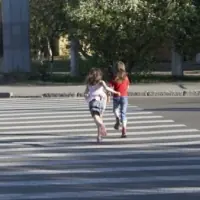
En el ámbito del tráfico, ¿a qué se llama grupos vulnerables?
In traffic, what are “vulnerable groups”?
- AA los jóvenes menores de 30 años que resultan heridos en un accidente.Young people under 30 who are injured in an accident.
- BA los grupos de población más propensos a sufrir un accidente.The population groups most likely to have an accident.
- CA los pasajeros que resultan heridos en un accidente de automóvil.Passengers injured in a car accident.
ExplanationTraffic is a complex system in which all of us have some risk of having an accident. However, the chance of having an accident is not the same for everyone: some groups of people are more likely to be involved in road accidents or are much more sensitive to their harmful consequences. These are the so-called vulnerable groups. They include young drivers, older drivers, moped and motorcycle riders, cyclists and pedestrians (also older people and children).
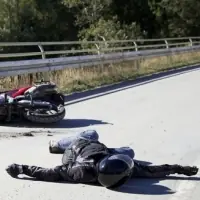
¿Qué partes del cuerpo son especialmente vulnerable en los accidentes de motocicleta?
Which parts of the body are especially vulnerable in motorcycle accidents?
- ALos brazos.The arms.
- BLa cabeza y la cara.The head and face.
- CLas piernas.The legs.
ExplanationIn a motorcycle accident there is no bodywork to protect the rider, and blows to the head and face cause the most serious and often fatal injuries. That is why helmets are compulsory, and a full-face helmet, which also covers the face, is the safest.
¿A qué hora del día se producen más accidentes?
At what time of day do most accidents happen?
- APor la mañana al ir a trabajar.In the morning, on the way to work.
- BAl mediodía después de comer.At midday, after lunch.
- CPor la tarde al finalizar la jornada diaria.In the late afternoon, at the end of the working day.
ExplanationMost road accidents happen during holiday periods, at weekends and on public holidays, and, on working days, in the late afternoon at the end of the working day.
Los conductores jóvenes ¿tienen más accidentes mortales que el resto de conductores?
Do young drivers have more fatal accidents than other drivers?
- ANo, tienen los mismos que los demás conductores.No, they have the same number as other drivers.
- BSí.Yes.
- CNo, tienen menos accidentes que la media porque poseen más reflejos.No, they have fewer accidents than average because they have quicker reflexes.
ExplanationYoung drivers have more accidents than the average driver. Drivers under 30 make up 25% of all drivers, yet this age group is involved in 35% of fatal accidents.
Llamamos grupos vulnerables a...
“Vulnerable groups” are...
- Adeterminados grupos de personas que sufren con mayor frecuencia los efectos negativos del tráfico.certain groups of people who suffer the negative effects of traffic more often.
- Blos pasajeros que resultan heridos en un accidente de tráfico.passengers who are injured in a road accident.
- Clos niños y las personas mayores, exclusivamente.only children and older people.
ExplanationIn traffic, we do not all have the same probability of having an accident. Some population groups, because of their characteristics, are more likely to have an accident, and so they are called vulnerable groups. These groups include young drivers, moped and motorcycle riders, cyclists, pedestrians, older people both as drivers and as pedestrians, and children.
¿Es obligatorio el chaleco reflectante al salir del vehículo en carretera?
Is the reflective vest compulsory when you get out of the vehicle on the road?
- ASolo de nocheOnly at night.
- BSí, siempre en vías interurbanasYes, always on roads outside built-up areas.
- CSolo si hay accidenteOnly if there has been an accident.
ExplanationThe high-visibility reflective vest is compulsory when you get out of the vehicle and step onto the carriageway on roads outside built-up areas.
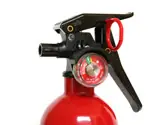
¿Llevar un extintor de incendios es obligatorio para que un turismo pueda circular?
Is carrying a fire extinguisher compulsory for a car to be driven on the road?
- ASí.Yes.
- BNo.No.
- CSí, si circula por autopistas o autovías.Yes, if it is driven on motorways (autopistas) or dual carriageways (autovías).
ExplanationIt is not compulsory to carry a fire extinguisher in your car, but it is recommended.
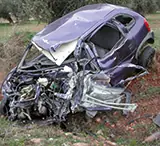
Si presencia un accidente con víctimas y no ha llegado ayuda, ¿debe detenerse para prestar auxilio?
If you witness an accident with casualties and help has not arrived, must you stop to help?
- ANo, puesto que puedo provocar otro accidente.No, because I might cause another accident.
- BSí.Yes.
- CNo, pero llamaré inmediatamente a los servicios policiales y de urgencia.No, but I will immediately call the police and emergency services.
ExplanationThere is a legal duty to help: if help has not arrived, you must stop and help the victims as far as possible, as well as call the emergency services. Not stopping may be the criminal offence of failing to help a person in danger.
En caso de accidente, ¿quién tiene más probabilidades de morir o de resultar herido?
In an accident, who is most likely to be killed or injured?
- ALos conductores de vehículos pesados.Drivers of heavy vehicles.
- BLos conductores de motocicletas, ciclomotores y bicicletas.Riders of motorcycles, mopeds and bicycles.
- CLos conductores de turismos.Drivers of cars.
ExplanationMotorcycle, moped and bicycle riders have no bodywork or passenger compartment to protect them, so in a collision or a fall their body takes the impact directly. That is why, in the same accident, they are much more likely to be killed or injured than people in cars or heavy vehicles.
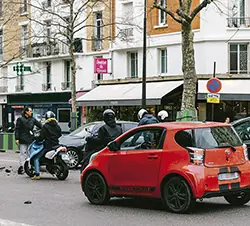
¿Cómo debe comportarse el conductor de un turismo, sobre todo en vías urbanas, para evitar un accidente con una motocicleta o un ciclomotor?
How should a car driver behave, especially in built-up areas, to avoid an accident with a motorcycle or moped?
- ADebe circular en paralelo y lo más cerca posible de los vehículos de dos ruedas.They should drive alongside two-wheeled vehicles, as close to them as possible.
- BDebe mirar por los retrovisores con frecuencia.They should check the mirrors often.
- CDebe reducir o incluso eliminar la distancia de seguridad.They should reduce or even eliminate the safe distance.
ExplanationMotorcycles and mopeds are easily hidden in blind spots. Checking the mirrors often, especially in town, lets you spot them in time before changing lane or turning.
All topics
- Definitions
- Documents and penalty points
- The driver's condition
- Duties of drivers and pedestrians
- Vehicle safety devices
- Vehicle controls and equipment
- Vehicle lights and horn
- Traffic signs, markings and signals
- The road and its lanes
- Speed and distances
- Manoeuvres
- Right of way
- Carrying passengers and loads
- Driving safely in difficult conditions
- Vehicle mechanics and maintenance
- Defensive and eco-driving
Independent app: not affiliated with or endorsed by the DGT (Spain's Directorate-General for Traffic) or the Ministry of the Interior. The official exam is booked with the DGT and taken at its test centres. The questions here are practice material; the DGT's official question bank is not public.
Basado en datos de la Agencia Estatal Boletín Oficial del Estado (https://www.boe.es). Textos consolidados de carácter meramente informativo. La AEBOE no patrocina ni respalda este sitio.
Parte de las preguntas procede de los tests de la revista «Tráfico y Seguridad Vial» de la DGT, reproducidos con indicación de la fuente.