
DGT test · 626 questions
Road accidents and first aid · Page 3 of 13
What to do at a crash: protect, alert and help, basic first aid, and marking a stopped vehicle with the V-16 beacon.
Questions in this topic, with answers
626 questions, 50 per page, with the correct answer and the explanation. Page 3 of 13.
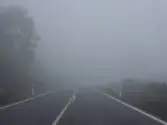
Si se ve implicado en un accidente de tráfico con posibilidad de muertes o heridos graves, ¿qué actuaciones, entre otras, debe llevar a cabo tanto como sea posible?
If you are involved in a road accident where people may be killed or seriously injured, what actions, among others, must you take as far as possible?
- ADetenerse, borrar las huellas del accidente y cambiar de sitio a los heridos y vehículos.Stop, remove the traces of the accident and move the injured and the vehicles.
- BContinuar circulando, sin prestar ayuda a las víctimas ni avisar a la autoridad.Keep driving, without helping the victims or alerting the authorities.
- CDetener al vehículo sin crear peligro, avisar a la autoridad o a sus agentes y auxiliar a los heridos.Stop the vehicle without creating danger, alert the authorities or their officers, and help the injured.
ExplanationIf you are involved in an accident with possible serious injuries or deaths, first stop the vehicle safely, without creating new risks for traffic. Then immediately alert the authorities or their officers (police, emergency services) and help the injured, as far as you can and without making the situation worse.
¿Qué actuación se debe seguir en caso de accidente de tráfico?
What should you do in the event of a road accident?
- AAvisar, proteger y socorrer.Alert, protect and help.
- BProteger, avisar y socorrer.Protect, alert and help.
- CSocorrer, proteger y avisar.Help, protect and alert.
ExplanationThe basic action at an accident follows the PAS rule (protect, alert, help; in Spanish proteger, avisar, socorrer): 1. Protect: take protective measures for yourself and for other road users. 2. Alert: call 112 or the police. 3. Help the injured as far as possible.
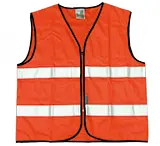
¿Cuándo hay que ponerse el chaleco reflectante?
When must you put on the reflective vest?
- AEs indiferente.It makes no difference.
- BAntes de salir del vehículo.Before getting out of the vehicle.
- CDespués de salir del vehículo.After getting out of the vehicle.
ExplanationPut on the reflective vest before getting out of the vehicle, so that you are visible from the moment you step onto the carriageway or hard shoulder of a road outside a built-up area. That is why it should be within reach, not in the boot.
Las heridas más frecuentes y más graves en un accidente de circulación se localizan en …
The most frequent and most serious injuries in a road accident are to…
- ALas extremidades inferiores.the lower limbs.
- BLa columna vertebral.the spine.
- CLa región cráneo-encefálica.the skull and brain.
ExplanationIn road accidents, the most frequent and serious injuries are to the head (the skull and brain), caused by hitting the inside of the vehicle or the ground. That is why the seat belt, head restraint and helmet are so important.
¿Puede el conductor evitar un accidente por el estado del vehículo?
Can the driver prevent an accident caused by the condition of the vehicle?
- ANo, porque el conductor es responsable del mantenimiento del vehículo.No, because the driver is responsible for maintaining the vehicle.
- BNo, una avería mecánica no siempre se puede prever y a veces es inevitable.No, a mechanical failure cannot always be foreseen and is sometimes unavoidable.
- CSí, en cierta medida, porque el estado del vehículo depende en parte del conductor.Yes, to some extent, because the vehicle's condition depends partly on the driver.
ExplanationMany faults that cause accidents, such as worn tyres or brakes in poor condition, can be prevented with good maintenance and by passing the vehicle inspection (ITV). As the vehicle's condition depends partly on the driver, the driver can to some extent prevent accidents caused by mechanical failures.
Respecto al tipo de vía, las que parecen presentar un menor riesgo de accidente son:
By type of road, the roads that seem to have the lowest risk of accidents are:
- ALas carreteras convencionales.Conventional roads.
- BLas travesías.Travesías (stretches of road through a town).
- CLas autopistas y autovías.Motorways (autopistas) and dual carriageways (autovías).
ExplanationMotorways and dual carriageways are considered the safest roads for several reasons. First, the two directions are separated by central reservations, so it is very hard to hit a vehicle coming the other way. They have no difficult bends, and they have several very wide lanes in each direction, which makes traffic flow easier and reduces the risk of collisions. They also have no junctions, which reduces accidents caused by crossing manoeuvres. Finally, the maximum speed on motorways and dual carriageways for cars and motorcycles is 120 km/h, which allows smoother and safer traffic.
Cuando se atiende a un herido en accidente de circulación, lo que primero que se debe averiguar es:
When helping a person injured in a road accident, the first thing to find out is:
- ASi el herido tiene pulso en el brazo.Whether the injured person has a pulse in the arm.
- BSi está consciente o inconsciente.Whether they are conscious or unconscious.
- CSi sufre hemorragias.Whether they are bleeding.
ExplanationFinding out whether the injured person is conscious or unconscious is the most important first step. It lets you assess their general condition and quickly decide what help they need. If they are conscious, they can answer questions and help you understand their situation. If they are unconscious, emergency measures must be taken immediately.
Las circunstancias de la vía y su entorno, ¿pueden considerarse factores de riesgo?
Can the conditions of the road and its surroundings be considered risk factors?
- ANo, los factores de riesgo solo dependen del conductor.No. Risk factors depend only on the driver.
- BSí.Yes.
- CSí y son los únicos factores de riesgo que existen.Yes, and they are the only risk factors that exist.
ExplanationCertain circumstances of the vehicle, the road and its surroundings, and above all the driver, make an accident more likely. These are called risk factors. By avoiding them we reduce the chance of having an accident.
Si se ve implicado en un accidente de tráfico con riesgo de muerte o lesiones graves, ¿qué debe hacer, entre otras cosas, en la medida de lo posible?
If you are involved in a road accident with a risk of death or serious injury, what must you do, among other things, as far as possible?
- ASeguir circulando sin ayudar a las víctimas ni avisar a las autoridades.Keep driving without helping the victims or alerting the authorities.
- BDetener el vehículo sin crear peligro, avisar a la autoridad o sus agentes y auxiliar a los heridos.Stop the vehicle without creating danger, alert the authorities or their officers, and help the injured.
- CDetenerse, borrar las huellas del accidente y mover a los heridos y los vehículos.Stop, remove the traces of the accident and move the injured and the vehicles.
ExplanationIn a road accident where people may be killed or seriously injured, the rules (specifically Article 129 of the General Traffic Regulations) say that those involved must help the victims and alert the competent authorities. This includes stopping safely, assessing the accident, helping the injured and not altering the evidence of the accident. Driving on without helping, or removing evidence, goes against this legal duty and can be punished.
El accidente de moto más frecuente es...
The most common motorcycle accident is...
- Achoque por alcance con vehículos que circulan a mayor velocidad.a rear-end collision with vehicles travelling at higher speed.
- Bcolisión frontal o frontolateral con otro vehículo.a head-on or front-to-side collision with another vehicle.
- Ccolisión frontal con otras motocicletas.a head-on collision with other motorcycles.
ExplanationA head-on or front-to-side collision with another vehicle is the most common motorcycle accident. These collisions usually happen at junctions or when vehicles change direction: critical moments when visibility and speed play a crucial role. Under Spanish traffic rules, visibility and respecting the rules at junctions are vital for road safety. Motorcyclists are very vulnerable in these situations, so the risk of serious or fatal injuries rises sharply. Statistics support this: the deadliest accidents involve collisions with other vehicles. This shows how important it is to anticipate risk and drive defensively.
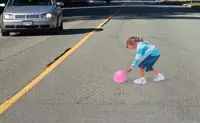
¿Cuándo se producen más atropellos a niños?
When are children most often hit by vehicles?
- AAl terminar la jornada escolar.At the end of the school day.
- BAl empezar la jornada escolar.At the start of the school day.
- Clos fines de semana.At weekends.
ExplanationChildren are most often hit when they leave school: they come out in a hurry, play, are distracted and cross without looking, often between parked cars. In school areas you must slow down and pay extra attention.
En caso de accidente, ¿estás obligado a auxiliar a los heridos?
In an accident, are you obliged to help the injured?
- ASolo si eres el causanteOnly if you caused it
- BSí, es obligatorio para todo conductor implicado o testigoYes, it is compulsory for every driver who is involved or is a witness
- CSolo si hay peligro de muerteOnly if there is a danger of death
ExplanationEvery driver or road user who is involved in or witnesses an accident must help the victims as far as they can. Failing to help is a criminal offence.
Si en un accidente de circulación un herido presenta quemaduras en un brazo, ¿qué actuación de auxilio es correcta?
If a person injured in a road accident has burns on one arm, what is the correct first aid?
- APinchar o cortar las ampollas y aplicar una pomada acuosa.Burst or cut the blisters and apply a water-based cream.
- BQuitar las ropas que hayan quedado adheridas a la piel quemada para evitar infecciones.Remove clothes stuck to the burnt skin to prevent infection.
- CMantener elevada la zona quemada y refrescarla con agua fría.Keep the burnt area raised and cool it with cold water.
ExplanationKeeping the burnt area raised and cooling it with cold water is correct. This helps reduce swelling and pain, and cools the burn so that it does not get worse. Use cold water, but not ice-cold, for at least 10–20 minutes.
Si necesita transportar a una persona herida en su vehículo, ¿debe respetar las normas de circulación?
If you need to take an injured person in your vehicle, must you obey the traffic rules?
- ASí, pero solo en las intersecciones.Yes, but only at junctions.
- BSí, en cualquier caso.Yes, in all cases.
- CNo.No.
ExplanationA driver taking an injured person in a vehicle that is not a priority vehicle may signal this by sounding the horn intermittently and using the hazard warning lights (Article 70.1 of the General Traffic Regulations (RGC)), but must obey the traffic rules in all cases, especially at junctions (Article 70.2).
En un accidente de circulación, ¿es correcto tapar a un herido?
In a road accident, is it correct to cover an injured person?
- ANo.No.
- BSí, sólo cuando el ambiente está frío.Yes, only when it is cold.
- CSí, para evitar que pierda temperatura corporal.Yes, to stop them losing body heat.
ExplanationIt is a good idea to cover injured people with a blanket, even in good weather, because after an accident they lose heat easily and cold makes shock worse. Do it without moving them more than necessary.
A un herido en accidente, ¿debe darle algún tranquilizante?
Should you give a tranquilliser to a person injured in an accident?
- ACuando el herido me lo pida, sí.Yes, if the injured person asks me for one.
- BNo.No.
- CSí, porque así sufre menos y se tranquiliza.Yes, because then they suffer less and calm down.
ExplanationDo not give injured people any medicine, and do not apply ointments, creams or other products to wounds or burns. As a general rule, do not give them drinks either, especially not alcohol.

¿En qué momento del día hay más accidentes?
At what time of day are there more accidents?
- AAl mediodía, a la hora de comer.At midday, at lunchtime.
- BEn las primeras horas de la noche.In the first hours of the night.
- CPor la tarde, al finalizar la jornada laboral.In the afternoon, at the end of the working day.
ExplanationMost accidents happen at the times when people go to or leave work, especially in the afternoon, at the end of the working day.
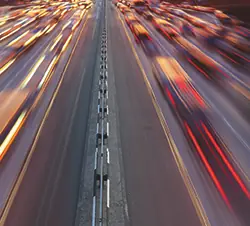
La velocidad, ¿es un factor de riesgo que produce accidentes?
Is speed a risk factor that causes accidents?
- ANo, si el vehículo dispone de los últimos sistemas de seguridad.No, if the vehicle has the latest safety systems.
- BNo; solo agrava las consecuencias del accidente pero no es un factor de riesgo.No. It only makes the consequences of the accident worse; it is not a risk factor.
- CSí, y por eso debe ser la adecuada en cada momento.Yes, and that is why it must always be suitable.
ExplanationUnsuitable speed is one of the main factors that cause accidents, and it also makes their consequences worse. That is why your speed must always be adapted to the road, the traffic and the conditions. The vehicle's safety systems do not cancel this risk.

¿Una motocicleta debe llevar como accesorio o repuesto un chaleco reflectante de alta visibilidad?
Must a motorcycle carry a high-visibility reflective vest as an accessory or spare?
- ASí, es obligatorio llevarlo.Yes, it is compulsory to carry one.
- BNo, no es obligatorio, pero sí recomendable.No, it is not compulsory, but it is advisable.
- CSolo es obligatorio en carreteras de alta velocidad.It is only compulsory on high-speed roads.
ExplanationFrom 1 October 2026, Annex XII of the General Vehicle Regulations (added by Royal Decree 518/2026) says that motorcycles must carry a high-visibility reflective vest that meets the requirements for personal protective equipment. The rider must put it on when getting off the motorcycle and standing on the carriageway or hard shoulder of a road outside a built-up area (Article 118.4 of the RGC).
Si sufrimos un accidente con una motocicleta de hasta de 125 cm3, ¿cuáles serán las lesiones más frecuentes?
If you have an accident on a motorcycle of up to 125 cc, what are the most common injuries?
- ALas lesiones de cadera y abdomen.Hip and abdominal injuries.
- BLas lesiones en la cabeza.Head injuries.
- CLas lesiones de columna vertebral.Spinal injuries.
ExplanationThe most common injuries when riding motorcycles of up to 125 cc are head injuries. In accidents on motorcycles over 125 cc, the most common injuries are to the lower limbs. Remember that motorcycles of up to 125 cc can be ridden with a category B licence held for more than three years.
Al llamar al 112 tras un accidente conviene indicar:
When you call 112 after an accident, you should give:
- AEl lugar exacto, el número de heridos y su estado.The exact location, the number of injured people and their condition.
- BSolo el nombre de quien llama.Only the name of the person calling.
- CNada, ellos ya lo saben.Nothing, they already know.
ExplanationGive the exact location, the number of injured and their condition, and any risks at the scene, so that the response is effective.
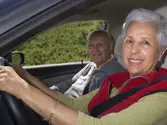
¿Cuándo sufren menos accidentes las personas mayores?
When do older people have fewer accidents?
- ACuando van solas por la calle.When they walk alone in the street.
- BCuando acompañan a niños pequeños.When they are with small children.
- CCuando van acompañadas de otras personas mayores.When they are with other older people.
ExplanationOlder people are easily distracted, but when they are with young children they pay more attention to them and to their safety.
La mayoría de atropellos a peatones infantiles se producen...
Most accidents in which child pedestrians are hit by vehicles happen...
- ADurante los fines de semana.At weekends.
- BAl inicio de la jornada escolar.At the start of the school day.
- CAl término de la jornada escolar.At the end of the school day.
ExplanationAccording to a statistical study, most accidents in which child pedestrians are hit happen at the end of the school day.
¿Es obligatorio llevar un chaleco reflectante dentro del habitáculo?
Is it compulsory to keep a reflective vest inside the passenger compartment?
- ANo, basta con llevarlo en el maleteroNo, it is enough to keep it in the boot
- BSí, es obligatorio llevarlo dentro del habitáculo para ponértelo antes de salirYes, it is compulsory to keep it inside the passenger compartment so that you can put it on before getting out
- CSolo en autopistaOnly on motorways
ExplanationThe reflective vest must be inside the passenger compartment (not in the boot) so that you can put it on before getting out of the car. Getting out onto the carriageway of a road outside a built-up area without a vest is a serious offence.
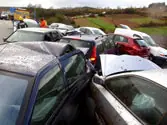
En cuanto a los heridos en un accidente de tráfico, ¿qué es lo primero que haremos?
Regarding the people injured in a road accident, what is the first thing you will do?
- AProporcionarles bebida, si nos lo piden.Give them something to drink, if they ask.
- BComprobar si están conscientes, respiran o tienen pulso.Check whether they are conscious, breathing or have a pulse.
- CTrasladarlos a un hospital lo más rápidamente posible.Take them to a hospital as quickly as possible.
ExplanationAt a road accident, first make a general assessment of all the victims to see which ones are in the most serious condition, checking whether they are conscious, breathing or have a pulse. Never give them drinks or take them to hospital in your own vehicle.
Para reducir la probabilidad de resultar herido en un accidente de tráfico, es recomendable...
To reduce the likelihood of being injured in a road accident, it is advisable to...
- Aconducir de noche.drive at night.
- Bevitar los factores de riesgo que dependen del conductor.avoid the risk factors that depend on the driver.
- Cconocer los factores de riesgo.know the risk factors.
ExplanationTo reduce the likelihood of having a road accident, it is essential to avoid the risk factors that depend on the driver, such as fatigue, stress and drowsiness. According to the Traffic and Road Safety Code, these factors can affect the driver's physical and mental abilities and increase the risk of accidents. The correct answer is to avoid the risk factors that depend on the driver, because preventing and controlling these risks is crucial for road safety.
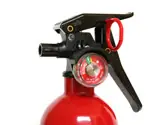
Entre la dotación obligatoria que debe llevar un turismo, ¿se encuentra un extintor?
Is a fire extinguisher part of the compulsory equipment a car must carry?
- ANo.No.
- BSí.Yes.
- CSí, pero solamente cuando circule por vías fuera de poblado.Yes, but only when driving on roads outside built-up areas.
ExplanationCars, mixed-use vehicles and goods vehicles with a maximum authorised mass (MAM) of up to 3,500 kg must carry these accessories, spare parts and tools: - One approved high-visibility vest. - One hazard warning device: an amber-yellow device with geolocation and its own power supply (batteries). It is placed on the highest possible point of the broken-down vehicle, to make it as visible as possible. - One complete spare wheel or a temporary-use spare wheel, with all the tools needed to change it.
Ante un accidente, ¿debemos detenernos para prestar auxilio?
At an accident, must you stop to help?
- ANo, si no estoy implicado.No, if I am not involved.
- BNo, porque no está permitido parar.No, because stopping is not allowed.
- CSí, si no hay agentes o la ayuda no está organizada.Yes, if there are no officers present or help is not organised.
ExplanationAt an accident we must help the victims, unless officers are already there or help is already organised.
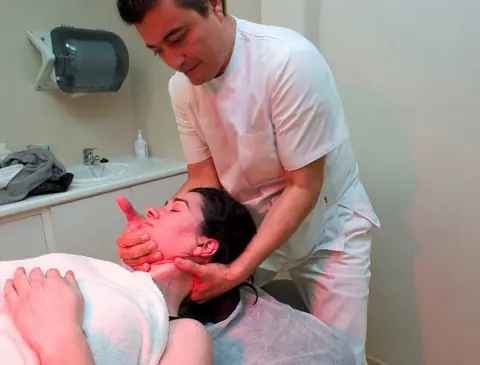
¿Qué tipo de molestias o lesiones provoca frecuentemente el latigazo cervical?
What discomfort or injuries does whiplash often cause?
- AContractura muscular, disminución de la movilidad del cuello y vértigos.Muscle spasm, reduced neck movement and vertigo.
- BRotura de las costillas, encharcamiento pulmonar y dolor cervical.Broken ribs, fluid in the lungs and neck pain.
- CFracturas en las piernas, dolor abdominal y contractura muscular.Leg fractures, abdominal pain and muscle spasm.
ExplanationWhiplash is caused by a sudden movement of the head forwards and backwards, typical of rear-end collisions. It often causes muscle spasms, loss of neck movement, dizziness and vertigo. A correctly adjusted head restraint greatly reduces this risk.
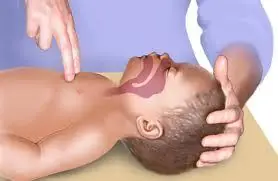
Para realizar las insuflaciones a un bebé, ¿qué método debe utilizar?
What method should you use to give rescue breaths to a baby?
- ANinguno, a los bebés no se les puede realizar la respiración artificial.None. Artificial respiration cannot be given to babies.
- BEl método boca a boca.Mouth-to-mouth.
- CEl método boca a boca-nariz.Mouth-to-mouth-and-nose.
ExplanationIn a baby, the mouth and nose are small and very close together. So rescue breaths are given by covering both with your mouth at the same time (the mouth-to-mouth-and-nose method), with a small volume of air. Artificial respiration can be given to babies.
¿Qué orden de actuación seguiremos al llegar a un lugar donde se ha producido un accidente?
What order of action will you follow when you arrive at the scene of an accident?
- AAvisar, proteger, socorrer.Alert, protect, help.
- BProteger, avisar, socorrer.Protect, alert, help.
- CSocorrer, avisar, proteger.Help, alert, protect.
ExplanationThe basic action at an accident follows the PAS rule (protect, alert, help). Remembering this rule helps us act correctly, especially as the first moments after an accident are often chaotic and very tense.
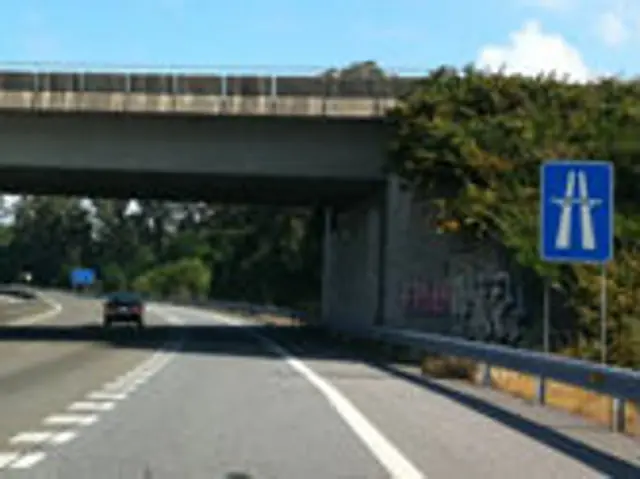
Si por un accidente, una avería o por malestar tuviéramos que detener el vehículo en una autopista o autovía, ¿pueden los ocupantes del vehículo caminar por la calzada para pedir ayuda en el poste de socorro más cercano?
If an accident, a breakdown or feeling unwell forced you to stop your vehicle on a motorway (autopista) or dual carriageway (autovía), may the occupants walk along the carriageway to ask for help at the nearest SOS post?
- ANo, en ningún caso.No, never.
- BSí, con el chaleco reflectante obligatorio.Yes, wearing the compulsory reflective vest.
- CSí, pero solo los adultos.Yes, but only adults.
ExplanationUnder Article 125.1 of the General Traffic Regulations (as worded by Royal Decree 518/2026), pedestrians may not walk on motorways or dual carriageways, except in the cases in Article 130. That article only allows the occupants to go to a safe place off the road, without walking or staying in the lanes or on the hard shoulders. So they may not walk along the carriageway, not even to an SOS post.
¿Es necesario comprobar si un herido en un accidente está consciente o respira?
Is it necessary to check whether a person injured in an accident is conscious or breathing?
- ANo, eso es responsabilidad de los servicios de urgencia.No, that is the job of the emergency services.
- BNo es necesario, como norma general.No, as a general rule it is not necessary.
- CSí, para valorar la gravedad de su estado.Yes, to assess how serious their condition is.
ExplanationWe must make a general assessment of all the accident victims to find out their condition. Check whether they are conscious, breathing or have a pulse. This information will be very useful for the emergency services when we call them.
Si nuestro vehículo queda inmovilizado por una avería en una vía de sentido único...
If your vehicle breaks down and is immobilised on a one-way road...
- AColocaremos dos triángulos de preseñalización a 50 metros del vehículo, visibles desde al menos 100 metros.You will place two warning triangles 50 metres from the vehicle, visible from at least 100 metres.
- BColocaremos un triángulo de preseñalización a 50 metros por delante del vehículo.You will place one warning triangle 50 metres in front of the vehicle.
- CColocaremos el dispositivo luminoso de preseñalización de peligro en la parte más alta posible del vehículo inmovilizado para garantizar su máxima visibilidad.You will place the hazard warning light on the highest possible point of the immobilised vehicle, to make it as visible as possible.
ExplanationUnder Article 130.4 of the General Traffic Regulations, every driver must use the regulation hazard warning device. Since 1 January 2026 this is the V-16 light. It is placed on the highest possible point of the immobilised vehicle, whatever the type of road; warning triangles are no longer valid.
La mayor parte de los accidentes de circulación tienen lugar...
Most road accidents happen...
- Aen los cambios de rasante.at the brow of a hill.
- Ben las curvas.on bends.
- Cen las rectas.on straight stretches.
ExplanationStraight stretches may seem safe and easy to drive, but most road accidents happen on them. This is because drivers relax and pay less attention on these stretches, so they get distracted more.
Al informar de un accidente, ¿qué información es útil dar a los servicios de emergencia?
When reporting an accident, what information is useful to give to the emergency services?
- ACómo ocurrió el accidente y qué vehículos estuvieron implicados.How the accident happened and which vehicles were involved.
- BEl lugar del accidente, el número de personas heridas y su estado.The place of the accident, the number of people injured and their condition.
- CEl lugar del accidente y la matrícula de los vehículos involucrados.The place of the accident and the registration numbers of the vehicles involved.
ExplanationWhen calling 112, the most useful thing is to say where the accident has happened, how many people are injured and what condition they are in (whether they are conscious, breathing or bleeding). With that information the emergency services decide what resources to send and arrive sooner.
¿Qué dispositivo de preseñalización de peligro es obligatorio llevar como dotación en su turismo a partir del año 2026?
Which hazard warning device must you carry in your car from 2026?
- ALa señal luminosa V-16 conectada.The connected V-16 light.
- BDos triángulos de preseñalización obligatoriamente.Two warning triangles.
- CNo es obligatorio llevar ninguno si el vehículo tiene luces de emergencia.None, if the vehicle has hazard warning lights.
ExplanationFrom 1 January 2026, the connected V-16 light with geolocation is the compulsory equipment.
Una norma fundamental a aplicar a los heridos en accidentes es:
A basic rule to follow with people injured in accidents is:
- ADarles agua o zumos.Give them water or juice.
- BHacerles andar.Make them walk.
- CMoverlos lo menos posible y no darles medicamentos.Move them as little as possible and do not give them medicines.
ExplanationInjured people should be moved as little as possible, because they may have spinal or other injuries that could get worse, and they must not be given food, drink or medicines. Making them walk or giving them drinks can make their condition worse.
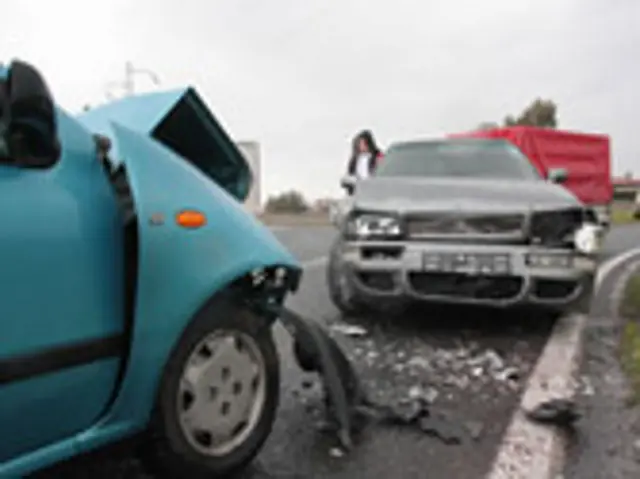
¿Qué medidas debe tomar si ocurre un accidente?
What measures must you take if an accident happens?
- AAyudar a los heridos lo antes posible y avisar a las autoridades.Help the injured as soon as possible and alert the authorities.
- BDetener la circulación, ayudar a los heridos y luego avisar a las autoridades.Stop the traffic, help the injured and then alert the authorities.
- CDetener su vehículo sin crear peligro, avisar a la autoridad o a sus agentes y ayudar a los heridos.Stop your vehicle without creating danger, alert the authorities or their officers and help the injured.
ExplanationUnder Article 129 of the RGC, anyone involved in an accident must stop without creating a new danger, give the injured appropriate help and alert the authorities or their officers if there are injured or dead. It is not about stopping the traffic, but about keeping it safe.
¿Qué personas incurren en la omisión de socorro a las víctimas de un accidente de tráfico?
Which people commit the offence of failing to help the victims of a road accident?
- ALas que no ayudan a las víctimas por correr riesgo propio.Those who do not help the victims because it would put themselves at risk.
- BLas que piden auxilio cuando ellos no pueden prestarlo.Those who call for help when they cannot give it themselves.
- CLas que no socorren a una víctima desatendida, pudiendo hacerlo sin riesgo propio ni de terceros.Those who do not help an unattended victim when they could do so without risk to themselves or others.
ExplanationAnyone who witnesses, comes across or is involved in an accident must help when necessary, as long as there is no risk to themselves or others. Failing to do so is the crime of failure to help (omisión de socorro) under the Criminal Code. The same applies to people who cannot help but do not urgently ask others for help.
¿Son los niños especialmente vulnerables en caso de atropello?
Are children especially vulnerable if they are hit by a vehicle?
- ANo.No.
- BSí, por su baja estatura.Yes, because they are short.
- CSí, porque el vehículo suele circular a mayor velocidad.Yes, because the vehicle is usually travelling faster.
ExplanationChildren are especially vulnerable: because they are short, they are harder to see, especially between parked vehicles, and when they are hit by a vehicle the impact reaches them at head and chest height, where injuries are more serious. In addition, their behaviour on the road is unpredictable.
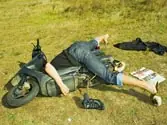
Si presenciamos un accidente en el que no estamos implicados, ¿debemos parar y prestar auxilio?
If you witness an accident in which you are not involved, must you stop and help?
- ASí, tenemos la obligación de prestar auxilio.Yes, we have a duty to help.
- BNo, sólo prestaremos auxilio cuando estemos directamente implicados en el accidente.No, we only help when we are directly involved in the accident.
- CNo.No.
ExplanationAnyone who witnesses, comes across or is involved in an accident must help when necessary, as long as there is no risk to themselves or others. Failing to do so is the crime of failure to help (omisión de socorro) under the Criminal Code. The same applies to people who cannot help but do not urgently ask others for help.
Un vehículo está detenido en la calzada por una avería. ¿Debe señalizarlo?
A vehicle is stopped on the carriageway because of a breakdown. Must it be signalled?
- ASí en autopistas y autovías; no en carreteras.Yes on motorways (autopistas) and dual carriageways (autovías); no on other roads.
- BSí, con el dispositivo de preseñalización de peligro V-16.Yes, with the V-16 hazard warning device.
- CNo, basta con encender la luz de emergencia.No, switching on the hazard warning lights is enough.
ExplanationUnder Article 130.4 of the General Traffic Regulations, the driver of a vehicle immobilised by a breakdown must switch on the hazard warning lights and use the regulatory hazard warning device, whatever the type of road. Since 1 January 2026 that device is the V-16 flashing warning beacon.
¿Qué dispositivo de preseñalización de peligro es obligatorio llevar como dotación en su turismo a partir de 2026?
Which hazard warning device must you carry in your car from 2026?
- ADos triángulos de preseñalización de peligro.Two warning triangles.
- BUna señal luminosa V-16 conectada.A connected V-16 light.
- CNo es obligatorio llevar ningún dispositivo.You do not have to carry any device.
ExplanationFrom 1 January 2026 you must carry a connected V-16 light with geolocation. It replaces the warning triangles.
¿Es probable que, con el tiempo, un conductor que bebe con frecuencia tenga un accidente?
Is a driver who drinks often likely to have an accident sooner or later?
- ANo, si tiene experiencia conduciendo.No, if they are an experienced driver.
- BSí.Yes.
- CSolo si bebe mucho.Only if they drink a lot.
ExplanationThe correct answer is 'Yes'. Under the General Traffic Regulations, drivers may not exceed certain blood alcohol limits. Drinking often affects reaction and judgement, and greatly increases the risk of having an accident. Alcohol dependence and its negative effects are considered factors that alter the driver's physical and mental abilities, which leads to more accidents. This shows how important it is to be sober when driving to prevent crashes.
Si tiene que realizar a un niño pequeño (bebé) la respiración artificial, ¿qué método utilizará?
If you have to give artificial respiration to a small child (baby), what method will you use?
- AEl método del “boca a boca-nariz”.The 'mouth-to-mouth-and-nose' method.
- BEl método del “boca a boca”.The 'mouth-to-mouth' method.
- CNinguno. A los bebés no se les puede realizar la respiración artificial.None. Artificial respiration cannot be given to babies.
ExplanationThe 'mouth-to-mouth-and-nose' method is the most suitable for artificial respiration in babies. Babies have smaller, more delicate airways. By covering the baby's mouth and nose with their own mouth, the rescuer makes sure the air reaches the baby's lungs more effectively. This method stops air escaping and makes artificial respiration as effective as possible.
En un accidente, ¿cuándo es obligatorio ayudar?
At an accident, when is it compulsory to help?
- ASolamente cuando yo estoy implicado en el accidente.Only when I am involved in the accident.
- BCuando vea que aún no han sido atendidos los heridos.When I see that the injured have not yet been attended to.
- CNo es obligatorio en ningún caso.It is never compulsory.
ExplanationAnyone who is involved in an accident, witnesses it or learns of it must help the victims or call for help; failing to do so may be the offence of failing to assist people in danger. Someone who is not involved is only exempt if their help is clearly not needed or if the authorities or their officers are already at the scene.
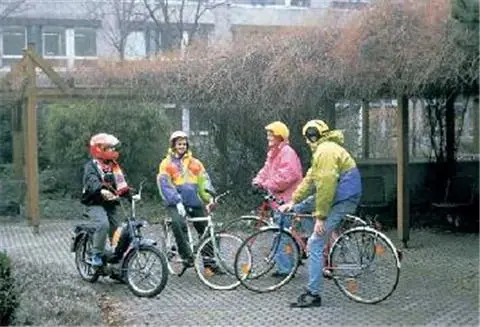
¿Cuál es el accidente más frecuente que sufren los ciclistas?
What is the most common accident for cyclists?
- ALas salidas de vía.Running off the road.
- BLos atropellos.Being run over.
- CLa colisión fronto-lateral con otro vehículo.A front-to-side collision with another vehicle.
ExplanationAccording to DGT data, the most common cyclist accident is a front-to-side collision with another vehicle. This typically happens at junctions, when a driver does not see the cyclist or does not give way. Running off the road and being run over are less common.
Los vehículos que más accidentes y víctimas provocan en términos absolutos en nuestro país son...
In absolute terms, the vehicles that cause the most accidents and casualties in our country are...
- ALos autobuses.buses and coaches.
- BLas furgonetas.vans.
- CLos turismos.cars.
ExplanationIn absolute terms, cars cause the most accidents and casualties in our country because there are so many of them on the roads. Cars are the most common vehicles and are used by most drivers, which makes them more likely to be involved in road accidents. Cars are also used both in and outside built-up areas, which also adds to their higher accident rate.
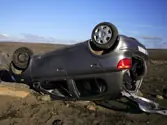
Si un conductor presencia un accidente de tráfico en el que no está involucrado, ¿debe detenerse para prestar ayuda?
If a driver witnesses a road accident in which they are not involved, must they stop to help?
- ANo.No.
- BSí, como norma general.Yes, as a general rule.
- CSolo si tiene conocimientos de primeros auxilios.Only if they know first aid.
ExplanationRoad users who are involved in, witness or learn about a road accident must help the victims, if there are any, or call for help. They must also cooperate to avoid further danger or damage, restore traffic safety as far as possible, and help clarify what happened.
All topics
- Definitions
- Documents and penalty points
- The driver's condition
- Duties of drivers and pedestrians
- Vehicle safety devices
- Vehicle controls and equipment
- Vehicle lights and horn
- Traffic signs, markings and signals
- The road and its lanes
- Speed and distances
- Manoeuvres
- Right of way
- Carrying passengers and loads
- Driving safely in difficult conditions
- Vehicle mechanics and maintenance
- Defensive and eco-driving
Independent app: not affiliated with or endorsed by the DGT (Spain's Directorate-General for Traffic) or the Ministry of the Interior. The official exam is booked with the DGT and taken at its test centres. The questions here are practice material; the DGT's official question bank is not public.
Basado en datos de la Agencia Estatal Boletín Oficial del Estado (https://www.boe.es). Textos consolidados de carácter meramente informativo. La AEBOE no patrocina ni respalda este sitio.
Parte de las preguntas procede de los tests de la revista «Tráfico y Seguridad Vial» de la DGT, reproducidos con indicación de la fuente.