
DGT test · 626 questions
Road accidents and first aid · Page 9 of 13
What to do at a crash: protect, alert and help, basic first aid, and marking a stopped vehicle with the V-16 beacon.
Questions in this topic, with answers
626 questions, 50 per page, with the correct answer and the explanation. Page 9 of 13.
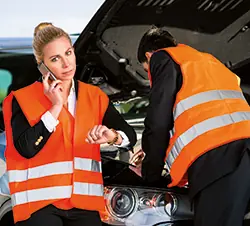
En un turismo, ¿cuántos chalecos reflectantes es obligatorio llevar?
In a car, how many reflective vests is it compulsory to carry?
- AUno.One.
- BDos: uno para el conductor y otro para el acompañante.Two: one for the driver and one for the passenger.
- CUno por cada plaza autorizada de que disponga el vehículo.One for each authorised seat in the vehicle.
ExplanationA car's compulsory equipment includes one high-visibility reflective vest, which the driver must put on when getting out of the vehicle onto the carriageway or hard shoulder of a road outside a built-up area. Carrying one for each occupant is advisable, but not compulsory.
Hay más accidentes mortales...
There are more fatal accidents...
- Aen carreteras interurbanas.on roads outside built-up areas.
- Ben vías urbanas, donde hay atascos.on roads in built-up areas, where there are traffic jams.
- Cen vías urbanas.on roads in built-up areas.
ExplanationThe correct answer is that there are more fatal accidents on roads outside built-up areas. These roads usually have higher speeds and less traffic control, which increases the risk of serious accidents. According to the Traffic and Road Safety Code, there is a clear difference in accident rates between roads in and outside built-up areas: 66% of fatal motorcyclist accidents happen on roads outside built-up areas. This figure shows how dangerous these roads are and the need for safety measures on them.
En caso de atropello a peatones, ¿en qué tipo de vías se producen los accidentes más graves?
When pedestrians are hit, on which type of road do the most serious accidents happen?
- AEn poblado.In built-up areas.
- BEn travesías.On travesías (stretches of road through a town).
- CEn carreteras convencionales.On conventional roads.
ExplanationPedestrians have the most accidents in towns and cities. However, on conventional roads the chance of being killed when hit is 2 to 3 times higher, because vehicles travel faster.

Si un herido tiene las vías respiratorias obstruidas, ¿qué haremos?
If an injured person's airway is blocked, what will you do?
- APonerlo en posición semisentado.Put them in a half-sitting position.
- BHacerle la respiración boca a boca.Give them mouth-to-mouth breathing.
- CRetirarle de la boca lo que provoca la obstrucción.Remove from the mouth whatever is causing the blockage.
ExplanationIf the injured person is not breathing because their airway is blocked, first deal with the cause of the blockage. To open the airway, use the head-tilt, chin-lift manoeuvre: lift the chin slightly with one hand and push the forehead back with the other.
Ante un herido en accidente de circulación que presente una hemorragia por el oído o la nariz, se debe...
If a person injured in a road accident is bleeding from the ear or nose, you should...
- AProceder a su taponamiento de inmediato.Plug it immediately.
- BConsiderarlo como herido grave, y, por tanto, tratarlo con cautela.Treat them as seriously injured and so handle them with care.
- CNo darle excesiva importancia, ya que siempre se trata de un herido leve.Not give it too much importance, as they are always only slightly injured.
ExplanationTreating the person as seriously injured is correct, because bleeding from the ear or nose can be a sign of a serious injury. Act with care, do not move the injured person unnecessarily and wait for the emergency services, as they may need specialised medical care.
¿Cuándo se producen más accidentes de ciclista, en verano o en invierno?
When do more cyclist accidents happen, in summer or in winter?
- AEn verano, puesto que con la llegada del buen tiempo hay más en las carreteras.In summer, because with the good weather there are more cyclists on the roads.
- BEn invierno, debido a la condiciones metereológicas adversas.In winter, because of bad weather conditions.
- CEs indiferente.It makes no difference.
ExplanationCyclist accidents are more frequent in summer, because with the good weather and longer days there are many more cyclists on the roads. At this time of year, pay extra attention and keep the required distance when overtaking them.
Los conductores de bicicletas, ¿se pueden considerar como un "grupo vulnerable"?
Can cyclists be considered a 'vulnerable group'?
- ANo, solo lo son los niños, los jóvenes y las personas mayores.No, only children, young people and older people are.
- BSí.Yes.
- CSí, pero solo cuando circulan por vías interurbanas.Yes, but only when they ride on roads outside built-up areas.
ExplanationCyclists, like motorcyclists and moped riders, are more likely to be injured in an accident because of the type of vehicle they ride. So they are considered a vulnerable group.
¿Es obligatorio llevar un botiquín de primeros auxilios en vehículos de más de nueve plazas?
Is it compulsory to carry a first-aid kit in vehicles with more than nine seats?
- ANo, el botiquín solo se recomienda.No, the first-aid kit is only recommended.
- BDepende del número de pasajeros transportados.It depends on the number of passengers carried.
- CSí, es obligatorio.Yes, it is compulsory.
ExplanationUnder Spain's General Traffic Regulations, the compulsory equipment of vehicles with more than nine seats does not include a first-aid kit. It is highly advisable to have one for emergencies, but it is not a legal requirement. This is because the rules focus more on other safety aspects, such as seat belts and child restraint systems. So the correct answer is that a first-aid kit is only recommended.
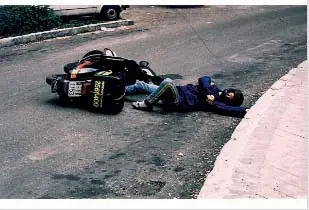
Los accidentes de tráfico de motocicletas...
Motorcycle road accidents...
- AProducen lesiones de menor gravedad para sus ocupantes que los de otros vehículos.cause less serious injuries to the riders than accidents with other vehicles.
- BSon siempre de menor importancia que los de otros vehículos.are always less serious than accidents with other vehicles.
- CResultan fácilmente mortales para sus ocupantes.can easily be fatal for the riders.
ExplanationMotorcyclists have no bodywork to protect them, so in an accident their body takes the direct impact against the ground, other vehicles or objects on the road. That is why motorcycle accidents have serious and often fatal consequences.
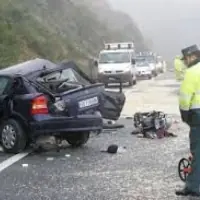
Si en un accidente no hay agentes regulando la circulación, ¿qué debe hacer?
If there are no officers directing traffic at an accident, what must you do?
- AMover los vehículos siempre, aunque haya heridos graves.Always move the vehicles, even if there are seriously injured people.
- BProteger la zona, avisar a los servicios de emergencia y socorrer si es necesario.Protect the area, alert the emergency services and help if necessary.
- CContinuar la marcha sin detenerse.Continue on your way without stopping.
ExplanationAt an accident with no officers present, apply the PAS rule: protect the area by marking it, call 112 and help the injured if necessary. Do not move the vehicles or seriously injured people unless there is imminent danger, and you may not drive on without stopping.
Si un herido en un accidente de circulación presenta una respiración ruidosa o muy dificultosa, ello probablemente significa que...
If a person injured in a road accident has noisy or very difficult breathing, this probably means that...
- ASufre una hemorragia interna.they have internal bleeding.
- BTiene las vías respiratorias parcialmente obstruidas.their airway is partly blocked.
- CEstá en ‘estado de shock’.they are 'in shock'.
ExplanationWhen a person's airway is partly blocked, they can make noises when breathing, such as wheezing or a harsh, high-pitched sound (stridor). This can be caused by foreign objects, swelling or secretions. So this answer is correct: difficult breathing is a clear sign of a blocked airway.
¿Es obligatorio llevar en el vehículo un dispositivo de preseñalización de peligro?
Is it compulsory to carry a hazard warning device in the vehicle?
- ANo.No.
- BSí, obligatoriamente un triángulo de preseñalización.Yes, a warning triangle is compulsory.
- CSí.Yes.
ExplanationCars, mixed-use vehicles and goods vehicles with a maximum authorised mass (MAM) of up to 3,500 kg must carry these accessories, spare parts and tools: - One approved high-visibility vest. - One hazard warning device: an amber-yellow device with its own power supply (batteries). It is placed on the highest point of the immobilised vehicle, to make it as visible as possible. - One complete spare wheel or a temporary-use spare wheel, with all the tools needed to change it.
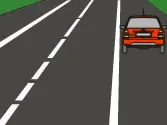
Al inmovilizar un turismo por emergencia, ¿es obligatorio colocar el dispositivo de preseñalización de peligro?
When a car is immobilised because of an emergency, is it compulsory to place the hazard warning device?
- ANo, basta con encender la señal de emergencia.No, switching on the hazard warning lights is enough.
- BSí, en la parte más alta posible del vehículo inmovilizado garantizado su máxima visibilidad.Yes, on the highest possible point of the immobilised vehicle, to make it as visible as possible.
- CSí, siempre por delante del vehículo inmovilizado.Yes, always in front of the immobilised vehicle.
ExplanationUnder Article 130.4 of the General Traffic Regulations (RGC), every driver must use the regulation hazard warning device. Since 1 January 2026 only the V-16 light is valid. It is amber-yellow and is placed on the highest possible point of the immobilised vehicle, to make it as visible as possible (Annex XI of the General Vehicle Regulations).
La Organización Mundial de la Salud (OMS) considera que los accidentes de tráfico son un problema prioritario de salud pública...
The World Health Organization (WHO) considers road accidents a priority public health problem...
- ASolo en los países más desarrollados.only in the most developed countries.
- BEn todo el mundo.worldwide.
- CEn Europa, pero no en Estados Unidos ni en Japón, donde es muy baja.in Europe, but not in the United States or Japan, where it is very low.
ExplanationAccording to the World Health Organization (WHO), road accidents are a priority public health problem that affects the whole world. Road accidents are not isolated incidents: they have many risk factors that can be prevented and dealt with. According to the General Traffic Regulations, the tragedy of road crashes does not distinguish between developed and developing countries. So the correct answer is that road accidents are a problem worldwide.
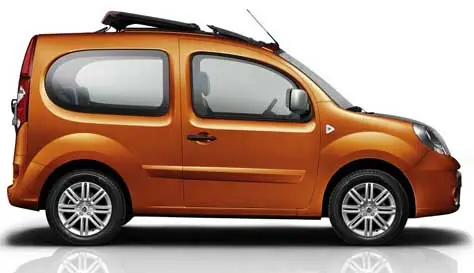
En un vehículo mixto adaptable,¿está obligado a llevar un chaleco reflectante?
In an adaptable mixed-use vehicle, are you obliged to carry a reflective vest?
- ASí.Yes.
- BSí, bien visible en el maletero del vehículo.Yes, clearly visible in the boot of the vehicle.
- CNo, aúnque si es recomendable.No, although it is advisable.
ExplanationThe reflective vest is part of the compulsory equipment of cars, mixed-use vehicles, vans and other motor vehicles. It must be kept within the driver's reach, not in the boot, so that they can put it on before getting out of the vehicle on a road outside a built-up area.

El chaleco reflectante, ¿dónde lo llevaremos?
Where will you keep the reflective vest?
- ADentro del habitáculo del vehículo para poder ponérnoslo antes de salir de él.Inside the passenger compartment, so that you can put it on before getting out.
- BEn el maletero.In the boot.
- CEs indiferente.It makes no difference.
ExplanationWhen the driver gets out of the vehicle on a road outside a built-up area and is on the carriageway or hard shoulder, they must wear the approved reflective vest. So the vest must be kept inside the passenger compartment.
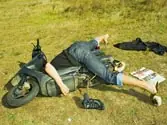
¿Podemos taponar una hemorragia?
Can you plug (block) bleeding?
- ANo, en ningún caso.No, never.
- BSí, si la hemorragia fuese externa.Yes, if the bleeding is external.
- CSí, si es hemorragia exteriorizada.Yes, if it is externalised bleeding.
ExplanationExternalised bleeding must not be plugged, because it is internal bleeding that shows on the outside (for example, through the ear or nose). External bleeding, however, must be blocked by pressing directly on the wound.
¿Qué debemos hacer si al encontrarnos un accidente de tráfico no sabemos cómo auxiliar a los heridos?
If you come across a road accident and do not know how to help the injured, what should you do?
- AContinuar la marcha.Continue on your way.
- BTrasladar a los heridos con nuestro vehículo al hospital.Take the injured to hospital in your vehicle.
- CLlamar al teléfono de urgencias.Call the emergency number.
ExplanationAnyone who witnesses, comes across or is involved in an accident must help when necessary, as long as there is no risk to themselves or others. Failing to do so is the crime of failure to help (omisión de socorro) under the Criminal Code. The same applies to people who cannot help but do not urgently ask others for help. Road users who are NOT involved do not have to do this when the authorities or their officers are already at the scene, or when their help is not needed. If you do not know or do not remember how to act at an accident, you still have a duty to help. One way to do this is to call for help on the 112 emergency number.
La baliza V-16 obligatoria desde 2026 debe estar:
The V-16 light, compulsory from 2026, must be:
- AConectada a la plataforma DGT 3.0 para transmitir su ubicación.Connected to the DGT 3.0 platform to send its location.
- BHomologada solo para autopistas.Approved only for motorways.
- CSujeta al parachoques delantero.Fixed to the front bumper.
ExplanationThe compulsory V-16 is the 'connected' one: it sends the position of the broken-down vehicle to DGT 3.0, which warns other drivers.
Si un herido sangra por la rodilla, ¿qué debemos hacer?
If an injured person is bleeding from the knee, what should you do?
- AHacerle un torniquete.Apply a tourniquet.
- BPonerle un vendaje sin presionar.Put on a bandage without pressing.
- CElevarle la pierna.Raise their leg.
ExplanationFor external bleeding, press directly on the wound. If the wound is on a limb, raise it above the level of the injured person's heart.
¿Debemos tapar la herida o hemorragia de un herido por accidente en caso de fractura abierta?
Should you cover the wound or bleeding of a person injured in an accident if they have an open fracture?
- ANo deberemos taparla ni inmovilizarlaYou should neither cover it nor immobilise it
- BNo, únicamente deberemos inmovilizarlaNo, you should only immobilise it
- CSí, siempreYes, always
ExplanationWith an open (compound) fracture in a person injured in a road accident, cover the wound and stop the bleeding to prevent infection and to control blood loss if a major blood vessel has been damaged.
En caso de que el conductor descienda del vehículo, debido a una avería, si ocupa la calzada o arcén, está obligado a utilizar un chaleco reflectante homologado...
If the driver gets out of the vehicle because of a breakdown and is on the carriageway or hard shoulder, they must wear an approved reflective vest...
- AO utilizar una prenda similar de colores vivos.or a similar brightly coloured garment.
- BSólo en vías fuera de poblado.only on roads outside built-up areas.
- CEn todo tipo de vías.on all types of road.
ExplanationThe reflective vest is compulsory when the driver gets out of the vehicle and is on the carriageway or hard shoulder of a road outside a built-up area. It must be a certified high-visibility vest; a brightly coloured garment is not a substitute.
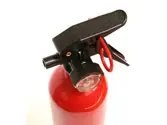
¿Es obligatorio llevar un extintor de incendios en un turismo destinado al servicio privado?
Is it compulsory to carry a fire extinguisher in a car for private use?
- ASí.Yes.
- BNo.No.
- CSí, cuando transporte a más de 5 personas incluido el conductor.Yes, when it carries more than 5 people, including the driver.
ExplanationOnly buses and coaches, combinations of vehicles (other than special vehicles), mixed-use vehicles and motor vehicles with a MAM over 3,500 kg must carry an approved fire extinguisher. So cars and motorcycles do not have to carry one. Cars, mixed-use vehicles and goods vehicles with a MAM of up to 3,500 kg (except three-wheeled vehicles and quadricycles) must carry: - One hazard warning device: an amber-yellow device with geolocation and its own power supply (batteries). It is placed on the highest possible point of the broken-down vehicle, to make it as visible as possible. - One reflective vest. - A spare wheel or temporary-use wheel with the tools needed to change wheels, or an alternative system that gives enough guarantee that you can keep moving.
Si por motivos de emergencia el conductor debe abandonar el vehículo en una vía fuera de poblado durante el día y con visibilidad, ¿debe usar el chaleco reflectante?
If, because of an emergency, the driver has to leave the vehicle on a road outside a built-up area during the day and with good visibility, must they wear the reflective vest?
- ASí.Yes.
- BNo.No.
- CSolo entre la puesta y la salida del sol.Only between sunset and sunrise.
ExplanationThe reflective vest must be worn both by day and by night by drivers who, because of an emergency, have to leave their vehicle on roads outside built-up areas.
Una de las infracciones cometidas por los conductores con mayor riesgo para los peatones es...
One of the offences by drivers that is most dangerous for pedestrians is...
- Ano respetar la prioridad de paso de los peatones.not respecting pedestrians' right of way.
- Bno dejar una separación lateral de al menos 3 metros al adelantar a un peatón.not leaving a side gap of at least 3 metres when overtaking a pedestrian.
- Ccircular de día con la luz de cruce encendida.driving during the day with dipped headlights on.
ExplanationNot respecting pedestrians' right of way is one of the most dangerous offences for them (Article 65 of the General Traffic Regulations, as worded by Royal Decree 518/2026). When overtaking a pedestrian, the minimum side gap required by Article 85.4 is 1.5 metres, not 3. Driving during the day with dipped headlights is not an offence.
¿Se debe dar comida o bebida a una persona herida en un accidente?
Should you give food or drink to a person injured in an accident?
- ASí, es recomendable.Yes, it is advisable.
- BNo, aunque lo pida.No, even if they ask for it.
- CSí, para mantener la temperatura corporal.Yes, to keep their body temperature up.
ExplanationYou must not give an injured person anything to eat or drink, even if they ask for it: they may need surgery or an anaesthetic, and if they lose consciousness they could choke or vomit. The right thing to do is to calm them, keep them warm so they do not lose body heat, and wait for the medical services.
¿Cuál de las que a continuación se indican es una norma a seguir con los heridos en accidente de circulación como norma general?
Which of the following is a rule to follow with people injured in a road accident, as a general rule?
- ADarles de beber agua.Give them water to drink.
- BAflojarles la ropa.Loosen their clothing.
- CHacerles caminar.Make them walk.
ExplanationWith an injured person, it is a good idea to loosen tight clothing, such as the shirt collar or the belt, to make breathing and circulation easier. They should not be given anything to drink or made to walk, because this could make unseen injuries worse.
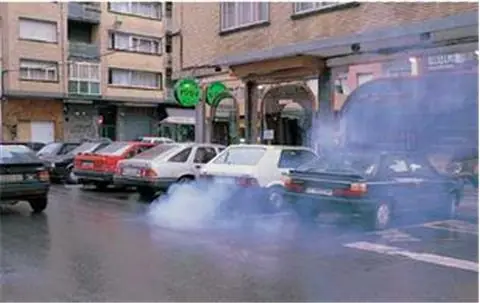
Su vehículo se incendia y no tiene extintor. ¿Cómo debe apagarlo?
Your vehicle catches fire and you have no fire extinguisher. How should you put it out?
- ACon tierra.With earth.
- BCon aire.With air.
- CCon agua.With water.
ExplanationWithout an extinguisher, the fire is smothered by throwing earth, sand or a blanket over it, because this cuts off its oxygen. Water does not work on fuel fires: petrol or diesel floats on it and the fire spreads. Blowing air on it fans the flames.
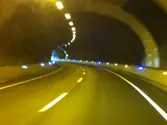
Si usted está inmovilizado en un túnel por motivos de emergencia, ¿qué tendrá que hacer?
If you are immobilised in a tunnel because of an emergency, what will you have to do?
- ANo apagar el motor y encender las luces.Not switch off the engine, and switch on the lights.
- BApagar el motor y dejar encendidas las luces de posición con las de emergencia.Switch off the engine and leave the sidelights on, together with the hazard warning lights.
- CApagar el motor y abandonar el vehículo.Switch off the engine and leave the vehicle.
ExplanationIf the breakdown lets you continue, leave the tunnel or underpass. If this is not possible, drive to the nearest emergency lay-by. Otherwise, stop the vehicle at the right-hand edge. You must also: - Switch off the engine, leave the sidelights on and switch on the hazard warning lights. - Place the hazard warning device: an amber-yellow device with geolocation and its own power supply (batteries), placed on the highest possible point of the vehicle to make it as visible as possible. - Call for help from the SOS post and follow the instructions given through it. - Leave the vehicle and go to the nearest shelter or exit. Do not walk on the carriageway if there are areas closed to vehicles.
Ud. circula conduciendo su vehículo por una vía interurbana y advierte que se ha producido un accidente de circulación. ¿Debe detenerse para auxiliar y prestar ayuda a las víctimas?
You are driving on a road outside a built-up area and notice that a road accident has happened. Must you stop to help the victims?
- ASí, cuando no se haya personado en el lugar del hecho la Autoridad o los Agentes encargados de la vigilancia del tráfico.Yes, when the authorities or traffic officers have not arrived at the scene.
- BSí, se haya o no personado la Autoridad o sus Agentes.Yes, whether or not the authorities or their officers have arrived.
- CNo.No.
ExplanationIt is correct to stop and help the victims of an accident if there are no authorities or traffic officers at the scene. Helping people who may need assistance is a moral and legal duty, as long as it is safe to do so. If the authorities are already there, they will deal with the situation.
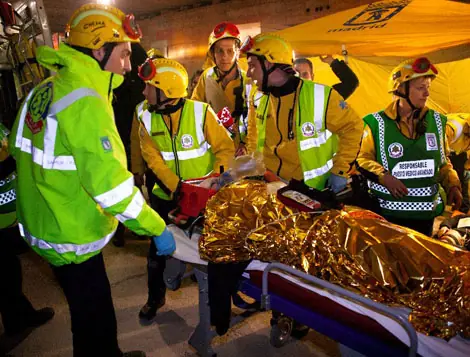
Los accidentes de tráfico con muertes, ¿en qué vías se producen con más frecuencia?
On which roads do fatal road accidents happen most often?
- AEn carreteras convencionales.On conventional roads.
- BEn vías urbanas.On roads in built-up areas.
- CEn autopistas y autovías.On motorways and dual carriageways.
ExplanationMost road deaths in Spain happen on conventional roads, mainly because vehicles run off the road or collide head-on. Motorways and dual carriageways, with separate carriageways and no level junctions, have fewer deaths in relation to the amount of traffic they carry.
Si un herido en accidente de circulación presenta dolor y deformidad en una extremidad, probablemente sufre...
If a person injured in a road accident has pain and deformity in a limb, they probably have...
- AUna hemorragia interna.internal bleeding.
- BParálisis.paralysis.
- CUna fractura.a fracture.
ExplanationA fracture is a break in the bone, and it often causes severe pain and deformity in the injured limb. When someone has these symptoms after an accident, it is very likely a fracture: the impact can break or move the bone, which makes the limb look abnormal.
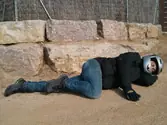
¿Por qué se debe colocar a un herido de accidente en posición lateral de seguridad?
Why should a person injured in an accident be placed in the recovery position?
- APara que recobre el conocimiento.So that they regain consciousness.
- BPara evitar que se mueva.To stop them moving.
- CPara evitar que se asfixie.To stop them choking.
ExplanationAs a general rule, do not move an injured person unless it is strictly necessary. However, if an unconscious injured person is breathing, move them into the recovery position: when they start to vomit or bleed from the mouth or nose, to stop them choking; or when you have to leave them alone to look after other injured people or get help.
Al auxiliar a un herido en accidente de tráfico:
When helping a person injured in a road accident:
- ADebe quitársele el casco inmediatamente.Their helmet must be removed immediately.
- BDebe evitarse moverlo salvo peligro inminente.Avoid moving them unless there is imminent danger.
- CConviene darle agua si está consciente.It is a good idea to give them water if they are conscious.
ExplanationWhen helping a person injured in a road accident, the priority is not to make their injuries worse. So do not move the injured person unless there is imminent danger, such as fire, the risk of being hit, or another serious situation. Unnecessary movement can make internal or spinal injuries worse. Also, do not remove a motorcyclist's helmet unless it is strictly necessary and you know the right technique. Focus on making the area safe and calling for medical help.
¿Cómo se llaman los costes de la prestación de primeros auxilios, la atención y el tratamiento de los lesionados, y la rehabilitación y las adaptaciones?
What are the costs of giving first aid, caring for and treating the injured, and rehabilitation and adaptations called?
- AGastos sanitarios.Health costs.
- BGastos materiales.Material costs.
- CGastos administrativos.Administrative costs.
Explanation'Health costs' are all the costs of first aid, medical care and rehabilitation of the people involved in a road accident. According to the Traffic and Road Safety Code, these costs can be compensated and must be covered so that the injured person can recover, which helps protect the rights of road accident victims. This is covered in particular in the articles on civil liability in road accidents.
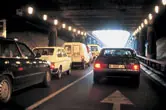
En caso de incendio en un túnel debera...
If there is a fire in a tunnel, you must…
- AAbandonar el vehículo, dejando las puertas cerradas con llave.Leave the vehicle, with the doors locked.
- BAproximarse todo lo posible a la derecha, apagar el motor y dejaré las llaves puestas.Move as far to the right as possible, switch off the engine and leave the key in the ignition.
- CEncender las luces de emergencia y de posición, sin abandonar el vehículo.Switch on the hazard warning lights and the sidelights, without leaving the vehicle.
ExplanationIf the vehicle catches fire in a tunnel, you must move as far to the right as possible, switch off the engine, leave the key in the ignition and the doors unlocked, and walk to the nearest emergency shelter or exit. Do not stay in the vehicle or lock it.
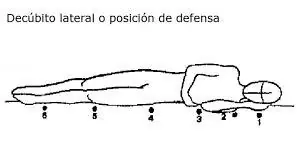
Al herido en accidente de circulación se le coloca en la posición de defensa para ...
A person injured in a road accident is put in the recovery position to...
- AEvitar posibles asfixias.prevent possible choking.
- BPoder realizarle la respiración artificial.be able to give them artificial respiration.
- CLa comodidad del herido, únicamente.make the injured person comfortable, and nothing else.
ExplanationThe recovery position (on the side, with the head tilted slightly back) is used for unconscious injured people who are breathing. It keeps the airway clear and lets vomit or blood come out, which prevents choking.
¿Cuál es la regla que nos permite recordar los pasos a seguir en caso de accidente?
What is the rule that helps you remember the steps to follow at an accident?
- AProteger, avisar, socorrer.Protect, alert, help.
- BSocorrer, avisar, proteger.Help, alert, protect.
- CAvisar, proteger, socorrer.Alert, protect, help.
ExplanationThe order of action when you arrive at an accident is given by the PAS rule (protect, alert, help; in Spanish proteger, avisar, socorrer).
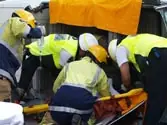
¿Cómo se debe proceder en caso de un accidente con heridos?
What should you do in an accident with injured people?
- ARealizar maniobras de reanimación dentro del vehículo.Carry out resuscitation manoeuvres inside the vehicle.
- BNo sacarlos del vehículo hasta que llegue ayuda especializada, salvo que sea imprescindible.Do not take them out of the vehicle until specialised help arrives, unless it is essential.
- CSacarlos inmediatamente del vehículo y trasladarlos al propio.Take them out of the vehicle immediately and move them to your own vehicle.
ExplanationDo not take injured people out of the vehicle after an accident, because moving an injured person without assessment and help from professionals can increase the risk of further injury. Keeping the injured inside the vehicle until specialised help arrives avoids making their injuries worse, as the emergency services have the equipment and training to handle medical situations safely and effectively. It is justified to take the injured out of the vehicle when there is imminent danger inside it, such as a fire, the need for resuscitation (CPR), or any other threat to the safety of the people inside. In such cases, the priority must be to get the injured away from the danger as quickly as possible, but always carefully, to avoid making their injuries worse.
Los accidentes que más víctimas producen en poblado son:
The accidents that cause the most casualties in built-up areas are:
- ALos atropellos a peatones.Pedestrians being hit.
- BLas colisiones frontales entre vehículos.Head-on collisions between vehicles.
- CLos alcances traseros.Rear-end collisions.
ExplanationPedestrians being hit are the accidents that cause the most casualties in built-up areas, because towns are full of people walking on pavements and crossing streets. When a vehicle hits a pedestrian, the consequences are usually serious, because pedestrians have no protection, unlike car occupants. This makes these accidents deadlier, and they cause more injuries than other types of accident.
¿Qué significan las siglas PAS?
What do the letters PAS stand for?
- AParar, avisar, señalizar.Stop, alert, signal (parar, avisar, señalizar).
- BParar, ayudar, señalizar.Stop, help, signal (parar, ayudar, señalizar).
- CProteger, alertar, socorrer.Protect, alert, help (proteger, alertar, socorrer).
ExplanationThe PAS rule is the basic way to act at an accident: first protect the person helping and the injured, then alert (usually by calling 112), and finally help the victims.
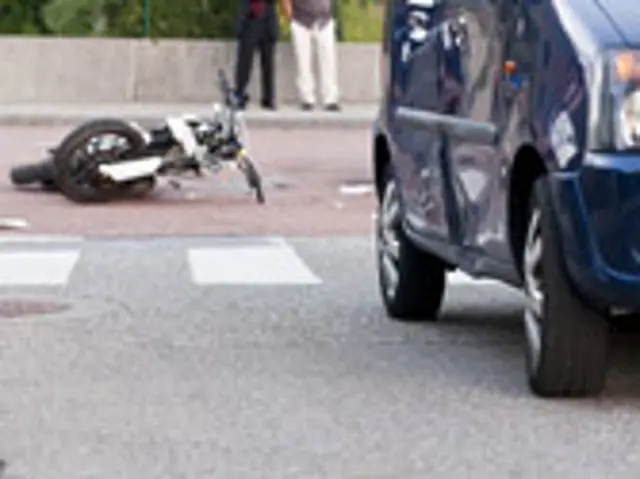
En un accidente de tráfico, ¿es obligatorio avisar a las autoridades si no hay heridos y la seguridad vial se ha restablecido?
In a road accident, is it compulsory to inform the authorities if nobody is injured and road safety has been restored?
- ANoNo
- BSíYes
- CSí, si alguna de las personas implicadas en el accidente así lo solicita.Yes, if one of the people involved in the accident asks for it.
ExplanationUnder the General Traffic Regulations, you must inform the authorities if people are injured in an accident or if one of the people involved asks for it. If nobody is injured and traffic safety has been restored, you do not need to inform them, unless one of the people involved demands it. That is why this answer is correct. The relevant article of the Traffic and Road Safety Code says you do not need to inform the authorities if there was only material damage and safety has been restored.
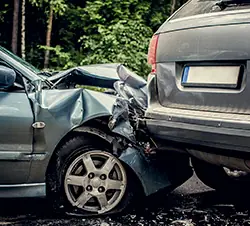
¿Cuál de los tres factores de riesgo es el que está menos implicado entre las causas de los accidentes de tráfico?
Which of the three risk factors is least involved in causing road accidents?
- AEl factor vía y su entorno.The road and surroundings factor.
- BEl factor humano.The human factor.
- CEl factor vehículo.The vehicle factor.
ExplanationThe vehicle factor causes the fewest accidents: technical improvements and inspections have reduced it. The human factor is involved in the vast majority of crashes (about 90%), followed by the road and surroundings factor.
La llamada precoz al servicio de emergencia 112 ...
An early call to the 112 emergency service...
- AEs fundamental en caso de heridos graves, ya que la atención temprana al herido aumenta su posibilidad de supervivencia.Is essential when there are seriously injured people, because early care increases the injured person's chances of survival.
- BEvita que el auxiliador tenga que realizar actuaciones sobre el herido.Means that the person giving help does not have to do anything for the injured person.
- CTiene como objetivo principal comenzar el traslado del herido al centro hospitalario.Has the main aim of starting the injured person's transfer to hospital.
ExplanationAn early call to 112 is essential, especially if there are seriously injured people, because early care by professionals greatly increases their chances of survival. The sooner the alert is given, the sooner the emergency services reach the scene of the accident.
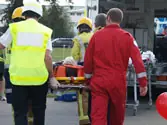
En caso de un accidente donde la ayuda ya está organizada, ¿debe detenerse a prestar auxilio?
If there is an accident where help is already organised, must you stop to help?
- ASí, en vías interurbanas o donde no exista poste SOS.Yes, on roads outside built-up areas or where there is no SOS post.
- BNo, si no está implicado debe continuar la marcha.No. If you are not involved, you must continue on your way.
- CSí, debe detenerse y colaborar siempre.Yes, you must always stop and help.
ExplanationAnyone who witnesses, comes across or is involved in an accident must help when necessary, as long as there is no risk to themselves or others. If help is already organised when you arrive, you do not have to stop. In this case it is important to continue without slowing down to look. Many accidents cause traffic jams and dangerous situations because of what is known as the 'rubbernecking' effect.
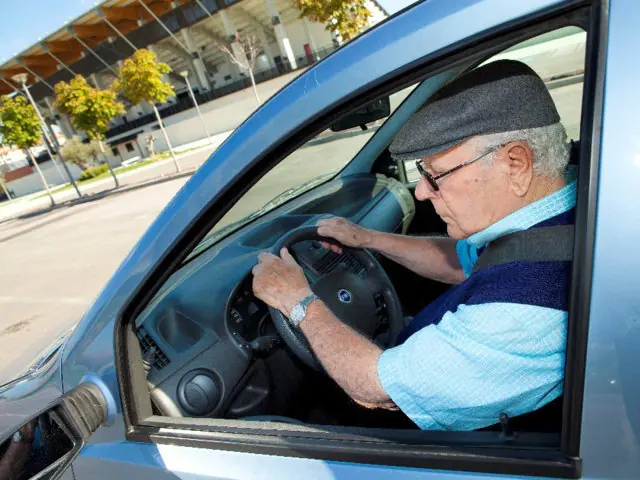
¿En qué situaciones las personas mayores tienen más riesgo de accidente de tráfico?
In which situations are older people at greater risk of a road accident?
- ACuando tienen que responder muy rápido.When they have to respond very quickly.
- BCuando hay tiempo suficiente para reaccionar.When there is enough time to react.
- CEn ninguna situación. Con la edad no se pierden capacidades.In none. People do not lose abilities with age.
ExplanationWith age, reaction time gets longer and it becomes harder to process a lot of information at once. So older people are at greater risk in situations that need a very quick response, such as a complex junction or something unexpected. They make up for this by driving more calmly and avoiding these situations.
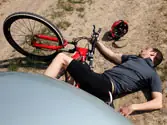
En un accidente de tráfico asistimos a un herido que presenta una hemorragia por la nariz y el oído, ¿cómo actuaremos?
In a road accident, you are helping an injured person who is bleeding from the nose and ear. What will you do?
- ATaponaremos tanto la nariz como el oído para evitar que salga sangre.Plug both the nose and the ear so that no blood comes out.
- BInclinaremos la cabeza hacia atrás y taponaremos.Tilt the head back and plug the bleeding.
- CNo taponaremos las hemorragias.Not plug the bleeding.
ExplanationWith bleeding from the nose or ear, assume it is externalised internal bleeding: internal bleeding that comes out of the body. This type of bleeding must never be plugged.
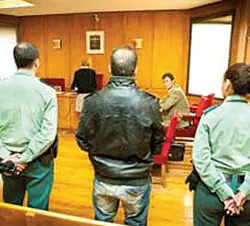
Un conductor que, pese a poder hacerlo sin riesgo, no se detiene a ayudar a una víctima grave de accidente que se encuentra desamparada, ¿podría estar cometiendo un delito?
A driver could safely stop but does not stop to help a seriously injured accident victim who has been left without help. Could they be committing a crime?
- ASí, aunque el conductor no esté implicado en el accidente.Yes, even if the driver is not involved in the accident.
- BNo; ayudar a las víctimas es un gesto de solidaridad, pero no es un deber.No. Helping victims is an act of solidarity, not a duty.
- CSí, pero solo si el conductor está implicado en el accidente.Yes, but only if the driver is involved in the accident.
ExplanationThe Criminal Code punishes failure to help as a crime. Anyone who does not help a person who is unprotected and in serious danger, when they could do so without risk to themselves or others, commits a crime, even if they took no part in the accident. If they caused the accident themselves, the penalty is higher.
En caso de incendio en el interior de un túnel o paso inferior, el conductor de un vehículo debe ...
If there is a fire inside a tunnel or underpass, the driver of a vehicle must...
- Aquedarse dentro del coche y esperar a que lleguen los servicios de emergencia.stay inside the car and wait for the emergency services.
- Bcerrar el vehículo con llave y salir del túnel.lock the vehicle and leave the tunnel.
- Cdejar las llaves puestas y salir del vehículo.leave the keys in and get out of the vehicle.
ExplanationIf a fire breaks out inside a tunnel, the driver must: move the vehicle as far to the right as possible so as not to block emergency vehicles; switch off the engine; leave the key in and not close the doors; leave the vehicle with all occupants and go quickly to the nearest shelter or exit, away from the fire. Never walk on the carriageway if there are areas closed to vehicles.
¿Qué deberá de hacer ante una fractura en un accidente de tráfico?
What should you do with a fracture in a road accident?
- AReducir la fractura.Set the fracture (put the bone back in place).
- BInmovilizar la zona de la fractura sujetando los extremos.Immobilise the area of the fracture by holding the ends.
- CElevar el miembro afectado por la fractura.Raise the limb with the fracture.
ExplanationWith a fracture you must: - cover the wound and stop the bleeding in open or complicated fractures; - not set the fracture (do not put the bone back in place); - immobilise the area of the fracture by holding the ends.
All topics
- Definitions
- Documents and penalty points
- The driver's condition
- Duties of drivers and pedestrians
- Vehicle safety devices
- Vehicle controls and equipment
- Vehicle lights and horn
- Traffic signs, markings and signals
- The road and its lanes
- Speed and distances
- Manoeuvres
- Right of way
- Carrying passengers and loads
- Driving safely in difficult conditions
- Vehicle mechanics and maintenance
- Defensive and eco-driving
Independent app: not affiliated with or endorsed by the DGT (Spain's Directorate-General for Traffic) or the Ministry of the Interior. The official exam is booked with the DGT and taken at its test centres. The questions here are practice material; the DGT's official question bank is not public.
Basado en datos de la Agencia Estatal Boletín Oficial del Estado (https://www.boe.es). Textos consolidados de carácter meramente informativo. La AEBOE no patrocina ni respalda este sitio.
Parte de las preguntas procede de los tests de la revista «Tráfico y Seguridad Vial» de la DGT, reproducidos con indicación de la fuente.