
DGT test · 626 questions
Road accidents and first aid · Page 12 of 13
What to do at a crash: protect, alert and help, basic first aid, and marking a stopped vehicle with the V-16 beacon.
Questions in this topic, with answers
626 questions, 50 per page, with the correct answer and the explanation. Page 12 of 13.

¿Debe hacer uso del chaleco reflectante de alta visibilidad si debido a una avería ocupa la calzada de una vía urbana?
Must you wear the high-visibility reflective vest if, because of a breakdown, you are on the carriageway of a road in a built-up area?
- ANo.No.
- BSí.Yes.
- CSólo en condiciones de baja luminosidad.Only in poor light.
ExplanationUnder Article 118.4 of the General Traffic Regulations (as worded by RD 518/2026), drivers of motorcycles, cars, buses, goods vehicles, dual-purpose vehicles and non-agricultural vehicle combinations must wear a high-visibility reflective vest when they get out of the vehicle and step onto the carriageway or hard shoulder of a road outside a built-up area. In built-up areas it is not compulsory.
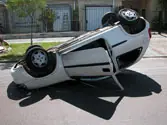
En caso de encontrarnos con un accidente en el que la ayuda no está organizada, deberemos...
If we come across an accident where help is not yet organised, we must...
- Atrasladar a los heridos lo antes posible al hospital.take the injured to hospital as soon as possible.
- BAplicar la regla P.A.S.apply the PAS rule.
- CIntentaremos cerrar tanto como podamos las heridas de los accidentados.try to close the victims' wounds as much as we can.
ExplanationTo act effectively and not be at a loss when we come across an accident, we must remember the PAS rule: PROTECT, ALERT, HELP (in Spanish PROTEGER, AVISAR, SOCORRER). It helps us remember the basic steps to take at an accident.
La mayoría de las víctimas mortales de accidentes se producen en...
Most road deaths occur on...
- Avías interurbanas.roads outside built-up areas.
- Bvías urbanas.roads in built-up areas.
- CTravesías.travesías (stretches of road through a town).
ExplanationMost casualties, especially fatal ones, occur in accidents on roads outside built-up areas, more on straight stretches than on bends.
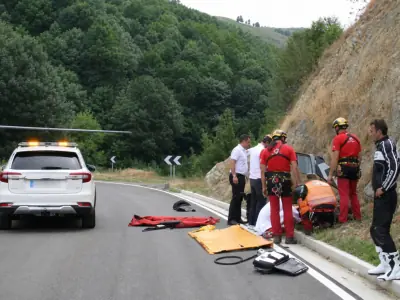
Con un herido de accidente ¿Qué debe hacer primero?
With an accident victim, what must you do first?
- ADarle alguna bebidaGive them something to drink.
- BLlevarlo al hospital en mi vehículo para que lo visitenTake them to hospital in my vehicle so that they can be seen by a doctor.
- CComprobar la respiración, el pulso y si está conscienteCheck their breathing, their pulse and whether they are conscious.
ExplanationTo check the general condition of a road accident victim, the first thing to do is check whether they are breathing, take their pulse to make sure their vital signs have not been affected, and check how conscious they are, for example by talking to them.
¿Debe moverse a los heridos?
Should injured people be moved?
- ANo, salvo que sea imprescindible por su seguridad.No, unless it is essential for their safety.
- BNo, en ningún caso.No, never.
- CSí, cuando sus lesiones no son graves.Yes, when their injuries are not serious.
ExplanationAs a general rule, injured people should not be moved, because their injuries could get worse, especially spinal injuries. They are moved only when it is essential for their safety, for example if there is a risk of fire or of being hit by a vehicle, and then keeping the head, neck and trunk in line.
La influencia del factor de riesgo del vehículo, ¿cómo se puede disminuir?
How can the influence of the vehicle as a risk factor be reduced?
- ARevisando y manteniendo el vehículo.By checking and maintaining the vehicle.
- BManteniendo limpio el motor.By keeping the engine clean.
- CRegulando bien la posición del asiento del conductor.By adjusting the driver's seat position properly.
ExplanationThe risk linked to the vehicle is reduced by good maintenance: checking the tyres, brakes, lights, steering and fluid levels, and passing the vehicle inspection (ITV). A vehicle in poor condition can fail when you need it most. Cleaning the engine or adjusting the seat does not affect this factor.
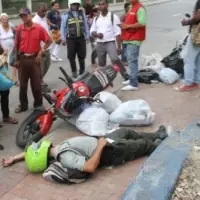
Cuando ha habido heridos en un accidente, ¿qué debe hacer?
When people have been injured in an accident, what must you do?
- AAbandonar el lugar si ya hay otros usuarios.Leave the scene if other road users are already there.
- BMover a los heridos siempre para despejar la calzada.Always move the injured to clear the carriageway.
- CAvisar a los servicios de emergencia y auxiliar a las víctimas sin agravar la situación.Call the emergency services and help the victims without making the situation worse.
ExplanationAt an accident with injured people you must follow the PAS procedure: protect the scene, alert 112 and help the victims without making their condition worse. You must not move the injured unless there is imminent danger, and you must not leave the scene.
¿Cómo se denominan los costes derivados de los primeros auxilios, el tratamiento médico, la rehabilitación y las adaptaciones tras un accidente de tráfico?
What are the costs of first aid, medical treatment, rehabilitation and adaptations after a road accident called?
- ACostes administrativosAdministrative costs.
- BCostes materialesMaterial costs.
- CCostes sanitariosHealth-care costs.
ExplanationThe correct answer is health-care costs. These cover all spending related to the victims' health and their physical or psychological recovery. They include: 1. Immediate care: first aid and medical transport (ambulances). 2. Treatment: hospital stays, surgery and medicines. 3. Recovery: physical rehabilitation and therapies. 4. Long-term effects: prostheses and adaptations needed for daily life (such as adapting the home or the vehicle). They should not be confused with material costs (damage to vehicles, the road and its surroundings) or administrative costs (insurance handling, police, fire brigade and legal services).
Una ventaja de la baliza V-16 frente a los triángulos de emergencia es que:
One advantage of the V-16 beacon over warning triangles is that:
- ASe coloca sin salir a la calzada, reduciendo el riesgo de atropello.It is put in place without stepping onto the carriageway, which reduces the risk of being hit.
- BIlumina toda la vía como si fuera de día.It lights up the whole road as if it were daytime.
- CSustituye a la obligación de usar chaleco.It replaces the obligation to wear a vest.
ExplanationThe V-16 is put in place from inside the vehicle or next to the door, so you do not have to walk on the carriageway as you would with triangles.
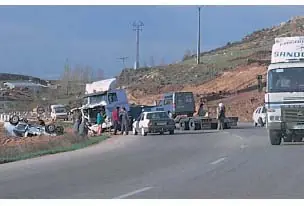
Un herido tiene quemaduras. ¿Qué debe hacer?
An injured person has burns. What should you do?
- ALimpiar la herida.Clean the wound.
- BTapar la quemadura con gasas húmedas.Cover the burn with damp gauze.
- CQuitarle la ropa pegada a la quemadura.Remove the clothing stuck to the burn.
ExplanationWith burns we must: not touch the area or remove burnt clothing; not burst or cut any blisters; not apply ointments to the burnt area; apply cold water, and if possible put the burnt area in water; cover the wound with clean dressings soaked in water and hold them in place with a bandage.
Si se ve obligado a socorrer a un accidentado de moto, entre otras consideraciones, ¿qué deberá tener en cuenta para prestar auxilio adecuadamente?
If you have to help an injured motorcyclist, what, among other things, must you bear in mind to help them properly?
- ADeberé quitarle el casco inmediatamente para permitir que respire con normalidad.I must remove their helmet immediately so that they can breathe normally.
- BMoverlo con rapidez de la calzada y situarlo en un lugar seguro.Move them quickly off the carriageway to a safe place.
- CAbrigarlo, incluso en verano, y no quitarle el casco ni moverlo.Keep them warm, even in summer, and not remove their helmet or move them.
ExplanationAn injured motorcyclist may have multiple injuries. We must not move them or remove the helmet, as this could make head and neck injuries worse. We keep the victim warm because after an impact the body may go into shock and lose heat quickly. Keeping them warm stops them getting cold, stops the shock getting worse and helps keep their vital signs more stable until medical help arrives.

Para hacer la respiración boca a boca a un herido, ¿qué tendremos que hacer en primer lugar?
To give mouth-to-mouth resuscitation to an injured person, what must we do first?
- APoner al herido en posición de defensa.Place the injured person in the recovery position.
- BAbrir y limpiar las vías respiratorias.Open and clear the airway.
- CTaparle la nariz.Pinch their nose.
ExplanationWith an unconscious injured person, we first check that nothing is blocking air from getting into their lungs. Once we have checked, we can give mouth-to-mouth resuscitation by pinching the person's nose and blowing air into their lungs.
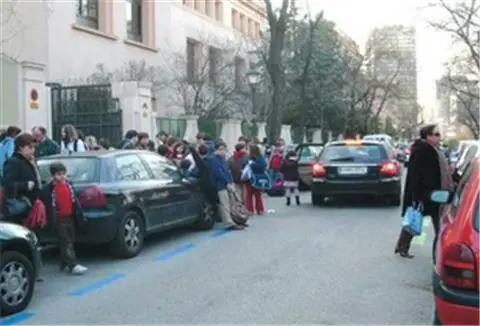
Como peatones, los niños de 6 a 10 años, ¿son un grupo de riesgo en el tráfico?
As pedestrians, are children aged 6 to 10 a risk group in traffic?
- ASí; entre otras razones, porque suelen desconocer las normas y señales de tráfico.Yes; among other reasons, because they often do not know the traffic rules and signs.
- BSí; entre otras razones, porque su campo visual es ilimitado y su visión periférica es mayor.Yes; among other reasons, because their field of vision is unlimited and their peripheral vision is wider.
- CNo; los niños no son un grupo de riesgo en el tráfico.No; children are not a risk group in traffic.
ExplanationYes. Children aged 6 to 10 are at-risk pedestrians because they often do not know the rules and signs, are easily distracted, misjudge the speed of vehicles and, because of their height, see less well and are less easily seen. Their field of vision is also narrower than an adult's.
Los accidentes de tráfico, ¿son una de las principales causas de mortalidad juvenil en España?
Are road accidents one of the main causes of death among young people in Spain?
- ASí, son una de las principales causas de mortalidad y lesiones de los jóvenes.Yes, they are one of the main causes of death and injury among young people.
- BNo, pero sí es la principal causa de lesiones.No, but they are the main cause of injury.
- CNo, pero sí en otros países.No, but they are in other countries.
ExplanationIn 2017 road accidents in Spain killed 1,200 people, which is more than 3 deaths a day, many of them young people.
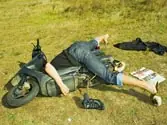
La mayoría de accidentes de motocicleta se producen...
Most motorcycle accidents happen...
- Aen un accidente en solitario.in a single-vehicle accident.
- Ben una colisión entre 2 vehículos.in a collision between 2 vehicles.
- Cen una colisión múltiple.in a multiple-vehicle collision.
Explanation67% of motorcycle accidents are head-on, front-to-side or rear-end collisions between two vehicles.
¿Son evitables los accidentes de circulación?
Are road accidents avoidable?
- ASí, en general, son sucesos predecibles.Yes, in general they are predictable events.
- BNo, se dan al azar.No, they happen by chance.
- CSólo mejorando el estado de las vías.Only by improving the condition of the roads.
ExplanationRoad accidents are generally predictable events. If they were truly “accidental”, they would depend only on how much time a person spends at the wheel. But this is not the case: certain circumstances of the vehicle, the road, the surroundings and, above all, the driver increase the probability of an accident happening or of it being more serious. These circumstances are the so-called “risk factors”, and by avoiding them we reduce the chance of having a road accident to a minimum.
¿Cuántos chalecos reflectantes debemos llevar obligatoriamente dentro del habitáculo del vehículo?
How many reflective vests must we carry inside the vehicle by law?
- AUno, aunque sería recomendable llevar dos.One, although it would be advisable to carry two.
- BUno para el conductor y otro para el acompañante.One for the driver and one for the passenger.
- CTantos como personas transportemos en nuestro vehículo.As many as the number of people we carry in our vehicle.
ExplanationYou must carry one approved high-visibility reflective vest inside the vehicle, although it would be advisable to carry at least one more for the passenger.
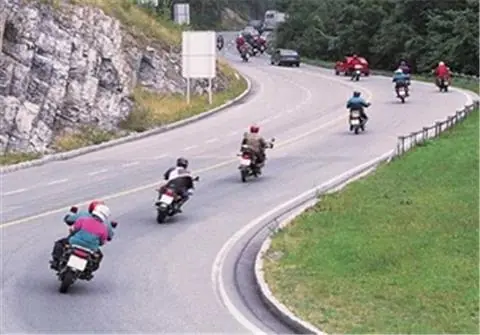
Si un conductor de motocicleta presencia un accidente de tráfico, ¿está obligado a auxiliar o solicitar auxilio para ayudar a las víctimas?
If a motorcycle rider witnesses a road accident, must they help the victims or call for help?
- ASolo si tenemos conocimientos de primeros auxilios.Only if you know first aid.
- BSí, en cuanto le sea posible.Yes, as far as they can.
- CNo, un conductor de motocicleta no tiene esta obligación.No, a motorcycle rider does not have this obligation.
ExplanationAny road user who witnesses an accident, whatever their vehicle, must help the victims or call for help, as far as possible (Article 129 of the General Traffic Regulations). You do not need to know first aid: it is enough to call 112 and protect the scene.
Durante el día, ¿debe ponerse el chaleco reflectante un conductor que esté en la calzada?
During the day, must a driver who is on the carriageway wear a reflective vest?
- ASí, en carreteras interurbanas.Yes, on roads outside built-up areas.
- BNo, cuando la visibilidad sea buena.No, when visibility is good.
- CSí, en todo tipo de vías.Yes, on all types of road.
ExplanationUnder Article 118.4 of the General Traffic Regulations, drivers must put on the high-visibility reflective vest when they get out of the vehicle and go onto the carriageway or hard shoulder of a road outside built-up areas, both by day and at night. In built-up areas it is not compulsory.
De los siguientes síntomas que puede presentar un herido en accidente de circulación, ¿cuál cree Ud. que es más significativo de una fractura de hueso?
Which of the following symptoms that a road accident victim may show do you think is the clearest sign of a broken bone?
- APérdida de sensibilidad (el herido no sabe si se le toca o si se le pincha).Loss of feeling (the injured person cannot tell whether they are being touched or pricked).
- BPérdida de consciencia.Loss of consciousness.
- CDeformidad de la zona lesionada.Deformity of the injured area.
ExplanationDeformity of the injured area is a very clear sign of a broken bone. When a bone breaks, the affected part may look twisted or out of place, which clearly indicates a fracture.
¿Cuándo deberá usar el chaleco reflectante un conductor?
When must a driver wear the reflective vest?
- ACuando salga de su vehículo, tanto de día como de noche, en vías urbanas e interurbanas.When getting out of the vehicle, by day and by night, on roads both in and outside built-up areas.
- BCuando salga de su vehículo, solamente durante la noche, y ocupe la calzada o el arcén en vías interurbanas.When getting out of the vehicle, only at night, and stepping onto the carriageway or hard shoulder of roads outside built-up areas.
- CCuando salga de su vehículo, tanto de día como de noche, y ocupe la calzada o el arcén en vías interurbanas.When getting out of the vehicle, by day and by night, and stepping onto the carriageway or hard shoulder of roads outside built-up areas.
ExplanationA driver must wear the reflective vest when getting out of the vehicle, by day and by night, and stepping onto the carriageway or hard shoulder of roads outside built-up areas.
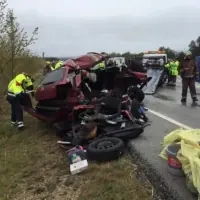
Al auxiliar a una víctima de un accidente de tráfico ¿debe darle alimentos o bebidas?
When helping a road accident victim, should you give them food or drink?
- ASí, si lo pide.Yes, if they ask for it.
- BAlimentos no, pero bebidas sí.No food, but drinks are fine.
- CNo.No.
ExplanationAs a general rule you should not give food or drink to the injured, and never alcoholic drinks.
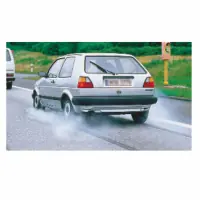
Ante una frenada de emergencia, ¿cómo debe actuar?
How should you act in an emergency stop?
- ADe diferente manera si mi vehículo tiene frenos convencionales o dispone de ABS.Differently, depending on whether my vehicle has conventional brakes or ABS.
- BDe igual manera si mi vehículo tiene frenos convencionales o dispone de ABS.In the same way, whether my vehicle has conventional brakes or ABS.
- CNo pisando el embrague en ningún momento de la frenada, en cualquier caso.By never pressing the clutch at any point while braking, in all cases.
ExplanationWhat you do in an emergency stop is not the same with conventional brakes as with ABS. If our vehicle has ABS, we must press the brake fully and the clutch at the same time so that the transmission does not interfere with braking. It is important not to release the brake pedal until the vehicle has come to a complete stop. Without ABS, keep constant pressure on the brake, lifting your foot when you feel the wheels lock. Then brake again smoothly and firmly once you regain control of the vehicle, repeating this as many times as necessary and without pressing the pedal all the way down.
Una de las principales causas de mortalidad en los accidentes de moto y ciclomotor es...
One of the main causes of death in motorcycle and moped accidents is...
- Ano utilizar el casco.not wearing a helmet.
- Bel arrollamiento por otros vehículos.being run over by other vehicles.
- Clos golpes contra el asfalto en las caídas.hitting the road surface in falls.
ExplanationOne of the main causes of death in motorcycle and moped accidents is riders and passengers not wearing a helmet. In 2017, 185 of the people killed were not using safety devices (seat belt or helmet) at the time of the accident.
¿Es obligatorio llevar en su turismo el chaleco reflectante?
Is it compulsory to carry the reflective vest in your car?
- ANo es obligatorio, pero sí una buena medida de seguridad.It is not compulsory, but it is a good safety measure.
- BSí, en un lugar en el que pueda alcanzarlo sin tener que bajar del vehículo.Yes, in a place where you can reach it without having to get out of the vehicle.
- CSí, es suficiente con llevarlo en el maletero del vehículo.Yes, it is enough to carry it in the boot of the vehicle.
ExplanationYes: the law requires the reflective vest to be kept where it can be reached without getting out of the vehicle. This is important for the safety of the driver and passengers, especially in emergencies.
Los accidentes de tráfico son una de las principales causas de...
Road accidents are one of the main causes of...
- Amortalidad y lesiones.death and injury.
- Bmortalidad, únicamente.death only.
- Clesiones, solamente.injury only.
ExplanationRoad accidents are one of the main causes of death and injury in our country. The WHO considers this a priority public health problem. To avoid accidents and their harmful consequences, we need a responsible attitude to traffic and good knowledge of road safety.
Si por causa de una avería nos vemos obligados a empujar la motocicleta, se nos considerará...
If, because of a breakdown, we have to push our motorcycle, we are considered...
- APeatón.A pedestrian.
- BConductor.A driver.
- CTitular.The registered keeper (titular).
ExplanationIf, because of a breakdown, we have to push our motorcycle, we are considered a driver. This is because, by definition, a driver is a person who operates the steering or is in control of a vehicle, or who is in charge of one or more animals. In this case, although we are pushing the motorcycle instead of riding it normally, we are still responsible for the vehicle and in control of its steering. So we are considered drivers in this situation.
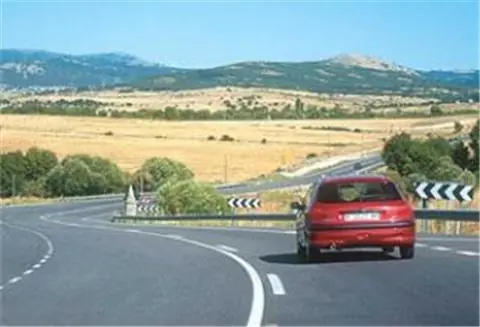
¿Se considera el entorno de la vía un factor de riesgo?
Are the road's surroundings considered a risk factor?
- ANo, únicamente es un factor de riesgo la vía.No, only the road itself is a risk factor.
- BSí.Yes.
- CSí, pero sólo en carreteras convencionales.Yes, but only on conventional roads.
ExplanationAmong the main risk factors in driving, the road factor, the human factor and the vehicle factor are the ones present in most road accidents. Within the road factor there are several elements that can put driving at risk: the design of the road, its surroundings or a poor road surface.
La mayoría de los atropellos a niños ocurre...
Most accidents in which children are hit by vehicles happen…
- Alos fines de semana.at weekends.
- Bal salir del colegio.when they come out of school.
- Cal empezar las clases.when classes start.
ExplanationMost accidents in which children are hit by vehicles happen when school finishes: many children come out at the same time, they are distracted, in a hurry or playing, and they may cross without looking between parked cars. Near schools you must slow down and pay extra attention.
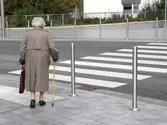
¿Cuándo suelen tener mas accidente las personas mayores como peatones?
When do older people tend to have more accidents as pedestrians?
- ACuando van solos.When they are alone.
- BCuando van acompañados por niños.When they are with children.
- CCuando van acompañados por otra persona mayor.When they are with another older person.
ExplanationOlder people tend to have more accidents when they are alone than when they are accompanying children. When they are with children, they usually take extra care so that nothing happens to the children.
Las personas mayores, como peatones, suelen tener menos accidentes...
Older people, as pedestrians, tend to have fewer accidents...
- ACuando acompañan a niños.When they are accompanying children.
- BCuando van solos.When they are alone.
- CCuando van con otras personas mayores.When they are with other older people.
ExplanationOlder people who are looking after children tend to take extra care, so they are less likely to have an accident.
Las personas mayores como peatones, ¿tienen mayor probabilidad de sufrir atropellos?
Are older people, as pedestrians, more likely to be hit by vehicles?
- ANo, caminan con más lentitud y observan mejor las situaciones.No, they walk more slowly and observe situations better.
- BSí, pues pueden tener problemas de audición o de vista.Yes, because they may have hearing or sight problems.
- CTienen la misma probabilidad de ser atropellados que una persona joven.They are as likely to be hit as a young person.
ExplanationOlder people are hit by vehicles more often than young people: they find it harder to judge the speed of vehicles, they have hearing problems, they may not be able to tell the colours of traffic lights, etc.
La mayoría de los accidentes se deben a...
Most accidents are due to...
- Ael factor humano.the human factor.
- Bla vía y el entorno.the road and its surroundings.
- Cel vehículo.the vehicle.
ExplanationA large proportion of road accidents are caused by the human factor, which includes errors of judgement, lack of attention and other negligence by the driver. According to the General Traffic Regulations, drivers must be aware of their responsibility and of how their behaviour on the road can affect the safety of all road users. This is in line with the rules that stress the need for a respectful and cooperative attitude towards other road users.
Si en un accidente hay varios heridos, ¿a cuál atenderemos primero?
If there are several injured people in an accident, who should we help first?
- AAl que tiene un golpe y chilla constantemente.The one who has been hit and is screaming constantly.
- BAl que tiene una hemorragia.The one who is bleeding.
- CAl que está inconsciente.The one who is unconscious.
ExplanationWe must help the unconscious person first, because they may be in a more serious condition and their life may be at risk. The initial check of consciousness is crucial to decide how urgently medical care is needed.
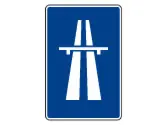
Por causa de avería y durante el día, ¿qué deberá hacer en caso de una inmovilización del vehículo en una autopista?
What must you do if your vehicle breaks down and is immobilised on a motorway (autopista) during the day?
- AColocar 2 triángulos de preseñalización de peligro a 50 metros y visibles a 100 metros.Place 2 warning triangles 50 metres away, visible from 100 metres.
- BColocar el dispositivo de preseñalización de peligro en la parte más alta posible del vehículo inmovilizado garantizado su máxima visibilidad , y encender el alumbrado de emergencia.Place the hazard warning device on the highest possible part of the immobilised vehicle, ensuring maximum visibility, and switch on the hazard warning lights.
- CAvisar lo antes posible mediante un poste de SOS.Report it as soon as possible from an SOS emergency phone post.
ExplanationIf the vehicle is immobilised on a motorway or dual carriageway, the hazard warning lights must always be used, even during the day, and if the cause is a breakdown the hazard warning device must also be placed. The V-16 hazard warning device is a type-approved amber flashing light with geolocation, powered by its own battery. It must be placed on the highest part of the immobilised vehicle to ensure maximum visibility. At present the V-16 is the only legal option for signalling an immobilised vehicle or an obstacle on the road; warning triangles are no longer used.
Una de las principales causas de muerte en los accidentes de moto y ciclomotor es...
One of the main causes of death in motorcycle and moped accidents is...
- Ano llevar casco.not wearing a helmet.
- Bser arrollado por otros vehículos.being run over by other vehicles.
- Cgolpes contra el asfalto en las caídas.hitting the road surface in falls.
ExplanationUnder Article 118.1 of the General Traffic Regulations (as worded by RD 518/2026), riders and passengers of motorcycles and mopeds must wear a properly fastened protective helmet on all types of road. Not wearing one exposes them to serious head injuries and is one of the main causes of death in these accidents.
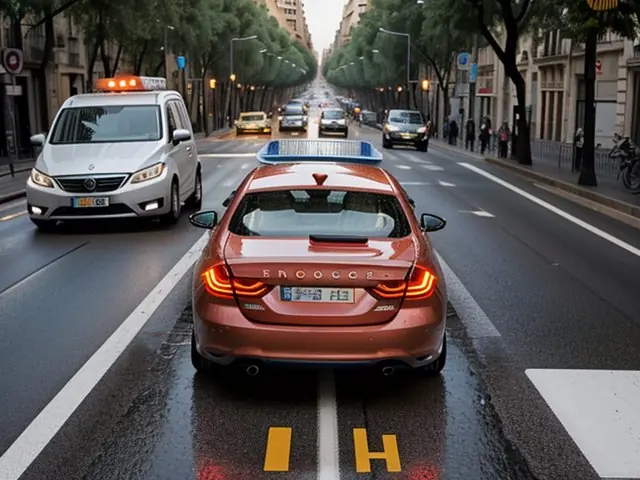
¿Qué factores intervienen en un accidente?
Which factors play a part in an accident?
- AEl factor humano, exclusivamente.Only the human factor.
- BEl factor humano, el factor vía y entorno y el factor vehículo.The human factor, the road and surroundings factor, and the vehicle factor.
- CEl factor vía y el factor humano exclusivamente.Only the road factor and the human factor.
ExplanationThe factors that play a part in an accident are: the human factor, in 70–90% of cases; the road and surroundings factor, in 10–35%; and the vehicle factor, in 4–13%.
Si estamos implicados en un accidente con heridos graves, ¿debemos permanecer en el lugar de los hechos hasta que llegue la autoridad competente?
If we are involved in an accident with seriously injured people, must we stay at the scene until the relevant authorities arrive?
- ASí.Yes.
- BNo, salvo que sea el culpable.No, unless I am the one to blame.
- CSí, pero sólo si alguna persona implicada en el accidente lo solicita.Yes, but only if someone involved in the accident asks me to.
ExplanationThe correct answer is “Yes”, because it is important to stay at the scene until the relevant authorities arrive. This is necessary to cooperate with the investigation and provide any relevant information about the accident. Also, if there are seriously injured people, it is essential to help them and wait for the emergency medical services to arrive.
El chaleco reflectante de alta visibilidad:
The high-visibility reflective vest:
- ADebe usarse al bajar del vehículo en la calzada o el arcén de vías interurbanas.Must be worn when getting out of the vehicle onto the carriageway or hard shoulder of roads outside built-up areas.
- BSolo es obligatorio para conductores profesionales.Is only compulsory for professional drivers.
- CNo sirve de nada de día.Is of no use during the day.
ExplanationYou must put it on before getting out of the vehicle onto the carriageway or hard shoulder of a road outside a built-up area, so that you can be seen.
Si por una emergencia nos vemos obligados a efectuar una detención en el interior de un túnel, ¿qué deberemos hacer?
If, because of an emergency, we have to stop inside a tunnel, what must we do?
- AImpedir que los ocupantes del vehículo lo abandonen.Prevent the occupants from leaving the vehicle.
- BSalir del vehículo y obligar a los demás usuarios a auxiliarnos.Get out of the vehicle and make other road users help us.
- CSolicitar auxilio empleando el poste de socorro.Call for help using the emergency (SOS) post.
ExplanationUnder Article 97.3 of the General Traffic Regulations, if your vehicle is immobilised in a tunnel because of an emergency, you must switch off the engine, switch on the hazard warning lights, keep the sidelights on, place and switch on the light-emitting hazard warning device (V-16), and call for help without delay from the nearest emergency (SOS) post, if there is one. The occupants will leave the vehicle and go to the nearest shelter or exit.
¿Es obligatorio llevar un extintor de incendios en un turismo con remolque destinado al servicio privado?
Is it compulsory to carry a fire extinguisher in a private car towing a trailer?
- ANo.No.
- BSí.Yes.
- CSí, cuando transporte a más de 5 personas incluido el conductor.Yes, when it is carrying more than 5 people including the driver.
ExplanationYes. Annex XII of the General Vehicle Regulations requires an approved fire extinguisher to be carried by buses, goods vehicles over 3,500 kg and combinations of non-special vehicles, such as a car with a trailer, whether in private use or not and however many people it carries.
¿En qué época del año se producen más accidentes?
At what time of year do most accidents happen?
- ADurante todo el año se produce el mismo índice de accidentes.The accident rate is the same all year round.
- BDurante los periodos de vacaciones, semana santa, verano y diciembre.During holiday periods: Easter, summer and December.
- CDurante semana santa.During Easter.
ExplanationMost accidents happen during holiday periods, especially at Easter, during the summer holiday departure and return periods, and during the Christmas holidays. During the day, most accidents happen at the times when people go to or leave work, especially at the end of the working day.

¿Es obligatorio llevar un botiquín de primeros auxilios?
Is it compulsory to carry a first aid kit?
- ASí.Yes.
- BNo.No.
- CSí, para circular por vías interurbanas.Yes, for driving on interurban roads.
ExplanationAlthough it is not compulsory, it is advisable to carry a first aid kit with gloves, pads, bandages, gauze, sterile dressings, a large scarf, sticking plaster, scissors, tweezers, safety pins and some disinfectant solution.
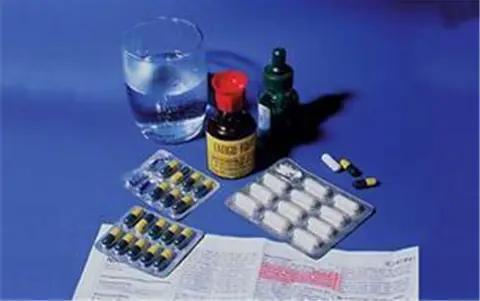
¿Qué enfermedades tienen mayor riesgo de accidente?
Which illnesses carry a higher risk of crashes?
- ALas dermatológicas.Skin conditions.
- BLas respiratorias.Respiratory illnesses.
- CLos trastornos neurológicos y las enfermedades mentales.Neurological disorders and mental illnesses.
ExplanationNeurological disorders, such as epilepsy, and mental illnesses are the ones that most increase the risk of a crash, because they can affect consciousness, attention or judgement. That is why they are checked with particular care in the medical examination for the licence.
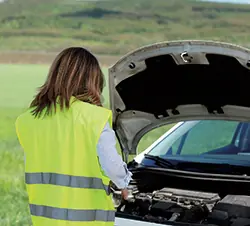
Si sufre una avería y tiene que salir de su vehículo, ¿en cuál de los siguientes casos debe utilizar el chaleco reflectante?
If you break down and have to get out of your vehicle, in which of the following cases must you wear the reflective vest?
- AAl ocupar el arcén en vías interurbanas.When stepping onto the hard shoulder of roads outside built-up areas.
- BSolamente al ocupar la calzada o el arcén en autopistas o autovías.Only when stepping onto the carriageway or hard shoulder of motorways (autopistas) or dual carriageways (autovías).
- CAl ocupar la calzada en vías urbanas.When stepping onto the carriageway of roads in built-up areas.
ExplanationThe reflective vest is compulsory whenever you get out of the vehicle and step onto the carriageway or hard shoulder of a road OUTSIDE a built-up area (any road, not only motorways and dual carriageways). It makes the driver visible and reduces the risk of being hit. Note: in built-up areas it is not compulsory (although it is advisable), and it is not required if you stay inside the vehicle.
Para realizar un masaje cardíaco a una víctima de accidente de circulación, lo correcto es situarse de rodillas...
To give cardiac massage to a road accident victim, the correct thing is to kneel...
- AA un lado del herido.To one side of the injured person.
- BJunto a la cabeza del herido.Next to the injured person's head.
- CA los pies del herido.At the injured person's feet.
ExplanationKneeling to one side of the injured person is the best position for cardiac massage. It gives proper access to the victim's chest and makes the movement needed for the compressions easier. Being at the side also lets you see the injured person's face and check whether there is any response or whether they need further help.
¿Dónde se localizan las lesiones más graves en los ciclistas que son víctimas de un atropello?
Where are the most serious injuries in cyclists who are hit by a vehicle?
- Aen todo el cuerpoall over the body
- Ben la cabezain the head
- Cen las extremidadesin the limbs
ExplanationThe correct option is the head, because the most serious injuries to cyclists who are hit by a vehicle are usually traumatic and can threaten vital functions, especially in the head, where the brain and other vital organs are. According to the General Traffic Regulations, drivers must take special care with cyclists, who have priority in certain circumstances, which stresses the importance of protecting all road users.
¿En qué tipo de vías se producen más accidentes con víctimas mortales?
On which type of road do most fatal accidents happen?
- AEn las travesías.On travesías (stretches of road through a town).
- BEn las autopistas dentro de poblado.On motorways (autopistas) inside built-up areas.
- CEn las vías interurbanas.On roads outside built-up areas.
ExplanationMost fatal accidents happen on roads outside built-up areas, especially on conventional roads, because of the higher speeds, head-on collisions and vehicles leaving the road. In built-up areas there are more accidents, but they are less serious.
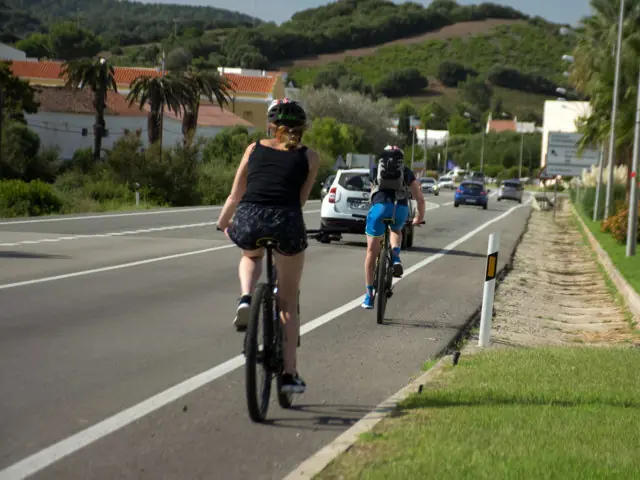
¿En qué tipo de vía se producen con mayor frecuencia los accidentes mortales de ciclistas?
On which type of road do fatal cyclist accidents happen most often?
- AEn autopistas.On motorways (autopistas).
- BEn carreteras convencionales.On conventional roads.
- CDentro de poblado.In built-up areas.
ExplanationAccording to DGT accident data, most cyclists who are killed die on conventional roads, where they share the road with fast-moving vehicles and collisions are more violent. Bicycles are not allowed on motorways.
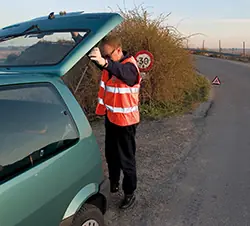
El conductor de un turismo utilizará un chaleco reflectante de alta visibilidad cuando salga del vehículo y ocupe...
A car driver must wear a high-visibility reflective vest when getting out of the vehicle and stepping onto...
- ALa calzada o el arcén de las vías interurbanas.The carriageway or hard shoulder of roads outside built-up areas.
- BLa calzada de las vías interurbanas, pero no cuando ocupe el arcén.The carriageway of roads outside built-up areas, but not the hard shoulder.
- CLa calzada o el arcén de todo tipo de vías, tanto urbanas como interurbanas.The carriageway or hard shoulder of all types of road, both in and outside built-up areas.
ExplanationThe high-visibility reflective vest is compulsory when the driver gets out of the vehicle and steps onto the carriageway or hard shoulder of a road outside a built-up area: it makes them visible from a distance and reduces the risk of being hit.
All topics
- Definitions
- Documents and penalty points
- The driver's condition
- Duties of drivers and pedestrians
- Vehicle safety devices
- Vehicle controls and equipment
- Vehicle lights and horn
- Traffic signs, markings and signals
- The road and its lanes
- Speed and distances
- Manoeuvres
- Right of way
- Carrying passengers and loads
- Driving safely in difficult conditions
- Vehicle mechanics and maintenance
- Defensive and eco-driving
Independent app: not affiliated with or endorsed by the DGT (Spain's Directorate-General for Traffic) or the Ministry of the Interior. The official exam is booked with the DGT and taken at its test centres. The questions here are practice material; the DGT's official question bank is not public.
Basado en datos de la Agencia Estatal Boletín Oficial del Estado (https://www.boe.es). Textos consolidados de carácter meramente informativo. La AEBOE no patrocina ni respalda este sitio.
Parte de las preguntas procede de los tests de la revista «Tráfico y Seguridad Vial» de la DGT, reproducidos con indicación de la fuente.