
DGT test · 626 questions
Road accidents and first aid · Page 13 of 13
What to do at a crash: protect, alert and help, basic first aid, and marking a stopped vehicle with the V-16 beacon.
Questions in this topic, with answers
626 questions, 50 per page, with the correct answer and the explanation. Page 13 of 13.
Su turismo queda inmovilizado por avería en una autopista. ¿Cómo debe señalizar el peligro a partir de 2026?
Your car has broken down and is immobilised on a motorway (autopista). How must you signal the danger from 2026 onwards?
- AColocando dos triángulos de preseñalización a 50 metros mínimo.By placing two warning triangles at least 50 metres away.
- BColocando la señal luminosa V-16 conectada en la parte más alta del vehículo sin salir a la calzada.By placing the connected V-16 warning light on the highest part of the vehicle without stepping onto the carriageway.
- CCaminando por el arcén para poner un triángulo a 100 metros.By walking along the hard shoulder to place a triangle 100 metres away.
ExplanationSince January 2026 the rules require the use of the connected V-16 beacon with geolocation, which you put in place by reaching out of the vehicle with your arm, without leaving the vehicle.
Si a consecuencia de circunstancias especialmente graves, usted se ve forzado, porque no puede recurrir a otro medio, a trasladar en su turismo a un herido en accidente de circulación, ¿está obligado a respetar las normas de circulación?
If, because of especially serious circumstances and because no other means is available, you are forced to take a road accident victim to hospital in your car, must you obey the traffic rules?
- ASí, en todo caso.Yes, in all cases.
- BNo, porque realizo un servicio urgente.No, because I am providing an urgent service.
- CSí, pero únicamente las relativas a comportamiento en intersecciones.Yes, but only those relating to behaviour at junctions.
ExplanationIt is important to obey the traffic rules at all times, even when taking an injured person to hospital. The rules are designed to ensure the safety of all road users. Ignoring them could put in danger not only the injured person but also other drivers and pedestrians. So you must always drive carefully and follow the traffic rules, even in emergencies.
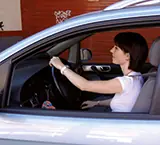
¿Qué factor se relaciona con los accidentes juveniles?
Which factor is linked to accidents among young people?
- ALa falta de reflejos.Lack of reflexes.
- BLa falta de mantenimiento del vehículo.Lack of vehicle maintenance.
- CLa menor percepción del riesgo.A lower perception of risk.
ExplanationYoung drivers tend to underestimate danger and overestimate their abilities. This lower perception of risk is one of the key factors in their accidents.
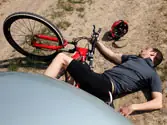
En caso de atropello a un ciclista, ¿qué lesiones son las de más importancia?
When a cyclist is hit by a vehicle, which injuries are the most important?
- ALas lesiones sufridas en las manos.Injuries to the hands.
- BLas lesiones sufridas en las piernas.Injuries to the legs.
- CLas lesiones sufridas en la cabeza.Injuries to the head.
ExplanationHead injuries are the most serious when a cyclist is hit by a vehicle. If the cyclist wears a helmet, the probability of serious injury can be up to 3 times lower.
En caso de hemorragia grave que no se detiene con presión directa, ¿qué se debe hacer?
In the case of serious bleeding that does not stop with direct pressure, what should be done?
- ARetirar la compresión cada 2 minutos.Remove the pressure every 2 minutes.
- BMantener la presión y elevar la zona lesionada si es posible.Keep up the pressure and raise the injured area if possible.
- CDarle agua al herido para evitar el shock.Give the injured person water to prevent shock.
ExplanationWith serious bleeding, the first step is always to apply direct pressure on the wound to try to stop the loss of blood. If the bleeding is not controlled, do not remove the pressure; keep it up continuously. Also, whenever possible, raise the injured area above the level of the heart to reduce blood flow and help reduce the bleeding.
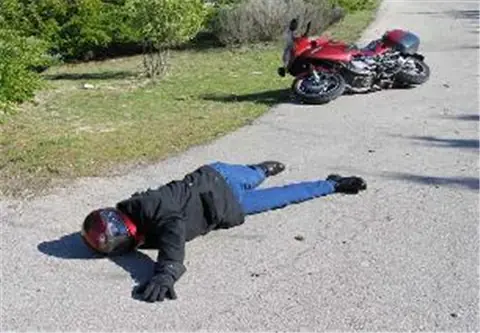
A un motorista herido en accidente de tráfico, ¿debe quitar el casco?
Should you remove the helmet of a motorcyclist injured in a road accident?
- ANo, como norma general.No, as a general rule.
- BSí, para que respire mejor.Yes, so that they can breathe better.
- CHaré lo que el me diga.I will do what they tell me.
ExplanationAs a general rule you should not remove an injured motorcyclist's helmet, because doing so may make a possible neck (cervical spine) injury worse. It is only removed if it is essential, for example because they are not breathing, and it must be done by someone who knows the technique.
¿Cuál es el comportamiento adecuado con un herido en accidente de tráfico?
What is the right way to treat a road accident victim?
- AMantener su cuello inmovilizado para evitar lesiones en la médula.Keep their neck still to avoid spinal cord injuries.
- BDarle agua o zumo para no pierda la consciencia.Give them water or juice so that they do not lose consciousness.
- CDarle algún medicamento que lo tranquilice.Give them some medicine to calm them down.
ExplanationA road accident victim's neck and spine must be kept still, because a sudden movement can damage the spinal cord. Do not give them anything to drink or any medicine, as they may need surgery or their condition may get worse.
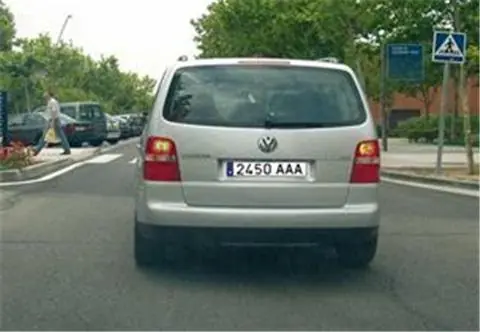
Un vehículo que dispone de la última tecnología, ¿puede sufrir un accidente?
Can a vehicle with the latest technology have a crash?
- ANo.No.
- BSí, porque la tecnología no aumenta la seguridad, sino la comodidad en la conducción.Yes, because technology does not increase safety, only driving comfort.
- CSí, cuando no se hace un uso adecuado.Yes, when it is not used properly.
ExplanationThe most modern safety systems reduce the risk but do not eliminate crashes. If the driver does not know how to use them, or trusts them too much and pays less attention or drives faster, a crash is still possible.
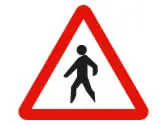
¿Cuál de las siguientes, se considera una conducta de riesgo por parte de los peatones?
Which of the following is considered risky behaviour by pedestrians?
- ACruzar la calzada por los lugares habilitados y señalizados para ello.Crossing the carriageway at places provided and marked for crossing.
- BCruzar la calzada de forma antirreglamentaria.Crossing the carriageway against the rules.
- CTransitar por el arcén izquierdo en vías fuera de poblado.Walking on the left-hand hard shoulder on roads outside built-up areas.
ExplanationPedestrians being hit by vehicles is the type of accident that causes the most deaths in built-up areas.
Usted ha sufrido una avería en su vehículo y lo ha dejado inmovilizado en el arcén. ¿Debe señalizarlo?
Your vehicle has broken down and you have left it immobilised on the hard shoulder. Must you signal it?
- ANo, porque el vehículo no está en la calzada.No, because the vehicle is not on the carriageway.
- BSí, únicamente con las luces de posición.Yes, only with the sidelights.
- CSí, con la señal de emergencia del vehículo, el dispositivo luminoso V-16 y, en su caso, con las luces de posición.Yes, with the vehicle's hazard warning lights, the V-16 warning light and, where appropriate, the sidelights.
ExplanationIt must be signalled with the hazard warning lights, the V-16 warning light must be placed on the highest part of the vehicle, and at night or in poor visibility the sidelights must be kept on.
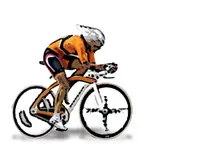
Cuando los ciclistas sufren un accidente de circulación, sus lesiones de mayor importancia se localizan en...
When cyclists have a road accident, their most important injuries are to...
- ALas extremidades.The limbs.
- BEl tronco.The trunk.
- CLa cabeza.The head.
ExplanationIn cyclist accidents the most serious injuries are to the head, which is why a helmet is essential. It is compulsory on roads outside built-up areas and, for under-16s, on all types of road.
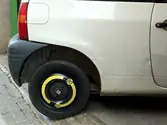
Si su vehículo lleva rueda de emergencia de uso temporal deberá...
If your vehicle has a temporary-use emergency spare wheel, you must...
- ALlevarla inflada a la máxima presión recomendada por el fabricante.Keep it inflated to the maximum pressure recommended by the manufacturer.
- BCircular con ella sin limitación de velocidad ni de distancia.Drive on it with no limit on speed or distance.
- CCircular con ella el tiempo indispensable para llevar el vehículo al taller más cercano.Drive on it only for as long as needed to take the vehicle to the nearest garage.
ExplanationSome vehicles carry an emergency or temporary-use wheel instead of a full spare wheel. In that case, if you have to drive after a puncture or blowout, you must respect the wheel's own limits (emergency wheels are usually limited to 80 km/h and allow between 50 and 200 km) and drive only for as long as needed to take the vehicle to the nearest repair centre. If the question were about a full spare wheel, the correct answer would be that its inflation pressure must be the highest of those recommended by the manufacturer.
¿Durante cuánto tiempo realizaremos una reanimación a un herido inconsciente que no respira?
For how long should we continue resuscitation on an unconscious injured person who is not breathing?
- ADurante 2 minutos como máximo.For 2 minutes at most.
- BDurante 10 minutos como máximo.For 10 minutes at most.
- CHasta que llegue la ayuda especializada o el herido empiece a respirar.Until specialist help arrives or the injured person starts breathing.
ExplanationTo perform cardiopulmonary resuscitation on an unconscious injured person who is not breathing, we must give 30 chest compressions and 2 mouth-to-mouth breaths, until specialist help arrives or the person starts breathing.
¿Cuál es la función del registrador de datos de eventos (EDR)?
What is the function of the event data recorder (EDR)?
- AAlmacena información sobre el funcionamiento y el estado del vehículo antes, durante y después de un accidente.It stores information about how the vehicle was working and its condition before, during and after an accident.
- BGraba las conversaciones dentro del vehículo para mejorar la experiencia del usuario.It records conversations inside the vehicle to improve the user experience.
- CAlmacena la música y los programas de entretenimiento reproducidos en el sistema de audio del vehículo.It stores the music and entertainment programmes played on the vehicle's audio system.
ExplanationThe event data recorder (EDR) stores crucial information about how the vehicle was operating and its condition at key moments, such as before, during and after an accident. This is vital for accident investigation and for deciding who is responsible, in line with Spanish traffic rules that aim to improve road safety. Knowing the circumstances of a crash allows the authorities and insurers to make informed decisions based on accurate data.
A los heridos en accidente de circulación, hasta que llegue la correspondiente ayuda, ¿se les debe abrigar?
Until help arrives, should road accident victims be kept warm?
- ANo, como norma general, sólo se hará en el caso de que el herido lo pida.No, as a general rule; only if the injured person asks.
- BSí, como norma general, tanto en invierno como en verano, para evitar la pérdida de calor.Yes, as a general rule, both in winter and in summer, to prevent loss of body heat.
- CSí, pero sólo a los que se estime que está graves.Yes, but only those who are thought to be seriously injured.
ExplanationYes: keeping the injured warm is essential to prevent heat loss, whatever the season. In an accident the body may go into shock, which can make the person feel cold, and this can make their condition worse. That is why it is important to cover them to help maintain their body temperature.
¿Es obligatorio llevar un extintor como equipamiento en un vehículo de uso privado?
Is it compulsory to carry a fire extinguisher as equipment in a private vehicle?
- ANo, solo los autobuses llevan extintor.No, only buses carry a fire extinguisher.
- BSí, todos los vehículos deben llevar un extintor.Yes, all vehicles must carry a fire extinguisher.
- CNo, si es un turismo o una motocicleta.No, if it is a car or a motorcycle.
ExplanationAnnex XII of the General Vehicle Regulations does not include a fire extinguisher in the equipment for cars or motorcycles. It is required for buses, goods and mixed-use vehicles over 3,500 kg, and vehicle combinations, so it is not true that only buses carry one.
¿Qué grupos de peatones tienen mayor riesgo de sufrir un accidente?
Which groups of pedestrians are at greater risk of an accident?
- ALos niños y las personas mayores.Children and older people.
- BPrincipalmente las personas mayores.Mainly older people.
- CLos niños y los jóvenes.Children and young people.
ExplanationChildren and older people are the pedestrians most at risk. Children are small, hard to see, impulsive and know little about the rules; older people see and hear less well, move more slowly and are more fragile, so they suffer more serious injuries if hit by a vehicle.
El chaleco reflectante de alta visibilidad debe:
The high-visibility reflective vest must:
- AGuardarse en el maletero y ponerse solo al llegar a casa.Be kept in the boot and put on only when you get home.
- BEstar accesible en el habitáculo y ponerse antes de salir del vehículo en vía interurbana.Be within reach inside the car and be put on before getting out of the vehicle on a road outside a built-up area.
- CUsarse únicamente de día.Only be used during the day.
ExplanationThe vest must be within reach inside the car and be put on before getting out of the car after a breakdown or a stop on a road outside a built-up area.
¿Puede el conductor de un turismo (coche) circular con solo un dispositivo de preseñalización de peligro?
Can a car driver drive with only one hazard warning device?
- ANo. Debe llevar dos triángulos de preseñalización.No. They must carry two warning triangles.
- BNo. Debe llevar tres triángulos de preseñalización.No. They must carry three warning triangles.
- CSí. Debe llevar un dispositivo luminoso V-16.Yes. They must carry a V-16 warning light.
ExplanationUnder Annex XII of the General Vehicle Regulations, a car must carry the V-16 light-emitting hazard warning device. Since 1 January 2026 triangles can no longer be used instead of the V-16.
Ante una quemadura, la actuación correcta es ...
With a burn, the correct action is...
- Aextinguir el fuego que quede en la ropa del herido.to put out any fire left on the injured person's clothes.
- Btocar la zona quemada.to touch the burnt area.
- Cno aplicar agua fría para refrigerar la zona.not to apply cold water to cool the area.
ExplanationWith burns we must: put out any fire left on the injured person's clothes (with blankets or earth); not touch the area or remove burnt clothing; not burst or cut any blisters; not apply ointments to the burnt area; apply cold water, and if possible put the burnt area in water; cover the wound with clean dressings soaked in water and hold them in place with a bandage.
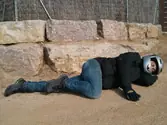
Colocar a los heridos en posición lateral de seguridad o defensa sirve para...
Placing injured people in the recovery position (lateral safety position) helps to...
- AEstar más cómodo.Make them more comfortable.
- BEvitar que se asfixien si comienzan a vomitar.Stop them choking if they start to vomit.
- CPoder hacerles la respiración artificial.Make it possible to give them artificial respiration.
ExplanationThe recovery position (lateral safety position) means placing the injured person on their side with the mouth lowest; this stops the tongue falling back and lets vomit and blood drain out. Use it when: the person starts to vomit or to bleed from the mouth or ear; or you have to leave the injured person alone to go for help.
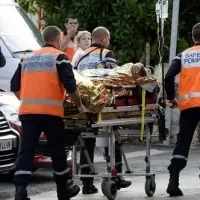
A un herido en un accidente ¿qué se le debe hacer primero?
What must be done first for a person injured in an accident?
- AComprobar su respiración y su pulso y si está consciente.Check their breathing and pulse and whether they are conscious.
- BLlevarlo al hospital con mi vehículo.Take them to hospital in my vehicle.
- CDarle alguna bebida.Give them something to drink.
ExplanationAfter protecting the scene and calling for help, the first thing to do for an injured person is to check whether they are conscious, breathing and have a pulse, to know what help they need. They must not be moved in a private vehicle or given anything to drink, because this can make their injuries worse.
Si Ud. llega al lugar donde se ha producido un accidente de tráfico, ¿a qué herido de los que se indican atenderá en primer lugar?
If you arrive at the scene of a road accident, which of the following injured people will you attend to first?
- AAl que sufra asfixia.The one who is suffocating.
- BAl que presente una hemorragia.The one who is bleeding.
- CAl que se queje a gritos más fuertes.The one who is screaming the loudest.
ExplanationWhen there are several injured people, you attend first to the one whose life is in immediate danger, such as someone who is suffocating or not breathing, because they can die within minutes. Bleeding is dealt with next; someone who is screaming is conscious and breathing.
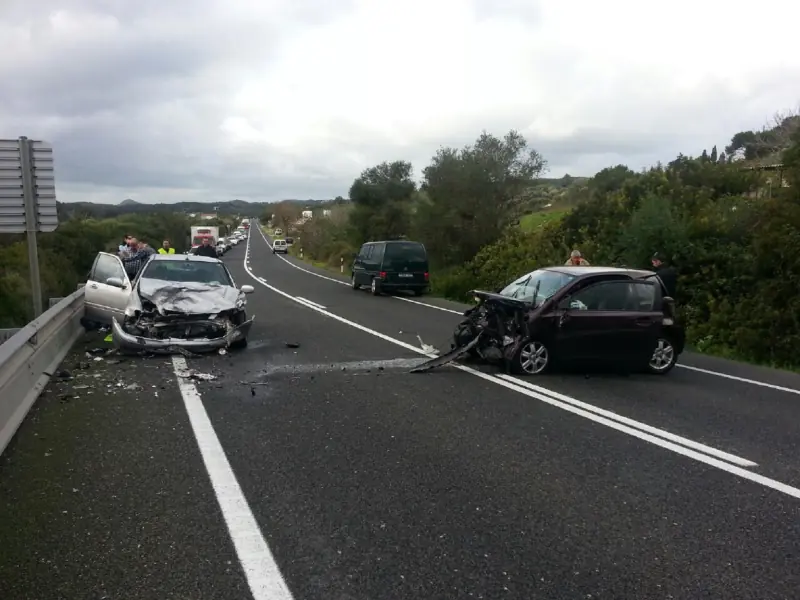
En un accidente, ¿debe detenerse para prestar ayuda?
At an accident, must you stop to help?
- ASí, siempre hay que detenerse por si fuera necesario.Yes, you must always stop in case help is needed.
- BSólo cuando esté implicado en el accidente.Only when you are involved in the accident.
- CSí, cuando la colaboración sea necesaria y no haya agentes de tráfico.Yes, when help is needed and there are no traffic officers present.
ExplanationAnyone who witnesses, comes across or is involved in an accident must help when necessary, as long as there is no risk to themselves or others. Failing to do so is the criminal offence of failing to help a person in danger under the Criminal Code. The same applies to people who cannot help and do not urgently ask others for help. Road users who notice an accident but are not involved do not have to stop when their help is clearly not needed or when the authorities or their officers are already at the scene.
¿Cual es la regla de emergencia en caso de accidente?
What is the emergency rule in the event of an accident?
- AASP.ASP.
- BPAS.PAS.
- CSAP.SAP.
ExplanationThe emergency rule is called PAS (protect, alert, help; in Spanish proteger, avisar, socorrer).
¿Están obligados los conductores y usuarios de las vías a auxiliar a las víctimas de un accidente?
Are drivers and road users obliged to help the victims of an accident?
- ANo es obligatorio pero si recomendable.It is not compulsory, but it is advisable.
- BNo, deben proseguir su marcha y no bajar del vehículo.No, they must continue on their way and not get out of the vehicle.
- CSí, siempre que la ayuda no esté ya organizada.Yes, unless help is already organised.
ExplanationDrivers and other users of public roads are obliged in all cases to help the victims of a road accident and to cooperate, as far as possible, in finding out its possible causes, and they must always help any injured people. They are exempt from stopping if help is already organised and the medical services have already been alerted.
All topics
- Definitions
- Documents and penalty points
- The driver's condition
- Duties of drivers and pedestrians
- Vehicle safety devices
- Vehicle controls and equipment
- Vehicle lights and horn
- Traffic signs, markings and signals
- The road and its lanes
- Speed and distances
- Manoeuvres
- Right of way
- Carrying passengers and loads
- Driving safely in difficult conditions
- Vehicle mechanics and maintenance
- Defensive and eco-driving
Independent app: not affiliated with or endorsed by the DGT (Spain's Directorate-General for Traffic) or the Ministry of the Interior. The official exam is booked with the DGT and taken at its test centres. The questions here are practice material; the DGT's official question bank is not public.
Basado en datos de la Agencia Estatal Boletín Oficial del Estado (https://www.boe.es). Textos consolidados de carácter meramente informativo. La AEBOE no patrocina ni respalda este sitio.
Parte de las preguntas procede de los tests de la revista «Tráfico y Seguridad Vial» de la DGT, reproducidos con indicación de la fuente.