
DGT test · 626 questions
Road accidents and first aid · Page 5 of 13
What to do at a crash: protect, alert and help, basic first aid, and marking a stopped vehicle with the V-16 beacon.
Questions in this topic, with answers
626 questions, 50 per page, with the correct answer and the explanation. Page 5 of 13.
¿En qué tipo de vía ocurren con más frecuencia los accidentes mortales de ciclistas?
On which type of road do fatal cyclist accidents happen most often?
- AEn carreteras convencionales.On conventional roads.
- BDentro de poblado.In built-up areas.
- CEn autopistas.On motorways.
ExplanationFatal cyclist accidents happen most often on conventional roads, because of the lack of proper infrastructure for cyclists, such as cycle lanes and signs. The General Traffic Regulations recognise that cyclists are vulnerable to motor vehicles on roads outside built-up areas. The rules also say that on these roads poor visibility and excessive speed increase the risk of accidents.
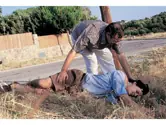
En un accidente de tráfico donde hay heridos.¿Cuando pondrá a un herido en posición de defensa?
In a traffic accident with injured people, when will you put an injured person in the recovery position?
- Aa un herido con hemorrágia en una pierna.If they are bleeding from a leg.
- Ba un herido con vómitos.If they are vomiting.
- Ca un herido con lesión medular.If they have a spinal cord injury.
ExplanationAn injured person who is breathing but is vomiting or unconscious is placed on their side, in the recovery position, so that they do not choke on the vomit. Someone who may have a spinal cord injury must not be moved, and bleeding from a leg is controlled by pressing on the wound.

¿Cuándo colocaremos a un accidentado en posición de defensa?
When should you place an injured person in the recovery position?
- ASiempre.Always.
- BCuando exista peligro de asfixia.When there is a risk of choking.
- CCuando se encuentre en estado de shock.When they are in a state of shock.
ExplanationThe recovery position means placing the injured person on their side with the mouth lower than the body. This stops the tongue falling back and lets vomit and blood come out. Use it when: - the person starts to vomit or bleed from the mouth or ear; - you have to leave the person alone to go for help.
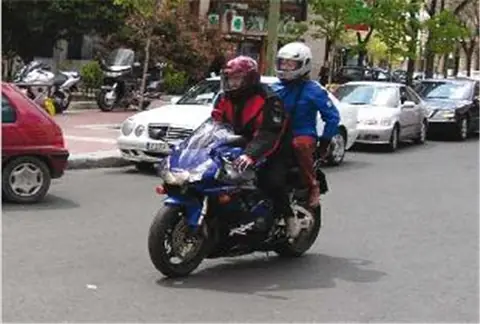
El accidente de motocicleta más frecuente es...
The most common motorcycle accident is...
- Ala colisión frontal o frontolateral con otro vehículo.a head-on or front-to-side collision with another vehicle.
- Bla colisión frontal con otras motocicletas.a head-on collision with other motorcycles.
- Cla colisión por alcance de vehículos que van a más velocidad.a rear-end collision with vehicles travelling at higher speed.
ExplanationThe most common type of motorcycle accident is a head-on or front-to-side collision when overtaking, especially in built-up areas. Also, more than 41% of motorcycle accidents happen at weekends.
¿Hay que quitar el casco a un motociclista herido en un accidente?
Should you remove the helmet of a motorcyclist injured in an accident?
- ANo, en general no.No, in general not.
- BSí, para que pueda respirar mejor.Yes, so that they can breathe better.
- CHaré lo que me diga.I will do what they tell me.
ExplanationAs a general rule, do not remove the helmet of an injured motorcyclist: removing it without the right technique can make head or neck injuries worse. Only remove it if it is essential, for example for resuscitation, and only if someone knows the technique.

Conforme a los datos de accidentalidad, en los períodos de vacaciones y los fines de semana...
According to accident data, during holidays and at weekends...
- Ano varía de forma importante el número de accidentes con víctimas mortales.the number of fatal accidents does not change much.
- Baumenta el número de accidentes con víctimas mortales.the number of fatal accidents increases.
- Cdisminuye el número de accidentes con víctimas mortales.the number of fatal accidents decreases.
ExplanationDuring holidays and at weekends there are more long journeys on roads outside built-up areas, often with tiredness or at night, so the number of fatal accidents rises.
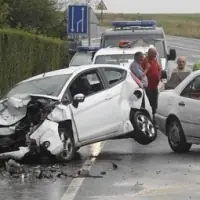
¿Es obligatorio prestar auxilio a las víctimas de un accidente?
Is it compulsory to help the victims of an accident?
- ASí, pero sólo para los conductores implicados.Yes, but only for the drivers involved.
- BSí, excepto cuando la ayuda ya esté organizada.Yes, except when help is already organised.
- CNo, porque el auxilio corresponde a los servicios sanitarios.No, because helping is the job of the health services.
ExplanationAnyone who witnesses, comes across or is involved in an accident must help when necessary, as long as there is no risk to themselves or others. If help is already organised when you arrive, you do not have to stop. In this case it is important to continue without slowing down to look. Many accidents cause traffic jams and dangerous situations because of what is known as the 'rubbernecking' effect.
¿Dónde se producen la mayor parte de los accidentes?
Where do most accidents happen?
- AEn las rectas con visibilidad.On straight stretches with good visibility.
- BEn las curvas sin visibilidad.On bends with poor visibility.
- CEn autopistas y autovías.On motorways and dual carriageways.
ExplanationMost fatal accidents happen on roads outside built-up areas, especially on straight stretches, not on bends as you might think. Motorways and dual carriageways are generally safer than conventional roads.
Una ventaja principal de la baliza V-16 frente a los triángulos es que:
One main advantage of the V-16 light over warning triangles is that:
- ASe coloca en el techo del vehículo sin necesidad de bajarse a la calzada.It is placed on the roof of the vehicle without having to get out onto the carriageway.
- BNo hay que activarla nunca.It never needs to be switched on.
- CSolo sirve de día.It only works during the day.
ExplanationWith the V-16 the driver does not have to walk on the carriageway to place triangles, which reduces the risk of being hit.
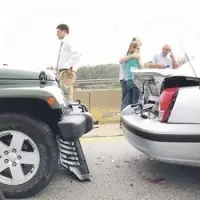
Los costes de los accidentes de tráfico, ¿quién los asume?
Who pays the costs of road accidents?
- ATodos los ciudadanos, de forma directa o indirecta.All citizens, directly or indirectly.
- BLas Administraciones Públicas y las compañías de seguros, solamente.Only public authorities and insurance companies.
- CLas compañías de seguros y no los ciudadanos.Insurance companies, not citizens.
ExplanationRoad accidents have a huge economic impact on society, which all citizens end up paying for, directly or indirectly. In countries with more vehicles on the road, these costs are estimated to reach up to 2% of the country's gross domestic product (GDP).
Si un herido en un accidente de tráfico tiene una hemorragia por un oído, ¿se debe taponar la hemorragia?
If a person injured in a road accident is bleeding from one ear, should the bleeding be plugged?
- ASí.Yes.
- BNo.No.
- CSí, si la hemorragia es abundante.Yes, if the bleeding is heavy.
ExplanationBlood coming from the ear is a sign of internal bleeding coming out, for example after a blow to the head. It must not be plugged or stopped: the casualty is treated as very serious, and the ear is covered with gauze without pressing.
Entre las principales causas de atropello a niños se encuentran:
Among the main causes of children being hit by vehicles are:
- ASu comportamiento impredecible que hace que no se puedan conocer las causas del atropello.Their unpredictable behaviour, which means the causes cannot be known.
- BEl factor casualidad, ya que su comportamiento como peatones suele ser siempre correcto.Chance, because their behaviour as pedestrians is usually always correct.
- CLas imprudencias que cometen.The careless things they do.
ExplanationCareless behaviour by children is one of the main causes of them being hit. Because their perception and understanding are limited, they may cross without really checking whether the driver has seen them. This can lead to risky situations and make being hit more likely.
Una mala formación, ¿puede ser causa de accidentes?
Can poor training cause accidents?
- ASí.Yes.
- BNo.No.
- CNo, solo influye la falta de experiencia.No, only lack of experience matters.
ExplanationPoor training that has not built the right skills for dealing with the surroundings can end up causing a road accident.
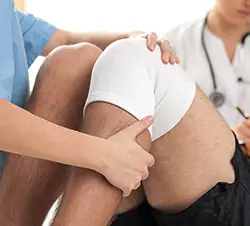
Entre los gastos sanitarios derivados de los accidentes de tráfico con víctimas se encuentran...
The health costs of road accidents with casualties include...
- Alos derivados por la pérdida de producción de personas empleadas.those caused by the lost production of employed people.
- Blos daños causados al medio ambiente.damage to the environment.
- Clos de rehabilitación en centros de salud.the cost of rehabilitation in health centres.
ExplanationThe health costs of an accident include medical and hospital care and the rehabilitation of the injured in health centres. Lost production counts as a human cost, and damage to the surroundings counts as a material or environmental cost.
¿Cómo se puede activar el sistema eCall en caso de accidente o emergencia?
How can the eCall system be activated in the event of an accident or emergency?
- AEl sistema eCall puede activarse automáticamente en caso de accidente o emergencia, sin intervención del conductor, o manualmente por el conductor.The eCall system can be activated automatically in an accident or emergency, without the driver doing anything, or manually by the driver.
- BEl sistema eCall solo puede activarse manualmente por el conductor, pulsando el botón SOS.The eCall system can only be activated manually by the driver, by pressing the SOS button.
- CEl sistema eCall puede activarse automáticamente en caso de accidente, pero no en todos los supuestos.The eCall system can be activated automatically in an accident, but not in all cases.
ExplanationeCall, compulsory in new cars type-approved in the European Union, automatically calls 112 when it detects a serious impact and sends the vehicle's location. It can also be activated manually with the SOS button, for example to report an emergency when there has been no crash.
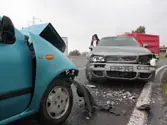
Nada más producirse un accidente, antes de atender a las víctimas hay que...
Immediately after an accident, before looking after the victims, you must...
- Aproteger y señalizar la zona del accidente.protect and mark the accident area.
- Borganizar a los servicios de urgencia.organise the emergency services.
- Cavisar a la policía.alert the police.
ExplanationIn an accident it is important to act in the right order so that help is quick and effective. This order is given by the PAS rule (protect, alert, help: in Spanish proteger, avisar, socorrer), which you should always apply. 1. PROTECT: take all necessary measures to protect yourself, the accident scene (by marking the area) and the victims. 2. ALERT: alert the emergency services by calling 112. 3. HELP: look after the accident victims.
Un turismo, ¿tendrá que llevar obligatoriamente un extintor?
Must a car carry a fire extinguisher?
- ASí.Yes.
- BNo.No.
- CSolamente cuando circule por vías interurbanas.Only when driving on roads outside built-up areas.
ExplanationUnder Annex XII of the General Vehicle Regulations, a car does not have to carry a fire extinguisher. Its compulsory equipment is the V-16 hazard warning light, a reflective vest and a spare wheel or an alternative system. A fire extinguisher is required for buses and coaches, mixed-use and goods vehicles over 3,500 kg, and combinations of vehicles (other than special vehicles).
El tipo de accidente más común conduciendo una motocicleta o un ciclomotor es el de...
The most common type of accident when riding a motorcycle or moped is...
- Aaccidente en solitario.a single-vehicle accident.
- Bcolisiones múltiples.a multiple-vehicle collision.
- Ccolisión entre dos vehículos.a collision between two vehicles.
ExplanationMost motorcycle and moped accidents are collisions with another vehicle, usually head-on, front-to-side or rear-end collisions.
Los conductores jóvenes pueden tener más accidentes por que...
Young drivers may have more accidents because...
- Ase distraen más fácilmente.they are more easily distracted.
- Bdesconocen las normas de circulación.they do not know the traffic rules.
- Cles falta experiencia y sobre valoran sus capacidades.they lack experience and overestimate their abilities.
ExplanationYoung drivers often have more accidents because they lack experience (they have been driving for fewer years) and because they overestimate their own abilities: they think they are better drivers than they really are.
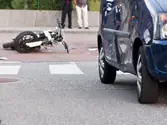
En un accidente de circulación, ¿es obligatorio avisar a la Autoridad si no hay heridos y la seguridad de la circulación está restablecida?
In a road accident, is it compulsory to inform the authorities if nobody is injured and traffic safety has been restored?
- ANo.No.
- BSí.Yes.
- CSí, cuando alguna de las personas implicadas en el accidente lo solicita.Yes, when one of the people involved in the accident asks for it.
ExplanationAfter an accident, you do not need to inform the authorities or stay at the scene when nobody is injured, traffic safety has been restored and none of the people involved asks for it.
¿Debe darle algún sedante a una persona herida en un accidente?
Should you give a sedative to a person injured in an accident?
- ASí, cuando la persona herida me lo pida.Yes, when the injured person asks me for one.
- BNo.No.
- CSí, porque así sufre menos y se tranquiliza.Yes, because then they suffer less and calm down.
ExplanationUnder Article 129 of the General Traffic Regulations, road users involved in an accident must help the injured. But this does not include giving medicines such as tranquillisers, unless a medical professional says so. Giving tranquillisers could create extra risks, so the correct answer is 'No'.
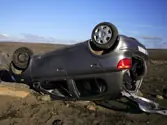
En caso de presenciar un accidente de tráfico, ¿cuál debe ser la primera actuación del conductor?
If you witness a road accident, what should you do first as a driver?
- AAvisar inmediatamente a los servicios de emergencia.Immediately alert the emergency services.
- BAuxiliar a los heridos sin moverlos.Help the injured without moving them.
- CSeñalizar y asegurar la zona del accidente.Mark and secure the accident area.
ExplanationThe first action when you witness an accident is to protect and mark the area to prevent new accidents. Once the scene is safe, alert the emergency services and, finally, help the injured, if you know how and without moving them unless there is serious danger. This follows the PAS principle: protect, alert and help.
Está obligado a trasladar a un herido en su coche. ¿Debe respetar las normas de circulación?
You are forced to take an injured person in your car. Must you obey the traffic rules?
- ASí, y me aseguraré de no poner en peligro a los demás.Yes, and I will make sure I do not put others in danger.
- BSí, pero solo en las intersecciones.Yes, but only at junctions.
- CNo, y estoy exento de respetar las señales de los agentes.No, and I am exempt from obeying officers' signals.
ExplanationA person who is forced to take an injured person in a non-priority vehicle must warn others by sounding the horn intermittently and using the hazard warning lights (Article 70.1 of the General Traffic Regulations), but must still obey the traffic rules, especially at junctions (Article 70.2), and the officers' orders.
¿Cuántos chalecos reflectantes debe llevar obligatoriamente un coche?
How many reflective vests must a car carry?
- ADos.Two.
- BUno, aunque se recomienda llevar dos.One, although it is recommended to carry two.
- CNinguno, ya que no es obligatorio.None, because it is not compulsory.
ExplanationUnder Annex XII of the General Vehicle Regulations, a car's compulsory equipment includes one high-visibility reflective vest. Article 118.4 of the General Traffic Regulations (as worded by Royal Decree 518/2026) obliges the driver to wear it when getting out of the vehicle onto the carriageway or hard shoulder of a road outside a built-up area. Carrying another one for a passenger is advisable, but not compulsory.
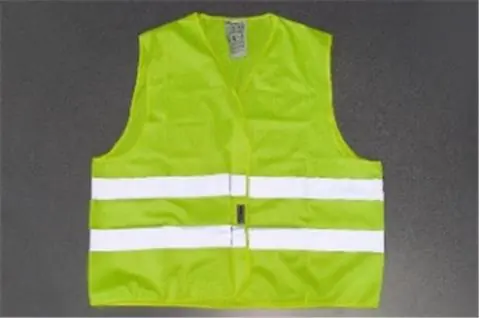
Al prestar ayuda en un accidente, ¿debe ponerse el chaleco reflectante?
When helping at an accident, must you put on the reflective vest?
- ANo, ya que es una situación de emergencia.No, because it is an emergency.
- BSólo si el accidente ocurre en zona urbana.Only if the accident happens in a built-up area.
- CSí, antes de salir del vehículo.Yes, before getting out of the vehicle.
ExplanationPut on the reflective vest before getting out of the vehicle, so that you are seen from the moment you step onto the carriageway. It is compulsory when you get out onto the carriageway or hard shoulder of a road outside a built-up area, including to help at an accident, and it is advisable on any road.
En caso de detención por emergencia en el interior de un túnel, ¿deberemos colocar y activar el dispositivo luminoso de preseñalización de peligro V-16?
If you have to stop in an emergency inside a tunnel, must you place and switch on the V-16 hazard warning light?
- ANo, solamente conectaremos la señal de emergencia y mantendremos encendidas las luces de posición.No. You only switch on the hazard warning lights and keep the sidelights on.
- BSí, además de conectar la señal de emergencia y mantener encendidas las luces de posición.Yes, as well as switching on the hazard warning lights and keeping the sidelights on.
- CNo, dentro de un túnel basta con pedir auxilio desde el poste de socorro.No. Inside a tunnel it is enough to ask for help from the SOS post.
ExplanationUnder Article 97.3 of the General Traffic Regulations, if you are immobilised inside a tunnel because of an emergency, you must switch off the engine, switch on the hazard warning lights, keep the sidelights on, and place and switch on the V-16 hazard warning light. You must also ask for help from the nearest SOS post, if there is one.
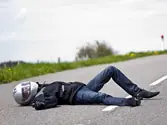
La mayoría de accidentes de motocicleta son...
Most motorcycle accidents are...
- Acolisiones entre 2 vehículos.collisions between 2 vehicles.
- Baccidente en solitario.single-vehicle accidents.
- Ccolisiones múltiples.multiple-vehicle collisions.
ExplanationMost motorcycle accidents (almost 67%) are collisions with another vehicle, usually head-on, front-to-side or rear-end.
Si un herido sangra por la nariz debido a una hemorragia interna, ¿cómo actuaremos?
If an injured person is bleeding from the nose because of internal bleeding, what will you do?
- APoniéndolo con la cabeza hacia delante sin taponar la nariz.Tilt their head forward without plugging the nose.
- BNo moveremos la cabeza del herido porque puede sufrir lesiones vertebrales.Not move the injured person's head, because they may have spinal injuries.
- CTaponaremos la nariz para que no salga más sangre al exterior.Plug the nose so that no more blood comes out.
ExplanationWhen blood comes from the nose or ears after a road accident, it may be 'externalised' bleeding: bleeding that you can see outside but that may come from internal organs. This blood loss may be caused by a fractured skull, which means the situation is extremely serious. The helper must stay passive, as any movement could make possible injuries worse, especially spinal ones. So do not plug the bleeding or move the injured person's head. Only monitor their general condition (breathing, circulation, level of consciousness) and urgently alert the emergency services.
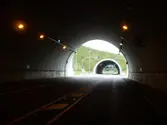
Si queda detenido en el interior de un túnel y se produce un incendio, ¿qué debe hacer?
If you are stopped inside a tunnel and a fire breaks out, what must you do?
- AApartar el vehículo a la derecha, apagar el motor y dirigirse a la salida más próxima.Move the vehicle to the right, switch off the engine and go to the nearest exit.
- BCircular marcha atrás hasta el inicio del túnel.Reverse back to the tunnel entrance.
- CEsperar en el interior del vehículo a los servicios de emergencia.Wait inside the vehicle for the emergency services.
ExplanationIf a fire breaks out inside a tunnel, the driver must: move the vehicle as far to the right as possible so as not to block emergency vehicles; switch off the engine; leave the key in and not close the door; leave the vehicle with all occupants and go quickly to the nearest shelter or exit, away from the fire. Never walk on the carriageway if there are areas closed to vehicles.
Los accidentes de motocicleta...
Motorcycle accidents...
- AProvocan a sus ocupantes lesiones menos graves que los accidentes con otros vehículos.cause less serious injuries to the riders than accidents with other vehicles.
- BSon siempre menos importantes que los accidentes con otros vehículos.are always less serious than accidents with other vehicles.
- CConllevan con frecuencia consecuencias mortales para sus ocupantes.often have fatal consequences for the riders.
ExplanationA motorcycle does not give its riders the structural protection of a car, so its accidents often have fatal consequences. That is why Article 118.1 of the General Traffic Regulations (as worded by Royal Decree 518/2026) requires riders and passengers to wear an approved helmet, protective gloves on roads outside built-up areas, and closed footwear.
La luz de emergencia V-16 (baliza luminosa):
The V-16 emergency light (warning beacon):
- ASe coloca dentro del vehículo, en el salpicadero.Is placed inside the vehicle, on the dashboard.
- BSe coloca en el punto más alto del vehículo para señalizarlo en caso de avería o accidente.Is placed on the highest point of the vehicle to signal it in a breakdown or accident.
- CSustituye al chaleco reflectante.Replaces the reflective vest.
ExplanationThe V-16 is placed on top of the vehicle and makes it visible from a distance. It replaces the warning triangles.
Los accidentes de tráfico debidos al factor vehículo son...
Road accidents caused by the vehicle factor are...
- ATan frecuentes como los debidos al factor humano.as frequent as those caused by the human factor.
- BLos más frecuentes.the most frequent.
- CLos menos frecuentes.the least frequent.
ExplanationThe factors involved in accidents are the vehicle, the road and its surroundings, and the driver. Of these, only between 4 and 13% of accidents are mainly due to the vehicle factor, between 10 and 35% to the road factor and between 70 and 90% to the human factor.
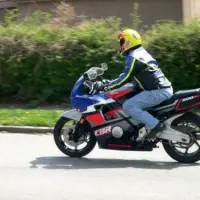
¿Está obligada una motocicleta a llevar el dispositivo luminoso de preseñalización de peligro V-16?
Must a motorcycle carry the V-16 hazard warning light?
- ASí, en todos los casosYes, in all cases
- BÚnicamente en autopistaOnly on motorways
- CNoNo
ExplanationUnder Annex XII of the General Vehicle Regulations, the V-16 device is part of the equipment of cars, buses and coaches, mixed-use and goods vehicles, and vehicle combinations, but not of motorcycles. From 1 October 2026 motorcycles must carry a high-visibility reflective vest.
Como norma general, si un herido en accidente ha perdido el conocimiento, ¿cómo se le debe colocar?
As a general rule, if a person injured in an accident has lost consciousness, how should they be placed?
- AAcostado boca arriba.Lying on their back.
- BAcostado de lado en posición de defensa.Lying on their side in the recovery position.
- CAcostado boca abajo.Lying face down.
ExplanationAs a general rule, an unconscious injured person who is breathing should be placed on their side in the recovery position, so that the tongue, vomit or blood do not block the airway. Lying on their back, they risk choking.
Los conductores de motocicletas, ¿están obligados a llevar consigo un chaleco reflectante?
Must motorcycle riders carry a reflective vest?
- ANo.No.
- BSí.Yes.
- CSolo si circulan de noche.Only if they ride at night.
ExplanationUnder Article 118.4 of the General Traffic Regulations (as worded by Royal Decree 518/2026), a motorcycle rider must wear a high-visibility reflective vest when they get off the motorcycle and are on the carriageway or hard shoulder of a road outside a built-up area. Also, from 1 October 2026 motorcycles must carry one as part of their equipment (Annex XII of the General Vehicle Regulations).
Como norma general, a un herido por accidente de tráfico...
As a general rule, with a person injured in a road accident, you will...
- ALe daremos agua pero nunca alcohol.give them water but never alcohol.
- BLe suministraremos algún tranquilizante.give them a tranquilliser.
- CLe mantendremos inmóvil especialmente la cabeza, tronco y cuello.keep them still, especially the head, trunk and neck.
ExplanationAs a general rule, do not move a person injured in a road accident unless it is essential for resuscitation or for safety reasons. Also keep them still, especially the line formed by the head, neck and trunk.
La primera norma a tener en cuenta es que los extintores son útiles cuando...
The first rule to remember is that fire extinguishers are useful when...
- AEl fuego se encuentra aún en fase inicial.the fire is still at an early stage.
- BSe encuentre en buenas condiciones.it is in good condition.
- CSe disponga de unos guantes.you have gloves.
ExplanationThe correct answer is that the fire is still at an early stage: extinguishers are most effective at controlling and putting out fires in their early stages. At later stages, trying to put out the fire with an extinguisher can be dangerous, and it is advisable to call the emergency services.
¿Es menos probable que muera en un accidente de tráfico si conduce un vehículo de dos ruedas que si conduce un vehículo de cuatro ruedas?
Are you less likely to die in a road accident if you ride a two-wheeled vehicle than if you drive a four-wheeled vehicle?
- ASí, porque al bajarte de la moto el riesgo de sufrir lesiones graves se reduce.Yes, because when you come off the motorcycle the risk of serious injury is reduced.
- BSí, pero sólo si conduces a velocidades superiores a 50 km/h.Yes, but only if you ride at more than 50 km/h.
- CNo, ya que el cuerpo del motociclista absorbe la mayor parte de la energía del impacto.No, because the rider's body absorbs most of the energy of the impact.
ExplanationRiding a two-wheeled vehicle, such as a motorcycle, does not reduce the likelihood of dying in a road accident compared with a four-wheeled vehicle. Motorcyclists have a higher risk of serious or fatal injuries because they lack structural protection and stability.
¿Es importante invertir en seguridad vial?
Is it important to invest in road safety?
- ANo, porque los accidentes se deben únicamente al azar.No, because accidents are only a matter of chance.
- BSí, porque los accidentes los acabamos pagando indirectamente todos.Yes, because in the end we all pay for accidents indirectly.
- CNo, porque es un problema individual de la persona que lo sufre.No, because it is an individual problem for the person who has the accident.
ExplanationRoad accidents are a serious, top-priority social problem that affects all of us, directly or indirectly. They have a huge economic, social and human impact.
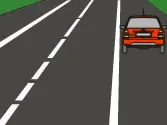
¿Dónde se deberá de colocar el dispositivo de preseñalizacion de peligro?
Where must the hazard warning device be placed?
- AEn la parte más alta posible del vehículo inmovilizado, garantizando su máxima visibilidad.On the highest possible point of the immobilised vehicle, to make it as visible as possible.
- BA 100 metros, como mínimo, del vehículo inmovilizado.At least 100 metres from the immobilised vehicle.
- CA 150 metros, como mínimo, del vehículo inmovilizado.At least 150 metres from the immobilised vehicle.
ExplanationThe V-16 hazard warning device is an approved amber-yellow light with geolocation. It runs on its own power supply (batteries). It must be placed on the highest point of the broken-down vehicle, to make it as visible as possible. Today the V-16 is the only legal way to signal a broken-down vehicle or an obstacle on the road. Warning triangles are no longer used.
Los accidentes causados tanto por el factor humano como por el factor vía...
Accidents caused by the human factor and by the road factor...
- ANo son evitables en ningún caso.cannot be avoided in any case.
- BSólo son evitables los causados por el factor humano.can only be avoided if they are caused by the human factor.
- CSe pueden evitar, tanto los causados por el factor humano como por el factor vía.can be avoided, both those caused by the human factor and those caused by the road factor.
ExplanationMost road accidents could have been avoided, because their causes are usually predictable. Only a few accidents are caused by chance or unpredictable situations. For example, if a driver has been drinking or is going faster than allowed, or if the road surface is in very bad condition, an accident is predictable.
Si se ve involucrado en un accidente, ¿debe detenerse para ayudar a restablecer la seguridad del tráfico?
If you are involved in an accident, must you stop to help restore traffic safety?
- ANo, esa tarea corresponde a la policía de tráfico.No, that is the job of the traffic police.
- BSí, en la medida de lo posible.Yes, as far as possible.
- CSolo si hay muertos o heridos graves.Only if there are deaths or serious injuries.
ExplanationUnder Article 129 of the General Traffic Regulations (RGC), those involved in an accident must help or call for help, work together to prevent further danger and, as far as possible, restore traffic safety. This is not a task only for the police, and it does not depend on whether there are casualties.
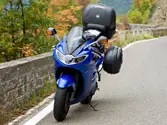
En caso de avería de su motocicleta en una calzada, ¿cómo debe señalizarlo si representa un obstáculo para la circulación?
If your motorcycle breaks down on a carriageway, how must you signal it if it is an obstacle to traffic?
- AObligatoriamente con las luces de posición.With the sidelights, which is compulsory.
- BCon el dispositivo de preseñalización de peligro que está obligado a llevar consigo.With the hazard warning device that you must carry.
- CCon la luz de emergencia si la tiene instalada.With the hazard warning lights, if the motorcycle has them.
ExplanationIf a broken-down motorcycle blocks traffic, it is signalled with the hazard warning lights if it has them. Under Annex XII of the General Vehicle Regulations, motorcycles do not have to carry the V-16 device. From 1 October 2026 they must carry a high-visibility reflective vest.
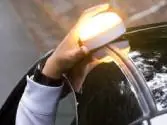
En caso de detención por emergencia, ¿cómo debe colocar el dispositivo de preseñalización de peligro?
If you stop because of an emergency, how should you place the hazard warning device?
- AA 150 metros del vehículo inmovilizado.150 metres from the immobilised vehicle.
- BA 100 metros del vehículo inmovilizado.100 metres from the immobilised vehicle.
- CEn la parte más alta posible del vehículo inmovilizado, garantizado su máxima visibilidad.On the highest possible point of the immobilised vehicle, to make it as visible as possible.
ExplanationThe hazard warning device is an amber-yellow device with its own power supply (batteries). It is placed on the highest point of the immobilised vehicle, to make it as visible as possible.
Los accidentes de tráfico, ¿tienen impacto económico para la sociedad?
Do road accidents have an economic impact on society?
- ANo, pero sí un impacto social.No, but they do have a social impact.
- BNo, el coste económico es mínimo.No, the economic cost is minimal.
- CSí.Yes.
ExplanationRoad accidents have a big personal, social and economic impact, which all citizens end up paying for, directly or indirectly.
Si está implicado en un accidente de tráfico en el que puede haber muertos o heridos graves, ¿qué debe hacer, entre otras cosas, en la medida de lo posible?
If you are involved in a road accident in which there may be deaths or serious injuries, what must you do, among other things, as far as possible?
- ASeguir su marcha sin ayudar a las víctimas ni avisar a las autoridades.Carry on without helping the victims or informing the authorities.
- BDetener el vehículo sin crear peligro, avisar a la autoridad o sus agentes y auxiliar a los heridos.Stop the vehicle without creating danger, inform the authorities or their officers and help the injured.
- CPararse, borrar las huellas del accidente y mover a los heridos y a los vehículos.Stop, remove the traces of the accident and move the injured and the vehicles.
ExplanationUnder Article 129.2 of the General Traffic Regulations, anyone involved in an accident must, as far as possible, stop without creating a new danger, help the injured and inform the authorities if there are deaths or injuries, without changing the scene or removing traces.
Existen diferentes tipos de extintores para combatir...
There are different types of fire extinguishers to fight...
- ALos diferentes tipos de fuegos.different types of fire.
- BEl fuego en los diferentes tipos de vehículos.fires in different types of vehicles.
- CEl fuego en los diferentes entornos.fires in different surroundings.
ExplanationExtinguishers are used to fight different types of fire, such as fires in vehicles, in homes or businesses, fires of flammable liquids, fires in electrical equipment, and others. Each type of fire needs a specific type of extinguisher to control and put it out. So it is important to know the different types of fire and to use the right extinguisher for each situation.
Si se ve en la necesidad de transportar en su vehículo a un herido, ¿está obligado a respetar las normas de circulación?
If you need to take an injured person in your vehicle, must you respect the traffic rules?
- ASí, pero sólo en las intersecciones.Yes, but only at junctions.
- BSí, en todo caso.Yes, in all cases.
- CNo.No.
ExplanationBecause of especially serious circumstances, and with no other means available, the driver of a non-priority vehicle may be forced to do a job normally reserved for priority vehicles. In that case they must try to make other road users aware of their special situation, by sounding the horn intermittently and switching on the hazard warning lights, if they have them, or by waving a handkerchief or similar. In all cases they must respect the traffic rules, especially at junctions.
La Organización Mundial de la Salud (OMS) considera que los accidentes de tráfico...
The World Health Organization (WHO) considers road accidents to be...
- ANo es un problema de salud pública, sino sólo de educación.not a public health problem, only an education problem.
- BEs un problema secundario de salud pública.a secondary public health problem.
- CEs un problema prioritario de salud pública en todo el mundo.a priority public health problem worldwide.
ExplanationThe correct answer is that road accidents are a priority public health problem worldwide. This is based on identifying road crashes as a priority global public health problem, in line with the General Traffic Regulations. The World Health Organization considers that road accidents are not just isolated incidents: they have serious public health consequences that need specific attention and action to reduce them.
En la dotación de accesorios de un camión de 3.500 kg de MMA es obligatorio llevar…
The compulsory equipment of a lorry with a MAM of 3,500 kg includes…
- AUn equipo homologado de extinción de incendios.An approved fire extinguisher.
- BUn chaleco reflectante de alta visibilidad.A high-visibility reflective vest.
- CUn calzo de dimensiones adecuadas.A wheel chock of suitable size.
ExplanationThe high-visibility reflective vest is part of the compulsory equipment of motor vehicles, including lorries of up to 3,500 kg. A fire extinguisher is only required in other vehicles, such as those with more than nine seats or heavier goods vehicles.
All topics
- Definitions
- Documents and penalty points
- The driver's condition
- Duties of drivers and pedestrians
- Vehicle safety devices
- Vehicle controls and equipment
- Vehicle lights and horn
- Traffic signs, markings and signals
- The road and its lanes
- Speed and distances
- Manoeuvres
- Right of way
- Carrying passengers and loads
- Driving safely in difficult conditions
- Vehicle mechanics and maintenance
- Defensive and eco-driving
Independent app: not affiliated with or endorsed by the DGT (Spain's Directorate-General for Traffic) or the Ministry of the Interior. The official exam is booked with the DGT and taken at its test centres. The questions here are practice material; the DGT's official question bank is not public.
Basado en datos de la Agencia Estatal Boletín Oficial del Estado (https://www.boe.es). Textos consolidados de carácter meramente informativo. La AEBOE no patrocina ni respalda este sitio.
Parte de las preguntas procede de los tests de la revista «Tráfico y Seguridad Vial» de la DGT, reproducidos con indicación de la fuente.