
DGT test · 626 questions
Road accidents and first aid · Page 2 of 13
What to do at a crash: protect, alert and help, basic first aid, and marking a stopped vehicle with the V-16 beacon.
Questions in this topic, with answers
626 questions, 50 per page, with the correct answer and the explanation. Page 2 of 13.
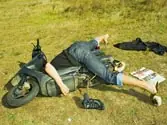
Si tras un accidente de tráfico, un herido no responde y aparentemente ha perdido la conciencia, ¿qué es lo primero que debemos hacer?
After a road accident, an injured person does not respond and seems to have lost consciousness. What should you do first?
- ABuscar hemorragias externas o internas, para evitar que se desangre.Look for external or internal bleeding, to stop them bleeding to death.
- BAbrir la vía aérea y retirar cuerpos extraños de la boca, mediante maniobras que no manipulen la columna.Open the airway and remove foreign objects from the mouth, using manoeuvres that do not move the spine.
- CTumbarle en la denominada posición lateral de seguridad, para que respire con mayor facilidad.Lay them in the recovery position, so that they can breathe more easily.
ExplanationWhen a person is unconscious after a road accident, the priority is to make sure they can breathe properly. Opening the airway and removing any blockage is essential for the body to get enough oxygen. But do it carefully and do not move the spine, as the accident may have caused serious injuries there. It is crucial to follow the right procedure in emergencies like this, because acting wrongly could make the injured person's condition worse.
¿En qué épocas del año se producen más accidentes de circulación?
At what times of year do most road accidents happen?
- AFuera de los periodos vacacionales.Outside holiday periods.
- BEs indiferente.It makes no difference.
- CDurante los periodos de vacaciones.During holiday periods.
ExplanationMost road accidents happen during holiday periods, especially Easter, summer and December. This is because many drivers use their vehicles to travel at these times.
Si encuentra un accidente en el que la ayuda ya está organizada, ¿debe detenerse a prestar auxilio?
If you come across an accident where help is already organised, must you stop to help?
- ASí, en vías interurbanas o donde no exista poste SOS.Yes, on roads outside built-up areas or where there is no SOS post.
- BNo, si no está implicado debe continuar la marcha.No. If you are not involved, you must continue on your way.
- CSí, debe detenerse y colaborar siempre.Yes, you must always stop and help.
ExplanationAnyone who witnesses, comes across or is involved in an accident must help when necessary, as long as there is no risk to themselves or others. If help is already organised when you arrive at the scene, you do not have to stop.
Siempre que sea posible, ¿cómo hay que inmovilizar un vehículo implicado en un accidente?
Whenever possible, how should a vehicle involved in an accident be immobilised?
- ACon calzos u otro objeto que sirva para eso.With wheel chocks or another object that serves the purpose.
- BApagando el motor y poniendo el freno de mano.By switching off the engine and applying the handbrake.
- CDesconectando los terminales de la batería.By disconnecting the battery terminals.
ExplanationTo stop the damaged vehicle from moving or catching fire, you must switch off the engine by turning off the ignition and apply the handbrake. Chocks are not the first step and are not always available, and handling the battery takes time and can be dangerous.
Los peatones, ¿donde sufren más accidentes?
Where do pedestrians have the most accidents?
- AEn las autopistas y autovías.On motorways (autopistas) and dual carriageways (autovías).
- BEn las vías urbanas.On roads in built-up areas.
- CEn las vías interurbanas.On roads outside built-up areas.
ExplanationIn built-up areas, where there are more pedestrians, the chance of being hit is much higher. Injuries are more serious on roads outside built-up areas, because vehicles travel faster there. Pedestrians are not allowed on motorways and dual carriageways.
¿Quién debe realizar las actuaciones de soporte vital básico a las víctimas de un accidente?
Who should give basic life support to the victims of an accident?
- AEl personal especializado, siempre.Specialised staff, always.
- BEstas actuaciones siempre deben realizarse en un hospital.It must always be done in a hospital.
- CEl personal especializado, salvo que la persona que preste auxilio esté totalmente segura de conocerlas y poderlas realizar.Specialised staff, unless the person helping is completely sure that they know how and can do it.
ExplanationBasic life support for an accident victim should only be given by specialised staff, or by people who know the techniques and are completely sure they can do them without risk to the injured person.
Los accidentes de tráfico son una de las principales causas de mortalidad entre...
Road accidents are one of the main causes of death among...
- ALa población joven.young people.
- BLas personas de edad avanzada.elderly people.
- CLos conductores profesionales.professional drivers.
ExplanationRoad accidents are one of the main causes of death among young people aged 19 to 29.
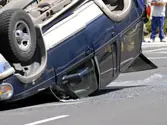
¿Cómo actuaremos al presenciar un accidente de tráfico y después de habernos detenido correctamente?
What should you do when you witness a road accident, after stopping correctly?
- AProtegeremos a las víctimas, avisaremos a los servicios de emergencia y socorreremos a los heridos.Protect the victims, alert the emergency services and help the injured.
- BAvisaremos a los servicios de emergencia y socorreremos a las víctimas.Alert the emergency services and help the victims.
- CRegularemos el tráfico, socorreremos a las víctimas y avisaremos a los servicios de emergencia.Direct the traffic, help the victims and alert the emergency services.
ExplanationIn an accident it is important to act in the right order so that help is quick and effective. This order is given by the PAS rule (protect, alert, help: in Spanish proteger, avisar, socorrer), which you should always apply. 1. PROTECT: take all necessary measures to protect yourself, the accident scene (by marking the area) and the victims. 2. ALERT: alert the emergency services by calling 112. 3. HELP: look after the accident victims.
¿Con qué fin pondremos a los heridos en posición de defensa?
Why do we put injured people in the recovery position?
- APara que estén más relajados.So that they are more relaxed.
- BPara hacerles la reanimación boca a boca.To give them mouth-to-mouth resuscitation.
- CPara evitar que se asfixien.To stop them from choking.
ExplanationThe recovery position keeps the airway open and reduces the risk of choking if the person vomits. That is why it is the best position if the injured person is unconscious.
Siempre que sea posible, ¿cómo debe inmovilizarse un vehículo que ha estado implicado en un accidente?
Whenever possible, how should a vehicle that has been involved in an accident be immobilised?
- ACon calzos o con cualquier objeto que haga la misma función.With wheel chocks or any object that does the same job.
- BCortando el contacto y poniendo el freno de mano.By switching off the ignition and applying the handbrake.
- CDesconectando los bornes de la batería.By disconnecting the battery terminals.
ExplanationTo immobilise a crashed vehicle safely, switch off the ignition, which reduces the risk of fire, and apply the handbrake so that it does not move. Chocks may help afterwards, but they are not the first step, and there is no need to touch the battery.
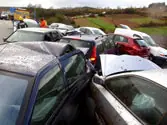
¿Son evitables los accidentes de tráfico?
Can road accidents be avoided?
- ANo, en ningún caso, ya que son sucesos inevitables.No, never. They are unavoidable events.
- BSi, en general, ya que son sucesos predecibles.Yes, in general, because they are predictable events.
- CSi. pero solo si se mejoran las condiciones de las víasYes, but only if road conditions are improved.
ExplanationRoad accidents are generally predictable events. If they were truly 'accidental', they would depend only on the time spent at the wheel. But this is not so: certain circumstances of the vehicle, the road, the surroundings and, above all, the driver make an accident more likely or more serious. These circumstances are called 'risk factors'. By avoiding them we reduce the chance of a crash to a minimum.
El factor entorno, ¿es un factor de riesgo?
Is the environment a risk factor?
- ASí.Yes.
- BNo.No.
- CNo, solo lo son el factor humano y el vehículo.No, only the human factor and the vehicle are.
ExplanationThe risk factors are the human factor, the road and environment factor, and the vehicle factor.
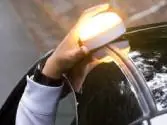
¿Puede el conductor de un turismo circular con un solo dispositivo de preseñalización de peligro?
Can a car driver drive with only one hazard warning device?
- ANo, debe llevar dos dispositivos de preseñalización obligatoriamente.No, they must carry two hazard warning devices.
- BNo, debe llevar tres dispositivos de preseñalización obligatoriamente.No, they must carry three hazard warning devices.
- CSí, debe llevar sólo un dispositivo de preseñalización V-16.Yes, they must carry just one V-16 hazard warning device.
ExplanationThe V-16 hazard warning device is an approved amber-yellow light with geolocation. It runs on its own power supply (batteries). It must be placed on the highest point of the broken-down vehicle, to make it as visible as possible. Today the V-16 is the only legal way to signal a broken-down vehicle or an obstacle on the road. Warning triangles are no longer used.
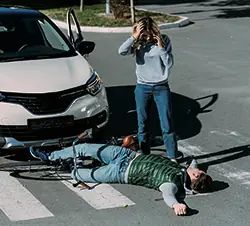
¿Cómo se denominan los costes de pérdida de vidas, de capacidad productiva y el sufrimiento físico y psicológico que tienen lugar como consecuencia de un accidente de tráfico?
What are the costs of lost lives, lost productive capacity and physical and psychological suffering caused by a road accident called?
- ACostes sanitarios.Health costs.
- BCostes materiales.Material costs.
- CCostes humanos.Human costs.
ExplanationHuman costs include the loss of lives, the reduction in productive capacity and the physical and psychological suffering of victims and their families and friends. They are different from material costs and health costs.
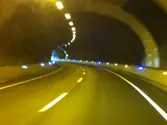
En caso de incendio en un túnel debe...
If there is a fire in a tunnel, you must...
- Aabandonar el vehículo, dejando las puertas cerradas con llave.leave the vehicle with the doors locked.
- Baproximar el vehículo todo lo posible a la derecha, apagar el motor, dejar las llaves puestas y las puertas abiertas.move the vehicle as far to the right as possible, switch off the engine, and leave the keys in and the doors open.
- Cencender las luces de emergencia y las de posición, sin abandonar el vehículo hasta que no lleguen los servicios de emergencia.switch on the hazard warning lights and the sidelights, and not leave the vehicle until the emergency services arrive.
ExplanationIf a fire breaks out inside a tunnel, the driver must: move the vehicle as far to the right as possible so as not to block emergency vehicles; switch off the engine; leave the key in and not close the door; leave the vehicle with all occupants and go quickly to the nearest shelter or exit, away from the fire. Never walk on the carriageway if there are areas closed to vehicles.
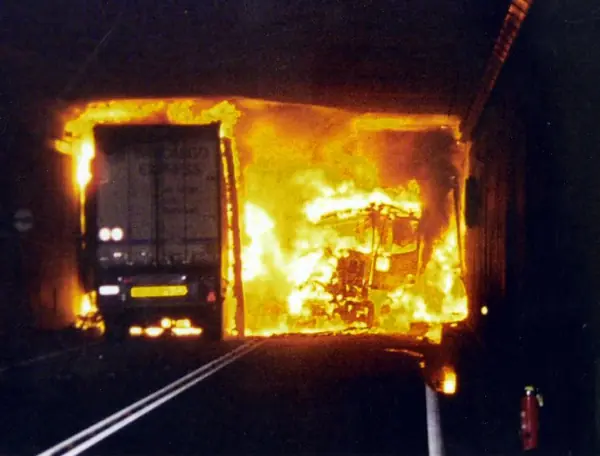
En caso de incendio en el interior de un túnel o paso inferior, el conductor del vehículo dejará...
If there is a fire inside a tunnel or underpass, the driver of the vehicle will leave...
- Ael motor encendido y las puertas abiertas.the engine running and the doors open.
- Bla llave puesta y las puertas abiertas.the key in and the doors open.
- Cel motor apagado y las puertas cerradas.the engine off and the doors closed.
ExplanationUnder Article 97 of the General Traffic Regulations, if there is a fire in a tunnel you must pull over to the right, switch off the engine and leave the vehicle with the key in and the doors open, so that the emergency services can move it. Then walk to the nearest exit or shelter.
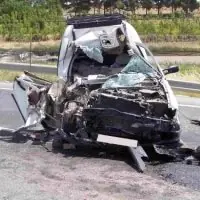
Los accidentes de tráfico, ¿suponen un enorme impacto económico para la población?
Do road accidents have a huge economic impact on the population?
- ASí.Yes.
- BNo, pero suponen un enorme impacto social.No, but they have a huge social impact.
- CNo, ya que el coste sanitario es mínimo.No, because the healthcare cost is minimal.
ExplanationBesides the human costs of road accidents, they have a huge economic impact, which all citizens end up paying for, directly or indirectly.
¿Cómo se llaman la pérdida de vidas, la pérdida de capacidad productiva y el sufrimiento físico y psicológico?
What are loss of life, loss of productive capacity and physical and psychological suffering called?
- ACostes sanitariosHealth costs.
- BCostes humanosHuman costs.
- CCostes materialesMaterial costs.
ExplanationThe costs of accidents are grouped into human, material and health costs. Loss of life, loss of productive capacity and the physical and psychological suffering of victims and their families are human costs; medical expenses are health costs, and damage to vehicles or the road is a material cost.
Las lesiones más graves en los ciclistas, cuando son víctimas en un accidente, se localizan en...
When cyclists are victims of an accident, their most serious injuries are to...
- ALa cabeza.The head.
- BExtremidades.The limbs.
- CTodo el cuerpo.The whole body.
ExplanationIn accidents involving cyclists, the most serious injuries, and those that cause the most deaths, are to the head. That is why the helmet is their main protection and is compulsory on interurban roads and, for children under 16, on any road.
Ante una avería, ¿cómo debe colocar la señal luminosa de preseñalización de peligro?
If your vehicle breaks down, how should you place the hazard warning light?
- AA 150 metros del vehículo inmovilizado.150 metres from the broken-down vehicle.
- BA 100 metros del vehículo inmovilizado.100 metres from the broken-down vehicle.
- CEn la parte más alta posible del vehículo inmovilizado garantizado su máxima visibilidad.On the highest possible point of the broken-down vehicle, to make it as visible as possible.
ExplanationThe V-16 hazard warning device is an approved amber-yellow light with geolocation. It runs on its own power supply (batteries). It must be placed on the highest point of the broken-down vehicle, to make it as visible as possible. Today the V-16 is the only legal way to signal a broken-down vehicle or an obstacle on the road. Warning triangles are no longer used.
¿Cómo debemos actuar si somos testigos de un accidente en relación a los heridos?
If you witness an accident, how should you act towards the injured?
- ACon tranquilidad y destrezaUnhurriedly and skilfully
- BCon rapidez y serenidadQuickly and calmly
- CCon rapidez y precipitaciónQuickly and hastily
ExplanationWhen you witness a road accident, always act quickly and calmly. This way you make the best possible decisions and do not make the injured more nervous. Never act in too relaxed or passive a way; act quickly and effectively.
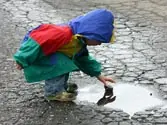
La mayoría de los atropellos a niños se produce...
Most cases of children being hit by vehicles happen...
- Adurante los fines de semana.at weekends.
- Bal término de la jornada escolar.at the end of the school day.
- Cal inicio de la jornada escolar.at the start of the school day.
ExplanationThe main causes of children being hit are: - Their field of vision is limited because they are short. - Hearing problems (children under 7 cannot tell where a vehicle is coming from by its sound). - Poor control of attention (they are busy playing). - They often confuse seeing with being seen. - They do not know the rules (signs and correct behaviour). At the end of the school day they come out more excited, wanting to run and play, and they pay less attention.
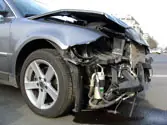
El causante principal de los accidentes es...
The main cause of accidents is...
- AEl factor vehículo.the vehicle factor.
- BEl estado de la vía.the condition of the road.
- CEl factor humano.the human factor.
ExplanationThe human factor is mainly responsible for most accidents.
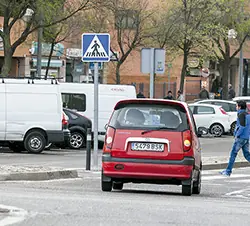
¿Cuál es una de las infracciones que cometen los conductores con mayor riesgo para los peatones?
Which offence committed by drivers is one of the most dangerous for pedestrians?
- ANo respetar la prioridad en los pasos para peatones.Not respecting pedestrians' right of way at pedestrian crossings.
- BCircular por una autovía en sentido contrario al establecido.Driving the wrong way on a dual carriageway (autovía).
- CNo mantener la distancia de seguridad con el vehículo que circula delante.Not keeping a safe distance from the vehicle in front.
ExplanationNot respecting right of way at pedestrian crossings is one of the offences with the highest risk of hitting a pedestrian: it is exactly where pedestrians trust that they can cross safely.
¿En qué época hay más accidentes?
When are there more accidents?
- AEn periodo vacacional.During holiday periods.
- BEn periodo laboral.During working periods.
- CEn primavera, debido a las alergias.In spring, because of allergies.
ExplanationStatistically, most accidents happen during holiday periods, especially Easter, summer and December. Weekends and public holidays are the most dangerous days, especially in the early hours of the morning.
¿Qué ocurre cuando se deja un chaleco reflectante expuesto al sol?
What happens when a reflective vest is left in the sun?
- ANada, la luz no daña el material del que están hechos.Nothing. Light does not damage the material they are made of.
- BQue cambia de color, aunque mantiene sus propiedades.It changes colour, but keeps its properties.
- CQue pierde sus propiedades reflectantes.It loses its reflective properties.
ExplanationLong exposure to the sun damages the vest's material, and it loses its reflective and high-visibility properties. That is why it is best to keep it in the glovebox or under the seat, within the driver's reach but protected from light.
¿Cuál es la manera adecuada de controlar una hemorragia en una extremidad?
What is the right way to control bleeding from a limb?
- AIniciando la aplicación de un torniquete.By starting to apply a tourniquet.
- BAplicando presión directa sobre la hemorragia.By applying direct pressure on the bleeding.
- CAbstenerse de ejercer presión sobre la hemorragia.By not putting any pressure on the bleeding.
ExplanationTo stop bleeding, first press directly on the wound, if possible with clean gauze or cloth, and do not remove it even if it gets soaked. Second, if the bleeding does not stop, raise the injured limb. Third, if this is not enough, press on the artery at a point before the wound. As a last resort, a tourniquet could be applied above the bleeding.
Los días laborables, la mayoría de los accidentes de tráfico con víctimas se producen ...
On working days, most road accidents with casualties happen...
- Aal amanecer y al atardecer.at dawn and dusk.
- Bal ir o al volver del trabajo.on the way to or from work.
- Centre medianoche y las tres de la madrugada.between midnight and three in the morning.
ExplanationRoad accidents are most common in rush hours, when people travel to and from work. This is because there is more traffic and congestion, which makes collisions more likely. Traffic law, such as Spain's Traffic and Road Safety Code, stresses road safety education and responsible driving, especially at these critical times of day.
¿Se puede usar el dispositivo luminoso V-16 para señalar la presencia de un coche averiado en la carretera?
Can the V-16 light device be used to warn of a broken-down car on the road?
- ANo.No.
- BSí.Yes.
- CSolo si la visibilidad es insuficiente.Only if visibility is poor.
ExplanationThe V-16 beacon shows that the vehicle has come to a standstill on the carriageway or that its load has fallen onto it. So if the car breaks down on the road, the driver must use it by day and at night, placing it on the highest part of the vehicle, and also switch on the hazard warning lights.
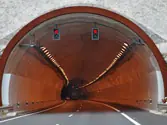
Cuando en el interior de un túnel se produce una detención motivada por una emergencia, es obligatorio...
When a vehicle has to stop inside a tunnel because of an emergency, it is compulsory to...
- Adejar el motor encendido y la llave puesta.leave the engine running and the key in.
- Bque todos los ocupantes permanezcan siempre en el vehículo.keep all the occupants in the vehicle at all times.
- Capagar el motor, conectar la señal de emergencia y mantener encendidas las luces de posición.switch off the engine, switch on the hazard warning lights and keep the sidelights on.
ExplanationIf the breakdown lets you continue, leave the tunnel or underpass. If this is not possible, drive to the nearest emergency lay-by. Otherwise, stop the vehicle at the right-hand edge. You must also: - Switch off the engine, leave the sidelights on and switch on the hazard warning lights. - Place the hazard warning device: an amber-yellow device with geolocation and its own power supply (batteries), placed on the highest possible point of the vehicle to make it as visible as possible. - Call for help from the SOS post and follow the instructions given through it. - Leave the vehicle and go to the nearest shelter or exit. Do not walk on the carriageway if there are areas closed to vehicles.
¿Cuándo se producen la mayoría de accidentes?
When do most accidents happen?
- APor la noche.At night.
- BLos fines de semana de madrugada.At weekends, in the early hours of the morning.
- CMientras se conduce por autopistas y autovías.When driving on motorways and dual carriageways.
ExplanationMost accidents happen during holiday periods, at weekends and on public holidays, especially in the early hours of the morning. Motorways and dual carriageways are the safest roads.
¿Cuándo se producen la mayoría de los accidentes juveniles?
When do most accidents involving young people happen?
- ADurante los días laborables al mediodía.On working days, at midday.
- BDurante los fines de semana por la tarde.At weekends, in the afternoon.
- CDurante los fines de semana, por la noche y de madrugada.At weekends, at night and in the early hours.
ExplanationMost accidents involving young people happen in the summer months, at weekends, and at night and in the early hours of the morning.
En caso de que nos soliciten auxilio en un accidente, ¿qué deberemos hacer?
If someone asks you for help at an accident, what should you do?
- AControlar la circulación, avisar y atender a los heridos.Control the traffic, alert the emergency services and look after the injured.
- BLLamar a urgencias y no tocar a los heridos.Call the emergency services and not touch the injured.
- CAtenderé a los heridos.I will look after the injured.
ExplanationThe correct behaviour at an accident is to follow the PAS rule: protect, alert, help.
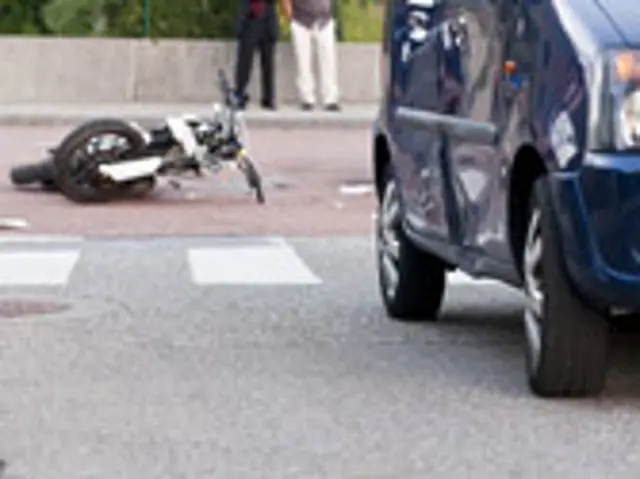
Los accidentes de tráfico son una de las principales causas de muerte en nuestro país, especialmente entre...
Road accidents are one of the main causes of death in our country, especially among...
- Alos jóvenes de 15 a 29 años.young people aged 15 to 29.
- Blos niños y las personas mayores de 70 años.children and people over 70.
- Clas personas mayores de 70 años.people over 70.
ExplanationRoad accidents affect some age groups much more than others, especially young people aged 15 to 29. This group is at higher risk because of inexperience, careless behaviour and a greater tendency to be distracted while driving. According to the General Traffic Regulations, young drivers are a risk group, and strategies to reduce accidents in this group are recommended. So the correct answer is young people aged 15 to 29, which highlights the need to focus on the safety of young drivers.
¿Es conveniente cubrir a los heridos en un accidente de circulación, con ropas o una manta?
Is it a good idea to cover people injured in a road accident with clothes or a blanket?
- ANo.No.
- BSí, pero solamente a los que presenten quemaduras graves.Yes, but only the ones who have serious burns.
- CSí, en general es conveniente tapar a los heridos.Yes, in general the injured should be covered.
ExplanationIn general it is a good idea to cover injured people with a blanket or clothes so that they do not lose heat, because getting cold makes shock worse. This is not only for people with burns. But do not wrap them up so much that they sweat.
¿Es obligatorio ayudar a las víctimas de un accidente?
Is it compulsory to help the victims of an accident?
- ANo, porque el auxilio le corresponde a los servicios sanitarios.No, because helping them is the job of the medical services.
- BSí, pero solo para los conductores implicados.Yes, but only for the drivers involved.
- CSí, excepto cuando la ayuda esté organizada.Yes, except when help is already organised.
ExplanationAnyone who is involved in an accident, sees it or learns about it must help the victims or call for help. Under Article 129.3 of the General Traffic Regulations, a person who is not involved does not have to step in when their help is clearly not needed, for example if the authorities or their officers are already at the scene.
Cuando apliquemos la regla PAS, ¿qué es lo primero que tenemos que proteger?
When you apply the PAS rule, what is the first thing you must protect?
- ALas personas accidentadas.The injured people.
- BEl lugar del accidente.The accident scene.
- CA nosotros mismos.Yourself.
ExplanationPAS means protect, alert and help. Protection starts with yourself: stop in a safe place, put on your vest and do not become another victim. Then protect the accident scene, call 112 and help the injured.
Cuando un vehículo accidentado comienza a arder, ¿qué se debe hacer primero?
When a vehicle involved in an accident starts to burn, what should be done first?
- AApagar el fuego.Put out the fire.
- BSacar rápidamente a los heridos.Get the injured out quickly.
- CIr a buscar ayuda.Go and get help.
ExplanationThe injured must be given the most suitable help so that their situation does not get worse.
El principal grupo de edad que sufre más accidentes mortales conduciendo es...
The age group with the most fatal accidents while driving is...
- ALas personas mayores.older people.
- BLos jóvenes.young people.
- CLas personas de 40 a 50 años.people aged 40 to 50.
ExplanationAlthough they are not the age group with the most drivers, young people make up 35% of road deaths. Road accidents are the main cause of death among young people.
Si presenciamos un accidente de tráfico, ¿cuál será la primera medida que adoptaremos?
If you witness a road accident, what is the first thing you will do?
- AAtender a los heridos.Look after the injured.
- BAvisar a los servicios de urgencia.Alert the emergency services.
- CProteger y señalizar la zona del accidente.Protect and mark the accident area.
ExplanationThe basic action at an accident follows the PAS rule (protect, alert, help). First, take protective measures for yourself and for other road users. Then alert the emergency services by calling 112. Finally, help the victims.
¿Qué comportamiento es el correcto ante una intensa hemorragia en la pierna de un herido en accidente de circulación?
What is the correct action for heavy bleeding from the leg of a person injured in a road accident?
- ANo es una lesión de una importancia especial y no es necesario prestarle atención.It is not a particularly important injury and does not need attention.
- BSe debe presionar sobre la herida con una gasa, o compresa, limpia, para intentar cortar la hemorragia.Press on the wound with clean gauze or a clean pad to try to stop the bleeding.
- CSe debe aplicar un torniquete, de forma inmediata.Apply a tourniquet immediately.
ExplanationFor heavy bleeding, press directly and continuously on the wound with clean gauze or a clean pad and, if possible, raise the limb. A tourniquet is only used as a last resort, because it can cause serious injuries.
¿Puede el conductor reducir la probabilidad de accidente debida al “factor vía”?
Can the driver reduce the likelihood of an accident caused by the 'road factor'?
- ASí, adaptando su conducción a las condiciones del medio.Yes, by adapting their driving to the conditions around them.
- BNo, porque no puede actuar sobre la vía ni sobre el entorno.No, because they cannot act on the road or the surroundings.
- CSí, si su vehículo cuenta con los últimos avances de seguridad.Yes, if their vehicle has the latest safety features.
ExplanationThe driver cannot change the road, but they can neutralise its risks by adapting their speed, distance and path to the road surface, the layout of the road and the surroundings. This adaptation reduces the likelihood of an accident.
¿Dónde debemos llevar el chaleco reflectante?
Where should we keep the reflective vest?
- ADentro del habitáculo del vehículo, para poder ponérnoslo antes de salir.Inside the passenger compartment, so we can put it on before getting out.
- BEn el maletero del vehículo.In the boot of the vehicle.
- CNo importa dónde esté.It does not matter where it is.
ExplanationThe reflective vest must be within the driver's reach inside the passenger compartment, so they can put it on before getting out. Article 118.4 of the General Traffic Regulations requires you to wear it when you get out of the vehicle and go onto the carriageway or hard shoulder of a road outside built-up areas.
¿Qué es lo primero que tenemos que hacer ante un accidente de tráfico?
What is the first thing you must do at a road accident?
- AProtegernos a nosotros mismos, proteger a las víctimas del accidente y proteger el lugar del accidente, por este orden.Protect yourself, protect the accident victims and protect the accident scene, in that order.
- BProteger a las víctimas, proteger el lugar del accidente y protegernos a nosotros, por este orden.Protect the victims, protect the accident scene and protect yourself, in that order.
- CProtegernos a nosotros mismos, proteger el lugar del accidente y proteger a las víctimas, por este orden.Protect yourself, protect the accident scene and protect the victims, in that order.
ExplanationAt a road accident, the first thing to think about is protecting yourself, then protecting the accident scene and finally protecting the victims.
¿Por qué motivo colocaremos a un herido en posición de defensa?
Why should you place an injured person in the recovery position?
- APara que recobre el conocimiento.So that they regain consciousness.
- BPara evitar que se mueva.To stop them moving.
- CPara evitar que se asfixie.To stop them choking.
ExplanationAs a general rule, do not move an injured person unless it is strictly necessary. However, if an unconscious injured person is breathing, move them into the recovery position: when they start to vomit or bleed from the mouth or nose, to stop them choking; or when you have to leave them alone to look after other injured people or get help.
La baliza luminosa V-16 pasa a ser obligatoria, en sustitución de los triángulos, a partir del año:
The V-16 warning light becomes compulsory, replacing warning triangles, from the year:
- A2024.2024.
- B2025.2025.
- C2026.2026.
ExplanationThe V-16 becomes compulsory in 2026. 2025 and 2024 are wrong.
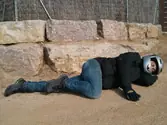
Colocaremos a un herido en posición lateral de seguridad...
We will place an injured person in the recovery position...
- APara prevenir la asfixia.To prevent choking.
- BCuando exista una lesión cérvico-medular.When there is a spinal cord injury in the neck.
- CPara practicarle la reanimación cardiopulmonar.To give them cardiopulmonary resuscitation.
ExplanationThe recovery position means lying the injured person on their side with the mouth lower than the rest of the head: it stops the tongue falling back and lets vomit or blood drain out, which prevents choking. It is not used if a neck or spinal injury is suspected.
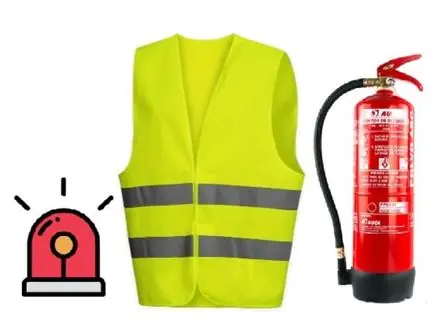
Un camión de más de 3.500 kilogramos de masa máxima autorizada destinado al servicio público debe llevar siempre...
A lorry over 3,500 kg maximum authorised mass used for public service must always carry...
- Aun extintor de incendios.a fire extinguisher.
- Bun extintor de incendios y al menos un calzo adecuado para el vehículo.a fire extinguisher and at least one suitable wheel chock for the vehicle.
- Cun calzo adecuado para el vehículo.a suitable wheel chock for the vehicle.
ExplanationLorries over 3,500 kg, buses and coaches, and combinations of vehicles (whatever their weight) must carry a fire extinguisher.
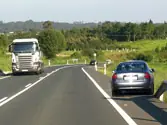
Durante el día, si por causa de una avería dejamos el vehículo inmovilizado en el arcén de una carretera, ¿cómo lo haremos?
During the day, if a breakdown leaves your vehicle immobilised on the hard shoulder of a road, what will you do?
- AColocando el dispositivo de preseñalización de peligro y utilizando la señal de emergencia.Place the hazard warning device and use the hazard warning lights.
- BAl ser de día colocaremos solamente los triángulos de preseñalización de peligro.As it is daytime, I will only place the warning triangles.
- CSi el vehículo está en el arcén sólo será necesario utilizar la señal de emergencia.If the vehicle is on the hard shoulder, I only need to use the hazard warning lights.
ExplanationIf you break down, by day or by night, you must use the hazard warning lights and also place the hazard warning device. The V-16 hazard warning device is an approved amber-yellow light with geolocation. It runs on its own power supply (batteries). It must be placed on the highest point of the broken-down vehicle, to make it as visible as possible. Today the V-16 is the only legal way to signal a broken-down vehicle or an obstacle on the road. Warning triangles are no longer used.
Si el vehículo se detiene por avería en el arcén de una vía interurbana...
If your vehicle breaks down and stops on the hard shoulder of a road outside a built-up area...
- Adejaremos encendida la señal de emergencia.you will leave the hazard warning lights on.
- Bcolocaremos dos triángulos de preseñalización a 50 metros del vehículo.you will place two warning triangles 50 metres from the vehicle.
- Cdejaremos encendida la señal de emergencia y colocaremos el dispositivo luminoso V-16.you will leave the hazard warning lights on and place the V-16 light.
ExplanationUnder Article 130 of the General Traffic Regulations, a vehicle immobilised by a breakdown, including on the hard shoulder, is signalled with the hazard warning lights and the regulation hazard warning device. Since 1 January 2026 this device is the V-16 light; warning triangles are no longer valid.
All topics
- Definitions
- Documents and penalty points
- The driver's condition
- Duties of drivers and pedestrians
- Vehicle safety devices
- Vehicle controls and equipment
- Vehicle lights and horn
- Traffic signs, markings and signals
- The road and its lanes
- Speed and distances
- Manoeuvres
- Right of way
- Carrying passengers and loads
- Driving safely in difficult conditions
- Vehicle mechanics and maintenance
- Defensive and eco-driving
Independent app: not affiliated with or endorsed by the DGT (Spain's Directorate-General for Traffic) or the Ministry of the Interior. The official exam is booked with the DGT and taken at its test centres. The questions here are practice material; the DGT's official question bank is not public.
Basado en datos de la Agencia Estatal Boletín Oficial del Estado (https://www.boe.es). Textos consolidados de carácter meramente informativo. La AEBOE no patrocina ni respalda este sitio.
Parte de las preguntas procede de los tests de la revista «Tráfico y Seguridad Vial» de la DGT, reproducidos con indicación de la fuente.