
DGT test · 534 questions
The road and its lanes · Page 2 of 11
Carriageway, lanes, hard shoulder and road types: where you drive and how lanes are used on motorways, dual carriageways and streets.
Questions in this topic, with answers
534 questions, 50 per page, with the correct answer and the explanation. Page 2 of 11.
En un carril reservado para la circulación de autobuses y taxis, cuando la línea que lo separa del resto de la calzada es discontinua, ¿le está permitido parar o estacionar?
In a lane reserved for buses and taxis, when the line separating it from the rest of the carriageway is broken, may you stop or park?
- ANo, porque, como norma general, está prohibido tanto parar como estacionar.No, because as a general rule both stopping and parking are forbidden.
- BEstacionar no está permitido. Parar, sí, dando siempre preferencia a los autobuses y taxis.Parking is not allowed. Stopping is, always giving priority to buses and taxis.
- CSí, además es el lugar más adecuado, porque está junto al borde de la calzada.Yes, and it is also the best place, because it is next to the edge of the carriageway.
ExplanationBoth stopping and parking are forbidden in a lane reserved for buses and taxis, even if the line separating it from the rest of the carriageway is broken. These lanes are designed to help these vehicles move, and any other vehicle stopping there could cause traffic problems and slow down public transport.
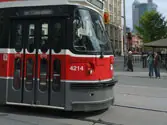
¿Por qué lado adelantaremos a un tranvía que circula por el centro de una calzada de doble sentido?
On which side should we overtake a tram running in the middle of a two-way carriageway?
- APor el lado derecho.On the right-hand side.
- BPor el lado izquierdo.On the left-hand side.
- CTanto por el lado derecho como por el izquierdo.On either the right-hand or the left-hand side.
ExplanationA tram running in the middle of a two-way carriageway must be overtaken on the right-hand side.
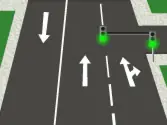
Circulando por el carril de la derecha, ¿podemos continuar la marcha si pretendemos seguir de frente?
Driving in the right-hand lane, may we carry on if we want to go straight ahead?
- ANo, debemos cambiar de carril.No, we must change lanes.
- BNo, obligatoriamente tendremos que girar a la derecha.No, we will have to turn right.
- CSí, podremos girar a la derecha o seguir de frente.Yes, we may turn right or go straight ahead.
ExplanationThe road markings painted on the lane allow us both to go straight ahead and to turn right.
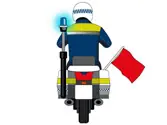
¿Podrá circular detrás de un vehículo de policía que lleva una bandera roja?
May you drive behind a police vehicle carrying a red flag?
- ASí, extremando la precaución.Yes, taking extreme care.
- BNo, porque la calzada está temporalmente cerrada al tráfico.No, because the carriageway is temporarily closed to traffic.
- CNo podré circular delante de él, detrás sí.I may not drive in front of it, but I may drive behind it.
ExplanationA police vehicle with a red flag shows that the carriageway is temporarily closed to traffic, so you may not drive behind it.
¿Puede un vehículo de extinción de incendios en servicio de urgencia circular por una carril VAO?
May a fire engine on an emergency call use an HOV lane (VAO)?
- ASí.Yes.
- BNo.No.
- CSolamente si va ocupado por un número mínimo de personas.Only if it carries a minimum number of people.
ExplanationPolice, fire, civil protection and rescue vehicles, and ambulances on an emergency call, may use an HOV lane (VAO) regardless of the number of people on board.
Si arrastra un ciclomotor en una autovía, ¿por dónde debe circular?
If you are pushing a moped along a dual carriageway (autovía), where must you go?
- ASiempre por el arcén.Always on the hard shoulder.
- BNi por el arcén ni por el carril derecho: no puede circular por ella.Neither on the hard shoulder nor in the right-hand lane: you cannot use this road.
- CSiempre por el carril derecho.Always in the right-hand lane.
ExplanationSomeone pushing a moped on foot is a pedestrian, and pedestrians may not use motorways (autopistas) or dual carriageways (autovías), except in the emergency cases of Article 130 (Article 125.1 of the General Traffic Regulations). Mopeds are also banned from these roads (Article 38.1).
¿Podrá una motocicleta circular por un carril V.A.O.?
May a motorcycle use an HOV lane (VAO)?
- ASí, pero solo las de cilindrada superior a 125 cm³.Yes, but only those over 125 cc.
- BSí.Yes.
- CNo.No.
ExplanationMotorcycles may use an HOV lane (VAO) regardless of the number of people on board.
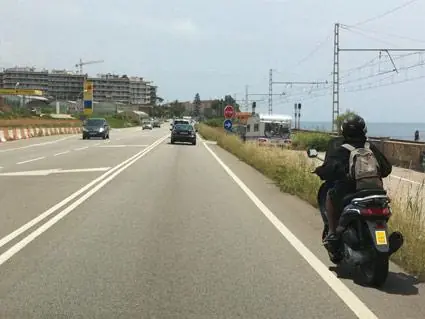
¿Los ciclomotores pueden circular en columna de a dos?
May mopeds be ridden two abreast?
- ANo, nunca.No, never.
- BSí, excepcionalmente, cuando el arcén sea transitable y suficiente.Yes, exceptionally, when the hard shoulder is usable and wide enough.
- CSí, siempre.Yes, always.
ExplanationUnder Article 36.2 of the General Traffic Regulations (as worded by RD 518/2026), vehicles that must use the hard shoulder, including mopeds, are prohibited from riding side by side. Only bicycles may ride two abreast; the old exception that allowed mopeds to ride two abreast on the hard shoulder no longer exists.
En una carretera con tres carriles por sentido, ¿cuándo se puede usar el carril izquierdo?
On a road with three lanes in each direction, when may you use the left-hand lane?
- ASolo para adelantar.Only to overtake.
- BNunca.Never.
- CCuando los otros carriles estén ocupados y no molesten a los vehículos que vienen detrás.When the other lanes are occupied and you do not hold up vehicles coming from behind.
ExplanationOutside built-up areas you normally drive in the right-hand lane, but you may use the others when traffic or the road makes it advisable, as long as you do not hinder the vehicles behind (Article 31.1 of the General Traffic Regulations). The left-hand lane is not only for overtaking.
Si nuestro vehículo se avería circulando por la autopista, ¿podremos circular por el arcén izquierdo?
If our vehicle breaks down while we are on the motorway (autopista), may we drive on the left-hand hard shoulder?
- ANo, los turismos no pueden circular por el arcén.No, cars may not drive on the hard shoulder.
- BNo, deberemos circular por el arcén derecho.No, we must drive on the right-hand hard shoulder.
- CSí, cuando la avería ocurra mientras se circula por el carril izquierdo.Yes, when the breakdown happens while driving in the left-hand lane.
ExplanationIf we break down on a motorway (autopista), we may never drive on the left-hand hard shoulder, although we could stop there if necessary.
Si por alguna razón tiene que descargar su vehículo en la vía pública, ¿cómo debe hacerlo?
If for some reason you have to unload your vehicle on a public road, how must you do it?
- ADepositando la mercancía en el arcén o en la zona peatonal más cercana.By putting the goods on the hard shoulder or in the nearest pedestrian area.
- BRealizando la descarga lo antes posible, evitando ruidos y molestias innecesarias.By unloading as quickly as possible, avoiding unnecessary noise and disturbance.
- CEn ningún caso debe realizarse la descarga dentro de la vía.Unloading must never be done on the road.
ExplanationIf, exceptionally, you have to unload on the road, you must do it with enough means to be as quick as possible and avoid unnecessary noise and disturbance, and it is prohibited to put the goods on the carriageway, the hard shoulder or pedestrian areas (Article 16 of the General Traffic Regulations).
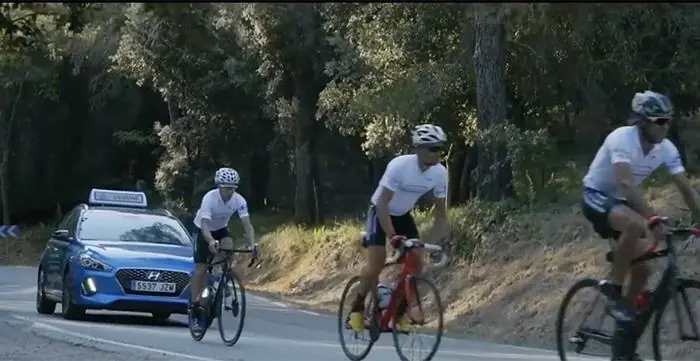
En una calzada con arcén transitable y suficiente, ¿por dónde circulará un vehículo de acompañamiento de ciclistas?
On a carriageway with a usable and wide enough hard shoulder, where will a vehicle accompanying cyclists drive?
- APor el carril derecho para proteger a los ciclistas.In the right-hand lane, to protect the cyclists.
- BPor el arcén.On the hard shoulder.
- CPor el centro de la calzada.In the middle of the carriageway.
ExplanationUnder Article 36 of the General Traffic Regulations, vehicles following cyclists, like cycles themselves, must use the hard shoulder on their right if it is usable and wide enough. Only if it is not do they use the part of the carriageway that is strictly necessary.
¿Qué vehículos pueden circular por el arcén como norma general?
Which vehicles use the hard shoulder as a general rule?
- AVehículos de más de 3500 kg de MMA.Vehicles with a MAM of more than 3500 kg.
- BVehículos de menos de 3500 kg de MMA.Vehicles with a MAM of less than 3500 kg.
- CCiclomotores, vehículos para personas de movilidad reducida...Mopeds, vehicles for people with reduced mobility, etc.
ExplanationAnimal-drawn vehicles, special vehicles of up to 3500 kg, cycles, mopeds and vehicles for people with reduced mobility must use the right-hand hard shoulder when it is passable.
En una autovía dentro de poblado, ¿por dónde circulará como norma general?
On a dual carriageway (autovía) in a built-up area, where will you drive as a general rule?
- APor el carril que mejor convenga a su destino.In the lane that best suits your destination.
- BPor el carril de la derecha.In the right-hand lane.
- CPor el carril de la izquierda.In the left-hand lane.
ExplanationEven in a built-up area, since it is a dual carriageway, we apply the general rule as if we were outside a built-up area, so we normally drive in the right-hand lane.
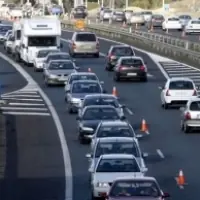
Conducir en un carril en sentido contrario al habitual…
Driving in a lane in the opposite direction to the usual one…
- AObliga en todo caso a encender la luz de cruce.Always requires you to switch on the dipped headlights.
- BEstá permitido exclusivamente a los automóviles.Is allowed only for motor cars.
- CNo implica ningún límite de velocidad.Does not involve any speed limit.
ExplanationVehicles travelling in a lane opened in the opposite direction to the usual one must always have at least the dipped headlights on, both by day and by night; this is compulsory. The maximum speed that may not be exceeded in these lanes is 80 kilometres per hour, and if you are travelling in this lane you may not move sideways into the lane or lanes for the normal direction of traffic, not even to overtake other vehicles.
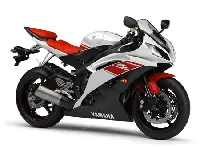
Circulando con una motocicleta dentro de poblado, ¿qué carril debemos utilizar?
When riding a motorcycle in a built-up area, which lane should you use?
- AEl carril de la derecha únicamente.Only the right-hand lane.
- BEl carril de la derecha para circular y el de la izquierda sólo para cambiar de dirección.The right-hand lane for riding, and the left-hand lane only for turning.
- CEl carril que mejor convenga a mi destino.The lane that best suits my destination.
ExplanationUnder Article 33 of the General Traffic Regulations, in a built-up area, on carriageways with at least two lanes marked for the same direction, you may use the lane that best suits your destination, as long as you do not obstruct others. This rule also applies to motorcycles.
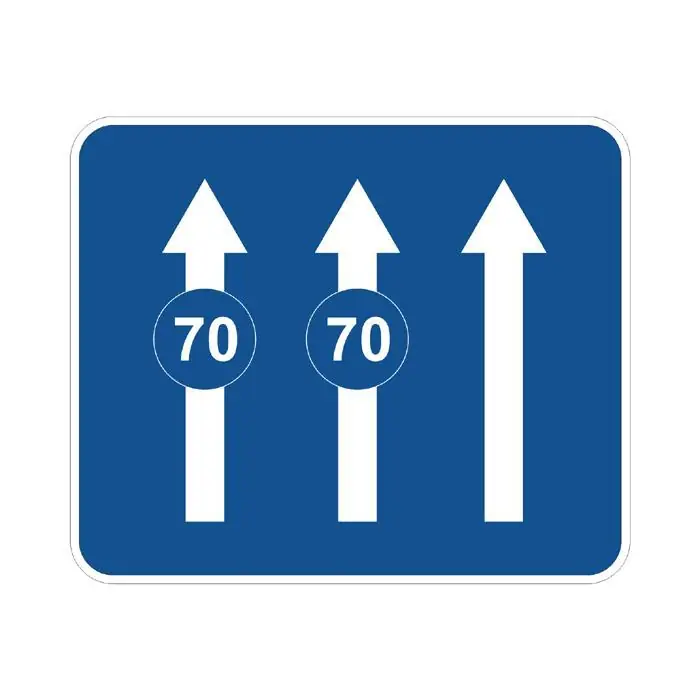
Conduce un conjunto de vehículos compuesto por un turismo con remolque que mide más de 7 metros. ¿Qué carriles utilizará en esta vía interurbana si circula a 80 Km/h?
You are driving a combination made up of a car and a trailer that is more than 7 metres long. Which lanes will you use on this road outside built-up areas if you are travelling at 80 km/h?
- ASólo el de mas a la derecha.Only the one furthest to the right.
- BEl derecho e inmediato si las circunstancias lo permiten.The right-hand lane and the next one, if circumstances allow.
- CTodos.All of them.
ExplanationUnder Article 31 of the General Traffic Regulations, on carriageways with three or more lanes in each direction, vehicle combinations more than 7 metres long normally use the right-hand lane and may use the lane immediately to its left when circumstances make it advisable. At 80 km/h they meet the signed minimum speed.
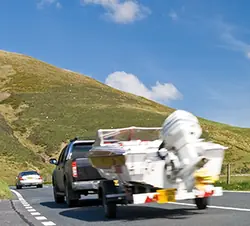
En un carril VAO, ¿puede circular un turismo que arrastra un remolque de menos de 750 kg de M.M.A.?
May a car towing a trailer with a maximum authorised mass (MAM) under 750 kg use an HOV lane (VAO)?
- ASí, pero solo de día.Yes, but only during the day.
- BNo.No.
- CSí, siempre.Yes, always.
ExplanationHOV lanes (VAO) are reserved for motorcycles and for cars with the minimum number of occupants indicated, without a trailer. A car towing a trailer, even a light one, may never use them.
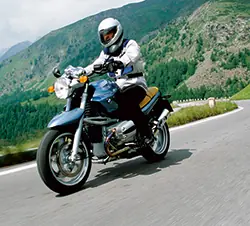
Como norma general, una motocicleta, ¿puede circular por el arcén?
As a general rule, may a motorcycle use the hard shoulder?
- ANo, debe circular por la calzada.No, it must use the carriageway.
- BSí, pero no puede hacerlo en paralelo con otros vehículos.Yes, but it may not ride side by side with other vehicles.
- CSí, pero solo si su cilindrada es igual o inferior a 125 c.c.Yes, but only if its engine size is 125 cc or less.
ExplanationAs a general rule, motorcycles, like all motor vehicles, must use the carriageway and not the hard shoulder, except in an emergency. Since 1 October 2026 there is an exception: on signed stretches, when traffic is stopped by congestion, they may use the right-hand hard shoulder, at a maximum of 30 km/h and in single file.
¿Qué indica una marca vial continua en el centro de la calzada?
What does a solid road marking in the centre of the carriageway mean?
- ASe puede adelantar con precauciónYou may overtake with care
- BProhíbe adelantarOvertaking is prohibited
- CSolo pueden adelantar motosOnly motorcycles may overtake
ExplanationA solid line prohibits overtaking and driving over it. You may only cross it if the line on your side is broken.
¿Podrá un turismo que solo está ocupado por su conductor circular por un carril V.A.O?
May a car with only the driver on board use an HOV lane (VAO)?
- ANo, en ningún caso.No, never.
- BSí, si el vehículo ostenta la señal de minusvalía.Yes, if the vehicle displays the disabled badge.
- CSí, en cualquier caso.Yes, in all cases.
ExplanationA car displaying the disabled badge may use an HOV lane (VAO) even if only the driver is on board.
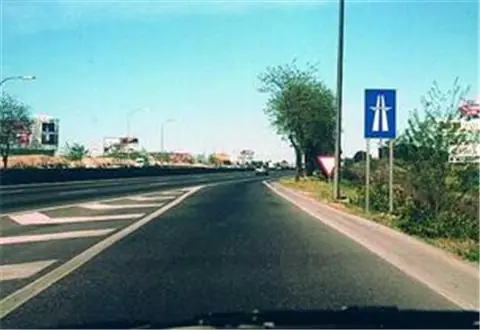
Se prohíbe circular por autopista a los...
Driving on a motorway (autopista) is prohibited for...
- Avehículos que transporten mercancías peligrosas.vehicles carrying dangerous goods.
- Bvehículos con remolque.vehicles towing a trailer.
- Cvehículos que no sean capaces de alcanzar en llano 60 km/h.vehicles that cannot reach 60 km/h on the flat.
ExplanationOn motorways (autopistas) and dual carriageways (autovías) it is prohibited to drive at less than 60 km/h without a justified reason (Article 49 of the General Traffic Regulations), so vehicles that cannot reach that speed on the flat may not use them. Vehicles with a trailer or carrying dangerous goods may use them.
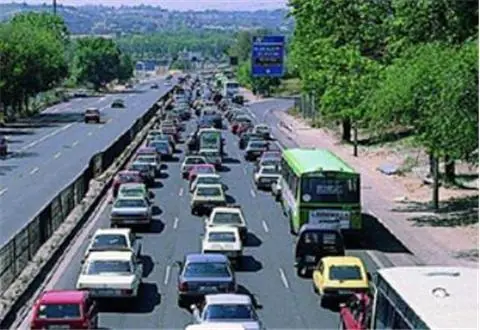
En vías interurbanas con tres o más carriles para el mismo sentido de la marcha, un conjunto de vehículos de más de 7 m, ¿podrá utilizar el carril inmediato al derecho?
On roads outside built-up areas with three or more lanes in the same direction, may a vehicle combination longer than 7 m use the lane next to the right-hand lane?
- ASí, en cualquier caso.Yes, in all cases.
- BNo, sólo puede circular por el carril derecho.No, it may only use the right-hand lane.
- CSí, si las circunstancias del tráfico o la vía lo aconsejan y no entorpece la marcha de otro vehículo que le siga.Yes, if traffic or road conditions make it advisable and it does not hold up a vehicle behind.
ExplanationOn roads outside built-up areas with three or more lanes in each direction, vehicle combinations longer than 7 metres normally use the right-hand lane and may use the next lane when traffic or road conditions make it advisable, without holding up vehicles behind (Article 31 of the General Traffic Regulations).
Un conjunto de vehículos de 7,30 m circula por una vía con tres carriles en cada sentido. ¿Qué carriles puede usar?
A 7.30 m vehicle combination is travelling on a road with three lanes in each direction. Which lanes may it use?
- ACualquiera de los carriles.Any of the lanes.
- BEl carril derecho y el contiguo, solo cuando lo aconsejen el tráfico o las condiciones de la vía.The right-hand lane, and the one next to it only when traffic or road conditions make it advisable.
- CSolo el carril derecho.Only the right-hand lane.
ExplanationUnder the General Traffic Regulations, vehicles longer than 7 metres must normally use the right-hand lane and may use the next lane when traffic or road circumstances make it advisable, but must not enter the left-hand lane. This helps traffic flow and avoids danger on the road. So the correct answer is that the vehicle may use the right-hand lane, and the next one only when traffic or road circumstances make it advisable.
En las autovías, se permite circular...
On dual carriageways (autovías), the following are permitted to travel...
- Aa peatones.pedestrians.
- Ba vehículos de tracción animal.animal-drawn vehicles.
- Cpor los arcenes, a conductores de bicicletas mayores de 14 años, salvo que se prohíba por señal.cyclists over 14 years of age, on the hard shoulders, unless a sign prohibits it.
ExplanationAnimal-drawn vehicles, bicycles, mopeds, vehicles for people with reduced mobility and personal mobility vehicles are prohibited on motorways (autopistas) and dual carriageways (autovías). However, cyclists over 14 years of age may ride on the hard shoulders of dual carriageways (autovías), unless this is prohibited by the relevant signs for justified road safety reasons. This prohibition will be completed with a panel giving the alternative route.
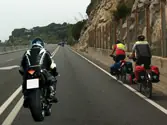
¿Están circulando correctamente estos ciclistas?
Are these cyclists riding correctly?
- ANo, deberían hacerlo por la calzada.No, they should be on the carriageway.
- BSí, porque están utilizando el arcén.Yes, because they are using the hard shoulder.
- CNo, en este tipo de vías no pueden circular los ciclistas.No, cyclists may not use this type of road.
ExplanationBicycles must be ridden on the hard shoulder on their right if it is usable and wide enough. If it is not, they will use only as much of the carriageway as they need.
En una autopista urbana, ¿por qué carril circularemos?
On an urban motorway (autopista), which lane shall we use?
- APor el carril que mejor convenga a nuestro destino.The lane that best suits our destination.
- BComo norma general por el de la derecha.As a general rule, the right-hand one.
- CSolo por el primer o segundo carril.Only the first or second lane.
ExplanationIn built-up areas you may choose the lane that best suits your destination, but this rule does not apply to motorways and dual carriageways. On them, even in urban areas, you normally drive in the right-hand lane and use the others when traffic makes it advisable, without holding up those behind you.
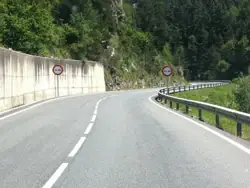
¿Está permitido circular sobre una marca discontinua si circula por una calzada con carriles de menos de 3 metros de anchura?
Is it allowed to drive on a broken line if you are on a carriageway with lanes less than 3 metres wide?
- ANo, nunca.No, never.
- BSí, siempre.Yes, always.
- CSí, siempre que sea necesario y la seguridad lo permita.Yes, as long as it is necessary and safety allows.
ExplanationAs a general rule you do not drive on broken longitudinal lines; you only cross them for manoeuvres such as changing lanes. The exception is when the width of the lanes makes it necessary, as long as road safety allows.
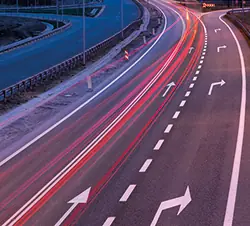
¿Para qué sirve el carril de deceleración?
What is the deceleration lane for?
- APara que circulen los vehículos lentos.For slow vehicles to travel in.
- BPara adelantar por la derecha.For overtaking on the right.
- CPara reducir la velocidad al salir de una autopista.For reducing speed when leaving a motorway (autopista).
ExplanationThe deceleration lane lets you leave the motorway (autopista) by reducing speed once you are out of the main lane, without braking sharply or obstructing those who continue on the road.
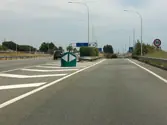
Para abandonar una autopista debe incorporarse al carril de deceleración...
To leave a motorway (autopista), you must move into the deceleration lane...
- Aen cualquier lugar del mismo.at any point along it.
- Bal final del mismo.at the end of it.
- Clo antes posible.as soon as possible.
ExplanationWhen leaving a motorway or dual carriageway by one of the exits provided, you must enter the deceleration lane as soon as possible, that is, from where it begins, and once in it, slow down gradually.
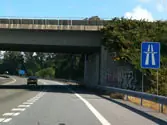
¿Podrá una motocicleta circular por el carril izquierdo de una autopista?
May a motorcycle use the left-hand lane of a motorway (autopista)?
- ANo, solo podrá circular por el de la derecha y el central.No, it may only use the right-hand and middle lanes.
- BSí, para adelantar o cuando las circunstancias del tráfico lo aconsejen.Yes, to overtake or when traffic conditions make it advisable.
- CNo, está reservado a los turismos que circulan a más de 100 km/h.No, it is reserved for cars travelling at more than 100 km/h.
ExplanationA motorcycle may use the left-hand lane on a motorway (autopista) when traffic or road conditions make it advisable, provided it does not hold up the vehicle behind it.
En un puente con un ancho de calzada inferior a 6 metros, ¿qué tipos de vehículos no pueden cruzarse?
On a bridge where the carriageway is less than 6 metres wide, which vehicles may not pass each other?
- ALos vehículos de tracción animal.Animal-drawn vehicles.
- BLos vehículos que necesitan una autorización especial para circular.Vehicles that need a special permit to travel.
- CLos vehículos articulados.Articulated vehicles.
ExplanationVehicles that need a special permit to travel may not pass each other on bridges where the carriageway is less than 6 metres wide, unless each vehicle has a lane width of at least 3 metres.
En esta vía de doble sentido de circulación, ¿por dónde adelantará al tranvía que circula por el centro de la calzada?
On this two-way road, on which side will you overtake the tram running in the middle of the carriageway?
- APor la derecha.On the right.
- BPor la izquierda.On the left.
- CTanto por la derecha como por la izquierda.On either the right or the left.
ExplanationUnder Article 82 of the General Traffic Regulations (RGC), on two-way roads, trams running in the central part of the road are overtaken on the right, with the greatest care and if there is enough space. Overtaking on the left would mean moving into the opposite direction.
En un puente cuya calzada mide menos de 6 metros de ancho, ¿qué vehículos no pueden cruzarse entre sí?
On a bridge whose carriageway is less than 6 metres wide, which vehicles may not pass each other when coming from opposite directions?
- AVehículos de tracción animal.Animal-drawn vehicles.
- BVehículos que necesitan autorización especial para circular.Vehicles that need special authorisation to travel.
- CVehículos articulados.Articulated vehicles.
ExplanationUnder the General Traffic Regulations, on bridges or other structures whose carriageway is less than 6 metres wide, vehicles that need special authorisation to travel may not pass each other. This is because each vehicle must have a road width of at least 3 metres, which is not possible if these vehicles pass each other in such narrow spaces. So the correct answer is vehicles that need special authorisation to travel.
¿Pueden los ciclomotores circular por el arcén en parejas?
Can mopeds ride side by side on the hard shoulder?
- ASí, solo cuando el arcén esté transitable y tenga suficiente ancho.Yes, only when the hard shoulder is driveable and wide enough.
- BNo, nunca.No, never.
- CSí, siempre.Yes, always.
ExplanationAccording to Article 36.2 of the General Traffic Regulations (RGC), as worded by RD 518/2026, vehicles that are required to use the hard shoulder, including mopeds, are not allowed to ride side by side. Only bicycles may ride two abreast; the old exception that allowed mopeds to ride two abreast on the hard shoulder no longer exists.
¿Cuál de estos carriles no se tendrá en cuenta a efectos de su utilización?
Which of these lanes is not counted for the purposes of lane use?
- ALos carriles adicionales.Additional lanes.
- BLos carriles reversibles.Reversible lanes.
- CLos carriles reservados a determinados vehículos.Lanes reserved for certain vehicles.
ExplanationLanes reserved for certain vehicles are not counted for the purposes of lane use. Reversible lanes, additional lanes and lanes in the opposite direction to the usual one are counted.
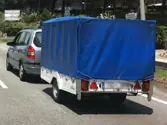
Un turismo con remolque, ¿puede circular por un carril abierto a la circulación en sentido contrario al normal?
May a car with a trailer use a lane opened to traffic in the opposite direction to normal?
- ASí, siempre.Yes, always.
- BSi, cuando haya sido abierto por razones de fluidez de la circulación.Yes, when it has been opened to keep traffic flowing.
- CSí, cuando haya sido abierto por obras en la calzada.Yes, when it has been opened because of roadworks on the carriageway.
ExplanationLanes opened in the opposite direction to normal to keep traffic flowing may only be used by motorcycles, with or without a sidecar, and cars. However, when they are opened because of roadworks, all vehicles allowed on that road may use them, including cars with trailers, unless this is expressly prohibited.
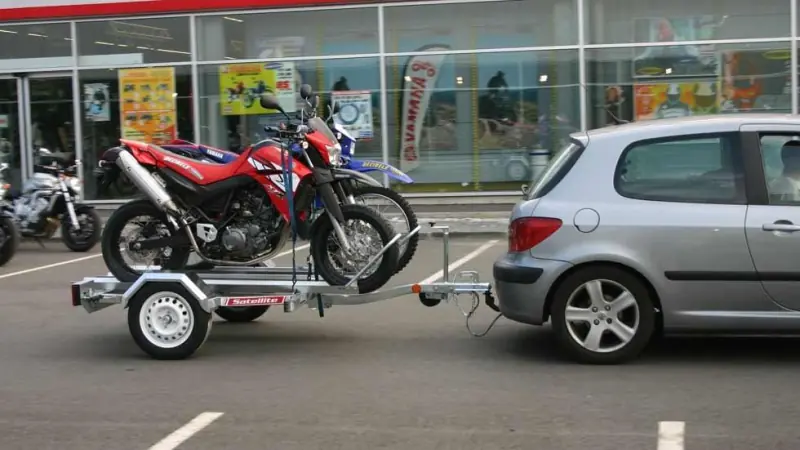
Si usted conduce un turismo con remolque, ¿puede circular por un carril VAO?
If you are driving a car towing a trailer, may you use a HOV lane (VAO)?
- ASí.Yes.
- BNo.No.
- CSí, si la masa máxima autorizada del conjunto no es superior a 3500kg.Yes, if the maximum authorised mass of the combination is no more than 3,500 kg.
ExplanationHOV lanes (VAO) may only be used by motorcycles, cars and adaptable mixed-use vehicles carrying the minimum number of occupants indicated. Article 35 of the General Traffic Regulations expressly prohibits cars towing a trailer from using them, whatever their mass.
Si circulamos por un carril de aceleración para incorporarnos a una autopista en la que circulan varios vehículos, ¿quién tendrá preferencia?
If we are in an acceleration lane to join a motorway (autopista) where several vehicles are travelling, who has right of way?
- ALos vehículos que ya circulan por la autopista.The vehicles already travelling on the motorway.
- BYo, porque me incorporo a la circulación.I do, because I am joining the traffic.
- CEl que circule a mayor velocidad.Whoever is travelling faster.
ExplanationIf we want to join a motorway (autopista) from an acceleration lane, we must give way to the vehicles already travelling on it. In turn, those vehicles must make it easier for us to join.
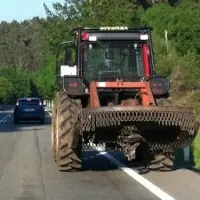
Este tractor de 3.400 kilogramos de masa máxima autorizada, ¿circula correctamente por el arcén?
Is this tractor, with a maximum authorised mass of 3,400 kilograms, driving correctly on the hard shoulder?
- ANo, porque está obligado a circular por la derecha de la calzada.No, because it must drive on the right-hand side of the carriageway.
- BSí.Yes.
- CSí, pero solamente si lo hace por avería.Yes, but only if it is doing so because of a breakdown.
ExplanationYes. Special vehicles with a maximum authorised mass of no more than 3,500 kg, such as this tractor, must drive on the right-hand hard shoulder if it is usable and wide enough (Article 36 of the General Traffic Regulations). It is not there because of a breakdown: that is where it must drive.
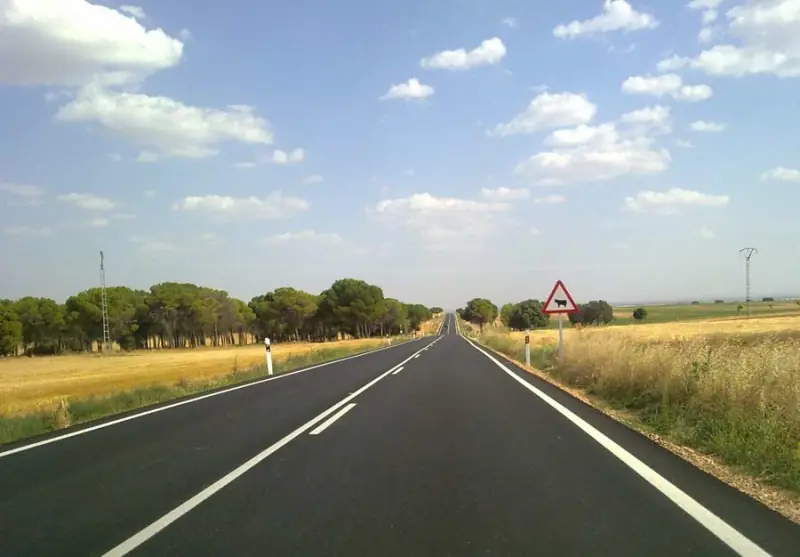
Un ciclomotor en esta vía debe circular por…
On this road, a moped must be ridden…
- AEl arcén de la derecha.On the right-hand hard shoulder.
- BLa calzada, lo más cerca posible del borde derecho.On the carriageway, as close as possible to the right-hand edge.
- CLa calzada o el arcén, indistintamente.On either the carriageway or the hard shoulder.
ExplanationMopeds are ridden on the hard shoulder if it is usable and wide enough; if not, they must be ridden on the carriageway, using only the part that is strictly necessary and as close as possible to the right-hand edge (Article 36 of the General Traffic Regulations). On this road the space outside the edge line is too narrow to ride on.
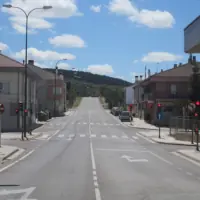
¿Son las travesías consideradas vías urbanas cuando se encuentran dentro de poblado?
Are travesías (stretches of road through a town) considered urban roads when they are inside a built-up area?
- ADependerá de los edificios que se tengan alrededorIt depends on the buildings around them
- BNo, en ningún casoNo, never
- CSíYes
ExplanationA travesía is the stretch of a road that runs through a built-up area. The law expressly excludes it from urban roads: an urban road is any public road inside a built-up area, except travesías. That is why it has its own rules, such as the 50 km/h limit for all types of vehicle.
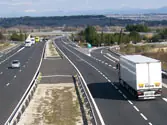
¿Se podrá inmovilizar un vehículo en la mediana?
Can a vehicle be brought to a standstill on the central reservation?
- ANo, en ningún caso.No, under no circumstances.
- BSí, pero para efectuar una parada menos de 2 minutos.Yes, but only to stop for less than 2 minutes.
- CSí, por una emergencia.Yes, in an emergency.
ExplanationIn an emergency, if safety conditions make it advisable, the vehicle may exceptionally be brought to a standstill on the central reservation.
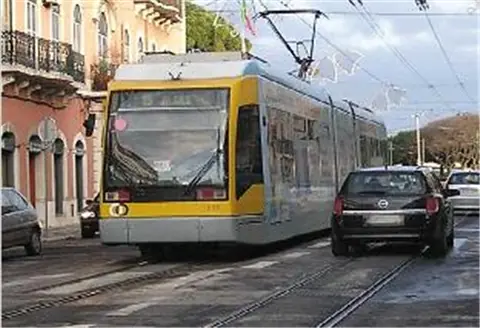
En esta vía de doble sentido de circulación, ¿por dónde adelantará al tranvía?
On this two-way road, on which side will you overtake the tram?
- APor la derecha.On the right.
- BPor la izquierda.On the left.
- CEs indiferente; se le puede adelantar por la derecha como por la izquierda.It makes no difference; it can be overtaken on the right or on the left.
ExplanationOn two-way roads, trams running in the central area are overtaken on the right (Article 82 of the General Traffic Regulations), because vehicles may be coming the other way on the left. Only on one-way roads may you overtake on either side.
¿Por dónde circulará un ciclomotor por una carretera convencional?
Where must a moped ride along a conventional road?
- APor la derecha de la calzada, utilizando la parte imprescindible de la misma.On the right of the carriageway, using the part of it that is strictly necessary.
- BPor el arcén transitable si lo hubiese.On the passable hard shoulder, if there is one.
- CPor el carril de la derecha de la calzada.In the right-hand lane of the carriageway.
ExplanationIf there is no part of the road that the moped is required to use, it must ride on the passable part of the hard shoulder and, if there is none, on the part of the carriageway that is strictly necessary.
Debido a obras en la calzada, circula conduciendo su turismo con remolque por una vía en la que se ha habilitado un carril para ser utilizado en sentido contrario al habitual. ¿Es correcto su comportamiento?
Because of roadworks, you are driving your car with a trailer on a road where a lane has been opened for use in the opposite direction to the usual one. Is your behaviour correct?
- ASí, salvo que exista prohibición expresa.Yes, unless it is expressly prohibited.
- BSí, siempre que no circule a más de 90 kilómetros por hora.Yes, provided you do not drive at more than 90 kilometres per hour.
- CNo, porque este carril únicamente puede ser utilizado por turismos sin remolque y motocicletas.No, because this lane may only be used by cars without a trailer and by motorcycles.
ExplanationIt is correct to drive in a lane opened in the opposite direction to the usual one, provided there is no express prohibition. When there are roadworks, the authorities may open temporary lanes to help traffic, and if there are no signs prohibiting vehicles with trailers from using the lane, it may be used.
En una vía urbana de dos carriles por sentido sin líneas de separación, ¿por cuál carril se debe circular?
On an urban road with two lanes in each direction and no lane lines, which lane should you drive in?
- APor el carril derecho y no puedo cambiar al segundo.In the right lane, and I may not move to the second one.
- BPor el carril derecho, y puedo usar el segundo carril para adelantar.In the right lane, and I may use the second lane to overtake.
- CPor el carril que más convenga para mi destino.In whichever lane best suits my destination.
ExplanationIn built-up areas you are free to choose your lane only when the lanes are marked by longitudinal lines (Article 33 of the General Traffic Regulations (RGC)). Without them, the general rule of keeping to the right applies (Article 29.1), and the other lane is used for overtaking.
El remolque de un vehículo accidentado o averiado en autopista o autovía...
Towing a crashed or broken-down vehicle on a motorway (autopista) or dual carriageway (autovía)...
- ADeberá realizarse siempre por otro vehículo especialmente destinado a dicho fin.Must always be done by another vehicle specially designed for this purpose.
- BPodrá realizarse, excepcionalmente y siempre en condiciones de seguridad, por otros vehículos no destinados a dicho fin, pero sólo hasta el lugar más próximo donde pueda quedar convenientemente inmovilizado y sin entorpecer la circulación.May exceptionally be done, always in safe conditions, by other vehicles not designed for this purpose, but only to the nearest place where it can be properly left without obstructing traffic.
- CSólo podrá realizarse por otro vehículo no destinado a tal fin cuando no se disponga de un vehículo grúa.May only be done by another vehicle not designed for this purpose when no tow truck is available.
ExplanationTowing a crashed or broken-down vehicle on a motorway (autopista) or dual carriageway (autovía) must always be done by a vehicle specially designed for this purpose, such as a tow truck. This is important because these vehicles are designed to do the job safely, reducing the risk of accidents and making sure the broken-down vehicle is removed from the road properly.
Si un turismo está ocupado solamente por el conductor, ¿puede circular en algún caso por un carril VAO?
If a car has only the driver on board, may it ever use an HOV lane (VAO)?
- ASí, si arrastra un remolque.Yes, if it is towing a trailer.
- BNo, en ningún caso.No, never.
- CSí, si el vehículo ostenta la señal de minusválido.Yes, if the vehicle displays the disabled badge.
ExplanationTo use an HOV lane (VAO), a vehicle must carry a minimum number of people. If the vehicle displays the disabled badge, it may use this lane even if only the driver is on board.
Si una carretera no posee arcén, ¿un ciclista podrá circular por ella?
If a road has no hard shoulder, may a cyclist ride on it?
- AUn ciclista no podrá circular por dicha vía.A cyclist may not ride on that road.
- BSi, deberá hacerlo por la parte imprescindible de la calzada.Yes, using only the strictly necessary part of the carriageway.
- CDeberá circular por la parte central del carril derecho.They must ride in the centre of the right-hand lane.
ExplanationA cyclist should ride on the hard shoulder, but if there is none or it is not passable, they must use only the strictly necessary part of the carriageway.
All topics
- Definitions
- Documents and penalty points
- The driver's condition
- Duties of drivers and pedestrians
- Vehicle safety devices
- Vehicle controls and equipment
- Vehicle lights and horn
- Traffic signs, markings and signals
- Speed and distances
- Manoeuvres
- Right of way
- Carrying passengers and loads
- Driving safely in difficult conditions
- Vehicle mechanics and maintenance
- Road accidents and first aid
- Defensive and eco-driving
Independent app: not affiliated with or endorsed by the DGT (Spain's Directorate-General for Traffic) or the Ministry of the Interior. The official exam is booked with the DGT and taken at its test centres. The questions here are practice material; the DGT's official question bank is not public.
Basado en datos de la Agencia Estatal Boletín Oficial del Estado (https://www.boe.es). Textos consolidados de carácter meramente informativo. La AEBOE no patrocina ni respalda este sitio.
Parte de las preguntas procede de los tests de la revista «Tráfico y Seguridad Vial» de la DGT, reproducidos con indicación de la fuente.